Month: February 2002

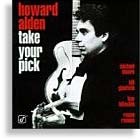
  • Howard Alden – Take Your Pick

    Take Your Pick

    Here’s a good-old-fashioned jazz guitar album from one of Concord’s young lions. Alden’s work always sounds great, whether he’s swinging with single-note runs (“The Gig”), playing chord solos (“I Concentrate on You”), or bringing new life to old warhorses on acoustic (“My Funny Valentine”). Alden is one of several jazzers playing seven-string and he shines throughout, along with other members of the band, especially the great Lew Tabackin on sax and flute. Listen to the wonderful interplay between the two on “House Party Starting” and “The Gig.” I love this style of guitar playing. Sophisticated and traditional, but never boring; Alden is always sure where he’s going. Highly recommended for fans of traditional jazz guitar.


    This review originally appeared in VG‘s May ’97 issue.

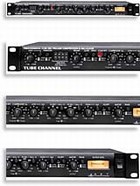
  • A.R.T. Tube Channel

    A.R.T. Tube Channel

    Picking through signal processors was worse than looking at distortion boxes – wide variation in features, but all aimed at (more or less) warming up the signal (especially vocals), offering some compression, and finally, if you’re lucky, some eq to throw a little chime on the high end or define the mids and lows. After looking at models ranging from Meek to Alesis, we settled on ART’s Tube Channel, billed as a professional tube mic preamp compressor and equalizer. The price was impressively low (under $450 list) for all it offered: a single channel, single rack device that houses three major circuits. An elegantly designed tube microphone preamp, a fine optical tube compressor, and a highly utilitarian EQ rest under one chassis. Controls are, thankfully, analog in nature, meaning us old-fashioned gearheads don’t have to scroll through digital menus to arrive at a good setting. Inputs are 1/4 inch and XLR, and phantom powering is onboard if you have a high-end condensor mic to power up. VU metering is easy and accurate. Hey what more could you ask for? In practice, this unit functions better than anything else in its class – with tube or ribbon mike picking up a female vocal, acoustic guitar, or rendering a DAT tape of a live acoustic ensemble performance onto master tape, the results were accurate and at times thrilling.

    Applied Research and Technology, 215 Tremont Street, Rochester, NY 14608, phone (716) 436-2720, www.artroch.com.


    This review originally appeared in VG‘s Nov. ’00 issue.

  • Blind Pig Records – 20th Anniversary Collection

    20th Anniversary Collection

    It’s been 20 years since Blind Pig Records got its start in the humble Blind Pig Café in a basement in Ann Arbor, Michigan. Over the years, the label has released records by a virtual who’s who of modern blues greats, now collected on Blind Pig’s 20th Anniversary Collection.

    This two-CD set sells for the price of one disc and offers a greatest hits album of modern blues. There are songs from blues stalwarts such as John Lee Hooker, Otis Rush, Luther Allison, Jimmy Rogers, Magic Slim, and Commander Cody, as well as cutting-edge cuts from the latest generation of blues upstarts, including Coco Montoya, Debbie Davis, the hot Deborah Coleman, and more. This commemorative collection shows the roads Blind Pig has traveled and the direction it is going.


    This review originally appeared in VG‘s Sep. ’97 issue.

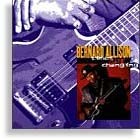
  • Bernard Allison – Times Are Changing

    Times Are Changing

    The times certainly are a-changing. Luther Allison’s son, Bernard, is back, unleashing a tough brand of modern blues that will blow the dust out of your speaker cones. This is new blues by a new generation.

    Bernard Allison is at the forefront of the modern blues movement. His sound shows a clear lineage of rocking guitarwork that stretches from Hubert Sumlin to Jimi Hendrix, Buddy Guy to Luther Allison. These ain’t the good old downhome front-porch blues.

    On his cover of Luther’s “Bad Love,” Bernard’s voice sounds eerily like a ghost of his father. This song showcases the son’s concept of modern blues – full-power horn section, roaring guitar solos, and a wall of sound. These are blues that demand to be heard.


    This review originally appeared in VG‘s Feb. ’99 issue.

  • Rocky Athas

    The Perfect Beast is a Matter of Tone

    Ask what defines Rocky Athas’ sonic universe and the Texas-born guitarist will readily answer, “Tone,” which he best exploits in his weapon of choice, a 1962 Surf Green Stratocaster.

    The marriage hardly happened overnight, as Athas readily explains.

    “From 1973 to 1983, I used nothing but Les Pauls – I didn’t even own a Stratocaster,” he said. “I just thought [Les Pauls] were the greatest. The Les Paul is such a beautiful instrument, and a Strat is simple in design, but it has so many more tones. When you get many different tones, it inspires you to write different-sounding songs.”

    The proof lies on Athas’ instrumental disc, That’s What I Know (Diamond Head Productions, 1998). In 30 crisp minutes, Athas burns through driving blues/rock (“Think About It,” “On The Move”), to gutsy shuffles (“D Boogie”), snappish rhythm and blues (“Rock Funk”), glistening ballads (“Run Children Run”), and dazzling pyrotechnic displays (“What’s That”).

    “That’s the compliment I get; ‘We like it because you didn’t stick with one thing,’” said Athas. “If you listen to a Ted Nugent album, you’re going to hear the same guitar sound. That’s why I went to a Strat.”

    Athas may well be the hottest guitarist working today without a major label deal. While peers like Eric Johnson, and his late childhood friend, Stevie Ray Vaughan – the subject of That’s What I Know‘s powerful closing tribute, “To My Friend” – graduated to certified magazine cover-boy status, Athas is still waiting for a wider chance to prove himself.

    His best opportunity may come with the Bluesberries, which pairs Athas with ex-Band of Gypsys drummer/vocalist Buddy Miles, keyboardist Mark Leach, and Vaughan’s celebrated rhythm section of Chris Layton and Tommy Shannon.

    The Bluesberries spent most of February tracking an album for shopping to major labels. “This album is saying, ‘Look, we know how to rock, but we still know how to play a good, proper blues,’” said Athas.

    Athas credits Greg Diamond, who produced and financed That’s What I Know, with helping jumpstart the Bluesberries. Diamond bumped into Layton and Shannon – then working on their own project, to which Athas was asked to contribute.

    “From there, it just sprang,” he said. “I’ve known Buddy for 20 years, we all connected by phone and said, ‘If we put this together, it would be awesome.’ We tracked [the album], and the magic was there.”

    A re-grouped Black Oak Arkansas also put Athas’ talents and tonal explorations to prime use on its latest in-your-face offering, The Wild Bunch (Cleopatra Records, 1999). In the meantime, there’s no shortage of admirers to spread the word, including ZZ Top’s Billy Gibbons, Pantera’s Darrell Abott, and the New Bohemians’ Kenny Withrow.

    On “To My Friend,” Athas tips his hat to Vaughan. The two were friends in high school, and formed a mutual admiration society.

    “It’s not actually supposed to not sound like him,” said Athas, of the track. “The main thought is, ‘You’re in my heart, my feelings, and thoughts, and I wrote this about you.’”

    Vaughan’s memory is not far from Athas’ mind.

    “We used to jam all the time. He taught me how to play ‘House Of The Rising Sun,’ which is hysterical – that’s how far back [the memory] goes.” But the pair hardly spent every waking moment plotting their every waking move.

    “We were just friends who had the same goals,” Athas stresses. “And we picked up ideas from each other.”

    Still, some funny things could happen when the drive to succeed kicked into overdrive. “We used to go to jam sessions together, and one time when Sunset High was having one, Stevie called me, saying ‘We should go…’”

    There was one problem.

    “‘We went to Kimball High, and they wouldn’t let us in at Sunset High!’ He goes, ‘Well, we’ll just sneak in.’

    “And that’s exactly what we did,” he laughs. “When we went in, they said, ‘This is only for the Sunset guys. You can watch, but you can’t play.’”

    Suitably put out, the pair was leaving.

    “All of a sudden, one of the amplifiers blew,” said Athas. “Stevie had his Silvertone in my car, and we rolled it in. He said, ‘You can use my amp, but let me play.’”

    And when a photo of the jam appeared in Sunset’s yearbook, there was Stevie!

    “That was so funny because all the guys who put it on didn’t get a picture in their own annual.”

    Athas has never had any dearth of admirers, starting at 23, when Buddy magazine ranked him among Texas’ hottest guitarists, with the likes of Gibbons, Bugs Henderson, Eric Johnson, and Jimmie Vaughan. Such endorsements, and a strong word-of-mouth reputation, were enough to attract Gibson’s interest in ’79.

    “Me and Eric had the same manager, so we used to do all kinds of dates together, and became real good friends,” said Athas. “We weren’t making much money, but were definitely getting our act – and our chops – together. From what I understand, we were the first to get signed without a record contract” (the deal is still apparently in effect, though “[Gibson] doesn’t actually give away guitars – you get it for endorsement price, which is awesomely low,” he adds).

    Athas’ local profile mushroomed in the late ’70s with his band, Lightning, which became one of Texas’ hottest draws, and supported a host of heavies (including Ritchie Blackmore’s Rainbow, Rick Derringer, Peter Frampton, The Kinks, Ted Nugent, and Pat Travers).

    Yet fate played its share of cruel games; a 1977 deal with United Artists soured when Lightning determined its signing had been treated as a tax write off. The band had no better luck with Capricorn Records; an album had reached the mixing stages when the label went bankrupt.

    “We never got a record deal, but as far as playing was concerned, we had a pretty good buzz going,” he said.

    A helping hand arrived in ’82, when Black Oak Arkansas vocalist Jim Dandy Mangrum invited Athas to tour with him, yielding its Ready As Hell album (Capricorn, 1984). Unfortunately, a smattering of approving nods meant nothing at the box office, so Ready As Hell (which ended a six-year recording drought) stiffed.

    “That actually is a good album, and you know what’s really weird?” said Athas. “We didn’t think in terms of song structure. We just felt we could put out anything. The whole thing was sort of a letdown, because the label didn’t put any money behind it.”

    On the heels of that experience came another endorsement deal from an unlikely quarter.

    “I was playing in Dallas, and this guy came up and said, ‘What do you think of Guild guitars?’ ‘Oh, they suck,’” Athas recalls responding. “He goes, ‘Oh, I’m the rep for Guild.’ I didn’t know what to say.”

    Guild sought to improve matters with the $1,300 Rocky Athas I, pulling out all the stops with a campaign that included print ads and an MTV spot. “Damn thing used to [air] four to five times a day, which was cool,” he laughs. “It made my price go up, even with my local band.”

    However, as Guild soon discovered, in 1984, kids weren’t ready to pay $1,300 for a guitar.

    “No one told me that, and we ended up selling very few of them,” said Athas. “I should have done like Jimmie Vaughan, where you can buy one for $349 and have a great guitar with your name on it.” Guild chose not to renew the contract.

    Athas still holds an endorsement deal with Van Zandt pickups, but has ended one with Crate amplifiers. Otherwise, he has kept his setups remarkably consistent, yet never completely predictable.

    “I do a lot of rhythms on the Les Paul, because they have a really thick sound. I do all my leads on the Strat,” he says.

    Athas returned to the Black Oak fold in ’97, again at Dandy’s invitation.

    “He says, ‘We’ve got 40 dates with Foghat. Can you get to practice in two days?’ It was just like we hadn’t been apart. He always said I was his favorite guitar player.”

    The tour, which also included Grand Funk Railroad, helped to cement a deal with Cleopatra. This time around, however, “We thought more about song structure, instead of us just playing crazy,” said Athas.

    A greater depth of arrangements, including updates of several Black Oak standbys (“Jim Dandy To The Rescue ’99,” “Mutants Of The Monster ’99,” “Happy Hooker ’99,” and “Hot ‘N’ Nasty ’99”), gave Athas free reign to explore his tonal philosophy.

    Most of the tracks stemmed from jams, which were handed over for Dandy’s lyrical input. “If I have a riff, like on ‘No Time,’ that could be real strong, I immediately record it on the four-track and give it to Jim,” said Athas. “He adapts the words.”

    Athas collaborated on “Dark Purple Blues,” the anthemic “This Is Our Time,” “No Time,” and “Top Heavy Dallas” in such fashion, except “Talk To The Hand,” which he co-wrote with brother-in-law Glenn Miller. “He brought that melody line to me – that happens from sitting around, practicing runs on guitar,” said Athas.

    Athas split the 15 tracks on The Wild Bunch between his ’92 Strat and a ’79-neck Strat. “But that’s the ’62 on ‘Post Toastee,’” he notes.

    “If you listen, it’s just got more bite on that song. Since I do an intro, I wanted it to cut through.”

    “Post Toastee” and “Shake The Devil” (which features an ominous Jim Dandy spoken intro) are originals by Tommy Bolin, who died of a drug overdose in ’76, following stints in Deep Purple, and before a promising solo career could take off.

    For amps, Athas stuck by a Lab L-5, a Fender Tonemaster, and a 4 X 12 Fender cabinet.

    “Black Oak is just ‘get-in-your-face, let’s-rock-and-roll’ [music],” he avers. “If I used a Fender Twin, I don’t think it would match what we’re doing.”

    The trusty ’62 Strat held sway for the Bluesberries sessions, except a ’79 cherry-colored Les Paul, which Athas used on two rhythm tracks. Otherwise, “…[the choice of guitar] is a no-brainer,” he laughs. “When you find an instrument that becomes an extension of you, you use it.”

    For amps, Athas used a Fender Twin on bluesier numbers, followed by a Fender Bassman, Fender Tonemaster, and Lab L-5, as well as a Lab bass head.

    “I found the Lab in a pawnshop for $50, and it just sounds great!” Athas enthuses. “It really sounds good. I used it on two tracks.”

    Athas hopes the resulting album will help all the players reach a wider audience. Band photos featuring the boys trying to snatch a blueberry pie away from Miles, their vocalist, have already been taken, and tentative tour plans are in motion, depending on who picks up the recorded results.

    “We’re taking [the Bluesberries’ approach] a step at a time – I don’t have any plans to quit Black Oak,” said Athas. “If this is a hit record, we’ll deal with that accordingly!”

    Athas shifted gears completely for That’s What I Know. He and co-writer Clark Findley – who played bass, keyboards, and programmed MIDI drums – considered making the album more vocal-oriented, but decided the tracks stood up well enough by themselves (only two outside musicians – drummer Johnnie Bolin and bassist Kenny Parker – were used).

    “I basically did it because I wanted people to see what my guitar was all about,” said Athas. “Also, when we reviewed the songs, we decided these things should have a lot of melody, even as instrumentals.”

    As on the other albums, Athas’ Strat carried the day, except on “Run Children Run,” which features a 1980 Les Paul. “I was going for a different sound and it seemed to fit,” he said. “I did a track with the Strat, and a track with the Les Paul, and I liked the Les Paul better.

    “For amps, I used a Lab L-5 head on a 4 X 12 Fender cabinet – and on the other half I used a ’59 Bassman head, which is just awesome, but it belongs to Greg,” laughs Athas. “We don’t take that on the road. He won’t sell it to me – I have to borrow it!”

    Athas makes sparing use of effects, sticking mainly to an Ibanez Tube Screamer. “I put the settings at two o’clock; that’s the secret to anyone’s good lead tone, because it adds the perfect amount of sustain,” he declares.

    Athas also uses a discontinued DOD digital delay pedal.

    “It gives me that slight slap – the only pedal I’ve heard that does that.” He also uses a Vox Wah (not a vintage model).

    “I can’t find one that sounds good anymore,” he said. “I found one for $220 at a guitar show. I might as well get a new one.”

    Athas uses Ernie Ball strings, .009 to .042 on his Strats, and .010 to .046 on the Les Pauls.

    His picks tend to be Dunlop-style thins, flipped so the round edge strikes his strings. This gives him a more precise, robust attack.

    “You can fold the pick, and you’ve got total control. It’s right there in my fingers.”

    Athas has found time for other one-off projects between his Black Oak, solo, and Bluesberries albums. In ’93 he toured with Ace Frehley before Kiss reunited, did a bill with Warrant and Dangerous Toys.

    He next tried to lead another local original band, which folded. In the process, he was introduced to ex-Trapeze/Deep Purple vocalist Glenn Hughes. The connection came through former Lightning manager Morris Price, who’d also road managed Trapeze.

    “Glenn came to Dallas, and Morris called and said, ‘Can you come out to this club?’” recalls Athas. “We got up and played, and we instantly clicked.”

    Athas and Hughes collaborated on five unreleased songs, but were unable to sort out the business aspects.

    However, a greater opportunity came from the Tommy Bolin Archives, which has reissued the late guitarist’s unheard material; when their phone call came, Athas learned that Hughes had recommended him to play on the resulting Live 1997 album. “It has done real well in Japan, and, from what I understand, on the internet. Of course, Glenn is still big in Japan.”

    Athas and Hughes followed up the Live 1997 effort with a six-date Texas tour last summer, which also included Johnnie Bolin on drums. “We’re putting out another album of [Tommy Bolin] songs, all new, all arranged. Johnnie has all this stuff his brother did. We wrote new stuff around Tommy’s demos,” said Athas. “Some of this is stuff the public never got a chance to hear.”
    Athas’ instrumentals may also find another outlet, in Hollywood, where Greg Hampton, who engineered The Wild Bunch (“…one of the industry’s best ears”), has established a flourishing soundtrack career.

    Two tracks from That’s What I Know may surface in Jimi And Me, which is told from the viewpoint of the late guitarist’s younger brother, Leon.

    “I’ve got my fingers crossed, because the movie isn’t complete and a lot of things can happen, but that’s the talk,” said Athas.

    Suitably inspired, Athas has also completed a 12-track compact disc of surf instrumentals, which may also end up in movies.

    “If not, I may put it out, like the [solo instrumental] CD, and see what happens,” he said. “If you’re looking for hot licks, this ain’t the place,” said Athas.

    The surf project has forced him rethink many of his trademark techniques, because, “You can’t get a good tone – you gotta get a ****** tone,” he laughs. “Which is hard as hell, and you’re not allowed to bend notes!”

    Athas hopes this plethora of projects showcases his versatility.

    “That’s what made Clapton last so long,” he declares. “You can hear him play a blues, but he also can rock it up – ‘Crossroads,’ ‘Badge,’ or ‘Sunshine Of Your Love.’ There’s just so much to be expressed. I want everybody to appreciate me for continuously growing. I don’t want to bore people.”

    As a result, Athas’ suggestions to young players are as direct as his approach to sculpting the ultimate tone.

    “First, just try not [to] get sidetracked with drugs, because then the guitar is not your main instrument.”

    For players hoping to scale the same seismic heights as Clapton, Hendrix, or even Stevie Ray Vaughan, Athas believes style and tone cannot be divorced.

    “When you have a lot of different tones, you end up getting up a lot of different styles. That’s good to let people know, because if a young guitarist will actually try for a different sound, it’ll make him play a little different. A lot of times, if you’ve got that overdriven, sustained thing, you’ll end up playing the same licks that fit that mood, but the song may be calling for something pure, clean, real soulful, and less notes.

    “Stevie showed a bunch of different tones, and he does jazz licks, rockin’ blues licks, and pure blues licks, and then, just ‘Stevie’ licks, ’cause of the tone he got,” laughs Athas. “There’s just no mistaking Stevie Ray Vaughan.”

    So Athas’ thoughts circle back to how to get a variety of colors on his guitar to move an audience which, he contends, has wearied of a industry-driven, monochromatic expression.

    “Even young kids like my son; on his own, he’ll grab a Cream CD and play it because he likes it,” said Athas. “But he also will play Korn because he’s into that clique. That’s what I would like to have happen 30 years from now with stuff I leave behind – people can actually go, ‘Yeah, that **** still sounds good’, like with ‘Sunshine Of Your Love,’ ‘Crossroads,’ or any Hendrix cut.”


    Rocky Athas with his custom color ’62 Fender Stratocaster. Photo courtesy of Rocky Athas.

    This article originally appeared in VG‘s June ’00 issue.

  • Johnny Adams – There Is Always One More Time

    There Is Always One More Time

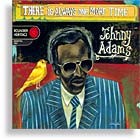
    From the “there really can’t be a better singer around” catagory comes this set from the latter part of Adams career. It encompasses his work with Rounder from 1982 until his death in 1998. Pretty much unknown to the pop world, except for the incredible “Reconsider Me,” which was a hit in 1969, Adams is shown here as a singer who’s at home on blues, R&B, jazz, and even showtunes.

    His supporting cast for most of these is pretty good too. Check out the soul/funk of “I Feel Like Breaking Up Somebody’s Home.” Adams fine vocals are augmented by some masterful guitar playing by Walter “Wolfman” Washington. “Happy Hard Times” is an uptown blues that shows off Adams at his finest, and Duke Robillard’s jazz-tinged blues soloing highlights the tune. Other names that you’d know are also used nicely on the album. Jimmy Ponder’s tasty, unique guitar helps the slow blues of “One Foot In the Blues” glide along effortlessly. The wonderful Wayne Bennette shines on guitar on “Lover Will,” a cover of John Hiatt’s minor-key soul/funk tune.

    All in all, you’d do yourself a big favor picking this one up if you’re a fan of R&B. Adams was a truely gifted singer who never really got his due, and the roster of players on this one is a who’s-who of soul/funk guys. Recommended.


    This review originally appeared in VG‘s March ’01 issue.

  • Audiovox and Serenader Amps

    An Interview with Bud Tutmarc

    Introduction
    With this month’s feature story on the Audiovox bass (page 80), plus a comparison between Audiovox pickup (page 81) and early Dobro pickups, it seems appropriate to also dedicate this month’s column to the “legendary” Seattle line. Having never had the opportunity to play through one or take one apart, we’ll have to let catalog descriptions suffice (thanks to Peter Blecha for the early info and Bud Tutmarc for the late-’30s flyer).

    The earliest known flyer for Audiovox showed only a single amp available, the Model 236. Guesstimates on year seem to be 1935-’36, a time when most other companies only offered one amp for use with their assortments of instruments. Five tubes with a pair of 6F6s for the outputs, a 5Z4 rectifier, plus a 6F5 single-triode and a 6N7 twin-triode for the preamp/driver stages. Twelve watts at three percent distortion powered a single speaker, apparently a 10″ (cabinet dimensions were 11 1/2″ high by 14 1/2″ wide by 5 1/2″ deep). The speaker opening was square, with a lattice grille. One to five inputs could be ordered and like most amps of the era, the back panel had only the input jack, a volume control and a fuse. A second flyer from slightly later described the same amp.

    In the later years, the line grew to include three amps, including the Model 236, now equipped with a 12″ Lansing speaker. The rectifier changed to the popular 80 and the 6F5 was replaced with the similar 6SF5. Power increased to 15 watts at three percent distortion and a new cabinet with a round speaker opening and less-rectangular shape was shown (14 1/2″ x 13″ x 7 1/2″). No mention was made of a tone control.

    A more powerful amp, the Model 936, was pictured with the Model 736 bass guitar and listed as having 18 watts and a “…heavy duty, High Fidelity, Concert Type, 12″ Jensen Speaker.” “Has three different tones,” implies some extra controls as became popular in the late ’30s. Striped Airplane Linen covered a larger cabinet, measuring 13 1/2″ x 17″ x 8″. Bud Tutmarc remembers the bass amps having a 15″ speaker, so perhaps the later top-of-the-line models did. He also mentioned 6L6 output tubes used for the larger amps, unfortunately, the specs for the 936 were not given.

    At the bottom of the line sat the model 200, looking like a miniature 236, having an 11 1/2″ x 7 1/2″ x 10 1/2″ cabinet housing an 8″ Lansing speaker. Tubes were the new 6V6 beam power style for output, a 6SC7 twin-triode for the preamp, and an 80 rectifier.

    Fortunately, the man who built a good portion of the amps and pickups (starting before he reached his teens) is alive and well and was open for a number of interviews over the last six months. Here are the highlights, as they relate to the amps and pickups.

    Vintage Guitar: Many of the pioneers in electric guitars got there start with crystal radio sets. Did your dad build his own radios?
    Bud Tutmarc: No, but I did. I was building those three tube amps when I was 12 years old.

    How about the earlier amps, like the bass amp with the lightning bolts.
    When he made the electric bass, he already had his amplifiers going. He was making amps for Hawaiians before the bass, making them for the steel guitars.

    Any idea what happened to that first bass amp?
    Oh, he made a lot of those. That’s where he got the name Audiovox – “loud voice.”

    Who built the cabinets for the amps.
    For my dad, Frank Galianese.

    Who designed the circuits?
    Bob Wisner. He made a radio into a guitar amplifier for my dad. Wisner worked on the atom bomb and then in Florida on the lunar mission, the man on the moon. He was there and it took off on a Monday and Friday it landed. He died on Wednesday -never knew they made it. He worked at Boeing, too.

    He was trained, I take it?
    Oh, boy. He graduated from high school when he was 13! He worked for General Electric, they sent him to New York for three days and he came back, they said he was a genius and could work in any department he wanted! He was an opera buff, knew everything about opera.

    Did he play an instrument?
    Nope, not a lick. But he and I became partners in my Bud-Electro company.

    How about Arthur Stimson?
    No, he didn’t play; I don’t think he had any electronic background, either.

    Did you have any formal training in electronics?
    Not in electronics, no. Just experimenting.

    So when you were wiring these things up, how did you know what to do?
    I was wiring ’em up just like the one in front of me! I got so that I knew the whole circuit, I didn’t have to look at it after a while. We had the big five-tube amps and the small one, too. We used the 6F6s in the small ones and the 6L6s, two of them, in the others. That was when the metal tubes first came out. The small amp sold with a guitar for $39.50.

    We sold the guitar and a case and the three tube amp together. I was the one making all those amplifiers for him.

    How was the reliability of the old amps.
    Real good, that was Wisner’s design. I remember we had our group and we went out for two months, to New York and back and -we had the electric bass, if we didn’t, we wouldn’t have been able to carry anything anyway, five days out of Seattle we wrecked our car, ruined it, went around a corner too fast at four in the morning. The top was smashed, the windshield came right down on top of the steering wheel and we all got out, three guys in the front seat, two guys in the back and a trailer behind us.

    And we never missed one of our concerts. We chartered a plane that afternoon to Minnesota, and then we took a train, a bus, finally I bought a new car in New York. Having the electric bass along really helped, with a regular bass we’d have never made it. All our instruments got out. Our luggage was torn apart and our P.A. got smashed, but most places had them anyway. And the records, 78s, about 400 of the 800 didn’t make it. But the amps worked great.

    Were these the Serenader amps?
    Yeah. The Serenader amps were about the same as my dad’s.

    Did they have a little more power than the earlier amps?
    Yeah, and better speakers, the Jensen A-12 and A-15s. Those were permanent magnet speakers, before the Alnico V. And they weighed a ton! The magnets were about six inches across and about three inches thick.

    Did you use field coils for everything before the war?
    Yeah. The Alnico V changed everything, they were so much lighter.

    Do you know how many Serenader amps you made?
    No. We had two styles, one for the steel and one for the bass. I wasn’t selling many of the amps to Heater, but I was selling the basses.

    I notice the steel guitar and amp weren’t pictured with the bass in the L.D. Heater ad.
    No. That ad is from 1947, they distributed them up and down the coast.

    I remember Bob Wisner and I would drive down to Portland and deliver a bunch of them, about 10 basses at a time.

    How many of the basses did you make?
    I have no idea, maybe 75?

    How about the amps for your dad’s basses. Were most of those sold with an amp.
    Yeah, with the 15″ speaker.

    Did you take over the business from your dad?
    No. I just went on my own. He married Bonnie Guitar, a recording artist, his second wife, and that kinda separated the whole family for a few years. That ended the association building guitars in our house. Then I got married in ’45 and got into the business making my own in 1946.

    How about during the war? Did you guys do much building?
    No, not much. But again, I wasn’t working with my dad at the time. Now, I remember him coming down right at the start of the war, down to where I was working, at Fulton Machine, and saying, “What about this draft business?” And I said I was okay because I was working on the line, so he says, “Alright, that’s all I wanted to know.” He was worried about me and then later, we got back together and stayed close for the rest of our days.

    Do you know where your dad got the idea for his pickup?
    Probably out of a telephone (laughs)! Of course, Wisner was around. I remember they had to make the two polepieces so they didn’t connect. What we ended up doing was just soldering them, so they wouldn’t carry the magnetic field (between the two coils).

    On the early ones, they were split in two sections, right?
    Yeah, they had to be split. Later on we soldered ’em together and then could sand it to look like one solid piece of steel.

    From the patent, it looks like it’s a humbucking design.
    The only way you can make it hum is to hook it up wrong. It’s all in how you join the coils together, the outside to the outside and then the other ends go to the ground and the volume control. When I go into the recording studio, they say “Okay. Bud, turn your guitar up.” And I say it is and they say “It can’t be, we don’t hear any hum!’ It’s the most quiet pickup they’ve ever run across.

    Were the coils all wound the same?
    Yeah, it’s just how you connect them. I wound all those pickups, I
    have all that wire here still.

    Did you change the design much over the years?
    No. I record with my Serenader guitar; go direct into the board! And then I take my dad’s on the road with me, the Audiovox.

    That’s great, you take a 60-year-old guitar on the road!
    I’ve played it all over the world.

    Have you had to put a new pickup in it over the years?
    No! The volume control I had a little trouble with, so I replaced that.

    What was it like trying to get electrical parts back in the early days?
    I have more trouble getting the magnets now than I did then! The one my dad used was big and made a “U” shape. There were holes where you could put in a brace that held the polepieces. And it worked perfectly. I sure made a lot of those. I had about 50 of them out in the garage and my wife let ’em go to the junk man (laughs)!

    Did you get all the parts locally?
    Yeah, you could get anything. I still have a bunch of parts, the same ones I was working with 50 years ago!

    Any big difference between the Audiovox pickup and the Serenader’s?
    I slanted my pickup on the bass side, so you’d get more power in the bass notes. I put the pickup about four inches away from the bridge and got tremendous response from the bass strings; all my dad’s were right by the bridge.

    Which was standard back then. My theory is that people put the pickups back there because there were no amps that could take that kind of bass output; and that’s for guitars! Gibson did their ES-150 with the pickup at the neck for a few years, but even that changed back to the bridge before the war.
    Well, some players preferred a deeper sound.

    How does it feel to see your dad finally getting his well deserved credit internationally, instead of just locally.
    He deserves it and I’m very pleased.

    Was it something you thought you’d see in your lifetime?
    I’ve seen it in my lifetime – every time I’d see somebody playing an electric bass! I’d say, “I know where that came from.” That always meant something to me.

    What would people say when you told them who created the bass, that it was your dad and not Leo Fender.
    Oh, they’d kind of yell at me and that was it (laughs)! I don’t think I convinced everybody.

    Which was my initial reaction, I must admit.
    It was too big a thing to claim in some people’s minds, but that was it; I was there when it happened.


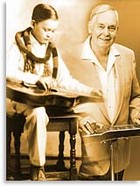
    Bud Tutmarc at age 9, and in 1997, playing his father’s Audiovox lapsteel.

    This article originally appeared in VG‘s March ’99 issue.

  • Sandblasters and The Boss Martians – Space Bar-B-Q and 13 Evil Tales

    Space Bar-B-Q and 13 Evil Tales

    Yes, it’s surf month here at VG. There have certainly been some great releases in this genre in the past year or two. Myself and other writers at the magazine have featured the likes of Los Straitjackets, Laika and the Cosmonauts, Hillbilly Soul Surfers, and of course, the wonderful Cowabunga box set from Rhino. All of these would help you get into the craze along with the rest of us, as would these two new discs.

    The Sandblasters are out of Austin, Texas, and feature the trio of Mart Stultz on guitar, Spencer Clarke on drums, and Chris Happel on bass. They play surf-inspired music with a twist. They also love those detective movie themes. So, stuff like “Wave King” shows off Stultz’ chops before breaking into a very James Bondish-sounding middle section. And stuff like “Naked Piranha” features it all. Spy movie music, surfin’ sounds, a very middle-eastern-sounding bit and more. “Oyster Wax” features the intro to “Secret Agent Man,” and ends with the riff from the B-52s’ “Rock Lobster.” Ya gotta love that. A fine CD with players obviously loving what they’re doing. Write to the Sandblasters at P.O. Box 80413, Austin, TX 78708-0413.

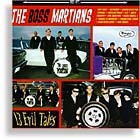
    The Boss Martian have a bit of a hook, too. They’re not a straight surf band. They sound like a cross between surf, the Kingsmen, and Ronnie and the Daytonas. They feature some lovely cheesy organ, very cool ’60s-sound vocals on five cuts, and funny lyrics like “Long Hair Lenny.”

    Singer/guitarist Evan Foster drags out some big ol’ fuzztone (“Hot Foot”), fleet right-handed picking (“Evil Martian”), he even recycles the solo from “Louie, Louie” (“She’s Creepy”). And, the packaging is very cool. Extremely reminiscent of album covers from around 1963. You can reach Dionysus records at PO Box 1975, Burbank, CA 91507.


    This review originally appeared in VG‘s May ’97 issue.

  • Dave Alvin – Public Domain

    Public Domain

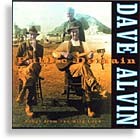
    Dave Alvin is one of those guys you have to love. He continuously makes great albums that encompass most of the genres that make up “American” music, and he does it without much fanfare. Here, the former guitarist for the Blasters and X covers songs he and his brother, Phil, discovered when they were kids learning about music. It makes perfect sense. The blend of folk, country, and blues is what has driven him ever since I first heard him in the early ’80s in the Blasters.

    Some of these songs you’ll definitely know. “Shenandoah” is turned into a soulful ride with nice solos all around. “Don’t Let Your Deal Go Down” is presented as a raucous country-blues that features Dave on some rowdy electric guitar. “Railroad Bill” is one of many songs on the album that are timeless in nature. It literally is a reading in American musical history as you walk through the 15 listed cuts, and the one hidden instrumental track that wraps the whole idea up perfectly.

    The players are wonderful throughout, lending each song just what it needs. Alvin’s Guilty Men band is featured, including the wonderful Rick Shea on guitars, mandolin, and pedal steel. Guests include Greg Leisz, who shines on dobro, slide, and mandolin. And Alvin supplies guitar that fits just where it should be and vocals that fit the mood of each song perfectly. Dave Alvin is a national treasure. Check him out as soon as possible. Recommended.


    This review originally appeared in VG‘s Nov. ’00 issue.

  • Martin Barre

    Three Decades with Jethro Tull

    Since the late 1960s, guitarist Martin Barre has been an important fixture in the legendary British band Jethro Tull. The only Tull album on which he didn’t play was the band’s first, This Was, but he’s been on every one since Stand Up. His unique tone and riffs are as integral to the band’s sound as the flute and vocals of frontman Ian Anderson.

    Yet Barre has also been pursuing some solo projects of late, and when he called Vintage Guitar while on tour, he also discussed his second solo effort, The Meeting (on the Imago label). At the outset of our conversation, we asked Barre about his early musical years in Birmingham, England:

    Vintage Guitar: You’re not the first person I’ve interviewed from Birmingham. In your opinion, were there any other “regional sounds” in Great Britain other than the fabled “Mersey Sound” from Liverpool?
    Martin Barre: I don’t think so. The Liverpool sound had sort of a romantic image brought about by the pop journals. Bands all over the country were looking for work, but if you were a band from Liverpool, you had a bit of an edge.

    As a matter of pride, I think a lot of good stuff came out of Birmingham. The bands all knew each other, we’d get together and swap ideas. Records by people like Big Bill Broonzy or Buddy Guy would get passed around. We shared ideas, so I think it’s fair to say there was a Birmingham “scene,” and I’m proud to have been a part of it in those days. There were the Moody Blues and Spencer Davis, for example. A lot of good players came out of there.

    In his own interview with this magazine, Spencer Davis noted that the music coming out of Birmingham was more R&B-oriented.
    I think so, too. R&B was certainly popular, and to me, Liverpool spawned the “pop” groups; Gerry & the Pacemakers, the Beatles, Billy J. Kramer.

    I have a policy of mentioning Radio Luxembourg to any British interviewee. Comment?
    I certainly listened to it, because in those days BBC Radio was dreadful. Radio Luxembourg was the only station that played decent music. It was still a pop station, but it was better than anything else.

    Tell me about your “pre-Tull” musical experiences and instruments.
    I was in bands while I was in school, and I eventually got kicked out of university, so I figured I’d better have a go at being a musician (chuckles)! I was really naive. I’d played a “rubbishy” guitar my dad got on credit for me. It was a Dallas Tuxedo, and I’ve never seen one since. Obviously, my dream was to earn a Gibson or a Fender. It seemed that you would go one way or the other; you were either a Gibson man or a Fender man in those days.

    My personal dream guitar was a Gibson 330; I wanted a cherry red 335, but I couldn’t afford one, so I eventually got a 330 on credit. I’d seen it in a shop window; in those times, the best guitars stayed in shop windows for months, because nobody could afford them (chuckles). I gigged with that 330 for three years. I was in soul and R&B bands; I played saxophone as well as guitar; I played flute, too.

    In late ’67 and early ’68, a blues boom started in England, which meant I could start playing more guitar. The same groups that had been soul bands now became blues bands; you changed with the times. I carried on playing flute in sort of a Roland Kirk style. I heard of Jethro Tull because Ian was playing the same way. Eventually, we played together and got along very well. Six months later, Mick Abrahams left Jethro Tull and I joined.

    How did that come about?
    Ian advertised in Melody Maker, and I answered the ad because our group had just split up. But when I found out it was Jethro Tull, I was petrified! I didn’t go any further with it, but by coincidence, they had been trying to get in touch with me for several weeks; they remembered me from the gig we’d played together but they didn’t know how to get in touch with me. They finally contacted me, and I was terrified, but I went through the audition. There were a lot of players who wanted the Tull gig; I think Ian didn’t want a blues player; I think he wanted somebody with an open mind.

    At the audition, I had my 330 and an early Laney amplifier. That guitar squealed and whistled because it was a hollowbody, and I didn’t get the job; Tony Iommi did. I called Ian back and said if there was ever another chance, I’d like to have another go at it. He said that Tony didn’t work out, and offered me another audition. At that audition, I borrowed an SG Special from a friend, so of course I didn’t have the same acoustic problems I did with the 330. Shortly after I got the gig, I bought an old, beat up Les Paul Special from a shop in London. We used Hiwatt amps back then.

    A lot of our readers probably consider “Locomotive Breath” a definitive British rock guitar song. What was your setup on that tune?
    That was a Hiwatt amp with a 4X12 cabinet, and a Les Paul Junior. We’d played in America with a band called Mountain, and I loved Leslie West’s sound. I thought his tone was tremendous, so I bought a Les Paul Junior. That was the only guitar I used on the Aqualung album. I didn’t use any effects; I plugged straight into the Hiwatt. The reverb or any other sounds were studio rack effects.

    In the time you’ve been with Tull, what do you think was the most complex effort the band has done, studio and in concert?
    (pauses) I think the most difficult album at the time was Passion Play. Nowadays, I’d find it easy to play, but in those days you couldn’t just “play” it; you had to be counting all the time to know where you were. Thick As A Brick was a bit advanced, because it had a few oddball time signatures, but up until then we had been doing pretty basic stuff. We used to do the entire album of Thick As A Brick in concert, but when we took Passion Play on the road, it was a killer to do live. We didn’t do it too long; maybe 20 gigs. The audiences found it to be a bit much, as well.

    But in retrospect, all the albums since have had much harder music on them, but we’ve been able to do some of the later material well in concert because I think we’ve always been improving as musicians.

    Back in the ’70s, the band was known for some very unusual stage moves. I recall one concert where the road crew was setting things up, and there were five individuals left onstage, all wearing long coats. Suddenly they removed their coats, and it was the members of the band, ready to play.
    (chuckles) Right! That was the era of the “rock star” in America – tight pants, pouting and strutting. We wore “straight” clothes, and saw ourselves as “antiheroes.” We laughed at other bands, and laughed at ourselves, as well. We would do things onstage to see how the audiences would react poking fun at other bands and our own band. It was almost a Monty Python kid of thing; we were doing to music what Monty Python would do to humor.

    Everybody had these presumptions about rock stars, and whenever we came to America, everybody was convinced we were total druggies, just because we looked weird (laughs). But we were straight.

    And I’ll tell you about another band like that – Captain Beefheart. As far as I know, they were straight as well, but there were presumptions about them since they did some things that were oddball, too. We played with them a lot; they were a great band.

    We always did strange things for the audiences. We had fun doing it, and we weren’t trying to be smartasses.

    If I remember correctly, you were an early Hamer endorser.
    I used a sunburst Les Paul for about four or five years, during the time of Thick As A Brick and Passion Play, but such guitars have become too valuable to take on the road. I met Paul Hamer when he used to deal in vintage guitars. I started playing his guitars because of the value of my old guitars; I hadn’t been interested in new guitars for a long time before that. It wasn’t a formal endorsement, but maybe they did use me in an ad at one time. It was more of a personal relationship with Paul. I used Hamers for around 10 years.

    What about other brands you’ve subsequently used?
    After Hamer I had a brief relationship with Ibanez, then I bought a Tom Anderson guitar in England. Those instruments are well-made and durable; you could play one in the Sahara one day and in Alaska the next. I met Tom Anderson, and ultimately bought some more of his guitars; I still use them in the studio.

    In concert, I’m using a Manson electric. The Manson brothers are in England; Andy makes acoustics and Hugh builds electrics. Ian and I both use Manson instruments. They make them like I want; I always order an ebony fingerboard. The neck dimensions are what works for me, and the instruments are wired in stereo.

    There have been times when other notable musicians have been with Jethro Tull, if only temporarily. Eddie Jobson was aboard around the time of the A album, for example.
    Eddie recorded the A album with Ian; it was intended to be a solo album, but Ian asked me to play on it as well, so it ended up becoming a Jethro Tull album and tour. Eddie never wanted to be in Jethro Tull, and he never had a commitment to Tull, but he did the tour. He had other things he wanted to do, such as producing, so he moved on.

    Here’s your chance to comment about Crest Of A Knave winning the Grammy a few years ago, when Metallica was expected to win; they even performed live at the award show.
    I thought we should have been there, since we were nominated, but the record company didn’t send us over there. The drummer, who lived in L.A., wasn’t given tickets to go. I thought it was nice to be nominated, but we weren’t there, and it wasn’t our fault. Metallica was there, of course; they had record company support and PR support, and their fans were there. They were in the right position to win. I didn’t think we’d win, either; I thought it was ludicrous to shove two categories – “Rock” and “Heavy Metal ” – together. I thought the award was a fair deal, though, and Metallica was really nice about it, but their fans thought it was a ripoff. It was a sad day; I would have liked to have been there to say thank you. When Metallica did win it the next time, they mentioned that they were glad Jethro Tull wasn’t around that year (chuckles).

    The Meeting is your second solo effort. When did the first one come out?
    About 21/2 years ago, although I’d completed it 31/2 years ago. It didn’t get the distribution it needed; it really never got a fighting chance at all, which was very sad and annoying to me. When I got hooked up with Imago, I wanted to get a second album out as soon as possible; I want solo projects to be an active part of my career.

    How does The Meeting differ from your first solo album?
    I tried to make it more focused, bearing in mind that I’m going to be out doing shows to support it. The first album was… not “busy,” but a little indulgent; trying to be jazzy, folky and classical, among other things, and all of that probably wouldn’t work well live. I wanted to do more straight-ahead material that’s all original.

    Nevertheless, it seems like The Meeting does have an eclectic mix of styles and influences.
    Well, I think my music will always be that way; I’m an “offspring” of Jethro Tull (chuckles), so that’s sort of ingrained into what I do. I could never do a blues album, for example. Some people tell me “You ought to do a blues album; everybody’s doing them,” and I say “Yeah, they are, and they’re doing such albums better than I could; it’s not me.”

    See if you think this is a fair statement: I’ve always thought that there has been what could be discerned and distinguished as a “Martin Barre tone.” An appropriate amount of distortion, a flirtation on the edge of harmonics with a few squeals in the mix, and a straightforward sound otherwise. Comment?
    (laughing) I love it! I recognize those adjectives, but I never analyze what I do. I am very critical of my own performance, but sound-wise, I’m like every other guitar player. I’m sort of chasing the rainbow, thinking that around the corner there’s a better amp, a better guitar, a better sound effect. I’m never standing still in that respect, so if people recognize my style even though I’ve been meandering through all sorts of guitars and amps over the years, I’m really pleased. That may not be a very good answer, but I don’t like being “linked” to specific things. I’d like to think that I could pick up a guitar, plug it into an amplifier, and play, because I think the most important links in the chain are a person’s brain and fingers, and the guitar and amp are tools.

    While what might be called a stereotypical Martin Barre tone is on The Meeting, I heard some other tones as well; a Strat-like sound, for example.
    That’s a really nice Schecter that I had made about 10 or 12 years ago; I also used it on the Under Wraps album. I was looking for some different sounds, and it’s a lovely guitar. It’s got EMGs and pao ferro wood.

    Are the acoustics heard on The Meeting Manson guitars?
    Yeah, but I also bought some “jumbo” guitars to get a deeper, richer sound; I got a Santa Cruz and a Taylor. I also used a Martin classical on the album.

    Another interesting aspect of The Meeting is its use of female singers for the vocal tracks.
    Maggie Reeday and Joy Russell did the backing vocals on my first album, and were also in my band when we played in England. I sang on that tour, but I couldn’t do a lot of the guitar parts while I was singing, so I made the decision to use another singer or singers next time around, and I wanted to keep it sort of “in-house;” I didn’t want a session singer. I’ll be using Maggie when we tour to support The Meeting.

    One of the most recent U.S. tours for Jethro Tull had another veteran English band as an opening act, but it’s difficult for me to imagine Emerson, Lake & Palmer in a warmup slot. What was that like?
    In all honesty, it’s been one of the most successful combinations we’ve ever had! It is strange, but they’re from the same “era” as us. We could look into the audience and see people wearing ELP t-shirts, and other people were wearing Tull t-shirts. We might have thought that half the audience would leave after Emerson, Lake & Palmer played, and the other half would boo ELP because they wanted to see Jethro Tull, but it worked amazingly well.

    We had Procol Harum open for us a couple of years ago; they were a great band, but it didn’t work as well. Maybe the tour with ELP was better because they are so far removed from us, sound-wise. They don’t have a guitar player or a flute player; there’s a lot of contrasts in our sounds.

    VG: What’s in the future for your solo efforts as well as Tull?
    Ian’s doing a solo album, and I’ll be touring, then we’ve got a major European tour. There’s a lot on the horizon.

    When I interviewed Mick Ralphs for this magazine a few years ago, he noted that a band is probably bigger in the music business than any solo projects its members might do.
    Oh, absolutely; that’s very true, even in the case of Ian’s solo albums under his own name. It’s a whole different ballgame, and some of Ian’s albums have differed quite a bit from Tull albums. Walk Into Light was one of those computer/drum machine albums; there were some great songs on it, but I think Ian would admit, as I would, that the time of drum machines and a heavy synthesized sound is gone. I don’t think it’s possible to synthesize the “essence” of music. Why have a flute sample when you can have a flute player? The bottom line is that the guys who are actually playing music are the ones who are going to keep it alive.

    Right or wrong, there are probably still some people who think Ian Anderson’s name is Jethro Tull.
    (laughs) We’ve also had to put up with the “…which one’s Jethro” line for decades. It’s gotten to the point to where I decided that if they didn’t know, then it didn’t matter. But I’m pleased that after all these years, most of our fans know who I am. When we’re onstage, and Ian introduces everybody, it really means a lot when the audience gives me a round of applause. Same goes for the other guys in the band. They haven’t been around as long as me, but that kind of audience reaction is what it’s all about.

    In his comments, Barre alluded to “…a lot on the horizon.” Considering his decades of experience and active future plans, said horizon looks quite appealing, eh?


    Photo courtesy of Imago.

    This article originally appeared in VG‘s Oct. ’97 issue.