Month: May 2001

  • Carvin Factory Tour

    Carvin Does It Different

    Imagine a company that builds 600 high-quality guitars and basses per month, with a normal backorder count of 700. “Well, that’s okay…” some guitar enthusiasts might observe, “but some guitar factories are putting out that many guitars per day.”

    But what if those 600 instruments per month are almost all custom-made? And what if the instruments and gear are sold directly to the retail customer (in the U.S.)? And what if the company has been successfully doing business in its own unique way for over a half-century?

    Well, it’s not your imagination. Carvin’s against-the-grain manufacturing and marketing approach has been incongruous, and it has served the company well ever since founder Lowell Kiesel began building pickups in his Los Angeles garage in 1946.

    The history of Carvin has already been covered in VG‘s “The Different Strummer” (VG, August ’92), and the growth of the Southern California manufacturer over the decades has resulted in several relocations of manufacturing facilities. The company moved to Covina in 1949, then to Escondido in ’67, and in ’95 it occupied a new 80,000 square-foot facility in San Diego. VG recently visited the factory to check out the manufacturing techniques and products proffered by the special-order specialists.

    One of Carvin’s five retail stores is located in the same building as the factory, but the company does have international distribution through retailers in other countries, which explains the surprise some folks experience when they see a Carvin display at a NAMM show.

    A small display of classic Carvin gear (including tube amps from ’53) greets a visitor to the retail store. Dave Flores, Carvin’s Director of Public Relations, our enthusiastic tour guide, has been with the company since 1980 but was using Carvin products in ’68, when he ordered a bass amp at the Escondido factory. Flores’ enthusiasm was evident as he proudly directed us through the clean, efficient factory (since the retail store displays finished products, we concluded there).

    We began our tour in Carvin’s amplifier department. The company also makes several hundred amps every month and during our visit was gearing up for new production innovations. Carvin makes solidstate and tube amps, the former using wave solder machines, as well as programmed machines that light up portions of a circuitboard in sequence, to guide workers installing specific parts.

    Another innovative in-house procedure is custom-winding of low-profile toroid transformers. Such doughnut-shaped items are normally found in high-end audio gear, according to Flores, and making their own versions of such parts enables Carvin to monitor production and provide their amps with efficient, low-noise transformers with output that’s right-on-the-money.

    Tube amp production is centered around two distinct facets. Carvin’s “Vintage” series differs from many other modern-day “retro vibe” amps in that the circuitry is actually a Carvin design from ’62. “Vintage” guitar amps also feature a tube reverb circuit, and the series is covered in a unique tweed fabric with a maroon stripe. Other nostalgic cosmetics include oxblood grillecloth and vanilla-colored chicken-head knobs.

    Flores was particularly ebullient about another successful Carvin tube amp, the Steve Vai Legacy. Carvin no longer solicits endorsers per se, but has instituted a commendable signature series program that involves a participating artist in a long-term relationship with the company in the design, refinement, and production of a specific product. Other signature series artists include Alan Holdsworth (guitar) and Bunny Brunel (bass). Flores said the Vai Legacy amp (VG “Gear Reviews,” October ’99) has been so successful, sales of other Carvin amps have also been boosted.

    At the other end of Carvin’s amp offerings is a unique 12-volt battery-powered PA called the Showmate. It’s a 100-watt, four-channel system with optional 24-bit digital effects.

    Speaker cabinets are also built on-premises; everything is made from seven-ply, 3/4″ poplar plywood, which the company prefers for its light weight, extreme strength, and good sound.

    The guitar production area reinforced Carvin’s unique position in the fretted instrument marketplace. Each instrument makes its way through the process sporting a small sticker noting the customer’s name and preferred options. Flores asserted that between finishes, hardware, pickups, etc., a Carvin, customer has over 1,000 choice combinations. However, other unique aspects of Carvin’s instruments include the primary type of construction (neck-through) as well as the most popular fretboard wood (ebony).

    Guitar production foreman Robert Messier, who has been with Carvin for 16 years, showed us the meticulous hand-fitting process involved in fitting the sides and neck of a neck-through instrument. While we visited, he was working on a prototype acoustic (“..we’ll give you an exclusive,” noted Flores) that will be made using extensive carving on CNC machinery. Flores also said the new acoustic would be neck-through but would also have bracing, so it should be interesting to see (and hear) the ultimate configuration of this project. Messier also pointed out various figured woods used in Carvin’s upgrade instruments.

    CNC machinery also figures into standard-configuration Carvin instruments, as is the case with many other modern guitar factories. All instruments have a dual-action truss rod constructed of hollow graphite. The company maintains that while a graphite rod is more expensive, it is lighter and more forgiving, so the neck resonates extremely well.

    Ebony is one of the hardest and most dense woods in existence, and to insure fretboard uniformity, Carvin uses a unique wheel grinder impregnated with diamonds. It’s radiused for a 15″ fingerboard, and as we watched, a strip of ebony slipped into the mechanism for a wet-sanding process. The dust sanded off was so fine it looked like black watercolor paint as it drained. Tolerances on this machine are within 1/500″ between any two points.

    “Diamond surface grinding is one of the things we do that’s different,” said Flores. “It insures we have the lowest action and playability on the fingerboard. As far as I know, we’re the only ones doing this. It’s an expensive process, but it’s the best process.”

    A 30-ton press installs fingerboards to necks, and figured tops are installed in the same area. Flores showed us a body for the Alan Holdsworth Fatboy, which is hollow on the inside, and contains an unusual suspension system for the pickups which lets the top and back resonate without restriction.

    A lot of guitar making at Carvin still involves hands-on work, including fret dressing, body sanding, and detailing, and every guitar is hand-painted. Between standard finishes and combining two colors in a unique sunburst (purple to black, for example), about 100 color options are available.

    Carvin also winds its own pickups, and final assembly creates a high-quality instrument from finely-crafted parts made under the same roof. Following a brief conversation with company vice president Mark Kiesel (it’s still a family business) we returned to the retail showroom to examine this final facet of the operation.

    The spacious sales area includes dozens of instruments on display, as well as three sound rooms – one for guitar, one for bass, and a PA test area. Carvin even offers a ready-to-assemble guitar kit (bolt-neck). Flores averred that the five retail stores in southern California probably account for around 10 percent of the company’s business. Mailorder still has the lion’s share of volume, and the company’s internet sales are on the increase.

    Carvin prides itself on its unique history in U.S. guitar-manufacturing history, and its current production efforts and gear also have a lot of unique things going for them. It’s definitely a different approach to the musical instrument market, and it’s been an ever-expanding and successful enterprise for over five decades.


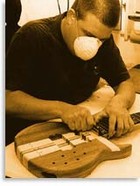
    Photo by Dave Flores. Detail work on a neck-through bass.

    This article originally appeared in VG‘s Jan. ’00 issue.
  • Travis Bean Interview

    Metal Machine Music - The Next Phase

    “Bean is Back!” proclaimed the signs at a recent California guitar show. Indeed, Travis Bean, builder of the short-lived-but-legendary ’70s instruments that bear his name, has reentered the guitar-manufacturing arena with an even more innovative approach to instrument construction.

    His guitars and basses of yore were primarily known for their unique aluminum necks and figured koa bodies, and perhaps not surprisingly, the huge increase in the application of technology to manufacturing techniques has allowed him to design and build instruments that are perhaps more revolutionary than those he marketed from 1974 to ’79.

    In a recent phone conversation with the affable and self-deprecating guitarmaker, VG afforded Bean the opportunity to detail his credentials – past, present, and future:

    Vintage Guitar: Like Paul Bigsby, you were into motorcycle racing some years ago. What made you take up guitar building the first time around?

    Travis Bean: The reason I always mention racing is because it’s such a different discipline from music. Bringing that racing mentality to music means you’ve got to have the right stuff from the get go.

    When I was racing, I got injured and I took a job at a big music store in Burbank; I would find the accounts for the rental equipment. I’d always loved music but never played it, and as soon as I got that job, I met Marc McElwee, who would pick up things to repair. I struck up an instant friendship with him, and he went on to become my business partner. Back then it took me about two weeks to learn everything about guitars.

    Doing guitar repairs over the years, Marc built a couple of guitars himself and at the same time my interest in playing was starting. I had a natural tendency to tinker (chuckles), so I decided to build a guitar; I got a couple of Gibson pickups from the store where I was working.

    Was it your plan, at the outset, to build an aluminum-neck instrument?

    Well, I’d spent hours watching Marc fiddling with necks and adjusting them, and in my simple and naive way of looking at things I said, “I can solve that.” I had very little experience in metalworking, but I knew wood backward and forward, and I didn’t want to implant a truss rod into a piece of wood, so I literally whittled the neck out of a piece of aluminum. That’s how it started: I was trying to fix some problems in a completely naive way, but once we got down the road a ways and the thing worked, the lesson of not knowing enough not to do it wasn’t lost on me (laughs). Being hung up by convention is really stifling for me.

    Then unlike a lot of other folks, you didn’t have a bunch of guitars growing up, and you didn’t run out and buy a guitar after seeing the Beatles on “The Ed Sullivan Show,” right?

    I remember seeing Elvis on Ed Sullivan, and I started taking guitar lessons immediately, but during the third lesson, I made the mistake of mentioning to the instructor, who was an older fellow, that I wanted to be like Elvis, then l got to listen to an hour-long diatribe, and I never touched a guitar again until I was 22 years old. In some ways, that’s a cop-out, but that was actually my experience.

    On the other hand, I stayed addicted to that music, and it was around me all the time. I knew some child prodigies in this area; a guy named Larry Brown, who played country piano, and a good singer named Steven Adler, and I would get these pangs inside when I’d go see them, but I never took up the physical act of playing until I was in my 20s.

    Some people might think your interest in some aspects of motorcycling racing – precision parts, tolerances, etc., would have figured into guitar making.

    It certainly did, and that was part of my thinking when I really got into it. But in the beginning it was, “I know a way to fix that,” when I was considering how to solve twisting, bending, and breakage of necks. I remember watching Marc stringing up the first guitar we built, and when he plucked the D string, he turned around, and his eyes were as big as saucers. He said, “Did you hear that?” He had strung up thousands of guitars over the years, so we knew we were on to something. The reason we decided to make them in quantity was because they worked really well; we had our necks tested regarding rigidity, and they had a distinct mechanical advantage. It reproduced the sound of the string well, and that’s where I think the sound really is.

    I really like what’s going on out in the market now – not that I think the old stuff is bad, that’s why I wanted to build guitars – from listening to the old stuff! And that’s why we’re excited about this new effort.

    When did Marc string up the first guitar?

    That would have been in mid-to-late ’72. We both still had regular jobs. We opened our shop in January of ’74.

    The main players I recall using Travis Bean instruments back then would have been Jerry Garcia of the Grateful Dead and the Rolling Stones’ Bill Wyman.

    Yeah, but it’s funny; we became aware of a lot of other musicians using them. We did have a relationship with Garcia and Wyman, but they had contacted us. We were struggling back then. I can remember really pushing the envelope at retail; our highest-priced instrument was $1,395. But those two guys did a lot for us. To me, that’s really the joy of this business – to see a guy playing your instrument because he wants to; that really makes me tick.

    Are you saying that back then you couldn’t afford official endorsers?

    Oh, absolutely not. In the beginning, we ran several ads, but that was pretty much the extent of it. Later, when Garcia joined us, we didn’t do much promotion with him, but I think he had more impact than the Rolling Stones. There are a lot of photographs of him playing one of our guitars that are still in circulation. In fact, the whole band came to our shop a couple of times, and to a person they were very kind to us.

    Did you premier your instruments at an Anaheim NAMM show? What was the reaction to them?

    Actually, it was in Chicago. We wrote $150,000 worth of business in three days, by displaying three handmade guitars. On the flight back, we thought, “We’re in seventh heaven; here we go!” But by the time we landed at Burbank, we’d started to realize that we didn’t have a clue how to make that many guitars (laughs). It took about a year and a half to figure it out. Without a history, banks wouldn’t lend us money, but they would lend us money to buy machinery. We were able to put together a wood shop, a paint shop, and a metal shop. I had a tremendous bunch of folks working with me, not for me, and we managed to make about 3,000 instruments. I try to give credit where credit was due; my machinist really figured all of the tooling out. We looked into casting and forging, but it was so outrageously expensive for the dies that we ended up doing it the old-fashioned way.

    We had 21 people working during those five years. Only one person left; we knew we were working on a good product.

    What was the difference between the T-1000 Standard and Artist models?

    The Standard had different fretboard inlay from the Artist, and a flat top; the Artist had a carved top.

    You also did some nontraditional-shaped instruments, like the Wedge.

    The Wedge guitar was a wonderful piece for the stage, but the Wedge bass was a flop. It didn’t balance; it was my lemon (chuckles).

    Your use of koa wood on the natural-finished instruments was also a bit off the beaten path.

    Koa wood had been used for ukuleles, but it was hardly in fashion for guitars. I went to a local art wood store, and chose koa because it was the only wood that would look decent if I made the body in one piece. That was all of the science that went into that decision (laughs), but it turned out to be a wonderful wood for us.

    What was the scale of the basses? Wyman usually played short-scale models.

    Thirty-four inch, but we did make some 30″ models for Wyman and one retail store; probably no more than half a dozen total.

    The story about your first venture in Tom Wheeler’s American Guitar says you left the business when you felt you were being pressured to compromise on quality. Comment?

    Well, we didn’t want that to be the case, and I’ve said in print before that I think the last guitar we ever made was as good as any we ever made. There are very few ways you can cut corners on that sort of a machining process; to this day, it’s still very costly. Looking back, I never thought I’d go back into the business, but it hasn’t hurt me; I wasn’t one of these guys who has to sit and watch the quality of their products go downhill. I’ve been very lucky in that regard; we stopped clean, and the reputation of the instruments has remained very strong.

    You’ve been out of the business for nearly two decades. What did you do in the interim?

    I started working in the studios. I got into the scenery-building business at first, so I could still work with my hands. I established a rapport with various shops around town, building special effects and mechanical animation pieces. I got to spend the whole day being creative.

    But things come full circle, and that’s not such a swell job anymore. I’d enjoyed 20 years of being congratulated about my guitars, for which I was deeply appreciative, and that’s why this new effort couldn’t have happened at a better time. And to be perfectly honest with you, I was a little bit burned out. I may be personally responsible for who knows how many acres of rain forest being in the dumpster (interviewer laughs). It’s true; they use a tremendous amount of stuff, and it usually goes right out the back door.

    What stimulated your interest in getting back into guitar building?

    The interest in the older instruments was gratifying and amazing to me, particularly on the internet – Bill Kaman included – and it’s been about 20 months since I started trying to bring myself back up to speed. I hadn’t been to a NAMM show since the last one we exhibited at. Kaman sent me a copy of your magazine that contained an article he’d done on my guitars, (VG, June ’95) and I was flabbergasted about what’s going on out there. It’s been a tremendously interesting reeducation.

    Let me back up to the mid ’80s for a second and ask if you were aware of Stanley Jordan’s use of your instruments? Unique player, unique guitar.

    Absolutely. I hadn’t left music; I’ve had a studio to play in, and believe it or not, I’m really more of a drummer, but I’m getting to the point where I can entertain myself on guitar. When we had our shop, everybody who came to the door was a guitar player, so I’d play drums if someone was checking out our instruments. And I’m pretty good at it, but I’ve always had to have a place to do that.

    Did someone urge you to get back into the business or was that your decision?

    In the years after we stopped, I continued to play and I continued to have Travis Beans around here, and I’ve done a considerable amount of experimenting because in my mind it wasn’t quite complete. And the backlash of failing at a money-making effort can always be a burden here in America, but that really didn’t bother me. What bothered me was that we couldn’t continue back then.

    The spark came from a dear friend, a wonderful English fellow named Paul Hone. He’s a computer guy and a wonderful guitar player. He knew I had a good job, but he convinced me to get back out there with the guitars.

    It was like somebody who’s been divorced and is getting married again – I never said I wouldn’t make guitars again; it just never occurred to me that I’d be able to. I wouldn’t trade the experience from the first time around for anything, but for me it wasn’t very pleasant at times. I was only building guitars – standing there whittling – for about the first year, and the rest of the time we were in business I was talking to lawyers and banks, etc.

    This time around, we’re starting with a clean slate. I was able to get backing from a fellow who I worked for named Paul Griemann. He’s a guy with the business acumen I don’t have. I didn’t want to go back to the bootstrap existence we had before, to be honest with you. But I wasn’t frightened. I knew they could be built, and of course the technology nowadays is tremendous, so that figures into it, as well. This time around, everything is falling into place.

    What are you doing differently construction-wise, this time?

    I had the design in my mind way back when. This time, instead of the neck sliding into a wood body, as was the case on the original guitar, the metal forms the entire back of the guitar, much like a pan, for lack of a better word. I’ve wanted to build a hollow model because we got this beef from some players about the original guitars being heavy. So I re-sawed and hollowed out the wood part to work on the weight factor; the truth is, it wasn’t the aluminum neck that made those guitars heavy; it was the wood. The neck weighed a little over three pounds, and this whole new assembly weighs about the same. The neck is even hollow under the fingerboard.

    I reduced the size of the peghead to about 87 percent of what it was, and we’re using lightweight locking gears, which weigh about a fifth of the old-style tuners. We’re using 7075 aluminum now, which is way stronger than the 6061/T-6 aluminum on the originals. 7075 is commonly used for the skins of airplanes. The guitar has a longer scale this time, as well. A longer string creates more energy.

    And the big deal this time around is the technology, and I had another stroke of good fortune. A young man named Kelly Condon, from Cordell Industries, programs and runs a CNC machine for us. And he is a magician with that thing – an artist in every respect. We start with 108 pounds of aluminum, and when the machine gets through with it, the assembly weighs about three pounds, as I said. This guy works that machine like a video game (chuckles)! I never heard one complaint about our neck shape on our originals, but the turnings weren’t always the same. This time around we’ve got a more conventional neck shape. The best comment I’ve gotten about the new neck came from someone who said, “It feels like you’ve felt it before.”

    VG: Are you using CNC machines to make the wooden tops?

    We’re probably going to be using a panograph on the carved tops. The fastest way to do that is with an old pin router. We’ll have a CNC machine in our Custom Shop. Things have changed; back in the ’70s, Todd Rundgren tried to order a guitar shaped sort of like the thing Prince now uses, and we had to refuse because in those days we were trying to emulate Fender and Gibson. Now, of course, everybody can do anything they want. And some of the other people responsible for our being able to go back into this are the ones making all the neat guitars out there.

    Hartley Peavey told me his company will build a guitar in a computer first, then program their CNC machines to build the parts, which come out consistent.

    Hartley’s a stone genius if there ever was one. Way back when, we understood he had a machine you could throw wood into one end of and a guitar would come out the other end (chuckles). So I can only imagine what he’s got now!

    How far along are you with instrument production?

    As of now, I have a prototype done; I call it the Marc McElwee Signature model, and it’s shaped sort of like model 500 we produced toward the end of the first time we were making guitars. I’m thrilled with the way it looks and sounds, and we’ve answered the weight problem. It really kicks butt. The assembly for the basses is also complete. The cutaways on the bass will be more comfortable, and we’re going to be getting into five-string and six-string basses.

    I also need to mention Greg Rich, whom I met through Drew Berlin at the Guitar Center. He’s a world-renowned inlay artist. We’re in discussions right now with Stanley Mouse, who was associated with the Grateful Dead, about including some Grateful Dead artwork in our inlay offerings.

    When do you anticipate premiering the new line?

    We’ll have guitars ready to show to dealers soon, but we anticipate we’ll have a complete display ready for the NAMM show [in January].

    Sounds like you’ve got all of the facets of your new effort lined up in a logical manner.

    (chuckles) Like everything, you’re always spending more than you thought you would, but the prospects are just too compelling. You never know until you’ve got that first piece in your hands, and we’re awful excited and proud of what we’re doing.

    As it turned out, Bean displayed his new prototype and pan assemblies at the Pomona guitar show in late August. His enthusiasm for his new products is contagious, and he looks forward to another venture in the guitar manufacturing industry, especially since he’s reentering the market with yet another cutting-edge instrument design.


    Vintage Guitar would like to thank Bill Kaman, Drew Berlin, and Dave Belzer (Guitar Center, Hollywood) for their help.


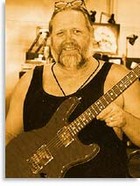
    Travis Bean shows off the prototype of his new series.

    This article originally appeared in VG‘s Jan. ’99 issue.

  • Bay State Parlor Guitar

    The Parlor Guitar

    The parlor guitar. Designed by Mr. Parlor? No. First manufactured by the Parlor, Inc? No. Endorsed by the well-known recording artist, Parlor? Now don’t be silly, of course not! Then why call it a parlor guitar? The answer is more complex than it sounds, but a parlor guitar was played in the parlor.

    What?

    Let’s start again. The development of the guitar from its fretted and strung antecedents led to an instrument that was rather small and used almost exclusively for vocal accompaniment in rather intimate settings. We’re talking about guitars measuring maybe 10″ to 11″ across the lower bout. During the late 19th and early 20th centuries, the size of guitar bodies started to increase, and it began to be used more as a solo instrument or in ensemble playing, where the larger size allowed it to be heard more easily. But there was still a range of smaller-bodied guitars used in the traditional manner and strummed for vocal accompaniment.

    Most houses around the turn of the century had a parlor, forerunner to today’s “living room,” which served as a place to receive and entertain guests. Small-bodied guitars were generally called parlor guitars because the setting for their use was often entertaining singly or for small groups in the parlor. Today we find nearly any small-bodied guitar is called a parlor guitar.

    In the ’90s, most guitars players have a living room and dreadnought guitar as standard equipment. But the resurgence of interest in acoustic instruments, vintage and new, has led to a revival of the parlor-sized guitar. Manufacturers including Tacoma, Larrivee, Santa Cruz, Bourgeois, Collings, and even Cort, have new small-bodied guitars. On the other hand, the vintage enthusiast has a variety of choices, many with no brand markings or label of any sort, and ranging from 80 to 120 years old.

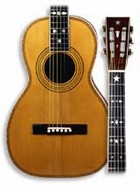
    Our feature parlor instrument is a high-quality offering from Bay State. According to Gruhn and Carter’s Acoustic Guitars and Other Fretted Instruments, Bay State was a brand name of the John C. Haynes Co., of Boston. This company produced (or contracted with others to produce) a variety of fretted instruments including banjos, guitars, and mandolins. The line was particularly successful in the populous Northeast U.S. and no doubt arrangements were made to supply instruments to music teachers and schools.

    Distinctive markings on the headstock and fretboard, as well as fancy herringbone trim, make this a rather desirable small instrument. While most manufacturers did include fancy abalone-trimmed models in their offerings, the ones that show up most often now are rather plain. Buyers should be aware of several factors if they are interested in playing them. Many of these guitars are over 100 years old. They may need structural work or crack repair.

    Most were designed for gut strings and may have suffered from the tension of modern steel strings or from poorly executed repairs. Some are very fragile and need careful handling. On the other hand, they can be enjoyable to play. Easy to hold, and with comfortable necks, the parlor guitar is suitable for soft accompaniment, but works equally well for blues or ragtime fingerpicking. They are numerous in more plain varieties, and their prices generally run less than $700. Fancy ones can cost substantially more, but don’t necessarily play or sound better.

    Best of all, you can play a parlor guitar in any room of your house!


    Photo: Michael Tamborrino/VG Archive. A 1900 Bay State parlor guitar, likely made by Ditson. The herringbone trim and distinctive markings on the headstock and fretboard make this a desirable small instrument. Though fancy vintage parlor guitars can cost much more, they don’t necessarily sound or play better.

    This article originally appeared in VG‘s Oct. ’00 issue.

  • Paul Kossoff

    The Story of the Back Street Crawler

    For a scant few years beginning in the mid 1960s, Great Britain was responsible for producing arguably the finest crop of rock guitarists ever. It began with Eric Clapton, who made rock-and-roll musicianship hip with John Mayall’s Bluesbreakers, then with Cream. The well-chronicled “Clapton is God” years must have truly motivated his peers, because shortly after, a crop of would-be heirs apparent was catching the public’s ears. Jeff Beck shook ’em up with his manic feedback and wonderful phrasing; Peter Green gained admiration for his supernatural blues playing; Mick Taylor excelled on electric slide; Jimmy Page’s composition and layering produced sounds never heard. And Paul Kossoff offered his mastery of the understated, along with his frighteningly expressive vibrato.

    Born in London on September 14, 1950, Kossoff studied classical guitar for six years, but had pretty much stopped playing by the time he was a teenager. In the winter of ’65, as the British blues revival was peaking, he saw Clapton with Mayall’s Bluesbreakers at The Refectory, in north London. That concert changed his life. From that moment, he wanted to play the same stinging electric blues Clapton played. He soon picked up a ’54 Gibson Les Paul Custom and became a serious music student, immersing himself in learning to play the blues.

    After leaving school, the young “Koss” went to work in Selmer’s Music shop in London. One day at Selmer’s he met Jimi Hendrix, who had recently come over from America with Animals bassist Chas Chandler. When Hendrix began playing an early version of “Little Wing” through store equipment, Kossoff was mesmerized. It was another defining moment for the impressionable youth.

    Beginnings…
    By ’67, Koss joined a band called Black Cat Bones (named after the mythological blues talisman). Several months later, the band recruited drummer Simon Kirke and the two struck up a friendship based on their mutual love of the blues. Despite being the year the world went psychedelic, Kossoff and Kirk were determined to develop a style steeped in basic blues. Soon, Black Cat Bones was a regular on the London pub circuit, quickly catching the eye of producer Mike Vernon, who recruited the band to back pianist Champion Jack Dupree on “When You Feel the Feeling.” Despite the exposure this brought, Kossoff and Kirke felt they had taken Black Cat Bones as far as it could go, and began looking for a new group.

    One night in The Fickle Pickle, another London pub, Kossoff heard a young vocalist with the band Brown Sugar. During a break, Koss asked if he could sit in for a number. The singer, Paul Rodgers, agreed and the two jammed on several tunes including T-Bone Walker’s “Stormy Monday” and Memphis Slim’s “Everyday I Have the Blues.” Both Pauls later said they were instantly drawn to the others’ musicality. Following the set, Koss approached Rodgers about joining his new group. Rodgers agreed and along with Kirke they made plans to pursue their love of blues-based rock and roll.

    Free Rollin’
    As Kossoff, Kirke, and Rodgers began to rehearse, Vernon suggested (on a tip from British blues legend Alexis Korner) they check out bassist Andy Fraser. The group was impressed with the fact that Fraser had played with Mayall’s Bluesbreakers when he was only 15. Fraser soon joined and Korner christened the new quartet Free. Within a few months, the group had written and road tested several simple-but-effective rock songs that fit their lineup of guitar, drums, bass, and vocals. Playing a late-’50s flametop Les Paul Standard (later immortalized in Tony Bacon and Paul Day’s The Les Paul) through a block-logo Marshall and a homemade cabinet, Kossoff began to find his voice.

    To facilitate his aggressive attack, Kossoff utilized heavy picks and heavy strings, and developed the slow and quick vibrato that would one day become his trademark. In describing his technique to the English press, Koss said, “I think my vibrato has taken a long time to sound mature, and it has taken a long time to reach the speed I now have. I use my index to back up the ring finger when I’m using vibrato.”

    It was also through Korner that Free was signed to Island Records. Island’s staff producer at the time was Guy Stevens, whose unorthodox production and behavior seemed to get the best out of his groups. Working with Stevens in London’s Morgan studios, the sessions were basically just Free’s live shows with a few overdubs to fill out the sound where necessary. Besides the sunburst Les Paul, Koss was also playing a three-pickup black mid-’50s Les Paul Custom through Marshall and Laney amps. Recorded in just one week, Free’s debut album, Tons of Sobs, was released in late ’68. Tons… was a swaggering collection of bluesy rock tunes with tough titles like “I’m A Mover,” “Walk In My Shadow,” and a version of Albert King’s “The Hunter.” With its release, each member was heralded for their superb performances. While the four-piece band concept was nothing new, Rodgers’ cocksure vocals, Fraser’s incredible bass playing, Kirke’s rock steady drumming, and Kossoff’s tough-but-elegant guitar work made for a truly original sound.

    In live shows supporting the album, Koss began using a 100-watt Marshall Super Lead head with dual 4 X 12″ Marshall cabs equipped with bass speakers, which he felt had a more rounded tone. Fraser primarily played his Gibson EB series basses through an old block-logo Marshall guitar setup. Although Free was playing in small clubs at this point, they began to garner rave reviews and acquire a loyal cult following throughout England. With Rodgers as the front man, the diminutive Kossoff became a great foil with his haunting vibrato and lion’s mane of hair as he played with untamed passion.

    “The music should come from the soul and be simple and straightforward so everyone can enjoy it, and this is why we’re going down well,” Kossoff said at the time.
    For their second effort, Free released an album simply entitled Free, and a very mellow single called “Broad Daylight.” Although the single flopped, the flipside contained “The Worm,” another satisfying example of Free’s riff rock vaguely reminiscent of Cream’s “Politician.” The new album saw the group growing and developing the styles they pioneered on the debut record. To broaden his sounds, Kossoff began experimenting with different equipment, including his block-neck ’60s Gibson ES-335, and a Fender Tremolux amp. An excellent example of Koss’ guitar layering techniques is “I’ll Be Creepin’,” which features both a clean riff guitar and a wah-wah laden chordal wash. The result is a mysterious and threatening tune, augmented by a beautifully lyrical solo.

    In “Woman,” Rodgers boldly sang of love with conditions, with lines like “Marry me today…I’ll give you everything but my guitar…but my guitar and my car.” Listen closely and you’ll hear where Lynyrd Skynyrd got the inspiration for “On the Hunt.” Also worth a mention is the dual-tempo “Songs of Yesterday,” which spotlights two great solos by Koss; the first played through the rhythm pickup for a “woman-esque” tone. Immediately following the first solo, Kossoff switches to the lead pickup to anticipate the tempo change. Free also has a country-influenced tune called “Mouthful of Grass,” which features incredibly restrained chordal touches.

    Tryout
    In mid ’69, shortly after the release of the second record, Koss heard that the Rolling Stones and Jethro Tull were looking for new guitarists, and made himself available for the auditions. Although the Stones’ gig went to Mick Taylor, and Martin Barre would eventually join Tull, the 18-year-old Koss was still pleased to have been considered, as it was a sign he was being recognized as a top talent. At about this time, Island Records signed the group on as opener for a U.S. package tour with Blind Faith and the second-billed Delaney and Bonnie. Free continued to impress audiences and musicians alike, including Clapton, who asked Koss to show him his strong vibrato technique. Shortly after this encounter, Clapton gave Koss another prized ’59 sunburst Les Paul in exchange for Koss’s black Les Paul Custom. Koss also picked up several more Les Pauls, including two great-sounding late-’50s PAF models (with the finishes sanded off).

    By the time Free went into the studio to record its third effort, Fire and Water, it was musically stronger than ever, but the band knew true success still depended on having a hit record.

    Hit and Run
    “All Right Now” was that hit and it came about almost by accident, written as a reaction to a slow gig, and intended to fire up quiet audiences. Within a few weeks of its release, an edited version of “All Right Now” shot to the top of the charts in the U.S. and England. This tune has become a quintessential rock classic, and a rite of passage for upstart rock guitarists, much the way “Johnny B. Goode” was years earlier.

    The song starts with Koss’ crunchy Les Paul-and-Marshall rhythm, Rodgers wailing vocals, and Kirke’s steady drumming, with Fraser’s blooping bass joining the chorus. In the solo, Koss demonstrates textbook examples of using space and building tension for effect. Starting in a laid back fashion using a lower-register major scale, the intensity builds as he ascends up the neck into repeated blues licks, ending with a long, sustained note. Hollywood recently played testament to its staying power when it was featured in the summer hit movie American Beauty, 29 years after its release. In addition to “All Right Now,” Fire and Water contained other excellent material and was the group’s strongest effort to date. Songs like “Mr. Big” (most recently covered by Gov’t Mule), “Oh I Wept,” and the title track showed the band at its finest. The formula they pioneered a few years earlier was starting to pay off.

    The major success of “All Right Now” gained the group headlining status and a slot at the prestigious Isle of Wight festival in 1970, also featuring Hendrix, The Doors, The Who, and Sly and The Family Stone, among others. Having matured as a player through a constant slew of gigs, Koss’ vocabulary now included his patented rock licks (now part of virtually every guitarist’s bag of tricks), a series of very fluid ascending and descending runs, exaggerated bends, lyrical phrasing, and of course his signature vibrato. Despite being barely out of their teens, the raw quartet won over the 500,000 people in attendance. For a brief moment, Free seemed unstoppable.

    Unfortunately, with chart success comes the pressure to stay on top, and the touring and stress associated with having a top 10 international hit began to take its toll. Highway, the follow-up to Fire and Water, did not sell well, though two of its better songs, “The Stealer” and “The Highway Song,” would emerge years later on several greatest hits packages. Tensions began to mount regarding the band’s direction; Fraser and Rodgers wanted to branch into more diverse material, but Kirke and Kossoff did not want to deviate from their hard-driving blues. As a result, the group decided to disband in mid ’71 and Island Records pulled together Free Live! to capitalize on what might have been the group’s last gasp. Free Live! features strong performances, including a great version of “Mr. Big” complete with a Fraser bass solo that reaches the boiling point. Also noteworthy is “Ride On Pony” (which demonstrates Koss’ use of dynamics as he weaves in and out of blues and major scales) and one of the finest versions of “The Hunter” ever recorded.

    In the days following the split, band members experimented with different groups. Fraser formed Toby, Rodgers formed Peace, and Kossoff and Kirke teamed up with Japanese bassist Tetsu Yamauchi and John “Rabbit” Bundrick (later of The Who) on keyboards and released Kossoff, Kirke, Tetsu, Rabbit. The album featured a diverse array of tunes including Kirke’s original version of “Anna,” which would later end up on the second Bad Company album. Playing with keyboards forever changed Koss’ style, making it less aggressive while opening up the sound a bit. Unfortunately, none of the ex-Free members’ new projects were met with much fanfare. To make matters worse, Kossoff had become depressed following the death of Hendrix, and his health began to suffer from his increasing use of powerful barbiturates.

    Because the split didn’t seem to be doing anyone any good, the group decided to get back together in early ’72. After a few gigs to dust off the older tunes, Free hit the studios to recapture their place in modern rock. In addition to his Les Pauls, and influenced by Hendrix’s passing, Koss’ studio setup now included a white ’57 Fender Stratocaster he played through two full Marshall stacks! These sessions ultimately produced the Free At Last album, which contained several strong tunes including “Catch a Train” and the hit “Little Bit of Love.”

    Kossoff was also starting to record tunes for a solo album eventually released under the title Back Street Crawler, and featuring Yes drummer Alan White, among others. One of the standout tracks from these sessions is a guitar duet with British songwriter John Martyn called “Time Away,” which was actually a jam clocking in at close to 20 minutes. “Time Away” featured Koss playing his Strat through a Marshall-powered Leslie cab for a very liquid, ethereal sound. Eventually, only the last few sections of “Time Away” would be used for Back Street Crawler, a fine example of a loose, blues-based rock jam. “Molten Gold,” another soulful song from the session, would later wind up as the title track of A&M’s excellent Free double-disc compilation, released in ’93.

    Unfortunately, Koss’ drug problems were starting to impact his reliability, and on Free’s ’72 U.S. tour, his inability to make gigs, combined with earlier personality clashes, resulted in Fraser leaving the group. Back at Island Studios, the group began work on what would become its swan song, the aptly titled Heartbreaker album. Joining the band were Tetsu on bass and Rabbit on keyboards. By all accounts, the sessions were strained and because of Kossoff’s problems, his contribution was minimal. The resulting album is the sound of a band going through a lot of pain. In the title track, Rodgers sings, “I’m wasting my whole life trying to make a brand new start,” and you get the feeling he really means it. “Wishing Well” is another song about struggle, played uptempo with a sense of urgency.

    To fill in for the ailing Koss, Rodgers and Snuffy Walden (who would later write the theme for “The Wonder Years”) contributed guitar work, and the album was completed and released. Heartbreaker was supported with another U.S. tour, which didn’t even include the Kossoff, who was replaced by Wendell Richardson. Following the trip home, Free disbanded, this time permanently.

    After Free, Rodgers and Kirke went on to great success with Bad Company. Fraser played with several less successful acts before scoring an MTV hit in ’84 with “Fine, Fine Line.” And Kossoff formed a group named after his solo album, Back Street Crawler, and recorded The Band Plays On. Although a decent effort, Kossoff never again enjoyed the level of success he achieved with Free, and the drugs continued to take their toll. In ’75, while in a London rehab, Koss’ heart stopped for 30 minutes before he was revived. Sessions for Back Street Crawler’s followup, Second Street, began in Los Angeles in early ’76, but Koss’ health continued to deteriorate.

    Tragically, on March 19, Kossoff died on a flight from Los Angeles to New York. He was 25. Although the coroner listed the official cause of death as, “…cerebral and pulmonary edema,” there’s no doubt that young guitarist’s previous health problems were contributing factors to his premature passing.

    In the years following his death, several top rock guitarists including Robin Trower, Gary Rossington, Warren Haynes, Angus Young, Pat Travers, and Audley Freed of the Black Crowes have expressed their admiration for Koss’ playing. And although many players have studied his techniques, few have been able to match his crying vibrato or capture the simple elegance of his playing.

    Over the next few months, look for a five disc Free boxed set called Songs of Yesterday, and a biography of the band by David Clayton and Todd Smith, entitled Heavy Load – The Story Of Free, which contains substantial input from the surviving band members.


    Thanks to David Clayton and Sandhe Kossoff Givens.


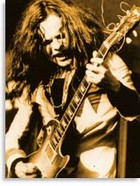
    Photo courtesy of the Sandhe Givens collection. Paul Kossoff at his last gig with Free, 1972.

    This article originally appeared in VG‘s May. ’00 issue.

  • Albert Lee

    English Country Gentleman

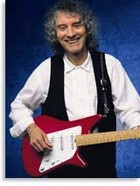
    Photo courtesy of Ernie Ball.

    Admittedly, Albert Lee doesn’t play a Gretsch Country Gent, but a more appropriate description of the veteran guitarist might be hard to formulate. Lee has been a respected musician for decades, and is considered more of a player’s player than a star, but his participation in bands fronted by Emmylou Harris, Joe Cocker, and Eric Clapton (among others) and in countless sessions have earned enough plaudits for the affable Lee to merit his own signature instrument by Music Man.

    Lee’s musical path deviated to country music more than many of his peers; in fact, a recent video retrospective (a two-tape set) is titled Albert Lee: Country Legend, and includes commentary from Lee about his influences and instruments, concert footage, and vintage performance clips by some of his heroes, including Chet Atkins, Hank Garland, and Grady Martin.

    That video documentary was the basis for several of our questions, but when VG went on the record with Lee, we also discussed some of the classic instruments he’s owned – and still owns. He recently attended one of the L.A.-area guitar shows, and brought a Gibson J200 with Everly pickguards given to him by Don Everly (the instrument had been seen in old Everly Brothers photographs and on an album cover, and Lee brought along those items, as well).

    Lee was born in Shropshire, near the Welsh border, in 1943. He noted with a chuckle that while he was a baby, his mother took him to London, but returned to the Wales area when the V-1s had begun falling on the city in the latter days of World War II. Ultimately, he grew up in the Greenwich area of southeast London.

    Vintage Guitar: I was going to start by saying a lot of the influences you heard when you were growing up were probably different from a lot of your peers. I have this policy of asking English interviewees about Radio Luxembourg, but according to your comments on the new video, you had a lot of the same original influences.

    Albert Lee: I think so; we all listened to the same stuff growing up. I first met Jimmy Page in London in ’61, and he was listening to James Burton, Scotty Moore, and Cliff Gallup with Gene Vincent, as I was. These were the rock and roll guys who really sparked our interest in the guitar, and later we delved into other things and went different directions. During my time with Eric [Clapton], we talked about what we’d listened to early on, and he was a huge fan of Chuck Berry and Jerry Lee Lewis.

    Then the obvious next question would be something along the lines of what and who brought about your orientation toward country music and fingerpicking.

    Well, the first country record I heard – and one of these days I’ll track down a copy – was called “Yodeling Bill” by Bill Carlisle, if I remember correctly; I was five or six years old. It was a 78, and one day I found it and ran from my dad so I could play it. But I dropped it and it broke, so that was the end of that. So if anybody knows about that record, I’m looking for it.

    I was listening to rock and roll in the late ’50s and early ’60s, and an album came out in England on Capitol called Country’s Best; it was just a compilation of Capitol artists like Ferlin Huskey and the Louvin Brothers. I liked most of the stuff on that record; I thought it was cool, but I was buying records by Buddy Holly and the Crickets; that was the first album I ever bought. I loved the Everly Brothers, and they kind of leaned toward the country influence in rock and roll.

    Was the term “rockabilly” being used then?

    Yeah, it was, and around that time I also heard Johnny Burnette and the Rock and Roll Trio, and I thought it was very cool, very raw, compared to the Elvis and Gene Vincent stuff. But I think I had more Gene Vincent records than anything else at the time. Of course, Cliff Gallup only did two albums with Gene Vincent, and then Johnny Meeks took over. I liked Johnny a lot, but not as much as I liked Cliff. It was Cliff who really hooked me, and I really worked at copying his solos, which had kind of a swing feel; they were different from what someone like Chuck Berry was doing.

    As for country music, I was buying a series of RCA EPs called Country Guitar. There’d be a track with Chet Atkins on it, ones with Don Gibson and Hank Snow. It was like a mini-introduction to country music. I bought four or five of those, but I wasn’t playing that style of music; in the early ’60s I was playing rock and roll in R&B bands, and in ’64 I joined a guy named Chris Farlowe; he had a record deal, so we went into the studio immediately. Eventually, he had a number one record, and that song was one of the things that he did that I didn’t play on (chuckles)!

    What kind of an artist was he?

    He was a very raw R&B singer. He was greatly admired by all the other singers at the time; Eric Burdon and Rod Stewart were big fans. Chris is still out there doing it.

    Let’s talk about guitars before we get too far along. I believe your comments on the video noted that your first instrument was a Höfner, then you had a Les Paul Junior, then a Les Paul Custom, right?

    Yeah, but I didn’t own the Les Paul Junior. My first decent guitar was a Höfner archtop, and I had a pickup attached to the end of the fingerboard. I didn’t have an amp, so I plugged into the back of a French tape recorder or the back of a radio.

    Actually, there’s one guitar I didn’t discuss: my first solid came along in 1959; it was called a Grasioso, and was imported. I thought it was a guitar like Buddy Holly played. I’d missed seeing Buddy Holly when he toured England in ’58 and I’ll regret that the rest of my life, but I had the Chirping Crickets record, which had a solid guitar on the cover, and if you remember, the headstock was cut off in that photo, so you couldn’t tell that the tuners were just on one side of it. So I bought that Grasioso guitar because it looked a little bit like the guitar Buddy Holly was playing. It had three pickups and a whammy, but the tuners were three-on-a-side. It was pretty expensive; about 85

  • Joe Maphis

    Rose Lee Talks About Joe Maphis

    Virginia-born Otis Wilson Maphis was truly a one-of-a-kind individual. From his earliest days in the 1930s as a guitarist and piano player for The Railsplitters, to his experience with Blackie Skiles and The Lazy K Ranch Boys, his nomadic work in hillbilly troupes on barn dance and radio shows, his extended tenure on the West Coast as leader of the “Town Hall Party” band, and his renowned work as a sideman backing legendary artists in Hollywood recording studios, Joe had quite a run in the business.

    Like fellow guitar great Hank Garland, Joe was influenced by Mother Maybelle Carter. He quickly developed an interest in nearly every stringed instrument imaginable. And what’s more, he found he could play them all and play the heck out of them. In fact, he was so good he became known as “The King Of The Strings.” Early on, Joe began to work out flat-picked versions of classic folk and country fiddle songs on the guitar, and this developed his trademark lightning-fast, ultra-clean style of picking – envied, emulated and copied by many players to this day.

    In addition to his skills as a picker Joe also sang, wrote songs, and even did some country comedy. In 1951, he teamed up with a woman who would be his personal and professional partner for nearly 35 years – Maryland native singer/guitarist/bass player Rose Lee Schretrompf. Joe and Rose Lee recorded for a number of labels (including Lariat, Okeh, Columbia, Starday and CMH) and perform in one fashion or another nearly nonstop for many years. Yet somewhere in the midst of two busy careers, they found the time to marry and raise a family, which included a son Jody who is active in the music business (he’s a drummer and a guitarist) to this day.

    It was also during the ’50s that Joe’s work with friend and fellow “Town Hall Party” picker Larry Collins produced some of the finest close-harmony guitar work in the history of country music. And talk about a sight on stage! Joe stood over six feet tall and usually wore a brightly colored Nudie suit. And Larry (a budding pre-teen at the time) had more energy than any five kids. And they both played cool-looking custom-made doubleneck Mosrite guitars. When it came to their guitar pickin’ on “Town Hall Party,” host Tex Ritter would frequently introduce them with, “On the doubleneck guitars, here’s the long and the short of it – Joe Maphis and Larry Collins.”

    Maphis’ background and recording career has been discussed in VG‘s “SPOTLIGHT” column (February and November ’95), but we have never offered an in-depth profile. And who better to provide detailed information on Maphis and his career than his wife, Rose Lee Maphis.

    Vintage Guitar: Let’s start by talking about your early days in the business. How did you and Joe meet?

    Rose Lee Maphis: We met on the Old Dominion Barn Dance in Richmond, Virginia. That was in 1948.

    When did you marry?

    February of 1952.

    What about the children?

    Jody was born in 1954, Lorrie in ’56, and Dale in ’57.

    That’s interesting . . Jody and I are about the same age. What was the first record label you and Joe recorded for?

    RM: I think the very first one was Lariat.

    Oh yeah! I have one Lariat 45 you guys did. It has “Square Dance Boogie” on one side and “Lonesome Train Boogie” on the other.

    (Chuckling) Joe and I did a duet, too.

    I know you guys did several sides for Okeh . . .

    Yes. That was our first major label. I think the first record was “Dim Lights..” (“Dim Lights, Thick Smoke (And Loud, Loud Music)”)

    Joe wrote that one, didn’t he?

    Yes he did.

    It’s become a country/honkytonk standard, hasn’t it?

    It has.

    Let’s talk a little bit about your Columbia Records period. When did you guys sign with Columbia?

    Okeh was a subsidiary of Columbia. We signed with Columbia right after Okeh. It could have been 1953, certainly no later than ’54.

    You and Joe recorded a fair number of records for Columbia. Do you have a particular favorite?

    Not really.

    You worked with Don Law didn’t you?

    Don was Columbia’s A&R man, and our producer.

    How was he to work with?

    Great! He let us do most anything we wanted. I don’t think he ever brought us any songs he wanted us to record. He depended on Joe to either write them or find them.

    So you and Joe pretty much controlled your entire Columbia song output?

    I would say so. Nowadays companies are much more picky on the songs.

    There’s a lot of politics, isn’t there?

    Yes. Definitely. But I think the songs may be better. The quality overall is better. Back then, Don would come to town and we were expected to do, I think, four songs. He never sent us any material to approve in advance. And he never, to my knowledge, asked to hear our songs in advance. It was just, “Do it!”

    Did you record your Columbia material in Los Angeles?

    All of it.

    Did you use Radio Recorders, like Larry and Lorrie Collins did?

    Yes.

    I gather that Don Law liked that studio . . .

    He did.

    What about “Town Hall Party” and “Western Ranch Party?”

    Well, when we first moved to California in August of ’51, we worked on channel 7 (KECA-TV) in Los Angeles, for a man named Bert “Foreman” Phillips. He had over three hours a day of TV time. I think this was spread over three different shows. He was supposed to have had a contract for seven years. I’m not sure, but I think Joe and I only lasted for a few months. We worked with Wesley Tuttle, and later worked with him on “Town Hall Party.”

    Wesley and his wife, Marilyn, right…

    Yes. After the channel 7 job ended, Joe and I worked up at Fort Washington Beach (near Fresno) for Bill Albany. Bill Albany and Bill Wagnon (producer of “Town Hall Party” and “Western Ranch Party”) were partners. Joe also worked for Cliffie Stone, on his show, “Hometown Jamboree.” Joe worked on “Hometown Jamboree” for several months.

    Speedy West and Jimmy Bryant were on that one, too.

    Yes.

    Was Joe part of the band?

    Well, he did specialty stuff. He wasn’t really part of the band. He was one of the features. Eventually, we ended up on “Town Hall Party.” Wes Tuttle would have a much better detailed recollection than I do as to exactly how it all came about, but I remember Johnny Bond, Wes and Marilyn Tuttle, Joe and I, Tex Ritter, Skeets Mc Donald, and some others were the first cast on the show.

    That was quite a show. It featured a lot of rockabilly and rock and roll guest stars. And this was at a time when the Grand Ole Opry and shows back East weren’t doing anything like that. I guess they didn’t want to take a chance on that wild new music, did they (chuckling)?

    (laughing) I’ll tell you, there was a real separation between the music on the West Coast, and in Nashville. On the West Coast, people danced and bands had drummers! Back in Nashville, they didn’t have dance halls. If you worked in a club, you weren’t considered a very nice person.

    So there was a social stigma?

    Yes. During the late ’30s and through the ’40s, every radio station had its own little combo of hillbillies. You would work an area a while then move to another radio station and work there awhile. Dance hall work just wasn’t something that existed on a big scale.

    You and Joe migrated west that way, didn’t you?

    Here’s how that happened. Joe and I were working at WRVA in Richmond, Virginia, on the “Old Dominion Barn Dance” (ca. 1951). At that time, I was also working in a duet with another girl. We were called The Saddle Sweethearts – Mary Klick and I. Nothing stays the same in this business and about this time, the “Barn Dance” was making some changes. Joe and I had decided to be a duet, professionally as well as personally. We decided to move on to Knoxville, where there was a pretty good-sized show going on. It featured Mother Maybelle and the Carter Sisters, and others. Right at this time Johnny Bond came through Richmond. He was working the Foreman Phillips shows with Merle Travis. Joe was friends with Merle, they had worked together at WLW in Cincinnati and also at WLS in Chicago prior to 1948.

    Foreman Phillips mentioned to Johnny and Merle that he was looking for someone who could play a lot of different instruments, to become a member of his show. Merle told Foreman, “I know just the guy you need, but you probably won’t be able to get him.” Foreman said, “Who is this guy?” Merle said, “Joe Maphis.” And Johnny Bond, who had just been through Richmond and knew of our situation, said, “He’s available.”

    How fortunate…

    (laughing) I think that’s how God works things out for you. So Foreman called Joe on a Saturday. We had planned to leave the following Wednesday to work in Knoxville. Instead, we left for the West Coast. And that’s how we ended up in California. And what a different scene. We were used to playing in school auditoriums, theaters and parks in the summer time. There were parks all over Virginia, Maryland, and Pennsylvania.

    Now you’re in L.A. and you’ve got that big dance hall circuit. That was a really big deal, wasn’t it?

    Oh yes! They had bands going round-the-clock because of all the defense contracting/airplane industry work.

    Did you and Joe play the Santa Monica Ballroom and the Palomino, places like that?

    Oh, yes. The first club date we had was the Blackboard Cafe, in Bakersfield, California. Joe and I had never worked with drums before. It was hard, at first, to get used to. And it was loud! I think our drummer that night was Johnny Couviello, who used to work with Bob Wills.

    All the people getting up and dancing while you were performing! That was strange to us. West of the Mississippi, people danced. East of the Mississippi, they watched and listened.

    That’s interesting.

    That’s how it was in the early ’50s when we got to California. We got used to it and learned to play with drums, and to play for dancing.

    When you and Joe ended up on “Town Hall Party,” you obviously made the switch to drums pretty well.

    Well, we had been at it for a couple of years by then. What they tried to do on that show was to please both the people who came to watch as well as the people who wanted to dance. The entire back portion of the building was for the dancing crowd.

    It was a big hall, wasn’t it?

    Yes it was! The “Town Hall Party” show was paced to please everyone. We mixed more up-tempo things for dancing and slower numbers for listening.

    I know you sing and play guitar. Don’t you play some bass, too?

    I could play a little bit of bass. I knew a few things, but I wouldn’t call myself a bass player. I could keep time, but not a lot beyond that.

    Your son Jody turned out to be a pretty fine picker. Larry Collins tells me he is also a fine drummer. The last I heard, Jody was playing guitar for singer Johnny Rodriguez.

    He is. He used to do a lot of drumming, real well.

    Do you have any favorites of all the people you worked with on “Town Hall Party?”

    I don’t know. You loved each one for their own reasons, really.

    It was quite an amazing cast.

    Oh, yes. At one time Spade Cooley was a part of the cast.

    I didn’t know that.

    Spade worked it quite regularly for a while. Tex Williams also worked it quite regularly, too.

    You had a lot of famous people on it.

    Yes. We also had Eddie Dean, Skeets McDonald, Merle Travis . . .

    Tex Carman, too . . .

    Tex Carman, that’s right. And of course Larry and Lorrie Collins.

    After the ’50s came and went, you and Joe did a fair amount of touring, didn’t you?

    Well, yes. Joe could have had a much bigger career doing sessions than he did. At that time, you were either available for recording sessions or you worked the road.

    It was difficult to do both.

    Joe tried to do both. Some people are content to just work in the studio. With Joe, he worked better with an audience.

    Larry told me Joe didn’t like to rehearse at all.

    No! Not at all (laughing).

    He liked to wing it (laughing).

    (laughing) That is so true. It was, “Turn the light on, and let’s go!” You know, Larry had such a talent! Joe would show him something backstage and Larry would go right out on stage and do it. People would say to Joe, “You taught Larry Collins, didn’t you?” And Joe would tell them, “No, l didn’t teach Larry. I showed him a few things.”

    Larry was incredibly sharp, with a lot of talent. Although I think Joe might be responsible for getting Larry to use his little finger. At first, Joe couldn’t get him to use it. One night, fairly soon after the Collins kids became cast members (Larry joined “Town Hall Party” when he was about 10 and his sister Lorrie was 12), Joe went home with Larry and Lorrie after the show, and I think Joe might have pushed too hard trying to get Larry to use his little finger. I think he hurt Larry’s feelings – maybe even made him cry. Joe said something to Larry like, “You’re not doing what I’m telling you to. You’ve got to work that little finger. Quit playing like your Mama (laughs)!”

    (laughing) Trying to shame him into using that pinky.

    Anyhow, it did effect Larry. You’ll have to ask him about it sometime. But I think Joe might have hurt Larry’s feelings a bit in order to get him to use that little finger.

    On the cover of the old Columbia album Town Hall Party, you and Joe are wearing some very cool matching pink suits.

    Yeah (chuckling).

    Who made those?

    Nudie.

    Do you still have them?

    Unfortunately, no.

    They were somethin’ else to look at.

    Joe and I never thought about holding on to stuff. We were never even big on pictures. Johnny Bond just took picture after picture.

    I’ve got a copy of that record, and l love those pink suits! I’ve seen several different pictures of Joe in that suit. He must have been fond of it . . .

    Uh huh. Now, though, I don’t know if you’d be caught wearing an outfit like that (laughing)!

    Well, that stuff appears to be coming back.

    Yes! Marty Stuart has been buying a lot of Rose Maddox and the Maddox Brothers outfits.

    Yeah. Those are incredible outfits! And what a perfect way to slide into my next question; why don’t you bring us up to date on what you’re doing now? It is certainly related.

    After being a country singer for a good number of years, I wasn’t really qualified to do much else. After Joe died (in June, 1986), I needed to get a job. Joe and I had worked the Opry before Opryland was opened and I had some contacts there. My daughter, Lorrie, suggested I call Bud Wendell,a nd he put me in contact with the personnel director at Opryland. The day I went in, they didn’t have much available. My son, Dale, was working at that time with the “Country Music USA” show (in the Opryland theme park). Dale was supposed to have a fitting for a costume that day and he asked me to go in with him and meet the ladies that do the sewing. I did. In conversation, I mentioned that I enjoyed sewing. The manager said, “Well, why don’t you come in and join us?”

    So you did?

    I did, but not right that day. Actually, the only job that was officially available that day through the personnel office was in merchandising – for “Hee Haw.” And that position required typing. I continued to look, and in early 1987, I decided to take the job sewing costumes until something else came along. I was hired as seasonal – like quite a few of the other ladies there.

    Eventually, I had another possibility to work on a permanent basis in the Opryland Hotel, but by that time I realized how important my job in wardrobe was to me. I was happy where I was. God knew me better than I did. I just had to find out for myself. The gals I work with are great, and I’m really happy with that job. We sew for the live shows in the Opryland theme park.

    Do you get involved with the Opry itself?

    No. We don’t sew for them.

    Not even if Porter Waggoner drops a rhinestone or two?

    (laughing) Well, maybe…


    This interview, by Jim Hilmar, originally appeared in VG‘s May ’98 issue.

  • Gerry McGee

    Venture of the Month

    Lead guitarist Gerry McGee has been in that position for the Ventures on more than one occasion. He’s had plenty of other diversions to keep him busy during “interim” times (including an acting career), but he’s been firmly ensconced in the “melody section” of the legendary instrumental quartet for over a decade (and McGee’s guitar duties for the Ventures date back to 1968).

    However, McGee has played on numerous other recordings as a session guitarist, and some of his licks are quite familiar to the general public (even if they don’t know it’s him). When Vintage Guitar went on the record with the affable guitarist, we began by inquiring about the area of the country where he was raised:

    Vintage Guitar: When we were setting this conversation up, I noted a Southern accent on the other end of the phone, and I thought to myself: “Hot damn! A good ol’ boy!” I’ll bet you had some Southern musical influences growing up.

    Gerry McGee: Yeah, I’m from Eunice, Louisiana, near Lafayette. That’s Cajun country, and my father was a prominent Cajun fiddler. He made a lot of records in the ’20s and ’30s. Cajuns are very musical; everybody plays accordion, fiddle, or guitar, so I played with all of my family members.

    But as I got into my teens, I decided that Cajun music wasn’t really what I wanted to play, so I began listening to country musicians like Jimmie Rodgers, Ernest Tubb, and Hank Snow. Chet Atkins was one of my early influences. Louisiana blues players like Guitar Slim and Gatemouth Brown had become pretty popular, so they influenced me as well.

    We didn’t have any expensive instruments. I went in the Army in 1955, and around ’56 or ’57, I invested in a Fender Stratocaster, my first professional electric guitar. I wish I’d kept it.

    Were you playing with some friends while you were in the Army?

    Right; I met a guy from Atlanta, named Jimmy Shaw, who was kind of like Elvis; he was sort of “charismatic,” and he was a good singer. He told me that when we got out of the Army, he’d like for me to come to Atlanta to get in a band with him, and that’s what happened when we were discharged in 1958. We played a radio show there in Atlanta called “The Georgia Jubilee;” it was like “The Grand Ol’ Opry” show. Performers from Nashville would appear there; folks like Don Gibson and Carl Perkins. Joe South was part of the band there at the time. I lived in Atlanta for about a year, then moved to Savannah and worked in clubs there.

    But, while I was in Atlanta, I met a Johnny Cash impersonator named Johnny Sea, and after I moved to Savannah, I got a phone call from his bass player, asking me to replace their guitar player. They were in Shreveport, Louisiana, so I moved there.

    Shreveport’s the home base of James Burton.

    I met James there in 1959, through the band I joined. He looked at my Strat and saw those heavy strings on it, and told me I ought to get some strings that I could bend (chuckles). But I needed the heavier-gauge strings for that Johnny Cash “chunka-chunka” rhythm on the low strings. I’d known a guy in the Army who put a second string in his third string place, where he could bend his “G” string, and James was doing the same thing, I really liked what he did with Ricky Nelson.

    Considering that era and your heavy-gauge strings, was Duane Eddy an influence?

    Not really; I liked Duane Eddy, but I didn’t try to get into that style. I tried to develop my own style, somewhere between Chet Atkins and blues players like B.B. King, and I was also trying to incorporate influences that I grew up listening to, like Jimmie Rodgers.

    As far as how your own style has developed, some people might not expect the lead guitarist for the Ventures to be a fingerpicker.

    (chuckles) That’s right. People will say things to me about how I’m not supposed to play guitar like that because the band plays surf music. I say: “Well, I don’t play surf music; we don’t play surf music,” although the band did record a surf album before I joined. Some of the comments we get are funny. The band must have thought my style would fit in with them; we do some things that are almost country. My fingerpicking thing came from my Chet Atkins influence.

    Where did you go after your stint in Shreveport?

    Things kind of wore out; I was broke and was sleeping in a car. I hitched a ride with a couple who was driving to San Jose; I told them I was going to Hollywood, because I wanted to try to become an actor. I had the phone number of Lance LeGault, who had been one of Elvis’ cronies for a while. James Burton has played with him, as well.

    I had a suitcase, a Telecaster, a little Magnatone amp, and $15 in my pocket. I’d traded the Stratocaster when I was in Shreveport. They let me out in Pomona, I checked into a motel, and found work at a club in a couple of days. That was in 1960; I worked at that club for about four to six months, and I bought an old ’53 Mercury convertible, which I wish I still had.

    Eventually I moved on to Hollywood. I went into a small club on Sunset Boulevard one night where a trio was playing, and it turned out the guitar player was leaving. I’ve been lucky; a lot of times the timing has been just right for me. I worked there for about a year; we were playing blues music and instrumentals. The place got to be quite popular, and a lot of stars would come in; I remember Clint Eastwood showing up when he played Rowdy Yates on “Rawhide.” There wasn’t any dancing, but the place would be packed every night. Glen Campbell came in one night and sat in with us.

    We decided to call ourselves Gerry McGee and the Cajuns, but nobody out there knew what a Cajun was, and they’d pronounce the word “Ka-hoons” (laughs). One night, a producer named Jimmy Haskell walked in; he was working with Ricky Nelson at the time. After one of the sets, he introduced himself, and asked if I did any recording. I lied and said: “Sure, all the time.” I think I’d been in a studio one time, somewhere in Georgia. He offered me a recording session with Bobby Darin. I was ecstatic, but real nervous, and I got more scared when I got to the session, because Howard Roberts and Barney Kessel were playing rhythm! I didn’t even read music, but I got through it.

    Did you stop doing the club gig and go on to studio work?

    No, but an arranger from New York named Don Costa came into the club, and offered to help us with some recording. We ended up with a contract with Reprise Records, and we recorded some instrumentals, which didn’t do much, but it was exciting for me to have something out. The band had Mel Taylor’s brother, Larry, on bass, and the drummer was Bill Lewis. The original drummer was calling himself Chet Powers back then, but he went on to become a singer named P.J. Proby.

    But before the singles came out, Don Costa referred the manager of a New York pop singer named Teddy Randazzo to us. He offered us an opportunity to go to Las Vegas to back up his singer, so we worked there from about ’62 to ’64; we’d go back and forth between L.A. and Vegas, and we went to New York a couple of times, as well, to do some recording.

    Things fell apart in ’65, and we all came back to L.A. I started trying to get work again; I’d gotten married in ’64 and had to practically start all over again. Around ’66, Bobby Hart called me about doing some session work for a band that was going to have a TV show; they were called the Monkees. Oddly enough, he told me he already had Larry Taylor and Bill Lewis lined up! We started rehearsing, and began recording in late ’66. I played on the first album, and half of the second album.

    What would have been the most-often-heard guitar lick of yours on Monkees songs?

    There’s this one chord at the opening of their theme song. That’s me, when they start singing: “Here we come….” I’m also on “Last Train to Clarksville.” Louie Shelton and I traded off a lot on those sessions; Louie went on to work with Seals and Crofts.

    What did you do after those sessions, up until the first time you joined the Ventures?

    I worked with Delaney and Bonnie, but I really started working even more after I joined the Ventures in ’68. I also worked with John Mayall and Linda Ronstadt. In ’68, I also worked on an Elvis movie called The Trouble with Girls.

    When I was playing in that little club in Hollywood, Mel Taylor and Don Wilson came in one night; Larry pointed out his brother and Don to me, and introduced us later. Around the time I had been recording with Delaney and Bonnie, Mel called me. I had an offer to go to England with Delaney and Bonnie, and a lot of people like George Harrison and Eric Clapton were trying to get them to come over there.

    Mel wanted to know if I’d be interested in joining the Ventures, and we met and played a bit. A couple days later, he called and said the job was mine if I wanted it, and I decided to take it, because I had a family, and this was closer to home; I felt like my having played a lot of instrumentals was a deciding factor, as well. I loved the blues Delaney and Bonnie were playing, but with all due respect to them, their lifestyle back then was too wild for me.

    Back then, did your fingerpicking style cause you to wonder how well your playing would fit in with the Ventures?

    Well, I didn’t really think about that; I figured I could adapt and adjust to whatever came up. The beginning was a little tough, because I had to copy a lot of the stuff Nokie did, but I tried to retain my individuality, and I eventually incorporate more of my own style into the music.

    The first time I was in the band was from ’68 through ’71. Nokie came back until ’84, when both he and I went on a tour of Japan with the band; Bob couldn’t go, so Nokie and I switched off on guitar and bass.

    What did you do in the interim?

    I started getting a lot of session work. In 1974, I began working with Kris Kristofferson and Rita Coolidge; that lasted about four years. I got into acting as well; I was in movies like A Star Is Born, Convoy, and Heaven’s Gate.

    I got to play with a lot of my rock heroes. I went on the road with Ricky Nelson, and I played with Jerry Lee Lewis for his film Great Balls of Fire.

    Let me back up a bit and ask what you played in the Ventures the first time around, and through your session work in between.

    I was using a Stratocaster, a Telecaster, and I had a Gibson ES-335 I used on occasion. I also used Les Pauls some. I used Fender amps; either a Deluxe Reverb or a Vibrolux Reverb for the most part, but I also used a Twin for live performances. As for acoustics, I had a Guild D-40, and I had a D-28 Martin for a while.

    Following your ’84 tour of Japan, did you stay in the band from that point on?

    Playing with Nokie on that three-week tour was a lot of fun, but I thought it was only temporary. Mel called me the next year and told me they were planning on doing a big two-month tour of the States, and Nokie was out again. That was kind of the beginning of my return. We toured a lot in the States through ’87, and in ’88 we started going back to Japan each year.

    Since you returned to the band, have you done any session work?

    I do some sessions occasionally, but I’ve gotten into working as an extra in movies. I had a bit part on a TV miniseries called North and South; I’ve done a lot of regular shows, too, like “Simon and Simon.” I recently did some music for a movie filmed in Louisiana called Dirty Rice; I also had a acting part in it.

    What’s your performance setup with the Ventures these days?

    I’ve used a Clapton Strat a lot, as well as a ’57 Vintage reissue Strat. I’ve got a lot of guitars, and sometimes I just grab whatever’s by the door when I leave (chuckles). Then there’s the new Ventures series of Fender instruments, which I like. I’m also having a custom guitar made for me; it ought to turn out nice and I’m looking forward to getting it from the builder.

    You played some acoustic guitar on the Live in Tokyo ’94 video.

    I think that was an Aria, which they gave us to use over there.

    There was an also an electric sitar on that video; was it an original Danelectro product or a Jerry Jones reissue?

    That was a Coral. Jerry’s reissues are quite good, and we did buy one last year becuase of some intonation problems on the Coral. This year we’re not going to be playing any “sitar song” on tour over there.

    Current amplifiers?

    I have a Matchless amp I like a lot, and a Fender Blues DeVille, which is like a 4 X 10 Bassman. I still have a Deluxe Reverb, and that’s about all I use domestically. Oddly enough, in Japan I use a Marshall! It seems to work well over there, but people think it’s strange to see someone in the Ventures playing through a Marshall, since it’s supposed to be a “distortion” amp, but if you tweak it right, you can get a clean sound out of it.

    You’ve been to Japan fewer times than the other bandmembers. Are you getting used to the culture differences?

    Oh sure. Japan has gotten to be a second home for me. It’s hard work while we’re over there, but the people are so nice, it’s worth the effort. The fans are great.

    Future plans?

    I may be doing another film in Louisiana, and I’ll probably be doing a solo blues album for a Japanese label. They have a blues festival there each May, and I may go there “on my own” for that event. But I think the Ventures will be going to Japan each year as long as the fans want us to come over.


    The drummer’s slot may have changed in the Ventures since this series of interviews with the band members was recorded, but they plan to continue providing their fans around the world with great instrumental music. Gerry McGee’s tenure in the lead guitarist position has meant a lot of memorable melodies have been heard by thousands of guitar lovers, and for all of his other talents, he looks forward to more Japanese tours and more fun with the Ventures. Their fans eagerly anticipate more years of great music, as the band approaches its 40th anniversary.

    Vintage Guitar would like to thank Barney Roach for audio-video assistance with the Ventures’ interviews.


    Photos courtesy of Taylor, Wilson & Associates, Inc. Gerry McGee sports a Fender Venture signature instrument.

    This interview originally appeared in VG‘s Apr. ’97 issue.

  • Scotty Moore

    One of the King's Men

    It was our annual Christmas party, closing out 1996. I work for Nashville recording artist Ronnie McDowell. Because we often work with Scotty Moore, D.J. Fontana and The Jordonaires, they always show up. This year something happened that I’ll never forget. A friend of Scotty’s said, “Kevin, can you come outside with me a minute?” She took me outside, to Scotty’s Ford Explorer. She opened the back and there was a guitar case with a huge bow tied around it. I thought, “What’s going on?” Then she said, “Merry Christmas from Scotty…he wants you to have this.” I opened it up and it was a 1981 Blonde ES-335 reissue.

    What do you say? What could I say? I was speechless! Needless to say, I will treasure this gift all the days of my life. As I’ve had the pleasure of working with Scotty over the past few years, we have developed a special friendship. In the eyes of many people, Scotty is an innovator and a legend. I consider it a privilege to know him, and to conduct this follow-up interview. (VG, Dec ’93)

    Vintage Guitar: So what’s been going on since our last interview, in 1993?

    Scotty Moore: Wow, Kevin, has it been that long? Time sure does fly! Well, let’s see, I think we were getting ready to do the Elvis Tribute show at the Pyramid in Memphis about that time, and I was glad to get you and Steve Shephard on there with D.J. and I, and Lee Rocker. And that was our band [that] backed Michael Bolton, Carl Perkins, Chris Issac, Bryan Adams and Kris Kristofferson. And, by gosh, I think we did a helluva job. It was a worldwide pay-per-view show.

    How about the Washington Monument event with Carl?

    That was 1995, I believe. I forget what the official name of it was, but they did an all-day of roots music – every kind of music you can imagine from around the country – New Orleans Jazz to Indian flute players, R&B, you name it. I met and became good friends with (blues guitar player) Joe Louis Walker. He was on the show. Of course, we did some of Carl’s tunes plus some Elvis songs that Carl sang. And it was reported somewhere between 400 and 600,000 people. There were a couple of other stages where people could move from one place to the other.

    Let’s talk about the Olympics last summer in Atlanta?

    Oh yeah! We played like a pre-show downtown at Centennial Park. We played that with you guys, The Rhythm Kings, and your boss, Ronnie McDowell (a respected Nashville artist known for doing many of the Elvis vocals in most of the movies about Elvis). We were fortunate to be there a day or two before “the big bang” and then we got the heck out of town.

    What is All the King’s Men, and how did it come about?

    A fellow by the name of Dan Griffin, who does a little of everything – promotes, does bookings – he’s been a friend of D.J.’s for a while and he just had this idea that he would like to do a CD and documentary film on what started out to be the Blue Moon Boys, which was Elvis, Bill Black and myself, and of course, D.J. joined us a little later. So he came and talked with us about it. Initially, we weren’t jumping up and down, then we told him we would definitely have to include stuff on Bill; so we finally agreed to jump into it and I guess we’ve been there for almost a year, but there was no deadline. I had already been working on my book which I said I probably would never do but my daughter kind of talked me into doing it. So it looks like both projects are going to come out together sometime in the summer of ’97. The CD should be out about mid-June and the book, entitled That’s Alright Elvis, will be out around the 15th of July and the film documentary around the first of August.

    It’s not your typical Elvis tribute. We tried to get people who claim they were influenced by the music more than our lead singer. We really had a ball with it. We told everyone to bring a song; we wanted all original material and as many different styles as we could get. I’m real proud of the fact that I believe that whatever kind of music a person likes, I believe he’ll find at least one cut on there to really enjoy.

    What artists participated?

    Well, we got Ron Wood of the Stones, and Jeff Beck, they came up with a thing they wrote themselves. In fact, we went to Ron’s house in Ireland – he has a studio there – and recorded the song called “Unsung Heroes.” We had a ball; you couldn’t beat the hospitality. We were there for four days. It didn’t take that long to cut one song. It was a lot of party time; I’ll put it that way.

    Then we had the reunited Bill Black combo, that was a ball. We had Reggie Young (guitar), Ace Cannon (sax), Bobby Emmons (organ), and Jerry Arnold (drums), which were all the originals. Also, Mike Leach on bass and Bobby Woods on keyboards. Reggie and Bobby wrote the tune that we did called “Going Back to Memphis.”

    The tracks still have the original Bill Black feel, but it’s updated just enough to get it into the ’90s. When we got together in the studio, the Bill Black stories were knee deep. From two sides, the years D.J. and I worked with him, with Elvis, and of course then the guys from The Combo. It sounded like the old radio program “Can You Top This?” But I believe he was there in spirit for everybody.

    We also did one with The Mavericks, and with Joe Louis Walker. He did a cut called “Strange Love;” it came off really good, too. Tracy Nelson did “Is All of This For Me?” And she’s a story by herself; a great, great blues singer, but this tune is a little different touch for her. We did one with Steve Earle and brought in Lee Rocker, who played the slap bass. I believe you, Mr. Woods, played guitar on that one too.

    Also, we have the Bodeans, who are out there pushing the envelope right now. Cheap Trick ended up with a little different type thing than they normally do, but I think people will like it. And Joe Ely did a neat song.

    How about your trip to New York to meet up with The Band, and Keith Richards?

    Yeah, D.J. and I went up to Woodstock at Levon Helm’s studio. It was way out in the woods in a beautiful, huge log studio. Keith Richards came in and did the vocals with Levon. Again, a big party, but we did get a good cut out of it.

    You even got to do a song with my boss.

    Sure did. We did a song with Ronnie McDowell and his band, The Rhythm Kings, that Ronnie wrote. Along with D.J. and myself, we had Farrell Morris come in and play vibes, and our musicians union president, Harold Bradley. He brought out his old Stromberg guitar to play the archtop rhythm (note: this is the same guitar Harold used with Elvis, Roy Orbison, Patsy Cline and numerous others). He also played tic tac bass. Our old buddies, The Jordanaires and Millie Kirkam, did the background vocals. I think it’s a hit record. It’s Ronnie, but it’s something Elvis would have grabbed if they would have had that song back in his day.

    Are there any future plans of a tour to support these projects?

    There’s nothing definite yet. Of course, any time you have a book, there’s going to be book signings and stuff. We’ll do bookstores that handle both audio and video. And some of the stores want to have the CDs available at the same time. So that part looks real good.

    Obviously, with so many different artists involved with the CD, we could never get all of them together at one time for a show, I don’t think. We’re going to try to do some shows where we’ll have a few of the acts on the CD. There’s talk about an overseas tour. There a good chance the documentary will be aired on VH-1 this summer. All I can tell you is the boys at the front office is working hard. And I’m anxious to get back on the road with you guys.

    What’s this about a Scotty Moore guitar?

    All of the Sun Sessions, with the exception of the last one, I had the ES-295, which was the gold beefed-up version of the ES-175. So Gibson is reissuing that. Supposedly, the Scotty Moore Signature Model. I saw a blown up picture of one the other day, and best I remember, it looks identical to the one I had, including the old tailpiece.

    Any modifications?

    The only is where they are putting my signature is on an arm rest or sort of like a finish protector.

    Do you know how many will be made?

    Not really. I think they planned the initial issue to be around 200, which in the guitar world is a bunch.

    Have you bought any new gadgets lately?

    No, not really. I’m still using the Gibson Chet Atkins Country Gentleman he gave me back in the late ’80s. I got another Super 400 and L-5 since I started back playing, but the thinner Country Gentleman kind of rides better on the big belly (laughs).

    You’ve still got your original Echo-Sonic amp, don’t you?

    Yeah, sure do, it still works.

    Didn’t you also go to New Jersey to a notable guitar collectors gathering?

    Yeah, and what a gathering! This was at Tom’s River, New Jersey, at the home of Scott Chinery, who supposedly, and I have no reason to doubt it, has the largest guitar collection in the world. I’ve never seen so many guitars in my life. Gibson, D’Angelico, Stromberg, mostly all vintage stuff. He commissioned different guitar makers to do a blue collection, and all of them were done in blue finish. They were some really nice guitars. By the way, you’re the one that got me turned onto the vintage route anyway. If you remember, I went down to the Arlington guitar show in 1993 as a result of you contacting The Four Amigos. And again, I’ve never seen so many guitars in all my life.

    A lot of other famous guitarists were on hand too, I heard.

    A lot of them. I got to meet one of my idols, Tal Farlow. That was a real treat for me. He’s got fingers about four feet long!

    Okay Scotty. Again, it’s been a treat, and I wish you the best of luck on all present and future projects.

    Well, I appreciate that Kevin, and it’s been a real good pleasure for me for the last few years working on stage with you and Ronnie. Incidentally, we are also coming out with a new CD this summer. We recorded this project about three years ago with D.J., The Jordanaires and myself. We recorded around 20 old Elvis tunes and tried to pick the ones that were never played. We tried to do them with a little different twist rather than copying the original versions. I think Elvis fans will really enjoy this! It was fun!


    Photo: Ebet Roberts, courtesy Sweetfish Records. Scotty Moore plays a Gibson Chet Atkins Country Gent-leman.

    This interview originally appeared in VG‘s Aug ’97 issue.

  • Popa Chubby

    Bowing to the Father Figures of Blues

    People tend to notice when Ted Horowitz (a.k.a. Popa Chubby) sets foot onstage to tune up. They might not notice as he spins the volume knobs on his amps to 9. But when he strikes a chord, heads definitely turn.

    On a fine evening in California he plays a sunburst ’66 Strat, one of 40 noteworthy guitars in his collection. Midway through the first set, the B string pops. But Popa is doesn’t miss a note, finishing the set so seamlessly few in the packed house even notice.

    Throughout the evening, Popa works the crowd like a true blues man – building it to a frenzy, then dropping it down with a precision reminiscent of the late Freddie King.

    He is blues guitarist/vocalist/songwriter/performer extraordinaire rolled into one big package. The band, backed by bassist Chris Jefferson and drummer Paul Richards, plays about 250 dates a year, primarily on the East Coast and in Europe.

    Vintage Guitar: How did you come by the name?

    Popa Chubby: It didn’t start out [as my name]. It [was] the name of the band. The Popa Chubby Band, like “Come out and pop a chubby with the Popa Chubby Band,” you know? Then of course, people started looking at me goin’, “Hey, Popa Chubby,” because I’m um… chubby, you know (laughs)? What can I tell ya’? I guess I reminded them of their father, I don’t know. I got nailed with the moniker and it stuck. I could put out a Ted Horowitz album tomorrow and no one would buy it.

    Were you raised in a musical household?

    My family didn’t play music – my mother sang beautifully and encouraged me to sing and play instruments – but everyone in my family was a big music fan. My father and mother dated during the bebop era – late ’50s/early ’60s. And I was told they spent every night on 52nd Street, seeing people like Monk, Bird, and Coltrain. They were big jazz fans, and dad was a big blues, R&B, and rock and roll fan. I was born in 1960, and my father took me to see Chuck Berry when I was just a little kid – maybe five years old. I remember seeing this guy playing guitar and I thought, “Whoa!” It was the coolest thing. I thought Chuck Berry was a god, and he very well may be.

    What are some of your more memorable performances?

    I kind of got my first big break because of Southern California’s KLON radio station. In 1991 they had a nationwide blues talent search and my mentor, Buddy Fox, said I should enter. So I sent a tape. First they had regional playoffs, and I won that, and then they shipped me to California for the finals, where they had all the winners from the different regions.

    I remember we played a slow blues, and I just looked out at the crowd, hit a high note, and just held it. And people got to their feet. And at that moment, it just hit me, and I went, “Man, I can do this…I can do this!” And the crowd was digging what I was doing. It wasn’t that I was playing anything that great, and it wasn’t that I was playing anything anybody else hadn’t played before. It was just that I was playing, you know, and they were responding to the energy and emotion I was feeling. And I found that very overwhelming.

    One of the only other players I’ve seen play with your intensity and ability to channel during a solo was Stevie Ray Vaughan.

    Stevie Ray was a rebel unto himself, and no one could touch him for what he did and what he brought to music. He is one of those guys who you just aspire to. You gotta understand that Stevie Ray was an overnight sensation that took 15 years to make. You know, he was playing every dive in the country for a long time before his first record ever came out. Stevie Ray Vaughan became Stevie Ray by copping a lot of different artists – Albert King, Hubert Sumlin, Lonnie Mack, Kenny Burrell, and a lot of others, and he created his own style. He had a lot of different influences, but he stayed true to the blues.

    My wife is from Toronto, and she was working at El Macambo [when that performance was filmed]! I’ll tell you one thing, man – Canadian blues fans are really happening!

    You play in Europe frequently. How is that different from stateside?

    I tour Europe a lot, and the sole reason is that in Europe – and other foreign countries – they seem to have a far greater respect for the music than Americans do. In America, everybody’s looking for the next big thing, and no one takes a minute to appreciate stuff for what it is. The music isn’t judged on whether or not it has merit or integrity anymore. That’s the problem with the music scene in America, especially with the blues scene.

    What you have happening now is you’ve got a lot of old timers still out there doing their thing – B.B. King, Buddy Guy, guys of that ilk. And then you have a lot of guys out there just latching on to that, and I think there are a lot of good players who aren’t even getting noticed in their own country. Walter Trout comes to mind. Walter is un****ing real – one of those guys who does well in Europe and is virtually unknown in the U.S. I played a Jimi Hendrix festival in Holland with Walter, Pat Travers, myself, and Omar Dykes. We did five dates, and everybody played Hendrix songs. I believe a record of it was released on a Dutch label called Provogue.

    At the show, I was very impressed by the way you finished a slow blues number then jumped into a charged jazz/swing tune.

    I’m tryin’, man! Swing is a feel, and everything has got to swing! Guys like Hollywood Fats and T-Bone Walker, Charlie Christian, and Duke Robillard – man, those guys… I bow to them! They are the masters, and I’m just a disciple trying to learn. And I love the bebop players. One of my biggest influences is Thelonius Monk, a piano player. But man, the way those guys swung! It’s all about swing! Bennie Goodman, Gene Kroupa!

    I have a little problem with the current “swing revival.” I think it will go the way of the Lambada and I want people to remember one thing – that the whole swing revival was started by a Gap ad. So don’t be brainwashed. I love jump and swing music, and I love great swing guitar players. But think for yourself – don’t confuse the music with the fad.

    You played an outstanding solo rendition of “Sleepwalk” the other night. You ought to release that.

    That’s funny, because I did an okay version of it, but when I listen to Danny Gatton’s version…man! Or when you listen to the original version by Santo & Johnny… I just love that melody. I really dig old surf music. I love surf guitar, I think it’s the coolest – Dick Dale, The Ventures, The Chantays.

    Who’s the best guitar player in the world?

    Jimi Hendrix, without a doubt. And luckily there’s a wealth of his stuff to listen to. Some of the stuff they re-released is really incredible. Just the way he orchestrated things. And a lot of the swing players…T-Bone Walker, definitely,

    Freddie King totally kicks my butt, and B.B. King, Albert King. Albert was a very influential guitar player. I always say that every blues/rock guitar player owes a debt to Albert King because whether they know it or not they’re playing his licks. And backing up Earl King when he played at Manny’s was pretty memorable. And Carlos Santana! The last guitar player I saw who totally blew me away was Carlos!

    Carlos has always exhibited the most tasteful phasing, and tone to die for! A very serious musician.

    He takes responsibility for his music. You gotta realize that Santana is more like a jazz cat than a rocker or blues cat. He’s approaching the music with that integrity, so people who approach the music seriously tend to be serious people. And Carlos has outlived many of his peers. He knew Jerry Garcia, Hendrix, Janis Joplin, all those cats. And he’s still here, and they aren’t. He’s a very serious, very spiritual cat, and I think the spirituality in the music is very important. It’s part of his culture.

    Tell us more about your stint at Manny’s Car Wash in New York. You hosted a popular jam there.

    Every Sunday for three years! A story about that will be on the next record. We also backed up many of the acts that came through, like Earl King! I rehearsed for an entire day to make sure we knew all his material. He wrote so many songs, like “Come On… (Let The Good Times Roll)” which Jimi and Stevie Ray covered, and countless others.

    There were just lots of amazing people, and they all had the blues in common. They play the blues because it’s in them and because it’s a part of who they are. And that’s the kind of thing learned from all of them – you just go out and do your thing. You don’t play the blues, you let the blues happen!

    You played in a lot of different bands – including punk bands – before deciding to play blues.

    I wanted to become a better guitar player, and I couldn’t really do it in the situations I was in. It’s like playing in a pop group or something – you learn these 10 songs, you’d play them the same exact way every night, get your two-bar solo, and that’d be it. So I said, “Man, I gotta play in blues clubs,” because number one, I love the music, and number two, I can play three sets a night. Not only that, it’s the only way to improve. A lot of people come up to me and say, “I wanna get better on the guitar. What should I do?” I’m like, “Play! Pick up the guitar and play.” Everybody thinks that there’s some magic pill or lesson. But really you’ve got to put in a lot of hours to get one iota better!

    How much do you practice?

    I play three to four hours a day, at least. I like to sit in the dressing room a few hours before a show and play through a Korg Pandora’s box with the drum machine.

    Did you ever take guitar lessons?

    I have, but never with one person for a long time. One of the people who really helped me out was Alex Adrian, who started the guitar department at Berkeley. He showed me how to develop the muscles in my hand so I could facilitate what I wanted to do on the guitar. The whole thing about taking lessons is that everyone has a very individual way of approaching music, and if you can find one teacher that’s going to accommodate that, you’re lucky. If I’m in a music shop and I hear somebody do a lick, I’ll say, “Hey, show me that lick.” I’m not proud!

    And how about songwriting and lyrics?

    Two words – Willie Dixon. He was and is the godfather of the blues, the father of rock and roll, and my biggest influence as a songwriter. It always comes down to him, and then people like Tom Waites, Bob Dylan, and Jimi Hendrix.

    Willie Dixon had the ability to take the most complicated, complex thought, and put it to pen and paper in a way anybody could relate to. It’s like “Sleepwalk.” Why is it so beautiful? Why do you love it so much? Because of its incredible simplicity and immediate, beautiful melody. And that’s what I try to do with my songwriting. It’s like I don’t try and write over people’s heads, but at the same time I try to get my point across in a musical sense. It doesn’t have to be complicated to be complex, and usually the simplest stuff is the most difficult.

    I see a lot of Freddie King style in your stage performance, especially your version of “Living In The Palace Of The King.”

    That was totally a tribute to Freddie! Freddie had that fire and to me he was the man, the link between blues and rock. His music is high-energy rhythm and blues, and what is rock and roll except high-energy rhythm and blues? Freddie was playing this badass blues guitar, speaking his soul every time. And that’s a reason I wouldn’t cover “Hideaway,” I think it would be blasphemous. There are only two versions of “Hideaway,” Freddie’s and John Mayall’s (with Eric Clapton), which is just as important to guitar as Freddie’s.

    One of your studio album is called One Million Broken Guitars. Readers might think you abuse guitars!

    I don’t abuse guitars, I abuse people! No (laughing)…I abuse drummers…but they’re not people. Just kidding!

    Unfortunately, I’ve suffered some damage to guitars I really loved because when you’re on the road that happens sometimes. So I’ve got a bunch of broken pieces of guitars. Actually, part of the idea for the title came from the movie Austin Powers, where Dr. Evil says, “One million dollars. We’ll hold the world ransom for one million dollars!” I thought, “Wow! One million broken guitars!”

    And then there’s the fact that if you want to make an omelette you gotta break some eggs. I mean, by the same token I don’t believe in treating guitars reverently, either. It’s just a piece of wood, and the harder you play it – and the more you play it – the more it’s gonna give you back. Guitars learn tone. Wood learns how to sound, and a guitar that’s been played a lot is going to sound better than a guitar that has never been played.

    The liner notes in one of your albums states, “This record is dedicated to those who refuse to turn down!”

    Damn right, man! I started out as a drummer, and I couldn’t play drums because they were too loud! So what did I do? I picked up the electric guitar. The minute you plug in your guitar everybody around you tells you to turn it down! But being a kid you have those moments where you crank the amp up to 11, hit a big open A chord, and it feels like the best thing that ever happened! Then you go to your first gig, and the first thing the sound man tells you is that the guitar is too loud. I just got to the point where I went, “Look, this is how I play, and this is how I sound, and if you don’t like it, screw you – fire me!”

    So I got fired a lot. But I always finished playing the gig! But then they’d look around and see that the club was packed, and the bar was doing very well. Then they’d say, “You know, you’re not that loud after all!”

    When you’re playing the clubs in New York either you go the way I did or you turn down and play softly. Then you’re never playing with your full intensity or soul. But I have definitely paid the price!

    And I’m glad you did point that out, man, because the sound of a loud guitar is one of the best things in life!


    Photos courtesy of Popa Chubby. A recipe for scorching blues – Popa and his ’59 Les Paul Special.

    This interview originally appeared in VG‘s Dec ’99 issue.

  • Mick Ralphs

    The Original is Still the Greatest

    The only guitarist to appear on every Bad Company album is the redoubtable Mick Ralphs, whose on-the-money sledgemhammer riffs were already known by serious fans of rock guitar prior to the formation of the band in the mid ’70s. Ralphs was the original lead guitarist for the legendary British band Mott the Hoople, and his blistering, powerchord-based chops were a staple of that band’s first half-dozen albums. The first four (the self-titled debut album, Mad Shadows, Wildlife, and Brain Capers) were on the Atlantic label, and were produced by Guy Stevens (now deceased). Mick was also on the band’s first two Columbia efforts, All The Young Dudes and Mott, then bailed to co-found Bad Company, which experienced more commercial sucess than the founders of Mott the Hoople could probably have ever imagined, and the new band adhered to a basic song-oriented style Ralphs loved.

    VG first interviewed Ralphs in June of ’94, when he and Simon Kirke were on the road with an alternate version of Bad Company that garnered its share of success from the mid ’80s to the mid ’90s before the original Bad Company reunited to work on new songs and a tour for its The Original Bad Co. Anthology compilation. Ralphs was his usual upbeat mood when he brought VG up-to-date on the Bad Company saga.

    Vintage Guitar: The last time we talked on-the-record, the release of Bad Company’s live album was pending. There was an intriguing line on its cover that said, “This is a true live recording.” Details?

    Mick Ralphs:I think the recording was taken from a radio show we did in New York, like one of those Westwood One things. There were no overdubs and such.

    1996’s Stories Told and Untold was intriguing mix of new material and older semi-acoustic versions of Bad Company songs. How involved were you in those recordings?

    Well, it came about during a bad time for me. I came off the road and had some domestic problems, so I did some work on it before they went to Nashville to do it properly. I couldn’t go, so I did some guitar parts at Dave Gilmour’s studio on his houseboat.

    It’s ironic the original Bad Company reunion had its beginnings at the funeral of the band’s former manager, Peter Grant.

    That was the catalyst. We had to get together to take care of some business stuff and found ourselves spending more and more time together, and it was obvious to me the chemistry was still there, like we’d had in the early days. But there were still no plans to do anything together as a band. The record company wanted some unreleased tracks for the anthology. We had some stuff in the vaults in England that we hadn’t looked at for a number of years. Paul was living in Canada and Simon was living in New York, so it was going to be difficult to get everyone to London.

    Paul suggested we cut new tracks, and I thought that was a good idea because I’d been at home writing songs. I had a stockpile of material I wanted to put out. I didn’t particularly want to go back on the road again, but when we started to think about doing new songs, it represented a good opportunity. We all went into a studio in England, ran through the new material, and actually did the whole session in about three days!

    Some might suggest knocking out the new songs in such a short time period is indicative of how well you work together.

    And we hadn’t really seen each other in 20 years! We had the vocals and the backing tracks down the first day. The next day, we listened to what we had, and ended up cutting a couple of other tracks. Paul mixed the tracks in Canada.

    In our first interview you said you had boxes of concert tapes the original band recorded. You cited “El Paso 1975,” an as example. Was there any thought of putting any of those live cuts in the anthology?

    No live tracks, but it has some alternative mixes and alternative versions of some songs. We never got the rights to use any of the live stuff, but we’re recording every show and hoping that we can come up with a live album from this tour. It’s being recorded on DAT, so it’ll be better quality than the older live material. At the end of the tour, we’ll sit down and sort through what we got.

    What guitars are you using on this tour?

    I’ve got a ’59 Les Paul I haven’t had long. It’s not in mint condition, and it doesn’t have the original finish, but it plays really well. I’ve also got a couple of reissue Les Pauls – a ’59 and a ’58. I still have that old Fender Esquire, which I use for open tunings.

    VG: Backstage at Pensacola in ’94, you had a ’59 slab-bodied Epiphone single-pickup guitar. Do you still have it?

    Yeah, but it’s at home; they’re very rare, and have become quite collectible. Since then, I’ve got a two-pickup model in a sunburst finish. They’re great guitars, if you can find ’em.

    Any idea what (erstwhile Bad Company members) Rick Wills (VG, November ’95) and Dave (Bucket) Colwell (January ’97) are up to?

    Well, I still speak to Bucket occasionally; we did a couple of little pub gigs. I think Ricky Wills may not be in music anymore; I think he’s doing something with computers.

    Other than the proposed live album from this tour, are there any long-term plans for the original Bad Company lineup?

    I think everybody’s got their own things they want to do. We’ll take this as far as it’ll go, but Paul’s got his own career going, and I don’t really like being on the road that much anymore. I’d like to be in a situation where I could just write songs and record them. It would be nice to do some dates in Europe with the original band. There’s a lot of interest in that, but we’ll just have to see. Touring the States can be quite grueling, but it’s part of the job.


    Mick Ralphs Discography

    With Bad Company:

    Bad Company, Swan Song/Atlantic, 1974

    Straight Shooter, Swan Song/Atlantic, 1975

    Run With The Pack, Swan Song/Atlantic, 1976

    Burnin’ Sky, Swan Song/Atlantic, 1977

    Desolation Angels, Swan Song/Atlantic, 1979

    Rough Diamonds, Swan Song/Atlantic, 1982

    10 From 6, Swan Song/Atlantic, 1985

    Fame & Fortune, Atlantic, 1986

    Dangerous Age, Atco, 1988

    Holy Water, Atco, 1990

    Here Comes Trouble, Atco, 1992

    The Best Of Bad Company Live…What You Hear Is What You Get, Atlantic, 1993

    Company Of Strangers, East West, 1995

    Stories Told And Untold, Elektra, 1995

    The Original Bad Company Anthology, Elektra, 1999

    Mick Ralphs’ Solo Album:

    Take This!, Griffin Music, 1984

    With Mott The Hoople:

    Mott The Hoople, Atlantic, 1969

    Mad Shadows, Atlantic, 1970

    Wildlife, Atlantic, 1971

    Brain Capers, Atlantic, 1971

    All The Young Dudes, Atlantic, 1972

    Mott, Atlantic, 1974

    Greatest Hits, Atlantic, 1975

    Backsliding Fearlessly: The Early Years, Rhino, 1994


    And there you have it. A legendary quartet reunites for laudable and legitimate business reasons, records some new tracks to prove it’s still compatible after two decades apart, and tours to support its efforts, with no predictions, pretense, or hype about the future. The original Bad Company earned its place in rock history by purveying straight-ahead songs that still hold up, and the new anthology CD and tour were affirmation of the band’s staying power in the annals of rock music.


    Photos courtesy of Elektra.

    This interview originally appeared in VG‘s Nov ’99 issue.