The fixed Melita bridge on this ’53 makes it uber-rare.
The romantic concept of the “Old West” – an enduring element of American pop culture – was spurred by pulp novels before John Ford introduced the world to My Darling Clementine and “Gunsmoke” arrived on the small screen.
’54 Round-Up: Dave Rogers/VG Archive. “The tortoise pickguard on ’50s Round-Ups was prone to disintegration, so precious few have survived,” notes Edward Ball. “Accurate reproductions are available, so collectors should be wary of any that remain in mint condition.” This one has the more-common floating Melita bridge.
By the 1950s, everything from clothing to toys to candy had been offered to consumers using imagery of dust-blown frontier towns, singing cowboys high upon a steed, and buckskin-clad hombres spinning a six-shooter. In the music-instrument biz, the Gretsch Company – underdog in the burgeoning market for electric guitars – couldn’t be faulted for delving into trendy gimmickry with the model 6130 Round-Up.
Gretsch begrudgingly waded into building solidbodies in late 1953, when it launched the Duo-Jet to join Gibson’s Les Paul in chipping away at the dominance of Leo Fender’s Telecaster. And while its shape may have been borrowed, the Duo-Jet brought a sound, feel, and look all its own thanks to a “chambered” body (really, it was just substantially routed for electronics), DeArmond Dynasonic pickups, sophisticated Melita bridge and a top made of a thin piece of black plastic that Gretsch otherwise used to wrap drums. It had a fretboard with big pearloid block inlays, chrome hardware including oversized control knobs, a fancy archtop-like tailpiece with a “G” cut out of its center, and a multi-layer floating pickguard made of plastic. A truly dapper effort, it enjoyed a modicum of success, getting snatched up by high-profile rock-and-rollers like Bo Diddley and Cliff Gallup. If a particular one eventually earned “most heard” honors, it would be George Harrison’s, bought second-hand and used during The Beatles’ early days in Hamburg and on the band’s first few albums.
But what about the country crowd? Was Gretsch content to let Fender’s new Strat join the Tele and wander that world unchallenged?
The Silver Jet was as laser-focused at rockers as the Round-Up was at country pickers.
Nope. Because amongst that late-’53 batch, Gretsch built 50 (batch numbers 12100 to 12149) guitars it called the Round-Up. Breaking dramatically from the Duo-Jet’s look, it had a pine top bearing an orange/brown stain that resembled antique furniture, maybe with a knot or two. And while that alone didn’t whisper “come hither” to a player whose stage attire included a Stetson, there was a decided lack of nuance to the oversized cattle-brand “G” burned into its front and the chuckwagon belt buckle at the top of its tailpiece. Indeed, where other guitars carried genre-specific connotations, Western-themed etchings on the Round-Up’s fretboard inlays, the steer’s head inlaid with pearl on its headstock, the tortoiseshell pickguard with engraving to match, and belt-like tooled-leather edge trim with upholstery tacks left no doubt about its target audience.
All that Western accoutrement aside, though, the 6130 was indeed a Jet, subject over the next couple years to the same changes in pickups, control knobs (going from “plain-topped” to “arrow-topped” in ’55), bridge, fingerboard markers, etc. But where the Duo-Jet would remain the company’s stalwart electric, the Round-Up quickly fizzled; Gretsch records do not show any having been made in 1956 followed by a single batch the next year.
“The ’57 Round-Up is a real anomaly,” said Gretsch authority Edward Ball, who penned a feature on the early Duo-Jet in the February ’11 issue of VG and also wrote Ball’s Manual of Gretsch Guitars – 1950s. “The advent of the 6121 Chet Atkins Solidbody basically killed the Round-Up in early ’55, but in ’57 a batch with numbers starting at 234XX includes 50 Round-Ups with hump-block inlays, horseshoe headstock motif, and the 6130 model number stamped on their labels. Several in the group also had some of the earliest documented Filter’Tron pickups; one of them is part of the vintage Gretsch collection that Randy Bachman sold to the Gretsch Foundation in 2008.”
’54 Gretsch brochure courtesy of Edward Ball. This page in a ’54 Gretsch promotional brochure shows the Duo-Jet and Round-Up introduced at the same time.
Gretsch last acknowledged the 6130 in a 1958 Project-O-Sonic flier, where it used a picture of a ’57 to illustrate the new Filter’Trons, Space Control bridge, and the thumbnail fretboard inlays.
Whether or not it’s gold, all that glitters comes with a price. At $300 retail, the Round-Up was more than a couple notches above the Telecaster ($189.50), the ultra-modern Strat ($229.50), the Les Paul goldtop ($209) and even the metallic-drum-plastic-topped Silver Jet ($230) introduced by Gretsch in ’54.
Though the Round-Up lost the draw, its Western dress lived on thanks to the 6121 Chet Atkins solidbody, the 6120 Atkins semi-hollow, and the 6022 Rancher acoustic (VG, January ’11). As Atkins’ influence increased, he urged Gretsch to ditch the Western sketches from guitars bearing his name, but he look resurfaced in ’74 on the 7620 Country Roc and has been retained on Round-Up reissues.
Original versions of the Round-Up don’t often turn up for sale, and the knotty-pine-topped ’53 is particularly rare. Its looks and scarcity give it high status amongst collectors, plus it’s one of guitardom’s true curiosities. Where else does talk of a model involve terms like “G brand,” “cows and cactus,” and “steer’s head?” And don’t forget, it’s the only guitar factory-dressed with its own belt-buckle!
’53 Gretsch Round-Up: VG Archive. The leather edge trim on the 6130 is derived from a Vogel belt.
Leather and Metal
Gretsch Flashes the Belt by Steve Evens
Vogel buckles match Vogel belts of the day. The tooling on the middle example shows the cacti and steer heads associated with Gretsch.
Few guitar collectors are aware that Gretsch used actual stamped belt buckles on the 6130 Round-Up when it began building the guitar in late 1953. The first, slapped on a prototype, shows a steer’s head and two wagon wheels, its raised image giving a three-dimensional effect typical of the style and era.
The buckle used on the production version of the Round-Up shows a fabulous scene with a cowboy and cowgirl riding into camp. There’s a stew-pot on the fire and the cook waving at incoming riders – dinner’s ready! In the background, a seated cowboy plays guitar as the setting sun drenches the sky. Each corner of the buckle is adorned with a four-leaf clover.
The Vogel stamp on the back of belts includes size and model number. Note the logo’s reference to “Vogel,” the German word for bird.
The third buckle, used from ’74 through ’78 on the 7620 Country Roc, shows a longhorn steer’s head surrounded by fancy engraving on nickel-plated steel with a copper foil inlay on the front. It measures 33⁄8” x 17⁄8“.
All were made by the Adolph Vogel Belt Manufacturing, which has been making belts and buckles in San Antonio since the late 1920s/early ’30s.
The leather edge trim used by Gretsch also resembles belts made by the Vogel company; the same cactus-and-cow tooled leather (as on the ’50s Round-Up) can be found on a belt stamped in upper-case, “Vogel, Top Grain Steer Hide, #5891X,” and the floral-tooled leather trim of the ’70s Country Roc resembles Vogel’s belt #5357L.
The best place to find the buckles is online; search clothing, shoes, and accessories/vintage/vintage accessories/belt buckles, and you’ll find more than 60,000 buckles for sale. Add “Western” to your search parameters and it’ll be refined to 5,000 choices.
The Vogel buckle shown here recently sold for $46.49, the Round-Up buckle for $31, and the Country Roc buckle for $14.80. A Vogel belt to match the Round-Up recently sold for $12.20, while the Country Roc belt sold for $9.99. Most have snaps for changing buckles, so, voila!
(TOP) This circa ’54 buckle is the type used on a prototype Gretsch Round-Up. Its back is stamped with the maker’s name (Vogel). Made of brass, it measures 3″ x 2″. (BOTTOM LEFT) This style, portraying a scene around a chuckwagon, was used on the 6130 Round-Up. Made of copper, it measures 3¼” x 17⁄8“. (BOTTOM RIGHT) This buckle from the mid ’70s was used on the 7620 Country Roc. It has what collectors call the “fancy” longhorn-steer engraving and measures 33⁄8” x 17⁄8“.
Special thanks to Edward Ball and Jim Hilmar, author of “The Gretsch Round-Up,” which can be read at VintageGuitar.com.
This article originally appeared in VG May 2017 issue. All copyrights are by the author and Vintage Guitar magazine. Unauthorized replication or use is strictly prohibited.
VG Overdrive is sponsored by Tech 21!Rik Emmett: Andrew McNaughtan.
Triumph was one of the leading arena-rock acts of the late ’70s and early ’80s. Striking gold and platinum with albums including Allied Forces, Never Surrender, and Thunder Seven and the radio hits “Fight the Good Fight,” “Lay It On the Line,” and “Hold On,” the trio offered a sound both anthemic and challenging – appealing to headbangers and proggers alike.
After exiting the band in 1988, singer/guitarist Rik Emmett continued on as a solo artist, issuing several solo albums beginning with 1990’s Absolutely as well as the all-instrumental Ten Invitations From the Mistress of Mr. E, the musically varied Good Faith, and a collaboration with Dave Dunlop, Strung-Out Troubadours. His most recent, RES 9, includes guest spots by Rush’s Alex Lifeson (“Human Race”), Dream Theater’s James LaBrie (“I Sing”), Lifeson and LaBrie together (“End of the Line”), and a reunion with his Triumph mates Gil Moore and Mike Levine (“Grand Parade”).
Guitar images: Stuart Hendrie. Emmett’s Les Paul Classics are chambered, giving them what he calls a “tone character closer to an ES/semi-acoustic.” Made in 2007 and ’08, they all have the ’60s neck profile he prefers.
Res 9 is really different from your other solo albums.
It is, and it was certainly much more a band effort than a solo singer/songwriter approach. I give a lot of credit to Dave Dunlop (guitar) and Steve Skingley (bass and keyboards), who co-produced with me. The process was old-school, in a way; there were voice and guitar demos I did in Protools, but we put the band in the studio for a week to work the songs, rehearse, and do band arrangements. Then we cut bed tracks to 2″ analog tape in a couple of days with Paul [DeLong, drummer], then transferred them back over so we could maintain big drum sounds. My old friend, Gil Moore, has Metalworks Studios, and he said, “You’ve got to do it here.” He was very generous about making sure my bill wasn’t too big (laughs), so we indulged ourselves through the process.
“I may not fit the profile of a vintage collector, but I am 100 percent a guitar freak!”
But from the day Mascot Records said “We’ve got a deal” and the contract was signed to it being delivered was three months, start to finish. When you make a record on a tight time line, there’s a freshness to what you’ve done. It’s not like you’ve beaten the thing to death or overthought it. It might be a little undercooked in some places, but sometimes that ends up being the charm. I’ve made so many records in all different ways, and this one was a real pleasure. I’m at that age now where I don’t second-guess much – I do it and say, “Yep. That’s what it is.” Because a record is just a snapshot; “Here’s what it’s like at this point in time.”
His Gibson CS-356 has MJS pickups.
Who are your early guitar influences?
Guild X-500: Annie Darby/Hard Rock International. This Guild X-500 was the centerpiece of Emmett’s early collection. “It made the transition with me from jobbing musician to bar-band guy to recording with Triumph,” he recalled. It can be heard playing the power chords on “Blinding Light Show,” from the band’s first album, and on “Suitcase Blues,” from Just a Game. A slight scuff on the tailpiece and two small dents in the top under it stem from an incident in 1975. “As I climbed the fire escape at the back of the hotel, going from the club back to our rooms, I was carrying a guitar in each hand and wearing the X-500. I tripped on the stairs and stumbled forward on the guitar. It and the arse end of a Les Paul Custom broke my fall.”
Like everybody my age, the Beatles. I’m left-handed and wanted to play like Paul McCartney, but I had a guitar teacher who turned it around in my hands and said, “Put your left hand on the fretboard. Give me a month and you’ll be better than all your right-handed friends.” Which was true. Then I was just like everybody else becoming a guitar weenie; there was Eric Clapton, and I think you can hear on Res 9 the Bluesbreakers/Clapton thing. And of course, Jimi Hendrix, whose DNA is all over “My Cathedral.” I told the guys in the band, “I want the track to be kind of like Music from Big Pink – give it a Levon Helm/“Cripple Creek” vibe – but I want it to sound like Hendrix sitting in.”
Then there’s Led Zeppelin and Jimmy Page, and I was a Ritchie Blackmore fan – loved Deep Purple. Blackmore was as good as it got. By 16 or 17, I discovered English progressive bands. Steve Howe was my guy – Yes, along with Genesis and Gentle Giant. In terms of formative role models, I would say Howe became preeminent because one minute he’d be playing like Chet Atkins, the next minute like Hendrix, the next like one of those English nerds (laughs). I thought, “If I could only grow up to be like that.” But, just like any other player on that kind of a curve, when you start to hear Wes Montgomery, classical guitar players, Jim Hall, Joe Pass. There were a lot of players from when I was 17 or 18 until I was 21 or 22, when my taste was developing. Later in life, the biggest influence I still have – though you’ll never really hear it on an album like Res 9 – is Pat Metheny. He represents an unobtainable level of artistry in his way of thinking, playing, writing, and improvising.
Do you have some favorite modern guitarists?
I like a lot of what Edge does in U2. He’s a very creative, interesting player who gets great sounds. And how do you not bow down to John Petrucci in Dream Theater? He’s one of the best on the planet in terms of execution of what he does. Sometimes he gets a little “typewriter” for me, like, “There’s a lot of notes there in a big hurry.” But they’re always incredibly good notes, and his feel and time are just scary good.
The older I get, the more I revert to bands that are almost retro in nature, like Rival Sons and Vintage Trouble. I saw Vintage Trouble on Letterman one night, and went, “Wow! This is a great band” because they kind of sound like they’re from 1969, ya’ know? It was very Zeppelin. Nalle Colt sometimes plays Les Pauls and sometimes he plays a Gretsch with a Bigsby. I still teach at Humber College, in Toronto, so I get exposed to a lot of stuff.
Emmett, Levine: Steve Skingley. Emmett at work on RES 9 with Triumph bandmate Mike Levine.
Which guitars do you use most these days?
On RES 9, it was predominantly Gibson Les Pauls. I have three – a Custom Shop and two Les Paul Classics. They’re all chambered and made in 2006-’07. I also have a Gibson Custom Shop CS356, and it’s a beauty – I used it on some things. I also have a relationship with Godin, and they gave me a beautiful Supreme. So I used that on a few things.
Dean V: Annie Darby/Hard Rock International. This ’81 Dean V was custom-made in the heyday of Triumph. “Dean Zelinksy copied the dimensions of my Framus Akkerman’s fretboard and nut, so it’s almost as wide as a classical neck,” said Emmett. “It was always surprisingly bright-sounding and originally had one pickup; I had it souped up later and added the Kahler. Live and learn, right?”
In the Les Pauls, I have MJS pickups; in the neck position are the Black Earth humbuckers, and what makes them cool is their neodymium magnets, which give a little more articulation at full-out level. That’s always the thing with Les Pauls – when you play the neck pickups in a distortion setting but want a bit of articulation, you have to back it down a long way to get it to clean up. But with the low-powered neodymium magnets, they’re a little more articulate. The bridge pickups are their Humbucker IV, which have ceramic magnets and measure a little more than 13 ohms – pretty hot. The Godin has an MJS in its front position, I told Mike Smith, who runs MJS, that I wanted it to have an archtop character – a little more “acoustic.” So, he put a split-single with an Alnico magnet in the front and a custom Humbucker III in the bridge, which is a little less-powered than the Les Paul one. He alternates the pole pieces on it – an Alnico and a steel slug; that’s Mike doing his crazy-professor thing. The 356 might have an even higher-powered bridge pickup… it doesn’t have quite the same creamy, smooth power the Les Pauls have. The Les Pauls, being chambered, head a little bit more toward a 335, and I love 335s. I would use a 335 if I wasn’t 5’8″. I saw a video of me once playing my old 335s and I thought, “My God, I look like a little kid who borrowed his uncle’s guitar!” Whereas a Les Paul more or less fits me.
I like the tone of chambered guitars or semi-acoustics, and the Les Paul, to me, is the most versatile. I have a Gibson Custom Shop doubleneck, and used the 12-string on a couple of little things, and I used a Yamaha Pacifica 1 – a Weddington Custom Shop. Those guys made that for me back when I was a Yamaha guy, ’95 or ’96. I think they call it a USA-1. It had a Tele-style body but it’s like a Strat with a humbucker – single/single/double and a whammy bar. So, what you hear on “Sweet Tooth,” the out-of-phase/fingerpicked stuff on the front of “Stand Still” and “Grand Parade,” was probably that guitar because I wanted a bit of that skinny Strat texture.
Emmett, Levine: Steve Skingley. This Gibson Custom Shop EDS-1275 has its original pickups and is modded with an additional pickup selector, giving each neck its own to go with the individual master Volume and Tone. The neck-selector mini toggle (mounted between the tailpieces) reduces the chance it will be bumped by arm movement.
Which guitars did you use back in the day?
The one most people remember was the Framus Akkerman; now they call it the AK74. Jan Akkerman had become one of my favorite players in the “Steve Howe era.” I still think Akkerman was one of the best – a really interesting player with a great sound. Look at videos now, and you mostly see him playing Les Pauls. He hardly used the Framus live! But, I liked the Framus; it had a wide fingerboard and a zero fret, plus the Gibson configuration of pots – Volume and Tone for each pickup – if you’re the lead guitar player but not the lead singer, you have the luxury of looking down to set your knobs and switches, so you get lots of tones and colors out of a two-pickup/double-coil configuration. But I’m a singer, so I don’t have a lot of time. I often get my guitars re-wired so I can change levels without looking – really, all I ever use is a master Volume because I’m singing, working the crowd, being the front man. I don’t have the luxury of fiddling with knobs and pots.
The Akkerman was a hybrid that looked like a Les Paul but had an f hole, master Volume/master Tone, and I also liked that its wide fingerboard made it easier to play fingerstyle. I thought, “That will be perfect for me.” I didn’t even play one before I ordered one. Framus had a distributor in Nashville, and the guy told me, “We only have one left in North America, and Chet Atkins is checking it out right now.” I said, “Well, see if you can get it back.” I don’t know if he was giving me a line, but it arrived and became my principal guitar from 1976 until Dean made me a V in ’81. I had Les Pauls at the time, too, but the Akkerman was my number one guitar for a lot of that period. There was also a Gibson doubleneck, but it was one of those where if you leaned backward it went sharp, and if you leaned forward it went flat. So I got an Ibanez Artist doubleneck… very heavy – like, piano heavy – but I used it every night. Dean later made me a big single-pickup I used a lot from ’81 to ’84, before I was full-on into Yamahas.
Emmett, Lifeson: MarkWeiss. Emmett and Rush guitarist Alex Lifeson (LEFT) during the RES 9 sessions.
In ’82 or ’83 I started using a Yamaha a little bit. My first ones were the SBG-3000 – top of the line double-cutaway similar to what Santana endorsed for a bit. Mine had Floyd Rose vibratos because we were in that era. They also made me a white doubleneck SG-style just before the MTV/big-hair period, when all guitars had hockey-stick headstocks; Yamahas were the RGX line before the Pacifica came along with a more Strat-/Tele-ish headstock. I used some of those over the years. I have some beautiful Yamaha archtops hand-made by Kiyoshi Minakuchi in their custom shop; everyone called him Jackie, and he was their archtop guy. The big ones were the 2000s like the one Edge used to play those long, singing feedback lines.
Yamaha’s AEX series were like big Gretches, and I had a couple made with fancy inlays and my initials on the heel caps. My favorite was a smaller AEX-1500, and I think Martin Taylor helped with the design. It had a piezo bridge, floating pickup, and a preamp to blend them. It’s a fantastic guitar.
Emmett, Levine: Steve Skingley. (Left) This Godin Montreal Supreme is “…light as a feather, and the Richlite fingerboard with big frets is smooth as butter,” said Emmett. (RIGHT) This Yamaha Pacifica USA-1 was made in the company’s L.A. Custom Shop.
How did your taste in guitars develop through the years?
Rik Emmett: Andrew McNaughtan.
Well, I’ve owned hundreds in my life, and never hesitated to modify or tweak them. So I may not fit the profile of a vintage collector, but I am 100 percent a guitar freak! Once you’ve had so many go through your hands, you realize that Leo Fender got it pretty much right with the Tele. There’s a lot about that guitar that’s no bulls**t. Then, when Ted McCarty and Les Paul put the other one together, well, they got it right, too! (laughs)
Do you still have the Triumph-era instruments?
Unfortunately, I don’t. You’d have to go to Hard Rock Cafes to find some of them. My wife and I moved last year and I downsized, so I gave a lot of my guitars to my kids, along with my gold albums. I only kept about 30.
This article originally appeared in VG May 2017 issue. All copyrights are by the author and Vintage Guitar magazine. Unauthorized replication or use is strictly prohibited.
Jimmy D’Aquisto used ebony for tailpieces, pickguards, and other components that traditionally were metal or plastic.
Melbourne “Mel” Bay (1913-1997) began his musical career at the age of 13 in his hometown of Bunker, Missouri. Largely self-taught, as a teen he performed on guitar, tenor banjo, Hawaiian guitar, ukulele, and mandolin.
At 20, Bay moved to St. Louis seeking work as a professional sideman with traveling bands and on radio. To supplement his income, he turned to teaching, sometimes working with upward of 100 students each week. Finding existing methods lacking, he began handwriting instructional materials, stressing sight-reading skills and usable chord forms.
After being turned down by several music-publishing firms that didn’t believe the guitar had a future, Bay formed his own publishing house in 1947. His first book, Orchestral Chord System for Guitar, was followed in ’48 by the first volume of the Modern Guitar Method series (which to date has sold more than 20 million copies). He traveled the U.S. to promote the material with guitar teachers, and quickly followed with more books that expanded into diverse styles and covered all major stringed instruments. Beginning in the ’50s, the rise of guitar-centered rock-and-roll music buoyed Bay’s career and brought consistent expansion to Mel Bay Publications.
Throughout his life, Bay preferred the archtop guitars of New York builder John D’Angelico (1905-’64), usually performing on a New Yorker model. Bay may have been first exposed to the work of D’Angelico at Gravois Music Company, in St. Louis.
According to extant records, the store was ordering Style A, Excel, and New Yorker guitars from D’Angelico as early as September of 1936. The first concrete connection between Bay, Gravois, and D’Angelico happened May 7, 1949, when the store placed an order for a Special (serial number 1816). Records show Bay received two additional D’Angelico guitars through Gravois that year and more in the ’50s and early ’60s, all for the purpose of re-sale.
After D’Angelico’s death in 1964, his apprentice, James “Jimmy” D’Aquisto (1935-’95) completed the guitars still in production, and eventually purchased the business from the D’Angelico family. He then began building under his own name, and the earliest D’Aquisto guitars greatly resembled their D’Angelico predecessors. But, as years passed, D’Aquisto’s design ethic shifted to a more-organic approach, replacing metal, plastic, and shell components with parts made of wood. This included binding, inlays, truss-rod covers, pickguards and tailpieces. The guitar featured in this month’s article is a transitional model with ebony truss-rod cover, pickguard and tailpiece, but retaining the use of mother-of-pearl inlays and plastic binding.
At an early date, Bay began using photos of D’Angelico guitars on the covers of his publications, teamed with illustrations inside. As the target audience for Mel Bay publications studied and became accomplished guitarists, they were enticed to own the guitars they’d seen over and over again in their instruction books. The result was a promotional boon for D’Angelico, and later for D’Aquisto.
D’Aquisto used a circular peghead cutout with a brass acorn finial on his New Yorker models. While it isn’t unusual to find a mother-of-pearl inlay on the back of a D’Aquisto peghead, this one is personally inscribed to Mel Bay.
In 1974, Bay commissioned a D’Aquisto New Yorker that would become particularly noted after appearing in photos for the expanding line of books. The guitar, with serial number 1086, was completed December 7 of that year and has a mother-of-pearl diamond-shaped inlay on the peghead rear inscribed, “Especially made for Mel Bay.”
In other respects, it’s a typical New Yorker of the period with 18″ archtop body, carved spruce top with S-shaped sound holes, Venetian cutaway, removable/height-adjustable ebony bridge, figured maple back and sides, sunburst finish, ebony tailpiece, one-piece figured-maple neck, white heel cap, circular peghead cutout with brass acorn finial, mother-of-pearl script logo and engraved scroll peghead inlay, gold-plated Grover Imperial tuners with art-deco metal buttons, ebony truss cover, 22-fret ebony fingerboard with mother-of-pearl split-rectangle inlays, and multi-ply white binding on the top, back, and side edges of the body as well as the peghead, fingerboard, pickguard, and sound holes.
Bay was active in music publishing until his death at age 84, in 1997. His son, Bill, remains in charge at Mel Bay Publications, expanding the company’s focus to include e-books and DVDs, as well as video on-demand.
This article originally appeared in VG May 2017 issue. All copyrights are by the author and Vintage Guitar magazine. Unauthorized replication or use is strictly prohibited.
Amp and photos courtesy of Mike Tamposi. Marshall differentiated the look of the Park 45 from the JTM45 by splitting the channel inputs and Volume controls, then labeling the Presence control “Brightness.” 1966 Park 45 • Preamp tubes: three ECC83 (12AX7) • Output tubes: two KT66 • Rectifier: GZ34 • Controls: Volume Channel II, Volume Channel I, Treble, Middle, Bass, Brightness • Output: approximately 35 watts RMS
When is a Marshall not a Marshall? When it’s a Park, of course! Though it might not scream “classic rock tone” for the guitarist masses, in the eyes and ears of Marshall aficionados, the name Park denotes a new level of vintage desirability.
The rules of supply and demand apply to the collectibility of Park amps, of course, since far fewer were made than the corresponding Marshall models. But there’s something else to it – that feeling, perhaps, that this is a secret Marshall, with the same heart and soul and fury along with the added caché of being in disguise.
This 1966 Park 45 head is an early example, and presents a fascinating look at how closely Park paralleled its sibling. Later Parks were occasionally used to test mods or tricks, or became clearing houses for leftover components after Marshall models moved to other specs (witness the prolonged use of “lay-down” transformers or a few hand-wired circuit boards in Parks several months after Marshal had gone to printed circuit boards in 1974). This Park 45, though, is a JTM45 in all but name and a few cosmetic tweaks, and likewise one of the most desirable vintage British amps you could lay your hands on.
The tell-tale 784-103 identification code on the bell-end of the Drake output transformer, mounted on the notoriously flimsy early aluminum chassis.
Park was established to provide amps for Jim Marshall’s pal, Johnny Jones, owner of the Jones and Crossland music store, in Birmingham. Jones’ establishment sold Marshall amps before Jim struck an exclusive distribution deal with Rose-Morris in ’65, so the new “stealth” brand – given Jones’ wife’s maiden name which was already used for other Jones/Crossland house-brand instruments – provided the perfect means for keeping his friend stocked with amplifiers.
Internally, the Park 45 is dead-on ’66 JTM45, but a few twists to its look were required to help it skirt Rose-Morris’ claim to exclusivity.
This one’s owner, VG reader and collector of vintage British amps, Mike Tamposi, notes, “It’s essentially a JTM45. The only differences are the cosmetics and the fact the Volume pot for Channel II separates the two pairs of inputs (positioned together on all early four-input Marshalls).” Tamposi further points out how this amp uses the rare “banana” knobs seen only on the earliest top-mounted Park 45 heads from ’65/early ’66, and “…Park 45s used an amber Radio Spares indicator lamp, whereas JTM45s used red.”
This amp is original inside and out save for the filter capacitors and a few resistors that were changed to keep it gig-worthy. Its chassis is the rather flimsy aluminum used on early JTM45s, and Tamposi says it’s beginning to sag under the weight of the transformers, as most do. To keep it sounding as it should, the amp is loaded with new-old-stock GEC KT66 output tubes, as would have been in it when it departed the Marshall facility in ’66, a Mullard GZ34 rectifier tube, and a mix of Mullard and Brimar ECC83 preamp tubes.
As for “sounding as it should,” the owner reports, “The amp has great glassy tone that stays clean up to almost halfway on the Volume control, then starts breaking up, eventually getting to the classic Marshall snarling and barking. Classic Angus Young tone!”
Anyone who has played a vintage JTM45 or a good reproduction knows it’s a different sonic template than what is considered archetypical Marshall tone. Understandably so, since Jim Marshall, Ken Bran, and Dudley Craven lifted the schematic of Fender’s 5F6A tweed Bassman of the late ’50s to create their first commercial guitar amp. Thus, early Marshalls are differentiated from American tweed 40-watters by only a few components and speakers.
From its yellow mustard caps to the values of its carbon-comp resistors, the Park 45’s circuit is dead-on JTM45.
So, while you could lift this Park’s circuit board and control complement and drop it right into a JTM45 of the era, you could also overlay it almost component-for-component into the chassis of a tweed Bassman, from the 820-ohm resistor and 250uF bypass cap that bias and voice each channel’s first gain stage to the cathode-follower tone stack and capacitor values therein, to the configuration of the long-tailed-pair phase inverter (note the control labeled “Brightness” here is the exact same as the “Presence” on the JTM45 and Bassman). Different component brands – yellow Philips/Mullard “mustard caps” in the Park vs. yellow Astron caps in the Fender – might account for slight sonic differences that are then enhanced by the British-made Radio Spares or Drake transformers in place of the American Triad or Schumacher, but the difference is slight in the grand scheme.
Another notable difference is Park and Marshall’s move to KT66s by 1966, after starting with the 5881s in the Bassman; generally, this is heard as a relatively subtle sonic alteration. When compared to the Bassman’s very resonant open-back/solid-pine 4×10″ with Jensen P10Rs, the classic Greenback-equipped birch-ply 4×12″ issues considerably more low-end thump and a distinctive midrange grind, with less of that “American” top-end sparkle. In other words, it sounds more British.
Not to split hairs, but looked at another way, the tweed Bassman, JTM45, and Park 45 share so much DNA it’s little wonder many guitarists conclude that when it comes to a solid, dynamic foundation for a versatile rig, you can’t do much better than this template. But why would any owner dare play a museum piece like this, much less replace original components to keep it functional? “All of my amps have updated filter caps, and I add bias pots to keep them working their best,” Tamposi declared. “They ain’t just for looking at!”
Hear, hear!
This article originally appeared in VG May 2017 issue. All copyrights are by the author and Vintage Guitar magazine. Unauthorized replication or use is strictly prohibited.
Trends come and go, but Canadian rockers Annihilator always deliver crushing speed metal. Their newest release, Triple Threat, is aimed at the serious fan. We recently spoke with guitarist/vocalist Jeff Waters to learn more about it.
Triple Threat is hefty.
It’s an idea that came when we touring for our last studio record, Suicide Society. There was a break around Christmas, and the A&R guy at UDR Records said they’d be into doing something before the release of the next album. We thought, “Why don’t we grab a concert that already has cameras filming – a festival in Europe, for example. But if we’re going to do it, we don’t want to throw out a boring package.” And he agreed.So we came up with… I guess Van Halen spawned this idea and I, of course, was the first in line to buy the CD of A Different Kind of Truth with the special CD package that had, I think, four black-and-white videos of them with David Lee Roth in Eddie’s studio – just a casual jam of “Beautiful Girls,” “Panama,” with Roth’s dogs running around and they’re all relaxed and smiling. In the back of my mind, I was always like, “I wish I could do something like that.” So I said, “What if we do something similar – in color?” And that spawned the second-disc idea. We picked some older songs and new songs. I wanted to do it live, like Van Halen had done. We still had one to go, so we said, “We can do a third disc and make it a mini-documentary thing.”
You’ve been Annihilator’s lead singer from time to time, and also worked with other singers.
I started the band in the mid ’80s with a singer friend, and we wrote some songs like “Alison Hell” and a few others that became sort of classics for us. But essentially, I just wanted to be in a band. My favorites at the time were Exodus, Anthrax, Slayer, Metallica’s first albums, and the first albums from Anvil, Razor, Exciter, and Venom. That’s what I was listening to. This was my post-Priest/Maiden/Van Halen/AC/DC/Kiss/Scorpions phase that went into the heavier music.
What happened very quickly was I tried to get the band together and get the right guys, and wanted to practice full-time and I didn’t want to do anything else. So I’d wash dishes at a restaurant, then I’d spend 12 hours a day working on music and trying to learn how these great artists write songs and play solos and rhythms. I got guys, but they just wanted to go out and party. I had a different sort of drive. So I realized I had to write the bass parts and play the bass, write the drum parts, write lyrics, because certain guys weren’t showing up, and I wanted to get this going. That is essentially the whole career of Annihilator. It’s more of a solo project where I’d hire a drummer or a singer to go in the studio, and then the separate part is the album is done and the promotion happens, and I look for guys to go on tour. For me, it was normal to just hire different guys and try to keep singers for a few albums if it was working out, and then I’d move on and try a different drummer or bass player. To outsiders who don’t know the band, it looks crazy, but I think it’s the reason I’m still here.
You’ve become synonymous with playing Flying Vs.
K.K. Downing has got to be my number one influence. When [Judas Priest’s] Defenders of the Faith tour came and he used the red Hamer V with the white pickguard, that combined with the Balls to the Wall Accept tour with Wolf Hoffmann and Herman Frank, they had the white Flying Vs, and then you had Michael Schenker and his brother, Rudolf, and you had Lips from Anvil.
But the root of that was I had some basic lessons in classical guitar, where you put the guitar – if you’re right-handed – on your left leg and not your right leg. The Flying V actually fit like a classical fits between your legs – so that was a natural fit for me. And the angle of the neck would bend up like a classical guitar would. Then I met the Gibson guys, and they wanted to do a Flying V with me; it’s every guitar player’s dream if a company like Gibson says, “We would like to do your own guitar.” I didn’t see it as a limited-edition, $3,000 guitar. I thought it was going to be something you could put in the stores that kids could afford. They said, “You need to talk to our sister company.” And that became a seven- or eight-year relationship with Epiphone.
This article originally appeared in VG June 2017 issue. All copyrights are by the author and Vintage Guitar magazine. Unauthorized replication or use is strictly prohibited.
Over the years, there have been instances when one renowned blues-rock guitarist or another found sobriety in the nick of time and got their career back on track. Eric Clapton, Bonnie Raitt, and Stevie Ray Vaughan come to mind, and nowwe can add Eric Gales to the list. With the release of his latest album, Middle of the Road, the former prodigy certainly sounds like his playing has been refocused.
What’s the story with Middle of the Road?
Man, it’s the symbolization of a new lease on life that I’ve got. I changed my life around somewhat, so that kind of follows with why I called it Middle of the Road. It’s a quote my dad always used, and it’s basically representing being centered and grounded. Life is going good, and the ideas for this record came from experiences in life. Just putting my story to a music sort of presentation. It turned out really well, we had a lot of fun with the people involved – Lauryn Hill, “Kingfish” Ingram, my brother Eugene, Gary Clark… Having Gary bepart of this record was amazing. And new gear that I’ve acquired – I’ve got a new amp coming out with DV Mark amps, it’s the signature Eric Gales model. Things are going really well, man.
You’ve referenced the album as “hands down, the best record that I’ve ever done.”
I focused on content – songs and lyrics. I wasn’t going for commercial, but it turned out that way. And I didn’t come off my roots – it still has a blues, rock, gospel-ish sort of foundation. It just sounds really new. I respect blues and traditional I-IV-V – it’s there – but I’m influenced by multiple styles of music. So this was my chance to let my guard down and do what I felt what has been inspiring me all these years. Maybe it’s my new style of music, I don’t know (laughs).
What changed your life around?
It’s no secret I had ventured into heavy drugs for quite a while. Fortunately, it didn’t kill me. It just helped create more of a positive story to tell. I went through some things. In July last year, I threw in the towel, and it was the best decision I’ve ever made. In about a week, I’m coming up on seven months clean. That’s another representation of Middle of the Road – a new side of life. Things that are happening right now are so amazing.
How was it playing with Gary Clark, Jr. on “Boogie Man”?
I introduced the song to him, and he said, “I really like that.” He’s like, “Eric, you’ve always been a big inspiration to me.” I live in Greensboro, North Carolina, and he had done a show in Raleigh, and he called me up, I told him I was cutting this new record, I let him hear the song on the tour bus, and he said, “Man, I would be honored to be a part of your record.” I cut it in LA, and he came down and said, “Let’s get it.” I played him the new, revised edition of it, and we just sat in there and vibed it out. It couldn’t have turned out better.
Do you prefer recording live or each instrument separate?
It all depends on moods. Either way works, but separately works good for me… but live is good, too. If I had to pick one, I would pick the latter – getting the drums focused. I still manage to wind up with that “We played together” intensity.
You play the guitar left-handed, with the low string on the bottom.
My brothers play that way, too. I picked it up at four years old and by the time I came to the conclusion it was “the wrong way,” it was too late – I was committed. It’s just comfortable for me. And who’s to say that everybody playing right-handed isn’t playing wrong (laughs)? But at the end of the day, it’s whatever works for you.I don’t think there is a right or wrong way to play.
Besides your signature amp, what else do you use?
Effects, I like to use this Mojo Hand FX Colossus Fuzz, a Brute Drive made by Xotic pedals, a Bob Bradshaw wah by Dunlop, and a Tech21 delay. Guitar-wise, there are a few – a Magneto, Xotic, St. Blues, John Page, Paul Reed Smith, and I have an Olympus custom guitar out of Italy. All are Strat-styled guitars. With the Magneto Sonnet, they made for me a limited edition Raw Dawg– which is my nickname – and it’s basically the Strat configuration with Lollar pickups. It’s my go-to.
What else is on the horizon?
I have aspirations to do symphony and orchestral stuff, mixed with guitar. And my sights are heavy on starting to score music for films.
This article originally appeared in VG June 2017 issue. All copyrights are by the author and Vintage Guitar magazine. Unauthorized replication or use is strictly prohibited.
Chuck Berry during an appearance on NBC’s “The Midnight Special” in 1973.
When those first notes of Chuck Berry’s first Chess single came blasting out of the radio in July of 1955, many a youngster – as well as those young at heart – turned that Volume dial northward. And many others turned it way, way down. It was all a sign that somethingreally good was happening.
Berry, that self-described brown-eyed handsome man from St. Louis, hot-rodded the hoary hillbilly tune “Ida Red” and came racing out of the gates with “Maybellene,” Chess #1604A. There was plenty of hard-charging guitar, luscious amplified distortion that you c ould almost sink your teeth into, and those crazy, wacky lyrics that were all his own – “As I was motorvatin’ over the hill….” Chuck Berry signaled nothing less than the Big Bang of guitar-powered rock and roll.
By the time of his fourth Chess single, “Roll Over Beethoven,” in May of ’56, Berry’s style was firmly in place. He borrowed an intro line from the 1946 jump-and-jive hit “Ain’t That Just Like A Woman” played by one of his heroes, Carl Hogan, guitar man in Louis Jordan’s Tympany Five, souping up its single-note line with double-stops. Berry played with fire and brimstone, blending country twang with the snarl of the blues and the swing of jazz. “Tell Tchaikovsky the news,” indeed! Those charging, aggressive double-stops would become Berry’s trademark. Popular music – and especially the guitar – would never be the same.
Anyone who doubts the hoopla surrounding Berry need only listen to Elvis Presley, Jerry Lee Lewis, and Carl Perkins during the Million Dollar Quartet session at Sun Studios in December of ’56; between their bedrock gospel and country tunes, Jerry Lee strikes up a line from Berry’s September ’56 single “Too Much Monkey Business,” which inspires Lewis and Elvis to break into “Brown Eyed Handsome Man.” The Million Dollar Quartet was playing what they themselves saw as the rock of ages.
More proof lies in the fact that in later years, Chuck rarely toured with a backup band. Wherever he went to perform, he’d simply hire a local band to support him. Everyone, everywhere knows his songs.
Finally, consider that Berry’s March ’58 single, “Johnny B. Goode,” was the sole example of rock and roll deemed necessary by Carl Sagan and crew to be included on Earth’s postcard to the rest of the universe, the Voyager Interstellar Mission, launched in ’77. It was slotted in alongside Bach’s Brandenburg Concerto, Beethoven’s Fifth Symphony, Stravinsky’s Rite Of Spring, Blind Willie Johnson’s “Dark Was The Night,” and other examples of so-called “ethnic” music from around our globe. As Sagan wrote on Berry’s 60th birthday in 1986, “Go, Johnny, go.” Johnny has since traveled 20 billion kilometers and counting.
When Berry died on March 18 at his home in Ladue, Missouri, it was not the end of an era. His legacy will live on every time a rock-and-roll band counts off a song.
Guitar Intoxication
Charles Edward Anderson Berry was born singing. As he recounts in his insightful Autobiography, published in ’87, he came into this world on October 18, 1926. “My mother tells me that before I was even dry, I had begun singing my first song; I started crying prior to the customary spank that brings one unto life.”
Music infused his childhood. His parents were the grandchildren of slaves, but the family was now relatively well-off, his mother one of the few African-American women of her time with a college education, his father a carpenter and deacon of their church. “My very first memories, while still in my baby crib, are of musical sounds – the assembled pure harmonies of the Baptist hymns, dominated by my mother’s soprano and supported by my father’s bass blending with the stirring rhythms of true Baptist soul.”
As a teen, Chuck served three years in the Algoa reformatory for armed robbery and hijacking a car, but served many more years in various bands, duets, choirs, and orchestras. He remembered an early infatuation with the songs of Count Basie, Glenn Miller, and Tommy Dorsey, as well as Muddy Waters.
Berry likely first performed for a public audience at a Sumner High School talent show in ’41, singing big-bandleader Jay “Hootie” McShann’s “Confessin’ The Blues” with his friend Tommy Stevens accompanying on guitar. Administrators bristled at the crude, low-down song, but it was exactly to students’ taste – an early lesson Chuck took to heart. And his vocal debut was also auspicious in another, perhaps ironic, way. “I guess the most important result of that performance was the inspiration it gave me to play a guitar,” he said.
A classmate loaned Berry his father’s “abandoned” four-string tenor guitar, and Chuck set about teaching himself how to play.
“I learned enough from Nick Mannaloft’s Guitar Book of Chords to strum out the progression to most of the popular love songs while singing at backyard parties,” he said. “Most of the guys in the neighborhood got their haircuts at the home of the three Harris brothers, Pat the barber, John the juicehead, and Ira the jazzman. Ira was the one who showed me many professional styles of execution on the guitar and reinstated my ambition to play the instrument. When it came to playing tunes by Muddy Waters, Tampa Red, Big Maceo, and Little Walter, I could shine like the sun….
“The guitar was slowly intoxicating me. Every lyric that left my lips seemed unworthy of the sound that the strings produced behind it, so I sometimes would not even sing, it sounded so good. Consequently, my picking and chording progressed far more rapidly than my voice. I was learning to play better than I could sing. I wondered sometimes if I would ever be good enough to become a professional musician, but the thrill of what was developing so far satisfied me beyond any thoughts of the future.”
While working as a janitor at WEW radio, Berry met Joe Sherman, a renowned local guitarist who played for the station’s Sacred Heart Program. Sherman sold Chuck his first electric guitar for $30, paid off at $5 per week; sadly, no record exists of what model it was. “I found it much easier to finger the frets of an electric guitar, plus it could be heard anywhere in the area with an amplifier. It was my first really good-looking instrument to have and hold. From the inspiration of it, I began really searching at every chance I got for opportunities to play music.”
He was holding down odd jobs as a carpenter, janitor, automobile-factory assemblyman, and trained beautician, supporting his wife Themetta and playing music at night. In ’53, Chuck was 27 years old when he found a place in a jazz/blues ensemble named the Sir John Trio, fronted by rocking piano man Johnnie Johnson. The two would collaborate for decades.
Berry soon began taking his place alongside Johnson in fronting the band, singing in a style that he did his best to cop from Nat King Cole, as he readily admits in his memoir. And their repertoire of music was broadening and developing as well, as Chuck remembered. “The kind of music I liked then, thereafter, right now and forever, is the kind I heard when I was a teenager. So the guitar styles of Carl Hogan, T-Bone Walker, Charlie Christian, and Elmore James, not to leave out many of my peers who I’ve heard on the road, must be the total of what is called Chuck Berry’s style.”
Berry in ’67: John Peden
The Blues Had a Baby
The legend of Berry’s first recording session is part of rock-and-roll mythology – an origin story evoking a heroic time and place. In May of ’55, Berry and Johnson pointed their car toward Chicago and Chess Records – the spiritual home of Muddy Waters – with hopes of waxing a disc. Berry had met Muddy during an earlier trip, and Muddy introduced him to label owner Leonard Chess. Now, he was invited back to try his hand at recording.
The market for Muddy’s phenomenal sides on Chess was starting to dwindle and the label was eager to succeed with something new. Berry pulled out the song “Ida Red,” which had been made popular by Bob Wills and His Texas Playboys back in ’38.
Legend has it that Chuck reworked the song there in the studio, but the story in his autobiography is even more illuminating about the junction of musical styles as well as the intersections of race at the time. “‘Maybellene’ was my effort to sing country-western,” he remembered – which either proves him one of the worst or best country singers of all time.
Berry enjoyed playing hillbilly tunes with the Sir John Trio for the African-American audience at the Cosmopolitan Club in notorious East St. Louis, a rollicking juke joint across the river, in Illinois, that did its best to put on upscale airs.
“The Cosmo clubgoers didn’t know any of the words to those songs, which gave me a chance to improvise and add comical lines to the lyrics,” said Chuck.
So he revved up “Ida Red” for the modern crowd and at some point was advised to change the title for copyright reasons; it became “Ida May.” But when he was ready to cut it, Leonard Chess worried it was still too close to the original. One story goes that the name “Maybellene” came thanks to Leonard, who happened upon a Maybelline mascara box in the studio; no one remembers how the spelling got transformed, which makes the tale taste of apocrypha, especially since Berry says he named the song after a storybook character: much like cats were named Tom and ducks were Donald in kid’s books, cows were always Maybellene.
Berry cut “Maybellene” with Johnson on piano, Chess stalwart Willie Dixon on bass, drummer Jasper Thomas in place of the band’s Ebby Hardy, who didn’t make the trip, and Bo Diddley sideman Jerome Green lending a hand with maracas.
“Maybellene” was one of the first true rock-and-roll songs. It had it all – a wild woman inspiring heartbreak, a hot-rod race with an elusive Cadillac, plus twang and swagger… and that guitar sound. To put it simply and bluntly, rock-and-roll guitar begins right here.
The song also marked other beginnings. Pioneering disc jockey Alan Freed had nothing to do with penning the song, but he got co-writer credits and royalties in return for radio play. It was hardly the first time a deejay pocketed “payola,” but when the song sold more than a million copies, hitting #1 on the R&B charts and #5 on the mainstream pop charts, such co-writer arrangements heralded an early tradition.
The song also marked the beginning of the end for the blues. Little did they know, but Berry would soon eclipse Muddy Waters’ popularity. Sure, Muddy continued to record stellar sides and go on performing, but the fuse under a new, younger audience had been lit. As Muddy famously said – no doubt with a hint of pride and irony and, yes, sadness in his voice – “The blues had a baby and they named it rock and roll.”
Like Ringing a Bell
Berry would go on to cut so many songs that now personify “rock and roll” that it seems superfluous to name them: “Rock And Roll Music,” “Sweet Little Sixteen,” “Sweet Little Rock And Roller,” “Little Queenie,” “Carol,” “Reelin’ And Rockin’,” “School Day (Ring! Ring! Goes The Bell),” “Back In The U.S.A.,” “Memphis, Tennessee,” “Promised Land,” “My Ding-a-Ling,” and more. And his songs have been covered by everyone from Elvis to the Beatles, the Rolling Stones to Prince, and on to most garage and bar bands that ever plugged in and cranked it up.
There is one song that stands out, of course – a song that is an autobiography, an anthem, and perhaps the rock-and-roll fable all wrapped up in one; “Johnny B. Goode.”
The song is more, though. Its currents run deeper with meaning, both personal to Berry and universal to African-American history – the story of the unshackling of chains and rising up to recognition and redemption, freedom, and promise.
Berry remembered the song “…had its birth when the tour first brought me to New Orleans, a place I’d longed to visit ever since hearing Muddy Waters’ lyrics, ‘Going down in Louisiana, way down behind the sun.’ That inspiration, combined with little bits of Dad’s stories and the thrill of seeing my black name posted all over town in one of the cities they brought the slaves through, turned into the song ‘Johnny B. Goode.’”
Berry’s ancestors had arrived in the New World via the slave markets of New Orleans; later, his great-grandfather lived “way back up in the woods among the evergreens.” And during his own childhood, Berry’s mother predicted great success for him. So he wrote the song based on “a story that paralleled.” It’s akin to Muddy Waters shouting out in “Mannish Boy,” “I’m a man! No b-o-y!” Ditto Bo Diddley’s own “I’m A Man.”
As Chuck explained in one of the most intense, vibrant, and strongly felt passages in his memoirs, “I feel safe in stating that no white person can conceive the feeling of obtaining Caucasian respect in the wake of a world of dark denial, simply because it is impossible to view the dark side when faced with brilliance. ‘Johnny B. Goode’ was created as all other things and brought out of a modern dark age. With encouragement, he chose to practice, shading himself along the roadside but seen by the brilliance of his guitar playing. Chances are you have talent. But will the name and the light come to you? No! You have to ‘Go!’”
And go he did.
Forever Duckwalking
Berry never really hung up his guitar. Whether it was his early Gibson Les Paul Custom Black Beauty, his ’50s ES-350TNs, or (starting in the early ’60s) his stream of ES-335 and 355 models, he kept playing, kept touring. In ’79, he performed for Jimmy Carter at the White House and saw his name in lights at concert halls and stadiums around the globe. From 1996 until 2004, he played each Wednesday at the Blueberry Hill club in St. Louis – 209 shows in all, duckwalking through his final show there at age 85.
On his 90th birthday, in October of 2016, Berry announced he was putting finishing touches to a new studio album – his first in almost four decades. Chuck will be reportedly be released this year and has new original songs along with backing from his children, Charles Berry, Jr. (guitar) and Ingrid Berry (harmonica). The album is dedicated to Themetta, Berry’s wife of 68 years.
“This record is dedicated to my beloved Toddy,” Chuck said when announcing the album. “My darlin’, I’m growing old! I’ve worked on this record for a long time. Now I can hang up my shoes!”
Bow to the Throne
Players, VG Staff Remember Chuck Berry
Chuck Berry was my idol – his influence on me was tremendous. At a very early age, Chuck took me under his wing and made me his protégé, took me on tours, showed me the ropes and how to work a crowd. Being on the road with him was always an adventure and a whole lot of laughs, and in our 50 years of friendship we never had a cross word. Guitarists the world over owe a debt to Chuck. Though he’s gone, in my heart he will never be forgotten. Love and miss you, Chuck! – Billy Peek
Chuck Berry, the groundbreaking and inventive entertainer admired by millions, leaves a wealth of evergreen recordings, memorable performances, and some sizzling guitar pyrotechnics to be enjoyed by leagues of fans and followers of that fascinating American art form, rock and roll. The Chuck Berry phenomenon grew to impact legions around the globe and will certainly maintain the long-standing and strident place and position among the great performers for all time. Rock on…! – Billy F Gibbons
When I was a kid, I first saw Chuck on TV – might have been on the “Sha Na Na” show. He duck-walked and played the heck out of his guitar, I knew instantly, “This is what I was born to do!” From that moment, I was completely obsessed with the guitar. For my 13th birthday I used all my gift money to buy a really horrible Framus copy of a Gibson ES-335 because it looked like the one Chuck played on TV! Several years later, with the help of my pop, I was able to get a ’66 335, bought for the same reason. I still have both today! – Deke Dickerson
“Johnny B. Goode” was the first time I heard an electric guitar. It was in eighth grade and I was messing around on my dad’s uke at the time. That song showed me the path to the heart of folk music, blues, rhythm-and-blues, country, and rock and roll. I bought a new ES-335 that year, too, but sadly couldn’t keep up the payments and “the man, he took it back,” to coin Freddie King. I switched to a Harmony Rocket and kept on going – because of Chuck. – Dan Erlewine
Chuck is the first person to come to mind when I think of music. The hours of setting the needle back and still getting the words wrong, yet singing them that way for 50 years; then you find out the correct words, and still sing the wrong ones. When I first started to play music together with The Spiders, it was folk, but turned into Chuck Berry right away. And of course Chuck’s music is folk music. – Jay Edwards
I consider myself lucky for having the distinction of seeing Chuck Berry in concert only twice, and he was great both times. Chuck had a reputation for putting on lackluster shows, which is a shame because he was only eroding his own reputation instead of demonstrating that, as much or more than anyone, he deserved the mantel of King of Rock and Roll.
In the early ’70s, the concept of a first-class rock-and-roll revival concert was a new thing; it took that long for ’50s rock to become nostalgia. The show I saw, at the Oakland Coliseum Arena, was produced by Richard Nader. It had Freddie Cannon, Del Shannon, the Coasters, Bobby Day, the Fleetwoods – maybe a dozen acts in all – with Chuck Berry closing. Things were running late, and they were giving Chuck the cut sign, but he kept performing. Finally, they turned the lights on as Chuck was doing “Wee Wee Hours.” He improvised a verse – “Well, they’ve turned on the lights, and it’s time to go/So the ’Wee Wee Hours’ will have to close our little show” – at which point he turned to the band, stamped his left foot, and launched into “Johnny B. Goode,” duck-walking all over the stage.
The other show was at Stanford’s Frost Amphitheater, where Chuck opened for Elvin Bishop and had the advantage of using Bishop’s top-notch personnel as backing band.
Everyone thinks there’s one Chuck Berry riff, but they’re all different, with their own nuances; Rick Vito is the best I’ve heard at doing Chuck right. And “Maybellene” still ranks as one of the most primal sounds in rock-guitar history. His wordplay influenced Dylan, the Beach Boys, and the Beatles the same way his guitar playing influenced the Stones, Johnny Winter, and Hendrix. To me, he stands alone the same way Django Reinhardt stands in jazz – because, like Django, more than a half-century later, countless guitarists aren’t just absorbing his influence, they’re trying to get each riff down, the way Chuck played it. – Dan Forte
Countless writers and talking heads have gushed about how Berry incorporated country-western into his music. They’re right, of course, but what about his knack for dense storytelling? In the mid/late ’50s, nobody in rock and roll, rockabilly or R&B was doing it in quite the same imaginative way. His wasn’t be-bop-a-lula stuff, great and primal as that was. Rather, “Maybellene” is a complete story in three verses; he piques interest by starting with the chorus. When I hear that song, I see a shade-tree mechanic’s hot-rodded Ford chasing a custom Caddie. And the metaphor is obvious, but incredibly clever. In fact, there might be two extended metaphors. Plus, look at the language; “rainwater blowin’ all under my hood” is just one example of Berry’s knack for detail. Maybe he gained that knowledge working at the Fisher Body plant.
And if good writing is in the verbs, it doesn’t get much better than “motivatin.’” Figuring out how to jam all that inventiveness into a song… it’s obvious why he went eight notes to a bar, doubling the beat. It’s also interesting that he had the business savvy to write for teenagers, the demographic he knew was buying his records. That’s how a 29-year-old came to write rock poems like “School Days.”
Dylan and the Beatles get a lot of credit for ushering rock’s “songwriter era,” but how long would it have been, and how it would have been different, without Berry’s influence, without him showing how far a still-scorned genre like rock-and-roll could go? The payoffs in “Memphis” and “Never Can Tell,” for example, are literary devices. It’s no coincidence that great songwriters and acts like John Prine, Waylon Jennings, Faces, Bruce Springsteen, and Ronnie Lane were covering these songs 10-plus years later.
It’s also almost incomprehensible that Berry didn’t actually write “My Ding a Ling,” one of his last singles and, incredibly, his only number-one, because that sort of wink-wink double entendre and extended metaphor both continued a great blues tradition and certainly influenced people like Bon Scott. – Dennis Pernu
The last time I saw Berry perform was at B.B. King’s in Manhattan, on New Year’s Eve 2012. His guitar was frequently out of tune, he forgot lyrics, and he hit bum chords. Though frail at 86, his legendary showmanship shone through – he even attempted to duck-walk.
Like most beginning guitarists, I discovered that learning the standard I-IV-V chord progression allowed me to play an infinite number of rock songs. Of course, Berry’s songs were amongst the most fun, especially once one mastered the famous riffs.
I was honored to interview him and got to spend a little time backstage. Though his reputation was for being surly, he could not have been nicer – gracious and charming. I asked if he’d pose for a photo with me. Ever the ladies’ man, he insisted the woman I was with stand between us so he could have his arm around her. My friend, Jeff, who witnessed this, was a huge Berry admirer, but an even-more-passionate Beatles fan. Afterward, he told me, “You shook the hand that shook the hand of John Lennon!” – Elliot Stephen Cohen
Berry’s influence was so pervasive it’s hard to imagine anybody alive today who has not heard his tunes. Even if they’ve never heard a full album or seen him perform live or on radio or TV, so many performers have recorded and performed his tunes that they are deeply ingrained in our culture. I’ve never seen him perform live, but have seen him on TV and heard him on the radio, and I’ve seen and heard the bluegrass group Jim and Jesse perform his tunes. In fact they did an entire bluegrass album of Berry Pickin’. – George Gruhn
Each of us has been touched by Chuck’s music; we all have our own story. As a young man in Louisville, Kentucky, I was lucky to have an older brother, who, along with a cousin that lived with us at the time, brought home the coolest records. One day, I stumbled upon my brother’s 45 of “Johnny B. Goode” with the flip side “Around & Around.” Just hearing the intro to “Johnny B. Goode” sent a lightning bolt through my soul. If that intro doesn’t touch you, something’s wrong. As with any young guitarist growing up in the ’60s, my rite of passage was first “Johnny B. Goode” and then on to The Beatles, Stones, and later, Eric Clapton, Jeff Beck, Jimi Hendrix, and many others. But, on that fateful day when I first put “Johnny B. Goode” on the turntable, I was baptized in something that has stayed with me the rest of my life. – Greg Martin
When I saw the news about Chuck being gone, all I could think was that now rock and roll really is dead. But I’m glad I was here for it while it was up and kicking. One of the most exciting, revelatory things the world will ever know. Chuck Berry was rock and roll. – G.E. Smith
The first time I was able to play rock-and-roll was when I started to learn those great intros and solos from Chuck Berry records. It got to the point friends and I would listen to new records to see who was influenced by Berry, and take great joy in it. To this day, I gravitate to rootsy guitarists who mix Berry licks with their own style. Those double-stops say so much more to me about rock-and-roll than albums full of power chords, hammer-ons, and tapping.
While there were a lot of pioneers, Berry’s guitar sounds (and lyrics nothing short of brilliant) are the building blocks of what rock-and-roll should be. – John Heidt
When I first heard “Maybellene,” I couldn’t get enough. It was new but seemed to have been there always, like it just should have been – inevitable. One night in ’65 at The Sidetrack Coffeehouse, Chuck paid us a visit. Didn’t perform, just stopped in. He was gracious, in a nice suit and all. I remember shaking his hand, thinking “His fingers are so long, no wonder he plays so well.”
We loved his music, and when the coffeehouse folkies started to “go electric” we went right to his playbook. John Hammond had a vicious version of “Nadine.” Play Dylan’s “Subterranean Homesick Blues” back to back with Chuck’s “Too Much Monkey Business.” See what I mean? The parallel combined wordplay and music gifts can’t be denied.
We are lucky to have lived in his time. His music made it better for all of us. Still can’t get enough of his stuff. – John Peden
Chuck showed all us guitarists what you can do when you play only the right notes at the right time to create the right mood. With his precise style of riffing, he created a style that was at once raw, elegant, and complete. His playing defined a genre the moment it exploded on the scene. He stands as one of rock-and-roll’s most important architects, practitioners, and original bad boys. Long live Chuck Berry! – Joe Satriani
Having spent my formative years in the blues under the tutelage of the late Johnnie Johnson – Chuck’s piano player and rock-and-roll Hall of Fame member – I had many encounters with Mr. Berry. Some good, some bad – all memorable. We learned to love Chuck unconditionally, and in exchange for all that, he gave us a guitarist, songwriter, singer, performer, and – most of all – street poet who was in touch with our generation. Without him, there is no rock-and-roll, no Beatles, no Stones, and more importantly, no Dylan. And he knew that.
Farewell, brown-eyed handsome man. In truth, you’ll live on forever. – Jimmy Vivino
Rock and roll is now officially dead. John Lennon said it best; “If rock and roll had another name, it would be called ‘Chuck Berry.’”
He probably lived way longer than anyone would have thought, given the potholes of life in general, and a rock-and-roll life in particular.
Sixty years ago Elvis, Chuck, Little Richard, Jerry Lee Lewis, and Roy Orbison escorted a few million of us into the “Promised Land.” From that exalted perch came the Beatles, Stones, Who, Zep, Floyd, Queen, AC/DC (to name just a few) to kiss the feet of and take the lessons that have enriched the lives hundreds of millions.
The pillars of my guitar style were Albert Collins, Mike Bloomfield, Eric Clapton, and Chuck. The first guitar solo I learned – from Berry’s “Down The Road Apiece” – became the foundation of almost every solo I ever wrote.
From the minute I heard the intro to “School Days” blasting out of my dad’s car radio in 1957, through the master class of all guitar intros, “Johnny B. Goode,” and continuing to the sinewy blues-formatted riff from “Down The Road…,” Chuck had me and millions of others!
But he was so much more then a guitar genius. He was an incredible writer of compact, emotional lyricism, observation, humor, and beauty given the state of race relations in the U.S. in the ’50s. Even more remarkable is that his lyrics ventured into a colorblind world of the first generation of rebellious teen angst, cars, and girls created during the baby boom; listen to “Promised Land,” with lyrics as perfectly written as any song in rock-and-roll, encapsulating the humor and observation in nine short verses. – J. J. French
I didn’t come to the guitar through rock and roll. But when I inevitably passed through rock, I – like virtually everyone else – encountered the music of Mr. Chuck Berry. In many ways, he represented the essence of rock – perpetual youthful ebullience propelling clever, catchy lyrics punctuated by perfectly brash and bluesy guitar riffs. Whenever I heard him play, it made me smile. That’s about as good a memorial as one could wish for a long life well-lived.Thank you for the smiles, Chuck! – Michael Wright
Chuck was punk before punk. He was rock and roll. True outlaw. True legend. He inspired my heroes, and once the history lesson was realized, became the hero at the top of the heap. He had the licks. He had the walk. He told the stories. And after I got a little taste of the business side of rock-and-roll, he inspired my band’s name. My enormous debt to him will never be paid in full. May he rest in peace. – Keith Nelson
Chuck was head and shoulders above all the rest – my first inspiration to play guitar was hearing “Johnny B. Goode” on the radio; I had to have a guitar to learn what he was doing. And those lyrics – so true and poetic – captured the feelings we were all having. Girls and cars and guitars.
I was lucky enough to hang out a little in a dressing room a few years ago when the Heartbreakers shared a bill with him. That night was sublime. As he played his way offstage to a standing ovation, he stopped on every step, looked at the crowd, and played them a lick, turning to the crowd every few steps as he exited the room. Simple rock and roll heaven.
He was so gracious to my wife and I, smiling and laughing and taking pics with us. If I get stuck working on a solo, I always stop and think, “What would Chuck Berry do here?” And that is the key to tuning into the true source of guitar soul. He is the king and always will be. I miss him dearly, but the music is always here; thank God for that and thank God for him. Sweet travels, Chuck. You are always with us. – Mike Campbell
Berry’s musical aesthetic and persona provided the world with the connective tissue between rhythm and blues, country-western, and rock and roll. He was a maverick, a poet, an entrepreneur, and an outlaw who didn’t suffer fools gladly. He left a towering musical legacy within a hostile racial environment, ultimately becoming an iconoclastic songwriter and the most appropriated guitarist in the world. – Oscar Jordan
If not for Chuck Berry, we may all be playing major scales on acoustic guitars while standing still onstage with a way-too-short haircut. He was an explosion of freedom. – Steve Vai
The Kingston Trio inspired me to play and sing, but by 1963, I was over folk. Playing in a college band, I covered as many Chuck Berry hits as I could – they were great songs.Chuck was top of his class in singer/songwriter excellence, and astute at composing by using hybrid blues/jazz/country licks. He practically invented rock guitar. My current band still plays several Berry tunes and the revelers love them. – Gil Hembree
Yes, Chuck Berry was arguably the most influential rock-and-roll guitarist, but it was his songwriting that brought him immortality. I’d even venture to say he was the real “king” of rock-and-roll, as his songs were covered by all of the genre’s icons – Buddy Holly, The Beatles, The Stones, Jimi – just about everybody! Chuck’s riffs became the words used in the language of rock-and-roll, and his brilliant lyrics painted detailed pictures of American culture, bringing us Technicolor in an age of black and white. – Tom Guerra
When I saw The T.A.M.I. Show in 1964, I was familiar with Berry’s hits from the radio. But the film underscored the “I wanna play guitar and be a rock star” mentality of untold numbers of teen boys who’d experienced an epiphany when the Beatles appeared on Ed Sullivan earlier that year. Jan and Dean introduced Berry as the first act, calling him, “The guy who started it all back in 1958.” Then, he traded songs with Gerry & the Pacemakers; the image of his lanky frame bending and contorting with the music while evoking those bright, chugging riffs from a Gibson ES-350T was burned into my mind. – Willie G. Moseley
This article originally appeared in VG June 2017 issue. All copyrights are by the author and Vintage Guitar magazine. Unauthorized replication or use is strictly prohibited.
When Shawn Colvin’s Steady On won a Grammy in 1989, John Leventhal was instantly transformed from NYC sideman to in-demand producer, songwriter, and player.
The first to call were Rodney Crowell and Rosanne Cash, followed closely by Marc Cohn, who was working on his self-titled debut album. Leventhal’s work with Cash resulted in the introspective, pop-flavored The Wheel, and the two married in 1995. In ’96, Colvin and Leventhal reunited for A Few Small Repairs, which won Grammys for album of the year and song of the year (“Sunny Came Home”).
Collaborations continued with Joan Osborne, Michelle Branch, two more albums with Colvin, and three with Cash including 2009’s The List, based on a list of 100 essential country songs given to her by her late father, Johnny Cash. It garnered Album of the Year honors at the 2010 Americana Awards
2015 was a banner year for the team of Leventhal and Cash, as she won three Grammys for her Southern-tinged The River & The Thread, produced and co-written by Leventhal, who was subsequently awarded Instrumentalist of the Year honors at the Americana Association Awards. In mid ’16, Leventhal completed his latest project, William Bell’s This is Where I Live, for the revived Stax label. It won the Grammy for Best Americana Album and was nominated for Best R&B Performance for “The Three Of Me,” written with Cohn.
All told, Leventhal has produced work nominated for 16 Grammys to go with a catalog of hit songs as a writer, and guest spots with artists ranging from Donald Fagen to Dolly Parton.
1) This modded ’68 Tele is one of Leventhal’s main guitars. 2) This 1970 model was Leventhal’s first Telecaster and now serves as his primary road guitar. By way of necessity, it has been heavily modded through the years, including the middle pickup and a replacement neck from the Fender Custom Shop. 3) This parts guitar has a Tele body, Strat neck, and humbucker in the neck position. It was used through a Fender Vibratone on Bell’s “I Will Take Care of You.”
Why did you first pick up a guitar?
The initial impulse was definitely The Beatles. They hit me pretty hard; Beatles 65, in particular.
Why do you feel it’s important that you write songs?
The realization that the Beatles wrote their own tunes might have impacted me, but I think in some fundamental way I’m just wired with a need to write music. I’m compelled… I don’t really have a choice. I suspect it even comes a step before playing the guitar. I love the guitar, but from an early point in my musical life I was also looking beyond it in a lot of ways. I could generally muster more feeling coming up with a compelling chord sequence than playing guitar licks. Plus, from a relatively early point, I started to play bass and piano, probably attempting to work out writing and record making ideas without necessarily being conscious of it.
Leventhal playing onstage with his ’98 Fender Nocaster Relic.
When the opportunity arose to co-produce Steady On for Shawn Colvin, were you prepared?
Not really. I had written the tunes with her and had made the demos, which got her a deal. Naturally, I had ideas about how they should be recorded, but at that point I didn’t have enough knowledge of the studio, engineering, or mixing. I was bursting with ideas and had opinions about what everyone should play, but I hadn’t learned the art of conveying them in a way that keeps everyone and everything creative and positive. I remember putting a fair amount of effort into making the rhythm tracks fresh and different, and battling the drummer quite a bit.
By Fat City and Cover Girl, your role with Colvin had diminished. Were you too busy?
Steady On ended up getting noticed, so I did start to get busy, but Shawn and I had been a couple in the ’80s and our relationship basically came to end as we were making Steady On. We wrote a few tunes and spent a week in the studio starting what became Fat City, but it clearly wasn’t working. We needed time apart.
’98 Fender Nocaster Relic has a six-saddle bridge and mini-humbucker. It was his main road guitar from 1999 through 2013.
How did A Few Small Repairs come about?
As these things go, the air eventually cleared and she asked if I would work with her on what became A Few Small Repairs. It ended up being a great experience. I felt we were both in the zone for it. I was also starting to engineer. Probably our best work. I’m proud of it.
Were you surprised by its success and Grammy wins?
Sure. I felt good about the work, but you can’t predict that stuff. That album struck a chord, and while I was definitely attempting to craft a pop single with “Sunny Came Home.” I never dreamed it would take off the way it did. It was the second single, but I started hearing it every time I turned on the radio – a decidedly cool experience. If people think of me at all, I think it tends to be as a “roots guy,” but I’ve always respected and loved classic pop tradition, as well.
How did you meet Rosanne Cash, and end up producing The Wheel?
I met Rosanne the first time I came to Nashville, in 1990. I had written an album’s worth of songs with Jim Lauderdale and recorded demos. Long story short, Jim got signed to Warner’s and Rodney Crowell was interested in producing the record. He asked Jim, who did the demos, and the next thing you know I’m on a plane to Nashville with my Tele and Strat, then co-producing the record with Rodney. I think that record, Planet Of Love, was a bit ahead of its time. The label really didn’t get it, country radio definitely didn’t play it, and the whole Americana thing was still a few years away. Luckily, some of the songs ended up being covered by other artists – George Strait recorded two – and Jim went on to find a home in the Americana community. But more importantly, I met my future wife and she eventually asked me to produce what became The Wheel.
4) Leventhal used this mid-’60s Fender Bass VI on many recordings, including the solo on Shawn Colvin’s “Wichita Skyline.” 5) This Teisco ET-220 was used on William Bell’s “Born Under a Bad Sign.”
The List has you reimagining iconic country tunes in very intriguing ways. What was the process? Also, was Joan Osborne’s “How Sweet It Is” the first time you did that?
I’ve always messed around with older tunes, but Joan’s project was the first effort to do it as an entire album. It was Joan’s idea, and I think I got better at the rearranging thing with The List. That record was fun; Meshell Ndegeocello played bass on a track – a very good bass player. With Marc Cohn, I did a record of songs from 1970. Of course, with these projects, you start with songs that have stood the test of time. In general, I pretend I’ve never heard the song or that I’m writing new music to a given melody and lyric. The chords, groove, and arrangement are up for grabs. I enjoy the process. It’s good to have an open mind and heart in order to find something new in classic older tunes. In my opinion, there’s really never any point in re-doing something close to the original arrangement.
“Miss The Mississippi,” from The List, has some beautiful country/jazz guitar. What was your inspiration, and which instrument and amp did you use?
I’ve always liked that nexus of country and jazz. Hank Garland is a big template there. He had an authentic jazz voice but could also play the tastiest country, pop, blues, or rockin’ guitar, if necessary. My kind of guy. Chet’s a big influence, as well. I believe I used my ’68 Tele straight into a ’60s Vibrolux Reverb with a bit of compression before going to tape. Nothing fancy. Neck pickup, in this case a mini-humbucker.
Leventhal with William Bell in the studio.
The River & The Thread waxes from swamp to folk influences, with electric guitar and acoustic instruments taking turns at the forefront. Which were your main acoustic and electric guitars on that record?
Every track has different things on it because thought went into giving each its own character. I used a Tele with an original Wide Range Humbucker in the neck position. The main electric on “Modern Blue” is a ’74 Les Paul Custom. I came late to the Les Paul thing, but I love that guitar. I used a Jerry Jones Baby Sitar on one tune and a ’60s Fender Bass VI on another. It was all pretty varied. I have a bunch of great vintage acoustics, and they all get used. I have a particularly great ’30s Gibson J-35 and a ’56 J-50, and both record effortlessly, so they get used a lot. I also have a ’64 Guild F-30 and as well as an M-20 that were both used on that album. I do love old acoustic guitars. I’ve got the bug.
How does your approach differ between playing in the studio versus live?
They’re two different mind sets. I have very little guitar ego in the studio. I don’t come at it only from the perspective of a guitar player – I’m working to support the singer and the song, and everything is referenced against that. I never listen to the guitar – or any instrument – as an individual thing or statement. The only questions are, “Is this song working?” and “Does the vocal sound great.” To that end, different guitars, amps, and approaches are used all the time. I don’t really have a particular sound or approach, and I try not to repeat myself too much. Live, on the other hand, I tend to have a more-consistent sound and try to make more of a guitar statement with a little more of me thrown in. Hopefully, I’ve developed some kind of distinctive touch.
I should say, though, that listening is crucial in both situations. I tend to say if you’re not following the lyric, you’re probably playing too much.
Leventhal with a ’61 Epiphone Sorrento.
You’re one of the early purveyors of “ambient guitar.”
I’ve basically stopped doing the ambient guitar thing because I started hearing it on too many records. I didn’t originate the concept, but I was in early, using it subtly on singer/songwriter records. I got the idea in the ’80s, from hearing Alan Holdsworth use volume swells and delays to create these lovely orchestral voicings with a haunting quality. I do it with a volume pedal or the guitar’s Volume knob and a cocktail of delay or delays, occasionally with a touch of tremolo or a bit of modulation in the delay. The idea is to create a sense of mystery and/or depth in a track. You can sometimes achieve the same effect by rolling the treble off your guitar and subtly picking or doubling a part with your fingers.
In the beginning, I used it to create ambient drones and washes that would bring harmonic tension to chord changes and create feeling in the track. Eventually, I started using it in more-subtle ways to create little mysterious ambiences in a song or a section of a song. Singers like it because it implies a depth without getting in their way, and it sounds more organic than a synth pad.
I started to lose interest after it started to feel gimmicky. It’s generally more satisfying to create feeling and mystery with musicality and creative parts.
You played a Strat in the late ’80s and early ’90s, then by ’96 moved to a Tele. What made you switch?
I eventually just missed the Tele; it’s what I started with. I was never entirely comfortable with the Strat, even though I used it a lot for a while. It’s the main guitar on Steady On, Planet Of Love, and Marc Cohn’s first album, including “Walking In Memphis.” Apart from another Tele, it was the only other guitar I owned during that period. I couldn’t quite afford a bunch of guitars yet. That particular Strat had EMG pickups.
6) This ’70s Gretsch Country Club can be heard on “Walking On A Tightrope” by William Bell. 7) This ’61 Epiphone Sorrento is one of Leventhal’s favorites, used on Roseanne Cash’s The List and Marc Cohn’s Listening Booth 1970.
Who are some of your favorite Tele players?
James Burton and Clarence White made me want to own a Tele. I loved James’ playing, particularly through Emmylou’s first couple of albums. But I have to say, when I first heard his solo on Merle Haggard’s version of “Frankie and Johnnie,” it changed the way I thought about the guitar. His soul-guitar fills on the Gram Parson ballad “She” also made a big impact on me. It’s pure poetry. The intent of Clarence’s playing was always riveting to me. Hard to pick a favorite, but his solo on the Byrds’ “Truck Stop Girl” just killed me. It was so funky, in an original way.
On the blues and R&B side – neck pickup rather than bridge pickup – there’s Jesse Ed Davis and Cornell Dupree. I loved them both. Jesse Ed’s touch, tone, and time floored me. His playing on Taj Mahal’s “Moving Up To Country” basically taught me how to play blues guitar. Cornell was the master of the slinky two- or three-note rhythm thing that could uplift a track or groove. I used to go see him in New York City clubs all the time, and his whole stance left an impression on me.
Leventhal with his ’70 Tele onstage with Rosanne Cash.
What is your touring gear with Rosanne – guitars, amps, and pedals?
We travel lightly, so I bring a Tele and one acoustic. Currently, I’m using the 1970 Tele I’ve had for 40 years. At this point, nothing is original on it except the body and hardware. In the ’80s, when a Strat sound was sort of required, I put a middle pickup in it. A few years ago, I put a different neck on it, and it really became a better guitar. My pedal board consists of a FX Mirage compressor, a modded Boss Tremolo TR2, a Mad Professor Little Green Wonder for grind, Boss Analog Delay DM-2 for slapback, and a Line 6 Echo Park for longer delays. We rent a Fender 410 Deville – it’s an imperfect choice, but they’re available and relatively consistent.
I’ve been using my Collings OM1 for a long time. I play it direct with an under-saddle pickup by Shertler and through the pedals and amp with a Fishman soundhole pickup. The amp fills out the sound a bit and moves it away from the under-saddle pickup thing that I hate. These things tend to require compromise but I’ve learned how to get a decent sound out it.
Where you aware ofWilliam Bell before being asked to do production for others?
I was very much aware of William. Growing up in the ’60s and ’70s, it was hard not to be influenced by all the incredible R&B and soul music on the radio. In many ways, it was the first music I learned to play as a professional. William wrote two of the greatest soul ballads of all time, “You Don’t Miss Your Water” and “Everybody Loves A Winner.” He co-wrote one of the best blues songs of all time and his recording of “I Forgot To Be Your Lover” is a longtime favorite of mine.
This Kay was modded with a Teisco pickup in the neck position and a DeArmond near the bridge. “A friend tweaked the neck, and it’s a great guitar,” said Leventhal. “Sort of a non-Coodercaster.”
How did writing with Bell differ from writing with Shawn Colvin, Marc Cohn, or Rosanne?
It wasn’t all that dissimilar. I’ve done a fair amount of collaborating over the past 30 years, so at this point I’ve approached songwriting from every conceivable angle. I still love writing tunes and challenging myself to do interesting work. Marc and I had started about three tunes before I met William. I played them for William; luckily, he dug them, so I finished them with him. For other tunes, I had some music and/or a bit of lyric and if William liked it, we’d finish lyrics together. William brought in a couple of titles, so on those we proceeded to write music and lyrics together. Rosanne and I wrote a tune for William, as well. Apart from that, he and I spent a fair amount of time getting to know each other, during which I was secretly looking for things to write about.
How hard was it to avoid nostalgia when producing an idiom with well-defined horn lines, guitar licks, and drum-and-bass patterns?
For me, it wasn’t hard at all. I’m not interested in rehashing clichés in any genre, great as they might have been. I also consider it a losing proposition in that you’ll never create music as deep and meaningful as the originals. I trusted that our DNA had enough of the language of soul music that we could honor the tradition but still create vibrant music without resorting to mimicry or some kind of post-modern deconstructionism.
Writing meaningful lyrics was also key to keeping it fresh and real. From the beginning, I knew our lyrics had to have substance.
8) This ’68 ES-335 can be heard on William Bell’s “Poison in the Well.” 9) Leventhal used this ’77 Gibson L-5 on William Bell’s This Is Where I Live.
Describe the challenges of recording a fresh take on “Born Under a Bad Sign.”
From the start, I thought it was a good idea for William to cut it because I’ve discovered that most people had no idea he and Booker actually wrote it. The question was how to do it. Albert King’s original 1967 Stax version was so definitive, and in its own way, so was Cream’s ’68 cover, that it was hard to get out from under their shadows. Plus, you have two great guitarists really burning at their peaks.
Leventhal’s amp collection includes a blackface Fender Super Reverb, Vibrolux, Deluxe, a recent Blues Deluxe, Gibson GA-20T and GA-18, a tweed Champ, an ’80s Super Champ, a Fender Vibratone (missing its front panel), a Carr combo, and a Silvertone.
We first cut a version indebted to the original – a bit swampier, but with the original guitar/bass line. It was a perfectly respectable version, William sang it beautifully, and I even got to play some blues guitar. But at the eleventh hour, I felt it wasn’t bold enough and didn’t achieve the goal of bringing something new. Then, I had a small insight: I didn’t necessarily need to play the original line. That changed everything. Luckily, I came up with an alternate that seemed like it could soulfully carry the original melody and bring a new perspective… sort of a trans-Delta thing. I cut it with Victor Jones on drums and me playing everything else. William really dug the first version, so I had to talk him into trying it the new way. But he was gracious enough to give it a shot – and ultimately grew to dig it.
What gear did you use for this album?
A good portion of the electric guitar was my ’77 Gibson L-5, which is a great soul guitar – clean, fat, and articulate. I wanted my sound to be reminiscent of classic soul, but not imitative. On “The Three Of Me,” I played one part with the neck pickup, the other with the bridge. It worked in a Reggie Young/Bobby Womack guitar-duo kind of way.
There are also tracks on which I used a Tele or two, “Poison In The Well” was primarily my ’68 335, and there’s a two-pickup Teisco through a Gibson GA-20 for the main line on “Bad Sign.” Mostly, I used a ’60s Deluxe Reverb or Princeton Reverb, but snuck in some Fender Vibratone on the ballad “I Will Take Care Of You.”
What’s on your docket?
Rosanne and I still do a fair amount of performing with our band and as a duo. I’ve also been compiling music for a possible solo project and talking to a few artists about producing. I want to get back to record making later this year.
Leventhal (right) with Ry Cooder and Rosanne Cash at the 2014 Americana Music Awards. Leventhal is holding his modified Kay while Cooder has his modified mid-’60s Strat.
This article originally appeared in VG June 2017 issue. All copyrights are by the author and Vintage Guitar magazine. Unauthorized replication or use is strictly prohibited.
Guitarist Larry Coryell died February 19 in New York City after performing the previous night at the Iridium. He was 73 and passed away in his sleep, from heart failure.
A pioneer of jazz-rock, Coryell was noted for being comfortable in almost every style. Dubbed “the Godfather of Fusion” after introducing a new feel to electric jazz in the 1960s, he was comfortable playing anything from distortion-laden electric work to intricate lines on acoustic, often with a cutting tone and note bending that owed much to blues, rock, and country.
Born Lorenz Albert Van DeLinder III on April 2, 1943, in Galveston, Texas, Coryell grew up in Seattle, where his mother introduced him to the piano as a child. By his teens, he’d switched to guitar and was playing rock music. At the University of Washington, he studied journalism while taking private guitar lessons. By 1965, he was living in New York City and taking lessons in classical guitar. He soon began playing in Chico Hamilton’s quintet and other groups. While citing Chet Atkins and Chuck Berry as early influences, he also took cues from John Coltrane, Barney Kessel, and Wes Montgomery and was inspired by The Beatles, Byrds, and Bob Dylan. In ’66, he formed The Free Spirits, where he sang and played sitar while also serving as the group’s primary composer. Though essentially a melody-oriented/radio-friendly psychedelic band, it foreshadowed jazz/rock fusion with soloing by Coryell and sax/flute player Jim Pepper.
“When you heard Larry, you felt pure passion about the guitar and music and improvisation.” – Sheryl Bailey
In ’67, he began playing in a quartet formed by vibraphonist Gary Burton and featuring Roy Haynes on drums and Steve Swallow on bass. Their album, Duster, proved one of Coryell’s proudest moments in part because he fully aware that he was working with heavyweights. Further gigs at the time included Jack Bruce and others as Coryell established his musical voice via two solo albums – Lady Coryell and Coryell – that mixed jazz, classical, and rock.
In ’68, he formed his own band and began collaborating with a variety of players including flutist Herbie Mann (on Memphis Underground) Miles Davis, Burton, Alphonse Mouzon, Ron Carter, Chet Baker, and others. In late ’69, he recorded Spaces with John McLaughlin, an album cited by many as embryonic in the fusion-jazz movement.
Coryell formed the Eleventh House in ’72. A fusion band that emphasized complex compositions, flashy solos, and volume, it lasted only a few years but was seen as a preeminent force in the genre. After it disbanded, Coryell focused on acoustic guitar for several years, then by the 1980s was again playing electric, in a straight jazz context.
Coryell’s final album, Barefoot Man: Sanpaku, was released in October of 2016, and on it he used just two guitars – his Gibson Super 400 and a Martin acoustic.
“I felt they were all I was going to need,” he told VG’s Willie Moseley at the time. “I chose the Super 400 for the playing ease, and the Martin is a custom prototype Larry Coryell model. It’s harder to play [because of its] wound third string… but what a sound!”
Larry Coryell: Scott Elias. Coryell in the studio in 2016.
Coryell had planned a summer tour with a reformed Eleventh House, which has a new album set for release June 2.
Being a consummate pro and highly respected amongst his peers, there was a predictable outpouring in the days and weeks after Coryell’s passing.
“Larry burst on to the scene when I was still in high school and trying to figure out what went where on the guitar,” said Grant Geissman, a first-call L.A. session guitarist. “He had it together – straddling genres, playing fiery, interesting solos, and always playing at the top of his game. I can’t believe he’s gone, but he will forever remain an inspiration.”
“I first heard of Larry in the mid ’60s, during the explosion of what was then called ‘jazz rock,’” added Mike Anthony. “Larry had an avant-garde voice in the genre. I wasn’t that into it, but I considered it my duty to be open-minded and versatile. I did enjoy Larry’s fluency and commitment to the style, and got to see him on Sunset Boulevard in Hollywood.
“What is most notable to me was the evolution of Larry’s playing to modern bop,” Anthony added. “I was listening to the jazz station one day and heard a guitar solo I admired, thinking, ‘That Chick Corea concept is the way I like to play.’ Then the announcer said it was Larry Coryell.”
“Larry was on a very short list of jazz guitarists who are the best of the best…” – Jay Graydon
VG contributor Jim Carlton was a longtime friend of Coryell; the two were trying to coordinate slots for Carlton on Coryell’s tour this spring.
“Larry and I first connected because of our mutual friendship with Gibson product designer and clinician Andy Nelson, someone Larry admired tremendously,” said Carlton. “He even used one of Andy’s guitar exercises on his first instructional record. Larry took friendships seriously and worked at maintaining them. I received dozens of calls from him, regardless of where he was in the world. He lived in Orlando because of its climate and international airport, but considered himself a world citizen. Europe appreciated modern jazz and Larry’s innovative brilliance, so he spent a great deal of time there.
“On one June afternoon in 2007, Larry was doing a book signing near Roger McGuinn’s house and I implored Roger to attend,” Carlton added. “I said, ‘One of the world’s greatest guitarists will be appearing five minutes from your house.’ When Larry noticed him in the audience, he turned to the back of his book, Improvising: My Life in Music, and read about Roger’s composition ‘Eight Miles High’ and how it influenced him. Roger was surprised and stunned. They bonded even further six months later, in Germany, when they found themselves as serendipitous seat mates on a train.
“Roger recently told me, ‘It made me feel good that people from the real jazz community appreciated my tribute to John Coltrane, and that ‘Eight Miles High’ was an inspiration to Larry.”
“I was so saddened,” said Harvie Swartz, Coryell’s preferred bassist for sessions and gigs in New York City. “I became acquainted with his playing while a freshman at Berklee from an album with Chico Hamilton, The Dealer. He really was the first jazz guitarist to play with a rock sound; he bridged the gap with rock and jazz and helped start a new concept of music – the tradition being carried on by Mike Stern, John Scofield, John Abercrombie, etc.
“Later in my career, I got to work with him in duo, trio, and quartet,” Swartz added. “It was always an amazing experience and he was such a focused, serious musician. I hope that the public will look at his incredible discography and all the great music he produced over his distinguished career.”
Larry Coryell: Scott Elias.
“When you heard Larry, you felt pure passion about the guitar and music and improvisation,” added Sheryl Bailey, the innovative jazz guitarist. “As a teen, I was curious about this mysterious ‘jazz guitar’ music after having been a metal shredder. I’d heard Sonny Rollins and Bird, and was so mesmerized, but intimidated by this enchanting music. The LP Twin House changed my life. It had two acoustics, played by Larry with Phillip Catherine, and I’m still touched by it. Larry was the perfect crossover of jazz and rock – down-and-dirty blues with harmonic sophistication and bebop technique. At the time, it was the inspiration I sought as a guitarist playing music innovated by saxophonists.
“A few years later, I was able to see Larry and Emily Remler play in Pittsburgh, and on many other occasions when he visited my hometown,” Bailey added. “I was introduced to the Joe Zawinal classic ‘Mercy Mercy Mercy’ from a soulful, rocking version in which Larry played chorus after chorus. Those were my early influences as a guitarist and improvisor; I then knew that was the path I wanted to follow. Because what was cooler and more alive and joyous than that?”
“Larry was always moving forward as a musician and composer. He gave 100 percent at every gig and it was such an honor to play with him.” – Vic Juris
“Larry was on a very short list of jazz guitarists who are the best of the best – he always played tasty stuff with such great notes and altered scale mode selections,” said Jay Graydon, studio guitarist and producer known for playing the solo on Steely Dan’s “Peg” and co-writing “Turn Your Love Around” for George Benson, “After the Love is Gone” for Earth, Wind and Fire, and producing and playing on Al Jarreau’s “We’re in this Love Together.”
“I was a senior in high school and attended a concert by Larry’s group, Foreplay, at Fairleigh Dickinson University in 1971,” said Vic Juris, an in-demand jazz guitarist who was close to Coryell personally and professionally. “It was a life-changing event for me, and to this day I’ve never heard any musician kill like Larry did that night. Changed my life forever. Little did I know that in another 10 years we’d tour as a duet; here I was, a neighborhood kid from a blue-collar town in New Jersey, getting such an opportunity.
“Larry was always moving forward as a musician and composer,” Juris added. “He gave 100 percent at every gig and it was such an honor to play with him. I will miss my dear friend.”
Coryell is survived by his wife, Tracey, two daughters, two sons, and six grandchildren.
This article originally appeared in VG June 2017 issue. All copyrights are by the author and Vintage Guitar magazine. Unauthorized replication or use is strictly prohibited.
On the pages featuring the Super Jumbo 200, Gibson’s 1940 catalog trumpeted, “This king of the flat-top guitars was especially created for professional entertainers who want an instrument adaptable to any harmony requirement with a beauty and distinction that projects itself to an audience.” Beauty and distinction indeed!
Rosalie Allen courtesy of Douglas Green Collection.
It really was an impressive instrument – 167⁄8" wide with thick binding, floral-engraved pickguard, striking “crest” fingerboard inlays, gold-plated tuners, mustache bridge, and back and sides made of rosewood – truly built for professionals.
The model’s creation was inspired by a conversation between RKO singing cowboy Ray Whitley and Gibson’s Guy Hart at a rodeo in 1937. Whitley suggested Gibson one-up Martin’s increasingly popular dreadnoughts with something bigger and more visually arresting. Hart then asked the company to build a prototype using design cues (neck, pickguard, fingerboard) borrowed from the archtop L-5 and delivered the new “Deluxe Jumbo” to Whitley, who was close friends with Gene Autry (Whitley wrote Autry’s theme song, “Back In The Saddle Again”). Before long, Autry had his own 12- fret version with a galloping-horse inlay on the peghead, his name in script on the fingerboard, and checkered binding around the top. Other singing cowboys placed orders, as well, including Tex Ritter (who ultimately had three including a blond 12-fret), and Jimmy Wakely. Action star Ray “Crash” Corrigan was also among the first recipients as the guitar – by then renamed the Super Jumbo 200 – became a status symbol.
Interestingly, for all its promotion and iconic history, the SJ-200 was not commercially successful. Its price – a whopping $200 (same as a Martin D-45) – was a great deal of money at the tail end of the Depression, which is likely why Gibson ledgers show it was produced in very small batches – five or 10 at a time – and it appears that only about 100 were made in total, including the Deluxe Jumbo prototypes. Exact numbers are difficult to determine because the books also show some were shipped more than once, the result of having been taken as a salesman’s sample or (especially during the Great Depression) because they were returned by dealers after going unsold, then sent to other stores.
Rosalie Allen in 1950.
The earliest SJ-200s had a 26″ scale – longest of any production Gibson six-string designed for standard tuning – but that spec was short-lived before moving to 25½" for most of its pre-war run. Before 1940, it had an open-end/mustache-shaped bridge with threaded bone saddles; after, it had an open-end mustache bridge with a traditional flat-top saddle. In fact, overall specifications on the Deluxe Jumbo and Super Jumbo 200 were evolving at such a pace the model was, in many ways, a work in progress. While Gibson utilized well-developed jigs and patterns in the production of standard models, the Deluxe Jumbo and early SJ-200 had a great deal more hand work and “judgement calls,” sometimes resulting in production glitches. Factory ledgers indicate a significant percentage were returned for warranty work prior to the end of World War II.
Though there is no clear record of the wood’s origin, it appears that by the mid 1930s, Gibson had moved away from using Brazilian rosewood (Dalbergia nigra) for its backs and sides (as on early-’30s Nick Lucas and L-2 models) to using Indian rosewood for the Advanced Jumbo and SJ-200. It did, however, continue to use Brazilian for bridges and fingerboards – a practice that continued through the mid ’60s. Martin didn’t switch to Indian rosewood for its bodies until late ’69.
The final SJ-200 left the factory on August 24, 1943. In ’48, Gibson reintroduced it (with maple back and sides, rosewood fingerboard and bridge) as the J-200, though labels in the guitar continued to be inscribed “SJ-200” until circa 1954. Though similar in appearance and appointments, it was a significantly different instrument.
One star who played the SJ-200 was Rosalie Allen, “Queen of the Yodelers.” Born Julia Marlene Bedra in 1924, she was the daughter of a Polish-immigrant chiropractor in Pennsylvania, and at the age of 22 had a hit with a yodeling remake of Patsy Montana’s “I Want To Be A Cowboy’s Sweetheart.” She continued to record for RCA, including memorable songs with fellow yodeler Elton Britt; their (non-yodeling) version of “Beyond The Sunset” was a top 10 hit in 1950.
Allen moved to New York in 1943 to join Denver Darling’s radio troupe. The following year, she began a career as a country-music disc jockey on WOV, which lasted until ’56 and ended with the arrival of rock and roll. She was the first woman elected to the Country Music Disc Jockey Hall of Fame, and wrote a column published in several country-music magazines.
As her career wound down, Allen moved to rural Alabama, where she raised a family. Her later years were spent with her daughter and son-in-law in the high desert of California, near Palmdale. She passed away in 2003, succumbing to congestive heart failure.Wanting to find a good home forher ’38 SJ-200, Allen’sfamily reached out to one of her longtime friends, “Ranger Doug” Green, guitarist for the Western bands Riders In The Sky and The Time Jumpers.
“I met Rosalie in the 1970s,” Green said. “I’d been a huge admirer, and really came to adore her effervescent personality and courageous spirit. It’s one of my biggest thrills to have sung ‘The Yodel Blues,’ ‘Quicksilver,’ and ‘Tennessee Yodel Polka’ with her backstage at the Grand Ole Opry – I got to do Elton Britt’s part! Her voice was as fresh and winsome as ever.”
The two stayed in touch after Allen moved to California, and she attended several Riders performances through the years. When the opportunity arose to buy Allen’s guitar, Green was understandably thrilled. However…
The gracefully hand-shaped bridge on Rosalie’s guitar is an example of the curiosities seen on the earliest Super Jumbo 200s.
“Its years in Alabama’s humidity followed by years in the high desert had not done it any good,” he recalled. “The binding was falling off, the neck was separating along the back seam, the bridge was cracked… basically, the poor thing was coming apart.” Finding someone to restore the guitar became a must for Green, but it proved to be a challenge.
“I contacted several builders and techs who were hesitant or simply unwilling to take on such daunting work, until I was finally directed to a craftsman near Nashville.”
The restoration took longer than a year, but the result was breathtaking. Today, Green says the guitar plays beautifully and looks like the grand king of the flat-tops it was meant to be.
“It has that deep, loud, throaty tone that players love about the big Gibsons, but its own unique voice, as well. I love it, I play it often and think fondly of one of my musical idols, sweet Rosalie!”
In the hands of Eddy Arnold, Bob Dylan, Emmylou Harris, and others, the post-war SJ-200 and J-200 has served as Gibson’s flagship flat-top, but the pre-war version remains the most iconic – and most collectible.
This article originally appeared in VG June 2017 issue. All copyrights are by the author and Vintage Guitar magazine. Unauthorized replication or use is strictly prohibited.

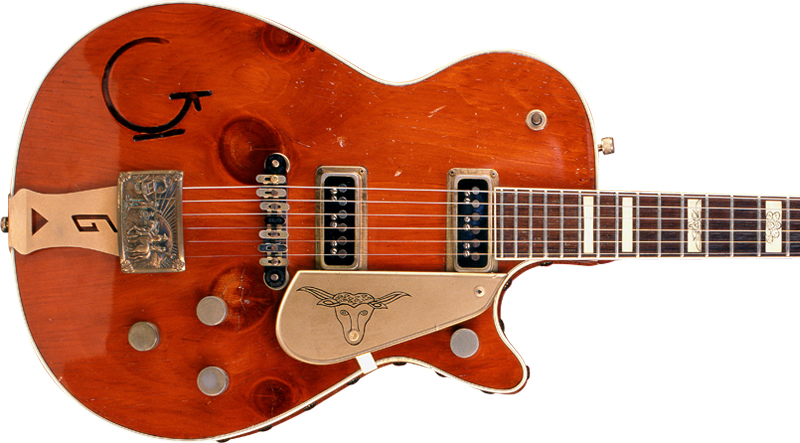





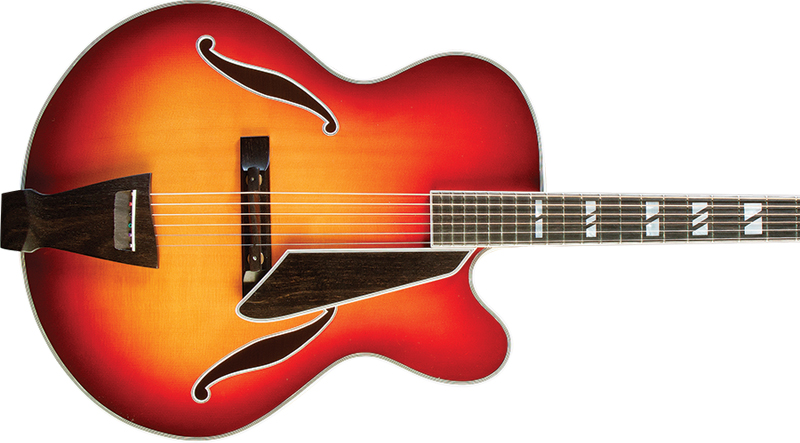

 At 20, Bay moved to St. Louis seeking work as a professional sideman with traveling bands and on radio. To supplement his income, he turned to teaching, sometimes working with upward of 100 students each week. Finding existing methods lacking, he began handwriting instructional materials, stressing sight-reading skills and usable chord forms.
 According to extant records, the store was ordering Style A, Excel, and New Yorker guitars from D’Angelico as early as September of 1936. The first concrete connection between Bay, Gravois, and D’Angelico happened May 7, 1949, when the store placed an order for a Special (serial number 1816). Records show Bay received two additional D’Angelico guitars through Gravois that year and more in the ’50s and early ’60s, all for the purpose of re-sale.
 In 1974, Bay commissioned a D’Aquisto New Yorker that would become particularly noted after appearing in photos for the expanding line of books. The guitar, with serial number 1086, was completed December 7 of that year and has a mother-of-pearl diamond-shaped inlay on the peghead rear inscribed, “Especially made for Mel Bay.”
 acorn finial, mother-of-pearl script logo and engraved scroll peghead inlay, gold-plated Grover Imperial tuners with art-deco metal buttons, ebony truss cover, 22-fret ebony fingerboard with mother-of-pearl split-rectangle inlays, and multi-ply white binding on the top, back, and side edges of the body as well as the peghead, fingerboard, pickguard, and sound holes.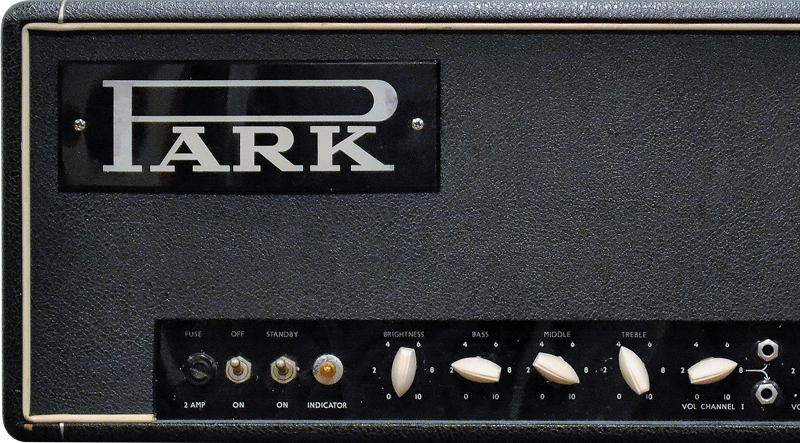




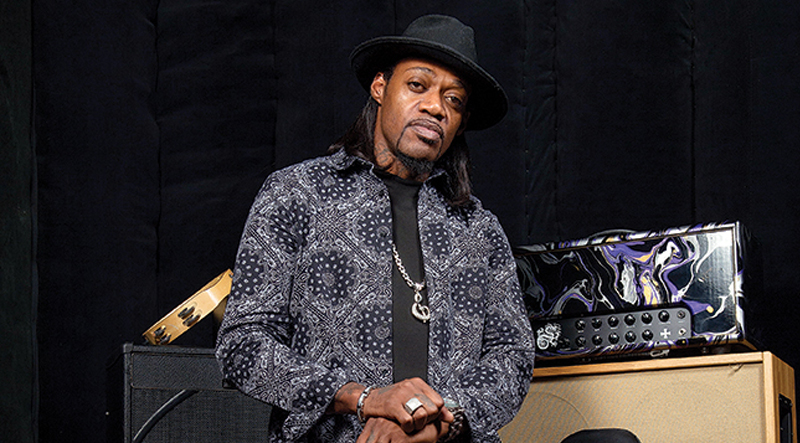

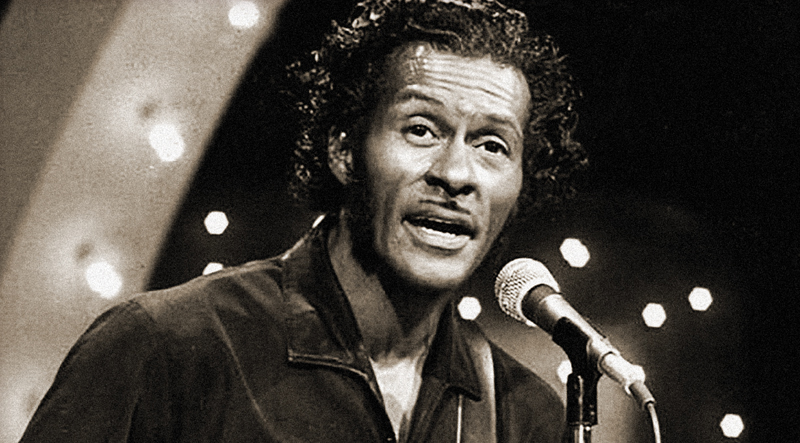


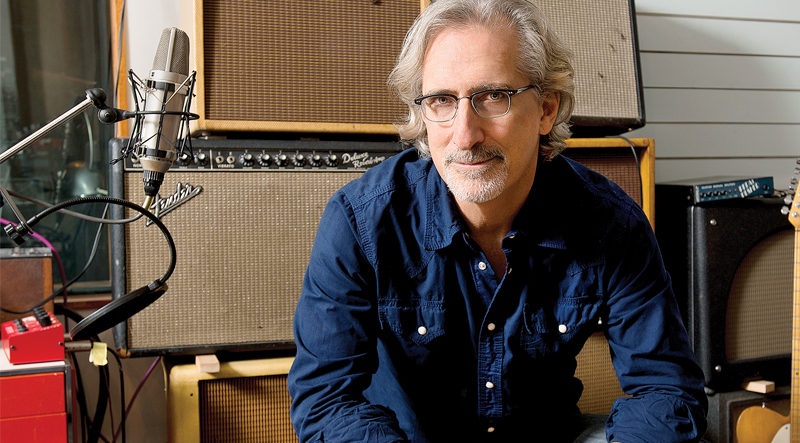


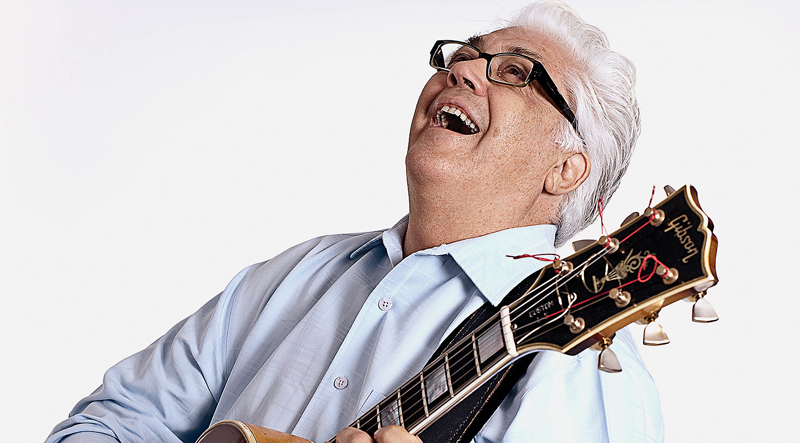


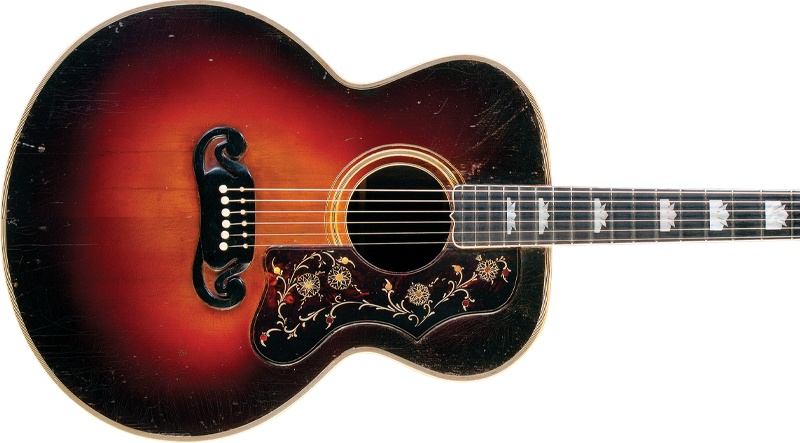
 On the pages featuring the Super Jumbo 200, Gibson’s 1940 catalog trumpeted, “This king of the flat-top guitars was especially created for professional entertainers who want an instrument adaptable to any harmony requirement with a beauty and distinction that projects itself to an audience.” Beauty and distinction indeed!


