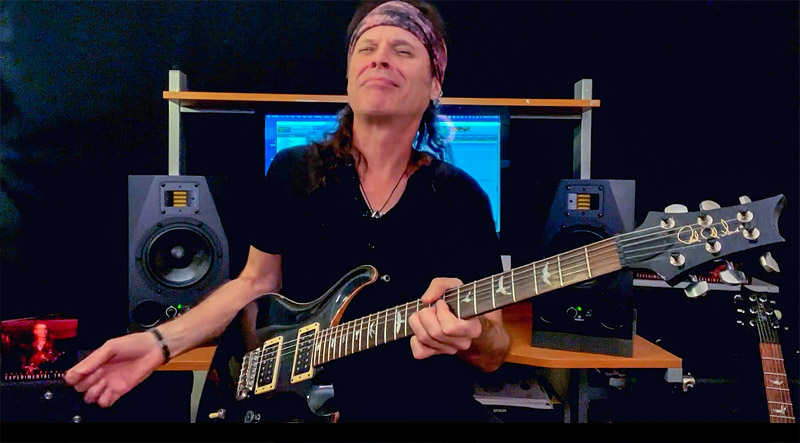
Progressive-rock shredder Dallas Perkins brings it with “Mexican Puppets,” a track from his new instrumental album, “Experimental Truth.” That’s his ’94 PRS Custom 24, and the album also features his ’98 Custom 24. Read our review in the March issue. Read Now!
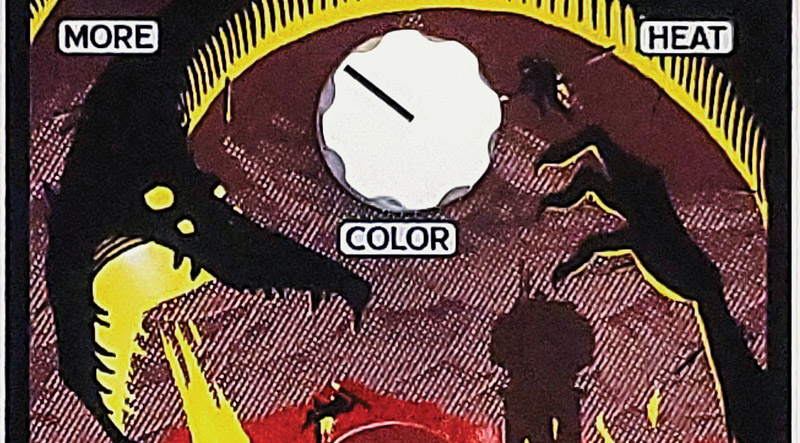
Dusky Electronics’ new Toasted Overdrive is an upgrade of the company’s two-stage MOSFET amp in a box; builder Chris Rossi grew dissatisfied with the tonal quality of the first version, so he smoothed the pedal’s natural gain characteristics by giving the Color Knob a broader sweep.
The Toasted’s Heat knob controls gain of the first stage, increases harmonics and distortion, and overdrives the second stage. Color affects treble frequencies; higher settings will brighten humbuckers, lower settings enhance single-coils. The More control adjusts output, and hidden inside (access is easy) is a DIP switch Meat control for adjusting low-end.
Tested using a Strat through a vintage 15-watt Ampeg Reverberocket, with the More and Heat controls dimed and the Color set at 10 o’clock, the Toasted served up incendiary overdrive a la Led Zeppelin’s “Whole Lotta Love,” with heaps of top-end response. With Heat down to 3 o’clock, treble was more subdued, bringing up thoughts of Hendrix tone from “Manic Depression.”
Through a Les Paul and with More at 2 o’clock, Heat dimed, and Color at 1 o’clock, signal was pure crunch, with midrange frequencies accentuated – think Pearl Jam’s “Evenflow.” With all controls dimed, the tone exploded with in-your-face raunch, with lots of top-end chime and plenty of cutting power.
Powered by 9-volt battery or wall wart, the Dusky Electronics Toasted OD is a worthwhile choice in a crowded field.
This article originally appeared in VG’s July 2022 issue. All copyrights are by the author and Vintage Guitar magazine. Unauthorized replication or use is strictly prohibited.
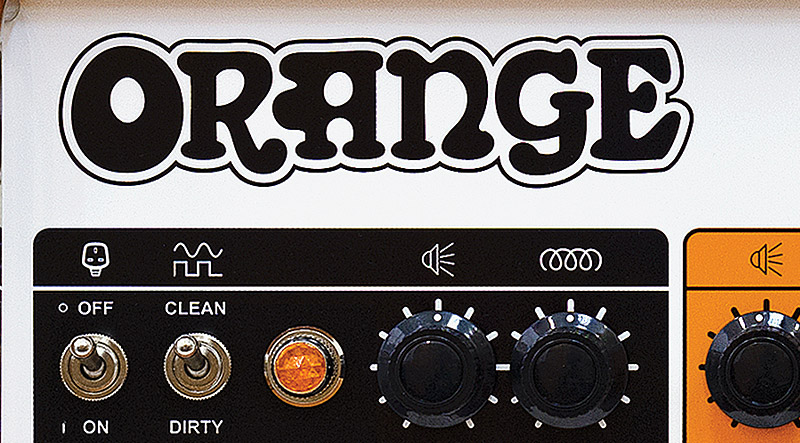
When speaking of guitar amplifiers that have become part of rock-and-roll lore, you best mention the iconic Orange brand as helping pave the way – their bright tolex and pictographed control panels being immediately recognizable, but more remembered for raucous tones.
The two-channel Super Crush 100 is the newest version of Orange’s solid-state Crush series, with JFET circuitry designed to produce valve-like tone and response. A fully featured head, it has an effects loop, direct-out with cab simulation, and footswitchable reverb and channel selection.
Tested using a Les Paul with PAF-style humbuckers and a Les Paul Deluxe with mini humbuckers, the amp’s Clean channel (with Treble, Bass, and Volume set to straight-up 12 o’clock) yielded a warm, round, musical tone that was responsive and easy to play. As Volume increased, clean sounds transitioned to a light crunch, good for playing rhythm. While the PAFs yielded a clear, round tone, the mini humbuckers were brighter, with a more-percussive tone, closer to what you’d expect from a single-coil pickup. You won’t get sparkling cleans from this amp, but the EQ section does allow dialing-in a slightly brighter tone. The amp also responded well to Volume- and Tone-knob variations on both guitars. The onboard digital reverb adds pleasant spaciousness without washing-out overall tone.
The Dirty channel is where the magic really happens. With Bass, Mid, and Treble set at 12 o’clock and Gain at 10 o’clock, the Super Crush delivered an open tone with slight breakup. Moving Gain to 1 o’clock created a thick, muscular sound with sustain and harmonics for days. With the gain dimed, palm mutes and pick harmonics were executed with ease. You won’t get super tight low-end response for metal tones, but you will get dark, grungier tones – perfect for stoner rock. And while it’s voiced on the darker side, the sound retained string-to-string definition and clarity.
Has Orange cracked the code for getting authentic tube-like tones from solid-state circuits? In our tests, the Super Crush 100 never sounded artificial, and at times was downright convincing; notes bloomed as you’d expect, with dynamics traditionally delivered only by tubes. Low-end response was ample but lacked a bit of the thump you’d get from a 100-watt tube amp.
Tone is subjective, of course, so you’ll have to judge for yourself, but here, we offer kudos.
This article originally appeared in VG’s July 2022 issue. All copyrights are by the author and Vintage Guitar magazine. Unauthorized replication or use is strictly prohibited.
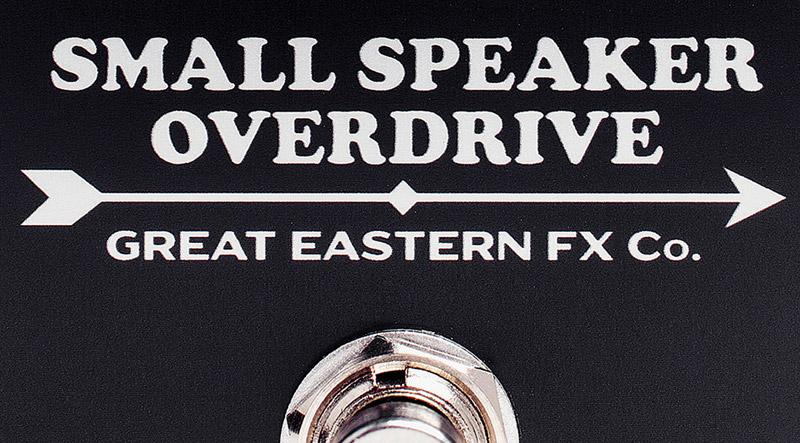
Recording engineers and DIYers have long known what a small amp can do in a big room – that is, sound awesome. The U.K.-based Great Eastern FX Co. has created a pedal that inverts the concept, making big amps sound smaller. But it does a lot more.
The Small Speaker Overdrive is a tone-shaping preamp that can provide boost and approximate the sound of a small Class-A amp circuit cranked to 11. This means enhanced Fender Champ tones with increased tonal flexibility.
Using its controls for High, Low, Gain, and Level, this easy-to-suss pedal offers organic break-up and a distinctive tonal signature that cuts mightily through a mix, using a 9-volt adapter. A discrete transistor circuit and judicious tweaking allows the user to approach the sound of a mic placed in front of an 8″ speaker; the results are fat cleans and a richer overdrive at lower volumes. It delivers a hefty punch to the upper mids and sits divinely in a mix, a la Billy Gibbons, Joe Walsh, or Derek and the Dominos. It responds swimmingly to picking dynamics, and edges dangerously close to fuzz territory with the Gain maxed and a bit of experimentation.
The Small Speaker OD is a specialty pedal that provides mid-focused, punchy, natural-sounding ’70s low-gain grit. It’s exceptional as a DI for home recording or live use.
This article originally appeared in VG’s July 2022 issue. All copyrights are by the author and Vintage Guitar magazine. Unauthorized replication or use is strictly prohibited.
Gibson guitars from the ’50s and ’60s are some of the most-sought after instruments on the planet, and re-creating the look, tone, and feel from that golden era is no small task. Banker Custom Guitars is an authorized Gibson “partner,” which allows builder Matt Hughes to create something new, yet familiar.
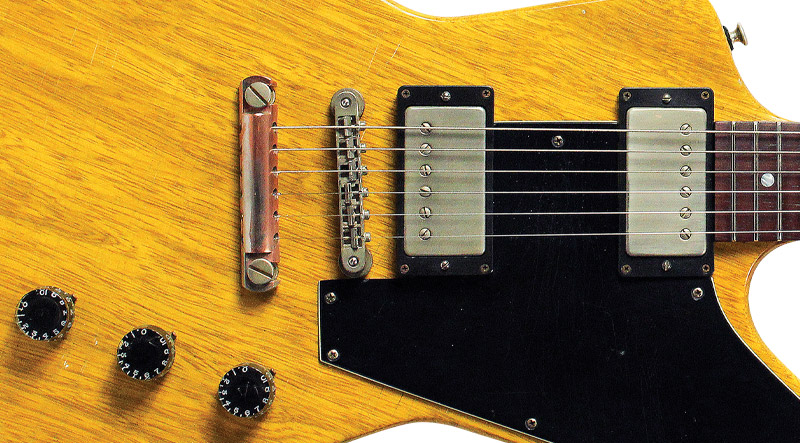
The Banker Excalibur Derringer is Hughes’ take on Rick Derringer’s ’58 Explorer, with its unique split headstock. All wood, parts, hardware and electronics are top-notch, including the one-piece Korina body, which has a stunning aged-clear finish. Other touches include Faber aged-nickel ABR bridge and tailpiece, and Throbak ESG-102B PAFs. The recipe wouldn’t be complete without a Brazilian-rosewood fretboard and Kluson tuners.
Upon first strum of the Derringer, you feel a deep, resonant vibration through its neck and body, with warmth and exceptional clarity across the strings. Plugged into a modern mid-power 6V6 head and 2×12 cab with a Tone Tubby 40/40 and a Celestion Gold, the Throbaks complemented the Excalibur’s natural sustain and depth. Clean tones are bouncy and musical, while overdriven tones are rich with a beautiful singing voice, as you’d expect from a good PAF. The neck is fat (like a ’58 should be) but very comfortable with its rolled edges and excellent fret work. This guitar feels broken in right out of the case, and plays flawlessly.
The Excalibur Derringer is one of those guitars that you never want to put down. You’ll need deep pockets, but you won’t have any regrets.
This article originally appeared in VG’s July 2022 issue. All copyrights are by the author and Vintage Guitar magazine. Unauthorized replication or use is strictly prohibited.
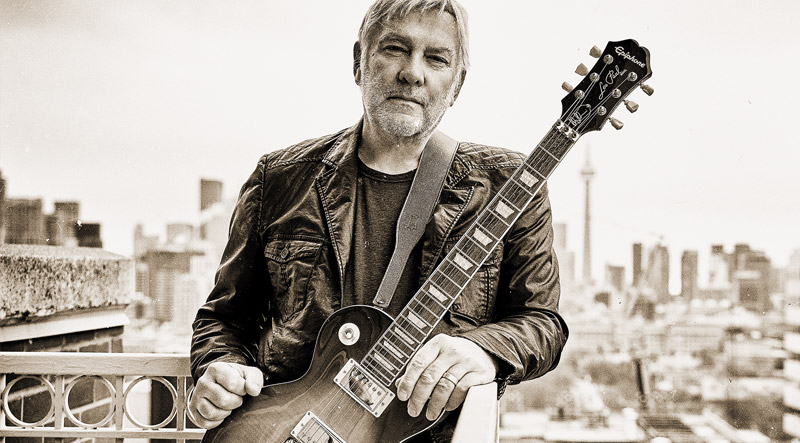
What do you do when you’re the beloved guitarist in a legendary band whose career was ended by the premature passing of a core member? When you’re Alex Lifeson, you move forward creatively, and explore a new realm of playing. The result is Envy of None, consisting of Lifeson, bassist/guitarist/programmer Andy Curran (formerly of Coney Hatch), guitarist/keyboardist/programmer Alfio Annibalini, and vocalist/keyboardist Maiah Wynne.
The project – Lifeson hesitates to call it a band – just released its self-titled debut, a mesmerizing blend of alternative, ambient, and industrial styles with pop melodies. It sounds nothing like Rush and, for Lifeson, that was the point. The seeds were planted when he released the instrumental songs “Kabul Blues” and “Spy House” on his website in 2021 to promote the new Epiphone Alex Lifeson Les Paul Axcess Standard. They’ve been updated for Envy of None.
Musically, this album is about layers and texture.
There are a lot of layers. It’s texture. It’s ambience. It’s soundscaping. There are some synths, but a lot of the sounds you’re hearing are guitars that have been manipulated. I did a lot of backwards stuff. My goal was to create otherworldly sounds from a guitar that are not recognizable as a guitar. I’m really happy with the way it turned out because I can hear all that stuff I did that sounds like a synthesizer, or not quite, but adds to the song and makes the song unique-sounding and very densely rhythmic. That was the other goal here – to make a record you couldn’t stop tapping your foot to and moving to. There’s so much movement in all these songs.
You do some soloing, but not a lot.
I spent 40 years playing crazy solos on just about every song we wrote and recorded in Rush. That was the thing. It was part of it, and I love doing it. It’s a great creative outlet I very, very much enjoy. I’m just not there anymore. It seems superfluous, like it takes up air and space in a song now where you could have other things going on – vocal or dynamic events that brings more to the song than noodling.
It was a different mindset, even more so than when you did 1996’s Victor?
Totally. That was 26 years ago. That was a solo record where I did want to express my songwriting as opposed to Rush’s songwriting. I also wanted to show my chops and technique and all of that. It was a different time, and I was a different player.
Alfio and Andy are also credited with playing guitar. Who plays what?
Alf played the more-traditional guitar parts, so when you hear a line in a verse, it’s primarily him. I loved everything he did, and I didn’t want to replace anything. In my mind, I was not the “guitar player” of this project. I was just one of two and a half guitar players. I give Andy a half-credit because he’s a bass player (laughs)! He wrote a lot of the basic parts, and would link them with a little guitar moment he put in. I got so used to them, and they were so cool, so we kept all that stuff. That allowed me to do stuff in the background and create these curtains behind what was going on – and make a beautiful platform for Maiah’s voice, which is fantastic; her delivery is great and her lyrics are excellent.
How did you achieve your sounds?
Generally, I would record all guitars clean, and add effects later. There’s such a library of plug-ins now – weird effect plug-ins – and it’s better to have a clean signal. When I say clean, it could still be dirty, but unaffected, and you could do whatever you want. If it works, great, if it doesn’t work, well, you can go back and try something else.
Which guitars did you use?
I used my ’57 Les Paul goldtop for a lot of stuff, especially the earlier stuff like “Kabul Blues” and “Spy House.” I also used a Gibson Alex Lifeson R40 Les Paul Axcess with a stop tailpiece custom-built for me, the standard Axcess with the vibrato on a couple of tracks, and a PRS CE 24. For acoustics, I played a PRS Angelus, including on “Western Sunset” [a bittersweet instrumental tribute to late Rush drummer Neil Peart] and a Martin.
This article originally appeared in VG’s July 2022 issue. All copyrights are by the author and Vintage Guitar magazine. Unauthorized replication or use is strictly prohibited.
The Cherry Red label is spot-on at packaging vintage U.K. rock, and this boxed set is no exception. This one focuses on broadly “progressive” bands stretching the span after Jimi Hendrix died and the Beatles broke up. You know the bigger acts – Yes, ELP, Uriah Heep – but there are hip mid-tier artists here, often mixing electric and acoustic guitars with impunity.
Atomic Rooster’s “Time Take My Life” has an urban feel and guitar jabs from Steve Bolton; Barclay James Harvest drops a dreamy pulse on “Medicine Man” using savage echo-fuzz licks from John Lees. Lindisfarne’s “Don’t Ask Me” shows what happens when northern English musicians play funk – it’s not R&B, but there’s an undeniable guitar groove. Al Stewart’s “Songs Out of Clay” is a rock waltz with elegant layers of acoustics and electrics. Hawkwind explores acidic space jams on “Brainstorm” via guitarist Dave Brock and a pre-Motörhead Lemmy on bass.
Guitar freaks already know Free’s “Wishing Well,” a supreme demonstration of Paul Kossoff’s Les Paul wizardry. “Blowin’ Free” is typically killer boogie from Wishbone Ash. These are just highlights from this superb four-CD set. For these British musicians of 1972, the future was wide-open.
This article originally appeared in VG’s July 2022 issue. All copyrights are by the author and Vintage Guitar magazine. Unauthorized replication or use is strictly prohibited.;
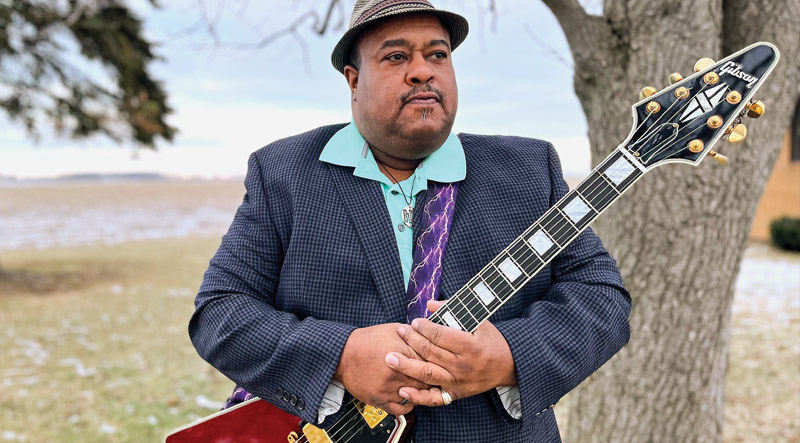
After 40 years of playing under the radar, Rust Belt bluesman Larry McCray finally gets his big break. On Blues Without You, McCray receives production magic from Joe Bonamassa and Josh Smith for Joe’s Keeping the Blues Alive record label. The result is McCray’s finest record, reflecting his talent, skill, and artistic sincerity.
Larry McCray: Peggy Smith.
Blues Without You cooks, fusing McCray’s love of southern R&B and hard-hitting Midwestern blues. While McCray’s playing is masterful, his vocal performances will floor everyone. Guest performances include blues slide queen Joanna Connor, Warren Haynes, keyboardist Reese Wynans, and Bonamassa.
The semi-autobiographical “Arkansas” kicks things off with a Bo Diddley beat, ballsy lead-guitar breaks, and a flawless horn section. McCray plays guitar like a champ, while Bonamassa’s clear production style uplifts killer vocalizations. “Breaking News” takes the band uptown with slick urban grooves offset by McCray’s earthy attack, while the mid-tempo shuffle “Roadhouse Blues” unleashes McCray’s inner Albert King.
McCray join forces with Warren Haynes on the metaphorical ballad “Down To The Bottom.” Sparse acoustic guitar builds to a string section, lush backing vocals, and excellent slide work from Haynes. Bonamassa and Connor perform at the highest levels of blues artistry, but McCray is blistering, fierce, and unstoppable.
This article originally appeared in VG’s July 2022 issue. All copyrights are by the author and Vintage Guitar magazine. Unauthorized replication or use is strictly prohibited.
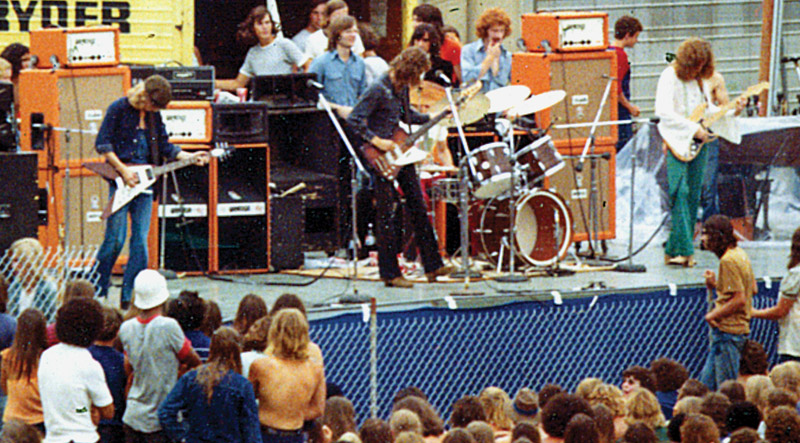
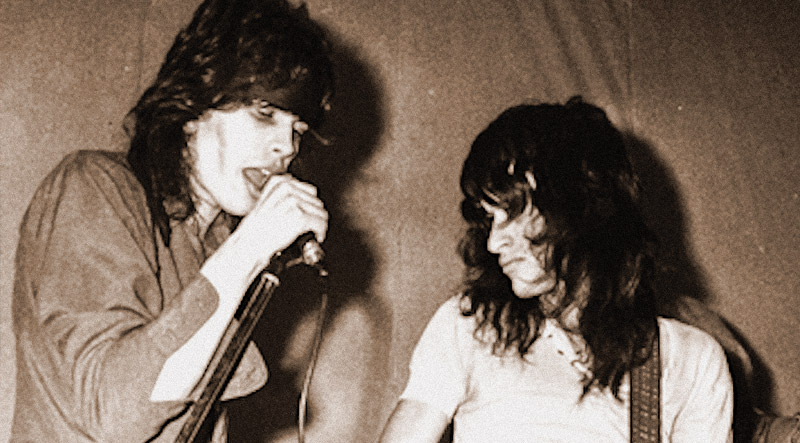
Aerosmith frontman Steven Tyler onstage with Joe Perry, spanking a Les Paul Junior, circa 1971.
This long-lost relic was recorded before the band’s 1973 debut LP, with guitarists Joe Perry and Brad Whitford (aged 21 and 19), bassist Tom Hamilton, and drummer Joey Kramer fueling the fire behind frontman Steven Tyler.
Using Perry’s two-track Wollensak 1280 tape machine, these songs were captured at their basement rehearsal space (in a Boston University women’s dormitory) or during soundcheck. Though amateur recordings, the quality is surprisingly clean.
Aerosmith: R. Agriopoulos.
Perry and Whitford noodling on Fleetwood Mac’s “Albatross” slips into a stomping version of “Somebody.” The smoky Rufus Thomas cover “Walkin’ the Dog” grooves heavily on Hamilton’s slinky bass beat and Tyler’s breathy flute fills. “Reefer Head Woman,” a smoldering blues classic later recorded for Night in the Ruts, includes Perry’s volcanic solo and Tyler’s harmonica blasts. “Major Barbara” is country blues oozing with slide guitar; it was recorded, but not used for ’74’s Get Your Wings and proper studio outtakes didn’t appear until decades later.
“Dream On” is close, arrangement-wise, to the legendary hit, and the band’s emerging hard-rock muscle is felt on “Movin’ Out” and “Mama Kin.” While raw, The Road Starts Hear will be tempting for fans of primal early Aerosmith.
This article originally appeared in VG’s July 2022 issue. All copyrights are by the author and Vintage Guitar magazine. Unauthorized replication or use is strictly prohibited.
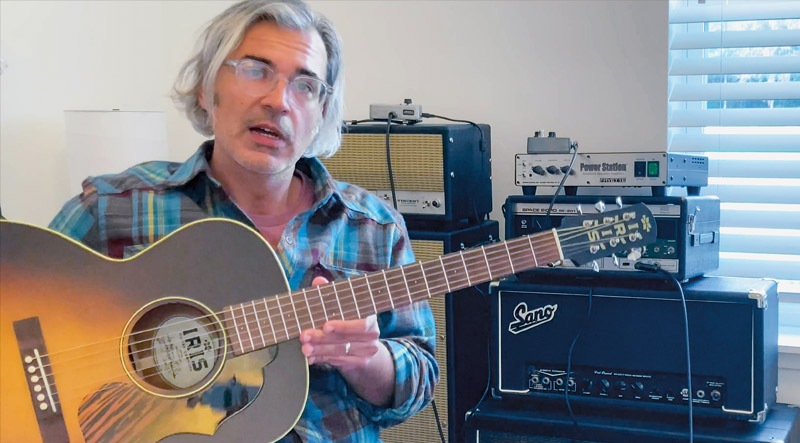
Check out Mike Baggetta and his Iris AB (serial number 46) playing the title track from the new album “Everywhen We Go,” his collaboration with drummer Jim Keltner and fellow legend/bassist Mike Watt. Catch our review of their album in the March issue. Read Now!