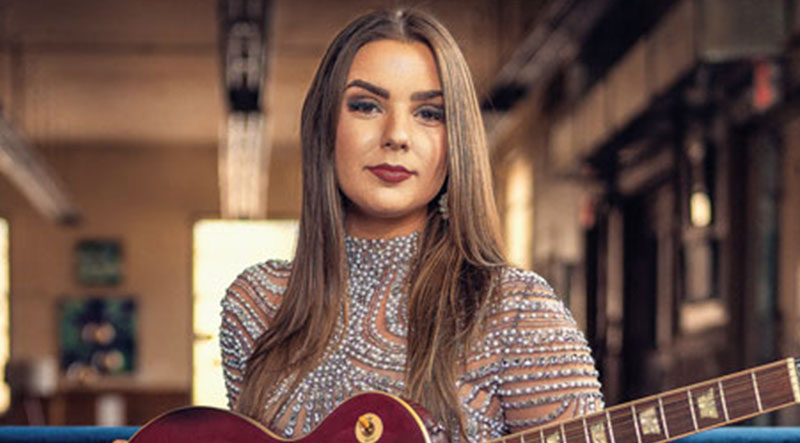
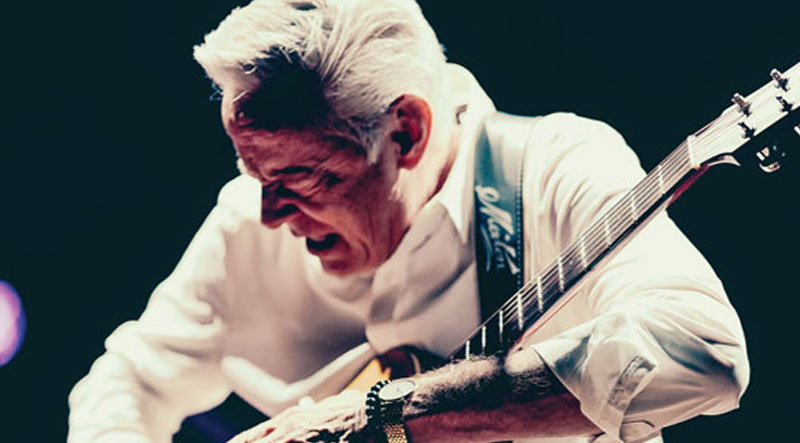
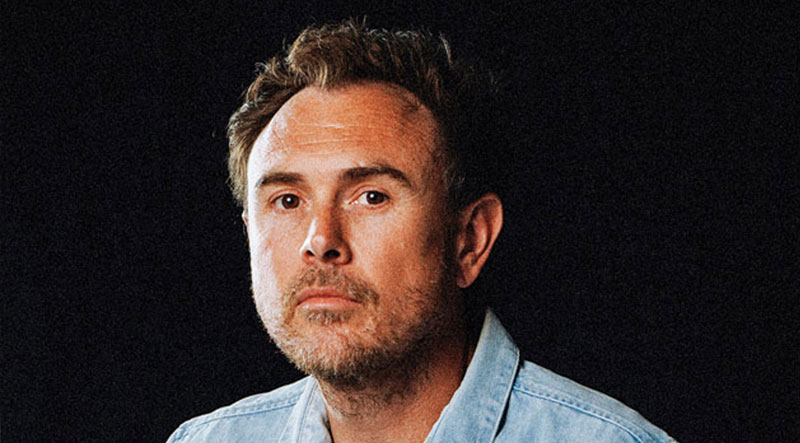
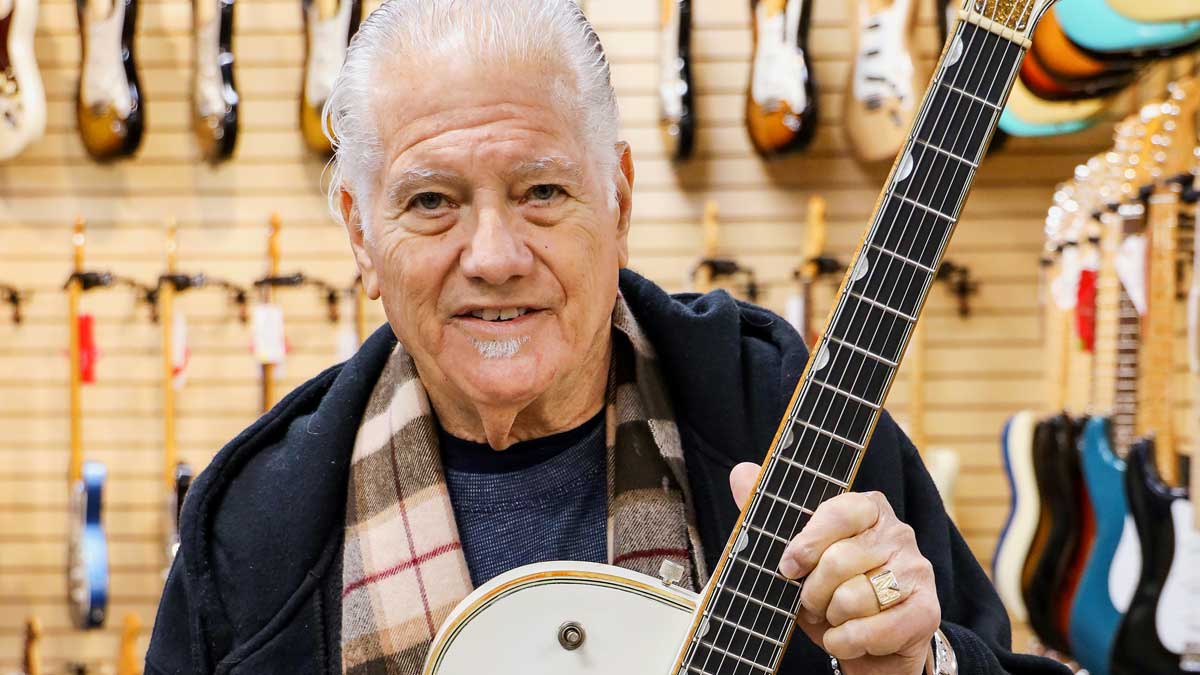
On Money & Power, Ally Venable wields the power of wisdom and emotional connection. It’s an album about empowerment and comeuppance, but there’s plenty of playtime with guest stars Shemekia Copeland and Christone “Kingfish” Ingram. An audio bluesfest, it’s songwriting brings substance carried by guitarists swinging for the fences.
What does the albums title represent? What it means for me is being a voice for communities who may not have a voice. They may not have an outlet like I have. Some women may not have found a voice for themselves, but they can find that voice within me and the music I put out. I also wanted to create something fun and showcase my guitar playing in a powerful way.
Also, I want to challenge the status quo, unite people, and have a conversation. I’d like to provoke thought within my art. The title track is a powerful anthem. It celebrates the rise of women in a traditionally male-dominated world.
I’d like to create a space for women to know they can enjoy this music, too. The more I create that space, the more women will feel comfortable coming out to blues shows. I’ve seen more women at shows, and it’s amazing. I saw a little girl in awe because she saw someone onstage that looked like her. This builds confidence for her to go on any path and do what she wants to do.
Do you still get side-eye from men watching you play guitar? I felt more of it when I was younger. I’m getting a lot of support from players like Kenny Wayne Shepherd, Buddy Guy, and Joe Bonamassa. I’m on the Experience Hendrix Tour right now, and everyone is so welcoming. When you start to not let outside influences impact your mental state and confidence in your playing, you see less of that. If you feed the positive things in your life and do not play for outside validation and instead play for the connection, you’ll start seeing less of the side-eye. If you’re solidified within yourself, in your playing, and in who you are as a person, you see less of that.
You play great slide on “Heal Me.” Does slide come naturally to you?
I play by ear and take in influences. On that track, it was a Led Zeppelin thing. I wanted to have a “When The Levee Breaks” moment. The slide is so emotive, and it’s another way to sing and introduce a melody.
You sing “Unbreakable” with Shemekia Copeland. She has been so supportive of me and my music. It’s important to have other women check on you in this type of music. She’s been a great friend and someone I look up to. She’s the blues queen, and I was so excited to do a duet with her. “Unbreakable” is a defiant anthem that celebrates women and unites us. We come from two different walks of life, but we’re singing about our experiences.
Do you have a Les Paul that you love the best? My main Les Paul is a Standard Limited Colours Edition. It was created in the ’90s. It sounds and feels so good, but I’ve dropped it, broken it, and fixed it so many times. I call my guitar “The Wounded Warrior” (laughs). I’ve worked with Gibson quite a bit, and they’re amazing. They support artists and want to inspire musicians and create spaces for them. I also play a Jimmy Wallace Strat he built for me a while back, and I like it a lot.
How about amplifiers? On the Hendrix tour, I’m using a Fender Super Reverb that I used that on the album along with a Vox AC30. I use that for soloing. On the road, I use Category 5 amps. They have a nice clean tone, and I can really push pedals through them. I use the Analog Man King Of Tone for my main overdrive and lead playing. I also have a vintage Vox wah.
You and Christone “Kingfish” Ingram share real musical chemistry on “Brown Liquor.” The opening of the song reminds me of the Tedeschi Trucks Band. Kingfish’s lead playing is incredible. I told him, “If we ever play this song onstage, we’re going to have to have some brown liquor on stage so we can share a toast!” (laughs) I’ve known him for 10 years, and I’ve been playing with him on the Hendrix tour.
What’s on your schedule after the tour? I’m going home to rehearse with my band. I have a seven-piece band with a horn section and backup singers, and I’m going to start my Money & Power tour in Europe. – Oscar Jordan
This article originally appeared in VG’s June 2025 issue. All copyrights are by the author and Vintage Guitar magazine. Unauthorized replication or use is strictly prohibited.
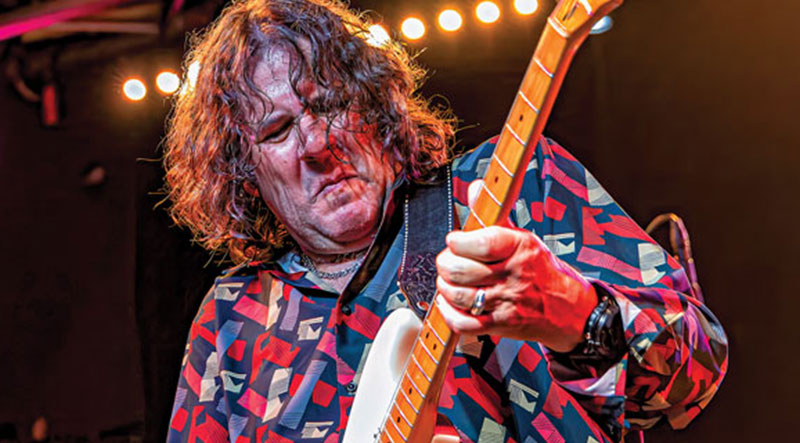
When Hubert Sumlin sideman Sean Chambers played a gig with Savoy Brown bassist Pat DeSalvo and drummer Garnet Grimm, the result was blues-rock ecstasy. Live From Daryl’s House Club is the next best thing to being there. Fans of incendiary slide playing and Rory Gallagher, look no further.
How did you meet Pat and Garnet? I met Kim Simmonds in 2019 when we played the Bowlful of Blues Festival, in Iowa, which Savoy Brown headlined. After our set, someone tapped me on the shoulder and said, “I’m Pat DeSalvo. I play bass for Savoy Brown.” He told me Kim wanted to meet me. I was blown away because Kim is one of my heroes. Pat took me backstage, and we hit it off.
They were so good; the hair on my arms was standing up. Their three-piece was amazing. When Kim walked off the stage, I offered to carry one of his guitars. He gave me his Les Paul and said, “Man, if I’d known you were going to be here, I would have got you up to play with us.” We kept in touch and I eventually wound up on the same label as Savoy Brown. Around that time, Kim was diagnosed with cancer, then in 2022 I went through changes with my band.
Pat had been checking out my band and eventually sat in, and we became friends. I needed a band to do a couple of shows. So I asked Pat and Garnet if they wanted to do it. We did some shows, then Kim’s cancer got worse. He started to get neuropathy in his hands, so he couldn’t play guitar. He was still in good spirits and could still play slide and harmonica – he wanted to keep playing. He had five or six shows on the books, so they asked if I wanted to front the band for them. Kim would play slide and harmonica, but I would do the majority of the singing. Sadly, it never came to fruition.
My first tour with Pat and Garnet was in Europe in 2022. On our days off, we would call Kim. He gave us his blessing, said we sounded great, and needed to keep the music going. Sadly, on December 13, 2022, Kim passed away. Pat and Garnet and I have been playing together ever since.
How did the Daryl’s House gig come about? My A&R rep recommended we do a live album. Daryl’s House Club is set up to do live recordings. They have all the gear. I thought, “What better place?” I approached it as a regular show and we went in and did our two hours and I figured I’d whittle it down to 12 songs from the 26 songs we played.
You guys were on fire. We’ve been getting great reviews and great radio play. It’s off to a running start, and it’s pretty exciting.
You cover Rory Gallagher’s version of “Bullfrog Blues.” Rory was something else. He and Gary Moore are two of my favorite Irish guitar players.
Which guitar are you playing the most right now? I played a Strat for my whole career, but a couple years ago, a friend gifted me a Carparelli Custom. It looks and sounds like a Les Paul, but it has a fat neck and sounds so good. I get such clean and dirty tones out of it and everything in-between. So, for the last year and a half, I’ve been playing it exclusively. It’s got mother-of-pearl inlays and a rosewood fretboard. It’s a beast of a guitar. I can get really nasty tones out of it and nice clean tones, as well. It’s surprising, because I never thought I would stray from my Stratocaster.
What are you plugging it into? I’m using a Mahalo amp, which is a boutique 4×10 combo. I’m also running, believe it or not, a Crate V50 2×12, and it sounds great. I run one dirty and one clean in stereo. It’s a pretty fat sound.
You play hellacious slide on the album. I use open A and open D a lot. Those are my favorite tunings. “Red Hot Mama” is in open E. “Bullfrog Blues” is in open A, but I put a capo on the seventh fret. That’s what Rory did, so that’s what I do. I’m honestly not that great of a slide player in standard tuning (laughs). – Oscar Jordan
This article originally appeared in VG’s June 2025 issue. All copyrights are by the author and Vintage Guitar magazine. Unauthorized replication or use is strictly prohibited.
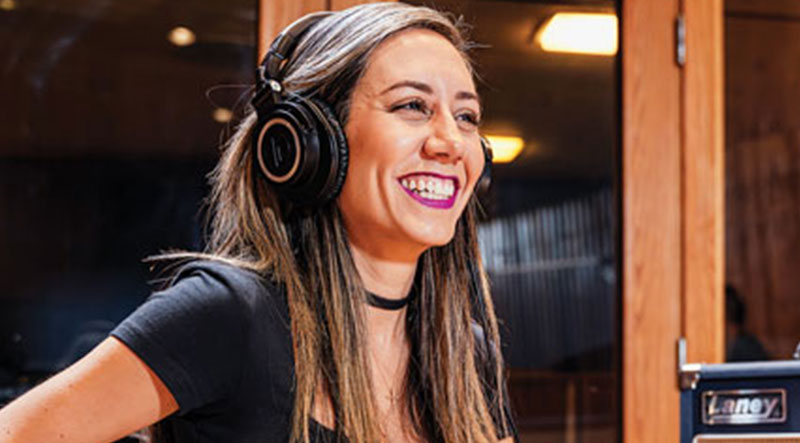
On Lari Basilio’s latest record, Redemption, art and life collide to make beautiful music. Effortless instrumental guitar techniques merge with rib-sticking melodies to captivate and astonish. Bassist Leland Sklar and drummer Vinnie Colaiuta are back to add rhythmic fire, but Basilio’s muse is life’s challenges and, of course, super cool gear.
You became a mother. Congratulations. I’m living the most exciting time in my life right now. It’s amazing. I’ve always dreamed about becoming a mom. I am a person of faith, so redemption is important to me, and I will always remember the greatest sacrifice. Redemption also had another meaning for me because of everything that I’d been through. The songs became the soundtrack to this phase of my life – I went through a miscarriage then I got pregnant again. Now, I have my son with me, which is a blessing.
You had a lot to write about. Everything I write is connected to moments of my life. It’s not always easy. It’s not every day that the inspiration is right there and palpable. When I go through personal challenges, it becomes more vivid and translates easily into music. Because of that, every album is different.
Was Redemption tough to make? During the sad moments, the guitar really helps. It’s great to be playing, and the guitar brings so much joy to my life. I love to play and write songs. I had some sad and tough moments, but I’m happy now, living the best moments of my life. Even with all the sad moments and emotions, it was not a difficult album to write.
“Bliss” and “The Way Home” cover a lot of atmospheric territory. I like to be versatile in terms of style as much as I can. I never know how many rocking tunes or ballads I’m going to have. I keep writing until I see what I have. On Redemption, I have more rocking tunes, which is what I love. I also have to have ballads and groove stuff. For me, the melodic points are very important. I like to challenge myself to keep things melodic and see how can I create new melodies. I want to keep the listener interested. I love sitting down to craft every song.
How did you achieve such a smooth lead tone? I was looking for a modern sound similar to the previous album. I’ve been using the same rig for a few years now – a couple of Laney amps and my Ibanez signature LB1, which serves for many different styles and situations. I have a new pedal from JHS, the Violet Signature Distortion. I recorded all the lead-guitar parts with it in front of my Laney Lionheart.
Did you experiment with any other lead tones? I have the sound in my head pretty much (laughs), but I vary things a lot. I try to go from low-gain to high-gain, but always keep the midrange in my tone, which I love. I’m always thinking, “How can I accentuate the mids?” When I have the opportunity to develop signature products, it’s something I always look for. I was able to get closer to that with my Ibanez LB1, my Seymour Duncan signature pickups, and this pedal. I have a really good combination. It’s a constant search for the tone, but it’s also a fun journey. I’m still trying to get there (laughs).
What was it like, playing with Leland Sklar and Vinnie Colaiuta? It was a dream. Those guys are living legends. For me, it’s a privilege and an honor to record with them again. It’s my third album with Vinnie and my second with Leland. Each time, we have more fun. They’re amazing musicians who put their heart and soul into every song. They know exactly what to do and they know what the song needs. I learned so much from them. I feel so blessed and honored to have the opportunity to work with them.
What’s next? I have tour dates in Europe and South America, and we’re putting together dates in the U.S.
Are you bringing the baby? Yes (laughs)! – Oscar Jordan
This article originally appeared in VG’s June 2025 issue. All copyrights are by the author and Vintage Guitar magazine. Unauthorized replication or use is strictly prohibited.
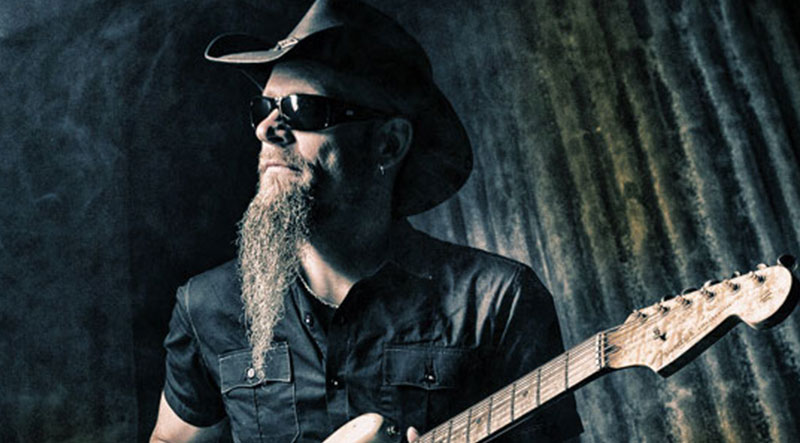
A songwriting blues-rocker in the purist sense, Dudley Taft is succeeding in an era when nothing comes easy for his ilk. His new album, The Speed of Life, required a departure from the norm; while his previous three were recorded at his own studio in Cincinnati, this one used down time during a European tour to track songs with bandmates in Prague. And while its personnel varied, the songs are exactly what fans expect.
“I’m very comfortable expanding songwriting in this weird little zone that is blues rock,” he said with a chuckle. “I would say I’m 80 percent rock, 20 percent blues. And that should be enough for anyone.”
Given your time on the job and your heavy touring schedule, does creating new music present any specific challenges? Well, it’s my job and I’m always working on my craft, always looking forward to the next album, trying to make it good. For this one, I had 35 or 40 little ideas that I refined to get 12 tracks.
How does songwriting work for you? Typically, a riff or a chord progression on guitar leads to an emotion or something to say that works with it. Rarely do I have words first; it’s “Get the guitar and go,” smoke a little weed to open my mind and try not to think of anything else.
Are there a couple songs on The Speed of Life that stand out for you? “Miles and Miles To Go” and “Pretty Little Thing” for the same reason – they’re not just verse, chorus, verse, chorus, bridge. I’m proud of my solo work on those two songs, in particular, because they fit the vibe of the song so well. They’re a mix of melodic and snappier phrases without being shred, because I’m not shred (laughs).
What are some of the guitars we hear on the album? An uncle died in 2023, and my brother and I were his only nephews; we got part of his estate and my portion was $8,900. I thought “I could throw it into my account, or I could do something meaningful.” So I went to Carter Vintage and bought a ’69 Les Paul Custom that is now my “Uncle Tom guitar” and is the one you hear on the solos in “Miles and Miles To Go” and “Pretty Little Thing.” There’s something about the pickups – maybe they have fewer winds – but they have a crisp sound. It’s not great for rock-and-roll power chords, but you can hear something in the chirp when the pick hits the string, and it’s gorgeous.
I was blown away when I first heard it. The guitar is heavy as f**k, so I won’t play it live because I have six other Les Pauls and I’ve always been a Strat guy. But, 45 years down the road, you start doing different things.
How did you decide on amps and effects on the record? Well, I am in love with blackface Fenders, so my typical rig is a ’66 Deluxe Reverb and almost always an original silver Klon. Nothing sounds like a Klon; it does a unique thing – it’s not really soft clipping, it’s not really hard clipping. It’s just nice. After that, I use an Analog Man Prince of Tone or, for a harder clip, a Fulltone OCD. Almost everything was recorded with those pedals. I’m also a fan of the Zen Drive, especially for a Strat when I’m playing a solo because it adds some nice thickness.
I have a couple of EL84 amplifiers that are nice – a Dr. Z and an Oahu built by Oliver Archut in the ’90s. It’s two EL84s and just Tone and Volume knobs. One of those with the Zen Drive and a Stratocaster, it’s game over.
I have different amps for other textures. When I want to get heavy, I have a Friedman I used on the backing power chords in “Burn It Down.” I used a Bassman for the beginning of that song, with the Strat. I also have a couple Deluxes, a Pro, a Super, a Princeton, and a couple Vibroverbs. I have not found any modern amp that reacts on the front end like a blackface Fender. Maybe it’s the sag, I don’t know.
Did you use more than one Strat? I had a few. My ’99 Mary Kaye is one of the first Relics ever made. It has a one-piece swamp-ash body and a birdseye maple neck, and it really sings; it vibrates nicely. Another is a Custom in Surf Green with a rosewood fretboard, which has a midrangey sound. Those are the two shades of Stratocaster.
I also have this ’59 reissue with different electronics and a finish made to look like a Joe Perry Les Paul, and there’s something weird with that one – it’s so chimey, not like other Les Pauls when you use both pickups and the Volumes all the way up. And I have a Jeff Hanna Collector’s Choice Les Paul. That’s the rock Les Paul, with a lot of low-mids. It’s great for chords. – Ward Meeker
An extended version of this interview can be read at VintageGuitar.com.
This article originally appeared in VG’s June 2025 issue. All copyrights are by the author and Vintage Guitar magazine. Unauthorized replication or use is strictly prohibited.
Acclaimed as bassist for The Flower Kings, Jonas Reingold is a master four-stringer. He’s recorded with many artists, including Jon Anderson (of Yes), and has become an integral part of Steve Hackett’s band, re-creating the complex bottom of early Genesis. Twenty years ago, Reingold started the prog group Karmakanic (repeat it slowly a few times), which just released its sixth album, Transmutation. He filled us in on its recording process in his native Sweden – and elsewhere.
You gathered an incredible group of musicians. How did you pull it off, and in 13 different studios? First of all, 13 studios was, in reality, a hotel room in Leipzig, a shady corner in Scotland, a backstage room in the east of England (laughs)! We also had nice tracks from pro rooms like Mix LA in Los Angeles and Ocean Way in Nashville. While the list of musicians on Transmutation is impressive at first glance, remember, I’ve been in this world for 30-plus years, so my address book is pretty thick. These guys are my friends, but also among the best players on this planet, like drummer Simon Phillips.
Which basses and guitars did you use? The bass on most tracks is my 1969 Les Paul bass, which has this fat upper-range – very punchy and to the point, perfect for melodic bass lines á la Paul McCartney. I also used my ’64 Jazz Bass and the Yamaha BB3000; for fretless, I used a new Jaco Pastorius signature Jazz. I played a lot of guitars on the album, too; my main guitar was a 2016 ES-339 and an SG. A few things were recorded on an Epiphone The Paul. Not a fancy guitar, but it has very good tone.
You’re known as a bassist, but what’s your role as guitarist in Karmakanic? I play a lot of guitars in the Steve Hackett Band, so I keep those chops in shape. I don’t have a great technique – I never shred – but I can play melodies in pitch and with good phrasing. Here, I play parts that don’t need technical excellence, like the ending solo on “Transmutation.” For the fancy stuff, I happily pass the baton to lead players such as Krister Jonsson or Luke Machin. I’m lucky to be around this talent, so I can handpick the best musician for every section on the record. I’m a spoiled bastard, I know (laughs).
Is your Karmakanic rig different from your Hackett rig? Not really. I’ve been with EBS Professional Bass Equipment for 25-plus years now and I’m still happy. I never have any issues with their amps or anything else – it’s extremely durable and just works, so my tone is very similar. I don’t change that no matter who I’m playing with.
When you’re onstage in Hackett’s big stage production, who are you listening to the most? I try to listen to everybody. I think every person making a sound on a stage contributes to the sum of the musical experience – everyone has an important role. Sometimes it’s the vocal having the rhythmical drive; sometimes it’s the piano or drums. All of them are equally important, and they are part of the sum that makes the totality of the music.
It’s been 23 years since the first Karmakanic album. Looking back, what were your expectations versus how the music has evolved through Transmutation? The biggest change is how I’ve evolved – 23 years feels like a lifetime ago. Of course, I’m still me and play not too differently from back then, but I’ve experienced a whole life in-between. I had two children who are grown and both musicians. Of course, all the tours, records, children, marriage, and divorce changed me. I see life through different eyes now, but what stays constant is my love for music. I always want to play a bit better, I always want to write a better song, I always want to have a better bass sound. That has never changed – that’s the quest I live by on a daily basis.
You were a key part of the progressive-rock revival with The Flower Kings. Are there still fresh fans for Karmakanic? Yes, I hope the new generation has the urge to explore the roots of everything they hear today. I want the musical curiosity I had as a youngster to be passed on to the younger generation. Music history is cool – for example, its fascinating to see Steve Hackett doing his two-handed tapping, knowing that Eddie Van Halen took the technique a few years later and made a career out of it. I always want to stay close to the history of music. – Pete Prown
This article originally appeared in VG’s June 2025 issue. All copyrights are by the author and Vintage Guitar magazine. Unauthorized replication or use is strictly prohibited.
Tommy Emmanuel is a real guitarist in its truest sense. On Live At The Sydney Opera House, he stands onstage with only an acoustic guitar, and mesmerizes a packed house. His virtuosity employs country, Celtic, and folk fingerpicking styles that lift the spirit. The set is loaded with fan favorites, but a song suggestion from Emmylou Harris puts icing on the cake.
Live At The Sydney Opera House is an amazing record. We recorded two shows, but the album is 85 percent the first show. We only took a bit from the second. The flow of the first was definitely better, and my playing was just a little more on. It’s hard to be objective about your playing, but we all felt the first show was better. “American Tune” is from the second show.
It’s hard to go wrong with a brilliant song. I thought I was pretty aware of Paul Simon’s songs, but it wasn’t until I was working with Emmylou Harris that I got turned on to “American Tune.” She called because we were doing a benefit in Nashville. She said, “I wanna do ‘American Tune.’” I said, “What’s that?” (laughs) I had to look it up. I was stunned and amazed when I heard the song.
I had to learn it quickly to back Emmylou singing it. When the show finished and I was driving, I thought, “I love this song so much.” I had the chords under my hands, so I figured out how to play the melody and the chords at the same time, then put it in my show the following week.
Do you choose songs that have the most impact, or do you perform personal favorites? If there are certain things I really want on the record, I’ll play them. I want to make records for the fans and the public. Not all the songs I played made it to the album.
When you play “The Jolly Swagman,” the audience’s eyes light up. I played it last night, and people were on their feet by the end. “The Jolly Swagman” is from “Waltzing Matilda”: “Once a jolly swagman camped by a billabong under the shade of a coolabah tree” is the opening line. I figured the Jolly Swagman should have his own tune (laughs).
It’s the hardest tune to play because you have to pick the melody with down strokes to create the up beats. Then, you have to catch the melody on the up strokes. You’ve got to get that right, but it’s not easy. Sometimes, when I play a tune like that, part of me goes, “Why the hell did I write something so difficult to play!?” I was trying to write in an Irish fiddle style.
How are your Maton signature guitars holding up? They’re unbelievable. There isn’t another guitar out there that has the kind of punch these guitars have. When you plug into a P.A., you have so much front on the note and this beautiful character around it. What you’re hearing on the album is the guitar direct, the guitar going through a Udo Roesner amp, and the P.A. It sounds really good.
What’s unique about them? The selection of the wood, the angle of the neck – things like that. You can get really good action on them; I can keep the necks real straight and put heavy strings on them, and they won’t have too much tension. It’s all about that angle of the neck. I like plenty of meat on the saddle, and I don’t want the saddle too low. To get a lot of pressure on the saddle, the neck must fall back a little bit so you can get the action nice and get pressure off. A lot of builders build with a lot of tension into it so it’s loud. My guitars are like that, too, but they’re not impossible to play (laughs).
I can play a Maton all day and all night and it won’t wear me out. I need all the notes to be clear and ringing into one another. You don’t want to be fighting the action to do that. A lot of people think I sit with an amp when I practice. I don’t. I practice acoustically. I get all my clarity and all the power behind what I’m doing just from the guitar, acoustically. Then I plug in and it’s multiplied.
What’s next for you? I just finished recording a new solo album of mostly original new songs. I did it in four days with Vance Powell, who produces Chris Stapleton. We’re in the happiness business (laughs). – Oscar Jordan
This article originally appeared in VG’s June 2025 issue. All copyrights are by the author and Vintage Guitar magazine. Unauthorized replication or use is strictly prohibited.
After landing on American shores in 2002 to study bluegrass, then shifting into a career as a country singer/songwriter/picker, Jedd Hughes has spent 20 years on an alternate – but rewarding – path as A-list session player and touring sideman.
While being busy tempered his flow of original music, in 2014, he returned to songwriting. His new solo album, Night Shades, is just his third, and was created with help from songwriter/performer/producer Rodney Crowell. More collaborative than 2019’s West, it’s also more personal. We chatted with Hughes as he prepped for a session with country star Eric Church.
How did the songs on Night Shades come together? The same way I started West – at home, recording and building songs while writing. In the process, I was talking to Rodney quite a bit – we were writing together, as well – and there was so much material we were thinking of doing two records. Finally, I asked him to help me conceptualize the record and put a definitive list together. We added drums and bass – real humans – on top of tracks I built.
How were tracks sorted? I let Rodney take the reins. He has such a great song sense, lyrically and melodically, and after 20 years of playing shows and working on records together, I really trust him with knowing my sensibilities and governing the quality of the songs.
How did you decide to cover Rodney’s “Stay, Don’t Be Cruel”? That happened at his house. I was thinking it’d be great if we had one or two barnburners that would be fun to play live so we could stretch out. I couldn’t come up with anything, writing-wise, so he said, “Well, I’ve got this old song I wrote with Keith Sykes,” and he played it for me acoustically in his little studio. I was like, “Oh yeah, that’s got to be in there!” He and I were talking about Delaney and Bonnie, and Sarah Buxton has been a longtime close friend and collaborator, and he was like, “Why don’t we bring Sarah in and we can frame this thing as a Jedd and Sarah song?”
What’s the story behind “Kill My Blues”? That was the second song I ever wrote with Guy Clark, about 20 years ago. It’s been sitting around, and I wanted to record it with a Bob Dylan Love And Theft vibe – small blues band, very live-feeling, with that ratty tone. I used a Greco Les Paul copy with mini humbuckers plugged straight into an Oahu amp, turned up. I wanted all the overdrive naturally out of the amp. That’s another thing I gleaned from working with Jeff Tweedy.
Talk about the acoustic sound you got on “Loving You Is The Only Way To Fly.” That’s a really special ’38 Martin 0-18. I love its midrange. I can really articulate what I want with it, and it’s one of the better guitars to solo on and play rhythm in one pass.
You’ve mentioned being pleased with the way “Underground” turned out.
That was the most “built at home” track because I recorded the nylon-string part while I was writing it. On electric, I was going for two modalities – one really liquid, dreamy, and ambient, which was my old blue Teisco with square-pole pickups.
Yin to its yang was a Robbie Robertson dry electric sound; Rodney played one of Robbie’s solo records for me years ago – a song called “Unbound,” that has a great, raw electric sound. I had my Telecaster and played it straight into the GA-20 with a little dirtier tone.
Which nylon-string do we hear? It’s a Del Vecchio that I really love. That guitar is instant music. It’s one of my favorites.
The guitar we hear most is one you built, right? Yeah, during Covid.
Were you motivated simply by being on lockdown? Well, when all the work went away at the beginning, I had to sell a bunch of stuff to keep us afloat – my ’57 Tele and a handful of other things. I thought, “I’ve had a ton of old Teles over the years and I could probably build something that would keep me going for awhile.”
We should touch on the new album’s acoustic ballad, “Day After Day.” I wrote that after hearing of a friend’s sudden passing in Australia. It was very shocking, and that song is one of the few I’ve ever written that, as the words came out of my mouth and onto the page, didn’t go through any editing. It felt as real and guttural and raw as any song I’ve ever written. And I’m glad it made the cut, because it means a lot to me.
Which guitar do we hear on it? I played that on a “banner” J-45 I borrowed from Rodney that belonged to a good friend of ours who passed on. – Ward Meeker
An extended version of this interview can be read at VintageGuitar.com.
This article originally appeared in VG’s June 2025 issue. All copyrights are by the author and Vintage Guitar magazine. Unauthorized replication or use is strictly prohibited.
This Valentine’s Day, MusicNomad is asking one big question: Has your guitar been KISSed? Show your guitar some love with a KEEP IT SIMPLE, SETUP (KISS)™ using your favorite MusicNomad setup products, then snap a photo or short video of you kissing your newly setup guitar with the setup kits in the background and post it on social, tagging @musicnomadcare and using #kissyourguitar for a chance to win big.
Every unique setup post counts as an individual entry and they will announce the three lucky winners on February 14th on their social channels – so make sure you’re following along. If you’ve never done a KISS setup before, they’ve got you covered. Grab a 6 pc. KISS Setup Kit and follow along with their free setup booklet and videos. Join tens of thousands of musicians who use their KISS tool kits to have their guitars look, sound and play the best.
Norm Harris with a single-cut ’59 White Falcon with Filter’Tron pickups, one of perhaps a dozen that have come through his shop in 50 years.
As a teenager who just wanted to play music, Norm Harris lived with the reality that he and his band weren’t going to be millionaires anytime soon. So he did what musicians do – side-hustled. But when most were manning the counter at a music shop or serving tables, Harris was up at the crack of dawn, chasing guitars.
He and other pioneers in the business of buying and selling old guitars had the wind at their backs in the late ’60s. As musicians discovered that new Fenders, Martins, and Gibsons didn’t sound, feel, or play like old ones, they started buying any and every ’50s and ’60s guitar and bass they could find. Their foresight and hustle have been handsomely rewarded.
We caught up to Harris, 76, a few weeks after the Netflix debut of a documentary film (see sidebar) that recounts his life and examines his renowned Los Angeles guitar store, Norm’s Rare Guitars, along with his charity work and use of social media to highlight musicians. Conceived by his daughter, Sarah Edwards, as a way to preserve her father’s story for his grandchildren and give a filmmaker friend work during the pandemic, it stirred a tidal wave of publicity that caught the humble Harris by surprise. We spoke with him just after he’d received word that a crew from “CBS Mornings” was on its way.
You’re one of the foremost experts on vintage guitars, but you got into music studying piano and playing keyboards in bands. Yeah, I grew up in Miami and started playing when I was nine or 10. My dad was very supportive of me playing music, and when he saw that I was really into it, he got me four piano lessons per week.
What sort of music influenced you most at the time? I stumbled across two radio stations – WMBM and WAME – the “black” stations, and just loved the music, so I started following a lot of black artists.
What was your first band experience? When I was 13 or 14, I played in a group called the Majestics, which was trumpet, saxophone, drums, and me on piano. When I was 15, I formed The Aztecs, which had guitars and bass. We were kids just trying to figure it out, doing R&B, blues, and rock covers in local places. From there I went to a band called The Glass Menagerie and then one called the Bangles with two Miccosukee Indian brothers, Lee and Steve Tiger.
When did it go from a club band to the next level? After the Bangles, I became friends with Bobby Caldwell and we formed Katmandu, which played around Miami and Fort Lauderdale. A place called The Image would bring in a major act every week, and we were one of the house bands that opened, which we did for Jimi Hendrix, Cream, the Amboy Dukes, and Chambers Brothers. At the Miami Beach Auditorium, we opened for the Allman Brothers, but they might have been the Allman Joys at the time.
Joining Katmandu started you down the path asan instrument dealer… Yeah. There were two guitar players, Bobby Caldwell and Bobby Jabo, and they’d take turns playing whichever bass we could borrow because neither of them owned one. So, I figured I’d buy one and learn to play, but while I did, they could use it. In the Miami Herald classifieds, I found an ad for an electric bass. I went to look at it – it was a ’62 Jazz – and the guy settled on $125. As he was writing the receipt, I noticed his name was Frank Williams. I asked, “Are you from Frank Williams and the Rocketeers?” and he was blown away – couldn’t believe this 18-year-old white kid knew who he was (laughs), but I was a huge fan from hearing them on WMBM and seeing them play at The Night Beat and Island Club. They had a great guitarist named Willie Hale, whose stage name was Little Beaver.
At the time, we were playing double bills with Billy Burke’s organ trio, Woodchuck. His bass player was Jaco Pastorius (we became friends) and he constantly asked about buying it. After he kept pestering us, it occurred to me that I could sell used guitars to the players in town. So I started getting all the newspapers and I’d drive to pawn shops, thrift stores, and music stores because a lot of music stores wouldn’t take older instruments in trade. I became known as the local idiot who paid more for old stuff than they were getting for new stuff. I’d tell every shop owner, “Call me when you have anything,” and it just worked out.
Harris, Rick Vito, and Scott Borden in the first Norm’s Rare shop in 1975. Harris has a ’39 D-28, Vito a korina Flying V, Borden an early Martin 00-42 with ivory bridge. Perched on the beanbag chair are a Gibson Super 400 CES, D’Angelico New Yorker, and a Gibson EMS-1235 that was later seen in The Last Waltz.
One instrument that really helped set you down the path was a Gibson L-5. I was friends with Ed Olek, who had Ed’s Guitars in South Miami. But even before he had a store, he was he buying and selling used instruments, and he tipped me off about a lot of stuff. One day I saw an ad in the Miami Herald that said, “Stove, refrigerator, guitar..” and some other household stuff that I don’t exactly recall. A lady answered the phone and I asked, “What kind of guitar is it?” She said, “Let me see,” and a few seconds later she says, “It’s a Gibson.” I asked her to describe it and she said, “It’s got two… four… six strings.” I didn’t know much at the time, and assumed it was an LG-1 or LG-O. I said, “What are you asking?” and she said, “25 bucks.” I told her I had 20 bucks in my pocket, and could be there in a few minutes. She said, “Okay, come on over.”
When she opened the door, there was a brown case leaning against the wall. I thought, “That can’t be it…” but she told me she and her husband were moving to Japan for his business and he’d told her to get rid of anything they didn’t need. I opened the case and it was a blond L-5 cutaway. You didn’t have to be Albert Einstein to realize it was special.
Right away, I took it to Ed, and then on my way to a gig the next day, I crashed my car into a pole. The guitar was in the trunk because I wanted to show it to the band, but then the top and back were cracked from the crash. I called my insurance company, and they used Ed as the appraiser for the guitar. He told them, “He’ll never be able to replace it. You’d be smart to settle for $1,200.” With that money, I was able to buy several ’50s and ’60s Teles and Strats for $100 or $150 a piece, plus a Les Paul Junior or two for $75. That really helped me start doing this.
Do you remember a few other finds from those early days? The first one I bought was a ’58 Strat from a guy who also had a dot-neck ES-335. At Ace Music – a big store where I bought my keyboards and my bandmates got their stuff – there was an old guy named John Black, who was a local guitar repairman. I’d constantly quiz him about old guitars because there was no other way to get information; there was no internet and there were no books. John would be working on an old Martin and tell me, “This was played by the Gold Dust Twins,” and I’d soak it all up. Half the time, my wife, Marlene, was pulling me by the arm saying, “Let’s go already…” but I was trying to get all the information I could, and he really helped me.
I also learned a lot from another repair guy, G.L. Styles, but he was more cantankerous – didn’t want to be bothered with all my questions (laughs). I remember he had a Les Paul Standard that he had refinished in a pink sunburst after some kid had accidentally driven his car over it. It had a really nice top, and G.L. did a great job. That was my first acquaintance with a ’Burst.
How much would you normally pay for an old Strat or a Les Paul? I was paying $100, $150, $200, which the shops thought was ridiculous because new ones were $300. I remember buying a P-90 Les Paul Custom in a pawn shop – ’54 or ’55 – for 150 bucks. I immediately went to G.L. to show him, and he wanted to buy it. We got into a bit of an argument because I didn’t want to sell, but the fact he wanted it so bad made me realize it must be something pretty good.
Did you sell by running ads, networking, or what? It was mostly through word of mouth. I knew a lot of musicians in town and “vintage” guitars were an inside thing – most people didn’t care. Bobby Jabo had a ’62 335 that had a wide, flat neck. At the time – ’68/’69 – new 335s were really narrow at the nut and had chrome parts – the sort of changes that drew players to “old” guitars. We’d go to Ace Music and play the new ones and we would tell Bobby, “Man, your guitar is way cooler!”
Your guitar business was rolling when Katmandu took a major step. Yes, one day we were introduced to Bob Shad, who owned Mainstream Records, which was a jazz label but also had Big Brother and the Holding Company. He got us into Criteria Studios, which had a new 16-track recorder; in 1969 we didn’t even know what that was (laughs), but we had one day to go in and do our whole recording – mixing and everything! In the other studios at Criteria that day were Sam the Sham and the Pharaohs, and Little Richard. He and his brother, Peyton Penniman, right then started managing our band. They said, “Let us take you to L.A. We’ll introduce you to Mo Ostin.”
A recent acquisition, Harris says this ’38 Gibson Advanced Jumbo is “…in very nice shape and plays and sounds like a cannon.”
Was he proposing a permanent move or was the plan for you to be there a few weeks?
We went thinking it would be permanent, but that deal with Mo Ostin never materialized. We played gigs to stay busy, but clubs didn’t want us playing original material, so we’d intersperse our tunes with covers and tell people it was a deep cut from a Van Morrison record or something.
I ended up keeping my apartment in Miami for a year, thinking I could move back, but I also realized that L.A. was a place where musicians came from all over the country, with their guitars. It was a smorgasbord of great stuff.
When you decided to move permanently, how many guitars did you have? I had 50-some at the time; Marlene drove a van to L.A. with them and my white German Shepherd, Alfie.
What was your living situation? The band was in a house in Sherman Oaks that the Penniman brothers arranged for us. It was nice – four bedrooms, but no furniture. We ate meals from surplus stores and shared a Chevy station wagon that looked like it’d been in a demolition derby. The guys all slept until noon, but I’d get up at 6 a.m. to chase guitars.
You credit Marlene for an idea that took you to the next level. She said, “Why don’t you get the musicians union handbook and start calling?” You could tell by their names if they were old guys – Tex or Herman – and I’d call and say, “I collect old instruments, so if you have any you might want to sell…” and I got a lot of great stuff that way.
After Katmandu, I was in a band that played all over California, and I’d go to the local union, grab the handbook, and call guys. A lot of them weren’t working anymore, but they were paying dues to stay in good stead, and they were willing to sell their instruments. I found some unbelievable things.
I also ran ads in the L.A. Times, The Daily News, and The Herald Examiner. Marlene said, “Hey, cowboys play guitar. Why don’t you run an ad that says ’Wanted to Buy: Guitars’ under horses for sale.” I went, “What?” She said, “Just try it, see what happens.” So I called to place an ad saying I would pay top dollar for older Gibson, Fender, and Martin guitars, but the person at one of the papers didn’t want to let me post it under horses for sale, but I talked them into it and found some incredible stuff – pre-war D-18s and D-28s, pre-CBS Fender basses from old cowboys who were country players.
Eventually, you and Marlene had to move out of the band house. Yeah, it got uncomfortable because I had all these guitars and was making decent money, which created a bit of a bad vibe. The band broke up and some of the guys went back to Miami; Bobby Caldwell went back and signed with TK Records and had the hit “What You Won’t Do for Love,” then later wrote several hits for other artists.
Harris in 1971 with a ’60 Les Paul Standard that was later sold to George Harrison.
The documentary digs into your first run-in with a superstar. Yeah, I had consigned some guitars to University Music, and one day I got a call from Dale Rossman, who owned the place. He said, “Norm, I’ve got a very special customer here. Can you come over right now?” It was 8 or 9 a.m. and I said, “Who?” He said, “I can’t tell you, but he’s sitting in the store. Just get here.” I said, “Dale, this better not be baloney.”
When I walked in, Dale was sitting there by himself. I said, “Who’s supposed to be here?” He goes, “He went next door to get a slice of pizza, but it’s George Harrison,” and two seconds later the door opened and sure enough, it was George and Mal Evans, the Beatles’ road manager. George’s red Les Paul, Lucy, which was a gift from Eric Clapton, had been stolen, but they found the guy who bought it at a store in Hollywood; his name was Miguel, and he was willing to return the guitar in exchange for another late-’50s Les Paul. Dale knew that I had three of them.
What do you recall about interacting with him? Well, I had opened for Jimi Hendrix and a bunch of other famous people in Miami, been in dressing rooms with a lot of them, but the Beatles were on a whole different level. It was crazy. We went to my place so they could check out the guitars, and George and Mal rode in my car. I remember thinking, “Is this real? Is he a double?” (laughs). My apartment had underground parking, but sure enough a lady saw us. I’m pretty sure she had to look twice (laughs), because this was 1969 or ’70, and culturally, nothing compared to the Beatles except maybe the President or the Pope (laughs).
Before we went into the apartment, I opened the door and said, “Marlene, George Harrison is with me.” She was sitting in the kitchen in her bathrobe and said “Yeah, right.” She wanted to kill me (laughs).
George bought two ’Bursts from you. Yes, one to trade for Lucy, another that he just wanted, which was a ’60. He asked, “Would you consider trading?” and he offered the Gretsch Country Gentleman he’d played on Ed Sullivan. I told him, “I’m not really a Gretsch fan.” I also didn’t believe anyone would believe I actually had George Harrison’s guitar.
It wasn’t long before you had to find actual retail space. By then, we had moved into our first house, and one of my neighbors must have seen all these long-haired musicians going in and out, probably wondering what the hell was going on. One day we were visited by the state board of equalization, asking “What are you doing?” So, we started looking for the smallest store we could find – someplace cheap – and we found one in Reseda, a few blocks from our house. It was a very “middle America” place and we paid $500 a month for 500 square feet.
Were you concerned about having new overhead costs? Well, it was kind of a crapshoot. The business was doing fine, but I wasn’t sure we were going to last.
A longtime resident of Harris’ warehouse, he calls this ’61 ES-355TD in the rare “watermelon” batch of Cherry Red finish, “…drop-dead gorgeous. When I pulled it out for a checkup one time, I realized it had “Fretless Wonder” frets from the Les Paul Custom, which is very unusual.” Harris has several examples of one of his favorite models – the Gibson Super 400. This 1950 stands out for its lack of a cutaway and the fact that Jerry Garcia played one that looked very similar. Harris’ fondness for this ’56 Gretsch Duo Jet in black with DeArmond pickups is an extension of his George Harrison fandom. This hardtail ’57 Stratocaster, Harris says, is “Terrifyingly clean! There was a time I had dozens of really nice ’50s and ’60s Strats, but now I’m down to very few.”
How did you meet Scott Borden, who ran the first shop with you? At Whole Earth Marketplace, which was a giant indoor swap meet with all kinds of stuff. He was trying to sell a couple of Martins – a D-28 and something else I don’t recall. We started doing business and became friendly. With the store, I figured I’d need somebody who would sit in the store to handle walk-in traffic while I was out finding stuff.
One of the first customers to walk in was James Taylor, and Scott was a huge fan. We had no idea he was coming, and Scott almost lost it (laughs). When I got back that day, he said, “You’re not going to believe who came in – James Taylor!” He bought a J-45 or J-50, and Scott couldn’t wait to show me the receipt.
Early on, the shop grew steadily by word of mouth, especially among musicians. We were the first in L.A. to specialize in old guitars.
What do you remember about some of the inventory you gathered there? There was so much – pearl Martins that I really dug, an original Flying V. At one point, we had a rack full of ’50s and ’60s Strats and people could take their pick for $750.
Sunburst or custom-color? Yes, your choice – we didn’t know anything about the scarcity of custom colors. That information just was wasn’t there yet. One thing I was careful about, though, was buying stuff that was as original as possible, and from original owners. That’s how my warehouse became filled with so much really cool stuff – I went to the source. And a lot of that came from the musicians union book, guys who weren’t playing anymore. They were glad to hear from me, and I was glad to talk with them (laughs).
How long were you in that first shop? After five years, we were bursting at the seams. One day we noticed that a real-estate office down the block had moved and the space was available. We grabbed it and went from 500 to 1,800 square feet.
By that time, were more guitars walking in? Well, we weren’t uptown – we were still a destination stop. People were bringing guitars, mostly because they heard about this idiot out there paying crazy prices for old guitars.
Harris sold this ’65 Gibson SG to Tom Petty at the beginning of his ascent to stardom in the early ’80s. It came back when he and Petty worked a deal on some custom-color Fenders and the double-bound Rickenbacker 360/12 that Petty played at Super Bowl XLII in 2008 (and became his favorite guitar). “Tom signed it, ’Tom Petty ’88,’ and on the back of the picture he wrote, ’This is the guitar I used when I was out with Bob Dylan.’ The top hat is also signed.
What do you think moved “old” guitars to “vintage” guitars? Mostly, the clique of guys who were into them, and Guitar Player magazine publishing George Gruhn’s “Rare Birds” column. After my friend Mac Yasuda wrote about the shop in a Japanese magazine, tour buses started pulling up and 50 people would walk through the door and buy everything. It got to the point where I had to stop selling to them so I wouldn’t have an empty store.
Do you remember when Rick Vito approached you with the idea of writing a piece on your store for Guitar Player? Rick and I played together for two years in the Angel City Rhythm Band, so were really good buddies, and I remember when he had the thought. One day, he said to me, “This thing with vintage guitars is becoming a big deal. If I write something about you and the shop, maybe they’ll run it.”
At the time, I was supplying instruments to the production company that was filming The Last Waltz, and Robbie Robertson happened to be on the cover of the issue that had Rick’s article. I believe it was the first on a vintage-guitar store.
What started driving values up? A lot of things. What Mac was doing in Japan, and in the U.S., people started seeking out shops like Gruhn’s in Nashville, Mandolin Brothers in New York, Guitar Trader in New Jersey, Leo’s Music in Oakland… it wasn’t long before most major cities had a vintage shop or a store that had a section dedicated to vintage.
What spurred your move from the second store into the current store in 2000? We had so much inventory that we could hardly walk in. The space we’re in now had been a carpet store, so it was 6,000 square feet and had a big back room.
At its peak, how many guitars did you have in inventory? In the warehouse, I had over 700. On the retail floor it was 1,250 or so, and in the back room we had around 250.
You’ve done a lot of business via the internet, but you also have never stopped going to guitar shows or looking at every guitar that walks in. I like to put my eyes on a guitar, in person. I can’t tell you how many we’ve received that weren’t what the seller claimed. Many, many times I’ve been told, “Nobody’s ever done anything with it…” and we find a number of things. I’m an old man, but I still have a pretty good eye for this stuff, and I try to be very careful about how we represent the guitars we sell. I’d rather people be pleasantly surprised than bummed out by being oversold.
What determines when a guitar goes to the back room? It’s stuff that we don’t want to be handled because any kind of damage would affect its value. We don’t want somebody picking up a $40,000 piece and playing air guitar with it (laughs), so that stuff is shown by appointment.
Have there been trends in the vintage market that surprised you? Not really, but every few years, people start talking about how “The guitar is dead. It’s over” and all that. It’s true that you used to watch the American Music Awards or the Grammys and see groups playing instruments, and now it’s a singer and nine dancers. But on the other hand, you’ve got people like Joe Bonamassa selling out every place he plays, including some huge venues around the world.
One of Harris’ classified ads as it appeared in the Miami Herald.
The guitar is a melody instrument, and it’s one of the most-expressive. It can produce vibrato like a human voice. You can’t do that on a piano or a lot of other instruments, and you can walk around with it. It’s functional art. When you buy a painting, you put it on a wall to look at. If you buy a stamp or a coin, you look at it for 30 seconds then put it back in the drawer. But with guitars, each makes different sounds that inspire players to create different types of music. There’s so much to it, from the design to the craftsmanship involved in its creation to the fact it’s so aesthetically pleasing. Which is what makes it so cool. It has a different meaning to everyone who plays or hears it, which makes it so meaningful.
And no two people sound exactly alike on it. Fans immediately recognize their heroes’ playing. Right, which speaks to its similarity to the human voice. Back in the day, when Ray Charles sang a measure, you knew it was him. When it was Aretha, you knew it. Same with Marvin Gaye. Guitar is the same thing – it’s so identifiable once your ear is dialed-in.
In the last few years, promoting young and under-recognized artists on your Youtube and social media has become one of your passion projects. Yeah, we have 669,000 followers on Instagram, 640,000 on Youtube, and another 150,000 on Facebook, and we use them as a platform for artists who don’t get the exposure they need. We promote young artists and journeymen artists, such as Kirk Fletcher and Chris Cain. When Kirk was gigging a while ago, he had a stroke, so he wasn’t able to go out and play for awhile. I told him, “Why don’t you do some master classes online or in person here at the store?” and it has really worked out great. He’s doing well and now can pick and choose when he wants to go out.
This ’58 Gibson ES-5 Switchmaster was the company’s top electric at the time, as used by Carl Perkins. “It’s got to be the cleanest lefty Strat on the planet,” Harris says of this ’59. “It has been beautifully re-fretted by Joe Glazer, but it’s so clean I can only assume the player just wanted a little more height on the frets.” “Stromberg built custom guitars for some of the top players back in the day, from Oscar Moore to Irving Ashby,” said Harris of his ’51 Master 400. “This is the top of the line, non-cutaway, very similar to the Super 400 except it’s actually a bit bigger – the Super 400 is 18″ and this is 19″ and change.” “Teles are typically white or blond finish, and almost all of the sunburst ones are double-bound Customs,” said Harris. “This ’66 is unusual because it’s unbound.”
The documentary also highlights your work with the Midnight Mission, a homeless shelter in L.A. Several years ago, I saw a news report about this thing they did called Santa’s Village, where they were handing out toys to homeless kids downtown, and I was really touched. I remember thinking, “This city has been so good to me and I’ve been so lucky,” so the following year, I worked with them to bring a truckload of toys and help hand them out, and it was such an emotional experience – kids lining up on Christmas Day to get a toy and a hot meal. Afterward, I thought, “What else can I do to help?” and I started thinking about people who might play a benefit concert or something to raise money. One of my best friends is Richie Sambora, so I called him and we started talking, including about how most musicians are one step from being homeless, so I asked if he would do a show for the homeless. He was playing with Bon Jovi at the time, and I was expecting him to say, “Man, I’ve got all these shows to do…” but instead, he instantly said, “I’m in. Let’s do it.. Set a date when I’m off the road and we’ll put it together.”
The first show we did was Richie, Los Lobos, Jackson Browne, and Laurence Juber, and it was pretty successful. So I put another one together with REO Speedwagon, Don Felder, John Mayall, and Laurence Juber’s daughter, Ilsey, who is very talented. The third show was Tom Petty when he was getting Mudcrutch back together with Mike Campbell, Benmont Tench, and Tom Leadon.
Last summer, we did one with Albert Lee, Joe Bonamassa, Vince Gill, Jackson Browne, Chris Montez, Dean Parks, John Jorgenson, and Michael Lemmo, who does a lot of our Youtube videos and has become very popular.
We just auctioned a couple guitars and raised about $18,000 for Miranda Lambert’s animal charity, MuttNation, which helped animals displaced or injured in the L.A. fires. The Midnight Mission also helped people displaced by the fire. There’s no end to people who are in need, and Midnight Mission is my first call.
A few years ago, a routine exam led to doctors discovering that you had a rare cancer. For or the last 20 years, I’ve had Type 2 diabetes, and I’d gone it for my usual checkup. When the doctor asked how I was feeling, I said, “I’m feeling okay but I’ve got this little discomfort here on my side. He said, “We should get a CAT scan,” and that’s how we found it. I wasn’t in serious pain or anything, but the doctors were very concerned and I immediately went through a 14-hour surgery where they took out my appendix, spleen, part of my small intestine, and part of my colon.
What is it called? It’s called mucinous appendiceal neoplasm. Basically, my appendix was surrounded by a sack of mucus. In recovery, I had two heart attacks because it put my body through so much. So now I have two stents and feel like a walking miracle.
After a couple months of recovery, you were back in the shop. Since the pandemic, we’ve been open only three days per week – Tuesdays, Fridays, and Saturdays – but I also go in by appointment if there’s something special happening, if somebody’s bringing some things in for me to look at to buy, or if I’m selling something very special.
Home Movie
Documentary Reveals Lives behind L.A.’s First Vintage Shop
Sarah Edwards and Devin Dilmore among the shelves in the famed back room of Norm’s Rare Guitars.
The new Netflix film Norman’s Rare Guitars Documentary started life years ago essentially as a home movie, but with an unusual subject.
“I always knew our house was different,” says Sarah Edwards, daughter of Norman Harris, who in 1975 opened a used-instrument shop on the cutting edge of the vintage market. “My parents were hippies, and unlike any of my friends, when they had people over, they all had long hair and lots of tattoos.”
Launched at the end of January, the film was directed by Devin Dilmore, who shares producer credit with Edwards and actor Kiefer Sutherland, and features an array of personal interjections from family, friends, longtime associates, and high-profile customers.
We spoke with Dilmore and Edwards, who have been friends since childhood, to discuss its origins.
Devin, what was your first thought when Sarah suggested producing a documentary on her dad and his store? Devin Dilmore: As a filmmaker, you’re always on the lookout for a great story; Sarah and I had talked about this for years, and for years she has been telling me stories about her father and his store. Every so often I’d also catch glimpses in news stories. She watched me grow into a filmmaker, and her mother, Marlene, has always been so kind, leaving sweet comments about my work on social media.
In 2012, I made a short documentary about Norman’s early luthier, Joel Whitehead, which Norman shared on his Youtube channel. I was incredibly thankful and it helped build their trust in my filmmaking.
What got the ball rolling? DD: When Covid hit and the film industry shut down, Sarah called and said, “Are you thinking what I’m thinking?” I knew immediately it was go time. I was at the store doing test shots that week; December 19, 2019, was the first.
Sarah, what inspired the idea? Sarah Edwards: When I was 13, the Smashing Pumpkins were at their height, and I was a super fan. One day, my dad was getting ready to leave the house and he said, “The Smashing Pumpkins are doing a video. If you want, come with me.” We ate lunch with Billy Corgan, and he was so fricking nice. He took us to a vinyl shop and we spent three or four hours with him. When I’d see them on MTV after that, I realized it was pretty cool that I was getting to have these unique experiences. But even before that, we’d go talk to famous touring bands before their shows, and I recognized that I was seeing and doing things your average youngster isn’t privy to. When I was six or seven, I remember going to a studio where Bon Jovi was working. There were tons of people, all this glitz and glam, and I remember thinking, ‘Where am I right now? (laughs) The food’s yummy and everybody looks spectacular… What an odd day.’ Which it was (laughs). Dad and Richie Sambora have been buddies for a really long time.
Your life is sprinkled with those memories. SE: In high school, my friends and I would sometimes be at the shop when some famous band would come in and start to jam. When somebody who plays in stadiums is sitting right there in front of you giving a private concert, it’s pretty insane.
Would your dad usually tell you when some big-name artist had come to the store? SE: Oh, yeah, he loved to get a rise out of me, but most of the time I was like, “I don’t know who that is…” I remember Richard Gere was at our house once, shooting the s**t and playing guitar with Dad. Richard is the coolest, nicest guy.
There have always been a lot of well-known people who you don’t connect with music or guitars. Just the other day, William H. Macy came in. Our executive producer, Kiefer Sutherland… people are shocked to hear that he plays guitar. My dad spoke with Howard Stern the other day, and Howard was shocked to hear that Kristen Stewart plays guitar.
Has your dad ever tipped you off that someone was going to be there? SE: Not really, because usually, people would drop in without notice. I remember the first time Post Malone came in. I wasn’t a fan, but two of my girlfriends are super fans, and Dad kept kept Post in the store so they could meet him, but they couldn’t make it to the store in time (laughs).
When you first mentioned getting serious about the documentary, what did your dad think? SE: He was not happy. Neither was my mom, mostly because they’d been approached by a production company that talked about doing a reality show and it fell through after our family and the shop had invested a lot of time in it. So they had a sour taste in their mouths when I said, “My home movie is turning into a documentary.” Dad gets enough press, so he wasn’t about it. And I get it.
What was your pitch? SE: I wanted a time capsule – something I could one day show my children. But after we called a couple of people to be part of it, we realized it was perfect timing because everybody was literally grounded due to Covid. We called Kiefer Sutherland, Post Malone, Lenny Kravitz, and a few others, and everything came together so seamlessly and organically. That wasn’t what we set out to do, but…
DD: We both knew that it was about preserving the legacy of 50 years of selling rare guitar gems.
Devin, were you familiar with the shop? DD: I’d been there a couple times. I’m a huge music lover and places like that draw me in.
What was the camera setup and who was in the crew? DD: I had to find friends who could work on an unpredictable schedule. Filming during Covid made it incredibly challenging, and my best friends, Ryan Pepple and Paul Hiller, were my go-to guys. I operated one camera, Ryan handled another, and Paul managed the audio. Mike Austin, of L.A. Film Rentals, gave us a deal on additional gear. It was an extremely small crew, which helped make the interviewees feel more comfortable.
When was your first day shooting? DD: The first real day was February 5, 2020.
How many total days did you shoot? DD: About 40, capturing interviews, shooting store B-roll, and other important moments. I put in another 40 or so days on my own. I always had some new idea to try, and honestly, it was fun hanging out at the store. Everybody there became like a second family to me.
Sarah, what was your role in the process? SE: I funded the project, secured the interviews, coordinated with artists’ agents and management, collaborated with Devin to develop questions, conducted research, and documented my dad’s experiences with each subject in the film. I also interviewed most of the actors and musicians, attended meetings to pitch distributors and connect with sales agents, and worked with Devin to reconfigure the film through edits and cuts. At the start of the project, we did extensive research – sorting through countless boxes of photos, home videos, newspapers, and magazines to gather the incredible memorabilia featured throughout the film.
How many hours of video did you finish with? DD: Hundreds of hours. The first cut of the film was about eight hours long and included a story about how Covid almost permanently shut down the store. But as time went on and Norman found a way to navigate the pandemic, it became clear we needed to adjust the edit.
What was your typical day? DD: After a day of filming, I’d get home, dump the footage, and immediately start organizing it. The next day, I’d begin cutting and editing because I knew how much more footage was to come.
Sarah, you racked up some pretty amazing hours, too. SE: It was crazy, and I have a job (laughs). I had to make this a priority, which was not great because I also needed energy to focus on where my pay was coming from.
How many hours of editing were involved? DD: I logged around 2,200 before I stopped counting in 2023, and I’m sure I added another quarter of those hours after that. I juggled it between other jobs, often working 16-plus-hour days. I was having a blast with it, but I also knew how important the story was and how much responsibility I had, not just to make a film the family would love, but one that would resonate with guitar lovers and non-guitar lovers alike.
What was the inspiration for the long/slow pull-in at the end with the video projected on the open crates? DD: There’s a thread woven throughout the film. It starts with Norman opening the store, turning on the lights, and welcoming the viewer into the space. As it progresses, we’re in the store, learning about the life that’s been built inside it.
Toward the end, we see Norman leaving, followed by a beautiful shot of the store at night. But I wanted to end on a stronger note, so I asked if I could film a special shot at his secret warehouse. I told him the idea, but didn’t mention that I’d have the screens in the crates. That was my little surprise for his first viewing. Those crates were filled with memories, and since they’ve been slowly emptying as buyers collect them, I wanted to fill them with new memories — the bands, the friends, and the special moments at the store.
I came up with a camera rig for the shot; I was controlling it and handling audio that day, positioned just off to the right of the screen next to Norman in the chair. Mike Lemmo was holding cue cards to help Norman stick to the structure.
We did one take, and Norman nailed it on the first try. I was blown away, but I still made him do it about seven more times (laughs)! I felt bad for wearing him out, especially since I knew we had it in the bag, but I was worried about lens focus and timing. I even shot some cutaways just in case he got lost in his words and I needed to fix it in editing.
I always envisioned the last shot as a “oner” – a single take with no cuts. I’m working on a behind-the-scenes video of that shot because the camera rig, the crew, and the timing came together so perfectly.
One would imagine there were a lot of difficult decisions in editing? DD: Of course, and I’ll be posting a lot of stuff on a new Norman’s Rare Guitars Film Youtube page, which will have outtakes, extras, deleted scenes, and interviews including one with Rob Bolger, one of Norman’s longest-serving employees, who shares a heartfelt moment.
What were your thoughts when the film debuted, and on the reaction to it? DD: I wasn’t sure how people would react. Norman and his family really enjoyed it, and I did, too. But I was especially hopeful that the guitar community wouldn’t see it as a cash grab — or worse, a showcase of expensive, over-the-top guitars.
I’ve learned that there’s always going to be someone who doesn’t like your work or has something negative to say. I’m used to it, and honestly, I couldn’t care less.
And now that the reception has settled in? DD: I couldn’t be more thrilled that so much love has been felt from this film. That’s exactly what I wanted. I put my heart and soul into it, and I’m glad people can feel that connection. And for it to land on Netflix, of all places, is incredible. I’m so grateful they saw its potential.
I can’t thank Norman, Marlene, Sarah, and the rest of the family enough for trusting me with this project. And a massive thanks to the core film team. I couldn’t have done it without them. It was a true labor of love for all of us.
Sarah, when did you first see the final version? SE: In September of ’24, when it was screened at the Calabasas Film Festival, which is really close to our hearts because it’s where Devin and I grew up and is very close to the epicenter of the story.
How did you decide to put it on Netflix? SE: Originally, it was going to Paramount+, but during the pandemic there was some rearranging and I think they were sold, and reduced their movie catalog by half. It turned out all that was a gift, though, because there are way more eyes on Netflix.
Have you noticed any changes in the shop since it was released? SE: It’s a zoo (laughs). It’s become an Instagram destination where people take photos in front of the Norman’s Rare Guitars sign and buy the infamous Norm’s shirts. We’ve noticed a lot more women are coming in now, and they aren’t even guitar players – they’re coming in because they watched the film and want to experience the store in real life. The documentary has opened the shop up to different audiences and made more people fall in love with the guitar, which is wonderful.
Have you noticed changes in your dad? SE: He loves that the store is so busy, because he’s such a people person. In the documentary, Taylor Hawkins talks about the special recipe the store has and how the owner plays a huge role in that. My parents and I have a favorite restaurant, but it was recently sold and we don’t go there as much, not because the food has changed, but because the owner isn’t there anymore. We used to go there and have a fabulous meal and great conversation with the owner. It felt like home. A lot of people feel that way about my dad.
Why don’t you want to take over the shop when he retires… if he retires? SE: Oh, man, I think about it every day, but Dad has this deep knowledge – he has studied the guitar for decades and contributed his knowledge to books on the subject. The thought of picking his brain to learn the history of every guitar make and model is overwhelming.– Ward Meeker
Learn more about the documentary on Youtube and socials by searching @normansrareguitarsfilm.
This article originally appeared in VG’s May 2025 issue. All copyrights are by the author and Vintage Guitar magazine. Unauthorized replication or use is strictly prohibited.
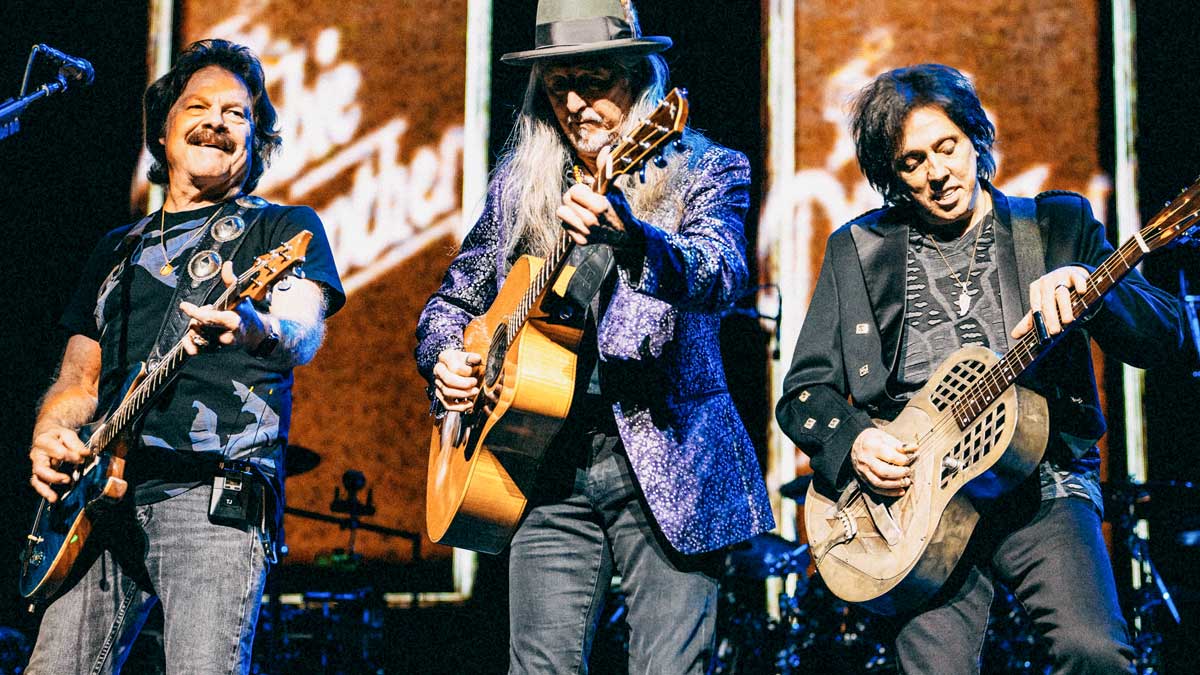
Tom Johnston a PRS Custom 24, Patrick Simmons with an Arthur Davis A1 Auditorium, and John McFee with a Republic Tricone Classic.
If you’re making a list of beloved bands with a long string of hook-heavy hits, the Doobie Brothers will surely be on it. Their new album, Walk This Road, features the creative core of vocalist/guitarist Patrick Simmons, vocalist/guitarist Tom Johnston, multi-instrumentalist John McFee, and vocalist/keyboardist Michael McDonald.
The news of Walk This Road generated significant interest because it’s the first album of fresh material with McDonald (who rejoined in 2019) since 1980’s One Step Closer. The band tours extensively, particularly in the summer at U.S. amphitheaters – perfect venues for multi-generational crowds to enjoy their feel-good music.
Producer John Shanks, who helmed their 2021 album Liberté, adds impressive guitar playing of his own to Walk. Simmons, Johnston, or McDonald separately co-wrote nine of the 10 new songs with Shanks; Simmons, McDonald, and Shanks teamed to write the other.
Walk This Road’s grooving title track features Johnston, Simmons, and McDonald sharing lead vocals with legendary R&B/gospel singer Mavis Staples. The upbeat “Call Me” and soulful “Learn to Let Go” are further standouts.
The band formed 55 years ago and released its self-titled debut album in 1971. Soon becoming mainstream favorites, Doobies classics include “Listen to the Music,” “Long Train Runnin’,” “China Grove,” “Take Me in Your Arms (Rock Me a LittleWhile),” “Takin’ it to the Streets,” “It Keeps You Runnin’,” “The Doctor,” and the number-one hits “Black Water” and “What a Fool Believes.” Best-selling albums include Toulouse Street, The Captain and Me, Takin’ it to the Streets, and 1978’s chart-topping Minute by Minute.
Tom Johnston with a Rickenbacker 620/12. Pat Simmons with a Dobro Phil Leadbetter signature model.
Despite Grammy wins for “What a Fool Believes” and Minute by Minute, long-overdue industry accolades for their full body of work have only recently come along. The band was inducted to the Rock & Roll Hall of Fame in 2020, and Johnston, McDonald, and Simmons are receiving the Songwriters Hall of Fame’s Performing Songwriters award this June.
Vintage Guitar talked with Simmons, Johnston, and McFee about making Walk This Road.
You’ve always had a creative urge and released new music. Many classic bands don’t and say that fans only want to hear the old hits. Patrick Simmons: If you’re having fun doing what you do, it transfers to the listener. I feel like we always give it our all – when we’re recording or playing live, whatever we do. And that comes across. It’s certainly subjective, but I feel this effort was a bit more interesting than our last album, which was great. I think having Mike there added an element that we didn’t have before. I can’t say enough about his singing and writing. He’s just such a talented guy and I’ve liked him in the band and outside the band, and it’s nice to have him back to make a record with us, and hopefully we’ll do more. I felt like everybody really stepped up a notch on this record.
Tom Johnston: The last one was a spur-of-the-moment thing, but it took longer than spur of the moment. We entered it thinking it was going to be an EP. We were on the road a lot.
John McFee: I think as musicians, we don’t want to just feel like, “Okay, we’re done and now let’s just go out and endlessly actively rest on our laurels.” This is a band that doesn’t want to do that. I don’t mean to criticize what other bands do or how they decide to go about their careers or their music, but with us, there’s a creative impulse that continues. And believe me, we don’t have any illusions we’re going to set the world on fire or something. You never know anything that people can respond to, and all of a sudden there’s a big positive reaction to a particular song or record. But even if there’s no reaction, we still want to be creative.
The musical styles the band is known for are all represented on Walk This Road. Surely that came naturally, not because it was expected of you. TJ: This is actually the first album I’ve been on with Mike, other than Takin’ it to the Streets. I had a song (“Turn it Loose”) on there. This is the first time all three of us have been writing for an album. It’s been a lot of fun, actually. It’s pretty cool. We’re lucky that people accept the three sounds and are good with it because I don’t know if that would’ve happened in the ’70s. Probably wouldn’t have, at least with any success, depending on the tune. It would’ve gone in one direction or the other like it did back then. In the ’80s and ’90s, we did a couple albums (Cycles and Brotherhood), then we did one in 2000 (Sibling Rivalry) and 2010 (World Gone Crazy), but they were all guitar-centric, and now we’ve got Mike involved and it adds a nice tone to everything.
John McFee with a Phantom Teardrop.
PS: Well, you’re making a big leap of assumption that we might plan anything! We’re totally off the cuff, pretty much everything we’ve ever done, so there was really no plan. There is a uniqueness to what we do together. It’s probably why we’ve been able to be together in a band for such a long time. We do things and things just seem to correspond – the songs themselves, the messages, the way we work together in terms of having sort of a symmetry that is somewhat reminiscent of what we’ve done in the past. Really, everything is an accident when it comes right down to it.
JM: It’s the Doobie Brothers. It’s the personnel especially. I’ll be honest, this is really Pat, Tom, and Michael’s album, and I’m just there. I can be supportive, but that’s their material. Those guys are the voices of the Doobie Brothers through the years. I think it is just natural that it’s going to end up striking people as, “Gee, that sounds kind of like the Doobie Brothers.”
Explain the writing and recording process with John Shanks at his studio. You often worked separately with him, but would more than one of you get together? PS: Both ways. At times, a few of us would work together, but generally this is the way John likes to work with us. I don’t think he works this way with everyone, but we started working this way with him a couple years ago. Really, during the pandemic, it was a different approach because everybody was basically isolating. So, when we started working with him, it was such a strange time period for getting together with other people. It’s like, “Should I wear my mask while we’re working? Do I need to?” And I did. I think for a while it was like, “Hey, this is weird writing with my mask on. I’ve got to take a break and go get vaccinated!” We took that approach and it worked so well and we had such a good time doing it that way. There’s a lot of new ways to record, which I love. We started that way during the pandemic, and we just rolled into it with this record, and it worked really well. I won’t say it’s regimented, but it’s formulaic and we don’t want to be all the time. We might want to be a little scrappy or looser, and I’m sure that’s something we’ll do in the future.
TJ: It’s kind of a funny thing when we get in the studio. That stuff just happens because I don’t know if anybody’s been writing a ton of songs on the road. That doesn’t happen for me. I don’t get creative on the road. Back in the ’70s maybe. Working with (Shanks) is another reason to go in various directions. We don’t go in with a plan. It’s just whatever happens in the studio, and that’s probably the magic about it – one of the things I really like. You don’t have anything set up before you get there. Yeah, I’ve written tunes before going to the studio, but these last two albums, we wrote them in the studio. And I’m not speaking for Mike or Pat. I don’t know what they had together when they walked in the door, but I didn’t have a lot. So, it’s spur of the moment. I like the spontaneity. I like the instrumentation on a lot of the songs. I like the direction. It’s different from what we did before and I really like that. I don’t like rubber-stamping everything you’ve already done.
Since Michael has been back in the band for a few years and you’ve been touring steadily, did that make things easier? TJ: Yeah, we have been on the road together since what, ’21? And each successive year we’re out doing all this stuff together, the camaraderie is there. I think that has a lot to do with what comes in on the album. I believe that.
Pat Simmons with a partscaster assembled at Westwood Music in the ’80s, Tom Johnston a PRS Custom 24, and John McFee a Shuriken, onstage in 2024.
PS: I agree with Tom. I hadn’t really thought about that, but I think you’re right. It was a bit more comfortable with each other and when you’re working on a song, you could hear the part you’d want somebody else to play. I certainly think there’s a uniqueness in our vocal plan that we’ve always had, but on this record, it really, really worked. In terms of the background vocals, we did a lot of singing together. I think that really makes a difference. It feels like a continuance of what we’ve been doing.
JM: Maybe I’m old-fashioned, but I grew up playing in bands and a band is, ideally, like a family. It certainly makes more sense and feels better to me when you’ve got a flow going of live performances and you get to know each other’s instincts by virtue of performing together. It makes a difference in the music.
John, you’re revered as a multi-instrumentalist and you played a variety of things on Walk This Road. Was it hard to decide which instrument to play, or was it obvious what each song needed? JM: I was given assignments, and it was fine. There was a certain amount of give and take in regard to that. For example, “Angels & Mercy” was a song where Pat said, “I want you to play violin, a bluegrass East-style violin part.” I started with that and then I ended up trying other things. By the time it was done, I also was playing harmonica, I added a resonator-guitar part, and I forget what all. A bit of that also happened with “State of Grace,” where I ended up playing pedal steel, cello, and mandolin. Once I put what they initially asked for, I got ideas and I ran ’em by them, and it worked. They ended up using my ideas in pretty much every case on this project. That doesn’t always happen. They give me a certain amount of freedom to try ideas.
You did most of your recording in your own studio, correct? JM: I’ve always had my own studio and I’ve been insanely busy working on all kinds of projects with other people during this whole time, too. In the case of this project, my contributions were mostly done at my place. On “Angels & Mercy” I did work a little bit in the studio with the guys. “Lahaina” I did on the road in my hotel rooms. That’s a Pat song, but we worked together. He coached me through what he wanted me to play on the resonator.
The band has always worked with producers, notably Ted Templeman, and now John for two albums. What are the benefits of having outside producers? PS: It’s important for me that I develop a personal relationship with our producer, whoever we’ve worked with in the past. I can only think of one time where we didn’t quite align with the producer and we had to make a change in the middle of recording or near the end of it. But, generally speaking, all of our producers have been great people and fun to hang with. We became close friends with every one of them – Ted, Charlie Midnight, Rodney Mills, and John. All have been just fantastic people.
TJ: You knew these people had lots of time in the studio and knew what they were doing. And that’s important. I’ve never worked with anybody that didn’t. But I’ve got to say that’s a big part of it. Good producers say, “What if you tried this?” They’ve all got their way, but it funnels down to the same thing – suggestions that help us. You may not always agree and sometimes you’ll try and go, “Well, that really does work,” or “It won’t work,” but at least you’re trying stuff, and that’s an ongoing process.
The Doobies’ latest album is Walk This Road.
JM: Every producer has a different style, a set of skills, or their way of contributing. It’s different with every producer. John is pretty assertive. I didn’t have much contact with him. I was sort of given the signs, “Hey, we need you to do these kinds of parts on this,” and then I did them on my own. I didn’t really get a lot of direct input from John myself. I’ve worked with producers who stay back and give the artists more freedom. Some really put their own stamp on it. And it can be great either way. I remember working on Elvis Costello’s first album (1977’s My Aim is True) with Nick Lowe. It’s a live album and he would not let me punch in a single note. We did overdub some background vocals, and Elvis doubled a few lines here and there, but most of that album is completely live. At the same time, I was living in England and my group, Clover, which included Huey Lewis, and working with Mutt Lange, who is the exact opposite. He is a perfectionist in everything. He’s great. I love Mutt. They’re two completely different styles of production, but they both can work.
Which guitars and other instruments did you play on this album? TJ: Most of the stuff was at John’s house. He has 150 guitars in there – PRSs, Strats, Teles. I didn’t bring any because then you’re flying around with gear that’s already there, more or less. He had tons of effects, tons of foot pedals. Everything you would need.
Acoustically, I used a Gibson J-50, or something old that sounded like it. I did all the tracks on the first five albums with a J-50 that, unfortunately, was stolen.
JM: On the title track, I’m playing slide guitar on my Line 6 Variax. I can go through variations of sounds and arrive at what I think works more easily using that type of a rig than having 20 different amplifiers set up with different microphones on them. I can choose the different amps and mics and stuff like that within my Line 6 Helix pedalboard and choose from different guitar models like the Les Paul or Strat or whatever. I used my Franklin pedal steel. My favorite mandolin is an Alvarez that’s really high-quality. The resonators were a Republic tricone and a National-style resonator. I’ve got a five-string acoustic violin I’ve had for a long time that I really like.
PS: I used John’s guitars. I’m a Strat guy, and he had some great ones that are really close to what I play. That was a real bonus. On almost all of the early Doobie Brothers records, I used an Epiphone Texan, and I walked in one day and he had this beat-up Texan sitting there. He says, “What do you think of this?” I picked it up and played it, and it sounded just beautiful. It was really gnarly-looking and old, but it played so beautifully and sounded so good. I ended up using it for almost all the acoustic stuff.
Road Tones
When artists sign on to work with writer/producer John Shanks, they are, of course, welcome to bring their own instruments. But sometimes – as with the Doobie Brothers’ Pat Simmons, Tom Johnston, and John McFee – it just isn’t practical. No fear, though, because Shanks is a true guitar junkie who can supply whatever sound a project might need, even for the hardcore vintage players. Here’s a look at some of the prime pieces the Brothers used on Walk This Road.
’61 ES-335, ’64 Strat in Shoreline Gold, and a ’59 top-loader Telecaster.
’63 Gibson Hummingbird, Shanks scoring this ’67 Epiphone Texan just before the sessions was a fortuitous twist of fate. “I brought it, not knowing that Pat used a ’67 Texan to record ‘Black Water,’ he said. “First thing he did was tune it, put on a thumb pick, and start playing that song. It’s beat to s**t but sounds incredible!” ’68 Gibson SJ-200.
’61 Gibson SG (left), ’65 Gibson Trini Lopez, ’73 Strat with a Tele pickup and Alembic preamp.
’68 Les Paul Custom (bottom left), and among the basses used by Pino Palladino and Bob Glaub were two Fender Precisions – a ’62 in Fiesta Red (faded to the misnamed “Salmon Pink”) and this sunburst ’68.
This article originally appeared in VG’s May 2025 issue. All copyrights are by the author and Vintage Guitar magazine. Unauthorized replication or use is strictly prohibited.