
 Keeley Electronics’ GC-2 Limiting Amplifier has controls for Compression, Threshold, Gain, and a Threshold indicator. It uses dbx-inspired circuitry and produces a range of compression from 1:1 to 1:Infinity, and a boost up to 30dB. It’s hand-built in the U.S. and includes true-bypass switching.Visit www.rkfx.com.
Year: 2014
-
Keeley Offers GC-2 Limiting Amplifier Pedal
-
Howard Roberts Guitar Summit Set for NAMM

Photo: Andrea Augé. The first annual Howard Roberts Celebrity Guitar Summit is set for January 22 at the Anaheim Plaza Hotel Celebrity Ballroom, during the annual NAMM show. The event will pay homage to the late studio/jazz guitar legend and the Hollywood studio scene from the 1950s through today, showcase the innovative teaching techniques Roberts employed at Guitar Institute of Technology, and include performances by Ernie Watts, Russell Ferrante, Chuck Berghofer, Carol Kaye, Ralph Humphrey, Howard Alden, Mitch Holder, Tim May, Mike Anthony, and others. The event will also serve as a the release party for a documentary film and album dedicated to Roberts.
Revered as one of the most heard and recorded guitarists in history, Roberts’ list of credits includes “The Twilight Zone,” “Green Acres,” “The Munsters,” “The Andy Griffith Show,” “Batman,” The Sandpiper, Cool Hand Luke, Dirty Harry. and Camelot. He also recorded with The Beach Boys, Elvis Presley, Frank Sinatra, Peggy Lee, The Monkees, Ray Charles, Sarah Vaughn, and many more.
Produced by Roberts’ son, Jay, the film documents his father’s career with interviews of colleagues, friends, family, and peers, more than 30 of whom will gather for the celebration.
“This project has revealed so many wonderful things and significant details about my dad,” he said. “I found a strong consensus that H.R. was not just Hollywood’s favorite session guitarist, but players all over the country eagerly awaited his next album. This documentary illuminates his influence on so many careers.”
Proceeds from the event and sales of the tribute film DVD/CD will help support the Howard Roberts Scholarship Fund. Tickets in the form of donations will be available at the door or online at www.howardrobertsproject.com. The event is sponsored by Gibson Guitars, Mackie Audio, Ampeg, Yamaha, Quilter Amplifiers, Zildjian and C2 Imaging.
-
DigiTech Issues Mosaic Polyphonic 12-String Pedal
 DigiTech’s Mosaic Polyphonic 12-String pedal is designed to help electric or amplified acoustic guitars create a 12-string sound with octave low and doubled high strings. It offers a balanced low-end response with octave shimmer using independent Level and Tone controls; Level controls intensity while Tone shapes the overall brightness. Wired for true-bypass, it can operate on AC or DC power. See more at http://digitech.com.
 -
Reverend Offers Charger 290 LE
 Reverend Guitars’ Charger 290 LE has a Korina body, three-piece neck, CP90 pickups, Bigsby B-50 with Reverend’s soft-touch spring, graphite nut, locking tuners, Reverend’s Bass Contour Control, and a dual-action truss rod. It’s offered in three colors – Metallic Alpine Green, Metallic Red, and Lakeshore Gold – with cream pickguard, cream pickup covers, and an exclusive matching Souldier Strap. Visit www.reverendguitars.com.
 -
Fender Offers Brown Derby, Top Hat Resonators

Fender Top Hat Resonator Fender’s Brown Derby and Top Hat resonators have bound mahogany bodies, maple tops, and a Eastern European Continental cones of hand-spun aluminum. They use a Telecaster headstock on a mahogany neck with a C profile and French heel, a bound 20-fret rosewood fingerboard with 16″ radius, purfling, bone nut, maple biscuit bridge, nickel hardware, and vintage-style tuners with aged white plastic buttons. Go to www.fender.com.
-
Aguilar Offers Limited SL 112 Cab
 Aguilar Amplification is offering its SL 112 cabinet in a limited-edition Bass Cabernet cover. It uses neodymium drivers and custom crossovers. For more, visit www.aguilaramp.com.
 -
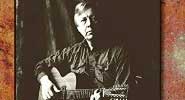
Dave Ray
Kudos to Red House Records for this three-CD set of rare and unreleased recordings by blues singer/guitarist Dave Ray. It probably won’t fly off shelves, but more people need to be exposed to the music of Ray, who has been largely overlooked in the various treatises on blues and the Folk Boom.
“Snaker,” as he was nicknamed, was barely out of high school when he began playing Leadbelly-inspired blues in bars and coffee houses in Minneapolis. It was usually in the company of blues harpist Tony “Little Sun” Glover and/or fellow 12-string guitarist “Spider” John Koerner – both a few years older than Ray, who was notably not a mere copyist. The “and/or” was somewhat of a running joke when the trio cut its first LP, Blues, Rags & Hollers, because it was rare for all three to perform together, live or on any given song on the album – which was picked up by Elektra Records.

Whites playing pure country blues were a rarity then, with John Hammond and Geoff Muldaur numbering among the few to record. They received their biggest exposure at folk festivals such as Newport and Philadelphia, acting as sort of a bridge between the white folk acts and older “rediscovered” blues musicians.
Lots More Blues, Rags & Hollers soon followed, and in ’66, Ray, by far the bluesiest singer and player of KR&G, cut his first solo album, Snaker’s Here! – producer Paul Nelson’s academic liner notes belying Ray’s passionate performances. For his follow-up, Fine Soft Land, Ray wrote most of the songs, and transformed Big Joe Williams’ “Baby Please Don’t Go” into sort of a Davy Graham-like raga.
Legacy is programmed chronologically, covering 40 years, beginning with ’62 basement tapes of Ray solo. Following are live cuts of various configurations, mostly eschewing KR&G proper, although one disc is virtually dedicated to board tapes of the Ray & Glover years. Its 32-page booklet includes insightful cut-by-cut commentary by Glover, the collection’s producer.
Ray flirted with electric bands (although he later called Bamboo “boring and forgettable”); he engineered Bonnie Raitt’s self-titled debut album; and there were numerous KR&G reunions. In 2002, he was diagnosed with lung cancer and died, 59 years old.
This is highly recommended, as are the updated DVD of Blues, Rags & Hollers – The Koerner, Ray & Glover Story and reissues of their collective and solo Elektra recordings from the early and mid ’60s.
This article originally appeared in VG‘s January ’15 issue. All copyrights are by the author and Vintage Guitar magazine. Unauthorized replication or use is strictly prohibited.
-
Knaggs Offers Guitars with Inlaid Stone
 Joe Knaggs has developed a method to inlay precious stones into guitar tops. The company offers chrysocolla, turquoise, green malachitie, onyx, pipe stone, balicoral, and blue lapies in its solidbody Kenai, Keya, Choptank, and Severn models. Check them out at www.knaggsguitars.com.
 -
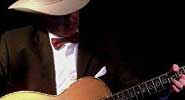
Britt Gully

No less than the Smithsonian Institution has applauded Britt Gully for his interpretations of Jimmie Rodgers’ pioneering country music. So when Gully gets a chance to borrow the Singing Brakeman’s original Martin to record an album, it’s time to lend an ear.
Rodger’s custom-ordered the 1927 Martin 000-45. The guitar features his name inlaid in mother-of-pearl on the fretboard and “Blue Yodel” on the headstock after his famous cycle of 13 songs. “Thanks” was painted upside down on the guitar’s back.
After his death, Rodgers’ widow loaned the guitar to Ernest Tubb, who played it for 40 years. Nowadays, it spends most of its time safe and sound behind glass at the Jimmie Rodgers Museum in Meridian, Mississippi.
So, with permission granted, Gully rounded up a group of friends and special guests to record this tribute.
“This guitar is magical,” Gully says about the Martin. “There was never a time when playing it that I did not realize what I was playing, and who played it before me.”
Happily, the album is not a slavish recreation of Rodgers’ music. Instead, it’s a series of joyful jam sessions on 13 songs with a full band flushing out the sound of that vintage Martin.
Gully sings, picks the 000-45, and of course, yodels. His lineup of friends includes fiddle, harmonica, mandolin, piano, and accordion players.
The album kicks off with “Any Old Time,” Gully’s band swinging the song subtly with an easy jazz gait that fits perfectly. Their version – complete with clarinet and violin – echoes Rodgers’ original, but has a life of its own.
On “California Blues” (a.k.a., “Blue Yodel #4”), the harmonica and background vocals accent Gully’s lead. For “Nobody Knows But Me,” Mac McAnally lends lovely mournful guitar leads, while Carl Jackson’s guitar augments “Miss The Mississippi And You.”
The finale, “Walking Up Jimmie’s Guitar,” is Gully’s lovely instrumental blend of country, blues, and ragtime.
Gully proves himself throughout. His singing and yodeling echo back to the late 1920s. And that guitar sounds gorgeous – warm, clear, woody, and wonderful, a living testament to Martin.This article originally appeared in VG‘s January ’15 issue. All copyrights are by the author and Vintage Guitar magazine. Unauthorized replication or use is strictly prohibited.
-
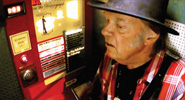
Neil Young

In more ways than one, Journey Through The Past – the title of Neil Young’s 1972 directorial film debut – would have been a better title for A Letter Home, the latest from Winnipeg’s favorite son. Recorded in the 1947 Voice-o-Graph booth at Jack White’s Third Man Records in Nashville, this all-covers affair is, according to Young, a look back, comprising “songs that changed my life… songs by greater writers.”
On paper, the possible pitfalls are apparent. In concept, this new album would seem to have the potential to be another confounding zig where others zag. (Trans or Everybody’s Rockin’, anyone?)
One listen to the opening title track, however, an off-the-cuff spoken-word piece that Young addresses to his deceased mother, Rassy, should allay the fears of on-the-fence fans. A device that would come off as corn-pone in the hands of another is poignant here. And it sets the tone for most of what follows.

While this album at times makes the Anthology Of American Folk Music sound like it was recorded last week (and this from a guy who spent the previous months making PR hay by touting his Pono digital music system), most of the song selections work well, though there are a handful of clunkers. Springsteen’s “My Hometown” falls flat, and a shambolic, piano-accompanied stab at “On The Road Again” (complete with blown lyrics) makes the Faces sound like the most tightly rehearsed post-hardcore band.
But when the album works, which is most of the time, it’s fantastic. Gordon Lightfoot’s “Early Morning Rain” and especially “If You Could Read My Mind” are devastating in Young’s hands, while Bert Jansch’s “Needle Of Death” reads like a bookend to Young’s “Needle And The Damage Done” and “Tonight’s The Night.” And with “Girl From The North Country,” Young evokes the halls of Kelvin High School, circa 1961, more than Dylan does Echo Helstrom back in Hibbing.
A Letter Home is the sound of someone who never rested on his laurels simultaneously reflecting on his past and staring down his foreshortening future. But the sense is that Young is reflecting solely for his own benefit. Whether this is due to the scratchy midcentury warble no doubt common to records of his youth (plus, who would record straight to disc for mass consumption, after all?), the nature of the heavier selections, or the intimacy of the spoken-word opener, the fan is often made to feel thrillingly voyeuristic as Young, with looseness in his playing and (even more) quaver in his voice, in some ways reveals more than he did in all 500-plus pages of his autobiography.
This article originally appeared in VG‘s September ’14 issue. All copyrights are by the author and Vintage Guitar magazine. Unauthorized replication or use is strictly prohibited.

