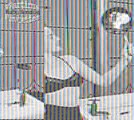
Ruby Rendrag has definitely learned a lot from Chrissie Hynde, and it’s a good thing. She handles most of her own guitar work on this album (with a little harmonica thrown in) and sings her smart, accessible, lively adult pop songs like a grownup.
As a guitar player, Rendrag moves freely from electric (“Not Today”) to acoustic with a solid sense of rhythm and taste, as the break on “W26” shows (word has it New Orleans musicians even dubbed a style of playing after her). As a writer, she has depth and maturity, and, with a voice coincidentally similar to Hynde’s, sings in a naturally soulful way almost to be expected from a native of the New Orleans suburb of Kenner – doubtless the source of the hint of funkiness she can’t help but inject. The only non-original is beautiful cover of Radiohead’s “High And Dry” – the irony of it being recorded by a flood survivor (several tracks for her first album fell victim to Hurricane Katrina) is not lost, and fits with the rest of a superior disc.
This article originally appeared in VG‘s Dec. ’08 issue. All copyrights are by the author and Vintage Guitar magazine. Unauthorized replication or use is strictly prohibited.
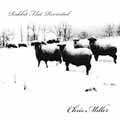
A reference to Chris Miller’s former home in central Illinois, the songs do much the same, talking about Decatur, Springfield, and cities with streets named Jasper. And Miller delivers them with a true folkie’s heart and feel.
Miller proves quite the wizard on guitar, mandolin, fiddle, banjo, dobro, bass, and even the button accordion. “Springfield, Illinois” employs all of those instruments with music that, along with masterful lyrics, paints a beautiful picture. Same goes for “Scarlet Moon Over Jasper Street,” with the only electric guitar part on the record. The bluesy, gritty feel goes hand-in-hand with the tale of the kind of area of town found in every major city. Lyrically, the two cuts are a perfect example of how Miller makes his songs come to life with his words. “I’m Going Down That Road Someday” is one high-speed folk tune that will leave you marveling at his playing. Long bass runs intersect with the bluesy lyric and a solo that never loses steam even as it sits completely alone in the mix.
Several instrumental cuts show Miller’s chops. “The Prairie Sphynx” is a jazzy piece with great use of fingers and chords. “The Redwall Medley” is a lovely tune with European sensibilities, and the closer, “Clouds In the Valley” is an elegant piece with decided classical influence.
Vintage-gear geeks, take note; guitars used on the album include a ’39 Martin D-18 and a ’30s Gibson HG-00. Folk music doesn’t always sound this good, but this is an album worthy of being heard.
This article originally appeared in VG‘s July. ’08 issue. All copyrights are by the author and Vintage Guitar magazine. Unauthorized replication or use is strictly prohibited.
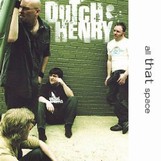
Dutch Henry writes the kind of soaring pop-rock that while never being completely out of fashion probably won’t be Top 40 any time soon. The title cut is a bouncy pop piece, much like many of the songs here, and calls to mind the Beatles or Beach Boys. Sure, other bands do the same thing, but not as well. The song has a unique lyric about outer space, and the guitars by John Merchant and Greg Miller are suitably trippy. Throughout this disc, guitars form and dominate the songs in part because Merchant and Miller sound joined at the hip. “Smile” is a great example, with its melodic, intertwining guitars. “Aron Gordon” is oddly sweet country-pop that calls to mind the likes of NRBQ, with plenty of hot country playing. “Lonely You” is a hugely quirky pop song and its solo, filled with hints of jazz, mixes marvelously with the Beach Boys-style background vocals that highlight the song.
This Michigan band has all the tools needed in this day and age; they write great songs, the musicians are top-notch, and they play music that sticks in the head.
This article originally appeared in VG‘s June ’08 issue. All copyrights are by the author and Vintage Guitar magazine. Unauthorized replication or use is strictly prohibited.
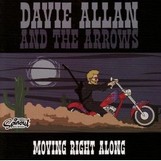
Davie Allan came along when, by all rights, instrumental rock should have been long past rigor mortis and decomposing, after the British Invasion nailed instro surf’s coffin shut. But, against all odds, as garage rock was becoming psychedelic, Allan carved out a niche, stuck to it, and is still making great records today.
Part of his success is that the self-proclaimed King Of Fuzz’s sound wasn’t dated; plus, it fit perfectly into the bikers-and-drugs exploitation B-movies for which he provided soundtracks. The other component, though, was his ability to come up with simple but catchy and memorable ditties and reinvent well-known songs to conform to his style. And the sheer power of his playing bordered on punk before there was punk, and can still make most blue-mohawked groups sound about as dangerous as the Jonas Brothers.
After kicking off with the pummeling Heartbreakers-ish riff of “Slip-Stream,” Allan takes Max Frost & The Trooper’s ’60s psych nugget “Shape Of Things To Come” for a ride, his Jazzmaster’s whammy bar leading the way.
Next up, “Frustration” features fleet-fingered picking, sustain, and harmonized lines over a beat that’s somewhere between a pow-wow (Native American themes have always been an Arrows component) and Tina Turner’s “Nutbush City Limits.”
The fact that Allan displays impressive singing on the lush “Heartache” (an Everlys/Holly-esque original) shows that instrumental rock is an artistic choice, not some cage. Hopefully, Allan will explore this side more in the future – but it sure feels good when he charges into the next track, “Vanishing Breed,” an instro flurry tribute to Dick Dale. Then “Listen To The Guitar Man,” featuring Lisa Mychols’ lead vocal, in the mode of Al Casey’s “Surfin’ Hootenanny,” quotes Dale, Duane Eddy, Link Wray, and the Ventures.
When so-called rock historians draw up “best of” lists of of true rock guitar stylists, Davie Allan’s name should never be left off.
This article originally appeared in VG‘s Nov. ’08 issue. All copyrights are by the author and Vintage Guitar magazine. Unauthorized replication or use is strictly prohibited.
From her first album appearance, at age 12, with her father’s string band, to guesting on Stefan Grossman’s 1971 album, How To Play Blues Guitar, and her 1975 solo debut, Rory Block has staked a claim as one of country blues’ foremost interpreters. Simultaneously, she has emerged as a distinctive singer/songwriter, and both sides of her musical personality trade fours on her latest Telarc CD, From The Dust. She also has a new instructional video on Homespun Tapes, entitled Rory Block Teaches The Guitar Of Robert Johnson.
Vintage Guitar: Some people feel roots music needs to be recorded in a “roots” way. Rory Block: It’s a very interesting subject. I have no objection to it, and I think recordings that are done that way – just put a mic in the room and have the choir stand around – are fabulous. I had a leg up on Pro Tools – from when it was being beta tested, when it was called Sound Tools – 10 or 15 years before it was released to the public. We have a Pro Tools setup, along with the effects and microphones Rob [Davis, producer/engineer] uses in the studio and on the road. But you can use it organically, to make a completely natural recording. You take out things you don’t like, but you don’t construct the whole thing in an artificial way. Then it wouldn’t have any feeling. The way people can tell is by seeing me play live.
Why do you prefer Martins?
I just love them! It’s been my favorite guitar since the beginning. In 1965, I basically ran away from home and went through the South with Stefan Grossman, and he’d find these old Martins in pawnshops for fifty bucks. I knew that this was the ultimate guitar, the thing to aspire to.
On 2003’s Last Fair Deal, it was one guitar, many sounds – thanks to Rob. It’s all my Martin OM28V, but multiple guitar parts. My performances on the guitar are almost always Layer 1, Layer 2, Layer 3. On From The Dust, most of the recording was done before we got my signature guitar, an OM40, but I used it on “Big As Texas.” The OM28 is a road warrior – a strong guitar that can stand up to what I give to it. The new guitar has more personality and depth – a deeper variety of tones. It plays like butter and sounds gorgeous without amplification; then when you put a pickup on it [Ed. Note: Rory uses a Fishman Gold Plus], it becomes extraordinary.
How were you first exposed to Robert Johnson?
I grew up with a lot of roots music around me, and heard McKinley Morganfield [Muddy Waters] and also the country artists, like Roscoe Holcomb. We’re talking soul. The acoustic music of the ’20, ’30s, and ’40s was awesome, soulful stuff.
Within maybe six months of meeting Stefan Grossman, he gave me a record called Really The Country Blues, with all this variety of country blues, and right away it became my life.
My dad played fiddle and banjo, and had this dense way of playing the strings – with these gnarly hands from working [making sandals] with leather and dyes. I’ve only recently realized that his clawhammer banjo style of frailing has had a major impact on the way I play Robert Johnson. There’s also a flamenco connection, where flamenco and blues obviously came together. If you think about open G tuning, and realize that it was once called “Spanish” by Mississippi John Hurt and the other players, to me, that clearly means that Spanish guitar styles got translated through different ethnic groups and got picked up on by early blues. Also the Appalachian mountain style was swirling around and blending.
When I was 12, I went to the North Carolina fiddler’s convention with my dad, and met Doc and Merle Watson. We stayed at [banjo player] Clarence Ashley’s house, and [fiddler] Fred Price was there. There was all this talk about country blues and Appalachian old-timey music, how those guys knew each other and swapped information. So there are lots of little things you can pick up on from diverse styles that lock in in a really interesting way – from my point of view, into Robert Johnson. Because that’s the style that I’m most focused on. Robert Johnson is my first love – what can I tell you? I’ve been loving him since I first heard him. It was clear to me that he was the great all-time genius. And I use the clawhammer banjo style and a lot of things I learned in many different places, but landed in my lap at blues.
You have a reputation as an interpreter of the blues greats, but you have this other side, as a singer/songwriter. Is taking the blues to another level part of your thought process or aim?
I wouldn’t say that I’m taking the blues to another level, because I think it’s already at the greatest pinnacle it can ever reach. But I do think I’m continuing the flow of the movement of the music. People tell me, not infrequently, “I think you’ve managed to continue something that might otherwise have died out.” All I know is when I play blues I love it to death, and I’m there emotionally with the music, and it’s all that matters to me when I’m playing. Someone else would have to say whether it’s an extension of the music; I don’t really know. But I’m happy that people seem to experience it that way, because I would like to be able to add something of value.
The same as with a classical performer. Let’s say you get somebody who plays their instrument well enough so that, even though they’re playing somebody else’s notes and honoring where it’s supposed to speed up and slow down and whatever’s written into the music, they still are bringing something of themselves. So people want to see them do it. And I’ve been doing it long enough so that, at some point, the way I do it became part of me. Early on, it was much more reverential. I wasn’t worried what I sounded like; I just wanted to be able to do what they were doing.
What I might bring to bear with the music is just something that happened over time, and people say they can tell it’s me when they hear it. That’s gratifying – not for egotistical reasons, but because that would mean that something of yourself has been added to the equation. And I would rather have that be the case than not – to know that there’s some individual stamp that has occurred over time that gives a genuine connection feeling for the listener.
This article originally appeared in VG‘s May ’05 issue. All copyrights are by the author and Vintage Guitar magazine. Unauthorized replication or use is strictly prohibited.
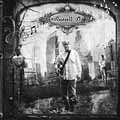
Russell D is Austin singer/songwriter duo Russell Forsyth and percussionist Arron Michaels, and the “one thing” referenced in the CD title is love – the overriding or underlying theme that runs throughout the album.
The music is folk and psychedelic, but has nothing to do with the pretentious psych-folk movement. Forsyth and Michaels could be transported to the Fillmore circa 1968 and fit right in; the melodicism is somewhat reminiscent of the Youngbloods.
The music centers around Forsyth’s mandocello. Craig Tourngate’s bass and Mark Wilson’s sax and flute flesh out some of the arrangements, and the production is first-rate – the warm and immediate sound befitting the intimacy of the lyrics on the 17 originals such as “Love Is Life” and “If I Knew You Then,” featuring vocal support from Maya Carle West and Joe Meitzen, creating an almost tribal feel.
Hard-to-categorize stuff – which isn’t a half-bad thing.
This article originally appeared in VG‘s Dec. ’08 issue. All copyrights are by the author and Vintage Guitar magazine. Unauthorized replication or use is strictly prohibited.
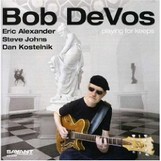
He may be relatively obscure, but Devos can navigate traditional pieces and write fresh material that holds up. This is an organ trio with saxophone, and the players are very comfortable with each other, as illustrated by the hard bop of “And So It Goes.” Eric Alexander’s tenor sax and Devos’ guitar state the head before solos by both men take over. Devos uses Coltrane’s “Naima” as the display case for his considerable skill; a lovely chord intro brings the band in before his solo picks out the nuances. Then he performs exquisite comping behind Don Kostelnik’s Hammond B-3 solo. Devos’ solos are relaxed and tasty even when swinging hard in the original “Wes Is More.” While some classics are taken on, they aren’t rote repeats of the originals. “Body and Soul” gets a swinging, relaxed ride. “Freedom Jazz Dance” gets a nice spacey treatment that highlights the interplay. Same can be said for the version of Monk’s “Ask Me Now.”
This article originally appeared in VG‘s April ’08 issue. All copyrights are by the author and Vintage Guitar magazine. Unauthorized replication or use is strictly prohibited.
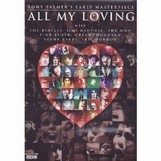
“All My Loving” was a 1967 TV special on the BBC that scared some people – and it’s easy to see why.
For older folks tuned in, video of musical acts and other counterculture elements likely conjured up images of the apocalypse. Add photos from Vietnam, Holocaust victims, and other disturbing shots added by filmmaker Tony Palmer, and it made for a disturbing hour.
On this video and in a modern context, however, it’s captivating. Fascinating bits include comments from the likes Paul McCartney, Eric Burden, and Manfred Mann, who predicts the celebrity gossip culture in which we are awash today. There’s an interview with Donovan that makes it all too easy to understand why some can do nothing but make fun of the ’60s and its inhabitants.
“All My Loving” gave ample time to great bands of the time. Jimi Hendrix surely put the fear of God into those unfamiliar with him when they saw this on TV. There are also great cuts of Cream, replete with closeups of Jack Bruce, Ginger Baker, and Clapton looking like musical madmen. A camera crew also manages to follow the Who around and we catch up with them in Peoria, Illinois (of all places!) in all their destructive glory. We also get the view of some older English performers. They don’t exactly “get” the new guys. The most humorous part is an ear specialist talking about how loud the new music is and wondering where it will all lead for the younger generation.
“All My Loving” is a fascinating document from a time when this was all new – and the viewer is allowed to derive their own viewpoint.
This article originally appeared in VG‘s May ’08 issue. All copyrights are by the author and Vintage Guitar magazine. Unauthorized replication or use is strictly prohibited.
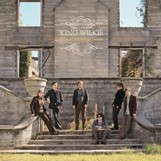
King Wilkie takes a calculated but risky turn from bluegrass, toward new acoustic music. Unlike their 2004 release, Broke, which was very much in the modern hot-picker bluegrass mold, Low Country Suite concentrates on expanding their musical style into more complex musical structures and intellectual themes.
King Wilkie is Drew Breakley (bass), Reid Burgess (mandolin and vocals), John MacDonald (guitar and vocals), Ted Pitney (lead guitar and vocals), Nick Reeb (fiddle), and Abe Spear (banjo).
Musically, the songs here temper the band’s original bluegrass direction with blues, string-band, and rockabilly influences. The song “Savannah” reminds me of some of Robbie Robertson’s best songs, juxtaposing Southern imagery with personal pathos, wrapped in a traditional melodic structure. The pacing of Low Country Suite, is far less rushed than King Wilkie’s first disk, with harmonica and guitar solos replacing hot fiddle and banjo breaks. Vocals are more up-front, while the overall sound is more relaxed. Solos are more about the melody, and the judicious addition of percussion, drums, resophonic guitar, and dobro gives the music more texture and diversity, as well.
While bluegrass purists may find Low Country Suite less to their taste, anyone who appreciates new acoustic music where boundaries are stretched and new genres created will find much to savor. Low Country Suite confirms that when an act follows its own musical truth, the results can be very rewarding.
This article originally appeared in VG‘s Aug ’07 issue. All copyrights are by the author and Vintage Guitar magazine. Unauthorized replication or use is strictly prohibited.
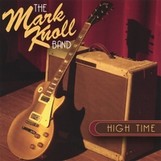
Great guitar sounds and a musical mix of blues, rock, and pop highlight this disc. The opener, “Gotta Give It Up” hints at what’s in store – big, bold guitar with a great tone kicks off the funky rocker that glides through changes and features a fine vocal from Knoll. Its perfectly-placed guitar fills hint at a technique that reappears throughout the disc. A tip of the cap to Robben Ford surfaces on “Fall Blues,” which has a jazzy feel, a fine organ solo, and big, soaring, singing guitar notes during Knoll’s solo. “Lay It On the Line” is a chunky rocker with tasty solo work. “The Bird Flew (This Bird Has Flu)” is an instrumental that modulates through several keys and group of chord changes. Knoll’s soloing is on the money and the tone is perfect, loud, but never obnoxious. Funk moves to the forefront on cuts like “You’ve Got a Lot to Learn” and “It’s Gotta Matter To Ya.”
The ballad “Sweet Little Thing” starts with a acoustic, and by the bridge we get a glimpse of Knoll’s harmonic knowledge via a set of changes that are surprisingly gorgeous.
This article originally appeared in VG‘s Jan. ’07 issue. All copyrights are by the author and Vintage Guitar magazine. Unauthorized replication or use is strictly prohibited.