Month: October 2008

  • Neil Larsen – Orbit

    A new disc featuring the wonderful keyboardist Larsen and a great band, with Robben Ford on guitar, recorded live to two-track with 12 songs that are memorable for various reasons.

    Most of this is some form of fusion, and Ford is in fine form. Whether it’s a percolating funk like the title cut, with an amazingly cool jazz solo, the lovely slow jazz shuffle “C Note,” which plays to Robben’s bluesy strengths, or the organ trio sound of “Red Desert,” which lets Robben echo Wes Montgomery, he is always on.

    It’s difficult to find a player whose tone and choice of notes always seem perfect, but this setting favors Ford, who always rises to the occasion when playing with other top-flight musicians. It’s been awhile since we’ve heard him in this setting, but his jazz chops are as good as ever. In fact, on cuts, like the airy “Shing,” it’s easy to forget the guy playing the lovely solo is one of the finest blues/rock players around.

    If there’s one complaint it’s time; the cuts are fairly short, and just when it seems like some of the solos are ready to really take flight, they move on to the next player. Fortunately, they all know how to make their parts count.

    This is a must for fans of Ford and/or fusion fans. More simply, it’s a good listen.


    This article originally appeared in VG‘s Dec ’07 issue. All copyrights are by the author and Vintage Guitar magazine. Unauthorized replication or use is strictly prohibited.


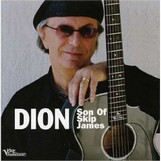
  • Dion – Son of Skip James

    James offers his own tunes (including a wonderful title cut) as well as classic covers of songs by Sleepy John Estes, Robert Johnson, and Willie Dixon, among others. He even manages to slip in a Bob Dylan tune.

    But the beauty of this disc is the way he rearranges, or more accurately recreates the feel of these classic songs. So “My Babe” keeps its melody but gets funkier, “Hoochie Coochie Man” becomes a slinky, swinging blues with a fine vocal and masterful acoustic guitar (fans may be surprised how good he is), and “Devil Got My Woman” has him messing with the structure of the chords until it sounds like a jazzbo has entered the room. The playing really does breathe new life into songs. “I’m a Guitar King” is more than a song title, it’s a statement on his playing.

    Dion making a record of blues tunes might surprise fans, but really, it’s a logical move. After all, his attitude drove the music of his youth. In fact, the title cut boogie, packed with religious and blues imagery, is summed up in the lines, “I’m the son of Skip James, I’m not loud or brash. I’m a lover, not a fighter, but I can still kick your ass!” Hearing him sing it, you believe every word.


    This article originally appeared in VG‘s Feb ’08 issue. All copyrights are by the author and Vintage Guitar magazine. Unauthorized replication or use is strictly prohibited.


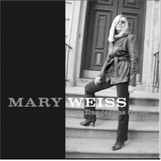
  • Mary Weiss – Dangerous Game

    “I always knew I would record again someday,” Weiss writes in the liner notes. But who knew it would take 40 years?

    In the mid ’60s, Weiss was lead singer of the Shangri-Las – quite possibly the baddest bad girls of the “girl group” era (sort of the white Ronettes). With hits like “Remember (Walking In The Sand),” “Give Him A Great Big Kiss,” “I Can Never Go Home Anymore,” and of course “Leader Of The Pack,” they were the embodiment of hormone-fueled teenage angst.

    Probably owing to the over-the-top drama (complete with motorcycles revving) of the material, they’ve never received the critical respect they deserve. Weiss in particular ranks as one of rock’s true stylists – a major influence on singers like Patti Smith and Joey Ramone.

    Brought out of retirement by Norton Records (the same folks who released Question Mark & The Mysterians’ phenomenal comeback CD), and backed by Reigning Sound, Weiss sounds as good as ever. Almost inexplicably, five words into the opening “My Heart Is Beating,” it’s clear that her voice is virtually unchanged (maybe a little deeper, more resonant).

    Thanks to Reigning guitarist Greg Cartwright, who co-produced the CD with Norton’s Billy Miller and wrote nine of the 14 songs, the album is true to Weiss’ style but sounds absolutely up-to-date. This is not a trip down Memory Lane. Which is not to say some ’60s staples aren’t employed. There’s plenty of tambourine, and when’s the last time you heard this many castanets?

    Cartwright’s “Break It One More Time” (as in “my heart”) could sit unobtrusively on the flipside of any Shangri-Las’ hit or the next Patti Smith record, while “Don’t Come Back” recalls the Ramones’ flirtation with Phil Spector. The bossa-nova title song, however, sounds like a missing Dionne Warwick classic.

    He provides rhythm and texture throughout, and steps forward to solo in brief bursts to further the song, rather than exercise his ego. The focus is always on the song and, most important, Weiss’ voice. That instantly recognizable voice.


    This article originally appeared in VG’s Aug. ’07 issue. All copyrights are by the author and Vintage Guitar magazine. Unauthorized replication or use is strictly prohibited.

  • Ed DeGenaro – Dog House

    Ed DeGenaro is a Seattle-based session cat and bonafide guitar monster with great ideas and chops. His music is a fusion of musical styles and influences that often intermingle within the same composition. DeGenaro concocts an eclectic arsenal of sonic delights (fretted, unfretted, electric, acoustic and guitar-synth) that sporadically brings to mind Scott Henderson, Shawn Lane and Frank Gambale.

    Dog House is a stylistic stew of country, jazz, blues, Latin and sampling components seamlessly intertwined with pristine production and humor. It opens with the countrified workout “Twang This!,” which immediately segues into the country-blues-fusion of “Teutonic Hellbelly.” “Fretless in Seattle” is DeGenaro’s guitar opus and Exhibit A for those who want to hear what great fretless guitar should sound like. The music keeps on coming with nary a break between songs. Like a soundtrack for a world traveler, each song pops, bursts and soothes with nifty guitar tones and hip vibes. From the Middle East to the Mid-West, DeGenaro gets it all in while tipping his hat to Weather Report, Steely Dan, Bireli Lagrene and Tommy Emmanuel.

    On the blaxploitation soundtrack feel of “SFW” and the Dixie Dregs-esque “North Coast,” DeGenaro unleashes the note density, but the track “Charlie Parker Goes Heavy Metal” is where he goes ballistic. Exploring the link between shred and be-bop, DeGenaro plays the kind of stuff that sends lesser players back to the woodshed. Co-produced and arranged by multi-Grammy winner Anton Pukshansky, Dog House has spotless production values and is an aural buffet for the guitar freak that enjoys great playing, diverse genres, and cool ideas.


    This article originally appeared in VG‘s Jan ’08 issue. All copyrights are by the author and Vintage Guitar magazine. Unauthorized replication or use is strictly prohibited.

  • Planet X – Quantum

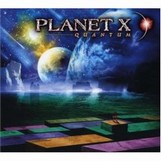
    The genetically superior team of drummer Virgil Donati and keyboardist Derek Sherinian return to continue the next chapter in their metal-fusion saga. It’s been five Earth years since the release of Moon Babies, and Quantum powers up and takes us to new and unexplored regions beyond the outer rim.

    Rufus Philpot and Jimmy Johnson share bass duties while the lyrical and soulful Brett Garsed replaces Tony MacAlpine on guitar. Allan Holdsworth contributes mind-altering solos on “Desert Girl” and “The Thinking Stone.” Lush, arpeggiated keyboard sequences counter spine-snapping bass grooves, while passionate odd-time-signature drumming hits so hard you can feel it.

    As with any Sherinian project, the keyboard and guitar solos are to die for. But Planet X is, in reality, a drummer’s band. Donati’s point of view in regard to composition gives him a unique perspective that separates Planet X from bands in similar genres. The level of musicianship is extremely high and they indeed “Strike fear into the hearts of other musicians,” but the fear is inspirational instead of off putting. These guys make you want to woodshed, not sell all your gear.

    Quantum is food for the imagination. It’s filled with a variety of moods, tempos and shifting sonic scapes. It’s a forward thinking feast for those who love the complexity of fusion, the brutal heaviosity of metal and emotional virtuosity. It’s the kind of recording that requires multiple plays. Because of the sheer density of the compositions I found myself hearing new things with each and every listen.


    This article originally appeared in VG‘s OCT ’07 issue. All copyrights are by the author and Vintage Guitar magazine. Unauthorized replication or use is strictly prohibited.

  • James McMurtry – Just Us Kids

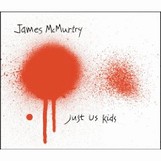
    James McMurtry has always been a fine songwriter, but he has matured in many ways since the late ’80s, when John Mellencamp produced his first record. His playing, especially on electric guitar, is on par with many notables. His songwriting is clear and precise, and he proves once again that he is not afraid to take on the powers that be.

    Several songs here won’t make him friends on the the political right. “Cheney’s Toy” is a slow march that indicts the Vice President on a number of levels, mostly in regard to the Iraq War. It features blistering leads from McMurtry. The title cut relates to anyone who grew up in a small town, regardless of political affiliation, while “God Bless America (Pat McDonald Must Die)” is a political statement that leaves no doubt about his stance while showcasing a searing solo from the Neil Young school. “Hurricane Party” doesn’t mention Katrina by name, but you get the idea. “The Governor” tells a creepy (in the best way!) story of boating and death.

    “Bayou Torhous” is a swampy hard rocker that features C.C. Adcock on guitar, while “Fireline Road” features John Dee Graham on searing electric guitar. McMurtry’s vocals are delivered almost monotone, but his voice is laden with honesty and character.
    With each album, James McMurtry continues to grow as a player, singer, and songwriter.


    This article originally appeared in VG‘s May ’08 issue. All copyrights are by the author and Vintage Guitar magazine. Unauthorized replication or use is strictly prohibited.

  • John Gorka – Gypsy Life

    It was good news, hearing that audiophile record label AIX was releasing a deluxe John Gorka performance DVD/CD. But this disc is surprisingly somber given that Gorka is normally an animated, highly amusing live performer.

    Most of The Gypsy Life (excluding a live cut from McCabe’s) was recorded December 18, 2006, at the Zipper Auditorium in Los Angeles. Gorka is accompanied by Michael Manring on fretless electric bass, Russ Rentler on mandolin, Amelia Spicer on background vocals, and Susan Werner on acoustic guitar, piano, and background vocals. All are talented performers in their own right, but none step out to deliver much spice. The problem may be that everyone is so conscious of the recording process that they play conservatively to avoid mistakes. Trying to play everything perfectly leads to musical constipation. Even Glen Gould, who was perhaps the ultimate musical perfectionist, realized that to play an entire piece perfectly he had to be able to edit the final recording. With AIX’s recording method, editing is verboten. The performers know this and adjust their playing accordingly.

    Playing The Gypsy Life at first reminds one of seeing a gorgeous woman at a social gathering, finally meeting her, and finding out she has the intellect of a junior-high student. Your initial impression is full of promise, but the actual experience is void of content.


    This article originally appeared in VG‘s May ’08 issue. All copyrights are by the author and Vintage Guitar magazine. Unauthorized replication or use is strictly prohibited.


  • Mel Brown – Chicken Fat

    It’s been awhile since we saw and heard any vinyl, but these welcome guitar releases come courtesy of the fine folks at Sundazed. The sound, as you’d expect is wonderful. Everything’s big and full with that warmness that comes from a record. And, the choice of music is a perfect set for guitarists.

    Green’s His Majesty King Funk is well-named. With five cuts of soul-drenched jazz, it’s easy to see why he’s the darling of the acid-jazz movement. He had an earthiness to his playing not found in lots of other jazz guitarists, and this set, with Larry Young on organ lets that shine through.

    It’s always fascinating to hear Gabor Szabo. The Hungarian-born guitarist, who died way too early, was a kind of bridge, I’ve always thought, to the smooth jazz of today. He wasn’t afraid to try pop tunes of the day and give them a jazz turn. This record shows that with takes on “It Was A Very Good Year,” and an actual vocal run at “Bang, Bang (My Baby Shot Me Down).” While the latter might have been ill-advised, versions of “Witchcraft,” “Autumn Leaves,” and the title cut swing like a mother. The rest of the trio is wonderful also, with Ron Carter on bass, and Chico Hamilton on drums.

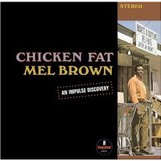
    Last but not least is Mel Brown’s Chicken Fat. That title perfectly describes the nine instrumentals contained within. Brown’s mix of soul and jazz on this Impulse Records release was, at times, breathtaking. One oddity about the record is the second guitarist. It’s none other than Herb Ellis, who fits in nicely, playing rhythm guitar. One other oddity… Herb actually plays an acoustic 12-string on two blues cuts!

    Releases like this are reason enough to still have your turntable hooked up. Sundazed has done their usual fine job with packaging with original liner notes intact. It’s really a treat to be able to walk over to the old Bang and Olufsen and put on side two.


    This article originally appeared in VG‘s OCT ’07 issue. All copyrights are by the author and Vintage Guitar magazine. Unauthorized replication or use is strictly prohibited.
  • Dylan – Pop’s 15 Greatest Minutes

    Pop quiz: What was the most important and influential live set in the history of pop music? Your choices are Elvis on Ed Sullivan, The Beatles at Shea Stadium, Jimi Hendrix at Monterey, The Rolling Stones at Altamont, or Bob Dylan at Newport in 1965. If you’re apt to pick Dylan at Newport, you might consider “The Other Side of The Mirror” a chance to be face to face with the most important 15 minutes in pop music history.

    An abbreviated version of Dylan’s 1965 Newport set was originally released on “Festival” in 1967, made by the same filmmaker as “The Other Side of The Mirror.” “Festival” saw limited distribution in repertory theaters but was never been released for home video due to legal issues. It was even nominated for an Oscar in ’68.

    Fortunately, filmmaker Murray Lerner archived his footage from the 1963, ’64, and ’65 Newport festivals. Ten years after “Festival” was released, Lerner began thinking about a movie focused on Dylan’s Newport performances. He started working on an edit of “The Other Side of The Mirror” as a personal project, and in ’75 showed his work to Dylan associate Howard Alt. After a few minutes Alt said, “I’ve got to show this to Bob tonight.” Lerner then contacted Dylan’s attorney, but the project was stonewalled. Years later, Lerner connected with executive producer Jeff Rosen, who had the stamina and connections to finally have the movie released on DVD.

    The movie is remarkably straightforward. No voiceovers or lengthy introductions disrupt the cinematic narrative flow of the film. Lerner says, “The strength of the movie is its simplicity. The filmgoer takes a journey with Bob Dylan through his performances. It doesn’t need any orientation; just watch it.” However the film isn’t merely Dylan’s performances. We also see Dylan offstage, as well as the audience’s reactions to his music. Lerner’s film is such an excellent document that the viewer is immersed in the world of ’60s folk music, and sees the effect Dylan had on it.

    Unlike many music DVDs, “The Other Side of The Mirror” can be watched in its entirety without boredom setting in. It was conceived as a complete film, not separate performances strung together. Yes, the menu lets you select specific songs, but the film has a natural flow that all but forces you to watch it all.

    One of the great questions in pop music history is, “Why did fans boo Dylan’s electric performance at the 1965 Newport Folk festival?” There are two prevalent schools of thought. One is that the audience didn’t like Dylan’s turn to electric music. The other is that fans were disappointed in the quality of the amplified sound. While here you can clearly hear the boos, the footage doesn’t explain why they happened. Given that the single “Like a Rolling Stone” had been high on the pop charts for several months before the Newport festival, Dylan fans must have heard it on the radio and expected Dylan to perform it. To think they would have come to Newport with the sole purpose of expressing their displeasure over his “sell-out” is hard to accept; it’s more likely that the sound reinforcement was inadequate to cope with the volume levels of Dylan and the Paul Butterfield Band’s amplified music, and the audience’s boos were a reaction.

    Although the sound at the event may have been bad, the sonics on this DVD are excellent. Lerner’s crew likely had its own sound engineer and/or they were savvy enough to take a feed directly from the mixing board. The 1963 and ’64 selections were recorded only in mono, but by ’65 everything was recorded in stereo. The audio menu lets you select stereo or 5.1 mix, but 5.1 doesn’t buy much additional fidelity.

    Picture quality is decent given the age of the original footage, but again, don’t expect miracles. The transfer is decent and you can clearly see the film grain, but it is not super sharp. On a big screen, you’ll be disappointed by the so-so detail. On a positive note, the synchronization between the picture and the sound is spot-on.

    Unlike most concert DVDs, “The Other Side of The Mirror” deserves a prominent place in any DVD library. It’s not only a great document, but a beautifully crafted film, full of subtle details that make it worthy of many viewings.


    This article originally appeared in VG‘s Jan ’08 issue. All copyrights are by the author and Vintage Guitar magazine. Unauthorized replication or use is strictly prohibited.
  • Uncle Earl – Waterloo, TN

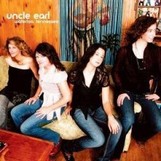
    Old-timey music isn’t a particularly attractive or commercially viable musical genre. Uncle Earl may change that. This foursome of twenty-something women may not be quite as foxy looking as The Coors, but they still manage to effectively de-whisker old time music.

    Uncle Earl consists of Kristin Andreassen on guitar, harmonica, clogging and vocals, Rayna Gellert on fiddle and vocals, KC Groves on mandolin, guitar and vocals, and Abigail Washburn on banjo and vocals. On their sophomore release Uncle Earl enlists no less than ex-Led Zeppelin John Paul Jones as producer. They also bring in A-list talent such as Gillian Welch, King Wilkie’s Ted Pitney, Donna the Buffalo’s Tara Nevins, Erin Youngberg on bass, and John Paul Jones adds bass, mandola, wobbleboard and piano parts.

    Old Time music is tricky to play. If done too slickly it looses what makes it old timey, yet if you are too gritty or funky you risk losing most modern listeners. Uncle Earl manages to plot a tightly jibbed course between the rocks and the deep blue sea. Their euphonious vocals keep the sound smooth, but their instrumental arrangements have just enough folksy dirt to make things interesting. “The Last Goodbye” opens with finger picked guitar and Abigail Washburn’s simple lead vocals, but after only half a verse KC Groves and Kristin Andreassen join her to form perfect three-part harmonies. At times Uncle Earl’s vocals remind me of the Canadian trio, The Wailin’ Jennys, with their perfectly pitched harmonies. But Uncle Earl’s instrumental parts are more driving, due in equal parts to Abigail Washburn’s banjo and Rayna Gilbert’s fiddle.

    The production values on Waterloo, Tennessee add greatly to the album’s commercial viability. John Paul Jones knows how to make a good sounding album. Even the rougher sounding instruments have a particularly euphonic tonality so they aren’t as harsh as if they were recorded “straight.” The album’s overall sonic character reminds me of Alison Krauss’s best production efforts. The producer’s primary intent is to make the music more accessible to listeners used to smooth-sounding commercial releases. On Waterloo, Tennessee John Paul Jones and Uncle Earl have accomplished the near impossible – making old timey music sound slick. And that’s not a bad thing.


    This article originally appeared in VG‘s Jul ’07 issue. All copyrights are by the author and Vintage Guitar magazine. Unauthorized replication or use is strictly prohibited.