Month: November 2004

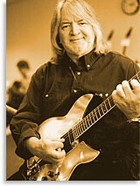
  • Randy Bachman

    Even More Business (to take care of)

    Of the legendary rock guitarists who also have admirable guitar collections, it’s hard to imagine anyone who’s been more busy gathering than Randy Bachman.

    In the decade since his first interview, Bachman (he of Guess Who and Bachman-Turner Overdrive fame) has recorded numerous albums, marketed several recordings by his late friend and mentor, jazz guitarist Lenny Breau, and participated in a Guess Who reunion. Then there was the migration of the Bachman family to an island west of Vancouver (Bachman dubbed it “Canada’s Hawaii”), Bachman’s life story in book form (written with John Einarson), a tour with Ringo Starr’s All-Starr Band, and last but not least, an appearance on “The Simpsons.”

    In his first appearance in this magazine in ’92, Bachman was planning a solo album and a Bachman-Turner Overdrive 20th anniversary tour and CD boxed set. However, things worked out differently.

    “Most musicians are the same,” the guitarist said. “Basically, you have plans, and you need a target for things you need to do, but that changes with the next phone call!

    “I’d been reminiscing about my life, and had written a song called ‘Prairie Town,’ which mentioned growing up in Winnipeg… and Neil Young. I got a fax from Larry Cragg, who’s been Neil’s guitar tech for a long time, asking if I had any screw-on tips for Gretsch three-way switches. I have all kinds; gold, silver, and brass. So I sent him a couple of each, and just for fun, I put the lyrics to ‘Prair

  • Eric Johnson

    Return of the (Texas) King

    If you just flew into Austin and were to drive around looking at the city, you’d barely have an inkling of the musical talent hidden in these hills. Among other things, you’d see Dell and Intel, as well as the clubs lining the streets below the Capitol. Chances are you’d surmise Austin was Texas’ center of technology and government. And it is.

    But what’s not as evident is that Austin also holds the title of live music capital of the U.S. – and possibly the world. In the near orbit to planet Austin are Dallas and Houston; larger, more gravity intensive masses, in possession of far inferior scenes. Even L.A. and NYC’s annual music conferences are dwarfed by Austin’s SXSW, where music dignitaries and hopefuls rub elbows each Spring in the hopes of making the deals that will supply consumers with what they think we want to hear for the rest of the year.

    Rising above all the hype, posturing, and clatter is a guitarist and musician at once nearly beyond category, incendiary, and an answer for what’s missing most in music today; substance, character, originality, tone, clarity, truth.

    From classical piano as a kid to progressive rock guitar prodigy as a teen and now grammy winning, poll-topping solo recording artist and composer, Eric Johnson now steps out of Austin much more regularly, but sonically never really leaves. The carefully cultivated blues roots remain intact and retain their integrity regardless of venue, country, or language – and like the music itself, speak directly to the soul of those fortunate enough to hear and experience it.

    Vintage Guitar: The new record is with Alien Love Child. How did it come about?
    Eric Johnson: It’s something that started four or five years ago. We just got together for fun because we were all doing different stuff. We said, “Oh, why don’t we come up with this premise of a band that rehearses for two hours and plays a show and it’s all improvisation,” And we thought, “Well, we’ll kind of make it kind of bluesy,” because that was our roots. One thing led to another and we kept doing gigs now and then, and I guess last November or December we decided to do some shows and we recorded three shows in January.

    …at Antone’s (in Austin).
    Yeah. Then we went through the tapes and decide which night had the best takes, and put together the record. So it has kind of morphed into a thing where at this point we’re doing the record and we already have a lot of material for a second record and we’re going to go out and do some touring and see what happens, just to have fun.

    Do you think people were surprised you were able to do a live record?
    No, a lot of people asked me to, and I think that it was a good (outlet).

    Was it hard to let go of that without being in control of tweaking every little aspect, like you would in the studio?
    It wasn’t as hard as I thought it was going to be, you know (laughs)?

    That’s a good sign…
    Oh, absolutely. I was talking to somebody the other day and saying this was a very cathartic record for me because I think it has helped me get over some glitches I’ve started in the last few years. It’s kind of good that I’ve averted going that way – being so succumbed and mental.

    I think there’s a place for everything, and there’s a place to be perfectionistic, you know? Wes Montgomery’s place to be perfectionistic was when his wife went to bed and the house was quiet and he would sit and he would just work real hard, you know, and that allowed him to walk through that corridor of freedom to where he could go play gigs,

    Of course, he had to deal with the fact that the neighbors insisted that he keep it down and it actually became part of his thing, the real sensitivity.
    That’s right – the tone.

    And he worked like 16 hours a day as a welder – I don’t know how he did it.
    I don’t know, either. He slept four hours a day…

    Starting at 19, starting that late…
    Isn’t it amazing? And talk about intuition. But I think that’s what I was heading toward. I was putting it in the inappropriate place, which is “sit in the studio and fiddle and stuff.” So doing the live record was kind of a reality check for me.

    You can really use the studio as an instrument. It just becomes that if you’ve got that much access.
    Yeah. I’d like to go in that direction a little more, where you let go a little more.

    But this group kind of helped you break out of some habits?
    Yeah, I think so. And to take a frontal look at stuff I need to work on, which is try to get to the point where you spend your time practicing and working on your music so you’re more free to do stuff spontaneously, instead of sit in the studio. But I think the moment you make a rule of, “Well, this is how it needs to be done,” the next time you’re gonna need to bust it, you know what I mean? You have to be malleable, but I think the general rule of thumb for me was not to adjust that style of just getting too…microfocused. So it was a good record to make for that.

    So were you guys thinking ’60s power trio; Cream and Hendrix, that kind of thing, just coming out of that vibe?
    Yeah, if I’m going to just like be completely be intuitive and spontaneous and do like a rock thing, it’s gonna have blues roots and it’s gonna be kind of Cream and Hendrix, because that’s what I grew up on.

    That’s always gonna be there.
    Yeah. And the premise of the band was to do just what came absolutely natural from your roots and your heritage.

    It’s being honest.
    Yeah. I think what Clapton did at that period, like “Spoonful,” and that effect where you just floor an all-tube amp that has a great tone…there’s a lot of room, more places that can go. I think I’ll be the first to admit there’s some stuff on here that’s very derivative of Clapton, like Wheels of Fire era, and I don’t have a problem with it because that’s what really turned me onto guitar in the first place.

    Bluesbreakers and all?
    Yes! That’s what got me into guitar! So if you say, “Well okay. Let’s use that as a launching pad, now where can we take that?” I think you can take it somewhere. It’s like there’s a thing where you can listen to Benny Goodman and go, “Oh, what if he did a little of that stuff.” You know, a lot of the acoustic instruments of the ’40s, when they’re really jammin’ out, have an amazing sound.

    And you can only hear it under those circumstances.
    Yeah. And Clapton had an amazing sound during that period. So there are all sorts of little genres you could put together that could be an arrow that can go into the future, you know?

    And what they have in common is the fact you’re pushing those respective instruments to the limit, getting sounds you wouldn’t get otherwise. Like you do with the Marshalls just cranked.
    It really is. Its kind of what got me interested in playing.

    How do you go about composing? What’s that process like for you? Is it agony?
    A lot of times it’s cool. It can be agony. More often than not the agony stuff never pans out because you’re laboring over it. The best thing is to kind of just go with what the muse says and then there will be a bit of post work where you’ll have to kind of put the pieces together. But I think that the most fun is where you kind of just see what happens and then once you can get the biggest section of natural stuff then let the lexiconic part of the mind come in and put the pieces together. But the longer you can hold off doing that, the more of a pure kind of thing you’ll have. And that varies. A lot of times I’ll want to jump in, “Okay, I want to put this here and then we’ll repeat this part,” then if you do that too soon you get too much mentally involved, and you can spoil that natural thing a little bit.

    Jerry Marrotta and Trey Gunn were great choices for the recent tour. How did that go?
    I thought it was a lot of fun. They are great players and I have a lot of respect for them. They approach it from a different angle, which is really neat.

    Have you known Trey a long time?
    I haven’t. I just met him on that and I really enjoyed working with him.

    Do you kind of allow for some feedback from bandmembers, other people, collaborations?
    Yeah, it really helps to do that. You can even get feedback from an audience. It’s interesting, I think audiences are actually very hip because they listen to their heart and what their ears hear, and how their heart feels. And just because they don’t know the ABCs of music doesn’t mean they they’re not extremely hip about knowing simply what they like and what they don’t like, what moves them and what doesn’t move them.

    That’s important, the emotional response.
    Yeah, and a lot of times, if I do new songs live, some get a lot of response… and others are like, “Aanh,” and you know right there what needs work, or you know to throw it out. And it tells you a lot.

    And you can’t necessarily ignore that.
    No, you can’t. Well, you can go, “Oh, they don’t understand,” or something, but that’s not really true. You can take a lot of stock in that because people know what their ears tell them. It’s actually a very simple transmission as far as, “Well, I like it or I don’t like it,” you know? And if something’s effective, it’ll effect them, then maybe you can feel you’re onto something.

    Talk a bit about “Desert Song” on Tones. How did that come about? It’s just such a beautiful tune…
    It’s just a jam. But yeah, it’s got a little thing… It came about by just having the chord changes, and then I just elaborated on them.

    Really. Just Mozarting out… (laughs)?
    Yeah, quasi-Mozarting out.

    Can you tell me about your experiences on the G3 project?
    Yeah, there’s a live record and video. There was a series of G3 tours, and I did the first one with Steve (Vai) and Joe (Satriani).

    Who was the rhythm section?
    With me was Brannon Temple on drums, Roscoe Beck on bass, and Steve Barber on keyboards.

    How about your instructional videos? Do you pick up from where you left off? There’s so much there.
    I think it’s kind of more of the same, it just elaborates.

    Will you continue that? Are there techniques you haven’t elaborated on?
    The premise on those instructional videos was I tried to cover all the bases, so I don’t know where I would go except to just maybe elaborate more or take a definitive style and elaborate on it, or come up with some certain explicit kind of lessons. I thought about doing one on trying to help people get their sound and how to work on that, but that’s a real Pandora’s box.

    How would you go about that?
    (laughs) That’s what I’m saying. I’m having enough trouble with that, personally.

    It’s tough not to be subjective in ways. What about the studio record?
    Well, I have seven songs totally finished, ready to go. But I gotta cut about five more, and I’ve already started basic tracks for them. So I’ve just got to get in there and start finishing them up.

    Who’s the group?
    Roscoe Beck, Tom Brechlien on drums, from Robben Ford’s group, and Chris Maresh and Bill Maddox are playing on it, too.

    How different will it be from Alien Love Child?
    Oh, it’s different. It’s more like my pop records kind of thing, my song stuff.

    How many vocals?
    Probably half. Maybe a little more.

    What inspires you? Are there certain subjects that’ll make you write a vocal tune?
    I think anything can inspire you. You have to come up with a little inertia. You gotta take a couple of steps. You gotta take the discipline to come up with a little bit of fundamental inertia so that you can get that inspiration. I don’t think it just falls out of the sky. You have to take the necessary steps to be in tune with letting that inspiration happen.

    If you’re attentive, inspiration can come from a lot of stuff, because you’ve kind of adjusted to be available to see. The inspiration, actually, is raining down 24 hours a day for everybody.

    If you’re open to it…
    The thing is to try to get more open to it.

    Are people more practiced at disregarding it?
    Absolutely. It’s amazing. We’re so asleep, you know?

    And then when we want it to come…
    Yeah! And then we go, “We don’t have any inspiration!”

    You meditate daily?
    Yes. I think anytime you’re able to just concentrate and still your mind, it’s always going to help you. That’s why people do transcendental meditation. If you draw yourself in and focus and channel your energy into being one point, and then all of a sudden you’re a little bit more empowered. You’re reaching more for that empowerment in your center to where you can think more effectively, feel more effectively, or see what it is you want or need to do more effectively. It’s not a question of whether or not you’ve succeeded in being clear or not, it’s the fact that you’re attempting to reside in a place that allows you to become clear, because it’s all relative, and it comes in a certain percentage. So if you get 10 percent more clear, you’re still gonna say, “Well, I’m not clear,” you know? If you get hung up and say, “Well, I’m clear/I’m not clear,” it’s more that you’re aspiring toward that, and it’s an ongoing process that takes a whole life.

    For you, is it tied into any kind of philosophical/spiritual beliefs, or is it separate? Ways of living, belief systems…?
    Yeah, I try to work on being in touch with that energy that’s within us all. I think if you do that…”intuition” is an interesting word, it’s like, “inner tuition.”

    You teach yourself.
    There’s that thread in all of us – our collective consciousness, and we probably only use about .05 percent. And there’s so much there, so if we just allow it to happen we can really help ourselves. And thereby, help everybody else. I think that’s what appeals to me about trying to work on how you’re living your life.

    How much of what you do is intuition?
    A lot of it is. A lot of it is a kind of like spontaneity, like improvised on the moment, and then even the stuff that isn’t still, in a way, is intuition because its stuff you’ve intuitively worked out.

    The best stuff is intuition, but then you have to be available and adjusted – psychically or experientially – to be available for that. If you do that, then intuitive thinking happens and you make the best music that you can make.


    Photo: Ken Settle.

    This article originally appeared in VG‘s Jan. ’01 issue. All copyrights are by the author and Vintage Guitar magazine. Unauthorized replication or use is strictly prohibited.

  • Tim O’Brien

    Trailbrazing Triple-Threat

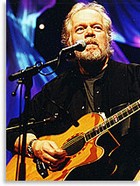
    If Tim O’Brien was a ballplayer, he’d be at least a “triple threat.” He’s a superb songwriter, a stellar mandolin player, a unique singer, and a powerful live performer. Born in Wheeling, West Virginia, Tim emigrated to Boulder, Colorado, in the early ’70s where he quickly became part of the music scene.

    In 1978, he joined the Hot Rize bluegrass band made up of Charles Sawtelle, Peter Wernick, and Nick Forster. Hot Rize also had a spin-off band that played western swing. Red Knuckles and the Trailblazers were just as popular as Hot Rize, and often audiences at concerts were divided between Hot Rize and Red Knuckles fans. We’re probably not giving away any dark secrets in revealing that Tim O’Brien was Red Knuckles.

    Hot Rize garnered its share of awards, including the International Bluegrass Musicians Associations’ first “Performer of the Year” award in 1990. O’Brien received the IBMA’s male vocalist of the year award in ’93. After Hot Rize disbanded in ’90, O’Brien began his solo career. His songs have been made into huge hits by both Kathy Mattea and Garth Brooks. He is also much in demand as a sideman and has played on albums by Laurie Lewis, Maura O’Connell, Kathy Kallick, Jerry Douglas, Dwight Yoakam, Robert Earl Keen, David Grier, and Kate Rusby. Finally, his steady stream of solo albums shows that he’s not just an exceptional performer, but an truly innovative musical artist.

    Vintage Guitar: When did you first take up an instrument?
    Tim O’Brien: I was 12 years old, that was in 1966. I had a cheesy Sunburst Stella Harmony. I played my friend’s guitars for awhile. That’s why I play right-handed even though I’m left-handed.

    You still play right-handed?
    Yeah. They had right-handed guitars. I was just learning to play, so it didn’t dawn on me that maybe I should’ve tried it left-handed.

    When did you take up mandolin?
    Let’s see…I had a fiddle when I was 16. Then, when I was 18 my dad said, “Here’s a banjo mandolin I used to play. You might want to mess with it.” So I did.

    Your father was a musician?
    He didn’t really play. He was in a band in college, I think they kind of recruited him, but he claims he never really knew how to play the mandolin. He learned how to play a few songs, but he wasn’t really very into it, ever. He was the kind that took it to a music store to have it tuned. Good singer, though.

    Were other members of your family musical?
    My mom played the piano. Her brother played piano, I guess, quite well. On my dad’s side, his cousin and uncle were pretty musical. But in our immediate family, no one other than my sister was musical. I guess the two of us were enough.

    How did you end up in Colorado?
    I’d worked at summer camps and was into the mountains, backpacking and that kinda’ stuff. I worked at a camp in Jackson Hole for three summers, then in the fall of ’73 I went out there and spent the winter, then visited some friends living in Boulder, Colorado. One of the them was a banjo player – Ritche Mintz – and he was in a band with Ned Alderman. Basically, they wanted me come and live there. Ned had a music store and offered me a job clerking and teaching and what not. Also, I could play in their band.

    When was that?
    That was in February of ’74. The store was called Folk Arts. Now it’s called HB Woodsongs. Same store really, same phone number and everything. I ended up in the Ophelia Swing Band. I also played in another band called The Bluebirds. Boulder and Denver were a vibrant music scene back then. I ended up moving there in September of ’74.

    Shortly thereafter, you met Charles Sawtelle at the Folklore Center?
    Soon after I moved, I did. I remember I got a job playing with him. He was in a band called the Ramblin’ Drifters…

    …or Driftin’ Ramblers, depending on which week it was.
    Right. I did the jams, and some paid gigs with them. Every once in awhile I’d get paid for their Tuesday night or Wednesday night jams. Mostly, it was just for fun. It was a good way to stay in the bluegrass scene. That was a good band really. A good traditional band. The band I was playing with was called the Town and Country Review, and they were also pretty good. But not as good as the Driftin’ Ramblers.

    Were you still teaching at Folk Arts?
    Yes. But I when got into the Ophelia Swing Band with Dan Sadowsky, that started taking up a lot of my time and I quit working. I still taught lessons, but I stopped working behind the counter.

    At that point you were a professional musician?
    Yeah. I was amateurish, but I was making my living doing it. Actually, I was doing that before in Jackson Hole. But Boulder had more of a music scene and there was more of to learn, more people to learn from, and more things to do.

    How did Hot Rize begin?
    The Hot Rize band began in ’78. Actually I moved away for a short bit – my wife-to-be was going to school in Minneapolis, so I moved there. We went to Minneapolis for awhile, got married, and on January 1, 1978, moved back to Colorado.

    So Hot Rize occupied you for the next 12 years?
    Yeah. We were together full-time for 12 years.

    Was ’92 the official breakup?
    No. It was on the first of May, 1990. We played Merlefest. That was our last gig together full-time. We’ve done some reunions off and on since.

    Nashville and Songwriting
    You moved to Nashville in ’96?
    Right.

    Why?
    It’s just the real music capitol. There’s a lot of infrastructure here.

    It made a lot of sense for me, especially with the publishing and songwriting. I make about half my living from songwriting. It’s closer to the sources to get stuff recorded.

    When did you write your first song?
    When I was 14 or so, but I didn’t really take it seriously. It became more serious when I was in a band that was going to make a record. That was Hot Rize. I didn’t think about it with Ophelia Swing Band because we were doing old music. But with Hot Rize, Peter had his originals and I suppose there was some rivalry there. We were into being a creative entity. So we worked on writing songs, both together and separately.

    We were going to make a record by hook or by crook, and that’s what drove me more to writing.

    When Kathy Mattea recorded a couple of my songs, it made it even more imperative to write. It was like, “Wow, maybe I really should look into this more.”

    How did that come about? Did she hear the songs with Hot Rize or did you shop them to her?
    Well, she didn’t hear the songs with Hot Rise, but she knew me. Our managers shared offices. Hot Rize’s agent, Keith Case, had teamed up with her manager, Bob Tilly, so we got to know one another that way. We traded records and did some gigs together. The first one was on Mountain Stage. We actually collaborated onstage. So she just knew my stuff. Anyway, then she heard them sung by someone else on a demo tape. She liked the first one she got, and when she saw who wrote it she said, “Oh, cool!”
    How did the Garth Brooks song come about?
    Well, it’s funny. My success has all been through the same channels. Kathy recorded at a studio owned by Allan Reynolds. He was her producer. When Allan started his own publishing company, he signed me on as a writer. I was actually writing a song with Darryl Scott in that same building when the song plugger heard it and thought, “I’m gonna’ pitch that to Garth when they get it finished.” Allan also was producing Garth. It’s remarkable, really, how simply it happened. It’s sort of being in the right place at the right time.
    And of course having good material?
    Well, it’s a good song. I would never have picked that song to pitch to him. But it seemed like it really fit him when he got a hold of it.

    Talking Guitars
    What was the first good guitar you ever had?
    The first good one? Well, the next thing I had after the Stella was a Harmony – wasn’t a Rocket, it was a solidbody. It was a two-pickup solidbody. Then I had a little toaster amp and I played in a rock band. You know – a bad rock band.

    We all have to do that sometime…
    Yeah. Then my brother, who was a fan of folk music and stuff, died in Vietnam. He left my sister money to buy a piano and me money to buy a guitar. I bought a Martin D-28, brand new off the rack in Wheeling, from Gerraro’s Music. I bought it in the spring of ’68. It was a Brazilian rosewood-body. I played it all day, every day. Kept at it. It had a couple of factory necksets and stuff. It was a good guitar for a lotta’ years.

    You still have it?
    No. I sold it. It had a crack in it down the back of the neck. It was a weird thing. I dropped it, and this crack kinda’ developed and expanded and the neck started actin’ funny. It was too bad. It was a good guitar. I might’ve been able to fix it, but the tuning kept goin’ in and out. I just kinda’ ditched it.

    When did you get your first good mando?
    I got my Nugget in ’76.

    How did you become aware of Mike Kemnitzer?
    He was a friend of folks I’d known in West Virginia – actually from across the stateline in Ohio – John and Zeke Hutchison.

    It’s like a really early Nugget, isn’t it?
    Yes. I want to say it’s like the fourth or fifth one. There’s one at Brantley, there’s one that Ed Neff has, and one that Howie Tarnower has, and I think this is the fourth. It’s the first A Model Nugget.

    I know Kemnitzer was at OME Banjos for awhile, making mandos.
    Right. He did an OME prototype mandolin or two, an F-5 and an A-5, during the same time he was making this one for me. Those guys I knew him through got him inspired in bluegrass music. There was a guy named Bob White who made mandolins and worked with Stewart McDonald, where all those people kinda hung out. So Bob helped Mike learn how to make mandolins, and I think did the finish work on his first couple of mandolins.

    What made you decide on A, rather than an F, for bluegrass?
    I just didn’t want to spend the money on an F-5. There were A Models coming out like Gibson was making, and various other companies were making ’em and they were using the longer-scale f-hole thing.

    So you had the power of the F-5, but you didn’t have to pay for the carving.

    The sound chamber, at least, is the same, but there’s more mass to an F-5 and there’s different characteristics from having less mass. But it’s pretty similar.

    Do you have any other mandos you use regularly?
    Well, I have another Nugget, an F-5. I keep it as a spare. I had some Flatiron mandos for awhile. But mostly I really like my Nugget A-5, it’s always been a very responsive instrument, and very much my own. It’s customized. It’s got this wide neck, real beefy circumference, as well. Also, it’s got a flat fingerboard (note: since our talk, O’Brien was presented with an F-5 made by John Garrity as a gift from the promoters of the Telluride Bluegrass festival, in recognition of his appearing at the festival for the last 25 years).

    You also have a Nugget bouzouki. How did that come about?
    Mike had already made me two instruments. One day he said, “I’d like to make another for you.” I bought the first one for next to nothing. Then the next one – the F-5

  • Rodney Crowell

    Ditchin' the

    In this modern world, most of us will have at least two major careers by the time we’re 40. Rodney Crowell is already starting on his third. He has been a hotshot sideman and songwriter for Emmylou Harris, a major label country music star who produced gold records and filled stadiums, and finally an independent singer/songwriter with a penchant for spinning tales about the darker side of life. Along the way, he picked up Johnny Cash as an ex-father-in-law (the man in black still likes him), and a passel of old friends like Stewart Smith and Donovan Cowart; all of whom were more than willing to play on his latest album, The Houston Kid.

    VG caught up with Crowell while he was taking a short break from touring.

    Vintage Guitar: You grew up in Houston, Texas?
    Rodney Crowell: I lived in Houston. I didn’t really grow up there. I grew up away from there, actually.

    When did you get your first guitar?
    When I was 12. It was an Ayar five-pickup electric. Five pickups with big plastic switches almost the size of a stompbox. It had a big old whammy bar on it. It didn’t last long – it got ran over by a car! It was lying in the driveway. It survived pretty well, all things considered.

    There’s that whole thing that you could drive over a Telecaster with a car and it would be fine. This one did, literally, get left in the driveway, it got rained on and ran over.

    Anyway, father had this great old J-125E cutaway Gibson [sic] I played a lot. That’s when I started playing acoustic. That would be the first acoustic guitar that I was really playing around on. Then he got a sweet sunburst mid-’60s J-45 that I still have.

    What kind of music were you playing when you started?
    When I started, I was playing drums – country shuffles and swing stuff – with my dad. Honky tonk music.

    So your dad was an amateur musician?
    Yeah, he had a Thursday/Friday/Saturday band. I played drums… and then the Beatles hit. I was an adolescent at the right time, and I started learning Beatles songs.

    I fell in with a band of kids my age, and we started doing the Rolling Stones, Beatles, and Bob Dylan. I was 13. I stayed in Houston until 1969 or ’70, and then I went to college in east Texas, in Nagadoces.

    I went to Nashville in ’72, wanting to be a star. And I became a songwriter. I was lucky enough to run into Guy Clark, Townes Van Zandt, and Mickey Newbury. I saw first-hand what real songwriters did. So I threw away everything I’d written until then, and started over.

    So did you write primarily by yourself at first?
    Yes. And I still do for the most part.

    Most of your songs are written solely by you, but some are co-credits. I remember on an early Emmylou Harris song, you had a co-writing credit with Donovan Cowart, which surprised me, because he’s primarily an engineer, right?
    Yeah. But he’s a pretty good songwriter, too.

    From ’72 to ’75 you were writing songs. Were you selling any?
    Yeah, I started getting them recorded. That’s when I came up with “‘Til I Gain Control Again” and “Song For The Life” and “Ain’t Livin’ Long Like This.”

    They were all written before you hooked up with Emmylou?
    Actually, “‘Til’ I Gain Control Again” was, and “Bluebird Wine” and I wrote “Song For The Life” during that period.

    So how did that relationship develop?
    By accident. A friend of mine was a bass player with Anne Murray. He heard some of my songs and gave them to Brian Ahearn, who had just been hired to produce Emmylou’s first record. They called and said, “We like your stuff.” So I went, and Emmy and I hit it off immediately. We became collaborators, and I joined her band.

    Did you tour with her, as well?
    For three years.

    And during that time, you were also writing for other people?
    I was writing for me. I’ve never written for other people… it don’t work. I have to write songs for myself, then other people seem to record them. But I can’t sit down and write a song for somebody. It becomes an exercise of the mind as opposed to an exercise of the heart. And the songs I write from my heart are much better than the ones I write mentally. So I stay away from writing songs for other people.

    When you came to Nashville, what sort of guitar were you playing?
    A ’72 Martin D-35 that I still have. And it’s a better guitar now than it was then. Not that it was a great vintage time for Martins, but I got hold of a good one. I bought it new before I came to Nashville with $10 in my pocket!

    Well, you obviously had your priorities straight!
    The guitar is sweet, and I still use it from time to time. I use it now and then for certain things. It has a sweet top-end, not a whole lot of bottom.

    Sounds like you don’t sell many guitars once you buy them. You also still have your father’s J-45.
    I have that because it was my father’s guitar. I once broke the headstock off it in an accident. So I had somebody rebuild it, and I don’t play it anymore. Its headstock is a bit precarious.

    For work, I use three acoustics; a Martin [New York Folk Series] with medium-gauge silk-and-steel string. It’s a gorgeous guitar. I’ve had it for 28 years, and I didn’t put it in a case until this year. Now I’m taking it on the road. I got it from a guy in Kentucky who didn’t know what he had. He just gave it to me because he had it hanging on the wall, with barbed wire for strings.

    I also have a Collings C-10 with medium-gauge strings. I play it rather hard, although it does respond really well to soft touch. And, finally, I have a Gibson J-45, mid-’50s, that I bought at a dress shop in Santa Fe for $350. I also have a ’49 D-18 I bought a long time ago.

    For awhile, Gibson was giving me guitars right and left. I have a couple of J-100s and a J-180 in my locker. I have a J-200 I bought off Marty Stuart.

    If you’re going to be a country western guy, you’ve got to have a J-200…
    Hank Devito and Emmylou have the good ones… But for me, those three guitars are my main tools.

    You’re primarily a fingerstyle player, aren’t you? You mentioned the New Yorker, which is definitely a fingerstyle instrument.
    With the New Yorker, I have to play soft. The minute I start hitting it hard, it shuts down. It’s what play at home, and it’s what I write on a lot, because it’s very soft, and it just sings. And I’ve taught myself to play it gently onstage, and that’s why I’m taking it on the road.

    I use it when I play fingerstyle, for the most part. The Collings is kind of the middle… I can play the Collings finger-style, but it’s best for being strummed middle-hard. The J-45 I have is just a tank, it’s good at getting pounded. It loves being pounded. Actually, it got smashed on a runway tarmac when it was in a softshell case. My sound engineer accidentally stepped on it and smashed it to pieces. I took it to Joe Glazer, and it came back sounding better.

    I have my J-45 for Everly Brothers-style hard playing. The Collings is a really good single-note guitar, and I tend to want to play it at a medium intensity. And the New Yorker is for playing softly.

    So I’d guess you now keep your guitars in Calton or Leaf cases?
    Yep, I do. The New Yorker is in a case for the first time. I carried it in my hands for years on airplanes. It had a 28-year open-air season, so now I have it in a Calton.

    You spent several years touring with Emmylou, and after ’78 started your solo career?
    Yes. In ’75 I moved to Los Angeles and started touring and working with Emmylou. In ’78 I put out my first album on CBS/Columbia. I was with them until the early ’90s. They released a greatest hits album, and that was my swansong. Then I made a couple of records with Tony Brown at MCA. After that, I made a record with Warner Brothers with my touring band, The Cicadas.

    That brings us up to your newest, The Houston Kid. How did that project come about?
    I had a lifelong desire to make a record that was really me. I wanted to showcase myself as a singer/songwriter, as opposed to a country hitmaker.

    Were the Columbia albums more in that mold?
    Yes, I was a hitmaker. And it was good at the time. I think I did it with integrity and class. But I still wanted to do some work that framed me as a singer/songwriter/artist. And that’s what I’ve done with The Houston Kid.

    I started one record for Warner Brothers, and Jim Ed Norman was very kind and allowed me to cash in my chips and go on my own.

    I just felt like I was making something that I had already made, and he was supportive of my decision of wanting to go on and do something else. So he blessed me and sent me on my way, which was very nice of him. We put the tapes in the trash can, and I went home and started over, in my house, in my studio, with my stuff. It’s actually quite comfortable working in the home.

    One thing I wanted to ask about was the Larry Willoughby album you produced. How did that come about?
    Larry is my cousin, and we grew up together. He’s now the vice president of A&R at Capitol Records.

    So was that his only album?
    Yeah.

    Too bad. It’s great.
    Yeah, he’s a talented boy.

    Have you done any other producing?
    A lot! There’s a Hal Ketchum record, material for Beth Nielsen Chapman, and some Brady Seals records.

    When you put on a producer’s hat, what do you do?
    Oh, make two dollars an hour! When I put on a producer’s hat, I pretend I’m a movie director.

    Peckinpah or Fellini?
    I’d have to go with Bertolucci!

    Okay, so you set the mood and then let them go?
    Yeah. Just try to keep everybody in the same mood, and then kind of nurture everybody to arrive at the same time. I’m like a loading platform. I never made a record that didn’t have very difficult moments. And there are very breezy moments, too. And I welcome both. Sometimes, when you run into difficulty it’s actually what’s leading you to a final resolution.

    What are you doing in the next couple of months?
    I’m finishing a documentary/video that kind of goes with The Houston Kid. I’m selling my house in Nashville, since I’m living in Los Angles now.

    So who’s touring in your band?
    Stewart Smith and Randall Waller.

    Whoa! Good company! It’s just a trio?
    Yeah. Stewart can pretty much do it all. He’s playing keyboards and guitar. He’s also playing a baritone Music Man guitar. Randall Waller is playing acoustic and electric guitar. If you’re a guitar junkie, you need to come see us, because those two boys cover a lot of guitar ground. I’m the rhythm section, and it’s very fun. It’s an intimate listener situation.

    I’m more interested in that now than I’m jumping around.

    You’ve yoyo-ed between Nashville and L.A. at different periods in your life.
    Yeah, it would seem. This move to L.A. is my wife’s idea. I’m following her around. She’s studying acting, and she wants to go there and do it, so I said “Okay, I’ll go there with you.” I’m not really involved with the Nashville country music scene anymore.

    There is no country music. It’s pop music with the right dressing. I sort of bristle a bit now when people call my music “country.”

    There’s a group of songwriters and musicians who are doing something that is certainly not of Top 40 or radio country, but certainly has country roots. Jimmie Dale Gilmore, or Steve Earle… so many guys come to mind who are doing roots country.
    Yeah, Americana. I think you’ve got to call it Americana, because when you call it “country,” it has a connotation I don’t want to be associated with.

    But in some ways, your Columbia albums were the archetype for what country sound is today.
    Well, maybe. But that was then. We’re talking about now. Everybody has the right to do exactly what they do, and to make a living and be happy with who they are. I’m just a bit more of a purist these days.


    Photo copyright by Steven Stone.

    This article originally appeared in VG‘s Feb. ’02 issue. All copyrights are by the author and Vintage Guitar magazine. Unauthorized replication or use is strictly prohibited.
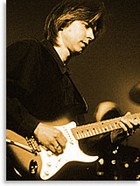
  • Kenny Olson

    The Detroit Fender Bender

    If you’re talkin’ Detroit rock, vintage guitars, muscle cars, then you’re talkin’ Kenny Olson. VG met Olson at the Detroit Guitar Show, and it didn’t take long before he was talking about old Strats and Teles. That seemed natural for a Fender-endorsed lead guitar player, but for Olson it was more. He loves the old stuff.

    In 1994, Olson was working out of L.A. Then the big earthquake hit, and his apartment was annihilated. Luckily, he was on the road, but the quake caused a quick retreat to his native Detroit. Fate followed. There, he received a call from Bob Ritchie – the up-and-coming Kid Rock. Rock needed a good guitar player, and Olson needed a good front man. They hooked up and after a few years, major good things started happening. In ’98 Kid Rock released the critically acclaimed Devil Without a Cause, which sold more than nine million copies, spurred by monster hits “Bawitdaba,” “Cowboy,” and “Only God Knows Why.”

    Vintage Guitar: Was there music in your family?
    Kenny Olson: I have aunts who are singers, and my dad and his little brothers all had guitars. My whole life, there was always a guitar by the fireplace – an old Gibson acoustic, or a Martin. And there were always great records around the house.

    What was your first guitar?
    My aunt gave me my first guitar, and I don’t even remember what it was. Then I sold my bike to a friend and I went out and bought a Fender Candy Apple Red Mustang, with the white racing stripes and matching headstock. I bought that at Rock City, in Royal Oak, on Woodward Avenue. I used to go there all the time, and they had old flametop Les Pauls, and korina Flying Vs. I saw all of that stuff when I was a kid. They always had all these cool custom-color Strats. I was growing up in Detroit, loving old muscle cars, and seeing these cool vintage guitars all checked up in these really cool colors. I was drawn to that.

    The first amp I got was from a friend of the family – an old ’65 Fender Princeton Reverb. I use to take it over to my buddy’s house and jam. I kind of lucked out, having a Fender Mustang and an old Princeton.

    From that point on, my main guitar was always vintage. I had a couple of things as a kid. That was an era when you almost had to have a Les Paul, and I had a late-’60s black beauty (Gibson Les Paul Custom), which I wish I still had. As a kid, they told me a lot of those Gibson bodies in the late ’60s were leftover bodies from the ’50s. This one was cool, it was worn on the corner. But I was an idiot and got rid of it.

    I had lots of cool old Strats I wish I’d never gotten rid of. But I still have my ’64 – an old sunburst that has half the paint gone. It was my main guitar at the start of my professional career. I got it at the Ferndale Guitar Exchange, where I was working right out of high school. There were a lot of guitars in there, and they took it on trade. I made them hang onto it until I found a way to buy it. They eventually gave me a great deal and I bought it in ’86 or ’87. It’s been with me through ups and downs. I had it when I was living in L.A., when I was staying house-to-house with sketchy friends in the industry. I’ve been around every walk of life there is. I used to put chains on my guitar case so I’d know when someone was trying to grab it or steal it. If people knew half the stuff I’ve been through…it wasn’t always pretty. I’ve seen it all.

    You appreciated vintage guitars very early in your career?
    I got to the point were I could tell a Strat from the logo, the contours, the neck, the finish, the whatever – from 10 feet away. In the instrument itself, it’s that tone. It takes a certain kind of player to be able to play one right. None of my guitars are set up to play great. I like high action, I like to fight it. When I was a kid, I forced myself to use heavier strings. I don’t have anything really heavy, not like Stevie Ray Vaughan. In the last two and a half years, we’ve done around 550 shows.

    How did Fender contact you about becoming an endorser?
    There are a lot of great guitar players out there. Some of these bands don’t really have a guitar fixture kind of person in the band that actually plays lead solos in every song. I knew Alex Perez (Fender Artist Relations/Custom Shop). I met him early on through a friend of mine.

    I lucked out because I was going to hold out. Different companies came to me about an endorsement. Ernie Ball is the first company that ever endorsed me. I waited for the right endorsement. For Gibson, or any of these huge companies that came to me, it’s like, “I play a Strat or Tele.” I’m kind of stupid because I’d just rather make a lot of money and go out and buy a Fender Strat or Tele. It’s who I am. But I like a lot of other old guitars. The thing that’s neat about the Custom Shop is they have the old machines, from the ’50s and ’60s plant. They have the old jigs and everything. For the first one they made for me, over two years ago, I told them I wanted a 1967-ish era neck – kind of big, not as thin as a 1962, and I wanted the fat headstock, in a certain color. I’ve already retired a couple, like the ones I played at Woodstock, or at other special performances. They’ve been everywhere and gotten a little beat. I’ve put them with my ’64 because they’re great guitars.

    Do you tell the Custom Shop what you want?
    They’re all kind of unique. I used a Seymour Duncan Little ’59 in the bridge, and I wire the last tone control like the coil split, so I can slowly dial in that P-90 rock tone. I have a Tele they made for Keith Richards. They made him a couple of them, and they sent me one. It’s basically identical to his guitar. I had a Strat pickup put in mine. It has a one-piece swamp ash body they aged a little bit, but it is pretty much beat up from me. That’s a cool guitar, it’s the Tele I use on the road. They’re making me a Sherwood Green one right now. I have a Sherwood Green Strat I used for a couple of years on the road, and it just aged beautifully. They use all nitrocellulose lacquer on my guitars. A guitar with a nitro finish is like a good pair of red-tag Levis – you know it’s going to fade right.

    My main guitar is a Fiesta Red ’67 reissue Strat the Custom Shop made for me. That’s my favorite guitar, my ’64 and my Fiesta Red. It has been in a lot of magazine articles we’ve done, and a lot of photo shoots. I used it at Woodstock. I love that guitar, and it’s the first one Fender gave me. I have the Sherwood Green one I love, too. It has a big old fat ’60s C neck. Those are the two main ones. I use 11s on those guitars and tune to E flat.

    A friend of mine works in advertising at Ford Motor Company, and the Chrome Mustang Strat is number 4 of 35 made for the anniversary of the Mustang. The Custom Shop made it, and it’s real chrome. It has knobs from the dashboard of a ’64 Mustang. It’s a cool-sounding guitar. When we did the “American Bad Ass” video, I wanted to use one of the Harley guitars, but Fender didn’t have any left, so they told me about how they made one for Ford. I love Mustangs – I’m a musclecar freak – and I’m from Detroit!

    What about the black Strat?
    That’s the main workhorse, and it’s kind of a mutt. The Custom Shop rebuilt the whole thing; the body was originally sunburst, and we made a reissue neck for it. We changed the pickups.

    I had another ’68 Strat that was sunburst, then and shot black. The Custom Shop re-created that guitar using a ’67 body.

    What pedals are you using?
    It’s pretty minimal. Onstage I use two CryBabies, they’re the first thing I go through. One is an old Jim Dunlop, like that old Jimi Hendrix old-school Thomas Organ Vox wah. And the next one is a 535Q. And then I go into a Menatone Blue Collar – I’ve never seen anybody else use one. Next pedal is a Fulltone Full-Drive – I have a bunch of those. I met Mike Fuller in L.A. when he was working at Voltage Guitar Shop. We were talking about old pedals, and he sent me a Full-Drive when he was making them for Robin Trower, Keith Richards, and Billy Gibbons. Then I go into a tremolo pedal, then a Uni-Vibe, and sometimes an octave pedal.

    I love feedback. My pedalboard is always set for feedback at the flip of a switch. I like having that option.

    What amps do you use?
    Behind the stage I use ’65 Twin Reverb reissues running clean, and for dirty I have the Sunn Model Ts. I need the Twin Reverbs for “Only God Knows Why” and all the clean rhythm stuff. A lot of time for dirty I’ll use the Fulltone or Menatone through the Twin. A lot of times when I go to dirty, it’s actually the Twin. The Sunns sound really cool, too. When I was at the Fender Custom Shop I noticed a Sunn Model T and I said, “You guys are making these again?” I’d never seen one.

    We have an old Marshall Bluesbreaker reissue combo in a roadcase. Whether it’s my amp or Bob’s amp, whoever’s amp breaks down, its like our little ace in the hole. Two or three shows a year, one of us has to use it. It sounds great clean and dirty. That’s a kickin’ amp! I love Marshalls, but my philosophy is, “This amp has a great Marshall tone,” or “This amp has a great Fender tone.” I’ve never heard an amp that can do a great Fender tone and a great Marshall tone.

    In the studio I use a Fender Deluxe Reverb a lot. It’s a ’67 – the last-year blackface. It’s a really cool amp I’ve used for years in the studio. It has a Celestion Vintage 30.

    I have a Fender Pro Reverb I use a lot in the studio. It’s a late-’60s silverface, hard-wired amp. It has not been modded. It has less wattage than a Twin, so you can crank it. When you put it with a 4×12, it’s real rockin’.

    I like using different amps – I pretty much don’t use the same amp on any song on any record. That’s the fun part.

    There are certain things I’ve always collected; I’ve always loved old Marshalls and old Fender amps. I’ve got a lot of old amps. On Devil, I did that whole record with vintage amps – Supros, Voxes, Marshalls, Fenders.

    I have an old Marshall 100-watt ’69 Super Bass. I’ve had a lot of good-sounding ones. I had a ’68 plexi that Leslie West used to have. After I sold it, I found out it was Leslie’s old head, then I found out some of Leslie’s old heads were Jimi’s old heads. The ’69 Super Basses sound better for guitars than do the Super Leads. The Super Leads, the old plexies I have, I’ll have modded to be just like a Super Bass. It takes about four solder joints, and it’s a Super Bass!

    I have an old Hiwatt cab with the old Fanes, that sounds great, too. Before I was with Fender and Sunn, when Naylor was still in business, I used a Naylor Super Drive 60. I loved that amp too, especially being made in Detroit.

    How about acoustic guitars?
    I have a Gibson ’67 Southern Jumbo my dad gave me. It’s a cool guitar, with bearclaw spruce, tobacco-finish top, and cherry red sides and back. There are a lot of unusual guitars around Michigan.

    Do you give much thought to the vintage guitar market?
    I’m probably out of the loop now. Most of the stuff I have kind of fell in my lap, like I was meant to have it. Anything I hold onto is sentimentally valuable. I have a whole batch of the Custom Shops, quite a few vintage pieces, and a couple mutts. One is a 1960 body, blue painted over, with a ’62 neck. That guitar has been through hell and back. It has cracks in the neck pocket. That one and my ’64 did a lot of the Devil record.

    I have a late-’60s Strat, too. I like the big headstock ones. They look and sound cool, and I think the headstock affects the tone a little. On that particular old Strat, the pickups are kind of weak, but they actually sound cool. They give you a kind of weird, off-the-wall thing.

    I like old Gibson acoustics. I have that old Gibson Southern Jumbo and a Hummingbird. I like Martins, but I’ve never owned one; my uncle has a couple, but I wasn’t hip.

    I get paranoid about certain things; I’ve had guitars, like a Firebird, that broke so many times, and that made me lean toward Fenders because I could replace the neck. That Firebird is the coolest, but it’s worthless because it has been broken so many times it has dowel pins coming out of everywhere.

    It sounds like you talk with a lot of the other stars and players, and you talk vintage with them?
    True players really appreciate the old stuff. I’ve hung out with a lot of the guys, and they don’t know or care much about their newer stuff. But they love their old stuff! Like Joe Perry; I always admired him as a player, and to meet him is super cool. And he’s no different than a lot of guys who go to guitar shows. They love talking shop about old guitars. You meet a guy like Joe Perry, or anyone you meet, and you start talking about vintage guitars and they say, “Oh you ought to see what I have at home!” It’s a big topic.

    And it’s the same with amps. Guitar players are always in search of the almighty tone. Every amp I’ve had for a while sounded neat, and the next night it’s not cuttin’ it. Even that old Super Bass Marshall. One night you turn it on it just sounds amazing, and the next night its like, “Uuuuuh.”

    What vintage guitars would you like to own in the future?
    For the most part, I’m a Strat man. But I love a Tele, too. There’s nothing like the searing sound of Tele players like Roy Buchanan, Muddy Waters, Albert Collins, and Keith Richards. I have to have Teles around for recording.

    I have a lot of Stratocasters right now, old ones and Custom Shops. And a Mexican one – I love that guitar! We were going to do a European tour some time ago, and I didn’t want to take a Custom Shop or a vintage guitar, so I asked the Custom Shop, “Can I try one of those sunburst Mexican Strats?” They sent it, I changed the pickups, and it’s a great-sounding guitar.

    I had a ’61 Fiesta Red Strat I sold, unfortunately. I’d like to find another one of those, or I’d really like a Sherwood Green. I picture myself having a few more. My Custom Shops are done that way.

    I mainly want guitars that I need when I’m recording. I’d like to find some really clean Strats and conserve as much American history as I can.

    But I already have my favorite guitar.


    David Allan Coe (left) with Olson. Olson and his workhorse Strat, painted black over the original sunburst – very ’60s Fender! Photo by Gil Hembree.

    This article originally appeared in VG‘s June ’01 issue. All copyrights are by the author and Vintage Guitar magazine. Unauthorized replication or use is strictly prohibited.
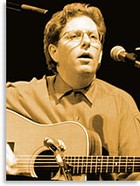
  • The Roots of Echo

    Pre-Echoplex Devices, Part I

    Post-WWII advances in recording techniques, including the use of artificial reverberation and delay enhanced music as opposed to merely capturing it. The sound became almost as important as the material and musical performance, with producers and engineers gaining celebrity status and appropriate financial compensation. The amplified electric instruments, first seen just prior to the war, became the dominating force in popular music during the second half of the 20th century, aided and abetted by a multitude of effects.

    While there is a charm to the simplicity of a lone instrument’s song, there is an overwhelming magnificence to a symphony orchestra or even the big bands of the 1930s and ’40s with their counterpoint and harmony, not to mention the choral effect of multiple horns, woodwinds, strings, etc. Electronic effects allowed small combos and even musicians working by themselves to compete sonically with the larger, traditional aggregations, both live and on recordings. Guitars and keyboards came out of the rhythm section and moved up front, where they have stayed for most of the last 50 years. And many of the most gifted composers of our generation have chosen these instruments, sounds, and the popular (or jazz) mediums for their work.

    Whether it be a traditional handmade Spanish model of exotic woods in the manicured hands of a classical virtuoso, an open-tuned National plunked on by a self-taught, jackknife-wielding bluesman, Charlie Christian playing saxophone riffs on six strings through a 15-watt amplifier, Chester or Lester making one electric guitar sound like two (or three or four), Hendrix sounding like all hell breaking loose, whatever. If guitar music touches you, it’s relevant and should not be discounted, no matter the voice. Those who make accusations of minimal technique being hidden behind a wall of effects should reconsider why we make music; how well we play should not be judged by what our hands are doing, but rather, by what our ears are hearing.

    That said, let’s move on to part two of this series on Echo (last month’s “Roots Of Echo, Part I” included interviews with Les Paul, discussing the first use of echo in a musical application, and with Ray Butts, creator of the first commercially available echo device). There are many similarities between “echo” and “reverberation” and the terms are often used interchangeably, but the differences deserve mention. Dictionary definitions are vague, with echo being, “A repetition of sound produced by the reflection of sound waves from an obstructing surface,” and “A sound heard again near its source after being reflected.”

    Neither of these acoustic-related descriptions take into consideration an electrical reproduction, and could also define reverberation. “Reverb” is, grammatically, a verb – as in “to reverberate” or “cause to rebound.” But we in guitardom use it as a noun, an abbreviation for “reverberation,” as in, “The persistence of a sound after its source has stopped, caused by multiple reflection of the sound within a closed space.”

    This is getting closer to the idea that reverberation is a wash of many different repeats having different times, with most of these times very short, and echo is a repetitive series of decaying (usually) but equally spaced sounds identical to the source.

    Acoustic reverb has been exploited for centuries in churches and concert halls, and to many, the early electronic devices were poor imitations. Echo devices, on the other hand, were so otherworldly that comparisons to any acoustic environment known to man was ludicrous. Here’s a look at the first wave of portable outboard echo devices from the U.S. and Europe, plus an interview with Del Casher (nee, Kacher), who was closely associated with Ecco-Fonic, the first and most important of these devices.

    Ecco-Fonic (Styles 1-5)
    Although short-lived, the Ecco-Fonic company managed to start and end its run with the mighty Fender Electric Instruments company. However, most of the actual models were sold under their own name. Starting with an aborted promotional campaign in ’59 for a not-quite-ready prototype and ending with the modern-for-’63 solidstate line, these two companies never quite clicked in a business sense. But the period from 1960 to ’62 was responsible for a respectable production run of tube-type Ecco-Fonics, in four distinct versions, built under the guidance of four different owners. Since at least the last three tube versions were marked Model E, they will be referred to here as Styles 1 through 4, with Style 5 referring to the solidstate version.

    Style 1 (two-knob)
    “Ecco-Fonic” was as close to its only competition of the time, “EchoSonic,” as some of the Japanese companies like “Gibbon” and “Ferder” were to their American inspirations in the ’60s and ’70s. However, the Ecco-Fonic actually filled a void between the recording studio and Ray Butts’ $600 echo-amp. Fender began promoting this new device in the summer of ’59 with a single-page flyer and inclusion in the annual guitar issue insert of DownBeat magazine.

    One of the first strikes against mass marketing this early version was the method used to get signal into the record unit; a special cable was required with a 1/4″ phone plug on one end and two alligator clips on the other for connection to the speaker leads! “…may be used with any single or dual channel amplifier, taking the signal from the speaker voice coil leads and introducing the echo or reverberation back into the amplifier.”

    Don Dixon, of Echoplex fame, also experimented taking a signal from the speaker output to gain multiple repeats on his ca. 1957-’58 prototype tape recorder conversions (see next month’s interview). This approach was due to the single slapback echo inherent in using a tape deck, which Les Paul and Chet Atkins got around by using multiple playback heads and Ray Butts overcame with a clever electrical feedback loop inside his EchoSonics. But the Ecco-Fonic apparently used this feedback as well, due to the inclusion of a “Reverberation On/Off” control; “Then by the use of the reverberation selector switch, the same selection of echo can be attained plus the additional feature of volume decay with each successive echo.” How this was all done and how the feedback loop from the speaker output was restrained is unanswerable without getting one’s hands on one of these, which nobody seems to have done. Not that collectors today wouldn’t trade their eye teeth for this tweed-cased accessory/mate to their 4 X 10 Bassman, but has anybody seen one of these?

    Don Randall of Fender Sales reportedly was not impressed with the reliability and test-user satisfaction, so it’s probable that few if any were sold.

    In defense of this variant are a few firsts in the music world. Number one was a cartridge to hold a relatively long loop of tape, at least when compared to the fast-wearing loops that simply stretched around the heads and capstans, etc., as on all the machines preceding it and many that followed. Their short lengths of spliced tape would go past the heads about once every second, as compared to about once every 15 seconds for the Ecco-Fonic (assumption based on later models); “Ecco-Fonic employs a built-in 15 IPS tape recorder with repeating memory tape cartridge.”

    An added benefit of the longer loop (and another first) was the inclusion of an “erase head switch,” referred to as the “Echo Selector Switch.” This allowed the musician to record a short section and then play along with it repeatedly; “In addition, Ecco-Fonic can be used to record a passage of music and played back as often as desired to study interpretation or technique.”

    Most important was the ability to change the delay time; “The Variable Delay Control permits the player to select any rate of straight echo playback desired. This can be from a microsecond to as much as a full half second delay” (not to be confused with half of a full second).

    The control knob was in a different position on the chassis compared to later models, so who knows what was responsible for the change in delay times. Possibilities include a potentiometer that slowed the motor down or a movable playback head using a different approach than later generations. A jack for a remote foot switch, an AC power switch and a pilot light completed the appointments. These appear to have been the earliest effort by Ecco-Fonic founder Ray Stolle. The elongated shape of the gold-painted chassis and the positioning of the controls leave little doubt this was the predecessor of later models, although the one-piece top implies that cleaning heads, changing tapes, etc., would have been a nightmare. Later versions used a split chassis with a removable cover for the tape path.

    Style 2 (three-knob)
    Ray Stolle lacked the financial capability to go into mass production and chose to sell his ideas to one E.S. Tubin, who opened a factory and offices at 905 S. Vermont in Los Angeles and began to advertise heavily. Besides Casher, he won the endorsements of country music star Hank Thompson and “Western Ranch Party” star Joe Maphis. With the advice of Del Casher, they corrected many of the early models’ shortcomings, with the prototype gong to Casher in late ’59. These three-knobbed Ecco-Fonics were very short-lived, as ads in April of 1960 already show the third style, including the carrying case, “…in smart Naugahyde desert tan with brass fittings.” “Attaches to your Instrument or Microphone,” exclaimed the caption accompanying the early Ecco-Fonic ads.

    A flywheel with a movable bracket, connected to the center point and holding the playback head, allowed for the delay time to be varied while maintaining a constant tape speed, now 7.5 IPS. While it’s unclear how intense the repeats were when the reverberation was switched in on the first style Ecco-Fonic, on the second style, an additional potentiometer controlling the feedback allowed total control; “To be able to get repeated echo you simply have to turn “reverb” knob to get from one to six reverberations. By doing this you can make your instrument sound like six instruments playing at once.” Although the internal preamp could now accept signal from a guitar, it should be noted that the entire signal went to the record section, with only the echo signal (wet) showing up at the output jack. This required a “Y” cord from the guitar to both the Ecco-Fonic Input and that on the amplifier. This provides the highest fidelity for the straight guitar signal (dry), but required a certain amount of expertise on the operator’s part. It would change with the next model. What wouldn’t change was the introduction and continued use of an RCA jack for the output. This required a special RCA to 1/4″ cable, disabling the machine if not there and in good working condition.

    Style 3 Model 109 (first four-knob model)
    Tubin quickly changed the input section to include a fourth control, the instrument volume pot. This way, the wet and dry signals could be blended to taste before sending their sum to the amplifier. This version (Model 109?) Was the first to sell in any number, as Stolle had no real manufacturing facility and possibly only hand-built a dozen or so Ecco-Fonics total before selling the company. It could be that Fender was going to have to build their own, another good reason for them to drop the line before getting started.

    Style 4 Model 109-B (second four-knob model)
    The final production tube model, the 109-B, supplanted the earlier model by September of ’60 although it appears very similar. Besides a rearranged control panel, the big change was dropping the “Reverb On/Off” switch. This device was really not very useful, in that it activated the pot controlling the number of repeats. Since this pot could be turned all the way down and accomplish the same single repeat effect, it’s surprising that the switch lingered on from Style 1 to Styles 2 and 3. It seems safe to say that the majority of Ecco-Fonics out there are Model 109-Bs. Examination under the hood of an existing example reveals three adjustable pots under the tape transport, plus two 12AX7s and a ## under the control panel. The company ended up being sold in 1961 to a Milton Brucker, who eventually moved operations to Santa Monica Blvd. in Hollywood, pursuing radio stations and recording studios with the Broadcaster, a large console model. Serial numbers on 109-Bs going up to at least the mid 2,000s carried the legend “Los Angeles-California-Pat. Pending below, and to the right, of the logo stenciled on the cover plate for the tape mechanism. By the late 2,000 numbers, a new, straighter logo was applied, with the address of “Hollywood 38, California” and the warning “Patent Pending” applied across the bottom edge. The new company did continue to use the old logo plates (and address) on the fronts of the cabinets. Considering Casher’s Stolle/Tubin prototype has Serial Number 1012 and knowing that it was the first few made, we can deduce that Ecco-Fonics started with number 1001 and went to at least the 3,000s. If production numbers relate to the serial numbers, then a few thousand were made before the switch to solidstate. Attention Ecco-Fonic owners, please send serial numbers!

    Style 5 Fender Solidstate
    Another change of ownership in the Fall of ’62 turned Ecco-Fonic over to Bob Marks just before Stolle was granted his patent on the device. Marks was an electrical engineer with a strong background in modern electronics, as was chief designed Russ Allee. They saw solidstate as the future and set about converting to it at the new factory on Pico Blvd. This new model, although lacking any mention of Ecco-Fonic, was again distributed exclusively by Fender, who offered them for a number of years, starting in ’63. They fared better on the second try, although new competition from Echoplex restricted any growth. Marks, who reportedly survived a heart attack around this time, retired the concept as orders dwindled, with the name Ecco-Fonic fading into history.

    Echosonic & EK-O-Sound
    While not outboard units, the Ray Butts custom-built EchoSonic echo-amp (VG, July ’98) and the Rickenbacker M-30 EK-O-Sound licensed clone were the only U.S. competition to the Ecco-Fonic in the early days of the ’60s, along with spring reverb. Both of these amps were made in extremely low numbers, but need to be noted. The M-30 did not take the custom-built EchoSonic to a larger market, as F.C. Hall of Rickenbacker had undoubtedly hoped. At $773 with a non-variable delay time, it’s apparent why demand was small. The company did, however, continue to market the top-of-the-line amp until ’67.

    British and European Models
    A number of portable tape-echo units were offered across the Atlantic, with the Italian-made Maezzi probably the first. This unit is very collectible today, due to the continued interest in Hank Marvin of the Shadows, who reportedly used one in the early days. Vox offered a similar model under their own name, although who built them is a mystery. Their big competition came from the Watkins Copicat of the early ’60s. A few years later these units were claimed to have been used by all the British Invasion, being imported into the United States by Guild Guitars around ’63. For the first few years, the Copicat came with a two-piece lid, for those of you interested. Along with the Echolette from Germany, most, if not all, of these units were somewhat primitive in their capabilities, using push buttons to activate the multiple heads. The Binson Echorec came in two styles, though they appear to have got a late start into the battle. These units were tapeless, depending on revolving magnetic disks.

    Postscript
    While the events described here transpired, two men in Akron, Ohio, were perfecting their version of an echo producing device for the electric guitarists. Custom-built models were being sold by ’59, but it wasn’t until C.M.I. became involved in ’62 that the Echoplex would take over this market. Next month we’ll take a serious look at all the variations through the recollections of Don Dixon and Mike Battle, the musical and electrical minds behind them.


    Del Casher Talks About the Ecco-Fonic
    Although he claims to play guitar more like the late George Barnes than Les Paul, comparisonsa between Del Casher and his “adopted uncle” Leo reveal two outgoing youngsters who have played music all their lives, learned the ins and outs of technology while taking it a step or two further and show no signs of retiring or even slowing down. A wealth of musical and related hardware knowledge and nearly 50 years of experiences turned into a few hours of phone conversations, from which this interview has been assembled. A shared interest between the interviewer and the interviewee in musical trivia and asides cheerfully led to the talks off the subject on more than one occasion, requiring a condensed version here to keep to the topic of Ecco-Fonic. His willingness to retrieve prototype units, papers and promo records, as well as share his firsthand knowledge of the subject is greatly appreciated. For more on Mr. Casher’s fascinating story, including his association with the Vox Wah-Wah, Elvis’ Roustabout, Roland’s first guitar synth, etc., see Willie Moseley’s interview (VG, January, February ’97).

    Vintage Guitar: Let’s start with the Fender Ecco-Fonic flyer from mid ’59 (sent to Casher by the author).
    Del Casher: That must have been something I wasn’t aware of. I was really enthralled by this, even the logo was an earlier version. Possibly Ray Stolle had contacted Fender, he had the Ecco-Fonic stuff in the back room of his TV shop.

    It was really short-lived. It wasn’t in the ’58-’59 catalog and it wasn’t in the ’60 catalog. It was just in the eight-page ’59 DownBeat insert and this flyer. I don’t think it was in any of the price lists. Anyway, look where the wheel is placed, for the delay time…
    That wheel, I don’t know if that was a wheel. Ray didn’t have the movable arm around the flywheel. He was doing a thing where there was a tape loop and it moved sideways, left to right. I wouldn’t have wanted to get onstage with it.

    Maybe it controlled the tape speed, hooked up to a pot.
    That could have been it. By the way, Fender did come out with the Ecco-Fonic concept again much later, but that was Automata, after Bob Marks took over, after Milton Brucker.

    (laughing) We’re getting a little ahead of ourselves here. Who was responsible for the Ecco-Fonic? The company men?
    Ray Stolle was a guy who had a little TV shop on Sunset and he was trying to make this machine work, with a little tape loop. And he had limited resources, it wasn’t working really well; I didn’t think much of the unit because it wasn’t stable enough. There was a guy named E.S. Tubin, he had some financial backing, like an industrialist, and he set up a factory in Los Angeles, on Vermont Avenue, and he knew I was playing, performing with the Three Suns. He said, “Look, I’d like to have you help me get this off the ground. What do we do with this thing?” I’d had the idea, when I lived in Hammond, Indiana (mid ’50s). I thought, “Gee, if I could glue some tape around a turntable, and put the heads around the table, I’d have it!”

    So I talked to several of my older friends, who were engineers, and they said that’s a great idea, but I was trying to get through college, things like that. So, Eddie (Tubin) liked the idea and they built one. The idea was to have a cylinder so there would be no tape flutter, so it was stabilized. He said, “That’s a great idea,” and I said, “If you make the playback head swing around in a cylindrical fashion, then your echo could be any speed you wanted.”

    Yeah, which the EchoSonic that predated the Ecco-Fonic didn’t. He had, in the patent, specified that you should be able to move the head. And change the tape speed.
    That was the main point I told Tubin, was the problem there with slowing the tape down increased your chances for wow and flutter. And if you slow your tape down, the fidelity goes down, the biggest problem with tape loops was you wanted the highest natural fidelity. I said, “Get it at the maximum speed and then don’t change the speed because your quality would change.” 7-1/2 IPS was the absolute slowest you could possibly go. The way you change your echo was with the spacing, with the [distance between record and play heads].

    Back to Stolle and Tubin…
    Ray still had the thing, originally. Eddie Tubin put the money behind him to build the Ecco-Fonic – that was with the circular device – and they built me the prototype in ’59; in December I took that unit to Las Vegas and then Japan. We had the biggest-selling album in Japan, called The Three Suns In Japan, and we went there to perform. And I had it, it was like a little suitcase, behind my Fender Amp, so when I stomped on the pedal, that just blew the Japanese away. They thought it was all coming out of the amplifier. Of course, when we played Vegas nobody cared ’cause they were all gambling! But when we went to Japan, I didn’t realize we were really huge there. We’d have like 5,000 people at these concerts. Eddie Tubin said, “Make sure you let the people know in Japan.”

    An interesting thing was that our “roadie,” the gentleman who loaned us our Hammond B-3 – the only B-3 in Japan at the time – was renting us this organ for every show and he was always telling me, “I’d like to buy that from you.” And everywhere we went, he would say, “I want to buy that from you,” and I kept telling him “No, no, no!” Many years later I met him in the U.S. and he said he still had pictures from our tour. Turned out he was Mr. Kakehashi, president of Roland.

    How long did Mr. Tubin run Ecco-Fonic?
    Eddie Tubin was bought out about a year later by Milton Brucker, who was a very wealthy man, but for some reason he was fascinated by this Ecco-Fonic. He sent Joe Maphis and I to the NAMM show, doing promotions. I did one, I still have my itinerary, on Ecco-Fonic stationary; (reading) leave United States, Monday evening, February 27th, 1961, go to the Statler Hotel in New York for Sacks & Barandes to demonstrate the Ecco-Fonic. It says we are going to announce shortly sales plans for the Vaudevillian and the Singalong, those were part of the grandiose plans to fill all possible markets. So if you’re looking for a Vaudevillian, I don’t think you’re going to find it. It also says Ecco-Fonic dominates the field and explains the company has been in business for approximately two years, this was a note to me, however for the past four or five months has been under new ownership of Milton Brucker. It says it would be great for churches and cathedrals and synagogues and auditoriums, talk about various models, the Encore, the Vaudevillian. Okay, when Milton Brucker took it over, he started to develop different models, he wanted to sell to, like to radio stations. I don’t know if this is important or not.

    Sure, this is great stuff. So five months from February would be, like August or September of ’60 for Brucker.
    Yes, because that was about the same time I bought my house. He took over the factory and paid Tubin off and that’s when they started to modify it and do the broadcast units. Then they moved to nicer offices over on Santa Monica. That went on a year or two; enter Bob Marks, who was with Litton Industries, a technical firm. He was an engineer, early computer days, a technical guy, and he formed a company called Automata and that’s who took over from Milton Brucker.

    The first thing Bob did was ask me, “How much have you been making with Milton?”

    I said, “Whenever he calls me, he pays me,” and he says, “I’m going to put you on a retainer and send you a check every month.”

    So whenever they needed me they would call and I’d be there in 20 minutes. But that made my house payments for a few years! We worked on a new model with multiple heads, for getting real short echos, more like reverb. I still have the prototype, it was called the 109-C, in a black box. But at that point, what Bob wanted to do was take the Ecco-Fonic out of being a tube circuit and into solidstate. That was what Automata was doing, but we were also working on a unit with multiple heads, I’ve still got that. I thought if you had a lot of points where you could pick up the echo, you’d get reverberation. At that time, Bob got very close to Don Randall, who was with marketing for Fender. Bob was able to strike a deal where he was going to have the Ecco-Fonic marketed under the Fender name, the solidstate version. They presented it at the NAMM show, but it was short-lived.

    Did they make some? Because Fender did do a tape echo around ’63, before they went to a disk.
    Fender came out in ’63 with it and that was the Ecco-Fonic patent.

    But they didn’t call it Ecco-Fonic.
    No, it was called a Fender and it had the Fender logo on the front. I still have mine.

    What happened from there?
    The Fender thing was short-lived and they just felt it wasn’t going to be a viable product, in keeping with the other Fender amps and guitars. It was a nice gadget, but it didn’t really take off. At that time, Bob Marks had suffered a heart attack, he survived it but at that point he went into retirement. And that was it.

    Any tips to current owners on how to maintain theirs?
    None of the guitar players understood you had to clean the heads, had to swab the heads, if you didn’t it wouldn’t work right, and they weren’t really into that much technology at the time. They didn’t even want to lift the lid up. And it wasn’t real accessible to get to the heads, you have to take out a thumbscrew to clean the playback head. Even the folks at Ecco-Fonic didn’t realize that you had to make sure the record head was clean, too.

    And the erase head, and the pinch rollers.
    On a lot of my units, I just left the cover off, so I could clean the heads; it wasn’t a big deal to make it work well, if you knew how to maintain it. The players weren’t willing to take the responsibility to maintain it.

    Any way of figuring out how to wind that cartridge? I have one that’s missing the tape, and another with it, but I don’t dare sacrifice the good one!
    Very carefully! And be sure to take a tranquilizer before you start! It takes a lot of patience. How you wind it is, you take one big loop of 1/4″ tape and just wind it around the cartridge, making sure you have the right side of the tape out. It comes into the cartridge straight, vertically, and exits the cartridge at the bottom. It comes out at kind of a slant, at a 45-degree angle (note: it leaves laying horizontally and is twisted a half turn on the way to the first tape guide).

    And the tape just goes around like a regular reel of tape.
    Yeah, you just wrap it around the wheel. But it’s just a loop, about seven or eight feet long and you wrap it around loosely.

    Now, would it draw the loop tight once you started running it?
    Yeah, and when you stopped the deck, the tape relaxed. And when you turned it back on you hoped it would pick up again and stay in alignment (laughs)!

    How about the promotional records.
    I was very much involved in the project, I recorded all the promotional records. The Ecco-Fonic came out first with a basic LP, which was only recorded on one side. This was followed by two more 7″ records, these were also 33s (note: these records are a must-hear). I would play “Dark Eyes,” “Two Guitars,” “I’ll See You In My Dreams,” that was Merle Travis style, “Blue Echo,” to demonstrate what it sounded like with and without the effect. I showed what it sounded with a little echo and then with more. Brucker would always say, “This is one Expensive record!” I have “Expensive Record” on mine!

    Later, I made the Fender Ecco-Fonic record, it was a red disk, a 7″, and I play “Caravan” and “Steel Guitar Rag,” all kinds of things on it. I also did the Vox Wah-Wah record (laughing), that’s what my real career was, making those records.

    You did use the Ecco-Fonic for years in your studio though…
    I recorded with it all the time. Frank Zappa came to me in around ’65 – I didn’t know who he was, he had a beard and everything – and he wanted some real wild sounds. And we did this little production together and I just dug the tape out about a week ago and I said, “Geez, I can’t believe I did all this with the Ecco-Fonic!” And when I was doing the New Zoo Review television show for children in the ’70s, I used the Ecco-Fonic quite a lot, because we only had four musicians on the recording sessions. So the Ecco-Fonic always seems to surface. I’m glad there’s still interest in it!


    Vox Echo Reverberation Unit, based on the Meazzi, ca. 1960.

    This article originally appeared in VG‘s Aug. ’98 issue. All copyrights are by the author and Vintage Guitar magazine. Unauthorized replication or use is strictly prohibited.
  • Leo Nocentelli

    A Meter Keeps Running

    The Meters are universally accepted as one of the great funk bands. Their rhythm section work is legendary for its ability to jump on a groove and stay put. One of the vital cogs to this band has always been guitarist Leo Nocentelli. Whether it’s a popping, funky single-line melody, killer jazz work, or some big fuzzy rock work, he can handle it all. VG recently talked with Nocentelli, right before a Meters reunion gig in San Francisco.

    Vintage Guitar: Let’s start at the beginning. Would any of us run across you before your work with the Meters?
    Leo Nocentelli: I did a lot of recording with different people, mainly Allen Toussaint. I did some stuff with Lee Dorsey. Remember “Ya,Ya,” and “Workin’ In a Coal Mine”?

    So it would be safe to say you’ve always been a New Orleans guy?
    Oh yeah, from way back. I did stuff with Ernie K-Doe, like “Mother-In-Law.” So people were hearing me, even if at the time they didn’t know who I was.

    The Meters are a New Orleans band. How did it come together?
    Well, when I was still in my teens, Art Neville had a group called The Hawkettes. I’d been playing around town, and Art heard me and hired me for his band. It went on to where he started hiring other people, and dropping horn people. He eventually hired Zig (Joseph “Zigaboo” Modeliste) to play drums and changed the name to Art Neville and the Neville Sounds.

    After going through various bass players, he hired George Porter. At that point, we started playing at a club called The Ivanhoe, in the French Quarter. We were there for about two years before we made our first recording as the Neville Sounds, with him doing the lead vocals. It wasn’t a hit. At that point… do you remember a song called “Hold It”?

    I don’t…
    Well, it was an instrumental that all the bands opened with at the time. I’d been doing it for years. When we were playing at The Ivanhoe, I got tired of playing it. So I decided to write a song. I didn’t have a name for it. I introduced it to the band and we started playing it.

    One night, Allen Toussaint came in, liked the song, and liked the band. He asked us if we wanted to come in and record some instrumentals. Of course we said, “Yeah.” We recorded some songs, including “Sophisticated Cissy,” which was actually the first song I ever wrote. Well, Allen said, “What’s that song you guys open up your set with?” I told him the history of it, and he took us back into the studio to cut it. At that time we named it “Cissy Strut.” The song came out and sold like 200,000 copies in the first week, so we immediately formed a co-op situation, the name Meters came up, and we stuck with it.

    After the success of “Cissy Strut,” you cut an album?
    Yeah, in fact we cut three for a label that’s defunct now – Josie Records. After they went down, we made a deal with Warner Brothers, and became one of the first black groups on Reprise. At the time, Warner was strictly pop-oriented, and didn’t have a whole lot of experience with R&B acts. So, we kind of got caught up in that. The material was good, but the fact is, Warner just wasn’t equipped with knowing what to do with it.

    I can believe that because I wasn’t aware of you guys until the mid ’70s, in my upper teens, and I had already gotten into funk and R&B pretty heavily.
    Well, the Meters were always the kind of a band that had a cult following. You have to have a great marketing system, and at the time, Warner Brothers didn’t have that.

    We throw around the term R&B a lot, and funk is usually what’s mentioned when the Meters name comes up. But you guys were pretty versatile…
    We all come from different musical backgrounds, as far as what we like. I started out listening to guys like Kenny Burrell, Johnny Smith, Charlie Christian, and people like that. Even “Cissy Strut” is kind of a jazz-bump kind of thing with a groove to it.

    There are some cuts on the reissues that definitely emphasize your jazz side; you play octaves and chord solos…
    Yeah, you can really hear my personal influences on some of the later stuff, like “Rejuvenation.” There’s a song called “Middle of the Road,” and on the album Trick Bag, there’s a song called “Suite for 20G” which James Taylor originally wrote and I always loved. I kind of rearranged it and played an instrumental version of it. I put a kind of Wes Montgomery feel to it.

    You guys did some covers, but other than that was it writing by committee?
    We did a few covers, not too many. And the writing? Well, I had the most musical training, so that responsibility fell on me. Basically, because I loved to write, too. At that time, it wasn’t about me. The only thing I was interested in was making sure the Meters found their place in the history, or whatever. Just trying to make a mark. So, a lot of the songs I took credit for, and some of them I just shared. From a financial aspect, those songs are making nice money right now for everybody. I mean who knows? Hindsight is 20/20. If I would have known the songs would turn into what they’re doing now, because everyone has sampled those songs, I don’t know, I probably still would have done the same thing.

    I know you guys have done some work together again recently, right?
    Yeah, Zig left the band around ’84, and everyone kind of disbanded and started doing their own thing. We’d get together periodically to do something, but not regularly. I moved to L.A. and started doing some things with my band, and we started to get kind of popular doing gigs. I decided to call George to come do some dates with me in San Francisco. We did that. People started to book the band a little more, and we called the band Geo/Leo.

    We did some touring, and at a gig in ’89, Art Neville showed up. Zig was there, too. So George and I did our set, then I called ’em both up to the bandstand, and that was the first time the four of us had been onstage together for a long time. Right after that, we started to do work as the Meters. All of us except Zig. We did that until ’93.

    At that time, I ran into some business differences with the band and management. I could be specific, but I don’t think it’s necessary. Let’s just say there were some things I couldn’t deal with. So I left.

    A few months ago, I was approached by a friend who said, “Why not get together?” Well, a lot of the Meters business that I wasn’t satisfied with earlier had been straightened up. So, it made it possible to play with these guys again.

    How about work in the studio? When the Meters weren’t up and running, were you working with other folks?
    Oh, yeah. I’ve done work with Peter Gabriel; played on the Us album. I did some stuff with Keb Mo. I’ve been doing lots of recording with rap groups. A lot of them have sampled me, and I guess now they’re figuring, “Why not get the real deal?”

    So, you’re not one of those musicians who thinks rap is “bad” for music and takes jobs away from “real” musicians?
    Oh, no! No way. I think in terms of being a writer, publisher, and artist, well, when people sample you, you get paid for your artistry or playing, your writing ability, and your publishing. In the beginning, it was kind of strange, because people were sampling, and not paying. Once that was changed, and people were getting paid for the artistry that was in their grooves, it was cool to be sampled by professionals like Ice Cube, Latifah, Heavy D, and people like that.

    What’s your baby as far as an axe goes?
    Well, for 25 years, I played a black 1976 Fender Starcaster. And I did a lot of recording with it.

    How many of them do you have?
    I have the black one, plus one in sunburst and one in blond. I basically use the black one.

    The Starcaster was their answer to Gibson’s ES-335…
    Yeah, and it has a nice jazz sound, but you can do pretty much anything you want to with it.
    What did you use before the Starcaster?
    I used the Tele on most the early Meters stuff.

    So, you were traditionally a Fender guy, then. Same thing with amps?
    Yeah, I used a red-knobbed Fender, which they also don’t make anymore.

    Word is you recently made a switch…
    Yeah, about a year ago I started playing a Gibson ES-335, and I’ve found a lot more versatility with it. Gibson has been really supportive of my efforts and career.

    Right now, I’m working on my first solo studio album, which will contain all new material, and you’ll hear it on there. People can get Live in San Francisco now, and it’s got a lot of great Meters stuff. But the new album gives me the opportunity to re-live some of the same type of stuff from the Meters; it’s 2002 Meters personified – but all new material! It should available in early Fall.

    So are you using other new gear, as well?
    Yes, in fact, I love my Line 6 amps, and I’ve always been a fan of Dean Markley strings. I’ve also been getting into accessories a little more, so I’m using a gorgeous Levy’s strap and a lot of Dunlop stuff.

    Anyone wanting to leap into the Meters legacy these days is in luck. There’s a fine best-of collection on Rhino, and the folks at Sundazed have reissued the majority of the Meters catalog, chock full of smoldering funk and rock, and everything in-between. Plus, with Nocentelli stepping up with a new solo studio album, it’s Meters and beyond in the new millennium.


    Leo Nocentelli’s longtime favorite guitar is a ’76 Fender Starcaster, a short-lived thinline semi-hollowbody produced as a response to Gibson’s ES-335. Photo courtesy of Leo Nocentelli.

    This article originally appeared in VG‘s Sep. ’02 issue. All copyrights are by the author and Vintage Guitar magazine. Unauthorized replication or use is strictly prohibited.
  • Steve Morse Band – Split Decision

    Split Decision

    It’s hard to believe that the Steve Morse Band is nearly 20 years old. Formed in the wake of the Dixie Dregs’ 1983 breakup, the SMB has long served as a forum for Steve’s guitar virtuosity, showcasing a heavier rock sound than the more genteel fusion of the Dregs.

    This, their sixth album, is essentially two albums in one – the first half is in a hard-rock style, and the other lighter, and featuring more acoustic guitar and guitar-synthesizer parts

    The album kicks off with a number of classic Morse barnburners, including “Heightened Awareness” and the Bach-inspired rocker, “Busybodies.” Of special note is “Mechanical Frenzy” which features one of the killer guitar licks of the year (the intro riff is a technical tour-de-force).

    “Gentle Flower, Hidden Beast” shows more of the band’s versatility, starting with a soft, lilting jam before Morse rips into fast chromatic lines and gnarly low-end riffs. “Moment’s Comfort” is quieter still, a stately anthem in the tradition of the Dregs’ epics like “Light Meets Night” and “Hereafter.” And the restrained “Clear Memories” is a fascinating display of six-string melodic invention. Clearly, the SMB is more than just a heavy-rock power trio.

    While Split Decision features a fair amount of acoustic guitar, it isn’t the “great Morse acoustic album” that fans have been craving for years. Still, it is another solid chapter in the career of this extraordinary guitarist. It also ably plays up the talents of LaRue and Romaine, as talented a rhythm section as you’ll find anywhere. But then again, to keep up with the mighty Morse, they’d better be.


    This article originally appeared in VG‘s May ’02 issue. All copyrights are by the author and Vintage Guitar magazine. Unauthorized replication or use is strictly prohibited.

  • Brother Red – Kickin’ It

    Kickin' It

    Let’s get down to bizness. B3 bizzness, that is. That’s what Brother Red be all about. Three piece. Sho-nuf! But now we got monstrous left hand and pedal B3 bass. No frills. “Cut to the quick” would be the order of this down-to-the-bone band.

    Combine the Hammond talents of Red Young with the prodigious uptown blues guitar work of James Achor (late of the Royal Crown Review) and percussion work of Kenny Sara, and you’ve got a package that harbors the best of late-’50s/early-’60s trio work and has the stylistic doors open to what the millennium has to offer.

    Of particular interest is how adept and comfortable Achor sounds with the various nuances this style demands. He ranks right up there with the Dukes and Juniors and Ronnies. About the only thing that could dress this past the 9s would be the Prysocks, Red and Arthur.

    Make no mistake, the vocals are handled in fine fashion by the members within (even a great cover of Jackie Wilson’s “Baby Workout”).

    With the resurgance of organ trio music and the success of groups like Soulive and Medeski, Martin, and Wood, this is well-timed release .

    It’s great to hear Achor stretch in this blues format. With his musical feet planted firmly in the swing and jump tradition, this is merely an extension for a great guitarist.

    Redhead Records, redhots.net.


    This article originally appeared in VG‘s Dec. ’01 issue. All copyrights are by the author and Vintage Guitar magazine. Unauthorized replication or use is strictly prohibited.
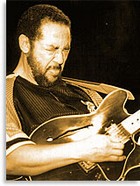
  • Seymour Duncan

    Story of an electric guitar guru

    Seymour Duncan is one of the most unassuming human beings on the face of the Earth, bar none. His name is held in high regard in many circles, especially those musical, and his life is an extraordinary rock and roll tale.

    Though he didn’t invent the electromagnetic guitar pickup, he has done more than most anyone to raise player awareness in regard to the critical elements of guitar tone and its many nuances. If you’ve been aware of electric guitars for any length of time, you have heard his name (and probably seen his face).

    Born and raised in small towns in southern New Jersey, Duncan’s father worked for Dupont and the family lived in several area towns while Seymour grew up and developed a very deep appreciation of music. As he grew into his teens, his step-brother, Bernie Lane, played a special role in fostering that appreciation.

    A major part in his overall guitar “makeup” came from listening to bands at local dances, sockhops, and later at nightclubs. It was in one of such establishment he met guitarist Rick Vito when both were teenagers. And one of Duncan’s favorite memories was spawned at a club called Dick Lee’s, where he’d catch Roy Buchanan playing live. When Buchanan was in the house, Duncan says it was a special time, and guitarists from a wide area would flock to watch him – and try to steal licks.

    Duncan constantly reminds himself that he has achieved great things only with the help of many people. And he is quick to give credit where due. So despite his considerable stature, he is the rare creature who gives extraordinary amounts of his time and energy to help others pursue their dreams.

    Vintage Guitar: Who got you started playing guitar?
    Seymour W. Duncan: I would visit my uncle, Bid Furness, who lived near Camden, New Jersey, and was a big-band musician in the 1930s and ’40s. He played trumpet and worked with many well-known performers on the East Coast. Uncle Bid had an acoustic guitar in his attic that he brought down one day when I was about 13 years old. I haven’t let it out of my hands since!
    I would also visit my dad’s brother, Howard, who played country guitar and taught me my first guitar chord – a D in the second position. He showed me how to pick the D and A strings while playing the chord. He gave a couple of 45 RPM extended play records – Two Guitars, Country Style, by Jimmy Bryant and Speedy West, and one by Chet Atkins. That was in 1963, and I still have them.

    How did you learn to play?
    I remember going to a music store in Woodbury, New Jersey, and seeing the Mel Bay guitar course. I wrote to Mr. Bay, telling him I was a beginning guitarist and wanted to learn as many chords as possible. I drew chord patterns and sent them to him, asking the names. About two weeks later I got a package and “good luck” note from Mr. Bay, and inside was his Guitar Chord Encyclopedia. Many years later I met him at a music trade show and thanked him. He was glad I continued in the music business (laughs)!

    What was the first guitar you got, and when did you get it?
    It was Christmas Eve of ’63, while I was in bed I could hear plucking of an amplified guitar. I was trying so hard to go to sleep, with pillows over my head, even, so I could hurry and wake up the next morning. When I awoke and rushed to the Christmas tree, I could see two larger-than-life presents. I looked at my parents and kept saying, “Can I, can I?” and my dad said, “Oh, go ahead.”

    When I opened the first package I saw a black case, and inside was a black sparkle Les Paul-shaped Silvertone guitar with two pickups, a black lever switch, and several volume and tone controls. It was a thin-bodied beauty, and I couldn’t wait to plug it in and play my first chords. Wow!

    What kind of amp was it?
    A Sears Silvertone with tremolo. I played for hours and didn’t even open my other presents. I was so thrilled.

    Do you remember the brand of strings you used at the time?
    The first strings I bought were Black Diamonds. Just about every guitarist in South Jersey used them. When I was 14 years old, Roy Buchanan showed me how to replace the bottom E string and use the standard A string in the set as my low E. I’d move all the strings over and use an A tenor banjo string for my high E.

    What were some of the first songs you learned?
    The first was “Tom Dooley” by The Kingston Trio. I learned to play along with the banjo part on the record. I remember playing along with it at my cousin’s birthday party, and was I nervous. Then I learned songs by Duane Eddy – he’s still one of my heroes, and a friend. At one of my first band auditions, I had to learn “Bulldog” by The Fireballs.

    When you were learning, what was the hardest part about playing guitar?
    I still dream about how hard it was to play the F bar chord. I had the hardest time trying to hold all the strings down at once with my index finger while keeping the chord clean. I remember my fingers cramping, and the day when I finally could play the chord perfectly. Then I needed to change chords quickly, especially when playing C, A minor, F, and G. There where many songs in the ’60s with that chord pattern.

    What kind of music were you listening to at the time?
    All kinds, especially country, rock and roll, and radio stations out of Philadelphia. I made a crystal radio set and used a long antenna hooked to my TV antenna to pick up distant radio stations, on clear nights. My favorite recordings, to this day, are “El Paso” by Marty Robbins, “I Only Have Eyes For You” by The Flamingos, “Peppermint Twist” by Joey Dee and the Starlighters, all the Duane Eddy recordings, Ricky Nelson with James Burton, Les Paul and Mary Ford, The Fireballs, and String-A-Longs.

    My all-time favorites are The Ventures, and Santo and Johnny. I really liked instrumental albums by Al Viola, Tom and Jerry, Jerry Cole, The Chantays, The Astronauts, and guitar solos in recordings such as “Rock Around the Christmas Tree” by Brenda Lee, “Jingle Bell Rock,” “Kansas City,” “Peppermint Twist,” “Honky Tonk,” “Scratchy,” “Memphis” and “Wham” by Lonnie Mack and “Guitar Boogie Shuffle” by The Virtues, to name a few.

    Did any guitarists on TV influence you?
    Yes, they sure did. I’d watch the “Ozzie and Harriet” show, and at the end of the show Ricky Nelson would perform with James Burton. I also watched the Lawrence Welk show and saw Neil Levang and Buddy Merrill playing all kinds of stringed instruments, from old Fender Stratocaters and Jazzmasters to banjos and steel guitars. And I couldn’t wait ’til they stood up and played a solo!

    Another influence was a guitarist on “Ted Mack’s Original Amateur Hour” show, where the artists would perform and an applause meter would measure the crowd’s reaction. I once saw a young guy in a cowboy outfit playing an instrumental version of “San Antonio Rose,” and he did a backflip while playing! I really wanted to play guitar after seeing that!

    Did you have a tape recorder?
    When I was about 14, during another Christmas my dad got a Voice of Music tape recorder. I used it to tape all the TV shows that had any music, and especially a guitar solo. I’d record it at 71/2 inches per second and play it back at 31/2. I’d then learn to play the solo slower without tuning my guitar. I recorded albums, too, and did the same thing.

    Did you learn to read music?
    I took a few lessons using the book Mel Bay sent. I learned all the notes and positions on the fingerboard, all the chords and positions, and basically learned to memorize the chord patterns, because it wasn’t cool to perform live rock and roll using sheet music. I’d listen to the recordings off the radio and have the chords for my band the next day. It was cool to play Beatle songs at school dances, while they were still on the radio.

    Did you discover any secrets to learning guitar solos?
    Using the tape recorder was great. In high school I’d write out the chord charts for songs on the radio, and sell them to the local bands for 25 cents per song. I’d then use the money to purchase more reel-to-reel tapes. It was probably illegal, but none of the bands cared as long as they had the chords.

    What kind of songs did you listen to?
    I enjoyed listening to keyboardist Jimmy Smith, Jimmy McGriff, Jack McDuff, and really liked what they were doing with the organ’s bass pedals. I was beginning to listen to the tone of the instruments and even though the musicians played the same style instrument, like the Hammond B-3 organ. I was always curious as to why they sounded different, and as I got older and listened to more music, I was able to tell who the player was by the tone.

    I’d listen to all kinds of music, even while going to sleep at night. To this day, I sleep with an earphone, scanning the radio waves for radio stations to hear new and interesting tones. I’ve come to enjoy the incredible phrasing of bagpipe artist Davy Spillane and the soul of saxophonist King Curtis.

    Who where your main guitar influences at the time?
    Those I heard on records – Nokie Edwards, Chet Atkins, Les Paul, The Ventures, Duane Eddy, Jimmy Bryant and Speedy West, Santo and Johnny, and many of the session guitarists who did the solos on the early records I listened to.

    My local heroes at the time where The Sterling Brothers featuring Joe Seddon and Mark Hutchinson, who played all over South Jersey. Others were Roy Buchanan, The Jaguars, The Fenderman, Levon and The Hawks – who later became The Band for Bob Dylan. Elliot Randall, who later recorded with Steely Dan, The Kit Kats, Pete Carroll and The Carroll Brothers, Tommy Cosgrove, Ray Coleman, Little Pal and The Profits, Bobby Jones who took Roy Buchanan’s place with Bob Moore and The Temptations, and especially one of my first groups called The Flintones, with Ken Bozarth, Mark Montemore, and Jim Sharp.

    Were you into the blues much?
    Yeah, I was getting into Freddy King, Albert Collins, and Buddy Guy. I was bending strings, and I liked the tone those guys were getting. One day in the the mid ’60s I was listening to a promo album by The Cream; it was given to me by Frank Woods, the owner of WEBN-FM radio, in Cincinnati. Eric Clapton’s work in The Cream was the best. Frank also gave me promo copies of Jimi Hendrix, and The Yardbirds, because he knew how much I liked guitarists and guitar playing.

    Do you remember the names of some – or all – of the bands you were in?
    Hmmm…the New Jersey bands were The Illustions, The Ad-Ventures, The Flintones, Ray Coleman and The Mints, The Mysterians – later named The Sparkle, who toured with The Shirelles. In Cincinnatti there was The Orange Noise, Surdy Greebus, Bloomfield, The Bottom Half, Midnight Sun, and I played solo gigs. In England, I played with Chris Rainbow, Druick & L’Orange, and solo. Then, when I came back to states, in Cincinnati I was in Punk, then I moved to California to do sessions and start Seymour Duncan Guitar Research.

    Where did you perform?
    School dances, sockhops, private parties, weddings, and nightclubs in New Jersey, Pennsylvania, and Delaware. I remember sitting in with a recording group – Frank Link and The Bonnevilles, at a dance in New Jersey. With The Flintones, I traveled all over South Jersey playing in Wildwood, Avalon, Philadelphia, and nightclubs all over the place.

    What types of guitars do you own?
    A variety of Fender Telecasters, Esquires, Gibson Les Pauls, ES-335s, ES-345s and a beautiful Gibson ES-355. I have two beautiful Heritage guitars, and actually collect Fender Jazzmasters because I think they’re the most beautiful guitars ever made. I own several Jaquars, Duo-Sonics, Mustangs, Precision Basses, and several custom-made instruments, and two PRS guitars. I have a Roy Buchanan guitar given to me by Roger Fritz, and a few early Gibson SG Les Pauls. And a friend gave me my first Silvertone.

    Are there any guitars you’ve gotten rid of through the years, and now wish you still had?
    When I was 14, I bought a new ’63 Strat that had been sitting in a music store in Woodbury. When I started working with rockabilly artist Ray Coleman, I traded it to Tommy Cosgrove for a ’63 Fender Jaguar. I wish I still had that guitar. I realized over the years that even though the Jaguar cost more, it didn’t have the tone of the Strat.

    Any gig horror stories?
    Oh, yeah! One that really sticks out is the time I drove 60 miles to a club in Pennsylvania, then opened my case to find I’d forgotten to put my guitar in it! The club owner called all over the place to get a guitar for me. He found a jazz guitar with .012 to .060-gauge strings that I couldn’t bend! I dropped them down to D and had to transpose all the songs.

    Ahh, yes. Usually among the horror stories is the one about how an overly imbibed bar patron wanted to get up and “jam.” Do you let other players borrow your guitars?
    I normally don’t, unless it’s someone like Jeff Beck, Peter Frampton, Eddie Van Halen, James Burton, or other players who understand the value of an instrument…

    You’re such a name dropper (laughs)…!
    Well, I once let someone borrow my ’56 Telecaster – which I’d purchased from a student of Roy Buchanan’s. It was a great-sounding guitar. Anyway, during a jam session, I let a guy use it, and he was accustomed to playing an acoustic with heavy-gauge strings. I was using the A tenor banjo string for my high E, so the strings where pretty light. As the guy played, the high E string became lodged in the coil of the bridge pickup – obviously, he didn’t have the touch intended for the guitar.
    On the bright side, that pretty much started my pickup-winding career. And I don’t worry as much now because I usually have one of my pickups in the guitar, so if it goes bad, I just make another (chuckles).


    PART TWO
    In the first part of our talk with pickup guru Seymour Duncan, we delved into some of the experiences of his youth in New Jersey. Whether it was getting letters from Mel Bay, hiding an AM radio in his pillow at bedtime, or sneaking into nightclubs to watch Roy Buchanan, in some way or another, the guitar and the music it helped create had an apparent and very deep effect. And everybody who has played an electric guitar in the last 20 years has been the beneficiary.

    This time, Duncan discusses his emerging passion for the electrical minutiae of the instrument, and how his curiosity led to his status as the world’s preeminent pickup manufacturer.

    How did you become interested in working with pickups?
    It was the necessity of having a working guitar, because it was my bread and butter. I needed to keep my guitar in working order, as I was the lead player in the band, and I just couldn’t keep using the rhythm pickup on my Telecaster for lead work.

    In the mid ’60s, I started finding all kinds of broken guitars in music shops around South Jersey that had great action and playability, but the electronics didn’t work. Folks were just throwing the guitars away – I even traded a Fender volume pedal to a player in Ohio who had a ’53 Fender Esquire that didn’t work because the knurled washer was shorting out the jack when the cord was plugged in.

    I started doing all kinds of guitar work for local music stores in the ’60s. I hated seeing broken pickups thrown away.

    So you started rewinding them…
    Yes, when I was about 16. I was mainly trying to fix the pickup someone broke while using my Tele. I started gathering broken guitars from local dealers, then mixed and matched while replacing the broken ones from other pickups and assemblies. If I had five or six Stratocaster pickup assemblies where one or more pickup didn’t work, I’d make two or three assemblies where all the pickups worked. At times it might be a broken switch and others it would be a dead pickup. I started realizing that the early Stratocaster pickups – from ’54 to early ’58 – had a North Polarity and later, in mid ’58, all the pickups had South Polarity. This causes problems when I tried to combine pickups from different time periods.

    What did you use for a winding machine?
    You’ll laugh, but my first hand winder was made from a three-speed record turntable! It would rotate at 331/3, 45, and 78 RPM. I mounted a block of wood to the center guide, then placed some mounting pins to hold the pickup while hand-winding. The turntable worked pretty good, and taught me several lessons about winding speed, precision, and especially, patience.

    How did you determine wire gauge?
    I got help from my dad, who worked at Dupont, and an uncle who worked at Texaco. They had engineers who helped me determine wire gauge and insulation. I’d look at the wire under a microscope in biology class, and match the diameter of other known gauges. I’d also take the coil wire to a local motor winding shop at a nearby town. I ordered plain enamel, or PE, because it was common.

    After trial and error, I realized that Fender and Gibson used mostly 42-gauge PE and Fender used 42-gauge Formvar insulation on the majority of Stratocaster and Duo-Sonic pickups.

    I wrote many letters to Bill Carson at Fender, and he was very helpful, always answering my questions about various Fender instruments. He helped me a lot when it came to repairing pickups and working on instruments. I owe Bill many thanks for all his patience.

    That was obviously before you had winders. So how did you count the turns on the pickups?
    I’d look at the size of the coil I was be replacing. You could see lacquer or wax lines where the existing winding ended. You can also see if the coil was wound clockwise or counterclockwise by fine wire prints in the wax. Over the years, I’ve made special de-reelers to remove the wire and count the original turns. This works on most pickups, except those that have been butchered.

    What are the easiest pickups to wind?
    New bobbins or bobbins that have not been touched by others. I enjoy winding standard humbucking bobbins that are consistent in shape, along with new Fender-style bobbins that have been made with proper tooling.

    What are some of the hardest?
    Trying to wind a bobbin that has been modified by others or those that have been warped by excess temperatures while potting…or bobbins wound with the wrong traverse or too much tension, so they look like a banana.

    If a bobbin is modified to the point where the traverse is not controlled, it can lead to loose flatwork, cracked magnets, and uneven or parallel traverse. Epoxied or warped bobbins are difficult, and so are the ones that have absorbed high amounts of moisture over the years.

    How do you fix a pickup with missing or broken parts?
    Mainly, I make parts either by hand or using my milling machine, lathe, or pantographs to fabricate the part. If the parts are missing, I try to locate a similar pickup and fabricate a similar part. It’s important to keep all the parts together, so the repairman can use the part as a guide or dimensions to make another. And I never throw away broken or worn parts, because new ones can usually be made to proper specs.

    How about broken magnets?
    There are some great adhesives made today that can repair broken magnets. I see broken rod magnets in Fender-style single-coil pickups where someone has tried to remove the magnet wire, and they snap the magnet in half. This can be repaired. Bar magnets can be repaired in the same manner; just look at the situation logically and you’ll come up with a good solution.

    And I always let adhesive dry before trying to wind a coil around a repaired magnet.

    What is it that keeps the passion for guitars and their guts alive for you?
    I just enjoying playing and messing around with pickups because there are so many great sounds and tones to be had.

    Making pickups and playing guitar has allowed me to jam with so many great players, including Bugs Henderson and The Stratoblasters, Cold Blue Steele, Anson Funderburgh and working with so many great artists such as Nokie Edwards, Brent Mason, Billy F Gibbons, James Burton, Albert Lee, Danny Gatton, Vince Gill, Jerry Donahue, Michael Landeau, Bonnie Raitt, Jerry Swallow, Albert Collins, Gerry McGee, Bob Paxton, Adrian Belew, Arlen Roth, Steve Cropper, Rick Derringer, Leroy Parnell, Brian Setzer, Rick Vito, Tommy and Phil Immanual, Leslie West, Stevie Ray Vaughan, Eric Johnson, Lonnie Mack, Rory Gallagher, John McLaughlin and so many more. They all have their unique tone and playing technique and that’s why I enjoy them so much.

    Are there any guitarists you didn’t meet, and would like to?
    Oh, yes! I always wanted to meet Grady Martin and tell him how much I’ve enjoyed his playing with Marty Robbins on the song “El Paso” and all his other work and recordings. “El Paso” has always been a special song to me. Another is Amos Garrett, who did the brilliant solo on “Midnight at the Oasis” with Maria Muldaur.

    Last year, I had the honor of meeting Johnny Farina, who wrote and played “Sleep Walk” with his brother, Santo. I really enjoy the playing of Jimmy Vivino and watching him perform on “The Conan O’Brien Show.” He has a great energy and style.

    Who have been some of the influential people you have talked to?
    There have been so many great folks over the years…Les Paul, Seth E. Lover, Bill Carson, Nokie Edwards, Leo Fender, George Fullerton, Ray Butts, Chet Atkins, Billy F Gibbons, Tommy Tedesco, Bob Bain, and longtime friend R.C. Allen.

    Among modern guitarists, do you have any favorites when it comes to tone and technique?
    I must say that Brent Mason blows my socks off, and I’ve enjoyed doing shows with him. I’ve always enjoyed Murial Anderson and all her wonderful performances and producing the “All Star Guitar Night.” And of course there’s Eddie Van Halen, Steve Vai, Joe Satriani, Phil Keaggy, Jennifer Batten, Lawrence Juber, and the emotional playing of Ed Gerhard.

    My real lesson in tone came from Roy Buchanan, and watching him perform all kinds of unique tricks and techniques. I still enjoy listening to early and modern surf instrumental music, Charlie Christian, Oscar Moore, Les Paul, Gene Krupa, and wacky music by Spike Jones And His City Slickers.

    Where are some of the more memorable places you’ve played?
    I’ve been just about everywhere they have bands with guitars. I’ve been to every state except Alaska, and I’ve been to Canada, England, Germany, France, Italy, Morocco, Spain, Ireland, Scotland, New Zeeland, Australia, Tasmania, and Japan.

    I’ve always believed music is a universal language. Playing guitar and building pickups has given me the opportunity to meet and travel throughout the world.

    What would you like to do in the future, musically?
    I want to continue to make pickups, and bring some new ideas to the guitar and bass markets.

    Nowadays I enjoy staying at home more and focusing on my pickup ideas. I’m always making new tooling and fixtures for pickup modifications, and custom designs. I also enjoy engraving, and want to start making some personal products for musicians.

    I am planning to do a solo recording project, and I’ve talked with James Burton about some projects along with Nokie Edwards and Jerry Donahue. And there are some book projects I’d like to get done.

    What have been some of your more memorable projects over the years?
    Touring with Jeff Beck and doing the ARMS Benefit with Ronnie Lane was exciting. Also, I was a guitar tech at Live Aid!

    I enjoyed building the world’s largest guitar for The Guiness Book of World Records and hope to get the old crew back again to do another.

    I enjoyed making the Cosmic Beam pickups used in Star Trek, The Movie and The Thin Red Line. And I’ve worked on sound stages during filming, watched Jeff Beck work on a project during the filming of Twins with Arnold Schwarzenegger and Danny Devito.

    I’ve enjoyed the visits to the G&L factory, hanging out at Gibson when they were in Kalamazoo, and meeting the crew at the Gibson factory in Nashville. I’ve enjoyed working with Fender, Heritage, Hamer, ESP, and so many other guitar companies, helping them with pickups or special projects.

    And I really like meeting other pickup designers and winders. Through the years, I’ve become friends with a lot of them, including Joe Bardon and Lindy Fralin.

    Oh yeah…playing with Joe Walsh during our days in Ohio, and opening for The Allman Brothers Band. Then later performing with them.

    I’ve enjoyed playing with Eric Johnson, Albert Collins, Eric Clapton, Jessie Ed Davis, Elliot Easton, Peter Frampton, Bonnie Bramlett, Robin Trower, and Freddy King, and the best rock singer around – Paul Rodgers.

    It’s especially satisfying to work with artists, trying to groom their pet project.

    And I have really enjoyed working with VG, as it has given me a chance to put many of these thoughts and experiences on paper. The staff has been very helpful and supportive.
    In closing, what nuggets of wisdom would you pass along to beginning guitarists and bassists?
    Always take care of your instrument and make sure you understand it’s inner workings! Never let others borrow your guitar for extended periods, as damage can happen; parts can get changed or modified and if damage occurs, it might not be the individual’s fault. Always wipe the guitar down after shows and try to diminish the moisture content inside the case – high humidity can cause condensation and rusting. Keep the instruments out of extremes such as severe cold weather and hot, humid conditions. Periodically check for loose jacks, potentiometers, switches, cables, oxidation on jacks and switching components and contacts. Keep the keys lubricated and keep debris away from the polepieces and/or magnetic path!


    Photo: Ward Meeker

    This article originally appeared in VG‘s March and April ’01 issue. All copyrights are by the author and Vintage Guitar magazine. Unauthorized replication or use is strictly prohibited.