Month: May 2001

  • Little Feat – Hotcakes and Outtakes

    Hotcakes and Outtakes

    I’ve always been amazed that Little Feat wasn’t a huge band with many hits. They don’t come much snappier than “Dixie Chicken.” And especially in the ’70s heyday of FM radio, how could that not have turned into a huge hit?

    Anyway, it’s all here on this four-CD set – all the great songs (and you’ll be amazed at how many really great songs there are), the stuff from after Lowell George’s death, and even some early stuff from early bands that featured members of Little Feat. It’s tough to beat George’s slide playing and songwriting.

    With songs like “Trouble,” “Cat Fever,” “Willin’,” “Two Trains,” and “Spanish Moon,” one can’t help but think the word “genius” isn’t out of line. He also helped write the book on slide playing, taking it in a little different direction than Duane Allman and Ry Cooder. He’s a phenomenal player. Add Paul Barrere on guitar, Billy Payne on piano, and an amazing rhythm section, and you’ve got one of the best American rock bands ever. While the sound changed after the band reformed in the ’80s, it was still a fine band with a little jazzier sound and fine playing from Barrere and Fred Tackett on guitars.

    I can’t recommend this enough. I really feel this was, especially in the ’70s, one of the best rock bands to emerge from America. Mixing rock, blues, country, soul and everything in between, they stood head and shoulders above plenty of hitmakers in that time. Get this!

    This review originally appeared in VG‘s Feb. ’01 issue.

  • SRV – Box Set

    Box Set

    With every boxed retrospective that hits the changer, I’m reminded of the words of my old friend, Cub Koda. Quote: “All compilations suck except the ones you compile yourself” (an image of Roger Ebert also comes to mind – forever chiding Gene Siskel for critiquing “…the film they didn’t make, instead of the film they made.”)

    With that proviso on the table, I’d like to state at the outset that the long-awaited Stevie Ray boxed set is an impressive document of a remarkable career. To cut right to the chase, yes, it’s well worth its $59.95 list price. With three CDs clocking in at nearly four hours, containing 49 tracks, 31 of them previously unreleased, plus a five-song DVD of “Austin City Limits” outtakes, if this isn’t a no-brainer, your copy of Martha Stewart Living must’ve gotten switched at the checkout stand.

    Bob Irwin, whose regular gig is producing fabulous ’60s reissues of everyone from Buck Owens to the Beau Brummels for his own Sundazed label, did another bang-up job. Working closely with Jimmie Vaughan, he spent years combing through mountains of tape from around the world. Ever mindful that they can only go to the well so many times, Irwin points out, “At first we wondered if we could build a coherent, intelligent boxed set that had artistic integrity, that wasn’t obviously just a boxed set for the sake of having a boxed set.” At the end of the day, they were satisfied that they had, and in fact had more material than they could use.

    Unlike the Jimi Hendrix scenario, Epic, Jimmie, and Irwin have done an admirable job of not dilluting Stevie’s legacy, ensuring that the posthumous albums live up to the standard of the albums Vaughan released during his brief career. “In the case of Stevie,” Bob marvels, “you can keep casting the net forever, because the farther you go the more material you find.” Some of the gems that turn up here include Stevie fronting Paul Ray & The Cobras (1977) on “Thunderbird” by the influential Dallas group The Nightcaps; a 1981 club version of “Manic Depression” that is admittedly pure copycat, but damned impressive, nonetheless; the jazzy “Boilermaker” from the Soul To Soul sessions; and Stevie all alone singing “Dirty Pool” for an ’89 radio interview.

    So, any shortcomings really come down to what’s not included – the film they didn’t make. The most glaring omission is the period when Double Trouble was first conceived as a walloping one-two punch co-led by Stevie and singer Lou Ann Barton – thus ignoring a crucial chapter in Stevie’s development.

    Irwin counters, “This set had to be focused primarily on Stevie. We had a couple of tracks with Lou Ann singing vocal on the first disc, and we all felt as though it kind of broke the stride of the set. It just happened too early in the set; you didn’t get the feeling of Stevie early enough in the set.”

    Very few artists merit more than one boxed set, and even with Eric Clapton there’s only one defnitive overview. And this is akin to leaving the Yardbirds off Crossroads simply because E.C. wasn’t the group’s lead singer. Also, the fact that the box is laid out chronologically seems an even stronger argument for Barton’s inclusion. Otherwise, it’s like going from “Hostage Crisis, Day 6” to “Hostage Crisis, Day 22.”

    Midway through Disc 1, Stevie is already the guy with the bolo hat and kimono, playing Montreux. With as many repetitions as there are here – and a few less-than-precious stones such as the uninspired, too-fast renditions of “Lenny” and “Come On” – the early evolution of the artist gets rather short shrift.

    Not as integral, but perhaps more conspicuous in its absence, is David Bowie’s Let’s Dance, none of which could be included due to licensing obstacles. Still, Irwin says he “…envisioned this set as being guitar-driven from beginning to end,” and felt the Bowie tracks came off as “speed bumps,” despite their historical significance. But material such as Bowie’s (and Jennifer Warnes’) introduced Stevie and the blues to broader audiences, and the atypical environments Stevie was placed in (inevitably rising to such occasions) were another element setting him apart from any number of run-of-the-mill bluesers.

    While Irwin says, “I don’t view it as a blues set any more than I do as a rock set,” the box seems a bit heavy on blues covers, even closing with three 12-bar covers from Stevie’s second-to-last night at Alpine Valley, while omitting one of Stevie’s most ambitious, mature statements, “Riviera Paradise,” which he regarded as an instrumental prayer.

    Which all gets down to the balancing act such a compilation tries to master: introducing new listeners to Vaughan’s catalog while appealing to fans who have every last bootleg, and making it listenable in the process. Hindsight and second-guessing aside, Bob Irwin earns high marks, indeed.

    But just as there is a Crossroads II…keep casting that net, Bob.

    This review originally appeared in VG‘s Feb. ’01 issue.

  • Tony Bacon – 50 Years of Fender

    Tony Bacon

    In 1950, Leo Fender began production of the first solidbody electric guitar, and music hasn’t been the same since. Celebrating the anniversary of the event, this book provides a year-by-year chronicle of the evolution of Fender and its world famous guitar models. The book highlights the process of reevaluation and reinvention, noting Fender’s focus throughout each decade: visionary design work in the ’50s, technical flexibility in the ’60s, core models of the ’70s, diversification of the ’80s, and the retro craze of the ’90s. Filled with photos of album covers, ads, catalogs, memorabilia, and famous musicians using Fenders, the book shows how the company’s products reshaped popular music and culture over the past 50 years. Great photos, nice price, excellent guitars!

    Softbound 128 pages, ISBN 0-87930-621-1, $19.95.

    This review originally appeared in VG‘s Jan. ’01 issue.

  • Adriana Balboa – Guitar Music From the Rio de la Plata

     Guitar Music From the Rio de la Plata

    The tango is a music of melancholy, and Uruguayan Adriana Balboa’s guitar weeps with the sound on this solo album.

    Based now in Germany, Balboa offers a tribute to the Rio de la Plata, the river that flows between Buenos Aires and her native Montevideo. She leads off with four popular cuts by the renowned bandoneonist and band leader An

  • The Kentucky Colonels – Legendary Live Recordings

    Legendary Live Recordings

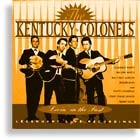
    The Kentucky Colonels Living in the Past: Legendary Live Recordings is made up of tapes from seven different shows in 1961, ’63, ’64, and ’65. Material is from performances at venues in California and New York. Most of the CD is from a ’65 performance, and was originally recorded in mono.

    Along with a classic version of White’s instrumental tour de force “Julius Finkbine’s Rag,” this CD has a chilling rendition of “Dark Hollow” featuring Roland and White in a lead duet.

    Along with the music, Living in the Past: Legendary Live Recordings includes between-song banter, including some very corny jokes. There’s one introduction by Jerry Garcia.

    While the original tapes are not, even for their time, the ultimate in high fidelity, Producer John Delgatto has done a fantastic job eking out every last bit of sound. Bruce Leek and Bob Katz are also to be commended for their work translating these recordings to CD. Except for a few minor tape glitches, the sound is surprisingly consistent and it’s easy to delineate each musical part.

    This review originally appeared in VG‘s Jan. ’01 issue.

  • Clarence White – 33 Acoustic Guitar Instrumentals

    33 Acoustic Guitar Instrumentals

    33 Acoustic Guitar Instrumentals came from a cassette tape discovered in Clarence’s personal archives after his untimely death. These home recordings feature him playing lead guitar accompanied by Roger Bush on rhythm for a number of bluegrass standards. All the songs are tantalizingly brief. The longest, “In the Pines,” runs a mere 2:11.

    The format is simple; Clarence plays the solos two or three times, then the song ends. But in each tune are enough musical ideas to keep you busy dissecting them for a lifetime.

    The album was recorded in 1962 on a pre-Dolby Wollensak machine. While these units were known for reliability (you could find them in most high school language labs) they were not exactly ultra-high fidelity. Their high-frequency limit was around 8 kHz, and they had a consistent amount of wow and flutter. Given the Wollensak’s technical limitations, this recording is astonishingly good. Even with the occasional volume drops, and slight pitch variations, the sound of White’s ’57 D-18 comes through with remarkable fidelity. Surprisingly, he preferred to play solos with the D-18 rather than his fabled ’37 D-28 (now owned by Tony Rice). The D-18 was stolen in ’67 while White was recording in Los Angeles. It has never resurfaced.

    This review originally appeared in VG‘s Jan. ’01 issue.

  • The Jimi Hendrix Experience – Box Set

    box set

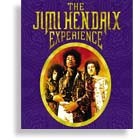
    This four-CD box set illustrates again how the seed planted by Hendrix created a whole tree of rock guitar that still flourishes, although not at the level of creativity it did with Jimi. The music here is all alternate takes and previously unreleased stuff. And, it all re-establishes Jimi as the rock guitarist.

    There’s too much here to break this down song-by-song, but here are some highlights. A live version of “Hey Joe” from Paris in ’66 is nothing short of awesome. An alternatate take of “Third Stone From the Sun” highlights Jimi’s great sense of humor in the spoken intro, and then his great playing in the jazzy instrumental. It’s hard to believe the tongue-in-cheek blues of “Taking Care of No Business” has never been released. Throughout are alternate takes of clasics like “Purple Haze,” “If 6 was 9,” “Fire,” and more that show all of these as works in-progress. There’s some really cool unreleased stuff like “It’s Too Bad” with great playing and uncharacteristically political Jimi commentary.

    All in all, there’s over four hours of great music here. Put it with a beautiful purple velvet box and a comprehensive booklet, and you’ve got a winner. If you’re remotely interested in rock guitar or Hendrix, this is a must-have. Run – do not walk – to your nearest CD shop.

    This review originally appeared in VG‘s Jan. ’01 issue.