Month: September 2007

  • Marc Ford – Weary And Wired

    Marc Ford - Weary And Wired

    Shortly after announcing his retirement from the Black Crowes, the platinum-selling Southern-rockers he’d joined in 1992, Marc Ford reunited with bassist Mark “Muddy” Dutton and drummer Doni Gray, his late-80s bandmates from the L.A. retro-rockers, Burning Tree.

    “It felt natural and flowed,” he says of the first gigs they’d played in 17 years – as the 15 tracks here amply illustrate. Influences such as the Stones and Cream pop up (on “Featherweight Dreamland” and “1,000 Ways,” respectively – the latter co-written by Ford’s son, Elijah), while “The Other Side” straddles country-rock and Hendrix guitaristics. The slow groove and Hammond organ on Willie Dixon’s “The Same Thing” summon Jimi as much as Muddy; you expect to hear him break into, “Lord knows I’m a voodoo child!”

    Ford (not to be confused with Mark Ford, the harmonica player) proves he’s equally adept as melodic songwriter and six-string tonemeister – the latter showcased to full effect on the instrumental jam “Greazy Chicken.” “Medicine Time” is reminiscent of the sort of James Brown funk Frank Zappa sometimes dabbled in. Zappa comes to mind again on “The Big Callback,” via the wah guitar, horn arrangement, and subliminal vocal.

    And speaking of wah-wah, check out “Bye Bye Suzy” – the best Chuck Berry song to come down the pike in ages, despite the fact that it wasn’t written by Chuck.

    This article originally appeared in VG‘s Aug. ’07 issue. All copyrights are by the author and Vintage Guitar magazine. Unauthorized replication or use is strictly prohibited.

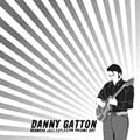
  • Danny Gatton – Redneck Jazz Explosion Volume 1 and Volume 2

    Danny Gatton - Redneck Jazz Explosion Volume 1 and Volume 2

    The Danny Gatton files have so much great stuff that we may be hearing from the genius of the guitar for quite some time. These two amazingly cool discs are from live sets played at the Cellar Door in Washington, D.C. in January, 1978. Not only is Gatton in full bloom, but he’s joined by Buddy Emmons on pedal steel. If you aren’t familiar with Emmons’ considerable jazz skills, you’d be well-served checking out these discs, along with Emmons’ solo stuff and his work with guys like Lenny Breau.

    This is Gatton playing a ’61 Gibson Les Paul, but that doesn’t really matter. He sounds, oddly enough, like Danny Gatton on the high-speed bop you’ve come to expect. “Opus De Funk” is a plain ol’ chopfest, as is “Rock Candy.” In fact, while a number of the songs start at a tempo where mere humans could perhaps play them, Gatton quickly gooses them into double-time. Emmons certainly keeps up, and bassist Steve Wolf and drummer Scott Taylor are with the music every step of the way. Whichever way Gatton goes, the fellas are right there.

    A handful of jazz classics get a fine workout here. “Killer Joe” is 10 minutes of melodic and harmonic heaven. Horace Silver’s “Song For My Father” features one of those Gatton solos that make you want to either practice 12 hours a day or give up guitar altogether. In fact, there are a lot of those here.

    This article originally appeared in VG‘s May. ’07 issue. All copyrights are by the author and Vintage Guitar magazine. Unauthorized replication or use is strictly prohibited.
  • The Clash – The Singles

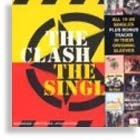
    The Clash - The Singles

    Rarely in the history of music has so much been packaged so beautifully for so many.

    The Clash The Singles box is a glorious collection of the band’s original 19 singles, reissued on individual CDs. Each comes in its own sleeve with the original punkified artwork from the various release countries. Each also includes the B-sides from those original 7″ and 12″ records. Talk about cool! In all, there are 66 songs and 80 minutes of music. And if you’d forgotten that the Clash were once “the only band that matters,” this box set will reaffirm that things haven’t changed even after all these years.

    But what really caps the deal is that several of these tracks have been unavailable for years, not included on any of the various other greatest hits collections or box sets. There are alternative takes, dubs, even the famous interview with the band while riding the Circle Line underground around London.

    Among the rediscovered jewels are the reggae-esque “Bankrobber” outtake from the London Calling LP, as well as the reggae cover of “Armagideon Time.”

    But the best of all may be the Clash’s version of Toots and the Maytals’ “Pressure Drop,” the flipside of “English Civil War” and inspired by the rude-boy blockbuster film, The Harder They Come. The band spits this reggae number back out as a punk-rock anthem.

    The music is accompanied by a stylish liner booklet packed with photos and best of all, reminiscences by the band’s contemporaries concerning individual singles. The Pogues’ Shane MacGowan kicks things off with his memories of the release of “White Riot” amid the crazed early days of punk. It’s charged reading.

    If you’re a Clash fan, you need this box set. And if you’re really a Clash fan, you may prefer the special limited-edition version released on good old 7″ vinyl.

    This article originally appeared in VG‘s May. ’07 issue. All copyrights are by the author and Vintage Guitar magazine. Unauthorized replication or use is strictly prohibited.
  • Ian Hunter

    Guitar Prognosticator

    Ian Hunter’s Diary of a Rock N’ Roll Star is a fascinating look at early-1970s bands, music, and guitar collecting. The book, a journal of a U.S. tour by his band, Mott the Hoople, written to promote All The Young Dudes, was published in 1974.

  • Electro-Harmonix Pog and English Muff’n pedals

    Sounds, Classic and Funky

    For the last 37-plus years, Electro-Harmonix has been a prolific innovator and manufacturer of effects pedals and other preamp devices. A few times each year, E-H president Mike Matthews offers up something different and unexpected, but it always sounds great, offers gig-proof durability, has that all-important retro vibe, and has a high bang-for-the-buck factor.

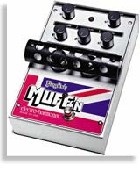
    The latest E-H offerings are the Polyphonic Octave Generator (friends call it “POG”) and the English Muff’n, a British-flavored tube overdrive preamp.

    The English Muff’n has the familiar E-H two-preamp-tube layout and chassis (seen most recently on the Black Finger compressor, Wiggler, and Tube EQ) and ships with a 12-volt AC power supply in that handy plywood box. To test the Muff’n, we used an Ampeg Super Rocket 2×12″ tube combo and all-tube Crate head with a 4×12″ Celestion-loaded cabinet. We tested the unit plugged into both amps’ regular inputs to see how they interacted with the amplifier’s preamp, and then running straight into the power amp section.

    The English Muff’n features two E-H 6072A/12AY7 preamp tubes protected by an anodized shield, with controls for Volume, Gain, and High, Mid, and Low tone, as well as isolated 1?4″ in/out jacks and two LEDs, one to indicate the unit has power and one to indicate whether it’s on or in bypass mode.

    We first checked the Muff’n with a humbucker-loaded Fender Flame through the Ampeg, with the pedal’s gain turned almost all the way down. Immediately notable are the tone controls’ very smooth, sweet voicing that stays musical regardless of where they’re set. The High control adds presence and sizzle, but no harshness, while the Mid adds not only warm, smooth midrange, but an upper-midrange attack that makes notes pop. The Low control keeps the sound tight and round while filling out low-end. As we turned up the gain to add overdrive, cranked the Low and Mid controls, and set the High at 9 o’clock, we got a creamy Vox-like tone with fantastic note separation that reacted well to playing touch. With the Mid dialed almost out and High turned up a bit, the pedal offered a completely different sound – more airy, with a lively shimmer to the highs that was very open when we played open chords. With the unit plugged into the line-in of the Ampeg (bypassing the preamp) the tone was even tighter and smoother, with less noise. We got very similar results with the Crate half-stack, but with more low-end thump and a midrange peak.

    Though the manual doesn’t make mention of it, the Muff’n can use tubes other than those supplied with it; a 12AX7 in the post-gain position will give bigger, more aggressive output. Or a 12AX7 in the preamp makes for a more-aggressive drive stage rounded out by the 12AY7 in the output stage.

    We also tried a 12AU in both the in and output stages, and mixed them with AX and AY tubes for a totally different sound. E-H tells us they tested the Muff’n in its prototype stage and discovered the differences; they were not drastic, but were enough to expose the potential sound of different tubes.

    The POG shares the familiar 77/8″ x 63?4″ x 11?2″ brushed steel chassis and comes with a 18-volt DC power supply. Controls are faders for Input Gain, Dry Signal (amount of guitar’s natural sound goes to output), Octave, Low-Pass Filter, and a three-way mode switch.

    The Sub Octave fader adds a tone one octave below the original; the faders for the first octave add a tone one octave above the original, and another one octave above that and is slightly detuned, while the second octave fader did the same, but two octaves above the original.

    With the dry control set at about 75 percent and the first octave fader at about 50 percent, we achieved a decent 12-string guitar sound. We used both first octave faders to get the slight chorus effect you’d get with a 12-string. With the low-pass filter switch in mode one (where it effects only the octave generator, not the dry signal) we could dial back some of the shrill on the high E and B strings.

    Using only the sub-octave generator and a little bit of the dry signal with the low pass filter in mode three (effect both the tone generator and the dry signal) a got a surprisingly fat and usable bass guitar sound.

    With all three octave generators turned up, we got a surprisingly good organ sound that tracked very well. We turned up the Input fader and drove the unit into a bit of distortion, it simulated the percussive reminiscent of a Hammond organ.
    Both of E-H’s new pedals deliver great sounds, are easy to operate, and a blast to play with.

    Electro-Harmonix English Muffin
    Features True-bypass foot switches, heavy-duty steel chassis, status LEDs, dual 6072A/12AY7EH preamp tubes, three-band interactive tone control.
    Price $298.

    Electro-Harmonix POG
    Features True-bypass footswitches, heavy duty steel chassis, status LEDs, switchable low-pass filter, three-octave capability.
    Price $690.
    Contact Electro-Harmonix/New Sensor, 32-33 47th Ave. LIC, New York NY 11101; www.ehx.com.

    This article originally appeared in VG‘s Jul. ’05 issue. All copyrights are by the author and Vintage Guitar magazine. Unauthorized replication or use is strictly prohibited.
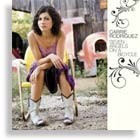
  • Carrie Rodriguez – Seven Angels on A Bicycle

    Carrie Rodriguez - Seven Angels on A Bicycle

    Carrie Rodriguez has blossomed from a reluctant background singer to a confident lead vocalist in just four albums. Her first solo release demonstrates that she has the chops to lead her own band.

    Fans of her duo work with Chip Taylor need not fear that their collaboration has come to an end; Taylor co-produced and wrote or co-wrote all but one tune here. He also plays acoustic guitar, along with jazzman Bill Frisell on electric guitar, Greg Leisz on pedal steel, lap steel, and dobro, Victor Krauss on upright bass, Kenny Wollesen on drums, Jaymer Vercher on saxophone, and Richie Stearns on banjo.

    Rodriguez’s fiddle takes a backseat to her lead singing. On the opening/title cut, she demonstrates how to deliver a vocal without working very hard. Her laid back vocal style is reminiscent of a certain Texas icon by the name of Willie Nelson. But unlike many rock singers, where a laid back delivery means a lack of emotion, it eliminates extraneous frills, thereby increasing the music’s impact.

    All too often, when someone “goes solo” they loose the part of their musical personality that made them interesting. Soul gets traded in for slickness. On Seven Angels on a Bicycle, Rodriguez manages to retain her unique regional individuality. If you like your music rootsy and real, take a good listen to Seven Angels on a Bicycle.

    This article originally appeared in VG‘s Jan. ’07 issue. All copyrights are by the author and Vintage Guitar magazine. Unauthorized replication or use is strictly prohibited.
  • September 2007

    FEATURES

    GARY MOORE
    Still Got the Blues – Again!
    His style is as distinct and identifiable as his career is varied. After rocking (with Thin Lizzy and solo) in the 1980s, he discovered his true calling – the blues. And his new album proves he’s truly one of the greats. By Lisa Sharken

    RANGER DOUG
    Thirty Years on the Trail
    Through 30 years of playing Western swing, blues, and jazz, “Ranger Doug” Green has chugged away on his Strombergs and other guitars, laying a foundation on which songs glide smoothly along the trail. By John Heidt

    AMP-O-RAMA
    The Mesa/Boogie Mark I
    High-gain lead tones are so commonplace today it’s difficult to recall the revolution created by the sound of that square little Mesa/Boogie combo some affectionately call “the Godfather of Gainsville.” By Dave Hunter

    GIBSON’S EARLIEST DREADNOUGHT?
    Conceived as Hawaiian guitars, virtually all Gibson HG-24s that have survived were set up Spanish-style. Sixteen inches wide and easily identified by its four f-holes, this was not a conventional flat-top. By George Gruhn and Walter Carter

    PRS METAL SERIES
    From the mid ’80s, when PRS guitars had a growing reputation for their playability and figured tops, the Metal Series was a response to musical trends and guitars with flashy finishes to match flashy playing styles. By Ward Meeker

    STELLA SOLIDBODY
    It’s not made by Harmony, and everything about it screams “early Japanese” – the label even says “Facta Japanico.” This is all complicated by the fact that it appears to be all original. So, what can we make of this? By Michael Wright

    BASS SPACE
    Mark Egan’s 1983 Pedulla doubleneck
    In the mid 1970s, Mark Egan had luthier Michael Pedulla touch up a bass neck. That led the builder to develop his popular Buzz Bass model, followed by this unique, custom-made instrument. By Willie G. Moseley

    DEPARTMENTS

    Vintage Guitar Price Guide

    Builder Profile
    Rocky Mountain Slides
    Ellsberry Guitars

    Upcoming Events

    Vintage Guitar Classified Ads

    Dealer Directory

    The Great VG Giveaway ’07
    Win a Gadow Classic Set Neck!

    Readers Gallery

    FIRST FRET

    Reader Mail

    News and Notes
    PBS profiles Les Paul, Beach Boys at Rock HOF, Stolen Gear, more!

    Dawn of the Shred
    Satch’s Surfin’ Turns 20
    By Pete Prown

    Steve Vai
    Symphonic Shred
    By Pete Prown

    Randy Bachman
    Maintaining Lenny’s Legacy
    By Willie G. Moseley

    Hamilton Loomis
    High-Tech Soul
    By John Heidt

    Ask Zac
    By Zac Childs

    Frank Hannon Gets Real
    By Lisa Sharken

    Mark Egan
    One Busy Jazz Bassist
    By Willie G. Moseley

    Tomo Fujita
    This Teacher Can
    By John Heidt

    The Return of Porter Wagoner
    Marty Stuart Puts Country Star “Back Inside His Sound”
    By Dan Forte

    COLUMNS

    The (Way) Back Beat
    Lloyd Lambert and the Gospel of Thump
    By Peter S. Kohman

    Q&A With George Gruhn

    Acousticville
    Humidification Clarification
    By Steven Stone

    “401K” Guitars
    Epiphone Guitars
    By Gil Hembree

    Fretprints
    Peter Green
    By Wolf Marshall

    TECH

    Guitar Shop
    Smash Hits!: Caring for One of Life’s Musical Casualties
    By Tony Nobles

    Talkin’ Amps With…
    Vic Stolpe: Vintage Speaker Dos and Don’ts
    By David Jung

    REVIEWS

    The VG Hit List
    Robben Ford, Traveling Wilburys, Martin Taylor, Duke Robillard, Rock & Roll Film Encyclopedia, more!

    Check This Action
    New Blues Reviews
    By Dan Forte

    Vintage Guitar Gear Reviews
    Zemaitis GZA500 H&D, Hard Truckers Fatty 2×12, Valvetrain 205, Roland VG-99

    Gearin’ Up!
    The latest cool new stuff!