
Month: April 2005

  • Peavey T-45

    T-45

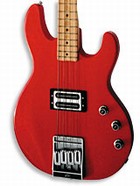
    It’s been more than 25 years since the Peavey Electronics Company introduced its revolutionary T-60 guitar and T-40 bass to a market that was immediately impacted by their quality and value.

    Moreover, the way the company built T-60s and T-40s – utilizing computer numerical control (CNC) routing machines and pre-stressed necks (carved with the truss rods in them), and other innovations, forever changed the guitar-manufacturing landscape.

    While the T-40 remained in the line for almost a decade, a single-pickup bass known as the T-45 appeared, along with other new T-series instruments, in 1982. Initial reaction may have been that the T-45 was designed to hit a lower price point, but Hartley Peavey considered his products more dependable and a better value.

    The less-popular T-45 differed from the T-40 in a number of ways besides having one less pickup. The single humbucker on the T-45 was the same as the two pickups found on the T-40, and it also had the same unique tone circuit, which allowed one coil to be “faded out” (the term used on factory price lists) to affect a single-coil sound. Also different was the location of the T-45’s “harmonically-placed” pickup. The T-40 had a phase-reverse switch, while the T-45 didn’t… but note that the T-45 has three knobs – volume, tone, and a “special mid-frequency rolloff control for maximum tonal flexibility.”

    Curiously, one word was altered in price lists after ’82; the third knob was referred to as a “special low-frequency rolloff control.”

    As for necks, the T-45 offered a 21-fret version, while the T-40 had 20 frets. On price lists from ’82 through ’85, the scale on the T-40 was referred to as “long;”the T-45’s scale was referred to as “34”.”

    By the November ’86 price list (the last for the T-45), the T-40 had also affected the numerical description of its scale length, as well as a trademarked “Graphlon” composite nut. The T-45 spec list did not mention it.

    Was the T-45 on the way out?

    While some early T-45s may have been made with an oiled natural finish on an ash body (a la the original T-40s), that version didn’t appear on price lists. Instead, the single-pickup basses were first offered in Black, White, Sunburst, Blood Red, and Royal Burgundy finishes with maple fretboards at a list price of $424.50, or with a rosewood fretwood as a $25 upgrade.

    And here’s the historical rub: throughout the half-decade or so that T-40s and T-45s were both offered, they (all finishes and options being equal) always carried the same list price! With the exception of the natural-finished T-40s ($399.50 with a maple neck, $424.50 with a rosewood neck in ’82), the prices for similar finishes and fretboards were equal. The T-40 retained Burgundy longer than the T-45, and the T-40 would ultimately acquire a metallic “Frost Blue” finish ($75 upgrade) while the T-45 would not. But both instruments listed for $354.50 in standard finishes. On that list, the T-40 was available in the lower-priced Natural, as well as Red and Black, while the T-45 was available in Black, White, Sunburst, or Red.

    Semantics aside, the Peavey T-45 was not just a one-pickup version of the T-40. Rather, it had its own features and capabilities, and any perception that it was simply a cheaper version of the original is an unfortunate stereotype.


    This article originally appeared in VG‘s June ’03 issue. All copyrights are by the author and Vintage Guitar magazine. Unauthorized replication or use is strictly prohibited.
  • SIB Echodrive, Varidrive, Fatdrive

    They Ain't

    Rick Hamel is one half of the design team behind the SMF 15 Watter amplifier we reviewed in the April ’03 issue. And given his track record, the company he keeps (like tone legend Mark Sampson) and the fact that we greatly enjoyed the SMF, we had high hopes when we received a box Hamel’s latest creations.

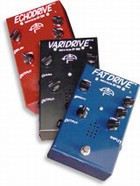
    The newest eminances from Hamel’s brain are three overdrive pedals; the Fatdrive, Varidrive, and Echodrive. All three are housed heavy-duty (the operative word being heavy) 7″ x 4.5″ x 2.5″ steel chassis with detachable IBM-style power power cords – no batteries or funky wallwarts here. Just good ol’ AC.

    Connections are made via plastic 1/4″ chassis-mounted jacks (a plus in our book because they make less noise when swapping live cords) and each pedal features top-mounted controls with black Bakelite-style knobs, a classic stompswitch with LED indicator, and a side-mounted rocker switch (its use depends on the pedal). Inside each unit is a 12AX7 tube, cleanly wired PC board, and a power transformer (which accounts for much of the weight).

    The pedals are covered in a black, red, or blue powdercoat finish with white silkscreen. And don’t forget the 1/8″ holes in the case – for ventilation, and a view of the tube!

    After we quit gawking at the cool aesthetics of the SIBs, we grabbed a Fender ’57 reissue Strat, a Hamer Special, and a late-’70s Ibanez Artist, then wheeled out a Fender Twin Reverb and a Laney 2×12 all-tube combo.

    We started by checking out the Fatdrive using the Strat through the Twin. This is, of course, a good-sounding rig, but when we engaged the Fatdrive with the tone controls (“Bass,” “Middle,” “Treble”) at 12:00 and the “Drive” knob at about 1:00, the rig responded with new life and a touch of overdrive. The musical voicing of the tone controls gave us a variety of usable tone options – from big, tight, thumpy low-end to thick, even mids and highs.

    With the “Bright” switch engaged, the out-of-phase pickup position on the Strat had a sizzling shimmer to the high-end that was not harsh or brash – just lush and clear.

    The Fatdrive does not generate any overdrive of its own unless you put a tall signal into it (like an active bass or a booster pedal running in line before it). Hamel says it was originally designed for the guitar to go direct to the board clean, but customers have reported using it use it for mics, drum machines, bass, or to fix effects loop deficiencies, etc.

    For us, though, the Fatdrive delivered the same sweet class “A” highs with our P-90-loaded Hamer Special. With the highs turned up and the mids pulled back just a little, the middle position on the Hamer had an almost Strat-like tone, but fatter and with bigger low-end. The humbucker-loaded Ibanez coaxed the most drive from the unit; not a lot, but it worked well for pushing the dirty channel of the Laney into heavy distortion without getting mushy or uncontrollable.

    The Varidrive, on the other hand, had an ample amount of available gain with all three guitars, especially with the gain switch in the on position. It could easily be used as a stand-alone distortion pedal, but it did get a little buzzy when we cranked the gain knob. The Varidrive and the Fatdrive shared the flexible, musical-sounding tone controls that offered a wide variety of sounds.

    The Echodrive is not a combination delay/overdrive pedal, as the name might imply. Rather, it’s a delay with a little dirt mixed in. The unit offers the usual delay pedal controls – mix, volume, repeats, and delay time (a switch and a knob) with an added Echodrive control. The Echodrive knob added some overdrive to the delay and gave it an Echoplex kind of sound when we used short slapback delay times.

    With the unit turned down, the pedal had a very analog sound with slightly muffled repeats that sounded good on longer delay times. Using the Echodrive and Fatdrive together pumped noticeable life into both amps – making already good-sounding heads sound even better.

    Not only do SIB pedals intimidate the other pedals on your pedalboard with their physical size, but their superb tone and flexibility might just have your others tucking their wallwarts between their… rubber feet.


    SIB Echodrive/Varidrive/Fatdrive
    Type of pedals Overdrive/multi-function.
    Features Detachable A/C power cords, flexible controls, superb tone and quality, tube circuit.
    Price $399 (list, some discounting available).
    Contact www.smfamps.com.


    This article originally appeared in VG‘s Aug. ’03 issue. All copyrights are by the author and Vintage Guitar magazine. Unauthorized replication or use is strictly prohibited.
  • Warren Haynes

    Back on the Mule

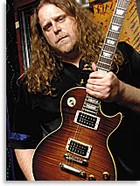
    Given his work ethic, it makes sense that Warren Haynes plays in a band called Gov’t Mule. A strong contender for Workaholic Guitarist of the Year, Haynes is active in three high-profile bands, and in his spare time he picks up a few solo gigs.

    In the two years since we last spoke with him, he has been a primary factor in seven albums. His latest between-breaths effort is a new Mule album called Deja Voodoo, and it’s loaded with the requisite Mule ingredients – killer guitar tones, top-shelf musicianship, and songs that let Haynes, bassist Andy Hess, drummer Matt Abts, and keyboardist Danny Louis “stretch out” a little bit. We recently had a chance to ask him about it.

    Vintage Guitar: So how does it work for you, playing in four bands at once?
    Warren Haynes: It involves a lot of making schedules work, which is a nightmare for our office. It’d be a lot of work if I considered music work, which I don’t. And it’s a lot of being away from home, but for the best possible reasons. To have these kind of opportunities and not take advantage of them would be kind of silly.

    We last interviewed you in 2002. Which projects have you had in recording since then?
    We did the Hittin’ The Note Allman Brothers record, the live Allman Brothers with the DVD, the new Mule live CD/DVD, The Deepest End. I did Live at Bonaroo solo acoustic CD, and there was a little teaser before that called The Lone EP, which was a just a five-song EP. I think as far as these bands are concerned, that’s all.

    I also did a few things like Jack Casady’s record and the new John Lee Hooker posthumous record, stuff like that. But I don’t have as much time anymore to do those outside projects.

    The new Mule record is called Deja Voodoo. What can we expect from it, tone-wise?
    Well, there’s a lot of the same classic Gov’t Mule tones that have been around for a while. And there’s a lot of new stuff. I keep trying to experiment with new sounds. It’s not like they’re drastically different, but I played a lot of [Gibson] Firebird on the record. And my rig is set up in a little different way then it was on the early records.

    Now, I’ve got this setup where I can have three rigs going at one time, in any combination. So usually I’m combining my [Maven Peal] Zeta amp that I use for recording with either the Diaz Z-100 or the modified Soldano SLO-100, or a Marshall. I used both my old Marshall and my new one. Surprisingly, the new one sounded better than the old. There are some other sounds, as well – there’s a [Vox] AC30.

    Usually, when I’m using the Diaz or the Marshall or the Soldano, I’m combining it with the Zeta, which fills out some of the midrange in a really cool way – just makes it a larger sound. The Zeta is definitely the cleanest tone, and the Diaz is the second-cleanest. Of course, the Marshall and the Soldano have their own patented sound, which everybody expects to hear.

    Which Firebird are you playing?
    Mostly it’s a new non-reverse Custom Shop instrument. I’ve been playing several of those, and I’d just gotten this new walnut-brown one shortly before the sessions. And I was really diggin’ it – it felt good, sounded good. And I think it might’ve actually got more time than did the Les Paul on this record. The Les Paul is probably on 40 percent.

    Are you running both through the same signal chain?
    Yeah, and just tweaking the amps accordingly if they need tweaking. Sometimes, the sounds work either way. But most of them are set up a little bit different. And a lot of times it’s a different blend between the amps by adjusting the microphones. And the Zeta, believe it or not, is facing a piece of plywood, and we’re mic’ing the plywood – aiming the microphone away from the speaker, and toward the bounce.

    What’s with that?
    I kinda learned that technique from my friend, Gordy Johnson, of the band Big Sugar. He’ll run his Marshalls – if there’s one in the left side and one in the right, he’ll mic the reflections so there’s different sounds. It kind of delays the sound a little bit, and you get the slap-back off of the wood, which is a nice, organic sound. It was just something we tried and liked, and ended up doing a lot. You’re able to hear the differences between the two tones more than if they were both mic’ed the same way.

    What do you get from the Firebird that you like compared to the Les Paul?
    It has more bite. Everything about the way it’s designed… it’s got more attack. It’s the Gibson answer to a Fender, but it also has that midrangey growl that Fenders don’t have. I’ve been hooked; Firebirds are strange instruments – they fight back a lot, they have dead spots… they’re just not the most even-keeled instruments in the world. They’re a little temperamental. They’re hard to keep in tune. But they’re worth it. You have to fight your instrument a little bit, anyway. If it’s too easy to play, then you’re not getting out of it what you could get out of it. I love the fact that I play a note and it doesn’t exactly respond the way I want it to, so I have to hit it again!

    (laughs) That’s not exactly a quality most players would enjoy!
    No, but there’s something about that – it’s where a lot of great blues guitar came from. People have said that the great blues guys were doing the best they could with what they had, and a lot of the best sounds we ever heard were exactly that.

    Any first-takers on the album?
    Yes, “My Separate of Reality” is, and “Slackjaw Jezebel.” With both of those, we didn’t have much time to think about what we were going to do. It was almost like a rehearsal. And all of the jamming on the record is live. Again, pretty much every solo is live. Though the one in “Little Toy Brain” is an overdub.

    What was the reason for overdubbing that one?
    I went into this record wanting to overdub more, and on a couple of tracks we played the first couple of takes without a solo because I was thinking, “It’d be nice to have the luxury of overdubbing some of the solos,” because I’m limited to what I played on the track, and I never had an excuse to rethink it. And I thought it’d be nice to get away from that a little bit. But every time we’d play a track, and the solo section came along, the band felt a bit lost if I wasn’t doing something.So I’d up playing a solo, anyway. On “Little Toy Brain,” I wasn’t sure what should be there, and it turned out to be a melodic solo, like Harrison or Clapton.


    Photo: Rick Gould.

    This article originally appeared in VG‘s Dec. ’04 issue. All copyrights are by the author and Vintage Guitar magazine. Unauthorized replication or use is strictly prohibited.
  • Dave Alvin

    Blast Back to the Ashgrove

    The Ashgrove was more than a club; it was a legend. Tucked away on Hollywood’s Melrose Avenue, founder Ed Pearl booked bands from Lightnin’ Hopkins to Bill Monroe and everything in between. Watching and learning from the floor were the likes of Ry Cooder, Taj Mahal, and two teen brothers from nearby Downey – Phil and Dave Alvin. Inspired by the Ashgrove’s music, the Alvins would ignite a fire in their band, the Blasters.

    The original Ashgrove burned down 25 years ago, but the memories live on, infusing Dave Alvin’s latest album, named in honor of the club. Ashgrove (Yep Roc) is Alvin’s first collection of new material in six years. It’s also one of his best albums, which is saying a lot, considering his resumé – Blasters, X, the Knitters, and his long string of solo shots including Public Domain: Songs from the Wild Land, which won a Grammy for best traditional folk album in 2000. Yet while the Blasters were famed for their edge and Alvin’s folk forays are cheered for his introspective sense, Ashgrove marries the extremes.

    “This is going to sound corny,” Alvin says with a slightly embarrassed chuckle. “But if there’s one Dave Alvin solo record you’ve got to have, this is the one. It’s like, ‘This is what he sounded like.’ There’s a little bit of the acoustic sound, and there’s a lot of the other.”

    The title track is pure “other;” tough-toned guitars celebrating the advent of electricity. And tunes like “Rio Grande” are pure country while “The Man in the Bed” and “Somewhere in Time” are modern folk ballads. This blend of influences harkens back to Ashgrove.

    Aiding Alvin in crafting the album was co-Ashgrove alum Greg Leisz. A prominent sideman who has played with Bill Frisell, k.d. lang, Joni Mitchell, Wilco, and others, Leisz worked with Alvin on in the Allnighters in 1986 and produced two Alvin solo albums.

    “I’m a ‘That-sounds-pretty-good-yeah-it’s-in-tune-next-song’ kind of guy,” Alvin says of Leisz. “He’s the opposite. Same with our playing – he’s orchestral and intricate, my style is ‘Turn it up louder.’ That’s why we make a nice combo.”

    Making this record proved it.

    “I wanted to make an electric record, but I figured we’d have to do one of those build-it-up-from-the-kick-drum kind of electric records,” Alvin details. “But Greg said, ‘I’ve got this room, man; we can just go in there and jam.’

    “We went into this studio called Winslow Court, in Hollywood. It’s about the size of Sun Studios. The engineer is a kid named Craig Adams, and he’s not afraid of loud guitars. So we had my amp right next to me, baffled to limit the effect on the drums, but it still bled. Same with Greg’s guitar. Ninety percent of the leads are live. Later, we reassembled at Mark Linett’s studio, where I’ve done much of my recent work, to record the acoustic songs and overdubs.”

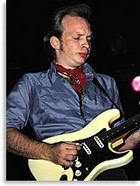
    The electricity coursing through the tracks all comes from Alvin’s beat up ’64 Fender Strat through Leisz’ blackface Fender Deluxe.

    Acoustic tracks feature Alvin’s ’54 Martin D-18 and ’57 Martin 000-18. Leisz augmented the sound with his own electric and acoustic guitars as well as slidework and pedal steel.

    Alvin’s backing band was an enlisted rhythm section made up of bassist Bob Glaub and drummer Don Heffington. All boasted roots from the Ashgrove.

    Still, Alvin’s songs remain personal – perhaps the most reflective he has ever penned. Many tunes focus on time and growing old. “It was a combination of my dad dying, and just being on the road. Time on the road is elastic. You try to explain it to people who don’t go on the road, and they really don’t understand. Plus, there are things that happen in your life where you come go, ‘Oh, man!’ That’s what triggered a lot of these songs.”

    Several Ashgrove cuts were written collaboratively and have appeared on co-authors’ albums. “Somewhere in Time” was co-authored by Los Lobos’ David Hidalgo and Louie Perez. Alvin also co-wrote “Rio Grande” with Tom Russell, and it was recorded in a dramatically different mood on Russell’s ’02 album, Borderland. Alvin also cut a different version of “The Man in the Bed,” a powerful song inspired by his father, for Parkinsong, a two-CD set benefiting research for Parkinson’s disease.

    The original Ashgrove may be history, but a revived club recently opened its doors on Santa Monica Pier. Still, Lightnin’ Hopkins, Big Joe Turner, Earl Scruggs, and the others who sparked the music are long gone. Alvin hasn’t forgotten those sounds of his formative years, and that’s where this new album begins.


    Photo: Ken Settle.

    This article originally appeared in VG‘s Oct. ’04 issue. All copyrights are by the author and Vintage Guitar magazine. Unauthorized replication or use is strictly prohibited.
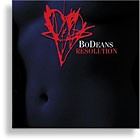
  • BoDeans – Resolution

    Resolution

    It has been awhile since the BoDeans have released a studio album – eight years. In that time, rock and roll has seen bands come and go, most of them not very good. It may sound curmudgeonly, but most bands lack the essentials: they don’t write very well and they don’t play that well. Let’s be nice and say most rock bands these days are fairly generic and play with the soul of a frying pan. That can’t be said for the BoDeans, and I’m happy to report their latest effort has them back in fine form.

    It’s obvious when you listen to records by these guys that they know what came before. Yes, they know the music of the Everly Brothers and the Beatles. They know Springsteen and Dylan. Rock ballads are well-written and don’t sound like television commercials. The songs have great hooks that stick in your head and your soul. The BoDeans just get it. And in this day and age, that’s no small feat in rock and roll.

    Tune-wise, there’s not a bad one here. “If It Makes You” has ringing guitars, heartfelt vocals, and a great lyric. In short, it’s prototypical BoDeans. Sam Llanas has one of rock’s truly unique voices, and Kurt Neumann is a perfect complement to Sam’s voice. They can get a lyric across about as well as anyone this side of the Pacific. The two also add nice guitar work on this effort. Check out the blustery lead and loud rhythm guitars on “Marianne.” On “(We Can) Love,” the guitar figure actually becomes the melody of the song repeated over chunky rhythm guitars. Chimey 12-string guitar highlights “617,” a fine tune with a very old-style lyric.

    This is, and I’m certain will remain, one of my favorite rock albums of the year. It seems such a simple thing – write good songs and perform them with heart and conviction. Easier said than done, I guess, since so few bands (and so many listeners) appear to get it.


    This article originally appeared in VG‘s Oct. ’04 issue. All copyrights are by the author and Vintage Guitar magazine. Unauthorized replication or use is strictly prohibited.
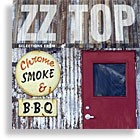
  • Z.Z. Top – Chrome, Smoke, and B. B. Q.

    Chrome, Smoke, and B. B. Q.

    Well, Z.Z. Top’s music has been released in a lot of forms on CD. I confess, I didn’t scarf up the other releases, even though I grew up on this stuff and love it dearly. It always seemed the packaging just wasn’t right.

    Never fear, the fine folks at Warner have put together a terrific four-CD set that really is as fine an overview as you’ll find. The music speaks for itself. You get it all here, from several Moving Sidewalks cuts through all the Z.Z. Top catalog, and it wraps up with some tracks that are labeled as “medium rare.” Those tracks feature “Francene” in Spanish, a live version of “Cheap Sunglasses,” and several remixes.

    The sound of the set is fine, too. The only thing I had on disc was Tres Hombres and the old Best of, and this stuff sounds much clearer. Billy Gibbons’ guitar work sparkles as it pops out of your speaker. And you know what? As you listen to various phases of the band, you realize what a great player Gibbons is. You want a shuffle, dial one up. You want loud, raucous rock and roll, dial one up. You want a gorgeous instrumental, dial one up. You want country-flavored rock, dial one up. You get the idea. The band is much more versatile than a lot of folks would give it credit for.

    One other thing you notice as you listen to this much Z.Z. Top is the sexual references. Has any one band ever used this many double entendres? Definitely not.

    The packaging is very nice. An 80-page booklet lets the boys talk about each and every song. And, friends weigh in; you hear from the likes of David Lynch, Farrah Fawcett, Ann Richards, Kid Rock, Billy Bob Thornton, and Dwight Yoakam.

    To top it off, there’s a really fun, old-fashioned flip book. Flip the pages and the boys spin their guitars.

    I’d have no problem recommending this to someone who’s Z. Z. collection is a little spotty. Everything is here. And the beauty of it is they’re still going strong. Who knows, maybe another box set in the year 2030?


    This article originally appeared in VG‘s Feb ’04 issue. All copyrights are by the author and Vintage Guitar magazine. Unauthorized replication or use is strictly prohibited.
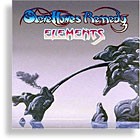
  • Steve Howe – Elements

    Elements

    Some would say progressive rock, art rock, whatever you want to call it, has always seemed a little too pompous for it’s own good. Despite that, I’ve always loved Yes, and a good part of the reason is the guitar playing of Steve Howe. He’s obviously got the chops, and his influences always sneak in; country, jazz, R&B. Those influences have always given Yes an element other prog rockers lacked.

    Here, we have a solo Steve album, and he’s helped by family members Dylan on drums and Virgil on Keyboards. There’s a lot of good music, and, as you’d expect from Howe, it reflects an eclectic blend of styles. “Westwinds” is a choral jazz piece. It swings, even with a solo that doesn’t sound spontaneous, but worked out in advance. There’s the country-based “Where I Belong,” with some nice finger-picking rhythm a la Chet or Merle. It also contains fine dobro playing by Steve, and to top it off, chickin’-pickin’ solos and fills. The instrumental “The Chariot of Gold” is a horn-driven rocker with spacey, layered guitar. “Inside Out Muse” is bluesy, with nice rhythm guitars and a very clever, slightly chorused solo. And if that’s not enough, Gilad Atzom adds a clarinet solo!

    Vocally, things are adequate, but certainly not special. That’s not a problem, since most of the songs are instrumentals. The real draw is Howe’s guitar playing, which is interesting on all 16 cuts. Yes fans will also like the cover art by Roger Dean, designer of Yes album covers for many years. Fans will love this.


    This article originally appeared in VG‘s March ’04 issue. All copyrights are by the author and Vintage Guitar magazine. Unauthorized replication or use is strictly prohibited.
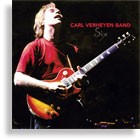
  • Carl Verheyen Band – Six

    Six

    While not exactly a household name, Carl has been around awhile. He’s a fine player who’s put out some nice solo work, and is also known for his studio work and touring with Supertramp. His solo work has always taken on a theme. The albums are always nice glimpses into the styles he’s chosen. And, he’s such a fine player that it always seems to work well. This one is no exception. I guess you’d have to call this a “band” album, for lack of a better term. It’s Carl in a trio setting, playing 10 songs, some originals, and some not. And all let Carl play guitar and sing, with the song remaining the focus.

    The bluesy-pop of “Lay Your Hammer Down” gives Carl a shot at imaginative rock soloing. The lyric is probably not going to get him invited to many union meetings, but so be it. “Place For Me” is a tune that combines the harmonic sense of the Beatles with soulful Curtis Mayfield-style rhythm and lead playing. If someone asks you for the quintessential Strat tone and sound, put this one on. The very soulful “Give A Try” is a pop ballad that is the perfect blend of soul and technique. The instrumental “Maggie’s Ladder” gets a bit funky and you get to hear Carl cut loose with the wah. “Raimund” starts as an acoustic piece and turns into a tour de force for his playing. If you’ve been looking for ideas on the use of harmonics, give a listen to Carl’s cover of the Beatle’s “Yes It Is.” Mixed in with single-note stuff, it’s just plain-old gorgeous.

    I’ve mentioned a few of the cuts, but all 10 here have something to offer. The band, featuring Cliff Hugo on bass, Steve Di Stanislao on drums, and Jim Cox on keyboards on a few of the cuts, is an excellent foible for Verheyen. The songs and band drive him to play some very melodic, yet very hot, guitar. His vocals are more than adequate, with the tenor more than highlighting his earnest lyrical content. If you’re a Carl fan, you’ll really like this. If this is your first look at his playing, it’s a good place to start.


    This article originally appeared in VG‘s Jan. ’04 issue. All copyrights are by the author and Vintage Guitar magazine. Unauthorized replication or use is strictly prohibited.
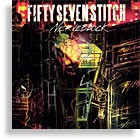
  • Fifty Seven Stitch – Nerveblock

    Nerveblock

    Whatever happened to good, old-fashioned American hard rock? You know the kind – crunching guitars, strong vocals, a deft melodic touch that never threatens to spiral into goo (thanks in large part to smoldering tube amps), a rhythm section tight enough to bounce numerous quarters off? Check the sales charts or MTV and you’ll notice that what tries to pass as hard rock these days is heavy on angst and energy, but weak on substance, chops, and the ability to flat-out move your butt in any sort of rhythmic sense. And sheesh, can anyone play a cool guitar solo anymore?

    That said, please welcome Fifty Seven Stitch, an ultra-promising entry on the present day hard rock scene. A few listens to this Minneapolis quartet’s self-released debut CD, Nerveblock, and you just might believe we finally have a savior for the genre.

    Nerveblock is chock full of tunes equally hook-filled and go-for-the-throat. The band seems to have all the right influences from the ’70s and ’80s, as well as the musicianship to match. Sound-wise, think present-day Aerosmith if it had any balls left and ditched the wimpy pop ballads, or Alice in Chains with more boogie power, a brighter attitude, and no drug problem. Heck, Def Leppard just might pay large sums of money to sound anything like this today.

    This is hard rock done extremely right. Nerveblock maintains a perfect mix of beauty and the beast. The guitar sound is amazingly phat and crunchy, and Brett Petrusek’s vocals are passionate and aggressive, but he never resorts to indulgent histrionics (MTV bands take note: constant atonal screaming is very annoying).

    If you find yourself wondering whether bands on the current scene have ever heard Rocks or Appetite for Destruction, Fifty Seven Stitch’s Nerveblock is just what your doctor needs to order. Go forth and crank.


    This article originally appeared in VG‘s Jan. ’04 issue. All copyrights are by the author and Vintage Guitar magazine. Unauthorized replication or use is strictly prohibited.

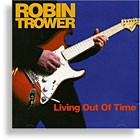
  • Robin Trower – Living Out of Time

    Living Out of Time

    Following up his last work, 2001’s Go My Way, could hardly be easy for Robin Trower. That effort was his best album in 20 years.

    On his latest, Trower ditched the band from Go My Way and brought in some of his ’80s cohorts, including journeyman vocalist Davey Pattison, who has worked with Ronnie Montrose and other familiar names.

    Longtime fans may recall the ’80s were not a time of Trower’s best work; a few albums from that period were real stinkers. This new disc is better than those, but still lacks cohesion. It seems that for this live-in-the-studio effort, the idea was to focus on the songs and bring as much soulfulness as possible to the proceedings. Unfortunately, on many cuts it just doesn’t work.

    The guitar work is economical and understated, the vocals lacking spirit, the rhythm section workman-like. But to dismiss the entire album would mean overlooking fine songwriting and the tightness and structure of the songs themselves. While most are slow- or medium-tempo, there are a few rockers and the trademark Trower Strat attack shows up. But this is much less a guitar-oriented album than his ’90s releases, and only on the final track, “I Want to Take You With Me,” does Trower really open up some solo work.

    One thing that made his last couple of albums endearing was that Trower handled the vocals. Though limited in range, he managed to bring an earthy growl to those works and the simpler arrangements allowed for atmospheric guitar overdubs. Bringing in a pro like Pattison should have spiced things up, but he sounds drowsy and dozing through these tracks. One supposes there is a fine line between soulful and sleepy, and Pattison never seems to find the right energy level for his delivery.

    Finally, the dry mix means little of the spacey Univibed/layered Trower sound many fans are accustomed to. In all, this is a solid set of 11 songs that, unfortunately, never quite take off.


    This article originally appeared in VG‘s Jan. ’04 issue. All copyrights are by the author and Vintage Guitar magazine. Unauthorized replication or use is strictly prohibited.