
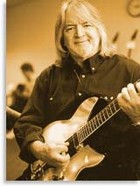
Month: April 2003

  • Seymour Duncan

    Story of an Electric Guitar Guru

    Seymour Duncan is one of the most unassuming human beings on the face of the Earth, bar none. His name is held in high regard in many circles, especially those musical, and his life is an extraordinary rock and roll tale.

    Though he didn’t invent the electromagnetic guitar pickup, he has done more than most anyone to raise player awareness in regard to the critical elements of guitar tone and its many nuances. If you’ve been aware of electric guitars for any length of time, you have heard his name (and probably seen his face).

    Born and raised in small towns in southern New Jersey, Duncan’s father worked for Dupont and the family lived in several area towns while Seymour grew up and developed a very deep appreciation of music. As he grew into his teens, his step-brother, Bernie Lane, played a special role in fostering that appreciation.

    A major part in his overall guitar “makeup” came from listening to bands at local dances, sockhops, and later at nightclubs. It was in one of such establishment he met guitarist Rick Vito when both were teenagers. And one of Duncan’s favorite memories was spawned at a club called Dick Lee’s, where he’d catch Roy Buchanan playing live. When Buchanan was in the house, Duncan says it was a special time, and guitarists from a wide area would flock to watch him – and try to steal licks.

    Duncan constantly reminds himself that he has achieved great things only with the help of many people. And he is quick to give credit where due. So despite his considerable stature, he is the rare creature who gives extraordinary amounts of his time and energy to help others pursue their dreams.

    Vintage Guitar: Who got you started playing guitar?
    Seymour W. Duncan: I would visit my uncle, Bid Furness, who lived near Camden, New Jersey, and was a big-band musician in the 1930s and ’40s. He played trumpet and worked with many well-known performers on the East Coast. Uncle Bid had an acoustic guitar in his attic that he brought down one day when I was about 13 years old. I haven’t let it out of my hands since!

    I would also visit my dad’s brother, Howard, who played country guitar and taught me my first guitar chord – a D in the second position. He showed me how to pick the D and A strings while playing the chord. He gave a couple of 45 RPM extended play records – Two Guitars, Country Style, by Jimmy Bryant and Speedy West, and one by Chet Atkins. That was in 1963, and I still have them.

    How did you learn to play?
    I remember going to a music store in Woodbury, New Jersey, and seeing the Mel Bay guitar course. I wrote to Mr. Bay, telling him I was a beginning guitarist and wanted to learn as many chords as possible. I drew chord patterns and sent them to him, asking the names. About two weeks later I got a package and “good luck” note from Mr. Bay, and inside was his Guitar Chord Encyclopedia. Many years later I met him at a music trade show and thanked him. He was glad I continued in the music business (laughs)!

    What was the first guitar you got, and when did you get it?
    It was Christmas Eve of ’63, while I was in bed I could hear plucking of an amplified guitar. I was trying so hard to go to sleep, with pillows over my head, even, so I could hurry and wake up the next morning. When I awoke and rushed to the Christmas tree, I could see two larger-than-life presents. I looked at my parents and kept saying, “Can I, can I?” and my dad said, “Oh, go ahead.”

    When I opened the first package I saw a black case, and inside was a black sparkle Les Paul-shaped Silvertone guitar with two pickups, a black lever switch, and several volume and tone controls. It was a thin-bodied beauty, and I couldn’t wait to plug it in and play my first chords. Wow!

    What kind of amp was it?
    A Sears Silvertone with tremolo. I played for hours and didn’t even open my other presents. I was so thrilled.

    Do you remember the brand of strings you used at the time?
    The first strings I bought were Black Diamonds. Just about every guitarist in South Jersey used them. When I was 14 years old, Roy Buchanan showed me how to replace the bottom E string and use the standard A string in the set as my low E. I’d move all the strings over and use an A tenor banjo string for my high E.

    What were some of the first songs you learned?
    The first was “Tom Dooley” by The Kingston Trio. I learned to play along with the banjo part on the record. I remember playing along with it at my cousin’s birthday party, and was I nervous. Then I learned songs by Duane Eddy – he’s still one of my heroes, and a friend. At one of my first band auditions, I had to learn “Bulldog” by The Fireballs.

    When you were learning, what was the hardest part about playing guitar?
    I still dream about how hard it was to play the F bar chord. I had the hardest time trying to hold all the strings down at once with my index finger while keeping the chord clean. I remember my fingers cramping, and the day when I finally could play the chord perfectly. Then I needed to change chords quickly, especially when playing C, A minor, F, and G. There where many songs in the ’60s with that chord pattern.

    What kind of music were you listening to at the time?
    All kinds, especially country, rock and roll, and radio stations out of Philadelphia. I made a crystal radio set and used a long antenna hooked to my TV antenna to pick up distant radio stations, on clear nights. My favorite recordings, to this day, are “El Paso” by Marty Robbins, “I Only Have Eyes For You” by The Flamingos, “Peppermint Twist” by Joey Dee and the Starlighters, all the Duane Eddy recordings, Ricky Nelson with James Burton, Les Paul and Mary Ford, The Fireballs, and String-A-Longs.

    My all-time favorites are The Ventures, and Santo and Johnny. I really liked instrumental albums by Al Viola, Tom and Jerry, Jerry Cole, The Chantays, The Astronauts, and guitar solos in recordings such as “Rock Around the Christmas Tree” by Brenda Lee, “Jingle Bell Rock,” “Kansas City,” “Peppermint Twist,” “Honky Tonk,” “Scratchy,” “Memphis” and “Wham” by Lonnie Mack and “Guitar Boogie Shuffle” by The Virtues, to name a few.

    Did any guitarists on TV influence you?
    Yes, they sure did. I’d watch the “Ozzie and Harriet” show, and at the end of the show Ricky Nelson would perform with James Burton. I also watched the Lawrence Welk show and saw Neil Levang and Buddy Merrill playing all kinds of stringed instruments, from old Fender Stratocaters and Jazzmasters to banjos and steel guitars. And I couldn’t wait ’til they stood up and played a solo!

    Another influence was a guitarist on “Ted Mack’s Original Amateur Hour” show, where the artists would perform and an applause meter would measure the crowd’s reaction. I once saw a young guy in a cowboy outfit playing an instrumental version of “San Antonio Rose,” and he did a backflip while playing! I really wanted to play guitar after seeing that!

    Did you have a tape recorder?
    When I was about 14, during another Christmas my dad got a Voice of Music tape recorder. I used it to tape all the TV shows that had any music, and especially a guitar solo. I’d record it at 71/2 inches per second and play it back at 31/2. I’d then learn to play the solo slower without tuning my guitar. I recorded albums, too, and did the same thing.

    Did you learn to read music?
    I took a few lessons using the book Mel Bay sent. I learned all the notes and positions on the fingerboard, all the chords and positions, and basically learned to memorize the chord patterns, because it wasn’t cool to perform live rock and roll using sheet music. I’d listen to the recordings off the radio and have the chords for my band the next day. It was cool to play Beatle songs at school dances, while they were still on the radio.

    Did you discover any secrets to learning guitar solos?
    Using the tape recorder was great. In high school I’d write out the chord charts for songs on the radio, and sell them to the local bands for 25 cents per song. I’d then use the money to purchase more reel-to-reel tapes. It was probably illegal, but none of the bands cared as long as they had the chords.

    What kind of songs did you listen to?
    I enjoyed listening to keyboardist Jimmy Smith, Jimmy McGriff, Jack McDuff, and really liked what they were doing with the organ’s bass pedals. I was beginning to listen to the tone of the instruments and even though the musicians played the same style instrument, like the Hammond B-3 organ. I was always curious as to why they sounded different, and as I got older and listened to more music, I was able to tell who the player was by the tone.

    I’d listen to all kinds of music, even while going to sleep at night. To this day, I sleep with an earphone, scanning the radio waves for radio stations to hear new and interesting tones. I’ve come to enjoy the incredible phrasing of bagpipe artist Davy Spillane and the soul of saxophonist King Curtis.

    Who where your main guitar influences at the time?
    Those I heard on records – Nokie Edwards, Chet Atkins, Les Paul, The Ventures, Duane Eddy, Jimmy Bryant and Speedy West, Santo and Johnny, and many of the session guitarists who did the solos on the early records I listened to.

    My local heroes at the time where The Sterling Brothers featuring Joe Seddon and Mark Hutchinson, who played all over South Jersey. Others were Roy Buchanan, The Jaguars, The Fenderman, Levon and The Hawks – who later became The Band for Bob Dylan. Elliot Randall, who later recorded with Steely Dan, The Kit Kats, Pete Carroll and The Carroll Brothers, Tommy Cosgrove, Ray Coleman, Little Pal and The Profits, Bobby Jones who took Roy Buchanan’s place with Bob Moore and The Temptations, and especially one of my first groups called The Flintones, with Ken Bozarth, Mark Montemore, and Jim Sharp.

    Were you into the blues much?
    Yeah, I was getting into Freddy King, Albert Collins, and Buddy Guy. I was bending strings, and I liked the tone those guys were getting. One day in the the mid ’60s I was listening to a promo album by The Cream; it was given to me by Frank Woods, the owner of WEBN-FM radio, in Cincinnati. Eric Clapton’s work in The Cream was the best. Frank also gave me promo copies of Jimi Hendrix, and The Yardbirds, because he knew how much I liked guitarists and guitar playing.

    Do you remember the names of some – or all – of the bands you were in?
    Hmmm…the New Jersey bands were The Illustions, The Ad-Ventures, The Flintones, Ray Coleman and The Mints, The Mysterians – later named The Sparkle, who toured with The Shirelles. In Cincinnatti there was The Orange Noise, Surdy Greebus, Bloomfield, The Bottom Half, Midnight Sun, and I played solo gigs. In England, I played with Chris Rainbow, Druick & L’Orange, and solo. Then, when I came back to states, in Cincinnati I was in Punk, then I moved to California to do sessions and start Seymour Duncan Guitar Research.

    Where did you perform?
    School dances, sockhops, private parties, weddings, and nightclubs in New Jersey, Pennsylvania, and Delaware. I remember sitting in with a recording group – Frank Link and The Bonnevilles, at a dance in New Jersey. With The Flintones, I traveled all over South Jersey playing in Wildwood, Avalon, Philadelphia, and nightclubs all over the place.

    What types of guitars do you own?
    A variety of Fender Telecasters, Esquires, Gibson Les Pauls, ES-335s, ES-345s and a beautiful Gibson ES-355. I have two beautiful Heritage guitars, and actually collect Fender Jazzmasters because I think they’re the most beautiful guitars ever made. I own several Jaquars, Duo-Sonics, Mustangs, Precision Basses, and several custom-made instruments, and two PRS guitars. I have a Roy Buchanan guitar given to me by Roger Fritz, and a few early Gibson SG Les Pauls. And a friend gave me my first Silvertone.

    Are there any guitars you’ve gotten rid of through the years, and now wish you still had?
    When I was 14, I bought a new ’63 Strat that had been sitting in a music store in Woodbury. When I started working with rockabilly artist Ray Coleman, I traded it to Tommy Cosgrove for a ’63 Fender Jaguar. I wish I still had that guitar. I realized over the years that even though the Jaguar cost more, it didn’t have the tone of the Strat.

    Any gig horror stories?
    Oh, yeah! One that really sticks out is the time I drove 60 miles to a club in Pennsylvania, then opened my case to find I’d forgotten to put my guitar in it! The club owner called all over the place to get a guitar for me. He found a jazz guitar with .012 to .060-gauge strings that I couldn’t bend! I dropped them down to D and had to transpose all the songs.

    Ahh, yes. Usually among the horror stories is the one about how an overly imbibed bar patron wanted to get up and “jam.” Do you let other players borrow your guitars?
    I normally don’t, unless it’s someone like Jeff Beck, Peter Frampton, Eddie Van Halen, James Burton, or other players who understand the value of an instrument…

    You’re such a name dropper (laughs)…!
    Well, I once let someone borrow my ’56 Telecaster – which I’d purchased from a student of Roy Buchanan’s. It was a great-sounding guitar. Anyway, during a jam session, I let a guy use it, and he was accustomed to playing an acoustic with heavy-gauge strings. I was using the A tenor banjo string for my high E, so the strings where pretty light. As the guy played, the high E string became lodged in the coil of the bridge pickup – obviously, he didn’t have the touch intended for the guitar.

    On the bright side, that pretty much started my pickup-winding career. And I don’t worry as much now because I usually have one of my pickups in the guitar, so if it goes bad, I just make another (chuckles).

    How did you become interested in working with pickups?
    It was the necessity of having a working guitar, because it was my bread and butter. I needed to keep my guitar in working order, as I was the lead player in the band, and I just couldn’t keep using the rhythm pickup on my Telecaster for lead work.

    In the mid ’60s, I started finding all kinds of broken guitars in music shops around South Jersey that had great action and playability, but the electronics didn’t work. Folks were just throwing the guitars away – I even traded a Fender volume pedal to a player in Ohio who had a ’53 Fender Esquire that didn’t work because the knurled washer was shorting out the jack when the cord was plugged in.

    I started doing all kinds of guitar work for local music stores in the ’60s. I hated seeing broken pickups thrown away.

    So you started rewinding them…
    Yes, when I was about 16. I was mainly trying to fix the pickup someone broke while using my Tele. I started gathering broken guitars from local dealers, then mixed and matched while replacing the broken ones from other pickups and assemblies. If I had five or six Stratocaster pickup assemblies where one or more pickup didn’t work, I’d make two or three assemblies where all the pickups worked. At times it might be a broken switch and others it would be a dead pickup. I started realizing that the early Stratocaster pickups – from ’54 to early ’58 – had a North Polarity and later, in mid ’58, all the pickups had South Polarity. This causes problems when I tried to combine pickups from different time periods.

    What did you use for a winding machine?
    You’ll laugh, but my first hand winder was made from a three-speed record turntable! It would rotate at 331/3, 45, and 78 RPM. I mounted a block of wood to the center guide, then placed some mounting pins to hold the pickup while hand-winding. The turntable worked pretty good, and taught me several lessons about winding speed, precision, and especially, patience.

    How did you determine wire gauge?
    I got help from my dad, who worked at Dupont, and an uncle who worked at Texaco. They had engineers who helped me determine wire gauge and insulation. I’d look at the wire under a microscope in biology class, and match the diameter of other known gauges. I’d also take the coil wire to a local motor winding shop at a nearby town. I ordered plain enamel, or PE, because it was common.

    After trial and error, I realized that Fender and Gibson used mostly 42-gauge PE and Fender used 42-gauge Formvar insulation on the majority of Stratocaster and Duo-Sonic pickups.

    I wrote many letters to Bill Carson at Fender, and he was very helpful, always answering my questions about various Fender instruments. He helped me a lot when it came to repairing pickups and working on instruments. I owe Bill many thanks for all his patience.

    That was obviously before you had winders. So how did you count the turns on the pickups?
    I’d look at the size of the coil I was be replacing. You could see lacquer or wax lines where the existing winding ended. You can also see if the coil was wound clockwise or counterclockwise by fine wire prints in the wax. Over the years, I’ve made special de-reelers to remove the wire and count the original turns. This works on most pickups, except those that have been butchered.

    What are the easiest pickups to wind?
    New bobbins or bobbins that have not been touched by others. I enjoy winding standard humbucking bobbins that are consistent in shape, along with new Fender-style bobbins that have been made with proper tooling.

    What are some of the hardest?
    Trying to wind a bobbin that has been modified by others or those that have been warped by excess temperatures while potting…or bobbins wound with the wrong traverse or too much tension, so they look like a banana.

    If a bobbin is modified to the point where the traverse is not controlled, it can lead to loose flatwork, cracked magnets, and uneven or parallel traverse. Epoxied or warped bobbins are difficult, and so are the ones that have absorbed high amounts of moisture over the years.

    How do you fix a pickup with missing or broken parts?
    Mainly, I make parts either by hand or using my milling machine, lathe, or pantographs to fabricate the part. If the parts are missing, I try to locate a similar pickup and fabricate a similar part. It’s important to keep all the parts together, so the repairman can use the part as a guide or dimensions to make another. And I never throw away broken or worn parts, because new ones can usually be made to proper specs.

    How about broken magnets?
    There are some great adhesives made today that can repair broken magnets. I see broken rod magnets in Fender-style single-coil pickups where someone has tried to remove the magnet wire, and they snap the magnet in half. This can be repaired. Bar magnets can be repaired in the same manner; just look at the situation logically and you’ll come up with a good solution.

    And I always let adhesive dry before trying to wind a coil around a repaired magnet.

    What is it that keeps the passion for guitars and their guts alive for you?
    I just enjoying playing and messing around with pickups because there are so many great sounds and tones to be had.

    Making pickups and playing guitar has allowed me to jam with so many great players, including Bugs Henderson and The Stratoblasters, Cold Blue Steele, Anson Funderburgh and working with so many great artists such as Nokie Edwards, Brent Mason, Billy F Gibbons, James Burton, Albert Lee, Danny Gatton, Vince Gill, Jerry Donahue, Michael Landeau, Bonnie Raitt, Jerry Swallow, Albert Collins, Gerry McGee, Bob Paxton, Adrian Belew, Arlen Roth, Steve Cropper, Rick Derringer, Leroy Parnell, Brian Setzer, Rick Vito, Tommy and Phil Immanual, Leslie West, Stevie Ray Vaughan, Eric Johnson, Lonnie Mack, Rory Gallagher, John McLaughlin and so many more. They all have their unique tone and playing technique and that’s why I enjoy them so much.

    Are there any guitarists you didn’t meet, and would like to?
    Oh, yes! I always wanted to meet Grady Martin and tell him how much I’ve enjoyed his playing with Marty Robbins on the song “El Paso” and all his other work and recordings. “El Paso” has always been a special song to me. Another is Amos Garrett, who did the brilliant solo on “Midnight at the Oasis” with Maria Muldaur.

    Last year, I had the honor of meeting Johnny Farina, who wrote and played “Sleep Walk” with his brother, Santo. I really enjoy the playing of Jimmy Vivino and watching him perform on “The Conan O’Brien Show.” He has a great energy and style.

    Who have been some of the influential people you have talked to?
    There have been so many great folks over the years…Les Paul, Seth E. Lover, Bill Carson, Nokie Edwards, Leo Fender, George Fullerton, Ray Butts, Chet Atkins, Billy F Gibbons, Tommy Tedesco, Bob Bain, and longtime friend R.C. Allen.

    Among modern guitarists, do you have any favorites when it comes to tone and technique?
    I must say that Brent Mason blows my socks off, and I’ve enjoyed doing shows with him. I’ve always enjoyed Murial Anderson and all her wonderful performances and producing the “All Star Guitar Night.” And of course there’s Eddie Van Halen, Steve Vai, Joe Satriani, Phil Keaggy, Jennifer Batten, Lawrence Juber, and the emotional playing of Ed Gerhard.

    My real lesson in tone came from Roy Buchanan, and watching him perform all kinds of unique tricks and techniques. I still enjoy listening to early and modern surf instrumental music, Charlie Christian, Oscar Moore, Les Paul, Gene Krupa, and wacky music by Spike Jones And His City Slickers.

    Where are some of the more memorable places you’ve played?
    I’ve been just about everywhere they have bands with guitars. I’ve been to every state except Alaska, and I’ve been to Canada, England, Germany, France, Italy, Morocco, Spain, Ireland, Scotland, New Zeeland, Australia, Tasmania, and Japan.

    I’ve always believed music is a universal language. Playing guitar and building pickups has given me the opportunity to meet and travel throughout the world.

    What would you like to do in the future, musically?
    I want to continue to make pickups, and bring some new ideas to the guitar and bass markets.

    Nowadays I enjoy staying at home more and focusing on my pickup ideas. I’m always making new tooling and fixtures for pickup modifications, and custom designs. I also enjoy engraving, and want to start making some personal products for musicians.

    I am planning to do a solo recording project, and I’ve talked with James Burton about some projects along with Nokie Edwards and Jerry Donahue. And there are some book projects I’d like to get done.

    What have been some of your more memorable projects over the years?
    Touring with Jeff Beck and doing the ARMS Benefit with Ronnie Lane was exciting. Also, I was a guitar tech at Live Aid!

    I enjoyed building the world’s largest guitar for The Guiness Book of World Records and hope to get the old crew back again to do another.

    I enjoyed making the Cosmic Beam pickups used in Star Trek, The Movie and The Thin Red Line. And I’ve worked on sound stages during filming, watched Jeff Beck work on a project during the filming of Twins with Arnold Schwarzenegger and Danny Devito.

    I’ve enjoyed the visits to the G&L factory, hanging out at Gibson when they were in Kalamazoo, and meeting the crew at the Gibson factory in Nashville. I’ve enjoyed working with Fender, Heritage, Hamer, ESP, and so many other guitar companies, helping them with pickups or special projects.

    And I really like meeting other pickup designers and winders. Through the years, I’ve become friends with a lot of them, including Joe Bardon and Lindy Fralin.

    Oh yeah…playing with Joe Walsh during our days in Ohio, and opening for The Allman Brothers Band. Then later performing with them.

    I’ve enjoyed playing with Eric Johnson, Albert Collins, Eric Clapton, Jessie Ed Davis, Elliot Easton, Peter Frampton, Bonnie Bramlett, Robin Trower, and Freddy King, and the best rock singer around – Paul Rodgers.

    It’s especially satisfying to work with artists, trying to groom their pet project.

    And I have really enjoyed working with VG, as it has given me a chance to put many of these thoughts and experiences on paper. The staff has been very helpful and supportive.

    In closing, what nuggets of wisdom would you pass along to beginning guitarists and bassists?
    Always take care of your instrument and make sure you understand it’s inner workings! Never let others borrow your guitar for extended periods, as damage can happen; parts can get changed or modified and if damage occurs, it might not be the individual’s fault. Always wipe the guitar down after shows and try to diminish the moisture content inside the case – high humidity can cause condensation and rusting. Keep the instruments out of extremes such as severe cold weather and hot, humid conditions. Periodically check for loose jacks, potentiometers, switches, cables, oxidation on jacks and switching components and contacts. Keep the keys lubricated and keep debris away from the polepieces and/or magnetic path!


    April ’01 issue. All copyrights are by the author and Vintage Guitar magazine. Unauthorized replication or use is strictly prohibited.

  • Virtuoso Polish and Cleaner

    Easy on, easy off, UV protection

    Virtuoso Polish and Cleaner
    Easy on, easy off, UV protection

    Virtuoso Polish and Cleaner, prominent features at vintage guitar shows a few years ago, were recently reintroduced after a not-so-brief hiatus.

    Virtuoso’s bragging rights come from the fact it uses neither Carnauba wax or silicone, which the company claims contribute to the hazy finish that develops where skin contacts the surface of an instrument.

    “Virtuoso Polish and Cleaner are designed to attack any organic or silicone-based substance found on your finish, and remove it,” says company literature.

    And while the cleaner takes care of grime, the polish is designed to protect an instrument’s finish by sealing it from oxidation. Plus, the wood and/or finish are protected by its UV-filtering qualities.

    Another unique element to Virtuoso – prior to being filled, the bottles are fluorinated, which the company says “…creates an invisible barrier between the PVC bottle interior wall and the chemicals in bottle…” to prevent leeching, and thus changing the chemical composition of the polish.

    We grabbed the two bottles and a couple of our grungier instruments, and went to work. Immediately, we took a liking to the wipe on/buff off (almost automotive) type of application. This means that, unlike certain other polishes, you don’t have to apply the polish, then wait a day to wipe off the haze. Nope, it’s like doing the car – you put it on, wait for it to haze over, then buff it off. Gone are those nasty dulling fingerprints, smudges, and dust.

    And the polish really shined (ha!) on dull, old finishes, where it restored some of the original luster and deepened the color. All this and UV protection, too!


    This article originally appeared in VG‘s April ’01 issue. All copyrights are by the author and Vintage Guitar magazine. Unauthorized replication or use is strictly prohibited.
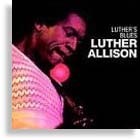
  • Luther Allison – Luther’s Blues

    Luther's Blues

    Originally released by Motown in 1973, Luther’s Blues was not a big seller. Not that it’s not a great album. It is. But maybe Motown at that time wasn’t the best place to sell a blues record.

    The young Luther definitely bares some resemblance to the fella who re-emerged in the ’90s and blew away the blues world. Listen to the big, thick, stinging tone on the title cut and the big, soulful vocals. And to top it off, he has a very cool and funny conversation with his guitar toward the end of the tune. There are great songs, with solos that’ll have you grinning ear to ear. “Let’s Have a Little Talk” has a 40-second intro that lets Luther run through some changes and show his stuff. Then, it’s a slow blues with a solo that can only be described as brilliant. For pure taste and a great vibrato, check out the funk of “Into My Life.” There are cuts here that don’t have solos, but allow Luther to show off his great voice and feel for the blues.

    Topping of this great package are three killer bonus cuts; a cover of Freddie King’s “San-Ho-Zay” is pure fire, rowdy and fun as it gets; the funk of “Bloomington Closing Early Version” allows for nice, sinewy soloing; and the final medley (which clocks in at almost 20 minutes) is one of those things that’s just a pure joy to listen to. Listen to Luther yell out a key change! You gotta love it!

    Allison was one of those guys who looked like and carried himself like a guitar player. And the raw power and emotion of his singing and playing are very evident here. A nice record of the early work of one of the giants of the blues.


    This article originally appeared in VG‘s Aug. ’01 issue. All copyrights are by the author and Vintage Guitar magazine. Unauthorized replication or use is strictly prohibited.
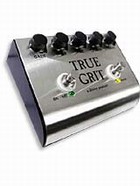
  • Zinky True Grit Pedal

    Tone charismatic enough to thrill the Duke

    Yeah, we know! You’re thinking, “Wha? Another overdrive pedal?”

    It seems that one thing guitar players will forever be in search of is the ultimate dirty tone, and few players admit to being 100 percent satisfied with the tone they have. Whether it’s that one magical dirty tone or a variety of dirty tones needed for specific styles, most players are always on the hunt for new sounds to add to their tonal reference library. So here’s an overdrive pedal that’s well worth checking out.

    The True Grit was developed by Bruce Zinky, who first brought us his unique Smokey amps – those cool amps made inside cigarette packs and colorful transparent polycarbonate boxes of the same small size. VG was also lucky enough to be the first to test drive Zinky’s Mofo amp and 2×12 cabinet, which was introduced in 2000 – a very cool rig.

    Before launching his company, Zinky was employed as an amp designer at the Fender Custom Amp Shop, and was responsible for the development of a variety of popular amp models. The True Grit is his first stompbox.

    Designed to produce a range of tones, the True Grit pedal is switchable between low-gain and high-gain modes. It’s built in a wedge-shaped metal box approximately 53/4″ x 41/2″ in size with two footswitches and five rotary knobs. An on/off footswitch (on the left) activates the effect, and a second “Boost” footswitch (on the right) allows you to alternate between the low and high-gain modes. LEDs indicate the mode for each switch – a green LED indicates when the effect is on, a yellow LED shows when the Boost is active.

    The “Gain” and “Grit” knobs determine the amount of sustain and dirt. The gain control is self-explanatory, and “Grit” adjusts the upper midrange harmonics. The individual Bass and Treble controls let you dial in EQ, and the Volume governs overall output.

    The effect operates on either a single 9-volt battery or an AC adapter, both of which are included.
    We set up the True Grit with our favorite 100-watt Marshall plexi stack and started with all the controls set at 12 o’clock and the amp set fairly clean – well, as clean as an old Marshall can get.

    First, we adjusted the pedal’s volume and gain to match the amp’s output. From there, it was really easy to dial up cool sounds right away. The True Grit offers a range of tones, from transparent boost for leads (or subtle enhancehancement) to warm, bluesy overdrive to gargantuan AC/DC-type overdrive to Yardbirds-type fuzz and hard-edged rock.

    Depending on what you’re doing and whether you want to use the True Grit’s main distortion sound for lead or rhythm, there are a lot of options at your fingertips. We found the True Grit a nice complement to the inherent sound of our amp, and it produced a useful variety of tones for an assortment of musical styles. In some situations, the Boost settings may be a bit over the top (i.e. when used in conjunction with an already overdriven amp), the higher gain/higher grit settings may be excessive. But then again, it all depends on what type of sound you’re looking for.

    Overall, the True Grit performed as promised, simply, efficiently, and without some of the extraneous noise that often plagues similar tone-coloring devices.


    Zinky True Grit Pedal
    Type Of Effect: Overdrive/distortion/fuzz unit.
    Features: Separate On/Off and Boost foot-switches; Con-trols for Gain, Bass, Grit, Treb-le, Volume; Oper-ates on 9-volt battery or AC adapter, one year warranty.
    Price: $135 (w/AC adapter and 9-volt battery).
    Contact: Zinky Electronics & Smokey Amplifiers, PO Box 3973, Flagstaff, AZ 86003, (928) 522-0800, www.smokeyamps.com,e-mail truegrit@smokeyamps.com.


    This article originally appeared in VG‘s July ’02 issue. All copyrights are by the author and Vintage Guitar magazine. Unauthorized replication or use is strictly prohibited.
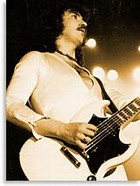
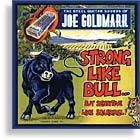
  • Joe Goldmark – Strong Like Bull… But Sensitive Like Squirrel

    Strong Like Bull... But Sensitive Like Squirrel

    God, you’ve got to love Joe Goldmark. A pedal steel player who is willing to tackle pretty much any style of music, and not only tackle it, but do a bang-up job on the song. If you don’t believe me, do you know a lot of steel players who cover Elvis Costello’s “Peace, Love, and Understanding?” Joe handles it with some (for lack of a better word) “dreamy” steel work that propels the melody. I confess, I’m no expert on steel playing, but I’ve heard very few players tackle Blind Faith’s “Presence of the Lord.” Interesting song choice. Nice steel, and nice guitar from Garth Webber. There are lots of originals on the CD too. The melodic and very pop-like “Joe’s Jump” does just what the title says, jumps. His “Butane” is a boogie that lets him show off his chops a bit. And, on “Okra Dokey,” it’s kind of like New Orleans goes pop.

    Joe shines on most every cut, and there are also some great guitar turns here. Jim Campilongo helps out on the slightly off-kilter “Going Up the River,” and Larry Dunn, Andy Reiss, Gary Potterton, and Webber all shine on various cuts.

    If you like steel guitar, or things just a little off-the-beaten path, this is for you.


    This article originally appeared in VG‘s April ’02 issue. All copyrights are by the author and Vintage Guitar magazine. Unauthorized replication or use is strictly prohibited.
  • Buck Dharma

    Steinbergers and stilts

    In the hyped-up worlds of entertainment and professional sports, most so-called “comebacks” usually aren’t. Often, veterans stay in the public eye (or attempt to) much longer than they should, subjecting themselves to detraction or ridicule.

    But what if a legendary guitar-based aggregation is producing modern albums that are just as listenable as the combo’s “classic” records from decades ago? Such is the case for Blue Oyster Cult, which stormed into the hard rock limelight in the early ’70s. The Long Island-based quintet’s original material had a tongue-in-cheek morbidness and wry sense of humor, and the music was aided considerably by the fretwork of guitarist/vocalist Donald “Buck Dharma” Roeser.

    As happens to many rock bands, BOC ended up playing smaller venues, and didn’t record a new album for over a decade.

    When Dharma conversed with VG in August ’98, Heaven Forbid was set for release, and Dharma was proud of the results (he was the album’s producer). That album was followed by 2001’s Curse of the Hidden Mirror (both on CMC International), and the music contained in BOC’s first album of the new century sounds as vital as its efforts in the ’70s and ’80s.

    “We did pretty well with critics and fans alike,” said Dharma of Heaven Forbid. “‘Harvest Moon’ was the most popular track on radio, and we’d play it live. In fact, we just played it last weekend.”

    The cover concept of Heaven Forbid illustrated the band’s penchant for parlaying its public persona/stereotype. It’s a painting by Rob Prior that incorporates the illustration of a screaming female from the ad campaign for the original Psycho (1960) with a monstrous-looking male that appears to be missing half of his face (“We call him ‘the melting man’” Dharma said with a chuckle). Sharp-eyed fans looking for the band’s distinctive “inverted hook” logo will have found it reflected in his one good eyeball.

    Other tracks on Heaven Forbid included the lead-off tune, “See You in Black” (which also garnered some airplay), a potentially controversial, but listenable, song that addresses spousal abuse, and “X-Ray Eyes,” a paean to the classic 1963 sci-fi movie, X: The Man with X-Ray Eyes (starring Ray Milland). The lyrics for that song, and numerous other modern-day Blue Oyster Cult tunes, were contributed by science fiction writer John Shirley, who wrote the screenplay for The Crow. According to Dharma, it’s not the first time a sci-fi scribe has collaborated with BOC members – legendary British writer Michael Moorcock worked with vocalist/guitarist Eric Bloom in earlier times.

    “X-Ray Eyes” features some very potent acoustic riffs performed on “… a Washburn electric/acoustic that was recorded with both the piezo and a microphone,” said Dharma. He relied on his Steinberger electrics for the bulk of Heaven Forbid.

    The band did over 100 dates in ’98 in support of that album, including performances in France, Germany, and Scandinavia.

    2001’s Curse of the Hidden Mirror was foremost on Dharma’s mind, for good reason. If the two modern albums are the initial offerings of a so-called “second wind,” the second modern recording represents a fine “sophomore” effort.

    “This album was done with (drummer) Bobby Rondinelli and (bassist) Danny Miranda,” was Dharma’s initial response when asked to differentiate between the ’98 and ’01 releases. “They’ve been the stable band personnel for the last five years or so. This was really Bobby’s first record, although he played on ‘Live for Me’ on the last one. It’s a good snapshot of who BOC is.”

    Dharma used Steinbergers once again on Curse, but noted, “I played a lot of guitars on that record. I used my tobacco sunburst Les Paul Deluxe that I’ve had since the ’70s, a DeArmond Bluesbird, a Martin 000-1, which is one of my fave acoustics, and others.”

    As for amps, the guitarist noted: “The record was tracked largely with a Pod through an audiophile tube amp and various speaker cabinets – everything from a 4×12 to a single 12″ with an open back. All of the leads were done with a Boogie Mark II, Groove Tube Amps, and a Fender Bassman. Another amp that was surprising was a Crate; we got a good sound out of it.”

    Once again, a listener’s interest is hooked by the album’s lead-off track, “Dance on Stilts,” but intriguing sounds, tones, and riffs can be found throughout Curse. Guitar tremolo has seen a resurgence in modern recordings, and “Showtime” has such a sound; the effect was designed as part of the arrangement for that tune. When asked about the Duane Eddy-ish riff that sounds a lot like the James Bond movie theme in “The Old Gods Return,” Dharma laughed and said, “I just love playing those kinds of lines on heavy strings!”

    The new album was the first Blue Oyster Cult effort to be completely digitally recorded, and Dharma waxed eloquent when discussing his producer role (Eric Bloom is credited as associate producer).

    “After about 15 years of digital recorders, they’ve gotten to a point where their resolution is satisfactory, to me. So we used that technology all the way through. We offset the ‘clinical reality’ of digital with an all-tube console, and we used a lot of tube outboard gear, so there was plenty of old-school stuff in addition to the high-resolution digital hardware. I think you can pretty much get the sound you want to get nowadays. It used to sound harsher, flatter, and obnoxious.”

    Some of the songs on Curse had their genesis years ago.

    “‘Here Comes That Feeling’ was a song I’d written in the early ’80s; same thing for ‘Stone of Love.’ I had pretty much forgotten about them until I was looking through my tapes. ‘Showtime’ is a tune Eric had written about that time, or maybe a little later, that was set aside and forgotten.

    “When we were looking for tunes for the new album, we pulled a lot of them out and said, ‘How about this one?’ And we were able to arrange them for today’s band. In the cases of the songs I sang, they followed fairly close to the arrangements I had in mind, but Blue Oyster Cult had never done them. The same for Eric’s song, but the last demo of that song was done with a mandolin and an acoustic guitar, so the arrangement on the record was quite a bit different. We did quite a bit of rehearsal for this record, so the tunes were all arranged by and for the current band.”

    Another propensity for the band is to introduce new songs (even newly-arranged versions of demos from the vaults) in concert, prior to recording them. According to Buck, such a policy “…really helps us get immediate feedback as far as what’s flying and what’s not. We always get a good reaction, but we get to hone the performance of the song, and in doing that, you actually straighten out some kinks in the arrangement.”

    The liner notes in Curse include an “In Memoriam” listing of three names: Ricky Browning was the young boy from Atlanta who was battling cancer using BOC’s “Godzilla” as a motivational song. Buck’s solo band played a benefit in Atlanta (and Ricky helped out on percussion), but the youngster crossed the way shortly after Dharma’s first interview in VG. “Mondo,” the second person noted, was a motorcyclist fan of BOC’s from the West Coast. The third name is racing legend Dale Earnhardt. While it may seem a paradox for a band from Long Island to be citing stock car racing, Buck averred. “We’re all into NASCAR, especially Eric. Dale was his friend, and (Earnhardt’s death) was fresh in our minds when those notes were written.”

    While Heaven Forbid and Curse of the Hidden Mirror are both modern recordings, there’s no mistaking the classic Blue Oyster Cult songwriting and sound that permeate both albums. The band has stuck to its creative guns, and according to Buck Dharma, they wouldn’t have it any other way.

    “We can’t chase trends,” he concurred. “I think we’d sound silly if we tried to do that. We know what we know, and we know what we like, and hopefully the same goes for our fans. We’re not pushing N’Sync off the charts, and wouldn’t try to.”

    Asked about “classic rock” and the veteran bands that play it, the guitarist said, “I’m finally becoming comfortable with that term. For awhile, it seemed like it meant that you weren’t really a player in the current business. But it doesn’t bother me anymore, and I’m comfortable calling Blue Oyster Cult a ‘classic rock’ band.”

    The new album has meant that the band, which tours extensively during the summer, added new songs to its repertoire, but the “big three,” “(Don’t Fear) The Reaper,” “Godzilla,” and “Burnin’ for You” are still the crowd pleasers. The band plays a lot of weekend festivals, citing Atlanta’s Midtown Music-Fest as an example of an event that “…was a great show for us.

    “We play four songs from the new record,” he detailed. “Depending on how long we play at some of those shows, we play an hour; at others, maybe 110 minutes. We’re expected to play our hits, of course, and we try to represent the history of the band from the first record up to Curse.”

    One recent controversy involved Buck’s band and other musicians. Following the events of September 11, news reports cited a major radio station conglomerate as having issued a suggested ban list (for lack of a better term) of songs that could possibly have been considered insensitive if heard by grieving family members of victims and others. “Burnin’ For You” was on the list, but curiously, other B.O.C. tunes such as “Cities on Flame” and “Don’t Fear the Reaper” weren’t.

    “I was upset when I saw that list,” Dharma said. “I thought it was the most asinine thing I’d ever seen, and when it was denied by the Clear Channel (Communications) management, the thought occurred to me that it was a hoax. As a hoax, it was pretty funny.”

    The legendary guitarist is proud of BOC’s modern albums, which are intended to sound like classic BOC material recorded with state-of-the-art gear.

    “We meant to do that,” Dharma said, quoting Pee Wee Herman. “And I’m prideful about our modern recordings, because I think a lot of bands don’t make very good records. I think that’s the public’s perception, too. I’d like for people to know that we’re making great records that I think compare to anything we’ve ever done.”

    Our final inquiry concerned a bizarre incident, timing-wise, that occurred during one of the weekend festivals BOC played in ’01. The local newspaper’s report noted that one of the more ironic occurrences of the event happened when BOC launched into “Don’t Fear the Reaper” at the stroke of midnight.

    “Those things just happen,” Buck Dharma responded with a laugh. “Synchronicity!”


    This article originally appeared in VG‘s April ’02 issue. All copyrights are by the author and Vintage Guitar magazine. Unauthorized replication or use is strictly prohibited.
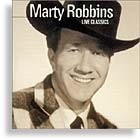
  • Marty Robbins – Live Classics from the Country Music Hall of Fame

    Live Classics from the Country Music Hall of Fame

    Nowadays, Marty Robbins is more respected than appreciated. Much of his studio material sounds dated because of syrupy string arrangements and slick backup singers. But a new release from the Country Hall of Fame brings the real live Marty Robbins to us in a way that even us young’uns can appreciate. Culled from years of live performances on the Grand ‘Ol Opry, this CD has 20 selections that show not only Robbins’ fine voice, but his ability to change his musical style to fit the times.

    Beginning with a 1951 performance of “Ain’t You Ashamed,” Robbins’ early material is pure western swing. His ’55 rendition of Arthur Crudup’s “That’s All Right” puts a country twang to this Elvis classic. The guitar solo (which I believe is Robbins) is a virtual encyclopedia of early R&R guitar licks. By the late ’50s, Robbins’ style had evolved into a countrified pop complete with a whistling chorus and perfectly executed three-part backup harmonies. The Burt Bachrach/Hal David tune “The Story of My Life” is typical.

    Robbins is best known for his cowboy songs. These cinematically influenced ditties captured the imagination of a public clamoring for John Wayne westerns and Davey Crockett coonskin hats. Live performances of Robbins’ own “El Paso” and Tompall Glaser’s “Running Gun” provide a suitable finale to this recording.

    Besides a fine selection of live performances, you’ll discover thoughtful and historically detailed liner notes from the Country Music Foundation’s Ronnie Pugh. He helps put Robbins’ work within the social context of his times. My only complaint with the packaging is the lack of musician credits. It would be nice to know who was responsible for the great solos.

    The sound is better than you’d expect, considering it is taken from radio broadcasts. It isn’t as full-fidelity as modern recordings, or even Robbins’ studio work, but the sound is good enough so it never gets in the way of the music. Fortunately there was no attempt to add stereo effects or artificial reverb, and the final result is a clear sonic picture of what Marty Robbins sounded like when he played live. What more could a music lover ask for?


    This article originally appeared in VG‘s Oct. ’01 issue. All copyrights are by the author and Vintage Guitar magazine. Unauthorized replication or use is strictly prohibited.
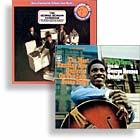
  • The George Benson Quartet – It’s Uptown, The George Benson Cookbook

    It's Uptown, The George Benson Cookbook

    George Benson was another of A&R legend John Hammond’s famous discoveries, alongside the likes of Count Basie, Charlie Christian, Bob Dylan, Aretha Franklin, and Bruce Springsteen. This put Benson in a tough position when he was signed to Columbia in ’65, and he set out to prove himself with his first album for Hammond, ’66’s It’s Uptown, followed the next year by The George Benson Cookbook. Hammond’s hunch proved correct: these two albums cemented Benson’s reputation and became the cornerstone for his later best-sellers. Columbia has now re-released both albums with extensive liner booklets and a handful of previously unreleased bonus tracks.

    These early albums offer a fascinating look back at Benson’s talents “in utero,” as it were. All of his strengths were there from day one; beautiful post-bop jazz guitar playing ripe with melodic licks that were less hard-core jazz and more radio-friendly; and R&B-tinged vocals that were penthouse cool and ready for Top 40.

    While Benson has gone on to produce bigger and better albums, these are classics. Looking back, they may well have formed the beginning of smooth jazz.


    This article originally appeared in VG‘s Nov. ’01 issue. All copyrights are by the author and Vintage Guitar magazine. Unauthorized replication or use is strictly prohibited.
  • Custom Pearl

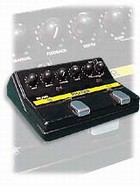
    PH-44 Phaser

    This month, our “Little Known Wonder” is the Pearl PH-44 Phaser. The Pearl Instrument Company made a series of effects in the early ’80s called Sound Spice effects pedals. Although the company only manufactured them for a brief period, it produced some of the best-sounding units one can find at a reasonable price. Not many people have heard of them and they are often overlooked.

    The company released several popular models including chorus, compressor, overdrive, flanger, and octave units. There were also three larger deluxe pedals with two footswitches – one for turning the effect on and off, and the other for switching between two modes.

    The Ph-44 is one such unit.

    And it’s one of the most unique and best phasers we’ve heard. It offers six controls, including an input level, manual (for the frequency range), feedback (to adjust resonance and volume of the effect), depth (to control how low the sweep of the phase goes), and two speed controls. With this phaser, a player can dial in a slow speed setting with one knob, and a fast speed setting with another, and switch between them with the footswitch. It’s a blast. A variety of phase sounds is possible with all the controls on this device – you can make it sound weak and thin or strong and exaggerated.

    While it was originally designed to help organ players create Leslie-like sounds (the manual gives recommended organ settings), it also sounds incredible with the guitar. Another interesting feature is stereo outputs for two amps. The slow, swirly sweep offers a widespread range, from the subtle to extreme peaky vowel sounds. It’s also very quiet.

    Ruggedly built of die-cast aluminum, the pedal should last years. The on/off switches are shaped like a metal horseshoe and are silent when in operation. Some of the other features include LED lights for a battery life warning indicator, a speed indicator, and a peak level indicator. As we said, the unit has a stereo output to offer common phase-shifting sounds out of one amplifier, and 180-degree reverse phase shifting sound coming out of amplifier number two.

    Along with the tremolo bar and shifting between speeds, I was able to create several spaceship type effects with the guitar.

    Another feature on the back of the unit is an external footswitch jack for an expression-type pedal where you control the speed of the phase with the sweep of your foot. The jack can also be used for a remote footswitch to control on/off and speed functions.

    Of course, as with so many things, there is a downside; the PH-44 does require two 9-volt batteries, and it loves to use them. You can, however, obtain an 18-volt power supply and settle that problem. The pedal is also a little bigger than most people like for a pedalboard, but it’s not monstrous. The benefits of the sound far outweigh the battery and size factors.

    Used with a combination of other effects, the PH-44 can create controlled insanity. Combine it with an envelope filter and reverb and produces sounds so funky even Shaft can’t comprehend. With distortion, it roars on a slow sweep. If you like vibrato or Leslie sounds, it definitely delivers. For some of the most natural-sounding effects in phasing, the PH-44 is a solid bargain. You may also want to check the other deluxe models like the chorus or the analog delay. These pedals are out there, but it may take some searching.


    This article originally appeared in VG‘s Aug. ’99 issue. All copyrights are by the author and Vintage Guitar magazine. Unauthorized replication or use is strictly prohibited.

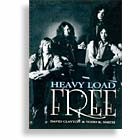
  • David Clayton and Todd K. Smith – Free: Heavy Load

    David Clayton and Todd K. Smith

    This epic chronicles the story of the seminal British blues/rock band Free. Leaving no stone unturned, and with the help of more than 400 photos, authors David Clayton and Todd K. Smith have painstakingly detailed the rise and fall of the band from its early pub gig days in late-’60s London through the massive chart success of “All Right Now,” to the varied fortunes of vocalist Paul Rodgers, drummer Simon Kirke, bassist Andy Fraser, and guitarist Paul Kossoff (VG, May ’00).

    Obviously a labor of love, Clayton and Smith have transformed the magic of Free’s music and the chemistry of the band into print through conversation with the surviving members and others, including Al Kooper, Chris Blackwell, Andy Johns, Ritchie Blackmore, and more. Given the perspective associated with the passage of time, the writers are able to give Free its place in rock history as a significant and important musical force.

    While never enjoying the huge commercial success of their contemporaries in Led Zeppelin, Free’s early live performances were legendary and often shattered attendance records set by The Rolling Stones and The Who in their native U.K. Heavy Load reads like a comprehensive who’s who of late-’60s/early-’70s rock bands, particularly those British.

    The story within is of the genius and tragedy of Paul Kossoff, whose early playing earned him legions of fans, including Eric Clapton. But sadly, the drug use present in his life since late childhood eventually destroyed his body and contributed to his untimely death in March of ’76, at age 25.

    Of particular interest to guitar aficionados are the descriptions and superb photographs of Kossoff’s instruments (most are late-’50s Gibson Les Pauls) and amplifiers we now consider vintage and collectible.

    In a time of cookie-cutter approach to musical biographies on TV music channels, Heavy Load paints Kossoff, Kirke, Fraser, and Rodgers as vibrant-yet-human musicians, not Spinal Tap-ish caricatures. The quality of the writing and the drama of the story ensures it will appeal to fans and non-fans alike.

    At $58 ($35 for the book, $23 for shipping from England) Heavy Load is not cheap, but it’s arguably one of the best books ever written about a rock band, and it’s the definitive Free book.


    England: Moonshine Publishing, 2001, Hardcover 281 pages, $35 plus $20 shipping

    This article originally appeared in VG‘s June ’01 issue. All copyrights are by the author and Vintage Guitar magazine. Unauthorized replication or use is strictly prohibited.