Take a look at your pedalboard. You probably have three or four overdrives and fuzzes hooked up – and are looking to find the cash and real estate to add more. Hold your horses and consider instead Swedish maker Elektron’s Analog Drive.
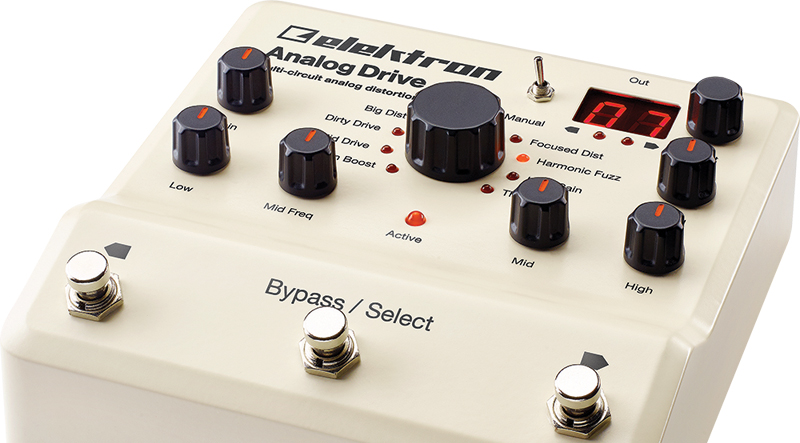
Yes, it’s large and needs 12-volt power. But then again it holds eight separate analog overdrive circuits, with the ability to adjust input gain and output level, plus dial in and EQ your sound – and then save up to 100 favorite presets.
Oh yeah, not to mention options to run MIDI as well as expression pedals for midrange and gain.
You can operate the Elektron manually – using one of the eight overdrive circuits, then setting and adjusting all your levels – or with the presets. The options are almost endless, and the eight circuits include: Clean Boost, Mid Drive (think Ibanez Tube Screamer), Dirty Drive (from a gated sound at low volumes to old-school fuzz at high), Big Distortion, Focused Distortion, Harmonic Fuzz (read, full-throttle fuzz), High Gain, and Thick Gain (as in truckloads of gain).
The Elektron’s presets definitely offer benefits. With its Gain and Level controls, the Elektron has a lot of variability and each of the eight circuits “likes” different settings; so, if you want to seamlessly move between circuits and maybe bypass the drive for a song segment, presets are a great benefit to maintaining a consistent output level. Plus, with footswitches, you can move between presets, going from, say, a mellow verse to an all-out, full-attack solo.
In addition, the Elektron’s EQ is eminently flexible, with Low, High, and dual Mid controls, providing fully parametric midrange, and you can dial in tone to your heart’s content.
Indeed, the Elektron may just be only overdrive pedal you need. It takes care of business.
This article originally appeared in VG July 2017 issue. All copyrights are by the author and Vintage Guitar magazine. Unauthorized replication or use is strictly prohibited.
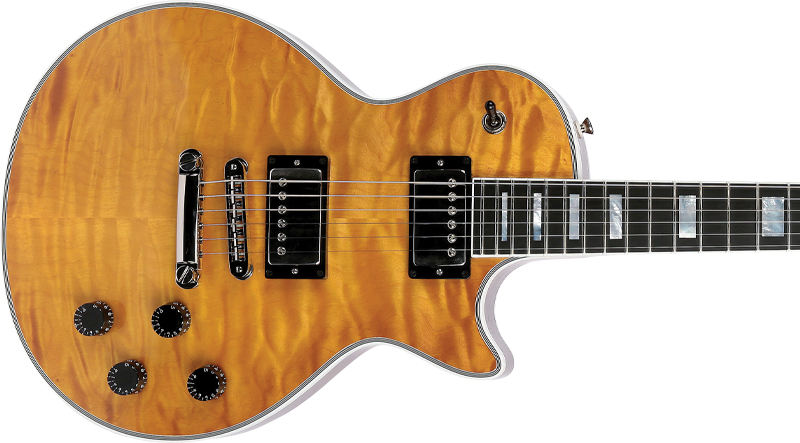
In 1985, Heritage Guitars took over a certain factory space at 225 Parsons Street in Kalamazoo, Michigan, after the former owners decided to move production to Nashville. Since then, Heritage Guitars have continued to craft instruments in the mold of those classic six-strings that first made Kalamazoo famous to guitarists worldwide. Their H-157W is a limited edition of their classic single-cutaway “Custom” model, and it features premium woods, upgraded electronics, high-end pickups, and deluxe hardware. In fact, the H-157W is limited to just 50 instruments: 25 with a quilted maple top, and 25 with tiger-stripe maple.
The Heritage H-157W’s deluxe appointments include an ultra-premium western maple top, TonePros locking bridge and tailpiece, a set of ThroBak KZ-115 PAF-style pickups, and top-of-the-line ThroBak pots and Luxe capacitors. The guitar is available in Honey Lemon with nickel hardware and Fireburst with gold hardware, and it features mutli-layer binding on the front and back of the body.
The fingerboard is a beautiful select piece of ebony that leads to an actual bone nut before reaching the single-bound headstock with its matching maple cap overlay and shadowed Heritage logo. As not to skimp on anything, the H-157W is strung with ThroBak Pure Nickel Hex Core strings for a vintage touch and tone. The instrument ships with a hardshell case and an individualized certificate of authenticity.
With a guitar like this, it comes down to the builder’s execution of a well-proven design, and Heritage has done a stellar job. Many who buy similar guitars will subsequently spend a small fortune upgrading pickups, hardware, and electronics to get the instrument “just right” – all because a manufacturer skimped in certain areas. Here there is no need for upgrades; Heritage took the time, expense, and research to optimize the H-157W right out of its case.
Plugged into a reissue Deluxe Reverb, the snap and clarity of the pickups is truly startling – like a great example of actual PAFs. This is no surprise – the ThroBak pickups are painstakingly wound with the same type of wire and bobbins and on the same machine that resided in the Parsons Street factory in the 1950s. Clean, these pickups have that almost P-90 quality that every winder strives for. Depending on touch and pickup selected, one can easily cover any style asked. Turning the Deluxe’s Volume knob to 8 produces the perfect level of hair on the notes, which never fall apart in any way. From clean and clear to very driven tones, this guitar holds its own.
The fretwork and setup are silky smooth, with well-dressed frets, a nicely cut nut, and a bend-friendly 12″ fingerboard radius. The gorgeous book-matched quilted maple top and beautifully straight-grained mahogany back and neck are expertly finished and very much the veritable cherry on top on an incredibly well-built top-shelf instrument.
With its exemplary fit and finish, premium woods, and the addition of the ThroBak pickups, the Heritage H-157W is a real stunner both visually and tonally. A finely made single-cutaway instrument crafted in the factory that made them famous – and it doesn’t need to have the hardware, pickups, or electronics upgraded. Heritage has taken the time to make it right the first time.
This article originally appeared in VG July 2017 issue. All copyrights are by the author and Vintage Guitar magazine. Unauthorized replication or use is strictly prohibited.
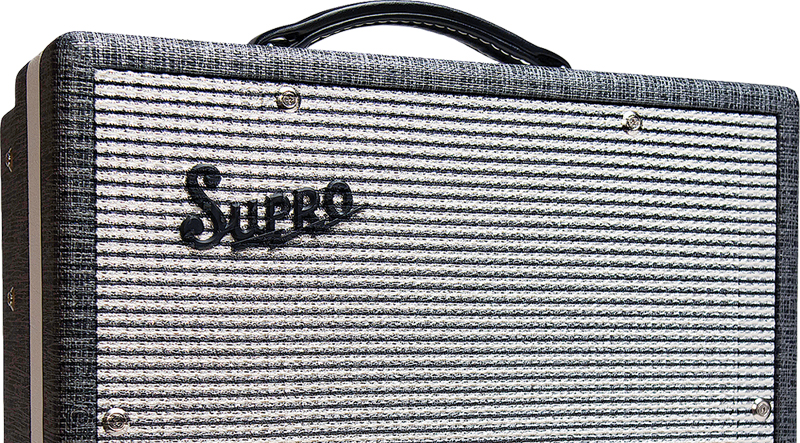
Supro’s Comet 1610RT just may be the perfect desert island amp – a high-gain, low-watt 1×10 combo that maybe doesn’t do it all, but does most everything you’ll ever need on your balmy isle paradise.
Think ’30s Gibson EH-150, ’50s Fender tweed Champ, or ’60s Supro Bantam. The Comet is a small amp with big ideas about tone, but it also has a couple of modern tweaks that will have you reaching for it before those vintage choices.
The assembled-in-the-U.S. Comet has a single-ended Class A power amp with one Sovtek 5881/6L6WGC power tube plus three 12AX7 and one 12AT7 preamp tubes. The signal runs into a single 10″ custom-voiced Supro CR10 speaker.
This is where things start to get even more interesting. The Comet has switchable power, letting you opt between six and 14 watts at the throw of a toggle. Plus, it features Supro’s highly lauded tremolo and reverb (yes, they’re tube-driven).
All this is handily packed into a small-yet-sturdy package that weighs just six pounds – ideal when you have to hop into the SS Minnow’s life raft and get ashore.
Plugging in a ’54 Gretsch Duo Jet and switching on the handy Standby, the Comet sounds good from the get-go. The high-gain design offers solid, in-your-face tone. It’s sweet and clean up until about 12 o’clock on the Volume knob, providing fine rockabilly and vintage rock and roll sounds. Twist it past noon, and it offers a hearty crunch seguing into soaring overdrive at wide full open.
At six watts, the Comet is ideal for playing in your home, your practice space, or the studio. Boost it to 14 watts, and you have more volume for stage use – or to play as loud as you want on your new island real estate. Either way, the amp boasts ample note clarity and lovely dynamics for recording.
The tremolo circuit is built in the preamp, before the reverb (can you say, “vintage correct”?), for wide, deep, resonate effects that range from a subtle accent to far out.
Supro also offers its 1700 1×12 Supreme extension cabinet loaded with a BD12 speaker. Stack them up, and you have plenty of stage oomph.
Oh, and how about the Comet’s looks? It’s dressed up in 1959 Supro finery: impossibly tough black rhino hide tolex with stylish white welting and a chic gold faceplate. The complete package.
This article originally appeared in VG July 2017 issue. All copyrights are by the author and Vintage Guitar magazine. Unauthorized replication or use is strictly prohibited.
Ever wonder about that strange-looking guitar Lindsey Buckingham of Fleetwood Mac has been playing all these years? The same one John Mayer has occasionally been spotted with as well? It’s the Rick Turner Model 1, and if you want the straight dope on this unique instrument, you’ve come to the right place.
Rick Turner, co-founder of the Alembic Company, met Lindsey Buckingham during the recording of Fleetwood Mac’s Rumors album. As a fingerstylist, Buckingham needed an electric guitar that offered the feel of an acoustic guitar, the warmth and sustain of a Les Paul, and the clarity of a Stratocaster.
During rehearsals for the Tusk tour, Turner brought Buckingham the third Model 1. Buckingham played it for three hours and afterward, according to legend, shouted to his guitar tech, “This is all I need. Leave the Les Paul, the Strat, and the Ovation at home!” The Model 1 allowed Buckingham to switch effortlessly between acoustic textures and electric sounds in a heartbeat. Thanks to improved technologies, today’s Model 1 Deluxe LB has evolved from the guitar originally given to Buckingham, but it still retains the original’s unique personality.
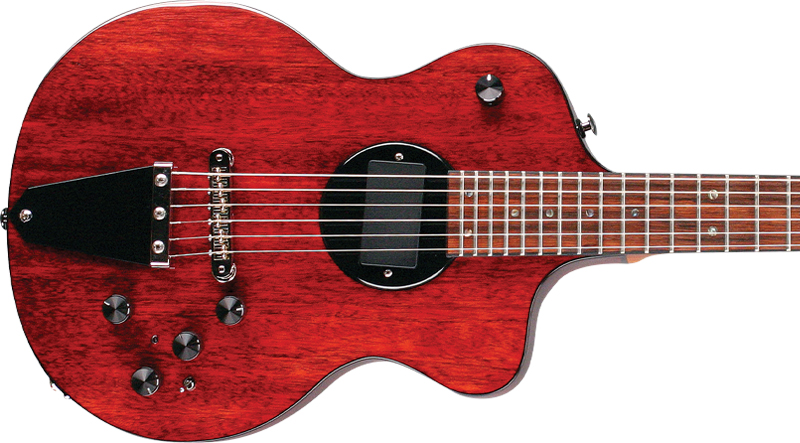
Weighing in at eight pounds, the Model 1 is no toy. Its solid mahogany construction features a maple set-neck with a multilaminate design. A scale length of 24.75″, a 12″ fingerboard radius, and a nut width of 111/16″, yield a beefy full C-shaped neck. The Model 1 comes with Gotoh tuners and bridge paired with Turner’s own tailpiece and hot-wound hum-canceling pickups.
Ergonomic despite its heft, and aesthetically pleasing, the Model 1’s most eye-catching feature is, of course, the rotating pickup that allows the player to emphasize the lows on the bass strings or the highs on the treble strings. There is also a Magnetic/Piezo Blender control that pans between the piezo and the magnetic pickups. Other controls include Master Volume, Sweep for quasi-parametric EQ, Boost Cut, and a toggle that activates the quasi-parametric circuit. There’s also a Tone control and push/pull coil tap for single-coil sounds. The compartment for the two block batteries that power the active electronics is located under the tailpiece.
Plugged into blackface combos and high-gain heads, this is no beater for neighborhood blues jams. The Model 1 is a high-end piece of art for the fastidious artist who requires complex sounds on the fly. With the piezo/magnetic blend turned clockwise, the tone is ultraclean yet strong, yielding smooth but muscular jazz lines with effortless feel. The control knobs mold the sound to the rig, while the toggle enables more bite. Warmer lows or edgy top-end is at the fingertips.
Blend the piezo with the magnetic pickup for a combination of acoustic and electric sounds or either one. The acoustic sounds are fabulous and will flatter fingerstyle playing with evenness and punch. Pull up the coil tap for sparkling Stratocaster land. Using distortion along with the toggle gives a little noise, but it can be dialed back using the Sweep control to voice the crunch to taste. The Model 1 can scream or purr.
The Rick Turner Model 1 Deluxe LB is a truly amazing musical instrument and a beautiful work of art. It has an innate rootsy flavor that can traverse acoustic, clean electric, and distorted terrains in a pinch. While the controls take some time to suss, the learning curve is easily overcome to create some of most beautiful guitar tones you’ll ever hear through an amplifier.
This article originally appeared in VG July 2017 issue. All copyrights are by the author and Vintage Guitar magazine. Unauthorized replication or use is strictly prohibited.
Prices: $199.99 (BG95); $169.99, (EVH95, both list) Info: www.jimdunlop.com
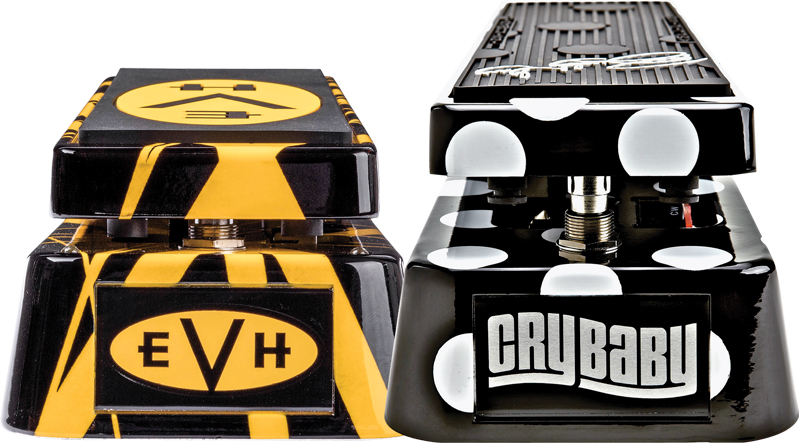
Wah users needn’t settle for stock tonal options like those heard on the “Theme From Shaft” or “Voodoo Child (Slight Return).” That’s because Jim Dunlop offers recreations of the classic Cry Baby with additional tone-shaping options, boost features, and improvements to potentiometers, all to help you replicate the wicked sounds you hear in your brain, not just on the radio. In fact, Dunlop’s signature series might just be the ticket to waka-waka enlightenment.
Buddy Guy, of course, is a bona fide legend of the classic blues era, and his Cry Baby BG95 signature wah is truly badass. With its polka-dot cosmetics and short rocker throw, this pedal’s coolest feature is its side switch offering two modes: BG Mode and Deep Mode. The BG95 is true-bypass and includes a recreation of the red Fasel inductor used in the original Cry Baby.
Deep Mode is ballsy and mean – just what you need to distinguish yourself in a gloomy stage mix. Harmonics pop with beautiful overtones. BG Mode is sweeter sounding, delivering vintage flavors and cleanliness. It plays well with dirt boxes and is an all-around great pedal for any style of music. The side button, LEDs, and quiet operation, make the BG95 a real asset to your musical arsenal.
Edward Van Halen’s favorite wah had some unique qualities he wanted reproduced, namely a wider sweep and a more vocal High Q inductor. EVH lives in a very particular area of midrange, more defined with a clearer bottom and sweep, so Dunlop cloned the pot from his worn-in original and added an adjustable rocker torque that can be accessed beneath the treadle with a hex wrench.
Sporting iconic graphics, the EVH95 is true-bypass and comes with a pair of blue LEDs. It sits on the rawk side of the aisle, adding a smidgen of volume and seductive clarity. It’s perfect for the in-your-face wah disciple who likes additional oomph. The midrange is tight, the lows don’t go boomy, and the top end is smooth. The longer throw of the rocker makes it easier to locate Schenker-esque sweet spots.
These signature Cry Babies are but two examples of the nuances that can fulfill the needs of the performing guitarist. The BG95 and EVH95 are both solid tools with performance-friendly appointments that will inspire.
This article originally appeared in VG July 2017 issue. All copyrights are by the author and Vintage Guitar magazine. Unauthorized replication or use is strictly prohibited.
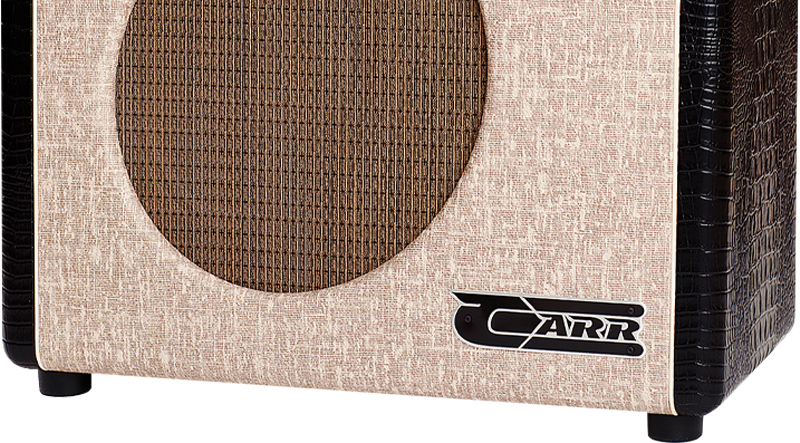
Back in June 2003, Carr’s original eight-watt Mercury combo earned high praise in VG for its top-of-the-line components, attention to detail, and wide-ranging “Tone of the Gods” voicing. Recently, Steve Carr introduced a beefier 16-watt version of the Mercury in both 1×12 combo (as tested) and standalone head versions. These reincarnated and revved-up Mercury V roar out of Valhalla (actually, Pittsboro, North Carolina) in all the splendor and 1950s automotive vibe of the original, but this time sporting a few new surprises under the hood.
That original Mercury was one of the early amps to include a built-in attenuator, and the Mercury V retains this useful feature with the added benefit of a line-level out that can be sent to a digital recorder or a mixing board, whether or not the attenuator is engaged. The line-out signal is tailored to simulate a speaker roll-off and response suitable for a PA system or silent recording. The attenuator can also be switched out of the signal path for an undiluted 16 watts of power, or switched in for an adjustable range of zero to four watts.
The Mercury V excels at delivering a range of classic ’60s British tones. Its built-in spring reverb and three-position Boost switch provide an incredible range of amp colorings and a high degree of touch-sensitivity. With a Filter’Tron-equipped Gretsch, the Mercury V delivered remarkable top-boost AC30 Liverpool chime. Plug in a Les Paul, and 1966 Bluesbreaker snarl pumps out of the Celestion Creamback speaker.
Another cool thing about the Mercury V combo is its ability to closely reproduce the classic sound of a modded four-input British stack in a simple, compact format. It does this via a toggle that changes the input bridging between Parallel and Series mode, allowing for a variety of bright and bass combinations. In parallel, each Volume control uses its own tube gain stage. In series, the guitar signal runs first into the High Volume gain stage and then into the Low Volume gain stage before hitting the rest of the amp’s circuitry. The result is a whole lot more overdrive capability. No pedals required! In fact, there is not effects loop or footswitch jack, but the chassis controls are straightforward and easy to understand – more gain, more reverb, more volume.
As would be expected from a highly regarded builder, Carr uses top-end components and impeccable construction. The cabinet is North Carolina yellow pine. Two push/pull, self-biasing 6V6s populate the power stage. Jupiter mustard signal caps and high-quality cables and wires, combined with a clean, hand-wired chassis, result in an incredibly quiet amp, even when the guitar cord is unplugged and laying on the floor! A speaker extension jack in the back accommodates an outboard 8-ohm load. Both Mercury V’s come standard in black tolex, but Carr offers several color and cover options for an additional price. And one of the great advantages of owning an amp from a well-established boutique builder is the after-purchase service that Carr can provide.
The Mercury V combo, for all its bedroom-level capabilities, can be amazingly loud when cranking all 16 watts. It will more than hold its own in most gigging situations and is well-suited for mic’ing up (or running the line-level directly to the mixing board). In fact, in many ways, the Mercury V combo is the ideal gigging, recording, and practice amp, delivering an incredibly wide range of honest-to-goodness tube tones in a single, relatively lightweight 40-pound package. A great many players will likely find that it is the only amp they will ever need.
This article originally appeared in VG July 2017 issue. All copyrights are by the author and Vintage Guitar magazine. Unauthorized replication or use is strictly prohibited.
Jerry Jeff Walker said it best. Describing David Bromberg’s contribution to Walker’s trademark 1968 song, “Mr. Bojangles,” he said simply that Bromberg was “the reason man created stringed instruments.” And when he played, “Wood and wire and flesh spoke.”
The title of Bromberg’s new album, The Blues, the Whole Blues, and Nothing But the Blues, aptly describes its homogenous content.
Kind words. More importantly, though, they offer rare – and oft-forgotten – insight to the multi-instrumentalist’s influence. Bromberg has released a score of stunning solo albums over the years, but it’s as a sideman and producer that he has time and again swayed the course of some of our favorite music.
Bromberg’s resumé is almost ridiculously impressive. He played at the side of Rev. Gary Davis, and contributed to albums by Bob Dylan, George Harrison, Mike Auldridge, the Eagles, John Prine, Commander Cody and His Lost Planet Airmen – the list goes on and on. And he produced John Hartford’s genre-busting Aereo-Plain album in 1971, which reinvigorated staid bluegrass into “newgrass,” the echoes of which are alive and well today.
Bromberg proved himself a master of the guitar, Dobro, fiddle, and mandolin on his own albums, starting with his ’71 eponymous debut. Throughout the ’70s, he was prolific on all fronts. His albums often ranged widely from the blues to folk, country fiddle tunes to rock and roll – and injected his own brand of humor. Bromberg’s music was even sampled by the Beastie Boys.
In 1980, however, Bromberg went quiet. The toils of touring had tired him out, and he set aside his guitar to retreat from the scene. Still, he kept his hands in music by studying violin making then launching David Bromberg Fine Violins, which he continues to helm today.
After two decades of silence, he returned to playing with 2007’s Try Me One More Time, followed by a live album, then Use Me (in 2011) and Only Slightly Mad (’13). Now, he has a new album, The Blues, the Whole Blues, and Nothing But the Blues. As Bromberg jests, “Yeah, it’s pretty much all about the blues.” It provided an ideal opportunity to sit and talk guitars.
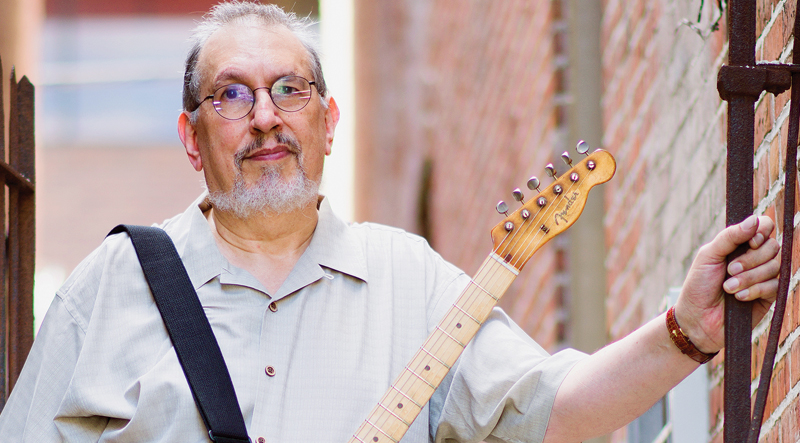
Instrument photos: Mike Russo. Bromberg calls his Tele a “mutt” due to it’s ’59 body and ’57 neck.
On your early albums, you were known as one of the fastest flatpickers around.
Fast flatpicking is not possible for me any more. Soulful is what I like best now, anyhow.
Thus, a blues album?
The first time I asked [multi-instrumentalist and friend] Larry Campbell to produce an album for me, I suggested we do all blues because I’d never done a homogenous album before. He said, “Naw, let’s do an old-time David Bromberg album – everything but the kitchen sink.” And that’s what we did [with Only Slightly Mad]. Now, both Larry and I felt it was time for the homogenous one. But it’s not all that homogenous, actually, beyond the connecting element of the blues. And that’s about as homogenous as I can get.
And your sense of humor continues on the new album, from the title and cover to your interjections within songs.
There’s nothing much I can do about that – it’s what I do. But people sometimes confuse irony with humor. To me, good blues has to be ironic; the most famous blues line is, “I’ve been down so long it feels like up to me.” You can’t get too much more ironic than that. At the same time, it’s also kind of funny. The important thing, really, to me, is the irony. That’s just the way I am.
Bromberg has owned this late-’50s Esquire since the early ’60s. “It has my sound,” he said. “I’ll die owning that guitar.”
In 1980, you stepped aside from recording and releasing albums…
Yes, but only for 22 years. I actually learned to build violins as a means to an end. What I was really interested in was learning how to identify them. If a guitar says “Gibson” on it, the chances are very good that it was made by the Gibson company. But if a violin says “Stradivarius,” that doesn’t improve its chances of being a Stradivarius; you got to know what they look like. I went to violin-making school so I could understand how they were made, so I could begin to get an idea of who made what, when, and where.
And over the years you gathered an incredible collection of vintage violins – some 250 made by about that many different builders.
It took me 50 years to put the collection together. The Library of Congress has agreed to try to find a buyer for it within a couple years.
You’ve also owned – and played – quite a collection of guitars.
The collection I have now is nothing like I used to have. If we start talking about the collection I used to have, we’d both be in tears. During the period when I wasn’t playing, I thought I’d never play again, so when I needed money – which was often enough – I sold them. Still, I kept a few of my favorites and now have a lot of new ones.
(LEFT) Bromberg got this Martin O-42 as a gift from Joan Baez. (RIGHT) Bromberg’s Martin conversion, built by Matt Umanov from a Martin archtop and fitted with a dreadnought neck.
Is the Fender Esquire one of those? Is it the same one shown on your ’70s albums.
Yes, I kept that ’58 /’59 Esquire maybe because I didn’t think it was worth a lot. But I know now that I’ll die owning that guitar, that’s for sure. It has my sound and no other guitar does and when other people play it, it doesn’t sound the same.
I can’t even remember where I found that guitar. But when I bought it, it was used – now it’s vintage. I’ve had it since the ’60s. I don’t even remember if it had that added humbucker [neck] pickup.
I used it on albums through the ’70s. I used to play it more on the humbucker, but these days I play it more on the back pickup, which is a Velvet Hammer made by Red Rhodes. It’s more powerful than the original.
(LEFT) Bromberg plays this Martin Custom Shop OOOO-21 every night onstage. It was built using hide glue and modeled after the vintage version. (RIGHT) Martin D-21 Custom.Martin’s David Bromberg signature model is based on the Umanov archtop conversion.
How does the Esquire differ from your early Tele?
The Tele is kind of a mutt. It’s a ’57 neck, though it looks kind of white since I just had it re-fretted. The body and back pickup are from ’59. That guitar’s a recent acquisition. It’s pretty funny. I was at a guitar show and ran into Matt Umanov. I told him I was looking for a couple guitars, including an electric. I told him I’d like to find a ’50s Telecaster, but there’d probably need to be something wrong with it so I could afford it. And his answer was, “You and the rest of the world!” And then I walked maybe 40 feet – and there was this guitar! I’d been looking for one for a number of years, and it was exactly what I wanted.
It has a very different sound than the Esquire. I didn’t want to duplicate that.
Do you prefer to play slide on one or the other?
I play whatever needs playing on them.
Which amps do you run them through?
I’ve had my ’59 Bassman since the ’60s. I bought it from SIR (Studio Instrument Rentals) in New York. They thought it had gotten too funky to rent out anymore, so they sold it to me and I’ve played it ever since.
And you have a small vintage Electar.
I did a record called Use Me and I asked a bunch of musicians to write a song for me, then produce me doing that song. Obviously, I have balls of brass! And believe it or not, pretty near everyone I asked did it. One of the people was John Hiatt. When I went to record with John, he brought in a Valco; I had never played through anything that didn’t say “Fender” on it, and I really liked that amp. So I became interested in non-Fender amps.
A guy I was recording with had this small brown Electar in his basement, and hadn’t bothered with it for years. My wife bought it for me as a birthday present. I’ve never had such a good amp, I’m wild about it. I take it on the road; it goes in the overhead. Onstage, I always have my amps pointed toward me, and up; that’s how I used that amp onstage. And of course, we mic it.
(RIGHT) Recent Martin D-45 rosewood. (LEFT) This ’30s Gibson L-1 was a gift from a friend and Bromberg has used it on several recordings.
It spurred you to collect Electars?
Yeah. They used to be all over eBay, and I bought a bunch because I got really curious about them.
What did you use to get the tones on the album?
That’s the Esquire through an amp that I take on the road when I don’t fly; it’s a Tone King Falcon, their smallest model. I play it on the road because one time my little brown Electar was left on overnight and caught fire – the shielding on the wires got cooked. My manager is convinced it’s going to do that again, but it won’t.
(RIGHT) Bromberg’s Imperial guitar has a hollow neck he says helps it get a “beautiful, rich sound.” (LEFT) After finding this ’70s Gibson F-5, Bromberg had it refurbished by Randy Wood.
You get a nice, lowdown, gritty sound on some songs. Do you use effects to help with that?
Nope, that’s my guitar and the Electar turned up loud, but not deafening. You need to turn them up a certain amount to get a nice sound. I used it at a John Lennon tribute show with a band of New York studio players, and they made me turn it down. That tiny little thing! It’s not much watts, but puts out more than you might expect.
Bromberg has had this ’59 Fender Bassman since the ’60s.
On the acoustic front, you have a lovely Martin O-42.
That was a gift from Joan Baez… must have been 15 years ago. It was one of hers, and it’s gorgeous – one of the nicest presents anybody’s ever given me. I don’t know the vintage.
Bromberg has a Fender Twin from the early ’60s.
You have other Martins, as well, including some that aren’t instantly recognizable…
In the ’60s, a bunch of people started getting interested in F-7s and F-9s, which are the same shape as triple-Os, but bigger. A number of people made conversions; I know of three before mine and the first was probably done by George Gruhn. They didn’t sound like archtops – they sounded like flat-tops, so everybody made them into flat-tops. John Lundberg did one. Mark Silber worked for Lundberg, and he came to New York City and did one.
One day, Matt Umanov called and said, “I have a guitar here. Come down and buy it, and I’ll give you a present.” So I went down, and the guitar was 400 bucks, maybe 450. I didn’t know what he was going to do, but he gave me what today is called either an M or a OOOO-42.
George Gruhn hates to hear this, but the conversions that he and John Lundberg and Mark Silber did used the original necks for the guitars, which were very pretty. But Matty put on a dreadnought neck, and that makes a humongous difference. Martin borrowed mine and copied it.
Bloomberg’s collection of Electars includes his main amp (left), from about 1938.
So what is its sound like?
The original necks were short-scale, so the strings were looser and it didn’t have that really taut bass that mine has. As a matter of fact, Martin didn’t believe it would have any bass. They came when I was doing a show and said, “We’ve got a couple of guitars we’d like you to try.” I said, “Sure!” I was flattered. They gave me what eventually became known as their Jumbo guitar. After a couple weeks, I was back in the area and they came and asked, “What do you think?” And I said, “It’s a very nice guitar…” and they looked very pleased. “But I’d never play it,” I said, then their faces fell.
They said, “We didn’t want to tell you, but we want to build a guitar like what you play.” And I said, “Why don’t you build one like what I play, then?” And they said, “Because yours has no bass!” I said, “What the hell are you talking about?” So I handed them one of my guitars and they were very surprised. I let them borrow it, and they copied it.
That became my signature model; it’s pretty much a copy of the guitar Matty made and I used exclusively for years before a guy fell on it in Texas. So I stopped taking it out. It was not in a condition where it could be played, and Martin kindly repaired it. It’s once again really good. The only difference between it and the signature guitar is that one doesn’t have the signature and the headstock just has the gold Martin script.
What about the OOOO-21?
That’s the one I play every night. It’s a wonderful guitar. I found it at Gruhn’s. It was George’s very intelligent idea to ask Martin to have their Custom Shop make some with hide glue, and he decided on the quadruple-O shape with the old thicknesses and shaped braces.
Your D-45 is also stupendous!
It’s a new guitar. I went to visit Martin because I wanted a rosewood dreadnought, and thought it was the best-sounding guitar there. They told me it was one they’d made to give to their best shop clients, but evidently they made one more than they needed, and so they let me take it.
And you have a D-21 Custom…
I found that at Fred Oster’s shop and fell in love with it in about 45 seconds. I’ve used it onstage a number of times – it’s a very rich and excellent dreadnought. It was made in 2011, in the Custom Shop and I’d be having a difficult time if it weren’t for the Martin Custom Shop, because the guitars they’re making are literally as good as anything they’ve ever made. Otherwise, I’d be crying myself to sleep every night.
This article originally appeared in VG July 2017 issue. All copyrights are by the author and Vintage Guitar magazine. Unauthorized replication or use is strictly prohibited.
All Mike Campbell Photos: Andy Tennille. Campbell digs into a ’67 Rickenbacker 360.
Boiled down, the music of Tom Petty and the Heartbreakers is defined by a handful of essential elements: their leader’s character-filled voice, songs about life and its toils, swirling B-3 organ, and – much as anything – Mike Campbell’s solos. Punctuated by two-string octave bends rooted in Chuck Berry double-stops, they trace a melody like Max Verstappen hunting Lewis Hamilton at Circuit de Monaco.
As the Heartbreakers’ debut album arrived in late 1976, the band’s simple, authentic sound at first struggled to find an audience in the U.S., where producer-driven disco was king. In Britain, however, punk and “new wave” acts were dominating charts and headlines; looking to toss the Heartbreakers’ songs on the heap, management booked a tour to coincide with an appearance on “Top of the Pops.” The approach worked, and the band’s first single, “Breakdown,” reached the U.K. Top 40 later that year. After a re-release in early ’78, it did likewise in the U.S.
Driven but clean, prominent and perfect, Campbell’s note choices have always been the cumin in the band’s meat-and-veggies base – its sound and emotion exemplified by the solos on “Refugee” from the band’s breakout 1979 disc Damn The Torpedoes, “Woman in Love” from Hard Promises, loaned to Stevie Nicks for “Stop Draggin’ My Heart Around,” and twisted slightly for songs he has written with artists ranging from Lone Justice (“Ways to Be Wicked”) to Don Henley (“Boys of Summer”).
Campbell met Petty when the latter auditioned drummer Randall Marsh for the band that would become Mudcrutch; when Petty arrived, they beckoned Marsh’s roommate from the next room to provide rhythm. Campbell emerged and started strumming on the Goya sent from Japan by his father. Petty immediately knew he wanted both guys to join, and while the Goya didn’t exactly play with silky smooth action, it was a step up from the Harmony archtop his mom had scored at pawn shop for $15.
“I tried so hard to play that thing,” he laughed. “The strings were so high and I thought that’s just the way guitars were. But my fingers would literally bleed. I thought ‘How do people do this?’”
The finger-saving Goya remained until he upgraded to a used Strat acquired with a $200 loan from a friend of the band. Along with a Gibson Firebird and a blackface Fender Twin, it helped establish Campbell’s first definable tones. By the time the band moved to L.A., found new members, and became the Heartbreakers, Campbell was using mostly a Fender Broadcaster he plugged into a tweed Deluxe they found tucked away in a club, dusty and non-functional. They sprang to get it working and used it to record that first album, with “Breakdown,” “American Girl” and “I Need to Know.” Today, vintage tweed Deluxes remain his preferred taste onstage and in the studio.
“We use old amps and old guitars… but hey, we’re old people,” he laughed. “And the reissues do sound pretty good… until we plug in the old ones.”
We spoke to Campbell as the band was set to begin rehearsals for its 40th-anniversary tour.
The band nicknamed this modified early-’70s Tele “Red Dog.” This ’64 was the first Strat owned by Campbell and has been played on many albums and tours. All guitar photos by Rick Gould.
The Heartbreakers have been rolling so long some might fear the tour will be a by-the-numbers affair. How do you keep it fresh for yourself – and in turn for the audience? Can it still be fun?
It is still fun, and I’m really proud of that because you see a lot of bands – our age, maybe even younger – that go out and you can tell they don’t have that same relationship. They might be in it just for the money or whatever, but if you really love the people you’re playing with and love what you’re doing, that’s communicated to the audience. They can feel that, and they give it back. It snowballs.
There’s still an energy that stems from genuine enthusiasm?
I can tell you honestly, we love what we do and we’re so grateful that we get to do it. We don’t hang out that much between tours, but when we play, there’s a chemistry that happens; we all get a big smile on our faces. And fortunately, we have a lot of good songs that have held up. I love playing a good song no matter how many times I’ve played it, because I always find inspiration in it.
How does the intuition created by years together manifest in the music?
Well, there could be a nod of the head or a lean of the shoulder that suggests “I might be going this way…” But yeah, we’ve played together so long we basically read each others’ minds. It’s like one beast. We’ve come back for rehearsal before where we’ll walk in, go “One, two, three, four” and within a few measures, we look at each other and go “Wow!”
We’re the messengers of this thing that’s happening. Without planning, we create openings for improvising, and we’re really good at it. Ben and I know each other so well that we automatically know the right voicings for the parts we’re playing together. We don’t even talk about it – I just know that if he’s playing a particular sound, I go to a certain note and it works. And vice-versa. If you watch closely, you’re seeing people communicating on a deep, spiritual level – and themselves being a little amazed while they’re doing it. That’s the thrill of it all.
It’s hard to describe, but I think compared to a lot of bands, there’s a telepathy that makes it magical. The Stones have that, too; when Charlie (Watts, drummer) plays, they don’t think about it, it’s just chemistry. I’m not comparing us to them, but it’s just the idea of musical communication between people who are really tuned-in together. I don’t think you get that with a lot of bands.
Campbell onstage with a ’65 Gibson Firebird V.
The mix of skill, intuition, the personalities, and the songs.
Yeah… it’s the whole beast.
Have you sorted out guitars and amp rigs for the tour?
We don’t have any idea (laughs)… but typically, I’ll have my normal amp rig. And most of the stuff that we use for the familiar songs will involve the same guitars because they make the right sounds. But, for this tour we have the Webb Sisters coming out to sing backup – they were out with Leonard Cohen’s band and they’re really good. So we’ll have them, which I’m thinking will help us go deeper into the catalog and play some songs we don’t normally play. If we do that, I may have to pull out certain different guitars for those songs. But we’ll only know that after we get to rehearsing.
Does Ron (Blair, bassist) get to decide what he’ll take out, or do you and Tom have some input?
Nah, he’s got a great sense of tone – always has. He has a couple great Fenders and a Harmony bass. He does his thing and we trust him – never had a need to question him.
Joe Walsh is opening for better than half the shows.
Yeah, how cool is that? I love Joe!
He’s pretty easy to get along with…
We’ve done a few gigs together and talked here and there. It’s always a joy seeing him. And he’s a great player. It’s going to be a great bill – lots of guitar. I’m sure we’ll hang out.
Have you ever had the chance to sit with him and talk about guitars and gear?
Yes, a few years ago the Heartbreakers played the Hollywood Bowl. I’d just gotten my ’59 Les Paul and I took it to the gig. Joe came with Jeff Lynne, and I said, “Joe, you gotta see my new guitar,” and I played it on a couple songs. As we were getting ready to go up for an encore, Joe came running over and said, “That guitar!” I said, “What?” And he goes, “It’s a monster!” (laughs) So he’s like me – a little kid when it comes to gear. He’s just such a riot – really positive energy.
Is that the first ’Burst you’ve had?
Yes, it is! It took me 40 years to save up enough money (laughs)!
This 1950 Fender Broadcaster is one of Campbell’s live mainstay guitars, and this ’60s Rickenbacker 360 was for many years one of Tom Petty’s primary stage guitars.
Should it seem odd that you hadn’t had one years before?
Well, that thick Les Paul sound is not something we explored until more recently. If you think about the Heartbreakers’ sound, we’re a jangly sort of band, with Fenders and Rickenbackers. That’s how we started out. I did have a goldtop back in the day, with P-90s. It’s a great guitar. But the Heartbreakers’ sound – early sound, especially – is jangly.
Many years ago, [guitar dealer] Albert Molinaro came to my house right before a tour and said, “I’ve got this sunburst Les Paul you might like. I’ll leave it with you for a few days.” It was something like 50 grand – this was before they went out of control – and that was a lot of money for me. So I tried it for a few days and thought, “…it’s kinda dark-sounding and heavy…” so I told him, “Nah, I don’t think I want it,” and had him pick it up. So, off I went out on tour… and my wife called a few days later and said, “Ya know, I think you ought to get that guitar. I have a hunch it’ll be a good investment.” So I called Albert, but he said, “Sorry, man, I already sold it.”
Flash-forward 10 years and he calls and says, “Mike, I’ve got another one.” I was about to go out on tour again, and said, “Well, can I give you half now and half after the tour?”
How much had the price increased in that decade?
About five times over!
But now you have one…
Yeah, and I’ll never sell it.
Which guitars did you use on the first Heartbreakers album?
My 1950 Broadcaster is on some of it, including “Breakdown,” and part of it was my Les Paul – “Stranger In The Night” and “Fooled Again.” That’s the goldtop; I like that guitar a lot, it’s a good workhorse.
What year is it?
It’s a ’68 or ’69, and when I got it, it didn’t have the covers over the pickups – they were just exposed. I thought maybe it had custom pickups, but then later realized someone had just taken the covers off.
It’s unusual to have the covers removed from P-90s…
Well, I didn’t know any better.
What sort of condition is it in these days?
It’s in great condition. I’ve taken good care of it and haven’t really taken it on tour in quite a while because now I have the other Gibsons. But I pulled it out the other day to record and thought, “Man, this thing sounds great.” It’s really heavy, but when I was younger I didn’t care about that.
There’s no new album to support on this tour. Does that mean it’ll be a greatest-hits show?
Well, there are a certain number of songs people expect to hear, and we feel a responsibility to do a lot of them. Hopefully, though, the tour will be a hybrid of enough familiar songs and maybe some deep cuts with the girls helping add depth to the show.
Campbell with a ’59 Telecaster.
The band has been together 40 years. Looking back, do you have a few highlight tours or shows?
There are a few, yes. The first one that pops into my mind is the Royal Albert Hall George Harrison tribute, because it was such an emotional event in an amazing building. We did three of George’s songs that night and fell in love with the Albert Hall. Now, we try to play it every time we go back to England.
The Super Bowl in 2008 was… big. I mean, it was exciting and kind of overwhelming because we don’t normally play to 90 million people in one show. It was particularly fun for me because it was my birthday and my family was there; “Dad’s playing the Super Bowl!” I felt pretty important that day (laughs).
There are a lot of shows, and some of my favorite moments were in smaller venues like the Fillmore West. We did a run up there a few years ago and enjoyed some of the most-musical moments I’ve ever had. Certain venues come to mind, like Madison Square Garden. Last year, we played Fenway Park. This year, we’ll play Wrigley Field, and Safeco Field, in Seattle. We’ve never done that before, so it’ll be interesting.
How about on the other end of the spectrum? Are there gigs that left emotional “scars?”
Oh, there were some bumps in the road. I remember one back when we were touring between the first and second albums; we were playing a club in Akron, Ohio, and got to the gig late, so there was no sound check. So, we were sitting there with the opening act, and they passed around a… smoke. But they didn’t tell us it was laced with angel dust. So, we get onstage – and we’d never played this place or even seen this stage before we went up there – and in front of Tom there was a lip that went out that you could walk out a little into the audience. But, the way it was lit, from my view it looked like that lip went all the way across the stage. As far as I knew, I could walk all the way out and still be standing on something. So, I got to one of my solos and I went running up… and ended up suddenly standing on the floor (laughs). I didn’t fall – I landed on my feet and kept playing – but I was standing on the floor thinking, “Hey… how’d I get down here?”
We’ve never had an disaster or train wreck at a gig. We’ve managed to always get the job done on some level.
This article originally appeared in VG July 2017 issue. All copyrights are by the author and Vintage Guitar magazine. Unauthorized replication or use is strictly prohibited.
Photos: Rob Wheeler, instrument courtesy of Randy Anderson.
Founded in the early 1980s by Hans-Peter Wilfer, Warwick has a familial connection to another well-known German brand from a time when that nation was divided following World War II.
Wilfer’s father, Fred, founded Framus in 1946, and Hans-Peter worked at the company’s facility before it closed in the ’70s. His desire to build stringed instruments remained strong, however, and he started Warwick in September of ’ 82.
“That first year, I made guitars and basses that I sold out of a tiny workshop,” he recalled. “More often, I made basses, which players seemed to like more, so I decided to concentrate on them.”
His first model was a small-bodied headless instrument that borrowed from the then-cutting-edge Steinberger, though he used high-grade woods, in contrast to the composite-body Steinberger. What’s more, Wilfer was motivated by a different headless bass – the Washburn Bantam.
“I saw pictures of the Steinberger only later on,” he said. “Remember, in 1982 we didn’t have an internet.”
As production increased, Warwick began making basses that looked more conventional even as it integrated non-standard woods known for their hard/dense qualities. Wilfer’s reasons were more about being practical than eccentric.
“In the ’80s, bass players loved graphite necks,” Wilfer explained. “But I couldn’t get that, so I thought, ‘Which wood could I use that is extremely hard?’ I found wenge, bubinga, and afzelia.”
One of Warwick’s enduring models is the Thumb Bass, introduced in 1985 as the JD Thumb Bass – the “JD” designation in reference to expatriate American bassist John Davis, who impressed Wilfer with his popping, funk-based style utilizing the stubbiest digit on his right hand.
“The Thumb Bass was designed specifically for comfort in slapping and playing in a virtuosic way, and it was the first bass with such a small body,” said Wilfer.
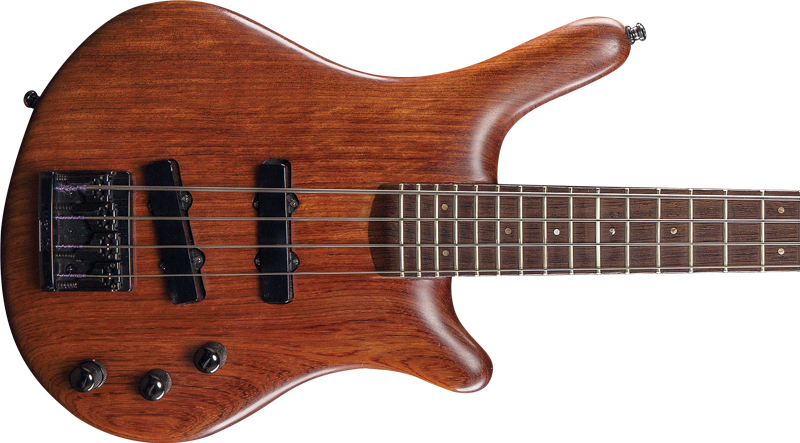
The bubinga of the Thumb Bass’ body, highlighted by its oil-and-beeswax finish on the unique upper-cutaway horn.
Its aesthetic was derived from training as an illustrator and having a mother who was a sculptor. “I probably inherited my taste for design from my mom,” he said.
The Thumb Bass’ finish highlights its seven-ply bubinga/wenge neck.
The Thumb Bass shown here is a 1986 example of the original configuration, conforming to the earliest construction and finish methods including a proprietary “hidden neck-through” design with a seven-layer laminate neck made of alternating wenge and bubinga assembled such that it doesn’t look like a neck-through; its body has a cap composed of three sections – two wings and a plank that covers the neck where it courses the body – cut from one piece of wood and installed to look contiguous.
“The process is complicated and involves measurements of hundredths of millimeters,” said Wilfer. The approach also allows use of 26 frets (made of bell bronze on this instrument) on a 34″ scale, giving the player what Wilfer called “…more virtuosity.” The fretboard is wenge, and the body has an oil-and-beeswax finish typical of Warwicks in that era, as is its brass Just-A-Nut design. Other hardware includes tuners, bridge/tailpiece, and locking strap buttons made by Schaller. The bridge is Wilfer’s design, and exclusive to Warwick in that era. The angled tuners, meanwhile, “…have to do with the angle of your hands; it’s more natural to turn them in that way,” he said.
The treble pickup was angled to get a better response from the D and G strings, and controls are appropriate – nearest the pickups is a master Volume with push/pull for active or passive mode. The middle knob controls a pickup-pan potentiometer with center detent, while the concentric knob closest to the bridge offers tone control (lower bass, upper treble).
The Thumb remains a key model for Warwick, but has undergone changes including separate bridge and tailpiece and a body with shorter upper-cutaway horn. It’s offered in four- and five-string variations, and there’s a bolt-neck option.
A circa-2001 ad for the Jack Bruce limited-edition signature bass.Features of early Thumb Bass models include the brass Just-A-Nut and the enduring angled tuners.
Jack Bruce (1943-2014) was an early endorser and the company made two signature models with him. The first was a limited four-string Thumb Bass variant, while the latter was aesthetically reminiscent of his ’60s Gibson EB-3.
Warwick ultimately outgrew its Bavarian facility and in 1995 relocated to Markneukirchen, in Saxony. Today, Wilfer takes pride in having made his company one of the industry’s most eco-friendly manufacturers, and its overall success has helped him crank up the Framus brand again in a separate venture that has remained in family ownership.
“I love my work as much as I did on the first day,” he said. “My wonderful wife, Florence, helps. My daughter, Estelle, works in graphics, and my son, Nicholas, is learning to be a guitar builder.
“I’m honored to be in business with wonderful people and employees, and I hope I can continue for several years before I hand it over to my son and daughter.”
This article originally appeared in VG July 2017 issue. All copyrights are by the author and Vintage Guitar magazine. Unauthorized replication or use is strictly prohibited.
In the early 20th century, any shopper who walked into the Charles H. Ditson & Company music stores in New York, Philadelphia, or Boston could have bought a guitar, bowl-back mandolin, or ukulele made by Martin.
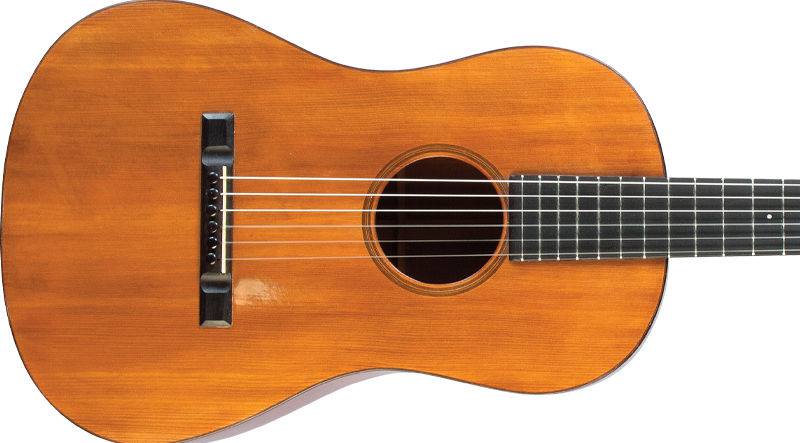
The Style 11 has a mahogany neck, back, and sides with Brazilian rosewood bindings on the front and back edges of the body.
Ditson initially approached the venerable builder simply to fill a niche in its product line, then a bit later to satisfy demand amid a Hawaiian-music craze of the early/mid teens. The arrangement ultimately had an enormous impact on the history of the guitar.
Wanting to deepen its Hawaiian-related offerings beyond ukuleles, in 1915, Ditson asked Martin to make guitars in two sizes, “Standard” and “Concert,” each in three levels of dress and with fan-style bracing that was heavier than Martin’s standard models, perhaps bowing to budgetary considerations but also suggesting they were intended for steel strings and Hawaiian-style playing.
The Ditson featured here is a 1916 Style 11. It has a Concert-sized body and bears serial number 84. Martin records indicate only 71 of these were made and this one went to Charles H. Ditson & Company, New York, on November 11, 1916, as part of a shipment that included one Ditson Style 1 uke, 25 Ditson Style 3 ukes, seven Ditson Style 1 guitars, six Ditson Style 11 guitars, and one Style 4 Martin mandolin.
The Style 11 is similar in size to a Martin 0, but with the sloped shoulders and moderately curved waist of Ditson products. It conforms to specifications of the period with its brown-stained spruce top, fan bracing, mahogany back and sides, Brazilian rosewood center back strip, multi-ply soundhole rosette, ebony bridge with “truncated pyramid” ends, V-shaped mahogany neck with Brazilian rosewood heel cap, slotted peghead with die-stamped “Oliver Ditson Co. Boston New York” on the rear, side-mounted strip tuners with white buttons, 19-fret ebony fingerboard (with 12 frets clear of the body) and mother-of-pearl graduated dot inlays, bar-type frets, ivory nut and bridge saddle, and multi-ply Brazilian rosewood binding on top edge of the body.
Not long after Ditson’s original order, Harry L. Hunt, manager of Ditson’s New York store, requested a larger guitar based on one recently built by Martin for performer Major Kealakai, shaped like a regular 12-fret 000 but measuring 1/2″ longer and 1/2″ wider. The resultant Style 111 (222 in fancier trim) was given the same shape as the other Ditsons made by Martin and shipped with a standard gut-string nut and saddles along with a nut extender to elevate the strings for slide playing.
While certainly novel, none of the large-body Ditsons sold well; records reveal that of the 571 made between 1916 and ’21, only 14 dreadnought-sized guitars were built before Ditson officially put an end to the experiment.
The dreadnought might have ended there, but Hunt refused to let the idea die. In 1923, he asked Martin to build a few more, and by 1930 they’d made 18 Ditson Style 111 guitars. The final Martin-built Ditson guitars were ordered November 28, 1930, and carry serial numbers 44997 and 44998; Ditsons produced between 1916 and ’21 use a separate serial number system – 1 through 571 – but those built after 1921 have standard Martin numbers and X bracing, which is preferred by most players.
Liquidation of the Oliver Ditson Company in 1931 could have been the end for Martin-built dreadnoughts. After all, Martin’s long-standing belief was anything larger than a 000 would produce too much bass. However, after an apparent change of heart in the spring of ’31, Martin logs show completion of a D-21, followed a month later by references to D-1 and D-2 (soon after re-named D-18 and D-28).
The Ditson stamp appears on the back of the peghead and inside the body. The earliest Ditsons made by Martin are stamped with only the Ditson name, while later ones have a Martin logo inside. The stamp listing Boston and New York is typical of instruments made after 1909 because Ditson’s Philadelphia store closed by 1910.
The dreadnought was a “slow-burn” success for Martin; from 1931 until late ’33, they were built to order – eight the first year, nine in ’32, 22 in ’33. Then, artists started asking for larger, louder instruments to use for radio performances, and demand swelled enough that Martin shifted them to a production model; 138 were produced in 1934, 218 in 1935. At the beginning of ’34, the company also took the opportunity to update the design to 14 frets clear of the body (the first 14-fret D-28 appears on logs in January, 1934, the first production batch that March).
After that point, Martin never looked back and production steadily increased, remaining strong even through World War II.
On January 21, 2016, Martin celebrated the centennial of its dreadnoughts with a party at Disneyland and launch of the DR Centennial model, a limited-edition tribute to the humble Ditson that started it all.
Special thanks to Greig Hutton.
This article originally appeared in VG July 2017 issue. All copyrights are by the author and Vintage Guitar magazine. Unauthorized replication or use is strictly prohibited.


 In 1985, Heritage Guitars took over a certain factory space at 225 Parsons Street in Kalamazoo, Michigan, after the former owners decided to move production to Nashville. Since then, Heritage Guitars have continued to craft instruments in the mold of those classic six-strings that first made Kalamazoo famous to guitarists worldwide. Their H-157W is a limited edition of their classic single-cutaway “Custom” model, and it features premium woods, upgraded electronics, high-end pickups, and deluxe hardware. In fact, the H-157W is limited to just 50 instruments: 25 with a quilted maple top, and 25 with tiger-stripe maple.


 Ever wonder about that strange-looking guitar Lindsey Buckingham of Fleetwood Mac has been playing all these years? The same one John Mayer has occasionally been spotted with as well? It’s the Rick Turner Model 1, and if you want the straight dope on this unique instrument, you’ve come to the right place.



 Jerry Jeff Walker said it best. Describing David Bromberg’s contribution to Walker’s trademark 1968 song, “Mr. Bojangles,” he said simply that Bromberg was “the reason man created stringed instruments.” And when he played, “Wood and wire and flesh spoke.”







 In the early 20th century, any shopper who walked into the Charles H. Ditson & Company music stores in New York, Philadelphia, or Boston could have bought a guitar, bowl-back mandolin, or ukulele made by Martin.

