Vox’s Apache travel guitars have a built-in two-channel amplifier and a pair of 3″ speakers. Their amplifiers have controls for Volume, Gain, and Tone, and produce 66 onboard rhythm patterns. The guitars have basswood bodies, maple necks, and rosewood fingerboards. Each is equipped with a single-coil pickup and sealed tuners. See more at voxamps.com.
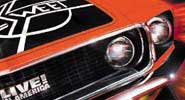
Sweet – the ’70s glam-pop act that’s almost as famous for its hairdos as its music – is today actually two bands touring under the name. The U.S. version that recorded this disc is led by original bassist Steve Priest, while another, led by guitarist Andy Scott, mostly tours the U.K.
On guitar, Priest has hired veteran English guitarist Stuart Smith to play Scott’s old parts, and he ably lends the kind of heavy, melodic, and snotty guitar riffs that highlighted the glamguitar era of the mid ’70s. His perfectly old-school lead on “Blockbuster” is a fine example. And rest assured, all the classic Sweet material is covered here, from “Fox on the Run” to the bubblegum hit “Little Willy,” as well as their ELO-soundalike gem from 1978, “Love Is Like Oxygen.” Capping it off is their glam masterpiece, “Ballroom Blitz,” replete with famously genderbending vocals.
But why would someone buy a CD from a band that has one-fifth of its original lineup? Well, there’s the fact the original Sweet never released a live album, so this does fill a niche, of sorts. Also, considering the performances are true to the original recordings and feature high-quality musicianship, Live in America becomes a pleasant stroll down glam-band memory lane. And blissfully, no one in the current group is wearing the goofy “long hair and bangs” look pioneered by Sweet more than 35 years ago – some things are best left in the past!
This article originally appeared in VG‘s Feb. ’11 issue. All copyrights are by the author and Vintage Guitar magazine. Unauthorized replication or use is strictly prohibited.
Eagle Rock is set to release a live CD/DVD of Gary Moore playing Jimi Hendrix tracks, including “Purple Haze,” “Foxy Lady,” “The Wind Cries Mary,” “Hey Joe,” “Voodoo Child (Slight Return),” and others. Filmed at the London Hippodrome in 2007, the performance was part of the launch for the Hendrix “Live At Monterey” program. The lineup included Moore (guitar, vocals) and Dave Bronze (bass). On three tracks, Moore is accompanied by former Hendrix bandmates bassist Billy Cox and drummer Mitch Mitchell. The CD and DVD will be available September 25.
Recording King will unveil its USA Custom Shop, producing collector’s banjos handmade in the USA and available through The Music Link.
Designed, conceived, and hand-engraved by former Gibson Banjo Custom Shop head Greg Rich, Recording King USA Custom Shop banjos continue the tradition using craftsmen from that era. Each banjo is a singular piece, with each of the limited edition models being truly custom, with none of the details repeated in future models.
The Avalon is the current Custom Shop model. It has a curly maple neck with a radiused ebony fingerboard, deco block inlays, and hand inlaid headstock pearlwork. It is assembled with classic American-made 24K gold-plated top tension hardware and has a hand-carved maple resonator back. It is powered by a Recording King Mastertone-style tone ring, and a hand-turned, hand fit 3-ply maple rim.
The John G. Shedd Institute for the Arts, a music-education organization supported by grants from The Oregon Arts Commission, the National Endowment for the Arts, and The Oregon Community Foundation, is accepting gifts in memory of Bob November, the founder and owner of McKenzie River Music. The institute has established a scholarship fund in Bob’s name, which will provide financial support to Shedd guitar students, continuing Bob’s encouragement to aspiring guitarists. To donate, visit theshedd.org/Membership/DonateBobFund.aspx.
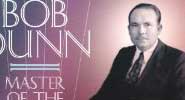
Bob DunnBob Dunn was the amplified steel guitar’s first stylist. More than 75 years after his first appearances on record, Dunn still amazes those who have never heard early music on electric-steel guitar. This two-disc box set contains 53 newly remastered performances from original 78-r.p.m. vinyl recordings, as well as a booklet including four detailed histories. Though Dunn’s professional music career was a relatively short 15 years, his early and enthusiastic adoption of the electrically amplified lap steel led to its earliest use on recordings and subsequent acceptance and adoption by an array of players. In a way, Dunn was a sort of Jeff Beck of the steel guitar; his solos were often otherworldly, with cascades of arpeggios, jarring staccato notes, and Hawaiian chime effects blasting through the mix of instruments. Though period photos show he plugged his Epiphone Model M into a matching Epiphone amp with no volume pedal, he obviously manipulated the Volume control on the guitar, laying back during the rhythm parts and coming in with a churning overdriven tone on short solos.
Dunn’s genre is now called Western swing, and it formed the roots of numerous offshoots. In his groundbreaking (literally) electrifying music, he melded Hawaiian, country, and hot jazz elements into a style that reverberates today in genres from modern country to rock and roll.
This box contains dozens of Dunn’s most astounding performances, recorded with bands such as Milton Brown & his Brownies, Cliff Bruner’s Texas Wanderers, Roy Newman & his Boys, as well as Bob Dunn’s Vagabonds. And while one can never expect remastered 78-r.p.m. recordings to sound modern, there is a clarity and separation that allows easy identification of many instruments.
An important part of any boxed retrospective is context, and this excels, with dozens of period photos, record labels, instruments, and discography that show clearly the results of many hours of research. Historical essays describe Dunn’s life, professional approaches, and subsequent influence. Though not as well-known as other lap-style players such as Sol Hoopi or Noel Boggs, Dunn was as talented and inventive as any. It’s nice to see and hear a celebration of that talent.
This article originally appeared in VG‘s April ’11 issue. All copyrights are by the author and Vintage Guitar magazine. Unauthorized replication or use is strictly prohibited.
Vintage Guitar magazine is on-location at Summer NAMM! We will be delivering pictures from the music products industry’s mid-year gathering June 11-14. Follow us on Twitter to see the latest products, gear and technology, and more.
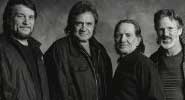
The first group of Highwaymen was a folk ensemble that flourished in the early ’60s. The Highwaymen of this release were a Traveling-Wilburys-type aggregate of four of country music’s biggest stars and songwriters – Waylon Jennings, Johnny Cash, Willie Nelson, and Kris Kristofferson. They released three studio albums as a group but had already been performing and jamming together in various combinations before the first album and would continue to do so until Jennings’ death in ’02. This collection puts together live cuts and most of their studio output as duos, trios, quartet and solo with the bonus addition of singer Johnny Rodriguez (“Deportee”) and a Who’s Who of guitarists including Grady Martin, Reggie Young, Chips Moman, Jack Clement, Norman Blake, and Marty Stuart. Kristofferson’s compositions dominate the collection with his own version of “Me And Bobby McGee” resurrecting the song’s gentle poignancy. Cash and the Tennessee Three’s live performance of “Sunday Morning Comin’ Down” is
close to iconic, sounding just as good as it did when it was recorded in 1970. Nelson’s 1978 solo take on “Help Me Make It Through The Night,” featuring Jody Payne’s gorgeous solo, rivals the classic version by Payne’s late wife, Sammi Smith.
Some of the best cuts date back to their first album as a quartet, including a cover of the Jimmy Webb song that gave the group their name, and a rollicking version of Cash’s “Big River” that Jennings practically steals.
The Essential Highwaymen will lead many to seek out the original albums. For Jennings, it’s also a posthumous chance to be reevaluated as a talent worthy of standing shoulder-toshoulder with the best of them – his fellow Highwaymen, to mention a few.
This article originally appeared in VG‘s Mar. ’11 issue. All copyrights are by the author and Vintage Guitar magazine. Unauthorized replication or use is strictly prohibited.
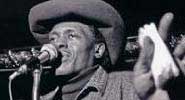
Junior Wells released enough mediocre product in his lifetime that it’s easy to forget what a great stylist and showman the Chicago bluesman was. This hour-plus live set, recorded at Club 47 in Cambridge in ’66, is a vivid reminder.
The harmonica great cut memorable singles in the ’50s, but his long-playing debut didn’t come until 1965, with Hoodoo Man Blues, a true classic of Chicago blues. It featured Wells in a bare-knuckled quartet setting (with “Friendly Chap,” better known as Buddy Guy, on guitar) – a format that suited Wells since his days with the Aces in the early ’50s.
Wells and Little Walter Jacobs both fronted the trio – drummer Fred Below with brothers Louis and Dave
Myers on guitar and bass – when they swapped places as members of Muddy Waters’ legendary band. Waters’ ensemble cut the dye for all Chicago blues bands that followed, but the Aces lent a jazzier touch to the concept.
Louis Myers is too often a glaring omission in discussions of blues guitar greats, probably because of his sideman status. But, along with Jimmy Rogers’ work with Muddy, Robert Lockwood’s with Sonny Boy Williamson, and Hubert Sumlin and Jody Williams behind Howlin’ Wolf, he made an art out of the backup role, especially when it came to accompanying the harmonica.
But, like Lockwood, he could launch into jazz-inflected excursions – possibly homage to his earliest influence, Lonnie Johnson. After a veritable master class in Chicago blues, the trio (sans Wells) closes the set with a break instrumental, with Myers handling bebop runs (sprinkled with octaves) with ease. Wells also features him on a rendition of Freddie King’s “Hideaway” that leaves no doubt he could have gained wide recognition as a lead guitarist, had he chosen that path.
This article originally appeared in VG‘s Feb. ’11 issue. All copyrights are by the author and Vintage Guitar magazine. Unauthorized replication or use is strictly prohibited.
Verellen Amplifiers is offering two tube-driven pedals, the Meatsmoke and Skyhammer, which reproduce the preamp circuitry in the company’s amps of the same names. Each has controls for Gain and Master Volume along with three-band EQ and High and Low output modes. The dedicated record output includes a speaker-simulating filter with two levels of intensity, which allows for running the pedals directly to a mixing board, tape machine, or DAW, without the need for power amps or speaker cabs.
Each is housed in a steel enclosure set between panels of finished birch. Learn more at verellenamplifiers.com.







 Verellen Amplifiers is offering two tube-driven pedals, the Meatsmoke and Skyhammer, which reproduce the preamp circuitry in the company’s amps of the same names. Each has controls for Gain and Master Volume along with three-band EQ and High and Low output modes. The dedicated record output includes a speaker-simulating filter with two levels of intensity, which allows for running the pedals directly to a mixing board, tape machine, or DAW, without the need for power amps or speaker cabs.