Month: August 2007

  • Chris Whitley and Jeff Lang – Dislocation Blues

    Chris Whitley and Jeff Lang - Dislocation Blues

    Chris Whitley and Jeff Lang – Dislocation Blues

    Chris Whitley died from lung cancer in November, 2005. In his last years, he recorded more exceptional music than many musicians do in a lifetime.

    Dislocation Blues

    The material is Whitley and Lang originals, plus two Dylan covers – “When I Paint My Masterpiece” and “Changing of The Guard.” One new song, “Underground,” was written by the whole band during the recording session. Whitley and Lang share lead vocals, with Whitley playing National steel guitar and Lang on amplified acoustic lap steel, acoustic guitar, fretless banjo, chumbush, and loops. Grant Cummerford plays upright acoustic and electric bass, and Ashley Davis plays drums/percussion.

    Posthumous releases usually do little to enhance an artist’s reputation, but Dislocation Blues is a strong exception. It gives a glimpse into Chris Whitley’s possible but unfortunately truncated future. His unique take on acoustic blues achieved a level of intensity and personal truth that few, if any, contemporary blues practitioners have matched.

    This article originally appeared in VG‘s Jul. ’07 issue. All copyrights are by the author and Vintage Guitar magazine. Unauthorized replication or use is strictly prohibited.

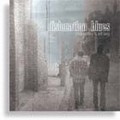
  • Brian Setzer – 13

    Brian Setzer - 13

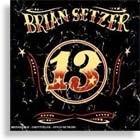
    Brian Setzer – 13

    Brian Setzer is an amazing guitar player who has always played what he wanted, whether it was popular or not – from rockabilly to big-band. But some fans have wanted one album that offered a mixture of his talents. This is it.

    13 (named for the number of songs on the record) covers a range of styles, including chunky rock on “Drugs & Alcohol (Bullet Holes)” fueled by a repeated lick while fingerpicked rockabilly chords cover the rest of the ground. The solo is big and as rock and roll as you could ask. If you’ve ever questioned Setzer’s chops, put on “Take a Chance on Love.” It’s an excuse to play guitar. “Back Streets of Tokyo” is a rocker with big riffs and licks with a metal-esque flair (I swear there’s a bit of “Cat Scratch Fever” in there!). “When a Hepcat Gets the Blues” is a swinger that lets Setzer display his jazz skills, and the solo is amazing. And speaking of swing, the instrumental “Mini Bar Blues” has gorgeous solos and harmonized guitars all over the place. Country bends and pinched notes on “Don’t Say You Love Me” combine with Brian’s vocals, and the vocals are as excellent as you’d expect. Whether it’s a full-tilt rocker or the very cool folk and banjo of “The Hennepin Avenue Bridge,” he’s right on the money.

    Lyrically, pretty much everything works. Listen for his jab at pretenders on “Really Rockabilly.” Very funny stuff set to playing that would make Carl Perkins smile. Cuts like “Everybody’s Up To Something” and “Broken Down Piece of Junk” also show off his clever side.

    It’s nice to hear Setzer cut loose like this after so many thematic albums.

    This article originally appeared in VG‘s Feb. ’07 issue. All copyrights are by the author and Vintage Guitar magazine. Unauthorized replication or use is strictly prohibited.
  • Benedetto Bravo

    The Benedetto Bravo earns a standing O

    With a list of regular users that includes Johnny Smith, Joe Diorio, Martin Taylor, Bucky Pizzarelli, Howard Alden, Ron Escheté, Frank Vignola, Andy Summers, Earl Klugh, and Kenny Burrell, Benedetto guitars have attained near-legendary status in jazz box circles.

    Benedetto guitars are made in Fender’s Corona, California, factory by a small group of luthiers trained by renowned builder Robert Benedetto. These builders work exclusively on the Guild/Benedetto archtops, which include the Johnny Smith Award and Stuart signature models. Each guitar is built by hand using top-shelf materials, and each is inspected by Benedetto before being shipped.

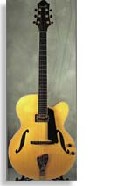
    The list of Benedettos is a diverse offering featuring six models ranging from the top-of-the-line acoustic La Venezia (list price $26,250) down to our featured axe, the Bravo. But make no mistake, the Bravo is every bit a Benedetto, and has many high-end features you typically find on more expensive instruments, including a gorgeous laminated flame-maple back and matching sides, a select clear arched laminated spruce top, three-piece flame maple neck with a dark ebony fretboard and adjustable ebony bridge. The downfall of many an archtop is a poorly fitted bridge, which results in a poor transfer of string vibrations. This is certainly not the case with the Bravo; its bridge is meticulously fitted to the top contour, ensuring superior energy transfer.

    Hardware on the Bravo is gold-plated and includes a proprietary tailpiece, mini Schaller tuners with ebony buttons, thumbwheel-adjustable bridge, high-adjustment screws, and output jack.

    In terms of looks, there is an elegant simplicity in the Bravo’s curves and lines. It makes for an upscale look, and the absence of fret marker inlays or headstock adornment contributes to the understated motif. The Bravo is simply a well-conceived, hand-crafted design that can only be executed by an experienced archtop builder.

    Looks being only half the battle, our other concern was with the Bravo’s playability, and we were very pleased. It is excellent, with a dead-on straight neck, immaculate fret work, and accurate intonation. These are all huge pluses for a working guitarist. The 16″ lower bout and 42″ length make for a balanced, well-proportioned visual, while providing a very comfortable, lightweight guitar that balances well whether it’s played sitting or standing. The 13/4″ width at the nut and strong U shape of the neck give it a substantial feel, but not too thick or disproportionate. The guitar should work very well for fingerstyle jazz players. The 12″-radius fretboard and level, polished frets allow for a low, buzz-free action and smooth feel up and down the neck.

    The 21/2″-deep body contributes to a slightly brighter overall tone compared to a Gibson ES-175 or Gretsch Synchromatic 400. But, plugged into a new Ampeg Super Rocket 2×12″ tube combo, we found nicely balanced tone, with full, round low-end, articulate mids, and snappy highs. Adjusting the pickup slightly closer to the strings resulted in a warmer, punchier midrange response with just a hint of a smooth overdrive. The well-tapered volume and tone controls let us roll off highs smoothly and soften the attack, for a darker jazz tone, without losing clarity or punch. The laminated spruce top and shallower body depth make for less feedback than a traditional solid top, full-body jazz box. The thin nitrocellulose finish allows the guitar’s top to breath and resonate, and it feels great while giving the guitar an aged/vintage vibe.

    We ran the Bravo through the de rigeur Polytone Mini Brute and discovered an even more articulate jazz tone with that unmistakable jazz pop to the midrange, and complex overtones. The marriage of materials, design and electronics in the Bravo produces a superior balance of tone. No matter what we plugged it into or how we set the controls, it always sounded good.

    The Benedetto Bravo is a flawlessly crafted archtop with a very live and responsive top, effortless playability, and an unmistakable high-end vibe. The wise would do well to take a close look; this guitar could justifiably be priced higher than it is!

    Benedetto Bravo

    Features:
    16″ body with three-ply binding, laminated maple back and sides, laminated spruce top, parallel spruce bracing, adjustable ebony bridge, three-piece bound flame-maple neck, ebony fret board, body-mounted volume and tone controls with ebony knobs, Benedetto A-6 humbucking pickup, bleached bone nut, Schaller tuners with ebony buttons, gold-plated hardware, nitrocellulose gloss finish.

    Price: $4999 (list)
    Contact: Benedetto Guitars, Inc.
    10 Mall Terrace, Suite A
    Savannah, GA 31406
    phone: 912.692.1400
    fax: 912.692.1403
    benedettoguitars.com

    This article originally appeared in VG‘s Sept. ’05 issue. All copyrights are by the author and Vintage Guitar magazine. Unauthorized replication or use is strictly prohibited.
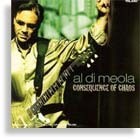
  • Al Di Meola – Consequence of Chaos

    Al Di Meola - Consequence of Chaos

    Al Di Meola – Consequence of Chaos

    Though sometimes lumped in with Carlos Santana, Latin guitarist Al Di Meola is almost his complete musical opposite. Where Carlos plays easy-going, accessible Latin rock, Di Meola delves into the dark, arcane corners of the genre – his music is more than a simple, minor-key melody over a conga groove. It’s intoxicating, compelling, and devilishly complex stuff.

    As heard all over Consequence of Chaos, Di Meola elegantly mixes flamenco and Mediterranean textures with all manner of South American tangos and rumbas… all topped with his legendary electric and acoustic guitar chops. Adding to this heady fragrance is a dream team of fusion musicians, including keyboardists Chick Corea and Barry Miles, drummer Steve Gadd, and 6-string bassist John Patitucci.

    If you haven’t listened to Di Meola since his Elegant Gypsy and Casino heyday in the late 1970s, however, you may be in for a surprise. The guitarist is a far more subtle and sophisticated composer these days, blending soft acoustic passages with overdriven electric lines at the drop of a hat. For lack of a better comparison, you could say that Di Meola’s recent music is more like a Latin variation on the Pat Metheny’s brand of quietly powerful fusion. Return to Forever, it’s not.

    Di Meola’s influences are eclectic, too: rock, jazz, Latin, hip-hop, and more; he crosses musical boundaries at whim. “San Marco” starts with a soft-jazz groove and sultry electric melody, but soon, the guitarist brings in nylon-string licks and more electric work. The lengthy “Turquoise” features nylon-string at the forefront, as well as with piano and intricate percussion. And somehow, Di Meola keeps it from being cocktail music, which it could be in the hands of a lesser musician.

    The closest to vintage high-voltage Di Meola would be “Red Moon,” which features fierce electric solos over a steady Latin groove. But for the most part, Consequence of Chaos is more about melody and the sultry, romantic South American music that has obsessed Di Meola for the past 15 years or so. While the famed guitarist may have left the casino years ago, he’s still a riveting guitarist who’s avidly exploring new textures of sound and nuance. And at the very least, here’s one fusion player who’s not pandering to “smooth jazz” radio. Bravo!

    This article originally appeared in VG‘s June. ’07 issue. All copyrights are by the author and Vintage Guitar magazine. Unauthorized replication or use is strictly prohibited.
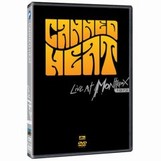
  • Canned Heat – Live At Montreux

    The story of Canned Heat has more twists and turns than Spinal Tap’s evolution from the Thamesmen to Spinal Tap, Mark II. Which is why some of the dramatic, lofty claims in the documentary contained in this double-DVD undermine the amazing tale of the band’s actual achievements and history. “In all history,” the narrator intones, “there is one band that truly revolutionized the blues while living the sex, drugs, and rock and roll lifestyle to the fullest.” Really? The Butterfield Blues Band and Cream weren’t revolutionary? Fleetwood Mac didn’t indulge in its share of sex and drugs?

    That statement comes at the end of the two-hour documentary, Boogie With Canned Heat, that comes as a bonus disc with the group’s 1973 appearance at the Montreux Jazz Festival. The live disc has its moments, and includes four songs of Heat backing Clarence “Gatemouth” Brown, but the documentary is what makes this package worth owning.

    By ’73, one original member of Heat had died, and there’d been several personnel changes – all detailed in the documentary. Original lead guitarist Henry Vestine had rejoined the group, and the two mainstays, singer Bob Hite and drummer Fito de la Parra, were still onboard. But the reshuffled lineup lacked both the charisma and authenticity of the original quintet, and there are a few trainwrecks, especially during the unrehearsed jam with Gatemouth (though it’s still a treat to see the bluesman at the relatively young age of 49).

    But there are moments when things gel – particularly on the hits “On The Road Again” and “Let’s Work Together” and, of course, the Hooker-inspired boogie finale – and Vestine takes flight, with Fito prodding him up, up, and away.

    The story of Canned Heat is told by de la Parra, along with interview segments of the band’s original manager, Skip Taylor, and original bassist Larry Taylor (no relation). This is actually the toned-down version of the saga; Fito’s book, Living The Blues – Canned Heat’s Story Of Music, Drugs, Death, Sex And Survival offers the unexpurgated version.

    Still, there are passages (absolutely true) that could have been culled from This Is Spinal Tap. The band actually set out to be the loudest group in the world, using Blue Cheer as its yardstick, and ended up with 1,200 watts powering eight 2×15 cabinets – just for Vestine! And, referring to a fight between Taylor and Vestine, de la Parra, says in complete seriousness (with his thick Mexican accent), “Henry had just taken a bunch of downers. That’s the worst time to have a meeting.”

    The actual heyday of the band (who played both Monterey and Woodstock) is rushed through a bit, considering its relative import. But, between stories of the deaths of visionary Al Wilson, frontman Hite, and one-time guitarist Hollywood Fats, there is plenty of rare footage of the band playing live – usually unedited, complete songs – with Vestine, Harvey Mandel, and Fats (Mike Mann). Unfortunately, the chronology leaps 15 years forward at the end – skipping the great Junior Watson’s tenure as guitarist – to mention Vestine’s 1997 death.

    This article originally appeared in VG‘s Aug. ’07 issue. All copyrights are by the author and Vintage Guitar magazine. Unauthorized replication or use is strictly prohibited.
  • Dave Alvin – West of the West

    Dave Alvin is one of America’s best songwriters, and as such runs the risk of alienating casual fans when he does an album of covers. But then again, maybe not…

    The idea with his newest disc, West of the West, is to pay tribute to songwriters from the West Coast, where Alvin grew up. That means is you get stuff like “California Bloodlines” from John Stewart, with its gorgeous changes and nice, melodic lead guitar from producer/string-wizard Greg Leisz blending nicely with Alvin’s acoustic. A bluesy, and very menacing version of Jackson Browne’s “Redneck Friend” features a fine vocal and stinging leads from Alvin. “Down On the Riverbed,” by his buddies in Los Lobos, gets a folk turn with fine banjo.

    Alvin pulls out a wah pedal to highlight Tom Waits’ “Blind Love,” and grand treatments are applied to tunes by Jerry Garcia and Robert Hunter, John Fogerty, Merle Haggard, Richard Berry. And the surprise highlight is a stunning version of Brian Wilson’s “Surfer Girl.” It’s laid back and sparse, with marvelous harmony vocals from the Calvanes.

    The record does on occasion sound like someone treading water to his next effort, but the effort nonetheless is valiant, and Alvin never fails to sound soulful.

    The Great American Music Galaxy is a CD that Alvin originally sold at concerts. Alvin and his band deliver live on great cuts ranging from old Blasters standards to new stuff. Dave and Chris Miller handle the guitar work, and when they stretch out, it’s a joy to hear.

    These two records show Alvin at the top of the heap amongst those who record what he once referred to in song as “American Music.”

    This article originally appeared in VG‘s Oct. ’06 issue. All copyrights are by the author and Vintage Guitar magazine. Unauthorized replication or use is strictly prohibited.
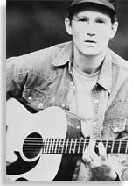
  • Marshall Crenshaw

    Rock & Roll Renaissance Man

    Marshall Crenshaw is nothing if not an enigma – which is ironic, since his music (whether played and sung by him or covered by other artists) is so infectious and accessible.

  • August 2007

    FEATURES

    44 JOE BONAMASSA
    Young Gun, Old Guitars
    At just 30, he is already a veteran who for years has been sharing stages and jamming with the likes of Buddy Guy, Stephen Stills, Robert Cray, Danny Gatton, B.B. King and many others. By Willie G. Moseley

    BRYAN SUTTON
    Solo or Session
    A talented multi-instrumentalist, Bryan Sutton is a session player and successful solo artist. He grew up surrounded by music, and never thought of doing anything else with his life. Plus, a look at his vintage axes. By Zac Childs

    38 AMP-O-RAMA
    The Marshall Model 1958
    In the heyday of rock and roll, many amp builders were on a quest for volume. But as discriminating players learned that louder is not always more toneful, certain amps have since become tone-chaser favorites. By Dave Hunter

    40 EPI ZEPHYR EMPEROR REGENT
    It not only is the most deluxe electric guitar Epiphone ever made, but is the culmination of a 20-year rivalry that kept Epiphone and Gibson at the forefront of innovation through the 1930s and ’40s. By George Gruhn and Walter Carter

    50 RAY BENSON’S GIBSON ES-355
    Anyone with a taste for real country music – in particular, Western swing – will recognize this guitar for many things, including the Lone Star Beer sticker. It is every bit as iconic a Texas image as Bob Wills’ Stetson and cigar. By Teisco Del Rey

    56 CUSTOM KRAFT RED FURY
    Some of the most significant players in American guitar history (like Sears) never actually shaved a neck or wired a pickup. Another example is Custom Kraft, built by St. Louis Music and originally labeled with the Kay brand. By Michael Wright

    60 BASS SPACE
    The Fender Bass V
    The classic “4 vs. 5” debate started in 1961 with the introduction of this, the original five-string electric bass. But alas, it’s mostly noted for being the first bass deleted from the Fender product line. By Willie G. Moseley

    DEPARTMENTS

    Vintage Guitar Price Guide

    Builder Profile
    JCA Circuits

    Upcoming Events

    Vintage Guitar Classified Ads

    Dealer Directory

    Readers Gallery

    FIRST FRET

    Reader Mail

    News and Notes
    Ford Museum/Museum of Making Music exhibits, Fritz Brothers, Stolen Gear, In Memoriam, more!

    Holy Grails
    Dallas Show Displays Heavy Hitters

    Santana’s “Hymns For Peace”
    Star-Studded Summit at Montreux
    By Dan Forte

    Jinx Jones
    Keeping it Together
    By John Heidt

    Rodrigo Y Gabriela
    The King (and Queen) of Acoustic Metal
    By Dan Forte

    Ask Zac
    By Zac Childs

    Ana Popovic
    Singing The Blues
    By Oscar Jordan

    J.J. Grey
    Southern by Default, Gifted by Nature
    By John Heidt

    Jeff Golub
    Gotham Guitar Tribute
    By Willie G. Moseley

    To: Dad
    Fathers and Children Celebrate Father’s Day ’07

    COLUMNS

    The (Way) Back Beat
    Inna-Gadda-De-Vita: Fun With Endorsements, Part II: Roy Smeck
    By Peter S. Kohman

    Q&A With George Gruhn

    Acousticville
    New Guild Acoustics
    By Steven Stone

    Guitars With Guts
    Manuel Hernández
    By R.E. Bruné

    “401K” Guitars
    Fender Basses
    By Gil Hembree

    Fretprints
    Steve Howe
    By Wolf Marshall

    TECH

    Dan’s Guitar Rx
    A Cool One from the Cold War
    By Dan Erlewine

    Guitar Shop
    Upgrades That Work
    By Tony Nobles

    Talkin’ Amps With…
    Jess Oliver and the Birth of the B-15N
    By David Jung

    REVIEWS

    The VG Hit List
    The Doors, John McLaughlin, Jaco Pastorius, Muddy Waters and Johnny Winter, Tone Man, more!

    Check This Action
    Doors Slam
    By Dan Forte

    Vintage Guitar Gear Reviews
    Headstrong Verbrovibe/Prima 30, PRS 513, Hagstrom Viking

    Gearin’ Up!
    The latest cool new stuff!

  • Electromagnets (featuring Eric Johnson) – Electromagnets II

    Electromagnets (featuring Eric Johnson) - Electromagnets II

    Electromagnets (featuring Eric Johnson) – Electromagnets II

    Electromagnets (featuring Eric Johnson)
    Electromagnets II
    Vortexman Music
    As many know, Eric Johnson started his career not in the mid 1980s, but 10 years earlier in the Electromagnets, a hot fusion band from Austin. Inspired by the Weather Report, Return to Forever, and Jeff Beck, among others, the ‘Magnets were a talented band with powerhouse musicians, including future EJ sidemen such as keyboardist Steve Barber and bassist Kyle Brock. And no less than Frank Zappa was a fan, calling the popular local group “… a Mahavishnu with a sense of humor.”

    The original – and very rare – Electromagnets vinyl LP was reissued on Rhino a few years back, but now, a second CD of studio material from December, 1975, has resurfaced. Available only on Johnson’s website, Electromagnets II is a compelling jazz-rock platter, featuring more aggressive guitar playing than the first album and also an extra helping of Eric Johnson compositions, such as “Cannonball” and the aptly titled 6/8 instrumental “Wake Up.” Eric’s explosive solos exude all sorts of period influences: Beck, Tommy Bolin, Jimi Hendrix, John McLaughlin, all mixed up into a hot, fusiony stew. For EJ’s clean country chops, check out the light-hearted “Chickin’ Pickin’.” His playing back then was surprisingly mature and ferocious – not too shabby for a 21-year-old kid.

    Ultimately, one can only wonder what would have had happened if the Electromagnets had been discovered back then. Had they been signed to a big jazz-rock label of the day (such as Columbia/Epic or Nemperor) and released albums of this caliber, Johnson may have been counted among the top fusion axemen of that generation. Instead, the world would have to wait another decade to discover his Texas-fried chops. In any case, if you like classic ’70s jazz-rock, grab this. – PP

    This article originally appeared in VG‘s Jun. ’07 issue. All copyrights are by the author and Vintage Guitar magazine. Unauthorized replication or use is strictly prohibited.