Month: June 2004

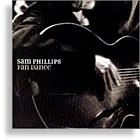
  • Sam Phillips – Fan Dance

    Fan Dance

    Sam Phillips has reinvented herself. Her big star pop persona is gone, replaced by a starkly gothic singer/songwriter with an album that screams to be heard.

    Phillips has moved from Virgin Records and its big-time/big-budget productions that propelled her to pop stardom with 1988’s The Indescribable Wow and 1996’s Omnipop. Signed now to the highly respected “art” label Nonesuch, Fan Dance is a comeback album, a change of directions, and perhaps a mid-life crisis all rolled into one.

    This album is produced by Phillips’ husband, T-Bone Burnett. But this time, the duo has thrown out the Beatles-style pop orchestrations and replaced it with a sparse style that places Phillips’ passionate lyrics front and center.

    Other contributors include avant garde guitarist and banjoist Marc Ribot, American traditionalist Gillian Welch, and a handful of arrangements by Van Dyke Parks. As always, Ribot’s fretwork shines. His jangling sound and off-kilter harmonies run like a vein of barbed wire through the heart of Phillips’ compositions.


    This article originally appeared in VG‘s Jan. ’02 issue. All copyrights are by the author and Vintage Guitar magazine. Unauthorized replication or use is strictly prohibited.

  • Philip Campbell

    Decibel Level Be Damned

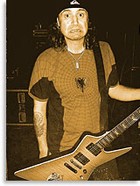
    We recently caught up with Motorhead guitarist Philip Campbell to talk about his influences, the new album, and the band’s efforts.

    Vintage Guitar: You’ve been a guitarist for Motorhead longer than anyone else.
    Philip Campbell: Eighteen and a half years… I’ve been with Lemmy longer than any of ’em. It’s like a family!

    Lemmy’s from North Wales, and Kim Simmonds is also Welsh.
    He’s a great guitar player. Paul Chapman, from Lone Star, is also a Welshman.

    Tell us about some of your pre-Motorhead bands and influences.
    I started playing guitar when I was 10 years old, and at 13 I was playing semiprofessionally in a cabaret band all over South Wales. In ’79 I formed a band called Persian Risk, and after five years I left to join Motorhead.

    What made me want to play guitar in the first place was Hendrix in the West, the live album; I loved the sound of it. In the early days, there was Black Sabbath, Jimmy Page, Michael Schenker in UFO, and Todd Rundgren – one of my sons is called Todd Rundgren Campbell. There were so many amazing players around. Jan Akkerman in a Dutch band called Focus was an incredible player.

    Earlier guitars?
    Just cheap copies. I bought my first Les Paul in ’73, but it was stolen. Then I had a natural (finish) Gibson Flying V. I wish I’d kept all of the guitars I’ve had over the years!

    Now, I’m using a Lag Explorer-style, from a French company. I’ve also used PRS, Brian Moore Custom guitars, a Parker Fly. I just use what

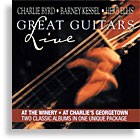
  • Charlie Byrd, Barney Kessel, Herb Ellis – Great Guitars Live

    Great Guitars Live

    Call it a gimmick if you will, but the Great Guitars super trio of Charlie Byrd, Barney Kessel, and Herb Ellis made some great music.

    The concept came by accident. Byrd’s own trio was booked on a joint tour with Kessel’s group. “We would play, then they would play a set, then we would jam on the last song,” Byrd said in an interview recalling the tour. “That jam was so much fun that by the end of the tour, we just jammed on all of the songs.”

    Add Herb Ellis, and Great Guitars was born. The trio released its self-titled debut album in 1974, followed by Return of the Great Guitars with Mundell Lowe replacing the retired Kessel.

    The original trio also released two other live LPs, which are now together on this two-CD set: At the Winery (1980) and At Charlie’s Georgetown (1983). The group dances through covers of classics like “Air Mail Special,” “Sheik of Araby,” “When the Saints Go Marching In,” and more, blending Byrd’s latin-tinged classical guitar with Kessel’s Charlie Christian-inflections and Ellis’ bebop licks. It’s good stuff.


    This article originally appeared in VG‘s Dec. ’01 issue. All copyrights are by the author and Vintage Guitar magazine. Unauthorized replication or use is strictly prohibited.
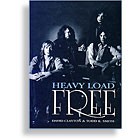
  • David Clayton and Todd K. Smith – Free: Heavy Load

    David Clayton and Todd K. Smith

    This epic chronicles the story of the seminal British blues/rock band Free. Leaving no stone unturned, and with the help of more than 400 photos, authors David Clayton and Todd K. Smith have painstakingly detailed the rise and fall of the band from its early pub gig days in late-’60s London through the massive chart success of “All Right Now,” to the varied fortunes of vocalist Paul Rodgers, drummer Simon Kirke, bassist Andy Fraser, and guitarist Paul Kossoff (VG, May ’00).

    Obviously a labor of love, Clayton and Smith have transformed the magic of Free’s music and the chemistry of the band into print through conversation with the surviving members and others, including Al Kooper, Chris Blackwell, Andy Johns, Ritchie Blackmore, and more. Given the perspective associated with the passage of time, the writers are able to give Free its place in rock history as a significant and important musical force.

    While never enjoying the huge commercial success of their contemporaries in Led Zeppelin, Free’s early live performances were legendary and often shattered attendance records set by The Rolling Stones and The Who in their native U.K. Heavy Load reads like a comprehensive who’s who of late-’60s/early-’70s rock bands, particularly those British.

    The story within is of the genius and tragedy of Paul Kossoff, whose early playing earned him legions of fans, including Eric Clapton. But sadly, the drug use present in his life since late childhood eventually destroyed his body and contributed to his untimely death in March of ’76, at age 25.

    Of particular interest to guitar aficionados are the descriptions and superb photographs of Kossoff’s instruments (most are late-’50s Gibson Les Pauls) and amplifiers we now consider vintage and collectible.

    In a time of cookie-cutter approach to musical biographies on TV music channels, Heavy Load paints Kossoff, Kirke, Fraser, and Rodgers as vibrant-yet-human musicians, not Spinal Tap-ish caricatures. The quality of the writing and the drama of the story ensures it will appeal to fans and non-fans alike.

    At $58 ($35 for the book, $23 for shipping from England) Heavy Load is not cheap, but it’s arguably one of the best books ever written about a rock band, and it’s the definitive Free book. For more, contact Todd Smith at The Cutting Edge, (215) 657-8651, tkscutedge@aol.com.

    England: Moonshine Publishing, 2001, Hardcover 281 pages, $35 plus $20 shipping


    Kirke, Bundrick on Heavy Load
    VG recently had a chance to talk to former Free drummer Simon Kirke and keyboardist John “Rabbit” Bundrick about the new book, Heavy Load, the story of Free. After the breakup of Free, Kirke went on to fortune and fame with Bad Company, and Bundrick has played with a host of big names including Bob Marley, Johnny Nash, Mick Jagger, and Snuffy Walden. Since 1979, he has been keyboardist with The Who.

    Vintage Guitar: What went through your minds when you heard a book on Free was in the works?
    Simon Kirke: My first thought was, “About bloody time!” It’s been so long since Free was around, but I suppose time has added to the mystique somewhat. The story is such a classic one of humble beginnings and the triumphs and tragedies that befell us. I think it makes for compulsive reading. It also gave everyone involved a chance to tell their tale.

    John Bundrick: My first thought was, “Oh boy, they’re not gonna let Free die. Free is still alive and well in the souls of the fans.” Naturally, when I heard that (Free historian) David Clayton was heading it up, I knew it would be good. Dave is very thorough. It’s always a real treat to see photos in books like this, and Dave filled the book up, bringing back all those lovely memories. Very nice touch!

    Thoughts on accuracy, completeness of the story, and overall writing?
    Simon: I was impressed. David really loves the band, and it shows. He and Todd Smith spent years putting it together. I was also very moved by the stories. Most of the events took place over 30 years ago and I had forgotten them. The oral history aspect of the book worked well, gave it a conversational feel…

    Bundrick: I thought it was a very professional job. So good, in fact, I’m gonna give my copy to Pete Townshend. The cover design is excellent, showing the real Free at its best. Overall, the accuracy was spot-on, however, any time you deal with a pot of memories, somewhere along the way, somebody remembers an event a little bit differently, but in all, Dave and Todd juggled it beautifully. The story will never really be complete, because all of us except Koss are alive and still very active – in reality, as offshoots of the original Free lineup.

    What do you remember most about your time with Free?
    Simon: The high points include performing at the first Isle Of Wight festival, Wilson Pickett’s version of “Fire & Water” – Paul Rodgers was on cloud nine for weeks after! Also, receiving our one and only gold disc for “All Right Now,” shows at Sunderland and Newcastle during our heyday – scenes you would not believe. And, touring with Traffic and the Muscle Shoals rhythm section in ’73, Pete Townshend coming up to our van and saying how much he liked “All Right Now.” Ditto Elton John.

    Bundrick: The main vibe I remember was one of honest, completely unbending, hard, hard, work with the four guys who brought me into the fold without any prejudgement. I can recall the smell of Basing Street Studios, the family-type vibe from Island Records’ Chris Blackwell and all their staff, and all the other bands on Island. We were like farm animals in Blackwell’s Barn! Just slopping it out, trying this and trying that.

    Touring with Free was always a treat. I felt like I was in the big time, playing with the big boys. These guys really knew their stuff, so I was with the right crowd, you can be sure. Whenever Paul would sing, you knew you were in the right place – onstage with him. Simon and I always got on, and are still good friends today. As detailed in the book, Simon was the peacemaker. He stepped in the middle of trouble several times, but nobody was gonna mess with him, so any trouble soon got dispersed.

    Overall, the experience of recording in the studio and doing the wonderful tours was an experience I have never matched.

    Since the breakup of the band, do you think Free has been given its proper place in rock history? What should its legacy be?
    Simon: Free should be in the Rock and Roll Hall of Fame, quite honestly. We influenced a lot of bands and although we didn’t sell as many records in the States as in England, there’s still a lot of respect for us. Whether or not we will remains to be seen.

    Our legacy was a blues-based, soulful music played with passion and feel. We lived and died for that band.

    Bundrick: I don’t think Free has been given its proper place in rock history! I’m sure it’s due to the fact it didn’t survive long enough to conquer the American market. They hit on it, but never kicked it to death. So they didn’t have the endurance of, say, The Who or The Stones. Free could have been just as big, in my eyes. With a singer like Paul Rodgers onboard, it’s pretty hard for the boat to sink! In fact, I think Paul should have his own place in the Rock and Roll Hall of Fame.

    Free’s legacy is as the band that started it all in the ’70s! The godfathers of white soul music! They influenced a slew of bands like Foreigner, Kansas, Humble Pie, and all of the singers who mimic Paul. His phrasing is very original, and when you hear a singer using his style, you easily pick up on it.

    What would you like the readers of VG to know about Free – little-known facts, anecdotes, etc.?
    Simon: We schlepped Eric Clapton’s totem pole up and down the West Coast leg of the U.S. Blind Faith tour in our bus. He has it in his garden in Surrey. Also, the guitar he swapped with Koss on that tour (’59 Les Paul Standard) was just auctioned for $100,000 for charity.

    Bundrick: I’d like people to know that Paul Rodgers and I don’t hate each other. It’s a myth generated from one bad encounter in ’72. He’s the finest rock singer on the planet, bar none!

    What have you done in the years since Free?
    Bundrick: Paul and Simon went on to Bad Company, who recently reformed for a reunion tour. Paul is with them off and on, plus he does his amazing solo work. I went on to join The Who. Also, we must not forget Tetsu Yamauchi, the bassist who took over from Andy in Free. Tetsu was an admirable replacement, and he now lives in his home country of Japan. Richard Digby Smith, our resident engineer at Island, was my mentor and helped me wade through all these different English-type muses, and explained what was going on.

    So, really, the story of Free goes on!
    Simon: Since the Bad Company reunion tour, I’ve been on a couple more All-Starr tours with Ringo. I write songs and do sessions, and at the moment I’m involved with film scoring and supervision. I live in New York City with my wife and four children.

    For more on Bundrick, see www.johnbundrick.freeserve.co.uk


    This article originally appeared in VG‘s June ’01 issue. All copyrights are by the author and Vintage Guitar magazine. Unauthorized replication or use is strictly prohibited.
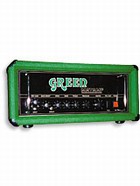
  • Green Amps

    Turning America Green

    It hit Joel Wheeler in a flash of white light, a memory fried extra crispy into his brain.

    Just how you’d picture an epiphany to be, right? A random sentence from a recent acquaintance – five words from a bass player, in this case – knocking the soul for a loop, a sense of clarity flooding the mind.

    Except this one spurs the introduction of a rejuvenated British amplifier line – MatAmp – to the U.S., and a personal awakening for a 32-year-old amp freak.

    The year: 1994. Wheeler is a suit-and-tied insurance negotiator bugging people about death and disability. Sure, he’s got the fat paycheck and nice title, but the corporate gig is getting him down. There’s got to be more to life then deductibles and prescription plans. To lift spirits, he takes a six-hour road trip to Seattle to see Sleep, the ultra-loud and heavy San Francisco trio.

    Sleep in Seattle
    At the show, Wheeler is transfixed by monolithic stacks of green-colored amplifiers towering onstage. Green? Wait, shouldn’t that be Orange? These guys must have scored some old Orange amps and refinished them in green tolex, even adding a retro-looking “Green” logo. Not the case, the band tells Wheeler. Sleep stumbled upon the Greens while touring England. A side trip to have work done on their Orange gear landed them smack dab in the Green-MatAmp shop in Huddersville, northern England, where a small staff cranks out 400 handmade British valve amps and cabinets each year. Sleep gets only three songs in that night. It seems the fire marshal has a small problem with the volume. But three tunes is all it takes for the Greens to hit Wheeler like 10,000 light-rail trains. It’s the beginning of an obsession.

    Sleep invites Wheeler to the band’s Portland gig the next night. Before the show, Wheeler hangs out with bassist Al Cisneros. Their rap session touches on everything from gear to, eventually, Wheeler’s displeasure with his current job and life situation.

    “You just gotta change it,” Cisneros says as he walks to the stage and picks up his bass.

    Snap, crackle, sizzzzzzle. The five words are electricity in Wheeler’s head. The band cranks up, the Greens rumble to life. The “white light” moment engulfs the insurance negotiator who grew up a guitar-playing, long-hair-wearing devotee of Jeff Beck and Al DiMeola. Change is inevitable. It’s time for drastic measures.

    At home in Spokane, Wheeler quits his job and contacts MatAmp in the U.K., intent on buying his first piece of Green gear, a GT-120 head.

    Leaving the nine to five was no big deal. He had to escape. Bring on the hours of jamming and writing songs. Short hair and corporate attitude? Later for that. Getting that Green, however, would prove more frustrating.

    “I pestered the **** out of them,” says Wheeler. “I was more obsessed with getting that amplifier than anything that had to do with work.”

    He fired fax after fax to England, racking up plenty of long distance charges. But the amps were too expensive for Green to ship to the states. The company was a small outfit, building a limited number of pieces from the first screw up. There was no spare cash for hefty shipping invoices. So Wheeler did some research and – schwing! – found a way to ship for 50 percent less. Then he offered to prepay for everything. The guys at MatAmp grinned at his determination – and sent a head.

    It arrived in more than one piece. Not good.

    “I opened the box and knobs fell off in my hand,” Wheeler recalls. “But it didn’t matter one bit. I could’ve made love to that amp.”

    The Mat guys felt so bad they gave Wheeler credit, which he immediately used for a 4 X 12 cabinet. He repaired the head himself.

    He hooked it to the cab. His world roared.

    Another Green World
    Wheeler moved to Las Vegas after quitting his job. In Sin City, he adjusted his bearings. And he spent a lot of time playing guitar, working on his tone and rig. Just like 15 years earlier. But this time, there was a Green to crank. He wanted ears to bleed.

    To pay the rent, he joined the dot-com revolution and began building websites, including a personal homepage that features a photo of his Green rig. The photo generated e-mails from players, gear heads, and old Orange fans. He turned many on to the Green factory, all the while continuing to build his personal Green arsenal – two more heads and three additional cabinets took up residence at his place.

    Impressed with the consistent straight-up treatment from the blokes in the U.K., Wheeler built a MatAmp website (www.matamp.com) as a sort of “thank you” to the company in 1998. The boys in England saw it and were immediately fired up. Wheeler and the U.K. shop began work on a distribution deal.

    In 1999 Wheeler became the official U.S. distribution center for Green-MatAmp.

    Today, with Wheeler as the U.S. anchor, MatAmp brings its quest to uphold the legacy of Mat Mathias handcrafted tube amps to another continent.

    The German-born Mathias began designing and building pro audio equipment in the U.K. in 1958. He produced the first MatAmp shortly thereafter – the famed black and white model. Then came the highly touted reverb unit, used by original Fleetwood Mac guitarist Peter Green. From ’68 to about ’74, Mathias designed and built the first wave of Orange amplifiers (The Orange Voice of the World series, which was not from Mathias designs, followed in the late ’70s).

    Jeff Lewis, current Green-MatAmp proprietor, worked with Mathias in the late ’70s and early ’80s. After Mathias died in ’89 at the age of 66, Lewis formed the Green company, named so at the suggestion of his wife in honor of Peter Green. The first Green amps, complete with the funky-cool green vinyl covering, rolled off the line in ’93.

    These days, Lewis carries on the MatAmp tradition with engineer/designer Dave Green (yes, that’s his real last name). In addition to amp production, the duo stays busy repairing various kinds of vintage tube amps and effects pedals. Lewis and Green also run a sound system division that requires them to visit numerous clubs and other facilities for on-site installations.

    Sales and name recognition are up in the U.S. since MatAmp signed on with Wheeler. So far, the pairing has been positive. “We decided to go away from convention,” Lewis said in regard to MatAmp’s current distribution arrangement. A deal with Gibson crashed and burned with few results in the mid ’90s. “Let’s look at things from another point of view, we thought. Maybe smaller wasn’t bad.”

    As for his new partner across the pond, “Joel’s very enthusiastic,” Lewis said. “If he makes a sale, that’s just a bonus. He actually believes in the product. And that’s a great start. I think he’s done a very, very good job.”

    Green Giants
    Despite being available in the states for only a year, the line has attracted a dedicated niche of fans, including many musicians in the underground heavy rock scene. Green recently became the “official” amp of the Man’s Ruin Records, the San Francisco-based heavy rock/punk label run by pop artist Frank Kozik (look for the Green logo on the back of Man’s Ruin CDs and vinyl). Just Jazz Guitar gave the Green line great reviews and is currently running a monthly installment that features the MatAmp folks designing and constructing “…the perfect jazz amp.”

    “They’re killer, killer amps,” said Matt Pike, former Sleep guitarist.

    “I’ve been playing them exclusively for years now. They’ve been on every recording I’ve done since I got the Greens in Europe. They do things other amps don’t do at all. The tones and volume they give are way different from anything else.”

    Green freaks have plenty to look forward to in coming months. The company is working on a new bass head – a 400-watt unit, “…which is just gonna be an absolute monster,” engineer/designer Green promises during a transatlantic telephone interview. Also in development is a 20-watt combo.

    “A ‘Christmas amp’ is what Joel calls it,” Green said. “A more affordable model for people just starting out. It will also have reverb.”

    Those plans illustrate the special relationship Wheeler has developed with MatAmp. Not only does he handle the business end of things in the States, he offers suggestions and design ideas. The company’s recently launched Series 2000 is the first fruit of that collaboration.

    Of course, there’s plenty of hands-on scurb work for Wheeler to tackle.

    “We ship MatAmp and Green-MatAmp equipment to the U.S., then I work on it to make it 100 percent capable to run on 60 hz/120-volt U.S. current, bias them, set them up, complete any repairs, test them at full volume, then make them available for end users to launch into orbital sound.”
    Tenacity
    The man in Spokane also serves as webmaster for the matamp.com site.

    Phone calls and e-mails are his territory, too. And he’s in the process of building an additional website, greenamps.com, which will contain Mat Mathias history culled from info he has received from Mathias’ widow.

    Add duties as Green-MatAmp’s PR/marketing/promotions department, and we’re talking a seriously full plate.

    No problem, though. Wheeler feeds on it.

    “I feel really good about everything. I’m excited about the coming year,” he says one afternoon following a jam session with his heavy-music project, Soot. “I’m surrounded by pieces of equipment I personally desire and swear by, and for every customer I get, I make a friend. You get this weird bond happening. It’s a rare thing. It’s very cool. I think I’m very fortunate.”


    Green/Matamp head courtesy of MatAmp.

    This article originally appeared in VG‘s June. ’00 issue. All copyrights are by the author and Vintage Guitar magazine. Unauthorized replication or use is strictly prohibited.
  • Ed Gerhard – House of Guitars

    House of Guitars

    There are a number of us who find joy in
    collecting pawnshop guitars – you know
    the type, cheap, affordable, and ever so
    quirky. There’s a certain pleasure in having one of these beaters that you can drag to the beach while keeping the good wood at home. However, there are few among us who would set foot onstage – let alone a studio – with one of these ill-tempered, sometimes untunable beasts.

    Ed Gerhard, a guitarist noted for his beautiful compositions, exquisite tone, and occasional odd tricks (ever try wrapping rubber bands around your strings at the bridge for a muted tone… on a 12-string?) took his love for tone back in time and gathered an assortment of pawnshop players in a quest for a quality of a different sort.

    Gerhard’s seventh album, House of Guitars, is a well-balanced collection of esoteric compositions ranging from Gerhard signature arrangements of traditional tunes to covers of some very tasty McCartney and Lennon tunes. In addition, four of the tracks are original compositions.

    Gerhard is the solo artist on his latest work, with the exception of one cut (“Because of You, This”) where he is joined by Randy Roos on bass and Ray Brunelle on drums. However, this work has only one cut (Paul McCartney’s “Junk”) that showcases Gerhard in his cleanest element: solo guitar. The rest of the tracks usually open with a single guitar, showcased with whatever tonal challenges that might exist, soon to be joined by layered tracks of Gerhard backing himself on one or more of the other pawnshop prizes.

    From the soulful “I Just Can’t Keep From Crying Sometimes,” where Gerhard slides a tale of sorrow based on an old Blind Willie Johnson traditional, to the deeply moving “Let It Be Me,” this homage to plywood and plastic is proof that it when it comes to beauty, it’s the player, not the instrument.

    In other words, House of Guitars should not be played when trying to convince your significant other that you need to add a new guitar to the collection! That said, any guitarist worth his calluses will soon be searching the family attics and closets for forgotten garage-sale gut boxes.

    Playing such oddities as a Maccaferri plastic archtop, Harmony Sovereign and 000-flat top, a Framus 12-string, a Supro doubleneck lapsteel and numerous Oahu guitars including a roundneck slide, Tonemaster lapsteel, and a Hawaiian, Gerhard kept his quest true by performing minimal setups on the guitars – in some cases, not even installing new strings!

    Pop in this CD, sit in your most comfortable chair, and close your eyes. It’s almost as if Gerhard walks into your living room, picks up one of your old beaters, and plays a tune or two just for you. Like a master challenged with the task of turning water into wine, Gerhard takes these pawnshop relics and somehow turns the dead strings and buzzes into the very artistic accents that make this work a pleasure to explore.


    This article originally appeared in VG‘s July. ’02 issue. All copyrights are by the author and Vintage Guitar magazine. Unauthorized replication or use is strictly prohibited.
  • Nick Forster – Country Swing Back-up Guitar

    Country Swing Back-up Guitar

    Country Swing Back-up Guitar
    Taught by Nick Forster, with guest fiddle by Tim O’Brien
    Homespun

    I see Nick Forster face to face nearly every week in my role as the official E-Town photographer (E-Town is a nationally syndicated radio show hosted and produced by Nick and his wife, Helen). It’s sort of odd seeing a younger Nick on this instructional video. His, alterego, Wendell Merchantile, is Red Knuckles and the Trailblazers hot-shot country-swing guitarist. On this video he shares some of Wendell’s secrets.

    The best aspect of this tape is that Nick doesn’t try to do too much. He concentrates on the essence of swing guitar technique – walking bass chordal patterns. He does an excellent job of demystifying what seems to be a complicated playing style. While beginners may have a tough time understanding the music theory involved, even they will quickly grasp the chords. Intermediates and advanced players will also find enough here to sink their teeth into. Some of Nick’s music theory may result in light bulbs coming on in your head as you begin to see some of the connections between scales, chords, and positions on the fretboard.

    While this is certainly not the longest instructional video on the planet, it is one of the most useful for anyone who is serious about understanding what makes swing-style country back-up guitar special. List price is $29.92, for more go to http://homespuntapes.com.


    This article originally appeared in VG‘s Feb. ’01 issue. All copyrights are by the author and Vintage Guitar magazine. Unauthorized replication or use is strictly prohibited.
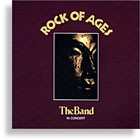
  • The Band – Rock of Ages: The Band in Concert

    Rock of Ages: The Band in Concert

    This late album by The Band needs little introduction. By the time it was originally released – Rock of Ages in ’72 – The Band had made its mark both on its own and by backing of Bob Dylan. While these albums both included some solid music, they were far from the group’s best.

    While it reached #6 on the Billboard charts upon release, the live Rock of Ages would quickly be forgotten after the stupendous fanfare swan song, The Last Waltz.

    Capitol has now re-released it with extensive liner booklets and a handful of previously unreleased tracks. Listening to it again after all these years, the music is indeed rock solid and it should find a home with new fans of The Band. Better yet, Capitol has dug deep into its vaults and added a second CD packed with 10 previously unreleased tracks from the 1971-’72 concerts. These include versions of “I Shall Be Released” and “Up On Cripple Creek” as well as four hot numbers with Dylan; “Down In The Flood,” “When I Paint My Masterpiece,” “Don’t Ya Tell Henry,” and “Like A Rolling Stone.”

    These live tracks come two years prior to ’74’s Before The Flood, and are sparked by the same energy and emotion of those shows. While Dylan juggles with (and eventually drops) some of the lyrics to “Like A Rolling Stone,” these are still hot live versions and the addition of these four songs will make this reissue a must-have for all Band and Dylan fans.


    This article originally appeared in VG‘s Nov. ’01 issue. All copyrights are by the author and Vintage Guitar magazine. Unauthorized replication or use is strictly prohibited.

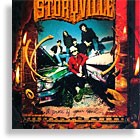
  • Storyville – A Piece of Your Soul

    A Piece of Your Soul

    Storyville is an Austin, Texas, supergroup made up of SRV’s old Double Trouble pals Chris Layton (drums) and Tommy Shannon (bass), along with guitarslingers David Grissom and David Holt. The band is fronted by singer Malford Milligan. Together, they take a batch of formulaic rock and roll tunes and lift them far out of the ordinary.

    The guitar work of Grissom and Holt shines with funky rhythm and tight grooves. Grissom’s solos are jaw-dropping amazing at times – inventive, driving, and articulate. My only complaint is that there are not more, and longer, solos.

    All of the tracks are straightforward rock with leanings more to hot-rodded country than to the blues. Cool cuts include “Bitter Rain” and the title track, both of which are bound to win Storyville some AOR air time.


    This article originally appeared in VG‘s Oct. ’96 issue. All copyrights are by the author and Vintage Guitar magazine. Unauthorized replication or use is strictly prohibited.
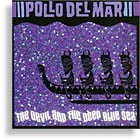
  • Pollo Del Mar – The Devil and the Deep Blue Sea

    The Devil and the Deep Blue Sea

    If you’re excessively monolingual, you might not know that Pollo del Mar translates to “chicken of the sea.” I like it just for that. But I like it for other reasons, too.

    The band bases its sound in surf music, but they do so much more. There is no “formula” at all. They’re a very unique-sounding unit that mixes all genres of music into a melting pot of sound. For instance, the menacing bass and elastic guitar of “Annabelle Lee” is far more imaginative than most surf bands today. They also not afraid to funk up the mix (“Cutlass Supreme”). If you stick around long enough, you’ll hear some jazzy surf music (does that really exist?) on “Consuela’s Revenge.” For plain old nasty rock, check out “PT 666.” And their “Apache ’99” takes the original’s melody and turns the classic into a quiet, quirky, moody piece.

    Throughout the album, the guitars of Jono Jones and Ferenc Dobronyi propel things, along with imagination and verve. If you’re a fan of good instrumental music, check this one out. Recommended.


    This article originally appeared in VG‘s May ’00 issue. All copyrights are by the author and Vintage Guitar magazine. Unauthorized replication or use is strictly prohibited.