Month: December 2003

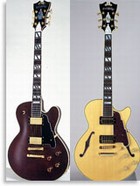
  • D’Angelico NYSS-3 and NYSD-9

    Accoutrements, quality worthy of the name D'Angeli

    When one thinks of D’Angelicos, elegant jazz archtops from the 1930s, ’40s, and ’50s spring to mind.

    As it should be. John D’Angelico was the preeminent archtop builder of his time, and he served as mentor to Jimmy D’Aquisto, who with D’Angelico’s passing in 1964, became the premier builder of his own time.

    So it was with due skepticism that we approached two of the guitars that today carry the D’Angelico name – a single-cutaway semi-hollowbody and a single-cutaway solidbody.

    New Jersey-based D’Angelico Guitars of America contracts construction of the instruments to the Vestax Corporation, of Japan, and today’s D’Angelico line parallels John’s concepts, but with a decidedly modern twist. And the list prices of these guitars reflect the fact that although they are not U.S.-made, they surrender little when one applies the term “meticulous craftsmanship.”

    Our first trial involved an NYSS-3 model semi-hollowbody with a 143/4″ x 13/4″ body featuring a solid German spruce top, flame-maple sides and back, and multi-ply black and white binding on the top, back, and around the f-holes.

    The 243/4″-scale maple neck is topped with a flat-radius ebony fingerboard with mother-of-pearl inlays and multi-ply binding. The bound peghead is very reminiscent of the original, with an art deco truss rod cover, a MOP skyscraper inlay, and gold finish.

    All hardware is gold, including the Grover Imperial tuners, a tune-o-matic-style bridge, stairstep trapeze tailpiece, and knurled knobs with tortoiseshell inserts (even the form-fit alligator tolex case has heavy gold latches!).

    We also tried the NYSD-9, which had many of the same features (binding, gold hardware, inlays, and the same neck and headstock) but with a gorgeous rich amber AAA flame maple top, solid mahogany body (even the control covers), and gold-plated aluminum stop tailpiece.

    Both guitars played effortlessly, with very low action and slim, comfortable C-shaped neck profiles. The highly polished medium frets were perfectly leveled, making bends easy and the sustain outstanding – even acoustically.

    Electronically, the guitars are very similar, with dual humbuckers, two volume controls, two tone controls, and a three-way toggle. We tested both through several amps – combos to half-stacks – and we were pleased; the NYSS-3 offered an outstanding blues/jazz tone with just the right amount of midrange pop, very well balanced with great note separation and sustain. The NYSD-9 sounded surprisingly darker, but shared the same note separation and sustain. The taper of the pots was smooth and very well-graduated, making them a useful tool – not just decoration, like we’ve seen on many other guitars.

    Our only nit to pick would be with the lack of shielding in the control cavity, which made for some noise when playing with heavier distortion.

    Overall, though, today’s D’Angelicos offer a very positive experience in terms of sound, feel, construction, component quality, and of course, play.

    D’Angelico NYSS-3 and NYSD-9
    Type of Guitar: Solidbody and semi-hollowbody electrics.
    Features: Meticulous craftsmanship, high-quality materials, high-end appointments and components. Tops of German Spruce (NYSS-3) and AAA flame maple (NYSD-9), flame-maple sides and back, multi-ply binding on top, back, and f-holes (NYSS-3).
    Price: $3,700 and $4,200 retail (with hardcase).
    Contact: D’Angelico Guitars of America, PO Box 627, Westfield, NJ 07090,phone (908) 518-9010, info@dangelicoguitars.com.


    This article originally appeared in VG‘s Jan. ’02 issue. All copyrights are by the author and Vintage Guitar magazine. Unauthorized replication or use is strictly prohibited.

  • Electro-Harmonix Tube Zipper

    Exotic Tones For Eclectic Players

    Hailed by its creators as the greaest product introduced by Electro-Harmonix in over 20 years, the new Tube Zipper was developed jointly by E-H’s legendary stompbox guru, Mike Matthews, and the mad scientists at E-H, in collaboration with Dutch engineer Tom Barmentloo.

    Some players will remember the original E-H Zipper – an envelope filter that’s now a hard-to-find collectible that commands big bucks when found in good working condition. The new Tube Zipper is a far superior creation that not only functions much better and more reliably than the original, but offers a greater selection of tones and enhanced effects.

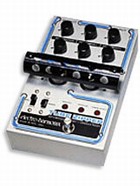
    The Tube Zipper is actually two effects; an envelope filter, and a distortion unit driven by a pair of 12AX7 tubes that plug into the top of the box. The unit is powered by an AC adapter, and it does not run on batteries.

    It also features an assortment of onboard controls, including two selector switches, 1/4″ input and output jacks, a standard on/off stomp switch, and six control knobs: Envelope (labeled “ENV”) selects the direction of the filter sweep, Mode selects “Tron” and “Trill” (Tron sweeps smoothly, Trill adds a funky modulation), Resonance sets the center point of the sweep, Frequency sets the filter’s peak frequency when the envelope is not active, and sets the start and stop frequency range, Sensitivity adjusts filter sweep range, Input Gain adjusts the level of the input signal before the filter, Drive adjusts the amount of distortion after the filter, and Master Volume sets the overall output.

    Three LEDs indicate power, status, and frequency (which gets brighter as the filter’s peak frequency rises).

    It may all sound complicated, but once you read the manual and start fidgeting with controls, it makes sense. Unlike many stompboxes, this isn’t a typical “plug-in-and-go” box; patience and time are definitely required to obtain a understanding of how things work. The manual includes tips on operation and sample settings that will help users become familiar with the controls and sounds that can be created.

    We tested the Tube Zipper using a Les Paul Custom fitted with Seymour Duncan JB and ’59 humbuckers plugged straight into our beloved hot-rodded 100-watt Marshall plexi stack and commenced our explorations by going through the manual’s sample settings – and doing much knob-twisting. While each control and switch serves a different purpose, they are interactive and greatly affect each other, so the resulting tones are significantly different with every slight manipulation. It was very easy to dial up unique, inspiring effects, even if it’s a bit of a challenge to remember how you arrived at a particular sound. Even after our tests, we felt there was much we hadn’t discovered.

    And those sounds can be a bit difficult to describe… Basically, the Tube Zipper is one of those pieces of gear you’ve got to try for yourself – and it isn’t for everyone. And if you’ve never toyed with an envelope filter, well… let’s just say it controls the “shape” of sounds coming from your instrument. And the effects offered by the Tube Zipper are great because you can tweak every possible parameter to get higher or lower frequencies that will follow your picking attack, and you can adjust the direction and range of the filter sweep.

    Just twist the knobs and you’ll discover many surprises, like auto wah, sounds that are a cross between wah and talkbox, basic sweeping effects, and even sounds like a DJ scratching on a record! There’s also the added warmth of tube-driven gain to enhance the tones.

    Easier to understand, perhaps, are the distortion effects, which are delivered with the warmth of real tube tone and controlled by adjusting the Input Gain, Drive, and Master Volume. Most players are familiar with these controls.

    We’d also recommend the Tube Zipper for bass players, and really, anyone who plays an amplified instrument could find some wild effects and interesting tones.

    With the Tube Zipper, E-H proves it’s still creating intriguing tone processors. For stompbox fanatics and those in search of more obscure and exotic tones, the Tube Zipper is likely to be the next “must-have” effect that players will want to add to their collection. It’s sure to provide hours of entertainment and a plethora of cool sounds. The Tube Zipper should be available from most dealers who sell E-H and New Sensor products.

    Electro-Harmonix Tube Zipper
    Type Of Effect: Tube-driven envelope filter and distortion unit.
    Features: Selector switches for Envelope (up/down), Mode (Tron/Trill), Control knobs for Input Gain, Drive, Master Volume, Sensitivity, Frequency and Resonance; true bypass on/off stomp switch, LED indicators for Power, Status (effect on/off) and Frequency, AC power adapter; one year warranty.
    Price: $378.
    Contact: New Sensor Corporation, 32-33 47th Avenue, Long Island City, NY 11101, (718) 633-5477, fax (718) 937-9111, ehx.com.


    This article originally appeared in VG‘s Jan. ’02 issue. All copyrights are by the author and Vintage Guitar magazine. Unauthorized replication or use is strictly prohibited.
  • Johnny Winter – Pieces and Bits

    Pieces and Bits

    The long-awaited authorized video from blues/rock guitar icon Johnny Winter has finally arrived. Compiled in part by Winter’s manager, Teddy Slatus, who asked fans to send video clips, the set includes TV clips and kicks off with never-before-seen still photos by Johnny’s wife, Susan.

    The video is enhanced by commentary from Johnny recorded at different stages in his life, which accompanies rare and personal photos of him with family and friends. He speaks about hearing blues for the first time, and how it affected him. And he’s candid in talking about some of his life experiences, including getting his first tattoo.

    Written commentary offers more history, and the concert footage isn’t in chronological order. Much of it isn’t even dated, but there are a lot of fun things to watch, including (but not limited to) performances of “Rock and Roll Hootchie Coo,” “Stranger,” “Sweet Papa John,” and “Mannish Boy.”

    Another segment is dedicated to Winter’s father, and there’s also film from ca. ’69 that teams Johnny and brother, Edgar, on “Tell The Truth.” Other noteworthy musicians who make appearances include Dr. John, Tommy Shannon, Uncle John Turner, B.B. King, Bob Dylan, Steve Cropper, and G.E. Smith. And of course, Winter’s singing and guitar work shine throughout.

    VHS hi-fi -1 Hour 18 Minutes $29.95 + $6.96 S&H


    This article originally appeared in VG‘s June ’01 issue. All copyrights are by the author and Vintage Guitar magazine. Unauthorized replication or use is strictly prohibited.
  • THE ATOMIC BITCHWAX – II

    II

    Ed Mundell – my choice for Guitar God 2001. Although Mundell, lead guitarist for Monster Magnet (his day gig) and the Atomic Bitchwax (his side gig), might lack name recognition, he certainly doesn’t lack in the chops department. And TAB’s sophomore CD, II, a rip-snortin’ riff rock juggernaut, is yet further proof of his prowess.

    The Strat-lovin’ Mundell draws inspiration from Hendrix, Tommy Bolin, and Captain Beyond’s Rhino. His fluid style has flavored Monster Magnet’s power rock for six years. With the more grooving Atomic Bitchwax, the 31-year-old New Jersian gets to stretch out a bit – plenty of jams, solos and stop-on-a-dime changes. It’s an adrenaline-rush mix of ’70s blues-based hard rock with slices of punk, metal, and psychedelia. Providing a sturdy launch pad for said pyrotechnics is TAB’s amazing rhythm section; bassist/vocalist Chris Kosnik – a truly killer rumbler on the four-string with a tough vocal snarl, and drummer Keith Ackerman, a feaked-out Keith Moon doing jazz (or something). The dynamic interplay between these three is head-spinning; everyone seems to solo at the same time, conjuring images of a fuzzed-out, more aggressive Cream.

    As with the Bitchwax’s debut, II mixes high-torque instrumentals with straightforward rock nuggets. Warren Haynes provides greasy slide leads on the funk-o-fied “Smokescreen,” while the ’80s computer/robot voice from the band’s debut CD makes a return, along with Mundell’s always cool Echo-Plex manipulation. End result: another brilliant hard rock album. For more info, go to www.teepeerecords.com.


    This article originally appeared in VG‘s Feb. ’01 issue. All copyrights are by the author and Vintage Guitar magazine. Unauthorized replication or use is strictly prohibited.
  • Gilby Clark

    Rockin' with Swag

    Gilby Clarke gained celebrity as a member of Guns N’ Roses. Best known for his blues-flavored riffs, Clarke has since successfully carved his own solo career with several albums – Pawnshop Guitars (1995), Hangover (1997), Rubber (1998), ’99 Live (2000) and Swag (2002) – and has a growing resume of production credits for his work with other bands (L.A. Guns, Dad’s Porno Mag, Beat Angels, Ball).

    Additionally, Clarke’s Thursday night jam band recently released it’s debut album, Rock N Roll Music [V2 Records], under the name Col. Parker. He also served as producer on that project.

    Clarke recently spoke to VG about his musical roots and brought us up to date on his latest solo record, Swag [Spitfire].

    Vintage Guitar: What inspired you to start playing guitar, and who were your original influences?
    Gilby Clarke: Well, what inspired me to play guitar and the players who were my original influences are very different.

    When I was a young boy, many moons ago, I saw a poster of Jimi Hendrix. It was the Monterey Pop poster, where Hendrix had a white Strat and was wearing a blue outfit. I saw that and thought, “That’s what I want to do! I want to be a guitar player!” Then I started going out to see local bands in Cleveland, and hearing the guitars used to fascinate me.

    So that’s what first got me into it. But I went through phases in what influenced me. I grew up in the ’70s, so I was listening to the kind of music that was happening back then. I was a big Mick Ronson fan because I loved David Bowie. I liked Kiss, too. The first concert I ever went to was Kiss, so I saw Ace Frehley live. I was also into Led Zeppelin and Jimmy Page.

    So guitarwise, that was the kind of stuff that influenced me most, and the players who influenced me then were Ace Frehley, Jimmy Page, and Mick Ronson.

    For any player, as time goes by and you start learning more about music, you kind of find your niche. I’d started going back and getting into stuff like the Beatles and the Stones, and I really felt that my guitar playing was much more blues-based. So I started reading up on what influenced people like Jimmy Page and Keith Richards, and I kept coming up with Chuck Berry and B.B. King. So then you go back and listen to those players and stuff like that.

    That’s kind of how my guitar playing had come along. You go back and listen to the players who influenced the people who influenced you.

    Which players have influenced you most in recent years?
    I honestly have to say it’s more of the local players. I do a couple of blues jam nights just for fun around Los Angeles, at the Baked Potato and sometimes at the Cat Club on Sunset Boulevard. There are a couple of guitar players that come around who are really good. One is Chuck Kavooris, who is the most amazing slide player, and the other is B.B. Chun King. These guys play in local blues bands. Chuck is the most amazing slide guitar player and in the last 10 years, I’ve definitely dug more into slide guitar after seeing him. Just watching these guys play has probably influenced me more than anyone who’s making records.

    Have you had the opportunity to play with these guys, or just watch them perform?
    I sit in with them. We’ve all gone to see each other’s jam bands so many times that we know each other’s routines. So when Chuck pulls out a slide, I don’t pull out my slide. There are lots of really cool blues songs we play together and we all know each other’s playing. It’s not a competition, so we all work together.

    These guys are at such a great level, and I’ve seen some guys come up and try to blow them away, but they really can’t. Competition is good, and it can go both ways, but you just can’t show up these guys.

    When we started the Thursday night jam at the Cat Club, it was me and Tracii Guns. When we play together, we bring out the best in each other, but we’re not trying to blow each other away. We do push each other, but we’re really just screwing around. Tracii has much more of a metal background, so he’ll go somewhere that will make me go into that kind of thing. Then I’ll stay on the bluesy slide and pull out a slide, so he’ll pull out a beer bottle and start playing along.

    So it is cool to have competition – it definitely pushes your playing. It can be a lot of fun when you’re playing with people who are competitive in a respectful way.

    Which players influenced you most in developing your tone?
    This is probably going to sound very strange, but I would probably have to say Ace Frehley. I read an article a gazillion years ago and he explained how he set his Marshall amp. I’ve got to tell you that to this day, I still set it exactly the same. I had always played a combination of three amps for recording and live, and it’s always been my 50-watt Marshall JCM800, my ’62 Fender Deluxe, and my Voxes. AC-30s were my main ones, but in the last few years, I picked up an AC-50 head and have been playing that out of a Marshall cabinet.

    All of the amps pretty much sound the same, though. They’re very close, but the Voxes have more midrange and the Marshall’s got more guts. It’s just a matter of which guitar I play. I’m very natural. I don’t use anything in between, really, to change that tone. I have a couple of boxes, but they don’t stay on – they’re just used for color.

    So back then, I got that Ace Frehley amp setup and I really haven’t changed it. All my knobs are set on 5 and the preamp is on 10.

    Do you play through all three simultaneously?
    I go back and forth. The one I use just depends on the night and the type of gig we’re playing, and how much room I have. I have two Marshall basketweave ’69 cabinets and the ultimate setup for me is a Marshall half-stack and an AC-50 half-stack, if I have room. It just depends. If I’m doing the “Gilby solo gig” I’ll usually bring a Marshall. If I’m doing more of a blues thing, I’ll usually just bring the Vox. And if I want to blast, I bring both.

    Who influences you most as a songwriter?
    Definitely John Lennon. One thing I’ve always admired about John Lennon is his simplicity. It’s amazing how he can take a simple word like “imagine” and make it the greatest song. He can say things in a song that have been said a million times, but he puts it the right way. He kills me. That, by far, is probably my best influence, songwriting-wise.

    Tell us about the gear used on Swag and how you recorded the tracks.
    I pretty much did things the same way that I’ve always done them. Guitarwise, it’s really simple, and there are my three main amps. I keep one of my basketweave cabinets mic’ed up all the time – 24/7 – for the last six years. I keep the heads in another room and switch between them, but keep the cabinet mic’ed up. I picked just one speaker and I use Shure SM57 and Sennheiser 409 mics together on the same speaker.

    When I’m recording, I go between an API and the Neve A1073 mic pre. There are no compressors or anything in between. I just tweak the EQs a little on Neve or the API. It depends on the day and what I want. I place the mics are right next to each other on the middle of the speaker cone, straight on. The 409 has a little more bottom to it, and a 57 is a 57. It’s a pretty standard mic.

    I use both of them just to get the whole speaker sound. I change tones by changing amps. On almost all my records, it will be a Marshall on one side and, when I double a part, the Vox and the Fender on the other side.

    Which guitars did you use to record the tracks?
    I have this ’91 Les Paul Classic that’s all burnt up. I’ve had it since it was new. And that’s pretty much my main Les Paul. I got this guitar for the GNR tour and it was just a brand new Les Paul Classic that was completely stock and tobacco sunburst. But I would never play it because it just looked too damn new. It was just too pretty, so I always just used my black Les Paul and my Tele. My tech, Elwood, would keep handing me the guitar and telling me that it sounds great and I should play it, but I never would.

    So one day, he comes up to me with it and it looked like it had been in a fire. He just did this artistic work on it, where he kept lighting it on fire and putting it out. He burnt the pickup rings, the knobs – everything. When I first looked at it, my reaction was, “You son of a bitch! You burned my guitar!” But then it was, “Wow! That looks really cool.”

    So I changed the pickup rings and the knobs, and just left the finish. But since then, it’s been my main Les Paul. I love that guitar and it’s stock – stock pickups, stock everything, except for the pickup rings and knobs. I also have a Zemaitis silver top guitar that Tony Zemaitis made for me a long time ago. That’s a really good solo guitar. It just sustains forever. That’s got Seymour Duncan ’59s in it.

    And I have lots of Teles, but my main one is a stock ’68 Tele and I use it for clean stuff. I have a Gretsch Sparkle Jet that has sat in a five-string open G for 10 years, maybe even longer. That’s my main slide guitar and I used it for all the slide tracks. For acoustic stuff, I have a Martin ’71 D-35 and I have a Dobro, too, which I used on the Col. Parker record. I think that was pretty much it, as far as the guitars I used on this record. But those are the main guitars that sit in my studio.

    Do you use your GMP guitars in the studio?
    I don’t really do much recording with my GMPs. They’re more my live guitars. My Les Paul is just my Les Paul. It just sits in my studio and sometimes I play it live. But every time I have to do some recording, I just grab it.

    Which guitars do you take on tour?
    If I were to go on tour today, I’d definitely take one of my Les Paul Classics. I actually have a few of them and the one I use is just kind of based on which one I haven’t played in a while. I try to change them up a little bit. I’d definitely take my Gretsch Sparkle Jet. Then I’d also take one of my Telecasters. I have a ’68 and I have a ’58 Esquire, and I have two Japanese Teles that were made in the late ’80s. Then I go back and forth between my backup for my main humbucking guitar, which is probably my Les Paul, and that’s usually a GMP Pawnshop Special.

    What I play live really just depends on my mood. If we’re doing a rock gig, sometimes I’ll bring out the V and if I’m doing the blues gig, I’ll use the Les Paul or my Zemaitis or something else.

    How are your guitars set up?
    I just recently switched to Ernie Ball RPS .011s. I was going through a phase where I had .011s on all Gibsons and I kept .010s on Fenders. But now I have .011s on everything. On the Sparkle Jet, I take a set of .011s, but take out the .011 and use the rest of the set, since I have it strung as a five-string The strings are really heavy on that guitar, but I never bend. It’s all just chordal open G and slide stuff.

    What kind of picks are you using now?
    I just switched picks, too; I use extra heavy picks in the rounded-triangle shape.

    What type of slide do you use and which finger do you use it on?
    I use a glass slide and it’s just a regular medium-size. I use it on my ring finger most of the time, but sometimes I put in on my pinky. There are actually a couple of songs where I alternate and I take it on and off between my ring and my pinky finger. It’s just because certain chords are harder to make when you’re using a slide. So I’ll put it on my pinky if I’m just doing accents and not really playing the whole song with a slide, so I can use my ring finger more to play guitar.

    Which stompboxes do you usually use in your live setup? And which did you use on the record?
    I always use the same ones. The latest, greatest creation is white Boss tuner pedal, the TU-2. I love that thing! I just can’t believe that I can step on a pedal and actually tune a guitar and see it. I don’t know what took so long to come up with it. That’s my favorite new box.

    My fuzz pedal is a Marshall Blues Breaker. I’ve collected about six of them, since they stopped making them. So I always keep one in the studio and one for live. For a wah, I just use a regular standard Crybaby pedal and every now and then I’ll pull out an MXR Phase 90, but that’s pretty much it.

    My little pedalboard is just the tuner, the fuzz pedal, and the wah wah. That’s what I used on the record, along with the Phase 90. I don’t really use chorus anymore, but I used to use it a lot. I have an old MXR Blue Box that I love and I’ve used that quite a bit. I didn’t use it that much on this record though, but I used it on my last few records. And I always use slap delay on my solos. I used the Pro Tools Echoplex stuff for that.

    Did you record the album into Pro Tools, or record onto tape?
    I recorded everything in Pro Tools and never touched tape. Last year, I made two albums where I went to tape and then dumped it into Pro Tools. Then I did one record that had to be done really fast and I just it directly on Pro Tools and I loved it. Sure, there’s a little punch missing, but man I hate tape hiss!

    So after I did those two records, I’ve stopped going to tape and now I’ve just gone straight into Pro Tools. I’m very old-school and into analog, but with the right preamp and the right players playing the right instruments, I personally don’t think you can hear it anymore.

    I have this argument all the time with friends about tape vs. Pro Tools. I tell them that they can spend all the money on tape and I’ll stick to Pro Tools. I think Pro Tools has come a long way. It’s pretty amazing.

    What do you think of modeling amps?
    When I got my Line 6 Pod, I loved it once I dialed it in. I used it for awhile, then got over it. I probably don’t record with it anymore because I have every single amp they modeled, sitting in my room.

    But I do think they’re amazing. The one thing it does miss is that compression you have with a tube amp. I really play off of that tube compression – that little “clink” that you can’t really detect. But when I hit a bar chord, it sounds amazing.

    Tracii Guns switched to all Line 6 stuff and it’s the best he’s ever sounded.

    Tell us about your guitar and amp collection. Which are your favorites?
    I’d say my favorite guitar – the one I’d take to the grave – would be my Zemaitis silver top. Ever since I’d seen Ron Wood play when I was a kid, I had to have that guitar.

    I actually have four Zemaitis guitars now – a silver top, a pearl-and-abalone top, and two acoustics. I have a D-hole one and a heart-hole one. The electrics were custom made, but my wife actually bought the two acoustics as birthday and Christmas presents.

    I don’t really have any “old” Les Pauls, although I’ve had a few in my day. I’ve narrowed it down to the ones that I like – three Les Paul 1960 Classics, a Standard, a Custom, a ’91 Junior, and ’59 and ’60 single-cutaway Melody Makers, which I love.

    Do you maintain any sort of a practice routine?
    Not a regular one. I play guitar every day unless I’m on a vacation and didn’t bring a guitar. Otherwise, I’m surrounded by it. There’s a guitar in my living room, and the studio’s out back. We keep our regular Thursday night gig, so I always have one night a week when I get to stand onstage and play in front of my amp.

    What tips would you offer on becoming a better songwriter?
    Write, write, write and don’t ever give up on a song. For every song you create, try to see it through. You’d be surprised at how sometimes a song you wrote a long time ago will work for you later. I wrote in 1985 that showed up on a record in 2002! You don’t know what’s going to happen. Try to archive them, but always try to finish what you start.

    What are you listening to these days?
    I think it’s pretty much the same old things I always listen to. But every now and then there’s a new band I dig. As a matter of fact, I like that band Lit. The music is pure pop, but it’s good. They have a good attitude.

    I’ll tell you, music doesn’t really turn me off so much about new bands as does their attitude – in the way that they play their music or when they’re interviewed on MTV. And when a band like Lit comes out that plays good pop songs and they have a positive attitude, I’m all for it.

    I like Sum 41. I kind of like their attitude! Sometimes I’ll see something on MTV or MTV2 that I’ll think is pretty damn cool. You know what, I think Britney’s pretty cute and her songs are pretty pop. I’ve got no problem with it. They’re not trying to rewrite the Beatles or anything. But you know, their songs are pretty catchy and I think it’s kind of cool.

    What do you think of the way record labels market new bands? Does it hurt a band’s chances if they try to show what they’re truly capable of?
    Well, they’re not really letting bands develop or find their own sound. That happened to me back in the ’80s. My band, Kill For Thrills, got a major label record deal and we only had seven songs! We got the deal because of Guns N’ Roses, Poison, and all the local bands that had come out and had huge hit albums. Labels were just sucking up everything in L.A. that was rock. My band broke up by the time the record came out just because we were underdeveloped. We didn’t even know each other. We hadn’t even written a whole album.

    And I think that’s what is happening now, but some of the bands are a little more focused and know a little more about the business than we did back then. But bands need to develop. Even if their first album’s a hit, they need to grow. Let them make their third album a clunker, because you never know what that fourth or fifth can be.

    Look at the bands we grew up with, and how they developed as they got to know each other. Much of their best music was in their later records. These days, you get your one hit single and if the second one flops, you’re gone. Also, I think that a lot of these bands – even though they are having hit records the first time out – it wouldn’t be bad for them to have made an independent record first, and gone out on the road and suffered a little bit. You know, that developed some pretty good character in a lot of my friends. Fifteen years later, they’re still doing it, and strangely enough, bands like L.A. Guns, and all the ’80s bands, are doing better club business than bands with million-selling records out now. It’s pretty damn amazing!

    For more info on Clarke, check out his website, www.gilbyclarke.com.


    Gilby Clarke with his Zemaitis metal-front courtesy of Gilby Clarke.

    This article originally appeared in VG‘s Nov. ’02 issue. All copyrights are by the author and Vintage Guitar magazine. Unauthorized replication or use is strictly prohibited.
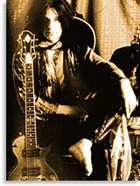
  • Stephen Bruton – Spirit World

    Spirit World

    A CD of personal or autobiographical songs can be tricky. The music can wind up meaning far more to its creator than it does to its audience. That’s bad.

    Luckily for everyone, Stephen Bruton’s Spirit World avoids this pitfall. His third release of original material combines pithy lyrics with an ample supply of infectious hooks and bridges.

    Stephen Bruton spent much of his musical career as a guitarslinger in other folks’ bands. He’s been Kris Kristofferson’s lead guitarist for over 17 years, and has been doing time with Bonnie Raitt and Bob Dylan. In ’93, Bruton released his first solo album, What It Is, followed by Right On Time, and in ’99, Nothing But The Truth.

    Spirit World differs in its production. It’s more effect-laden, but by and large the effects work quite nicely. On “Just a Dream,” Bruton’s voice is processed to sound like it’s coming off of an old 78 disc for the first verse. On subsequent verses, we get his full, gritty baritone.

    Another difference between this and past efforts is the greater R&B influence. Several cuts, including the title cut, have a groove that’d make Joe Tex or Solomon Burke feel right at home.

    Bruton is a great guitarist, but his playing is not about licks, but rather melody and texture. Even his lead on “Acre of Snakes,” the hardest rocking cut on the album, is exuberant while coming at you sideways like a rattler in the shadows. If you want to hear a well-recorded acoustic, listen to the pre-war Martin 0-17 on the opening of “Hate to Love.”

    While you probably won’t hear any material from Spirit World on your local classic rock megastation, that shouldn’t stop you from searching for this album in your local CD emporium. Modern music that’s conscious of its roots is a rare thing in our painfully ersatz world.


    This article originally appeared in VG‘s April ’02 issue. All copyrights are by the author and Vintage Guitar magazine. Unauthorized replication or use is strictly prohibited.
  • Slingerland Songster

    Cool enough for Sol Hoppi!

    If you ask anyone what the company Slingerland has done for the history of music the answer most often given is, “Drums.” Indeed, the company has been quite successful through the years as a manufacturer of drum and percussion instruments. But in the 1920s and ’30s, Slingerland produced a variety of instruments, including banjos and guitars, including decent-quality archtops. But it focused mostly at the budget and beginner level, and never developed any following or reputation for its fretted instruments.

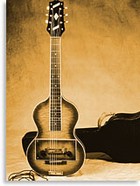
    The Slingerland Songster model pictured here catered to the Hawaiian music crowd- which at the time was at the height of its popularity – but never really caught on because it was introduced just before the beginning of World War II, and because Slingerland didn’t have nearly the distribution system of the larger companies such as Gibson, Rickenbacker, Gretsch, or Epiphone. But this example, which dates from about 1939, boasts several interesting innovations that hadn’t caught on with any of the other makers.

    The Songster features a “neck-through” design with solid wings and a maple veneer glued over the top, back, and sides, to give a one-piece look. The pickup configuration is unusual in that each polepiece is individually wound in opposite directions to create a humbucking effect, and although it appears small, the bulk of the magnet and windings is concealed from view. The sound has a distinctly “woody” tone that’s less pure than the Bakelite-bodied Rickenbackers of the period. But it’s still appealing. The metal pickup overlay sports the Slingerland logo in script.

    The square neck features a 24″ scale and simple pearl dot position ornamentation. Fret markers are true inlaid metal frets that have been ground down flush with the rosewood fingerboard. Certainly it would have been cheaper to leave the frets at full height (as on the square neck National metal-bodied guitars) or use painted or plastic inlaid fret markers (like Gibson EH models). The ivoroid nut is tall, and its height has been further raised on this example with a separate Slingerland-made metal overlay. The tailpiece is also a Slingerland product produced in-house, and the bridge is a compensated floating unit. Knobs are made of octagon-shaped Bakelite with smaller pointer arrows.

    The headstock features a crushed pearl inlay reminiscent of the covering on the company’s drums, with “Slingerland” on top, “Songster” on the bottom, and a diamond in the middle. The headstock’s shape is very Gibson-like, certainly enough to spawn a copyright lawsuit had this guitar been released in 1995! Tuners are high-quality open-back Grovers with plastic buttons and there is a serial number impressed on the back of the headstock.

    The cord from the pickup exits the lower bass-side bout through a nice metal-finished hole (no separate jack here) and sports cloth-covered wiring and a rather large bakelite covered plug. This Songster is complete with its original black alligator grained case with green plush lining, the same found with some of the top-line archtops from Gibson and Epiphone models of the period. It’s a clean, well-kept example and perhaps its most striking feature is the highly flamed maple veneer that covers the top, back, and sides. A “10 top” in today’s parlance and an example of how attractive such a guitar could be made to look. Even the pickup/controls cover is highly figured, and bound, as is the top, back, and neck of the guitar. The finish is a light golden sunburst; this is a model even Sol Hoopi would have liked, if only for its looks!

    But Slingerland never aggressively marketed the Songster line, and production ceased at the start of World War II. Few were produced, which is all the more unfortunate since in 1939 Slingerland marketed a less well-known version of the solidbody Songster, an electric Spanish model that featured a round neck, 25″ scale, full frets, and even a pickguard!

    Today, both the squareneck and roundneck versions of the Songster are rare, but neither is terribly soughtafter, perhaps because the Slingerland name doesn’t carry the caché of a Gibson or Rickenbacker. But the Songster did boast several firsts in solid wood design and was a well-made, high-quality instrument. It certainly deserves to be better remembered.


    Photo: VG Archive.

    This article originally appeared in VG‘s April ’01 issue. All copyrights are by the author and Vintage Guitar magazine. Unauthorized replication or use is strictly prohibited.
  • Kombo – Cookin’ Out

    Cookin' out

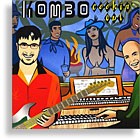
    Kombo is Ron Pedley on keyboards, and Jon Pondel on guitars. They’ve got lots of great help too, with guys like Steve Ferrone, Matt Bissonette, and Sharon Hendrix. The music is the same kind you might hear on smooth jazz radio, but a little funkier. Like “Dirty Martini.” It’s some nice mid-tempo funk with a nice solo. And the cover of “Low Rider” is sure to make you smile with its double-stops and killer chordal work that highlights the familiar licks and melody. “Tight” is “happy soul,” reminiscent of songs like “Soul Serenade” from the ’60s. Pondel’s guitar cooks all over this one. Nice rhythm and killer leads. His sound is compressed/pinched just enough that it sounds great on this kind of music.

    There’s also a nice cover of the old Fifth Dimension hit “Stoned Soul Picnic” with killer vocals by Hendrix. It’s a nice arrangement, just different enough, and features a nice bluesy solo by Pondel. There’s something for everyone here – horn-driven funk with nice guitar and organ work dominates the title cut. And the soulful, bluesy funk of “Getting’ It Done” is sure to capture fans of folks like Eddie Harris. Recommended for fans of soul-influenced funk.


    This article originally appeared in VG‘s June ’01 issue. All copyrights are by the author and Vintage Guitar magazine. Unauthorized replication or use is strictly prohibited.
  • Norman Blake

    Look For what You're Looking For

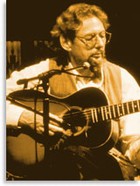
    The first time many guitarists hear Norman Blake they think to themselves, “I could do that.” But if they actually sit down to try, they soon discover that what sounds simple is actually devilishly hard. Blake’s melodic lines are direct and elegant, with little of the pyrotechnics often associated with the guitar style known as “flatpicking.” Instead, his music has an air of authenticity and basic honesty few can achieve. Grounded by years of experience, Norman Blake is about music, not ego.

    His career started when he left school at age 16 to be a professional musician. Early jobs included playing fiddle, dobro, and mandolin in county dance bands before a short stint in the Army. After serving, Norman worked with June Carter, then Johnny Cash when Cash’s regular dobro player couldn’t make a session. He stayed with Cash’s band for over 10 years.

    Norman was invited to play on the seminal album Will the Circle Be Unbroken in the early ’70s, and during the mid ’70s and ’80s recorded a series of highly influential albums that helped define what has come to be the flatpicking guitar style.
    Recently, his work can be heard on Steve Earle’s Train a Comin’ and on his own newest release, Far Away, Down on a Georgia Farm.

    Vintage Guitar: When did you start playing an instrument?
    Norman Blake: Oh, when I was 11 or 12 years old, thereabouts. My first instrument was the guitar.

    When did you pick up some of the other instruments you play?
    Shortly after. Mandolin was probably second. I don’t remember the chronological order. I learned to play dobro and fiddle pretty early on, too. But guitar first, mandolin second. Those are my main two instruments.

    Do you still play dobro?
    Not a whole lot. I never did play it much in my own shows or on my own songs. I sort of embellished my records with dobro or slide Hawaiian guitar. I like to play non-resonator slide, like a lapsteel or a raised-nut guitar in the low-based tuning, which is different than the dobro tuning.

    More like the Hawaiian dropped-bass tuning?
    Yeah. It’s the same tuning as the Hawaiian A tuning, except I tune in G. All your old country players down through the years used the Hawaiian tuning, but they dropped it to G. And then – and I don’t know when – somebody raised up the bass strings, the two top bass strings to become the dobro tuning, but basically that’s the only difference in dobro tuning.

    A lot of the old-time country musicians used Hawaiian guitar. They were both in G, but the bass strings were different. But then the real traditional Hawaiian players used the A tuning, which is, like I say, the same as the one that country people were using in G, but I call it low bass versus high bass. I speak of dobro just as my own identification of high-bass G and Hawaiian, or the way I play it, old-time country slide is low-bass G. In other words, the fifth string on a dobro is tuned to a B and the sixth is tuned to a G. On the other guitar, it would be tuned…the fifth would be G and the low string would be a D.

    Unlike the dobro, where you basically just have the same repeating tuning…so it would give you a more flexibility, I would think.
    Well, it’s a little better for accompaniment, which is the way older players used it. It gives you a little more…it just has a sound that’s conducive to songs.

    And dobro was your introduction to playing with Johnny Cash, correct?
    I played with him extensively for about 10 years, and I’ve been playing with him, on and off, for the last 36 years. I worked with him last week. He’s trying to do another album. You know, his health has not been good. He’s been recording at his compound at Hendersonville, Tennessee. So I been recording with him during this last year.

    And what instruments did you play with him?
    Guitar more than anything. Through the years I played dobro and guitar mostly, at some points way down the line a 12-string guitar, or a mandocello. He liked those things. But dobro and guitar have been the primary things I’ve played with him.

    Good Instrument
    What was the first good instrument you ever purchased?
    I started off on a Stella guitar, certainly was low-cost. It was a $14 Stella, a new one my father bought me when I was 11 or 12 years old. First good guitar I got was a used Gibson LG 2…’bout 19 and ’49 or ’50 maybe.

    From the very beginning, were you drawn to the smaller-body, short-scale instruments?
    Well, I didn’t see anything other than that. I never saw a Martin guitar for a long time. Back when I was coming up you saw more Gibson guitars than anything else. I don’t know why, I guess a lot of people could only afford Gibsons. You saw a lot of smaller-body Gibsons, Ls, double 0s, the old ones you know, the LG series and things like that. You’d see the occasional big Gibson, some kind of an SJ, J-35, or J-45. I didn’t see a Martin D-28, or remember it at least, when I was coming up as a kid. Didn’t see that ’til later.

    You started with the small-bodied Gibsons and sort of stayed with them? Or at times did you flirt with the larger bodies?
    No. I’ve played with a little of everything. I’ve had big Gibsons, of course, and still play small-bodied ones. I’ve played Martins. I’ve played everything. I played the D-size Martins, I’ve gone the whole route, so to speak. I enjoy exploring what to play my music on.

    Are you still using a Gibson Nick Lucas and the Gibson Century as your main instruments?
    Those are some of my main ones. I never stick to one thing. I like guitars too well. I get bored if I play the same one all the time. Lots of people seem to get on one guitar, which is a good thing if you can do that, but I never seem to do that.

    I don’t feel that any one guitar does everything. I have a couple Martins and I play the Gibsons, too. I have a 12-fret 1926 Martin 000-18, and I have a ’28 00-45 that I like awfully well, and then a ’29 Gibson Nick Lucas Special. It’s a 12-fret Nick Lucas Special with a mahogany body. And of course the ’35 Century. I also have a ’29 L-1 prototype, or one of its kind, I’m not sure. Nobody has ever seen one like it. It’s a very unusual guitar. There’s L-1s like the Robert Johnson guitar, but this has the later L-size body like the Nick Lucas, but it has the older 241/4″ scale, which would be more like the earlier round-hole Gibsons…it’s probably one of the early transitional bodies of that type. It has the bridge like you see on a lot of the plectrum and tenor guitars. It has small, short, thin bridge and it has planet banjo tuners on it. It has an H brace with one straight brace behind the sound hole, one straight piece in front of the bridge, and then one between that and the soundhole. So it’s a very unusual bracing pattern, very thinly built as most of the old Gibsons are, but this one seems exceptionally, painfully thin. Never seen one like it.

    I don’t use very heavy strings on those real old Gibsons. And I haven’t used medium-gauged strings in years. I don’t buy straight sets. I just buy individual strings.

    What kinds of mandolins do you favor?
    I have a 1929 [Gibson] F2 and a 1913 natural-top F4, double flowerpot. I also have a very rare 1910 two-point F4 with the wire and pearl peghead like the three points, which is also natural top and finish. And I have a ’38 raised fingerboard F4, a Vega – not a cylinder-back – but like those, except it isn’t cylinder-back or top with a sunburst finish, which is unusual.

    Regular old-time lute-style mandolin, that’s a Vega with pearl inlays around the top. Very nice mandolin. Then I have a ’26 Martin Style B. Brazilian rosewood style B Martin, round-hole mandolin. And I have the rarest of the Martin mandolins. I have a Style E with all the pearl trim, like the Style 45 except it’s double-bound. There’s two borders of pearl on the top and around the hole, side to side. They made 62 of those. I have a ’22 Gibson A2. I’m not very fond of snakeheads. I’m not fond of the Loar-era, round-hole mandolins. The necks are too narrow and their intonation is rotten. Many Gibson and Martin instruments have rotten intonation, always have had from day one. The Loar period at Gibson was their low point.

    Do you find you have to fix the intonation on most of the older instruments you own when you first got ’em?
    You do on some if you want them to play right. You can fix it. We’ve found that Gibson’s guitars have what we refer to as the “Gibson expanding scale.” Some of the frets are right and some aren’t…but usually you’ll find the 12th fret is sharp on most old Gibson guitars. The five is usually off. Then there’s some in the middle that’s about right. But above the 12th fret, anything can happen.

    Loar-period mandolins have a very flat second fret and most of the people that make copies of those mandolins have used the scale off of ’em. A lot of the earlier copiers, copied that same bad scale. I’ve had the frets moved on a couple of mandolins.

    Probably the fullest-sounding mandolin I have that would amaze most people would be the ’38 Gibson F4. It’s like a lot of F5s wish they were, strangely enough. I prefer a little more of a classical sound out of a mandolin. I’m a fan of the real European mandolin sound, tone-wise, I like to hear that traditional music.

    You like good sustain and some bass extension from your mandos?
    Well, yeah, the sustain, but even more the patina of the tone. Sometimes mandolins that have been used in bluegrass can be just a little bit too punchy and coarse. The F4 I have, the ’38 with the raised board, is more of a jazz/country mandolin to me. It has a more of a subdued treble and has a real round, fat, full sound where some of the older Gibsons have more of a classical tone. It’s a little thinner, but it’s sweeter.

    Any new instruments you favor?
    I have one newer guitar, it isn’t totally new. A friend of mine has a guitar that was made for me, a Wayne Henderson, that’s mighty nice. I also have a John Arnold guitar that I like very well.

    Do you prefer old guitars?
    It depends on what you’re doing. I don’t always prefer the old ones. If I want to hear a really bright sound, something with a lot of immediate pizzaz, a new guitar can do that. Newer guitars have a lot of things going for them; the intonation can be more sophisticated and the action can be adjusted precisely.

    Old guitars tend to be problematic. You have to love them, court them, woo them, and take care of them. They all are different. Lot of those old instruments just have characteristics that weren’t worked out at the time, like intonations weren’t worked out as good and a lot of things. But they have that age and dryness and all that old time factor about them, that’s one of the most important things. It depends on the sounds you want. There’s a sound for everything and an instrument for every sound, and every one is different. Every one will teach you something new, every one will lead you to do something else.

    How many instruments are in your collection?
    I don’t know. I probably have 10 mandolins at the moment. It varies up and down. Sometimes I have more or less. I have a dozen guitars, maybe, and eight to 10 fiddles.

    Do you keep many dobros around?
    I have one. I always keep some guitars strung up with the Hawaiian thing.

    Are there any instruments you still lust after?
    Oh, I’m always looking for something, I guess. I’ve had so many guitars, you know, I should’ve kept a lot of them that I’ve traffic’ed and traded over the years, but nobody knew what some of this stuff was gonna be worth.

    I currently don’t own a large guitar. I wouldn’t mind having a good Gibson J-35 or an old SJ. Something like that would be nice to have around, but I’m not too interested in Martin D28s and D18s. Anything with long scale doesn’t interest me too much.

    Is that due to their sound, or playability?
    I think you can get too much area and not enough depth no matter what size top you’re dealing in. If you haven’t got enough side depth, it hurts the sound. I think there’s a thing that matches up with the area, in other words, I think those two lines bisect the top area versus side depth. I think triple 0s are just a little too shallow. The 00 has that depth and it has the smaller soundboard, and I think you’re getting a real good, close thing. Also with the size vs. actual depth, one thing that I think is wrong with a lot of guitars, is that the bridge is in the wrong place. I think the bridges should be further down in the soundboard. Down on the table, so to speak.

    You mean further toward the back of the instrument?
    Yeah. They tend to put it up too much toward the waist. I think you need the bridge just a little bit further back. The widest part of the guitar is where the bridge should be. It’s one reason 12-fret neck guitars sound better, their bridges are in a better place.

    Most of the guitars you own tend to have slightly wider necks than the modern standard. Is that a preference of yours?
    I’m not a measurement person, I just know from feeling things. I think my Nick Lucas Gibson is wider than most new guitars. I like 12-fret Martins that are generally wider. I have a couple Hawaiian conversions which are a little uncomfortably wide, but they’re good guitars. I have a 00-40H with a pearl top, but no pearl around the end of the fingerboard, no inlay below the fifth fret, no binding on the neck, and no binding on the slotted peg head. Its got a 12-fret neck and Brazilian rosewood, made in 1934. It’s a fantastic guitar, but it has a rather large neck.

    Then I have an HG 00-sized Gibson Hawaiian that’s a conversion also. I cut the neck on that one down some so now it’s shaped it more like an old Gibson neck. This particular one has a truss rod. I do like the truss rod in guitars. I like to be able to put a neck where I want it. Something I have learned by experience is that I’ve mistakenly converted some 12-fret Martins from bar frets to t-frets. That was a mistake. You lose the compression on the fretting, and their necks can start to pull forward, no matter what you do. The only successful way you can convert a guitar that has bar frets to t-frets is to change the fingerboard, which is a drastic measure.

    So if you’re going to have a guitar like that, keep the bar frets on it. I’ve put bar frets back on two to correct these problems, and it works because you can compression-fret it with the bar frets and straighten the necks back out. Of course, it’s very hard to get someone who knows how to work out a set of them. It’s [difficult] to do a set of bar frets from scratch. Not many luthiers want to tackle it because it is a dirty, hard job. I have a friend who’s gotten very good at it. He’s a good player and he likes bar frets. So he has gotten very good at working ’em. He does do some of the best bar fret work I’ve seen.
    What’s that gentleman’s name?
    Bob Chuckrow. He’s in St. Elmo, Tennessee, up near Chattanooga. He plays some with me, too.

    New Music
    Your most recent album, Far Away, Down on a Georgia Farm is an interesting mixture of original and traditional material. I was a little disappointed in the liner notes because there isn’t much information on where the traditional tunes came from.
    I’ve never gone into that very much on the last few records. I did that on the Shanachie label releases. Strangely enough, Richard Nevins, who is a very knowledgeable person, and one of the foremost 78 RPM record collectors in the world, discouraged me from doing so. He thinks it’s better to let the music speak for itself. I’m not blaming him for that, ‘cuz I have artistic control of my records. I just decided to not go into it.

    There are people who know more than I do. I don’t consider myself a historian. I know a bit about the old music and I love it and I play it, but I’m not the historian type, really.

    Two tunes that especially intrigue me are “Pasqualli Tarafoe’s First Night in Leadville” and “Rag Baby Jig.” “Pasqualli” interests me because I’m in Colorado and I suspect the Leadville referred to is Leadville, Colorado. “Rag Baby Jig” reminds me of the music of the late renaissance English lutenist Thomas Byrd.
    I’ll fill you in on “Pasqualli” first. That one’s sort of a tongue-in-cheek thing. There is a fiddle tune called “The First Night in Leadville” in Ryan’s Mammoth Collection, or “Cole’s One Thousand,” as it was published for years. “First Night in Leadville” is in that book of fiddle tunes in the key of E.

    Pasqualli Tarafoe was an Italian harp guitar player of extreme note, and made a lot of 78s. He was an extremely gifted classical harp guitarist. So this was just sort of a joke, actually. “Pasqualli Tarafoe’s First Night in Leadville,” just seemed like the ghost of Pasqualli got around when that tune was bein’ made and it just ended up in the title. So that’s just a play on the title of “The First Night in Leadville.”

    The “Rag Baby Jig” is an antebellum Civil War banjo piece. I don’t play the tune like it’s written, at all. I don’t play it in the correct time values.

    It’s written in a dotted rhythm and I didn’t play it in a dotted rhythm, I play it straight and I probably play it faster and moodier than it would originally have been. In the minstrel era, anything that was a dance would revert to the jig dancing. Jigs in that sense are not 6/8 Irish jigs, but are just straight-time pieces of music in dotted rhythms. They’re referred to as jigs, though they’re not 6/8 jigs, and this is the same thing.

    “Rag Baby Jig” is a minstrel show tune somebody might have danced to. I play it totally wrong, but that’s my concept of it, so that’s the way I wanted to play it. If something just dictates to me, I’ll just do it that way. I’m not a very scholarly person in my approach. Some people think I am, but I’m not.

    Do you spend a lot of time learning new tunes?
    Not enough. I don’t have any real constructive work habits, I’m very lazy. I just work as the need arises, or when I feel the urge. I don’t have any real practice habits. I play all the time, but I don’t call it practicing. I just play and I work, and I look for whatever I’m looking for. Sometimes I might play a tune for six months, looking for a better tone.

    Tone
    One of the things that impresses about your playing is the economy of motion and your relaxed right hand. You and Tim O’Brien have very relaxed right hands and wrists.
    Thank you. Yeah, I’ve worked at that, I’ve tried to cultivate that along with tone and dynamics. I try to play with dynamics. I try to be very conscious of the ups and downs of volume. I try also to be very conscious of not overplaying, if I can help it. I try to draw the tone out of the instrument. There’s a tone in an instrument that is it’s best quality, and I try to draw that out.

    Some people say, “Oh, this is a great guitar,” or “This is a great mandolin,” and they only play it one way. Maybe it ain’t so great because you can’t get but one sound out of it. I think a good instrument is one that you can get a lot of different shadings out of. Some guitars just seem to have a sort of a flat response. They’re one dimensional, and tend to deliver just one spectrum. Others have this broader thing that just sort of blossoms all across on both ends. Those are the ones I think are the best.

    Occasionally, you get a guitar that makes you try to pull its sound out. You have to work at how you attack it, pick-wise, how you attack it on the left hand, maybe change the strings you’re using. I don’t do anything most folks consider normal. I don’t like to always use the same kind of setups. I don’t like to use the same weight of strings. I don’t always like to use the same kind of strings. I don’t like the long-scales, for example. Anything that everybody usually doesn’t like is exactly what I do like.

    Sounds like whenever you get a new guitar there’s a period of figuring out how to play it.
    Yeah, you have to find out what’s in each one. That’s one reason I’ve liked old Gibsons. A lot of times the real old ones have a broad scope of tone. A Martin guitar can be kind of right in the middle, and it doesn’t go on either side. A Martin guitar is a tighter guitar. It’s built tighter, it sounds tighter, and it delivers a narrower band of dynamic range. It’s good at what it delivers, but it doesn’t go as far off on either side as some of these old Gibsons do.

    Future Projects
    Is there anything you’re working, or about to start working on?
    I have an album that’s just finished. I don’t know when it will be coming out or what label it’ll be on. There’s a lot of duet work on it with Bob Chuckrow. I’m playing some mandolin, along with a variety of old instruments. It’s got a little bit of solo stuff on it, but it’s probably three-fourths duet stuff.

    You mentioned that you just finished up some sessions with Johnny Cash.
    Yes. I also just finished a banjo session with a fella’ named Paul Hopkins over in Shelbyville, Tennessee, along with some members of the Nashville Bluegrass Band, with Allan O’Brien producing. Stewart Duncan was on fiddle, along with Roland White on mandolin, Gene LaBaye on bass, and Paul Hopkins on the five-string banjo. It’s sort of bluegrass, but it’s even more old standard, favorite old-time things. His daughter even plays the piano – nice piano – on some of it.

    How many dates do you do a year?
    I don’t know, not that many. I don’t know if I do 50, and they’re mainly summer festivals, but some are just concerts, a few clubs, some private things. I don’t work a lot. I have a place down here in the country in Rising Fawn, Georgia. I worked many years to build and pay for it, and I like to stay here. I’ve always believed that if you’re really gonna stay on the road all the time, there’s really not much point in having a home.

    Lots of people love the road. It works for them, but it never has for me. I’ve done it out of necessity, I still do it out of necessity, but it’s not been something I want to do. I don’t want to stay out there ’til I drop. I’m 62 and it has worn on me a little bit, you know.


    All photos: Donald Kallaus, courtesy of Scott O’Malley & Associates.

    This article originally appeared in VG‘s March ’01 issue. All copyrights are by the author and Vintage Guitar magazine. Unauthorized replication or use is strictly prohibited.
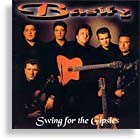
  • Basily – Swing for the Gipsies

    Swing for the Gipsies

    The Dutch Gypsy group Basily has been prolific in releasing recordings and playing concert dates on the Dutch scene, but remains virtually unknown in the rest of the world. This new album will hopefully change that.

    Basily is a sextet built from the foundation of four Basily family members: violinist Tucsi, solo guitarist Popi, and rhythm guitarists Gino and Zonzo. The family is joined by guitarist Martin Limberger and bassist Sani van Mullem. Together, they have created a tight ensemble that got its start playing Gypsy jazz influenced by their cultural hero, Django Reinhardt. This new album continues in that tradition, but also adds traditional Hungarian and Spanish Gypsy influences to the mix.

    Basily is joined here by the Dutch jazz pianist Beets and his beautifully played and recorded piano round out the sound tremendously. With the added piano and the instrumental interplay in the arrangements, Basily is cohesive and dynamic.

    The album opens with the title track, a bopping Gypsy swing tune that is a dazzling showcase for the whole band as they swap lines between guitar, piano, and violin. In the moody piano introduction to “Black Eyes” (“Les Yeux Noirs”), the scene is set for a wild Gypsy fandango that lifts this version far above most covers of an over-recorded tune.

    There are times on this album where one questions the musical direction. For instance, the heavy-handed waves-breaking-on-the-shore synthesizer sounds behind Chick Corea’s “Spain” sounds like a 1970s flashback. The inclusion of this song