Month: April 2002

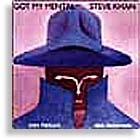
  • Steve Khan – Got My Mental

    Got My Mental

    Khan’s been around for awhile. He’s made some great albums as a solo artist, dating back to the ’70s. He also served in Billy Joel’s band in the late ’70s, and has done some great studio work, like his solo work on Steely Dan’s “Glamour Profession.”

    This album is a fine addition to his catalog. There are killer versions of tunes by the likes of Wayne Shorter, Ornette Coleman, Lee Morgan, Eddie Harris and some great takes on standards too. His playing is always tasteful, with great chordal work resting alongside his fine soloing. He’s a very patient player. By that I mean he’s capable of astonishing technical feats, but always builds his solos very eloquently.

    There are great ballads (“The Last Dance,” co-written by his father, the legendary Sammy Cahn), cooking bop, and some very cool Latin-tinged pieces. The supporting cast is good, too, and features John Patitucci on acoustic bass and Jack Dejohnette on drums.


    This review originally appeared in VG‘s March ’98 issue.

  • Lee Ritenour

    Lee Ritenour has forged a path as a preeminent session player in the kaleidoscopic Los Angeles studio scene, and a respected solo player. He has been active for decades, and was born and raised in the L.A. area.

    Vintage Guitar: When did you start playing guitar?
    Lee Ritenour: I think it goes back to when I was putting nails on the ends of broomstick handles and stretching rubber bands across them when I was about four or five (chuckles). When I was around seven I got my first guitar; it was a folk guitar that was nothing special. I started playing folk music by groups like the Kingston Trio, and when I got serious about playing, my parents were very encouraging and supportive. They found the best teachers, and by the time I was twelve I wanted to make it my life.

    What was your first electric guitar?
    A Sears & Roebuck; the kind that the amplifier built into the case. I wish I still had it. My first jazz guitar was a blond Belwin that was used; my dad bought it in a music store when I was about eleven or twelve. By the time I was thirteen, I’d gotten two guitars that I still have; one was a solidbody Ampeg by Burns of London. It had a five-way switch on it with one sound that was called “Wild Dog”. It didn’t turn out to be much of a guitar that would last over time, but it got me through my teen years.

    But the other one was and is a “main” guitar, a 1950 L-5 that I bought from a Las Vegas musician. It had a Johnny Smith pickup on it; it was about fifteen years old when I got it. It’s been on all of my records; the new Fourplay album, the album I did with Larry Carlton, and it’s all over albums like Wes Bound and Stolen Moments.

    So is it fair to say that by then you were already going in a jazz direction? Why did you go that way instead of towards rock and roll?
    Well, I really had a “split personality” during that time. When I picked up that L-5, I wanted to play and sound like Howard Roberts, Joe Pass, and especially Wes Montgomery; Renny Burrell and Jim Mall, too. At the same time, when I would pick up the solidbody guitar, I was being influenced by the rock and roll of those days, especially the British Invasion, which included Clapton, Beck, and Peter Green.

    And growing up in L.A. in the late Sixties meant checking out the Hollywood scene; I would go to concerts by Canned Heat and I’d see the Byrds hanging out at the local music store called Wallicks Music City.

    I was a young teenager, and these guys were in their twenties, and I’d hear one good player after another. That had an influence on me as well, but not as great as jazz did, because jazz was more sophisticated, and my head was already into listening to jazz radio more than pop radio. I love the sound and the power of the rock & roll guitar, but I love the sophistication of the jazz guitar. Early in my career I started combining the two elements, which was around the beginning of the fusion movement. When people like Larry Coryell and John McLaughlin came along, they were very influential.

    By the time your first album came out, hadn’t you settled into using a Gibson 335?
    Yes; in my late teens I acquired my first 335, then I got a red 335 that I’ve played throughout my career; it’s a dot-neck. I think it’s a 1960 model; I can’t see the serial number on the label because the f-holes have been stuffed with foam. I play it and the L-5 more than any other guitars, even today.

    Didn’t your association with Dave Grusin start fairly early in your career?
    I met Dave when I was twenty; he was already very influential as a composer, arranger, and keyboardist in the Los Angeles scene. He played on my first album, First Course, and he and his partner, Larry Rosen, co-produced my third album. Larry was an engineer, and he and Dave later formed Grusin-Rosen Productions; the three letters became GRP, which is the record label a lot of contemporary jazz artists recorded for; I’m still on the GRP label.

    How old were you when you did your first session?
    I did a bunch of demos, but the first “big one” was when I was in a band that was being produced by John Phillips of the Mamas and the Papas; we recorded at his home studio in Bel-Air. I was about fifteen; some of the tracks were used by the Mamas and the Papas, but I don’t think they ever got released; I remember being disappointed that I couldn’t go get the record. Nevertheless, those tunes had real session musicians on it, and I was so young. By the time I was twenty I started to play on some Sergio Mendes records, and things started to branch out very quickly; by the time I was twenty-one or twenty-two I was doing a lot of session work.

    When First Course was recorded, was there any “feel” you were going for?
    Well, I was very nervous about doing the first album, as any artist is; I was especially nervous because I felt like I was coming into my own as the number one session guitarist in Los Angeles; the previous number one guitarist had been Larry Carlton. But those years, ’76, ’77 and ’78, were prime years for me as a studio musician, and I was doing as many as fifteen sessions a week. So when I did the first album, I really wasn’t prepared as an “artist”; I was still thinking as a “studio musician”, and I was very worried about having my own identity on the guitar, because up until that time my job as a studio musician had been to be a “chameleon”.

    Doing what people told you to do?
    Either that, or bringing what I wanted to a record that would compliment their record; playing a Clapton-type style or a Chet Atkins style or jazz or classical.

    At the same time, I was playing in two jazz clubs called Dante’s and the Baked Potato; Dave Grusin, Harvey Mason and Ernie Watts were playing in that band. Later Patrice Rushen, another great keyboardist, played in it. We were forging a sound that would become popular, but it wasn’t until several years later that I felt more comfortable with who I was stylistically. Yet when you go back to First Course, the Lee Ritenour style is there.

    The opening cut on the second album, Captain Fingers, is the title track, and it has an almost “progressive rock/Yes-type” sound; very aggressive and complex.
    It’s very fusion-oriented; I wrote that tune after I had the title, whereas most other tunes get written, then you come up with a title. It was a nickname that the cartage guys came up with when they had to carry around this big case that had fifteen guitars in it. I wrote “Captain Fingers” because I wanted to come up with a “pyrotechnic” tune (chuckles). I remember taking some heat on the first album; that it was too “soft” and lightweight. So I made sure I got more aggressive on the second album, but it was also part of the times. The Mahavishnu Orchestra was out there; Al DiMeola had come out with his first album around the same time I did; Larry Coryell had turned to more of a distorted, fusion sound. The sound of the guitar was “rock”, but what we were playing was “jazz”, so in essence it was called “fusion” at the time.

    I was very proud of the album; I felt like it put me into the “artist mode”. After that album came out, the production company I was with went out of business, so I became a “free agent” and signed with Elektra Records, where I remained for seven years. The Captain’s Journey was the first for Elektra; that was in 1978, and was really when I decided to “turn off the faucet” on studio work and concentrate on being an artist.

    Some of your albums may have been considered “concept” albums. Festival was a Brazilian music-influenced album, for example.
    Throughout my career, Brazilian music has played a strong motif. The first album I did with a Brazilian flavor was one called Rio in 1979. That was my first acoustic album, and it’s stood the test of time. Almost ten years later I revisited that area on Festival, and I worked with some Brazilian artists on that album; a very famous singer/songwriter named Caetano Veloso, and Joao Bosco, a talented acoustic guitar player. They’re very big stars in Brazil. The Brazilian culture has become a major part of my life; I married a Brazilian citizen. Musically, I’ll probably revisit that territory again.

    Obviously, Wes Bound is a tribute album, and one would assume that you just used the L-5 on it.
    Almost exclusively, except for one song.

    Didn’t you have a single that made it onto the pop charts once?
    Yeah; I did an album called Rit; it was the first time I crossed over and did a vocal tune with a singer named Eric Tagg from Texas. The song that Eric, Bill Champlain and I wrote called “Is It You” became a Top Fifteen single and I think it was a number one R & B single. That was a big album for me, and it was interesting because at the time, the only other person who had used vocals to cross over from contemporary jazz was Grover Washington, who did it with Bill Withers. Of course, Benson had done it in ’76, but he was singing and playing, whereas Grover and I were using other singers, and this was in 1980 for me; Grover had done it in ’79. It was an unusual turn of events.

    So technically, I guess you qualify as a One-Hit-Wonder.
    (laughs) Right, although I think the next year a tune from the Rit II album called “Cross My Heart” was on the pop charts but didn’t get very high. The Fourplay material has been on the pop and R & B charts quite a bit, but that happened years later.

    When did you go from Elektra to GRP Records?
    In 1985; Dave Grusin and I did our first and only collaboration album called Harlequin. It was also a Brazilian-oriented affair; we worked with another singer/songwriter from Brazil named Ivan Linns.

    There was also the GRP Live album with you, Grusin, and Diane Schuur, among others. You played a version of “Dolphin Dreams” from the Captain Fingers album; you used a guitar synthesizer.
    That was a Synthaxe. There was a live video done as well; it was recently on something like the Discovery Channel. It was recorded at the Record Plant in Los Angeles.

    My perception is that you were an early user and/or proponent of guitar synthesizers; you were holding one on the cover of the Earth Run album.
    That was a Synthaxe as well; Earth Run was the first time I’d really used it extensively on an album. I go all the way back to the 360 Systems in 1976 or ’77; you can see one on the back of the Captain Fingers album. I’ve had a sampling of all of them; I’ve had quite a few Rolands, the Yamaha GR-10, the Synthaxe. I currently use the Gibson MIDI-Max, which is also not being manufactured anymore, but as far as I know it’s still the best of the analog versions. I also have the current Roland model, the GR-1, in my rack.

    Unfortunately, the guitar synthesizer business kind of fell apart, except for Roland; people couldn’t afford to keep it going and do the research that was needed. It definitely turned out to be a more complex situation that anyone imagined.

    Some people might opine that the technology got outmoded fairly quickly, as is often the case in electronics.
    There was the tracking problem, and all of the particulars of a guitar that didn’t translate very well to MIDI. I use my guitar synthesizer almost exclusively in programming my computer. I do record with it, especially for background material. I don’t use it live very often anymore, but it is an integral part of my computer system, which is fairly complex.

    Are you doing any session work at all anymore?
    I’m pretty much doing my solo career; once in a while I’ll do a guest spot on somebody’s record, or if Dave Grusin has a movie that needs something special I’ll do that for him. But my own career takes up more than enough time (chuckles).

    A lot of people aren’t aware that you were on Pink Floyd’s The Wall album.
    I don’t remember the names of specific tunes; there were some background singers and maybe a keyboardist and myself, but none of us got credit, which is kind of unusual. A lot of people do ask me about that album, because it’s listed in my credits. I definitely spent some nice time working with David Gilmour and those guys, overdubbing various acoustic parts and an occasional electric part. It was like working with Steely Dan; the pieces are so intricately woven together, it’s a “mosaic” of many parts. Pink Floyd, like Steely Dan, would concentrate on one little rhythm guitar part that was eight bars long for two days; they would agonize over every inch of it, which is fine. I appreciated that way of thinking, but for the most part I’d rather do that on my own record than somebody else’s.

    One of your other ventures is the Fourplay band; when did it get going? [Note: the other members of Fourplay are keyboardist Bob James, bassist Nathan East, and drummer Harvey Mason.]
    I believe our first album was released in ’91; our third album was just released. We’re about to go out on tour to support it.

    What about the album project with Larry Carlton? How did that come about?
    We knew each other for many years, and we grew up near each other in the South Bay of Los Angeles, but we never got a chance to work with each other because our careers were so similar. We were two lead guitar players; calling two lead guitar players to a session would be like having two baseball pitchers on the same mound! We both had solo careers, and if there was any “competitiveness” it was from not working with each other.

    But our friends were always asking us when we were going to record together; once we ended up on GRP it became a reality, and we finally did the album last year and toured quite a bit this year.

    You each produced the songs that you wrote.
    Pretty much, but we were very involved in each other’s tunes, because they were mostly cut live with the band, so we were constantly making suggestions to each other, but our rule of thumb was whoever’s composition we were working on had the final word and production control.

    It certainly doesn’t sound like a “showdown” or “show-off” album.
    It didn’t turn out to be a “showdown” because Larry and I don’t think about music that way. Those kind of albums bore us when we listen to two guitar players rattling off a million notes; we’re much more musical than that. Most of the time in the studio it was “You take the first section and I’ll take the second”…. “No, you take the first, and I’ll take the second”… We were being overly polite, to the point where the band would say “Somebody play the melody!” (laughs)

    There are some harmony guitar parts on the album; did both of you work those out within the individual compositions?
    Yeah; Larry wanted to have a chance to write for what he calls a “mini-guitar orchestra”. Here was an opportunity for him to write some harmonies and take advantage of those once we went on the road. So his tunes like “Closed Door Jam”, “Lots About Nothin’” and “Up and Adam” have a lot of that; my tune “L.A. Underground” has a lot of unison playing. We were both constantly thinking about the orchestration of the guitars.

    Your current guitar arsenal is listed on the CD cover of Larry & Lee; do you have any others in your collection?
    Well, I have an old Strat that didn’t appear on the album; I don’t play it too often these days. I don’t know what year it is, but I do know that the serial number on it is 0335 (laughs). That’s not the reason I bought it, but when I was trying it out, I flipped it over and saw the serial number, so I figured that helped me decide to buy it.

    Your son’s name is Wes; it’s obvious where the name came from, and he’s shown with you on the album cover. Do you think he’ll grow up to be a guitar player?
    Only if he wants to be. I can certainly help him in that area, and it’s for sure that music’s in his blood; he’s already dancing and strumming on guitars.

    The musical symbiosis of Lee Ritenour and Larry Carlton is not only evident on their collaboration album, but in their attitudes and conversational abilities as well (a definitive example being Ritenour corroborating Carlton’s “guitar orchestra” statement before Carlton was interviewed). The solo careers of Ritenour and Carlton are laudable, but the fact that two titanic guitar talents can create an album as listenable as Larry & Lee is icing on the cake as a tribute to their professionalism… but it probably wouldn’t be out of line to opine that the album was an enjoyable and fun experience for Messrs. Ritenour and Carlton as well…


    Photo courtesy of Lee Ritenour.

    This article originally appeared in VG‘s February ’96 issue. All copyrights are by the author and Vintage Guitar magazine. Unauthorized replication or use is strictly prohibited.

  • The Who – BBC Sessions

    BBC Sessions

    Let’s face it; The Who deserves to be mentioned in the same breath with the Beatles and the Stones. Yes, you’ll like one more than the other, but Pete Townshend and company were prototypical hard rockers from day one. Plus, as these previously unreleased sessions from the BBC’s Radio One studios show, they were pretty good at rhythm and blues and pop.

    These tunes, cut for broadcast from 1965 to ’73, show Townshend to be an excellent guitarist and master songwriter, Roger Daltry to be as fine a rock singer as you’ll ever hear, and do I really need to say anything about the rhythm section of John Entwistle and Keith Moon?

    If you are a Who fan, you’ll definitely want to pick this up. If you’re not a Who fan, what the hell is wrong with you? – JH


    This collection of 25 classics, outtakes, and jingles recorded live at Radio One capture The Who in reckless, rocking form. The band roars through cuts like “My Generation” with raw energy that gives a sense of what they were like in their heyday, pre-stadium rock.

    The most fascinating cut is, arguably, the first; a BBC radio jingle changing the words of “My Generation” into “my favorite station” – The Who’s great antiestablishment tirade co-opted into a commercial jingle. – MD


    This review originally appeared in VG‘s May ’00 issue.

  • Veleno Guitars

    Shiny Metal (Rare) Birds

    Throughout the years luthiers have built guitars out of a lot of exotic materials, from Torres’ paper mache acoustics to Danelectro’s masonite to Dan Armstrong’s lucite guitars to Steinberger’s all-graphite headless wonders. While all of these instruments are absolutely cool, few have the magic of those shiny metal guitars with bird-like headstocks and gleaming ruby eye crafted of aluminum named Veleno. Veleno guitars are the essence of glam, perfect icons of the decadence of the Me Decade.

    And, as it turns out, quite rare. To learn their story we have to travel back in time to those innocent days of 1966, or, indeed even back further, to the formative years of a young machinist by the name of John Veleno.

    The Rhythm Masters
    John Veleno was born in 1934 and began studying guitar in Massachusetts in around 1958, eventually playing part-time in a rock and country band called the Rhythm Masters. From 1961 to ’62 he worked as a guitar teacher at the studio where he had been taking lessons. As most of us know, music teaching hardly proved to be a reliable source of income, so during the day Veleno pursued a trade as a machinist. John had completed his apprenticeship in 1956 and had held down his day job until 1963, when his wife’s health condition caused him to relocate to Florida. Two days after his arrival in the Sunshine State, he was offered a job in a machine shop in St. Petersburg.

    Aluminum
    Once in St. Petersburg, Veleno’ job at the Universal Machine Company was to make aluminum boxes which were designed to contain the electronic components used on the rockets launched from Cape Canaveral. These boxes were of various shapes and had to be both strong and lightweight. The most common way to make them was by taking a 35 pound billet of solid aluminum and cutting it down to a rib-reinforced box of around 11/2 to 3 pounds in weight. It was this background in working with aluminum which would eventually give birth to Veleno’s unique guitar designs.

    While working by day at the machine shop, Mr. Veleno continued to give guitar lessons in his off-hours. To do this he obtained an occupational license allowing him to teach guitar in his home. To advertise his guitar lessons, he wanted to put up a sign, however, to his dismay he discovered that local ordinances only allowed him to put a one foot by one foot sign attached to the outside of his house, hardly something that would catch the attention of people passing by.

    The guitar mailbox
    Veleno thought about it and decided to make a guitar-shaped mailbox out of aluminum to sit at the street curb shaped like a guitar. This was not technically speaking a “sign” and therefore he could draw attention to the sign on his house with the mailbox. Since he was an aluminum worker, Veleno naturally decided to machine the mailbox stand out of aluminum.

    As it turned out, the fellow who was Veleno’s aluminum supplier was also a guitar player, and while they were talking, the supplier asked: “Why make a just a guitar-shaped mailbox out of aluminum? Why not make a guitar out of aluminum?” A little light went off in Veleno’s head, and it was only a matter of time until Veleno aluminum guitars came into being.

    Prototype
    Veleno began to hand-make his first guitar in 1966, working at home, constantly changing the design to overcome problems as he progressed. Finally, in 1967, it was complete.

    Since he was not particularly well connected with the local music scene, the only way Veleno could think of to market his new guitar was to take it around to area niteclubs. Like many a visionary before him, all Veleno received from the local musicians was laughs and insults. Dispirited, the aluminum guitar went into the closet to collect dust, and John Veleno thought his guitar-making career was over.

    However, as fate would have it, in around 1970, Veleno ran into his old friend the aluminum supplier, who asked if he had ever built that aluminum guitar. Veleno reluctantly admitted that he had. The aluminum supplier asked to look at it and got very excited when he saw the design. He took John Veleno and his aluminum guitar to a local niteclub called the Cheshire Cat where the guitarist in the band playing that evening loved Veleno’s guitar. They stayed at the club until 1 or 2 AM in the morning, after which Veleno’s friend took him to the south side of St. Petersburg, not the nicest neighborhood in town at the time.

    Clothes for the stars
    Veleno recalls that night with amusement. “My friend took me to this house that looked like a haunted house. The grass hadn’t been cut for ages. It was about 18″ high! The house had paint peeling off it. A real horror house. We went into an apartment in the house where I was introduced to a couple named Michael and Tony, I forget their last names. Michael and Tony made costumes for rock stars and they were completely surrounded by racks and racks of wild clothes and shoes with 5″ soles on them. They supplied some of the clothes Sonny and Cher were wearing for their act at the time. I remember that Michael and Tony had just completed a wardrobe for Jimi Hendrix. I remember the Hendrix connection because this was just about the time that Hendrix died.”

    Veleno’s aluminum guitar was shown to Michael, who was also excited by it and offered to show Veleno how to sell his idea. He insisted the only way was to get guitar players to see it, and that he could show Veleno how to get into the big rock shows which were frequently visiting the area coliseum at the time.

    James Gang
    “Remember this was around 1970, before there was so much security,” muses Veleno. “Michael took me to the first show, which was the James Gang, I believe. I didn’t know anyone’s names in the band at the time. Michael’s suggested technique was to show up carrying a guitar case in the afternoon, between 1 and 3 PM. No one ever stopped someone entering backstage with a guitar case at that time of day. The idea was then to get near the stage during the soundcheck, take out the aluminum guitar and begin to polish it. Michael assured me that there was no way that the guitar player wouldn’t come over to look at it. He was right. It worked like a charm for years.”

    “By the way,” adds Veleno, “later on I would always go to the record store before a band was coming to town so I could find out the names of the band members and see their pictures before I showed up!”

    The other Santana
    The first group to really take a look at Veleno’s guitar was led by Jorge Santana in either 1970 or 1971. “I was really excited that I was going to see Santana, but then I found out it was actually Carlos’ brother,” recalls Veleno with a self-deprecating chuckle. Veleno followed the pattern, going in for the soundcheck, pulling out the guitar and polishing it. Jorge Santana couldn’t resist his curiosity and came over to try the guitar. He liked it so much, he took it out and used it on his first three songs that night. His manager was furious, Veleno remembers, telling Jorge that he should stick to the guitar he was familiar with for the show, but Santana was adamant and used the Veleno.

    After the show Jorge Santana met with Veleno and offered about a dozen ideas that would improve the design, all of which were incorporated in subsequent guitars.

    V headstock
    Veleno’s first few prototype guitars had a bird-shaped headstock with six-in-line tuners. One of Jorge Santana’s suggestions had been to change it to a three-and-three arrangement, since it was easier to find the string you wanted to tune while performing onstage. Veleno went home and got his five children around the kitchen table and had a brainstorming session. One of his children suggested using the family’s last name and came up with a “V” design, and that was it. The trademark red corundum ruby set in the middle of the headstock was inspired by Veleno’s first wife’s birthstone. Some of the heads are all chrome, but some (on black necks, especially) were black with a silver V highlight. At least one example is seen in all black with no highlight.

    The Veleno Original
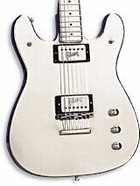
    The main Veleno guitar design is called the Veleno Original, although several other models appeared over the course of his brief luthier’s career. The Original is sort of an equal double cutaway cross between a Strat and a slab Tele with an aluminum body and a bolt-on aluminum neck. Some differences can be seen in guitar shapes; some are a bit slimmer like a Gibson Les Paul Junior and some are a bit chunkier like a Tele.

    Veleno’s necks were cast from Almag 35 aluminum, the most corrosive-resistant alloy available at the time. Veleno came up with his ideal profile and took it to a pattern maker who made a board which allowed casting three necks at a time. Casting was then done at a local foundry.

    To come up with the neck profile Veleno studied many popular guitars. He liked the flatter fingerboard radius of Gibson guitars, but he preferred the shallower back of Fenders. He was fortunate to have access to quite a number of people in the neighborhood who had retired from the guitar business, so he was able to consult with them and learn why companies did things. Veleno chose a compromise that combined the Gibson radius with the Fender back. Their designs, of course, had been dictated in part by the necessities of truss rod installation, whereas Veleno, with his warp-proof aluminum neck, was free of such concerns, and could make any shape he liked. Many of Veleno’s necks were coated in a black finish, making them feel more like a conventional neck finish.

    Originally the Veleno fingerboard had 21 frets, but this was quickly changed to 22. Frets were seated with a special quick-drying glue. In theory, this design was supposed to allow easy refretting as often as required or desired. Veleno admits that the necks were a little heavy, causing the guitars to be a bit unbalanced, although he tried to compensate by putting three different places to connect the guitar strap so the player could adjust somewhat. Still, this was a design flaw that was never corrected.

    Fingerboards could be finished in black with white dots or in chome with white or black dotes. The typical dot pattern on Velenos was an alternating one/two pattern, with three dots at the octave.

    The Veleno Original is actually a hollowbody guitar which is carved from two solid blocks of aluminum, 17 pounds of raw material reduced to a pound and a half! The first five or so guitar bodies were actually cast like an automobile engine, but Veleno quickly switched to the method familiar from his job. Veleno bodies are not stamped and have no bends or welds. Backs were removable to allow access to the electronics. The final guitar was 81/2 pounds, lighter than a Gibson Les Paul. The first cast Originals did not have a pickguard, but when John switched to carving he addied a clear plexiglass pickguard to protect the finish.

    Colors
    The first Veleno bodies were made of 7075 aluminum, but these quickly tarnished and changed color. Veleno switched to 6061 aluminum which was then chrome plated. Eventually, in addition to the most common chrome finish, Velenos were offered in real gold plating, polished aluminum (similar look to chrome plated), plus anodized finishes of blue, red, green, gold and two blacks, ebony and “super finish.” The super finish was a special process which yielded a harder finish that regular anodizing. This availability does not mean that Veleno guitars were necessarily produced in these colors. Chrome was the most common, with a few in gold and at least one in a black finish.

    Occasionally Veleno would make his own bridges, although he sometimes used Gibson Tune-o-matics or Guild bridges. He actually preferred the way the Guild bridges adjusted.

    Electronics on Veleno guitars were pretty straightforward. Typical controls consisted of two volume and two tone controls, two threeway mini-toggles (off in the middle, coil taps in the up position), and a mini-toggle phase switch. Since the guitars were made of aluminum, they were automatically shielded to reduce feedback.

    Pickups
    Pickups on the first few guitars were DeArmond humbuckers, but Veleno quickly switched to chrome-covered Gibson humbuckers, when he could get them. When he couldn’t, he sometimes used Guild humbuckers, although he didn’t care that much for their more trebly output. Somewhere between guitar #25 and guitar #50 Veleno was approached by Larry DiMarzio and asked to use his early pickups, which he did, when they were available.

    Veleno guitars sold for $600.

    At least one gold-plated Veleno Original was built with three DiMarzio pickups. This can be seen on page 95 of Tony Bacon and Paul Day’s The Ultimate Guitar Book (Alfred A. Knopf, New York, 1991). This featured three volumes and three tones, three on/off mini-toggles under the knobs, three mini-toggles on the upper bout bass horn and a single mini-toggle on the lower horn.

    The first sale
    While the Jorge Santana connection was productive in terms of input, it didn’t result in a sale. That would come shortly thereafter when John

  • Veleno Guitars

    Shiny Metal (Rare) Birds

    Throughout the years luthiers have built guitars out of a lot of exotic materials, from Torres’ paper mache acoustics to Danelectro’s masonite to Dan Armstrong’s lucite guitars to Steinberger’s all-graphite headless wonders. While all of these instruments are absolutely cool, few have the magic of those shiny metal guitars with bird-like headstocks and gleaming ruby eye crafted of aluminum named Veleno. Veleno guitars are the essence of glam, perfect icons of the decadence of the Me Decade.

    And, as it turns out, quite rare. To learn their story we have to travel back in time to those innocent days of 1966, or, indeed even back further, to the formative years of a young machinist by the name of John Veleno.

    The Rhythm Masters
    John Veleno was born in 1934 and began studying guitar in Massachusetts in around 1958, eventually playing part-time in a rock and country band called the Rhythm Masters. From 1961 to ’62 he worked as a guitar teacher at the studio where he had been taking lessons. As most of us know, music teaching hardly proved to be a reliable source of income, so during the day Veleno pursued a trade as a machinist. John had completed his apprenticeship in 1956 and had held down his day job until 1963, when his wife’s health condition caused him to relocate to Florida. Two days after his arrival in the Sunshine State, he was offered a job in a machine shop in St. Petersburg.

    Aluminum
    Once in St. Petersburg, Veleno’ job at the Universal Machine Company was to make aluminum boxes which were designed to contain the electronic components used on the rockets launched from Cape Canaveral. These boxes were of various shapes and had to be both strong and lightweight. The most common way to make them was by taking a 35 pound billet of solid aluminum and cutting it down to a rib-reinforced box of around 11/2 to 3 pounds in weight. It was this background in working with aluminum which would eventually give birth to Veleno’s unique guitar designs.

    While working by day at the machine shop, Mr. Veleno continued to give guitar lessons in his off-hours. To do this he obtained an occupational license allowing him to teach guitar in his home. To advertise his guitar lessons, he wanted to put up a sign, however, to his dismay he discovered that local ordinances only allowed him to put a one foot by one foot sign attached to the outside of his house, hardly something that would catch the attention of people passing by.

    The guitar mailbox
    Veleno thought about it and decided to make a guitar-shaped mailbox out of aluminum to sit at the street curb shaped like a guitar. This was not technically speaking a “sign” and therefore he could draw attention to the sign on his house with the mailbox. Since he was an aluminum worker, Veleno naturally decided to machine the mailbox stand out of aluminum.

    As it turned out, the fellow who was Veleno’s aluminum supplier was also a guitar player, and while they were talking, the supplier asked: “Why make a just a guitar-shaped mailbox out of aluminum? Why not make a guitar out of aluminum?” A little light went off in Veleno’s head, and it was only a matter of time until Veleno aluminum guitars came into being.

    Prototype
    Veleno began to hand-make his first guitar in 1966, working at home, constantly changing the design to overcome problems as he progressed. Finally, in 1967, it was complete.

    Since he was not particularly well connected with the local music scene, the only way Veleno could think of to market his new guitar was to take it around to area niteclubs. Like many a visionary before him, all Veleno received from the local musicians was laughs and insults. Dispirited, the aluminum guitar went into the closet to collect dust, and John Veleno thought his guitar-making career was over.

    However, as fate would have it, in around 1970, Veleno ran into his old friend the aluminum supplier, who asked if he had ever built that aluminum guitar. Veleno reluctantly admitted that he had. The aluminum supplier asked to look at it and got very excited when he saw the design. He took John Veleno and his aluminum guitar to a local niteclub called the Cheshire Cat where the guitarist in the band playing that evening loved Veleno’s guitar. They stayed at the club until 1 or 2 AM in the morning, after which Veleno’s friend took him to the south side of St. Petersburg, not the nicest neighborhood in town at the time.

    Clothes for the stars
    Veleno recalls that night with amusement. “My friend took me to this house that looked like a haunted house. The grass hadn’t been cut for ages. It was about 18″ high! The house had paint peeling off it. A real horror house. We went into an apartment in the house where I was introduced to a couple named Michael and Tony, I forget their last names. Michael and Tony made costumes for rock stars and they were completely surrounded by racks and racks of wild clothes and shoes with 5″ soles on them. They supplied some of the clothes Sonny and Cher were wearing for their act at the time. I remember that Michael and Tony had just completed a wardrobe for Jimi Hendrix. I remember the Hendrix connection because this was just about the time that Hendrix died.”

    Veleno’s aluminum guitar was shown to Michael, who was also excited by it and offered to show Veleno how to sell his idea. He insisted the only way was to get guitar players to see it, and that he could show Veleno how to get into the big rock shows which were frequently visiting the area coliseum at the time.

    James Gang
    “Remember this was around 1970, before there was so much security,” muses Veleno. “Michael took me to the first show, which was the James Gang, I believe. I didn’t know anyone’s names in the band at the time. Michael’s suggested technique was to show up carrying a guitar case in the afternoon, between 1 and 3 PM. No one ever stopped someone entering backstage with a guitar case at that time of day. The idea was then to get near the stage during the soundcheck, take out the aluminum guitar and begin to polish it. Michael assured me that there was no way that the guitar player wouldn’t come over to look at it. He was right. It worked like a charm for years.”

    “By the way,” adds Veleno, “later on I would always go to the record store before a band was coming to town so I could find out the names of the band members and see their pictures before I showed up!”

    The other Santana
    The first group to really take a look at Veleno’s guitar was led by Jorge Santana in either 1970 or 1971. “I was really excited that I was going to see Santana, but then I found out it was actually Carlos’ brother,” recalls Veleno with a self-deprecating chuckle. Veleno followed the pattern, going in for the soundcheck, pulling out the guitar and polishing it. Jorge Santana couldn’t resist his curiosity and came over to try the guitar. He liked it so much, he took it out and used it on his first three songs that night. His manager was furious, Veleno remembers, telling Jorge that he should stick to the guitar he was familiar with for the show, but Santana was adamant and used the Veleno.

    After the show Jorge Santana met with Veleno and offered about a dozen ideas that would improve the design, all of which were incorporated in subsequent guitars.

    V headstock
    Veleno’s first few prototype guitars had a bird-shaped headstock with six-in-line tuners. One of Jorge Santana’s suggestions had been to change it to a three-and-three arrangement, since it was easier to find the string you wanted to tune while performing onstage. Veleno went home and got his five children around the kitchen table and had a brainstorming session. One of his children suggested using the family’s last name and came up with a “V” design, and that was it. The trademark red corundum ruby set in the middle of the headstock was inspired by Veleno’s first wife’s birthstone. Some of the heads are all chrome, but some (on black necks, especially) were black with a silver V highlight. At least one example is seen in all black with no highlight.

    The Veleno Original
    The main Veleno guitar design is called the Veleno Original, although several other models appeared over the course of his brief luthier’s career. The Original is sort of an equal double cutaway cross between a Strat and a slab Tele with an aluminum body and a bolt-on aluminum neck. Some differences can be seen in guitar shapes; some are a bit slimmer like a Gibson Les Paul Junior and some are a bit chunkier like a Tele.

    Veleno’s necks were cast from Almag 35 aluminum, the most corrosive-resistant alloy available at the time. Veleno came up with his ideal profile and took it to a pattern maker who made a board which allowed casting three necks at a time. Casting was then done at a local foundry.

    To come up with the neck profile Veleno studied many popular guitars. He liked the flatter fingerboard radius of Gibson guitars, but he preferred the shallower back of Fenders. He was fortunate to have access to quite a number of people in the neighborhood who had retired from the guitar business, so he was able to consult with them and learn why companies did things. Veleno chose a compromise that combined the Gibson radius with the Fender back. Their designs, of course, had been dictated in part by the necessities of truss rod installation, whereas Veleno, with his warp-proof aluminum neck, was free of such concerns, and could make any shape he liked. Many of Veleno’s necks were coated in a black finish, making them feel more like a conventional neck finish.

    Originally the Veleno fingerboard had 21 frets, but this was quickly changed to 22. Frets were seated with a special quick-drying glue. In theory, this design was supposed to allow easy refretting as often as required or desired. Veleno admits that the necks were a little heavy, causing the guitars to be a bit unbalanced, although he tried to compensate by putting three different places to connect the guitar strap so the player could adjust somewhat. Still, this was a design flaw that was never corrected.

    Fingerboards could be finished in black with white dots or in chome with white or black dotes. The typical dot pattern on Velenos was an alternating one/two pattern, with three dots at the octave.

    The Veleno Original is actually a hollowbody guitar which is carved from two solid blocks of aluminum, 17 pounds of raw material reduced to a pound and a half! The first five or so guitar bodies were actually cast like an automobile engine, but Veleno quickly switched to the method familiar from his job. Veleno bodies are not stamped and have no bends or welds. Backs were removable to allow access to the electronics. The final guitar was 81/2 pounds, lighter than a Gibson Les Paul. The first cast Originals did not have a pickguard, but when John switched to carving he addied a clear plexiglass pickguard to protect the finish.

    Colors
    The first Veleno bodies were made of 7075 aluminum, but these quickly tarnished and changed color. Veleno switched to 6061 aluminum which was then chrome plated. Eventually, in addition to the most common chrome finish, Velenos were offered in real gold plating, polished aluminum (similar look to chrome plated), plus anodized finishes of blue, red, green, gold and two blacks, ebony and “super finish.” The super finish was a special process which yielded a harder finish that regular anodizing. This availability does not mean that Veleno guitars were necessarily produced in these colors. Chrome was the most common, with a few in gold and at least one in a black finish.

    Occasionally Veleno would make his own bridges, although he sometimes used Gibson Tune-o-matics or Guild bridges. He actually preferred the way the Guild bridges adjusted.

    Electronics on Veleno guitars were pretty straightforward. Typical controls consisted of two volume and two tone controls, two threeway mini-toggles (off in the middle, coil taps in the up position), and a mini-toggle phase switch. Since the guitars were made of aluminum, they were automatically shielded to reduce feedback.

    Pickups
    Pickups on the first few guitars were DeArmond humbuckers, but Veleno quickly switched to chrome-covered Gibson humbuckers, when he could get them. When he couldn’t, he sometimes used Guild humbuckers, although he didn’t care that much for their more trebly output. Somewhere between guitar #25 and guitar #50 Veleno was approached by Larry DiMarzio and asked to use his early pickups, which he did, when they were available.

    Veleno guitars sold for $600.

    At least one gold-plated Veleno Original was built with three DiMarzio pickups. This can be seen on page 95 of Tony Bacon and Paul Day’s The Ultimate Guitar Book (Alfred A. Knopf, New York, 1991). This featured three volumes and three tones, three on/off mini-toggles under the knobs, three mini-toggles on the upper bout bass horn and a single mini-toggle on the lower horn.

    The first sale
    While the Jorge Santana connection was productive in terms of input, it didn’t result in a sale. That would come shortly thereafter when John

  • Jim Weider and the Honky Tonk Gurus – Big Foot

    Big Foot

    Okay, the only words I can use to describe my reaction to this record are “blown away.” Weider, as some of you probably know, works as the guitarist in the current version of The Band. While his playing there is excellent and always adds to the songs, I was unprepared for the firepower shown here. Weider comes across, on all 11 cuts, as a powerhouse player who knows his instrument inside and out, and is more than comfortable in any genre of music.

    Check out the tone on the opening/title track. Snarling can’t even begin to describe it. I, and thousands of other players, would kill for this sound. Put that together with the playing on this blues/rock instrumental, and you’ve got pure gold.

    And things don’t stop there. I didn’t expect a player like Weider to cover Hendrix, but check out “Little Miss Lover.” Preconceived notions can fool you. His biting tone, very strong solo, and funky rock sound are right on the money. He shows his ease with classic soul music on “Deepest Cut.” It starts with nice volume swells and killer single-line work, and before it’s over, you’ll hear some of the nicest harmonic work and bends this side of Roy Buchanan and Jeff Beck. There’s funky, horn-driven blues (“Love’s Like Rain”) with guitar work that would make B.B. King smile. Or how about more classic soul in the cover of Bobby Womack’s “I’m In Love.” Killer vocals by Ernie Cate, and nice guitar work by Weider. There are also shuffles, Meters-style funk, straight-ahead blues, and swampy rock, all done with great taste, great chops and a ton of fun. The folks helping out on the album would be pretty familiar to some of you too. People like David Sancious, Tony Levin, Harvey Brooks, the late Rick Danko, Levon Helm, Garth Hudson, and members of Weider’s sometimes-band, the Honky Tonk Gurus – Richard Bell and Randy Ciarlante.

    I confess. This definitely is one of my favorite albums of the year so far. Killer songs and great performances, especially by Weider. Highly recommended.


    This review originally appeared in VG‘s Oct. ’00 issue.

  • Anthony Wilson – Adult Themes

    Adult Themes

    Here’s the third album from guitarist, arranger, and leader of his own big band, Anthony Wilson. He’s young, but he definitely can look backward to the likes of his father, Gerald, and other modern big band arrangers and players.

    With each album, his composition skills seem to grow, along with his playing. The very evocative “Idle Blues’ features a wonderfully odd melody with killer solos on sax and organ, and Wilson on a highly swinging guitar solo. It’s a lengthy and in-depth piece that never seems to get boring. His composition “Invention In Blue” is a nice bluesy ballad that features more of his monster soloing. His real hallmark here is the final suite. It’s called “Adult Themes” and features five sections. It goes from swing to contemplative moods and everything in between.

    Wilson’s choice of songs to cover is wonderful, too. Donald Fagen’s “Maxine” fits the mood of the band and his octave fills highlight a really nice tune. He also makes the Beatle’s “Because” work in this idiom. His arrangements add bluesy elements to the original melody with well-placed organ fills and horn punches. And, his really nice solo guitar intro really sets up a gorgeous treatment of “Danny Boy.” You gotta love this guy if you have any interest in jazz. He’s breathing new life in the modern big band, and his playing speaks for itself. Recommended.


    This review originally appeared in VG‘s Dec. ’99 issue.

  • Brent Mason – Hot Wired

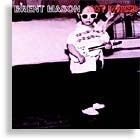
    Hot Wired

    Some of you know Brent Mason because he’s one of the most-heard guitarists in the world. A mainstay on the Nashville scene, he has played on hundreds of recent country hits. That said, it should be noted his solo instrumental effort here is not a country album. Yes, there are some cuts that feature nasty chicken-pickin (“Hot Wired”), and there’s some very cool country/swing type things (“Swing With a Sting”), but players like Larry Carlton and George Benson might come to mind if you heard most of this album and didn’t know who was playing.

    The compositions are excellent, and Mason’s playing on cuts like “Mellow Midnight” show his debt to Carlton, with killer volume swells, lightning-swift single jabs, and very pretty gospel-like chord changes. That’s not to say Mason doesn’t pay homage to some country players – “My Little Ballerina” even features Chet Atkins. And his rousing version of Hank Garland’s “Sugarfoot Rag” is sure to delight.

    All in all, it’s an excellent album by one of the best. Pick it up to get a look at a different side of Brent Mason.


    This review originally appeared in VG‘s Mar. ’98 issue.

  • Larrivée D-03E

    High marks in the

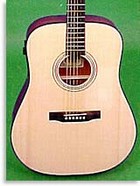
    Not all great values are old instru-ments. For you newcomers, in this column we focus on musi-cal gear that presents extraordinary “bang for the buck.” This month’s entree, the Larrivée D-03E, is available as a new instrument. What makes it so amazing is its tone, workmanship, and playability. A solid-top, handcrafted guitar with Fishman electronics for under $1,000 makes it a great value no matter where you find one.

    Jean Larrivée (“Larrivée Guitars: Future Classics,” VG, June ’98) started making guitars in the late ’60s when he wanted a better quality classical guitar but couldn’t afford one. His early experiments eventually placed his stylish, intricate designs with guitarists like Bruce Cockburn and Neil Young. Pete Anderson, Dwight Yoakam’s sidekick/producer, appeared in a recent ad touting the Larrivée’s great tone. More on that later…

    I had another guitarist sub for me at my restaurant gig a couple of years ago. He played a regular Larrivée D-03, Jean’s take on a Martin D-18. What blew me away was the clear tone and volume of his D-03. Unlike my rig, he used no wireless; the guitar could still be easily heard. I made a mental note about Larrivée for the next time I went guitar shopping. The D-03E is the same guitar with the addition of a Fishman Prefix Plus pickup/preamp system. I needed a pickup, since we use wireless on my guitar and voice to enable diners in various rooms throughout the house to hear me. This option costs $150, but it’s worth it.

    Larrivée uses the best materials, including ebony fretboards and bridges. Fretwork is excellent and the truss rod design is unusual, resembling a cross between a coat hanger and a question mark. It allows access to the truss rod, located inside the body near where it joins the neck. Larrivée guitars feature a hand-fitted dovetail neck joint that promotes better sustain in the upper registers as well as greater strength where it matters. The guitar is solid wood, with mahogany neck (14 frets clear) and body finished in a subtle-but-tough satin finish. Larrivée even has a clear satin-finish pickguard visible only from certain angles.

    The Fishman Prefix Plus deserves special attention. Built into the side of the upper bout, the Prefix Plus includes variable notch filter and volume knobs, shelving Bass and Treble, semi-parametric Contour and Brilliance controls with slider pots. A phase-reversal switch and low battery indicator are included and the whole affair terminates in a standard 1/4″ end-pin jack. The top end of this system is amazing – even through mediocre speakers, this guitar has excellent presence and sparkle. Coupled with a fine set of speakers and amplification, this system has few peers in the acoustic electric realm. One word of caution – the battery drain is faster than on other systems. Be sure to carry a spare.

    Sound is the only reason to spend large amounts of cash on a guitar, and the D-03E has great tone. Jean Larrivée’s modified X bracing makes this guitar clean, clear, and balanced – three adjectives not often associated with a dreadnought-sized flat-top. The solid wood construction make this a guitar that sounds good in the store and improves over time. Whether flatpicking, strumming hard, or fingerpicking, the D-03E sounds excellent and balanced on a variety of material. I play rock, pop, jazz, country, blues, and even classical pieces on my Larrivée and it does a fine job on all of it.

    Recording this guitar does deserve special mention. Like Anderson says, “…the tape likes this guitar.” Recording with either an SM-57, an Audio Technica AT-813 condenser, or straight into the board of my Sony MDM-X4, this guitar sounds wonderful. I’d like to have the chance to hear it on a 24-bit digital workstation with a world-class condenser mic. I suspect bracing is the major factor, but none of the Larrivée’s I’ve played sound unbalanced. Unlike a D-28, this guitar records very easily and needs little compression or EQ.

    I do have a few beefs. First is the strap button. No Larrivée comes with one, and any player gigging for an audience has to install one. It’s simply arrogance to not address this issue. Because they are expensive, the majority of buyers will be working pros who will install a button with or without Larrivée’s help. The company needs to make its guitars more gig friendly. Mine came with a relaxed truss rod and needed lots of cranking to level it out with standard light-gauge (.012 – .054) bronze-wound strings. The frets were sticking out of the sides of the neck and my guitar had to be shipped back to the U.S. repair facility to be made playable. This took about three weeks. Finally, my axe still feels and sounds stiff. I was told that due to the thin finish, these guitars break in and sound optimal in about five years, as opposed to eight to 10 for most gloss lacquer-finish guitars. I hope it ages nicely.

    All in all, the D-03E is a great value in a new acoustic/electric. All solid woods, hand craftsmanship, balanced response, and a great electronics package under $1,000.


    This review originally appeared in VG‘s Aug. ’99 issue.

  • April 2002

    FEATURES

    Guitars With Guts
    Red Dworkus Meets Pyth-agoras A mythical account of a certain night many moons ago. The characters may be fictitious, but the schooling is real. By R.E. Bruné

    The Different Strummer
    Carvin Guitars: Nifty ’50s and Swinging ’60s A fresh look at the venerable guitar company that has been around for 50 years, making interesting and beautiful guitars. Yet its name rarely leaps to the lips when guitarheads speak of vintage builders. By Michael Wright

    Peter Rowan
    His career mirrors the times he has lived through. From bluegrass purist to avant-garde rock experimenter and back, he is best known for his songwriting and collaborations with Jerry Garcia and David Grisman. By Steven Stone

    Buck Dharma
    Steinbergers and Stilts Entertainment “comebacks” usually aren’t. But Blue Oyster Cult, which stormed into the hard rock limelight in the early ’70s, is producing modern albums that are just as listenable as its “classic” records. By Willie G. Moseley

    Clarence “Gatemouth” Brown
    Boogie Maestro, Larger Than Life The 77-year-old multi-instrumentalist extraordinaire is an international icon. For 50 years, “Gate” has been cooking his own gumbo of music, releasing albums that crisscross the boundaries of the American roots scene. By Arlene R. Weiss

    Lenny Kravitz
    Digs In Deep Since his debut in 1989, he has established an authentic retro sound by employing the classic tones of fine vintage instruments played through old Marshall, Fender, and Vox amps, all of which energize his music. By Lisa Sharken

    Jimmy Crespo
    Rock Journeyman His career spans three decades, from a five-year stint with Aerosmith to Rod Stewart’s ’96 world tour. He has also gigged and/or recorded with Bernie Taupin, Stevie Nicks, Julian Lennon, Billy Squire, and a host of others. By Tom Guerra

    Country Music Hall of Fame
    New Location, Expanded Displays Its new building displays three times the memorabilia and has more interactive displays. Still, what you see is just the tip of the iceberg concerning the museum’s inventory. By Willie G. Moseley

    George Harrison
    Part 2: The Solo Years After the Beatles’ breakup, legions of fans (and skeptics) waited to see if members of the Fab Four could go it alone. And George Harrison wasted no time in showing that he was up to the challenge. By Dan Forte

    DEPARTMENTS

    Reader Mail

    First Fret
    – News and Notes
    – In Memoriam
    – John Hammond on ACL

    Vintage Guitar Price Guide

    Upcoming Events

    Vintage Guitar Classified Ads

    Readers’ Gallery

    Advertising Index

    COLUMNS

    Viewpoints
    This Time I Mean It!
    By Joey Vallucci

    Executive Rock
    The Annual Summer
    Veterans Parade
    By Willie G. Moseley

    Q&A With George Gruhn
    A 1930s Gibson Quizfest

    FretPrints
    George Harrison, Part 2
    By Wolf Marshall

    Gigmeister
    Crate GFX212
    By Riley Wilson

    Little Things
    Keeping Track of Your Collection
    By Lisa Sharken

    TECH

    Guitar Shop
    A National Neck Swap
    By Tony Nobles

    Amps
    More Headroom From a
    Vintage Orange
    By Gerald Weber

    Pickup Questions
    By Seymour Duncan

    Ask Gerald
    By Gerald Weber

    REVIEWS

    Vintage Guitar Gear Reviews
    Blackbox effects, eMedia Guitar Method, Guyatone PT-21 tuner

    Gearin’ Up!
    All the latest cool new stuff!

    The VG Hit List
    Record, Video, and Book Reviews

    Spotlight
    Recommended Contemporary and Reissue Recordings
    By Jim Hilmar