Month: July 2001

  • Bill Hullett – Two-Lane Blacktop

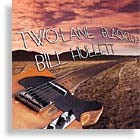
    Two-Lane Blacktop

    Okay, by now you’re all saying, “Does this guy listen to anything besides jazz?” Well, here’s a killer instrumental album featuring a veteran Nashville studio picker. Not only does Hullett put on a nasty country-bend symposium on “Alligator Gar,” but he does it on a 1950 Fender Nocaster. Ditto for a killer cover of the Sam and Dave chestnut “When Something is Wrong with My Baby.”

    But it’s the playing, not the guitars, that make this album stand out. It’s not hard to see why Bill would be wanted in studios. His versatility and innate sense of taste are obvious after one listen. And, the chops…for acoustic and electric highlights, check out the title cut. It’s a killer CD with guests like Sonny Landreth on slide. Recommended if you’re a fan of monster country players. Write to Vertical Records at PO Box 120904, Nashville, TN 37212.


    This review originally appeared in VG‘s April ’98 issue.

  • The Meters – Trick Bag

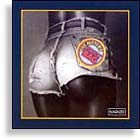
    Trick Bag

    Sundazed has done it again. This particular release is only one in a large series of CDs released by this fine band. And they did a great job with them all. Original liner notes mix with recollections by the band, and who can doubt the music? If you’re not familiar with the major-league funk and R&B of the Meters, start here.

    Powered by the wonderful Leo Necentelli on guitar, George Porter, Jr. on bass, Joseph “Zigaboo” Modeliste on drums, Cyril Neville on drums, and Art Neville on keyboards, this band put together some high-powered music that, aside from the classic “Cissy Strut,” never charted as high as it should have.

    This release of the 1976 album shows a band at its peak. Disco was just getting under way, and the band pays tribute with the opener “Disco is the Thing Today.” It’s an okay cut, thankfully, it’s the only straight-ahead disco track and it just helps to highlight how good the rest of the tracks were. The slow funk of “Find Yourself” has a killer groove with Nocentelli giving a clinic on the “popcorn” funk guitar style. On cuts like this one and “I Want to Be Loved By You,” Porter shows off some hellacious bass chops while really holding the groove in line. In fact, the rhythm section work thoughout is amazing! Nocentelli, by the way, is much more than a one-trick pony. Check out the gorgeous octave and single-line work on an instrumental version of James Taylor’s “Suite for 20 G.” Incredible stuff. They also re-do “Hang ‘Em High,” the spaghetti western classic, in a Santana-esque groove where he also shines. And, their cover of “Honky Tonk Women” showcases not just Leo’s rock chops, but the entire band’s. The set also has a blistering version of Earl King’s “Trick Bag.” Monster stuff.

    Check out any of the Sundazed re-releases of the Meters stuff. As fine a funk band as you’ll want to hear.


    This review originally appeared in VG‘s March ’01 issue.

  • Speedy West and Jimmy Bryant – Swingin’ On The Strings, Volume 2

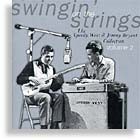
    Swingin' On The Strings, Volume 2

    This is a followup to the fine Stratosphere Boogie collection from ’95, and like that one, it defies description. I can’t imagine listeners reactions to this stuff when they first heard it back in the ’50s. They must have thought it was country music from aliens. Bryant’s amazing guitar work, imaginative and plain old fast, and West’s killer solos and goofy steel sounds explode through your speakers even today.

    For chops, check out their version of Les Paul’s “Lover” Yikes! The liner notes say Les wouldn’t allow this to be released in ’53 and it’s easy to see why. For agility and dazzlingly original soloing, listen to “Two Of A Kind.” There’s the relaxed swing of “Opus 1,” the sheer bluesiness of “T-Bone Rag,” the Hawaiian-esque island sound of “The Rolling Sky,” the boogie of “Pushin’ The Blues,” and the thousand-mile-an-hour country of “China Boy.” Through it all, both players astonish.

    There was even a personal bonus for me. When I was a kid growing up in North Dakota, the farm report at noon on KFYR radio featured a song I instantly fell in love with as a 10-year-old. It always stuck in my head, and I even used a variation of it as a break song in a band I was in. I’ve never known what the song was, or who the artists were…until now. It’s cut number 11 – “Railroadin.” Ya gotta love it! Great Stuff.


    This review originally appeared in VG‘s June ’99 issue.

  • Ralph Novak

    Philosophy of the Luthier

    I first met Ralph Novak in 1980, when he was working at Subway Guitars in Berkeley, California. I’d assembled a kit Strat and it needed a refret. My monstrosity was painted Shell Pink in tribute to Strats from Fender’s surf era. Little did I know what was to come of Ralph’s distant future. He was the fret guru in Berkeley, and his work was astounding – the best I’d ever seen! Ironically, VG columnist Stephen White was also working at Subway at the time. So began our journey into luthiery madness!

    Fast forward to 1989. My association with Stephen led full-circle back to Ralph. Since they worked together at Subway, I had a bird’s-eye view, so to speak, of the progress and evolution of Ralph’s guitar-making artistry. Every week, it seemed, I would witness a new Novak idea undergoing various states of metamorphosis!

    In the years since, Novak has built the instruments of choice for the likes of musicians like Charlie Hunter, Phillip De Gruy, Joe Louis Walker, and Henry Kaiser, to name a few. As time passed, he experimented with a variety of design ideas involving the use of non-traditional woods. At times, he was viewed as downright crazy from many a purist’s standpoint. But he turned the other cheek, seeking the solutions that would satisfy his own personal playing requirements.

    As a guitarist with a complete understanding of the vintage instruments he worked on, Novak wasn’t completely comfortable with what any one instrument was capable of delivering. He wanted to combine all the features of his old favorites while adding design twists that would give him everything he was looking for in an electric guitar. This led to the invention of his patented fanned-fret fingerboard, which gives an instrument combined scale lengths.

    We spent some time with Novak, exploring his unique approach to uplifting the art of luthiery, sharing an odd story or two in his ever-evolving saga.

    Vintage Guitar: Before we get into your auspicious beginnings, you wanted to discuss your ambitionvision for the guitar builders of today to document all the changes going on in the the luthiery world, for future reference.

    Ralph Novak: Yeah, I think that’s very important and I think that years from now, people are going to look at this as valuble information. They’re going to want to know where all these things came from and who originated them and what was the force behind the creative inspiration.

    Are you saying builders of today can lessen that gap of information?

    No, it’s not so much about lessening the gap but just about having some kind of documentation. Because years ago, when Leo Fender started doing what he was doing, when any of these other people started doing what they were doing, there wasn’t the interest there is now. So there wasn’t the documentation neccesary, nobody knew how big it was going to get and how interested people would be. So at this point I think it’s wise to be taking a sort of informal poll, in a sense of what current builders are doing and why, and what direction people have chosen to work in, because the guitar is such a varied and large concept in a sense.

    It seems like a simple little thing at one end, but on the other other end there are so many variables that interact; no one person can say they know everything about the guitar, that would be impossible because new things are being discovered all the time, and so finding out what different builders have chosen to concentrate on, what areas they need to work on and develop and what successes they’re having in those areas might be something really worth documenting!

    Basically, it seems like you want to take a bunch of builders, view them as a “family tree,” and look at it geneaologically?

    In a way, yeah! Because a lot of builders have things in common, even though they may not know each other. You have a guy in one part of the country who’s maybe working on something another guy in another part of the country is working on, and they may be going in different directions or the same direction, but if they knew of each other or if they both arrived at something that has a positive outcome, you could relate back and say “Oh, I can see this guy was working on this and he went in that direction.” Comparing the accomplishments and discoveries of both tells you something about how the guitar works, and why!

    Okay, its time to take it from the top – your auspicious beginnings…..

    (laughs) In terms of my interest, when I was 14, I wanted to get a guitar! It was 1965, The Beatles were on Ed Sullivan and all of this big to do about rock and roll was starting to happen. I was a teenager and I was in it, so it was natural for me to get an interest in guitar… I had piano lessons since I was in third grade and had an interest in an instrument [other than] the piano. I thought guitar would be the best thing, so I saw this nice red Stella in the window of this local music store. Eventually, I convinced my dad to buy it for my birthday.

    (laughs) Bless his soul! Alot of kids wouldn’t have had that opportunity!

    (laughs) I convinced him to get me the guitar and a little bit of sheet music, and I began teaching myself. And what was interesting for me is, because my dad was a woodworker and had a nice wood shop, I started looking at “Well, what is it made of?,” and how and why. And I started taking it apart and doing things! Within a year, I was working on my friend’s guitar and doing things for other local people, taking things apart and experimenting, going down to the dump and getting speaker parts and magnets and wire and building things…experimenting with making pickups, doing funny weird things that eventually had me actually working for a local music store and a lot of my friends in the neighborhood. It started that way!

    How did your own Stella turn out through your experimentation?

    It wound up going through many, many permutations – with a lot of different kinds of strings, initially, changing the bridge around for different actions, eventually putting on nylon strings and even getting to the point of completely stripping and refinishing and refretting it, like doing everything possible to it even though it was a piece of junk!

    Is it true you ended up working with Charles LoBue at Guitar Lab in New York City?

    Yes, I think I started working for him in around 1970, down on Bleeker and Thompson Street. I worked for him part-time doing wiring and setups. I’d just come in on a Saturday – and this when Woody Feiffer was still working for Charles – Larry DiMarzio had left at that point. After doing setups and fret mills for about a year and a half, I kind of recognized it was something I really enjoyed doing. I then started working with Charles full-time until around 1974, when he moved up to Alex Music, which had an interest in buying out LoBue Guitars. Alex and Charles eventually worked out an agreement where Charles closed up his shop and Alex bought him out. So we worked at Alex for about a year.

    At Alex, I was working full-time – eight hours a day, five days a week – doing general repair, all types of re-fret and refinishing, and a lot of the custom work. At the time, we were building the Guitar Lab guitars for Alex, but Alex was making a guitar called the “Alex-Axe,” which was actually manufactured by Gretsch to Alex’s specifications. He would get them as essentially carcasses – just blank bodies and necks that were finished but had no hardware, pickups or anything – and we would do any custom work to them if they needed a little inlay, special pickups or anything like that.

    Speaking of Guitar Lab, didn’t you make a Custom Explorer for Rick Derringer, which was featured on a Guitar Player cover in the ’70s?

    We made several guitars for Rick, and that Explorer on the Guitar Player cover was made by Charles. We also made a doubleneck (six and 12-string) for Rick, as well. Rick really liked the sound of birch, so those guitars were made from birch, as were most we made for him. His Explorer-style guitar was made before I worked with Charles, and it featured Larry DiMarzio’s pickups before Larry actually formed his company. At the time, Larry was just someone who was working out of his basement making custom pickups and wiring. He was making special pickups for Charles LoBue’s instruments and I was there when we made the doubleneck guitar for Rick. I wired that guitar myself. As I recall, Rick may have had that guitar stolen.

    Yeah, I remember that story. I think that happened towards the end of the ’70s. Did you ever work on Derringer’s vintage guitars?

    When he brought them in, yeah. In addition, at Alex Music we were continuing to do that same type of stuff. We worked on Rick’s stuff, we worked on all of Johnny Winter’s stuff, John McLaughlin from the Mahavishnu Orchestra. We worked on George Benson’s stuff, just about anyone who had been to New York was through that repair shop.

    Let’s talk about John McLaughlin. What did you do for him?

    He had these doubleneck Rex Bogue guitars which in some ways were really futuristic and some ways had some problems. One of the problems with them was the inlays were falling out. I also recall Rick Laird (bassist for Mahavishnu) and Miroslav Vitous (Weather Report) having the Rex Bogue basses.

    You’ve had quite a journey. You went from your local music store in Queens to working with Charles LoBue and Alex Music in New York City. Then you and Charles moved your operations to San Francisco. From there, you migrated to Subway Guitars in Berkeley, until around 1984, when you launched Novax Guitars.

    You are known for several things – unique combinations/laminates of wood in the construction of your guitars, and your Novax Fanned-Fret Fingerboard system. Let’s begin with your observations about wood and just how it affects the final sound of the instrument?

    Wood-wise, I offer a variety of woods because my primary focus is that in building instuments, even in a solidbody guitar, it has to have the tone you expect to hear without plugging it in. Acoustically, the instrument has to have the tonal parameters you want to hear. If you want a tone that is bright and snappy, that should be built into the instrument, and of course woods have a lot to do with that. If you wanted a tone that was warm and rich, with a slow, round attack, you build that into the instrument with the woods and the contruction. Pickups can, of course, influence tone. But pickups can’t turn tone 180 degrees.

    What I’ve always believed, and have functioned as a guitar-builder, is that you should be able to not plug in and play the guitar in a quiet room and hear the level of bass and treble, the attack and the type of sustain it has. So, that’s the premise I’ve always worked on – and it’s very important when somebody comes to me for an instrument, because basically I’m trying to find out what they specifically want to acheive in that instrument – getting the tones they want to hear.

    You can see that I build out of a lot of different kinds of woods; I use walnut and lacewood for bodies, I use birch and laminates like pauduk and maple, or walnut and maple, and all of these woods and wood combinations give you different tonal effects. Then, when you combine that with a various type of neck or fretboard woods, you can control the tone, sustain and the attack, along with the frequency response to have an instrument that’s very mellow or sharp and cutting. Even the hardware can affect the tone, but again, if you can hear what you want to hear without plugging it in, you’re 99 percent there! A good-quality pickup will give you a faithful tonal reproduction without too much attenuation. There are, of course, pickups that will give you a thicker more distorted tone or a thinner more trebly tone. My own approach to pickups on these guitars is to use about as much of a Hi-Fi pickup as I can get, which is why I like the Bartolinis. They have a very wide frequency response so you can hear the wood tones and not just the pickup tones.

    Can you tell us what you’ve learned from examining and working on vintage instruments? What are your observations regarding just how the wood in vintage instruments creates this mystique about them?

    There are two types of attack for different woods – fast and slow. Let’s use an example of a slow-attack guitar, say like a Les Paul Custom with an ebony fingerboard from the late ’50s that had a solid mahoghany body, without a maple cap. Or say a Les Paul Jr. or Special. Those guitars have this nice round attack that tends to build or swell up in volume after you have picked the string. That is what I call a slow attack, as opposed to a vintage Strat having a swamp-ash body and a maple neck/fretboard that has a more crisp “zingy” attack. I also want to qualify something else, even though I used the example of a Strat with a maple fretboard. Typically, maple-fretboard necks, while many players tend to say they are trebly, I feel, in a sense, it’s kind of a misnomer or misunderstanding. The way I view it, a maple neck with a maple fretboard isn’t [so] trebly-sounding, [but] it doesn’t have the bass and it doesn’t have the crisp top end you get with a Pao Ferro fretboard. A maple fretboard, in some ways, has a lack of tone that some players refer to as sort of a trebly tone. I think that in conjuction with the body wood that Fender uses – alder or ash – it’s easily perceived as that. But, typically, if you listen to a maple neck with a Pau Ferro fretboard on that same Stratocaster that you’re used to hearing with your maple fretboard, you would see what I mean by the neck having a lack of tone!

    I’m not saying that’s a bad thing, it’s just a different sound. Most electric guitars have a very pronounced midrange response. Our guitars have a lot of bass and a lot of treble, while the midrange is fairly flat in that region. Therefore, our guitars are very good for recording because they are designed with that application in mind. They really sit in the mix very nicely, even if you’re going direct.

    Any other observations about vintage instruments of note?

    One of the things about the vintage market is that people are starting to relate to brands of guitars other than just Fender and Gibson. They’re also looking at Supros and Danelectros for the sounds those guitars produce. And people are beginining to appreciate them for what they are, they aren’t just looking at the high-end stuff anymore! It’s also increasingly popular to be using clean tones. It isn’t about screaming rock guitar sound anymore, and in the player’s mind it’s the tone the instrument makes that can be useful in other ways!

    Now, I must ask you just what it was that led you to the vertigo-laden (laughs) creation of your Fanned-Fret Fingerboard System?

    The fanned-fret idea actually started out from a very simple and very selfish notion (laughs)! As a blues guitar player, I liked to do a lot of note-bending and at the same time I liked to have a crisp, crunchy sound on the low strings. My initial idea was to create a guitar that had a Les Paul-type of sustain and sweetness of the trebles and had the kind of crunch and definition of a Tele or Strat on the basses. From doing repairs for a number of years, I knew it wasn’t the construction, the stiffness of the neck, or the types of wood causing these tonal things. And it wasn’t the pickups.

    I’m not saying these things don’t influence tone, but they don’t influence tone the way I was looking for. I realized scale length was the answer and started to come up with ways of combining the scale lengths such that I could still bend notes. Rather than having discontinuous frets, I wanted the fret to continue all of the way across so you couldn’t fall off the end of the fret when you were note-bending, so the fanned-fret system kind of arose from that very selfish idea of wanting a guitar that did what no other guitar did!

    How clever (laughs)! Selfish notion, yes. That’s the birth of creativity!

    (laughs) It was something I never envisioned would have any commercial value. I wasn’t looking at it in that way, it was just something I wanted that I knew couldn’t be acheived in any other way and I set about to make it for myself.

    Looking around your shop, I see a lot of new-fangled instruments. Can we discuss some of your new projects?

    Well, besides some other makers of note using the fanned-fret fingerboard, such as Steve Klein and [Canadian bass designer] Sheldon Dingwall, R&D is always happening here, something that doesn’t always show until it’s done because I might be getting a patent on it and I have to be sure it works right. I’m working on a new eight-string acoustic/electric model for Charlie Hunter that’s coming along pretty well. We also completed a custom 17-string Harp guitar for Phillip De Gruy that turned out very well. In Charlie’s case, his new instrument will include features such as a maple arched top with maple sides and back. Because Charlie is both the guitarist and the bassist, and because he’s playing at pretty high volume levels, that low-end can be a real killer for him, so we couldn’t make the top too sensitive by carving it too thin.

    We also made some prototype instruments for Rick Huff, inventor of the new Skyway tremolo system. I had the great pleasure of making him a couple of things for the 1997 Nashville NAMM [last] summer. His system operates on a very different principle than most tremolos – I was just blown away by his new technology, and not being a big fan of tremolos, Rick’s system really changed my entire outlook. We will be featuring his systems on our instruments as soon as we can, and we will be proud to incorporate them into what we’re doing now. I’m also working on a new piece of hardware that I’m not at liberty to discuss right now.

    So R&D is really the lifeblood of what I do here. As well as just building the instruments, I’ve got to research new things, there are ideas that come to me that I just have to find out if they’re going to work the way I want them to work or not. I think that this is what is driving guitar development these days.

    Plus, we have always been involved in the restoration and repair of vintage instruments, and Glen Jordan assists me in this aspect of the shop’s services. I have every confidence in Glen, and it has taken me a long time to find someone who had just the right qualifications, who could expertly handle these things in the way I would have done them myself. Glen has been here for about ayear, so I have much more time now to concentrate on the actual building of instruments without having to handle the repair work at the same time. He has been an invaluable asset to the shop and to myself.


    A Martin D-28 the company sent to Novak for study and possible implementation of the fan fret system and custom bridge. The concept was ultimately deemed too radical. Photo: Terri Novak.

    This interview originally appeared in VG‘s March ’98 issue.

  • Ralph Novak

    Philosophy of the Luthier

    I first met Ralph Novak in 1980, when he was working at Subway Guitars in Berkeley, California. I’d assembled a kit Strat and it needed a refret. My monstrosity was painted Shell Pink in tribute to Strats from Fender’s surf era. Little did I know what was to come of Ralph’s distant future. He was the fret guru in Berkeley, and his work was astounding – the best I’d ever seen! Ironically, VG columnist Stephen White was also working at Subway at the time. So began our journey into luthiery madness!

    Fast forward to 1989. My association with Stephen led full-circle back to Ralph. Since they worked together at Subway, I had a bird’s-eye view, so to speak, of the progress and evolution of Ralph’s guitar-making artistry. Every week, it seemed, I would witness a new Novak idea undergoing various states of metamorphosis!

    In the years since, Novak has built the instruments of choice for the likes of musicians like Charlie Hunter, Phillip De Gruy, Joe Louis Walker, and Henry Kaiser, to name a few. As time passed, he experimented with a variety of design ideas involving the use of non-traditional woods. At times, he was viewed as downright crazy from many a purist’s standpoint. But he turned the other cheek, seeking the solutions that would satisfy his own personal playing requirements.

    As a guitarist with a complete understanding of the vintage instruments he worked on, Novak wasn’t completely comfortable with what any one instrument was capable of delivering. He wanted to combine all the features of his old favorites while adding design twists that would give him everything he was looking for in an electric guitar. This led to the invention of his patented fanned-fret fingerboard, which gives an instrument combined scale lengths.

    We spent some time with Novak, exploring his unique approach to uplifting the art of luthiery, sharing an odd story or two in his ever-evolving saga.

    Vintage Guitar: Before we get into your auspicious beginnings, you wanted to discuss your ambitionvision for the guitar builders of today to document all the changes going on in the the luthiery world, for future reference.

    Ralph Novak: Yeah, I think that’s very important and I think that years from now, people are going to look at this as valuble information. They’re going to want to know where all these things came from and who originated them and what was the force behind the creative inspiration.

    Are you saying builders of today can lessen that gap of information?

    No, it’s not so much about lessening the gap but just about having some kind of documentation. Because years ago, when Leo Fender started doing what he was doing, when any of these other people started doing what they were doing, there wasn’t the interest there is now. So there wasn’t the documentation neccesary, nobody knew how big it was going to get and how interested people would be. So at this point I think it’s wise to be taking a sort of informal poll, in a sense of what current builders are doing and why, and what direction people have chosen to work in, because the guitar is such a varied and large concept in a sense.

    It seems like a simple little thing at one end, but on the other other end there are so many variables that interact; no one person can say they know everything about the guitar, that would be impossible because new things are being discovered all the time, and so finding out what different builders have chosen to concentrate on, what areas they need to work on and develop and what successes they’re having in those areas might be something really worth documenting!

    Basically, it seems like you want to take a bunch of builders, view them as a “family tree,” and look at it geneaologically?

    In a way, yeah! Because a lot of builders have things in common, even though they may not know each other. You have a guy in one part of the country who’s maybe working on something another guy in another part of the country is working on, and they may be going in different directions or the same direction, but if they knew of each other or if they both arrived at something that has a positive outcome, you could relate back and say “Oh, I can see this guy was working on this and he went in that direction.” Comparing the accomplishments and discoveries of both tells you something about how the guitar works, and why!

    Okay, its time to take it from the top – your auspicious beginnings…..

    (laughs) In terms of my interest, when I was 14, I wanted to get a guitar! It was 1965, The Beatles were on Ed Sullivan and all of this big to do about rock and roll was starting to happen. I was a teenager and I was in it, so it was natural for me to get an interest in guitar… I had piano lessons since I was in third grade and had an interest in an instrument [other than] the piano. I thought guitar would be the best thing, so I saw this nice red Stella in the window of this local music store. Eventually, I convinced my dad to buy it for my birthday.

    (laughs) Bless his soul! Alot of kids wouldn’t have had that opportunity!

    (laughs) I convinced him to get me the guitar and a little bit of sheet music, and I began teaching myself. And what was interesting for me is, because my dad was a woodworker and had a nice wood shop, I started looking at “Well, what is it made of?,” and how and why. And I started taking it apart and doing things! Within a year, I was working on my friend’s guitar and doing things for other local people, taking things apart and experimenting, going down to the dump and getting speaker parts and magnets and wire and building things…experimenting with making pickups, doing funny weird things that eventually had me actually working for a local music store and a lot of my friends in the neighborhood. It started that way!

    How did your own Stella turn out through your experimentation?

    It wound up going through many, many permutations – with a lot of different kinds of strings, initially, changing the bridge around for different actions, eventually putting on nylon strings and even getting to the point of completely stripping and refinishing and refretting it, like doing everything possible to it even though it was a piece of junk!

    Is it true you ended up working with Charles LoBue at Guitar Lab in New York City?

    Yes, I think I started working for him in around 1970, down on Bleeker and Thompson Street. I worked for him part-time doing wiring and setups. I’d just come in on a Saturday – and this when Woody Feiffer was still working for Charles – Larry DiMarzio had left at that point. After doing setups and fret mills for about a year and a half, I kind of recognized it was something I really enjoyed doing. I then started working with Charles full-time until around 1974, when he moved up to Alex Music, which had an interest in buying out LoBue Guitars. Alex and Charles eventually worked out an agreement where Charles closed up his shop and Alex bought him out. So we worked at Alex for about a year.

    At Alex, I was working full-time – eight hours a day, five days a week – doing general repair, all types of re-fret and refinishing, and a lot of the custom work. At the time, we were building the Guitar Lab guitars for Alex, but Alex was making a guitar called the “Alex-Axe,” which was actually manufactured by Gretsch to Alex’s specifications. He would get them as essentially carcasses – just blank bodies and necks that were finished but had no hardware, pickups or anything – and we would do any custom work to them if they needed a little inlay, special pickups or anything like that.

    Speaking of Guitar Lab, didn’t you make a Custom Explorer for Rick Derringer, which was featured on a Guitar Player cover in the ’70s?

    We made several guitars for Rick, and that Explorer on the Guitar Player cover was made by Charles. We also made a doubleneck (six and 12-string) for Rick, as well. Rick really liked the sound of birch, so those guitars were made from birch, as were most we made for him. His Explorer-style guitar was made before I worked with Charles, and it featured Larry DiMarzio’s pickups before Larry actually formed his company. At the time, Larry was just someone who was working out of his basement making custom pickups and wiring. He was making special pickups for Charles LoBue’s instruments and I was there when we made the doubleneck guitar for Rick. I wired that guitar myself. As I recall, Rick may have had that guitar stolen.

    Yeah, I remember that story. I think that happened towards the end of the ’70s. Did you ever work on Derringer’s vintage guitars?

    When he brought them in, yeah. In addition, at Alex Music we were continuing to do that same type of stuff. We worked on Rick’s stuff, we worked on all of Johnny Winter’s stuff, John McLaughlin from the Mahavishnu Orchestra. We worked on George Benson’s stuff, just about anyone who had been to New York was through that repair shop.

    Let’s talk about John McLaughlin. What did you do for him?

    He had these doubleneck Rex Bogue guitars which in some ways were really futuristic and some ways had some problems. One of the problems with them was the inlays were falling out. I also recall Rick Laird (bassist for Mahavishnu) and Miroslav Vitous (Weather Report) having the Rex Bogue basses.

    You’ve had quite a journey. You went from your local music store in Queens to working with Charles LoBue and Alex Music in New York City. Then you and Charles moved your operations to San Francisco. From there, you migrated to Subway Guitars in Berkeley, until around 1984, when you launched Novax Guitars.

    You are known for several things – unique combinations/laminates of wood in the construction of your guitars, and your Novax Fanned-Fret Fingerboard system. Let’s begin with your observations about wood and just how it affects the final sound of the instrument?

    Wood-wise, I offer a variety of woods because my primary focus is that in building instuments, even in a solidbody guitar, it has to have the tone you expect to hear without plugging it in. Acoustically, the instrument has to have the tonal parameters you want to hear. If you want a tone that is bright and snappy, that should be built into the instrument, and of course woods have a lot to do with that. If you wanted a tone that was warm and rich, with a slow, round attack, you build that into the instrument with the woods and the contruction. Pickups can, of course, influence tone. But pickups can’t turn tone 180 degrees.

    What I’ve always believed, and have functioned as a guitar-builder, is that you should be able to not plug in and play the guitar in a quiet room and hear the level of bass and treble, the attack and the type of sustain it has. So, that’s the premise I’ve always worked on – and it’s very important when somebody comes to me for an instrument, because basically I’m trying to find out what they specifically want to acheive in that instrument – getting the tones they want to hear.

    You can see that I build out of a lot of different kinds of woods; I use walnut and lacewood for bodies, I use birch and laminates like pauduk and maple, or walnut and maple, and all of these woods and wood combinations give you different tonal effects. Then, when you combine that with a various type of neck or fretboard woods, you can control the tone, sustain and the attack, along with the frequency response to have an instrument that’s very mellow or sharp and cutting. Even the hardware can affect the tone, but again, if you can hear what you want to hear without plugging it in, you’re 99 percent there! A good-quality pickup will give you a faithful tonal reproduction without too much attenuation. There are, of course, pickups that will give you a thicker more distorted tone or a thinner more trebly tone. My own approach to pickups on these guitars is to use about as much of a Hi-Fi pickup as I can get, which is why I like the Bartolinis. They have a very wide frequency response so you can hear the wood tones and not just the pickup tones.

    Can you tell us what you’ve learned from examining and working on vintage instruments? What are your observations regarding just how the wood in vintage instruments creates this mystique about them?

    There are two types of attack for different woods – fast and slow. Let’s use an example of a slow-attack guitar, say like a Les Paul Custom with an ebony fingerboard from the late ’50s that had a solid mahoghany body, without a maple cap. Or say a Les Paul Jr. or Special. Those guitars have this nice round attack that tends to build or swell up in volume after you have picked the string. That is what I call a slow attack, as opposed to a vintage Strat having a swamp-ash body and a maple neck/fretboard that has a more crisp “zingy” attack. I also want to qualify something else, even though I used the example of a Strat with a maple fretboard. Typically, maple-fretboard necks, while many players tend to say they are trebly, I feel, in a sense, it’s kind of a misnomer or misunderstanding. The way I view it, a maple neck with a maple fretboard isn’t [so] trebly-sounding, [but] it doesn’t have the bass and it doesn’t have the crisp top end you get with a Pao Ferro fretboard. A maple fretboard, in some ways, has a lack of tone that some players refer to as sort of a trebly tone. I think that in conjuction with the body wood that Fender uses – alder or ash – it’s easily perceived as that. But, typically, if you listen to a maple neck with a Pau Ferro fretboard on that same Stratocaster that you’re used to hearing with your maple fretboard, you would see what I mean by the neck having a lack of tone!

    I’m not saying that’s a bad thing, it’s just a different sound. Most electric guitars have a very pronounced midrange response. Our guitars have a lot of bass and a lot of treble, while the midrange is fairly flat in that region. Therefore, our guitars are very good for recording because they are designed with that application in mind. They really sit in the mix very nicely, even if you’re going direct.

    Any other observations about vintage instruments of note?

    One of the things about the vintage market is that people are starting to relate to brands of guitars other than just Fender and Gibson. They’re also looking at Supros and Danelectros for the sounds those guitars produce. And people are beginining to appreciate them for what they are, they aren’t just looking at the high-end stuff anymore! It’s also increasingly popular to be using clean tones. It isn’t about screaming rock guitar sound anymore, and in the player’s mind it’s the tone the instrument makes that can be useful in other ways!

    Now, I must ask you just what it was that led you to the vertigo-laden (laughs) creation of your Fanned-Fret Fingerboard System?

    The fanned-fret idea actually started out from a very simple and very selfish notion (laughs)! As a blues guitar player, I liked to do a lot of note-bending and at the same time I liked to have a crisp, crunchy sound on the low strings. My initial idea was to create a guitar that had a Les Paul-type of sustain and sweetness of the trebles and had the kind of crunch and definition of a Tele or Strat on the basses. From doing repairs for a number of years, I knew it wasn’t the construction, the stiffness of the neck, or the types of wood causing these tonal things. And it wasn’t the pickups.

    I’m not saying these things don’t influence tone, but they don’t influence tone the way I was looking for. I realized scale length was the answer and started to come up with ways of combining the scale lengths such that I could still bend notes. Rather than having discontinuous frets, I wanted the fret to continue all of the way across so you couldn’t fall off the end of the fret when you were note-bending, so the fanned-fret system kind of arose from that very selfish idea of wanting a guitar that did what no other guitar did!

    How clever (laughs)! Selfish notion, yes. That’s the birth of creativity!

    (laughs) It was something I never envisioned would have any commercial value. I wasn’t looking at it in that way, it was just something I wanted that I knew couldn’t be acheived in any other way and I set about to make it for myself.

    Looking around your shop, I see a lot of new-fangled instruments. Can we discuss some of your new projects?

    Well, besides some other makers of note using the fanned-fret fingerboard, such as Steve Klein and [Canadian bass designer] Sheldon Dingwall, R&D is always happening here, something that doesn’t always show until it’s done because I might be getting a patent on it and I have to be sure it works right. I’m working on a new eight-string acoustic/electric model for Charlie Hunter that’s coming along pretty well. We also completed a custom 17-string Harp guitar for Phillip De Gruy that turned out very well. In Charlie’s case, his new instrument will include features such as a maple arched top with maple sides and back. Because Charlie is both the guitarist and the bassist, and because he’s playing at pretty high volume levels, that low-end can be a real killer for him, so we couldn’t make the top too sensitive by carving it too thin.

    We also made some prototype instruments for Rick Huff, inventor of the new Skyway tremolo system. I had the great pleasure of making him a couple of things for the 1997 Nashville NAMM [last] summer. His system operates on a very different principle than most tremolos – I was just blown away by his new technology, and not being a big fan of tremolos, Rick’s system really changed my entire outlook. We will be featuring his systems on our instruments as soon as we can, and we will be proud to incorporate them into what we’re doing now. I’m also working on a new piece of hardware that I’m not at liberty to discuss right now.

    So R&D is really the lifeblood of what I do here. As well as just building the instruments, I’ve got to research new things, there are ideas that come to me that I just have to find out if they’re going to work the way I want them to work or not. I think that this is what is driving guitar development these days.

    Plus, we have always been involved in the restoration and repair of vintage instruments, and Glen Jordan assists me in this aspect of the shop’s services. I have every confidence in Glen, and it has taken me a long time to find someone who had just the right qualifications, who could expertly handle these things in the way I would have done them myself. Glen has been here for about ayear, so I have much more time now to concentrate on the actual building of instruments without having to handle the repair work at the same time. He has been an invaluable asset to the shop and to myself.


    A Martin D-28 the company sent to Novak for study and possible implementation of the fan fret system and custom bridge. The concept was ultimately deemed too radical. Photo: Terri Novak.

    This interview originally appeared in VG‘s March ’98 issue.

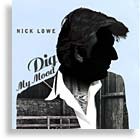
  • Nick Lowe – Dig My Mood

    Dig My Mood

    It’s extremely tempting to start this review with something like…”I knew Nick Lowe when he used to rock and roll…,” but I won’t because it might make you think I don’t like this album. I love this album, but there’s not much on it that is rock and roll.

    What you’ll find here is a heady mixture of R&B, country, jazz, and a little rockabilly. It reminds me of a Charlie Rich album at times, a Johnny Cash album at other times. Anyway, the songs are all wonderfully written, the execution by Lowe and his band is very nice, his vocals match the weary maturity of the songs, and the packaging matches the album’s feel. If you’re a fan of this multi-talented man, or just a fan of good music, you’ll love this. Recommended.


    This review originally appeared in VG‘s July ’98 issue.

  • Los Lobos – El Cancionero – Mas y Mas

    El Cancionero - Mas y Mas

    There’s a new four-CD retrospective containing 86 tracks, clocking in at five hours, spanning a dozen albums by one of the greatest bands in rock history. These guys reveal deep roots without pickling them in formaldehyde, are eclectic masters rather than mere dabblers, and are old farts who are still cutting-edge but never trendy. The band features multiple vocalists but is always identifiable, has one of the strongest songwriting duos in rock as well as a third tunesmith who sometimes outshines the others, and benefits from journeyman guitar work that never resorts to lick spewage.

    No, I’m not talking about the Beatles; I’m talking about the pride of East Los Angeles, Los Lobos. If it seems sacrilegious to mention those two bands in the same sentence, Rhino’s beautiful El Cancionero – Mas y Mas makes a pretty strong argument to the contrary. And when one considers that Slash/Warner already released a retrospective of sorts – 1993’s two-disc Just Another Band From East L.A. – A Collection, which doesn’t diminish the punch of Cancionero in the least – the lofty position that Louie Perez, David Hidalgo, Cesar Rosas, Conrad Lozano, and Steve Berlin occupy comes into perspective. In fact, another equally respectable multi-disc set could be culled from what didn’t make it onto either of these.

    Oddly enough, even though Los Lobos have always been close to my heart since I first saw them opening for the Blasters in 1983 (one of those light-bulb-going-off-in-your-head experiences), this is one of the few compilations where the first impression isn’t a laundry list of glaring omissions. Even though some of my favorites aren’t included – such as “Emily” and “Whiskey Trail” from The Neighborhood – I can’t find fault with any of the choices made by producer Gary Stewart (with a lot of involvement from the band).

    Formed from various Top 40 bands in East L.A., Los Lobos “unplugged” in 1973 (before that was considered a “career move”), and began playing traditional Mexican music on a variety of stringed instruments. Their gigs were mostly weddings, backyard parties and quinceaneras, and in 1977 they pressed up a few 12″ pieces of vinyl titled Los Lobos Del Este De Los Angeles (Just Another Band From East L.A.) (not to be confused with the aforementioned mini-box) – long a collector’s item and recently reissued on CD by Hollywood Records. Disc 1 opens with a version of “Guantanamera” from that debut album that makes you forget that the Sandpipers ever existed and reveals that, along with Hidalgo and Rosas (the band’s co-lead vocalists), the usually silent bassist Lozano is also a superb singer (before the ride is over, you’ll also discover that drummer Perez is a more-than-capable singer and guitarist, that guitarist/accordionist Hidalgo is a first-rate drummer, that saxophonist Berlin doubles on keyboards and harmonica, etc., etc., mas y mas).

    By 1981 Los Lobos had incorporated electric instruments, a drum kit, Tex-Mex conjunto, and rock and roll (including their teenage forefather Ritchie Valens), and became part of the Hollywood rockabilly/punk club scene. Also, the songwriting of Hidalgo and Perez began to mature, with David putting music to, and then singing, Louie’s romantic, philosophical lyrics. Meanwhile, southpaw guitarist Rosas was alternately growling his self-penned blues-rockers and crooning beautiful traditional standards in Spanish.

    To say that these guys are multi-talented or many-faceted is like saying Nolan Ryan threw hard. Homing in on just the guitar aspect of the band – which, like everything about Los Lobos is a small but potent sliver of the whole – we find the same qualities that make the band diverse but unified, varied but unique. And both Hidalgo and Rosas are capable of switching from distorted crunch (“Don’t Worry Baby”) to aching blues bends (“Is This All There Is”) to chimey rhythm (“I Got Loaded”) to beautifully ornamental acoustic melodies (“Little King Of Everything”) to out-and-out psychedelic wail (their PBS special rendition of the Beatles’ “Tomorrow Never Knows”).

    What becomes apparent the more you listen to them is that they have still only shown some of the cards in their hand. While they’ve already produced two bonafide masterpieces, 1984’s How Will The Wolf Survive? and 1992’s Kiko, they’ve yet to peak or plateau; their best work is not behind them. And when the boys’ batteries need recharging, they splinter into the experimental Latin Playboys, then just as quickly morph into the world’s greatest barrio party band (well, the second greatest), Los Super Seven.

    The five bandmates are now hovering around age 50, and four of them have been together as a band for 27 years (latecomer Berlin has been with them a mere 17 years). But each album proves that they still have a lot to say, that they’re still progressing – a claim precious few artists can make.

    That third “dream” box I mentioned earlier? Let’s get started, Rhino!


    This review originally appeared in VG‘s March ’01 issue.

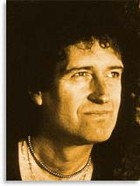
  • Brian May

    Thinking Man's Guitarist

    Brian May is indubitably one of the most talented and influential musicians of his generation. His songs and guitar riffs carved an important place in rock and roll history. Long before his tenure with the legendary rock group Queen, May grew up the son of an electronics engineer/musician, so it’s no surprise he inherited his father’s talent for tinkering and music and holds a Master’s degree in physics.

    With the help of his father, at age 15 May built the guitar that has remained his main instrument throughout his career. This legendary axe was dubbed the Red Special and it has been an integral part of May’s sound and the music of Queen.

    There are many stories surrounding the Red Special and where its components came from. According to the man himself, the neck came from one of the support columns that held up a mirror over an old fireplace. The neck fits deep into the body, just past the middle pickup. The body uses an oak insert from a table and the remainder is made of two layers of hollowed block board. The body is covered with a mahogany veneer. The binding is made from shelf edging. The roller bridge and individual saddles were designed and hand-machined by May and his father. Additionally, May built the control knobs in his shop class. The tremolo arm is made from a saddlebag support from a bicycle, and the arm’s tip is a piece of his mom’s knitting needle ground down with a drill.

    “It’s all pieces of junk, really,” laughs May.

    It may be junk, but there are many players and fans who would give anything for the opportunity just to touch the legendary guitar, let alone own it.

    May wound the guitar’s original single-coil pickups by hand, but later replaced them with pickups he bought from Burns, in England, where he had also purchased the original tuners (later replaced with Sperzels). May also designed the guitar’s wiring, which uses six switches – three for phasing and three on/off for each pickup.
    Nearly two years ago May met Australian luthier Greg Fryer, who asked to build authentic copies of the Red Special, as close as possible to the original in every detail – more so than either version of the Guild signature models introduced in 1984. Wherever possible, Fryer wanted to use the same wood, glue, finish, and hardware. May accepted his request and Fryer paid his own way from Australia to England to painstakingly spec the original in explicit detail.

    A year later, Fryer returned with three copies. May was floored with excitement because the instruments felt and played incredibly close to his beloved Red Special, which after 30 years was starting to show its age. After playing thousands of gigs all over the world, the old girl was in need of some repair work and a bit of rejuvenation. Once he saw Fryer’s craftsmanship, May knew he was best-qualified to handle the task. Fryer accepted the challenge and did the restoration work, keeping the instrument as original as possible, and using many of the same materials used by May and his father. The fabled guitar is now back in action and as good as new.

    May recently sat with VG and talked about his tenure with Queen and his second solo album, Another World, released late last summer, which features a guest appearance by Jeff Beck, one of May’s favorite guitarists.

    Vintage Guitar: What first drew your interest to guitar?

    Brian May: I was born in 1947 and the early ’50s in England saw the very beginning of electric guitar music as we know it. I grabbed anything I could find. Why I was excited about it, I don’t know, I just was. I heard these little snippets; English pop music in those days was dominated by American pop and there were a lot of English copies of everything, but we would scatter around and try and find the originals. So I listened to Buddy Holly, who I suppose was sort of the big awakening, you know. I just listened and got so excited about it. I didn’t know what it was, but it was just something mystical and magical and sent shivers up my spine. I would listen for bits of guitar, but it wasn’t just the guitar, it was the whole thing. The way the Crickets did those harmonies behind him just always gets me. In fact, I just did a version of “Maybe Baby” because I had to sort of revisit that to find out why it excited me so much.

    So it was Buddy Holly, and it was Rick Nelson records or Elvis records or whatever, you would find just a little piece of a guitar solo. I was already playing guitar because I was strumming away and singing. But hearing these people bend strings, it was sort of impenetrable to me. I didn’t know how that was done. The solo in “Hello, Mary Lou” – I must have listened to it a million times to figure out how that was done. At the time you couldn’t get a third string that wasn’t wound. We would try to find ways of bending but the sets you could buy didn’t allow you to. We would put the first string on the third position. But then what do you do for the first string? Then somebody figured you could get a banjo string and put it on the top string.

    There was a place called Clifford-Essex, in the middle of London, which was the only place you could get these particular strings. So that was a real breakthrough, and suddenly we could all bend. We sort of went from there. A few friends had the same feeling and we were very lucky. We were in a place where it was all happening, in Richmond and Twickingham, which is where the Yardbirds came from. A couple of the Yardbirds went to my school and so there was always this kind of folklore about the guitars.

    Lonnie Donegan was an influence on me probably before I even heard the Crickets. He was probably the first to bring any kind of blues to England, as far as I know, and make it successful on a large scale. He had lots of hit records. The music was called skiffle. Unfortunately, the one hit he’s remembered for in the States is a novelty record, “Does Your Chewing Gum Lose Its Flavor On The Bedpost Overnight?” But he actually listened to Leadbelly, John Lee Hooker, and a lot of those “Southern Swamp” guys. He brought that whole thing to England. It was just an acoustic guitar strummed very loud, and usually a big tea chest double-bass and a washboard for percussion – that was your skiffle group. Sometimes there would be a guy who really could play the guitar, and Lonnie Donegan had one – Johnny Duncan. It was all like one wave which hit England very hard. It was a huge thing in England, like a craze for this hillbilly kind of blues, sort of pre-echo for what happened later when John Mayall and Eric Clapton and those people started the real blues in England.

    This is a very English viewpoint, we’re sort of seeing things happen over here, which are obviously echoing what was happening in the States, so I didn’t know those early guys’ names. I didn’t know Steve Cropper’s name, although now I know he played on loads of those records which were really inspiring to me. Also, James Burton, who played on Rick Nelson’s records. So I suppose that’s where I come from.

    There was also a thing just after that, an instrumental guitar thing, where the guitar became the glittering god of English youth, and instrumental music carried it. The Shadows were enormous in this country. Every guitarist from my generation, even if they don’t admit it, learned every Shadows song in those days.

    Was guitar your first instrument?

    No, I was taught piano up to grade four, for about five years.

    So you already had a fairly strong musical background when you picked up guitar.

    In a way, yes. My dad played very good piano and ukulele, and that’s where the guitar came from, for me anyway. I learned the chords on ukulele.

    Do you think learning piano enabled you to do all the intricate musical arranging?

    Yes, I think it helped a lot.

    When you’re writing a song, do you hear all the parts of the song as a whole, or do you hear each part separately and then put all the pieces together?

    I think I hear it all, at the best of times, but not all the time. But if something’s coming on strong then I’ll hear it all and you know where all the harmony parts and stuff should be. But I think if you also leave yourself room to experiment, you’re gonna do a few things by accident or by design which will improve on your original picture in your head. If it’s coming through loud and clear, then it’s sort of all there, you just have to work for a long time to get it to sound like it should.

    Did that come naturally?

    Well, I guess I see arranging as the craftsmanship side of it, and I was always quite good at that. I’m a painstaking kind of person.

    Writing a song is kind of like painting a picture. Some people draw stick figures before creating the masterpiece, others just create the masterpiece without an outline. How were most Queen songs developed?

    I think the stick figure thing is very important because you can have the greatest craftsmanship in the world, but if you don’t have that central figure – I call it the seed – you’re not going to have a great song. I think you need both. Freddie [Mercury] was a bit like that; Freddie was very impatient, but not always, that’s a bit of a generalization. Normally he would get his framework and get keen on it, and then he would get bored once it was almost halfway there. So generally I would be the guy who would sit there and make sure the pieces fit, but I don’t regard my part in that as being a very exalted role.

    There are lots of analogies. For instance, I was talking about rugmaking the other day. You could make this fantastic rug and every piece of it would be perfectly aligned, all the colors would fit and everything. But if you stood back and there was no sort of overall theme or pattern or purpose, you would have a bad rug, wouldn’t you? At the same time, you could have this great idea for a rug, like this great dragon and he’s eating St. George or whatever, but then if you don’t have the craftsmanship you don’t have a great rug. I think you need it all. But then there are exceptions to everything. I think the nice thing about music is that there aren’t any rules. I don’t think Nirvana spent too much time on the craftsmanship side, but they made great albums. So there are exceptions to every rule. There are Dylan songs which he just slapped down with an out-of-tune guitar and they’re great. So I suppose if the seeds are great enough, then you can get away with having holes.

    Sometimes it’s the space or holes that make the other parts seem more prominent.

    That’s true and I think a lot of us can get very paranoid and put lots of decoration in because we’re not sure if the framework is good enough. But there’s a contrary philosophy I think is also wrong, like the illogical conclusion, which is that anything that has holes in it must be good. So if anyone sort of sings with an out-of-tune guitar and doesn’t sing very well it’s got to be better than something which is crafted.

    Queen’s music had elements from both sides, because it was very polished yet still raw.

    We tried to do that and that’s still what I try to do. I try to capture the spontaneity of the moment and the rawness, the anger, and the pain, and just do what’s necessary to set it up. It’s a weird thing, isn’t it? I’m sure these painters went through the same sort of agonies.

    Each member of Queen was a songwriter with an individual style. How did that all fit together?

    It’s a wonder we did fit together and it was by great sort of argument and pushing and pulling the whole time. Well, John [Deacon, Queen’s bassist] was always into funk and always liked sparseness and tight drum sounds and just funky music. He liked R&B and black music, and he only kind of suffered rock and roll because he was in a rock and roll band [laughs]. He’s a great bass player, I think much better than people realize. He’s very inventive and very lyrical, but also very funky.

    Roger [Taylor, Queen’s drummer]…it’s hard to define Roger. He’s kind of slippery because he’s into the rock and roll lifestyle [laughs], but he’s actually a deep thinker. A lot of people dismiss Roger too easily because he’s like a rock and roll creature, but if you listen to his lyrics he’s got a lot of passion and a lot of depth. As far as writing, he tended to be simplistic, and that’s the way he was. He was searching for the simple essence of rock and roll as he sort of grew up.

    And Freddie, it’s hard to define him, too, because he grew up like me, in an atmosphere where you had all kinds of things thrust at you – lots of classical music, lots of the old sort of traditional English music. So it was in both of us and started to come out when we started writing. But Freddie was just always searching for the magical moments, I suppose, and always trying to find them in places no one had found them before. He always felt he wanted to be a rock star, but within that there were no boundaries and he could bring whatever he wanted into it. So he was very eclectic, but he was more than that. He was really into mixing strange colors and seeing what happened, and as I said, very impatient. If it didn’t work, he was off. If it did work, he’d be in there and love it for a while and then he’d still be off.

    Moving ahead to 1998 and your second solo album, Another World. How did the collaboration with Jeff Beck on “The Guv’nor” come about?

    I’ve gotten to know Jeff over the last few years. I was sort of always in awe of him. He’s the business. We get on pretty well, but there was always this kind of reserve on my part because I felt like he was someone very magical. So I was slightly nervous, but I just phoned him up and asked him if he would come down and play on this track. I already had the track called “The Guv’nor” and I had written it for a film about a bare-knuckle boxer that was never made because they ran out of money, but I read the script and got inspired by the idea that this guy was so scary.

    The film was no longer there, but I already had the track and I liked it, and it can mean all different things, as songs always can. I thought it would be nice if I sort of used the analogy because Jeff Beck is the scary guy on the block. So it became about him. You just never know what’s going to come out of him. It’s incredible!

    So Jeff came down and played. It was wonderful, and I did my usual thing of not really wanting to touch a guitar while he’s around [laughs]. But we played together a little bit, which was great. I was over the moon. I thought what he had already done was brilliant, but he said, “No, Brian, I’m not happy. I want to take it away and live with it for awhile.”

    Well, he lived with it for about a year, then brought it back, and he had done some even more amazing stuff. So in the end I just tried to cram in everything he had done because it was all great. I did a very hurried mix because I had only gotten the tape back a couple days before I was due to deliver the record and I was determined the track was going to be on the album. It was kind of a rushed mix, but it’s got a sentimental fire to it.

    Which are the other highlight tracks on the new record?

    I like “The Business” a lot. It makes me think of Cozy [Powell, drummer, who recently passed away]. Cozy was such a huge part of what I was doing all this time. He always reminded me of where the center of pure rock music was and I miss him very badly. It is impossible to replace him. He was such an amazing guy, very down-to-earth. He cared about every hit and there was a passion in his every hit. There was a thoughtfulness and a glorious oneness about him. He wasn’t acting, he was that person and he moved in that way. He was the real thing and there isn’t going to be another one of him. I like “The Business” because he was a big part of making it happen and I built stuff around his sound and feel. It was a great combination for me: I love the sound of my guitar with his drums, they’re both very broad. I was very lucky to have that experience.

    Does playing with different musicians affect your own performance and approach?

    Yes, I think it does a lot, really. I had [drummer] Steve Ferrone on these showcase gigs and I started off with an acoustic guitar, but I couldn’t stand it not being plugged in. So I eventually plugged it into an amp in a box and wore earpieces instead of having [monitors] so I could crank it up. It sounded like a Stratocaster through a Marshall – it sounded big. Steve is also a magnificent drummer in a completely different way from Cozy and I found I was doing lots of different things on this last little tour. I had this little Collings acoustic plugged into an AC-30 through a treble booster – the whole deal – so it sounds massive but it’s in a box. It’s great. People are going, “What’s happening? He’s playing this little twangy acoustic thing but this big, overblown sound is coming out.”

    I had a lot of fun with that. And with Ferrone we just got into some different rhythms and playing songs in a very different way, which I like. To be truthful, these days I’m much more into songs than anything else, more than guitars. I love great songs and I love trying to write the ultimate great songs. I love singing on them, too. The guitar is sort of third now, really. I still love the guitar, and it has to be there. But I think if you have a crap song with a great guitar solo, you’re wasting your time. It doesn’t mean anything. Then again, if you have a great song, a great guitar solo, but terrible singing, you’re throwing it away because it’s not going to move anyone. It all has to be right. So I spent probably 10 times as much time singing on this album as I did playing guitar.

    How has being the front person affected your guitar playing onstage? Do you find yourself concentrating more on the vocals?

    I think I do, but I leave myself space. Like B.B. King says, you can’t really do both at the same time. I can play rhythm and sing, but if I’m really thinking about a solo I don’t want be singing bits in between. Jimi Hendrix could do that, and so could Stevie Ray or Gary Moore. But for me, I like to be thoughtful and I don’t like it – even though it’s second nature – if all you’re going to be playing is things you’ve always played before. I like to play something I never played before every night if I can, and find some new places in the singing and the playing. So it’s one at a time for me.

    What advice do you have for players trying to improve their tone, technique, and songwriting?

    I’ve always thought that a sound was vital, and I hate playing if the sound isn’t great. It becomes meaningless and I feel like a two year old. I just cannot play if I’m not enjoying the sound. So I think sound is number one in regard to playing. In regard to songs, I don’t know…I think all you can do is seize what comes into your head. I believe in interacting and I think being with people who are inspiring is one of the great things of life. If you shut yourself away in a cupboard you’re going to maybe come up with a few things inside you, but you’ll come to a limit.
    So that’s what I did making this album – interacted with others. My first solo album, Back To The Light, was very introspective and I thought with this one I was going to interact with the world and see what comes to me. And everything was good. Not just interacting with musicians, but interacting with directors of plays, like doing the Macbeth thing – I had a fantastic time.

    Interacting with writers of a radio and TV series I did – it’s all great stuff and directly inspires you. You find yourself writing about something on the face in front of you, like a script. But you’re actually putting yourself into it so you’re finding things in yourself all the time.

    So if there is a piece of advice, I think you have to kind of let yourself be inspired. You can’t be in a vacuum. I think you have to live life and that comes before everything. If you’re not living, you aren’t experiencing and you’re not breathing. To breathe you have to take in as well as give out. Don’t be ashamed of listening to people, finding out what they do, and using that to build your next structure. I don’t feel any compunctions about that.

    If people say, “Oh, I ripped you off,” I go, “Great. Thanks!” Because that’s the way music lives. You hear someone, you get inspired, so you do your thing and then someone else gets inspired at the end. That’s the great thing. You see, it’s all good. Being with people and learning how to live is good, and I think if you write what you see and what you feel, then that’s all you can do. Honesty is really hard. I think honesty is the ultimate freedom.


    Photo by Richard Gray, courtesy of Hollywood Records.

    This interview originally appeared in VG‘s Dec. ’98 issue.

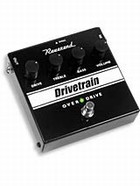
  • Reverend Drivetrain Overdrive

    Authentic crunch, Ry Cooder to AC/DC

    The new overdrive pedal from the canny folk at Reverend Musical Instruments is cleverly named the Drivetrain Overdrive, and it weighs in at a mere pound or so.

    Overdrives and distortion devices are becoming more focused, and this box is no exception – great package, with an ergonomic square box (none of these silly little rectangles that won’t stay upright), and a variety of finishes – our test unit was a glossy black, although the aluminum brushed finish is quite nice. Ours was a prototype, and the latest versions are more noise-free (if that’s possible – it made no noise).

    Features include pots for drive, treble, bass, and volume (no dip switches here) and the operation is by 9-volt battery or approved adapter. Reverend president/brain Joe Naylor has seen fit to provide an information sheet that includes not only sample settings (ranging from blues through rock), but helpful suggestions on using the Drivetrain for bass players, and in the already overdriven amp, for an “over-the-top” sound.

    The tone of our Gretsch Country Junior through a late-’60s Twin was twangy and shimmering, but drop in the Drivetrain, and watch out! Even the slightest crunch is an authentic, in-your-face sound that mirrors an early Deluxe at 8, and further increments of drive and tone bring a whole spectrum of sound, from AC/DC fat rock to slink, subtle Ry Cooder…very flexible.

    Contact Reverend at 27300 Gloede, Unit D, Warren, MI 48093, or e-mail them at reverendmu@aol.com. The website is quite browsable and located at www.reverendmusical.com.


    Reverend Drivetrain
    Type of Effect: Overdrive
    Features: Metal housing, AC/DC operation, pots for drive, treble, bass, and volume. One-year warranty.
    Price: $269
    Contact: Reverend Musical Instruments, 27300 Gloede, Unit D, Warren, MI 48093, or e-mail them at reverendmu@ aol.com.


    This review originally appeared in VG‘s May ’01 issue.

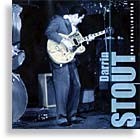
  • Darrin Stout & the Starlighters

    Darrin Stout & the Starlighters

    Stout is an obvious devotee of a number of different ’50s roots musical styles. You hear country twang, but it was early Sun stylists who left the strongest mark on this West Coast stringer.

    This is fun stuff – tube amps, old wood, great clothes, and never-ending I-IV-V chord variations. This approach to retro roots in an age of looping and digital aural imaging, is a breath of musical fresh air. From the original artists in the ’50s and early ’60s to Dave Alvin in the ’80s and Mike Henderson in the ’90s to perhaps Darrin Stout in the millennium there will hopefully always be players of this caliber and integrity to stop us in our tracks. Available from Stout Records PO Box 3493 Burbank, CA 91508.


    This review originally appeared in VG‘s May ’01 issue.