Month: May 2001

  • Melancon Custom Artist/P-90 Artist

    Attention to Detail

    Hailing from Louisiana, Gerard Melancon is a former professional gigging and studio player who parlayed experience on the road and as a guitar repairman into a devout attitude toward building instruments. He is meticulous about every facet of the instrument, and it shows.

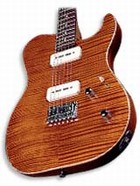
    Not content to submit one guitar for review, Gerard sent two beauties – the P-90 Artist (suggested retail, $2,300), a Tele-style with two Seymour Duncan P-90s, and the Custom Artist ($2,400), a Strat-style with two single-coils and one bridge humbucker (courtesy of Rio Grande).

    Both guitars feature figured tops, compensated scale lengths, contoured bodies, and deluxe appointments like custom electronics, gold hardware, etc. Unlike some custom builders, Melancon machines his own necks and bodies to carefully detailed sizes.

    The Custom Artist is finished in Tobacco Sunburst with a quilted maple top over mahogany body. The maple neck has a hefty rosewood slab with jumbo frets in an aproximately “C” shape that’s neither too thick nor too thin. The flatter fingerboard radius (12 degrees) is reminiscent of an ’80s Charvel, and makes string bending easy, especially with the jumbo fret wire. The two-post tremolo is joined to locking Sperzel tuners that work great with the .009-.046 D’Addarios. The neck and middle position single-coils are Rio Grande Half Breed, while the bridge position is a Muy Grande tapped humbucker, coordinated to a five-way switch. The middle pickup is reverse wound/reverse phased to eliminate noise when combined with another pickup. The coil-tap on the bridge pickup is activated by a push/pull tone control.

    The P-90 Artist test instrument featured a flamed maple top on mahogany body in a color Melancon calls Transparent Black. The fingerboard is Honduran mahogany on a mahogany neck. It’s the same shape as the Custom Artist, but has a slightly different feel due to the woods. And it uses a six-way fixed bridge, locking Sperzel tuners, and dual Seymour Duncan stacked P-90s. The angled three-way pickup selector works with a mini-toggle (parallel/series/split), master volume, and tone controls.

    Construction is thoughtful, deliberate, and meticulous. Both guitars feature tummy and arm contours, and the tops are two-piece bookmatched wood. The result is a body that feels like a Strat but looks like a premium bookmatched top. Necks are secured with four screws into ferrules similar to a Tele (no neckplates here, folks!). Another cool feature is the rounded neck base on the body; it makes upper-register play much easier. Truss rod access is immediately before the nut at the headstock, making adjustment a breeze. All hardware is gold-plated and the fit and finish is superb.
    We spent an afternoon with both guitars running into a Tech 21 Trademark 60. After spending time with the P-90 Artist, we noted its nice, solid tone, and the nice glowing effect in complex chords. The neck is wonderful, the body contours are really nice, and it is very comfortable. The P-90s give the requisite Tele spank, and you can get a fabulous rock and blues growl with distortion.

    The Custom Artist has bigger frets than the P-90 Artist. Its rear pickup positions create great country sounds, and even with .009s it sounds like it has .010s or .011s. The tone knob has a nice roll-off with distortion on the rear pickup – a great singing quality with enough cut to hear the note attack. And the tremolo system works very well, consistently. The bar pops in and out, making case travel simple.

    The Custom Artist is wonderfully touch-sensitive. For guitarists who vary their pick attack to produce different tonal colors, this is the ticket. All five positions produce very musical sounds that can be further colored by the tone knob. No matter how distorted the amp setting, the Custom lets the string sound through, whether on single notes or chords. Having the coil-tap on the Muy Grande enables twice the number of tones in pickup settings four and five. This is an extremely versatile guitar.

    Later, we turned off the amp and played both acoustically. Both produce substantial volume unplugged; a good sign, and an interesting recording trick when mic’ed. We also tracked both on a PC hard disc recorder and were tickled with the results; the compensated scale length made tuning and staying in tune with the pre-recorded keyboard tracks a snap, and both sound wonderful on tape (disc).

    Cosmetics matter to many players, and there’s a lot of extra effort put into the binding on the Melancons. Eschewing traditional white, he uses real maple binding, giving the instruments a truly unique flavor. Details are not overlooked, either; the jumbo frets are nice, and the volume knob is well-placed.

    Melancon makes guitars for people who can see and hear the difference. Gerard’s philosophy, “If it’s worth doing, it’s worth doing right!” is evident. For more details, see www.melancon guitars.com.

    Special thanks to Michael Hurwitz for his friendship and for putting me in touch with Gerard.

    Melancon Custom Artist/P-90 Artist

    Type Of Guiar: Solidbody/semi-solidbody Electric.

    Features: Custom-built with variety of woods, specs, and electronics options.

    Price: $2,400, $2,300

    Contact: Melancon Guitars, www.melanconguitars.com.

    This review originally appeared in VG‘s Feb. ’01 issue.

  • Siegmund Micro Tube Overdrive

    Stompbox Subtlety

    Chris Siegmund is an up-and-coming guitar/amp wizard from Vienna, Austria. A unique type of craftsman, Siegmund is a musician born to a family of architects and furniture makers. He began working with fine woods, and applying the elaborate carving skills of his family’s heritage to building instruments.

    In addition to creating beautiful instruments, Siegmund learned to pay careful attention to the tone his designs produced. And his work as a luthier spawned an interest in the electronic side of things, so he recently starting building amplifiers and experimenting with auxiliary items, like preamp pedals.

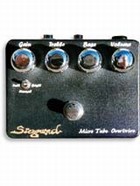
    One of the efforts, the Siegmund Micro Tube Overdrive, is a dual-gain stage, Class A preamp that can be used for a variety of purposes. Housed in an average-size stompbox, the Micro Tube was designed for use with electric or acoustic guitar, electric or acoustic bass, keyboard, or microphone. It can be used with practically any instrument that can be amplified. A true tube preamp, the pedal utilizes a genuine preamp tube – smaller than a 12AX7 – to create its warm tone. Being a small-bottle tube, it produces less gain, so the Micro Tube is a lower-gain unit.

    The unit is furnished with four rotary controls for Gain, Treble, Bass, and Volume. Each control is topped with a knurled chrome knob with no markings to indicate positions. However, there is a center detent on the Treble, and the Bass has 10 detents to mark increments. A three-way switch allows selection between Full, Bright, and Normal operation modes. The pedal is AC powered and includes a true bypass on/off switch as well as a light that indicates whether the effect is off (green) or on (red).

    The controls are easy to operate and fairly self-explanatory. It takes only a bit of experimentation to find the best settings for each instrument and situation. Unlike some effects boxes, the Micro Tube creates a transparent effect, allowing the guitar’s tone to remain prominent. Subtle differences come through the amp, depending on how the pedal is set, but the instrument’s inherent characteristics shined through, and listeners can distinguish differences between guitars, rather than to have the box make them all sound the same (as many overdrives do).

    Depending on settings, the Micro Tube can be used for overdrive, as a simple volume booster (up to 50 dB), or to fatten and warm up the ambience. We found the box very useful in balancing a guitar’s tone. The three-way switch can work like a master presence and tone control. Setting it on the center position is like setting the master control flat. Moved to “Full,” the pedal produces the fattest tones, while “Bright” brings out more sparkle without making the sound thin.

    The rotary controls are used to do all the fine-tuning. Gain adds the desired grease and balances the level and boost using the Volume control. When adjusting the Treble and Bass, we started at the mid point and increased or reduced the level to reach the desired sound.

    We used a variety of instruments to test the pedal, including a ’78 Les Paul Custom with Seymour Duncan pickups, a stock ’65 Strat, and a ’72 Martin D12-28 with a Barcus Berry bridge pickup. We played them through a mid-’70s 50-watt Marshall head and 4×12 cabinet, as well as through a solidstate Marshall 1×12 combo. We set the tone controls of both flat (at 5).

    With the tube Marshall head and 4×12, Normal and Bright worked best with the Les Paul, and any of the three settings worked well for the Strat for creating typical rock sounds. The Full position is more distinguishable with cleaner settings and adds subtle beef to the sound. It’s almost more of a feel than it is a direct tone. When playing the same guitars through the solidstate Marshall, we preferred the sound with the Full setting for all the electric guitars because of the extra warmth and fullness the box added to the straight amp sound. Normal seemed to work best for very clean playing with the electrics. Bright sounded better when we added more mids and bass to the amp’s EQ. For more gain, we tried turning up the amps’ preamps and using a Tube Screamer in line, placed after the Micro Tube. With both amps, these combinations worked out rather well. The Siegmund provided a way to balance and boost the guitar’s signal before anything else.

    As for our the Martin, we realize that a standard Marshall half-stack or combo is not the best setup for use with an acoustic guitar. But it is possible to play acoustic through an electric guitar amp with clean settings. When testing the Martin with the Micro Tube, the Normal setting seemed best and helped to bring out the guitar’s natural tone through either the tube or solidstate Marshall. It helped open up the guitar’s amplified sound.

    For further experimentation, we tested the Micro Tube by placing it between the guitars and a simple eight-track recording setup – with no amplifier. For acoustic guitar and clean electric guitar, the results were excellent and it really allowed us to manipulate the guitar’s sound for recording. Depending on what kind of sound you’re looking for when playing electric, you may prefer to use an additional overdrive pedal for more dirt and grease.

    We have some suggestions for making the Micro Tube more user friendly. Markings on the control knobs would help note preferred settings (a grease pencil or Sharpee marker does the trick, but…). We’d also suggest reversing the positions of the In and Out jacks, to conform with most other effects, so it would be easier to plug in line when using other pedals.

    If you aren’t accustomed to working with stompboxes that don’t drastically alter the sound, you’ll need time to fiddle with the Micro Tube to achieve the best results. Although we did not try the box with instruments other than guitars, the manufacturer says it can be used with a microphone or keyboard. We think it would work equally as well accompanying almost any instrument that could be amplified or mic’ed.

    For more info, check out Siegmund’s website, www.SiegmundGuitars.com, to see the span of his guitars and amp designs.

    Siegmund Micro Tube Overdrive
    Type Of Effect: Overdrive Pedal

    Features: Gain, Treble, Bass, Volume controls, Full/Bright/Normal switch, true bypass on/off stomp switch, operates on AC power only

    Price: $249

    Contact: Siegmund Guitars & Amplifiers, 888-633-6654, (818) 353-0218, (818) 353-5558, Chris@SiegmundGuitars.com, www.Siegmund Guitars.com

    This review originally appeared in VG‘s Feb. ’01 issue.

  • Rock City RockSlide

    Alluring Accessories

    The RockSlide Guitar Slide is the creation of Mark Morse, a guitarist who wanted more from a guitar slide. Morse found most conventional slides uncomfortable because they’d pinch the fleshy part of his finger when he’d bend his hand into playing position. That frustration led to experimentation with the shape of the slide and research on commonly used materials.

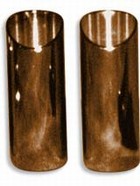
    What makes the RockSlide different is the way it’s shaped. The angled opening on one side of the slide is cut away to reduce pinching of your hand and finger. The inside of the slide is shaped to provide a better fit, so it will stay in place more snugly. The top (where the finger sticks out) is thicker and heavier. In addition, the flat surface on the opposite exterior end provides a comfortable rest between the slide finger and its neighbor.

    Depending on the dimensions of your fingers, the pinky and ring slides may fit on the top part of your finger, or all the way down to the base of your hand. It can be used either way, and the snug fit will provide better control. Two sizes are currently available – one for ring and pinky fingers, and another for middle fingers. The RockSlide is available in solid brass and chrome-plated.

    For a test run, we raised the action on our trusty Les Paul just a bit (it was fairly low), and checked out both models. Since my hands are small, the slides fit over my fingers (as typical slides are intended to fit). The angled and beveled edges certainly did provide better comfort, and helped hold the slide in position, so it was easier to control. The ring/pinky slide fit on my ring finger up to the knuckle, so I was able to use it more like a ring slide. It also stayed in place comfortably. Part of the reason I’m not a better slide player is I was never able to find any slides that fit comfortably. Fortunately, with the growing selection of accessories available today, I’ve found a few, like the RockSlide, that are encouraging me to improve.

    The RockSlide is becoming easier to locate in music shops. If your favorite dealer doesn’t have it, have them check out the company’s website.

    RockSlide Guitar Slides

    Type Of Accessories: Solid brass slides for ring and pinky fingers, and middle finger

    Features: Custom-contoured for comfort and better control

    Price: Solid Brass Pinky & Ring Slides $14,99; Chrome Plated Pinky & Ring Slides $15.99; Chrome Plated or Brass Middle Finger Slides $17.99

    Contact: RockSlide Guitar Slides, Rock City Music, 635 W. Garland, Spokane, WA 99205, (509) 327-4503, fax (509) 327-2966, Website: www.therockslide.com, Email: goldtop@iea.com

    This review originally appeared in VG‘s Dec. ’00 issue.

  • Black Creek Musical NYS Guitar

    New Axe From the

    Before starting his Black Creek Musical Instrument Company, upstate New Yorker Chris Hofschneider spent time building instruments with other members of what has grown into the “Woodstock Contingent,” an elite group of builders that includes Stuart Spector, Michael Tobias, Harvey Citron, and Joe Veillette, whose shops are also located in the Woodstock area.

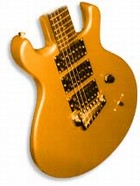
    Black Creek’s NYS Guitars are built to order, with customer choices including woods, finish, neck shape, frets, hardware, and electronics. Left-handed models are also available. Our test NYS was made of solid mahogany in the body and bolt-on neck, and was finished in a deep shoreline gold. The body has a double-cutaway design with short horns beveled on the back and a contoured heel that allows access to the entire fingerboard. The neck was quite hefty (a “boat” neck), with a noticeable “D” shape. The neck has a nut width of 1 11/16″ with a graphite nut and a 25 1/2″ scale rosewood fingerboard with 22 jumbo frets and ornamented with colorful abalone dot inlays. The fingerboard radius is fairly flat and the back of the neck is rounded and flatter down the middle. The neck is built with two graphite reinforced rods that surround a two-way adjustable truss rod that adjusts at the headstock.

    Other features included three-per-side Gotoh tuning machines and an interesting tune-o-matic-style bridge/tailpiece designed by Hofschneider and custom-built by Hipshot. All hardware was chrome, including pickup mounting rings around each of the three DiMarzio humbuckers. Schaller straplocks were included for extra security – always a nice touch on a high-end guitar.

    The DiMarzios on our test model used a five-way selector switch and single volume control wired for standard full-humbucking sounds in all five positions. However, a buyer can request any combination of pickups and any wiring configuration they desire.

    The NYS came set up and ready to play, with low action and a set of regular .010-gauge strings. The neck was straight and the fretwork was nicely finished, so there was no buzzing anywhere on the fingerboard, or fret edges sticking over the sides.

    Before plugging in, we listened to the instrument’s acoustic qualities. The solid wood of the neck and body produce a warm, vibrant acoustic tone that resonates through the instrument, which is usually the first sign of a fine-sounding piece of wood. To check out the electronics, we plugged into an old 100-watt Marshall through a 4×12 cabinet with 25-watt Celestion greenbacks. The bridge pickup produces a commanding lead tone that has a nicely-balanced blend of high-end bite, midrange punch, and lows. The neck pickup brings out the rich musical qualities of the wood with rounder, bell-like clean tones that sparkle on top. The middle pickup has a smooth and punchy tone that works well on its own for a solid rhythm sound, or can be used in conjunction with the bridge or neck pickup to bring in an evenness to either side by providing additional contrasting textures to choose from. Unlike the middle pickup on certain Les Pauls, this one wasn’t at all muddy and had enough definition to be used by itself. With three-pickup Les Pauls, the middle can get in the way. But there’s a bit more space between the pickups on this three-humbucker NYS, which provides plenty of room for picking. In addition, we found the middle pickup of the NYS to be more useful, tonally, truly providing a middle ground in the spectrum between the neck and bridge.

    As for the controls, the volume knob is in the perfect place for executing pinky swells, and the selector switch is readily accessible, but set back and out of the way.

    The NYS is a well-balanced instrument in tone and weight. Our test model was set up for effortless playability and sounded great for clean and dirty tones for playing rhythm and lead in a variety of styles. The body design is conservative enough to satisfy players who favor traditional-style guitars, and given the many options, one can develop a versatile, truly personalized instrument, tailored to suit any playing style. Black Creek works directly with the player to create almost any design.

    For more information, contact Black Creek Musical Instrument Company or check out the website, which is currently under construction.

    Black Creek NYS Guitar

    Type Of Guitar: Solidbody electric.

    Features: Bolt-on neck, 251/2″ scale, 22 frets, abalone dot inlays, solid mahogany body and neck with double-cutaway design and contoured heel for access to all frets, custom-designed bridge, three proprietary-wound DiMarzio pickups with five-way selector switch and single volume control (many options available).

    Price: $2,500 with case (as tested, prices vary based on features and components).

    Contact: Black Creek Musical Instrument Co., RR3 Box 84, Hauverville Road, Middleburgh, NY 12122, (518) 827-5965 phone/fax, www.NYSGuitars. com, NYSBlackcreek@aol.com.

    This review originally appeared in VG‘s Jan. ’01 issue.

  • Allen Woody

    Of Short-Scale Basses and Long, Long Songs

    Like his bandmate, Warren Haynes, bassist Allen Woody is burning the proverbial candle at both ends, around the middle, and in between; he pulls “double duty” in the same two bands that Haynes does (The Allman Brothers Band and Gov’t Mule). Accordingly, it took some time for VG to catch up with Woody, but the wait was worth it.

    Allen Woody is a long-time guitar lover, and his collection currently numbers around 300 instruments. Details concerning his collection and his playing experiences (as well as his tenure as an employee of a certain Nashville vintage guitar store) were part of an extended telephone conversation while Woody was taking a few weeks off between practice sessions and performances. He was born in Music City (“Same hospital that Duane and Gregg were born in,” he noted), and such a beginning prompted the obvious first inquiry:

    Vintage GuitarHow did growing up in Nashville affect your interest in playing music?

    Allen Woody When I was a kid, Ernest Tubb lived down the street from my mom and dad; I used to watch him on TV. He had great players, and I think it’s fair to say I loved what might be called “Old Country.” I really liked Buck Owens and the whole Bakersfield thing; Don Rich and sparkle Teles.

    There was a player in Nashville named Jimmy Colvard who played with a band called Barefoot Jerry; he also played the lead on Dave Dudley’s “Six Days on the Road.” He was a monster guitar player; unfortunately he went the same route as Danny Gatton; he ended his life about 10 years ago. Barefoot Jerry was a country band that really rocked. They had Russ Hicks on pedal steel; Wayne Moss thumbpicking a Jazzmaster. For a while, the term “country rock” meant the Eagles, but these guys were the real thing.

    So I liked traditional or “real” country music; Hank Williams Sr. was the real thing; so was Pasty Cline. Guys like Harold Bradley doing the Danelectro 6-string bass tic-tac thing; I found out later that those guys would take a doghouse bass and play the bass track, then double it with the 6-string tic-tac to get those sounds.

    So it was a pretty natural progression to go from “real” country music to rock and roll, and it’s ironic that my dad was the one who turned me on to blues players like Muddy Waters. He’d been a truck driver, and would listen to WLAC in Nashville when he traveled; it was one of the last clear-channel blues stations, and it could be heard all over the United States. Billy Gibbons has cited that station.

    And back then Johnny Cash was doing a TV show from the Ryman Auditorium, and he was featuring rock acts on some of his shows. My mother took me to see Derek & the Dominoes on the Johnny Cash show when I was 14; I was in Gruhn Guitars the same day and Clapton was in there buying a Strat. What was so cool was that after they taped the show, Derek & the Dominoes played for two hours for the kids that came to the show. I still have a cassette tape of that performance.

    Earliest instruments?

    My first electric guitar was a Kingston, which I wish I still had because it was a Hound Dog Taylor kind of instrument. I had a matching bass that was a Tuxedo brand name. When I was in the ninth or tenth grade, I went into Madison Music in Nashville, and they had a late ’60s Hofner bass. Raised logo on the headstock, pickup rings that resembled Gibson pickup rings; not quite a “Beatle Bass,” but real close. I traded in both of my Japanese instruments and gave them $100 for it, and I still own it. That was the first good bass I got.

    As for my first good electric guitar; I was studying music in Nashville at Blair Academy, and my grandfather picked me up from school one day and took me to a Boy’s Club, of all places. Vox had given them 100 guitars; “Bulldog” and teardrop-shaped models. They were all sunburst except for one red teardrop and one white teardrop. I wanted the white one because of Brian Jones, of course, but the red one and the white one were factory seconds; the rest of the guitars were marked seconds but there was nothing wrong with them. Vox was going out of business so that’s why they were all marked like that. I sat there for two hours and tried out all 98 of the sunburst guitars (chuckles) and picked out the one I liked; my grandfather paid $60 for it, and I still have that one, as well; it was brand new when I got it, and even had the gray case and the cleaning cloth. I got the Hofner and the Vox around the same time.

    By that time, did you consider yourself to be a guitar player or a bass player?

    I was a guitar player first, but as for the bass players in bands I played in, I really didn’t like what they did. I found myself being heavily influenced at the time by Paul McCartney, and a year or so later I was into Jack Bruce and Berry Oakley; I think concentrating on being a bass player probably happened by proxy. I really wasn’t a “frustrated guitar player,” but I was a frustrated bass player, and I still am. I like my guitar playing, but my bass playing drives me nuts (laughs)!

    I was never a big Fender guy; I own some cool Fender instruments and they’re wonderful tools, but back then I was a Beatles nut, and I was into their instruments. By the time I got into playing bass almost exclusively, I got into Chris Squire and John Entwistle in addition to Jack Bruce and Berry Oakley, but because of my “natural progression” as a Beatles freak, the next bass I got was a Rickenbacker 4001 – white with black binding and a black pickguard. I saw Maurice Gibb of the Bee Gees, of all people, on an album cover with a white Rickenbacker and orange Marshalls, and I thought it looked really cool, and that he was finally getting hip! So I bought my 4001 in Nashville in l974; I still have that bass, too.

    What about converting from short-scale on the Hofner to long scale?

    Well, I put a set of Roto-Sounds on my Hofner and tried to get the tones that Oakley, Squire and Entwistle were getting, and I realized it wasn’t working. I looked at Jazz Basses, but at the time they were 3-bolt style, and the quality wasn’t there. The Rickenbacker had a nice neck, looked sexy, and sounded great.

    You do own some Alembics, and a lot of those instruments are 32″ scale, which most people consider to be “medium scale.”

    Most of mine are 34″. I played in a fusion band for several years, so of course I’d gotten into Stanley Clarke, and we did some shows with the Dixie Dregs; Andy West was playing an Alembic, and the sound just jumped out at me. Around Nashville, the music stores wanted the closest thing to Fender they could get, so any store that dared to get Alembic basses got long-scale ones. I bought mine in early l977. Alembics bring out all of the characteristics of your playing; you can’t “hide behind” an Alembic like you can with some other basses. I’ve played some medium-scale instruments; it’s enjoyable and in some respects it’s “the best of both worlds.”

    Did you play with any notable combos prior to joining the Allman Brothers?

    The fusion band I played in was called Montage; we were together for seven years and worked all over the Southeast. I did a lot of studio work, and in some respects I was young and stupid, because I thought I could eschew the usual procedures and play rock and roll my own way in Nashville, and I learned quickly that it couldn’t happen (chuckles).

    I played with Peter Criss, and I was in Artimus Pyle’s band for five or six years; Artimus had a lot to do with me ending up in the Allman Brothers. He introduced me to Warren Haynes around ’85, and Warren and I would jam occasionally over the next few years.

    Then one time, Warren told me he was going to be in the Allman Brothers, and at the same time we were cutting some tracks for the new Artimus Pyle Band album at Butch Trucks’ studio. I’d met Butch earlier; we were friends. He came up to me at his studio and told me his band was going to get back together; I said something to him like “Well, I guess you’ll be needing a bass player,” almost as a joke, but he said: “Yeah, that’s what I want to talk to you about.” I thought to myself, “Wow, he’s serious!

    Did you have to audition?

    Yeah, they went through 30 or 40 bass players; there might have been guys that were better bass players than me, but in terms of “better for the band,” there weren’t. As experienced as the band was, they knew what would be best for them. I played for five minutes, and they told me they were going to take a break and talk; I thought to myself: “I’ve ****ed up; I’ve blown it.” But Gregg came back a few minutes later and told me I was in the band. We’ve been married ever since (laughs)!

    What studio basses do you use with the Allmans?

    You know, that seems to vary a lot from album to album, and I’m really not sure why. I used my long-scale Alembic on the first record I did with the band, and a fretless Jazz-type bass that was custom-made for me by Chandler; it’s a powder blue color. I’ve had an affiliation with Chandler for years, and they’ve really been able to meet some needs for me. They made a 12-string Korina “V” bass with a Miller High Life logo on the front, with four Chandler lipstick pickups in it; they’re set up two-and-two with coil tap. That’s a beautiful configuration.

    I also used a late model white Fender Jazz bass on the first record, and on “Gambler’s Roll” played a fretless Paul Reed Smith; they’re not making them anymore. I’ve got two of them; they’re a little unorthodox, but they’re killer.

    On Shades of Two Worlds I used a Washburn AB-20 for the acoustic thing. Most of the other songs had the Alembic again, but for “Kind of Bird” I played a fretless 5-string Steinberger, of all things.

    Warren Haynes observed in his own Vintage Guitar interview that Seven Turns was more of a “songs” album, whereas Shades of Two Worlds was more of a “jamming” album.

    I agree; the first record was sort of like we were saying “…okay, we have to learn how to make a record together,” which I think we did very well. The second record was more along the lines of “…now we need to do what we do live,” and by the time we did the third studio album, it was definitely a “jam” situation. Where It All Begins was recorded on a sound stage at Burt Reynolds’ ranch, and we even had lighting trusses rigged up!

    How long did the most extended jamming situation you’ve gotten into with the Allman Brothers Band last?

    Probably about four hours.

    Performance basses?

    There’s one bass that crosses over a lot for me, and that’s a Warwick. But live, I pretty much go with Thunderbirds; I’ve been a huge Thunderbird fan for years.

    Was that the Washburn AB-20 on the acoustic version of “In Memory of Elizabeth Reed” on the An Evening with the Allman Brothers Band: Second Set album?

    No, and there’s a funny story about the bass I used. I collect Hofner copies; the ****tier the better (chuckles). I was in Japan, and Warren and I had been guitar shopping. In the magazines over there, a store will print pictures of its entire inventory. I saw an Audition violin-shaped bass for sale for $125. Audition was the Woolworth/Woolco house brand. I contacted the store, and an employee brought it to the show. It had a brown vinyl gig bag, and it looked great and sounded great, so I bought it.

    Later, we had to do a performance for a record association in California. Only four of us were at the meeting; Gregg, Dickie, Warren and me. I had my Washburn AB-20, and I’d brought along the Audition along as a spare and for looks, as well; I thought it would look good for a cozy, intimate acoustic show. I figured I’d better tune it up, so I did, and I started noodling around on it. Our sound man, Bud Snyder, was out in the mobile, and he came in and told me the sound of the Audition was perfect for what we were doing. So the “Liz Reed” acoustic thing on the last live album had a bass that was a $125 Hofner copy.

    Were you doing any thumb pops or pull-offs on that song?

    No, but I was and still am a huge Larry Graham fan. I watched him play with George Clinton at the Rock & Roll Hall of Fame concert, and he had the best bass sound there. I figured out how he got that high-fidelity sound of his; he had the gain way up on his system, and he was barely touching his bass. He got an incredible sound, with a big spongy low end, and a crisp high end. I love Bootsy, too, but Larry Graham’s the man; the original is still the greatest.

    How does your setup differ when Gov’t Mule goes out?

    It’s a different thing; my amp set-up with the Brothers is geared toward a high fidelity sound; lots of power amps, preamps, high-end cabinets, plus one SVT cabinet that we use just for “dirt.” Without the SVT, the sound would be too clean. But with Gov’t Mule, it’s all SVTs and Orange amps, and I’ve also been using the reissue Crossroad stacks; Bud Ross of Kustom fame made them; they’re even rolled and pleated.

    I used a 1967 EB-3 on the demos for the Gov’t Mule record; when I found it, it had been painted flat black but Phil Jones at Gibson’s Custom Shop fixed it up for me. Live, I use EB-3s as well; I have three or four EB-3s, five EB0s, and two EB-1 “Pappalardi” models as well. I’ve got a ’56 and a ’71; the ’56 is the better bass but the ’71 is the one that goes out with me. I used a Hofner on “Temporary Saint” to get that real “Beatle-y” sound.

    When we met with Michael Barbiero, the producer, he wanted to know what kind of a sound we wanted, and I said: “I want to sound like Felix Pappalardi.” Michael smiled and said that it shouldn’t be a problem. You see, Felix was Michael’s cousin, and Michael was in the control room when Mountain recorded “Mississippi Queen! ” If you look at the liner notes, you’ll see that I thanked Felix Pappalardi posthumously.

    Another thing that affected the Gov’t Mule sound was the conversation I had with Tom Dowd, who was on the Brothers’ tour bus when we were doing some live recordings. Everybody had gone to bed except Tom and me, and I was thinking; “Here’s the man who engineered Cream records and produced Derek & the Dominoes later on.” So I sat there and talked with him for hours and played him the Mule demos. Later, when we went to the studio, we elected to do some of the things Dowd told me he’d done in his earlier sessions, like the way the amps had been set up. We knew he was right. He would know, wouldn’t he (chuckles)?

    Well, do you use medium-scale or long-scale basses at all with Gov’t Mule?

    At times. The Thunderbird is something that I can always fall back on with either band. A lot of players consider a Fender Precision to be their “Holy Grail;” it seems like the Thunderbird is always my “landing pad.” I know where I stand with it, I like the way they look, the way they feel, and the way they hang on me. I also like the fact that not every Tom, Dick and Harry has one.

    I also have a 5-string Les Paul prototype bass Gibson gave me last year. It looks like a big sunburst Les Paul, and it’s a fine instrument. I play it all the time in both bands.

    I’ve got the feeling that you’ve been collecting for a long time.

    Yeah, the “bug” got me early; I started hanging out at Gruhn’s when I was about 14, around the time George’s store first opened. He had Flying Vs, Explorers, Sunbursts, pearly-top Martins; all of the fine stuff. By the time I was 20, he knew that I knew the guitars, and he offered me a job. I worked for him for some time; I’d get mad and quit then come back, then he’d get mad at me and fire me, then call me back. That happened four or five times, (chuckles) but George and I are really tight. I worked a lot of guitar shows when I was with Gruhn’s.

    And currently your collection numbers how many pieces?

    About 300 guitars, basses, mandolins and lap steels. I’ve got a lot of “David Lindley-type” instruments that are really cool. I collect jurangos, which have an armadillo shell for a back.

    I’m going to cite a couple of brands and models, and let you comment about each. First, Thunderbirds.

    I got my first Thunderbird from my mentor, George Gruhn. It was a non-reverse “IV” with double pickups and was gold. George told me it was the only gold one he’d ever seen. The headstock had been broken and professionally repaired; it was structurally sound for about five years then it came off again, and once again I got Phil Jones at Gibson to repair it; that guy’s a wizard. He’s made a lot of basses that I’ve used with the Brothers. I’d met Phil when we both worked at Gruhn’s; we were both “pups” there. He repaired that Thunderbird so well that it’s stronger than it was before it was broken. He’s a genius.

    I’ve got a Heather Poly Thunderbird that’s somewhat of a hybrid. It seemed to be a ’60s bass that had been outfitted with ’80s electronics; now it’s been modified with nickel Thunderbird pickups that Paul Chandler found for me. Phil Jones found some nickel tuners as well, and we found a nickel bridge somewhere. I’ve got one of two Korina Thunderbirds that Gibson’s Custom Shop made a few years ago, and a Candy Apple Red Thunderbird with a black pickguard that’s a prototype. There’s two newer Thunderbirds; one black and one sunburst, and Epiphone has been making some new non-reverse Thunderbirds that are cool; I’ve got three of them.

    Alembic.

    In addition to the long-scale models I use live, I’ve got an 8-string model with a 32-inch scale; it used to belong to Rick Nielsen. I have a purple Stanley Clarke model, a long-scale fretless, a long-scale 5-string, a 20th Anniversary, and a John Entwistle-type, which is a Spoiler with an Explorer-shaped body.

    Unusual basses?

    There’s the Modulus 18-string, and a bass that Jaco used to own; it’s been authenticated. It’s still got two strings on it, and I started to refurbish it, then I thought about how Leo Fender’s workshop was sealed when he died, so I left Jaco’s bass alone.

    I’m using some Epiphone EB-2 copies a bit in the Mule; those things feel like an old Rivoli; they’re pretty much “the real thing.”

    What percentage of the basses in your collection are short-scale?

    Maybe 40 percent; the Hofner copies I discussed earlier include Apollos, which, come to think of it, are more like EB-l copies. I’ve got a Ventura fretless which is the only one I’ve ever seen, and an Eko.

    Other short-scale basses include a Mosrite hollowbody, a Messenger bass like the guitar Mark Farner used to own, a Fender Mustang Bass and a Musicmaster, a Dan Armstrong fretless, a couple of Harmonys and a couple of Kays. I have a weird, short-scale American-made B.C. Rich that was custom-made for me; it’s neck-through.

    Other than custom-made instruments, what do you think the rarest piece in your collection?

    (Pauses) Probably the Messenger bass, even though I’ve got other instruments that are worth a lot more. I don’t know why it’s so awe-inspiring, but it never ceases to amaze me how many people have heard of that brand and know about the instrument. It may have been ahead of its time; it had a metal neck that split into a tuning fork inside, but the instrument isn’t tuned to the key of the tuning fork! I’ve got lots of old Gibsons and Fenders that would probably be considered collectible, but the Messenger is probably the one when it comes to just “rare.”

    In terms of modern innovations, I saw an endorsement ad in Bass Player for KYDD basses, which is a stand-up fretless bass with a 30-inch scale.

    Those are made in Philadelphia; I needed something that I could consider to be an electric upright. I was never a legitimate upright bass player, and this seemed to be the best tool where someone like me could “cross over;” it’s a real “friendly” instrument.

    How about the guitars in your collection?

    I have a really cool Rick 325 that’s in the Tom Wheeler book, and a tulip-shaped Rick. There’s a lot of Vox stuff, including a Mark XII and a Phantom. I’ve got a Gibson Moderne reissue, serial number 007, a cool, white Gibson double-neck, and a Chandler Les Paul-type guitar that has a 251/2″ scale; it’s beautiful. Paul also made me a neat little Firebird-type travel guitar.

    There’s one custom-made brand that I want to mention, the THCs made by Tom Holmes in Nashville. Billy Gibbons and I are big Bo Diddley fans, and Billy called me one day in the early ’80s, wanting some Bo Diddley guitars; he said: “The square ones are easy to copy, but I want me one of them Cadillac-fin guitars!” We both knew one of those was on the cover of Bo Diddley is a Gunslinger. So I started looking around, and I found a record shop that had a copy of that album. Tom built some guitars for Billy and me; he also made me a matching bass. I’ve used those a good bit, and I’ve been thinking it would be fun if Warren and I used them as a matching set with Gov’t Mule sometime in the future, because they’re very “thick-sounding,” “Cream-sounding” instruments. Tom also made square-shaped travel guitars for Billy and me.

    Billy also gave me another guitar that he had custom-made for me; it’s called the Coyote.

    Other fretted instruments?

    A Framus lap steel that’s shaped like a rocket ship, and a Morrell 8-string, 9-pedal steel that used to belong to Little Roy Wiggins; I’ve got some Supro lap steels that I really like. One Silvertone I have looks like it was made by Gibson; it’s got Gibson electronics in it.

    I also have some electric mandolins, including a Fender electric that my mom and dad bought me in Nashville; it’s a last-year-of-production model. I’d been on the road and wasn’t home for Christmas; when I got home it was lying on my bed. It looked like a sunburst Strat that had been left out in the rain (laughs)! Remember when Precisions made in the mid-’70s had black pickguards instead of tortoise shell? That mandolin was made the same way; black pickguard, but a brown pickup. I had it in Gruhn’s one day, just noodling around, and the store had a blond Fender mandolin that was 20 years older, but the serial numbers were three numbers apart! So I figured mine was one of the last made, and Fender must have run out of pickguards first, so they whipped up some black pickguards to finish things out.

    I’ve got a Vox Mando-Guitar that still has the hang tags on it, a ’56 Gibson Florentine electric in mint condition, a Blue Star 5-string Tele-type mandolin, and a Kent electric mandolin shaped like a Hofner Beatle Bass.

    I also have a guitar that matches the Kent mandolin; Gov’t Mule just did a track for a Hound Dog Taylor tribute album for Alligator Records. We were recording it in Macon, and I was going to play guitar instead of bass. My girlfriend and I were walking to the studio, and we went into a pawn shop to find a guitar for the session; I had Les Pauls down there but I wanted something crummy! Lo and behold, there sat a Kent guitar, and I gave a $125 for it. I’m looking for a matching bass to complete the set. Actually, those mandolins were called “electric violas;” I think they were marketed like that.

    Future recording plans?

    We’ll do another Mule album later this year, and I’d be surprised if we didn’t go back to Bearsville Sound in Woodstock again, and I’d be more surprised if we didn’t choose to use Michael Barbiero again.

    As for the Allman Brothers, I’d be surprised if Tom Dowd wasn’t at the helm for our next record; I’d be nervous if he wasn’t. I think we’ll record the next album live in the studio, as was the case with Where It All Begins; probably another sound stage environment.

    The last question is sort of a philosophical variant of the “desert island” type. Since you’ve got a lot of various instruments, what instrument would you like to have on a desert island if you could only have one? And if it was a bass, what scale would it be?

    (Pauses) Hmmm….you’re making this difficult…

    (Pauses again) Well, then let’s fine-tune a bit and assume there wouldn’t be any electricity on the island.

    I’d probably want a Gibson B-45-12; they’re great guitars. I could sit there, eat coconuts, and play Byrds tunes and songs from A Hard Day’s Night (chuckles).

    Allen Woody has the experience as a player and guitar lover (including his retail days) to have a keen perspective on music and fretted instruments. He’s accomplished a lot in both fields, as his recorded work and his instrument collection aver, and he can also be proud of his accomplishments in both areas. Other players and guitar lovers should have it so good, yet most of ’em would readily give credit where credit’s due; that Woody purveys a lot of great music is a bonus.

    This interview originally appeared in VG‘s Nov. and Dec. ’96 issues.

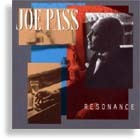
  • Joe Pass – Resonance

    Resonance

    In the history of jazz there have no doubt been numerous creative rolls like the one the late Joe Pass experienced in the early 1970s. But in Pass’ case, his DiMaggio-like streak was extremely well-documented.

    In ’72, the maiden release of the Concord Jazz label was also the recording debut of Joe’s exciting partnership with Herb Ellis (one of the great guitar duos in the idiom’s history); a year later their set at the Concord Summer Festival provided the label with its second LP, and pianist Oscar Peterson enlisted Pass and bass phenom Niels-Henning Orsted Pedersen to record The Trio (which could have just as easily been called “Thee Trio”); and in 1974 Pablo released “Take Love Easy,” coupling Ella Fitzgerald with Pass as one-man six-string orchestra. By the time Pass’ monumental album of unaccompanied standards came out that same year, no one disputed its lofty-but-apt title, Virtuoso.

    That Resonance, a live club date from December ’74, is culled from what wasn’t released from that gig on 1981’s Live At Donte’s (a double album) is (as if we needed any) further evidence of the man’s dizzying technique and vast storehouse of improvisatory ideas. Why were these 10 tracks “leftovers?” Probably the same reason the first batch wasn’t released until seven years after the fact: Joe already had a steady of stream of stellar product coming out.

    As should be the case with far more jazz, you always got the feeling that on another night Pass’ approach to any given tune would bear no resemblance to tonight’s arrangement. Backed by the tasteful twosome of bassist Jim Hughart and drummer Frank Severino, Pass, then 45, showed that he could think on his feet, whether it’s hyper-speed (“The Lamp Is Low”), ballad (breathing new life into “Misty”) or bossa (“Corcovado”). But the price-of-admission standout isn’t a chops showcase; it’s Joe’s extended, unaccompanied intro to Harold Arlen and Johnny Mercer’s bluesy “Come Rain or Come Shine” – proof that his astonishing dexterity was always secondary to his harmonic inventiveness and, most of all, soul. It just doesn’t get much better than this.

    This review originally appeared in VG‘s Apr. ’01 issue.

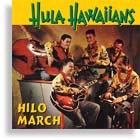
  • The Hula Hawaiians – Hilo March

    Hilo March

    Imagine the year is 1946 and you live in Europe. You’re a steel guitarist and, naturally, you’re really interested in Hawaiian music. You don’t want to play this music all by yourself, so you find three other guys who are interested ,and voila! You’re a band!

    That’s simplifying things, but in essence that’s the story of steel guitarist Walter Roost and The Hula Hawaiians, a terrific group of musicians whose repertoire included everything from Hawaiian standards to swing/pop/jazz-flavored material to downright rockin’/rhythm and bluesy numbers. Hilo March (Bear Family Records CD BCD 16169 AH) contains 32 songs recorded by the band from 1955 through ’68. And from the first time I played this CD, I was hooked!

    Whether you call it European/Hawaiian, pop/rock Hawaiian, or something else, it really doesn’t matter; The Hula Hawaiians’ music is a ton of fun, with plenty of fine playing. The core group from the ’50s included Roost (steel guitar), Werner Kunz (guitar), Max Zimmerli (ukulele) and Robert Felix (upright bass). For you fans of Hawaiian music there are classics like “On The Beach At Waikiki,” the “Kohala March,” the “Hilo March,” “Aloha Oe,” and “Lovely Hula Hands.” For fans of pop and rock and roll there are great cuts like “The World Is Waiting For The Sunshine,” the “Chimpanzee Rock” and “Hula’s Boogie.”

    Favorite cuts include “Hula’s Boogie” (snappy, with drums and twin steel/guitar sound; Fran Beecher-meets-George Barnes, with a bit of Les Paul), “On The Beach At Waikiki” (Walter’s tone is mighty fine), “The World Is Waiting For The Sunrise” (Hawaiian version of the infectious pop number with melodic Les Paul-flavor, energy, and drive from the ukulele and bass), “Chimpanzee Rock” (definite Bill Haley-goes-Hawaiian vibe, Werner’s guitar work is catchy and cool), “Ich Hab Dich Solieb” (a bluesy/rhythm and blues vibe with close-harmony steel and guitar work – this one has an Ivory Joe Hunter/”Since I Left You Baby” sound), “Minoi Minoi” (fun vocals with energy and drive propelled by strong rhythms), “Na Moku Eh” (catchy rockabilly guitar intro before things break into a classic Hawaiian sound; guitar and steel “tradin’ fours”), “Hula Moon” (boogie-flavored Hawaiian number with bass breaks), “Hula Hula” (surf sounds) and “Ay Ay Ay” (sounds like the Baja Marimba Band sitting in; pretty melody/chord progression). The Hula Hawaiians definitely deserve wider recognition, and thanks to the efforts of producer Peter Stahli and Bear Family president Richard Weize, the music/talents of Walter Roost, Werner Kunz, Max Zimmerli, and Robert Felix will be more widely available.

    This review originally appeared in VG‘s Apr. ’01 issue.

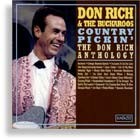
  • Don Rich and The Buckeroos – The Don Rich Anthology

     The Don Rich Anthology

    The Don Rich collection definitely reaches the heights of the live CD. It’s a 24-song retrospective featuring songs recorded when the late guitarist/fiddler was the instrumental hero of Buck Owens’ band. There’s lots of stuff here you’d expect. Killer instrumentals like “Buckaroo,” with its familiar jangly chordal work and chordal hammer-ons. There’s “Chaparral” with its short staccato bursts and chiming arpeggios. “Pickin’ Nickin’” and “Chicken Pickin’” have that stuttering effect so many guitarists have worked into their trick bags. You think Pete Anderson heard this stuff? Anyway, there’s plenty of that.

    If fiddle tunes are your deal, there’s plenty of those, from the familiar (“Orange Blossom Special”) to the not-so-familiar (“Tumwater Breakdown”). One thing that might surprise casual Buckeroo listeners is some dazzling acoustic work. “Buckersfield Breakdown” is a fiddle tune with a killer acoustic break that has its own sense of style and shows off some killer technique. Same goes for the likes of “Country Pickin’.”

    Other highlights include “Aw, Heck” which is pretty much signature Don Rich with its sharp, crisp single-lines and double-stops and stuttering chickin’ pickin’. Throw in some nice straight country vocals by Don, and you can see why he is so respected by the likes of Marty Stuart, Merle Haggard, John Jorgenson, Pete Anderson, and of course Buck Owens, all of whom contribute to the liner notes. Owens even relates, to no great surprise, that Rich’s death in a 1975 motorcycle accident killed his musical life. The joy was gone, according to the notes.

    No country guitarist worth his salt should be without this stuff. Great job again, Sundazed.

    This review originally appeared in VG‘s Apr. ’01 issue.

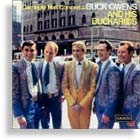
  • Buck Owens and The Buckaroos – Carnegie Hall Concert

    Carnegie Hall Concert

    It almost seems silly to have to tell anyone about the Carnegie Hall disc. Widely regarded as a document of one of the best country bands performing live at its peak, it’s guaranteed to thrill. The music is wonderful, the onstage patter is the height of corny (and I mean that in a good way) stage shows, and the band cooks. Throw in the fact that this is the complete, unedited show with vintage cover artwork and some previously unpublished photos from the concert, and you’ve got a gem.

    This review originally appeared in VG‘s Apr. ’01 issue.

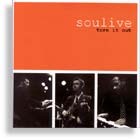
  • Soulive – Turn It Out

    Turn It Out

    There are so many things to love about this group. Two of the most endearing qualities that draw me back to this CD daily are still dominant after about 50 listenings!

    Yeah, they can do all the linear passages you’d expect from a Grant Green /John Patton/Jimmy Mc Griff inspired organ trio, and as well the chordal movement under outwardly simple sounding lines, the great B3 bass pedals, all the classic early ’60s stylings are all present an accounted for. What sets Soulive apart from all the other trio groups is the fact that this outfit contains two sets of blood brothers. Yes that does add up to four!

    The Evans Brothers (Alan and Neal) on drums and Hammond B3, and the Krasnos – Eric on guitar and Jeff as producer.

    What this combination of blood and talent adds up to is an inherent ability to groove beyond belief. In a sixth sense fashion perhaps.

    Quality #1 is the fact Soulive’s melodic sense is at the infectious and above level on this totally instrumental release, and that the material contains lines that keep you awake at night doesn’t hurt their chances for success.

    Quality #2 is the mix on the bass pedals! It perhaps is what you notice first and I believe the aspect that gives this tried and true format a sound that is stronger than tomorrow’s headlines. And Neal kicks the crap of them!

    The groove and the mix; when you think about it, what else is there?

    It doesn’t hurt to have guests Oteil Burbridge and John Scofield funk things up even further on a couple of cuts. Which they do with half-step abandon.

    This one is not to be missed! It’s up, it’s fun, and it’s exciting to know these guys are just getting started and you can say you knew them when!

    Available from Velour Records, 47 Murry St., New York, NY 10007, phone (212) 766-8040.

    This review originally appeared in VG‘s Mar. ’01 issue.