Month: May 2007

  • U2 – How To Dismantle an Atomic Bomb

    How To Dismantle an Atomic Bomb

    U2 has hit another home run. Try and think of another major rock and roll band this far into it and still making consistently good albums. Hell, at this point in their career, the Rolling Stones were putting out albums as an excuse to go on tour!

    You won’t be surprised by what you hear on this record. The 11 cuts are pure U2. The rhythm section cooks, Bono sings his ass off, the lyrics range from self-righteous indignation (yes, grating at times) to pure loveliness. And as you’d expect as a guitarist, the Edge uses his instrument as a weapon of mass instruction. Every sound we’ve come to expect from him, and more, is here. Just check out the lead cut, “Vertigo.” It’s been everywhere and is one of those songs that just sounds great blasting out of your speakers. The bass and drums lay down the foundation before crunchy chords come flying at you from the speakers. Before the song is over, you get a sampling of the atmospheric playing, soaring notes, and chimey chords that are the trademark of a generation of guitar players. And you hear it from the guy who did it first. And every song has Edge highlights.

    If you love the sound of U2, you’ll love this record. There are amazing hooks, musically and lyrically. Plain-and-simple, this is one of the best rock records you’ll hear this year.


    This article originally appeared in VG‘s March. ’05 issue. All copyrights are by the author and Vintage Guitar magazine. Unauthorized replication or use is strictly prohibited.


  • Son Volt – A Retrospective: 1995-2000

    A Retrospective: 1995-2000

    Spinning off from the roots-rock trailblazers Uncle Tupelo, Jay Farrar’s Son Volt is famed for its honest, no-nonsense, straight-to-the-heart songs. A Retrospective: 1995-2000 is a fine greatest hits celebration with six unreleased bonus tracks – including a live “Medicine Hat” and four-track demos of “Tear Stained Eye” and “Loose String.”


    This article originally appeared in VG‘s Nov. ’05 issue. All copyrights are by the author and Vintage Guitar magazine. Unauthorized replication or use is strictly prohibited.

  • Paul Westerberg – Besterberg: The Best of Paul Westerberg

    Besterberg: The Best of Paul Westerberg

    As the soul of the Replacements, Paul Westerberg not only crafted glorious world-weary lyrics, but wielded one mean guitar. Influenced equally by the disparate threads of Kiss, R.E.M., Alex Chilton’s Big Star, and punk, the Replacements were angst set to melody.

    The band’s disintegration and breakup was so perfectly rocked out that one might suspect it was staged. But alas, gone was one of the greatest rock and roll bands of all time. Westerberg followed with a variety of solo albums, some brilliant, others wishfully so.

    This greatest hits collection is a fine retrospective of his post-Replacements work. Here are 20 tracks with three previously unreleased – including an alternative mix of “Once Around the Weekend.” It’s the hard-to-find stuff, such as B sides and outtakes that make this disc, such as “Dyslexic Heart” from the Singles soundtrack and other TV and movie tunes. And better yet are Westerberg’s own, admittedly quicky notes and one-liners about each song’s creation.


    This article originally appeared in VG‘s Nov. ’05 issue. All copyrights are by the author and Vintage Guitar magazine. Unauthorized replication or use is strictly prohibited.

  • Freddie King – Live at the Electric Ballroom, 1974

    Live at the Electric Ballroom, 1974

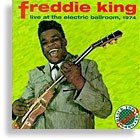
    Originally released in 1996, this was recorded a couple years before Freddie’s death, and it captures him in full bloom.

    As you’d expect, the concert portion finds him blasting away from all angles while dusting off his (and other folks’) blues chestnuts. “Woman Across the River” has a fabulous vocal and a funky feel that’ll keep you going all day. “Key to the Highway” is presented a little differently; it’s a straight-ahead shuffle with that big Freddie King sound. “Let the Good Times Roll” is done up Southern-soul style with a great call-and-respond section. If slow blues is your deal, you’ll want to check out the long (but never boring) version of “Ain’t Nobody’s Business.” It’s pure blues heaven. And what live Freddie King record would be complete without a “Hideaway Medley”? The sound isn’t great, but it really doesn’t matter; King’s soul and character shine through.

    The really cool parts of this disc are the numerous radio-interview segments. In some, he insists that he’s not an acoustic guitarist, then proceeds to play a couple of blistering country-blues, including a wonderful “Dust My Broom.” The interviews alone are worth the price of admission. Add fine liner notes from Dave Alvin, Freddie’s daughter, Wanda, and numerous others, and you’ve got one terrific CD.


    This article originally appeared in VG‘s Sep. ’06 issue. All copyrights are by the author and Vintage Guitar magazine. Unauthorized replication or use is strictly prohibited.
  • Willie Nelson – The Complete Atlantic Sessions

    The Complete Atlantic Sessions

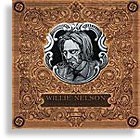
    It’s ironic that one of the terms coined to describe the music various singer/songwriters were making in Austin in the early 1970s was “progressive country” (others being “redneck rock” and the more marketable “outlaw country”). Because the brand of country that Nashville defector Willie Nelson, hippie eclectic Doug Sahm, and New York folk-rock import Jerry Jeff Walker were making paid respect, and owed much, to country roots.

    It’s no accident that Shotgun Willie, Nelson’s 1973 debut with Atlantic, marking his break from the Nashville establishment, included two Bob Wills staples and “Whiskey River,” a song written by honky-tonk singer Johnny Bush (who’d been Willie’s drummer a decade earlier). Along with two Leon Russell tunes, the remaining seven were penned by Nelson, including the cynical “Sad Songs And Waltzes” (“aren’t selling this year”).

    Cut in New York, with Arif Mardin producing, the album has a loose, funky feel. Willie’s own band was augmented by like-minded players like Sahm, David Bromberg, Waylon Jennings, and Hugh McDonald (who later joined Bromberg’s band and has been Bon Jovi’s bassist for 20 years). Willie’s trademark nylon-string handles some of the solos, but the lion’s share is split between lead guitarist Steve Burgh and pedal steel great Jimmy Day. On the two songs featuring strings, the arrangements were done by Mardin and R&B star Donny Hathaway. In other words, it couldn’t have been less countrypolitan.

    Nelson had moved back to Texas in early 1970, after his Nashville house had burned to the ground on Christmas Eve – an ironic symbol of the bridges he’d burned and was about to burn in Music City. As Bill Belmont states in the box set’s liner notes, “Whether he knew it at the time or not, Willie Nelson needed Austin as much as Austin needed Willie Nelson. It was a marriage made in hippie-hillbilly heaven, and the music Nelson would make in the first four years of the ’70s would not only change the city forever, but it would also start a sonic movement heard around the world. Some might say it also saved country music from itself.”

    For Nelson’s follow-up, 1974’s Phases And Stages, producer Jerry Wexler brought Willie to Alabama’s Muscle Shoals Sound studio, utilizing the increasingly famous rhythm section of drummer Roger Hawkins, bassist David Hood, keyboardist Barry Beckett, and guitarists Pete Carr (lead) and Jimmy Johnson (rhythm), with the addition of pedal steeler John Hughey, fiddler Johnny Gimble, and Fred Carter, Jr., on guitars and Dobro.

    It’s been said that it was one of the first country concept albums, but that’s an understatement. There had never been a country album like this. The songs tell the story of a failed marriage, first from the man’s perspective, then the woman’s, with the “Phases And Stages” interlude transitioning from one song to the next. Not the stuff country hits were made of, but Willie didn’t have any illusions about heavy rotation on country radio; he was making music for a different audience, and for himself.

    Willie’s jump to Columbia with 1975’s Red Headed Stranger and 1976’s Wanted!, The Outlaws collaboration with Waylon Jennings, Jessi Coulter, and Tompall Glaser, broke down any commercial barriers and made him a household name. But his Atlantic period set the stage and remains his artistic high-water mark.

    The box set presents both albums with several alternate takes and songs not included from the same sessions. A third disc, Live At The Texas Opry House, consists of an Austin concert from 1974 that was not released for almost 20 years – again, with additional tracks not on the ’93 album, now out of print.

    Of all the Willie Nelson retrospectives, this may not be packed with the most hits, but it’s the most significant in terms of his evolution as an artist.


    This article originally appeared in VG‘s Sep. ’06 issue. All copyrights are by the author and Vintage Guitar magazine. Unauthorized replication or use is strictly prohibited.
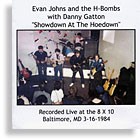
  • Evan Johns & The H-Bombs with Danny Gatton – Showdown At The Hoedown

    Showdown At The Hoedown

    One of many reunions that took place over the years, after a teenaged Evan Johns provided vocals and rhythm guitar on Danny Gatton’s legendary Redneck Jazz album in 1978. This was recorded live at Baltimore’s 8×10 club in March of ’84, just a month before Johns disbanded D.C.’s H-Bombs and joined Austin’s LeRoi Brothers, and shows that Johns’ own guitar style was, in part, a variation on tricks he’d picked up from Gatton, a devotee of Les Paul’s filigree.

    The praise typically heaped on Gatton was often the same as the criticism leveled against him: he could play anything and everything with blinding technique, and often did – sometimes in the course of one song. Sitting in with the H-Bombs didn’t raise any obstacles Danny couldn’t handle, even, as Johns points out, on songs he was unfamiliar with. But the loose structure brings out some mega-note fests – which is good or bad, depending on how you look at it. You definitely get a lot of Gatton for your buck, and, since there isn’t any “new” Gatton product set for release (he committed suicide in 1994), fans will cherish any undiscovered gems.

    On the Doug Sahm-tinged “Day Go By,” he employs pedal steel-like double-stop bends, a chorus of false harmonics, and myriad other licks and tricks. Probably Johns’ prettiest original, it is unfortunately marred by some severely out-of-tune rhythm guitar from its composer, but features a nice, tremolo-picked solo by Mark Korpi. The H-Bombs’ “second guitarist,” Korpi often provided subtlety to balance Johns’ over-the-top excursions.

    Elsewhere Johns and Gatton trade solos while the H-Bombs pump mightily on originals like “Rollin’ Thru the Night,” “Ugly Man,” and “Teenie Bit of Love.” The sound is crude and raw, with the vocals sometimes buried. But the guitars blast through loud and clear, as does the atmosphere of what must have been one hell of a party! Johns later recorded the CD’s closing “bonus track,” the jazzy “Viva Dan’l,” on which he plays all instruments – a nice little decompressor after all the speaker-frying.


    This article originally appeared in VG‘s Dec. ’05 issue. All copyrights are by the author and Vintage Guitar magazine. Unauthorized replication or use is strictly prohibited.
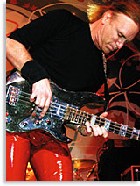
  • Billy Sheehan

    Cosmic Troubadour

    When it comes to rock bass, few players command the instrument with as much finesse and showmanship as Billy Sheehan. Best known for his work with Talas, David Lee Roth, Mr. Big, Niacin, and Steve Vai, Sheehan debuted his solo offerings in 2001 with Compression. VG spoke with Sheehan about the creation of his second disc, Cosmic Troubadour, and how he put it together – from writing the material to handling all bass, guitar, and vocal duties.

    Vintage Guitar: What inspired Cosmic Troubadour?
    Billy Sheehan: I had traveled and played a lot prior to making this record, and when I’m traveling, I don’t have much of a chance to record or write. It just gets stored up inside. So when I came off the road, I had a lot of information to pull from – a lot of experiences, illuminations, and philosophizing from sitting on all the long plane rides. Everything I wrote for this record is brand new, like on Compression. So it was all fresh – a new point of view, a new sense of chords, voicings, and approaches to everything I played, as well as the lyrics. Though I don’t necessarily write about road experiences, it was basically just the result of being on the road all over the world and coming back. The experiences affect me in ways that allow me to dig deep into my storytelling and express it.

    Has your writing process changed over time?
    Yes. I had always written songs on guitar only and I never did much on bass. Normally, when I’m writing a song, I’m going to sing it. So if I’m singing along with my chord playing, it’s easier to sing to a guitar than to a bass. But for this record, I wrote a lot of the instrumental pieces on bass. So there isn’t always a hard-fast rule that the songs I sing, I write on guitar, and the songs that are instrumental, I do on bass. It’s a general guideline of the way that I do things, but it’s not always the case because some of the things I had started the basics of on bass, I ended up singing. It was a real interesting mix of the two processes. So the actual difference between what’s going on now and what went on in the past is a bit of an evolvement and an expansion of what I can do on either instrument, keeping in mind whether it’s for an instrumental or a vocal track.

    How does your approach differ when playing guitar and bass?
    For guitar, I use a stone pick made by a company called Real Rock. I loved using those old Mind picks that were made of stone, but that company is long out of business and you can’t find them anymore. I was worried because I only had three stone picks left, and sometimes they break when you drop them on a hard surface. I have one that was epoxied back together. I’m so glad that Real Rock came along. Playing with a stone pick gives you a distinct tone. It’s a different sound on the baritone guitar for chordal stuff and 12-string things, which aren’t known for being good for playing a lot of lines on linear stuff, but I like to play lines on them anyway because my hands are strong from playing bass. I use the stone picks for everything, even strumming. They have a real interesting feel for strumming on the baritone and it gives you a little bit more command over the instrument.

    What was used to record guitar and bass tracks?
    Generally, I used the Avalon 737st as a main direct source for either clean guitar or bass. It has a spectacular sound and it’s one of my favorite pieces of gear. It’s a mic pre and instrument pre with EQ and compression. The EQ is as sweet as honey and the compression is as smooth as silk. It’s wonderful. There were some times when I would record direct with my baritone 12-string through that. I remember reading an article about Roger McGuinn of the Byrds recording a lot of 12-string stuff direct through a little compressor. So I tried to follow what he did in that respect.

    I’m also a big fan of the Line 6 Pod. I used a lot of their processors on the guitars and some of it on bass. I have both the kidney-shaped models and the rackmount models for guitar and bass, but they’re not the newest rack models. I also had my Ampeg rig set up in the garage – a split SVT 8×10 cabinet with two 4x10s, and then my live rack with Pearce preamps and SVT4 Pros, which I had mic’ed up with an AKG 414 and Neumann U87. The 8×10 cabinet is split so you can either use it mono where the eight 10s are on, or just go into another jack and use the top four and the bottom four speakers for two different tones.

    Onstage, I use two separate cabinets with two separate amps. Since it’s a little bit of a smaller space and you don’t need it that loud in the studio, I opted for the split cabinet with the top four and bottom four speakers. I used the U87 on the lows and the 414 on the top. So the bassier frequencies got the larger diaphragm. I used the amp with the Bass Pod and the Avalon with all kinds of combinations mixed together at various times for getting either a cleaner tone, some ripping distortion things, and tones somewhere in between all that.

    For tracking bass parts, I used my Yamaha Attitude bass on everything. For guitars, I had a custom Yamaha 12-string baritone, which is a custom made semi-hollowbody that’s got sort of a late-’50s or ’70s body style. It just sounds great. I also used a Fender Custom Shop baritone Subsonic Strat. It’s really cool because it sounds and feels like a Strat, but it’s way down there. It’s got an extra long neck that’s tuned B, E, A, D, F#, B. I used that for the first solo on “Toss It On The Flames,” and for a lot of other parts. The guitar parts were mostly done with the Subsonic Strat and the Yamaha baritone 12.

    Which songs best exemplify your work as both a musician and a writer?
    There’s a song from the album called “The Suspense Is Killing Me” that we’re doing on tour with Steve Vai. We’re doing an adaptation of it because there’s no guitar on the original version. I really like the way that came about as a piece – how it builds and how it moves, and how it’s structured together musically. “Hope” is another instrumental piece which I really love. It’s a beautiful, emotional piece of music. Lyrically, I like “Back In The Day” a lot. It reminds me a lot of early Bowie stuff, and I purposely kind of default to a Bowie-ishness. I wish I could sing like him. I just love that guy’s voice.

    Will you do a solo tour?
    After the tour with Steve is done, I hope to go out and do some stuff on my own with Ray Luzier, the drummer who played on this record. That’s the plan. It isn’t solidified yet, but I really want to go and pull out some of the old stuff, like some Talas and Roth material. It should be an entertaining night!


    Photo: Lisa Sharken.

    This article originally appeared in VG‘s Aug ’05 issue. All copyrights are by the author and Vintage Guitar magazine. Unauthorized replication or use is strictly prohibited.
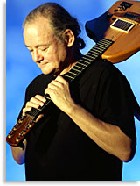
  • Adrian Legg

    A Moment with the Fingerstyle Wizard

    Adrian Legg isn’t your typical gearhead. Oh, he’s a gearhead, alright – he even authored a book entitled Customizing Your Electric Guitar. But for a self-described “guitar nerd,” he can talk endlessly and eloquently about politics or religion, classical music or poetry. And though his solo fingerstyle live shows are jaw-dropping displays of his mix of styles and idiosyncratic techniques, he sometimes spends as much time telling jokes and stories as playing songs.

    In fact, his quirky observations have been regularly featured on National Public Radio’s “All Things Considered.”If you go to adrianlegg.com, instead of a typical artist’s photo gallery, the photo section is devoted to pictures Adrian has taken on the road – of landscapes, towns, hotel signs – and a few shots of Legg and/or his custom guitars. There are meticulous explanations of his equipment and techniques, as well as his strangely logical theory of seeing music as “vertical slices,” rather than horizontal bass lines, melodies, etc. And in typical irreverent fashion, one of his instructional videos – detailing his unorthodox tunings, use of half-capos and Keith banjo tuners (his guitars employ six, and he doesn’t just use them to retune; he incorporates them into his melodies) – is called How To Cheat At Guitar.

    Born in London in 1948, Legg, like so many English kids, gravitated to the guitar thanks to the instrumental sounds of the Shadows. After playing electric guitar in country bands, he made the switch to acoustic fingerpicking, and cut his first album, Requiem For A Hick, in 1977. By the time of his first Stateside release, 1990’s Guitars & Other Cathedrals on Relativity, his all-instrumental jumble of folk, rock, country, Celtic, blues, Middle Eastern, jazz, and classical styles – and techniques borrowed from banjo, pedal steel and other instruments – was already being declared uncategorizable.

    In 1996, he was the opening act for the G3 tour, getting raves from hard-rockers who’d come to see headliners Steve Vai, Joe Satriani and Eric Johnson. In fact, to accommodate the set change, he and Johnson worked up a duet on Adrian’s “Lunchtime At Rosie’s,” which they recorded for Legg’s Fingers & Thumbs CD (on Red House). In ’03 he signed with Vai’s Favored Nations label and released Guitar Bones, followed with last year’s Inheritance – the 13th entry in his catalog.

    “Nefertiti – What A Sweetie” is an appropriate title for the light-hearted boogie that opens the CD, while the Celtic-tinged “My Blackbird Sings All Night Long” would give you the feeling of flying, with or without the winged reference. And “A Waltz For Leah,” a simple, beautiful melody, with a nice treat at the end: a string section which Adrian scored using Sibelius software.

    The emotional sweep of the CD is actually more impressive than any display of chops – even on a tour de force like “More Fun In The Swamp.” As Legg stresses, his goal is “to make something happen in that guy’s head sitting down there.” And, despite his aversion to the recorded medium, on CD and onstage night after night, he succeeds – going places no guitarist has ventured before, and transporting lucky listeners with him.

    Vintage Guitar: You said onstage that you hate the recording process with a passion.
    Adrian Legg: It’s the tail of the dog. Normally, we all go together and we make the event – the performers and the audience. It’s a social event; we all interact. The audience has a big effect on it. This is what music is: it’s a live thing where we get together and do it, and we go away from it with bits of it in our minds that we remember. Those bits that we remember from a performance change and grow in our minds. And I think that is a very important part of everybody’s creative process – how you remember it, which changes. It gets better or worse, but the fact that it changes is the important thing.

    I was very interested in the juxtaposition of music and photography. Because photography is a legitimate way of absolutely stilling a moment. Music never stops. It goes through the moment. You can’t hold it in the moment. It always changes, always goes through the moment, and it keeps growing. So every performance is different.

    So when you make a recording of a little slice of time, it has no chance to grow; it’s dead. And I think there are more things against it, because it’s allowed a commodification of a human activity. This is something that we as people do, and it’s been turned into something that some suit sells us and tells us what’s good.

    I’ve no problem with making money. I need to make money to avoid delivering pizza. I’m only ever three tours away from delivering pizza [laughs]. And I have no problem with the fact that there are records of people who I love, who are dead, or are too far away – like Thumbs Carlille doing “Springfield Guitar Social” on Tennessee Guitar (Starday); what a work of genius! Or the Bach Double Violin Concerto; I have a version of that that’s gorgeous. I go to those maybe every two years for kind of spiritual comfort.

    There’s an awful lot against it that really does balance the benefit we get from it. And now the tail’s been wagging the dog for so long, the dog is dizzy. And we don’t know where we’re going with music. These little bits and things, we’re kind of taking it back – kind of doing it ourselves regardless. Things like Napster have been interesting in that they’ve forced the record companies to rethink and they’ve forced us the musicians to think. But I have a problem: I have to do an album periodically or the local promoter has nothing to dish out, so I arrive in an area with no provenance. I have to have a record on a label. The label gives it provenance. If I do my own record and send it to a radio station, the station ignores it because it’s just me. If it has some record label imprint on it, and it says somebody else has put money into this so it must be okay, they’ll listen. So it’s completely perverted the whole process.

    From a personal point of view, I go in there and play. When I play live, my clams go sailing past most times – sometimes I crash and burn – but most times the clams go past and I forgive them as they go. When it’s on a record, they hear that clam every time, because you’re repeating that slice of time. So you have to record a different way. I’m not allowed to use my own gear to record. I have to use what the studio guys say is going to produce the best result, or I have to use something that’s going to allow him to edit later. So I play to this lone machinery, a critical bloke, in which I’m to make something phony that will endlessly go round and round in time without developing – that’s kind of where it all comes from.

    What about live recording then?
    Same thing. It’s a moment in time. You’re capturing a social event, and you’re repeating it over and over again. If you get all those musicians and all those people together a different time, it will be different. It might have got worse; it might have got better; but it will have changed. The whole reason we exist now as human beings the way we do is because we grow and change.

    When I was at school, I was brought up with classical music – beautiful music, but nobody ever said to me, “This is how you deal with the emotional side. It’s going to get to you. Look out.” They said, “This is how you work this instrument.” They taught method. It’s like religion. If you step back, you can see the poetry in Christianity, but people are so buried in the method and dogma. And in music we’re starting to deal with method and dogma. And the recording industry is all about method and dogma. The dogma is, “This will sell;” the method is the technology.

    So it seems we’re doing another human thing; we’re finding something really nice, having a load of fun with it, and then screwing it up by applying method, dogma and science to it. Music and art and poetry are hypotheses you don’t have to approve or disapprove.

    People tend to divide fingerstyle guitarists into the American school – John Fahey, Leo Kottke, Peter Lang; and the British school – Bert Jansch, John Renbourn, Davy Graham. Do you see yourself as an extension of the latter?
    I’ve never seen myself as a proper guitarist, really. I always bodged my first guitars; that’s an English variant of botch – repair clumsily. And I like banjo players; I like steel players; I want those sounds.

    Initially, the guitar was the Shadows. That’s what was big and shiny and sexy. Here is the route; here is the way! One of those moments.

    Americans tend to be a bit myopic about rock and roll. Worldwide, Hank Marvin of the Shadows was probably the most influential Stratocaster player of all time.

    It was the perfect tone. His arms, his hands, that guitar, that pickup, that Vox, the old speaker. That was the sound. I made a crystal set when I was a kid, and would listen to Radio Luxembourg, and I had some old World War I bakelite headphones. I heard the American guitarists – Duane Eddy and Lonnie Mack. I heard “Wham” by Lonnie Mack one night, and it knocked me flat. Just once – it was fabulous. Which comes back to that point of how music grows in your mind – one experience.

    The Ventures and all those guys were doing great stuff, but nobody had a tone like Hank. And what he was doing was cheesy and banal and musically kind of questionable – but it wasn’t that musically questionable, when I think about it! “Apache” was a great tune; “Foot Tapper” was a great tune. But tone has always been the thing for me.

    This is “your” instrument, really. Everything that happens around the steel-string guitar has been, and is, legitimately an American experience. But there is stuff going on all over the world. The Portuguese guitar; if you listen to fado, Amalia Rodriguez, she’ll break your heart. She sings just a cent flat on some of those notes, and that’s what does it.

    But the American experience has been very widespread and very diverse – black, white, urban, rural. All folk, and all outside the method, outside that kind of discipline. It’s only been over the past twenty years or so that we’ve seen colleges apply discipline and method to it, and we’ve seen an explosion of players who all sound the same.

    When you say “folk,” you’re not referring to folk music; you’re referring to homegrown…
    Non-classical. There are only two divisions in music. Jazz gets more difficult because it straddles both. But there’s the classical tradition, within you learn a vast technique to cope with a huge existing wonderful repertoire; then there’s the folk tradition, where you grab the nearest thing you can and do whatever you can at that moment to express how you feel. That’s the steel-string tradition, which is an American tradition. The worst thing I ever saw was someone wrote a book called Hawaiian Guitar Method [laughs]. There was no method! I talked to Ray Kane over there, and he said, “Man, you play too complicated.” You just get a nice sound, and you keep doing it until you feel better.

    You’re in sort of a category all your own in that you don’t really play like anyone else, and you’ve taken open tunings into uncharted territory.
    A lot of the time we think of the guitar as “the blues guitar” or the whatever. It’s that method thing again – which I keep discovering to be a problem. Someone like Angela Hewitt, the Bach pianist, has method down so much, she said she didn’t feel she was able to start interpreting Bach until she felt she was watching her hands doing it. So she had method down and applied it beautifully. So method can be a truly wonderful thing. But for us on the folk side of things, it can be very limiting. And we look at it as a particular kind of guitar. If instead we just started looking at it as “a” guitar – acoustic, steel-string, nylon, doesn’t matter – it’s broader. Then you start looking at it in the sense of, “I’ve got to make something happen in that guy’s head sitting down there. How do I do that?” Then you’re talking about music. Then you’ve got a huge, broad spectrum of things you might be able to do. So you look to other stringed instruments and say, “What have they got that I can nick? What can I steal from a banjo player? Can I get somewhere near that steel player?” It’s kind of begging, borrowing and stealing from all over the shop to get something to happen in somebody else’s head. Whatever it takes to get that to happen is what you have to do. That’s not proper guitar thinking, I don’t think. In the broadness of the American tradition, if you look at that, it belongs in there, but methods and dogma have made us narrow. So people are upset about my stuff being all over the shop, switching styles. I just play music.

    I was brought up in a church choir. I learned my harmony when I was a kid, because it happened. No note ever existed in isolation in the Western tradition. Every time I sang a squeaky note, there had been harmony, there would be harmony, or there was harmony. And the same thing when I started squeaking around in the school orchestra on the oboe. There was always harmony and always a huge range of dynamics, of textures, of emotions – the whole thing.

    When I came to the guitar, I saw the same thing again. This huge range of things you can play and talk about. So you don’t limit yourself. I see that as quite normal and natural.

    Well, you don’t limit yourself. But it seems the case more with guitar than other instruments and perhaps more now than previously that guitar players listen to other guitar players, rock players listen to other rock players. You obviously listen to…
    Everything. Whatever I can. I download songs with sarods just to hear the tone. Or oud.

    The other thing I think is important is failure. When I started in Liverpool in country bands playing social clubs, we used to sneak around and steal each other’s licks. It was one of those passing moments. We got the lick wrong. We’d play it from memory, and come out with a new lick. We’d stolen it and gotten it wrong, but it was new. Then somebody would come by and hear our new lick and steal it, and they’d go home and work it up and get it wrong. So there was all this growth going on, out of failure. And everybody was identifiable. I could hear any player now from that Liverpool time, and I’d know who it is – because of what they built after their failure. I think that’s one of the really important things about our “folk” tradition: people have screwed up all the way through it, and after that screwing up has always come growth.

    Years ago, someone doing your type of act, solo fingerstyle guitar, would have been part of “folk music” – as a style, not just in terms of non-classical. Are you comfortable if people label you “folk”?
    I really don’t care. It doesn’t change what I do. I’m still fumbling for the next thing. I was in the New Age charts [laughs]. It was truly embarrassing, but it was great to be in a chart. “Oh, somebody’s buying it!” One of the most solidifying things for what I do happened quite early on, when I got my first Performing Rights Society check. I thought, “Oh, they’re not just being nice; they really do like it.”

    I don’t have an issue with being called a folkie. If we think about the divide between classical and that which we do immediately without technique, fine; I don’t have an issue with that. But you say “folk guitarist,” and somebody sells me to a folk gig, and I turn up with all my bits and pieces and make a filthy racket and rattle the floorboards, they’re going to have a problem. Not me – they’re going to have the problem.

    It goes back to the Dylan thing – “You can’t play electric,” and all that. Electric guitar is the most significant folk instrument of all time, in terms of the definition of folk – as music that arises directly from the needs of people to express themselves. It evolved with absolutely no regard for classical tradition; it evolved in response to the needs of players.

    But all your electronics are to reproduce the sound of an acoustic guitar.
    No. It’s to make something happen in somebody else’s head at the gig.

    But, gauging by the tone I’m hearing, it seems you don’t want your guitar to sound like an electric guitar.
    Well, I guess I go back to where it came from. I was playing electric in bands; then I started playing acoustic because someone wanted me to strum an acoustic on one of the songs. Then I got a quite nice acoustic and started fingerpicking. “Freight Train” – thank God for Libba Cotten. That gave me a handle on things. And I found the acoustic had this beautiful, rich harmonic content. It will stand on its own; it’s a solo instrument. An electric doesn’t have that, but it has a kind of flexibility. It has a thin tone; magnetic pickups aren’t picking up the whole story. But you can have it very loud. Why can’t I have both? That’s what I want. I want to be able to go into a rowdy bar and chuck out as much noise as I need to to get through – but I want that rich harmonic content. So what I’m doing is using piezo crystals – whatever it takes – to get the kind of quality, the functionality, of the acoustic in the harmonic sense, but the functionality of the electric in its ability to deliver in atrociously difficult situations. The whole thing came from trying to have my cake and eat it.

    And you’ve done a great job. There’s nothing more irritating than hearing a good player with that bad “acoustic-electric” sound.
    The bag of nails sound. I think it’s been very difficult for acoustic players to deal with technology. Electric players are used to being terribly nerdy about it; acoustic players are nerdy in a different way. I remember when it first started happening, when the first Barcus-Berry came to England. In the shop I worked in, we were screwing them into the bridge. They sounded okay – they were by no means a good sound – but one guy came in the shop having had one fitted and said, “This is great; I can play quietly now.” Up until that point, he’d been hitting everything as hard as he could to get some noise to drive the PA.

    It all goes round and round, and we end up with that nasty, flat, scratchy electro-acoustic sound – because it’s quite often the only thing that will punch it onstage. Why don’t we look at it from a different point of view? Why don’t we say, “Instead of making an acoustic onstage, we want to make a harmonically rich electric?” Then we’ve got a chance. If we face the fact that we’re no longer playing an acoustic instrument – as soon as we plug it in, by your definition, by my definition, it’s no longer acoustic – we’ve gone electric.

    You used to get a great sound out of an Adamas.
    You’ve got to be a nerd. There’s no way you can make an acoustic sound as it is onstage; there’s no way of doing that. But there is a way of getting a sound onstage that’s harmonically rich and is more stable, and that’s what you address. You look at it as an electric and say, “What have I got in the way of toys, tools, tricks, anything to get this thing to happen in the other guy’s head?” Forget the acoustic; it isn’t acoustic. If you like the feel of the instrument, fine; have the instrument. But for God’s sake, block it out and stop it vibrating. Get rid of that great big air cavity; close it off.

    The Adamas was essentially flat. That carbon-fiber soundboard has no character of its own; that’s what makes it such a functional guitar. However, I was getting postural problems as a result of playing it. It’s great to have a good sound, but you’ve got to get it to a gig. The popular plane between here and England is the Boeing 777, and the overhead is 371?2″ long. Very short. The closet space is also reduced, and it’s generally available for the jackets of the suits up front. If you don’t want your guitar to come out in pieces on the baggage conveyor, you’ve got to make your guitar fit into that airplane.

    I always fly with United, because they’ve always been okay with the guitar. The other guys I avoid, because at some point they’ve been nasty about the guitar. So my “Bill” [made by Bill Puplett] fits in the 777; it’s 361?2″ long. Another part was that it had to sit diagonally so that my back is straight. I have injuries now from playing so long; if I don’t do that, I’m not going to play. That’s the main guitar I use onstage. Bill’s an incredible craftsman

    Do you use it in the studio as well?
    On Guitar Bones, the main acoustic was a Brook Creedy – a 19th century parlor-size. On Inheritance, I used the Creedy on two songs, “My Blackbird” and “A Waltz For Leah,” and the Puplett on everything else. It had an Ovation pickup for a long time, but I switched it to Graph Tech. The body is two-piece swamp ash, with a cavity hollowed out before joining, and then it’s vented on the treble side cutaway. The neck is two-piece walnut with an ebony fingerboard, and the bridge is walnut.

    The Ovation and Graph Tech are pickups in the saddles. What’s the other pickup on the body?
    The way this guitar is built, there’s a box section when it comes to the bridge. As a backup, if the piezo pickup dies (which they do), I needed a backup – and I wanted a magnetic sound. I said, “It’s got to fit under the strings, and I’m not going to cut into the box section.” Steve Blucher and Eric Corpus [of Dimarzio] kindly made me a 6mm-deep Waffair Theene magnetic pickup so as not to break into the box section in the guitar at that point. If you put it near the bridge, it sounds wonderful. It’s clean as hell.

    What’s the other small-body electric you sometimes use?
    Mace Bailey at Ibanez and I tried to figure out the smallest space we could get a fully functional Strat-layout guitar into, and then worked up a body shape inspired by an old Vox Phantom. The pickups are Seymour Duncan – a standard Alnico 2 humbucker fingerboard pickup, and the center and bridge are Alnico 2s Seymour kindly made with the third polepiece lowered to give a more even string balance. It’s straight-through maple construction, and even Mace was surprised it came out sounding so good. It really does have an excellent tone and sustain. I use it primarily as a back up, and it also makes a useful lap slide. I use a Shubb capo with a fiber tongue made by Andy Manson to lift the strings clear.

    What does the rest of your setup consist of?
    It changes almost day to day, but currently the 13-pin output from the Graph Tech Hexpander goes to a splitter box, and from there it goes to the VG88 and to the GR33 in parallel. There are midi cables from the GR33 firing and changing patches on the JV1010s. The latter two I bought cheap, as I think they’re discontinued.

    I use the expression pedals on the VG88 and the GR33 to govern their output levels, and I use stereo volume pedals on the JV1010 outputs, all into a cheap and nasty little Behringer mixer, from which come two xlr outputs with ground lifts to block phantom from the PA. The Behringer has fits if it gets phantom, as they didn’t bother blocking D.C. on the outputs.

    The VG88’s modeling is quite good. There are problems with it. The open tunings are rubbish; the physical tuning – or virtual tuning; you can’t use it for that. For instance, if I tune a virtual open C in the VG88 whilst still using a physical standard tuning on the guitar, the virtual C on the second string beats and warbles against the physical B on the second, which can still be heard. I tend to agree with [RMC Pickups’] Richard McClish’s comments to Bill Puplett discussing this – that one can never actually totally eliminate physical crosstalk on a decently live instrument. For instance, I’m experimenting with an RMC fan-out box, and I can certainly hear the other strings sounding alongside a single string isolated by the fan-out. We also checked crosstalk at Roland tech over here in the UK when I was using a GK magnetic hex pickup. The beating and warbling in the virtual C tuning over a physical standard tuning still occurred. So I suspect there will never be a satisfactory way of achieving virtual tunings; one just has to bite the bullet and retune physically. The virtual tuning tone is pretty pathetic anyway, in my opinion; the attack transient doesn’t transpose very well.

    But as a processor, the VG88 is pretty good, and it processes polyphonically. So you can add bass on the lower strings, if you want. It does, unfortunately, exaggerate nail noise. The neat thing about that bottom end is it does cover the wobbliness in the synths – the GR33 and JV1010s – and periodically the bass just misfires. But the combination of the two at the moment is working quite well, but I do want to get the direct guitar feed in there somewhere. What happens with the modeling in the VT AT8 is that it’s before the compressor stage in the VG88, so if you model in some shape in the low end, by adding a proportion of octave-down sound, when the low end hits the compressor it squashes the high notes flat – they come down. So I need to find a way of sneaking notes around that.

    In parallel with the synths and the modeler, I run an analog signal from the magnetic pickup. This goes through a boutique Screamer which may soon be swapped for a boutique fuzz. I’m very interested in Mike Piera’s work as Analogman. Then into a Keeley compressor, into a modded DS1, into a Keeley modded BD2, into a Sans Amp original. I think Andrew Barta calls it a Classic now. This, and anything else that might be auditioning in the chain, goes via another clapped-out volume pedal into the mixer. I use an old T.C. Electronics Sustainer sometimes – lovely smooth sound with a semi-parametric doodad in it and switchable diodes on the output for a bit of clipping. It should be noted that I have just discovered fuzz boxes 30 years after everyone else, and I thank my audience for their patience while I go through this difficult adolescent phase [laughs].


    Photo: Rick Gould.

    This article originally appeared in VG‘s April ’05 issue. All copyrights are by the author and Vintage Guitar magazine. Unauthorized replication or use is strictly prohibited.
  • The Pixies

    Alternative Godfathers

    In the late 1980s, the Pixies’ unique brand of punk, pop, and guitar rock almost singlehandedly created the alternative music movement that flourished in the early ’90s. Its sound served as the blueprint for a host of new artists including Nirvana, and was cited as a major influence on more established artists, including U2 and David Bowie.

    When asked by Rolling Stone about the inspiration behind “Smells Like Teen Spirit,” Kurt Cobain said, “I was trying to write the ultimate pop song. I was basically trying to rip off The Pixies.”
    The Pixies were formed in Boston in 1986 by guitarist/songwriter Charles Thompson and lead guitarist Joey Santiago, who recruited bassist Kim Deal and drummer David Lovering. Thompson then assumed the pseudonym “Black Francis” and the group assumed its name after flipping through a dictionary.

    Francis’ often brilliant songwriting employed extraordinary dynamics – they practically invented that “soft verse/loud chorus” technique – and vivid imagery, and his guitar playing was tight and focused. Santiago’s inventive and unconventional melodies were refreshing amongst the slew of hair metal players of the day, making him a sort of “anti-hero” guitar hero.

    After quickly gaining a cult following on the local level, the Pixies were signed to 4AD Records and released the EP Come On Pilgrim, in 1987. The following year, the Pixies released their first full-length album, Surfer Rosa, produced by Steve Albini. The album’s international success caught the attention of Elektra Records, who later went on to release their three biggest selling albums.

    In 1992, after the group released the hard-rocking Trompe Le Monde and opened for U2 on its 1992 Zoo TV Tour, the Pixies broke up. During this period, bassist Kim Deal worked with the Breeders, and Black Francis worked under Black’s other assumed name Frank Black, and Joey formed The Martinis with his wife, Linda Mallari. Drummer Dave Lovering went on to join Cracker, then spent time working as a magician, opening for several rock tours (including Black’s).

    As with all good rock and roll breakups, reunions seem inevitable, and in April of 2004, the Pixies got together for the first time in more than a decade for a critically acclaimed world tour.

    VG recently caught up with Francis and Santiago, both of whom are big fans of vintage instruments.

    Vintage Guitar: Your reunion tour has you playing together for the first time in more than 10 years. How does it feel?
    Black Francis: It feels like it did before, basically. No lie. There’s a lot of muscle memory involved in playing music, and when you go back to old songs, it looms larger than poignant thoughts. It’s a more gut-level thing.

    Joey Santiago: It felt good. The anticipation was exciting, and when the actual playing was happening, I felt pretty much like “Just don’t f*** up!” (laughs).

    Your guitar styles are very different, yet work well together. When developing a song, do you consciously plan parts, or do you sort of weave them together?
    BF: I hate to dumb it down too much, but basically I’m the guy who just shows up with the chord progressions. So, obviously, I’m going to play the chords, many times chunky, as they typically are in rock music. And Joey is the “lead” player, so he’s gonna play higher and more single-note stuff. Sometimes he does a solo, sometimes a repeated riff, a motif. So we start from a sort of Joe Blow place… I’m the rhythm guitar player “chugga chugga chugga” and he’s the lead player “reeneeneeneenee.” You can reduce it all to that. That’s not to say that we play in a conventional way, although sometimes we play a combination of really conventional stuff and oddball stuff. That’s probably true about the Pixies in general. It sounds kinda normal, but there are subtle oddities going on (laughs). Joey is the unsung hero of the Pixies… maybe not now, but in the earlier days, a lot of magazines were personality-driven and wanted to talk about the grouchy lead singer or the drunk bass player, and what’s going on between those two… so the guitar player got left on the back burner.

    I think there are several things that Joey does, though, that have made his style stand out. He’ll play something that’s seemingly very simple, and his whole subtle touch just sort of makes it sound classy and makes it pop out.

    JS: Back in the old days, I’d just record Charles on his acoustic, or the practices with a cassette tape, remember those things (laughs). Then I’d take it home and practice, and come up with my stuff.

    How has your songwriting changed since you started?
    BF: When I started out, I was very much into abstraction and very short songs, and a certain type of surreal thing in my songs. If I’ve changed one thing, I’ve tried to adopt more styles into my songwriting, like doing some classic things like love songs or singer/songwriter kind of stuff, trying to expand. When you’re young, you tend to try to be a more avant-garde type of guy, and when you do it long enough, you want to go where others have gone before, and hold your own. You’re not as embarrassed to embrace formulaic or highly stylized things. When you’re young you’re trying to avoid horrible clichés and mediocre music, so the last thing you want to say is “Hey, let’s do a country and western song”…you’re all about breaking everything up. You do things for awhile, and you’re less conscious of people thinking you’re dorky. I think you learn respect for some of the forms of music that will live on.

    The first Pixies stuff represents my earliest songwriting, and as they say, you have your whole life to write your first album, and six months to write your second, so the first two Pixies records represent a lot of the writing that started when I was a teenager.

    How has your technique changed since you began playing guitar?
    BF: I probably have changed, but can’t properly analyze how. Initially, I learned so much on the guitar, and then just didn’t try too hard to break out of that, so I’ve just learned little things through time, like new fingerings. Especially from watching people who have original styles. You work hard at things like songwriting or rehearsing for a tour, but really don’t put the effort into the learning curve… I just try to let that happen on its own – that’s how you develop your own style.

    JS>js: Mine hasn’t (laughs)… I’m trying to change it, but I can’t! Technique-wise, I hope I’m a little better now. But Charles has a style of his own, too… his rhythm playing is to die for – it’s really, really good.

    When did you start playing?
    JS: I started playing in junior high, and never really took it that seriously. But then, around high school, I started getting more interested in it. I used to plug my electric guitar in at parties and we’d all get s***faced (laughs).

    To many, your music was unlike anything that came before it, and doesn’t sound derivative of earlier genres. What type of music did you listen to as a kid?
    BF: I would say Neil Young’s Decade album was a huge influence on me. That was probably the first record I heard as a teenager that made me think about the artist, it got me into a lot of different types of material and it gave me a good sense of him. Before Neil, I would say that I was big into Bob Dylan and The Beatles when I was really young, and Donovan. I was a huge Leon Russell fan, and still listen to him. I also used to listen to a lot of ’60s stuff when I was a teenager. I wasn’t really into the current stuff or the punk stuff that was going on in the ’70s. In the ’60s, there were these “rock family trees” and I used to work my way through them. I listened to Jimi Hendrix, The Doors, John Mayall’s Bluesbreakers, The Yardbirds, and a Christian rock guy named Larry Norman, whose heyday was the early ’70s; a folky guy who was too rock and roll for religious people and too religious for rock and roll people.

    JS: I was into the usual suspects – Hendrix and all that. I really liked the Beatles, too.

    Do you remember your first good instrument and amp?
    BF: I had an EMC amp that worked okay, and played a Guild acoustic electric through it, which I started playing in high school. That was my first setup with The Pixies, and I played it for a lot of the early Pixies gigs. The amp didn’t make it too far, though. It stopped working, so we got a butter knife to open it up and see if we could fix it (laughs). And of course, we couldn’t! So the EMC was not revived (laughs). Then we both got into Peavey amplifiers, which worked for him.

    JS: The first good instrument I had, my mother bought for me, just after junior high. It was an Ovation Viper. Remember those? It was a good guitar, too. It had the full 24 frets, and was made for someone with tiny hands, so it would sit in my hands every night, and I liked it. I tried a more expensive Les Paul and it didn’t fit as well for my hands. For an amp, I got a Peavey Special.

    I got my first Les Paul when we formed the band in Boston. I actually initially wanted to be the Tele guy, but Charles already had one, so not to be redundant, I went with the humbuckers, something totally opposite of what he was playing.

    I believe it was Brian Eno who said “Only about a thousand people ever bought a Velvet Underground album, but every one of them formed a rock and roll band.” Something similar could be said for the Pixies, whose impact perhaps belies its popularity. What was it about your music that attracted fans?
    BF: Oh, I don’t know. I suppose enough people found what they wanted to find in it. In other words, people were looking for something that was kind of pop or aggressive were able to find it in the music. Other people who were looking to find something humorous and not taking themselves too serious, even a bit nerdy, were able to find that, as well. Some wanted music that was sort of quirky, arty – dare I say avant-garde – and were able to find it in our music. Different types of people were able to focus on different elements.

    JS: I’d say that it was unique at the time. I don’t mean to sound like an old fart, but that was when “alternative” was actually alternative. We didn’t consciously rebel against the norm; I think it was just a natural thing for us to be alternative. This was in the days of hair metal. I remember going through Electra Records offices, and looking at their posters on their wall, and thinking “They’ll really like us…”

    Obviously, Kurt Cobain was greatly influenced by the Pixies.
    BF: It’s unfortunate for Nirvana that they got so hot so fast. That’s exactly the sort of thing that makes me not want to listen to a band or makes me not want to see a movie. So there’s stuff I’ve missed over the years, because if it’s like “Everybody’s going to see that movie,” guess what I’m not going to see? I tend to have a problem with things that become that popular.

    So you consider yourself a contrarian?
    BF: Yeah, that’s a good way to describe it. I mean, I hear Nirvana at places like the grocery store now, and they were good and they were talented and all that, but it’s hard to talk about something that’s so huge for so many people. I hesitate to really analyze their music.

    The Pixies have used Marshall amps for years. When did you first get into them?
    BF: We were opening for Soul Asylum at the original Blue Note nightclub in St. Louis, and they had some that sounded really good. So when we got home, we went down to the music store and bought brand new Marshalls, and have used them ever since.

    JS: Yes, from that point on we’ve used Marshalls. Mine is a 50-watt JCM 800. I always liked them, but since we had to lug our own gear around, I was like “What? Are you crazy, I’m not gonna lug that big thing around.” So I stuck with the Peavey until we had some help (laughs). I really like the JCM 800s, but don’t like the 900s. For the studio, I have a blackface Fender Vibrolux reverb.

    BF: When we got bigger, we went with two Marshalls each. I do have some old Vox AC30s that I used in my solo band, but went back to Marshalls when we got back together.

    Do you collect guitars?
    BF: For a while, I was really into ’60s Teles, and then a few years back, a bunch of them got stolen. So to sort of “celebrate,” I went out and bought my first ’50s Tele – a ’57 – which initially felt weird, but eventually became my main guitar up until last year, when my brother showed up at a gig in L.A. at the beginning of the Pixies tour with a ’53 Telecaster. He just gave it to me at the gig, and it sounded, actually, too intense. But eventually I started playing it, and now it’s my main guitar.

    As far as other guitars, in the early days I played a bunch of these ’80s Japanese-made Fender Tele Specials. We had a well-known guitar tech named Toru, who stripped them, took them back to Japan, and dried them in some barbeque thing, which made them lighter. He then put vintage-style pickups in them, kept the whammy bridge on them, and cut some old-style saddles.

    For the reunion, I could go back to Marshall amps, but not back to the ’80s Teles. Nowadays, I play just the ’53 Tele, and if I break a string, I’ll pickup my ’57.

    JS: I like Les Pauls because they’re the easiest guitars (to play). I have a bunch of them, and my favorites include a black Custom that sounds like your run-of-the-mill Les Paul, and then a nice old goldtop that sounds super, super crisp. I just bought a ’52 Guild Aristocrat with soapbars. It’s a very nice guitar that I am dying to record with. It’s less forgiving than a Les Paul, though.

    One of our crew, Myles Mangino, had a great super-light Gibson Melody Maker that I loved and wanted to buy, but he just traded it for a drum set. I was like, “Why didn’t you tell me?” I’ve also got a ’65 ES-345 with a Gibson vibrato, that’s a really nice guitar, too. I do prefer vintage guitars; they feel more worn-in, and if it has lasted that long, it must be worth the money (laughs). I’d like a ’50s Les Paul, though.

    Joey, on Surfer Rosa, you had some amazing clean tones. What did you use on that record?
    JS: I was playing a Fender Twin Reverb on that that Charles used to own. In the studio, I plug straight into the amps.

    How about live? Are you using any effects?
    JS: Live, I do use pedals, including a ZVex Super Hard-On, a DOD wah, Boss Fuzz pedal, a tremolo pedal, and an Electro-Harmonix Memory Man, which I love, and an SMF Mr. Echo, which is also a fun pedal.

    Your style alternated from an almost updated surf rock to extreme hard rock, as on your final studio album, Trompe Le Monde, in ’91. Was there a conscious move to a heavier sound?
    BF: We did listen to a lot of surf music, and we did play loud, but you just kind of make up a bunch of songs, and they come out like they come out. We’re not real visionary in that sense. We don’t have a game plan.

    JS: I’ll play something a bit heavier if the song is harder-sounding. When I did those hammer-ons on that album, they were sort of a joke – a metal joke – everyone was just laughing when I was recording that.

    Are there plans for the Pixies to record a new album?
    BF: We don’t have any; we’re sort of hesitant on that. I think we’d like to, but I don’t think that’s what people are interested in right now. Maybe some of our

  • In Concert – Ohne Filter

    In Concert - Ohne Filter

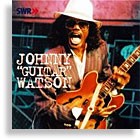
    One hour of Watson recorded for German TV in 1990. He’s in his latter-day persona, big hat and hair, and mostly does stuff from his ’70s recordings. But, the late legend only picks up his 335 twice! And, when he does he smokes. The band cooks, his vocals are fine, and the songs good, but the lack of guitar is a real downer.


    This article originally appeared in VG‘s Aug. ’05 issue. All copyrights are by the author and Vintage Guitar magazine. Unauthorized replication or use is strictly prohibited.