
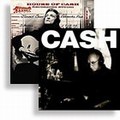
Month: February 2007

  • Johnny Cash – Personal File and American V: A Hundred Highways

    Johnny Cash - Personal File and American V: A Hundred Highways

    Johnny Cash – Personal File and American V: A Hundred Highways

    It’s deliciously ironic that, in promoting the newly discovered archives of Johnny Cash’s solo acoustic recordings, logged in tape boxes as Personal File, Columbia Records points out the similarity between these performances, dating from 1973-’82, and his critically acclaimed final recordings produced by American Records’ Rick Rubin. Because, in doing so, Columbia has to fess up, and even quote Cash’s son, John Carter Cash, telling Rolling Stone that, while working with Rubin, his dad “talked about how he’d made a record like it in the ’70s, but nobody was interested in putting it out.”

    Well, with the resurgence of Cash’s career, even after, but also thankfully before, his death in 2003, Columbia is interested putting it out now. Thank goodness!

    The performances may be simple vocal-and-acoustic takes, but Cash approaches with the same mix of ease and conviction he would for any full-blown session. Along with his spoken introductions (and the poem “The Cremation Of Sam McGee”), this is a uniquely intimate experience.

    The two discs are divided into secular and inspirational themes. The former includes material from old standards like “Drink To Me Only With Thine Eyes” and “Missouri Waltz” to Doug Kershaw’s “Lousiana Man” and “Girl In Saskatoon,” which Cash co-wrote with Johnny Horton, to more contemporary writers like John Prine (“Paradise”) and Johnny’s step-daughter, Carlene Carter (“It Takes One To Know One”).

    The second disc is mainly gospel songs written by Cash, with one each by his then-son-in-law, Rodney Crowell (“Wildwood In The Pines”), and wife June’s uncle, A.P. Carter (“The Way Worn Traveler”).

    The two-CD set contains 49 pieces of buried treasure. More evidence (as if we need it at this point) of Cash’s singular stature in American music.

    While Personal File has the feel of an audio diary Cash left behind, intended to be listened to after his death, for American V he was literally working against the clock, knowing his health was slipping away. He and producer Rubin began work on the project the day after finishing 2002’s American IV: The Man Comes Around and worked through the most painful event in Cash’s life, the passing of his wife of 35 years, June Carter Cash, in 2003.

    The CD begins with his lone acoustic guitar and his voice, ravaged by time and disease, singing, “Oh Lord, help me to walk another mile, just one more mile/I’m tired of walking all alone.” As if that weren’t moving enough, a cushion of cellos enters when he gets to the second verse of the Larry Gatlin song: “I never thought I needed help before/Thought that I could get by by myself/But now I know I just can’t take it anymore/And with a humble heart on bended knee, I’m begging you please… for help.”

    The black gospel song “God’s Gonna Cut You Down” is next, with a battery of handclaps and foot stomps punctuated by the musicians whose job it was to overdub its parts after Cash’s death, just four months after June’s. Guitaristists Mike Campbell and Smokey Hormel and keyboardist Benmont Tench (all veterans of previous American/Cash collaborations) comprise the nucleus of the backup band.

    In addition to originals like the chilling-in-retrospect “Like The 309” and the prayer-like “I Came To Believe,” Cash pulls covers from the catalogs of Gordon Lightfoot, Bruce Springsteen, Don Gibson, and Ian Tyson. The most moving, though, is Hank Williams’ “On The Evening Train,” recounting a husband saying goodbye to his deceased wife: “I pray that God will give me courage/To carry on ’til we meet again.”

    Both collections are riveting; they’re so intimate, you sometimes feel like a voyeur. But taken side-by-side, hearing Cash’s voice with the sparest backing in 1973, strong and healthy at age 41, then at death’s door 30 years later, the experience is almost surreal – but one of the most moving musical journeys a listener will ever take.


    This article originally appeared in VG‘s Oct. ’06 issue. All copyrights are by the author and Vintage Guitar magazine. Unauthorized replication or use is strictly prohibited.
  • Lil’ Ed and the Blues Imperials – Rattleshake

    It’s tough to find a guy who sounds like he’s having as much fun making a record as does Lil’ Ed. His sixth Alligator effort kicks off with “Leaving Here,” and the old Holland-Dozier gem gets a rompin’ treatment highlighted by Ed’s punchy solo. On any record by this band, you’re bound to hear fine slide, and this is no exception. The walking blues of “That’s the Truth” is cut in two, which is only fitting since it was written by Ed’s uncle, J.B. Hutto – who happens to be the guy who taught him to play slide. And the band is filthy nasty.

    If you want slow blues with Albert King-style bends, “Nobody’s Fault But My Own” does the trick. And hard boogie with biting guitar highlights “Broken Promises.” “Spend Some Time With Me” is a textbook roadhouse shuffle with a fat guitar solo that just oozes grease. And “Icicles in My Meatloaf” is fun stomper with a lyric to amuse anyone except the victim. It also features a cool “conversation” between Ed and his guitar, with the slide portraying the woman’s voice. Very fun, and very clever.


    This article originally appeared in VG‘s Oct. ’06 issue. All copyrights are by the author and Vintage Guitar magazine. Unauthorized replication or use is strictly prohibited.
  • Janiva Magness – Do I Move You?

    Janiva Magness - Do I Move You?

    Janiva Magness – Do I Move You?

    This Southern California-based singer has been building quite a buzz in the blues world, churning out six CDs in nine years, culminating in winning Contemporary Female Blues Artists Of The Year at this year’s Blues Music Awards (formerly the W.C. Handy Awards).

    Magness’ personal saga, ping-ponging from one foster home to another 12 times as a child, may account for her blues leanings and what she proudly proclaims her “hussie” attitude. But, ironically, she likely inherited her voice from her parents, whose suicide when she was a child placed her in the foster system.

    The Detroit native was influenced early on by country singers (with bluesy influences) like Hank Williams, Tex Ritter, and Patsy Cline. But at 14 she stumbled onto an Otis Rush gig in Minneapolis, and soon immersed herself in the blues.

    Do I Move You? is her second collaboration with Canadian producer/guitarist Colin Linden (who’s worked with artists from Keb’ Mo’ to Bruce Cockburn) and her sixth with bassist/guitarist/saxophonist Jeff Turmes (who’s worked with James Harman, Doug MacLeod, and Gary Primich, and happens to be Janiva’s husband). With Rick Holmstrom (the Mighty Flyers, Johnny Dyer, R.L. Burnside) also pitching in, guitar chores are in more than good hands. Add Stephen Hodges’ drums, and you know you’ve got a cooking band.

    Magness sometimes sounds like a female version of one of her biggest supporters, Delbert McClinton – particularly on his R&B ballad “You Were Never Mine.” The soulful strut of “I Want You To Have Everything” recalls Willie Tee’s “Teasin’ You,” and then Janiva takes on Nina Simone’s dirge-like title track – no mean feat.

    It would appear that the buzz surrounded Magness was justified.


    This article originally appeared in VG‘s Aug. ’06 issue. All copyrights are by the author and Vintage Guitar magazine. Unauthorized replication or use is strictly prohibited.
  • Eric Bibb – Diamond Days

    Bibb is a fine guitarist and singer, and here proves a very capable songwriter. It’s hard to pin him down – you could call him a folk singer, but his blues and pop roots always show through in his performances and writing. His 12-string fingerpicking sets the tone for songs like “Tall Cotton,” with a fine electric-guitar solo courtesy of Kahanga Dekula. Eric plugs in to add color to “Destiny Blues,” a Chicago-style blues with fine acoustic and harmonica by Bibb. It’s also a showcase for his fine vocal chops.

    Bibb’s acoustic playing shines all over the record, and guests like Martin Simpson add flavor to several songs. One thing I really like about this record is the way it all holds together without sounding the same. “So Glad” has almost-jazzy changes while other songs, like “In My Father’s House,” are funky acoustic rockers. On pretty much every cut, Bibb’s vocals are soulful and on-the-money.

    Records that give off a folk aura can be scary, but this one sails on great performances and fine songwriting.


    This article originally appeared in VG‘s Feb. ’07 issue. All copyrights are by the author and Vintage Guitar magazine. Unauthorized replication or use is strictly prohibited.
  • Donald Fagen – Morph the Cat

    Donald Fagen - Morph the Cat

    Donald Fagen – Morph the Cat

    Of all the records associated with Steely Dan, Walter Becker, and Donald Fagen, this may be the best since “the comeback.” And that’s something coming from someone who thinks their records are among the finest ever made and contain some of the finest, smartest lyrics, musicianship (especially on guitar), and songs that have ever been committed to tape.

    While Steely Dan was taking time off, Fagen assembled a band and this marvelous set of songs that deal with our post-9/11 world; not surprising, given the paranoia shown in the past by Fagen and Steely Dan. But in the lyrics here, there’s a sweetness and a sense of humor. The very funky “Brite Nightgown” represents death. “Security Joan” is a hit no matter how you look at it. Funny as hell, with a great groove. Scariness rears its head in “Mary Shut the Garden Door” in the form of a government taking over the country by force. And the music perfectly complements the lyric. A great hook and marvelous feel don’t hurt, either.

    This record sounds fabulous, and the guitar work is amazing. Wayne Krantz offers up licks that join the pantheon of great Dan-related solos. His solo on “The Great Pagoda of Funn” fits a typical Dan pattern – back and forth between pentatonic and blues licks – in amazingly fresh and unique form. Jon Herington slinks wonderfully through the title cut and offers rare wah on “H Gang” which is as funky and cool as it’ll get this year. Krantz comes back for a really funky, and again, unique take on soloing on “Brite Nightgown.” And Ken Wessel’s rocky solo is the cream on top of “Security Joan.” The crunchy guitars of Herington, Krantz, and studio veteran Hugh McCracken help make “What I Do” another of the album’s many highlights. The lyric of that one finds Donald conversing with Ray Charles on Ray’s talents.

    As you’d expect, the sound here is fabulous. Fagen’s vocals, and all the background vocals, are a treat to hear. The arrangements are right where you want them to be. I have no qualms guaranteeing this will be on my list of the 10 best records of the year. I wasn’t sure what to expect from another Fagen album, one which is really number three in a trilogy that stretches all the way back to 1982’s The Nightfly, but the results are more than pleasing.


    This article originally appeared in VG‘s July ’06 issue. All copyrights are by the author and Vintage Guitar magazine. Unauthorized replication or use is strictly prohibited.

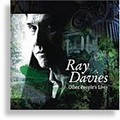
  • Ray Davies – Other People’s Lives

    Ray Davies - Other People's Lives

    Ray Davies – Other People’s Lives

    This is the type of record few artists make. Each song is carefully crafted, the lyrics are marvelous, and the music is varied and catchy. Maybe it’s the kind of thing that only happened with songwriters from a different generation, but whatever the reason, this is one of the best of albums so far in ’06.

    Davies is, of course, one of the founders of the Kinks, and recently, things have been a bit rough. Some of the songs here reflect that, with messages about life and what you do with it. “After the Fall” is a Davies-esque ballad that at first sounds dour, but ultimately becomes hopeful. “Is There Life After Breakfast” has a typically witty, sardonic Davies lyric. “Stand Up Comic” is a bossa nova of sorts, again with a lyric about where the world’s at, with (like many songs here) acoustic guitars and crunchy electrics that blend wonderfully, played by Davies and Mark Johns. And while there’s not a lot of eye-raising soloing on this album, the guitars provide the framework throughout. For instance, “Creatures of Little Faith” has an intro based on pretty, dissonant chords before crunchy guitar mixes seemlessly with Leslie’d guitar parts. It’s a great-sounding batch of songs, too.

    Despite Davies’ time in New Orleans, there’s no blues or jazz here. It sounds modern, but a hint of past music is also there. It’s all rock and roll of a very English nature. In short, it’s very Ray Davies-style rock. Songs like “Next Door Neighbor,” with its English dance hall sound and clever lyric serve as stepping stones from old-school Kinks music to Ray’s first solo outing.

    Safe to say Ray’s getting a little long in the tooth, but you’d never know it from this ambitious record. And while I love the Kinks, I was not prepared to like this disc so much.


    This article originally appeared in VG‘s July ’06 issue. All copyrights are by the author and Vintage Guitar magazine. Unauthorized replication or use is strictly prohibited.

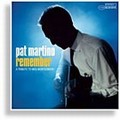
  • Pat Martino – Remember: A Tribute to Wes Montgomery

    Pat Martino - Remember: A Tribute to Wes Montgomery

    Pat Martino – Remember: A Tribute to Wes Montgomery

    This is not the first time legendary guitarist Martino has paid tribute to the man credited with driving jazz guitar to its current heights. Back in 1972, he recorded a Wes Montgomery tribute album called The Visit that had just one Wes tune. Now the 61-year-old master, who has been through a few things himself, has released a batch of tunes associated with Wes, and not surprisingly, it cooks.

    The songs here are instantly recognizable, but still, Martino makes them his own. The opener (“Four On Six”) is a perfect example; he states the theme and gets inside with his own feel. It’d be tough to find any jazzer, young or old, whose playing would be this hot and who has such a great tone. There’s a list of songs here you could say that about. He covers gems like “Groove Yard” and the breakneck bopper “Unit 7” with a burning ease that tips the hat to Wes, but also serves to further Martino’s place in the pantheon of great players. “West Coast Blues” has him stating the head before the solo takes over. It’s at once blues, be-bop, and swing. To hear him rip through changes, give a listen to “Twisted Blues” and its unbelievable guitar break in the middle. If you ever questioned Martino’s chops, this will put your doubts to rest.

    Martino has fine support here, too. Pianist David Kikoski provides great backing, and his solos are exquisite. And John Patitucci (bass) and Scott Allan Robinson (drums) drive the music. This is one that Pat – and Wes – can be proud of.


    This article originally appeared in VG‘s July ’06 issue. All copyrights are by the author and Vintage Guitar magazine. Unauthorized replication or use is strictly prohibited.

  • Albert Lee – Road Runner

    England’s hottest country picker’s last Sugar Hill release, 2003’s Heartbreak Hill , was a nice tribute to his former bandleader, Emmylou Harris – albeit somewhat tame compared to the stuff he’s been recording with his British satellite band, Hogan’s Heroes. Maybe he and the label just needed to get acquainted, because this time out he wastes no time getting his hands greasy.

    After an almost rubato opening chorus, Lee hits the ignition (literally, with the growl of a vintage V12 Ferrari) and dives into an uptempo, rockabilly take on “Road Runner” – not the Bo Diddley song, but the Junior Walker Motown hit. The song was co-producer Steve Fishell’s choice, the Ferrari the idea of the CD’s other co-producer, Lee himself. As unlikely as it seems, it’s the perfect vehicle for Lee to strut his stuff, including one of his beat-and-a-half-delay solos – sounding like two Teles chasing each other.

    Another choice Lee made when cutting this record was doubling on his first instrument, the piano, which he has played in many of his high-profile sideman stints but has rarely featured on his own records. Solos are still mainly reserved for guitar, but Albert’s keyboard underpinning puts more of his stamp on the proceedings.

    More glue is provided by using a “band” throughout, rather than different session players on different songs. And what a band! Bassist Bob Glaub and drummer Don Heffington serve as rhythm section, and Fishell, Lee, and Mark Cohen trade acoustic rhythm duties. Fishell also lays down some fat lap steel on Billy Burnette’s “Didn’t Start Livin’,” but defers to Buddy Emmons on pedal steel for the rest of the set – pretty much a no-brainer when “God is in the house.”

    Other than the self-penned instrumental “Payola Blues” (seven lick-filled minutes of Albert swapping solos with Emmons), Lee prefers to interpret the material of others – something his expressive voice is well-suited to, whether he’s dipping into the catalog of Leo Kottke (“Julie’s House”), Delbert McClinton (“Livin’ It Down”), or Jimmy Webb (“The Moon Is A Hard Mistress”).

    The album closes with Richard Thompson’s “Dimming Of The Day,” arranged as a beautiful duet with Lee and his daughter, Alexandra, an opera student at Julliard. Sometimes “classical” and “pop” singers mix like oil and water, but the familial bond must have facilitated the perfect blend heard here. And if this is any indication, she should graduate with honors.

    Lee solo albums have always been too few and far between, but with three albums and a live DVD in the five years since Hogan’s Heroes’ Tear It Up, Our Man (or Englishman) In California has been in the spotlight more than ever. Let’s hope he stays there; the lighting suits him.


    This article originally appeared in VG‘s July ’06 issue. All copyrights are by the author and Vintage Guitar magazine. Unauthorized replication or use is strictly prohibited.

  • Mimi Fox – Perpetually Hip

    The first thing you notice about Mimi Fox when she begins the single-note original melody of the title track (the first cut of this double-CD) is her bell-like tone (more highs than the average jazzbeaux, without being shrill or thin) and the second-nature bluesiness of her phrasing. And as she begins expanding and improvising, she lets her chops come to the fore without becoming a candidate for Notes Anonymous.

    For her seventh release, and second on Steve Vai’s Favored Nations, Fox delivers a set of originals and standards in a quartet setting, plus a disc of solo performances culled from the Great American Songbook. Whether jamming with pianist Xavier Davis, upright bassist Harvie S., and the great drummer Billy Hart (Miles Davis, Jimmy Smith, Eddie Harris, Pat Martino, etc., etc.) or alone, Fox is in formidable company.

    The influence of Joe Pass is apparent most obviously (but not exclusively) on the solo disc, while he, Wes Montgomery, and Grant Green inform the ensemble date. Everyone takes a turn at some point, but she and Davis, in particular, seem to push each other upward and onward, even though they’d never before played together.

    After two electric numbers, she handles the ballad “But Beautiful” on acoustic, with a fresh bossa treatment. And although it’s on the “band” disc, everyone else lays out on “Night And Day,” as Fox spontaneously reinterprets and reinvents the Cole Porter standard (much as Pass might). The solo disc offers more original takes on standards, beginning with Duke Ellington’s “Caravan.”

    On both discs, the moment is given more weight than making sure every note is clinically clean (as in sterile). So creativity isn’t interrupted by an occasional sputter or muff (thank God). Which is not to say that the sound suffers; quite the contrary; it feels like you’re in the same room with Mimi, with or without the band.

    An ambitious effort, to say the least, which Fox rises to (and then some).


    This article originally appeared in VG‘s April ’06 issue. All copyrights are by the author and Vintage Guitar magazine. Unauthorized replication or use is strictly prohibited.

  • February 2007

    FEATURES

    ERIC CLAPTON AND J.J. CALE
    Blowin’ Down the Road…
    Despite appearing onstage together only twice (at shows 27 years apart), they‘ve been collaborating continuously since early 1970. Their new album, Road to Escondido, is their first together. By Dan Forte

    AMP-O-RAMA
    Marshall’s 1962 JTM45
    Jim Marshall’s amps were ultimately ripped from the belly of the late-’50s Fender Bassman, and it‘s fascinating to examine the seemingly subtle technical differences that make them sound so different. By Dave Hunter

    RICKENBACKER ELECTRO BASS
    When Rickenbacker debuted the Electro bass in 1936, it served as just another example of how the company blew away traditional concepts of design. Without the Electro, bassists might today still be playing upright. By George Gruhn and Walter Carter

    HISTORY OF A MYSTERY
    Kurt Hendrick and the Enigmatic Axes That Bear His Name
    One of the least-understood brands of American guitars, they were built by the son of an aerospace engineer and luthiery school dropout. By Willie G. Moseley

    DOITSCH HAWAIIAN GUITAR
    Many fine guitars are overlooked simply because they don’t have the right pedigree. This guitar, made by Harmony, is a nifty example of better Depression-era guitarmaking, even if the name on the headstock is anglicized German for… “German”! By Michael Wright

    BASS SPACE
    The Robin Ranger
    Introduced in 1983 and made by ESP, Robin’s Ranger series instruments had reverse headstocks, Fender-like control plates, and large pickguards. Its 32″ scale and retro-cool vibe made it stand out. By Willie G. Moseley

    THE DIFFERENT STRUMMER
    Semie Moseley: The Lost Interview, Part 2
    Semie meets the Ventures, discusses his record label and how he fielded offers to buy his company, then contemplates what might have been if he’d accepted. By Michael Wright

    DEPARTMENTS

    Vintage Guitar Price Guide

    Builder Profile
    Grimes Guitars

    Upcoming Events

    Vintage Guitar Classified Ads

    Dealer Directory

    The Great VG 20th Anniversary Giveaway
    Register to win your share of $35,000 in prizes!

    Readers Gallery

    FIRST FRET

    Reader Mail

    News and Notes
    NMM harp guitar exhibit, New Faces in VG, Shaw/Blades new disc, Stolen Gear, In Memoriam, more!

    Ronnie Lane
    His Life and Music on DVD
    By Dan Forte

    Gil Parris
    So You Think You’re Busy?
    By John Heidt

    Singing Cowboys
    …and Beautiful Guitars
    By Dan Forte

    Ask Zac
    By Zac Childs

    VG Marks 20
    Mag Hosts Players at Arlington Show

    Stony Turns 30
    Roots-Rock Label Marks Three Decades
    By Eric C. Shoaf

    Ray Mason
    Odd Thoughts in a Pop Package
    By John Heidt

    Kelly Richey
    Something to Say, Sans Words
    By John Heidt

    COLUMNS

    Q&A With George Gruhn

    Guitars With Guts
    1908 Manuel Ramirez Double-Body
    By R.E. Bruné

    Acousticville
    100 Up, 100 Down
    By Steven Stone

    Fretprints
    Howard Roberts
    By Wolf Marshall

    “401K” Guitars
    All For One, One For All
    By Gil Hembree

    TECH

    Q&A With George Gruhn

    Dan’s Guitar Rx
    By Dan Erlewine

    By Dan Erlewine

    Guitar Shop
    Amplified Acoustic Tones Worth Hearing
    By Tony Nobles

    Talkin’ Amps With…
    Steve Dikun: The “Rock and Roll Doctor” Lessons From the Road
    By David Jung

    REVIEWS

    The VG Hit List
    CD, DVD, and Book Reviews
    Dick Dale, Marah, Brian Setzer, Canned Heat, Tony Joe White, Dwight Yoakam, more!

    Check This Action
    Tower Records, 1960-2006
    By Dan Forte

    Vintage Guitar Gear Reviews
    Genz Benz Black Pearl, DST MarWatt/UV6, Reverend Charger 290, Mercury Magnetics Epi Valve Junior Mod

    Gearin’ Up!
    The latest cool new stuff!