Year: 2006

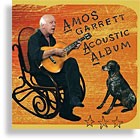
  • Amos Garrett – Acoustic Album

    Acoustic Album

    I’ve always thought Amos Garrett was responsible for one of the most brilliant guitar solos in pop/rock history – his amazing work on Maria Muldaur’s “Midnight at the Oasis.” No matter what you think of that song, if you aren’t struck by the brilliant solo, you and I are on different wavelengths.

    I’ve heard Amos on lots of other records, playing sessions, and always thought he was good, but perhaps waiting to make a solo record. Those solo records have come out on occasion, but I never ran into one until now. And I couldn’t be more pleased.

    The first feeling when you hear this is the relaxed attitude and fun that exudes from the music. It sounds like a bunch of good musicians sitting around a room and playing great tunes. Several of them deal with being a musician in funny ways. “Some Musician was to Blame” has a great lyric and top-notch playing. “Always Got Your Hands on That Guitar” is just plain wonderful – many a musician and wife will relate. Add an Amos solo through the jazzy changes and you’ve got a great tune. If there’s any doubt about the man knowing what to play, check out “Perfume and Tobacco,” or the stop-time playing in “She Don’t Go Nowhere.” I doubt many would play the unique choice of notes Amos does here. It’s totally unpredictable and sounds great. The instrumental “Bailey Hill Requiem” is beautiful in its melancholy. And his take on the classic Hoagy Carmichael tale “Small Fry” is one of the highlights of the record.

    About Amos’ vocals: he is a fine singer, relaxed, and capturing the feel of the tunes perfectly. Whether serious or fun, his vocals always are a highlight. This is a nice introduction to a guy who deserves a bigger audience.


    This article originally appeared in VG‘s Dec. ’04 issue. All copyrights are by the author and Vintage Guitar magazine. Unauthorized replication or use is strictly prohibited.

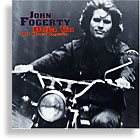
  • John Fogerty – Déja vu All Over Again

    Déja vu All Over Again

    Much of what is written about this record will have to do with the subject matter of the title cut – an anti-war song where Fogerty compares the Iraq situation to Vietnam, and even weaves the bass line from “Have You Ever Seen the Rain” into the song. And maybe it’s too bad the focus will be on the track, because this is as fine an album as this rock legend has made since leaving Creedence.

    In the CCR days, Fogerty proved adept at writing hits and adding a social message. Well, there’s plenty of stuff here that could be a hit if radio pays attention. “She’s Got Baggage” should immediately enter the setlist of every bar band in America. It’s a rocker with killer vocals, killer hook, and a sound that pops out of your speakers. “I Will Walk With You” will be a country hit for someone, if not Fogerty. A simple, beautiful expression of love with a bluegrass feel and fine dobro by Jerry Douglas and guitar from Fogerty, it’s one of those songs guaranteed to become a staple for couples. The very funny “Honey Do” will relate to husbands everywhere. Studio wizard Dean Parks joins Fogerty on guitar to help this light rockabilly tune, with a very funny lyric, glide along. Guitarists who wish Mark Knopfler still used that “Sultans of Swing” tone will want to hear “Nobody’s Here Anymore.” The Dire Straits lead man pulls out the Strat and echoes those famous riffs during this tale of alienation in the modern world. Fans of the old swampy sound will revel in “Wicked Old Witch.” It’s CCR meets John Lee Hooker on the bayou. Great stuff.

    There’s not a bad cut here. At 10 songs, none real long, this is the perfect length. Fogerty’s got plenty of great help, too. Kenny Aronoff plays drums throughout, and folks like Benmont Tench, Alex Acuna, Viktor Krauss, Billy Burnette, Knopfler, and others help Fogerty make one of the best records of the year. This is a must for Fogerty fans, or anyone who grew up listening to the music that came out of the ’60s.


    This article originally appeared in VG‘s Dec. ’04 issue. All copyrights are by the author and Vintage Guitar magazine. Unauthorized replication or use is strictly prohibited.
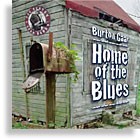
  • Burton Garr – Home of the Blues

    Home of the Blues

    I’ve been chomping at the bit to get the word out on this articulate, contemporary Louisiana blues man.
    There must be something in the water that runs between Memphis and Baton Rouge, ‘cuz The B. Garr Band has that geographical musical terrain covered like the felt on a Brunswick table.

    Slick Southern soul is the main course. A master re-interpreter of the work of the great Southern blue-eyed (and brown-eyed!) soul pioneers from Cosimo Matassa to Rick Hall to William Bell to the late, great Tom Dowd, Garr commands respect onstage in Memphis, the Crescent City, or any point in between.

    This soulful stringer is barreled up like a Gatling gun, with some of the finest session players below the 38th parallel. From the Allmans, there’s Johnny Neel on organ, and representing the Neville brothers, Shane Theriot on guitar, and the list goes on. Garr can do it all. But why layer it up when you have the best in the business alongside of you?!

    All but one of the 12 songs are the work of B. Garr, and as the great and present Charlie Musselwhite said, “There ain’t nothing but ‘A’ – and I mean capital ‘A’ – sides on this one.”

    Southern funk and soul at its best!


    This article originally appeared in VG‘s June ’04 issue. All copyrights are by the author and Vintage Guitar magazine. Unauthorized replication or use is strictly prohibited.
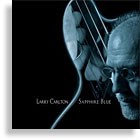
  • Larry Carlton – Sapphire Blue

    Sapphire Blue

    In his interview with VG (October ’00), Larry Carlton said he wanted to record a blues album. With this import, he has fulfilled his wish. It’s not a straight blues album, but there are definitely songs that fit in no other category. And other cuts certainly have a blues base.

    One could say that about Carlton’s playing in general, but the arrangements here are much bluesier than you’d hear on his solo work from the past decade or so.

    That brings us to our next point. Why is this an import? Perhaps his U.S. label didn’t fit. Anyway, for Carlton lovers, this is a real treat. From the opening cut, “Friday Night Shuffle,” you know what you’re in for. The straight-ahead blues shuffle is driven by horns and guitar. Nobody plays the blues with the (for lack of a better word) “sweetness” he does. The note choices and the precise stringbending are as nice as it gets.

    And that’s just the beginning. “A Pair of Kings” is funky soul with some nice poppin’ guitar that brings to mind Steve Cropper, but with a jazz influence… but it reeks of southern soul. The tune, like everything here, is highlighted by a nasty batch of solos. “Night Sweats” is a minor-key jazzer that calls to mind Miles. Carlton’s mix of soul and chops is something to behold.

    The title cut is a slow blues tour de force. Larry pulls out all the stops during this eight-plus minute romp. Big, nasty tone, biting double-stops, and bends that sound like Albert King channeled through jazz heaven all highlight this one. The liquid tones of “Slightly Dirty” are textbook sinewy funk sounds that burst into a bop section that lets Larry show off his traditional chops. “Take Me Down” is an unexpected delight; just guitar and harmonica. And acoustic guitar, at that. It’s country-blues mixed with a slight jazz sensibility. And wrapping up the CD is a nice version of his classic “Room 335.” Fitting, since he’s back to playing a 335.

    Fans of Carlton will love this disc. It shows a side of him that usually just peeks through in his other solo work. One word of warning, though; Larry dedicates the album to his granddaughter. My wife got a kick out of the fact that one of my guitar heroes has a grandchild. We’re all getting older…


    This article originally appeared in VG‘s March ’04 issue. All copyrights are by the author and Vintage Guitar magazine. Unauthorized replication or use is strictly prohibited.
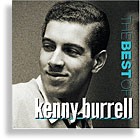
  • Kenny Burrell – The Best Of Kenny Burrell

    The Best Of Kenny Burrell

    The good thing about compiling a Kenny Burrell “best of” is, since his 1956 solo debut, it’s hard to find any clinkers; the hard part is knowing where to begin and when to stop. The fact is, several retrospectives could be compiled, and indeed have been. But even if you subdivided his career by labels (Blue Note, Verve, Prestige, Chess, Fantasy, Contemporary, Concord, Muse, and others), decades, or repertoire (he’s one of the foremost interpreters of Ellington and enjoyed a long association with the late Jimmy Smith), there’d still be gaps and overlap.

    You’d be hard-pressed to find a jazz guitarist with a more consistent level of high quality, but at 74, Burrell almost seems taken for granted; if he’d been a drug casualty (and had a much more uneven output as a result) like, say, Grant Green, he’d probably have more hip cachet. But from the opening track, 1957’s “I’ll Close My Eyes,” it’s clear that you’re in the presence of a master bop improviser with an innate sense of swing.

    The following track, “Montong Blues,” shows the other, equally indelible side of Burrell’s personality, his mix of blues and funk, with a guest solo by tenor sax titan Coleman Hawkins. Few jazz guitarists can get as lowdown as Burrell; lest we forget, this is the composer of “Chitlins Con Carne,” and a hero to Stevie Ray Vaughan. But in the next breath, on Cole Porter’s “All Of You,” Kenny shows a degree of sensitivity with a ballad few can attain.

    An added treat is the presence of jazz luminaries in the role of sideman – something that was commonplace in the ’50s and ’60s. So pianist Tommy Flanagan, organist Jack McDuff, drummers Elvin Jones, Art Taylor, and Jimmy Cobb, and even sax icon John Coltrane pop up on different tracks – just as Burrell did so often. This is one of 19 CDs in Fantasy Records’ “Best Of” series, with different artists’ work on the various labels under Fantasy’s umbrella, spotlighting everyone from icons like Miles Davis and Wes Montgomery to overlooked greats like Bobby Timmons. Burrell shows up on the Hawkins and Chet Baker volumes. The packaging, annotation, and sound are typically first-rate, and, at $11.98 list, each is a steal. Start with Baker and Burrell, who are conveniently at the front, alphabetically, and buy them all. Hopefully, more are on the way.


    This article originally appeared in VG‘s June ’05 issue. All copyrights are by the author and Vintage Guitar magazine. Unauthorized replication or use is strictly prohibited.
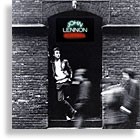
  • John Lennon – Rock ‘N’ Roll

    Rock 'N' Roll

    In 1975, ex-Beatle Lennon paid homage to his rock and roll roots – something Paul McCartney wouldn’t get around to until 1999’s Run Devil Run. Lennon’s early-rock credentials were beyond repute, as anyone who ever heard the Beatles’ versions of “Money” or “Twist And Shout” can attest, but I’m afraid Sir Paul beat him at the retro game (and there’s no telling how great a rockabilly album George Harrison could have made).

    While McCartney wisely chose to get four or five guys in the studio and cut a bare-boned, spontaneous record, Lennon enlisted producer Phil Spector for the first sessions that made it to this album (cut in late ’73). He later essentially reproduced Spector’s “wall of sound” (rather uncannily) with himself at the helm. But while that approach may have made sense for songs like the Drifters’ “Stand By Me” and Lloyd Price’s “Just Because,” it proves totally inappropriate for rockers from the Little Richard/Chuck Berry/Gene Vincent canons. Thankfully, Buddy Holly’s “Peggy Sue” is spared the overblown production, and kicks hardest as a result.

    The thing is, Lennon’s vocals sound on the money, if you could strip away the layers and layers of echo and reverb, and the band, while a tad subdued, is rocking pretty well. And what about that band? Just who’s playing on this stuff? Well, you won’t know by looking at the CD. True, no session credits were listed on the original vinyl, either, but this is, after all, a reissue – expanded with four bonus tracks – so you’d think Capitol would include some liner notes, credits, maybe photos from the sessions. A little research reveals that Jesse Ed Davis is playing slide on “Stand By Me” and “You Can’t Catch Me,” that Steve Cropper is present (most likely on rhythm), with longtime Beatles associate Klaus Voorman on bass, and Jim Keltner and Hal Blaine sharing drum chores. (Was that so hard?)


    This article originally appeared in VG‘s June ’05 issue. All copyrights are by the author and Vintage Guitar magazine. Unauthorized replication or use is strictly prohibited.
  • National Res-O-Glas

    Anyone who thinks ’60s Valco/National Res-O-Glas electrics look weird now ought to reflect on what the reaction might have been back then. The bodies of this bizarre lineup were molded in halves from a resin/fiberglass compound and the portions snapped into a rubber strip at the seam.

    Factor in other oddball Valco doodads like “Gumby-shaped” headstocks, control knobs on the bass side of the body instead of the usual treble side, and built-into-the-bridge Silversound pickups, and you’ve got one of the strangest aggregations in the history of American electric stringed instruments.

    The “map-shaped” bass in the National Res-O-Glas collection (so named because it looks vaguely like a silhouette of the U.S.) started out as the Val-Pro 85. It differed slightly from the National 85 that replaced it in several cosmetic areas; the Val-Pro had rounded cutaways, the backward flair of the pointed cutaway horns on the National gave its upper bout a slightly smaller look; the two knobs on the Val-Pro lined up at an angle to the strings (instead of parallel); and some (if not most) of the tuners on the earlier looked like a curved blade, versus the more normal-looking tuners on our specimen.

    However, some of the common features of the two basses were just as unusual as their differences. Note the Gumby headstock, the quarter-circle fret markers, a fingerrest and a thumbrest, and the cloth wire at the bridge (attached to the pickup), which has all of the aesthetic appeal of a worm in an apple. The undersides of the clear plastic fingerrest, thumbrest, and bridge have a silvery, foil-like material stuck to them.

    The two knobs are actually separate volume knobs for each pickup; however, the Silversound bridge unit sounds so bright and/or dinky, its volume knob serves as a tone knob of sorts, as well. Roll back on that knob, and a deeper sound is evoked; turn it up and an almost “ticking” sound can be heard anytime a string is plucked.

    The scale of this bass is particularly intriguing (and woefully inadequate, considering the instrument’s sound), as it’s about 25″ – i.e., guitar-length (Gibson’s standard scale was/is 243/4″; Fender’s standard guitar scale was/is 251/2″). Accordingly, if short-scale basses (30″ to 301/2″) are considered sonically-challenged concerning their resonance when compared to full 34″-scale instruments, this one is to be avoided at all costs.

    Nevertheless, the owner of this instrument insists he can get a special, retro-ish sound out of it, in spite of all its “shortcomings”… but it’s not his primary performance instrument.

    This example dates from the last year of the 85’s production; its serial number (on a foil sticker) has a “1” prefix, and that serial number system (which isn’t dependable) was implemented in 1965.

    Another interesting item on the back of the headstock is a decal, apparently from a music store in Demorest, Georgia, called Ralph’s. The decal has been individually stamped, perhaps manually, with “No. 14.” Demorest is a small town in the northeast section of the Peach State, and there’s no longer a phone listing for Ralph’s in that community, so the meaning of “No. 14” and any other anecdotes pertaining to this bass are probably lost in the mists of time.

    And such is also the case for the Res-O-Glas series of Valco-made instruments. Too odd for their own time, the “why” of their marketing story may never be fully explained. They may command a bit of attention due to their goofy looks nowadays, but that’s about it. As for a decent bass sound… fergeddaboudit.


    This article originally appeared in VG‘s Aug. ’03 issue. All copyrights are by the author and Vintage Guitar magazine. Unauthorized replication or use is strictly prohibited.
  • Floyd Rose Model One

    Model One

    With his 1977 introduction of the Floyd Rose Locking Tremolo, Floyd Rose, the man, revolutionized the guitar tremolo and added a new dimension to a guitar player’s arsenal of tricks and licks.

    Over 25 years (and a million divebombs) later, he may be set to do it again, with the introduction of his Speedloader bridges.

    Accompanied by Rose’s Speedloader strings (the only strings that work on Floyd Rose guitars), they form a system that allows for quick changes by eliminating the tuning keys, tools, and the need for a re-tune. The system also incorporates Rose’s TremStopper, which lets you block the trem with a simple turn of a screw.

    Floyd Rose guitars have a headstock, but no tuners – just a nut that accepts the Speedloader string. Each has a bullet end (like Fender Super Bullets) that fits into the nut and the pivoting saddles. The strings are made with a tolerance of .002″ and cut to precise lengths. The company included an extra set of strings, so we experimented. They’re right; one person can change the whole set in less than one minute. In fact, we did it in 45 seconds.

    After installation, one strum revealed the guitar needed only a slight fine-tuning. Still, we were impressed. Rose also offers a hardtail version of the Speedloader bridge for those who don’t use a tremolo but want the convenience of the quick change and tuning stability.

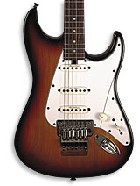
    The Model One guitar we tested featured a double-cutaway poplar body with a nicely bursted three-tone finish, maple bolt-on neck with a 12″ radius rosewood fretboard, and a trio of balanced Gold Floyd Rose alnico single-coil pickups controlled via five-way switch and a master volume control. The guitar does not have a tone control.

    Hardware includes a machined chrome Floyd Rose Speedloader tremolo bridge, black Dunlop straplocks, and recessed metal neckplate and tremolo spring cover.

    The neck has a very comfortable, slim C shape, medium jumbo frets, a satin polyurethane finish, and a nut width of 1.65″. The headstock has a unique-but-elegant shape with a teardrop cutout in the middle, and a black paint job with a gold Floyd Rose Logo. We were enthused to see a headstock, even though the guitar doesn’t need it or use it. Still, it adds a visual symmetry and helps as a reference when playing. “Headless” guitars sometimes require a mental adjustment to play, because you have no stopping point at the end of the neck, which makes for a tendency for the hand to “fall off” the end of the neck.

    The three single-coil pickups have black polepieces and are configured much like a Strat, though the bridge unit is not angled. Controls and pickups are mounted on a three-ply white/black/white pickguard with black mounting screws and a funky V groove running through it. The overall look is classic, but with modern look.

    We tested the Rose through the Chicago Blues Box combo and a Crate V5212 combo. The guitar has a refined, slinky feel with low action, polished frets, and a clean setup.

    Through the Blues Box, the pickups had a clean, crisp bell tone that was well-balanced in all five pickup positions and from string to string. The two out-of-phase positions were also nice, with a spacious sound that maintained good note separation – even with some overdrive. The pickups had plenty of gain through the overdrive channel of the Crate, very crunchy without being harsh, although a tone control would have been nice to mellow out the pickups for a more jazzy kind of tone. The single volume control tapered nicely, and is placed very well to do volume swells.

    Overall, the Floyd Rose Redmond is meticulously crafted, has a well-balanced, excellent-sounding set of pickups, plays effortlessly, and of course has the best tremolo system out there.


    Floyd Rose Redmond Model One
    Features Speedloader Bridge, meticulous fit and finish, Gold model Floyd Rose pickups
    Price $2,400 (retail).
    Contact Floyd Rose Guitars, 6855 176th Ave NE, Redmond, WA 98052, phone (425) 861-7089, www.floydrose.com.


    This article originally appeared in VG‘s Sep ’04 issue. All copyrights are by the author and Vintage Guitar magazine. Unauthorized replication or use is strictly prohibited.
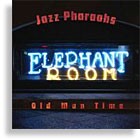
  • Jazz Pharaohs – Old Man Time

    Old Man Time

    The Jazz Pharaohs jokingly refer to themselves as “Austin’s Best Wedding Band” – and they may well have fans crashing wedding parties just for the music. They’re a more traditional American jazz band, kissing kin of Austin’s Asylum Street Spankers.

    On Old Man Time, Dave Biller trades hot guitar licks with clarinetist/vocalist Stanley Smith and Freddie Mendoza on trombone. The repertoire is pure standards as well as the band’s theme, “The Pharaohs Stomp.”


    This article originally appeared in VG‘s June ’05 issue. All copyrights are by the author and Vintage Guitar magazine. Unauthorized replication or use is strictly prohibited.
  • Barry Melton

    Singular Fish

    One of the most indelible images from “Woodstock,” the documentary of the legendary 1969 rock festival, is that of Country Joe & the Fish guitarist Barry Melton flashing a big grin – and a joint – at the camera just before he charges to the front of the stage with his Gibson SG Standard to launch into “Rock and Soul Music.”

    Of the original San Francisco-area psychedelic bands, Country Joe & the Fish was considered the most politically oriented. Most would be surprised to hear Melton doesn’t consider “psychedelic” music a genre. They might also be surprised at his chosen occupation.

    Vintage Guitar: Since Country Joe & the Fish came out of Berkeley, was it obvious the band would be considered more sociopolitically oriented?

    Barry Melton: Well, I guess. But I actually moved back and forth across [San Francisco] Bay a number of times during the years the band was in existence. Joe (McDonald) also lived in San Francisco for part of that period. And a lot of other people you’d think of as San Francisco bands were actually living in Marin [County]. I’m not sure who lived in the city full-time.

    Talk about your background in folk music, a genre that also had its share of “commentary” songs.
    I started playing guitar when I was five years old; I was born in New York. My dad was a merchant seaman, and he actually shipped out with (folk singers) Woody Guthrie and Cisco Houston at some point. My parents were sort of loosely associated with what was then the musical/political scene in New York. My mom gave Ramblin’ Jack Elliott one of his first jobs. My parents wanted me to be a guitarist/writer/union organizer (laughs).

    My family moved to California in 1955, and I went to school in North Hollywood. As I approached my teens, I began hanging out at a folk music club called the Ash Grove. Taj Mahal, Leo Kottke, Ry Cooder were all there; a lot of fine young players from the Los Angeles area. The place didn’t hold more than 50 or 60 people, but I saw Mother Maybelle Carter, Johnny Cash, Doc Watson, Reverend Gary Davis, and Mance Lipscomb there.

    McCabe’s Guitar Shop was part of the Ash Grove when it was on Melrose Avenue in Hollywood. There were also people making forays into the South and discovering blues players; at least those who were still alive.

    And the forays could have tied into the original civil rights movement, to some extent.
    Yes, it did. Driving down South looking for old black folks might not have been the safest thing to do.

    I have a dear friend, Ed Denson, who ended up managing Country Joe & the Fish, but he also co-founded Takoma Records with John Fahey, and he founded Kicking Mule Records. When I met Ed in Southern California, he had just gone to the South and pulled out Mississippi John Hurt, Mance Lipscomb, and Bukka White. And Sam Charters was one of the early producers of blues music, and he ended up producing Country Joe & the Fish, so there was more of a connection to the blue musicologist idiom than people may realize.

    What brought you to the Bay Area?
    Being admitted to San Francisco State University. First thing that happened was I got hired by (soon-to-be Big Brother & the Holding Company bassist) Peter Albin to play at the San Francisco State folk music festival. I lasted about 10 weeks at San Francisco State (chuckles); I dropped out to become a full-time guitar player. In the next three or four years, I moved back and forth between Berkeley and San Francisco about ten times.

    I moved into a place in Berkeley that was being rented by a guy I went to high school with, (future Fish bassist) Bruce Barthol. He was living with Paul Armstrong, who was a street guitarist who’d actually worked in Paris for a couple of years. That became the nucleus of what later on became Country Joe & the Fish, although I had other bands as well.

    At one point, you and McDonald played as a duo, using the Country Joe & the Fish moniker. A lot of people might have thought “Fish” was plural, but it was just you.
    Joe and I recorded a little EP in anticipation of the first teach-ins at the University of California at Berkeley concerning the Vietnam war, in the summer of ’65. There were two songs on there; it was basically a talking edition of Joe’s folk magazine called Rag Baby. There was what became known as the “Vietnam Rag,” with me and Joe and some other players from a jug band we’d been in, and the other cut was me and Joe as a duo on a song called “Superbird,” which was about LBJ.

    When we put out the record, we were offered a tour of Northwest colleges by the Students for a Democratic Society. So we toured as a duo, then picked up a bass player named Richard Sanders, and ultimately, we scrapped the whole jug band thing and formed a rock band.

    Was there a defining moment when you decided to go electric?
    No, but I remember getting really loaded and going to see the Paul Butterfield Blues Band in Berkeley. For white guys, that was the hottest electric band in the land, without a doubt. Part of the reason they were so hot was that they were playing within an established genre, but they were playing an excellent version of what it was. The lineup was pretty terrific – (Michael) Bloomfield and Elvin Bishop on guitar, although Elvin clearly was just a rhythm guitar player back then. Sammy Lay was the drummer; Mark Naftalin on keys – he stayed in the Bay Area, and still records there.

    So they were phenomenal, as was the size and the spectacle. Folk clubs were all small, and the folk music scene was real small. But it didn’t have to be large, because most folk players performed solo or as a duo, and you could still be successful.

    Once you went electric, what instrument did you gravitate to?
    A Gibson SG, which I play to this very day. I had a Fender amplifier, which I sort of play today, but the first Mesa-Boogie amplifier was made for me. The company began by making special-order amps for me. Prune Music was a music shop in Berkeley, and I was looking for power in a small cabinet, and they made very powerful amps in a (Fender) Princeton-size case, with four 6L6GC tubes, in sort of a Fender Twin package. They called ’em “Prune Boogies.” They started in Berkeley, then the music store moved to Mill Valley, and began making dozens of those Prune Boogies. Eventually they opened up Mesa-Boogie and began making production amplifiers.

    Another band that came out of Berkeley around that time was the Steve Miller Band.
    When Steve moved out west, he played harmonica with us for about a month, but I think we were too spaced out for him. We were playing music that was sort of zoned-out folk (chuckles), and the blues style had a much harder backbeat. We have a record called Live at the Fillmore West. I think it’s the last gig that (drummer) Chicken (Hirsch) and (keyboard player/guitarist) David (Cohen) did with us. Bruce had already left, so we had Jack Casady on bass, and Steve Miller, Jorma Kaukonen, and Jerry Garcia are all on that record.

    Country Joe & the Fish signed with Vanguard, which was stereotyped by some as a political or “pinko” label; in the ’50s they’d signed blacklisted artists like the Weavers and Paul Robeson. Right or wrong, that would added to the band’s political image.
    Yeah, but on the political rap, I guess that’s partly true; if one song in ten was political, that’s stretching it. Most of our stuff was “in the zone.” The Vanguard connection really wasn’t political, although they had political credentials. They were a legitimate and serious folk label for Joan Baez, Doc Watson, and Richard and Mimi Farina, among others. The connection was totally personal, and a legitimate choice for us. Sam Charters, our first producer, was a blues scholar, and had been recording artists for Vanguard.

    So far, you’ve refrained from using the term “psychedelic” music.
    Well, it was certainly a part of the era, but I guess to me it’s not really a genre. I’ve talked to folks about this in the past, and I think the “San Francisco sound” is really a folk-rock sound, in all fairness, and if drugs had an influence on the sound, it was to push it over into the improvisational side of things, very much in the manner of jazz or blues. But it took those kind of jazz or blues liberties and sensibilities to push folk music into the improvisational zone. You’ve got to understand that different people chose different idioms during the folk music movement of the early ’60s, and for me, it was the blues.

    “Not So Sweet Martha Lorraine” wasn’t a Top 40 hit, but it got a lot of airplay on what was termed underground radio back then. Were you aware of the emergence of such alternative radio formats?
    Yeah; in those days there was an explosion of small FM stations, because it was still possible for people of modest means to put together a radio station. FM was not commercial; it was very un-commercial, and not only did a lot of college radio stations start out then but so did a lot of small alternative stations.

    Almost all of the San Francisco bands – especially the Grateful Dead, Quicksilver Messenger Service, and us – became “album bands,” rather than bands whose careers were tied to top-selling singles. Electric Music for the Mind and Body, which “Not So Sweet Martha Lorraine” was on, stayed on the Billboard charts for the better part of two years, at a time when was only one real Billboard chart.
    It’s interesting – I heard some musicologist on TV when George Harrison died, and he was talking about how when the Beatles were big, there was one Billboard chart, but nowadays, all music is niche-marketed and there seem to be twenty different kinds of charts. That’s what made the Beatles so powerful. I come from that era of the music business where if you sold a lot, it was looked at as sort of an across-the-board sweep; it wasn’t niche-marketed.

    That song is in the boxed set of live tracks from the 1967 Monterey Pop Festival, but an instrumental, “Section 43”, is what Country Joe & the Fish performed in the D.A. Pennebaker film Monterey Pop. One writer claimed “Section 43” was influenced by “Hall of the Mountain King” from Grieg’s Peer Gynt suite.
    (pauses) Big Brother played “Hall of the Mountain King” as an instrumental in concert, but I don’t think “Section 43” had anything to do with Peer Gynt. It did draw from John Fahey’s music; sort of in distinct movements. We were looking for sort of a certain spatiality to the music, and a sort of airiness that would appeal to someone who was trying to expand their consciousness with chemical substances (chuckles).

    As the band grew in popularity and you began playing bigger venues, how did you upgrade your equipment?
    Well, this was “the era of the bad P.A.” (laughs). A P.A. was really measured by the number of McIntosh amplifiers you had, and the amount of Voice of the Theatre speakers; it was not a very refined exercise. The sound you projected was onstage with you. I went from a 100-watt Twin to two amplifiers, to four, and at one time my stack had eight Twins, because the only thing the P.A. did was project the voices, which was totally opposite of what’s going on today. Woodstock was the first gig I saw where the sound was mixed to speakers way out in the crowd, and it was slightly delayed.

    By the time of Woodstock, you and McDonald were the only original members of the classic lineup remaining in the band.
    Chicken and Dave left around the end of 1968. Peter Albin and Dave Getz, the rhythm section from Big Brother went out on tour with us for about six months, and we picked up a new keyboard player named Mark Kapner. The transitional album is Here We Go Again. Bruce is not on that album at all; some parts of it have David and Chicken with Jack Casady, then another part has Peter Albin, Dave Getz and Mark Kapner. After that, there was another change that led to the band that played at Woodstock.

    What kind of amps did you have onstage there?
    I think I had four Twins and four Fender Princetons that had been modified by the Mesa-Boogie folks. Eight-hundred watts. If you stood in a certain place, you’d blow your eardrums out.

    “Rock and Soul Music” is in A, and there’s a “Frisco lick” in it, where you bend the high E up to a squealing double-octave E, a la (Quicksilver Messenger Service guitarist) John Cippolina…
    Which is easy to do on an SG!

    More than one person, including you, has credited Big Brother’s James Gurley with being the father of psychedelic electric guitar.
    I said in Guitar Player that James Gurley is the “Yuri Gagarin of rock and roll; the first man in space.” Gurley did not play chords all that well, in terms of conventional music. They needed a guy like Sam (Andrew) to tie things down. Gurley was into the sonic qualities of the instruments. I think we all came out of it with individual sounds, and that actually had something to do with folk music as well, because everybody wanted to sound unique. We worked very hard not to sound like others, and that’s still important to me.

    At this point, I’ve played with virtually all of my then-contemporaries, and with some of them, like Peter Albin, for an extended period. Cippolina and I played together for the better part of 10 years in the Dinosaurs, but I don’t sound like John Cippolina.

    You and McDonald folded the band not long after Woodstock and embarked on solo careers; your first album was Bright Sun.
    That was actually done while I was still in the band. My first solo project after the band was on Columbia Records; an album called Melton, Levy, and the Dey Brothers.

    That album was produced by Mike Bloomfield.
    Bloomfield was a wonderful guy and a dear friend; probably the smartest guy I ever knew. He could play almost anything; what he liked to play was blues. On the Melton, Levy and the Dey Brothers album, we did a duo where he played in a sort of Django Reinhardt guitar style, and it’s really unique. I never knew he could do that, and when I told him so, he said, “Yeah, but it’s not really my kind of music” (chuckles). He was one of those guys who could read three or four books a week, and was an incredible storehouse of knowledge. And he died so young.

    What other post-Fish material have you done that you think is notable?
    We’re just putting together a re-release of a Dinosaurs project that’s gonna include a lot of previously unreleased material.

    What about the Country Joe & the Fish reunion album in the mid ’70s?
    Well, it seemed like something to do that might be interesting, but it never really got off the ground; it wasn’t a very good record. The reunion seemed forced. And at this point in my life, I want to do what I want I to do. Money’s interesting, but it isn’t what drives me.

    That comment could justify a segue into an explanation of your legal career, which you began in 1982, first as a private attorney, and now as a Public Defender in Yolo County, California.
    I felt like I’d been screwed by every record company under the sun, and I wanted to get back at ’em (laughs). That was my initial motivation!

    But on another level, I’d seen a movie in the late ’70s about Duke Ellington towards the end of his career. He still had a big band, but he was playing clubs, so he was obviously not making any money, and he was riding shotgun in his sax player’s car. He had those big bags under his eyes, and at every gig, they showed him lying in the dressing room on some couch or bench, with a towel over his eyes, trying to get some sleep.

    I remember thinking to myself: “****, man; that’s Duke Ellington, an icon! That’s what happens to old musicians?” I told myself there had to be something better, so I started studying law on the road, passed the bar, and became a lawyer. But that was around the same time I started the Dinosaurs.

    The perception of the Dinosaurs for some was that it had a rotating lineup of veterans; kind of an easy-going enterprise, but you took the music seriously.
    No, we didn’t (laughs)! The music I enjoy playing the most is music that has only the most “general” structure, and leaves lots of room to play in. If my next meal depended on what chords I was playing, I might not have that attitude, though.

    Your most recent project has consisted of a band that includes Peter Albin, Banana from the Youngbloods, and Roy Blumenfeld from the Blues Project.
    Peter and I have been working with each other since about ’77. He’s my oldest musical associate. I’ve done two European tours the last two years, and I’m doing a third this year. When I went to Russia in 2002, I picked up a Russian band; when I went to the U.K., I picked up an English band. When I go back to the U.K. this year, some of the band members will be those I worked with last time.

    I use an SG, and one of my modified Mesa-Boogies in a Princeton box. I don’t use pedals, but sometimes if I use somebody else’s amp over there, like I did in Russia, I’ll use a (Ibanez) Tube Screamer.

    Why did you make the transition from private practice as an attorney to public defender?
    Because I was defending everybody for free, anyway (chuckles). So I had to find a way of getting paid. Millions and millions of dollars have gone through me, but they’ve never stayed there! It’s a lot easier if you’re a public defender, because you’re not charging any of your clients, and the state is paying your salary.

    You’re not a public defender because of a sociopolitical conscience?
    If somebody needs a lawyer, I can’t turn ’em down. Making sure that people who don’t have money get legal representation fits in with who I am. Being a public defender is sort of the best of both worlds: you work for the government, and your job is fighting the government. I fight with every other agency in the county – the D.A.’s office, the sheriff’s department, the Department of Social Services, because it’s my job (laughs)!

    But I think it’s a great tribute to American democracy that there is such a job as public defender. And it’s a great place for an old hippie like me.


    The Fish’s role in vintage amp history

    This is my mid-’60s Gibson SG with Bigsby bar, leaned against my prototype predecessor of the Mesa Boogie amp. The guitar is relatively stock, with a stock P-90 pickup on the bass end; however, the treble pickup is a P.J. Marx, from the mid 1980s. The amp is one of four built-to-order for me in approximately 1968 by Randall Smith, who was working out of Prune Music in Berkeley, California. The amplifier is encased in a Princeton amp box, but has the power of a Fender Twin Reverb (i.e., four 6L6 tubes, a Twin-sized transformer, 12AT7 tubes and an Altec Lansing no-blow 12″ 200-watt speaker) and delivers 100 watts. The amp has a 60/100-watt switch, a backlight, and preamp and master volume. The amp was lightyears ahead of its time, and when Prune Music moved to Mill Valley about a year later, Randy couldn’t make them fast enough to fill all his custom orders, which led to the founding of the Mesa Boogie company. – Barry Melton


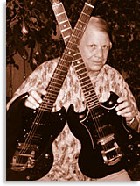
    Barry Melton today, with his Gibson SGs. Photo: Barry Melton.

    This article originally appeared in VG‘s Oct. ’04 issue. All copyrights are by the author and Vintage Guitar magazine. Unauthorized replication or use is strictly prohibited.