
Month: October 2006

  • Rahbek Standard

    A fine custom guitar, Danish-style

    Rahbek Guitars hail from Copenhagen, Denmark, hotbed of electric guitar production.

    Huh?

    Okay, so that ain’t the case. But those who would rush to judgment over the thought of buying a custom-made electric guitar from someone other than any of the multitude of U.S. builders may just be missing out on something special.

    Because Rahbek guitars are handmade from materials hand-picked for their exacting specs. The company’s basic models include two classic electric guitar-inspired designs, the Standard and the Cos-T.

    We reviewed a Standard, which features a comfortably contoured, medium-weight, two-piece alder body with a gorgeous 1/4″ laminate flamed-maple top finished in transparent gloss plum that was nearly flawless.

    The neck on our Standard featured an outrageously birdseyed neck in a silky smooth satin finish with Brazilian rosewood fingerboard. The bolt-on neck was attached to the body with four bolts tastefully recessed into the body. The neck fit into its pocket very tightly, making for a strong bond. The 251/2″-scale, C-shaped neck is very comfortable, with a 12″ radius that let us apply smooth, clean note bends despite the very low (and very fast) action. The neck’s 22 frets are medium height, well-polished, and installed flawlessly.

    A Wilkenson satin-finished tremolo bridge is flush-mounted, which while it may allow for more sustain, also eliminates the option of pulling up on the whammy bar.

    And speaking of the trem, it raised our one nit about this guitar – the lack of a coverplate for the trem spring cavity. Some may theorize that this makes a difference in tone. Well… maybe. But if a builder is going to leave the cavity and springs exposed, that cavity should be finished as neatly as possible…

    Anyway, the guitar also boasts Schaller locking tuners mounted four on the bass side, two on the treble side, high-quality tone and volume pots, and a five-way pickup selector mounted through the back in a shielded cavity, all nicely wired. Two Kinman HX single-coils and one Dimarzio humbucker are installed directly into the face of the body, in cleanly routed, paint-shielded cavities.

    The true test came as we plugged the Standard into the first of our test amps, a Fender 4×10 Blues Deville. The first thing we noticed is how well-balanced the volume was from pickup to pickup. Also noteworthy was how quiet the Kinman single-coils were, along with the Dimarzio humbucker.

    On a clean setting, the Kinmans are slightly meatier and not quite as high-end sparkly as standard single-coils. We also dialed in an extremely pleasant out-of-phase tone with the neck and middle pickups on together. Sweeeeet! The bridge pickup, of course, offered the typical dark, fat, clean sound of a humbucker. In the bridge/middle position we obtained a powerful, slightly out-of-phase sound, as the bridge pickup is not split in this position.

    Next, we plugged the Standard into a Randall Cyclone head with a 4×12 Celestion-loaded cab set to high-gain overdrive. And again we experienced an extremely well-balanced pickup selection. In fact, in terms of volume we could hardly tell you we were switching. The single-coils had a surprising amount of gain , rivaling the humbucker, with lots of smooth overdrive – without sacrificing clarity. The Standard had plenty of sustain with very good note separation in all positions. We were able to fly over the fingerboard with the greatest of ease. Though there was a bit of that “new guitar stiffness,” it was obvious to us that this guitar, once broken in, will be a monster.

    At $2,799, this is not an inexpensive guitar. But any instrument of this quality can’t be. Rahbek offers lots of options, so you can have a custom guitar built to your specs.

    There are loads of one humbucker/two single-coil guitars available, but the Rahbek Standard may very well be one of the best.


    Rahbek Standard
    Type of guitar Electric solidbody.
    Features Contoured alder body with flame maple top, transparent gloss plum finish, birdseye maple neck, Brazilian rosewood fingerboard, Kinman single-coil pickups, DiMarzio humbucking pickup, Wilkenson tremolo bridge, Schaller locking tuners, graphite nut, many options.
    Price $2,799 (retail as tested).
    Contact Rahbek Guitars, Enghavevej 10, DK – 1674 Copenhagen V, Denmark, phone 45 33 242 242, www.rahbekguitars.com.


    This article originally appeared in VG‘s Oct ’03 issue. All copyrights are by the author and Vintage Guitar magazine. Unauthorized replication or use is strictly prohibited.

  • Johnny Hiland

    The eagle has landed

    For an artist who hadn’t yet seen his first solo release when VG spoke with him 18 months ago, Johnny Hiland had made a lot of inroads. His well-deserved reputation as a downright dangerous force on the Telecaster was earned through master classes, NAMM appearances, session work, and a number of high-profile performances.

    Now, that missing piece is in place. His blazing, all-instrumental self-titled release on Steve Vai’s Favored Nations label was produced by Peter Collins, who has worked with Rush, Bon Jovi, the Indigo Girls, Jewel, Gary Moore, Brian Setzer and many more. The supporting cast includes Bill Holloman (Danny Gatton) on keys and sax, Billy Sheehan (the “Eddie Van Halen of the bass”), and Pat Torpey on drums.

    Vintage Guitar: How long did the recording process take?
    Johnny Hiland: We tracked for two solid days, then had an overdub day, and then we mastered and mixed. It was recorded at The Mothership Studio, Steve’s studio in the Hollywood Hills.

    Tell us about the guitars and other equipment used.
    I just used my custom shop gold sparkle Tele, which has three Joe Barden pickups. For amps I mainly used my ’65 reissue blackface Twin. In “Run With It” I used Steve’s Legacy. Peter wanted something a little heavier for that one. I also had my Johnson J-Station in case I needed any other effects, but the only time we used it was for the rock part in the middle of “Celtic Country” – we loved the sound of it.

    I had a small pedalboard with me, too. I had a Boss TU-2 tuner and all three of Bob Weil’s Visual Sound pedals – the Route 66, the Jeckyl and Hyde, and the H2O. And then I used the ISP Decimator for noise reduction.

    How did Peter Collins get involved?
    Through Paul McGill – he’s one of the finest guitar makers in the world. He’s made guitars for Chet Atkins, Earl Klugh, Muriel Anderson… anyway, Paul brought Peter down to one of my shows in Nashville. Peter came up to me afterward and offered his services. We shared some ideas and did a demo. We had such a great rapport and he was such a joy to be with in the studio. I really grew to love him very quickly – he was so down to earth, and on top of his success with so many artists, I just felt like he was someone who was really understanding me as a guitar player and as a person. He really helped me turn some of the songs around – playing less licks and bringing the melody out more.

    “Truth Hurts” is a nice ballad that really shines.
    Well, when we got out to Steve’s, we really cranked up the Twin on that one. We added some distortion to it… and then it just took on a life of its own. We slowed it down some, and the new tempo really fit. Steve said he really wanted to feel the amp breathe, that it was really important, and the engineer, Neil Citron, really emphasized that, as well. Everything just started to fit, and as soon as I hit the first bend, it felt like the guitar became its own entity, like I wasn’t even playing it.

    “G Wiz” is another great song. It’s so… happy!
    That’s one of the last songs I’d written for the record. I really wanted to create something that’s bluegrassy yet has a contemporary Tele sound. I was hoping it would really tweak a guitar player’s ear because it’s written in open G – that’s why I called it “G Wiz.”

    How were the musicians selected?
    Well, I knew I wanted Holloman – for the Gatton lovers, and because of my inner feelings about Gatton. My manager suggested Sheehan, and I was so happy when he agreed to do it. I knew he would really add a lot of punch, and I let him choose the drummer because that bassist/drummer connection really has to be there. And he chose Pat; he knew he’d be especially great for the train beats and double-kick stuff. Once we hit the first note, every bit of anxiety I felt was gone. It was like, “Yeah! This is what I’ve been waiting for!”

    Did you consider singing on the record?
    Yes, but I just wasn’t sure if I should come out vocally on the first record, or save it. But I definitely plan to sing next time around.

    You have a few acoustic parts on “Truth Hurts.” Do you plan to utilize an acoustic more in the future?
    I think I’ll add nuances of it here and there, but I really want to keep it more electric-based. That’s how my live show is, and I want to keep it rockin’.

    What session work have you done recently?
    I played on two acoustic “jamgrass” records with producer Bil VornDick. One was a tribute to Phish, and one a tribute to Dave Matthews. Bil wanted to take bluegrass to a more rockin’ extreme. I did Lynn Anderson and Janie Fricke’s new records. Those are in traditional bluegrass style – all acoustic. I played Tele on on the title track of Ricky Skaggs’ forthcoming record, Brand New Strings. It’s a real fast, rippin’ tune.

    Most recently, I played on four tracks on Randy Travis’ new album. They’re slower songs – I played kind of a Reggie Young/Delbert McClinton style. Randy’s a tremendous guy. I had a ball with him.

    Any especially memorable live performances in the last year?
    Yes! I joined Vai, Satriani, and Malmsteen on stage for a few songs when the G3 tour stopped in Nashville last fall. That was just incredible! And Sammy Hagar invited me to play the grand opening of his new club in Tahoe last spring. I had so much fun with that man! I also played with Toby Keith and Ted Nugent out there.

    You were an instructor at the First World Guitar Congress in Baltimore in June.
    That was an amazing time. I taught a master class on chicken pickin’ and headlined a show with my band, but I also got to introduce one of my biggest guitar heroes, Albert Lee, before his concert there. That was a huge honor for me; I was overwhelmed. And I was floored to have so many guitar players of that caliber in one location… Derek Trucks, Eric Johnson, Tony Rice, Albert Lee, Pat Martino, Jimmy Bruno – it was phenomenal!

    The whole point was to inspire the public, to let them see that guitar music still exists. These days, it seems everything is about athletes, NASCAR, etc. The guitar hero has kind of fallen by the wayside. We were discussing how we could inspire the next generation to learn how to play guitar. We wanted to show people that it’s still alive and well.


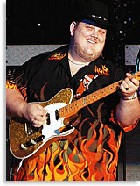
    Hiland in Nashville, 2003 . Photo: Rusty Russell.

    This article originally appeared in VG‘s Feb ’04 issue. All copyrights are by the author and Vintage Guitar magazine. Unauthorized replication or use is strictly prohibited.
  • The Ramones – End of the Century: The Story of the Ramones

    End of the Century: The Story of the Ramones

    There’s an anachronism at the heart of this excellent, engrossing documentary. Few people will argue The Ramones’ influence on punk and post-punk rock, and the footage here from their heyday at CBGB and other venues is a time machine back to the early-’70s punk explosion. Simply put, the Ramones made some great noise.

    The anachronism is in watching old-time punkers – still wearing their battered black leather jackets, now surrounded by a small fortune in fancy recording gear – tell their tale, as if this was all ancient history.

    We all get older, and punk rockers are no different. And sure, we all dream of making it big, and again, punk musicians dream the same dreams. But punk was about a youthful rebellion against the musical establishment, and it’s hard to see it grow up. And perhaps no one feels that aging more than the Ramones in the interviews here, reminiscing wistfully about the good old days.

    The film starts with the bad old days: DeeDee, Johnny, and Tommy remembering the vapid musical atmosphere of the 1970s, when disco, glam, soft pop, and orchestral rock ruled, and how these Forest Hills, New York, teens hooked up, through a shared fascination with the Stooges, to spark their own band.

    Joey was the mastermind. A lanky teen geek, he was dismissed by high-school teachers as an introvert at best, a loser at worst. Yet his brother describes, in touching terms, the transformation Joey experienced when he started singing in a band. It’s a simple story that’s the soul of the punk movement.

    Watching the band bang out their two-minute manifestos on stage is the best part of the disc; Mosrite guitars slung low, furiously bobbing their noggins like prodigy headbangers, and Joey kicking and strutting like Mick Jagger gone wrong. It’s all great stuff, bringing alive the attitude that made the band famous.

    As Johnny said of his own film story, “It’s accurate. It left me disturbed.” – MD


    This article originally appeared in VG‘s May ’05 issue. All copyrights are by the author and Vintage Guitar magazine. Unauthorized replication or use is strictly prohibited.
  • Bill Perry – Raw Deal

    Raw Deal

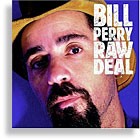
    This record, plain-and-simple, cooks. Perry’s mix of rock and blues lands right in that perfect area that highlights the attraction of both kinds of music without being too self-conscious. He and producer Popa Chubby sink their teeth into the grooves and don’t let go.

    What does that mean? Well, check out a couple of tunes that any musician can relate to. “Bluesman,” and “Big Ass Green Van” will be smiles for folks who’ve spent any time trying to make money working in this crazy field. The first tune is on-the-money rock with a cranked solo, and the second is a cop of “La Grange,” complete with modulation on the solo.

    Perry’s gruff vocals are the perfect complement to his rough-and-ready guitar work. The guitars are loud, ballsy, and out front, just the way you want ’em for this kind of stuff. Same goes for the vocals. His take on the Tom Waits classic “Til the Money Runs Out” is incendiary and masterful with burning guitar work. The pentatonic solos mix with double-stops on “Going Down to Memphis” to make the perfect mix of country and rock. “Live On” is a nice nod to soul music, with heartfelt guitar work and singing. Things wrap up with a long boogie arrangement of Dylan’s “Gotta Serve Somebody.” Perry’s playing and singing on the seven-and-a-half-minute tune are a perfect capper to a disc full of no-bull music. The nice thing about this is Perry puts it out there, gives his heart and soul, and you either accept it or you don’t. I confess, I do.


    This article originally appeared in VG‘s Dec ’04 issue. All copyrights are by the author and Vintage Guitar magazine. Unauthorized replication or use is strictly prohibited.

  • Gibson 1938 Electric Bass

    Gibson 1938 Electric Bass

    Gibson 1938 Electric Bass

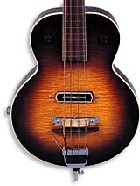
    This interesting piece of fretted Americana can be appreciated by any vintage instrument aficionado – particularly bassists – as it was probably the first instrument of its type ever built or marketed by Gibson.

    A 1976 letter by Julius Bellson, Gibson’s first company historian, says two examples of an early electric bass were built in the late 1930s. They were intended to be played like an upright bass. One of the late-’30s Gibson uprights was profiled by George Gruhn in the June ’97 issue of Vintage Guitar Classics (below right). Our featured bass is most likely the other (and the earlier of the pair). They apparently weren’t twins, however, as there are noticeable differences.

    Bellson’s letter was to Mrs. Theodore Snow, the original owner of the bass featured in the Classics article (hers was purchased in May, 1940). Therein, he stated that the other bass had been made for Wally Kamin, a longtime friend of Les Paul’s (who ultimately became Les’ brother-in-law), and played bass on many of his recordings. Bellson’s letter indicated Kamin and Paul had consulted with Gibson on building the instrument, so logic would dictate this bass was Kamin’s and that it was probably the earlier of the two built.

    Our featured bass has a smaller, hollow maple body (bound white/black/white) and different location for its ES-150/”Charlie Christian” pickup. It also has a smaller tailpiece, a volume control on the upper bout, and a tone control on the other. Snow’s bass had both knobs on the treble side of the upper bout.

    Its neck conforms to the configuration of a Gibson mandobass (maple with mahogany or walnut center stripe), and it has a bound, lined fretless fingerboard inlaid with celluloid strips and dot markers. Its scale measures 423/8″, standard for an upright.

    The bass also apparently had a foot-operated, pulley-type string mute. Its total length (sans endpin) was 541/4″, and it came with a tweed case, which sported a full-length black-and-red stripe. The interior was upholstered with burgundy cloth.

    The instrument had reportedly been owned by one individual since 1951. The owner, who bought it used from a store in Grand Rapids, Michigan, played electric tenor guitar in a 13-piece combo specializing in big-band music. However, he didn’t like it, so it remained in storage for decades. It is now owned by the National Music Museum in Vermillion, South Dakota.

    This bass didn’t herald the advent of electric bass as a viable instrument, as Fender’s Precision Bass would do 14 years later. But it was Gibson’s first attempt at a stringed bass that could be amplified with a pickup. Fretted Americana, indeed!


    Instrument courtesy of Stan Werbin/Elderly Instruments.

    This article originally appeared in VG‘s Jan. ’04 issue. All copyrights are by the author and Vintage Guitar magazine. Unauthorized replication or use is strictly prohibited.

  • October 2006

    FEATURES

    IN DETAIL
    The Gibson “Les Paul SG”
    Entering the 1960s, Gibson saw the continuing potential in the market for solidbody guitars – but not for its single-cut Les Paul models. The resulting changes created a new legend amongst collectibles. By Ward Meeker

    ORVILLE GIBSON LYRE MANDOLIN
    It represents everything that is Orville – not only his concepts of instrument design, but his artistic flair and eccentricity, as well as the overall flavor of an era dominated by the mandolin. Plus, its image is part of company lore. By George Gruhn and Walter Carter

    ECHO-OFF
    11 Devices That Let You Sound Good While Repeating Yourself… Repeatedly
    Think “Les Paul” and you likely think “guitars.” But he was also responsible for multi-tracking and tape echo. Here’s a look at how we do it today. By Bob Dragich

    DAVID LINDLEY‘S STRING THEORY
    He has become an original, prominent voice in musical styles spanning the globe, and on so many instruments he lost count long ago. Along the way he has expanded the parameters of popular music to a degree that few, if any, can claim. By Dan Forte

    IBANEZ MC500 MUSICIAN
    While vintage guitar enthusiasts typically pooh-pooh guitars from 1970s, the decade was marked by one of the most innovative eras in guitarmaking, spawning many superb guitars, like this spectacular Ibanez MC500 Musician. By Michael Wright

    BASS SPACE
    The Peavey T-40
    While the phrase “collectible Peavey” may be an oxymoron to some, there‘s no denying that the company’s first bass was replete with features that were later adopted by a host of other manufacturers. By Willie G. Moseley

    THE DIFFERENT STRUMMER
    Vintage Ampeg Guitars
    It’s hard to resist the temptation of guitars with names like Big Stud, Heavy Stud, Baby Bass, and Dan Armstrong “see-through.” They’re just a small part of the story of Ampeg guitars and basses. By Michael Wright

    DEPARTMENTS

    Vintage Guitar Price Guide

    Builder Profile
    Lava Cable

    Upcoming Events

    Vintage Guitar Classified Ads

    Dealer Directory

    VG Hall of Fame Giveaway
    Vote, and win a share of $2,000 worth of instruction!

    Readers Gallery

    FIRST FRET

    Reader Mail

    Dennis Jones
    Playin’ the L.A. Blues
    By John Heidt

    Lee Roy Parnell
    Refilling the Well
    By John Heidt

    What‘s Hot?
    NAMM Goes to Austin
    By Dan Forte

    Hughie Thomasson
    The Outlaws Ride Again
    By Willie G. Moseley

    Ask Zac
    By Zac Childs

    Andy Powell
    The Journey(man) Continues
    By Willie G. Moseley

    Byrds Watch
    Set Proves Byrds Are Always in Season
    By Dan Forte

    Dave Davies
    Return of a Guitar Legend
    By Elliot Stephen Cohen

    COLUMNS

    Q&A With George Gruhn

    Acousticville
    Cars and Guitars
    By Steven Stone

    Fretprints
    Steve Cropper
    By Wolf Marshall

    Guitars With Guts
    1904 José Ramírez I
    By R.E. Brune

    TECH

    Dan’s Guitar Rx
    Rickenbacker Chiropractic
    By Dan Erlewine

    Guitar Shop
    Keep It Simple: A Talk with Gurf Morlix
    By Tony Nobles

    Amps
    Killer Tube-Amp Tone for Less Than $1,000
    By Gerald Weber

    Ask Gerald
    By Gerald Weber

    REVIEWS

    The VG Hit List
    Music and Video Reviews: Gram Parsons, Dave Alvin, Johnny Cash, Paul Curreri, Lil’ Ed, The Electric Guitar Sourcebook, more!

    Check This Action
    A Lot of Rhythm in These Rockin’ Bones
    By Dan Forte

    Vintage Guitar Gear Reviews
    Budda 10th Anniversary Twinmaster, Vox AC15 Custom Classic, Parker P8E, PM-20 Pro

    Gearin’ Up!
    The latest cool new stuff!