Month: November 2005

  • Los Lobos

    Riding with Los Lobos

    Don’t think Los Lobos has had an impact on the tastes of the public and other musicians? When was the last time you saw a “Play an accordion, go to jail” bumper sticker?
    If making the world a safe place for accordionists to rock out were the group’s only accomplishment, their place in rock history would be secure. Of course, their many contributions are much greater. Los Lobos are arguably the most important American band to come out of the ’80s, both musically and sociologically.
    When they began playing Hollywood punk and rockabilly clubs, “across the river” from their home base in East Los Angeles, word spread quickly. They could out-swing the rockabilly crowd, play a conjunto polka with the intensity of a punk band, or mine a world’s-best-blues-band-if-they-wanted-to-be groove, and still have options to spare, while maintaining a strong, immediately recognizable identity.
    How could this “new” unknown band be so good? Having an inordinate concentration of talent in one group was a big plus. And having already played together for 10 years was another.
    Tired of the cover-band scene in East Los Angeles, David Hidalgo, Conrad Lozano, Louie Perez and Cesar Rosas – four recent graduates of Garfield High in East L.A. – formed Los Lobos in 1973, with the specific intent to play the traditional Mexican folk music of their ancestors. Countless weddings and backyard parties later, they started incorporating more instruments and subgenres, eventually adding drums and going electric. They came full circle, back to their rock and roll roots – this time with a fresh direction and strong sense of self.
    In 1983 they released an eight-song EP, …And A Time To Dance, with an assist from Blasters saxophonist/keyboardist Steve Berlin, who joined the group full-time before the end of the year. Their revved-up rendition of “Anselma” won the Grammy for Best Mexican-American Music Performance. The fact that the category hadn’t even existed in the awards’ 25-year history could be a coincidence, but as Perez muses, “I don’t even know how it came about. Not to sound edifying or anything, but maybe it’s because we made such a big impact at that point.”
    How Will The Wolf Survive, their first full-length album, from ’84, revealed the band’s ever-broadening palette, mature songwriting, and the two-guitar attack of Rosas and Hidalgo. The surging, blues-drenched “Don’t Worry Baby” is a prime illustration of their contrasting styles, with Cesar’s gritty, muscular solo followed by David’s more melodic, ornamental approach.
    When Connie Valenzuela was asked for permission to make a movie based on her son’s life, she replied, “Only if Los Lobos play the music.” The band finished recording By The Light Of The Moon and immediately went to work on the soundtrack to La Bamba, the silver-screen story of Ritchie Valens. The latter LP and its title track shot to #1 on Billboard‘s album and singles charts.
    In true Lobos spirit, they took advantage of the resultant mass exposure by recording an all-acoustic album of traditional Mexican music and originals in that idiom, La Pistola y El Corazon. As expected, it didn’t match La Bamba‘s numbers, but it brought Mexican folk music to such unlikely places as the stages of “The Tonight Show” and “Austin City Limits.”
    A half-dozen albums, several soundtracks, a couple of children’s records, untold miles of touring, and cameo appearances on other artists’ records and tribute albums to numerous to mention followed. To express other sides of their personalities, splinter groups like the Latin Playboys, Los Super Seven, and Houndog released albums, and Rosas cut a solo CD, Soul Disguise. The arsenal of stringed instruments the band of multi-instrumentalists has incorporated includes (deep breath): electric and acoustic six- and 12-string guitars, upright and electric basses, baritone guitar, six-string bass, guitarron, jarana, requinto jarocho, violin, steel guitar, bajo sexto and bajo quinto, gut-string guitar, tiple, tres, banjo, huapanguera, cuatro, mandolin, koto guitar, tenor guitar, varrana, vihuela, and a custom-designed “hidalguera.”
    Two retrospectives chronicled the band’s history: the double-set Just Another Band From East L.A. and the four-disc El Cancionero – Mas y Mas. And along the way, the dual-pronged guitar frontline became a trio, when Louie returned to his original instrument, leaving the percussion section to Victor Bisetti and Cougar Estrada.
    To mark 30 years of musical comraderie, Los Lobos released The Ride (on Hollywood Records), their eleventh album, not counting anthologies and soundtracks.
    “We came up with the idea as sort of an unofficial anniversary record,” says Perez. “Not celebrating only ourselves, but also our friends and cohorts and heroes.”
    With Tom Waits, Elvis Costello, Dave Alvin, Richard Thompson, Bobby Womack, Mavis Staples, Ruben Blades, Midniter Willie G., Grateful Dead lyricist Robert Huner, and Mexico City rockers Café Tacuba on the guest list, they reinterpret four songs from their catalog and offer nine new gems.
    Never sitting still, the band has a flurry of releases set to follow.
    “There will be a mini-record of cover songs we recorded of the artists who helped on The Ride,” Louie reveals. “We’re going to do a concert DVD and a live record when we play the Fillmore – all available in the fall. And we recently got the okay to actually start recording our own shows and sell them at our gigs. So it’s going to be a chock-full Year Of Los Lobos.”
    Definitely a year to remember.

    Vintage Guitar: As a group, you cover so many styles, you must have a wide range of influences individually. Conrad, what was the early inspiration for you?
    Conrad: I still love the old ’60s stuff – Mountain, Cream, and all that stuff. I’ll dig that forever. Heavier rock stuff, like Blue Cheer. And the Yardbirds were wonderful; they were badass.
    Was bass your first instrument?
    Conrad: Actually it was – when I was about 15 or 16 – because of the Beatles. Paul McCartney was one of my favorites in the early days; I loved his bass playing. And Brian Wilson, when he used to do his stuff with the Beach Boys, he did some amazing things. I liked [Yardbirds bassist] Paul Samwell-Smith a whole lot, so originally I played with a pick. Also Chas Chandler with the Animals; the stuff he played was amazing. That thud sound he had was great.
    David: What about on the soul side?
    Conrad: On the soul side, James Jamerson, man. It was funny, because that was such an effective thing Jamerson was doing with that whole [Motown] sound, and nobody knew who he was forever.
    Cesar, what music had the biggest effect on you?
    Cesar: Early on, in rock and roll, it was Elvis and Scotty Moore. I didn’t know what kind of music it was back then; I just knew it was different than regular rock and roll. Later, somebody said “It’s rockabilly.” Then, of course, the Beatles were a big influence, too, and the Stones, and of course a lot of R&B and soul music – Curtis Mayfield, all the Stax stuff with Steve Cropper. And just so many great, soulful black R&B guitarists who weren’t even mentioned on the records.
    Then, with Jimi Hendrix, his soul contribution, he was kind of trying to do like a Curtis Mayfield kind of thing. I’ve got this bootleg where it’s just the rhythm track of “Electric Ladyland,” with him just playing rhythm guitar. Just amazing! I’ve kind of always just loved to play rhythm guitar. Especially early on when I had my own R&B garage bands; I was the only guitar player, so I had to had to keep it all together and just play rhythm.
    But there’s also the folk part – the traditional Mexican folk music. I love the old ’40s trios, like Los Panchos and Los Tres Ases – the romantic period. Amazing guitar players.
    Were you exposed to much music when you were living in Mexico?
    Cesar: I was born in Hermosillo, which is the capitol of Sonora, Mexico, and moved to L.A. when I was nine. I learned to speak English very quickly, because when you’re a kid your brain is still developing, and you adapt. But the whole culture was pretty much a shock. I was raised in the desert, living with Indians, because my father was a diesel mechanic at an agriculture post. The way we lived was extremely primitive. We had no modern conveniences – no running water and no electricity for awhile.
    But that was where I had my first experience with music. Every so often, all the neighbors would get together and have a dance. All the mothers would make food, and they’d hire a group. The type of music that was fashionable in that region was norteno music, similar to Tex-Mex conjunto. These men would play this music, and I was totally blown away by the bajo sexto – but I didn’t know what it was called.
    So did you not have a radio?
    Cesar: Well, believe it or not, we had no electricity, but we did have a generator. So the radio was sacred to us. Every night after dinner we would crank up the radio and get these stations from Hermosillo, playing Mexican pop music. But when we came to the United States, the whole encounter with rock and roll was amazing.
    And everywhere I saw a guitar, I’d pick it up and want to play it. When we first immigrated into the United States, we went straight to East Los Angeles, and my older brother, Pete, got a guitar. When he would leave the house I’d grab the guitar and try to play. My brother was right-handed, so I was playing upside-down for a few years. I took a piece of paper and wrote down where he was pushing his fingers down, on which frets and strings.
    After a few years, he handed the guitar down to me. I changed the strings on it and re-learned everything. There was a community youth center where music teachers would give free lessons. I used to take my skateboard there and take guitar lessons. By that time I already knew how to play a lot of the basic chords, but I didn’t know what they were called.
    When you eventually got into playing Mexican folk music and then came back around to rock and roll, did any of the folk styles seep into your electric playing?
    Cesar: Sometimes when we do a song that has a certain Latin twist to it, that sort of helps – to go back in your mind. Dave and I will be talking, and he’ll mention an artist, and it’s like, “Yeah, okay, I dig.” A reference point.
    And then there’s the Cuban stuff, like the tres players, and the fundamentals of all that music. I still can’t play it for ****, but I love it. Like Yomo Toro, a great cuatro player from Puerto Rico.
    David: Nieves Quintero is another fantastic cuatro player. Nino Rivera is one of my favorites on tres, and Lino Chavez is a great requinto jarocho player. And I love the guitars of Los Incas.
    Cesar: We’re just music lovers – anything that’s good that has soul. Like surf music, man, or the kind of stuff Conrad mentioned, like the Yardbirds and Jimmy Page.
    I was also influenced a lot by Dave. I already knew how to play, and I obviously grew up with a lot of musical heroes, but to have a guy in the band who could actually play it and was such a great guitarist, it was like, “God!” Before, whatever song I learned, I’d have to copy the solos off the records the best I could. It wasn’t so freeform until funk music came in, like Tower Of Power. They were borrowing more from jazz. I fell into that and had to learn to use different scales and play that style. After that, I got into trying to play heavy blues more. I think my style comes more out of that now. We could sit here talking for days just about the blues – the three Kings (B.B., Albert, and Freddie) and Albert Collins. That’s another heavy influence in our music.
    And you got to work with some of those guys, like John Lee Hooker.
    David: And Willie Dixon. We learned so much from just the one day we worked with him. We did “Who Do You Love” for the La Bamba soundtrack. We had two bass players, like four guitars, and he just told everybody what to play. When we played together, it was like bam! Carlos [Santana] was on that, and Willie said, “Excuse me – you with the white pants – what was your name?” He said, “Carlos.” Willie said, “Are you capable of taking a solo?” (laughs). And Carlos was cool; he said, “Yes, sir. I think I can do that.” “All right then.”
    Louie, where were you coming from musically?
    Louie: When I was a little kid, my mom always had Mexican radio playing, and country music. She was from Wyoming; I don’t know if that’s why she listened to country music, but she listened to all those country music marathons that played on Saturday afternoons, sponsored by some local car dealer.
    David: Cal Worthington. And “Town Hall Party” was filmed in Compton.
    Louie: Then my older sister brought home Beatles records, and a cousin came over with a Ray Charles record, and I never heard anything like that. I was eight or nine.
    What was your first instrument?
    Louie: Guitar, at about 12. I showed that I was really interested in it, and I had some cheapo little nylon-string toy guitar. Then some friends and I started a band. We didn’t have any instruments – we just started a band. We got matching Ben Casey shirts, with the buttons on the side of the neck, and wraparound shades, and we just walked around together. We didn’t play anything; we just walked around, as a band.
    I think that’s called a gang!
    All: (laughter)
    Cesar: A social club.
    Louie: No, I knew what a gang was. Then I played guitar; that’s all I did. When Hendrix came along, it changed my life forever.
    Has he continued to be a big influence?
    Louie: I’m tellin’ ya – don’t get me started. I was 14 years old, and he was playing at the Hollywood Bowl. I already had Are You Experienced?, and Bold As Love had just come out. I begged my mom to let me go, so she got a friend who was about 19 to take me. I wore these brand-new jeans, a neatly pressed Army shirt, and my little Catholic boy’s haircut – and one string of beads. He opened with “Spanish Castle Magic,” and went into this whole feedback thing – man, that was it.
    The records and the live albums – you listen to all that stuff – but there was nothing like seeing him in person. He was like 200 percent. There was something that happened there that you could never get off a record.
    David: This friend of mine has a cassette he made from the audience of an outdoor show in Santa Clara or someplace in ’68 or ’69, and they’re all on acid. Jimi just hits a chord, and it’s like you can feel the air, you know. And they’re like, “Allrriiiight!” (laughs).
    Louie: I thought it was maybe because it was my first experience, my first concert. But then I went back three more times, and it happened every time. Without a doubt, something happened there. There was nothing like him.
    Who were your earliest influences, Dave?
    David: The earliest stuff was the guitar instrumentals, like Duane Eddy and “Caterpillar Crawl” – I don’t even know who did it. I had that single [by the Strangers] and “Rebel Rouser” by Duane, and then some Coasters, and “Purple People Eater.” Surf guitar and stuff like that; just drowned in guitar.
    And then watching the country [TV] shows, like “The Ernest Tubb Show.” His band was so good. Steve Chapman, his guitarist, was my favorite, and [singer] Jack Greene on drums. I was also a big Merle Travis fan.
    Cesar: But you know, that was a different feel of country music. It’s not anything like today’s country music. There are a lot of amazing young cats now, but back then it still had that almost jazz approach. It was swing.
    David: There was that stuff, and then my brother’s band was playing James Brown, around ’64. And when the Beatles came out, I really liked them. I liked George Harrison’s playing alot. I like him even more now; I appreciate him. I watched the “Ed Sullivan Show” stuff the other day and saw what he was doing; damn, the cat could play. And it was a struggle when he was playing; his whole body would pull the guitar.
    Then my brother brought home the first Canned Heat album, with Henry Vestine. I loved that. He bought Canned Heat and Are You Experienced? on the same day. That was a good day. Before that, I didn’t know who Jeff Beck or Eric Clapton were, but I liked the Yardbirds records. Jimmy Page, too.
    Different influences keep emerging the longer you make records. On Colossal Head, some of your playing is reminiscent of Peter Green.
    David: Peter Green was cool. And that’s another one of those three-guitar things. Fleetwood Mac, Buffalo Springfield, Moby Grape – they were some of my favorite bands. Early on, [Moby Grape’s] Jerry Miller was one of my favorites – the first album and Grape Jam. So we always talked about how it would be cool to have a band with three guitars. Didn’t know it would take this long to put it together, but that’s just the way it worked.
    With three guitars, is it hard to figure out who’s going to play what?
    Louie: I just play a complete supporting role. I just find a spot in there, and I keep it real simple – even if it’s like doubling Conrad’s part. Because there’s plenty of information going on.
    That’s almost like the Muddy Waters band concept. Everybody did something real simple, and if you heard them individually the parts almost didn’t make sense.
    Cesar: Exactly. It’s the arrangement. It’s usually kind of just support, and stay out of each other’s way.
    David: That’s part of what we learned from Willie Dixon. He’d fire off these little parts, and then you put them all together, and man! And it depends on whose song it is. If he’s leading the song, then we follow him, and we find spots to stay out of the way. And vice versa.
    You’ve got some influences that guitarists seldom mention, like Muddy Waters’ guitarist, Sammy Lawhorn.
    David: I love his playing. Where he got me was on those Victoria Spivey records, where she had jam sessions in her apartment in Brooklyn. There’s one with Muddy’s band, where Otis Spann is playing organ, and Sammy’s playing the guitar. He used the Bigsby when he bent and shook strings, which gave him his own Hawaiian kind of tone. It knocked me out. Robert Nighthawk is another favorite, along with Mike Bloomfield and Otis Rush. And Jimmy Reed.
    Was he an influence just in terms of his music or as a guitarist?
    David: All the guitar playing. I know that Eddie Taylor was the rhythm guy, right? Those records sound like there were three guitars. He had the one doing [hums bass-line shuffle], then one playing a little upstroke thing [hums the backbeat], and then Jimmy’s guitar fills and harmonica.
    Jerry Garcia could do all that. One time he and Cesar started playing “Big Boss Man,” and he knew all those little turnarounds and licks. He must have been a kid when he first learned it. It was in him.
    Another guitarist I loved was Jesse Ed Davis. He played a Tele through an old Bassman and got this great sound and a great slide tone, too. He’s the guitarist on “Watching The River Flow” by Bob Dylan – some great playing on that one. He does this little stutter on there, and it almost sounds like a mistake, but then he does it twice – like, “I meant to do that.”
    It’s funny because there was a period when he was playing slide through a Leslie, and George Harrison was hanging out with him. Then Harrison went back to England to do Let It Be, and he started playing slide with a Tele through a Leslie! I think he was a big fan of Jesse Ed Davis; it changed his way of playing.
    It’s interesting that none of you listed Ritchie Valens as an influence. When did you become aware of him?
    David: His music was around, and we just kind of took it for granted growing up. Everywhere we went they were playing his music. But it wasn’t until the ’70s, after we went back to the hardcore regional folk music of Mexico and started studying that from the ground up. We went through all that, and then worked our way through Latin America, and then up to norteno music and Tex-Mex, and finally got around to the chicano rockers, like Thee Midniters and Ritche Valens. It wasn’t until the ’70s that I realized how important he was. “Wow, this stuff’s really good!”
    Yeah, we should have mentioned him. We do love him. That’s an example of, as a group, we discovered him. When we started doing the Tex-Mex stuff, we got the accordion and a snare drum at first, then the electric bass. That kind of led back to rock and roll, so Ritchie Valens was the next step. We started getting into the Premiers, the Jaguars, and all the stuff we’d grown up with. We came full circle, back to where we started as kids.
    Did you add instruments or change roles because the music dictated it – like, “We need a drummer”?
    Louie: Yeah. After 10 years, you’re not going to put out classified ads. And I just did the best I could for a long time – until things started to get where we really wanted to push it a bit. Then I just couldn’t go there. My timing was always kind of funny. So we got Pete Thomas to play on the records. Then we got Victor, and we started switching off, and I started moving out to the front and playing guitar again. Then Cougar came up, and I really kind of moved out of the drum section.
    When I stopped playing electric guitar, we started Los Lobos, and I played jarana and the little acoustic instruments for about 10 years. Then we electrified, and I became the drummer, and we continued on for another 10 years. Then I made it back to guitar. But it’s weird, because my guitar playing was like I was in this vacuum. So when I started playing guitar again, it’s back like in 1972. It’s like I’m 16 years old.
    David, did you take up accordion the same way Louie learned to play drums – because it was needed for the kind of music you were doing?
    David: We tried doing some of the stuff using an echo harmonica – a double-reed harmonica, almost like an accordion – and kind of fake it that way. Cesar got a bajo sexto and wanted to play some of the polkas. My brother-in-law loaned me a button accordion; that’s how I ended up playing accordion and incorporating it into the group.
    When we started, we were doing all this mariachi music, but none of us played violin, so we used mandolins. That gave me an excuse to learn mandolin. Early on, we did a recital at UCLA, and a musician named Art Gerst was there. He plays harp with Los Camperos – one of the best L.A. mariachis – and knows all the traditional Mexican music. He said, “You sound great. You do everything wrong, but you sound good.” So he took us under his wing, showing us the different strums and instruments. He got me started on the violin. We owe a lot to him.
    When we learned about the different instruments, we started to notice that you could get all these things at the pawn shops for 30 or 40 bucks. In the same way that I took up accordion, we took up everything else – as we needed it.
    What’s the main equipment you use onstage?
    Conrad: I use Lakland basses, and I’ve always used Ampeg amps. I’ve been working with SWR a little bit; I like their cabinet sound. Then, I’m really into Fenders and Gibsons and some older basses I have. But I really love the Lakland I’m using; it feels good. The one I’m using now is like a Precision bass, but I have one being made now that’s like a Jazz Bass, like a Joe Osborne copy.
    Louie: Gibson was nice enough to give me a ’60 reissue Les Paul goldtop. I’ve got real small hands, and the ’60 had the neck that worked for me. I have my early-’60s ES-175, factory black, but it wouldn’t work onstage for what we do. And I have an early-’60s SG Special. I also use a Squier Telecaster that I found for 100 bucks at Guitar Center, and it felt great, so Bill Asher gutted it and made a real one out of it. My amp is a Top Hat, which is kind of like a Twin.
    David: I like those, too. Brian Gearhardt makes them, in Anaheim. I used one of his 100-watt amps for years, but we went to smaller amps. We got tired of playing so loud. He makes a single-12 that’s a 20-watt with 6V6s, but he has one now with 6L6s, a 40-watt. It’s a nice marriage of a Marshall and a Fender.
    Louie: My jarana was made by Candelas Guitars in L.A. It’ll blow your mind, if you go down there. They make one out of one block of wood, the original way. The whole guitar is carved out of one piece of mahogany. When we did the 15th anniversary tour, with La Pistola, they made a matching requinto jarocho and jarana.
    David: I usually use either a Strat or a Telecaster. I found a Custom Shop Telecaster, like the early-’60s, Cropper type – blond with rosewood fingerboard. And I’ve got a Japanese Standard Strat, and a Historic Series ’58 Les Paul. That’s become my main guitar lately. Between those three, I take either a Strat or a Telecaster and a Les Paul. I just got a reissue Firebird, too. The amp that works is a ’64 Deluxe and a South Tech single-12″ cabinet with a JBL. I use that with a Hot Rod Deluxe, single 12″.
    Cesar: I used to play Marshall combos quite a bit. We started getting really loud. The main sound was these early-’70s 100-watt Marshall heads – not because I just wanted to be so loud, but because they have the tone. I had them add a gain stage so I could play them at a lower volume and still have that tone. It’s hard to beat that sound, especially with those old Celestian speakers with a Les Paul. After that we tried to go back and play a little softer, so I got into the 4×10 Bassman again, and got a couple of reissues.
    Fender recently put out a “mo’ better” copy of the 4×10″; I want to look into that. For the most part, I’ve been playing a Les Paul for years, but recently I started getting my Tele back out. For this tour, I’m more into my SG again. I’m playing an early-’60s reissue that Mike McGuire over at the Custom Shop gave me. There’s so much cool stuff we’ve got. You just kind of miss that sound, or it’s something you’re digging at the moment.
    David: There’s a different sound, but it sounds like the same guy playing it.
    Cesar: It’s like Billy Gibbons. Anything he plays, he sounds killer.
    David: When ZZ Top was first happening, we were doing folk music, so I didn’t pay much attention. It wasn’t until around ’88; we went to Thailand, and for five bucks I bought the whole ZZ Top catalog on bootleg cassettes. I became a big fan. Later, we toured with them, and seeing them every night, they just got better and better.
    How much different is it using a reissue or a vintage guitar?
    David: I use the reissues on the records, too, but the old guitars make you play a certain way, you know? I have a couple of 330s that we use a lot in the studio – the type with the one P-90 in the middle, and then one with two pickups, like Slim Harpo’s. Those are my favorite to record with; they’re amazing. I’ve got an Epiphone Casino, too, and a Riviera I use a lot.
    Conrad: A buddy of mine, Brian Shaw, gave me a Harmony hollowbody bass. I don’t know how old it is – probably early ’60s. And everybody’s got to have a Höfner, so I’ve got a Beatle Bass, and my ’68 Gibson EB3, an Ampeg scroll bass, and my first bass – an old brown Teisco. They were badass basses, man. And St. George amps.
    David: With the mics and everybody plugged into one amp.
    Conrad: Yeah, mics, two guitars, a piano, bass [laughs].
    Tell me about the Jerry Garcia guitar?
    David: We played at New George’s in San Rafael in ’85 or ’86. He showed up with Carlos, and they sat in. I had one 335 as a backup guitar, so there was only one extra right-handed guitar, so Carlos and Jerry would trade off. Carlos would play for a while, hand it to Jerry, and Jerry would play for a while.
    On the same song?
    David: Yeah. It was cool. That’s when we got to meet Jerry for the first time. We were like gushing – big fans. At the end of the night he goes, “I’ve got this ’58 Strat, man.” I said, “That’s out of my league.” He said, “I want you to have it.” A couple months later, we played the Warfield in San Francisco. He showed up, and I said, “Do you want to play?” He said, “No, man, I get to see a show” – and held up his ticket. After the show, someone from his entourage handed me the guitar. He was real good to us, real down to earth.
    The fondest memory of Jerry, watching him play, was at Giants Stadium. Each guy had his own cubicle backstage, where they’d hang out during the breaks. He’d go in there and smoke a cigarette or change guitars. In the middle of the show, [Grateful Dead roadie] Steve Parrish invited me back there, so I sat down with Jerry and talked about Buck Owens and stuff. Only about five minutes; I said, “I don’t want to take up all your time.” But it was just a cool little conversation. It wasn’t like fan to idol; it was like friends talking, and it just felt really good.
    Cesar, has your studio gotten more elaborate over the years?
    Cesar: It’s as small as ever, but I got some cooler old stuff, like an old Nieve board. I’ve got Pro Tools, but we use it kind of as a side thing. This record was done mainly analog 2″, then we’d dump it over to Pro Tools for a few overdubs.
    David: Still went through the Nieve, though. That was it, right there – the sound of this album.
    Cesar: Then we mixed it on another old Nieve console at Cello, which used to be called Western Recorders in the old days.
    What year is the “La Bamba” Strat?
    Cesar: I think the one I used on the solo on “La Bamba” is a 1960, all original, slab-board. I got it from Norman’s Rare Guitars in the Valley years ago. During that period they weren’t as expensive, but Norman has been a good friend and would give me exceptional deals. I’ve got a nice little collection, but, being left-handed, it’s so rare to find a nice guitar like that. But it took me years and years. I’ve been collecting since I was a teenager.
    I should have bought Paul McCartney’s Les Paul. It was offered to me, and I passed on it [laughs]. So Paul ended up with it – the sunburst he’s been playing for the past seven years or so. Back then, they were asking about $8,000 for it.
    Was the solidbody electric bajo quinto custom-made for you?
    Cesar: I kind of got the idea myself; it came out of the frustration of having the traditional instruments on the road and having my Macias [bajo sexto] broken a few times. They’re kind of delicate instruments, but they’d get tossed around and broken. And I never really had a real cool pickup sound. I used to have a DeArmond, which was a love-hate situation, because sometimes they’d work and sometimes they wouldn’t. And sometimes we’d have to deal with feedback. We had a month-long tour all over Europe, and the first place we got to, in Spain, my Macias got stuck in the luggage turnstile, and it broke.
    At home I had a bunch of guitar bodies lying around, so I took this Tele body over to my friend, Bill Antel, and said, “Here’s my traditional Macias, and here’s a Tele body. I want you to copy the scale and make me a neck. Think Fender – maple neck, rosewood fingerboard – and then we’ll make the headstock symmetrical like a Gibson. And I want this thing to be a bolt-on neck. Can you do that for me?” After he made it and centered it on the body, I had some original Danelectro [lipstick tube] pickups, and they sound great and are also wide enough to cover the width of strings. I had Bill make a pickguard to cover the whole top, because it had been routed for humbuckers, and I had him put one pickup where the middle-pickup cavity was.
    I took it for granted that the bridge from a Fender electric 12-string would work, but the spacing was too narrow. Bajo spacing is way wider than that. At that point, I took it over to Candelas, when [Porsirio “Candelas” Delgado] was still alive, and he started cracking up. I asked him to make me a traditional bridge – decorative but not as wide as some of the traditional bridges – and to make the action as low as possible. He did it, and then I took it home and put a volume pot on it. I didn’t want any toggle switches or anything – just one volume. And it all paid off; I’ve been playing it for years.
    What exactly is a “Hidalguera”?
    David: I gave Candelas an old Alvarez concert-size guitar I had, with the idea of putting mandolin tuners on it. I tried different tunings, but most of the time it’s like the top four strings of a guitar, like Nashville tuning: the G strings are octaves; the D is an octave up; and the top two strings are unisons. It’s like a double tenor guitar. I put one together with nylon strings, too.
    Is your eight-string Danelectro an electric Hidalguera?
    David: Yes. I picked up one of the new Danelectros they make now, and took it to Candelas, and they put the mandolin heads on it. They put a bass bridge on it, set up for four doubles.
    Have you taken up any new instruments lately?
    David: I’ve got an oud that David Lindley gave me. Years ago, we were invited to Richard Thompson’s wedding. We knew his wife, Nancy Covey, because she used to book McCabe’s. As a gift, we played a little set. David Lindley was there – and, by the way, he brought us a 12-pack of beer, because it was a dry wedding. He snuck in a 12-pack and said, “Here, put this behind the guitarron” [laughs]. He saw me play the requinto jarocho, with the four strings that I play with the long pick, and he said, “That’s the same wrist action and posture that you use on the oud. I’ve got to get you an oud, man.” He told me that for years, and about 10 years later he called me up and said, “Hey, I’ve got an oud for you.” It’s a really nice Turkish oud, and he had Rick Turner put a pickup in it. He started playing it for me, and I went, “Oh, God. What am I getting into here?” I’m still afraid of it; I haven’t really touched it yet, but I’ll get to it. I really appreciate him doing that.
    Are there certain dynamics within the group that have helped you stay together so long?
    Louie: It’s one of the most elusive, transparent aspects of the band. I know there’s a component of friendship, because we were friends before we were musicians together. If you just find a bass player through a classified ad, there’s no depth or roots or history. Another part of it is that over the years we’ve kind of assumed certain roles, but that’s really just to keep the machine rolling. Conrad tends to be like our treasurer; Steve handles more of the business things; Cesar, Dave, and I tend to do more of the creative things.
    We recognize each other’s space; we know almost intuitively when to stay out of each other’s way. And we’ve been friends for so long, before we had a band, our moms would have our heads if we tried to break up. Because we’ve become a family.
    We’ve been kind of beat up by this business, but if you peel away the business and even take away the music altogether, you’ll end up with a bunch of guys who are just buddies. We’ve been through some tough times, obviously, that have really kind of told us, “What is the most important thing here?” It is our friendship. For a while, we put everything on hold, and it was just about us being supportive, as friends and family would.
    That sounds like too simple an answer. But there’s also the most powerful element; from the very beginning we knew there was something special here, and we had to hang on to it. There’s something that keeps the enthusiasm alive and the sense of discovery. I mean, how many bands can reinvent themselves every time they go into the studio? We bravely go where no band has gone (laughs)!
    A lot of musicians talk about those moments when they seem to be playing beyond their abilities, when everything goes up a notch, as if something else is in control.
    Louie: Absolutely. It’s something we don’t even have to summon; it just happens. It happens onstage a lot, and it’s an amazing thing. It’s like out-of-body kind of stuff. It happens in songwriting, too – stuff that just seems to flow. It comes from another place. You hit a certain point where something else takes over, and you just get out of the way. When I’m trying really hard to do something, it’s going to take me a long time. When I hit a point where I have to move away and just let go, then I’m just watching this thing, like an observer. That happens writing, and it happens onstage. You’re part of something; you’re not just up there playing your part in what sums up the song. It becomes something else.
    The intuitive thing with us, after 30 years, is that you can actually feel where the next thing is going to go. You kind of know what David’s going to do before it happens, or Cesar, or vice-versa, with all of us. I think when everybody is hitting that spot, we don’t even know what we’re doing at that point, but we all know it’s happening.
    Cesar: Obviously, as musicians, you do reach that sometimes. I think, for me, it happens when we play in a certain environment – where the people are really with us. And I think it happens when it’s more experimental and we’re just jamming. All the moments I remember, the audience is there, kind of cheering you on, and then you get off on that. It’s a cliché, but it’s true; you just feed off your audience. It may have happened, but I don’t remember as many times that that just happens when you’re by yourself. When you have the support of your audience, it just makes it that much better.
    Louie: When you think about what music is, it’s invisible. You can’t hang it on the wall to look at; it’s not something you can touch and feel. Some quantum physicist can talk about how it’s vibrations moving in space, but when you think about the way Miles [Davis] could hang one note in the air – not a flurry of notes by some virtuoso; just one note – it’s just so right. And you know it, and he must know it, too. And the world is a better damn place because of that.
    Today there are the Latin Grammys and a huge growth in awareness and popularity of Latin music, to the point where it actually affects the public’s taste. What has it been like watching that, having been so far in front of that awareness?
    Louie: To look at it in a historical perspective, I think this band really changed a lot of things: the ways people perceived music from Latin people – in our case, Mexican-American people. Four guys from East L.A., but I think we had a huge impact on it, and somehow we have influenced a lot of younger bands. But it took a long time. We opened that door, and nobody seemed to come through.
    Cesar: Yeah, it was pretty lonely (laughs). I’m really glad that somehow they came around, but we were waiting for them for a long time. It’s like we kicked the door in and looked back; we had to walk back out in the hallway, and there was nobody there. I’m glad that, thanks to evolution or time, it started getting to that point, but for many years we would go out there and have to sort of defend our own culture. We had to not only educate them about what was going on and what happened in East L.A. – I’m talking about the second generation of kids – but also explain that there were a lot of gifted musicians in East L.A. It was always like a history lesson.
    Louie: It seemed to take a whole generation. My two-bit theory is that, in the early years of the sort of Mexican-American renaissance in art, music and dance, in the early ’70s, a lot of it carried a lot of baggage from the late ’60s, when it was more of a separatist mentality and an “us against them” sort of attitude. It took a whole generation for young musicians to not have to carry all that weight, and just make art and incredible music, which they’re doing now.
    In the early years, when this band was playing exclusively Mexican music, there was a lot of pressure for us to get more political. And we never were. We always thought that somehow what we did was innately political; it was a big statement in itself. We kept it that way – a more universal thing.
    Being Mexican-Americans, you’re never quite accepted by Mexican nationals. “What are you then? Are you Mexicans or are you Americans?” And of course we’re not totally accepted in the United States, as Latin people. So what do you do? Do you sit on your hands and ponder your dilemma and not do anything, or do you find freedom in it? That’s what we found. If we don’t belong over there, and we’re not totally accepted over here, then we belong everywhere.


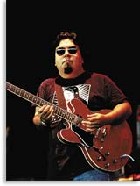
    Above Photo: Rick Gould

    This article originally appeared in VG‘s Sept. ’04 issue. All copyrights are by the author and Vintage Guitar magazine. Unauthorized replication or use is strictly prohibited.
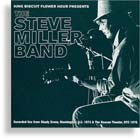
  • Steve Miller – King Biscuit Flower Hour Presents

    King Biscuit Flower Hour Presents

    Before he was FM rock radio king, Steve Miller was known as Stevie “Guitar” Miller. This live release, recorded in 1973 and ’76, shows why.
    Culled from Washington, D.C. and New York City shows taped for the “King Biscuit Flower Hour,” the two-disc set eloquently makes the case for Miller as consummate singer, songwriter, and musician.
    The first disc features a leaner, tougher version of the Steve Miller Band, with the Texas-born guitarist showing his stuff while leading a smoking quartet that boogies with the best of ’em. Signature tunes “Space Cowboy,” “Living in the USA” and “Gangster of Love” are standouts, along with lesser-known gems such as the ultra-funky “Shu Ba Da Du Ma Ma Ma Ma” and a closing string of blues numbers that serve as a true window to Miller’s inspiration.
    Miller’s touring band had grown to an equally impressive sextet by ’76, represented on disc two. The expanded lineup allowed him to don an acoustic guitar for many highlights here, including “Going to the Country,” “Seasons” and a rollicking “Going to Mexico” (the ’76 show is also the debut tour for harmonica player Norton Buffalo, who’d collaborate extensively with Miller in the coming years).
    The monumental “Fly Like An Eagle” is the 25-song collection’s only overlap, but two versions is a cool thing in this case. The chance to hear the song’s live development over a three-year period is worth the price of admission alone.
    Miller’s huge radio hits of the mid/late ’70s have always overshadowed his earlier work, not to mention his guitar chops. This release, a wonderful and valuable in-concert document of a talented artist just before he achieved well-deserved massive commercial success, helps remedy that.

    This article originally appeared in VG‘s June. ’03 issue. All copyrights are by the author and Vintage Guitar magazine. Unauthorized replication or use is strictly prohibited.
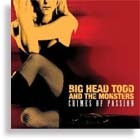
  • Big Head Todd and the Monsters – Crimes of Passion

    Crimes of Passion

    Big Head Todd and the Monsters have been around, and been a part of several music scenes. They were “the next big thing” in the early ’90s, with a hit record and a big following. They were powered by the songs, guitar, and voice of Todd Park Mohr and made fine records. But the hits didn’t keep coming. Sure, they were played on radio, but they weren’t exactly mainstream. That said, here’s there latest, and it’s a fine addition to a band that’s putting together an impressive catalog.
    The first noticeable thing is the influences. They are many, and they cover a broad spectrum – Zeppelin to John Lee Hooker to Al Green to any number of folkies.
    Mohr’s guitar anchors the trio. Check out the crunchy chords of “Dirty Juice.” Mix it with the John Lee Hooker-influenced vocals, and you’ve got a fine stew. That’s kind of how their whole deal works. “Beauty Queen” is the kind of slow soul with sly arpeggios dominating the solos and fills that Mohr has become the master of. In fact, “ICU in Everything” is a tune that brings to mind Al Green, and the Reverend may wish to cover. Great stuff, down to the slinky chords driven along by a quiet wah. “Angela Dangerlove” is a rock ballad with serious soul overtones, and a hook big enough to drive a Mack truck through. In a radio world where songs still counted, this would be a gigantic hit. It also features a soulful guitar solo that squeezes every ounce of feel out of the guitar that can be squeezed.
    The sound of the band has changed a bit over the past couple of albums. It’s become much more dense. But, it’s still inherently funky. And Mohr is one of the better rock guitarists of his generation.
    For those that think good, old-fashioned songwriting and performing is out of vogue, check out this one.

    This article originally appeared in VG‘s
    Aug. ’04 issue. All copyrights are by the author and
    Vintage Guitar magazine. Unauthorized replication or use is strictly prohibited.
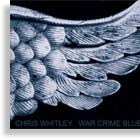
  • Chris Whitley – War Crime Blues

    War Crime Blues

    Chris Whitley caught my attention back in ’91 with a brilliant album called Living With the Law. He’s done a lot of things since. His sound has definitely gotten rougher, with stops at the industrial music shop. But he’s still rooted heavily in the blues. Thankfully, he’s not a slave to traditional blues and isn’t afraid to take things a little off the beaten path.
    War Crime Blues is one of two new albums by Whitley (the other is Weed). You can only pick them up at shows and online. It’s just him, his guitar and a stomping board. His reinvention of the blues takes many different directions. But with Whitley, it’s not so much always the sound alone. It’s the sound and the feel. Sometimes (well, many times) it’s a feeling of dread. The de-tuned nastiness of “Ghost Dance,” mixed with the John Lee Hooker-style boogie, is indeed ghostly. His take on Lou Reed’s “I Can’t Stand It” is filled with urgency and longing. “White Rider” with its tinny, odd, guitar sounds, creates an atmosphere you may not know much about, but you don’t want to be around that situation, if you know what I mean.
    Whitley’s guitar playing is a wonderful mix, mostly old-fashioned country blues. His playing and songwriting are as exciting as anything I’ve heard in some time. His originals are tough and different, and his covers are unique and timely. Besides Reed’s tune, he also covers the Clash’s “The Call Up” and oddly enough, there’s a beautiful voice-only version of the classic “Nature Boy.” And Whitley sings it beautifully. Different, but not surprising. His vocals on everything range from ghostly to tough, and always fit the songs perfectly.
    It’s hard to really catch the essence of what Whitely does in a review. He’s one of those guys, like Tom Waits, who has captured something in a bottle that nobody else has. It can be a challenging listen, but well worth it once you get there.

    This article originally appeared in VG‘s Aug. ’04 issue. All copyrights are by the author and Vintage Guitar magazine. Unauthorized replication or use is strictly prohibited.

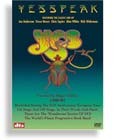
  • Yes – Yesspeak: 35th Anniversary DVD

    Yesspeak: 35th Anniversary DVD

    While many music DVDs contain mostly concert material, the 2-disc Yesspeak takes an alternate approach – it features the famous members of the prog-rock giant Yes talking about the music created during its 35-year existence (it was founded in 1969 and has never stopped performing). The other selling point here is that this DVD celebrates the reunion of popular ’70s lineup featuring guitarist Steve Howe, bassist Chris Squire, and keyboard wizard Rick Wakeman.
    Narrated, oddly enough, by the Who’s Roger Daltrey (who’s Cockney accent doesn’t quite jive with Yes’s high-brow persona), the three-hour set is broken into chapters spotlighting each member of the band. There, colorful anecdotes abound. For example, Howe talks about his famous 1964 Gibson ES-175D and how much he cherishes the instrument – so much it’s still in dead-mint condition after 40 years of constant use. That axe is so prized that he even buys the guitar its own seat on commercial airliners, registering the ticket under “Mr. Gibson.”
    Squire’s stories include tales of his infatuation with the Who and how his peripatic stage moves are largely based on those of his hero, Pete Townshend. Synth-god Wakeman proves to be the comedian of the group – in fact, he’s a noted stand-up comic and TV personality in Great Britain. One of his more amusing idiosyncrasies onstage comes during Squire’s long bass solo. It’s so long that Wakeman and his roadie set up a proper English tea break offstage and have a jolly time gobbling down scones and jam while Squire madly riffs away on “The Fish.”
    If the extensive interviews get you weary for actual Yes music, Disc Two of Yesspeeak also packs a full audio-only concert from the band’s 2003 Full Circle tour (150 minutes).
    While there’s something for everyone on this extensive DVD package, it’s clearly geared for the serious Yeshead who wants to know more about the members of the band, from the ever-serious Howe to the jovial Squire and beyond. Here’s to another 35 years!

    This article originally appeared in VG‘s Apr. ’04 issue. All copyrights are by the author and Vintage Guitar magazine. Unauthorized replication or use is strictly prohibited.

  • G&L Legacy

    I enjoy covering sleeper gear in this column. During the past 11 years, we’ve looked at bargains like the Gibson L-6S, Seagull S-6+, Martin D-1 and the Peavey Bandit, to mention a few. This month’s entree, the G&L Legacy, may be one of the finest instruments we’ve profiled in a while. If you act quickly, you can find them used under $600. For a Leo Fender-designed, made-in-America solidbody guitar, it’s a steal!
    We’ve profiled many Fender instruments over the years for a good reason – Leo made tools for the working musician. The Telecaster wasn’t much to look at, compared to a goldtop Les Paul or L-5CES. However, it had an unmistakable sound and perhaps that was Leo’s most underrated quality. He created fabulous sounds, over and over again. When we consider he wasn’t even a player, it makes his achievements even more remarkable! The short story is that Mr. Fender sold his namesake company in January 1965 to CBS for $13 million, recuperated from an illness he thought life-threatening and went back to work at his old job. He teamed with Forrest White and Tom Walker during the 1970s at Music Man, but ultimately began a new company with old friend and business associate George Fullerton. Leo simply wanted to design and manufacture guitars and basses his way. The Legacy was a later take on his classic Stratocaster, the best-selling electric solidbody guitar.
    Most Strat players, when pushed hard, will admit there are things they wish were different. A flatter fingerboard radius would make string bending easier. Bigger frets would help, too. Twenty-one frets are adequate, but 22 would be better, especially if the scale length and pickup placement remain the same. Putting the truss rod adjustment at the peghead would be more convenient, if it didn’t make the guitar look bad(one of Leo’s problems with Music Man guitars is that they looked homely). A better tremolo, with a two-point mount, would be more stable, especially during wild whammy workouts, and a removable trem arm with a tension adjustment screw would work miracles on a half-century-old design that often feels sloppy and hard to manipulate. How about a neck tilt apparatus that really worked, so you didn’t have to shim the neck to get the action like a custom made axe? Heck, a three-bolt design would be adequate, if the neck/body pocket was tight, the way it should be.
    And the sound! What if you could keep the three single-coil/five-way switch design but make it darker on demand, more like a humbucker? That would make a versatile guitar even more so.
    Happily, Leo loved listening to players’ comments, and the 1995 G&L Legacy has all of these features as standard equipment. The fingerboard on my Legacy is a beefy rosewood slab joined to the classic maple neck. The basswood body is finished in a gorgeous teal blue-green metallic finish with a pearl white pick guard that looks breathtaking under stage lights. Sperzel non-locking tuners work smoothly and hold tune well. The pickups, designed by Leo, are hum canceling in positions two and four. All five positions sound clear and have excellent response.
    I found my Legacy on the internet last fall and it has become a favorite instrument. This guitar works great, whether recording, teaching or doing live shows. I’ve run it through amps, direct as well as with the Digitech RP-200 and 300 and the Korg PX-3 Pandora.
    Perhaps the coolest feature is the bottom tone knob. I e-mailed G&L several times, asking how it was really intedned to work. They simply said, “The Legacy is not wired like a regular Strat.”
    In fact, the top knob is volume, the middle master tone roll off and the bottom knob seems to add more bass and midrange. In use, this feature lets me keep a typical Strat tone with the knob on 1, then add more bass and midrange for solos, power chords, etc. It’s not an active boost, but it adds a much-needed color when requested.
    This guitar seems more “hi-fi” than Strats I’ve owned – and I mean that in a good way. The Legacy has a smooth, extended high-end that records exceptionally well. Mixed in a dense track, the Legacy’s parts are always audible without being harsh.
    I do have some quibbles with G& L. I still haven’t been able to locate a description of what the bottom knob does exactly. The basswood body is quite soft and dents and scratches can occur easily. Perhaps most damning is the intonation. Prior to 2000, the factory installed .009-.042-gauge strings. That year, though, they went to .010-.046 sets. My guitar is off badly on the fifth and sixth string, with both fretting sharp above the fifth fret; I had to replace the saddle adjustment screw on them to successfully intonate my Legacy. I also have to use heavier strings (.010s) in order to play in tune all over the neck.
    That said, the Legacy is still one heckuva guitar. And G&L now offers its Tribute models of the Legacy and ASAT. They’re made overseas, and reach a lower price-point player versus the U.S. made lines. New or used, this guitar offers significant improvement over the Strat design. Try one out and see if you don’t agree.

    Riley Wilson is a guitar/bass/voice teacher based in Frisco, Texas. He also does voice overs as well as gigs with Sojourn and Mirror Image. Contact him at gigmeister1@yahoo.com.

    This article originally appeared in VG‘s Sept. ’03 issue. All copyrights are by the author and Vintage Guitar magazine. Unauthorized replication or use is strictly prohibited.

  • Maxon VS Effects

    Five Boxes of Fun

    With their straight-out-of-
    the-’70s groovy colors –
    pea soup green, bright
    orange, powder blue, plum purple, and Mopar metallic green – Maxon’s Vintage Series Effects look like new old stock, lost-in-the-basement-of-a-music-store units.
    But we’ve seen loads of cool-looking pedals that just didn’t float our boat. Because we’re all about tone, obviously, the real test is whether they sound like vintage pedals. Phycially, they’re all a match (except for their colors), sharing the same cast metal case (6″x4″), black retro knobs, on/off LED, and classic heavy duty stompswitch.
    To find out, we tested them with a ’68 Gibson SG and an ’83 Strings-N-Things Telecaster copy plugged into a Carvin 2×12 Belair combo and a our co-feature review amp, the Reverend Hellhound 40/60.

    AD900 Analog Delay
    The control layout was what you would expect, with knobs for delay time, repeats, and delay level. The delay time knob offers no indication of the actual delay time, but we found the shorter slap-back delay sounded best – a lot like a tape echo, in part because the repeats had a mirky analog tone to them. Longer delays (500 to 600 ms) could be used effectively, if subdued.
    We noticed that this was a very quiet pedal compared to other analog (and even some digital) delay pedals, and a more reliable alterative to a tape echo.

    CS550 Stereo Chorus
    We hooked this in stereo through two amps and were able to achieve great stereo separation by manipulating the depth and delay controls, giving us a very liquid, Univibe-like sound. In mono into just one amp, we got flanger-like tone with lots of depth due to the rear-mount depth control, which was a bit difficult to change on the fly.
    Again, the pedal is very quiet and there is no loss or coloration of tone.

    PH350 Rotary Phaser
    With controls for speed, depth, feedback and mode, this pedal emulates different classic phase patterns. We also tested it in stereo and found the center-detent feedback control offered both positive and negative feedback.
    Compared to other phase shifters, the PH350s subdued effect won’t let you overdo it. Waylon and Willie probably won’t like this pedal.

    DS830 Distortion Master
    We were able to obtain everything for a thick, crunchy overdrive to heavy distortion with a lot of musical sustain. The no-frills control layout (gain, bass, treble, level) covered most needs, except maybe the heavy metal “scooped mids” sound.

    OD820 Overdrive Pro
    This unit sounds a lot like an original TS808 or Overdrive II, with slightly more midrange and less low-end. A very usable, ultra-smooth-sounding pedal, whether used for all the distortion, or to drive the preamp in the Hellhound.
    While all the Maxon Vintage Series pedals borrow a ’70s vibe cosmetically, and offer true vintage effect tones, they draw the line in a key area: quality of construction. Unlike our often-chinzy friends from back in the day, these pedals are well-built, high-quality, and quiet. And each is packaged with its own AC power supply and skid pad. If there was one other ’70 aspect the Maxons could share, it’d be price, which may keep these units out of range for many.

    This article originally appeared in VG‘s Feb. ’02 issue. All copyrights are by the author and Vintage Guitar magazine. Unauthorized replication or use is strictly prohibited.

  • Reverend Hellhound 40/60

    One step to

    Reverend Musical Instru
    ments founder Joe Naylor’s
    head is always cranking out
    cool ideas. A Roberto-Venn graduate who in 1996 sold his amplifier company so he could start building guitars, Naylor recently went back to the future with the introduction of his Hellhound 40/60 amplifier.
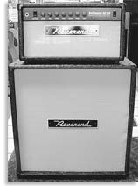
    Designed by Dennis Kager (of Ampeg fame), Reverend says the Hellhound delivers high-end “boutique amp” performance at a working man’s price. Available as a 1×12 combo or head with 4×10 cab, the Hellhound is an all-tube amp that uses a pair of matched 6L6s power tubes and three 12AX7s in the preamp with the option of swapping one for a 12AT7.
    Controls include gain, volume, treble, mid, bass, presence, reverb, power switch (there is no “standby” mode) and what Reverend calls a “Schizo” switch, which lets you choose between U.S. and U.K. voicings.
    The back panel includes three speaker output jacks – one each for four, eight, and 16 ohms, as well as a pair of jacks for an effects loop, and a switch that selects outputs of 40 or 60 watts.
    The open-back speaker cab features four Reverend All Tone 30-watt 10″ speakers with high-temperature voice coils in a series/parallel wiring configuration (eight ohms).
    Both head and cabinet are covered with a very cool “tooled leather” black tolex that contrasts nicely with their light gray salt-and-pepper grillecloth.
    Our test axes included a ’68 Gibson SG Standard, an ’83 Strings-N-Things Blues Master II (Tele copy), and a ’98 Reverend Avenger.
    Included with the amp were some sample settings that offer a great starting point. The first setting we tried was the “Blackface Chime” which utilized the Schizo switch in the U.S. position and all three 12AX7s in the preamp. This configuration delivered quite authentic tone, with tons of low-end and clean, sparkly top-end. Though the low-end “farted out” just a bit at higher volumes with the SG and Blues Master (vintage blackface amps share this tendency), it stayed nice and punchy with the Reverend Avenger.
    Next we tried the “Nasty Old Supro” setting, which used the U.K. position on the Schizo switch and a single 12AT7 and two 12AX7s in the preamp. The U.K. position boosted the gain, added some mids, and cut tones at the very top-end. With the SG it produced a great overdrive roar with lots of attitude and not a ton of gain – but enough for blues-rock work.
    The rest of the settings all sounded good, and most (if not all) sounded better with the power switch in the 60-watt mode and the 12AT7 in the preamp (in U.K. mode, especially).
    If there’s a nit to pick it’s the short reverb pan. Though it sounds clean and bright, a full-size pan would warm it up measurably.
    Like all Reverend products, the Hellhound offers a whole lotta bark for the buck, has loads of cool vibe, solid tone, and as promised, is priced well within reach of most working musicians.

    This article originally appeared in VG‘s Feb. ’02 issue. All copyrights are by the author and Vintage Guitar magazine. Unauthorized replication or use is strictly prohibited.

  • Earl Slick

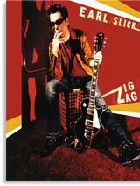
    Zig Zag Back To The Top

    Earl Slick landed his dream gig back in 1974, when a friend referred him for a gig with David Bowie, replacing Mick Ronson. During this period, Slick recorded three monumental albums – David Live At The Tower Philadelphia (1974), Young Americans (1975), and Station To Station (1976). He went on to collaborate with other major artists including John Lennon, Yoko Ono, Ian Hunter, David Coverdale, Phantom, Rocker and Slick, and release several solo discs.
    Now, nearly three decades later, Slick has reunited with Bowie, appearing on Heathen (2002) and Reality (2003). Additionally, Slick invited Bowie to accompany him on a track for Zig Zag (Sanctuary, 2003), his first solo record in 12 years. Along with Bowie, the disc features collaborations with several guest vocalists, and an assortment of instrumental tracks.
    While on a short break back home in New York, VG chatted with Slick about his incredible career and the gear he has chosen along the way. Slick recalled his early days with Bowie and Lennon, and spoke about the experience of making his latest solo disc, noting the changes in his playing style and musical preferences. Furthermore, Slick offers up some valuable advice on becoming a better songwriter.

    Vintage Guitar: What inspired you to play guitar, and who were your earliest influences?
    Earl Slick: Everybody from my generation saw the Beatles on Ed Sullivan, and that was the beginning of it. That was the inspiration. As far as the influences go, it was very much Keith Richards and Brian Jones at the beginning because of Brian Jones’ slide stuff and Keith’s sort of twisted Chuck Berry thing, and then the Yardbirds. It would be very early on, so it would have been the Clapton and Beck period. That’s the Having a Rave Up, For Your Love period.
    As a player, I developed into a hodgepodge of all those guys, with a little bit of Hendrix. But I had a hard time trying to pick out what he was doing. But what ended up happening was I took all of that in, and I never actually sounded like any one of those people.
    In what ways has your approach to playing changed over the years?
    The biggest change has probably been in the last six or seven years, because I started writing a lot more and I’ve been much more conscious of what’s going on sonically, as opposed to what’s going on with chops. I don’t like using my chops anymore. It bores me. I approached David Bowie’s stuff a lot differently way back than I do now. I’m playing less, but I think my playing is a lot more intense and I’m playing more to the sound of things. I’m playing simpler and a little more thematic, and a lot less jammy and bluesy than I used to. Because I write so much now, I’m approaching the songs more like a songwriter.
    So, to me, onstage and even in the studio, it’s playing specific parts that have different sounds and sonics that is more interesting to me. I prefer playing rhythm more than doing all the cool-guy solo stuff. I found myself playing things and then thinking it’s boring. If it’s not doing anything for me and if I’m bored, the audience must be hating it. I think that if you just keep doing something long enough and doing it the same, you’ve got to get bored. You wouldn’t want to keep wearing the same clothes you had 10 years ago.
    Which players were most influential in your gear choices?
    That would have been more getting into Clapton and Beck. In the early years, my first real guitar was a Tele because I saw a picture of Beck with a Tele. I think it was on the Rave Up album.
    My next real guitar was an SG because of Clapton in the Cream period – that old beat-up painted SG. From the SG I went to Les Pauls. I still used the SG, too.
    The Strats probably came in around 1975, then it was Strats and Les Pauls in the studio. But live, I was pretty much using Gibsons because I hated using any kind of pedals to get the fat sound, and the Les Paul did the trick. So I tended to use the Les Paul because of the fat factor.
    By the ’80s, I started going for modified Strats and Teles, and pretty much didn’t use much humbucker Gibson stuff at all. That went on for a long time. In the ’90s it was the same, and I was using beefed-up Teles.
    Now I’m back on Les Pauls. I’m back to fat again. I’m using the Strat on about four songs out of a 30-song show.
    Which guitars do you currently have on tour?
    I’ve got a cherry sunburst Les Paul Standard with a Bigsby, and a black one with a Bigsby. Those two cover most of the show. Then I’ve got a double-cutaway goldtop Les Paul Classic. They are so cool. It’s got a thinner ’60 neck, and that’s what I have on the other ones, too. I don’t like the old ’50s neck as much. It’s an interesting guitar and it definitely sounds different from the others because it’s chambered. It’s a very warm-sounding guitar. Those guitars are all stock. It’s the first time in years that I haven’t had to modify my guitars.
    I’ve also got an Epiphone Jorma Kaukonen model which has a Bigsby, too. It’s got a great neck, with a 335-style body. It sounds good acoustically, but it didn’t have the type of electric tone I wanted. So I gutted it and put in a pair of DiMarzio PAFs.
    I’ve got an ESP that’s highly modified, with DiMarzio Fast Track pickups, and a modified tone control with capacitors that change how the tone control works. When I roll it off, it doesn’t get muffly. It actually sounds like a wah wah in a half-cocked position. It’s very honky and midrangy, and very sustainy. I also had a Fernandes Sustainer installed. I use that guitar on “Heroes” so I don’t have to use the E-Bow. Jerry Leonard, the other guitar player, and I are doing a very similar thing with that sustain, but he’s using the E-Bow and I’m using the Sustainer. I also use it on the second half of the solo that’s at the tail end of a song called “Sunday” from Heathen and for a song called “The Motel.”
    I’ve got my Ampeg Dan Armstrong on the road with me, too. It’s a reissue. It’s actually as good, if not better, than the originals. They’re way cool. I pull that one out on the encores. I’ve also got a Tacoma dreadnaught 12-string.
    Which amps and effects are you using?
    I’m using Ampeg 50-watt Reverb Rocket half-stacks with Ampeg 4×12 cabinets. I love them. For effects, I’m using the Line 6 DL4 Delay Modeler, Boss DD-3 Digital Delay, and Ibanez DE7 Stereo Delay/Echo, which is a cheap-ass pedal and it’s really cool. I think it’s digital because you can get really long delaysthat you can’t get with analog pedals. Then I’ve got an Ibanez CF7 Stereo Chorus/Flanger that does some very cool stuff, and a Voodoo Labs Micro Vibe. I’ve also got a Dunlop Dual Distortion, and I’m using two Tube Screamers – one original model and one new model. I’m using the older one for the more cutting tone and I’m using the newer one for more bottom-end stuff.
    Do you have a collection of vintage instruments?
    I’ve got a great ’69 Gibson J-45, a ’65 SG Junior, an old Strat and an old Tele. I couldn’t tell you the years, but they’re both ’60s. I bought the SG and the J-45 new, and I don’t remember when I bought any of the other ones. The J-45 gets used a lot in the studio, but I haven’t used the SG in a long time. I won’t take it on tour because I’m afraid something will happen to it.
    Tell us about your experience working with David Bowie. How did you initially hook up?
    I hooked up with David in 1974 through a friend, Michael Kamen, who just passed away. I’ve know Michael for 30-some years now and we had once worked together in a band. At the time, he had scored music for the Joffrey Ballet, and David was there. Mick Ronson had just left the band and David mentioned he was looking for a guitar player, so Michael threw me right into the mix.
    What circumstances brought you back together after all these years?
    You know what? I don’t know! I have the slickmusic.com website, where we do some CD reissues, and my webmaster got an e-mail from David’s office saying that if this is Earl Slick’s website, please have him contact us. So that’s how the whole thing started. That was the very end of ’99 or the first week of January, 2000.
    What do you consider your best work with Bowie?
    A lot of the reviews said David Live At The Tower. I think it’s Station To Station and Reality. On Station To Station, the title track and “Stay.” On Reality, “New Killer Star” and the title track.
    Tell us about some of your studio work in the mid ’70s, after leaving David’s group.
    There’s a lot of stuff, and to be honest, I don’t remember a lot of it – nor do I care to. But I can’t forget that I did two albums with John Lennon and had the time of my life.
    How did you connect with John Lennon?
    It was just another one of these weird things. I get a call from Jack Douglas, the producer, saying he’s putting together a band for John. He said John was in the studio and he wanted me to play on the record.
    So John hand-picked you?
    Yeah.
    What was that like?
    It was amazing. As different as they were artistically, and given the fact that John came from a band and David has been a solo artist his whole life, they operated in the same way, from an artistic point of view. When you were brought in to do something, they knew what you did and they capitalized on that.
    What do you consider the highlights from the Lennon period?
    The whole process! The whole damn thing – waking up every day, getting into a cab, going to the studio, and being in the studio with John. It was just like one continuous “Wow!” In a way, it was surreal. But actually, right now it’s even more surreal because it was so long ago. Sometimes I’ve got to look at the album and go, “Yeah, I’m there.” It’s funny how we’re like little kids sometimes. They put together a box set a few years ago which included outtakes from the Double Fantasy period and outtakes of some stuff that ended up on Milk and Honey. There’s one song – I think it might be “I’m Stepping Out” – and right before he gets to the solo, he yells my name. When I got it, I just kept playing it back in that one spot to hear him say my name!
    As far as the standout tracks, I think “I’m Losing You” on the Double Fantasy album. I was very happy with that because I got to play a very cool solo. For some reason, playing acoustic guitar on “Beautiful Boy” was really cool, too. The material on Milk and Honey was actually recorded at the same time. The tracks we originally finished came out on Double Fantasy and then the other ones ended up on Milk and Honey. Some of it was kind of cool because it was like live. Some of the solos were live.
    You also worked with Yoko Ono after John passed away.
    You know, the woman has taken more beatings in the press… I found that at the time, approaching Yoko as Yoko, the person, that you know at the moment, and not the person everybody likes to slap around, that she was cool. She treated me very well. I enjoyed playing on the records. And considering that it was after John was killed, there were some emotional days, but she treated everybody just fine. I think she was viable musically, but abstract people scare the public. That’s just a fact of life.
    Tell us about the formation of Phantom, Rocker & Slick. Had you known Slim Jim Phantom and Lee Rocker before then?
    I’d just finished a tour with John Waite. He went in to do another record and I decided I didn’t want to do the album. So I went back to L.A. and was supposed be going to the NAMM show, but I didn’t want to go. My ex-wife said I should just go because I’d enjoy myself, and who knows, something might come out of it. So I went.
    At the show, a guy comes up and says that Slim Jim and Lee from the Stray Cats want to meet me. So I go talk to them, and we hit it off. They said they had this little project going on and they wanted a guitar player for it, and they asked me if I’d like to do it. So we got together and jammed a couple of days in the studio. We had a really good time, and just went from there.
    Was it difficult when some perceived you as Brian Setzer’s replacement?
    Oh, I got plenty of that. We’re very different players, plus, I wasn’t the lead singer. But I really didn’t pay much attention to what people were saying. I was having a good time.
    What are the best examples of your work from that period?
    I thought the first album had a lot of good stuff on it. I thought “Men Without Shame” was a really good track, and it did quite well. The video did well, too. I also like “My Mistake” because Keith [Richards] plays on that with me. Then we did another record, and that was a disaster. The drugs had taken over by then and it was about a year before I got clean.
    Tell us about your experience making Zig Zag. How did the songs come together?
    I started writing, and got inspired to make the record. I started recording in March, 2001, then other things came up. Then I went on the road to Japan for awhile. When I came back, I did some more writing, then I went on the road with David again. I came back and did more writing and recording.
    It started as an instrumental record, then having cut the track with David, I thought it didn’t have to be an instrumental record, and I didn’t have to hire a lead singer. I thought I could just bring in some people I really like. My producer, Mark Pilati, was working on a track for The Cure. I went into the studio and did all the guitars for it, then Mark went back to London to mix it with Robert Smith. While he was there, Mark played him some of the stuff I was doing, and Robert wanted to get involved. So it all kind of happened organically.
    When you’re writing, how do songs typically emerge?
    It’s usually just me hitting on some kind of chord progression I like. Sometimes I’ll actually get a vision in my head where I’ll hear something, then I’ll sit down with a guitar and see if I can actually play what’s in my head.
    /B>Do you favor a particular guitar for writing?
    When I get into writing mode, I have a floor full of guitars laying around, upside-down, under chairs, hanging over here and there, and there’s no particular one. It’s whatever the flavor of the day happens to be. Sometimes I’ll just put the guitar through a bunch of pedals and step on one and go, “Wow, that sounds cool.” Then I’ll start playing and all of a sudden something comes up that inspires an idea.
    How do you document your ideas?
    This time I was using a Tascam 4-track. I would throw down one rhythm track and one melody track, then I’d leave it alone and write another one. I also have a friend who had a rig set up at his house. I’d go over and write and record. We’d make two-minute demos with a drum machine, so they were a little more cohesive. So there was a combination of both really rough stuff and some stuff that actually sounded really good.
    How did you select tracks for the guest vocalists?
    The guest vocalists chose the tracks. In David’s case, I had these seven really rough pieces and we sent them, then he picked one. We did the same thing with Robert Smith, but at the time, I was recording more elaborately, meaning there was a drum machine and a bass on it, and maybe a keyboard.
    That’s pretty much what we did with everyone; we let them pick one that inspired them, then we let them run. The lyrics and melodies were written by the singers.
    How were their vocals recorded? Did you bring them into the studio with you, or send them the tracks?
    With David, for instance, once we figured out the form he was writing in, we cut the track, then he came in and sang. With Robert, I sent him a stereo disc with the demo. He put that into Pro Tools, sang on it, and sent it back to see if I liked it, and I did. When he finished off his lyrics and melodies, we took the form that he did, and then we recut the track. We sent that back to Robert, then he sang on it and sent it back to us.
    With Martha (Davis, of the Motels), we actually wrote the song together, in the same room. I had the basic guitar riff and stuff, and then she wrote the lyrics. The track was cut, then she was flown in and sang it. With Roy (Langdon, of Spacehog), we gave him the “Zig Zag” track and he gave us his lyrics. Then we put everything into Pro Tools and cut it up so it matched where he was. Plus, we did some changes to it with drum loops and other things. With Joe (Elliot, of Def Leppard), it was the same thing. It was great. The track was already cut, so all we did was get his files so we could mix it.
    Was it strange, giving direction to David?
    It was funny, actually, sitting there while he was doing the vocal. It was coming out great. He asked what I thought about the ending and I said, “Well, what if you tried this on the harmony… ” It was ****ing weird giving him direction! I was stepping back from myself the whole time, like there was one of me at the console and one of me just watching everything in the room.
    Which guitars and amps were used on your tracks?
    The early stuff was all cut with a custom Peavey and Gibson ES-335. Then, when I came back in, I used the Peavey on some of it and put on more Les Paul. For amps, there were the Ampegs and some Line 6 Pod Pro and Amp Farm software. Mark might have used Amplitude, too.
    Was the recording was done entirely in Pro Tools?
    It was done in Logic (Emagic recording software). I just call everything Pro Tools. I guess it’s becoming a generic term these days like Band-Aid or Kleenex.
    How many guitar parts did you record for each song?
    It would depend on the song. On “Believe,” Robert Smith’s track, there are acoustic guitars on the left and right, a subtle slide guitar that goes through the track, and the ESP with the Fernandes Sustainer for texture, and for the solo. “Zig Zag” is all over the place. I just had these ideas popping out, and they all worked. So there are all kinds of guitar tracks on there.
    Did you use a variety of guitars, or more variety in effects?
    Different effects for different sounds. On “Pike Street,” the main thing is a Les Paul through this weird preset on the Pod XT called “Kiss The Sky.” It’s a Hendrixy sort of thing. It’s on the solo, toward the end.
    Something funny about that one; I’d just gotten the new Pod XT after the basic track was cut. I told Mark I was going to mess around with it, and told him to just roll the track. So I’m playing along, and while I’m playing, I’m dialing sounds up and playing things, and dialing up more sounds and playing, all at random. That’s what became the lead track. He was rolling the tape because he knows I’m like Mr. One-Take Willie. So that’s how most of the lead track on that song came together. You’ll hear the sounds change, and that’s what happened. I had a new guitar and a new toy.
    What advice would you give others on becoming better songwriters?
    That’s just a matter of doing it and learning that sometimes you’re going to get these things from inspiration, and sometimes from making yourself play it until something pops out.
    The trick that’s made me a better songwriter is that I don’t necessarily finish these things when I start them. I go for the inspiration. When I get the inspiration, I record it real quick, then I leave it alone and move on because while the inspiration is there, I would rather spend the time on another piece of music than pissing around trying to make the last piece perfect. I’m not one for being perfect, anyway. You can spend an awful lot of time once you come up with the main idea of putting on additional tracks here and there. By that time, you’re kind of tired and your inspiration is gone. In that few hours, I could come up with the beginnings of the songs that I’ll develop down the line. I try to catalog the ideas and then go back to them later and weed them out.
    What do you listen to for enjoyment?
    This week I’ve had Innervisions rolling – I’m getting back into Stevie Wonder of that period. I like a band called the Marvelous 3, and I’ve been rolling the hell out of that one. There’s a Canadian band I love called Starling, and I’ve been spinning them a lot. I’ve also been listening to the Dandy Warhols’ Thirteen Tales From Urban Bohemia. It’s a good album. I enjoy the hell out of it.


    Above Photo: Eddie Malluk

    This article originally appeared in VG‘s Mar. ’04 issue. All copyrights are by the author and Vintage Guitar magazine. Unauthorized replication or use is strictly prohibited.

  • Pat Martino

    Legend, Treasure, Inspiration

    He is a living legend, a national treasure, and an inspiration to musicians and music lovers of all stripes.
    Pat Martino’s exemplary career spans four decades, and his personal tale of trial and tribulation is one of the most powerful and miraculous success stories in music history. From his formative years as a sideman (or “sidekid”) in the rough-and-tumble chitlin circuit and smoky jazz bars to his inevitable ascendancy in the rarefied circles of the jazz world, Pat has remained true to his artistic ideals with staggering results. An artist more interested in exploring new musical terrain than rehashing old formulas, Martino is a true pioneer and a self-styled alchemist of the guitar. The most obvious and striking aspect of his magic is his seemingly effortless and unflagging ability to transform scales and licks into long, mesmerizing streams of consciousness.
    Like the magic potions of the legendary alchemist, Martino’s unique conceptions are conjured up regularly from a bottomless well of ideas. He personifies the five T’s – tone, time, technique, touch, and taste. But don’t take my word for it, just give any of his discs a spin, or ask any knowledgeable member of today’s musical cognoscenti. Martino’s fans and admirers are legion and have included players far outside the genre, like Pete Townshend and the late Jerry Garcia.
    Today, Martino is supreme among the jazz voices of his generation. Following years of accomplishment, he continues crossing and redefining boundaries in his art. He is a true musical globalist; comfortable with and routinely blending straight jazz, bebop and swing, jazz rock fusion, blues, ethnic sounds, avant-garde and mathematical music. However, his priorities are communication and the social impact of his playing, and constantly challenging himself.
    We caught up with the master while he was on the heels of completing his newest album, Think Tank (Blue Note, 2003).

    Vintage Guitar: What was your early musical background?
    Pat Martino: I was introduced to music by my father. He had an interest in jazz music and was an amateur guitarist at a rudimentary level. He had a guitar around the house and would sing songs on Saturday, after work.
    My father worked as a tailor in a clothes factory. Both he and my mother worked in what was referred to as “sweat shops” until they finally opened their own clothing store. Anyway, he used to sing songs using the guitar as an accompaniment, just strumming chords. These were in the culture; they were Italian songs he would sing to my mother.
    Were you interested in guitar at an early age?
    I was curious. I’ve been told that when I was about three years old I went into my father’s bedroom to look for his guitar. He kept his guitar under the bed. I started playing around with it and cut my fingers on it, on the strings. It was the first time I had bled. Apparently, I began painting the bedroom wall with my blood. That’s how my parents found out that I had been playing with the guitar. From that point my father kept me away from the instrument completely.
    How did you begin playing guitar?
    When I was about 11 my father helped a favorite cousin, Joey Azzara, get a guitar. He wanted to be a guitar player. I was envious and got on a campaign to have my father buy me a guitar. He bought me a $10 guitar from a pawn shop when I was 12. It was really a little wooden item that resembled a guitar, a children’s toy. He said, “If you can play something on this, I might get you a guitar.” And I did.
    Within six weeks, he took me to Wurlitzer’s music store on Chestnut Street in Philadelphia. It no longer exists. My father bought me a Gibson Les Paul Standard, the gold painted model. This was in 1956.
    This was a gold top Les Paul with white soap-bar pickups?
    That’s right. Within six months we exchanged it for a Les Paul Custom, the black beauty “fretless wonder. ” When we were first in Wurlitzer’s I saw and wanted that one, but my father said, “You’re not good enough yet. “
    He wanted you to strive and work for it…
    That’s it exactly.
    Was that Les Paul Custom the one you played in the first phase of your professional career?
    Yes, I played it for many years.
    Which guitarists influenced you in that time period?
    My earliest influences were Johnny Smith and Les Paul. Les Paul came first, because of the name on the guitar, but not only that. Les Paul and Mary Ford were extremely successful in the media – radio and 45 RPM records. Les was followed by Johnny Smith, and the awareness of players like Mundell Lowe, Barry Galbraith, and Jim Hall.
    Wes Montgomery was a true influence; the others really represented an awareness and respect for their facility as professionals. Hank Garland and Joe Pass were also influential. In retrospect I would have to say it comes down to five major influences: Les Paul, Johnny Smith, Hank Garland, Joe Pass, and Wes Montgomery.
    I hear elements of those players in your style. Were you influenced at all by Kenny Burrell and Grant Green?
    Not really. The only things I picked up from Burrell or Green were personal relationships in Harlem. As far as their legato, stylistic way of playing, no. I had more interest in a staccato style, where more notes are picked.
    Were you influenced by other instrumentalists?
    Yes, more than anybody, my greatest influences came from (trumpeter) Donald Byrd, (alto saxophonist) Gigi Gryce, (trumpeter) Miles Davis, and most of all from (tenor/soprano saxophonist) John Coltrane.
    How did Coltrane influence you?
    Coltrane influenced me to move into a higher level of respect and position in the musical community, more than the music itself. To this day, the technical side of the instrument is secondary to other reasons for playing, like social impact and the spiritual delivery of the performance.
    With John I was drawn to how dynamic he was as a person. I was more interested in his social interaction and leadership than in his craft. With Coltrane and Miles Davis, I was influenced by their leadership and interaction with sidemen. This affected my experiences as a leader; in regard to the various sidemen I’ve played with on my different projects and the different musical environments that have been created in the studio and in concert.
    The end result was that I learned more about music by studying the people than the craft. I wanted to be a successful jazz guitarist, but I wanted to be a strong artist like John Coltrane, Miles Davis, Cannonball Adderley, Sarah Vaughn, or Frank Sinatra. I wanted to be an individual who stuck out.
    How about alto saxophonists Charlie Parker or Sonny Stitt?
    I never really got into Charlie Parker. I got into Sonny Stitt because I worked with him. The title track of my album, Strings, is dedicated to him. String was his nickname.
    What were some of your earliest professional experiences? Were any of them particularly pivotal?
    Working in [R&B singer] Lloyd Price’s band was pivotal. It was an 18-piece big band which included the Turrentine brothers – Stanley and Tommy – Slide Hampton, Julian Priester, Charlie Persip, Red Holloway… there were so many great players in that band. It was the hottest big jazz band in New York City at the time. We played 40 minutes with Lloyd, but before he came out and did his show we played for an hour