Month: September 2005

  • Jodi Head Guitar Straps

    Stand out in a crowd

    For over 15 years, artist and
    designer Jodi Head has been
    producing high-quality hand-
    beaded products, including guitar straps, and her client list reads like the guest list to the Grammys.
    Head’s beaded straps, ranging in price from $400 to $1,000, are used by top musicians like B.B. King, Buddy Guy, Richie Sambora, Les Paul, Dickey Betts, Steve Vai, Kid Rock, Melissa Etheridge, Emmylou Harris, Paul Stanley, Sheryl Crow, Merle Haggard, and many more. For us Grammy guestlist wannabes, she makes a less-expensive series of straps called the Wholesale line, which range in retail price from $30 to $120. We checked out seven of them.
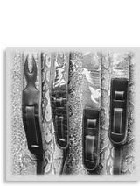
    Most of the straps have the standard 21/4″ wide high-quality leather base, but are overlayed with cloth, leather or simulated snake skin and machine stitched. The ultra-cool materials include a purple oriental dragon pattern, glossy black, and red alligator, a horseshoe-and-cowboy pajama flannel, a flock of cranes in a midnight sky, a matt black snakeskin, and a natural snakeskin with red leather piping.
    All the straps have the standard loop-through length adjustment and two strap button holes on one end for quick adjustments. Each is very comfortable, of the highest quality, and had its own unique “personality” with lots of cool New York City vibe. If you’re looking for a little flash and flare to set you and instrument apart from the crowd, check out Jodi Head straps.
    (Ed note: At this month’s NAMM show, Jodi is giving away of one of her straps, hand-beaded with Austrian and Chezch crystal sewn into leather. Check it out at booth 4853.)

    Jodi Head Straps
    Type of Strap: 21/4″ leather.
    Features: Machine stitching, overlays of custom cloth, leather, or simulated snake-skin.
    Price: $30 to $120.
    Contact: Jodi Head Guitar Wear, 104 E. 4th St. #G-4, New York, NY 10003, (212) 995-5116, jodihead.com.

    This article originally appeared in VG‘s Mar. ’02 issue. All copyrights are by the author and Vintage Guitar magazine. Unauthorized replication or use is strictly prohibited.

  • Danny Gatton

    Finishing the Business

    For most musicians, the road to success is like skipping stones: often arbitrary and elusive, just as the prize beckons within reach. However, when the subject being scrutinized avoids the fray by choice, the quest only grows ever more fascinating to outsiders.

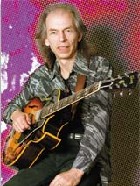
  • Steve Howe

    More Midnight Musings

    Our first interview with Howe was recorded in the middle of the night, while Howe was in a studio with guitarist Martin Taylor (both talks appeared in the September ’96 issue), recording an album that featured instruments in the Scott Chinery Collection. This time around, our one-on-one was in-person following a Yes concert. The band had welcomed keyboardist Rick Wakeman back into the fold for an extensive tour, which meant the quintet (Jon Anderson, vocals, Chris Squire, bass, Alan White, drums) was performing many of the extended, exhilarating songs they’d first purveyed 25 years before.
    Howe was in an upbeat mood while discussing his many releases from the mid-’90s to present day, particularly his late-’02 solo release, Skyline (Inside Out Music).
    Asked his opinion of how the Chinery album turned out, Howe pronounced the results to be “…just wonderful!”
    “It was a great thing to do,” he added. “In two weeks, we did so much work, played so many guitars, and invented so many tunes and arrangements… We had done a lot of preparation, though, and I’m really pleased. It was sad that it didn’t come out for so long, but it gave me a chance to go back two or three times and work on the mastering. I love Martin’s work on it, and I liked my tunes. It’s the kind of recording I’ll love in the future, whenever I hear it.”
    There had been allusions to touring with Taylor, and Howe says it could happen.
    “We’ve got a lot of ideas; a lot of possibilities,” he said. “We did do one live show, when we did a little show on the blue guitars (archtops commissioned by Chinery) for Scott at the Smithsonian Institution.”
    Since the mid ’90s, Yes has released three studio albums, Open Your Eyes (’97), The Ladder (’99), and Magnification (’01).
    The Ladder was a great experience because we got to work with the late (producer) Bruce Fairbairn,” noted Howe. “And he actually re-educated us! Magnification was a very big project; a lot of work, since we had an orchestra. I like some of it; I think that now that we’ve got Rick (Wakeman) back, we may go in a bit of a different train of thought.”
    A couple of unusual albums also appeared in the not-too-distant past. Keystudio incorporated the studio tracks from the mostly-live albums The Keys To Ascension (Volumes 1 and 2). Howe described such a concept as “…kind of a twisted approach, but I rather like it.”
    1998’s Friends and Relatives was an eclectic mix.
    “Those things are just put together by a label,” Howe emphasized. “We get involved occasionally, and sometimes they ask me to add something else to some tracks. They’re just compilations.
    “I love Bob Dylan’s music, particularly his old music,” Howe said.
    And that’s why he opted to record a solo album of Dylan songs with his own interpretations. His son, Dylan, played drums, and Howe played all other instruments, and assorted guests on selected tracks included Jon Anderson, Geoff Downes, and Phoebe Snow, among others, most of whom handled vocals. Portraits of Bob Dylan was released in 1999.
    Another selection of Howe material, titled Homebrew 2 , was released in 2000.
    “Those are my ‘pre-tapes,’ sort of demo tapes,” he said. “But sometimes my demos are surprisingly elaborate for eight tracks. Usually, the ideas and arrangements are utterly, if not totally different, and that makes [the demos] valuable to me. I conceived it one way, and released it another way. Then I listen to the demo again, and think ‘That was pretty far out. Maybe I should have released it that way.’ Volume one and volume two were recently released in Europe as a double set.”
    We noted that title of 2001’s Natural Timbre implied that the album was acoustic.
    “Yes, it was,” Steve said with a smile. “That was an opportunity to shut down part of my collection, and I really enjoyed it. I’m using my collection in different ways – not like we did with the Scott Chinery Collection; not so ‘mentally’ – all the electrics had gotten boring, but it was still tempting on occasion to play one, but for the most part, I ‘lived in an acoustic environment.’”
    Recent touring with Yes has seen Howe utilizing his almighty 1964 Gibson ES-175 and other instruments. But we harkened back to the band’s “Masterworks” tour in 2000 to inquire about a unique (for Howe) performance guitar. The band has opened with “Close to the Edge,” and Howe played a red Gibson Les Paul Custom with gold hardware.
    “My [Gibson ES-345] Stereo became unreliable,” Howe said. “Some nights it would sound absolutely great, and other nights it would let me down; the pickups didn’t have the power. So it was repaired by Hugh Manson, and during that period I played the Les Paul, which I liked in some respects, but wasn’t giving me the sound I wanted. It’s a very friendly guitar to play, and now I’m using it more than ever in the background of my project work.
    “I like to be able to go further with one guitar than having to use multiple guitars,” he said. “I don’t play a Rickenbacker; I’ve got a nice 12-string, but I prefer to use a Steinberger 12-string, which is fantastic to play – like driving a new car, especially the neck. The neck on the Stereo and the 175 are ones I love, obviously.”
    We then discussed the return of Wakeman.
    “Well, it was time Rick came back because we had been doing other stuff so much,” said Howe. “This brings back the musicality and the dependence of five individuals working together. Rick’s ‘flavor’ really helps that.”
    Howe was recently involved with the production of another boxed set titled In A Word , and validated his propensity to hang on to all sorts of primeval and preliminary recordings.
    “To be honest, the (rest of the band) aren’t great collectors of tapes… but I’m a hoarder! The label and management got in touch with me, since I was reputed to have all these tapes. They put me in charge of finding some versions of some songs; researching unreleased music. We presented it as a different idea; I had a lot of discussions about what we would include, and we had a lot of things to take into account. There was the other boxed set (Yesyears ), which was by then out of print.
    “It was time to re-state what Yes is about. When push came to shove, a lot of the original masters were used, but there had been a lot of checking to see what the differences are in my stuff and the masters. And some of my versions sounded quite good, so we used quite a few of them in the boxed set. ‘Parallels’ is a version that had a longer introduction; we’d cut it off. It’s two minutes with Rick and I and some sound effects.”
    One of the tapes that didn’t make it onto the five-disc set is the original 28-minute version of side one from Tales from Topographic Oceans .
    “I do have it,” he clarified. “And the other guys have never heard it. But if they did, they wouldn’t want to release it because it’s not a finished product. It doesn’t compare to the original side one; it’s a backing track, and doesn’t quite warrant attention.”
    Howe’s newest solo effort, Skyline , is an instrumental album with the exception of one line sung on the opening and closing tracks. The cover photo of the Vancouver skyline was taken by Howe, as were others in the liner note booklet. Keyboardist Paul Sutin, who has recorded with Howe on Voyages and the Polar Shift benefit album, appears on eight songs. Howe plays all instruments on four others.
    “I wanted to shift gears after Natural Timbre ,” he explained. “On a lot of tracks, I used the Steinberger 12-string; I wanted an approach that sounded bright, but smooth. I played a lot of steel guitar, as well; that’s a branch to jump onto from guitar. There are times where I played steel guitar instead of guitar, in the same kind of way.
    “This album is more relaxing, ambient, soothing… no drum kit, so much, as just rhythm and percussion. It’s about establishing a mood that isn’t so much about getting to the end, but more about finding your way as you’re going.”
    On Skyline , the phrase “File Under ‘Progressive Rock’” dictated where the album should be placed in a music store, but Howe’s preceding comments (and the album’s contents) would make most listeners think “New Age,” which is seen less and less as a separate category in many stores that proffer music.
    “Well, it’s got my name on it, and it is an unusual take,” Howe observed. “But it would be hard to put all of my solo albums in one particular category. Something like Turbulence should probably be categorized as ‘rock instrumental.’ There are acoustic albums.
    “So I’m really happy I’m hard to define. From Chet Atkins I got the idea that a guitarist could be any kind of guitarist. I learned that I wasn’t destined to have just one kind of sound. In fact, acoustic guitar is the backbone of my whole plan and approach, and my writing as well.”
    The liner notes booklet in Skyline includes a list of the instruments Howe used, and he noted that when it came to accoustics, he played “…much fewer than on most of the albums, like Natural Timbre , but I used some of the same guitars. Martins, including a 00-28 and my MC-28, which I also use on my solo part of a Yes concert. There’s an Epiphone Howard Roberts I like very much, a (Martin) 00-18, and a Martin 12-string I used onstage.”
    A mandolin is heard on some songs, and according to Howe, “It’s a Gibson F-4 dating from 1903, I’m told. It has incredible inlays on the tuners.”
    Howe played his Fender Precision Bass on the entire album, but said, “I played a Rickenbacker on some of my other albums. On the earlier albums, like Beginnings and The Steve Howe Album , I always played a Danelectro six-string bass; I also had a (Gibson) EB-6 bass at the time, and I played that on a track called ‘Penance’.”
    Regarding Howe’s observation that a lot of the material on Skyline is of an ambient style, we noted that songs like “Moon Song” and “Resonance” are meditations on one chord.
    “‘The Anchor’ also,” he concurred. “I wanted to go there, in a serious kind of way. I’m not going to make many albums like this, and music like this should be beautiful. You can’t say that about rock and roll, which sometimes has distortion. Well, there’s no distortion on this album, but maybe the first track has a bit on the guitar. I did it a couple of years ago, and I got the idea of that small vocal part in it. It was more up front, but I wanted it to be more immersed.”
    “Resonance” also has a riff that sounds like an older guitar synthesizer such as a Synthaxe, but according to Howe, “It’s a mixure of two instruments -a Steinberger 12-string doing it mandolin-style, and a steel playing the same thing. When you put the two together, it kind of of turns into ‘Telstar’!” he laughed.
    Does he have any personal favorites on Skyline ?
    “I like ‘Meridian Strings,’ because it kind of sums up the album; it carries the mood and it’s got that walking bass.”
    The opening track, “Small Acts of Human Kindness,” and the closer, “Small Acts,” are the same tune performed in alternate versions. The grandiose nature of the song at the outset was intentional.
    “It was meant to be an overture for this album,” he stated. “And that’s why it closes with the small, acoustic one. I meant to present this properly, and I wanted to make a small statement. So, just having that one line in the song adds a bit of a twist that lets you know the whole album isn’t going to be ‘regular.’ By the time ‘Meridian Strings’ starts on that ES-175, it’s settled in.”
    The current tour will continue through the summer, and Howe predicted that “In September, we may start a record once we’ve worked out a few things, like where we’re going to do it, how we’re going to do it, how we’re going to write it, who’s going to produce it, how much we’re going to rehearse.
    “As for my own plans, I did a lot of writing in the early part of last year, then I finished Skyline and jumped on the Yes tour. I may stick my neck out again sometime by doing some workshops, and in the future I’d like to play music from my own records with a band, but I keep putting on the one-man shows! I think it’s time I had my own band.”
    The venerable guitarist also had some concluding thoughts about instruments as well.
    “Guitars don’t get any better than a lot have already gotten,” he opined. The sheer joy I find about collecting isn’t about the numbers; it’s about when the numbers get smaller and the collection gets refined. Each piece stands for what the whole collection is about. My collection used to have more instruments, and now a lot of my guitars are from the ’50s and early ’60s. I play a ’64 175, so I’ve always kind of vouched for that era.”
    “Quality over quantity?” we asked.
    “Very much! I have been extravagant,” Howe chuckled. “And I certainly enjoyed trying to cover every part of the Gibson guitar catalog, although when I decided I had too many guitars, I decided that I’m not really just a collector, I’m a guitarist, and I like to have guitars that have something in them that will, for the most part, help me create the best music I can.”
    Howe has been creating guitar music in the public eye for over 35 years, and has no intention of tapering back. Lovers of great guitars and great guitar music can anticipate a lot more from the venerable fretmeister in the future.


    Above Photo: Willie G. Moseley

    This article originally appeared in VG‘s Apr. ’03 issue. All copyrights are by the author and Vintage Guitar magazine. Unauthorized replication or use is strictly prohibited.
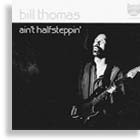
  • Bill Thomas – Ain’t Halfsteppin’

    Ain't Halfsteppin'

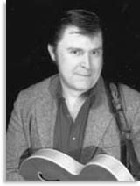
    Don’t know where Bill came from, but I hope he sticks around. A short bio I received with the disc indicates he’s been around playing since the ’70s, mostly as a sideman who’s backed up all sorts of folks. And bands he’s played in have opened for all the usual suspects. With this record, hopefully he can get some of those headlining gigs himself.
    Thomas is a blues guitarist in the traditional Albert King style, but things get mixed in like Clapton’s early blues work, and maybe even a little SRV, although that might be stretching it a little. Suffice it to say, he’s his own man, with a style that allows for soulful bending and note placement that, on occasion, breaks into a flurry of notes that blows the roof off.
    Thomas’ main style is funky, blues-based rock. His tone is fat, but he doesn’t always sustain the notes the way someone with that sort of tone might. The delivery can be very staccato, adding a nice sense of urgency to many of his solos. That style also fits beautifully with the taut funk arrangements of tunes on the record, like the title cut. There’s also some pop/rock mixed in on cuts like “Vero,” which, to say the least, has a very unique hook. For some Hendrixan chordal work, check out “Show Me All The Love.” And, one cut – “Keep It” – even has a bit of an island feel.
    Through it all, Thomas’ playing shines. And he has a unique voice, too. It’s not your normal, run-of-the-mill/gritty/been-around-forever bluesman voice. It’s more of a reedy tenor that packs the same urgency as much of his playing. It’s pleading, but at the same time cool and calm.
    If you’re a blues fan, and you like to find stuff that isn’t straight-down-the-road traditional, you might like this. The label is based in England, so visit bluesarchive.com. It’s definitely worth a look.

    This article originally appeared in VG‘s Dec. ’01 issue. All copyrights are by the author and Vintage Guitar magazine. Unauthorized replication or use is strictly prohibited.
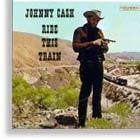
  • Johnny Cash – Ride This Train

    Ride This Train

    In 1986, after 28 years and (literally) hundreds of albums worth of
    material with the label, Columbia Records dropped Johnny Cash.
    Seems American institutions weren’t selling that year.
    Not surprisingly, the artistic side of the music community was justifiably outraged. But in typical fashion, Cash moved on, eventually returning to his roots and finding a new audience with American Recordings and rap producer Rick Rubin.
    And now, on the occasion of The Man In Black’s 70th birthday, Columbia is honoring the legend they once discarded with a two-CD Essential collection, as well as expanded reissues of five of his original LPs. Maybe they’re feeling guilty; maybe their motivation is simple greed; maybe they actually have a renewed sense of pride and history (and/or new A&R folks). No matter – we’re the lucky recipients of this overdue payback.
    Essential‘s 36 tracks clock in at an hour and 46 minutes, so if you’re thinking there’s a good 40 minutes of more essential Cash they could have squeezed on, you’re right. But what’s here is, needless to say, fantastic, and benefits from excellent sound – mastered by Mark Wilder and Seth Foster. Interestingly, though, the set kicks off with eight Sun tracks, pre-dating Johnny’s Columbia signing, but except for his 1993 cameo with U2 (“The Wanderer”), no post-Columbia material is included – which is unfortunate because the American Recordings CDs are so compelling.
    What is startling about listening back to Sun tracks like “Hey Porter,” “Cry, Cry, Cry” and of course “I Walk The Line” today is the same thing that must have had producer Sam Phillips pinching himself when Cash and the Tennessee Two walked into his Memphis studio: These guys sounded like nobody before them. And no matter how popular Johnny Cash has been, or how broad his influence, there’s never been another like him. Speaking of the Tennessee Two, that’s Marshall Grant on bass and Luther Perkins on guitar – not that you’d know it from scouring the CD’s booklet notes. Instead of any personnel listings, only birthday greetings – ranging from the appropriate (George Jones, daughter Rosanne Cash, and an especially moving anecdote from Merle Haggard, who attended one of Cash’s prison concerts while serving time at San Quentin) to the inappropriate (the comments of Chrissie Hynde and members of Metallica and Mudvayne seem naive and gratuitous) – are included.
    So, kids, the guys flanking Johnny in the black-and-white photo on the back of the jewel case are Marshall and Luther; unfortunately, there’s no picture of W.S. Holland, who shortly thereafter became the group’s drummer when they became the Tennessee Three – or Carl Perkins (no relation), who joined the troupe in ’65 and became Luther’s replacement when his namesake died in 1968; or Carl’s eventual replacement, Bob Wooten. This is inexcusable, considering that Columbia was able to list personnel for the five albums it reissued – along with original liner notes, new liner notes, and introductory comments from Cash himself – and seeing as Johnny may have eventually augmented his band with Nashville session greats but never abandoned them. Hank Williams’ former steel player, Don Helms, lends a hand on Fabulous and Hymns, and Shot Jackson, Norman Blake, and others lend support, along with Cash’s own acoustic six-string, of course.
    Carl Perkins was, of course, one of rockabilly’s pioneers and hottest pickers, while Luther was the ultimate economist. When he would leave his familiar ding-dinga-ding bass-line rhythm, he could stir things up, as on the fantastic “Get Rhythm,” but often his solos, like on “All Over Again,” are no more than a series of two-note riffs. Hey, sometimes simplicity equals genius.
    Essential also fails to specify which original albums its tracks were culled from – which would be nice, not to mention informative (Guys! Take the energy you’re expending to get Henry Rollins on the phone and… aw, forget it). It’s a nice starter kit, but hopefully those who are initiated to Cash’s history via this set will dig a little deeper. Fortunately, Columbia/Legacy has made that easier with reissues of Cash’s Columbia debut, The Fabulous Johnny Cash, Hymns, the transcendent Ride This Train, Orange Blossom Special and Carryin’ On With Johnny Cash & June Carter (a.k.a. “Jackson”), spanning the years 1959 to ’67. “Bonus tracks are added here so you’ll feel better about buying it,” Johnny writes with tongue in cheek, but he’s got a point; these were fully realized, self-contained concept albums in their original configurations (the extensive liner notes are, for the most part, excellent, but none match the original notes Cash wrote for Orange Blossom…, in which he recounts meeting Ervin Rouse, the man who wrote Orange Blossom Special, at a show in Miami ca. 1960).
    From the Sun material to the early Columbia sessions, you can hear Cash’s sound grow in complexity; yet, Cash never sacrifices his identity, which is at once instantly recognizable and impossible to categorize. As a stylist, of course, he can transform anything into a Johnny Cash song. As a collector of material, he has interpreted the work of Kristofferson, Dylan, Leonard Cohen, and others, often being the first to expose them to a wide audience. But as a songwriter embracing country, folk, rock and roll, and gospel, he’s proclaimed his patriotism and protested injustice, told stories of lovers and killers, sometimes with poetic imagery, other times with hillbilly hokum. But always with dignity.
    Mr. Cash, you may be The Man In Black, but you’re more than that. Simply put, you’re The Man.

    This article originally appeared in VG‘s June. ’02 issue. All copyrights are by the author and Vintage Guitar magazine. Unauthorized replication or use is strictly prohibited.
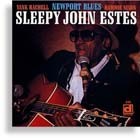
  • Sleepy John Estes – Newport Blues

    Newport Blues

    Culled from a recently unearthed set of tapes originally recorded at the Newport Folk Festival in 1964, Sleepy John is obviously comfortable sharing the spotlight with Yank Rachell and Hammie Nixon.
    This representation is a wonderfully diverse body of work and is refreshing to hear in this era of buzzsaw soundalike guitar-based “bluz” bands. Granted, it’s 40 years old, but the obvious question remains, who are the heirs apparent to this throne? The ranks are thin, if not depleted, for this blues school in particular. Players from Sleepy John’s generation account for the style represented here, which is basically an amalgam of the Delta and Appalachia styles, and its minimalist approach lacks the “glamour” of other, more urban styles of blues. As a result, it’s a dying art form.
    Any new Sleepy John recordings are a cause to celebrate, and while we can’t go and enjoy John down on the corner anymore, these tapes, and the golden moments they represent, coupled with the best technology the digital age has to offer, will have to suffice.
    This was a time when the same old songs were different every night, and we have remastered discs like Newport Blues to reflect on what a magical musical period the mid ’60s were.

    This article originally appeared in VG‘s Sept. ’02 issue. All copyrights are by the author and Vintage Guitar magazine. Unauthorized replication or use is strictly prohibited.
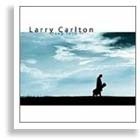
  • Larry Carlton – Deep Into It

    Deep Into It

    I first listened to this disc in my car and thought it was nice, but nothing special. Well, the next listen was in the house, with my full attention, and while it’s what we’ve come to expect from Larry, I did indeed find it special.
    The cuts here, for the most part, are as soulful as this type of music gets. Carlton manages to squeeze every drop of feeling one possibly can out of light funk. He starts with a re-make of the classic he did with the Crusaders, “Put It Where You Want It.” Done at a slower pace, it sets up a groove that puts itself right into your body. That, in fact, can be said about much of the album. Who can question Larry’s chops? Last year when I interviewed him for Vintage Guitar, he told me he thought he’d learned to relax a little and play with a little more taste than when he was younger. Some players see that as a sign of being boring. He sees it as maturity. And, the burning fire his playing displays on these cuts proves his point. Bluesy and soulful, this playing burns like a slow fire. His compositions, as always, are catchy. You’ll find yourself humming the melodies that set up his solos. And the covers are nice too. He turns Steve Winwood’s “Roll With It” into a Crusaders-style workout. Nice.
    That said, I know albums in this genre try to throw one or two vocal tunes in to possibly hit the radio. Usually, that’s not a problem and it meshes well with the player. But, there’s a version on this CD of the old Eagles tune “I Can’t Tell You Why” that misses the mark. It might be, as my wife says, that I’m just used to Timothy B. Schmitt’s vocal on the original, but this one, featuring Shai on vocals, sounds like a demo. I found it odd that a great player, and one-time producer, like Larry, would let this one slip through. Maybe it’s just me, but it doesn’t seem to fit. The other vocal cut, “I Still Believe” is nice, though. Wendy Moten does the singing as Larry punctuates things with a gospel-inspired, very soulful solo.
    Any fan of Carlton will love this album. There’s nothing new here, but what is here is as nice as this kind of music gets.

    This article originally appeared in VG‘s Apr. ’02 issue. All copyrights are by the author and Vintage Guitar magazine. Unauthorized replication or use is strictly prohibited.
  • Frank Vignola – Blues for a Gypsy

    Blues for a Gypsy

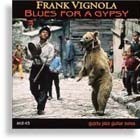
    Frank Vignola needs no introduction to most American fans of Django Reinhardt. He has released several albums of swing influenced in part by the Gypsy guitarist and formed Hot Club USA to release the CD Django Lives in 1999.
    This new CD is subtitled Gypsy Jazz Guitar Solos, and features Vignola alone with his Favino petite bouche Selmer copy. He covers a wide range of tunes from Gypsy jazz standards such as Django’s “Tears” and “Manoir de mes Reves” to classics like Charlie Parker’s “Donna Lee” and Erroll Garner’s “Misty.” Also included are six original compositions.
    If you’re searching for Django here, you may be disappointed: Vignola is not seeking to ape the master. Rather, he has crafted his own style based on his personal influences, which run from Django to Joe Pass and Johnny Smith. Thus, Vignola’s “Gypsy jazz” is without doubt an American translation of the idiom.
    Vignola’s guitar is big and warm. He finds rich chordal sounds in his Favino that most guitarists following in Django’s footsteps never hoped for – or even strived for. Blending chord comping with solo lines, he juggles with the melody and improvises freely throughout.

    This article originally appeared in VG‘s Sept. ’01 issue. All copyrights are by the author and Vintage Guitar magazine. Unauthorized replication or use is strictly prohibited.
  • Lil’ Ed and Blues Imperials – Heads Up!

    Heads Up!

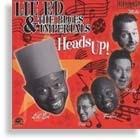
    I will warn you. If rompin’, stompin’, guitar-driven blues isn’t your deal, do not buy this CD. Lil’ Ed Williams and the boys have been doing this for awhile now, but the intensity level doesn’t drop. Ed forms this tight unit, playing most of the solos, sometimes with a slide, and with some great vocals that may come at you with a wink and a nod.
    “Woman In The Castle,” a boogie, is hepped up with slide guitar and raucous vocals. “Natural Man” is one of those songs that’d bring a smile to Elmore James if he were around. “Empty House Tour” is shuffle heaven that features backup guitarist Mike Garrett on lead. The very funny (and at times filthy) “Computer Girl” lets Ed and the boys show some funk chops. “Lil’ Ed’s Home Cookin’” is exactly what the title advertises, a blues rocker that lets Ed showcase all his gifts – singing, playing, and a lyrical wit. Slow blues make an appearance a couple of times, too, and the band handles them nicely. In fact, the anguished guitar and vocals of “Black Night” are as gutwrenching as it gets.
    These fellas are fun to see in a bar setting. If the 13 cuts here are any indication, there’s no way things don’t start jumpin’.

    This article originally appeared in VG‘s Nov. ’02 issue. All copyrights are by the author and Vintage Guitar magazine. Unauthorized replication or use is strictly prohibited.
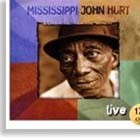
  • Mississippi John Hurt – Live

    Live

    It still surprises me, but every once in a while I run into a neophyte who thinks the blues (all blues) is, by definition, depressing – as if there’s but one emotion conveyed and received in the entire genre. I tell those people (because they obviously never have) to listen to Mississippi John Hurt. The late Mississippi John, who lived from 1892 to 1966, was definitely a bluesman (albeit one like no other), with a repertoire covering blues, spirituals, country dance numbers, murder ballads, and lots more. But he always sounded utterly at peace, absolutely serene. Even delivering a warning that his gal may shoot, cut, and starve you or sly double-entendre about that “lovin’ spoonful,” the overriding expression was one of gentleness. And you just couldn’t listen to Mississippi John Hurt without smiling.
    Just how indisputably unique Hurt was is readily evidenced thanks to The Anthology Of American Folk Music, the exhaustive and on-the-money albums archivist Harry Smith compiled for Folkways in 1952 – recently reissued as a six-CD Smithsonian box that should be required in every home. The quality that virtually all of the series’ performers, recorded between 1926 and ’32, share is a roughness, a raw, angular, hard edge – be it a congregation of Alabama sacred harp singers, blues stars of the day like Blind Lemon Jefferson, or Appalachian claw-hammer banjo player Clarence Ashley. Then John Hurt’s tracks come on and transport you to another world. Where other guitarists strum and beat their six-strings, Hurt coaxes the melodies from the instrument like he’s patting a child on the head or petting the family dog. And his alternating-bass and fingerpicked phrases roll out of the guitar – the perfect complement to his understated vocal narrative.
    “Reviewing” this CD almost feels like cheating, since it’s a very welcome reissue of one of my all-time favorite albums – a double-vinyl jewel I’ve played countless times since I bought it in ’71, the year it was originally released as The Best Of Mississippi John Hurt. The story of how Hurt was “rediscovered” during the ’60s folk movement, hunted down thanks to the line “Avalon’s my hometown” in one of his songs, is as oft-repeated as it is remarkable. But what was truly amazing upon his return to performing (at last in front of festival and college audiences throughout the country) is that far from having lost any of his facility on guitar, he played in the exact same style – one completely at odds with what thinks of as “Mississippi” – as if he’d been on a 15-minute (rather than 30-year) break. And his voice, too, had mellowed into a more expressive instrument.
    But best of all, listeners were treated to the rest of the songs he’d written and learned over the years – having had only 14 Okeh cuts recorded and released in the late ’20s before his long lapse. And this concert, from Oberlin College in 1965, is about as perfect a set as anyone could hope for. Songs that became standards and classics, such as “Candy Man” and “My Creole Belle” are included, alongside lesser-known items like the syncopated “Baby, What’s Wrong With You” and the instrumental “Spanish Fandango.” In fact, Vanguard’s decision to add three more tracks to the package, recorded at a Newport Folk Festival workshop that same year, is actually the CD’s only flaw. The sound quality isn’t nearly as good as what has already gone before, so the “bonus” is really an unnecessary distraction. Mississippi John had already done it all by the final notes of “You Are My Sunshine.”
    All you want to do after that is sit there a spell, and smile.

    This article originally appeared in VG‘s July. ’02 issue. All copyrights are by the author and Vintage Guitar magazine. Unauthorized replication or use is strictly prohibited.