
Month: February 2005

  • Model 2020

    Model 2020

    Like most things, the closer you look at certain phenomena, the more you find often subtle, unexpected surprises.

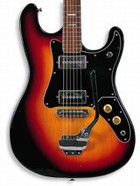
    A good example is this Ibanez Model 2020, which dates from around 1970, at the very beginning of the so-called “copy era.”

    While Japanese guitar companies were beginning to emulate American designs to provide budget alternatives at the time, they also produced some delightful aberrations like this. Let’s do a little creative speculation to explain this hybrid creature, built when Hoshino Gakki Ten of Nagoya, the parent of Ibanez, was making its transition to producing copies.

    This Ibanez Model 2020 presented a curious mystery when it first came to light. At first it seemed a misguided Stratocaster copy… until you realize that it has more to do with Höfner guitars made in Germany. The Europeans were the main competitors to the Japanese during the 1960s, and they were actually the objects of Japanese “copying” in the middle ’60s. The bridge and pickups clearly show a Euro influence. However, whereas most ’60s solids from both Europe and Japan have a certain feel that says “beginner,” this guitar has a much more solid presence with a full-sized body, clearly on the way to “copy.” There’s nothing wrong with these single-coil pickups, either.

    That perception of a Höfner connection answered part of the riddle. But what’s up with the neck? The “check-mark” headstock had nothing to do with either Höfner or Fender, and certainly never appeared on an Ibanez before or after. In fact, the neck – with its rounded end and plastic block inlays – looked just like some of the exotic Teiscos produced by Vegas in 1968. How to explain this?

    The clue that may solve this quandary was provided during research on the Ibanez history book. In 1966, Hoshino decided it was more cost effective to buy its electric guitars from suppliers than to make its own, and began sourcing them primarily from Fuji-Gen Gakki of Matsumoto City, with some also coming from Teisco Toyoshina, which was owned by Kawai. Yep, Teiscos! Right around 1970, when this Model 2020 was made, Teisco went out of business and many of its top people got jobs at Fuji-Gen.

    That was undoubtedly it. Either the Fuji factory acquired parts left over from the Teisco collapse along with the employees, or the new workers brought with them a predilection for the flared headstock and made a few guitars, including the 2020, with the distinctive design.

    The Ibanez Model 2020 was short-lived, probably lasting a year at most. Either the Teisco stock ran out or the move to copies made the design anachronistic. Regardless, by 1971 the 2020 was gone. Its successor was a Fender Strat copy (the first versions had Tele-style pickups!) and the move to the copy era was complete. Though this is not to say that there aren’t a lot of other delightful aberrations to be discovered there….


    This article originally appeared in VG‘s Dec. ’03 issue. All copyrights are by the author and Vintage Guitar magazine. Unauthorized replication or use is strictly prohibited.
  • Kim Wilson – Lookin’ For Trouble

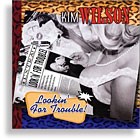
    Lookin' For Trouble

    What can you add to the legacy of one of the greatest harmonica players of all time? Perhaps a second legacy of developing a generation of great unknown guitarists within the confines of his bands.

    Fortunately for the readers of this magazine, Wilson always has great young guitar talents, that are for the most part not yet nationally recognized.

    Apparently, Wilson molds his aggregations in much the same fashion that Little Walter and Robert Jr. Lockwood did with their many reformations of the Headhunters and the Aces. A simple formula; find the best talent available and yield to the dominant styling of the leader. In this case, that’s Kim Wilson.

    In Troy Gonyea, who has obviously been equally influenced by Pat Hare as well as Bill Jennings, Wilson has one more perfect foil. A tremendous talent in the making, Gonyea’s penchant for tone is noteworthy. With the style of music Wilson’s band plays, and the parameters that exist within it, you can open the envelope, but have to respect the tradition and know where the line is drawn.

    As a torchbearer, Gonyea is not yet of Duke’s caliber, but if this recording is any indication, it won’t be long.


    This article originally appeared in VG‘s Aug. ’03 issue. All copyrights are by the author and Vintage Guitar magazine. Unauthorized replication or use is strictly prohibited.
  • Darcy Kuronen – Dangerous Curves: The Art of the Guitar

    Darcy Kuronen

    The Museum of Fine Arts is mounting a retrospective outlining 400 years of guitar design and history (VG November ’00). Although the guitar has become the dominant instrument in popular music over the past 50
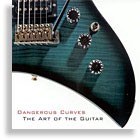
    years, its history can be traced to the early baroque instruments of the 17th century. This book serves as both exhibit catalog and history of this most versatile and enduring instruments from early ornamental examples of Italy and Spain to more recent electric guitars used by popular musicians. It features 110 guitars, each with a brief discussion of its history and manufacture, and there are 180 full-color photos.

    An introductory essay by music historian Darcy Kuronen places the guitar in its historical context while comments from 30 notable modern guitarists provide a more personal view of the guitar and its music. While there have been several histories of the guitar published over the past 10 years, none cover the depth and breadth of this new title, and certainly none so completely capture the instrument in its multitude of shapes sizes and mutations. If you can’t get to Boston to see the exhibit, this book is a little like being there yourself. Available from the Museum of Fine Arts in Boston, phone (617) 369-3448.


    Boston Museum of Fine Arts, 2000, Softbound, 244 pages, ISBN 0-87846-478-6, $45.00.

    This article originally appeared in VG‘s Jan. ’01 issue. All copyrights are by the author and Vintage Guitar magazine. Unauthorized replication or use is strictly prohibited.
  • Bruce Conte – Bullet Proof

    Bullet Proof

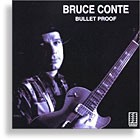
    Be honest; if you played R&B-based guitar in the mid ’70s and were looking to extend your blues vocabulary, you stole licks from this Tower Of Power alumnus. It’s great to hear Bruce Conte again. His style is as definable as any of the better-known West Coast blues fusion player of that period.

    This release partners Conte with a number of Bay Area vocalists that include his old bandmate, Lenny Williams. Bullet Proof is a guitar player’s album – the lyrics are, for the most part, made up on the fly and are of the tried-and-true/can’t-get-enough-of-that-funky-stuff style.

    Talk about the ultimate relic, Conte still maintains his late-’50s Gibson Les Paul goldtop he’s had since the early ’70s. Tom Murphy should get a picture of this one, ‘cuz it represents several hundred thousand miles of blues wear!

    The licks on this CD will dredge up memories from a remake tribute to Roco’s 16th-note classic, as well as a nod to several other readily recognizable TOP mainstays.

    Where’s Conte been? It doesn’t really matter, because he’s back with all the great funk the Bay City was known for 30 years ago. And it’s as fresh as tomorrow’s news.


    This article originally appeared in VG‘s Sep. ’02 issue. All copyrights are by the author and Vintage Guitar magazine. Unauthorized replication or use is strictly prohibited.
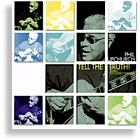
  • Phil Upchurch – Tell the Truth

    Tell the Truth

    Phil Upchurch is no stranger. He’s been around a long time, playing sessions with everyone from Jimmy Reed to Cannonball Adderly to Sheena Easton. And he was the rhythm guitarist for George Benson’s great pop/jazz albums like Breezin’ and In Flight. Here Phil gets to work (for what he says is the first time) with his own band, and the session cooks. The feel here is after-hours jazz for the most part. Mix in some great Latin things and you’ve got 13 cuts of magic.

    “Jive Samba” mixes killer jazz, blues, and Latin single-line work with a percussive rhythm for a nice start. You’ll even catch an “Eleanor Rigby” quote if you listen close.

    There are some other cool covers, too. He and pianist David Arnay eat up Steely Dan’s “Jack of Speed.” Upchurch showcases his chordal work along with imaginative single-line work. “La Costa” is an acoustic tour de force. “Manhatten” is a nod to Wes Montgomery. His ballad work shines on “Home Again” and a solo “Misty.” Throughout his career, Upchurch has been used on plenty of soul records, and a couple of covers here let him show that side. “Back In Love Again” is soul heaven. And down-home blues dominate an eight-minute version of “St. Louis Blues.”

    It’s nice to hear a guy who you only hear playing rhythms get a chance like this. As a leader, Phil more than proves he’s an excellent soloist, songwriter (the bluesy title cut), and bandleader.


    This article originally appeared in VG‘s Oct. ’01 issue. All copyrights are by the author and Vintage Guitar magazine. Unauthorized replication or use is strictly prohibited.

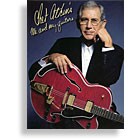
  • Chet Atkins and Mel Cochran – Chet Atkins: Me and My Guitars

    Chet Atkins and Mel Cochran

    Chet Atkins has a deserved reputation as a great guitar player and all-around nice guy. So it’s a pleasure to see a book that is part biography and part history of his personal guitars. Atkins is no guitar collector. He owns, and has owned, a number of nice instruments over the years, but they are his tools of the trade. They haven’t been babied, but rather used (some for decades) and their scars come not from abuse but rather from the touring trail and the studio log. So his D’Angelico Excel was modified over the years with pickups, switches, even a Vibrola tailpiece!

    There are an assortment of archtops featured, many of them Gibsons, and a variety of flat-tops, from the ornate to the sublime. Many were used for album covers, and these are included where appropriate. One would guess, after reading the book, that Atkins has about 50 guitars. And the point isn’t how many, because the book isn’t about just guitars, but about Chet and his guitars.

    The narrative is told by Atkins in first-person style. He recalls how he came to own the guitars, and where they were used. He reminisces about other players and cohorts; his many stories come alive in this book. The reader learns about Atkins’ involvement with Gretsch in the ’50s, which resulted in a line of guitars bearing his name, and again in the ’80s with Gibson to produce an electric archtop. Turns out that Chet prefers to set up his own guitars and likes to tinker with them and customize them to his taste.

    This edition of the book is limited to 1,200 numbered copies hardbound in a custom slipcase. They were originally to have been signed, but it does not appear, based on information at press time, that they will be. Certainly, it is a sumptuous product, with beautiful photography, binding, and paper quality. But many may find the a bit on the high side. Note, however, that the book was meant for fans as a sort of retirement “thank you” and is being distributed through Atkins’ fan club, which is quite large and easily capable of snapping up all available copies. It wouldn’t be a big surprise to see a softbound edition made available.

    One of the most telling photos in the book is one of Chet’s workbench in his home studio. Here one finds the true tools of the master: strobe tuner, files, saws, sanders, boxes of amp tubes, soldering iron, drill bits, screws, and hardware… and a quart of Quaker State motor oil (?). At last, the secret to that smooth Atkins picking style is revealed! No wonder there are never any squeaks on his fretboard…


    Russ Cochran Books, West Plains, MO, Russ Cochran 2001, Hardbound in slipcase, 183 pages, No ISBN, $150.00

    This article originally appeared in VG‘s Aug. ’01 issue. All copyrights are by the author and Vintage Guitar magazine. Unauthorized replication or use is strictly prohibited.
  • The Siegel-Schwall Band – The Complete Vanguard Recordings

    The Complete Vanguard Recordings

    I’ve always had a soft spot in my heart for the Siegel-Schwall Band – although I can’t really figure out why. During the mid/late ’60s blues revival, harpist Corky Siegel and guitarist Jim Schwall played second fiddle to Windy City neighbors Charlie Musselwhite and the Butterfield Blues Band, not to mention Los Angeles’ Canned Heat, England’s John Mayall, New York’s John Hammond, and a host of others. Where Musselwhite sounded big and authoritative, Siegel-Schwall sounded tiny; where Butterfield & Co. were pushing several envelopes at once, Corky and Jim broke no new ground.

    Siegel was a decent (albeit slightly affected) harmonica player, while Schwall sounded as out of step as he looked – attaching a soundhole pickup to his Gibson flat-top while Bloomfield and Clapton were sending devotees scurrying for the Holy Grail: a Les Paul sunburst. Sustain was not part of his vocabulary, and he never seemed to bend quite to pitch – with his guitar or his voice.

    But there was a certain charm to the band’s recordings, a live sound and intimate quality that put the listener right in the room with them. This Vanguard double-CD set includes all four of their albums for the label, from their self-titled 1966 debut to the live Siegel-Schwall 70, released that year. The quartet, rounded out by drummer Russ Chadwick and bassist Jack Dawson (who replaced Jos Davidson after the first LP), reached its peak on its sophomore effort, Say Siegel-Schwall. The album’s centerpieces are the boogie-figured “Bring It With You When You Come,” featuring Schwall on electric mandolin, and Corky’s extended slow blues, “That’s Why I Treat My Baby So Fine.” Also noteworthy is “I Liked It Where We Walked,” with Siegel switching to piano. But the opening “I’m a King Bee” is, in a word, stiff. Just compare it to the Stones’ version, let alone Slim Harpo’s swampy, pulsating original.

    By their fourth and last album for Vanguard, fronting a new rhythm section, Siegel and Schwall were attempting to match “boogie” bands like Canned Heat and Savoy Brown, and served up a lot of spaghetti in the process. On slide, in particular, Schwall seems to be noodling around without saying much.

    Still, the high points, where you can feel these electrified ex-folkies connect with something deeper and darker, are worth a listen, and the band represents something between a footnote and a chapter in the blues revival annals.


    This article originally appeared in VG‘s Sept. ’01 issue. All copyrights are by the author and Vintage Guitar magazine. Unauthorized replication or use is strictly prohibited.
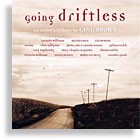
  • Various Artists – Going Driftless: An Artist’s Tribute to Greg Brown

    Going Driftless: An Artist's Tribute to Greg Brown

    Greg Brown proves you don’t have to be a model-handsome MTV poster-boy with a beautiful voice and sizzling guitar chops to be a successful singer/songwriter. Writing great songs is the primary and essential talent for a long and prosperous career. On Going Driftless: An Artist’s Tribute to Greg Brown we have an opportunity to hear what Brown’s tunes sound like in the nurturing hands of a stellar group of women performers. These songs were selected from 16 albums released since 1981. All Going Driftless royalties go The Breast Cancer Fund of San Francisco, California.

    The list of artists involved in Going Driftless reads like a who’s who of important contemporary female artists. Lucinda Williams, Ani DiFranco, Iris Dement, Gillian Welch, Mary Chapin Carpenter, Shawn Colvin, Victoria Williams, Eliza Gilkyson, Ferron, Karen Savoca, Robin Lee Berry, Leandra Peak, and Pieta, Zoe, and Constance Brown all contribute selections. Given the quality of performers winnowing out a favorite selection is daunting. Both Ani DiFranco’s rendition of “The Poet Game” and Shawn Colvin’s reading of “Say A Little Prayer” stop me cold. Whevenver I listen to them, these two performances send me to my favorite listening chair, commanding undivided attention.

    Executive Producer Bob Feldman and mastering engineer David Glasser had their hands full trying to coordinate and match the sonics of twelve different studios. Remarkably not a single cut sounds noticeably inferior. On this one album you find a comprehensive survey of how well-recorded acoustic music should sound.

    Going Driftless makes a strong counter-argument to the standard line “It’s the singer, not the song.” Perhaps in the future we’ll see more of Brown’s masterful material migrating into the pop and country music charts, but for the present, Going Driftless provides us with a glimpse of what great singers can do with equally great songs.


    This article originally appeared in VG‘s Nov. ’02 issue. All copyrights are by the author and Vintage Guitar magazine. Unauthorized replication or use is strictly prohibited.

  • Moonrock Fuzz/Distortion

    Otherwordly distortion sounds

    Glenn Wylie has been experimenting with guitar effects pedals for over 10 years – when he’s not working on guitars or amps. In the Moonrock, he has come up with a unique pedal that is much more than just another distortion effect.

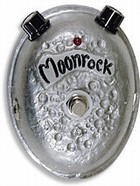
    The pedal’s shiny housing is cast from aircraft-quality aluminum and features a thick steel base. Cable in and out, plus two control knobs and a footswitch comprise the basics of this unit. Inside, circuitry is neatly hand-soldered and it’s obvious this “stompbox” is well put together.

    But don’t be lulled into thinking it’s all simple; part of the appeal of the Moonrock is that neither of its controls is marked. Learning how they work is part of the fun because the wily Wylie includes no instructions for using the pedal, leaving it entirely up to the player to find what best works for them.

    For our tests, we grabbed a handful of guitars with a range of tonal characterists – a Gibson ’58 Les Paul reissue, Fender ’62 Stratocaster reissue, and a Danelectro U2 reissue. Test amps included a Danelectro Dirty Thirty, an old Supro Supreme, and a blackface Fender Deluxe Reverb.

    Plugging in, we did some basic knob turning just to familiarize ourselves; the left-hand knob controls the distortion range, and it heats up pretty fast. By halfway, the unit burns with thick sustain and gushing harmonics. High notes produce an octave effect that’s particularly noticeable via a single-coil pickup. Push the knob further, and the distortion begins to morph into ring modulation/intermodulation distortion.

    Finally, rotating the knob completely leads to a swell/compression effects almost like playing a tape backward. You pluck the string and the sound fades in, then moans back in with a compressed tone. In general, the tone seemed to work better with the two tube amps than with the more solidstate Dano. But it brought out the crunch in all three test guitars – even the lower-output lipstick-tube pickups.

    The right-hand knob primarily sets intensity and saturation. It functions as a volume control but also interacts with the left knob to control the amount of harmonics, octave, and modulation. Cranking this knob led to a thick, howling fusillade of distortion. But, the guitar’s volume knob did a fine job of cleaning up the tone.

    We spent some time experimenting with settings on both guitar and the Moonrock, and discovered the unit is highly interactive. Most of its effects can be changed significantly by adjusting the guitar’s volume knob and pickup selector. Even after a couple of hours of playing notes and turning knobs, we weren’t sure we had unlocked all the secrets.

    What we have in the Moonrock is a distortion unit that’s much more than a distortion effect. It’s the sort of thing you can play around with, learn about, and use in a variety of applications.


    Moonrock
    Type of Effect: Fuzz/Distortion.
    Features: Harmonic control, swell/compression control, proprietary circuitry, handmade, with no integrated circuits, true bypass switch.
    Price: $225.
    Contact: www.tonefrenzy.com.


    This article originally appeared in VG‘s July ’03 issue. All copyrights are by the author and Vintage Guitar magazine. Unauthorized replication or use is strictly prohibited.

  • February 2005

    FEATURES

    GRETSCH 6134 WHITE PENGUIN
    One of the rarest Gretsch instruments, it was also one of the company’s dressiest guitars. Still, no more than a few dozen were made; in 1959 it cost $490 – when a ’59 sunburst Les Paul Standard could be had for $265. By George Gruhn

    CURIOSITY OR COLLECTIBLE?
    The Gipper Guitar
    Essentially it’s just a “parts” instrument. But what sets it apart is President Ronald Reagan’s signature on the back, protected by a piece of plexiglas. By Willie G. Moseley

    C.C. ADCOCK
    The Future of Swamp Rock
    He stands on one foot, then jumps straight up like a scared cat – his guitar squalling and shrieking accordingly. And this is in the recording studio. Doing an overdub. On somebody else’s album. By Dan Forte

    JOEY SPAMPINATO
    Short-Scale for the Long Haul
    The music of the New Rhythm and Blues Quartet is truly eclectic. The band has evolved, and released more than 30 albums. Through it all, bassist/co-founder Joey Spampinato has held down the beat. By Willie G. Moseley

    WILL ACKERMAN
    Life After Windham Hill
    At several junctures in his saga one could write “…and the rest is history” because of the nature of his story, which has grown and changed through 25 years of writing and playing music on the acoustic guitar. By Dan Forte

    1983 MODULUS MONOCOQUE
    An experiment inspired by aviation, the Modulus Monocoque guitar was made of futuristic, all-synthetic carbon fiber – a material known for its strength, stability, moldability, and uniform acoustic properties. By Michael Wright

    THE DIFFERENT STRUMMER
    Hey, Man! What‘s That Sound?
    The late ’60s produced some amazing music. Sitting amidst the genius was Switched On Bach, featuring the Moog synth. Almost immediately, the race was on to apply the new technology to guitars. By Michael Wright

    DEPARTMENTS

    Dealer News

    Vintage Guitar Price Guide

    Builder Profile
    Smith Custom Amplifiers

    Upcoming Events

    Vintage Guitar Classified Ads

    The Great VG Giveaway
    Win a Deering Vega valued at $3,100!

    Dealer Directory

    Readers Gallery

    FIRST FRET

    Reader Mail

    News and Notes
    Furry Dean guitars, Fender at Cleveland Guitarmania, Haynes Holiday Jam, New Column! “Ask Zac,” In Memoriam, more!

    Executive Rock
    The Guitars of Monterey Pop
    By Willie G. Moseley

    Jay Roberts
    Son of a Dirty Guitar Player
    By Ann Wickstrom

    The Rockabilly Hall of Fame
    Preserving an Artform
    By Ward Meeker

    New Twist on Pastorius
    Jaco Box Set Focuses on Early Years
    By Norman Harris

    Nick Curran
    Musical Anachronism
    By John Heidt

    Gibson Policy Raises
    Eyebrows
    By Ward Meeker

    COLUMNS

    Q&A With George Gruhn

    Acousticville
    Arlington Follies
    By Steven Stone

    FretPrints
    Edward Van Halen
    By Wolf Marshall

    Gigmeister
    Picking a Pick
    By Riley Wilson

    TECH

    Guitar Shop
    Water and Wood
    By Tony Nobles

    Amps
    Troubleshooting With a Variac
    By Gerald Weber

    Ask Gerald
    By Gerald Weber

    REVIEWS

    The VG Hit List
    Music, Book and Video Reviews: Clarence “Gatemouth” Brown, Danny Gatton, Ford Brothers, Pete Anderson, Marshall Tucker Band, The Gourds, James Taylor, Guitar Effects Pedals: The Practical Handbook, more!

    Check This Action
    Money For Something
    Dan Forte

    Vintage Guitar Gear Reviews
    Bacino BAC 18, Carvin CT6M California Carved Top, Martin D-18VE, Tech 21 Bronzewood/Trademark amps!

    Gearin’ Up!
    The latest cool new stuff!