Month: January 2005

  • Pat Metheny Group – Speaking of Live Now

    Speaking of Live Now

    Hard to believe, but we’ve been listening to Pat Metheny and his groups for almost three decades.

    At times, we take ol’ Pat for granted. Face it, the guy’s an amazing guitarist. His band, usually anchored by him and keyboard pal Lyle Mays, is usually killer, and he almost always makes interesting records, with fascinating solos.

    This DVD is a nice account of where Pat and his band are at this time. Clocking in at over two hours, with 15 tunes, there’s plenty of playing.

    First and foremost, we must mention Pat’s playing. Whether playing one of his Ibanez hollowbodies, an acoustic, or that infernal synth-guitar, Pat breathes fire, emotionally, and is impeccable on the technical front. He and the band take a simple, beautiful tune like the Bossa Nova chestnut “Insenstez (How Insensitive)” and run through it like nobody else. Chorus after chorus of interesting soloing by Metheny anchors the whole thing.

    You could say that about much of the set. His playing is always the highlight for me, but there are other great performances, too. Mays and Metheny at times appear joined at the hip, as one of Pat’s solos melts into a piano solo of similar intensity and feel. Steve Rodby, whether on electric, or acoustic, bass holds down the fort beautifully with drummer Antonio Sanchez. They all get to shine. In fact, among the highlights are a couple of duets Metheny plays with Sanchez. Special mention must also be made of Richard Bona. Bona’s soaring, otherworldly vocals(along with singer-trumpeter Cuong Vu) supply an aura of sound that helps define Metheny’s band at this point. Bona also supplies an amazing bass/scat solo on “Song For Bilbao.”

    From a technical standpoint, a very nice job is done with the camerawork. The concert was shot over a two-day span in September of 2002 in Japan. The director, Takayuki Watanabe, gives beautiful shots of Metheny and the rest of the band. There are no extras, but with this much music, it’s hard to complain. Pat does tend to use odd stringed instruments, so an explanation would have been cool, but then, who besides equipment geeks would care?!

    Also, the sound is wonderful in every respect. I used the DTS Digital Surround Sound on my system, and nuances common to this music sounded great. In all, this one’s a doozy. A must for fans of DVD and guitar.


    This article originally appeared in VG‘s June ’04 issue. All copyrights are by the author and Vintage Guitar magazine. Unauthorized replication or use is strictly prohibited.

  • Joe Bonamassa – Blues Deluxe

    Blues Deluxe

    Blues Deluxe? Absolutely! Anyone who has followed Joe’s career knows the diversity he possesses.

    The multiple-genre approach can be the bane of great guitarists. But when you have talent that displays no parameters, why not explore the edge? Bonamassa has done that in the past, but on this release there is no identity crisis.

    From the opening cut – a Texas tease rendition of BB’s “You Upset Me,” you may think you’re being set up for one more “tribute.” Well, just skip to cut two.
    Bonamassa is all of 25, but has achieved a degree of maturity where age is no longer an element to consider. And he’s heard it one too many times; he’s been careful not to indulge his musical persona too far in the shadow of any particular Texas legend to the degree that he can’t step outside that box and cast his own shadow.

    Blues aficionados are a rather staid bunch when it comes to change. But give a listen to this release and you’ll find it bordering on peerless. And give an extra ear to the rendition of Buddy Guy’s “Man of Many Words” and Albert Collins’ “Left Overs.” It’s a bit longer here, but no less powerful then the original.

    An array of vintage gear is used throughout, and while it’s all listed, it’s up to the listener to figure out what’s used where.

    One of the best “traditional” blues releases from late in the Year of the Blues, hopefully this is the beginning of a wider acceptance of this talent.


    This article originally appeared in VG‘s June ’04 issue. All copyrights are by the author and Vintage Guitar magazine. Unauthorized replication or use is strictly prohibited.
  • Matt Rae – Twang!

    Twang!

    I’ve never been a Tele guy. I just have never found one I loved to play. However, every now and then a record comes along by a guy who just scorches the earth with a Tele. You know the guys – Albert Lee, Roy Buchanan, James Burton, and even Bruce Springsteen make great sounds with the guitar. Well, here’s another Tele fella. Matt Rae took lessons from Arlen Roth, and ended up playing second guitar in his band. He’s learned his lessons well.

    The bends, hammer-ons, and banjo rolls of the opener, “Road Rage,” let you know you’re in for some serious Tele playing. The twang starts early and never lets up. Same goes for “Albert” (gee, I wonder who that’s named for?). Very funky, bluesy playing’s the highlight here. “The Cottage” might bring Speedy and Jimmy to mind. “Sonic Blue” is a tour de force that lets Matt highlight his harmonic knowledge to go along with some killer changes and a slightly-chorused sound. If you’re one of those folks who likes a song to highlight a guy’s chops, check out “Tele Savalas” (I love that title). Twangy solo followed by great chord work, flying double-stops, and plain-old-fashioned soloing. Great stuff. Matt shows nice ballad playing, too, on songs like “Floatin’”and “Surf Wrangler.” Matt’s a fine addition to the Tele kings.


    This article originally appeared in VG‘s July ’04 issue. All copyrights are by the author and Vintage Guitar magazine. Unauthorized replication or use is strictly prohibited.
  • Bob Schneider – I’m Good Now

    I'm Good now

    Singer/songwriter whose subject matter spans love to hate, happiness to abject despair. While not exactly lighthearted, anyone who likes their music with a bit of meat on it will find plenty to chew on here.


    This article originally appeared in VG‘s July ’04 issue. All copyrights are by the author and Vintage Guitar magazine. Unauthorized replication or use is strictly prohibited.
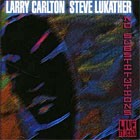
  • Larry Carlton/Steve Lukather – No Substitutions

    No substitutions

    I don’t really know what to say about this one. It’s just a good, old-fashioned jam by a couple of great guitarists. To no one’s surprise, they’re both up to the task. The five songs here cover almost an hour that’s never boring and showcases the different talents of Carlton, who definitely is concentrating on his jazz roots on this and other projects lately, and Lukather, who’s a rocker, almost sometimes to the point of being a little too bombastic. These two guys combined have so many chops, it’s just a joy to listen to this live album, recorded in Japan.

    Things get under way with the Tony Hymas/Simon Phillips tune “The Pump.” The rocky feel of this one lets “Luke” shine. The former Toto axeman shows an agility and sense of chops that few ever reach. From there, it’s three Carlton tunes (“Don’t Give It Up,” “It Was Only Yesterday,” and “Room 335,” and Miles Davis’ classic “All Blues.” Throughout the proceedings, the old ace Carlton proves he’s still imaginative and smart a player as ever. Back to using his 335, he starts the ballad “It Was Only Yesterday” with trademark volume swells and some killer hammer-ons and dazzling runs. After a fine Lukather solo, Larry comes back with a single-line and chordal solo that is simply a tour de force. In fact, several times on the album, he calls to mind Wes Montgomery with some chord solos that are simply beautiful. It’s something he’s done in the past, but never this much on an album, and he proves he’s a master at it.

    In a spoken intro, Lukather introduces Carlton as his teacher, and it’s fitting. There’s a whole generation of players who have taken his sense of melody and mixed it with his rock and roll sensibilities and blues leanings and forged a style of guitar that is forceful, physical, and muscular, but at the same time melodic and beautiful. It’s easy to spot his mark on Lukather here. Put these two great players with these great songs, and a band that includes Gregg Bissonette on drums, Chris Kent on bass and Rick Jackson on keyboards and you’ve got the perfect live record. Highly recommended.


    This article originally appeared in VG‘s July ’01 issue. All copyrights are by the author and Vintage Guitar magazine. Unauthorized replication or use is strictly prohibited.
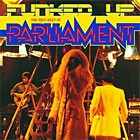
  • Parliament – Funked Up: The Very Best of Parliament

    Funked Up: The Very Best of Parliament

    Like the man said, “Make my funk the P-Funk. I wants to get funked up.” This is not the first “best of” by George Clinton and troop, but it is the best I’ve run across. It runs the gamut from the classics like “Give Up the Funk” and the wonderful “Flashlight” with its prototypical funk rhythm guitar playing, to some stuff that you don’t hear all the time, like “Fantasy is Reality.”

    While the Funkadelic element of Clinton’s work usually had the long guitar solos, the Parliament side featured the brilliant ensemble funk. Bass players could stick this one on and be studied in the discipline of funk bass playing very quickly. And the guitars are very subversive. “Chocolate City” features a killer arrangement that rides around a popping guitar, monster bass, and gurgling keyboards. The heavy funk of “Ride On” is driven by some nasty wah work.

    One thing I’ve always loved about Parliament is the amount of things going on in their songs. Despite that, they hang together like they’re glued shut. No matter how many times you listen, there always seems to be something you haven’t heard before.

    Lyrically, it gets no goofier. “Aqua Boogie” is just plain weird. “Theme From the Black Hole” gets very close to “omigod” obscene. “Dr. Funkenstein” not only has a great title, but a very funny lyric.

    If you don’t have a good collection of P-Funk CDs, this would be a good one for you to latch on to. This is a band whose influence goes well beyond its music. Like it says in “P. Funk,” “That’s the law here… you got to wear your sunglasses.” Get on the good foot, now!


    This article originally appeared in VG‘s April ’03 issue. All copyrights are by the author and Vintage Guitar magazine. Unauthorized replication or use is strictly prohibited.
  • Rickenbacker A22

    The Rickenbacker model A22 lap steel was the first commercially available electric guitar.

    Although it bears the brand name “Rickenbacker,” it was actually the brainchild of George Beauchamp. In the 1920s, Beauchamp was a talented vaudeville performer, as well as a tinkerer and inventor. He started experimentation with amplifying instruments as early as 1925 and played a major role in the National guitar company. Adolph Rickenbacker had a metal working shop and produced metal bodies for National.

    In late 1931, Beauchamp, Rickenbacker, and partners formed the Ro-Pat-In Corporation for the purpose of developing electric guitars. Soon thereafter they had a wood-body prototype “Frying Pan” model very similar in appearance to the later production model. Beauchamp was clearly aware that this instrument could be played not only Hawaiian style, as a lap steel, but had the potential to be played as a standard Spanish-neck guitar, since it had a round neck and frets. The production models, however, were strictly set up as Hawaiian instruments and were made with cast aluminum bodies rather than wood. It took until August, 1932, to start production.

    There were 17 Hawaiian guitar and amplifier sets produced from August through December, 1932, however, records indicate the company sold only 13 sets that year, shipped two sample sets to an East-coast distributor, and two were left in inventory to be sold in ’33. While production rapidly increased afterward, one factor that held back sales was the price. In ’33, Rickenbacker literature indicated a list price for the Frying Pan steel with amp of $175. While that may seem low today, at the height of the Depression that was an astronomical figure. By contrast, a Martin style D-28 herringbone guitar cost $100 in the 1930s, and the D-45 was only $200. By ’35, Rickenbacker had reduced the price of the Frying Pan with amp to $125. In that same year, Rickenbacker introduced the style B Bakelite lap steel, and the Frying Pans took a back seat in Rickenbacker production. The company ceased advertising them for some years, but continued to make them through 1950. From ’50 to ’54, Frying Pans were discontinued, but a redesigned version was offered from ’54 through ’57.

    Needless to say, it did not appear at the beginning that the electric lap steel would take the world by storm, but time demonstrated that these instruments had great marketability. Within a few years, not only was Rickenbacker producing large quantities of instruments, but numerous competitors had entered the field.

    In the beginning, however, Adolph Rickenbacker had to keep the company alive with advances from his own personal funds. In May, 1934, he approached the National board of directors, proposing selling them manufacturing rights for Electro guitars. Apparently, they turned down the offer and Rickenbacker soon reconsidered. Later that year the shareholders of Ro-Pat-In voted to change the company’s name to Electro String Instrument Corporation and began marketing instruments under the name Rickenbacker Electro in their advertising and literature.

    The Rickenbacker Electro Frying Pan models were offered in the model A22 with 221/2″ scale (pictured) and the A25 model with 25″ scale. Both feature cast aluminum bodies and the so-called horseshoe-magnet pickup with the strings running under the magnet. Although advertising literature spelled the name Rickenbacker, the metal nameplate on the peghead continued to used the older German spelling of Rickenbacher until ’49, when it was changed to Rickenbacker.

    The Frying Pan models are notable not only in being the first commercially available electric guitars, but they’re also extraordinarily fine-quality instruments eminently suitable even today for professional use onstage or in the studio. The horseshoe magnet pickup gives as fine a sound for lap steel as any ever made by any manufacturer. It’s ironic that with all the advances in electronic technology since these guitars were introduced none have surpassed them in tonal quality such that modern steel players still seek these instruments for actual playing use in addition to their appeal as prime collectibles. The heavy cast aluminum construction makes these guitars virtually indestructible. The only drawback to the design was tuning instability if temperatures changed rapidly, since the aluminum neck and body construction would slightly expand or contract in response to heat or cold.

    With such a unique design and being the first commercially available electric guitar, one would think Beauchamp would have had little difficulty patenting the instrument. However, this was certainly not the case. He filed his first patent application for the Frying Pan on June 8, 1932, and experienced great delay and difficulty getting the application processed. The patent office first had to decide if it was an electrical device or a musical instrument, since they were covered by separate office divisions. The first patent examiner questioned whether the instrument even worked, and was not persuaded until Beauchamp set up a Hawaiian music concert to back up the technical claims. A second patent examiner also was unconvinced until Rickenbacker set up a performance at the patent office with Sol Hoopii and other musicians in Washington, D.C. The actual patent was not granted until August 10, 1937. By that time, numerous other manufacturers were producing both lap steels and Spanish-neck electric guitars, and the market was clearly well established.

    While the Rickenbacker company did not reap the benefits of a monopoly on the market for electric guitars due to patent protection, Adolph Rickenbacker later commented that the marketing efforts of a variety of competitors helped to open up far greater public demand for lap steels and Spanish-neck electric guitars than the Rickenbacker company ever could have achieved on its own. As a result, a variety of makers prospered, and Rickenbacker likely sold more guitars due to the open market conditions than they would have if they’d kept the field to themselves.

    While the Rickenbacker Frying Pan is an aesthetically unassuming instrument, it is one of the most important models in the history and development of the modern guitar.


    Photo: George Gruhn.

    This article originally appeared in VG‘s March ’04 issue. All copyrights are by the author and Vintage Guitar magazine. Unauthorized replication or use is strictly prohibited.
  • Gary Moore

    Back to the Rock

    Irish guitarist Gary Moore first came to prominence in an combo called Skid Row and played with Thin Lizzy when his friend, Phil Lynott, fronted that aggregation. He was also the “M” in a band called BBM in the mid 1990s – the “Bs” being Jack Bruce (VG, March ’02) and Ginger Baker.

    Moore’s solo albums have been players’ favorites, whether centered on rock or blues. Along the way, he used great instruments, including the iconic late-’50s Gibson Les Paul Standard formerly owned by Peter Green. We recently visited with Moore, and found him eager to discuss his history, as well as the new album by his new trio, Scars.

    Vintage Guitar: What kind of instruments did you play in the ’60s before Skid Row?
    Gary Moore: The first guitar I ever had was a Framus – German-made. That was when I was 10 years old. My father brought it home. A friend of his was selling it, and I bought it for five pounds. It was a big, cello-bodied guitar with two f holes; it looked huge next to me (chuckles). After that I had a Lucky Squire, made by Rosetti – an Italian company. That was a horrible guitar, as well. Once, when I was playing it in a club, the whole back fell off!

    That type of guitar was popular because no one could afford American-made instruments.
    Exactly. I couldn’t afford any guitar, not even the Italian ones! Later, I got a Vox Clubman that had a socket like a TV antenna; it was really weird. When I was 14 or 15, I got a Telecaster – my first proper guitar. There were only three coming into Belfast, and I got the last one.

    At that time, I was really into Jeff Beck, so I wanted a Telecaster, big-time. I got it on credit, with the condition that I stay with this band I was playing with; we had two horn players, and were doing pub-type stuff, and I wasn’t very happy. As soon as I got the guitar, I left the band (chuckles) and formed a power trio. I joined Skid Row when I was 16, and still had the Telecaster for quite a while. After about six months, I got a [Gibson] SG.

    What other bands influenced Skid Row?
    Other trios, like Cream and Hendrix. But we also liked King Crimson and other syncopated, technical-type bands. The bass player was one of those guys who liked to show off a lot, so he was trying to make the band impressive by writing lots of difficult riffs; lots of fast, syncopated stuff where we were playing in unison with the drummer. We were also writing some of our own, American West Coast stuff, like the Byrds or “Sky Pilot” by Eric Burdon and the Animals. Phil Lynott was actually in the band, so we had a lead singer before we became a three-piece.

    What were you playing during your two associations with Lynott in Thin Lizzy?
    The Les Paul Peter Green let me have. I think I was about 20 when Peter let me have that guitar. I met Peter when I was in Skid Row, and we opened for [Fleetwood Mac] at a place called the National Stadium, in Dublin, which is an old boxing place. He was my hero by then, obviously, and he came up to me and told me he liked my playing. So I was very excited – and flattered.

    After the show, we sat up half the night playing guitar together. We became friends. He got his manager, Clifford Davis, to bring Skid Row to England.

    He left the band not long after that, and I was in the Marquee one night and ran into him. He asked me if I’d like to borrow his guitar. To me, that was the Les Paul to have. I went to his parents’ house the next day to pick it up, and he called me a few days later and asked what I thought. I said, “It’s an amazing guitar!” Then he asked if I’d like to buy it. I told him there was no way I could afford it, and he said “Just sell your guitar, and whatever you get, you can give to me, and it’ll be like swapping guitars, because I want it to have a good home.”

    I had the SG at the time, and I sold it for about

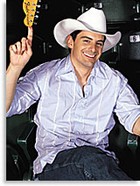
  • Brad Paisley

    Country's Newest Star Keeps Nashville Tele-tuned

    If you need proof that few popular music stars are as comfortable as Brad Paisley wearing the “star hat,” watch his video for his latest single, “Celebrity,” a comedic jab at bigshots everywhere. And Paisley, whose newest album, Mud on the Tires, debuted at #1 on Billboard‘s country chart by moving more than 85,000 units the week of its release, couldn’t be more the polar opposite of the character he portrays – tongue firmly planted in cheek.

    When VG first interviewed Paisley in early 2002, his voice was all over country radio and his face was all over Country Music Television (CMT). His second album, II, was on its way to scoring him three top 10 singles, a Grammy award, and all the demands that go along with such accolades.

    The newest and youngest current member of the Grand Ole Opry, having been inducted at age 29 and playing on its stage nearly 40 times, Paisley writes or co-writes much of the material he records, uses the same band to record and tour, and though his songwriting skills have some calling him the next Alan Jackson, he’s more like the next Alan Jackson, Buck Owens, Don Rich, James Burton, Redd Volkaert, and Brent Mason all rolled into one.

    Whatever the case, Paisley may well be the most real thing happening in Nashville today. We caught up with him on a recent tour stop, where immediately after a hyperextended interview with Billboard magazine, we obliged him while he grabbed a sandwich and talked about guitars, the new album, and some of the players he respects most.

    Vintage Guitar: How do you think you’ve progressed as a guitarist on Mud on the Tires versus the II album?
    Brad Paisley: Well, I focused a lot more on the guitar playing on this album than I had before.

    On the first couple of albums I played a little more like a session player would. They still had me doing what I do, but it was a little more session-like, a “let’s make sure everybody knows I did the right thing for the song” type of thing.

    But on this album, I didn’t care about that. It was more about wanting the guitar parts to be unique, and I wanted to go out there a little more. And that makes it even more appealing, from what I hear from other people, than being safe. On this album, the guitar mix is a little louder… We spent a lot more time trying to get onto tape the tone that I get live.

    Did you use your Dr. Z amps in the studio this time?
    Yeah, we used a big combination of stuff. [The setups] evolved throughout the album, and there aren’t really any two songs with the same exact thing. There was a Z amp on almost every song, though, in one way or another.

    My main setup on a lot of them was one of the Z Mazeratis mic’ed – and my engineer really worked to make sure the right mic and right preamp were on each speaker – and we used the 2×12 Mazerati in conjunction with a Z-28 head with an open-back cabinet with a 15″ JBL B-130 from the ’60s. A lot of the songs have that 15 mixed in because I would send a mix to the Z-28 head and compress it a little bit – and I don’t normally use compression of my main setup – and that added some highs and lows that really aren’t present on a 12″ speaker. In the recording setup, it really filled the mix a lot more.

    Which other amps did you use?
    My ’62 Vox AC30, which we used on two or three cuts.

    You’re very knowledgeable about what happens in the studio. Is that a result of you experience in Belmont University’s Music Business program?
    I can credit Belmont; I had the Recording Techniques class… I didn’t do very well (laughs), but I had it! I don’t know what they’ve got in their studio now, but at the time they had a 2″ tape machine and early digital machines, which actually didn’t sound good at all – really sterile. So I always leaned toward the 2″ analog thing.

    I got to know some recording engineer students who really knew what they were doing and were willing to experiment. I think the trick to getting what you want out of a studio is in part having gotten the wrong sounds. I really don’t think you can do it without getting sounds you don’t like.

    So how do you compare what you learned in an academic setting versus what you learned in real-life application?
    It’s like anything; they show you this and that, and eventually you figure out that some of it, you don’t need to know!

    For instance, in school we learned how to bias the 24-track 2″ tape machines, and I learned to do it… I couldn’t do it now (laughs), but I pretty much figured out that someone else was going to be doing that whenever I was recording onto 2″.

    What was your course of study?
    I was a Music Business major, and it’s a great program. You can take classes on recording techniques, but your emphasis might be marketing or whatever, which came in a little more handy for me.

    Let’s talk about the record. Was the acoustic intro to “Make a Mistake” a one-take recording?
    It was, actually, but I replaced the guitar because the acoustic [track in the intro] had some mic bleed. Plus, I started thinking, “It might be really cool to do this Chet-style on a Tele and combine the two pickups.” To me, that lent itself more to the song.
    Had I known, I would’ve tracked it that way. But that was all part of experimenting.

    Talk about “Spaghetti Western Swing” and its every-turnaround-gets-faster arrangement.
    That’s me and Redd Volkaert sitting there with guitars, and it’s the first guitar duet I’ve ever done! We [wrote the song] just to have him on the record, and next thing you know we were adding the narrative because the whole thing became a 1940s radio hour!

    I got to know Redd a couple years ago, and he has changed my life. I’ve wanted to cut a duet with him – actually my wife (actress Kimberly Williams) had as much to do with that as anyone…

    …did she know him, or had she just heard you talk about him?
    She got to see him play down in Austin, and just loved him. Not many people know that he played our wedding reception earlier this year. We flew him out to Malibu, and we were set up close to the beach in a little tent and he played honky tonk songs, and all this Tele stuff! I ended up spending my whole wedding reception onstage with him… which was fine with everybody because my wife got to mingle with everyone, and I got to get out of it (laughs)!

    But Redd has become a hero of mine. Coming from a jazz background myself, and having grown up on Hank Garland and Chet and Les Paul and things like that, to me it’s a separate entity than when I would play the Telecaster, which is my favorite thing. With Redd, there’s something about the attitude when you see him play live. You can’t believe the combination of things he infuses into his Tele playing.

    He has really shaped the way I play, and I think he influenced this record more than he knows.

    There are also a couple vocal duets on the record. How did you go about choosing partners for them?
    It’s people who I’m a huge fan of, or just someone I’ve gotten to know. On a track like “Whiskey Lullaby” (with Allison Krauss) I felt there needed to be a female voice for that song to be effective. It’s a great song, but with one guy singing it, it sounds really dark. With a guy and a girl singing it, it’s a little less dark somehow… a little more role-playing maybe. And that’s my favorite female singer, right there!

    It was also a thrill having Jerry Douglas play on the album. Jerry is probably the best at his instrument who has ever lived, which you can’t really say about a lot of people. But he is probably the most important dobro player of all time; he’d be the guy to credit for the way people play it today. He’s not doing a bunch of sessions anymore, because he’s out with Allison. But he told me he liked what I do, which was a huge compliment.

    You must get your share of offers to do duets…
    Maybe not as much as you’d think, but it just comes down to who you’d like to work with. And you do have to be careful, because there are plenty of duets that don’t sound so good.

    Talk about some of the broader influences in your music, like maple-board Telecasters from the late 1960s. Country music in the last 10 years has been full of them. Is there some sort of magic there?
    That has crossed my mind. You do hear more and more of them, and I feel the maple-capped neck is one of the factors that makes those such good instruments. Something about that neck… it’s twice as rigid, and to me it’s got a little different sound than a solid maple neck.

    Also, some of the lightest guitars Fender ever made were from the late ’60s. A lot of people think of early-’50s Teles as being these really light, perfect, guitars. But they were very inconsistent. Most of them had a magic all their own, but some of them weren’t as light as late-’60s Telecasters. Those two factors – a great piece of wood and a great neck… and quality control hadn’t yet gone downhill in the late ’60s.

    Anyway, ’68 Teles had a special thing to them, and ’69 models, too – James Burton played one of those – even though by then they had the skunk stripe on the back of the neck. And the reason you’re seeing so many is that they’re sort of the affordable vintage Fender guitar. Mine has a magic to it that I can’t really describe. Bill Crook, who builds my custom guitars, bases them on my ’68 Tele, and some other things he likes from other guitars.

    There was a time when the only thing I could play onstage was my ’68. I tried some other guitars, and they didn’t work. So it was nice that he could make some stuff that I could swap out in the middle of a show or use at an outdoor gig where tuning might be an issue…

    …and you’re not splattering mud on vintage instruments to do album cover photos…
    That’s right! We used a new Crook guitar for that. And by the way, I don’t recommend that for anybody! There are scratches all over it now from that mud.

    So it is real mud?! No studio or digital trickery…
    Yeah, it’s real. My guitar tech, Zac Childs, had a fit. He was so upset, first of all because he had to clean it off. But yeah, it was a dumb thing to do… and I was really sittin’ in that mud. I looked like a two-year-old playin’ in it!

    Will those clothes end up in some celebrity auction somewhere?
    Yeah, I imagine They’re hanging in my publicity manager’s office right now, with the mud still on them.

    Talk about the path paved by the session guys in the ’80s and ’90s. If there’s a precedent for hot Tele playing today, is it Brent Mason?
    In the ’90s he was probably the most important Tele player we had. On most any record you can think of from that era, he was playing it. He’s a tremendous guy and an incredible player, and he was one of those guys who was finally noticed by other genres. He led the charge to bring back country guitar playing.

    Before him, though, there were some important people. To me, John Jorgenson is important in so many ways, and underappreciated in the impact he had on music. I remember when Vox amps sold pretty cheap – John was one of the first guys to use amps in an era when everybody else was using a rack – and it’s no coincidence that prices on them started going up when he was out there in the ’80s with the Desert Rose Band, playing through Boss pedals and a Vox amp. And he had that great tone with a Tele when everyone else sounded like they plugged straight into the board….

    …and all sounded alot alike…
    They did, yes. But John was important, and some other guys led the way.

    These days, from what I can tell listening to the radio, there aren’t a whole lot of people in Nashville putting Tele stuff in their records. It’s pretty rare to hear a record where there’s a Tele lick where I find myself going, “Oh, that’s cool!” or “I need to learn that!” or “Who did that?”

    Brent is still playing on a lot of stuff, but I think they’ve got him playing a Strat more than a Tele. But in the ’90s, it was like every week you’d hear him playing something you had to learn, whether it was an Alan Jackson record or a Brooks and Dunn record, or you name it.

    How would you describe the influence Ray Flacke and James Burton had on your playing?
    Ray Flacke… when that Rickey Skaggs stuff came out, it was like, “What in the heck is this?!” I remember hearing stuff like “Highway 40 Blues” and “I Don’t Care.” There’s a guy who had that Tele player’s attitude, and he plugged straight into that an amp with a delay, and it was always unbelievable the way he would bend those big strings. He was responsible for guys goin’ out and buying packs of .008s! To do bends he did with [a thick set]! He was really unique.

    But even before him, James Burton was one of those guys who was able to go in and fuse Tele chicken pickin’ stuff on things you’d never dream it would apply to, from Elvis to Ricky Nelson, to the Buck Owens records he played on.

    And one of the things that made the paisley Tele cool for me was that James Burton played one. He made it cool, even though it’s pink!

    You play on an instrumental track on the new Albert Lee album (see “First Fret: News and Notes” in this issue), Heartbreak Hill.
    Yeah, “Luxury Liner,” the old Gram Parsons song, is Albert, me, and Vince Gill. We just went in to jam, basically, and the song makes a great instrumental. I’m really tickled with the way it turned out.

    Albert and I have become real close friends, and he comes out anytime I’m in the L.A. area, and he’ll sit in – for the whole show! We’ve got a habit of doing that (laughs). In Austin, Redd does the same thing. It’s fun… I love to make it a guitar thing. And the audience doesn’t know any different – they think he’s some new band member they don’t know. They don’t realize Albert’s the reason we all play Teles!

    How has the tour been going?
    It’s been a really great year so far. The launch of an album sort of infuses new life into your shows – it’s fun to have some new things to play, even though our work is cut out for us. I’m still trying to learn some of those things I did (laughs) on a couple songs! You know, you do things in the studio at the spur of the moment, but then have to go and do them every night on tour.

    But I’m looking forward to the rest of the year, getting out there and pulling off a better musical experience every night. We’re all about trying to play better every night, not just singing hit songs. We ad lib, and every night there’s jamming. It’s almost like the Grateful Dead meets Buck Owens some nights (laughs), because we’ll go off on little adventures. And sometimes we do crash the bus!
    For the latest on Paisley, visit brad paisley.com.


    THE MUD UNDER THE TIRES
    Like any big-time player who doesn’t control much of his own time on the road, Brad Paisley can no longer do much tinkering with his own guitar and amp rig when he’s on tour.

    And like anyone else, since he can’t do it himself, he wants the job done by someone who is knowledgable, and who he can trust.

    Enter Zac Childs, who has been Paisley’s guitar tech since the Summer of 2002. A friend since their days at Belmont University (“We both failed Recording Techniques [class]!” jokes Paisley), Childs is, according to his boss, a walking git-tar encyclopedia.

    “Anything you’ve ever wanted to know, but couldn’t find in a book, just ask him,” Paisley says. “One time, we were talking with [guitarist] Tony King, from Brooks and Dunn, and I said something about a volume pot or something, and Zac said, ‘No, they changed that in ’56… March of ’56.’ And Tony looked at him and said, ‘You’re not married, are you?’ (laughs)! And he’s like, ‘No, I’m not…’ But he is, literally, that bad!”

    After graduation, Childs, a respectable guitarist in his own right, played in Nashville, including with Paisley, before moving back to Texas to jockey a desk for a construction firm. Paisley went on to stardom, and for his first few tours relied on tour manager Kris Marcy to pull double-duty as guitar re-stringer. But it ultimately proved too big a handful.

    “It seemed that every week something was going wrong – an amp was losing a tube or something.”

    The time had come to get an honest-to-goodness guitar/amp tech.

    “So we tried some guys out,” Paisley added. “But I remembered Zac in the back of my mind as a friend who knew everything I ever wanted to know about guitars – useless knowledge, really (laughs)! So I called and asked him if he wanted to try life on the road for a weekend. He was hooked.”

    For his part, Childs makes managing six guitars for Brad and the band’s other guitarist, Gary Hooker, all the guitar amps, and his boss’ rig sound easy.

    “I like to have Brad always playing a guitar with fresh strings,” he said. “So after he plays three or four songs, I’ll give him a new guitar,” he said.

    For the record, Paisley plays Ernie Ball .010-.046. “Nothing out of the ordinary about them, and we get them by the boxload!” Childs adds.

    And though Paisley’s ’68 will always be his favorite instrument, his Bill Crook custom guitars have become nearly equal allies.

    “The black one is his favorite Crook guitar, so he usually starts the show with it,” said Childs.
    Paisley’s acoustic instruments include two Larrivee guitars, a D-9 and D-10 with Fishman Matrix pickups, as well as a Gibson F-5 mandolin. The guitars are strung with Ernie Ball Phosphor Bronze .013 to .056 strings.

    The effects rack includes two Digital Music GCX switchers, each with eight loops. All the effects run through them to maintain purity of the signal – and avoid having a cable cluster onstage.

    “It gives Brad a lot of choices in tonal colors, but doesn’t degrade his tone.”

    And what is his typical tone?

    “Brad’s typical Tele tone usually uses only a delay unit. We have a few different ones; a Way Huge Aqua Puss, a Boss DD-2, and a Ibanez AD-80 18-volt unit from the ’80s.”

    Other boxes in the chain include rackmount Line 6 effects modelers, a Robert Keeley-modified Boss Blues Driver, Hotcake Distortion, EBS compressor (Swedish-made bass unit), VHT Valveulator (for splitting and buffering the signal), DOD Phazer, a Boss CS-2, and an Electro-Harmonix Holier Grail Reverb. He uses a Shure wireless unit.

    Paisley’s amp lineup consists of two Dr. Z Mazerati models and a third amp, which can change but is always either a Dr. Z Maz 18 or Z-28.

    “We don’t use the internal speakers in the amps,” says Childs. “We use speaker cabs behind the amps, and they have the identical speakers. The Mazeratis are each running cabs with Vox Celestion alnico blues, and the Z-28 is running an old JBL D-130 F – a 15” alnico.

    “The Z-28 amp has an EF-86 preamp tube and a 6V6 output tube,” says Childs. “So it has the front end of an old (Vox) AC15 and the power section of a brown (Fender) Deluxe. It’s a great amp, especially running that JBL.”


    Photo: Rusty Russell.

    This article originally appeared in VG‘s Nov. ’03 issue. All copyrights are by the author and Vintage Guitar magazine. Unauthorized replication or use is strictly prohibited.
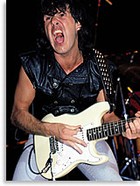
  • Bruce Kulick

    Transorming to Solo artist

    Bruce Kulick gained his reputation as a top-notch axeman working with a variety of major artists such as Kiss, Meatloaf, Michael Bolton, Billy Squier, as well as his own band, Union. Most recently, Kulick signed on as a member of the revitalized Grand Funk Railroad. He has also released two impressive solo discs, Audio Dog (2001), and his latest work, Transformer.

    VG first interviewed Kulick in 1996, and again in October, 2000, and we recently checked in with him between dates on an international tour spanning the U.S., Japan, and Australia, supporting his solo material and his longtime relationship with ESP guitars.

    Vintage Guitar: In what ways have you evolved as a musician?
    Bruce Kulick: I’m learning to follow my instincts better. And I’ve reached that point where I like bouncing ideas off people who I trust. But I feel like I’ve become a committee of one, and I’m comfortable with that.

    I’m also more confident about knowing how to get the tones I hear in my head and choosing the right tools for those ideas. Years ago it was harder for me to dial in sounds because I wasn’t sure which guitar and amp to use. I’d usually just pick a guitar that stayed in tune and was easy to play, and use my favorite amp. Now I’ll play something that fights me if I know it’s going to give me the tone I’m after.

    I’ve gotten more confident about constructing sounds and I’ve also become a lot more confident as a songwriter. This is the first time I’ve been aggressive about finishing songs myself, without collaborating. Now I feel like I can express my point of view lyrically. I’m no Bob Dylan, but I can get my point across. I tend to write most lyrics out of a real situation, problem, or emotion.

    How did the writing process for Transformer differ from Audio Dog?
    On Audio Dog, I’d collaborated with Curt Cuomo, the co-producer of both records. He’s a talented guy – a good songwriter and great co-writer.

    When I started Audio Dog, it was my first time, and I didn’t know what to expect. I started with songs that were in the closet – ones I kind of wished Kiss would have done. Then I added new stuff, and put it together.

    With all of the songs, I either had a lot of lyrics or the chorus or a title or just the emotion I was trying to get across. I’d take it to a certain point and then Curt would jump in. This time, the ideas and the process of actually writing lyrics just came so naturally to me, and I was really proud of that. I know I can do that now and it’s kind of interesting to come up with that confidence now, to find it at this time in my life, as opposed to when I was 25. But I’ll admit that when I was in Kiss, even if I could finish a whole lyric, that would not be the lyric on the co-write. Maybe the door hadn’t been too open there, which didn’t help to get me inspired to try to put pen to paper with lyric ideas.

    Are you inspired by any new artists?
    I bought John Mayer’s album when it came out. Then I bought Norah Jones’ album.

    I do pick up something from these new artists in the same way I did with the classics. Another guy I like is Pete Yorn, who has some really moody, introspective, and interesting ways of using guitars and instruments.

    Watching those artists become so huge gave me greater confidence as a singer. I tend to respond to people who are emoting and make me feel whatever it is they’re saying with their music. It has to have a melody and something musical about it, which is why I was never a huge punk fan. Some bands that were supposed to be the next great hope of rock and roll, like the Strokes and the Vines… I didn’t get it. I know who they were influenced by and they don’t hold a candle to any of those bands. That’s why I prefer an artist like Mayer, who is kind of a mixture of everything. [He] can also play guitar like Stevie Ray, so that’s kind of cool. But is he using it? No, because that’s not going to make him a pop star. But it’s nice that he can play that way.

    Billy Corgan’s another monster guitar player. Unfortunately… the guitar hero thing is not really happening right now. But there are still plenty of people who respond to it. So I carry that flag, and that’s why my role in Grand Funk is so much fun. We get a great mixed audience and some of them are shocked when watching a lead guitar player.

    What’s the experience like, working with Grand Funk Railroad? Had they influenced you early on?
    I was hip to Grand Funk. I wasn’t a huge fan, but I did like them a lot. I remember seeing a video for “Inside Looking Out,” which is such a complete rave up, a real heavy metal trio kind of track. I loved Mel Schacher’s distorted bass, and you don’t get any better drumming than Don Brewer. Don is an incredible drummer and to be playing with that rhythm section is incredibly cool.

    They’ve created a lot of important music and it’s just a thrill to be playing with them. Everyone is professional and they’re all great musicians. Max Carl, who used to be in .38 Special, covers the vocals that Mark did. I’m just doing the lead guitar work. It’s a terrific group and I’m excited to work with them.

    When you play Mark’s parts, are you faithful to his original riffs?
    It’s much like what I did with covering Ace Frehley’s parts in Kiss. In certain songs there are signature riffs that are important, like the beginning of “We’re An American Band,” and the solo. You can’t ignore those riffs. They’re classic and they fit.

    I always take the essence of what’s really great in that way and just pump it up. I like Mark’s riffs and I think they’re all appropriate in the songs we do, so that’s not a problem. It’s a similar kind of role to what I did in Kiss with Ace’s parts. You take what’s important and just kind of go with it and make it your own.


    Live photo: Nico Ciccarone.

    This article originally appeared in VG‘s Sept. ’03 issue. All copyrights are by the author and Vintage Guitar magazine. Unauthorized replication or use is strictly prohibited.