Month: April 2004

  • Gibson ES-300

    King for a Day

    Top-of-the-line. The king. Top banana. The mostest. Top dog. The big daddy. All these descriptions apply to the ES-300, Gibson’s first deluxe electric guitar. For a few short years in the 1940s, the ES-300 stood as the fanciest electric archtop in Gibson’s stellar lineup. Now it is all but forgotten, a minor player in a major league story. But even minor players often have interesting tales to tell.

    Gibson’s first electric guitar, the ES-150 of 1936, was essentially an acoustic L-50 set up with a new wire coil and magnetic pickup. So new was the market for amplified instruments that Gibson hedged a bit, as did other manufacturers, waiting to gauge demand. They introduced electronics first on mid and lower-line archtops, rather than the upper-line expensive models, but the instruments caught on with the public and working musicians. When this happened Gibson was ready with upscale models and the ES-250 came to market in 1938. This electric archtop was built on the wider 17″ “Advanced” body, with fancier trim. The ES-250 was short-lived, however, and was discontinued in 1940 with the introduction of the ES-300.

    The ES-300 followed Gibson convention, matching retail price with names, and sold for $300. It also introduced a new Gibson pickup which can best be described, if rather inelegantly, as a “big honker.” Stretching from the bridge to the fingerboard, this pickup was the first to have adjustable poles and also featured a tortoise plastic cover. While meant to address tonal deficiencies in the ES-150 (Charlie Christian) pickup, the new model was large enough to impede playing and was not well-received among professionals to whom the instrument was marketed. Gibson quickly changed the design, and within months a new pickup of more manageable size appeared. It retained the adjustable poles and was mounted near the bridge at a slight slant, to improve treble response.

    As the top-line electric Gibson archtop, the ES-300 received all the trimmings. It had the 17″ “Advanced” body width and used the finest spruce for tops, and curly maple for backs, sides, and neck. Construction followed standard Gibson methods, meaning the top and back were hand-carved. The bound neck had double parallelogram inlays while the bound headstock had a pearl script logo. The 300 was the first Gibson instrument to receive the crown peghead, though some variant instruments have a modified split- diamond inlay instead. Pickguards were bound, hardware was nickel-plated, and bridges were rosewood. Top and back were triple-bound, and both sunburst and natural finishes were available.

    Almost as quickly as production sped up on the new top-banana ES-300 electric archtop, Gibson was forced by the war effort to cease production of all electric instruments. Fallout from the attack on Pearl Harbor meant that by early ’42 the U.S. was fortifying its industrial base to produce goods for war. Gibson contributed, and curtailed production of most instruments. Because the electric instruments used metals vital to the effort, only a few acoustic instruments trickled out of the factory during the war years.

    After war’s end, Gibson was ready to meet pent-up demand for musical products. Several instruments were redesigned, including the ES-300. The new version now featured a body constructed entirely of laminated maple. At some point during the war years, those working on guitar development noted that carved tops and backs are not necessary for an instrument that derives its sound from a pickup, and much construction time could be saved by using laminated woods pressed to shape. Thus, the ES-300 was given a maple top – often highly figured – when it was reintroduced in 1946.

    Dimensions and trim were mostly the same as the pre-war version, with three exceptions. The pickup was the newly designed P-90 with adjustable polepieces and was mounted near the neck. Tailpieces on early post-war models were fancy flat-plates with f-hole cutouts. These were likely bought by Gibson from a supplier, since metals were still in short supply after the war. A similar tailpiece is seen on some instruments made by Valco and Kay from the same period. And finally, the ES-300 had a neck constructed of mahogany.

    Early post-war models were highly transitional. Some examples have P-90 pickups with nonadjustable poles, others with no visible poles at all. Some are constructed with highly figured woods, while other examples are constructed using mahogany for some or all of the body. The modern block “Gibson” logo was phased in during 1947-’48, as was a multi-ply pickguard to replace the bound one. At the same time, they added a Gibson trapeze tailpiece with raised, pointed ends.

    The reign of the ES-300 ended in ’47, when a new model superseded it in the lineup. The ES-350, a cutaway version of the 300, became the top electric model. Both received dual P-90s in ’48, but sales of the 300 never recovered. By the time the ES-5 became the new electric archtop king in ’49, the writing was on the wall. Few pros were using non-cutaway electrics and the 300 was discontinued in ’52.

    The ES-300 enjoyed a short but versatile stay at the top of the electric archtop line, introducing several Gibson innovations, like the P-90 pickup and laminated archtop body, and other features like the crown peghead inlay. Today, examples are appreciated for their high level of workmanship and their place in Gibson’s history.


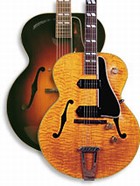
    LEFT A 1941 ES-300 in sunburst fini-sh with second-generation slanted pickup with tortoiseshell cover. RIGHT By the late 1940s, the ES-300 had introduced the P-90 pickup, and Gibson was using some of its most figured maple on the tops.

    This article originally appeared in VG‘s May ’99 issue. All copyrights are by the author and Vintage Guitar magazine. Unauthorized replication or use is strictly prohibited.

  • Armadillo Blues Preamp/Roadkill Fuzz

    The boost you need, with no noise

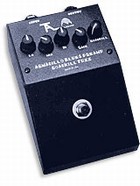
    The TAL Audio Armadillo Blues Preamp/Roadkill Fuzz is a dual-purpose pedal the company describes as “A low-noise instrument preamp with a footswitchable harmonic overdrive designed for the professional musician.”

    Professional players and producers have indeed caught wind of the Roadkill’s usefulness as a front-end signal booster, especially for guitars with low-output pickups, and for recording acoustic guitars in the studio, where it allows the user to dial in lower frequencies (via a three-band EQ) while avoiding the boominess that mics can add.

    But we were more concerned with how the Armadillo/Roadkill worked through a good ol’ electric rig. So we grabbed a tube combo amp and a single-coil-equipped Strings-n-Things Blues Master II, along with an all-pickups-aboard Robin Ranger Pro.

    The heretofore-known-as Armadillo/Roadkill has only one switch despite its two distinct functions; there is no on/off switch for the clean boost operation. You plug it in, and it’s working; the stompswitch’s sole function is to activate/deactivate the Roadkill fuzz circuit.
    On to the test…

    Before we began tweaking the EQ, we noticed that the Armadillo’s all-analog circuit delivered the promised quiet and transparent preamplification. The active tone controls’ boost and cut functions work well, adding punch to the lows and sparkle to the highs. And even with the gain control turned up considerably, the preamp remained quiet, allowing the guitar’s natural tone to shine.

    The activation of the Roadkill fuzz circuit gave the pedal added drive and sustain if used moderately, adding only a bit of noise. And the only nit we’d pick is that there is no status LED for the fuzz, so if you’re using the pedal for just a touch of boost, you might not be sure whether it’s on or off.

    But there’s no mistaking on/off when you drive it a bit harder. Turning up the fuzz pushes the tone more into the realm of a Big Muff than an overdrive pedal. Ultimately, we found it worked better as a boost than a distortion pedal (which is its intent, anyway).

    Overall, the Armadillo’s analog circuitry and quiet high-fidelity filters make this an outstanding pedal. Its ability to render essentially non-colored tone and a bit of fuzz make it unique and versatile.


    Armadillo Blues Roadkill
    Type of Pedal: Clean boost/fuzzbox.
    Features: Quiet, high-fidelity circuits, made in the U.S.- Roadkill fuzz circuit.
    Price: $159.
    Contact: TAL Audio, 23324 NW 102 Ave., Alachua, FL 32615, taljaz@bellsouth. net, www.talaudio.com.


    This article originally appeared in VG‘s Oct. ’02 issue. All copyrights are by the author and Vintage Guitar magazine. Unauthorized replication or use is strictly prohibited.
  • Paul Gabriel – Fate

    Fate

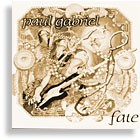
    I’m not familiar with Paul, but juding by his playing and singing, I’d guess he’s been around awhile, gigging away and making audiences smile heartily.

    The music here is a really nice mix of good old-fashioned classic rock and roll, blues, and nice soulful ballads. The opener, “Without You,” is a perfect example. Killer slide, nice throaty vocals, and a sound that fits nicely into the classic rock mold but still sounds thoroughly modern. There’s some nice funky blues/rock (“Can’t Get Over You”) that’s as good as it gets. Paul has a slightly chorused sound on this one that matches nicely with the feel. And his licks are tough and imaginative. He knows his way around a rock song.

    His ballad playing is excellent, too. “Tonight’s the Night” is a gorgeous song that features very soulful playing and singing. Same for the title cut, which at times sounds like Bad Company. For you folks who like your blues shuffles lazy (in a good way) and melodic while keeping that down-home feel, check out “I’m Blinded.” Nice melodic riffing gives way to some very cool bluesy playing. For sweet bluesy bends and a killer tone, “Can’t Wait to Get Back Home” is as good as it gets. And, for Dave Mason-esque pop rock, give a listen to “Who Are You.” Paul’s vocals and the ever-tasteful playing of all the musicians involved are a real treat.

    It’s nice to hear guys who really get it perform. Yes, he’s not a household name and probably never will be. That’s not the point. He’s treating the music as it should be treated. Smoke Ring Records, PO Box 3342, Westport, CT 06880-834, phone (203) 268-8977.


    This article originally appeared in VG‘s Sep. ’01 issue. All copyrights are by the author and Vintage Guitar magazine. Unauthorized replication or use is strictly prohibited.
  • Richie Sambora

    Crushing the New Millennium

    Few bands experience the success of Bon Jovi, a group that achieved tremendous commercial audience by combining hard rock elements with strong melodies, great hooks, and well-written pop lyrics. Though they reached the pinnacle of the ’80s pop/metal scene, they have since flourished by bucking trends and staying true to their roots. After making music together for almost two decades, the group recently released its seventh studio album, Crush.

    As guitarist, second vocalist, and a primary songwriter, Richie Sambora has mastered the art of songwriting, and tightened his chops. His experience with Bon Jovi and his solo career have provided the opportunity for Sambora to acquaint himself with a variety of sounds, and to sample some of the finest musical instruments, amplifiers, and effects available in the modern and vintage worlds.

    In the last 15 years, Sambora has also built an impressive collection of gear he not only admires, but uses. While he may not always take his favorite vintage pieces on the road, he does use them in the studio, and his touring rig includes a respectable array of very cool guitars. In fact, Sambora considers himself a total “guitar geek.”
    “We’re just a breed of messed up people, but we could all have worse addictions,” he confesses. As the owner of a formidable assortment of Les Pauls, Strats, Teles, and tweed Fender amps, Sambora is continually hunting for guitars and amps to add to his menagerie.

    “I’ve got a ton of great vintage guitars and amps now,” he admits proudly, but knowing he has caught a serious case of “gear acquisition syndrome” (GAS). Unlike the typical “collector,” who puts instruments behind glass, Sambora plays everything he owns.

    “It’s pretty cool to have all this stuff on hand. The only downside is that it has started taking up lots of space,” he sighs. Then he shoots back, “But you’ll never hear me complaining!”

    VG caught up with Sambora as he was preparing for Bon Jovi’s worldwide tour, which began with a string of sold-out shows in Japan and Europe, before hitting the U.S. The discussion included the resurrection of Bon Jovi and how he approached the making of tha band’s new album, Crush, as well as his reliance on vintage guitars and amps (as well as new gear from Fender, Marshall, and Vox) to conjure up his tonal recipes for each track.

    He also reflected on his musical roots, discussing the evolution of his playing and songwriting styles, and offered helpful advice to those embarking on their own musical ventures.

    Vintage Guitar: How has your approach to playing guitar changed since Bon Jovi’s beginnings in the early ’80s?
    Richie Sambora: I think it has become a more organic approach. Inside the band’s style, I’ve totally got my own style and I’ve gained my own voice. One of the hardest things for a band to do, in general, is to find out who they are stylistically and to find that voice. As an instrumentalist and the guitarist in this band, finding my voice has been a part of gaining my style, which is basically like an organic kind of modern-day R&B/rock and roll fusion.

    Did this evolution come about naturally, or was it more of a deliberate effort?
    It has been through the band’s life and my own solo work, as well as through the different experiences in the music business and as a musician that have brought me to this place, musically. I don’t think it’s anything I’ve consciously worked on, although, I’ve enjoyed evolving my style by bringing in different instruments.

    I’m the kind of guy who gets really turned on by a new axe. In the past, I’ve been playing a lot more Dobro, although I didn’t make any conscious effort to play any Dobro on this new record because it didn’t seem to fit in anywhere. But I am playing a lot more slide on this album. Obviously, my tone is evolving, too. When you look back at albums like Slippery When Wet or New Jersey, I used two guitars and two tones, besides an acoustic. But on this new record, the palette is getting deeper. Because of the growth of my collection of vintage guitars, I’m able to put more colors in the songs.

    I look at songs as sonic paintings, and having a different guitar, different amplifier, and different stompboxes creates a whole other hue. So I like to look at it like I’m painting with different colors when I have a different guitar and amp.

    How has your interpretation of great guitar tone evolved over time?
    As a musician, I have always liked to apply what is needed for the song, emotionally. I see songs in a cinematic level, so I try to apply the right tone to bring out an emotion. For instance, in a song like “It’s My Life,” the tones are amongst the heaviest I’ve ever gotten. I wanted people to react when the first chord hit them. It’s a combination of my ’60 Les Paul doubled through the new 100-watt Marshall JCM 2000 Dual Super Lead head and a Mesa/Boogie Rectifier head through a 4×12 and a talk box.

    What kind of talkbox are you using?
    On the record, one that was homemade. It was built to take the rigors of touring with an extra heavy speaker driver. I forget what it is, but it used to blow my teeth out onstage (Laughs)! Peter Frampton just lent me one of his because I blew that one up. He’s building his own effects now and he gladly obliged. So I’ve been playing live with his new stuff and I’m liking it a lot.

    How many bands are using a talkbox these days?
    Not too many. I think the Foo Fighters used it on their last album as an underlying tone, not as obtuse as what I’m doing on my record.

    It’s an interesting instrument. I’ve tried to use it a lot more because I’ve always thought it was cool. And it has become kind of a signature thing for me since “Livin’ On A Prayer” was such a hit. At that point, when I brought the talk box out, I don’t think it had been on the radio for 10 or 15 years, except for classic rock radio. But when I brought it up to everybody in the band, they all started laughing at me like I was a goofy bastard. But when it actually worked, it became such an integral part of that hit song. Consequently, a couple of other times I tried to incorporate it into a song, it just didn’t work. For some reason, sometimes it works and sometimes it just sounds goofy. But on that particular track, it made it sound very tough.

    Who inspired your use of the talk box?
    When I was a teenager, Frampton Comes Alive was such a huge record. I liked that it was a live album and I loved to see bands live. Joe Walsh also used talkbox amazingly. Those were the main guys.

    Which players influenced you in finding your tone and selecting your gear?
    Guys like Eric Clapton, Jeff Beck, Jimi Hendrix, Jimmy Page, Joe Perry, Johnny Winter, the Allman Brothers, and all the modern-day blues players. When I first heard Cream and Hendrix, they really caught my attention. Then I kind of went backwards and started listening to Albert King, B.B. King, Albert Collins, and Hubert Sumlin. Then back even further to Muddy Waters and further back from there to Charley Patton and Reverend Gary Davis. I went backwards to go forwards.

    As a soloist, it was the modern blues guys who really influenced me. But as an arranger, for coming up with parts and the structure, it was the Beatles and George Martin. With a lot of the stuff I played on the Bon Jovi hits, it wasn’t about developing solos, but to play stuff that was melodic and memorable. So the solos were more like melodic interludes. You can almost imagine them either played by another instrument or by an orchestra. So they are more melodic and melodically-oriented than solo-oriented.

    When I was playing sessions, I was trained to play what was right for the specific piece of material. I brought that experience to Bon Jovi. Then, becoming one of the main songwriters in the band, I wanted to see the right thing get on the right track and I felt less of a need to actually be a guitar masturbator. I had enough to do with the material, not only being the songwriter and the artist, but also many times as the arranger and producer of some of the music. So I felt that I had enough of a stake in it that I didn’t have to go overboard with my guitar playing. I’d just let it come and played what was appropriate for the piece of music.

    Talk about the songwriting process for Crush. How did the songs come together? Did you demo the tracks first, before going in to make the record?

    When Jon and I got together to discuss this, we wanted to make an optimistic rock and roll record with good songs that people are going to want to see performed live. We wrote 60 songs – the most absurd amount we’ve written for a record – and we demoed everything. We had time to do it for a lot of different reasons. Jon came in with 30 pieces of music because he wasn’t sure if he was going to write a solo album. He had just finished a short solo tour and started writing again, but he wasn’t really sure what he was going to do.

    When he came back, I was on tour. When I got back, we decided to put the band back together. Then we wrote another 30 songs and we just picked those that fit the band the best, and I think that was the greatest thing about this record. I think it’s one of our best records we’ve ever made as a band because the material fits us well and we can stand behind every song, lyrically.

    How did you approach things from the production side?
    We did a lot of interesting and new stuff on Crush. Jon and I ended up co-producing with Luke Ebbin, who’s phenomenal and I think going to be a big star in the future. He brought a lot of new ideas. We recorded with Pro Tools, which was a big help, used a lot of drum loops, and recorded with a 56-piece orchestra. It all came together very well.

    I’m always a very hands-on kind of guy, but on this record, Jon and I really watched it like a baby. We weren’t listed as producers on Slippery When Wet or New Jersey, but we’ve always been very involved in the production of how things sounded and how things were arranged. Nobody was telling me what to play. Then working with some great guys along the way, like Bruce Fairbairn, Bob Rock, Don Was, Neal Dorfsman. I’ve always worked with good guys, and I always became a part of the production team with them. During basics and the recording, I’m always standing behind the board, watching everyone do everything. That’s kind of the way I learned about recording and production – by making myself part of the production and not just one of the musicians.

    When you write guitar parts, are you conscious of creating parts you can re-create live, and while singing?
    No. I just let it come out. Then I have to learn how to do it all later. You have to play what’s right for the song, not what’s right for you. That’s the way a musician grows, and kind of what has happened to me over the years. I’ve grown stylistically because of all the experiences I’ve had in the music business. It has led me down a particular path.

    Working with Don Was and different musicians takes me down a different path. Also, working with different writers, like Richie Supa, is part of the learning experience. Two years ago I did one of those Steve Vai Christmas albums, which was very bizarre. I did a very simple thing on Dobro, with Don Was on upright bass, and we recorded a version of “O Come All Ye Faithful” that I think stands up like a mother! So in that period, I ended up doing a gospel album with Don and playing on those things. There’s been a wide range of projects for me as far as my stylistic diversity goes. I think I’ve become not only a stylist, electrically, but also a utilitarian kind of player because in what Bon Jovi does is a diverse range of styles I get to cover using all of those cool vintage instruments which now are a big part of the depth of [my] sonic palette.

    How do all these instruments affect your approach to playing and songwriting?
    Obviously, the playability and the sonic qualities of different instruments does change things. If I’m going to use a beautiful Les Paul, like the 1960 and ’59 Les Pauls I have, it’s going to inspire me to play in a certain way and it will work best for getting certain tones and attack. But if I use my ’50 Broadcaster, I’m going to take a totally different approach. The Les Paul is going to be silkier, heavier, and will have more bottom end, but the Broadcaster is going to have all the bite. Then a Strat is going to get into all that phasing where you want it…so you approach playing it totally different and use it where it fits best.

    On this record, I pretty much used everything I own – a bunch of Gretsches, Teles, old Strats, Les Pauls. I used a few Danelectros, some Bajo-Sexto Teles the Fender Custom Shop made for me, some electric sitars and all kinds of usual and unusual stuff. I also used a bevy of amplifiers. I just used everything and had a blast!

    Was there a core group of guitars, amps, and effects for rhythm or lead tracks?
    I didn’t use many effects, and I tried to not use the same instrument on each song, even if I was using a guitar from the same family of Teles. I’d try to use different ones, like use a ’50s Broadcaster and a B-Bender Tele Jay Black made me in the Fender Custom Shop, or I’d use a ’58 Strat I got from Norm’s Rare Guitars, and couple it with a new Richie Sambora Signature Series Strat. I was doing a lot of coupling with guitars on each track. I have a very quiet amp switcher and I used a ton of different amplifiers. I have a lot of old tweed Fenders, my favorite being a 1959 Super Twin that has got a clean sound that barks so loud, a ’53 Super and a ’58 Bassman. I also have a Selmer amp with two 12s and a bunch of old AC-30s and AC-15s from the ’60s, along with a brand new AC-30 that I used a lot on this record. I also used some Mesa/Boogies and the Marshall JCM 2000 DSL 100 head made a large appearance on this record. I’m also using it live. I really love that amplifier. I got turned on to it when I went to see Jeff Beck. I also used a VHT Pitbull, which have been a staple for me on almost every record I’ve made in the last ten years. It’s always found it’s way onto my albums. I’ve also got a couple of Dumbles, which Howard has made me that are great. I’ve got a couple of Jose-modded Marshall plexis, too, and they also find their way onto the records, once in a while.

    In a way, I’m kind of a Neanderthal about my amps. When it comes to tone, I know it if it’s right and if it’s working for the song. But as far as the technical stuff about it goes, I just want to be able to turn on the amp, then turn the knobs and mess with it to get the right tone. I turn it on, couple it with a guitar and then know if I’m getting the tone I want.

    How does your studio rig differ from your live rig?
    For the stadium stuff, I tend to go for amplifiers that clean up well when I turn down the volume knobs on my guitars. So right now, I’m using a combination of Pitbulls and Marshalls onstage. The new Marshall has that beautiful clean channel which I think has gorgeous tone. I like to use something that I can get a bevy of sounds from and can also work well with the different guitars that I’ve been using live. There are large sonic gaps and volume gaps between different pickups, like when I use my ’60 Les Paul compared to a brand new Strat. There are a lot of different things you have to compensate for.

    As far as effects go, I try not to use many of them and I put them on afterwards when I’m recording. I try to keep the tone as pure as possible. I don’t even use a wireless and I try to use cables as much as possible and then affect the tone afterwards. Onstage, I use a Vox wah, a Boss SD-1 Super Overdrive and a couple of outboard effects, like stereo echoes.

    As for my guitars, Todd at the Fender Custom Shop just built me a few new signature model Strats which are killer. I’ve also got a new signature acoustic series that Taylor is making which is just phenomenal. The guitar is made out of koa and has a Florentine cutaway. It’s just tremendous. I’m also waiting on two doubleneck acoustics that Taylor is making for me. I think these are going to be the only ones in the world. I’m so thrilled with the signature model. It’s not only a gorgeous instrument, but I just used it the other day on a session and it records phenomenally. It records totally even whether you’re playing with a pick or doing fingerstyle work, and there’s no runaway low end. There are Fishman pickups in the bridge and neck, which you’re able to balance out. There’s a frequency knob, contour knob, bass, treble and master volume controls, notch filter and a balance control to switch between pickups. It sounds great both amplified and acoustically. I had them make the neck so it plays fast and smooth, kind of like an electric, so it feels great. You pick it up and know that it’s a really great guitar. They really did it right.

    How do you like your guitars set up?
    I like a little fight, so I’m playing with .010s and they’re set up a little bit high off the fingerboard. When I’m playing live, I get out there and I have all this adrenaline, so I like a bit more tension on the strings. But when I’m in the studio, I play with .009s and because it’s about having a little more of a finesse deal. If I’m using an alternate tuning, then I raise the action and use heavier strings. I play with regular medium picks, but sometimes I try out different materials for different sounds, like I’ll double an acoustic track with a thin pick to give it that real ringing kind of thing happening. I’m a really good doubler, so I can play an exact double. I pull that stuff off easily.

    Do you practice frequently?
    I practice, but I don’t practice technique as much as just letting a song take me somewhere. When I do practice, I just pick up an instrument that I get turned on by, maybe something I don’t play too often, like a Dobro or my 1902 Martin parlor guitar, and I’ll fingerpick. I’ve been doing a lot more fingerpicking at home, as well as on the record. I’m also playing a lot more slide.

    What kind of slide are you using?
    Acrylic and bottleneck slides. With metal slides, I sometimes get too much runaway frequency and I’m not that good of a slide player to control it with my palm. On “Save The World,” I think I was using a plastic one, but on “One Wild Night” and the end of “Mystery Train,” which has a country feel where you can hear more string, I think it was bottleneck. I prefer thin bottles over thick ones.

    What advice do you have for players on developing their own style and sound?
    I think the hardest thing for any band to do is to gain their own stylistic voice. It took Bon Jovi three years of touring and the experience of making two albums before we found out who we were. It took that long to find out what we were going to do and how the songwriting fit into the situation. Through those experiences the band was getting to know each other, not only personally, but musically. After that you kind of fit your guitar style into that environment.

    But I think if I can give any advice, it’s to really work hard on the craft of songwriting because it is the foundation of our business. Without a good song, we can all be the best musicians, but if you haven’t got a good song to play, no one is going to come see you play, no one is going to buy your records, and you have no career. It’s a very important part of what builds a person’s style, a band’s voice, and a particular instrumentalist’s voice. That’s the best advice I can give. If you’re not good at songwriting, find a good songwriter to learn from. And even if you are a good songwriter already, write with as many different people as you can because you learn something new every time you sit down with a new guy.

    Do you think collaboration is the best way to grow as a songwriter and musician?
    It’s helpful and definitely a good way to help you grow, unless you’re like Bob Dylan, Bruce Springsteen, Billy Joel, or John Cougar Mellencamp – people who can just sit down and write a very prolific song by themselves very easily. Guys like Dylan or Bruce are just walking around with an album in their pocket all the time. Those guys are the exception to the rule. But through writing with other writers and collaborating with other people, you’re always going to learn something.

    When Jon and I sit down and write music, we have a style and there’s something that just happens naturally between us. It just sounds like us. We’ve been doing it for almost 20 years, so it has that history, but we continue to evolve. The way we evolve as writers and record makers is through those breaks we’ve taken. We take breaks to do solo projects and have other individual experiences, so when we do bring it back to the band, there’s new musical and life experiences to talk about. So the songwriting not only grows musically, but lyrically.

    What kind of music do you listen to for enjoyment and for inspiration?
    I’m an avid blues fan, but I listen to a variety of music. I love everything from field hollering like Charley Patton to Muddy Waters to Eric Clapton, to new bands like Lit, Foo Fighters, and Creed. I love the Black Crowes – they’re a great band. I listen to Frank Sinatra, and to classical music.

    I listen to the blues-based stuff because I like the emotional output. That’s what I add to Bon Jovi. If you listen to the stuff I play, there’s an emotional commitment to what I do. I think that comes from the players I grew up with – guys like Hendrix, Jeff Beck, Jimmy Page – who obviously threw emotion into their playing. That’s what I do as a player.

    Who has influenced your acoustic guitar style?
    Led Zeppelin records were very much a foundation for me. That acoustic work Page did was phenomenal. There’s also a guy in New Jersey who I used to go see as a teenager, named Bruce Foster. Now he’s one of my writing partners. I used to watch him play at a restaurant called Charlie’s Uncle, in East Brunswick, and he played at all the little bars by the Jersey shore. Bruce and I became friends, then writing partners. He was able to play those gigs by himself and make the guitar sound like an orchestra. I used to be kind of a disciple of his. Then I used to go and play those kind of gigs myself, too.

    When we made Slippery When Wet, there wasn’t a whole lot of acoustic guitar being played on rock and roll records. It certainly wasn’t anywhere on the radio at that time. The airwaves were completely electric guitar, and keyboard-driven with bands like A Flock Of Seagulls. Being an acoustic guitar lover, I really wanted to interject acoustic guitar back into modern rock at that point in time – 1986. Thus came “Dead Or Alive. ” Songs like “Never Say Goodbye” are also acoustic guitar-driven. Then I just kind of kept that trend going and I think I’ve successfully done it because after that record came out, people started using acoustic guitars again.

    Hearing “Dead Or Alive” inspired me to buy a 12-string, and I’m sure it inspired other guitar players in the same way. It definitely did bring acoustic guitar into the forefront of rock music.
    Cool! That’s exactly what I wanted to do. At that time, I had my two guitar tones with two guitars and one amp. That was about all that I owned. I had a couple of cool acoustics and that particular guitar sound was recorded with a big old Guild F-50 12-string that was a factory second I picked out at the Guild factory. I had a friend who knew someone at the Guild factory and they were nice enough to let me go up to the factory and pick out a six-string and a 12-string. They were both factory seconds due to things like finish flaws. I didn’t really do a good job of picking out the six-string because it never recorded well. But that 12-string was a killer. It sounded so good, although it was a bit hard to play. The tone was really bright.

    We recorded that song at Little Mountain Sound in Vancouver. It was one of the side rooms with a stone wall, and I kept the climate very cool so the brights were very tingly. The guitar was a bright, well-bodied instrument, so it recorded phenomenally. But my quest was to bring the acoustic guitar into rock because it had a lot of dignity and it added integrity to songs.

    A lot of our songs were written with just two acoustic guitars and a tape recorder. That’s the way we write – very simply. And we really adhere to the rule that you can’t polish a turd. So if we can sing a song accompanied by an acoustic guitar or a piano and think it’s good, then we take it to the demo stage.

    What’s in store for Bon Jovi?
    Right now, we’re pretty hell-bent on making this a contemporary album, and we want to make Bon Jovi contemporary again. There aren’t too many bands out there that are doing what we do and having hit records. So far, it has been going very well.

    Out of the box, the record entered the charts in 10 countries at number one and in America at number nine. “It’s My Life” is a hit single throughout Europe, Japan, Australia, South America, and South Africa. Our first show at Wembley Stadium, all the stadiums in Japan, and most of the stadiums around Europe are sold out. We’ll be touring America at the end of the year. “It’s My Life” is doing very well on radio, we did the “Behind The Music” thing on VH1, and the video is already on VH1 and MTV, so Bon Jovi is contemporary again. Who would’ve thunk it? We’re beside ourselves with happiness. But when it comes down to it, I think we made a good record with good songs that I believe people are going to want to listen to and that’s a very important thing.


    Richie Sambora Photo: Robert Matheu.

    This article originally appeared in VG‘s Feb. ’01 issue. All copyrights are by the author and Vintage Guitar magazine. Unauthorized replication or use is strictly prohibited.
  • Jeff Healey

    Musical Renaissance Man


    Since his breakthrough debut in 1988 with the release of his platinum-selling See The Light, Jeff Healey has garnered acclaim as one of Canada’s most renowned six-string exports.

    Known for his firey blues/rock style, unique technique, and blazing showmanship, the Grammy-nominated virtuoso is a musician’s musician whose style crosses all boundaries. He’s adept at a multitude of instruments, is a musicologist of considerable prowess, and has a collection of over 25,000 vintage recordings.

    Illness rendered Healey blind at the age of one. At three, he started playing the guitar, and by his teens he had established a reputation in Toronto’s music scene. His guitar “apprenticeship” included gigs with Albert Collins and Stevie Ray Vaughan.

    Diligent touring and recording through the ’90s culminated with the 2000 release of Get Me Some, a collage of styles including rock, pop, and blues. Last year, he realized a life-long dream when he opened Jeff Healey’s Club, a live-music night spot in the heart of downtown Toronto.

    Vintage Guitar: The nightclub is something you’ve wanted to do for some time…
    Jeff Healey: It’s meant to be a very special place of good music. I don’t care what type of music or how you want to classify it, the club is there for musicians who show integrity and people who want to come out to see such musicians.

    It offers everything from traditional country and bluegrass to traditional jazz, blues, R&B, soul, funk, and rock. And it’s very special to me. I get to share the stage with local musicians whom I respect, people I grew up with. And I think, “I’ve got all these people onstage and a bar full of people lovin’ it!”

    When I get off the stage, I can keep listening to good music while I stand at the bar with my drink. And it’s all happening at a club with my name on it. And why are they here? I booked them! That’s probably the most gratifying feeling I’ve had in years.

    Is it a full-time job for you?
    Yes it is, in terms of keeping it organized – who’s playing and when.

    A few months ago you put together the Jazz Wizards, a traditional jazz ensemble. What was the impetus behind that?
    It’s a hobby that just sort of exploded. There’s a ton of interest that I did not anticipate. I’m not thwarting it – it’s very nice that people are interested in what I’m up to – but it’s not meant to be a “serious career change.” I’m still a musician, which is what I came into this being – a musician, musicologist, and music lover. It’s a lot of fun, but my main focus is the club.

    Does the band have a regular lineup?
    No. There’s a large pool of very talented musicians around town, and most of them have all sorts of things up their sleeves, as well. My main rhythm section people all have day jobs, so if we play mid-week festival or something, I have to look for other musicians. So it’s not really looked at as a formed band – it’s myself and whoever I can get for a date.

    How many pieces are in the band, typically?
    Usually six or seven including me and a lead vocalist. I do a few lead vocals, but I wanted to have someone else do most of the singing, for several reasons including variety, and so I’m not calling all the tunes. I kind of got tired of leading a band, and that was one of many reasons.

    I have a female vocalist named Nicole Stoffman, who’s very good onstage. And she’s got quite a repertoire, so I let her pick the tunes, as well.

    What sort of tunes are you doing?
    Your classic American popular songs from the late 1920s through the early ’40s.

    Who are your primary jazz influences?
    Louis Armstrong, Jack Teagarden, and Coleman Hawkins would be the top three. But I just love to hear music, and there are many players – legends and otherwise – among my favorites. There’s very little that I don’t care for.

    So, do you think fans of your blues and rock music will see this as a curveball?
    Basically, what I’ve been doing is fooling all of the people most of the time (laughs)! I started off as a musicologist, unknowingly as a child, growing up with a lot of musical styles on record around the house. I was attracted particularly to music with an improvisational base, as well as the popular tunes of the time.

    As a player, I took that improvisational mentality and put a lot of volume behind it, which is what most of the pioneering rock and roll players were doing anyway. So it’s the same sort of mentality.

    And now you’re playing trumpet, trombone… and some guitar. How much guitar?
    It can vary. If you break it down, probably 30 or 40 percent of a gig. I have a full-time guitar player names Jesse Barksdale, who, in my opinion, is the finest jazz guitar player, all-around, in this country. And he just turned 24.

    Where did you find him?
    I’ve known Jess for five years or so. As a kid, he started coming to the more traditional jazz functions. There are a few younger players in town who are fans of the more traditional type of jazz and who haven’t been tainted by the sterile approach a lot of jazz schools teach today.

    Do you have any particular contemporary favorite players?
    No. Frankly, I tend to lose interest in jazz and where it went just into the bebop era. And that’s just me – there’s nothing wrong with the music, it’s just a matter of personal taste.

    Do you have a primary guitar for playing jazz?
    A Gibson L-12 from the late ’40s, which I’ve had for about 10 years. I added a pickup to it. It still has a nice acoustic sound, I just wanted certain “electrified” sounds, if you will. I don’t remember exactly which pickup we put on it – it’s an old, large-looking thing.

    And what do you run it through?
    A little Fender Pro Junior – it has your two basic controls – volume and tone. In my club, I use the Fender Hot Rod Deville because it has enough power and kick. It serves me well.

    Another project you’ve got going is a custom-built guitar…
    I’ve designed it over the last few years. It has three double-coil pickups, all of which can be split into single-coils. You can get a combination of any one, two, or all three. You can combine all sorts of Strat configurations – front and middle, back and middle…

    I’ve talked to a lot of the major companies [about marketing it], but no one seems interested in picking up the idea. They felt that in order to do it, they’d have to put too much money into designing it that way, or that nobody would be too interested.

    One of these days, someone will license the idea or work with me on it. But life is too short to go beating my head against a wall.

    When and why did you put together the Jeff Healey Band?
    1985, and it was just a natural evolution through the Toronto music scene. At the time, I was just a circulating musician, as was (drummer) Joe Rockman, to a degree. Tom Stephen (bassist) played a lot at jam sessions. He’s educated in business and urban planning, but had a passion to play music.

    We were part of a batch of people who would get a gig one week, then go out and put together a four or five-piece band.

    Tom was part of the batch, and he and I enjoyed working together. He’d met Joe by subbing in a band Joe was in when the drummer couldn’t make it, and the leader knew Tom. Tom suggested the three of us at least get together at a jam. We were thinking of having another guitar and a harp player, but they didn’t show up.

    So it was just the three of us, and it worked well. I had two months worth of gigs booked under my name, so I said, “I got these gigs, guys. Why don’t you do them with me?”

    So I figured, “Why bother changing the name of the band?” I was doing most of the singing and lead guitar, and there was no point in hiring someone else, because we weren’t getting paid that much.

    Was there a particular reason for the five-year gap between the Cover to Cover and Get Me Some albums?
    We were all involved in our own individual things, and we were still doing a lot of touring. I’ve been involved in so many different things, working with a lot of artists.

    We would record when we could, and it finally just came to a point where we said, “Look, we have two or three dozen pieces of music here. Maybe we should do something with this” (laughing). So we assembled it and, with a little input from Universal, put it out.

    The album got some of the best acclaim from critics and the media that we’ve had in some time, but for some reason it didn’t quite click with the public.

    It really showcases your craft as a guitarist, singer, and songwriter. What was your artistic goal in writing and recording the album?
    It was recorded over a long period of time with a series of collaborators, and you’re looking at a good chunk of our lives there. It was a case of chasing the dog a little long, so we said, “Why don’t we see what’s the best of what we’ve got?”

    Usually, you have a whole lot more songs than you’re going to use, but this was a couple songs here, a couple songs there. You get an idea for another tune, then go back and re-do it, that kind of thing.

    “Macon Georgia Blue” is filled with lushly orchestrated acoustic with classical and blues stylings. What guitars did you use, and can you detail your technique on the song?
    That was recorded almost five years ago. I think it was a Martin D-18 or a D-28. When I heard the demo, it was just a guy at his piano, and he had this sound… So I played the piano and guitar, and then it all started to come together. When we went to L.A. to mix a few tunes, we brought Benmont Tench in on keyboards. He had this old string synthesizer that if you hit the keys, it’s actually playing a string sound. I didn’t even have to write it for him. It took him like three passes, and we just put it together and bang! It’s a very special moment. No question about it. And I believe, in my heart, that if it was put on adult radio…

    …or pop radio, it’s beautiful…
    Nobody denies the performance, but people won’t relate to it. Like, “What is ‘Macon Georgia Blue’” and “How many people have actually traveled through Macon, Georgia, to know how blue it is there”?

    How long did it take to record and mix?
    The earliest track was recorded in October of ’96, and the last track was done in November or December of ’98.

    What were your primary guitars, equipment, and gear on the album?
    I’m not a gear man – never have been. Give me something with six strings, keep it in tune, and make sure it’s working!

    You began playing the guitar at three years old. What was your first?
    A cheap little department store model… and that’s how it came about, because it was cheap (laughing).

    What made you choose to play the guitar?
    I was always interested in music through listening to records. And if ever there was a stringed instrument in someone’s house – or a piano, or harmonica, or a little thing with bells on it – I found some way to get something out of it.

    My dad wanted me to be a piano player. But we couldn’t afford a piano, so it wound up being this cheap little guitar.

    At 14, you worked at the Canadian Broadcasting Corporation.
    Yes, I did work every couple of weeks for the CBC, bringing in a track or two.

    You have a library of over 25,000 jazz and swing recordings from the early 1900s through ’42. How did this passion begin and evolve, and how has that influenced and informed you as a musician?
    I grew up with lots of old records, and was fascinated by them. Just as I was with the whole artform of radio. I’ve been a broadcaster, on and off, all my life. I’m sure it has influenced me. I look at music at so many different levels, and with a record I’m interested in the music, but I’m also interested in how it’s cut, the catalog numbers, the personnel, what theories were used.

    Explain how you developed your style and technique; you use all five fingers for fretting, hammering, and bending strings, and use your thumb to strike certain notes.
    I started with a slide because it was the only way my dad knew to show me how to play. And I made a hell of a lot of horrible noises on it for two or three years (laughs)!

    Somewhere between the age of six and eight, it hit me that if I could put a slide over the top of the neck of the guitar, I could put my fingers over the top of the neck. I remember later seeing a fellow who tuned his guitar to a chord, as I did, but he didn’t use a slide. He used a finger all the way up, and held it flat. I said, “Well, if you can do that, why can’t you tune it to standard tuning, use all your fingers, and get all the chordal possibilities?”

    But I don’t think like a guitar player. Nor do I think that way when I’m playing the trumpet as a trumpet player or the piano as a piano player.

    I believe it’s important – and it’s sad the degree to which the importance has been diminished – in the performance of the musicians. It’s important to know music theory, or theoretical makeup. Why is it when you hear an alternative band, or almost anything where you hear a dissonant chord; most of the time I wonder, “Did they know what they really did there?”

    It’s like the Alanis Morissette tune, “Head Over Feet” which has, in its chorus, around bar eight, a chord that nobody in their right mind would ever have orchestrated, and yet if it wasn’t there, you’d notice. It’s just a weird A chord with a B flat bass with a couple of strings that are just way out there. It’s so wild to analyze it – and I’m not saying I’m the only one who can hear it. But people who have taken some amount of music theory can say, “That’s why that works, because of that note.”

    I’m always thinking very musically, so when I approach the guitar, again, it’s not as a guitar player. I’m playing the music and conveying emotion.

    When did you begin playing professionally?
    I suppose the day I quit college was the day I decided I’d better consider myself a professional musician (laughs).

    What was your first band?
    That would go even further back, and I don’t even remember exactly. I’d been in and out of so many things as a teenager, and even back when I was 10 or 11. I got a name around, even as a kid. If you wanted a kid who held the guitar weird, could play solos off a record, and sang a pretty good high harmony with a prepubescent voice…

    You’re equally talented as a composer, singer, and songwriter.
    I see myself as a musician, but songwriting for me is very far down the line. I just don’t enjoy songwriting.

    What about your experiences with Albert Collins and Stevie Ray Vaughan? How did you hook up with them?
    Oh, just about everybody comes to Toronto, and I was fortunate to live here. I grew up here and will probably spend all of my days in the general vicinity.

    When did you meet Stevie and Albert?
    I was 19, so it was 1985.

    How did performing with such artists influence you?
    They were very important. But again, I grew up in a city with a tremendous amount of talented musicians. And it meant so much to my development, coming downtown when I was 14 or 15 to watch players, and jam with them. And it’s been an ongoing cycle. When I got onstage with the local guys, it was like, “Wow!” Then I’d meet someone more provincially known, and so on. It was great.

    Who are some other of your non-jazz influences?
    That goes back with all that I listen to – very much a jazz mentality. But I also love singing traditional country songs – Hank Williams, Jim Reeves, Buck Owens, Johnny Cash.

    You’re known for your tendency to showboat a bit – play the guitar with your teeth, over your head, and bending the whammy bar with your foot. How are you able to incorporate the theatrics while maintaining any control over your playing?
    I don’t (laughs)! That’s what’s so stupid; if you listen to a tape of it, it sounds awful. To be honest, I’ve avoided listening to tapes of my live performances for a long time. But I can remember when I did something that I liked, I’d add it to the “repertoire,” if you will. But it’s just showbiz. My dad, when he first saw me jumping around, just about cried. He said, “Why, when you’re such a good player, do you do that?” And I said, “Did you see the reaction from the audience? That’s why!”
    Not that I think it adds anything to my creative heart or output, nor is it an angst-ridden statement to bare my soul. It’s just show business (laughs)…


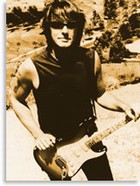
    Healey applies his unique style to a black Fender Strat. Photo: Ken Settle.

    This article originally appeared in VG‘s June ’02 issue. All copyrights are by the author and Vintage Guitar magazine. Unauthorized replication or use is strictly prohibited.
  • Charlie Byrd, Barney Kessel, Herb Ellis – Great Guitars Live

    Great Guitars Live

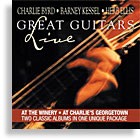
    Call it a gimmick if you will, but the Great Guitars super trio of Charlie Byrd, Barney Kessel, and Herb Ellis made some great music.

    The concept came by accident. Byrd’s own trio was booked on a joint tour with Kessel’s group. “We would play, then they would play a set, then we would jam on the last song,” Byrd said in an interview recalling the tour. “That jam was so much fun that by the end of the tour, we just jammed on all of the songs.”

    Add Herb Ellis, and Great Guitars was born. The trio released its self-titled debut album in 1974, followed by Return of the Great Guitars with Mundell Lowe replacing the retired Kessel.

    The original trio also released two other live LPs, which are now together on this two-CD set: At the Winery (1980) and At Charlie’s Georgetown (1983). The group dances through covers of classics like “Air Mail Special,” “Sheik of Araby,” “When the Saints Go Marching In,” and more, blending Byrd’s latin-tinged classical guitar with Kessel’s Charlie Christian-inflections and Ellis’ bebop licks. It’s good stuff.


    This article originally appeared in VG‘s Dec. ’01 issue. All copyrights are by the author and Vintage Guitar magazine. Unauthorized replication or use is strictly prohibited.
  • Craig Chaquico – Shadow and Light

    Shadow and Light

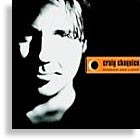
    Most guitarists know Craig’s story. He was the young hotshot guitarist with the Jefferson Starship in the ’70s and ’80s. After that, he started making atmospheric acoustic records for Higher Octave.

    On his latest, he changes the formula a bit, but it will still appeal to the folks who like his previous Higher Octave work. The big change here is the addition of electric guitar, and to me, it’s a welcome addition. I always thought Chaquico had an amazing touch with the electric. Notes seem to just sing off his fingers. He always had a beautiful tone and knew how to use every note. And his acoustic work was always beautiful.

    Cuts like “Keepers of the Flame” (a bit reminiscent of the Byrd’s classic “So You Wanna Be a Rock and Roll Star”), show off that electric player. The killer solo out is melodic and loud. I always thought he mixed those things as well as any guitarist of his generation. Same with “Innocent Kiss,” which starts as a nice acoustic ballad before leading into a chunky electric solo with a singing tone. The song, for the lack of a better word, and not to sound too, like, you know, “spacey,” has a great vibe. The jazzy “Luminosa” lets Chaquico show you how at home he feels with Latin-tinged pieces. And, songs like the title cut and “Could We Fall in Love” showcase his penchant for great melodies.

    If you’re a fan of Chaquico’s, this won’t disappoint. If you’re a guitarist looking for something a little different, check it out.


    This article originally appeared in VG‘s Sep. ’02 issue. All copyrights are by the author and Vintage Guitar magazine. Unauthorized replication or use is strictly prohibited.
  • J.J. Cale – Live

    Live

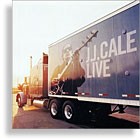
    J.J. Cale is one of rock’s greatest guitarists, and would probably be recognized as such if his six-string abilities weren’t so overshadowed by his songwriting. “After Midnight,” “Cocaine,” “Call Me The Breeze” and “Crazy Mama” are just a few of his compositions that have proved classics in his catalog, hits when covered by others, and guitar giants such as Clapton and Knopfler number among Cale’s devotees.

    But Cale is known to keep such a low profile, in the early days of his career some questioned if there actually was a “J.J. Cale” – wondering if this character were an alter ego for one or more big-name artists. In 30 years, he has released albums (about a baker’s dozen) at a relaxed pace that befits his laid back, anti-showbiz personality, and live appearances have become increasingly rare – not that they were ever that common.

    So, following a five-year hiatus from the recording studio, a collection of 14 songs, old and new, performed on the road by the man who wrote ’em, backed by gang of like-minded, understated players, is a special treat indeed. Aside from “Ride Me High,” recorded in 1990 with an all-star ensemble that included keyboardist Spooner Oldham, bassist Tim Drummond, and the late Steve Douglas on sax, the material was recorded at various venues, from San Francisco’s intimate Great American Music Hall to Carnegie Hall, between 1993 and ’96. Providing support are old buddies such as Jimmy Karstein (drums), Bill Raffensperger (bass), and Christine Lakeland (rhythnm guitar and a duet vocal on “Money Talks,” which she co-wrote with Cale).

    Throughout, Cale’s guitar relies on tone and taste rather than flash. Like the songs themselves, his snakey soloing is a master class in how to say a lot (and get your point heard) with just a little. And even when he adds a little crunch, as on “Living Here Too,” the aim is to add intensity without wasting a lot of notes or energy. And, as usual, he succeeds. A must-have. See backporchrecords.com.


    This article originally appeared in VG‘s Oct. ’01 issue. All copyrights are by the author and Vintage Guitar magazine. Unauthorized replication or use is strictly prohibited.
  • Rossmeisl Guitars

    Father and Son Operation
    Roger Rossmeisl working on a prototype Rickenbacker neck in the mid ’50s. Photo: John Hall/Rickenbacker.

    The story of Roger Rossmeisl’s career in the guitar industry had its roots with his father, Wenzel. Wenzel was born around 1900, Roger in 1927 in northern Germany, near the city of Kiel, about 50 miles from Denmark.

    Wenzel was a professional jazz guitarist and a jazz guitarmaker. In the early 1930s, Wenzel made a trip to America and returned with a Gibson archtop jazz guitar. Guitars were as rare as guitarists in those days. Wenzel was inspired by the Gibson’s design and began to make his instruments with a similarly-arched top and back. He called them Roger guitars, after his son.

    At some point the family moved, finally settling in Berlin just before the war. Berlin was an active city with a burgeoning love affair with jazz. This is where Wenzel hoped to make his living as a jazz guitarist and guitar maker. As the perils of World War II enveloped Germany, Wenzel stopped making guitars to take care of situation and family.

    In the late 1930s, Wenzel sent young Roger away to school in Mittenwald, Southern Germany. Mittenwald is almost on the Austrian border near Garmish-Parkenkirchen, and is famous for its winter sports. Perhaps the most exquisite of Germany’s alpine villages, the brilliantly-painted town has an old world charm. Mittenwald also happened to be the home of one of the oldest and most famous violin and guitarmaking schools in the world, with a 300-year history of violin making. Today, the school still turns out master craftsmen. The added advantage of the school for the senior Rossmeisl was its remoteness from the coming war and safekeeping of his son, Roger.

    Around the age of 10, Roger began his stay at the school as one of its youngest students. The school offered a full-range curriculum, from math and language to science and art, with a major emphasis on stringed-instrument making. The method of teaching in the school was one of master and apprentice. There was a strict attitude, and respect for the master was understood. For a time, Roger was responsible for getting up before everyone else to light the fire in the stove to heat the workroom. Located in the Alps, Mittenwald is very cold in the winter.

    Skills were taught with the use of hand tools where modern-day crafters would use power tools. The workbenches for guitarmakers and violin makers were heavy, thick and solid. There were about four ways to clamp a workpiece in the bench. One of Roger’s masters was Franz Hirsch, a well-known guitar and lutemaker born in the 1800s. The table tops were occasionally scraped clean and flat, and Roger remembered Herr Hirsch coming around with a flatness gauge to check table tops. If the table top flatness did not measure up to Franz’s standards, students would have to scrape it again and again, until it was perfect.

    The school believed in old-world classical traditions that translated into how instruments were made. Some students studied the making of violins, cellos and upright basses or bowed instruments, while others pursued the plucked instruments. The metric system was used exclusively for measurements. Some of Rogers specifications for the Fender acoustic guitars were metric 25 years later.

    As the war raged on, Roger recalled that times got tougher; supplies diminished, tires were taken from vehicles, food was scarce and life got very serious. But he was safe, and life at school continued, intact.

    Roger was at the school for some eight years and was one of the youngest graduates with a Masters Degree and title of “Gitarrenbaumeister” (Master Guitar Maker). The degree also gave him teaching credentials. He was then 18 years old. After graduation, Roger moved back to Berlin to work with his father and become part of the jazz scene.

    By 1947, the senior Rossmeisl was producing his guitars and exhibiting at the Leipzig Fair. His guitars included an electric/acoustic Hawaiian guitar and a pickup for acoustic guitars. Wenzel may have been the first maker of electric guitars in Germany.

    From drawings in “Die Gitarre Und Ihr Bau,” Wenzel’s Hawaiian guitar was probably a steel-stringed flat-top with a wide body at the 14th fret and the soundhole was more or less in the standard position. The string length would have been 58 to 66cm.

    Wenzel also made the Roger guitar with some important design changes. Before the war, Wenzel’s jazz guitar archtop design was similar to the Gibson. Perhaps during his period of inactivity during the war, Wenzel had time to think and redesign his jazz guitar theory. Now the design was original and well thought-out. Wenzel began laminating as many as 12 pieces of wood together for the neck. The bridge was an asymmetric design, cross-drilled for lightness. The basic shape of the guitar was more-or-less standard. The carvings of the top and back were original and innovative, confined to an area about two inches from the edge of the body. Parallel to each other, with the idea that the entire flat area would move, thus moving more air for a bigger sound (much like a speaker flexes mostly at the outer diameter edge). This look came to be referred to as the German Carve. Later, Roger went on to use the look for his designs at Ricken backer, most notably in the Combo 800 and 600 from 1955 and 1957, to the more recent 381JK and the Fender LTD jazz guitar of the late ’60s.

    About 1952, Roger became interested in going to America to work. He wrote to Ted McCarty, president of Gibson, and using his Gitarrenbaumeister diploma, received transport to the United States, and a job. During his first year with Gibson, he made an archtop jazz guitar that did not fit in with Gibson’s style. Conflicts arose and Roger left Gibson. He went on vacation and ended up in California, where he approached Rickenbacker in search of employment.

    By 1953, Leo Fender’s Telecaster and Precision bass were picking up steam in the market. Francis Hall, the future owner of the Rickenbacker company (at the time, known as the Electro String Instrument Corporation), had established a radio repair business called Hall’s Radio Service, which became a wholesale electronic parts distribution company named The Radio and Television Equipment Company, set up in 1936 in Santa Ana, California, not too far from Leo Fender’s operation in Fullerton, California. Leo Fender became a customer of F.C. Hall’s for electronic parts.

    By 1946, Leo was making lap steel guitars and amplifiers, and F.C. Hall became a distributor for Leo’s products. By 1953, the Telecaster and Precision bass were selling well and the sales arrangement between Hall and Fender was reorganized into the Fender Sales Company. The partners were Leo Fender, Francis Hall, and Charlie Hayes and Don Randall, both associates of Hall’s. Fender Sales became responsible for distributing all Fender products.

    As the Telecaster, Precision bass and amplifiers gained popularity, Francis Hall became interested in the idea of manufacturing and distributing musical instruments. By late 1953, Hall learned of Adolph Rickenbacker’s interest in selling Electro String Instrument Corporation. He was able to purchase the company and the right to use the Rickenbacker name. The factory was being managed by Paul Barth, a long-time Rickenbacker manager. They were producing electric lap steel guitars and amplifiers. That was December of 1953.

    In early 1954, Roger came to Rickenbacker and was hired by Barth. The timing was amazing, Leo just beginning with the Telecaster, and Rickenbacker about to design a whole new product line. Roger’s arrival, combined with the energy of F.C. Hall and Paul Barth, resulted in the introduction of Rickenbacker’s first contemporary electric guitars. The Combo 800 was a result of the combined efforts of Roger, Paul and F.C. Hall.

    For the next eight years, Roger was largely responsible for the design of the majority of the Rickenbacker guitar product line.

    In 1962, Roger went to work for Leo Fender, who brought Roger in to develop a new line of acoustic guitars. Roger found himself in a new facility on Missile Way in Fullerton, California, designing an assembly production plant for the new line. One day, early in the planning process, the receptionist brought in a job application of a young man named Philip, who was waiting in the front room. But that is another story.


    Philip Kubicki (1944-2013) was one of the first employees hired by Roger Rossmeisl at Fender Musical Instrument’s R&D for acoustic guitars. He later founded Philip Kubicki Technology, building acoustic and custom electric instruments, as well as the Key Factor four and five-string basses.

    This article originally appeared in VG‘s May ’97 issue. All copyrights are by the author and Vintage Guitar magazine. Unauthorized replication or use is strictly prohibited.
  • Magnatone Amps

    Introduction Part I
    What started out as a one-time pictorial on mother of toilet seat (MOTS) covered amplifiers has turned into a running Dickerson/Magnatone history, covering both the amps and the Hawaiian guitars. Last month, the alligator-attired Professional amp was allowed space, due to its close association with the MOTS Hawaiian guitars. This month, the MOTS requirement has been totally thrown out the window to make way for more amps from this important (and often ignored) company.

    Note: the section on “Dating your MOTS Hawaiian” slated to run this month has been expanded to include all the Hawaiian/steels and will be in a future issue, along with closeups of the remaining six-string, eight-string, doubleneck, tripleneck and quadrupleneck sliders, not only in MOTS, but metal, wood, and lucite!

    PART I: More MOTS Amplifiers
    The author’s three-tube, 8″ permanent-magnet speaker 1946 Dickerson amp (discussed last month) that was lost in the mail ended up safe with a neighbor (over 10 days for priority mail, Merry Christmas!). This is an early post-WWII amp, with a speaker dated 1945 and the more rounded-edge shape and generic black handle of the small pre-WWII models. However, the grille “cloth” is not the heavy wire mesh expected, as seen on the Dickerson amp pictured in Richie Fliegler’s Amps, The Other Half Of Rock ‘N’ Roll (pg. 109, top right of group shot). It’s possible that amp is a leftover Delbert Dickerson model, but the logo decal points to post-WWII, as seen on all the ’46 to ’48 Hawaiians with the Dickerson brand name. Unfortunately, attempts to track the amp down have been futile.

    A similar (but earlier) version is pictured in the Feb. ’98 issue of Guitar Player magazine (pg. 90) with the original stencilled Dickerson logo, first seen in ’38. While the earliest models (e.g. serial # 0010 from the cover of VG, Jan. ’98) had three stripes (call these Style 1), the amp in GP has only two stripes (Style 2), pointing to early ’40s. The stripeless example pictured in Fliegler’s Amps still has the original-type grille (Style 3), which was updated for the model pictured here in VG (Style 4).

    Following this amp came the final pre-Magna version, having a new chrome “kitchen cabinet” handle, graphics that cover the entire grillecloth and a less-rounded cabinet with back panel ca. ’47. These were available with the Dickerson brand name, as well.

    Both post-WWII Dickerson and early Magnatone used an interesting material to cover their speaker openings; window screen, just like on your back porch door. The majority of these grilles were covered in two-tone “fuzz” (black or purple on greyish brown). Unfortunately, the mohair-like base coat apparently blocks the passage of air, as in sound pressure, and gets literally blown out if the amp is played at “high” volume.

    Visible deterioration around the speaker opening on many of the grillecloth scenes supports this theory, although normal wear and tear from the outside is also a major contributor. The monochromatic logo used for the introductory example left air spaces in the unfinished areas for sound to escape.

    One of the absolute coolest versions of the two-tone grille was applied to the K&H amp, yet another brandname for that same old ’47-’48 pre-Magna MOTS amp. Compare it to the palm tree/coconut climber, musical staff, and purple Leilani amps on pg. 109 of Amps. Even the control panel is the same, save for the missing “Mfg. By Gourley” sticker. The pot code dates this three-tube, single 8″ permanent-magnet speaker beauty to late 1948.

    PART II: Non-MOTS Magnatones
    By the mid ’50s, MOTS had lost its appeal, as had Hawaiian music, so Magnatone discontinued its use on all the amplifiers and offered it only as an option for the new bottom-of-the-line “Steel” guitar. In the Feb. ’98 VG (pg. 115), the five-tube, single 10″ Melodier is described as possibly the largest MOTS amp known to man, with reference to the larger Troubadour and its covering as “unknown.” However, a five-tube, single-12″ speaker Troubadour Model M-192-5D has turned up in original alligator, as seen on the eight-tube, twin-12″ 1948 Professional Model M-198-8D. Note the numeral in 5D and 8D, not to mention M-199-3T and M-197-3V, refers to the number of tubes in the circuit. As for the letters, your guess is as good as ours…

    Unfortunately, too much has been changed on this M-192’s insides to trust the 1951 pot codes or the 1953 speaker code, although the speaker looks original in brand and model, being similar to those in the ’48 Professional. While lacking any official literature from the era, an educated guess suggests the Troubadour went from early-period Magnatone alligator to mid-period Magnatone light brown leatherette, along with with all the MOTS amps ca. 1955, and no other covering was used in between. It’s possible light brown leatherette was used earlier for the then top-of-the-line Troubadour before becoming standard issue.

    Besides the M-192 and M-198 mentioned above, other early Magnatones (VG, Feb. ’98, pg. 114) included the Student Model M-199-3T and the slightly larger M-197-3V, as used by Gretsch for their Rex Royal. The smaller AC/DC model probably had an M-190 series number in company literature, although the bare bones construction lacked any markings on the amp itself. Perhaps there’s a catalog or price list out there somewhere? The slant-front Magnatone inherited from Dickerson undoubtedly had an M-190 series number, as well.

    The 190 series was superceded by the 100 series by 1954 (probably earlier); here’s a look at the transition.

    The bottom-of-the-line AC/DC model became the Starlet Model 107 in MOTS, and the slightly more powerful three-tube M-199/M-197 became the Varsity Model 108 in MOTS. Gone was the graphically-enhanced windowscreen grillecloth, replaced with acoustically transperent cloth in brown, similar to what Fender would use on its tweed amps starting in ’55. The midsized amp with the slant front was followed by the five-tube, single-10″ Melodier Advanced Model 110 in MOTS, also with brown grille (it’s possible an interim early-’50s version in MOTS exists). The 110 was joined or followed by the five-tube, twin-8″ Model 109, with only the 109 being available by ’57. Finishing out the amps, with direct ties to the original line, the alligator Troubadour M-192 became Troubadour Model 112, as mentioned above. Light brown leatherette became standard issue for all these amps ca. 1955 and lasted until ca. ’59. The M-198 Professional probably (due to its rarity today) was discontinued well before the change to the 100 series.

    Magnatone released its amazing 200 series amps (213, 260 and 280) with pitch bending vibrato in ’57, but these are a story in themselves (next month!). The 200s were fitted with a new dark brown cabinet having the baffle board tipped in under the top of the cabinet 15 degrees; the non-vibrato 100 series was updated in ’58 and ’59 to match.

    The lower-powered, three-tube 107 became the dark brown 111, the higher-powered three-tube 108 became the dark brown 118, the midsized five-tube 109 was squeezed out by the small, vibrato-equipped 210 and 213 amps, while the larger single-12″ Troubadour 112 became the single-12″ 250. A high-powered amp without vibrato, the 190, was suggested for use with bass guitars. The 190 used a single 12″ plus a 5″ tweeter and boasted 40 watts. Suffice it to say, the 260 and 280 were outrageously progressive and Hi-Fi, as the Professional had been in ’48.

    So, there you have the near-complete story of Magna Electronics Amplifiers from the ’40s and ’50s. However, the author recalls playing through more than one ca. ’55-’57 light brown amp with AM tremolo (not the FM vibrato), but the old brain didn’t think to chronicle the model number(s). Because of the hoopla at the time of the 200 series’ release praising the superiority of vibrato, tremolo was bluntly discontinued. It seems safe to say no dark brown Magna Electronics amp had tremolo, no light brown amp had vibrato, and no MOTS amp had either. Again, more on the “V” (for vastness) vibrato next month.


    Introduction Part II
    While the focus of this series (see Jan., Feb., and March ’98 VG) has been MOTS amplifiers and their matching MOTS Hawaiian guitars, these comprised only the bottom portion of a progressive Magnatone line. To get a feel for the importance of this company in the early-’50s electric market (an era dismissed by many today simply as, “They made some lap steels…”), we need to go all the way to the top of their instrument line before returning next month to amplifiers (in particular, the fabulous vibrato-equipped models of the ’50s and ’60s). Included this issue are a number of extremely exotic/deluxe/groundbreaking Hawaiian and steel guitars, some with wood bodies, some with Lucite, and some with metal…some with six strings, some with eight, plus 12, 16, 24 and 32-string multi-necks, and a pair of six-stringers without tuner buttons!

    Part I: MOTS Finale
    Starlet
    In the early ’50s, the Magnatone line included economy, standard and deluxe-model MOTS Hawaiians. The short-lived Starlet was added ca. ’51 at the bottom of the line and, like the teardrop late-’40s Dickerson Student model, its body lacked a traditional guitar shape.

    Straight sides made for ease of construction, but the price difference was minimal between the Starlet and the guitar-shaped standard model (Magnatone’s Student model). Both instruments had volume and tone controls, the hidden pickup and “Seamless Pearl Plastic covering in Grey, Blue or Black.”

    Student
    While Dickerson had referred to their guitar-shaped MOTS Hawaiian as the Standard, Magnatone used the name Student for their version. In the first few years, it was paired with the M-199 Student amp, as well as the larger M-197 Varsity and smaller AC/DC Starlet amp. These guitars were examined in VG in Feb. ’98, but a few missing links have turned up recently…

    A transition-era purple Leilani (ca. ’49 serial #1139) has the new Magnatone body and nut while retaining the Fator-era knobs and bridge. The old LEILANI, MFG. BY GOURLEY label was still used on the headstock, along with a Magnatone serial number plate on the back to confuse future generations.

    Emblazoned with an American flag on its headstock, an Amerloha, ca. ’53-’54 (serial no. 44519, pot codes 140308), was one of the last guitar shaped Magnatone-made Hawaiians. The features are similar to the ca. ’52 Trick Bros. in the Feb. ’98 VG. A new shape for Magnatone shows up on a ca. ’54 model (serial no. 47877, pot codes 304423). This body shape would be standard for the remainder of the MOTS era, the guitar shape gone for good. The headstock, nut, fingerboard, pickup cover, bridge, jackplate and covering are all similar to the Amerloha. The tuners have the clear buttons of the more deluxe models but are of the era and appear to be original (knobs probably have been changed). These would be the last of the hidden-pickup Hawaiians.

    G-70
    A new steel guitar evolved ca. ’55-’56 from the last hidden-pickup Hawaiian guitars, but without MOTS, and called the Varsity. Natural wood was now the standard finish, although a Black Pearl option ($5 extra) was available in the ’57 catalog. This was about all that was left of the original model, along with the body shape of the very last version.

    Borrowing its peghead from the more expensive Troubadour, the G-70 featured the new chrome all-in-one bridge/tailpiece/pickup/controls/jackplate that wrapped around the end of the body, as seen on all the late-’50s Magnatone steels. Having everything attached to the plate before assembly allowed for more efficient mass production,