Month: April 2004

  • Glen Burtnik

    Styx Southpaw (and much more)

    The assimilation of New Jersey guitarist/bassist/songwriter Glen Burtnik into the bass player slot of the current incarnation of Styx is only the tip of the iceberg concerning the left-handed musician’s experiences. He has written mega-hits in more than one genre, fronted the house band at the Stone Pony, gigged with Marshall Crenshaw, and at the advent of the ’90s, was a guitarist with a platinum-selling band… named Styx.

    Yep, this is Burtnik’s second go-round with the Chicago-based mega-band, and when VG caught up with the affable veteran, he was on the road with that aggregation, and was nursing a mild cold, but was up for an on-the-record dialogue about his history, including his use of left-handed instruments, which are strung in a decidedly-different manner:

    Vintage Guitar: It’s been reported that your earliest musical experience was singing along with your older brothers, and that they drafted you to harmonize.
    Glen Burtnik: Well, I always loved music, but when we’d take family trips in the car, they’d come up with teenage songs to sing, and they insisted that I sing my harmony part all by myself! It was an early persuasion to get sharp harmony skills. I like to blame them for it, but they added a degree of appreciation to my early love of music. We’d sing a lot of hits from the late ’50s and early ’60s, and some doo-wop.

    Are you, to borrow a term from Elliot Easton, a “hard-line lefty”? Or do you do anything right-handed?
    I’m left-handed in every way, and the confusing thing about my guitar play-ing is that when I was a kid, I got a little Stella acoustic and changed the strings to the correct order for a lefty. But my brother had a guitar that was a little nicer, and his was strung right-handed. I was self-taught, and I learned both ways. Eventually, I gave up the lefty-strung guitar. In folk circles, the way I play is called “Cotten picking,” after Elizabeth Cotten; I take a guitar strung right-handed and flip it over.

    Albert King style?
    That’s right. Hendrix, McCartney, and those guys did it the correct lefty way, but there are a number of us out there. Jimmy Haslip, bassist for the Yellowjackets, plays that way. I’ve got a list somewhere; I met another guy who plays like me, and we had a big conversation, and came up with about 20 names. It’s a very unorthodox style of play-ing, but there are some little tricks that we can get that are hard for right-handed guys, and vice-versa.

    How limited are your equipment choices compared to “correct” lefty players?
    Even more limited, I think, because a lot of times it’s not a matter of simply turning over a right-handed electric guitar; the knobs are gonna be up under your arm. Jimi Hendrix had no problem with that, but the balance of the guitar is different, too. I sure like it the other way, where a cuta-way is where it ought to be for a left-handed player. When I go to music stores and look at left-handed guitars that are balanced and cut correctly, they’re strung for lefties, not the way I play. So it’s even harder to find instruments I like.

    If you buy a left-handed instrument, do you have to do modifications beyond reversing the nut?
    There can be others. For instance, Les Pauls have a compensating bridge/tailpiece that’s slanted a certain way. I have a problem with a guitar like that because the way I string it affects intona-tion. A lot of lefty acoustics are designed to “expect” the heavier strings on one side and the light strings on the other. But for the most part, when I deal with Stratocaster-style guitars or Fender-style basses, it’s just a matter of changing the nut around.

    When and how did you decide to become a musician?
    As I said, my brothers got me started singing, and like everybody else in my generation, the Beatles on “Ed Sullivan” did it. The British Invasion really got me interested, al-though I didn’t pick up a guitar right away; it was a few years later, when one of my brothers brought home a Bob Dylan record and an acoustic guitar. But before that, my parents bought a drum set, and I started taking lessons. So my first instrument was really drums. Yet it was Bob Dylan and folk music that really brought the gui-tar into my life. The Beatles were first, then I went back and discovered Dylan.

    What about songwriting?
    Right away! My brother showed me an Am chord and an E chord, and I made up a little melody to go along with them, and I was convinced I was a songwriter (chuckles).

    Is it fair to say that getting the McCartney slot in the West Coast cast of Beatlemania was your “big break?”
    It was the first one, anyway. When I graduated from high school, I didn’t go to college; I expected to become a millionaire musi-cian overnight (laughs). But Beatlemania was kind of like college for me. That’s where I met Marshall (Crenshaw) and a lot of other positive young guys. We were all emulating the Beatles, and the good thing about that show is that there was a level of dedication to learning the music, not just doing it sloppy, like a cover band would. We’d carefully pick it apart; in my case, with the McCartney role, I studied all of the bass lines and learned them verbatim, as well as the lead vocals and harmony parts. It was like studying the masters – Beatle records are so classic, so well-thought-out, well-arranged, and well-performed. It was my tutorial, not only for professional performance, but also for top songwriting. I went right along with Marshall; he was John (Lennon) in the cast we were in, and he’s still a dear friend of mine.

    Presumably, you would have played a left-handed Höfner Beatle Bass strung right-handed. Is it the one on your website?
    Yep! It was ordered new – lefty body with a righty neck – in ’78. The pickups were updated, not the original staple-type. And while you might think of them as the wrong amps – I do – they got us the U.S./Thomas versions of Vox Super Beatles and stuff like that. Technically, some of it was the wrong gear, but it was as close as they could get at the time. The vintage thing was a lot more underground.

    I recall seeing a performance video of Crenshaw’s “Someday, Someway,” and the bass player in his trio was a southpaw. Was that you?
    Well, it could have been, though Marshall did have another lefty bass player, Chris Donato. I’ve done tours with Marshall, and the David Letterman show. But Chris was on Marshall’s first album.

    You also worked with Jan Hammer and Neil Schon, and co-wrote “No More Lies.”
    I’d made an album with Jan, as his guitar player and singer, then he cut two albums with Neil. They called me in to play bass on some of the stuff, and I co-wrote that song, which was their biggest single. I started working with Jan right after Beatlemania, and he had a ’70s Strat in his studio that Jeff Beck had played. As a British Invasion fan, it was kinda cool to be able to hang out with that guitar.

    What was Helmet Boy?
    That was before that Schon-Hammer thing; it was in the wake of the Knack’s success with their debut album. There were a lot of L.A. bands signed that had skinny ties (chuckles). Some guys I knew through Beatlemania had a skinny-tie band, and they got signed to Asylum Records, I flew into L.A., kind of wrote their single, and sang on some of their stuff. It was just a short-lived project.

    After Schon-Hammer, you went back to New Jersey and began gigging at clubs in the Asbury Park area.
    Yeah, that was kind of a new college I started. I played in several bands in that area – La Bamba and the Hubcaps, Cats on a Smooth Surface, and others. Members of La Bamba and the Hubcaps have gone on to work in the Max Weinberg Seven. Cats on a Smooth Surface was a band with a guy named Bobby Bandiera, who now plays with Jon Bon Jovi. Bruce Springsteen would come to hear us about once a week when we were the house band at the Stone Pony, and he’d often get onstage and jam. It was also a bit of an education to play with him and hang out with him back-stage, as was all of the consummate house band/cover band work we were doing. I learned a lot about constantly playing in bars.

    While I was in Cats on a Smooth Surface, Jon Bongiovi and Richie Sambora came in to ask me to ask me if I’d join their new band, which had just been signed to a record deal.

    As the bass player?
    No, as their second guitarist/keyboard player, because they didn’t have David Bryan then. In my infinite wisdom (chuckles), I thought they were going nowhere, and I walked away from it. It still cracks me up, even today. But they’re great guys, and I’m still flat-tered that I was asked.

    What about your solo albums over the years?
    Soon after the Asbury Park thing I signed with A&M and put out two albums, Talking in Code and Heroes and Zeros. That was in ’86 and ’87 – the days of “big hair” (laughs). I used my Gretsch Tennessean back then. I got Neil Schon, Dave LaRue, Bruce Hornsby, and some other musicians to help me out. I got a certain distance with those records – “Solid Gold,” two MTV videos – but I didn’t become the house-hold name I’d thought I’d become right out of high school! Years later, I released a couple more solo albums, and I’m working on one now. The one that came out in ’97, Palookaville, is really the best one I’ve done.

    After those first A&M albums, I worked with Marshall for a few years.

    How did Styx find out about you?
    I’d met James Young [through A&M], which was Styx’s label, as well; we had some common acquaintances and business associates. Jan Hammer’s manager is from Chicago, as was Styx, and he was important in getting me involved with the band.

    Ultimately, I got a phone call from Dennis DeYoung, and when my wife answered, she didn’t know who he was (laughs)! Kind of a classic interaction!

    Did it surprise you that they wanted you to write, as well?
    Yeah, and that was really the only way I would have done it. And it was an inter-esting leap for me, from Marshall Crenshaw to Styx; very different styles of music. But I maintain that variety is the spice of life, and my musical interests are very wide. I’m capable of having a good time with almost any kind of music, as long as I’m good enough to play it. So with Styx, I was kind of the longhaired guy in the band.

    On an early late-night talk show appearance with the band, you were sporting “big hair” and playing a pointy-headstock guitar!
    (laughs) I was playing Kramers by that time; it was the era of the pointy guitar. I think they’re kind of silly now, but I keep telling my friends, “Don’t throw ’em away, because sooner or later, there’s gonna be a market.”

    For people who were teens in the ’60s, Silvertones and Danelectros are fairly collectible, and the ’80s pointy guitars are far superior, construction-wise.

    Danelectros do have a sound; I’m not quite sure what it is, but it’s kind of ratty. Some of the Kramers had a ratty sound. And there’s gonna be some guitarslinger who’s gonna blow everybody away playing a pointy Kramer or Jackson/Charvel.

    You appeared on the Edge of the Century album, then you returned to New Jersey.
    I wrote or co-wrote about half of the songs on that album.

    Ultimate-ly, I ended up making Palookaville when I returned home. But after Styx, I concentrated on doing songwriting for others, because I was impressed with the way I made money from songwriting. I call it “mailbox money;” go out to the mailbox and surprise – there’s a nice check!

    I did well with the bands I was in, but songwriting was a happy surprise from time to time.

    And that’s when I wrote one of the biggest hits I ever composed, “Some-times Love Ain’t Enough,” that Patty Smyth and Don Henley did. I wrote songs for John Waite, and Randy Travis had a number one country hit with a song I wrote.

    In ’99, you got an offer to rejoin Styx, and this incarnation was with Shaw, but without DeYoung.
    I always thought Tommy was great. It’s funny; since I’ve played bass here and guitar there, I’ve kind of developed a schizophrenic musical personality (laughs). But I get bored playing just one instru-ment. I also play piano, and if I’m writing a song, sometimes I’ll get halfway through it on guitar, then switch to piano, which helps me look at the song a different way.

    Same thing with playing in a band; it’s kind of nice to switch hats like that every once in awhile. So now I’m the bass player, and I was look-ing forward to working with Tommy and everybody else.

    Working with Dennis was a bit of a job. He’s a peculiar kind of guy, and I knew right away that this time around, it was going to be a more fun version of the band.
    How long had (drummer) Todd Sucherman been in the band?
    Todd was playing before John (Panozzo, original Styx drummer) died. I’ve worked with some fine drummers, and Todd is one of the finest. I’m surprised he isn’t more well-known. Working with him forces me to become a better musician. As a bass player, I try to set down a solid groove, and together we work hard on giving the band an updated base to work from.

    Original bassist Chuck Panozzo still appears at select gigs. What’s the arrangement when he wants to play?
    He plays bass, and then I switch to a Jimi Hendrix Stratocaster.

    Your primary performance bass is a beat-up lefty Fender Precision with a carved-up headstock.
    It’s a mid-’70s body, and Colin Hodgkinson gave me a ’50s P-Bass neck. Somebody cut off part of it to make it look like a Telecaster head-stock. It’s really quite thin for a P-Bass neck; more like a Jazz. I’m crazy about it; it’s so special. I put it on the ’70s body, and it’s the musical love of my life, so much so that sometimes I won-der if I should take it on the road.

    But I also happen to adamantly dis-agree with people who buy guitars and stick ’em in cases, waiting for them to go up in value. A guitar is made to be played, so since I play in front of thousands of people every night, I might as well play my favorite instrument.

    On the concert version of “Love Is The Ritual” you stroll into the audience playing a modern Danelectro double-cutaway bass with stickers all over its face.
    I call it my “trailer trash” bass (chuckles). A lot of stickers get put on it – the glitzier, the better! I use a dropped D tuning on that song, and sometimes if someone grabs me, it’s probably wiser for me to have something I wouldn’t mind getting knocked around or even losing. Sometimes, it really does get treacherous running through a crowd.

    The new DC basses are full-scale, and have a distinct sound.
    You’re right, and I like the long scale better. It doesn’t sound like a P-Bass, and I can get away with using it on that song, because there’s also a lot of synthesizer bass on it. That bass is nice and light, and to tell you the truth, I got it off of Ebay for about $150.

    As an accomplished guitarist and bass player, have you ever had any problems going from the scale of one to the other, when you had a short-scale bass as an option?
    No, you get used to it. I did get used to the Höfner scale when I was in Beatlemania, and I loved it. But to get a lot of true low notes, the longer the string, the better.

    And that thin P-Bass neck that Colin gave me makes it easier, too. I’m not that tall, and my fingers aren’t that long, so a thinner Jazz-type neck is easier for me to wrap my fingers around.

    Sucherman’s drum kit is impressive, what with the gold rims, etc.
    He told me he believes it’s the most expensive drum set in the world. It’s scary, and he’s a real gearhead.

    Tommy would understand this, but when it comes to this band, I’m the guy who likes the old, beat up stuff. If it’s too clean, I don’t trust it! That’s why I covered that Dano bass with stickers. It needs to look like it’s been through the wringer a bit. I’ve gone from having the pointy stuff in the ’80s to the “vintagey” stuff now.

    Tell us about your annual Christmas benefit.
    It started in Asbury Park, but moved to New York, and it’s all Christmas music by a variety of artists. The money goes to New York/New Jersey-area food banks and homeless shelters. It’s called the “Xmas Xtravaganza,” and every year has been great; it has been going on for 12 years. Marshall Crenshaw stops by a lot, the Patty Smyth band has played a lot of times. Buck Dharma (VG, April ’02) from Blue Oyster Cult has played.

    I ask everybody to do Christmas tunes, so they have to stretch a little bit. If Phoebe Snow shows up, she’d normally want to sing one of her hits, but I make ’em pick a Christmas song, and it’s kind of cool; they’re not doing the comfortable stuff. But that adds a degree of interest, and a real vibe. It’s a worthwhile project, and some great musicians get involved.

    Are the members of Styx planning on any future studio albums?
    Right now, I’m working on two albums; we’ve been writing songs for a new Styx album for the last few months. And when I’m home, I work on the solo album. I’m work-ing with a terrific guitarist named Jimmy Leahey on that project. Jimmy’s on Palookaville, too. His guitar playing is so unbelievable that I’m able to concentrate more on bass, piano, and rhythm guitar. We’re a couple of songs into it, and it’ll most likely be on another small indie label.

    Glen Burtnik seems to have the best of all worlds, considering his success with Styx, his solo efforts, and his songwriting. He’s genu-inely enthusiastic about his accomplishments and looks forward to continuing his career… even if it means continued usage of a “trailer-trash” bass.


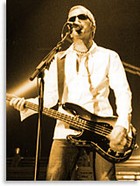
    Burtnik and his primary instrument, a ’70s P-Bass with a ’50s P-Bass neck. Photo: Willie G. Moseley.

    This article originally appeared in VG‘s Aug. ’02 issue. All copyrights are by the author and Vintage Guitar magazine. Unauthorized replication or use is strictly prohibited.
  • Dweezil Zappa

    Sustaining the Zappa Legacy

    As the eldest son of the legendary Frank Zappa, Dweezil Zappa followed in his father’s footsteps by developing into a talented guitarist and songwriter. The Zappa son has released several solo discs, and collaborated with his brother and sister, Ahmet and Moon Unit, and others.

    Although he grew up in a musical family and has been a musician nearly all of his life, Zappa expresses a common sentiment when he say he finds it difficult to relate to much of today’s pop music, with its teen pop singers, hip-hoppers, and rappers who don’t play instruments. Plus, most fans of those artists do not play instruments, and have no aspirations to do so. And even on the rock side, where the groups are made up of actual players, many emerging acts are rap metal bands that tune their guitars down low and don’t play songs with accessible melodies or interesting guitar solos.

    “There’s too much distance between the generations at this point,” he says. “I’m 31, and I see people who are 25 who don’t have any reference to Van Halen except for Sammy Hagar. They don’t know the Dave period. Then there’s the people under 25 who have no real reference of anything before Limp Bizkit or Korn.

    “Nobody’s going back to the real players. It’s depressing.”

    Feeling displaced by the scene, but knowing trends change, Zappa recently took a sabbatical from playing guitar to work on other projects, like being the voice of Ajax on USA Network’s “Duckman,” hosting USA’s “Happy Hour” with brother Ahmet, and indulging himself in the game of golf.

    “I was just bored by playing music, and frustrated by the music business itself,” he explains. “Before I did the record, I was playing more golf than guitar.”

    In a recent exclusive, Zappa shared his thoughts on the state of today’s music and the politics of the music business. He recounts the events that led to the making of his latest solo album, Automatic (Favored Nations), and how the project was brought to life.

    Vintage Guitar: Ten years from now, which of today’s popular new bands do you think will still have a career?
    Dweezil Zappa: I can’t name any off the top of my head. I don’t have anything against the Britney Spearses and Christina Aguileras of the world. Ultimately, it’s difficult to create a pop song that works – one that’s memorable and has all those things that make a song a hit. I did see Christina Aguilera in concert, and she was good – I liked her better than other bands I’ve seen. I had a lot of respect for ability to sing and dance. And at least she’s not singing to tape.

    But right now, so much pop music is performed to tape, and it’s more like a Broadway show for kids. Next, it’ll all be on ice! I don’t think it’s going to be too long before a dinosaur rock band comes back with a musical version of their career. Maybe we’ll have “Ozzy On Ice,” which would be pretty cool – skating backwards and singing “Crazy Train” and “War Pigs. “

    Kiss on ice could be very cool!
    They’d be able to build some pretty cool skates, but it could be dangerous, with all the fire they use.

    Where do you see the most change in the music of today?
    The real thing that’s gone is riff-oriented music. Gone are the days of hearing three or four notes and knowing which band it is and who the guitar player is – back when you didn’t even need to hear the singer to know which band it was. That doesn’t exist now because most music is made up of so much heavy production stuff, like it has to have hip-hop influence and some idiot going, “Yeah, yeah. One time. Yeah.”

    I can’t take it. On a certain level, the guys in those bands are well-rehearsed and tight when they play, but I’d rather listen to someone who spent some time to be good at their instrument and believe that good musicianship is something to aspire to have.

    How have these changes in trends affected you?
    It made me want to quit. The beauty of that is that no one would give a damn if I did. Well, maybe two or three of my friends might…

    The only reason I made this record is because I recorded “You’re A Mean One, Mr. Grinch” for the movie. But they didn’t end up using it. They went with a Busta Rhymes track instead. You know, he’s timeless…

    Anyway, in my version, I kept it sounding very close to the original because it’s nearly impossible to improve on the original. It drives me crazy when people do covers and they try to make it sound too different. Sometimes their take on it just sucks. On “Mr. Grinch,” at least, we kept the baritone vocal and I learned all the parts off the original and played them on guitar. Then I added another part that makes it a little more “rock” sounding.

    Like I said, the record wouldn’t exist if not for that song. It was supposed to go on the movie soundtrack, but when they decided they weren’t going to use it, I decided to put it out anyway, at Christmas time. It’s a good, dark, rock Christmas song. So I contacted Steve Vai, since he’s got his new label, Favored Nations, told him I was thinking about putting a record together, and gave him a few songs to listen to.

    He said, “Let’s do it,” but we’d have to do it quickly to have it out by Christmas – which, by the way, is the worst time to put out a record.

    We decided to do it anyway because of the association with the Grinch. So I took some unfinished songs from years earlier and put them with some newer ones. It was fun. It made me have to play guitar, because I hadn’t played in a long time.

    And the result?
    I do like the way the record turned out. It’s got a good combination of structure and improvised oddities. I like it. I think I have one last guitar record in me, which is the one I’ve been working on for 10 years – the “What The Hell Was I Thinking” project, which is a continuous piece of music that’s 75 minutes long and has all these different players on it like Eddie Van Halen, Eric Johnson, Blues Saraceno, Warren DiMartini, Brian May, Angus and Malcolm Young, Yngwie Malmsteen, and Albert Lee. It’s just a bunch of guys. I think the best way to describe it is as sort of like an audio movie. But beyond that, I just don’t think people care about guitar music anymore, so I think that will probably be the last instrumental guitar record I do. It’s a bad time to be a guitar player… that’s what it boils down to.

    It seems those of the 30-plus generation are still interested in hearing guitar music and often go back to their older records, but the younger audiences have just never been exposed to it. But the problem is that those older people are now disenfranchised – we’ve all become non-consumers of music at this point because we really don’t buy new records. We listen to our old records.

    Tell us about making your record. Had you made demos of any of the tracks first?
    No, I don’t make demos because, to me, demoing is a waste of time. Chances are you’re going to play it the best the first time that you record it and any time you try to overwork something, it usually doesn’t end up becoming better. It may be a little different or maybe even a little worse. So I try to use the original recording, even if it wasn’t recorded that well. I’ve been getting more involved in the production end of things because I’m doing my own engineering. So now I can get a better handle on the sounds I hear in my head.

    I actually hadn’t been playing for a while before I decided to do this record. Time away from playing kind of inspired me to play what naturally comes to mind. I didn’t have to brush up on any technique, because who really cares about technique these days? I just basically played within myself, and in a lot of ways I gave myself more freedom to improvise. There are things on the record that are completely improvised, like the tribute to Michael Hedges, the “Secret Hedges” thing. I just tuned up a guitar to some strange tuning – I had no idea what it even was – and then I just played a whole song. It was tuned pretty low – C or lower. I just tuned the guitar as an experiment and whatever came out, came out.

    It was interesting because I couldn’t ever have just sat down to specifically write that song. That’s what I kind of like about it. It’s like instant access to your brain. It just sort of came out right on tape, like siphoning out a little thing.

    Frank always had an interesting way of describing his guitar playing, especially his solos. He thought of them as “air sculptures.” So in that context, it makes it more interesting to do something like that – to give yourself an opportunity to write a song or perform a song in that way, where you’re just inventing something on the spot. I did add some overdubs to it after the fact, but it was strange because I was having a hard time trying to figure out the rhythm afterward. It was just a free-flowing thing, so that usually makes it more difficult to figure out the phrasing, and my phrasing is a bit weird to begin with.

    The first song on the record, “Fwakstension,” was started a long time ago and never completed. As is, it has a bunch of mistakes in it. At first, I thought I’d just fix those parts, but I couldn’t even figure it out again. I didn’t know what the hell I played, but at the time I’d recorded it, it was really easy and just natural. It’s a weird pattern in an open tuning, and it’s all fingertapping chords with some strange rhythms, so it wasn’t exactly easy to figure out.

    I was kind of under the gun, so I just figured that no one is going to know there are any mistakes because they’d never heard it before in the way it was supposed to be. I didn’t use a pick for anything on that song, it’s all chord tapping.

    There are some songs that are newer, like “Automatic,” which I probably recorded two years ago. The most recent one would be the “12 String Thing. ” For that, I used Warren DiMartini’s Guild 12-string. I think it might have been tuned to an open tuning. That song was constructed in the same way as “Secret Hedges. ” I just ran a drum machine and played whatever came out, then added other things on top of it afterward. There’s only a hint of the 12-string, but it started with this little thing…

    “Purple Guitar” is something I used to play with my band, and became sort of a musical joke. It’s a song made up of three different sections and they sort of trade off when they each come in, but for the main verse part, there is always a lick at the end of the verse. As the song progresses, the lick gets longer and longer, until it’s just an entire guitar solo at the end, while the whole band plays.

    I listen to that song now and I don’t even remember how I remembered the parts. It was under my fingers then and it was easy to play. We used to play it at the regular tempo first and then at double tempo, which was hysterical because it was impossible to play.

    How has your sound and style evolved with each record?
    I don’t think that, from record to record, my playing is very specific. You can’t pick out the one thing that I do on every single record or say that I have one specific style. I sort of change things around quite a bit from record to record. There may be one or two things that are consistent, but for the most part, I never play the same guitar and I always have something different I’m messing around with.

    How can different guitars affect the way that you play and create?
    I like to have guitars that are as drastically different as they can be, because it makes you think and play a different way each time. I know there are plenty of guitar players who set up all their guitars to play and sound identical to the one they like, down to the finest detail. I don’t get that.

    To me, that would never be necessary. I don’t have any allegiance to any one guitar. I’ve never endorsed any one guitar brand because I like too many guitars. They all have something special.

    I typically prefer cheaper guitars. I think that once you get past paying $1,800 for a guitar, it’s too much. I like well-crafted guitars, and vintage guitars are certainly nice. But once you go past $10,000, then it’s like buying furniture; God forbid you take it out on the road.

    I remember Jeff Beck picking up one of his Strats and showing it to me. It was like the third Strat ever built. As he picked it up, he nicked the corner of it. He didn’t care if he put a ding in it because, to him, it was just a Strat sitting in his living room.

    But I can’t see why [collectible guitar] prices are so high. I know it’s basically about supply and demand, but there are guitars you can make and sell for $200 to $300 that can give you what you’re looking for just as easily as some crazy vintage thing.

    I guess it’s very subjective. To me, the Mexican Strats are just as good as any of the U.S.-made ones that are $1,000 more. They have personality and there’s something about them that I like, but that’s all I look for when I pick up a guitar. It’s got to either be that its physical appearance is striking and that makes me want to pick it up, or it has to have a certain kind of sound that appeals to me.

    I like to have guitars that are ugly, but in a cool way. So I have a collection of things like that.

    Tell us about some of the guitars in your collection.
    What I’ve been playing fairly frequently as my main guitar for the last two years is an Ibanez Iceman, but it’s nothing like it was originally.

    It was given to me by a friend, and it was in really bad condition. I replaced the neck and had it painted in gold sparkle with cream binding. I put P-90 pickups in it and set it up so the strings go through the body way behind the bridge. I set up a few guitars like that, where the strings come up over the bridge from way back. For some reason, there’s a certain sound it offers… it’s a little more alive. It’s got this strange resonance with that setup.

    I’ve got a few vintage guitars, too. I’m not anal retentive about it, so I don’t know the year or serial number of any of them. I’ve got an SG and a couple of Les Pauls, but nothing along the lines of a ’59 flametop. I think most of the people who own those guitars don’t even play them, which is kind of sad. I’d rather have a guitar that’s built to look like that. I’ve got $200 Stratocasters that look like vintage Strats. I just roughed them up and they’re fine.

    I can’t understand spending $12,000 on a vintage Strat. I can have 300 guitars for that amount, but I don’t need 300 guitars. At one point, I was on my way to having 300 guitars, so I thinned the herd and ended up selling a bunch of them. I probably have about 60 guitars now and I’m ready to sell some of them, too. Anything where you haven’t opened the case in five years has to go. I sometimes will forget about a guitar I haven’t seen in a while, then I’ll open the case and it’s like have a new guitar again. So I’ll play that one for a few weeks. Some find their way back into the rotation.
    Tell us about the Hendrix Strat that belonged to your father.
    I have it and it’s for sale. The only original thing is the body – the neck and electronics were destroyed – but Frank rebuilt it and played it in the ’70s. Then it disappeared for awhile before I found it and had it rebuilt to be more like a stock ’60s Strat. It’s got Lindy Fralin pickups, and it sounds good. It’s a great-playing guitar. I love it… but if somebody else loved it and wanted to spend the right amount of money on it, it’s also a beautiful guitar for them to own.

    Which tracks did you use it on? And which other guitars were used on the recording?
    It was used a little bit on “The Grinch,” “Automatic,” “The Havenera and Toriadore.” It’s sort of interspersed in the tracks. It’s a good texture guitar. I didn’t do anything on this record that has the traditional Strat sound on it, but I have used that tone on some other stuff that may or may not come out at a later date.

    As far as the guitars go, I just sort of used whatever was handy, but in some cases, I had to get specific about the tones I wanted. I used a Guild Brian May signature model on some of the textures on “The Grinch” and on all of the stuff that’s heavily orchestrated. I used it for certain parts with real midrangy sounds.

    How has your interpretation of great guitar tone changed over time?
    Ultimately, I think guitar is the best instrument to be able to play because it’s the most versatile and you can make it sound like whatever you want. You can bend strings, change tunings and have other devices that make the guitar sound different. So it’s a great tool. If you have any sort of creative bone in your body, you can keep yourself occupied with guitar for a while.

    But as far as what it should sound like, that’s so subjective. I like things to sound specific to whatever I’m working on. Some people have a very recognizable tone and that’s great. You know when it’s Edward Van Halen or Eric Johnson or Jimi Hendrix or Angus and Malcolm Young or Jimmy Page, as soon as you hear the guitar.

    That’s an artform in and of itself – to have such a recognizable sound and voice that you know who it is within two notes.

    But again, the guitar can be a chameleon, so you can have the thinnest mosquito tone and that can still be cool. It really doesn’t matter. To me, it’s all relative and I’ll play through whatever amp and effects, and play whatever guitar. I just like twisting knobs. I don’t think there are any set rules to get the right tone.

    Did you use amps or record the tracks direct?
    I used a combination of things; a prototype version of the Wiggy amp I designed with Peavey, and a lot of other Peavey stuff, too, like a 5150 and the Classic 100. There are parts where I used some Fender stuff and there’s a touch of some Marshall stuff, too. I also used the Lexicon Signature 284 direct recording amp with other effects like an MPX2. That’s all over “The Grinch” and some of it’s on “Hawaii Five-O.” I’ll just use whatever. A lot of times it all depends on how lazy I’m feeling. If I don’t feel like mic’ing up a cabinet, I’ll play direct. And if I can get a good sound through an amp, I’ll use it. I’m not so obsessive about sounds and gear.

    Tell us about the Wiggy.
    It was introduced at the NAMM show last January. It’s solidstate, and every knob does something. Each knob just says “More” or “Less” and there are no numbers on it. It’s got a five-band EQ that basically focuses on the lower mids and top-end. You can split the bandwidths so you can get some really weird out-of-phase sounds. Besides being really versatile in the EQ area, the amp’s distortion works so that when you turn your guitar up and have a distorted sound, it’ll be as distorted as you’ve made the amp. But if you back down your guitar’s volume, it’ll be crystal clean, without that midrange honk that comes in with most amps when you turn them down.

    It’s also very responsive to dynamics, but the interesting thing is that when you plug in different guitars with different pickups, every guitar’s personality is drastically different and you really hear it. For some reason, when you play through a lot of amps that have a very saturated sound, you’ll get very similar sounds from different guitars. This one has some character to it. It has more of a ’60s sound, in terms of the distortion, but you can do some cool stuff with it.

    It also looks very cool – like nothing else. [The] shape emulates the dashboard of an old Astin Marti – the big windows are like the speedometer areas, and they’re backlit. From a distance, it looks like a Wurlitzer juke box, but it has a separate head that sits on top of a cabinet. It has a brushed aluminum face and a 2×12 cabinet.

    If you were going out to do a live gig, what would kind of rig you play through?
    It depends. If I was going to play the stuff on this record, I’d have to bring a crazy Bradshaw rig. But if I was just sitting in with someone, I could play with any amp. I’m not that specific.

    Do you maintain any sort of regular practice routine?
    No. I used to have scales and practice routines I learned early on and I’ll do them occasionally. Steve Vai showed me some stuff. I had about half a dozen lessons with Steve and he gave me a book of things to think about and work on. But mainly I learned from working on it and doing it on my own.

    I also learned a lot of stuff from records. Getting the chance to see good players up close helps, too, because you can see the techniques and exactly how they do things. That’s pretty much how it worked for me. I used to have much better technique, but who cares?

    What advice would you offer to another musician on developing their own voice as a player?
    If you like the way something sounds, then just follow it – even if it’s making other people cringe. It doesn’t matter if it’s not resolving to the right chord or if it’s got an extra bar.

    A lot of people get lost in trying to do things in the supposed “right way,” by learning all the rules. It’s nice to have that as a background, but you really need just play what you like. Otherwise, what’s the point?

    I’m not a schooled musician, but I know enough about what I’m doing to know which chords go with what and which notes can work over the chords. At that point, it’s however you want to arrange them. My dad’s attitude was that it’s really just code for doing whatever you want to do.

    For example, if you want to play a half-step in the wrong key and the whole time and you’re doing it because a.) you think it sounds good, b.) you’re making yourself laugh, and c.) you want to piss people off, then those are all the right reasons to do it.

    Do people compare your music to Frank’s?
    I suppose they do, but I don’t really consider it relevant. If people say it doesn’t sound enough like Frank or it sounds too much like Frank, that’s stupid.

    First of all, if I was to sound like Frank, it’s because I should – I’m related, it’s in my genes. Then to say that I don’t sound enough like him is stupid because I’m not trying to sound like him. I have a lot of respect for my dad’s career. Anything I do that’s similar or would make somebody remember Frank, I think it’s a compliment.
    A lot of people ask whether having the name helps or hurts. Sure, there are plenty of people who get deals based on who they know. But you still have to have your own merit to go anywhere.

    Does working with other musicians inspire you to play the guitar in different ways?
    I’ve been playing with my girlfriend, Lisa Loeb, and it’s fun because it’s a different kind of guitar playing. There’s no pressure involved and it’s less consuming mentally than the stuff I used to do.

    When I was doing my own music, the band would rehearse so much stuff. To do the best version of the music I would like to make is so much work. My dad did it in a crazy way, and I’ve just sort of followed that example.

    When we were touring and doing it, it was fun because we were pulling it off. But we would rehearse six days a week for practically 12 hours a day. Technically, we could do anything. But if you’re playing for 200 to 500 people, you can’t make any money at it. It’s just a wicked circle. So I’m not sure I’d ever get involved on that level again for my own music.

    But when I’m playing in another person’s band, I don’t have to have that in my head. I can just learn the songs and play, and it can be fun. Nobody’s here to see me, so it doesn’t matter. In that way, it made music fun again.

    Lisa is probably the main reason I made the record. She made me start playing guitar again because she likes rock guitar playing and she told me that I should play with her.

    Another person I enjoy playing with is Blues Saraceno. He and I always have a good time because we basically have the same influences and grew up wanting to do the same thing. Now we’re both stuck in the same situation, as far as our music and the whole situation with the business.

    For a laugh, we’ll sit down in a room and give ourselves an hour to write and record a complete song. We put the stopwatch on and go. We do those funny kind of challenges in the studio all the time and nine times out of 10, the songs are really good and are so much fun to do. Then we’ll realize why we like playing music. It’s like a fun little hobby now.


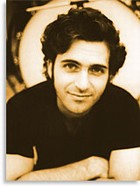
    Dweezil Zappa

    This article originally appeared in VG‘s June ’02 issue. All copyrights are by the author and Vintage Guitar magazine. Unauthorized replication or use is strictly prohibited.
  • John Mayall and Friends – Along For the Ride

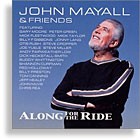
    Along For the Ride

    John Mayall (VG, July ’98, and look for a new talk next month) has been doing it for so long it seems he’s always been there. And he has.

    In a career that has lasted nearly 40 years and produced almost 50 albums (not including compilations, of which his name graces another 40!), Mayall has very much earned the title of “Elder Statesman of the British Blues.” One of the first recollections of my teen music years was being highly enamored of his Back to the Roots double album a long, long time ago.

    Well, here he is with a CD full of great tunes with guest performances from folks who have played in his various bands, and folks who are just friends.

    One of Mayall’s alum, Mick Taylor, shines on “She Don’t Play By the Rules,” a nice blues-rocker that chugs along under some wonderful playing. And here’s one for ya’; when’s the last time you heard Billy Gibbons play without the other two fellas in Z.Z. Top? Can’t recall, eh? Check out his big, fat, blistering solo work on the shuffle “Put It Right Back.” Great stuff.

    Other highlights include phenom Shannon Curfman on vocals and guitar on “Testify” and indeed she does on this bluesy funk/rock tune. Other folks who shine include Jeff Healey on “A World of Hurt,” Gary Moore on the slow blues of “If I Don’t Get Home,” and a somewhat reformed early Fleetwood Mac on “Yo Yo Man,” where Peter Green joins McVie and Fleetwood, along with Steve Miller on guitar. Billy Preston adds keyboards and vocals to a couple of cuts, and as always, sounds very fine. Jonny Lang sparks the blues-rock of “That’s Why I Love You So,” and plays some nice guitar, but It would’ve loved to hear him tackle it vocally, too.

    Through it all, Mayall is in fine voice. You’d think he’d start to sound old and bored at some point, but it doesn’t happen. He just keeps going. By the way, his band adds some fine work thoughout, too. In fact, one of best guitar solos on the album is Buddy Whitting-ton’s on “So Many Roads.”


    This article originally appeared in VG‘s June ’01 issue. All copyrights are by the author and Vintage Guitar magazine. Unauthorized replication or use is strictly prohibited.
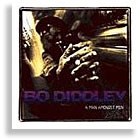
  • Bo Diddley – A Man Amongst Men

    A Man Amongst Men

    Okay, it seems kind of weird to write a review of a guy who’s in the Rock and Roll Hall of Fame, but this is such a good album that I had to.

    We know Bo isn’t going to play any killer licks a l

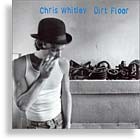
  • Chris Whitley – Dirt Floor

    Dirt Floor

    Chris Whitley’s music is primal. On his amazing debut album, Living With the Law, and the followup limited-run live promotional EP, Poison Girl, he created a desolate landscape of ghosts rising out of his haunting lyrics, pounding National Triolian guitarwork, and blues-drenched singing. After his debut success, he lost himself in the joys of overdriven electric guitar on Din of Ecstasy. This new album brings him back to Earth, as the title suggests.

    This CD features just Whitley armed with his trusty, battered Triolian, laying his world out naked before you. His slide and fretted guitar-playing is percussive and thunderous, accented by his amplified stomping foot. On some cuts he plays banjo, and its rinky-dink sound offers the perfect county fair calliope-like accompaniment to his countrified lyrics.

    In interviews, Whitley has consistently eschewed the “bluesman” cloak, and you can hardly blame him for not wanting to be so narrowly categorized given the range of his music. But at times his playing is as primal as the great Son House and his lyrics near the terror of Robert Johnson’s best songs. Call it the blues or call it simply art, either way this is a tough, haunting album.


    This article originally appeared in VG‘s Oct. ’98 issue. All copyrights are by the author and Vintage Guitar magazine. Unauthorized replication or use is strictly prohibited.
  • Marshall MXL V57M

    Big-buck mic sounds - small bucks required

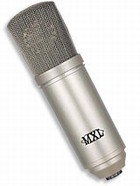
    If you do any serious recording, analog or digital, you a need a great mic. Condenser mics have been the de facto standard for recording music and voice since World War II, and that hasn’t changed. However, the price of a good large-diaphragm condenser mic has been out of reach for most recording aficionados – until now. Ladies and gentlemen… announcing the Marshall MXL V57M! This mic is affordable, rugged, and sounds great. Just what a recording Gigmeister needs!

    If you spend any time recording, you noticed early on that the typical dynamic mic used on gigs sounds bland when recording. Especially when recording on great analog or digital gear, a dynamic mic on acoustic guitar or voice sounds colorless. Unless you’ve independently wealthy, you also observed that a fine large-diaphragm condenser mic, like a Neumann U-67 or 87, costs well over $1,000. Some of these old tube mics can set you back $5,000 or more. Until recently, you either rented a nice mic or bit the bullet to own one. Fortunately, times have changed for the better.

    Marshall Electronics is a California-based company that makes Mogami cable and several condenser mics that work well in studios, whether they’re home/project studios or high-dollar commercial facilities. If you go looking for it on the company’s website (mxlmics.com), keep in mind it’s basically a model 1006; the V57M is an OEM version made especially for Mars music stores.

    The 1006/V57M (retail $79.99, $129.98 with optional shock mount) is a solidstate large-diaphragm condenser mic with a gold-sputtered 1″ membrane (the surface which, when vibrated, produces the sound). The V57M has a fairly wide fixed cardioid (heart-shaped) pickup pattern. The cardioid pattern means the mic only picks up sound pointed directly into it. Electret condenser mics are usually phantom powered, and the V57M is no exception. The power required, usually supplied by the mixer, gives this style of mic tremendous gain. Live, it would be difficult to control a mic like this, but in a studio environment, a large-diaphragm condenser mic is just the ticket for vocals, acoustic piano, bass, guitar, etc. Frequency response is 30-20,000 kHz, which is virtually the entire range of human hearing. There’s a slight drop-off below 100 cycles and above 15,000 cycles, but between those two ranges, the Marshall is pretty flat. That’s a wonderful thing when doing critical recording to tape or disc.

    The V57M is finished in an attractive champagne color and is approximately the same size as a Neumann U-87, the standard in large-diaphragm condenser mics. My Marshall came with two stand adapters, a typical screw-on with the standard 5/8 27 thread, and a really nice shock mount. Unfortunately, there were no instructions with the shock mount, but after playing with it for a while, I was able to slide the mic in and use it. Because of the tremendous sensitivity of a large-diaphragm condenser, a shock mount isolates the mic from floor noise and vibration. Those sounds could otherwise ruin a perfect take, so running a Marshall near a drum kit, amp cabinet, piano, etc. requires the shock mount.

    My friend Troy Scheer has a wonderful studio in Carrollton, Texas (trance productions.com.) I do a lot of voiceovers there, and Troy engineers everything. For awhile, he used a Rode NT-2 on my voiceovers, and it sounded fine. But last year he switched to a Marshall MXL V67, and I used it on several projects. Troy’s V67 sounded incredible, so I wandered into my local Mars and nabbed the V57M for my home studio.

    I was recording acoustic guitars and vocals for my solo/duo/trio demo CD. I started with my Gibson CL-35. For years, I’ve played “Classical Gas” on a steel-string, and it sounded great through the Marshall – lots of top-end, and that great Gibson bottom that made the piece sound full.
    We then used it on all the singers in my trio, cutting each voice to hard disc one at a time. It does a fine job on lead vocals, provided you use a windscreen. A large-diaphragm condenser mic sounds horrible if you pop your Ps or spit on the membrane. You can spend $35 on a windscreen, but I spent 50 cents on a 4″ round wooded hoop, then stuck some nylon hose on it. I clamp it to my Kyser capo, then to a mic stand, and it works like any other pop or spit filter.

    Another area I’ve been using my V57M each week is voiceovers from my home studio. I record at home, then e-mail the resulting wav files to clients. I can record and edit until I feel everything is perfect, then send the results. I’d been cutting at one studio with a small-diaphragm Audio Technica condenser and into a dBX 286 preamp. My clients say I’m getting better results at home, and I seldom have to travel! I record the lines directly into my PC, add a bit of compression at mixdown, and voila – the check’s in the mail!

    The only problem I’ve had with my Marshall is distance. If you work this mic too close, its proximity effect makes the track too boomy. So I record anything at least 4″ from the mic, and everything is fine.

    If you want to improve the quality of your recordings, and don’t have lots of money, get a V57M. You can thank me later.


    This article originally appeared in VG‘s March ’02 issue. All copyrights are by the author and Vintage Guitar magazine. Unauthorized replication or use is strictly prohibited.
  • Kendrick Canary

    Purrdy bird with loads of chirp

    Kendrick Amplifiers recently added a new variation of its Continetal guitar, their line’s Les Paul-inspired guitar.

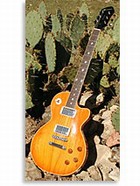
    Dubbed the Canary, it’s monikered after the wood used to make its top. We recently grabbed one for a once-over… three or four times. Here’s what we found.

    Construction
    The Canary is a Les Paul-style instrument made with a Honduran mahogany body with a narrower profile and a hand-carved Canarywood (Centrolobium ochroxylon, a.k.a. Arariba) top. Canarywood is a tropical timber with a grain similar to pine with small, tight knots.

    The top on our tester had a sweet earthy look with a couple of well-placed knots and matched grain, framed in aged-look binding. The hand-carved neck is also made of mahogany, topped with a bound Madagascar rosewood fretboard featuring Dunlop 6105 fret wire and Kendrick’s trademark State-O-Texas inlays.

    The body and neck are finished with several thin coats of nitrocellulose, allowing better resonance and giving great color and depth to the top and body.

    The Canary has a locking tune-o-matic-style bridge, stop tailpiece, and vintage-style open Grover three-on-a-side tuners, all finished in chrome.

    The electronics include two Lindy Fralin custom-wound humbuckers, volume and tone for each pickup, a three-way toggle, and ’50s-style braided wire.

    Playability
    The Canary was shipped to us with a low-action setup that didn’t choke out during bending, probably due to the outstandingly clean, level fret work. The polished frets and offset-V neck shape (thicker on the bass side, thinner on the treble side), along with the vintage feel of the nitro made it excellent for chording and soloing. Weighing in at 7.2 pounds, the Kendrick is light for a LP style guitar. That – along with the thinner profile (13/8″) and body contour on the back make it comfortable to play whether you’re sitting or standing.

    Tone
    Even before we plugged the Canary into our test amps, the guitar’s natural acoustic tone had a nice, clear chime. But through our ’70s Marshall half-stack, it simply came alive. Tonally, the instrument is very versatile; the bridge pickup offers a great crunchy tone with good note separation, while the middle position has a nice “spitty” quality. A capacitor on the neck pickup volume control helps clean up the tone when you roll back the volume.

    In short, the guitar produces a lot of different sounds, with tons of sustain due to the tall Dunlop frets, lockdown bridge and tailpiece, and the Fralins.

    Price-wise, the Canary is in line with most Les Pauls and PRSs, but delivers big-time in the “intangibles” and “hard to define” department, including a tremendous custom-made vibe. When you wrap your hands around it, you get the sense that building the Canary was a true labor of love. It’s just one of those guitars that’s hard to put it down… and it has proven even harder to send back!


    Kendrick Canary
    Type of Guitar: Solidbody electric.
    Features: High-quality craftsmanship, light weight, lock-down hardware, custom wound Lindy Fralin pickups, nitrocellulose finish, offset-V neck shape.
    Price: $3,295
    Contact: Kendrick Amplifiers and Guitars, Route 2 Box 871, Kempner, TX 76539, kendrick-amplifiers.com.


    This article originally appeared in VG‘s May ’02 issue. All copyrights are by the author and Vintage Guitar magazine. Unauthorized replication or use is strictly prohibited.
  • Standel Amplifiers

    Recapturing the Classic Sound

    Contrary to what some fledgling vintage guitar and amplifier enthusiasts may think, amplifier brands other than Fender were made in California during the ’50s, the decade some consider the golden age of electric guitars and amps in the Golden State.

    Magnatone is one example, but the early Standel amplifiers made by company founder Bob Crooks presented a formidable challenge to Leo Fender’s company, since they were played by some of the most famous players of the time, including Chet Atkins, Merle Travis, and Hank Thompson. Travis’ Standel amp can usually be seen at the Vintage Guitar booth during L.A.-area guitar shows cosponsored by VG; displayed courtesy of its current owner, veteran California luthier R.C. Allen.

    And when VG interviewed Crooks in 1994, it marked the first time he had been interviewed by a guitar-oriented publication. Quite improbable, considering the innovations the early Standel amplifiers featured, including:
    1. Separate bass and treble controls (instead of one tone control).
    2. Constant current.
    3. Open-weave “Hi-Fi” grillecloth.
    4. A 15″ JBL D-130 speaker (Standel was the first company to use JBL speakers in production model amplifiers).

    One reason the history of Standel is nebulous is the original company went out of business around 1972. Standel had switched to solidstate circuitry in the ’60s, and quality control problems caused by poorly-manufactured power transistors forced Crooks to sell the company to CMI, of Chicago. He designed the SG series amplifiers for that company, and had a subsequent affiliation with the Barcus-Berry company, of Long Beach. Ultimately, that company was purchased by industry veteran John McLaren and associates, and is now known as BBE Sound Corporation. In ’94, Crooks told VG, “Although I am retired now, I still go into the lab four days a week. I’m experimenting with some new Standel amplifiers.”

    Since then, the reputation of point-to-point hand-wired boutique amplifiers has grown among guitarists seeking classic tones, and for all of his advocacy of solidstate technology, Crooks was also fully aware of the legendary sound of his ’50s tube amplifiers.

    And it was a successful California sound reinforcement company owner (and Standel enthusiast) Dan McKinney who facilitated the return of the Standel amplifier brand to the marketplace. McKinney, who is president of the new Standel company, recalled his interest in Standel amplifiers.

    “In 1991, I bought the inventory of a company called Quad-Eight, which made mixing consoles for the film and recording industries,” he said. “About three years ago, we launched our own brand of recording products called Requisite, and all of these products are point-to-point hand-wired. It really requires a special technique and a lot of skill.

    “When I was 12 years old I got my first amplifier, which was a Standel – my stepfather was a Standel dealer,” he added. “Occasionally, I’d ride down to the Standel factory to pick something up or drop something off.

    “Then, about a year ago I was dropping off my daughter at school, and remembered Standel; the factory had been right around the corner. So I went over there. The doors were open, so I went inside, and I smelled the cork that was still on the walls after all these years, and a lot of memories came back. It was fascinating; that factory closed in 1972.

    “I went on the Internet, trying to find a web site with some history of Standel, primarily for nostalgia. I didn’t find much, so I called Frank Garlock (head of the original company’s public relations), whom I’d known since I was 12. Frank said it was interesting I called, because he and Bob had been talking about putting the company back together. He said they had talked to various manufacturers, but none were really adept at point-to-point wiring. So that was the connection.”

    So Messrs. Crooks, McKinney, and Garlock set about building a new Standel amplifier that reproduced the sound of Crooks’ ’50s models. Crooks built the working prototype this time around, and the associates had two original ’50s Standels on hand for reference.
    “We looked at trying to do things the way they were done in the ’50s; important things like the way the output transformer is wound,” related McKinney. “It’s a real important component for the nature of the sound.”

    A working prototype of the Standel 25L15 amplifier made its debut at the January ’98 NAMM show. While interest in the amplifier was gratifying, McKinney was straightforward concerning the reasons the company is not actively marketing its product.

    “The speaker proved to be a difficult part to replicate,” he noted. “And we haven’t come up with a prototype that will work. I’m not willing to release this amplifier for production until it absolutely has the right sound. I’ve seen a lot of reissue amplifiers I felt were not what they should be in terms of being authentic compared to the original, and the 15″ speaker is a part of the sound we won’t ignore.”

    An actual vintage JBL speaker from a vintage Standel amplifier was installed in the prototype for the NAMM show, and the company continues its research in developing an appropriate speaker to re-create the appropriate sound.

    One of the biggest surprises from the premier, according to McKinney, was “…how many people really knew that model, and how many people had wanted that amp for so many years. A lot of people related that amp to their interest in Chet Atkins.”

    Nevertheless, the new Standel won’t be released until its speaker faithfully reproduces the sound of a 15″ J.B. Lansing D-130.

    “Once the speaker is correct, we’ll go into production immediately,” McKinney advised. “We actually have amplifiers and cabinets built right now. They’re ready for speakers and will be ready for shipping as soon as we install the right kind. We’re waiting for optimum performance.”

    There are other amps on the company’s drawing boards, including high-powered models designed for steel guitar, jazz guitar, and bass guitar, and a tube model reverb. As for the legendary 25L15, boutique amp aficionados interested in this classic reissue will need to remain patient, but McKinney summed up his rationale in one succinct sentence: “We’re being finicky, but it’s also been a labor of love.”


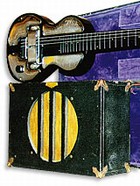
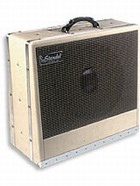
    Standel 25L15 amp, courtesy of Standel.

    This article originally appeared in VG‘s Oct. ’00 issue. All copyrights are by the author and Vintage Guitar magazine. Unauthorized replication or use is strictly prohibited.
  • Electro/Rickenbacher Amps

    Pre-WWII Electro/ Rickenbacher Amps

    Introduction
    Experiments at marketing electrified musical instruments and their accompanying amplifiers may have started in the late 1920s, but it wasn’t until the early ’30s that any long term commitments were made by manufacturers. Even though a number of short-lived attempts followed the 1927 release of “All AC”/battery-less radios, the first company to really dive in head first was Electro String Instrument Corp. Established in 1931 solely to pursue the possibilities of a truly electric musical instrument, the “Electro” brand name was George Beauchamp and Adolph Rickenbacher’s “light socket” powered offshoot of the fast growing National String Instrument Corp. (makers of the famous single and tri-cone resonator guitars). A year later, the fruits of Beauchamp’s post-resonator experiments were unleashed – a genuine electric instrument to change the metal string’s rapid vibrations into alternating currents and the necessary amplifier/speaker unit to convert these to high-volume soundwaves.

    It’s ironic that Beauchamp’s ca. 1926 request for John Dopyera to build a guitar with internal “speakers” basically entailed replacing the electrical impulses necessary to excite a cone with mechanical impulses (string vibrations transferred through the bridge). What’s astounding is how quickly Beauchamp adapted the idea of using cone speakers introduced ca. 1925, to replace the acoustic phonograph horn built into his guitar. Since mid-’20s amplifiers required large batteries for operation and produced very little power, it makes perfect sense that Beauchamp opted for mechanical stimulation instead of electrical.

    Once “All AC” amplifiers became a reality and tubes, transformers, speakers, and circuits became powerful enough to make an electric instrument louder than its acoustic counterpart, Beauchamp was ready, armed with his electromagnetic pickup and solidbody guitar (the result of intensive experimenting in the preceding years). His genius in applying novel approaches to musical instrument design was equaled only by his timely implementation of technology.

    Following the release of the first Electro model in ’32, Beauchamp and Rickenbacher’s line evolved and expanded over a 10-year period, albeit in a much more conservative manner for amplifier design than their farsighted approach to musical instruments (Beauchamp) and mass production (Rickenbacher). Amplifier design was apparently farmed out, which helps explain the company’s laissez-faire attitude toward the sound-emitting portion of its product line. While Electro/Rickenbacher was not as bent on cutting edge electronic technology and seasonal cosmetic changes as some of its competitors, they did provide reliable and compact units with a fair amount of visual appeal, built from quality parts.

    Shortly after Beauchamp’s death in late 1940 came the U.S. involvement in WWII, which halted production for the entire market of nonessential electrical goods. Adolph Rickenbacher warily continued the business following the war, before selling to Fender/Radio-Tel’s F.C. Hall in the early ’50s. For more on this fascinating story, Richard Smith’s book, The Complete History of Rickenbacker Guitars (Centerstream Publishing) is highly recommended. Also recommended is this month’s feature on Rickenbacher’s Bakelite Spanish model. In keeping with the theme, this month’s column focuses on the entire collection of pre-WWII Electro and Rickenbacher Electro amplifiers.

    Standard Model Style 1 – Electro
    (ca. 1932-’34, $175 for guitar and amp) Since Electro was the only player in the electric instrument market at the time of their introduction, the guitars (Spanish and Hawaiian) had to be paired with an amplifier if they expected to sell any. Little information is available on the pre-Rickenbacher Electro amps, since an existing example cannot be located (alright, who’s got one?) and the catalog from ca. ’32 does not go into particulars. The cabinet appears to be about the same as the early Rickenbacher version of a year later, with black Keratol covering and the outside cutouts for the speaker openings having an Isosceles trapezoid shape. The heavy-duty buckled handle would remain on this model for many years. Missing from later editions were the metal corner protectors, plus the grille appears to be a metal mesh instead of cloth. As for the guts, chances are good it wasn’t much different from the first Ricks that followed. “The Most Marvelous Musical Invention of all time!” modestly accompanied the Hawaiian guitar and amplifier set in the original promotional flyer and it’s important to remember that this was an inseparable set — no amp, no electric guitar.

    Style 2 – Rickenbacher
    (ca. 1934-’35, $62.50)
    More information is available on this variation of the initial amp, as a few examples have turned up. Two input jacks and an AC power cord were stock back panel devices, with a screw-in house fuse located behind the rectifier tube on the top side of the chassis. No volume or tone controls yet, not even an on/off switch. A 10″ Utah speaker was stock, powered by a pair of 47 pentodes, with B+ from a 5Z3 rectifier. On an early version of this model, the power tubes are side by side to the right of the speaker, with the preamp tube – a 56 single-triode – in the back. Since the 56 was used for the preamp function and generally either a second tube or a transformer is needed for the phase inverter, let’s presume there’s a transformer inside the chassis (there are a number of methods to invert phase in the output section, but they are inherently high in distortion and probably would not have been used).

    A later version of this style has the far right power tube swapping places on the chassis with the preamp tube, which was changed to a 53 high-mu twin-triode. The two circuits in the 53 were presumably used for the preamp function and the phase inverter (note: all tubes mentioned, except the rectifier, operate on 2.5 volt heater supplies; most guitar amps use 6.3V). Both surviving amps were fitted with the brass “Rickenbacher Electro” badges seen on the instruments, plus the cabinets included metal corner protectors and a larger upper back panel than later models, with three ventilation holes. Apparently, neither amp came with a serial number (the early example was originally sold with a long-scale frying pan, serial number A56).

    Style 3
    (ca. 1935 -’36, $62.50)
    Electrically, this amp seems similar to the preceding model, with the big changes occurring in the cosmetics. Most obvious is the change in cutouts for the speaker opening, which makes a more defined circle. The outside openings are half-moon shaped, with sharp corners where the arc meets the straight cut. The house fuse moved up to a more easily accessed back-panel location. It should be noted the chassis were drilled for three inputs, even when only the stock two were fitted. One surviving example has a volume control in place of the second input, with close examination showing a period potentiometer, appropriate wire and no signs of any monkey business where the pot connects to the circuit, or points where the second input would have originally been connected. The solder looks neat and untouched, warranting its mention, but since the back panel had to be notched (non-professionally) to get around the pot’s shaft, it probably was not original equipment and definitely not a standard feature.

    Serial numbers were stamped into the center of the speaker’s magnet and these fit into the standard numbering scheme of the instruments, e.g., amp numbers B39 (originally purchased with guitar B69) and a later example, B646. This amp differs slightly from earlier ones by having an 80 rectifier instead of the 5Z3, an aluminum name tag instead of brass and a non-cataloged handle, similar to the one on page 11 of Gruhn and Carter’s Electric Guitars (and thousands of old guitar cases, so who knows?). While catalogs give the impression the change to half-moon cutouts corresponded with the introduction of Bakelite instruments, amplifiers with pre-Bakelite serial numbers A129 and 0116 (sold with an A-22) suggest the change occurred a bit earlier. The late-’35 “lightning bolt cover” catalog made little mention of the amp, except in the price list – “One style speaker is used for all instruments.”

    Style 4
    (ca. 1937-’42, $62.50 – ca. ’40 becomes No.100A, $65.50)
    A final version of the twin-47 powered, 53 preamp, 10″ speaker equipped Standard model followed the addition of the larger and more up-to-date Professional. A brand new cabinet of formed steel with perforations for the speaker openings, finished in black crinkle paint, retained the original large buckle handle (all the way to WWII) and aluminum name tag, now on top. This was more in keeping with Adolph Rickenbacher’s approach to mass production – don’t use wood! Layout for tubes, transformers and control panel were unchanged from the earlier model, including the continued use of screw-in house fuses at a time when most of the industry (including Rick’s Professional) had switched to the small glass version still standard today. Perhaps they were using up old chassis. An on/off switch finally was added to the “control” panel, which still offered no controls! Unfortunately, we have little in the way of details for later models than serial number C585, ca. ’37 other than the catalog descriptions through ’41, which show the basic amp didn’t change much. There is the possibility that the 2.5V tubes were changed to 6.3V models (anybody have one of these with 6V6s or 6L6s?). The amp was paired with Rickenbacher’s “Silver” Hawaiian guitar for $100 or available by itself at the same price as the ’34 model. Finally, the price was raised $3 around 1940 (see Student/Model 59, Style 2 for safety tip).

    Professional Models Style 1
    (ca. 1936-’37, $n/a)
    Instead of continuously upgrading their top-of-the-line models, as most of the competition did, Rickenbacher instead added the first of two new models, which would become the Professional. A larger cabinet housed a Lansing 12″ speaker and the more modern 6.3V tubes were used; 6L6s for power and the high-mu twin triode 6N7 preamp/phase inverter, plus an 83 rectifier. Like the Standard model and all amps that followed, the aluminum name tag was mounted on the top of the cabinet. Black Keratol over wood and the gold grillecloth were still used for the box, but the tips of the half-moon outside speaker cutouts were rounded. The buckled handle was replaced by a flat leather piece with arrow shaped ends and the corner protectors changed from metal to leather, further differentiating these from the previous 10″ models. Serial numbers, e.g. C89 and C112, correspond with the first Kaufman hand vibrola equipped Bakelite Spanish models of mid ’36. These numbers, preceded by the number 12, were stamped into the edge of the cabinet’s bottom piece, just below the control panel, which finally included a volume control. A brown knob with the long arrow across the top and serrated edges was used. This version lasted through the prototype stage of Doc Kaufman’s motorized Vibrola Spanish model, sans built-in stand, as seen on page 11 of Bacon and Day’s Rickenbacker book.

    Style 2
    (ca. 1937-’39, $72.50)
    Everybody knows this amp as the one with the built-in stand, underneath the much ballyhooed motorized Vibrola guitar in promo photos and flyers.

    Round and unprotected corners and a thicker baffleboard with rounded openings for the speaker (back to Utahs) were standard issue, whether the amp came by itself (e.g. 12C367 stamped on magnet) or as part of the set (e.g. 12C269 stamped on magnet) with the stand support and courtesy AC outlet for the motor added. A 5V4 rectifier superceded the previous 83 somewhere along the line, a different, non-radio style mesh grille replaced the delicate gold cloth and the flat leather handle was upgraded to a hard flip-flop model, still in leather. Otherwise, little changed for a few years, save for the addition of a tone control ca.’39.

    Style 3
    (ca.1940-’42, NO.200A $79.50)
    Add “durable, woven, grey-blue linen fabric” (tweed) and raise the price $7. Actually, the early-’40s catalogs don’t specify a tone control, while mentioning the volume, four tubes, 12″ speaker, two inputs, fuse, and on/off switch. These amps are easily distinguished from the higher-priced 12″ tweed DeLuxe model by the minimal tube count and smaller cabinet.

    Bass/DeLuxe Model Style 1
    (ca. 1936, $225 with Bass Viol)
    To go along with Rickenbacher’s first solidbody upright bass, the company added a larger, more powerful Bass Amplifier. An article in Musical Merchandise Review showing a polished aluminum, non-tubular instrument stated “The specially designed Electro Bass Amplifier is made to handle the low frequency vibrations of the Bass Viol. It has a 12″ latest type full efficiency speaker, is capable of carrying the extra load needed for the Bass Viol without any sign of distortion. The speaker is enclosed in a wooden box covered with heavy grained black leatherette, nickel hardware and cowhide handle.”

    While the cabinet appears to be similar in appointments to the ’35-’36 guitar amp, it was taller in proportion to allow for the larger speaker and came with a flat leather handle. As to whether the cabinet was anything other than standard open-back construction is a mystery.

    Style 2
    (ca. 1937-’38, $90)
    A similar archtop bass to the one in the MMR article, but painted in black crinkle, is pictured on page 334 of Tom Wheeler’s American Guitars, attached to a black cube much different from any previous (or later) amp. This same picture of the Electro Bass Amplifier shows up in the ’38-’39 catalog, but paired with the tubular-style Electro Bass Viol; dimensions are listed as 17″ X 19″ X 20″ and the speaker specified as a 15″.

    John Hall, CEO of the modern-day Rickenbacker company, reports a surviving example, along with a black archtop (non-tubular) bass, are in the company’s permanent collection. The 15″ speaker was reportedly difficult to have re-coned because it measures only 14″! Tubes include a pair of 6L6s for power, a 6J7 pentode and 6N7 twin-triode for the preamp and phase inverter respectively, plus an 80 for the rectifier. Twelve screws attach the front bafflboard to a sealed-back cabinet, with the large port beneath the speaker opening making this one of the first bass reflex designs and a pretty serious amp for the time.

    Despite the commercial failure of the ahead-of-its-time bass, Progressive Music, Rickenbacker’s longtime distributor, offered the amp as late as 1941 for the inflated price of $125, although it was not included in the accompanying price list. The page of amplifiers in the catalog was outdated, picture-wise, with current prices shown, so perhaps it was offered as a custom-order piece. Only the Electric Violin and Cello remained of the original string quartet, and these were probably New Old Stock.

    Style 3
    (ca. 1939, $90)
    Dressed up to match the ’37-’39 Professional model, the DeLuxe Amplifier featured the port of the bass amp and cabinet (probably sealed) large enough to hold the 15″ speaker. Apparently, both the Bass Amplifier and the Super Professional (as the DeLuxe was originally called) were available through Progressive, with only he DeLuxe listed with the West Coast jobbers. The amp section of this very rare model was probably similar to the later open-back single 12″ DeLuxe.

    Style 4
    (No. 300A ca. 1940-’42, $104.50)
    Reverting to a 12″ speaker in an open-back enclosure, it’s obvious Rickenbacher wasn’t promoting this descendent of the Bass Amplifier as a bass amp. Looking like an overstuffed ’40-’42 tweed Professional, the six-tube, 30-watt DeLuxe gives the impression it could also house a 15″ if necessary. Specifications in the ’41 catalog suggest each of the three “independently operating input channels” had its own preamp, controlled by a common set of volume and tone controls. Not just a guitar amp, the DeLuxe came “…equipped with 110-volt AC receptacle for use with record player or for additional amplifiers.”

    Student/Model 59 Style 1
    (ca. 1938, “Complete with amplifier – $59.50”)
    Rickenbacher had expanded its lineup in ’36, with the 12″ and 15″ models, but it wasn’t until 1938 they began to court the burgeoning student market. At $59.50 for an entire Hawaiian setup, who could resist?

    Especially the first version with the Harlequin-patterned covering on the amp and the white guitar! Unfortunately, this amp didn’t last long and is rarely seen today. It seems logical due to the sharp corners and cloth covering that these first cabinets were made of wood.

    Styles 2 and 3
    (ca. 1938-’39, $35)
    The second variant of the Model 59 amplifier, still paired with the white guitar, was manufactured using a similar technique to the Standard model of the era; shaped metal for the cabinet. These amps were painted to match the instruments and like the Standard, hundreds of small perforations in the front of the cabinet allowed sound waves to escape.

    Featured in white at the front of the ’38-’39 catalog, another version (Style 3) showed up later in all black paired to a black guitar, with all white still available (a later catalog from ’39 lists black only). One has to doubt having a metal shell on a high-voltage electronic device for kids to play with, especially one with a non-polarized, ungrounded AC plug. Rubber cushioning for the chassis was specified for the larger Standard amp, but there was no mention of it for the 59. Television sets from the ’50s began using metal cabinets until it was discovered repairman/owners would leave out isolating washers and replace plastic bolts, placing dangerous voltages on the cabinets under certain conditions (like when the A plug was inserted backwards). Have a new grounded cable or, at the very least, a polarized plug professionally installed if you or anyone else is planning to use one of these.

    Style 4
    (ca. 1940-’42, $35)
    The majority of Model 59s were a black and white sunburst, with black highlights around the edges. Specs were finally given in 1940’s promo; an 8″ speaker and four tubes. Besides the standard 5Z3 rectifier and 6N7 preamp tubes, it’s interesting that two push/pull 6V6s were used to power an amp not designed for performers – instead of the usual three-tube, single-ended type used by most manufacturers for their student models.

    Postscript
    For helping establish a market where before there was none, Electro/Rickenbacher amplifiers have earned their pages in the history of electric musical instruments. Affordable and highly respected in their day, the line stayed in continuous production for as long as any manufacturer’s. In barely five years, the range expanded from a single amp-for-all-purposes to offerings in every price range; by the end of the decade, progress in technology allowed for both the inexpensive student model (comparable to the earliest amps at half the original price), and the powerful, feature-filled DeLuxe, which could hold its own against all competitors of the era.

    While not the earliest known guitar amp, the original Electro model does pre-date all mid-’30s entries into the field, including ViviTone, Dobro, Volu-Tone, Vega, Gibson, National, Epiphone, Audiovox, et al. Considering the infancy of the late-’20s field, with electrified acoustics and large, expensive, low-powered amplifiers, it seems safe to say those first-generation trials had little direct influence on what followed just a few short years later. Therefore, the original Electro line appears to reign supreme as the original instruments and amplifiers of electric guitardom’s formative years.

    Special thanks this month to Timm Kummer and John Dowhy of Mars Inc., West Coasters Bob Riofrio, John and Geoff at Rickenbacker for providing the catalog reprints, and the ever-cheerful Sal Trentino, Billy Voiers, Bob Smith, Brian Wooten, plus some of the most patient and accommodating folks in the business, Thom and Kathy Humphrey of Ross Music, and Lynn Wheelwright of Gourmet Guitars.


    Rickenbacker’s 1935 Bakelite Spanish guitar, with ’35 amp. Photo: John Teagle.

    This article originally appeared in VG‘s April ’99 issue. All copyrights are by the author and Vintage Guitar magazine. Unauthorized replication or use is strictly prohibited.