
Month: February 2004

  • Les Paul

    Les Paul

    Photo: David Schenk, courtesy of Gibson.
    Photo: David Schenk, courtesy of Gibson.

    Fifty years ago, Gibson’s new Les Paul Model was quickly becoming one of the company’s most popular guitars, and (though there was no way of knowing it at the time) was on its way to achieving mythical status in the realm of the electric solidbody.

    With the recent observation of the model’s golden anniversary, Vintage Guitar traveled to the scenic northern New Jersey home of the guitar’s namesake to find out how it all happened. Les Paul’s home was the perfect environment, given that part of his reputation was built on the groundbreaking NBC television show “Les Paul and Mary Ford At Home,” which aired in the mid 1950s.

    When a tape recorder is running, Les Paul is comfortable, no matter if he’s playing guitar or merely discussing his adventuresome life.

    Learning To Play
    In the 1920s, a very young Lester Polfuss fell in love with the guitar, which was far from being the predominant instrument of its time, bowing to the more popular tenor banjo, plectrum banjo, ukulele, piano, mandolin, and violin.

    “There just weren’t very many guitar players around at that time… guitar players who could play, anyway.”

    Still, he put in the many thousands of hours of practice necessary to inch toward the top of the heap, and kept an ear tuned to famous guitarists of the day. He (along with several other up-and-comers) was particularly inspired by Eddie Lang.

    “Eddie was sort of the cow with the bell,” said Les. “I thought he was playing correctly, so I fell in love with his playing. I thought, ‘This is a good person to follow.’ He was my mentor in the very early days. He was who I wanted to learn from.”

    And learn he did, but not without innate assistance.

    “You must have rhythm, an ear, determination, belief, and you must be ready to roll up your sleeves and work for the rest of your life,” he said. “You set your goals and don’t give up.”

    After developing his chops, he moved to Chicago to make his mark.

    “I got a Sears and Roebuck guitar, then a Dobro,” he said. “I joined ‘Sunny’ Joe Wolverton in St. Louis, and Joe said, ‘You know that tin can you got – it drowns me out – and it’s awful when you’re playing rhythm on it. You’ve got to have a Gibson L-5.’

    “I said, ‘How do we do that?’ And Joe said, ‘Let’s go up to Kalamazoo and get one.’

    “So we went to Gibson’s factory in Kalamazoo and picked out an L-5. So we both had L-5s, and we had a great sound.”

    Very early in his career, Les decided that his life would revolve around the guitar. But there wasn’t much to go on; there weren’t many accomplished guitarists in the country and, obviously, there was no MTV or Hot Licks video. Nonetheless, he set about finding a guitar that would help him find his sound and realize his dream.

    “In 1934, we were working at a radio station in Chicago, and I heard through the hillbillies around town that the Larson Brothers were over on Ohio Avenue. They were in a barn in a very undeveloped downtown part of Chicago. There were a lot of barns, which today is hard to believe.

    “But I went over the see them, and one brother said, ‘What do you want?’ I told him what I wanted – a guitar with no F-holes. I talked him into it and I tried to explain that I was going to put pickups on it; I was going to make an electronic instrument that’s playable.

    “I was way ahead of the game in 1934, because the electric guitar didn’t come out until ’36. It’s amazing how different those days were, how primitive. In those days it was most difficult to break the rules. There was another fellow who made a guitar for me, and he was with National-Dobro. The National people had moved from California to Chicago in the mid ’30s, and they also made me one with no F-holes.”

    (LEFT TO RIGHT)  The “Log” was made in 1941 at the Epiphone factory in New York.  It was a 4x4 piece of wood with pickups, winged sides, and an Gibson neck.  Les used the log to pester Gibson for 10 years in an attempt to get a Gibson solid guitar that sounded like a steel guitar.  Les and his #1 “clunker,” used to record “How High The Moon” and all other Les Paul and Mary Ford hits from the late 1940s and early ’50s.  The sheet music cover shows Les holding this guitar.  Les Paul’s #2 clunker was used as a backup for #1.  Number two has a rounded-off pickguard, not the squared pickguard on #1.  Les had told Gibson that he would play his clunkers until Gibson came up with a guitar that sounded better.  Gibson did produce its first solidbody, which did rival the sound of the clunker.  In the 1940s, Gibson offered Les any guitar he wanted including a gold plated L-5, but it’s ironic that the one thing that Les wanted was a great-sounding solidbody, and Gibson refused to give him one.  The #3 clunker, which was occasionally used by Mary Ford.  She is pictured with a sunburst archtop on the cover of the “Mockin’ Bird Hill” sheet music; could there have been a #4 clunker?
    (LEFT TO RIGHT) The “Log” was made in 1941 at the Epiphone factory in New York. It was a 4×4 piece of wood with pickups, winged sides, and an Gibson neck. Les used the log to pester Gibson for 10 years in an attempt to get a Gibson solid guitar that sounded like a steel guitar. Les and his #1 “clunker,” used to record “How High The Moon” and all other Les Paul and Mary Ford hits from the late 1940s and early ’50s. The sheet music cover shows Les holding this guitar. Les Paul’s #2 clunker was used as a backup for #1. Number two has a rounded-off pickguard, not the squared pickguard on #1. Les had told Gibson that he would play his clunkers until Gibson came up with a guitar that sounded better. Gibson did produce its first solidbody, which did rival the sound of the clunker. In the 1940s, Gibson offered Les any guitar he wanted including a gold plated L-5, but it’s ironic that the one thing that Les wanted was a great-sounding solidbody, and Gibson refused to give him one. The #3 clunker, which was occasionally used by Mary Ford. She is pictured with a sunburst archtop on the cover of the “Mockin’ Bird Hill” sheet music; could there have been a #4 clunker?

    The Log and Clunker
    During this time, Les was becoming one of the best guitarists in the country, and he continued to strive for the best guitar sound. In the late ’30s he moved to New York City and found himself in a great position to experiment.

    “In 1941, I was close to the Epiphone factory on 13th Street, and I told them, ‘I want to build this log.’ They said, ‘You want to build what?’ And I said, ‘I’ll do it on Sunday, you guys don’t have to be there.’

    “And I built it. It took three Sundays or so, and I finally got this ‘log’ built. This guy there helped me, and we got it together. It was just a 4×4 with a pickup and a neck.

    “I took it to a tavern in Queens, and I was playing “The Sheik” on it, and the act died. The people looked at me like I was nuts. Then I thought, ‘I’m going back down to Epiphone and put wings on that thing… put some sides on it, and make it look like a guitar, and see if that makes any difference.’

    “Geez, they went crazy. So I found out that people hear with their eyes, and that it’s got to look like a guitar. But the sound and everything was there.”

    Many guitarists think Les had an early association with Epiphone (the fact he built it at the Epi factory helped further that myth, and his famous “clunkers” are Epiphones – with good reason.

    “The log was not the reason I used Epiphones,” he said. “Right after we built the log in 1941, I went back to Chicago. One day I got a call from a guy who said, ‘I work for a bread wrapping company and I got my hand caught in a wrapping machine. I have a guitar and amp I want to give you. It’s an Epiphone.’ I said, ‘I play a Gibson, I don’t play Epiphone.’ But he said, ‘I’ll give it to you.’

    “So I said, ‘Well, bring it over.’ So I looked at it and gave him $125. I took it because it had a door in the back, so I could go in and change the pickups, do the electronics, all that junk.

    After The Log
    “For the ‘clunker,’ I started thinking, ‘I’m going to do more than pickups here. I’m going to change this and that,’ and the guitar became an experiment. Next thing you know, it’s the best damn guitar I’ve got. That became my number one clunker. I had three of them.

    “That was a very exciting time because I had this clunker and I’m making records with Bing Crosby [Decca Records’ Bing Crosby With The Les Paul Trio and Bing Crosby With Les Paul And His Trio], and Gibson is going nuts. They say, ‘We’ll give you a gold plated L-5… whatever you want.’ I told them, ‘If you can beat this one, okay.’

    “The surgery I did on the clunker was severe. And it just so happens I recorded ‘How High The Moon,’ ‘Bye Bye Blues,’ and everything from that period with it.”

    And Les kept his word, continuing to use the Epiphone clunker until Gibson presented him with a better-sounding guitar – the prototype solidbody Les Paul Model.
    Learning to Record
    “Bing and I were recording ‘It’s Been A Long, Long Time’ and some other songs, and afterward Bing said, ‘Where are you going?’

    “So we went next door to the Grotto, and we’re eating salami sandwiches and beer at 8 a.m. Bing said, ‘You didn’t seem too enthusiastic about those takes. I said, ‘I’ve got a whole list of things that could have been better.’

    Then Bing offered to buy a recording studio for me. We went up Sunset Boulevard, and he said, ‘What about that building over there?’ So I said, ‘No, that’s too big.’ Finally he found a place across from what is now the Hollywood Guitar Center, and he says, ‘That looks perfect.’ I can see the sign – Les Paul’s House of Sound. There, you could teach all the tricks of the trade. We’d have something that would go through the whole country, and it would be so big.’

    “I thought about it and said, ‘You know what, Bing? What I really want to do is just play the guitar.’ Bing said, ‘Okay.’ So we went back to the parking lot on Melrose and he drove his way and I drove mine.”

    (LEFT) This photo of Rhubarb Red and his original Gibson L-5 hangs on the wall in Les Paul’s home studio. (RIGHT) Inventions (and memories) in Les Paul’s home
    (LEFT) This photo of Rhubarb Red and his original Gibson L-5 hangs on the wall in Les Paul’s home studio. (RIGHT) Inventions (and memories) in Les Paul’s home

    Still, Les learned everything he could about recording. After passing on Crosby’s offer, he and two buddies decided to board up his garage and make their own studio

    “I wanted to learn, exactly, all the tricks of recording. So I built the studio in my back yard and got the word out that I would record anybody – for no fee! I’d have a bass player come over with his trio, and I’d concentrate on making the best-sounding recording. I’d go for the best fidelity, with the acoustics just right, even if it meant taking some carpet out, slanting the walls, changing the room materials, which mics accomplished the best sound from the bass or piano – all the technical things.

    “The piano was the very first instrument I did. I put on a piano roll and just let it play for two or three weeks until I found out how to get the best sound.

    “I did freebies for months, and finally thought, ‘Now I have her.’ Then I started charging $12 an hour. W.C. Fields made an album that probably cost him $50!”

    Rhubarb Red and Mary Lou
    While learning the fine points of recording in his own studio, Les also maintained a busy show schedule.

    “I had nine shows on NBC radio, called “sustainers,” where I could do anything I wished, and they were all-jazz shows. The NBC program director told me, ‘I’ve got nine more shows and I’m trying to think of something to fill them.’ I said, ‘Why don’t you go country?’ He said, ‘That’s a good idea.’ I said, ‘I started out country. If you want, I’ll change my name to Rhubarb Red and find a group.’ Low and behold, everybody in my jazz group played another instrument. The piano player played the accordion, my guitar player played the violin.

    “The group picked things up quickly, and I thought, ‘All I need is a singer.’ So I stepped out of NBC one day, and Gene Autry was walking just ahead of me. I said, ‘Hi, Gene.’ Gene said, ‘Rhubarb, how are you?’ I said, ‘I’m looking for a country girl singer. He said, ‘I have a trio that sings for me. The one in the middle is good looking, has a good ear, and is the best singer I know of.’”

    That singer was Colleen Summers, and Les came to find that she was a huge fan of his music. Still, he had a tough time convincing her that he was indeed Les Paul. She eventually accepted his invitation to visit his studio, and he gave her a “country name” – Mary Lou.

    “The Show was a lot of fun because there was nothing like it on the radio,” Les said.

    The Les Paul Sound
    Beyond his reputation as a brilliant guitarist, Les is today known as the father of modern multitrack recording. He spent thousands of hours perfecting many techniques that eventually became industry standards, but not before their many nuances came to make up “the Les Paul sound.”

    And it all started because of his mother!

    “I was at the Oriental Theater, in Chicago, in 1946, playing with the Andrews Sisters when my mother told me, ‘Lester, I heard you last night on the radio.’ I said, ‘Mom, it couldn’t have been me, I’ve been onstage with the Andrews Sisters. It had to be someone else.’ She said, ‘Well, you ought to stop them.’ I said, ‘How can I stop a guy from playing like me? There’s no law against that, Ma!’ She said, ‘Well you should do something about it. When your mother can’t tell you from someone else, there’s something wrong.’

    “So I thought about it, and went to the Andrews Sisters and said, ‘You can keep my trio, but I’m going back to California to lock myself into the studio and develop a new concept.’

    “And that’s how my sound happened. It’s different than with straight guitar. It’s what you do with slap-back echo, and reverb, and all the things you have at your command. What you can do with the bass and the speeding up the tracks. All of the creative things you can do to make this sound so different that makes your mother say, ‘That’s Lester.’

    “And of course my mom just loved it because it was unusual. And it worked.”

    Les’ new sound had a lot to do with his own multilayer recording invention. His first hit with Capitol Records was the wizard-like instrumental “Lover” which became a hit in ’47.

    Then in ’48, Les and Mary were in a serious automobile accident. It took Les 18 months to recover, and in that time he came to the conclusion that he needed something to build on… something that would take him beyond being a mere “guitar star.”

    (LEFT)  Les Paul with a ’52 Les Paul Model and ’52 Les Paul GA-40 amp, in the room where most of his TV show was taped and recorded.  “We did the commercials mostly in this room and in another studio here, and the rest of the TV show was shot in the house.” (MIDDLE) This is the Gibson logo on the #1 clunker which Les applied because Gibson president Ted McCarty insisted on it.  Les told McCarty that he would continue to play the clunker until Gibson had made the solidbody prototype correctly.  The first prototype presented to Les at the Delaware Water Gap had several things wrong with it. (RIGHT) Les Paul was a top guitarist, engineer, inventor, promoter, and national celebrity by the time this cover photo appeared in 1958.
    (LEFT) Les Paul with a ’52 Les Paul Model and ’52 Les Paul GA-40 amp, in the room where most of his TV show was taped and recorded. “We did the commercials mostly in this room and in another studio here, and the rest of the TV show was shot in the house.” (MIDDLE) This is the Gibson logo on the #1 clunker which Les applied because Gibson president Ted McCarty insisted on it. Les told McCarty that he would continue to play the clunker until Gibson had made the solidbody prototype correctly. The first prototype presented to Les at the Delaware Water Gap had several things wrong with it. (RIGHT) Les Paul was a top guitarist, engineer, inventor, promoter, and national celebrity by the time this cover photo appeared in 1958.

    Les Paul and Mary Ford
    “Colleen (Mary Lou) was working with Gene Autry and his rodeo, and we played a lot of the same cities at the same time. When I was at the Paramount, they’d be playing Madison Square Garden. We’d meet and I’d say, ‘I’ve got to find something to put in my trio… there should be a vocal.’ But I never thought about her, even though we were hanging out together.”

    As a personal relationship began to develop between Les and Colleen, he began to formulate plans for a new group that included her, but her show biz name would be Mary (nee Mary Lou) and Ford, which he picked out of the phone book, based on the famous automobile family name.

    “We started playing in Milwaukee,” he said. “I still lived in L.A. but we went to Milwaukee to open a tavern for my brother-in-law.”

    Needing more than one place to play, Les started driving down Milwaukee Avenue. He found a place with a marquee that advertised live music.

    “I approached the owner and said, ‘I’d like to play in your club.’ He said, ‘I’ve lost a lot of money on everything I’ve tried.’ Then I said, ‘We’ll play for nothing,’ and he said, ‘Come on in!’

    “So we went in, and three months later they were lined up around the block. I said, ‘Mary, I think this thing is going to work.’

    “But we had to leave because I’d made arrangements to open the Blue Note in Chicago for Dave Garroway. So we played, and on the second night, the owner called [our agent] in New York and said, ‘We’ve got the world’s worst trio in here. I want to get them out and get somebody in here that’s good.’ He told them, ‘The guitarist talks into his shoe, she’s in a gingham gown, and they don’t finish a song. Sometimes he’s funny, but it sure doesn’t fit down here. And I don’t want any cowboy hats in here!’

    “Well, he didn’t know that the cowboy hats were Gene Autry and Tex Ritter. They had never had that in the Blue Note; it was a bad sign to see a jazz joint with cowboy hats.

    “But that second night we continued doing what we were doing, and there were a lot of reporters with pencils in the audience, going like mad. The next day, the owner said, ‘Have you read the reviews? All those guys you were ribbing with the pencils? Well, just keep doing what you’re doing.’

    “And that’s the way it started. Then the Miller Brewing people said, ‘Les, it’s time for you two to get married.’ And we were happily married. We were very close to Fred Miller and all those people then. Milwaukee was our home. So they fixed up the whole nightclub, and got us married right there.

    “Mary was a tremendously talented person, and it was a great combination.”

    Commercial Appeal
    Aside from their rising status as a live and recording act, Les and Mary were one of the first successful artist-based radio advertisers.

    “We were at the Oriental Theater in 1951, and a fellow from Rheingold Beer approached me. He said, ‘I’m here to talk to you about making a commercial. We’re willing to pay you good money.’ I was my own manager and I said, ‘That sounds good. How much time do you want?’ He said, ‘Thirty seconds.’ I said, ‘When do you need it?’ He said, ‘If we can do it, I’ll produce it right here.’

    “Mary and I were doing a broadcast once a week for our radio show (“Les Paul and Mary Ford At Home”). So I said, ‘I’ll tell you what. Go downstairs and watch today’s newsreel, and give me a chance to think about it.’

    “So he goes down, and when he comes back I hand him a reel that has 30 seconds of tape. I said, ‘I thought about it, and I did your commercial.’ He said, ‘You did the commercial!?’ I said, ‘Yeah.’

    “I wrote the script, I wrote the song, I did the whole damn thing, and I got it on a reel. I handed it to him and said, ‘Now you give me the money and we’ve got a deal.’ He said, ‘I haven’t heard it yet.’ I said, ‘Well, I’ll play it for you.’ And I did and he flipped out and said, ‘They’re going to go crazy for this. But I’m supposed to be the producer and the director, and it’s supposed to be my idea. I’m going back to New York, so will you please not tell anybody?’ I said, ‘Nah, you produced it, you directed it, and you made it.’ And he went back and the people at Rheingold Beer loved it, and everything was very successful.

    “I didn’t want anybody to know just what it was that I was doing, because it was highly unusual. This was sound on sound and nobody else had that. I didn’t want to disclose how I was doing all of this stuff.

    “I was using it on my radio show, and that’s when we came up with the term the ‘Les Paulverizer’ and all that stuff. I’d say by throwing these switches I could get all these sounds. And from that point on, McDonald would come out and say ‘Hey Les, I have another one for you. I’ll leave it and get lost.’

    Rheingold Beer was just for the New York area, and it was a very popular beer, so it was the most aggressive advertiser, and the most important commercial we ever made in our life. With all the Listerine ads and the Robert Hall ads, Rheingold was the one that concentrated more on advertising their product.

    “How High the Moon”  This was one of Les Paul and Mary Ford’s most innovative hits.  It marked the introduction of the advanced Paulverizer.  It was number one for nine weeks and sold 1.5 million copies. “Smoke Rings”  This was an example of the type of proven hit that Les preferred to record because audiences and radio listeners already knew the song. “Bye Bye Blues”  This was the record Les and Mary were working on at the Delaware Water Gap in Stroudsburg, Pennsylvania, when Ted McCarty brought over the first prototype solidbody. “Mockin’ Bird Hill”  An early Les and Mary hit that helped Les convince Capitol Records to release the Paulverized “How High The Moon.”  Capital was initially reluctant to release a song that was so progressive, because it  might not be a hit.  “Tennessee Waltz” and “Mockin’ Bird Hill” convinced Capitol that Les knew what he was doing. “Johnny is the Boy For Me”  Les Paul: “A photographer wanted to take a picture of us in the studio for the newspaper, and he told me it was going to be involved.  At first Mary did not want to spend the time to do that.  But the photographer said, ‘I want to have you both sitting on wooden horses and I’m going to have a guitar in there and I’m going to have you sitting on a guitar.’  And I said, ‘Mary, that sounds interesting!’  And little did we know, it was going to be one of the most famous pictures.”  The Les Paul guitar shown has received the typical Les Paul modifications.  Notice the standard L-4 type tailpiece and the multi-pole modified neck pickup.  This cover will fetch more in the collector’s market because of the unusual photograph.  “Josephine”  Les Paul: “It’s a different song.  It has 32-bars and it’s a mess, but it’s interesting.  It’s hard for a lot of guitar players, or anybody, to play because it goes so many different places.  It was written by Wayne King, a friend of mine, but happened to become a very popular song – and Wayne’s theme song.”
    “How High the Moon” This was one of Les Paul and Mary Ford’s most innovative hits. It marked the introduction of the advanced Paulverizer. It was number one for nine weeks and sold 1.5 million copies. “Smoke Rings” This was an example of the type of proven hit that Les preferred to record because audiences and radio listeners already knew the song. “Bye Bye Blues” This was the record Les and Mary were working on at the Delaware Water Gap in Stroudsburg, Pennsylvania, when Ted McCarty brought over the first prototype solidbody. “Mockin’ Bird Hill” An early Les and Mary hit that helped Les convince Capitol Records to release the Paulverized “How High The Moon.” Capital was initially reluctant to release a song that was so progressive, because it might not be a hit. “Tennessee Waltz” and “Mockin’ Bird Hill” convinced Capitol that Les knew what he was doing. “Johnny is the Boy For Me” Les Paul: “A photographer wanted to take a picture of us in the studio for the newspaper, and he told me it was going to be involved. At first Mary did not want to spend the time to do that. But the photographer said, ‘I want to have you both sitting on wooden horses and I’m going to have a guitar in there and I’m going to have you sitting on a guitar.’ And I said, ‘Mary, that sounds interesting!’ And little did we know, it was going to be one of the most famous pictures.” The Les Paul guitar shown has received the typical Les Paul modifications. Notice the standard L-4 type tailpiece and the multi-pole modified neck pickup. This cover will fetch more in the collector’s market because of the unusual photograph. “Josephine” Les Paul: “It’s a different song. It has 32-bars and it’s a mess, but it’s interesting. It’s hard for a lot of guitar players, or anybody, to play because it goes so many different places. It was written by Wayne King, a friend of mine, but happened to become a very popular song – and Wayne’s theme song.”

    “If you looked at the New York Times you’d see maybe six full pages, one right after the other, of nothing but Les Paul and Mary Ford. We were sitting at a table eating and we’d have our beer in front of us, and the next picture is something entirely different. And we’d do 30-second radio commercials, ‘Rheingold is my beer – my beer.’ They were terribly popular.

    “But the critics were on our backs something awful. We were the very first musicians to advertise a product. So we were criticized by Billboard and Downbeat, because musicians advertising a product was considered prostitution. But today, musicians and artists fight to get to advertise a product.

    “It came to the point where Capitol Records sided with the critics, and for the most unusual reason; they said the ads were hurting the sales of records. We made the commercials so good that in many cases they were better than the record (laughs).

    “Say our record was ‘The World Is Waiting for the Sunrise,’ which is a very good record. But if just ahead of it was something that was 30 seconds long and very good, too, then Capitol thought that was a problem. It was Capitol’s point of view that many of the disk jockeys might have thought, ‘Why play Les Paul and Mary Ford again, when we just heard them on a commercial?’ So Capitol thought that the ads hurt the airplay of the records.

    “So we had a meeting, and I made one of the most stupid mistakes I ever made. I said, ‘Well, why don’t we vote on it?’ And by one vote, I lost, and we cancelled the commercials.

    “Now I look back and see how wrong I was. Those commercials were the start of the whole thing. And it didn’t hurt the records. And the advertising, besides being on radio, was in the newspapers, and on [billboards].”

    Les Paul and Mary Ford at Home
    That misstep was not the end of the line for Les’ and Mary’s advertising-related exposure. Next came their popular Listerine-sponsored TV program.

    They purchased a home near Listerine’s headquarters in upstate New Jersey, and with the help of the company, it was made into a world-class recording and TV studio.

    This time, however, Les and Mary would not directly advertise the product. The program was called “Les Paul and Mary Ford At Home,” and the two would act out a skit, perform a song, then go to commercial break, which was generally a Listerine mouthwash ad – but there were other products. After the break, the show would resume with a second song, often an instrumental by Les using his Paulverizer.

    Most of the episodes had to do with everyday life. They might feature Les in a chef’s hat at a backyard BBQ, talking about his secret recipes. Another episode had Mary wondering why the refrigerator wasn’t working, only to have Les discover that it was unplugged. There is nothing unusual about a man wandering around a kitchen with a black Gibson Les Paul Custom, right?

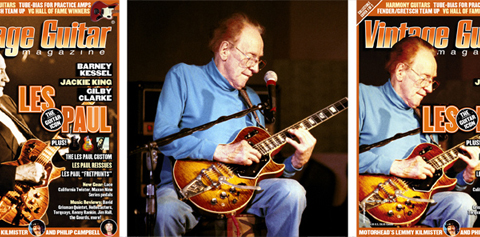
    Only once in our 28-plus years has Vintage Guitar printed a double cover and that was to honor Les Paul. Here are the two covers from the November 2002 issue, which contained this interview.
    Only once in our 28-plus years has Vintage Guitar printed a double cover and that was to honor Les Paul. Here are the two covers from the November 2002 issue, which contained this interview.

    Another episode had Mary sitting at the kitchen table playing a card game.

    “I remember the first show to come out of our home studio,” Les said. “The director had me with a straw hat, a cane, and a striped shirt, tap dancing (laughs). So I said, ‘Somehow, I think we’re going the wrong direction with this act. Get rid of that director and get another guy.’ So they got another guy, and he that came up with the chef’s hat.

    “So we worked it out, but it took a long time because we were pioneering, and those were the early days of TV.

    “On a typical day, Mary would be upstairs in her dressing room right above us [in his home]. Mary would be trying on her gowns and putting on her makeup, and I’d be eating breakfast. The crew would come down and say, ‘Here’s the schedule.’ They’d hand me the script, so I’d get an idea of what was going to happen. So there are two songs down on the script, let’s say ‘How High The Moon’ and another song I had to choose.

    “The script told me how much time I had, and while I’d eat, I’d be thinking, ‘One chorus at that tempo will be that.’ So I’d say to the setup man, ‘Set up some cocktail drums and my black guitar.’ So I walk to that room right over there (points to the second floor glass control room overlooking the main studio) and I lay down 37 seconds of drums, or it might be something else like a second guitar part. Then I may put down a melody for 37 seconds. The tempo is already there – it’s going to be 32 bars, or 12 bars, whatever. I’d already figured out that I’m going to do two choruses or something I make up right there.

    “So in 20 minutes I’ve got the song. But Mary hadn’t heard it. She’s still upstairs putting her clothes on. So the song goes immediately to acetate disk, which is placed in the living room or the studio. Then we were ready for the script.

    “The script might have Mary saying, ‘While I’m making a sandwich, will you play “Who Broke The Lock?”‘ And they drop the needle on the record that I only heard when I made it (laughs). And there it is – it is as much a surprise to everybody as it is to me. And we get through that and we have maybe four words and we go into a commercial. And that’s the way we had to do the shows. So there were so many surprises.

    “So, every day I’d come down to breakfast and a guy would shove something at me. I’d say, ‘What am I going to do this time…?’ So after we’d finish the number, they’d cut to commercial, come back, and Mary would say, ‘Well that was “Doin’ The Town” or “Wait And See” or “Pardon Me, Baby,”‘ or whatever it was. And the show was not dubbed. They’d just sit there with cameras running. The songs we recorded for the radio and TV shows were in most cases picked by me because they were made very popular by someone else. They were standards, and there’s nothing like a proven hit song.

    “‘Vaya Con Dios’ was written by a dear friend of mine. That’s the one I think of when it comes to Les Paul and Mary Ford, because it sold so many millions. I think of it every time I go to the bank (laughs). Mary and I admired the writer, and we admired the song, and that’s why we used it. The writer never did live long enough to hear the song. I was so sold on ‘Vaya Con Dios’ and Capitol was so against it that they did not want to put it out. So I had a hell of a time convincing Capitol that it was a hit.”

    “Vaya Con Dios” was Les Paul and Mary Ford’s biggest hit, being number one for 11 weeks in ’53. “How High The Moon” was number one for nine weeks in ’51, and was the groundbreaker for the “Paulverized” sound.

    Les and Leo
    One of the many people who came to Les’ Hollywood backyard/home studio in the ’40s was Leo Fender.

    “Leo loved country music, and I was recording Spade Cooley’s guys. So Leo was in my backyard, and Paul Bigsby, and they’re saying, ‘This guy has some stuff going here.’

    “Leo and I spent many hours talking. He was interested in me going with him, starting things. He wanted to try new sounds. Where else could Leo hear a better thing than in an orchestra being recorded with his amplifier? Where else is Leo going to find a better place to be where there is an electronic engineer, a person that knows, a person that plays the instrument? And as you know, Leo was not around jazz players at all. He was strictly in a country world. And the country world was prominent in my backyard.

    “So Leo and I would sit and talk about sound. And it came to what sound do we like best? The best we agreed upon was the sound that came out of the steel guitar. That was a sound that you could never get out of a straight guitar. A straight guitar always sounded like a straight guitar – limping, dragging its foot. And we finally got to the point of two pickups, where to place them, and what to do with them.

    “That was where Leo and I had a different choice. I wanted a front pickup to sound with all the characteristics of a back pickup, but I didn’t want it to be a back pickup. And Leo wanted to take a back pickup and make it sound something like a front pickup. So we were on opposite ends. And through our whole careers, it stayed that way.

    “Anyway, Leo was interested in me going with him. The reason I didn’t was that there was only one company at the time – Gibson. So why do I want to start with someone from scratch? So I told Leo, ‘I don’t know if this is the way I want to go.’

    Convincing Gibson
    Les had already experimented with many ideas for a solidbody electric guitar, including the famous “log.” He approached Gibson’s Guy Hart beginning in 1941 with the idea, and for 10 years tried to convince the company it was good.

    After Fender approached Les, he tried Gibson again.

    “I called and said, ‘There’s a guy out here who wants me to go with him, and I think that would be a mistake. You should consider my idea a little more.’”

    But Gibson wasn’t ready. On one hand, it wanted to give Les anything he wanted – like a gold plated L-5. But on the other hand, it wouldn’t give him the only thing he really wanted – a solidbody guitar that sounded like a steel guitar with a bridge-mounted pickup.

    Of course, World War II turned everything around. From 1941 through ’45, few men worked at Gibson, and production was primarily war-related. In ’45, Chicago Musical Instruments (CMI), run by M.H. Berlin, bought Gibson. The latest rage was the cutaway archtop acoustic and cutaway acoustic/electric archtop, and Gibson was trying to figure out (and keep up with) Les Paul’s large body acoustic/electric archtop Epiphone, not some solidbody dream guitar. But with Berlin on board, things began to change at Gibson.

    “Mr. Berlin was probably the most honest, comfortable person I’ve ever dealt with. I met him in 1931, when he was selling Martin guitars in his music store across the street from Lyon and Healy, on Wabash.

    “When he became chairman of CMI, we’d talk. So he was aware of my career. He told me, many years later, ‘When you came to Gibson with that contraption of yours (the log), we called you the character with the broomstick with the pickups on it.’ And he said, ‘Gibson laughed at you for 10 years.’ Then he said, ‘Well, Gibson was wrong.’”

    The First Gibson Solidbody
    In the early ’50s, Gibson began to seriously consider a solidbody guitar. Les had warned them of Leo Fender, and most people credit Fender’s bolt-neck, slab-body Esquire/Telecaster with pushing Gibson into the solidbody market.

    But at Gibson, Berlin was discussing Les’ ideas with company president Ted McCarty. When Les briefed Berlin, there were two other people in the room, but McCarty was’t one of them.

    McCarty’s main job was to fill instrument orders, but he also wanted to increase production at the Kalamazoo factory. McCarty purchased an early Fender solidbody and tore it apart. He worked from one angle, Les worked from another angle, and Berlin was in the middle, taking input from both.

    “Everything about the looks of the first guitar was discussed with Mr. Berlin and myself,” he said. “And when we were finished he said, ‘What color are we going to make it?’ Without really thinking, because it never entered my mind that anybody would ask, I said, ‘Gold,’ and there were two other people in the room, another manager and Mr. Berlin’s right-hand man, Mark Carlucci. They damn near died! One guy said, ‘It’s a terrible color to work with.’ But M.H said, ‘Gold it is.’

    “Then they said, ‘What about the other guitar?’ I said, ‘Black.’ They asked why, and I said, ‘I like to see the player’s hands move…’ Today, those are two great colors. Sometimes your first thought is the right one!

    “Mr. Berlin and I talked about maple and mahogany bodies, and the Gibson people got them backward; the black guitar, which was the most expensive, was all mahogany, and the cheap guitar, with the maple top, cost the most to make.

    “When I got my hands on the prototype, I found quite a few errors. I said, ‘Why don’t you do the same with every one of them. Just make them all with a maple top and mahogany on the sides?’ We found out over time that there was not that much difference between the maple and mahogany top.”

    Patentently Controversial
    Development of the Les Paul Model was very much a team effort, with Berlin calling the shots. But the patent process was assigned to McCarty; Gibson’s guitar patents were handled in the Kalamazoo offices.

    McCarty generally let the engineer most responsible for a product be listed as the patent holder. An example is the 1955 Gibson humbucking pickup patented by Seth Lover.

    But in 1952 and ’53, a lot was going on. In one span, three similar patents were filed in a six-month period – the Tune-O-Matic Bridge patent was filed on July 5, 1952 in the name of Ted McCarty, the Les Paul trapeze bridge patent was filed four days later in the name of Lester W. Polfus (Les Paul), and the patent for the stop-tail Les Paul guitar (entitled “Stringed Musical Instrument Of The Guitar Type And Combined Bridge And Tailpiece Therefore”) was filed January 2l, 1953 in McCarty’s name.

    The Les Paul Guitar
    An important day for Les was the day Ted McCarty reached the Delaware Water Gap (the eastern Pennsylvania mountains that border the Delaware River). That was the night that the first Gibson prototype was named the Les Paul guitar.

    “The contract was signed, and Ted turned around and asked me, ‘What are we going to call this thing?’ I said, ‘Call it a Les Paul guitar.’ He said, ‘Will you put that in writing.’ I did! So sometimes I do the right thing (laughs).”

    In one pen stroke, many of the dreams Les Paul had worked were achieved.

    “We signed the agreement and Ted said, ‘What are we going to do with that clunker?’ I said, ‘Play it until you make that first solidbody right.’ Ted said, ‘Les you can’t walk out on the stage with an Epiphone name on your guitar.’ I said, ‘Okay. Send me some Gibson logos and I’ll put one on it.’ And that’s why you look up at the clunker and see Gibson.”

    Ted McCarty had always been concerned with the clunker.

    “Ted would pace the floor and say, ‘That’s the damndess sound I’ve ever heard. We’ve got to have it.’ And I said, ‘I’ll give you most of it, but I won’t give you all of it. I’ll work with you on that Les Paul guitar and make it the finest that can be made.’ And that’s what we did.”

    Summary
    Les Paul did so many things right; he found his passion at an early age, and he had natural rhythm and musical ability. He continually improved until he found his sound. He knew he needed to be well-rounded, not only to be a guitarist, but to be an engineer, inventor, promoter, and celebrity. And he worked tirelessly all the while.


    This article originally appeared in VG‘s November 2002 issue. All copyrights are by the author and Vintage Guitar magazine. Unauthorized replication or use is strictly prohibited.

  • Peterson VS-1 Tuner

    The accurate, real-time tuner goes mobile

    Most guitar techs will tell you that there has always been a void between small battery-powered tuners and full-blown rotating disc strobe tuners; the small ones are not all that accurate or steady-reading, while rotating disc tuners are big and cumbersome.

    That’s where Peterson’s Virtual Strobe Tuner (VS01) now fills the void. The company calls it the “first real-time portable tuner,” and it offers a load of benefits; it’s small (about the size of a multimeter), very accurate (to 1/10 cent), hands-free, loaded with useful features, and best of all, can run on battery power. All housed in a rugged case with protective rubber boot.

    The VS-1’s backlit display simulates the “bars” of a real strobe tuner, as well as giving you a display of the note, key, temperament, and cents. The controls are sparse and for the most part self-explanatory; an on/off switch, value/choose knob, and two menu buttons. Input and through 1/4″ jacks on the right side of the unit allow you to leave the tuner in your signal chain, and there’s power input jack for a wall wart.

    The Peterson offers several temperaments for tuning other instruments, such as pianos. Piano tuners need to stretch the intervals between notes on the upper and lower ranges of the piano to achieve the correct sound. For the most part, we used the “equal” and “guitar” temperaments. The unit defaults to the “equal” temperament setting when it’s turned on, but can be programmed to go to any of the others. According to Peterson, the “guitar” temperament setting is geared toward sweetening the 4th and 5th intervals on a standard-tuned guitar, and it did give more even tuning.

    Beyond the strobe modes (auto and manual) the VS-1 offers a tone generator mode, so you can tune using an audio pitch. This is useful for simulataneously tuning a group of instruments or getting a string close to pitch quickly. The audio pitch is amplified by an internal speaker or at the through jack, for external amplification.

    For guitar players who tune to E flat or D, the tuner offers a “fret” mode that eliminates mental transposition of notes.

    We used the tuner on a variety of instruments, both acoustic and electric, and found it to be very accurate and easy to use, the automatic note function was a nice change from our old strobe tuners. Acoustically, the signal faded easily, but on electric instruments the display was steady and easy to read.

    Overall we like the VS-1’s accuracy, and small size and features, especially the guitar temperament and “fret” mode.


    Peterson Virtual Strobe Tuner
    Type of Tuner: Real-time portable strobe.
    Features: Accurate to 1/10 cent, instantaneous response, nine-octave capability, fret mode, automatic or manual note selection, built-in microphone, large note display with transposition to all chromatic keys, selectable historical tempera-ments, battery/AC power, pro-tective case.
    Price: $329 list ($35 for case)
    Contact:Peterson Electro-Musical Products, Inc, 11601 S. Mayfield Avenue, Alsip, IL 60803, (708) 388-3311, petersontuners.com.


    This article originally appeared in VG‘s May. ’02 issue. All copyrights are by the author and Vintage Guitar magazine. Unauthorized replication or use is strictly prohibited.
  • Brad Gillis

    Weekends and Warriors

    Night Ranger came to prominence with the advent of MTV; guitarist Brad Gillis has played with Ozzy Osbourne and accumulated an admirable collection of vintage guitars to use in his recording projects, which are varied and include soundtracks for video games.

    Gillis’ first love is live performance, however, and as he anticipated a summer 2001 tour that would take Night Ranger all over the U.S., Gillis was also eager to discuss his second solo album, Alligator. But we started with the band in which he made his first nationally released recordings, Rubicon, which also featured Night Ranger bassist Jack Blades (VG, May ’98).

    Vintage Guitar: Since you’re from the East Bay area of California, one might wonder what influence another East Bay band, Tower of Power, had on Rubicon, since both bands had horns.
    Brad Gillis: A lot! Rubicon was a funk rock band, and when they asked me to join they were looking for someone to add a rock and roll edge to the funk from their three-piece horn section. They were trying to bridge the gap between disco-funk and rock and roll in the mid ’70s. They saw me playing with a band called Arm & Hammer in a nightclub one night, and asked me to audition at Studio Instrument Rentals in San Francisco. They had tentatively given the gig to a friend of mine named Danny Chauncey(38 Special); we went to the same high school in Alameda, CA. They’d told him they had one more guitarist to audition.

    Jack and I clicked immediately during my audition because we both like to jump around when playing. After I got done with the audition, Jerry Martini, who’d been the sax player with Sly & the Family Stone, said, “Alright, who’s gonna get the cassette back from Danny?” (chuckles). It was quite exciting to be able to go to Los Angeles to record Rubicon’s first album at age 19. I recall driving into Hollywood for the first time with my pickup truck full of music gear dreaming of the big time. I couldn’t believe I was doing my first record!

    Earlier band experiences?
    I started playing drums when I was about seven. My dad was in the Navy, and said he’d buy me an electric guitar and amplifier for my eighth birthday if I’d take lessons. So we went to a store at the Naval Air Station in Alameda, and he bought my first Kay guitar and amp for $150; back then, that was a lot of money! I took lessons for a few months, but I didn’t enjoy playing “Mary Had A Little Lamb.” I needed to rock! A friend of my brother showed me some chords and different inversions. I started to learn how to play lead guitar on the high E string, then went to the B, then to the G, so I was doing two- and three-string solos. I started listening to the radio every day, and whatever came on, I’d emulate. I realized that just about every song consisted of three chords!

    When I was 10 years old, I started my first band – the Invaders. I played lead guitar and I was lead singer. We had a bass player, and a drummer who’d never played drums before, but his parents bought him a $600 Ludwig set (laughs). I played my middle school’s talent show when I was in the sixth grade; I sang “Gloria,” and I noticed the girls were screaming. It was a chance to step out from the other boys at my school and do something that girls seemed to appreciate. My dad encouraged me into pitching in little league baseball, but I had the “jammin’ fever.” I use to open up my garage and wail with my band ’til the police came. That’s one way to draw a crowd!

    I went through different bands, and by the time I was a freshman in high school, I was in a band called Next; we played Friday night kegger parties. I played a lot of Jeff Beck and Blue Oyster Cult stuff, and I actually played at one of my high school senior proms. Everybody in the band was a senior except for me, and it was pretty overwhelming, because I had senior girls checkin’ me out! When I got out of high school, I jumped right into the club band circuit and played five nights a week. That’s where Rubicon picked me up.

    What kinds of instruments did you use at the time?
    My dad flew for an airline after retiring from the Navy, and when he was in Germany, he bought me a big, fat Höfner hollowbody, which I played for a few early years, and when he went back to Germany he got me a Höfner solidbody. Then I got into a Fender Mustang, and I started hotrodding guitars – taking them apart, sanding them down and refinishing them, putting custom pickups and parts in them, changing the tuners… modifying them to the hilt. My brother designed a Gillis Cordless system we installed, with effect switchin. I played my black ’68 Les Paul Custom through Rubicon.

    Some might cringe when they read about the Floyd on a ’68 Les Paul…
    The hardest part was having Stars Guitars in San Francisco rout the Gibson to install the Floyd Rose. They’d never done that before, but it turned out well. I was a hard player back then, and I wasn’t planning on holding onto it as long as I have; I just wanted a modified powerhouse Les Paul and Strat that did what I wanted. I had that Les Paul when I joined Rubicon, but the Floyd Rose came along a few years later.

    In ’79, my brother’s friend gave me a beat up ’62 Strat, sanded down, in a box. It was all torn apart, but it’s the guitar I rebuilt and I’m still playing today – it’s my main red Strat, with a built-in Nady wireless and a very original Floyd Rose non-fine-tuner model. I had an auto body shop paint it red with leftover paint from my Datsun 240Z.

    I traded a ’57 Strat for that Les Paul Custom. I like the solidity and fatness of Gibsons, and I still own it. I’ve installed a Nady wireless in it, too.

    Reportedly, Rubicon and Mahogany Rush were among the last bands scheduled to play at California Jam 2 in ’78, because the promoters wanted lesser-known bands at the end to help thin out the crowd.
    That was the biggest day of my life – helicopters and limousines! We had our first record, and here we were on the same bill with Santana, Ted Nugent, Heart, and Aerosmith! Rubicon had originally been booked to open the show. The crowd was so hyper, they decided to bump us to the end. We actually played after Aerosmith, then Mahogany Rush came on. There were 450,000 people there during the day, so we probably played for 250,000 or 300,000; huge crowd! We were on the Cal Jam 2 record, and they showed the live concert on TV. Rubicon was also on shows like “American Bandstand” and “Solid Gold.”

    Did you go straight from Rubicon to Ozzy?
    No. After Rubicon’s drummer, Greg Eckler, quit, we hired Kelly Keagy. Things started to wind down for that band, and Jack, Kelly, Jerry, and I decided to disband Rubicon and start a new project called Stereo, which was supposed to be kind of a new wave/Cars-type band with a sax player, but that didn’t fly. Jack’s roommate was (keyboard player) Alan Fitzgerald, and Jack, Kelly, and I decided to stay together and form a hard rock band with Fitz and another guitar player named Jeff Watson, who some of the other members had worked with before. When Jeff came to hear Stereo play, I thought it might be tough competition. But we got along great – we had two different styles, and we decided to complement each other’s playing, and we worked up a lot of harmony ideas. We wrote five songs the first day Ranger – that’s what we were called back then – got together and jammed.

    We played a few shows with Sammy Hagar around California, and then Bill Graham Management got involved. We had a three-song demo, but we had trouble getting a record deal. I started another band called the Alameda All-Stars, and we did club gigs just so I could keep busy and keep my chops up while Ranger was trying to get a record deal.

    I’d heard about the plane crash that killed Randy Rhoads, who I’d seen a few months earlier at a Day On The Green concert in Oakland, and got to thinking that Ozzy would probably be needing another guitar player soon. Preston Thrall, the brother of Pat Thrall (Pat Travers, Asia), offered to try to get me the gig with Ozzy after seeing me play at an Alameda All-Star Show. I got a call from Sharon Osbourne, Ozzy’s wife, early that Sunday morning, and when I talked with Ozzy, I started trembling on the phone; I couldn’t believe Ozzy was calling me! He gave me 19 songs to learn, and I was booked to fly to an audition on Tuesday, so I started calling friends to borrow their old Black Sabbath albums and any of Ozzy’s solo stuff so I could start learning the songs. I basically had Monday to prepare.

    I flew to New York, and a limo driver took me to the Helmsley Palace in Manhattan. I got there at midnight, and nobody from the band was there, and there wasn’t a room reservation in my name! I had $150 in my pocket, and the room cost $135, so I sat in my room wondering when and if they were going to call. Later that night, Larry McNenny, the road manager, called when they got back from playing Madison Square Garden, and told me to come up to their penthouse to meet Ozzy.

    At that time, Bernie Torme was filling in with Ozzy before they added a new permanent guitarist. I walked into a penthouse full of the media and press while there was a huge party going on, with a bunch of rock and roll longhairs. I asked Larry if all of those guys were auditioning for the gig, and he said “No, no. It’s just you! If you can’t cut it, we’ll find somebody else.” No pressure there (laughs)!

    I told him I didn’t have any money, and Larry gave me five crisp $100 bills! Things were getting’ much better.

    He introduced me to Ozzy, and Ozzy told me to go grab my guitar. I told him I didn’t have an amplifier, and he said, “It doesn’t matter.” So we went up to the bedroom of the penthouse; I sat on the bed and he sat on the floor, and we started off playing “Flying High Again.” After the guitar solo, he stood up and gave me a hug, then took me downstairs and announced he’d found a new guitar player!

    I sat in my hotel room for a few days with a live tape that recorded a few months earlier with Randy Rhoads, to learn all of the segues. After five days of practicing during the day and watching Bernie Torme play with Ozzy at night, I told him I was ready. My first show was in Binghamton, New York, to a sold-out crowd of 6,000 people. I’d never played with the band before, and all I had was the soundcheck to rehearse – seven songs out of 19. I played fairly well, except for missing the change in “Revelation Mother Earth,” and Ozzy looked over at me as if to say, “You screwed up!” After that, each show became easier and about two weeks later, we did a live nationwide broadcast from Memphis and I started feeling more comfortable.

    Were you with Osbourne when the infamous bat-biting incident occurred?
    No, that came before I joined. There were some times when people would throw snakes and small animals onstage. One time, one of them got wrapped around Ozzy’s neck, and he freaked out! Security at the shows was confiscating all sorts of strange creatures at the venues!

    You were in one of the first MTV concerts ever broadcast, and it featured some relatively-primitive laser effects, including a cross that floated out to center stage, then it inverted. What was that supposed to signify?
    That was at Irvine Meadows, south of L.A. – quite a big show for me, too; we’d been on tour for months, so I was pretty much locked into the groove. There were laser bats on the side of the stage, but as for “The Cross,” that goes back to early Black Sabbath. I’ll let Ozzy tell you about that.

    Was that the rebuilt Strat you were playing?
    Yes, I’ve been using that guitar since 1980. When I played with Ozzy I used two Strats because some of the songs were tuned to E-flat. I’d bring my black Les Paul out at the end of the night for “Paranoid” and “Iron Man.”

    Toward the end of the Ozzy gig, Ranger had finally gotten a record deal, and I wasn’t sure if Ozzy was going to keep me. The guys in Ranger were like brothers to me, and I didn’t feel like I was a band member with Ozzy; I felt more like a sideman. So I decided to roll the dice, and went back to Ranger. We were immediately signed by Bruce Bird at Boardwalk Records.

    We recorded the album and had printed about 10,000 album jackets when we opened a copy of Billboard magazine and saw a two-page ad for a country band called “The Rangers.” We freaked out and came up with the Night Ranger name…and started over with the album jackets.

    Two things closely associated with the band when it broke nationally; the first was the timing with the advent of MTV…
    Yes, our early videos look pretty primitive these days, but MTV put a visual to our music. “Don’t Tell Me You Love Me” wasn’t very fancy, done on a $10,000 budget – very cheap – but it got us recognition, then “Sister Christian” was released and pretty much blew things wide open. We saw our audiences grow from 3,000 to 10,000 in a matter of weeks. I’ll never forget our first sold-out show in LaCrosse, Wisconsin, for 8,000 people!

    …which brings up the second facet – power ballads.
    I know, they’ve been associated with us for a long time, but we always knew we were a harder-rocking band. Songs like “You Can Still Rock In America,” “Don’t Tell Me You Love Me,” and “Touch of Madness” are examples. But after the release of Sister C., MCA records followed with too many power ballads and no rockers. Stuck in the corporate rut…

    As the band went through changes – and more or less into hiatus – you released your first solo album, Gilrock Ranch, where all but two of the songs were instrumentals. There’s a “pointy” Hamer on the front cover.

    That was used for a different look, because all of my pictures in the past only showed my ’62 Strat. I should’ve used my main Strat again, as it’s always been my favorite guitar. After attending the January NAMM show, I discovered Warrior Guitars. They have great craftsmanship, with exotic woods and fat tone. Soon, you should see me playing a Warrior guitar live – after they finish my custom B.G. model.

    By the time Gilrock Ranch was released, you had done an instructional video…I did one for Star Licks in the ’80s, and it did fairly well, then I did another for the Japanese. It’s not my cup of tea; I like playing live. I get off on the energy onstage. I never really gave guitar lessons either, only to friends.

    Night Ranger regrouped in the mid ’90s for the Neverland album.
    We got a call to record a CD and tour Japan, so we decided things could work again. We got together at Jack’s house, and the first song we played was “Don’t Tell Me You Love Me.” We all looked at each other, smiled, and said, “Hey, man. We still got it!”

    So we recorded the Neverland CD and went to Japan, then decided to start touring the States again, to see how well we could do. The first summer tour in 96′ was okay. Each year, things got better and now we’re mainly doing spring and summer festivals, mostly on weekends, and we’re kickin’ butt. That leaves us to do our own projects the rest of the year.

    I just started a company called Liquid Hot Music Production, with musician/producer Jim Hawthorne. We record music for different applications and work with new guitar sounds and song ideas for future material.

    Your second solo album, Alligator, was released last year…
    Yeah…in Japan, and recently in 22 countries in Europe. I’m probably going to go to Europe for promotion. It’s available on my website, bradgillis.com, and features Gary Moon on bass and vocals; he played with a new version of Night Ranger while Blades was occupied with Damn Yankees. Alligator is the reverse of Gilrock Ranch in that there’s only one instrumental track.

    Gilrock Ranch featured eight instrumental tracks and two vocal songs by Gregg Allman. With Alligator, I wanted to write more songs that could hopefully get airplay, and Gary’s such a great singer. Also, in this day and age, instrumentals aren’t very popular. It took several years to put it together; Gary sang seven songs, and I sing two.

    You’ve been building a collection of vintage instruments recently. Details?
    I was trying to start out with one of each different model, so I could get that “sound.” If I want that Telecaster sound, I have a ’69 Floral Blue Tele through a ’66 Super Reverb. My collection has evolved from that old Les Paul and red Strat, plus a few Hamers and Jacksons, to a ’56 blond Strat, a ’63 and a ’65 sunburst Strat, a mint ’56 Les Paul Junior, a mint ’47 ES-150 and a ’70 ES-175. I’ve got a couple of reissue fat-neck ’59 Les Pauls. Why let money sit in the bank, when you can invest in guitars? I can use them in my work, and I can write ’em off (laughs)!

    As for amps, I stick with Soldanos; they give me a warm, fat sound, and I use them both in the studio and live. My three-channel Decatone is perfect and versatile. I’ve been using SIT strings (.009 through .046) and with the way I wang the tremolo, they are the best for staying in tune.

    And you’ve been recording music for video games.
    I’ve been producing quite a few people in the studio, and I did some guitar solos for my good buddy Robby Z’s new CD; he’s major collector of vintage guitars, and I acquired some great instruments from him. A bass player we brought in for Robby’s sessions named Danny Pisano, who worked for Electronic Arts, which designs all of the software for Sony’s Playstation sports games. I told him I’d loved to get involved, and I ended up doing seven songs for the Tiger Woods Playstation 1 Golf game, and they liked it so much they had Jim Hawthorne and I record all the music for the Tiger Woods Playstation 2. Right now, we’re working on more game and TV projects.

    We record everything big-guns. We’re using big, loud amps, grand pianos and Hammond B3s, and real drummers with a mixture of sampled drums, recording digital and 24-track, 2″ analog formats.

    Future plans?
    Night Ranger has booked many festivals for the Spring and Summer, and we’re all looking forward to getting back out there on the road. We’re mainly doing weekends, and I spend the weekdays on other music projects. People have been hiring me through my website to play solos on their CDs, and usually send me an ADAT to do my wild wammy guitar solos. I just finished Ozzy and Van Halen tribute CDs that were just released, and I’ve working on a new solo record.

    But out of all the projects I’m involved with, nothing beats playing a live Night Ranger show in front of thousands of people!

    For all of his desire to be a “stage animal” guitarist more than anything else, Brad Gillis has the experience and wherewithal to adapt to new dimensions. Such “flexibility” is the mark of a true professional. But Night Ranger’s playing enough to satisfy Gillis’ performing jones. He’s been a pro for some time, and it shows…and he’s still enjoying the ride.


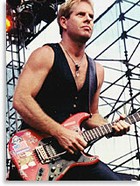
    Photo courtesy of Brad Gillis.

    This article originally appeared in VG‘s Aug. ’01 issue. All copyrights are by the author and Vintage Guitar magazine. Unauthorized replication or use is strictly prohibited.
  • Howard Alden – My Shining Hour

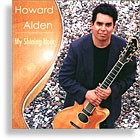
    My Shining Hour

    This is the kind of playing I would give parts of my body to master. It’s just Howard, his guitar, and a batch of great songs. And, Howard has mastered them. And to the best of my knowledge he’s still got all his body parts.

    Talk about chordal knowledge. Talk about chops. Check out “Gone With the Wind.” It’s a jaw-dropping display of guitar playing. Same with “Crazy She Calls Me.” To take six-strings (well, actually seven in Howard’s case), and make something this beautiful and soulful is truly an art form. By the way, I mentioned the seven strings, and Howard uses them all to his advantage. Take a listen to some of the chord forms and bass runs here. He shows an incredible knowledge and facility.

    You may know that Alden did the guitar work in Woody Allen’s movie, Sweet and Lowdown. If you haven’t seen it, it tells the tale of a fictional guitarist (played by Sean Penn) who is the master of his instrument, but not of himself. Two songs from that movie are featured on this disc, along with a great set of standards. One of those didn’t make the cut, but shows up here as a nice (if very short) piece.

    If you like solo jazz guitar, you’ve got to have this one. I don’t know that there are many guitarists ho still do this thing. I do know there aren’t many who do it this well.


    This article originally appeared in VG‘s May ’01 issue. All copyrights are by the author and Vintage Guitar magazine. Unauthorized replication or use is strictly prohibited.
  • Roomful of Blues – The Blues’ll Make You Happy, Too

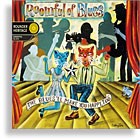
    The Blues'll Make You Happy, Too

    Rounder has launched a new Heritage Series that kicks off in righteous fashion with this retrospective of Roomful of Blues’ seven Rounder albums.

    In guitar terms, this collection covers Roomful of Blues from the journeyman days of Ronnie Earl to today’s Chris Vachon. These are the best of the best, 14 rafter-shaking numbers from the hottest and longest-lived R&B revival band on the scene.

    In addition, this CD includes two previously unreleased cuts. The first is the modern cut, “Poverty.” The second is a live ’82 version of “Shake Rattle and Roll” featuring the man himself, Big Joe Turner, on vocals.


    This article originally appeared in VG‘s Feb. ’01 issue. All copyrights are by the author and Vintage Guitar magazine. Unauthorized replication or use is strictly prohibited.
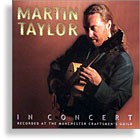
  • Martin Taylor – In Concert

    In Concert

    After finishing Gershwin’s “I Got Rhythm” – following his tongue-in-cheek, herky jerky, impossible-to-snap-your-fingers-to intro with a laughably fast walking bass figure, over which he somehow threads both melody and comping chords (simultaneously) – Martin Taylor says of the composer, “He’s probably turning in his grave now.” In truth, however, Taylor is a composer’s dream come true, as he displays on Gershwin’s “They Can’t Take That Away From Me,” as well as chestnuts by Duke Ellington, Jerome Kern, Benny Golson, and especially Hoagy Carmichael’s “Georgia On My Mind.”

    Hopefully, the abundance of recent product from this 44-year-old will put an end to his lengthy tenure as “Britain’s greatest jazz guitarist” (a bit like declaring Django Reinhardt “the best Gypsy jazz guitarist in France”), and place him at the forefront of the jazz world’s consciousness, where he belongs. Because if there’s a better straight-ahead jazz guitarist on the planet, I sure haven’t heard him (or her).

    First introduced to American ears through his work with violin legend Stephane Grappelli, Taylor has cut a steady stream of hard-to-find releases for Scotland’s Linn label in recent years (solo, with small ensembles, and as leader of his fascinating Spirit Of Django group); recorded with mandolinist David Grisman; and worked with Rolling Stone Bill Wyman’s Rhythm Kings. He signed with Sony in America in ’99, and his slick ensemble CD, Kiss And Tell (Columbia/Legacy) offers a nice contrast to In Concert, a ’98 solo performance at the Manchester Craftsmen’s Guild in Pittsburgh that was previously released as a video.

    What sets Taylor apart from the rest of the jazz guitar pack is…well, everything. His tone is crystal clear without being brittle; his rhythmic feel is the definition of swing; and his approach to playing bass, rhythm, and lead simultaneously is dumbfounding but pleasing, rather than an annoying gymnastic assault. Most of all, his fresh melodic sense never seems to rely on devices and tools – a trait (along with his sense of joy and humor) he shares with Django, far more than any sonic resemblance.

    To discover Martin Taylor (as I did 20-some years ago) is one of the great perks of being a jazz hound. Those uninitiated should pick this up, then proceed to www.martintaylor.com, credit card in hand. It’s all essential listening for any serious guitar fan, and his charming autobiography (also titled Kiss And Tell, Sanctuary Publishing) is also a great read.


    This article originally appeared in VG‘s April ’01 issue. All copyrights are by the author and Vintage Guitar magazine. Unauthorized replication or use is strictly prohibited.
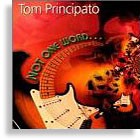
  • Tom Principato – Not One Word

    Not One Word

    Tom’s put out some stuff on record before, and it’s been pretty good. This one’s a little bit different. As the title says, there’s not one word. It’s all instrumental, and Tom does a great job of letting his Strat do his talking for him.

    The thing you notice on first listen is the killer tones, great guitar sounds, and wonderful sense of melody highlighted throughout. From the tour de force opener, “One Night In Hindustan,” with the singing tone and solo chrodal work and harmonics to the Beck-esque “Another Place, Another Time,” Tom plays great.

    The minor-key “Santana Clause” (what a great title) has some nasty chops and (as you might expect from a song with that title) big, fat tone. The ending of “’67/’68” is so cool. It’s like the mid-to-late Beatles have taken over the sound for a few minutes. Guaranteed to bring a smile. There’s lots here to like. “Blue Groove” is a shuffle with a relaxed feel that cooks. Sounds like an oxymoron, but it’s not. Check out the nice mix of chords, single-line work, and octaves. Very, very nice!

    I’d definitely recommend this one to fans of instumental guitar albums. Powerhouse Records, PO Box 2213, Falls Church, VA 22042, www.tomprincipato.com


    This article originally appeared in VG‘s April ’01 issue. All copyrights are by the author and Vintage Guitar magazine. Unauthorized replication or use is strictly prohibited.
  • Bay State Parlor Guitar

    Play It In Any Room!

    The parlor guitar. Designed by Mr. Parlor? No. First manufactured by the Parlor, Inc? No. Endorsed by the well-known recording artist, Parlor? Now don’t be silly, of course not! Then why call it a parlor guitar? The answer is more complex than it sounds, but a parlor guitar was played in the parlor.

    What?

    Let’s start again. The development of the guitar from its fretted and strung antecedents led to an instrument that was rather small and used almost exclusively for vocal accompaniment in rather intimate settings. We’re talking about guitars measuring maybe 10″ to 11″ across the lower bout. During the late 19th and early 20th centuries, the size of guitar bodies started to increase, and it began to be used more as a solo instrument or in ensemble playing, where the larger size allowed it to be heard more easily. But there was still a range of smaller-bodied guitars used in the traditional manner and strummed for vocal accompaniment.

    Most houses around the turn of the century had a parlor, forerunner to today’s “living room,” which served as a place to receive and entertain guests. Small-bodied guitars were generally called parlor guitars because the setting for their use was often entertaining singly or for small groups in the parlor. Today we find nearly any small-bodied guitar is called a parlor guitar.

    In the ’90s, most guitars players have a living room and dreadnought guitar as standard equipment. But the resurgence of interest in acoustic instruments, vintage and new, has led to a revival of the parlor-sized guitar. Manufacturers including Tacoma, Larrivee, Santa Cruz, Bourgeois, Collings, and even Cort, have new small-bodied guitars. On the other hand, the vintage enthusiast has a variety of choices, many with no brand markings or label of any sort, and ranging from 80 to 120 years old.

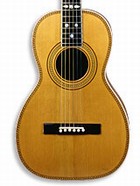
    Our feature parlor instrument is a high-quality offering from Bay State. According to Gruhn and Carter’s Acoustic Guitars and Other Fretted Instruments, Bay State was a brand name of the John C. Haynes Co., of Boston. This company produced (or contracted with others to produce) a variety of fretted instruments including banjos, guitars, and mandolins. The line was particularly successful in the populous Northeast U.S. and no doubt arrangements were made to supply instruments to music teachers and schools.

    Distinctive markings on the headstock and fretboard, as well as fancy herringbone trim, make this a rather desirable small instrument. While most manufacturers did include fancy abalone-trimmed models in their offerings, the ones that show up most often now are rather plain. Buyers should be aware of several factors if they are interested in playing them. Many of these guitars are over 100 years old. They may need structural work or crack repair.

    Most were designed for gut strings and may have suffered from the tension of modern steel strings or from poorly executed repairs. Some are very fragile and need careful handling. On the other hand, they can be enjoyable to play. Easy to hold, and with comfortable necks, the parlor guitar is suitable for soft accompaniment, but works equally well for blues or ragtime fingerpicking. They are numerous in more plain varieties, and their prices generally run less than $700. Fancy ones can cost substantially more, but don’t necessarily play or sound better.

    Best of all, you can play a parlor guitar in any room of your house!


    A 1900 Bay State parlor guitar, likely made by Ditson. The herringbone trim and distinctive markings on the headstock and fretboard make this a desirable small instrument. Though fancy vintage parlor guitars can cost much more, they don’t necessarily sound or play better.

    This article originally appeared in VG‘s Oct. ’00 issue. All copyrights are by the author and Vintage Guitar magazine. Unauthorized replication or use is strictly prohibited.

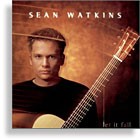
  • Sean Watkins – Let It Fall

    Let It Fall

    Sean Watkins is one third of the young Grammy-nominated supergroup Nickel Creek. Along with his sister Sara and mando phenom Chris Thile, they’ve lit up the festival circuit with fresh musical energy. Let it Fall is Sean’s first solo album, and it showcases his superb chops and mature musical sensibilities.

    All but one of the selections here are instrumentals, the exception being the title cut, which features Glen Phillips on lead vocals, backed by Sean and Sara. It may even get some airplay on AAA/Americana radio stations because it is so moving and melodic. On the rest of the album, Watkins’ musical styles span from moody acoustic folk, to celtic, bluegrass, and jazz-inflected “newgrass.” At the end of the disc, if you’re very patient, you’ll discover a bonus track of Django-like jazz.

    Other musicians include Jerry Douglas on dobro, Stuart Duncan and Luke Bulla on fiddle, Dennis Caplinger on banjo, Todd Phillips, Kevin Hennessy, and Bob Magnuson on bass, and Duncan Moore on drums. Watkins produced the CD, which was recorded at four different studios. David Glasser, Airshow Mastering, roped the disc together and gave it a spacious and natural soundstage. This fine CD shows that musical sophistication is certainly not a function of chronological age.


    This article originally appeared in VG‘s July ’01 issue. All copyrights are by the author and Vintage Guitar magazine. Unauthorized replication or use is strictly prohibited.

  • Dolly Parton – Little Sparrow

    Little Sparrow

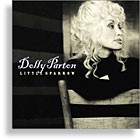
    When honky-tonk hero Merle Haggard found himself in the unlikely role of pop star, with the hits “Okie From Muskogee” and “The Fightin’ Side Of Me,” he wasted little time using his increased clout to pay his respects to idols like Jimmie Rodgers, Bob Wills, Hank Williams and Lefty Frizzell – and to this day he has never strayed far from his roots. When Dolly Parton crossed over to popdom with such fluff as “Here You Come Again” and “Two Doors Down,” she quickly served up more pablum (a la “9 To 5”) and used her commercial muscle to make forgettable movies like Rhinestone and Best Little Whorehouse In Texas . It took her a little longer (okay, a lot longer) to cut the inevitable roots tribute, 1999’s The Grass Is Blue , but Dolly showed she could hold her own alongside bluegrass’ elite (including Sam Bush on mandolin, Bryan Sutton on guitar, and Jerry “Flux” Douglas on Dobro). And her childlike-but-powerhouse voice, cracking the air like a five-string banjo, proved the perfect match for standards by Lester Flatt and the Louvin Brothers. Only the most jaded critic would hold Parton’s extended Hollywood vacation against her.

    Her follow-up, Little Sparrow , is, if anything, even better. The repertoire is broader, but nonetheless authentic, embracing Appalachian Mountain and Irish musics. Parton’s originals sit more comfortably here, and her voice has more opportunity to stretch out.

    Steve Buckingham, who produced both CDs, deserves special recognition. Guesting on some tracks is the Irish band Altan, with return engagements from Sutton and Douglas – the latter proving himself indispensable. When Douglas hit the scene with Boone Creek and J.D. Crowe’s New South in the late ’70s, it was clear there was a new heir apparent to the legacies of Uncle Josh Graves and Brother Oswald Kirby, and soon the contemporary torch was passed from Mike Auldridge. These days, the only question is whether or not Douglas is the best Dobroist ever, or merely the best today.

    On the high-spirited “Seven Bridges Road” Flux bounces his bar at a clip usually approached by only the fastest flatpickers (as in Watson or Rice), while on “Shine” he digs in with some wide, bluesy slides. The cut that seems to be getting the most notice is Dolly’s take on “I Get A Kick Out Of You.” And while she’s not likely to make Diana Krall lose any sleep, neither is her nice, swingy rendition going to make Cole Porter roll over in his grave. Likewise, Douglas proves he can handle a jazzy chord change or two. Cole Porter or “Coal Miner’s Daughter” – no problem for the likes of Flux.


    This article originally appeared in VG‘s May ’01 issue. All copyrights are by the author and Vintage Guitar magazine. Unauthorized replication or use is strictly prohibited.