
Month: January 2004

  • Will Ray

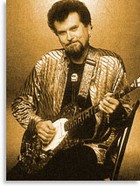
    Gets the blues and Pays Homage to his inspirations

    The life and times of country/rock/blues/allstylesinone guitar genius Will Ray are well-documented.

    Born in Virginia, raised on the music of Peter, Paul, and Mary, Ian and Sylvia, Elvis, and Ray & Glover, he started playing guitar at 16, listening to records by the Stones, Clapton, Bloomfield, and others.

    After high school, he joined the Army at age 18, served two years in Vietnam, then returned home to study pre-med.

    For years, he didn’t touch a guitar, until one of his brothers brought home the Grateful Dead’s Live/Dead album. The spark was struck, and Ray was soon back at the guitar, putting in eight hours of practice while maintaining his studies.

    Vintage Guitar: Can you recount the first time an instrument ended up in your hands?
    Will Ray: I fashioned a little ukulele out of a straightedge and a cigar box. It had rubber bands for strings. It was something I did in my dad’s office one Saturday when I was four or five.

    And a guitar
    We always had a Gibson LG-0 laying around the house. My older brother, Gaylord, played it. That was the first official instrument I ever really picked up.

    And you started getting serious about playing when you were about 16?
    Yeah, when the Beatles were really big. And once I got hooked by them, I had to have a guitar like George Harrison played early on – a Gretsch Country Gentleman. My dad told me that if I saved my money, he would match funds with me and I could get any guitar I wanted. Well, I saved up, and when we finally went down to get one, they were backordered! So it took about five more months to get it.

    But that was my first guitar – not a bad starter! I’m a big fan of Silvertones and Kays and stuff, but back then there were a lot of cheap guitars that just couldn’t be set up right. Nowadays you can get a really fine instrument for $100.

    Your influences include some of the obvious greats, like Mike Bloomfield and Roy Buchanan, and there are some not as famous, like Amos Garrett and Danny Kalb. What do you think you’ve drawn from all of them?
    Danny Kalb was probably the first big influence on me, and I never could figure out how he played a lot of stuff. But what I got from him, through osmosis, was his way of playing with a lot of open strings. He’ll fret somewhere on the first string, but play the second string open just to give it some sort of wank. That’s what I took away from my “studies” of his style.

    My earliest influences were very blues-oriented, and what I tried to do on my new album, Mojo Blues, was to sit down and remind myself why I started playing in the first place. Mike Bloomfield just blew my mind. The first Paul Butterfield album was very revealing about what blues could be about. Before then, I’d heard people like B.B. King and stuff, and everyone had their own style, but they were fairly traditional.

    But Bloomfield took blues and went off in this weird direction with it. And somehow, it really fit – there was some sort of magic between Paul Butterfield and Mike Bloomfield. He had more energy… when you’re a kid, you gravitate toward music that has energy. And he had more energy than anybody I’d heard before or have since, when it comes to blues.

    Hendrix had a lot of energy, too, but Bloomfield zeroed in. He was amazing on that first album. Then when the second album, East West, came out, it was almost like a different guitar player. He took it even further than I thought it could go. My favorite song is “Work Song,” where he just goes ape****!

    He was doing things that really made me think about guitar, and scales, and what my fingers were doing. I think he was probably a very visual player, and I tend to be visual because of that album. I look at my fingers – the patterns they’re doing.

    I first heard Amos Garrett on “Midnight At The Oasis,” and at the time I was playing in a rock band in Richmond, Virginia, and our girl singer wanted to learn the song. But when I listened to it, I was blown away by that solo! I still think it’s one of the top 20 rock solos of all time. It has this kind of suave coolness to it.

    Amos plays with a lot of swing, and when I heard that – and I knew he was using a Lenny Pogan blues slide at the time – that’s when I started experimenting with mini-slides. I would go to a local flea market, and there was a guy there who made rings out of spoons. He’s saw the handles off of spoons and forks, and fashion them into rings. So I had him make me three or four, for different fingers and with different thicknesses.

    Later, I had Dave Borisoff start making [slides] based on those early attempts.

    But it all kind of started with Amos Garrett and “Midnight At The Oasis” (laughs)!

    I have a live album of his, recorded recently, and it’s very bluesy. I just happened to listen to it about the time I was “going back to my roots,” and I loved jamming along to it. Amos is another great player who is overlooked.

    And you’ve somewhat gotten into A&R, to try to help players like him become more recognized…
    Well, if I had power…(laughs) “If I Were King” things would be different. You’d have to kind of prove your abilities before you’d get a record deal.

    …that’d leave a lot of pop bands looking for work!
    It sure would! But hopefully, what we’re trying to do with the Hellecasters’ label, Pharoah Records, is be a label for “guitar people.”
    I think one of the things that bothered Danny Gatton was that he wished he was more accepted by the mainstream. And I think there’s a niche out there for people who really want to offer high art but get very little recognition for it.

    Without compromising?
    I don’t know how you can make a record without some sort of compromise. I’m faced with the same thing every time I do an album, or the Hellecasters do an album – and we’re definitely outside the mainstream. And part of it is that we like doing things our way, and we don’t like people telling us what to do. That’s something everyone has to deal with.

    Still, the Hellecasters are your outlet for the less-compromising music…
    We’re our own worst enemy sometimes, because of that. Not only do we take this concept of “you’re not gonna tell us what to do” so far, we often don’t even want the other two guys to tell us what to do (laughs)! We won’t even record together in the same room, except to do basics. We do all of our parts at home because the last thing you want is the other two guys standing over your shoulder, saying “Well, I think you should have another go at that, Will!”

    I guess it’s from years of doing sessions, and compromising so much, and playing it safe for so many years. Eventually you just say, “I’m going to have at least one outlet where I’m free to do what I want.” And that’s good for musicians to have.

    I think a lot of our fans are frustrated guitar players who have day jobs now. They’re professional people, and they dig what we’re doing because at some time in their lives, they were headed in similar directions. But they just got sidetracked by responsibilities.

    And they probably love you and hate you at the same time for doing what you’re doing!
    (laughs) I know…

    And then there’s Jerry Garcia. After the Army, you came back and started really hearing what Garcia was doing, and his playing inspired you to start playing again. For those with raised eyebrows, can you quantify the attraction?
    Well, I played in high school for a couple years, and at best I was terrible. I didn’t understand music theory very much or anything. Then I went into the Army and did a stint in Vietnam. And for some reason, when I came back, my whole attitude toward life had changed.

    And I think that’s when this whole thing started with me, the attitude that “You’re not going to tell me what to do anymore, because I listened to these other guys tell me what to do, and they almost got me killed.” But I wasn’t sure what I wanted to do when I got out. So I went to college under the GI Bill, just to tread water.

    My second year in college, though, my younger brother, Enos, brought home Live/Dead, and played it while we were putting up the Christmas tree and stuff. And when “Turn On Your Lovelight” came on, it just begged me to pick up that LG-0 and jam with it! All of a sudden, I started to remember what I knew about guitar. And I played along to that song over and over for two hours, until I was exhausted. But I was so jubilant because it was such a defining moment. I knew exactly what I wanted to do – play guitar.

    That’s how the Dead influenced me. And there’s something magical about transcribing a solo played by someone who’s stoned out of their mind… To this day, when I hear “Dark Star” I feel a little high!

    That’s the kind of stuff that I want to go back to. And I have to keep re-reminding myself why I’m in this music business. There are so many negative things about it, and the bottom line is you gotta have fun doing it.

    I have a formula – what I call the three Fs; fame, fortune, and fun. Every project has some sort of balance of the three. Some you do for very little fame or fortune, but that’s fine as long as you’re getting a lot of fun out of it. Other gigs are money gigs, where the fortune part is high. The fame part probably is low because it’s crap music. And the fun part might be low.

    So the ultimate gig is something where the three Fs are really high. That’s what I’m looking for; the fun factor is high, visibility is high, and you’re making a lot of money (laughs)…

    Have you had one of those lately?
    No (laughs)!

    Do you know anybody who has?
    I don’t know… I suspect someone like Kenny G probably does.

    While the rest of us suffer…
    Yeah, he probably enjoys listening to himself!

    In the last couple years, have you been doing more playing or producing?
    I started producing in about 1987, and I’ve always had quite a bit of a hand in producing. I have a studio in my house, and I do a lot of demos and CDs for local artists. And I do all my Hellecaster overdubs in my house.

    When I started producing, it meant I was involved 10 times more than if I simply came in and just recorded a guitar part. So in the early days, it was a question of economics. Then it got to where I kind of enjoyed it because there’s a control element to it. Plus, I got to play all the guitar I wanted! And most of the things I produce tend to be guitar-oriented. People who come to me want a rootsy feel, which to me is guitar-oriented.

    So I enjoy producing, and it’s what I do most of the time. And when [Hellecaster bandmates] John [Jorgenson] and Jerry [Donahue], and I can get together, we do shows. But as time goes on, we’re kind of going in different directions, which is only natural. We got together out of friendship, and we still love each other – and I can’t say that about most of the bands I’ve been in over the years.

    So a fourth Hellecasters album isn’t in the works?
    It’s not in our sights right now. I’m not saying it’s not on the horizon somewhere, but all of us have to get our individual ya-yas out, I think. And I don’t think any of us wanted the Hellecasters to be a full-time, main gig. We got together to do one show, for Ronnie Mack’s barn dance in 1990, and it just snowballed. It has always been something we do on the side.

    Sometimes I think people make too much out of it. We’re just three guitar players trying to have a little fun! I remember going on our first tour, and I think a lot of our audience was guitar players who came out to watch because we were gunslingers, coming into their town to show everybody that “We’re the best there are…” (laughs)!

    Number one, we’re not the best, and number two, we’re just trying to have fun. A lot of people misinterpreted what we were about. All we’re trying to do is play guitar. We were all tired of playing behind vocalists and playing little eight-bar or 16-bar solos. We wanted to do something where we could wail.

    Well, you might not have been trying to threaten anybody, but you were playing places where one great guitar player would’ve made news. And one could assume there was never a show where you didn’t deliver…
    I was always amazed by that… there were times that, in our own opinions, we were just awful, but people would walk away saying, “That was the best show I’ve ever seen in my life!” And I’d think, “Man, are they serious? We were awful! We didn’t play harmonies right, we were sloppy, I broke a string…” But the people didn’t care. They got something out of if that the three of us didn’t know we were delivering.

    Since we last spoke, you’ve teamed up with Fender on a couple of Teles. How did those come about?
    In ’96, Fender came to us and said they were thinking about doing a line of signature instruments like they’d done with the Ventures. We started with the Hellecaster series, which were made for about a year and a half. After that, they wanted to do the Custom Shop signature models. They’d already been doing one for Jerry, and when they said, “Let us build your dream guitar,” we let them!

    It was fun. I tried a lot of different things, and I ended up with what I consider to be the ultimate guitar. And I’m talking with G&L about doing an affordable signature model, as well as clinics in the spring and summer.

    Your new solo record, Mojo Blues, is an ode to the guys who fired you up from the very beginning.
    Well, I just tried to get back in touch with that part of me that started playing in the first place; having fun with my influences. I listened to a lot of Mike Bloomfield, Danny Kalb, Peter Frampton, and others. So I got in touch with the part of me that enjoys playing and having fun on guitar.

    So the solos were just me trying to have fun, and not trying to beat myself up over them, like I do with the Hellecasters stuff (laughs), where you’re not just playing a solo, but you’re playing to not be left in the dust!

    Sometimes you just have to rest a little bit, and what I tried to do with Mojo Blues is just have fun. I’ve always had trouble writing blues songs, so I went back and really listened to a lot of it. And I found that I could really tap into the simplicity of the blues without oversimplifying it. It’s a fun idiom to play.

    It can be as challenging as you want it to be…
    Yeah. Danny Gatton could wail on a three-chord blues song, but make it really sound totally different by throwing all kinds of stuff in there. Same with Django Reinhardt. There’s a lot you can do with the old blues stuff.

    Which songs or solos are the closest to what Hellecasters fans might expect?
    Well, Jerry and I trade solos on “Oh Me, Oh My.” Jerry has a real sweet side to his playing, and in the Hellecasters he doesn’t always get to show himself. I wanted to show that a bit.

    Same with John – he plays on “I Hate My Day Job.” He came over – didn’t bring a guitar – and went into my music room, which is lined with guitars, and he grabbed the least accessible one – a Gibson ES-175 with strings that hadn’t been changed in 10 years – ‘cuz that’s the way he is!

    Then he looked at my amps and said, “What’s that over in the corner?” He likes to go for the things that are the least obvious. And then he just kinda wailed on a blues solo.

    And that’s what I wanted – I wanted them to be spontaneous, and play the first thing that came to mind. That’s how I approached the whole album.

    People who know about the Hellecasters will probably like “Shenandoah,” I think there’s something there, especially for Will Ray fans.

    And there’s the “hidden track” – which is mentioned in the liner notes!
    There are actually two; the “Chicken Song” and then there’s a backwards message.

    Is it some sort of secret?
    No, we were just having fun… just making people find their own way of playing it back. Get their creative juices flowing!


    Photo: Neil Zlozower.

    This article originally appeared in VG‘s March ’02 issue. All copyrights are by the author and Vintage Guitar magazine. Unauthorized replication or use is strictly prohibited.
  • Acoustic Amplifiers

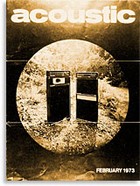
    Early Acoustic amplifiers

    I’m not really an amp guy, but I have two early Acoustic catalogs, from early ’73 and ’74. We might as well document the amps therein, since you’re going to find them and few are out there talking about these solidstate babies while the tube-hegemony reigns.

    Among the innovations Acoustic claimed for itself was first use of front-loaded speakers and snap-off grills, making speaker changing easier. Other technical features included dual sensitivity inputs for each channel, the left being more sensitive (e.g., for the lead guitar), the right slightly less (e.g., for the rhythm guitar or for very high-output pickups). 130 and 150 Series amps featured something called “interlocking protection circuits” that let you daisy chain the channels with a guitar cable to get an overdrive effect at moderate volume levels.

    Acoustic also touted its tremolo circuit as being the only “true” one available, with a potential for 90 percent volume cut. Remember, tremolo is variation in volume, vibrato is variation in pitch frequency (guitars have vibratos, not tremolos). Acoustic’s 450 and 470 Series amps had symmetrical distortion circuits that eliminated hum and non-harmonic content, and both had a switch allowing you to play either lead or bass guitar through them. These also featured channel switching so you could have two different tonal settings. Some Acoustic amps also had a booster output, allowing you to power slave amplifiers after the power output circuit. Some Acoustics also featured graphic equalizers.

    Early Acoustic amps featured charcoal grey tolex on the cabinets with black grilles usually surrounded by white piping. Control panels would either be aluminum or more likely black, usually with the logo and model number in a strip running along the bottom of the panel.

    Here are the amps listed in the early ’73 and ’74 catalogs. Availability dates are from another source and should be taken with a large grain of salt, since I can’t confirm their accuracy. Don’t ask me why the 146 is included in the 150 Series!

    130 Series
    1971-’76 Model 134 Guitar Amp (combo, 125 watts RMS, 2 ch, hi/lo inputs, bright sw, vol/treb/bs, rev, trem, 4×10″ open back, wheels, cover). 1971-’76 Model 135 Guitar Amp (combo, 125 watts RMS, 2 ch, hi/lo inputs, bright sw, vol/treb/bs, rev, trem, 2×12″ open back, wheels, cover). 1972-’77 Model 136 Bass Amp (combo, 125 watts RMS, 2 ch, hi/lo inputs, bright sw, vol/treb/bs, 1×15″ horn loaded/ducted port, wheels, cover).

    150 Series
    1970-’76 Model 154 Guitar Amp (piggyback, 125 watts RMS, 2 ch, hi/lo inputs, bright sw, vol/treb/bs, rev, trem, 6×10″ sealed, wheels, cover). 1970-’76 Model 155 Guitar Amp (piggyback, 125 watts RMS, 2 ch, hi/lo inputs, bright sw, vol/treb/bs, rev, trem, 4×12″ sealed, wheels, cover). 1972-’76 Model 146 Bass Amp (piggyback, 125 watts RMS, 2 ch, hi/lo inputs, bright sw, vol/treb/bs, 2×15″ tuned bass reflex, wheels, cover).

    270 Series
    1971-’76 Model 271 Guitar Amp (piggyback, 275 watts RMS, hi/lo inputs, bright sw, vol/mid/treb/bs, dist, rev, trem, 5-band EQ, footsw, 2×15″ Altec 418 sealed, horn, wheels).
    1974-’76 Model 274 Guitar Amp (piggyback, 275 watts RMS, hi/lo inputs, bright sw, vol/mid/treb/bs, dist, rev, trem, 5-band EQ, footsw, 2-4×12″ sealed, wheels).

    450 Series
    1974-’76 Model 454 Guitar Amp (piggyback, 170 watts RMS, hi/lo inputs, bright sw, vol/mid/treb/bs, accessory vol, symm dist, 5-band EQ, lead/bass sw, direct out, accessory in/out jack, footsw, 6×12″ sealed, wheels). 1974-’76 Model 455 Guitar Amp (piggyback, 170 watts RMS, hi/lo inputs, bright sw, vol/mid/treb/bs, accessory vol, symm dist, 5-band EQ, lead/bass sw, direct out, accessory in/out jack, footsw, 4×12″ sealed, 2 horns, wheels).
    1974-’76 Model 456 Bass Amp (piggyback, 170 watts RMS, hi/lo inputs, bright sw, vol/mid/treb/bs, accessory vol, symm dist, 5-band EQ, lead/bass sw, direct out, accessory in/out jack, footsw, 2×15″ tuned port, wheels).
    1972-’76 Model 300 Power Amp (slave head, 275 watts RMS, 2 or 4 ohms, 0.4 percent THD, booster output, vol, 2 speaker outputs).
    1972-’77 Model 371 Bass Amp (piggyback, 275 watts RMS, hi/lo inputs, bright sw, vol/mid/treb/bs, 5-band EQ, 1×18″ Vega in folded horn encl, wheels). 1974-? Model 400 Power Amp (stereo PA reinforcement, 375 watts RMS @ 2 ohms, 200 watts RMS @ 4 ohms, 0.25 percent THD, power sw).

    470 Series
    1974-’77 Model 474 Guitar Amp (piggyback, 170 watts RMS, hi/lo inputs, bright sw, vol/mid/treb/bs, accessory vol, symm dist, rev, trem, 5-band EQ, lead/bass sw, direct out, accessory in/out jack, footsw, 6×12″ sealed, wheels).
    1974-’76 Model 475 Guitar Amp (piggyback, 170 watts RMS, hi/lo inputs, bright sw, vol/mid/treb/bs, accessory vol, symm dist, rev, trem, 5-band EQ, lead/bass sw, direct out, accessory in/out jack, footsw, 4×12″ sealed, 2 horns, wheels)
    1974-’76 Model 476 Bass Amp (piggyback, 170 watts RMS, hi/lo inputs, bright sw, vol/mid/treb/bs, accessory vol, symm dist, 5-band EQ, lead/bass sw, direct out, accessory in/out jack, footsw, 2×25″ tuned port, wheels).
    1972-’76 Model 806 Monitor System (75 watts RMS, 8 ohms, 1×12″). 1974-? Model 808 P.A. Speaker System (175/350 watts RMS, 4 ohms, 2×15″, 3xHepner-Vega horns, 2-way horn loaded cab).

    850 Series
    1972-’76 Model 850 Series P.A. (head, 8 ch., 275 watts RMS, ch in/out sw, input to master jack, accessory in/out jack, booster output, 0.4 percent THD, rev, VU meter, master vol, rev, bright sw).
    1972-’76 Model 801 Speaker Column (x2) (six 6″x9″ horns).
    1972-’73 Model 803 Speaker Column (x2) (100 watts, 4 ohms, six 6″x9″ horns)
    1974-? Model 804 Speaker Column (x2) (2×15″, 3×10″, horn).

    870 Series
    1974-? Model 870 Series PA (head, six ch. expandable, 170 watts RMS, ch in/out sw, accessory in/out jack, recording in/out jack, booster output, 0.4 percent THD, rev, hi/lo Z, 5-band EQ).
    1974-? Model 801 Speaker Column (x2) (6×10″).
    1974-? Model 804 Speaker Column (x2) (2×15″, 3×10″, horn).

    MF VIII Public Address System
    1972-’73 Model 880 Mixer (8 ch).
    1972-’76 11x Model 300 Power Amps.
    1972-’76 16x Model 801 Speaker Columns.
    1972-’73 4x Model 802 Sectorial Horns (two horns).
    1972-’76 4x Model 806 Monitor Speaker Systems.

    MF IV Public Address System
    1972-’73 Model 880 Mixer (8 ch).
    1972-’76 6x Model 300 Power Amps.
    1972-’76 8x Model 801 Speaker Columns.
    1972-’73 2x Model 802 Sectorial Horns (2 horns).
    1972-’76 4x Model 806 Monitor Speaker Systems.

    MF VI Public Address System
    1972-’73 Model 880 Mixer (8 ch).
    1972-’76 8x Model 300 Power Amps.
    1972-’76 12x Model 801 Speaker Columns.
    1972-’73 2x Model 802 Sectorial Horns (2 horns).
    1972-’76 4x Model 806 Monitor Speaker Systems.
    1974-? Model 890 Mixing Console (16 ch).
    1972-’73 Model 910 Studio Amplifier (combo, hi/lo inputs, vol/treb/mid/bs, bright sw, rev, trem, dist, sustain, five-band EQ, separate vol w/footsw, 1×12″).
    Acoustic made a ton of other amps following these early models, including some tube models in later years. We’ll leave that discussion for later.


    This article originally appeared in VG‘s July and ’98 issue. All copyrights are by the author and Vintage Guitar magazine. Unauthorized replication or use is strictly prohibited.
  • Lace California Twister

    Just This Side of Twisted

    When most people go shopping for a new guitar, they look for one with a nice, straight neck. But maybe we’ve been doing it all wrong…

    The California-based Lace company (of Lace Sensor fame) recently introduced three guitar models that sport what it calls a “dual patented headstock system,” which, in non-technical terms, is designed to give the player the speed and feel of lighter-gauge strings, even when strumming heavier sets. This equates to less wear and tear on the wrist, shoulders, and arms, and in theory, beginning players will find it easier to develop technique and speed.

    Technically speaking, the guitar’s maple neck and fretboard are cut with a 10.8-degree spiral profile from the nut though the heel. Lace’s dual-action single truss rod helps keep the fretboard flat in relation to the body of the guitar, and a four-degree tilt on the headstock maintains string tension without the use of a string tree.

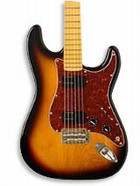
    Our California Twister tester model sported a classic body style with a light, double-cutaway, two-piece basswood body topped with a three-tone “Vintage Burst” poly finish (it’s also available in cream and black).

    Hardware and electronics include Gotoh tuners, billet aluminum neckplate/truss rod cover, two-point Fender-style tremolo, tortoise pickguard with black plastic parts, a master volume, two tone controls, and Lace Sensor Holy Grail pickups.

    Grab Hold
    At first try, the Twister might not feel all that different. But if you simultaneously grab a traditional-style guitar (like our ’57 reissue Fender Strat), you’ll immediately notice that you don’t have to reach as far to hit notes in the first six frets or so.

    We played the Twister both sitting and standing, with the same results – a more comfortable feel, with less fatigue. The C-shaped neck profile and large frets, along with good action and setup make it easy to bend, with no choking out. The neck’s “twist” means the action is a little higher than normal for a (modified) 12″ radius fingerboard, but it has little or no effect on playability.

    Twister Tones
    We checked the tone of our Twister by plugging it into a ’70s Fender Twin Reverb and a Marshall JCM 900 half-stack. The guitar’s Holy Grail Plus pickups, which use Alnico 5 magnets along with Lace Sensor technology, offer tonal characteristics similar to those in a ’54 Strat, though through the Twin they’re a bit a darker, with less of the sparkle Strat purists like to hear. Still, the guitar maintained the clean, punchy mids and snappy high-end Stratheads love.

    Also very notable is the well-balanced sound and good note separation in all five pickup selector positions. Through the Marshall, the three pickups offered more humbucker-like sound, especially at the neck.

    With the JCM 900 turned up, the guitar had plenty of gain with nice, even mids and tight low end – and no noise! In the bridge, middle, and the out-of-phase positions, the sound was more reminiscent of a single-coil, but still had the round humbucker mids.

    If you’re looking for a guitar that tests the norm by taking a different, uh… angle, check out what the Lace company is doing. We found the California Twister to be a very likeable instrument because of its innovative neck design, comfortable feel, balanced tone, and realistic price.


    Lace California Twister
    Type of Guitar: Solidbody electric.
    Features: Innovative multi-radius rock maple neck with medium frets, two-piece alder body Lace Sensor Holy Grail Plus pickups, tortise pickguard, billet aluminum neckplate and truss rod cover, high quality construc-tion, polyurethane finish.
    Price: $1,149.
    Contact: Lace Music Products, 5561 Engineer Drive, Huntington Beach, CA 92649, phone (714) 898-2776, www.agi-lace. com.


    This article originally appeared in VG‘s Nov. ’02 issue. All copyrights are by the author and Vintage Guitar magazine. Unauthorized replication or use is strictly prohibited.
  • Kat Dyson

    A Reason to Celebrate

    “Patience, perseverance, and purpose. If you’ve got those three things in anything you choose – whether it’s music or anything – it’s gonna take an act of God to stop you!”

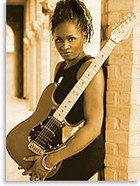
    Strong words from a strong lady – guitarist/vocalist, composer, and artist Kat Dyson, whose ambition and talent have made her a musical force. Her style crosses much musical ground; from knockout solos to tasty slide work and intricate chordal colors – all conveyed with unabashed authority. Combined with a voice that ranges from angelic whispers to roof-shaking glory, Dyson demonstrates the manifestation of love, music, and experience.

    Her resume is indeed impressive. She has toured the world as guitarist and vocalist with Collin James, where she played alongside Mavis Staples, Jimmie Vaughan, and B.B. King. She has done studio work for Dave Stewart (Eurythmics), Jeff Healey, Paul Shaffer, producers Sly and Robbie, and Bernie Worrell (Parliment Funkadelic), and played on albums and tours with Cyndi Lauper.

    In the mid ’90s, Dyson landed the coveted spot playing alongside one of the world’s most popular musicians, Prince. As a member of the New Power Generation (NPG), she was a featured guitarist and vocalist on several Prince albums, then did the Emancipation and Jam of the Year world tours with NPG.

    When not on the road, she has stayed busy performing on Magic Johnson’s “The Magic Hour,” with Sheila E., and on the “Donny and Marie Show.”

    Her first big break came as a result of a collaboration with singer Geraldine Hunt on the number one hit, “Can’t Fake The Feeling.” And she now leads her own group, Colour Kommentary, over the ever-changing musical tides, with a sound that embodies everything from cool jazz nuances to high-energy rock to downright nasty blues and funk.

    One of seven children, music captured her heart early on. She sang in the school choir before one day asking her mother for a guitar. Shortly thereafter, her mother passed away.

    “A lot of guys play guitar to get girls,” she said. “I play because she believed I could.”

    Vintage Guitar: Who was your first musical influence?
    Kat Dyson: My parents; mother was first. She gave me Mahilia Jackson, Leontyne Price, Marian Anderson, and Odetta records to listen to, plus all the great jazz singers from her era, like Dinah Washington and Ella Fitzgerald. Besides putting me in the school choir, she had me take piano lessons, and she bought my first guitar.

    My father’s an audiophile, not a musician. I used to be able to sing every line off the album Sketches Of Spain, by Miles Davis. That was my dad’s “It’s Friday, don’t talk to me!” record. The music relaxed him, and he’d send us out to play while he listened. How perfect was that?

    And even though my brothers, sisters, and I listened to pop music on the radio, when he got home, that would stop. He made us listen to jazz, which of course intimidates and exasperates, because as a kid you really don’t understand it.

    So I’m there with my little guitar books, tryin’ to learn, and he’s like, “Listen to the guitar player!” He’d put on Wes Montgomery. I’d say, “Dad, that’s cheating, that’s two guys!” We’d argue… I didn’t know, I was a kid. He’d say, “That’s one man – Wes Montgomery. Know who he is!”

    Great advice! Who else would you listen to, and what were some of your earliest live playing situations?
    I would sit in front of the radio with my guitar, trying to absorb everything I could because the boys in the neighborhood were doing it, and I wanted to do it, too. Besides listening to my parent’s records, I also listened to a lot of Hendrix, the Stones, rock radio, and James Brown, of course. I started playing at school dances, those little junior high talent shows, and all that kind of stuff.

    Do you remember your first pro gig?
    After I left school, I started playing the chitlin circuit. I was making money, supporting myself, and paying my rent. I played and sang background; I wasn’t really leading the bands. That didn’t happen until I moved to Montreal. I went there to do an “originals” band called Tchukon. It was the first band I ever sang lead in. We actually won on “Star Search,” but that’s a whole other thing.

    How did your father feel about your decision to play professionally?
    Now, any self-respecting father doesn’t want his teenage daughter out playing guitar in clubs with guys. But of course, I did it to spite him!

    He’s proud of me now, but he was mad at me then.

    Your song “Can’t Fake The Feeling,” sung by Geraldine Hunt, became a big disco hit in the ’80s. How did that come about?
    We were around Montreal when we met. Geraldine was this blues singer from Chicago who sat in with us. I had written a song; actually the first one I had written for someone to cover. She told me she was gonna do a record – a disco record. I was barely 20 at the time. She said she wanted to do a dance record and I’m like, “Okay, cool!” She said she needed a song, and I told her I had one. She heard it and liked it. She changed a few words in the verse to make it more her. They put it on the record and it was number one for like 16 weeks.

    How did things change for you following the success of that record?
    I started writing and doing a lot of production stuff from there, and kinda kept going with it. I played wherever I could, and jammed with whomever. Montreal is a great place to play.

    How does the musical environment in Montreal differ from the U.S.?
    The French don’t pigeonhole you so much. If you do whatever you do with passion, they’ll listen. Even if you change it to country the next week or fusion the week after that, if you mean what you said, they’ll go with you.

    Tell us about your group Colour Kommentary.
    I started the band in 1992. Basically, it’s a collaboration of musicians I’ve played and toured with and have formed friendships with. It really depends on where I am and who’s free, although my “sister in song,” bassist Rhonda Smith, has always been an integral part of the band. We do originals and covers, and have fun away from the norm. The group usually is made up of guitars, bass, drums, keyboards, and sax – all musicians wgo can play their tails off and are looking to have some fun.

    As you were rising through the ranks, did you experience anything that might have discouraged you?
    Yeah, I’ve gone through everything. I’d be playing at clubs where guys would pull up chairs and put their ears next to my amp, making sure I wasn’t faking.

    How did you and Sheila E. get together?
    I was with Godin, a great guitar company from Canada, when I met Sheila in Germany at a music trade show. We started communicating – sending each other tapes to do some writing together. Unbeknownst to me, she sent one of my tapes along to Prince, then called me. She said, “He’s putting a band together, so I sent your tape to him.” I said, “Sheila, what did you do?”

    How would describe that experience?
    Excellent. It was a good exercise in taking everything to the max; taking what it is you do, and just doing it until there’s no other place you can go.

    Exhaust all possibilities…
    Yeah. Everything is geared around maximizing the music, maximizing the time, maximizing the rehearsal process. It’s a perfect setup. If you have an ounce of genius in you, it will be uncovered. It was wild, and he is more critical of himself than he is of anybody. Therefore, live up or shut up.

    Being a true disciple of music, how would you define your role?
    Music is king. No matter who that music might have gone through. If that person is an egomaniac, that’s their problem, but the music came through them.

    So if the music demands that I play one note every eight bars, I’m gonna own that note, ’cuz that’s the note the music needs. It’s not about playing a solo; it’s about what the music needs, so it can get to the listener the way it flowed through the original writer.

    That’s the thing I adapt. Peoples’ egos and their personal problems matter only a little, because the music is king. I know it sounds simplistic and philosophical – and I’m not gonna say it hasn’t been without pitfalls – but whenever I go back to that place, it makes everything clear.

    Are there any particular guitars and equipment that help you express yourself?
    I’ve bought a lot of my gear over time. I own a Fender Stratocaster and Telecaster, and many Godin guitars – they’re one of my main sponsors.

    As far as my “vintage” choices, I have a few. A new acquisition is a ’61 Gibson ED-125 that I love. It’s warm and full-bodied, challenging and responsive. For rockabilly and such, I have a ’67 Gretsch Monkees, complete with whammy bar! For slide blues and roots music, I have a National Resolectric. It’s like a dobro with a standard pickup that you can blend in.

    On the newer side of vintage, I have a PRS McCarty hollowbody and a Godin Radiator. These each have very distinct and warm vintage tones.

    For amps, I have Koch and Peavey for tube situations like club dates and blues sessions. I use a Rocktron on the TV shows and concert/studio situations.

    And I’m a wah wah girl. I have a Morley Bad Horsey that Steve Vai gave to me. I’m ashamed of how many wah pedals I’ve got!

    At present, who are a few of your favorite guitarists?
    Oooh, this sounds like a trouble question… Jeff Lee Johnson, John Scofield, Jimi Hendrix, and my friend Carl Burnett for starters. There are many more.

    What’s on your itinerary in the near future?
    At this moment, I’m with Donny Osmond on his This Is The Moment world tour! There are plans to take it abroad in the fall.

    I’ve also been working on the upcoming Ziggy Marley album with [the Red Hot Chili Peppers’] Flea on bass and the legendary Steve Jordan on drums. What a blast those sessions were!

    And I’ll be touring this year with Sheila E. and the E Train – we performed on the Smooth Jazz Awards show, which will be televised May 26.

    Then I’ll be performing with my good friend, Ivan Neville, in support of his album, Saturday Morning Music.

    And I’m playing with Patrice Rushen, Paul Jackson, Jr., and Mike Phillips, in a project called Unwrapped,Vol.1, on the Hidden Beach label. It has been on the Billboard top 10 jazz charts for months, and we’re preparing to do a promotional tour.

    I’m also writing new material for a personal project, and doing music for a film, and a documentary series for HBO.

    Where would you like to find Kat Dyson in the next few years?
    Hopefully, having my own say. Put out one or two records of my own, continue to collaborate with people I creatively “love,” and hopefully give back some of the things that I’ve been able to learn, in a way to inspire. Not to say, “See, that was hard,” but rather, “See, you can get past that if you listen, practice, and try everything.”

    The entertainment business is about inventing and reinventing. You’ve gotta look for something new, but you gotta find your voice first. Seek your own creative voice, because that’s your musical blueprint.

    How long would you like to continue playing and producing?
    That’s something that I can do until I’m 92 – to give something back. You will always have people that seem to be drawn to, “Life is hard, it’s so hard.” Of course, this is a learning planet. There’s no reward unless you know how tough it was. There’s no reason to celebrate unless you overcome something. Patience, perseverance, and purpose; that’s the key to anything, not just music.

    If you allowed yourself a hiatus, what would you do?
    If I could take six months, I’d explore alternate tunings, travel, and study with string masters from different countries. And practice, practice, practice. Playing music for a living is fine, but I’d just take my time to explore my horizons. You need that to refresh who and what you are.

    Any advice you’d like to share with the upcoming players out there?
    Listen to everything! Music is like food, absorb as much as you can and find out what you like. But you won’t know until you taste it all, until you try a bit of everything!


    Photo: Steven Parke, courtesy of Kat Dyson.

    This article originally appeared in VG‘s July ’02 issue. All copyrights are by the author and Vintage Guitar magazine. Unauthorized replication or use is strictly prohibited.
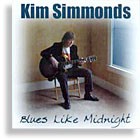
  • Kim Simmonds – Blues Like Midnight

    Blues Like Midnight

    While the press release promotes this CD as a departure for Kim Simmonds, to this writer it would seem one more facet of this veteran guitarist’s musical personality. On Blues Like Midnight, Simmonds explores the acoustic side of the hue, drawing on influences from Gary Davis to JJ Cale.

    For the most part unaccompanied, using backing instrumentation sparingly at most, this blues legend is still taking musical risks after 35-plus years in the biz. It’s always a challenge to attempt advancing the genre artistically yet keeping the parameters of tradition in tact.

    The musical risk in this instance (if it is one for a player of this caliber) would be stepping out in front of the band with just an acoustic guitar and the one instrument we all possess; Simmond’s voice maintains just enough emotional edge to be convincing without sounding contrived or constrained. His open tuning and slide work is impeccable.

    Had Simmons not started his career with Lonesome Dave and the rest of the Blue Matter cast, he would by this time no doubt be held in the same light as Kelly Jo Phelps and perhaps a subdued Leo Kottke.

    Accoustic blues in the timeless tradition, by an endearing and ageless interpreter. Available from bluewave@localnet.com.


    This article originally appeared in VG‘s Aug. ’01 issue. All copyrights are by the author and Vintage Guitar magazine. Unauthorized replication or use is strictly prohibited.
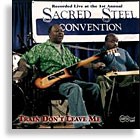
  • Sacred Steel Convention – Train Don’t Leave Me

    Train Don't Leave Me

    When Arhoolie Records’ Chris Strachwitz stumbled onto Mance Lipscomb, the amazing 65-year-old Texas bluesman and songster who had never recorded, in 1960, it was a bit like an anthropologist coming across a saber-toothed tiger or a woolly mammoth. We knew they existed once, but no one had seen one in a while.

    But when the steel guitarists who play at the Keith and Jewel Dominion Holiness Pentecostal churches came to Strachwitz’s attention in the late ’90s, it was akin to discovering an entire new species. And there were literally dozens of these musicians, each amazing, each different from the next. In American folk music, those kinds of finds just don’t happen anymore.

    In a short time, Arhoolie has released several CDs and a video spotlighting the music, and this, the label’s sixth such release, was recorded live at the first-ever Sacred Steel Convention, held last spring.

    “Praise Him with stringed instruments,” sayeth Psalm 150:4 – like a Melobar Power Slide, in the case of Calvin Cooke. Aided by his wife, Grace, Cooke gives a better treatise on the development of sacred steel than any musicologist ever could, on “Have You Tried Jesus.” The track begins with just a bass drum, because, as Calvin explains, that’s all they had in the old days. Then Mrs. Cooke’s booming voice enters. Pretty soon, Mr. Cooke continues, they add a rhythm guitar and a whole drum kit, and things were really rocking. After the addition of an electric bass and a tambourine, Calvin points out that “normally they had an organ, had a piano…but in our church we had a steel guitar” – at which point his Melobar slices into the proceedings, ratcheting the already-rising energy level up several notches.

    The spirited set features 11 steel players (including two in tandem), some utilizing pedals, some preferring lapsteels. Elder statesman Aubrey Ghent, who has already released a solo Arhoolie CD, cooks on the title tune, and 21-year-old Bryan “Josh” Taylor backs his father’s vocal on the hand-clapping “God Is a Good One,” with a distorted, glassy tone reminiscent of David Lindley or Sonny Landreth.

    The program ranges from the primitive stomp-and-holler of “What’s His Name? – Jesus!” (highlighting some high-speed right-hand picking courtesy Chuck Campbell) to a funky reworking of the “Come Together” bass line on “See What the End Gonna Be” (with Lonnie “Big Ben” Bennett’s pedal steel, which also shines on an instrumental “Will the Circle Be Unbroken”).

    Normally providing background to sermons, the concert setting gives the players a chance to put their slide work center stage, and each rises to the occasion, and then some. Gospel music is always best enjoyed live, but sadly most attempts at capturing that fervor on record fall a bit short. All the more kudos to Strachwitz (as executive producer) and producer Robert L. Stone for succeeding in capturing this lively music and putting the listener right in the front pew.


    This article originally appeared in VG‘s July ’01 issue. All copyrights are by the author and Vintage Guitar magazine. Unauthorized replication or use is strictly prohibited.
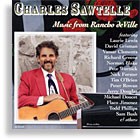
  • Charles Sawtelle – Music from Rancho DeVille

    Music from Rancho DeVille

    Music from Rancho DeVille is a loveletter from across the grave. Charles Sawtelle passed away Mach 21, 1999, of complications from leukemia. The last several years of his life were spent recuperating from chemotherapy treatments and making recordings in his home studio, a small stone outbuilding called Rancho DeVille. He entrusted Laurie Lewis with the daunting task of collecting all his masters and forming them into an album.
    She has produced a CD worthy of his memory.

    Sawtelle was the kind of guy who did so many things well that his business card, which read “Expert,” wasn’t hyperbole. This CD reveals the breadth of his talents. Cajun tunes like “The Newz Reel” with Micheal Doucet of Beausoleais, old-time country “The Storms Are on The Ocean” by A.P. Carter with Norman Blake on vocals, a Norteno version of Woody Guthrie’s “The Ranger’s Command” where he’s joined by Flaco Jimenez, and Lefty Frizell’s “Mom and Dad’s Waltz” with an unlikely, but perfect vocal, by Vassar Clements are just a few of the musical treats on Music From Rancho DeVille. Charles’ solos often forayed into uncharted musical territory, and this CD has a couple that rival his best. “Let’s Go Home” gives you a taste of his unique instrumental voice.

    The biggest musical surprises here are Sawtelle’s original compositions. Four instrumentals with the likes of David Grisman and Sam Bush on mandolins, Vasser Clements playing fiddle, Jerry Douglas on resophonic guitar, Todd Phillips on string bass, and of course Charles on his herringbone Martin D-28, are simply stunning in their rare beauty. Remarkable because they are unpredictable, yet classic.

    Charles was a serious audiophile, and his studio was stocked with great old microphones to couple with his superlative Grace eight-channel microphone preamp. If you want to hear what a vintage pre-war Martin herringbone or a Lloyd Loar F-5 mandolin really sounds like in the hands of a master, you have to have this CD. Acoustic Disc includes its usual special touches that makes their packaging special. Many of Sawtelle’s close associates, as well as musicians on the album, give insight into why Charles was special.

    It’s only mid-February, but I have no doubt that this will be one of the best releases of 2001. As Charles would say, “You need this CD.”


    This article originally appeared in VG‘s May ’01 issue. All copyrights are by the author and Vintage Guitar magazine. Unauthorized replication or use is strictly prohibited.
  • Hagstrom Guitars

    The Fastest Necks

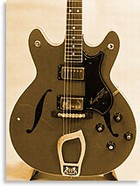
    Ca. ’73 Hagstrom Viking I N also known in the U.S. as the Scandia.

    Part 2
    This month we continue the Hagstrom saga. To recap: the Hagstrom company was founded
    by Albin H

  • Fulltone Clyde Wah

    Vintage Tone For Modern Players

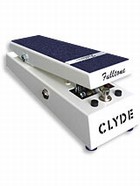
    The original Vox Clyde McCoy wah pedals of the late 1960s are high on the list of soughtafter vintage effects. They were widely used during live performances and on legendary recordings by players such as Jimi Hendrix, Eric Clapton, Jimmy Page, and Jeff Beck. Because of both the historic value and the distinct sound they produce, original McCoys command big bucks. And vintage purists know you’ve got to have the real thing if you want the real tone.

    But wait. With the increasing prevalence of faithful reproductions and reissues, does that still hold true? One of the potential disspellers of that myth is Fulltone’s Clyde wah pedal, an unofficial reissue of the Clyde McCoy.

    Built by Mike Fuller, the Fulltone Clyde is available in Powder-coated White, Hammertone Black, and Hammertone Gray colors. The pedal itself is solidly constructed and includes a rubber slip-proof surface on top of the treadle. The treadle rocks back and forth smoothly with a small amount of resistance that allows for better control of the effect. The tension of the treadle can be adjusted for lighter or heavier resistance by tightening or loosening the proprietary “nylock” nut on the side, placed at the pivot point. The Clyde will stay set in whatever position selected, and doesn’t automatically depress all the way when your foot is removed, which isn’t always possible on many wah pedals that are well-worn. The Clyde also includes four large rubber feet on the bottom of the pedal, which prevent it from slipping. The insides are accessed by removing the feet, which is done easily and without a screwdriver.

    Inside, Fulltone’s handwired circuit incorporates a design similar to that of the original and uses comparable components, such as carbon composition resistors, Polypropylene WIMA .01 capacitors, and a tuned-core handwired inductor made from the same type of wire (with the same inductance) as the original. The Clyde also includes Fulltone’s “Fullrange” pot, a copy of the ’60s Icar pot used on the originals. The Fullrange pot is rated at 150,000 turns per lifespan, instead of the industry standard 15,000, and it provides a much wider sweep. The Clyde also includes a trim-pot that functions as a resonance control to add more gain and expand the effect’s frequency response for more lower-mids and bass. Set it at 6 o’clock, you’ll hear the standard ’60s Vox wah setting. The pedal’s on/off switch is easy to engage and doesn’t cause any sort of loud pop through the amp when you step on it. And the Clyde causes no volume loss.

    And the sound?

    Since the Clyde was created as an upgraded reissue, we ran it up against the original, which was made in Italy, and to a recent Dunlop Crybaby. We recruited a ca. ’67 Vox Clyde McCoy “picture” wah (Clyde’s picture’s on the bottom), and a ’68 Vox Clyde McCoy “signature” wah (no picture, Clyde’s name in italics). We listened carefully to each, then compared their tonal responses and functional capabilities, listening for the differences in the tones produced by each pedal’s filter, and to relate the signal and noise levels each pedal created.

    With many vintage effects, there’s often a certain amount of variation between pedals. That’s to be expected, even among the exact same models built in the same production run. In the ’60s and early ’70s, components weren’t always built within tight tolerances, and manufacturers often used whatever components were available at the time, so slight variations in construction were not uncommon. As anyone who has tinkered with any number of vintage wahs knows, all wahs were not created equal.

    Our tests revealed many things, including that the sweep range of the Fulltone was a bit wider than that of the vintage pedals, with noticeably more bottom and top-end. The taper of the pot on the Fulltone pedal was super-smooth, and we were able to hear minute changes as the treadle was moving in each direction. Very cool!

    Along with all the vintage mystique of the older pedals, there were some quirks with each of the original Vox wahs (as might be expected with any vintage effects that have seen 30 years of use). We do have to take into consideration that these pedals were the best of what was available at the time, and possibly the best examples of well-working originals. However, for today’s players, who need signal processing to be extremely quiet and highly reliable, some of those quirks are simply unacceptable in modern times.

    Here are some of the things we noticed; when using the “signature” Clyde, we heard some clunking sounds through the amp as the treadle hit the base in its full up or down positions. And the “picture” Clyde produced some scratchy sounds heard as the pot was turned to the mid point. On both original Clydes, the switches were fairly noisy and produced distinct pops. Furthermore, both originals showed slight volume loss when the effect was engaged. The Fulltone’s switch was quieter than both, and there was no volume loss at all when the effect was on.

    In summary, of all the wah pedals available in our selection, the Fulltone demonstrated the widest tonal range, the best tapered pot, smoothest treadle action, and offered the most control of the effect. In addition, the Clyde operates on a single 9-volt battery and can also be used with an optional AC adapter.

    So, our assessment revealed that the Fulltone Clyde carried the classic design to the next generation by preserving that alluring ’60s tone and adding the flexibility preferred by modern players. If you’re in the market for a wah pedal, be sure to check out the Clyde.


    Fulltone Clyde Wah
    Type of Unit: Wah pedal
    Features: Extended travel range, custom Fullrange pot, resonance control, tuned-core inductor, true bypass switch, adjustable treadle, operates on 9-volt battery or AC power (AC adapter is optional), limited lifetime warranty
    Price: $279
    Contact: Fulltone Custom Effects, 3815 Beethoven Street, Los Angeles, CA 90066, (310) 397-3456, e-mail,fulltone@aol.com, www.fulltone.com


    This article originally appeared in VG‘s April ’01 issue. All copyrights are by the author and Vintage Guitar magazine. Unauthorized replication or use is strictly prohibited.
  • Eliza Gilkyson – Lost and Found

    Lost and Found

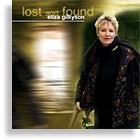
    Some great talents manage to operate for years just below the radar of the star-making machinery of the popular song. Eliza Gilkyson is a case in point. Lost and Found is her second album on Red House Records, and her seventh album since ’87. Originally from Los Angeles, and daughter of songwriter Terry Gilkyson, Eliza has spent much of her adult life in New Mexico. The songs here show the influence of long, dark desert nights and hot, bright southwestern days. The lead song, “Welcome Back,” begins a theme of reemergence and growth and that threads throughout the album. If you need a thinking person’s mood booster, this CD will fill the bill nicely.

    You’ll find catchy songs with intelligent lyrics, and some fine pickin’. Aided by Andrew Hardin, Tony Gilkyson, and Rich Brotherton on guitars, Glen Fukunga on bass, Jeff Plnkenhorn and Gurf Molix on slide guitars, Lloyd Maines on lapsteel, Micheal Ramos on organ, Wally Doggett on drums, and Patty Griffin, Mark Hallman, and Slaid Cleaves on background vocals, Gilkyson includes some fine instrumental solos in her spare arrangements.

    But the principal solo instrument on Lost and Found is Gilkyson’s voice. Both breathy and powerful, Gilkyson’s vocal machinery can take you anywhere she wants you to go. From the unfettered joy of “Mamas’s Got A Boyfriend” to the moody “Easy Rider,” the emotional intimacy of Gilkyson’s voice delivers her songs directly to your heart.

    Engineer and co-producer Mark Hallman obviously knows how to get a rich, warm, and intimate sound out of Congress House Studios. Even on the densest mixes, Lost and Found has a clear but texturally complex timbre. In short, it sounds super.

    Even though Eliza Gilkyson has spent most of her musical career skirting the hurley-burley of the pop showbiz buzzmeisters, this album should bring her to the attention of the people who matter – you and me.


    This article originally appeared in VG‘s July ’02 issue. All copyrights are by the author and Vintage Guitar magazine. Unauthorized replication or use is strictly prohibited.