
Month: March 2003

  • Oliver Sound, Inc.

    Introduction
    If you’ve read Gregg Hopkins and Bill Moore’s new book, Ampeg: The Story Behind The Sound, you know that Jess Oliver played a major role in the success of Ampeg. Oliver Sound Company, Inc. is to Ampeg what MusicMan and Randall are to Fender, and since space for non-Ampeg items was justifiably restrained in Hopkins and Moore’s book, it seems timely for anyone whose interest has been recently piqued to look at the Oliver line in detail here (last month I wrote, “As direct descendents of classic Ampeg and some of the coolest amps of all time, the Oliver line perhaps deserved more space;” this may be true, but since I didn’t even mention the Musicman and Randall amps in Fender Amps, I guess I should retract). So here is about as much as you’ll ever need to know about Oliver amps, short of reprinting catalogs and schematics, with technical support from the man himself.

    Company History
    Shortly after the 1966 NAMM show, Oliver left the Ampeg company and started one of his own, teaming up with Harry Bloom, whose name appears under his on the Baby Bass patent (along with Ampeg founder Everett Hull).

    Bloom had a machine shop with serious tools (including a Bridgeport milling machine) that were essential in the design of the pickup, and when Hull wanted his name included on the patent, Oliver added Bloom’s (the men had been introduced by composer Raymond Scott regarding the sale of a high-end Conn Strobe unit and the story goes that Bloom originally purchased the tuner to help develop an inexpensive toy xylophone, but when he discovered he had to pay an excise tax if the thing played in tune – as in no longer a toy, but a musical instrument – he lost interest in the project).

    Oliver left Ampeg in September of ’66 and by the end of the year, was able to entice Bloom into converting his shop in Brooklyn into a musical instrument amplifier factory, offering him half of the new company. Both invested $5,000 to get started and it wasn’t long before a line of “Patented” amps was coming out of the small building at 49-01 Farragut Road (the patent was actually not granted until May 26, 1970, but was applied for February 28, 1967). Showing up at the NAMM show in the Summer of ’67 with a line designed by Oliver, Gene Andre, and Alex Gonzalez, that went beyond Ampeg’s best models, the new company generated a great deal of interest and proved Oliver was still a major force in the business.

    In truth, his early line was built around one basic amp, but the Powerflex’s Jetsons-like approach to the Porta-Flex (patented in the name of Oliver Jespersen, but held by Hull) offered store owners a modern alternative to the popular Ampegs, with internally connected speaker cables, retractable AC cords, and an improved dolly. The light-up panel was another impressive step ahead of the competition.

    Expanding into public address equipment, the company began building an outrageous speaker designed to perch atop telescoping stands, filling the air above the crowd with sound instead of trying to blast through clothed humans, one of the best sound absorbers known. These “Sound Projector” cabinets had a great reputation in the hi-fi world (having been designed and patented by NASA consultant John Karlson) and dispersed a wide pattern horizontally, with a tight vertical spread, making efficient use of power. Oliver was way ahead of its time with this ingenious (but potentially tipsy) rig.

    Before the end of the decade, Bloom amicably reclaimed his machine shop and Oliver moved across the bay to Linden, New Jersey, as sole proprietor. Work on guitars and basses with Mike Roman (of Ampeg Horizontal bass fame) did not lead to production, but an electric pickup for the vibraphone turned into a fourth patent for Oliver Jespersen, and the unit was hawked to Deegan, the leader in vibraphone manufacture. This deal fell through and for a short time, Oliver marketed the device himself, with the endorsement of musical wiz Gary Burton, before Ludwig picked it up for their Musser line (seeing Burton 20-odd years ago with a very young Pat Matheny in tow was certainly a night to remember – check out Hank Garland’s fabulous Jazz Winds From A New Direction for his stellar teenage debut).

    The Oliver company managed to keep its head above water in the turbulent late ’60s (while Ampeg was losing big bucks), but an offer from former Ampeg salesman Edmund Finger for a new factory and distribution led the company back to New York (Westbury, Long Island).

    Retaining 51 percent of the company, Oliver became president. Finger had a knack for making money while working full-time for music jobber Bugeliesen & Jacobson, he was on the side pulling $150,000 a year out of Ampeg to pay himself and a small group of subcontracted salesmen – when Oliver was only getting $10,000 as VP! When Unimusic took control of Ampeg, he was forced to move on.

    Finger hoped to get into the inexpensive student market, but Jespersen proved true to his roots and in a small power struggle (partly over Finger selling other manufacturers closeout amps on the side), Jess ended up back on his own in West Baylon, New York, in the mid ’70s. Undercapitalized in a volatile and fast-changing market, the company fizzled, moving Jess on to a long-running repair business out of the comfort of his basement shop in Massapequa Park, New York; free of the hassles from partners, payrolls, rent, etc. Almost 25 years later, he’s still tinkering away on new designs and still passing out business cards for Oliver Sound.

    Powerflex Combo Amps
    Oliver’s initial offering introduced the amazing Powerflex Series to the world, featuring “…the patented telescoping amplifier unit which automatically elevates the amplifier section out of the speaker enclosure.”

    Any inherent problems with flipping an Ampeg Portaflex head upside down and into place were alleviated with this motorized take on the basic design. Flicking on the recessed power switch activated the tubes and a built-in motor, which would raise the head from its resting place. Vice-versa, switching the unit off slowly retracted the head, an astonishing sight to the uninitiated.

    “Twenty-two new amplifiers for guitar or bass” were available, ranging in price from $450 to $1,260, with all employing one of two basic amplifiers. Each of these tops could be had with a variety of speaker configurations, ranging from a single 12 to four 15s. Reverb and tremolo were standard on the 502, with the 500 being essentially the same circuit, sans effects.

    Two channels were standard, the first having controls for volume, treble and bass; the second including midrange and Ultra-High.

    A pair of fixed-bias 7027A tubes easily generated 60 watts RMS from the B+ of 525VDC provided by a 5AR4 rectifier. A 6AN8 medium-mutriode/sharp-cutoff pentode performed the phase inversion and driver functions, a la Sunn. A high-fidelity 6EU7 twin-triode (amplification factor 100) was used in each of the two-stage preamps, with the 502 also including a third 6EU7 plus a 6DR7 dual triode for the tremolo and reverb sections. Intensity of the tremolo was controlled by a photocell, as on blackface Fenders.

    While still in Brooklyn, the line settled into three basic speaker configurations; 500/502, designated a single 15″; 500T/502T, twin 12s and 500F/502F, twin 15s (500D/502D, twin 15s in dual enclosures, one with the built-in head and one without). Separate heads were available; the basic PA100X, the reverb-equipped PA100XR and the reverb/tremolo model PA100XRT.

    Specified for use with the Oliver-built/John Karlson-designed PA speakers, circuit-wise they were almost identical to the Powerflex models.
    The line carried over to Linden, along with the company, as shown on a May 1, 1969 pricelist. Work on a more traditional line including one-piece combo amps and two-piece piggybacks was started there and these showed up in the company’s press release regarding its move to Westbury, Long Island, and the June, 1970, pricelist showing the new address.

    Uniflex and Duoflex Amps
    Complementing and eventually supplanting the Powerflex Series, the Uniflex (combos) and Duoflex (separate components) lines featured a reworked control panel and offered the musician a second choice in power output. A smaller 35W amplifier powered the single-channel, single 12″ G120R guitar (a.k.a. “Little David”) and single 15″ B120 bass Uniflex models.

    Solidstate rectifiers, 6L6 power tubes, 6EU7 phase inverters, and smaller transformers were just a few of the major electrical differences between the old and the new. A two-channel version of the 35W amp with reverb and tremolo powered the single 15″ G150R and the twin 12″ G200R.

    Dressed up with the new control panel, but keeping the old 60W guts, the twin 15″ G400R completed the guitar amp line, coming in $150 less than the comparably outfitted (and soon to be retired) Powerflex. This amp was also available with a single 15″ as the G300R “Special Vibraphone” model, paired with the Oliver Electro-Vibe pickup. Again, the new model was priced over $100 less than a comparably equipped Powerflex, marking the beginning of the end for this patented, but somewhat pricey, design.

    A comparable, but effect-less 60W piggyback bass head was available as the single 15″ B150, the twin 15″ B200 and the four 15″ B600. Equalization on these heads included Bass, Midrange and Treble, plus Ultra-High on Channel 1 and Ultra-Low on Channel 2. Ditto on the Powerflex price comparison here, too. The new bass amps became the mainstays of the company and were also sold with the Sam Ash brandname.

    At the top of the 1970 line sat the short-lived Model 300W. While specs were not given for this $1200 set, the four 15″ speaker cabinet appears to have been the same as that used with the $799 B600, leaving one with the impression the additional $401 went toward a much more powerful head, especially since it was only a single-channel design. Dimensions were listed as 10″ X 31″ X 10″, as compared to 9″ X 19 1/2″ X 10″ for the standard 60W heads. The “W” designation was unique to this model – was this Oliver’s answer to Ampeg’s 1969 SVT? According to Jess, the amp never made it to production and possibly was not even built as a prototype.

    By the July 15, 1972, pricelist the remainder of the Powerflex stock had been sold, with the G120R and the four 15″ bass amps joining them in retirement. This left a small and consistent line for the last years of the company. Holdovers included the G150R, G200R and G400R guitar amps; B120, B150 and B200 bass amps; and the PA100X and PA100XR heads.

    New versions included the placement of G400R and B120 heads into twin 12″ combo cabinets, which became the G2400 and B212; plus additions at both the bottom and the top of the line. A “240 watts PMP (92 RMS)” head was offered with reverb as the PA200XR and without as the B240. Reverb/tremolo guitar versions apparently were never offered and according to Oliver, only a handful of the large amps were actually made. The power transformers had been purchased from Conrad Sundholm of Sunn and a few NOS pieces are still hanging around in the parts bin.

    The bottom of the line extended a bit lower with the addition of a bare bones 35W amplifier with only Volume, Bass and Treble controls, the B100 single 15″ combo and the H100 head (also available with reverb as the H100R). These single-channel amps had a narrower control panel than the larger models. As PA systems grew in the ’70s, it became popular to have more than two channels, hence, the PA150XR with “4 channels, 8 inputs, extra features.”

    Closing out the new additions were a four 12″ cabinet for PA and the OP1 Orbital Power Projector rotating horn. This Leslie-style horn cabinet can add a pleasant effect to low-power guitar setups and offers an interesting and relatively inexpensive alternative to chorus stompboxes. With Ludwig given an exclusive on the vibraphone pickup, the G300R was dropped, and there you have the basic story of Oliver amps.

    A pricelist from August 1, 1974, shows the address for the last real factory, in West Babylon, New York, and a basically unchanged line, save for the deletion of the four 12″ cabinet and the addition of the larger OP2. Shortly thereafter, the factory was shut down, with Oliver keeping the name for conducting business from his basement shop in Massapequa Park, where he has been repairing amps of all makes and doing warranty work ever since. The last NOS Oliver amp, a leftover G400R, was sold from there just a few years ago after being converted from the extinct 7027s to 6L6s.

    Postscript
    Oliver Jespersen, being the honorable kind of guy he is, managed to pay off all his credit accounts after closing the factory and dissolving the corporation. He actually received a letter from Paul Lovgrin, the president of Eminence, commending him for not leaving them holding the bag when he “…went out of business.” Since owners of corporations are not held liable for their company’s debts, this is a rare occurrence. Since then, Oliver has kept busy doing the things he’s been doing for years, namely playing music and working on amps and instruments. Next month we’ll interview this old-timer in depth and look at his numerous contributions to the music biz over the last 50 years.


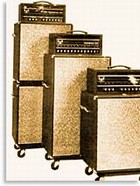
    Prototype/early production model Powerflex amps with silver grillecloth. Front to back 500, 502F, 500D. Extra knobs on 502 are for reverb and tremolo.

    This article originally appeared in VG‘s Nov. ’99 issue. All copyrights are by the author and Vintage Guitar magazine. Unauthorized replication or use is strictly prohibited.
  • Kid Ramos – Greasy Kid Stuff

    Greasy Kid Stuff

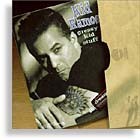
    The Kid’s got it goin’ on here; 17 cuts steeped in the blues, but sounding as fresh as the day T-Bone Walker first strapped on an electric.

    The concept here finds Ramos with lots of harp-playing buddies. Guesting on various cuts are the likes of Rod Piazza, James Harman, Lynwood Slim, Charlie Musselwhite, Rick Estrin, Paul DeLay, and Johnny Dyer. Not a bad lineup, eh?

    While all the guests shine on vocals and harp, there’s plenty of room for Kid to play, too. The title cut is an instrumental roadhouse shuffle that lets him do his thing. “Chicken Hearted Woman” allows for some nasty soloing and some chickin’ pickin.’

    Kid shows his West Coast influence throughout the proceedings, with nods to the aforementioned Mr. Walker. And on occasion – like “It’s Hot In Here” – things actually manage to get a little jazzy while keeping a good amount of grease on the effort.

    I’ve always liked the way Ramos plays. His solo and band work with the likes of the Fabulous Thunderbirds have remained true to the tradition, while showing flair, imagination, and – most importantly – soul. And for this effort, fun too. Cuts like “That’s What She Hollered,” “Country Woman,” and “Harmonica Hangover” sound like a bunch of friends just havin’ a blast.

    Kid has strung together two great albums – his West Coast House Party from last year, and this one, put him at the forefront of young traditional blues players. And, you know what else? He may have the coolest pompadour since Jimmy Vaughan was 30 years old. Gotta love it!


    This article originally appeared in VG‘s Feb. ’02 issue. All copyrights are by the author and Vintage Guitar magazine. Unauthorized replication or use is strictly prohibited.
  • Link Wray and The Wraymen – Slinky: The Epic Sessions ’58-’61

    Slinky: The Epic Sessions '58-'61

    It’s true, Link Wray isn’t exactly a household name. Hit-wise, his biggest charter was “Rumble,” which was a hit before he signed on with Epic. Of the 46 songs (including alternate cuts and out-takes) here, only one charted – “Rawhide,” with its pounding beat and nasty double-stops, hit #23 in ’59.

    But to guitarists, Wray represented a rebellious feel and sound. One listen to some of these cuts makes you want to poke holes in your speakers to get the sound. It’s perfect distortion. For an example, check out the amazing sound on the boogie of “Walkin’ With Link.” It also features some primitive tremolo!

    Those less familiar with Link’s work might be surprised by a few things here. There’s some twang, a-la Duane Eddy, on cuts like “Caroline.” Or who would’ve thought Link would do a nice (and interesting) version of “Tenderly,” with some nice chordal work.

    There are plenty of cuts to let you hear his signature sound. It’s rowdy, raw, and fun on cuts like “Ramble,” “Slinky,” and “Dance Contest.” “Dixie-Doodle” is a mix of two classic songs, with a drum intro that had my six-year-old dancing like a puppet on a string when he first heard it (that’s kind of what it’s all about, right?). His vocal style, as it turns out, can match his guitar tone. “Mary Ann,” and “Ain’t That Lovin’ You Baby” show him at his sneering and growling best.

    There’s stuff here that’ll make you smile, wince, or just shake your head. “Goose Bumps,” and “School Girl” are odd vocal cuts, obviously aimed at the younger crowd as potential novelty hits. “Tijuana” is an obvious take on “Tequila.” It contains something I never thought I’d hear in a Link Wray song – flute solos! And there are some out-of-tune guitars and vocals throughout.

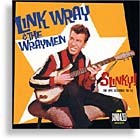
    That said, this is one all guitar aficionados should have. A unique player who searched for that elusive hit record while keeping his guitar sound intact. And did I mention the cover? Great shirt, great guitar, great chair.


    This article originally appeared in VG‘s June ’02 issue. All copyrights are by the author and Vintage Guitar magazine. Unauthorized replication or use is strictly prohibited.
  • Ampeg A-2

    Compressor Pedal

    When it comes to effects pedals, compressors and sustain ped-als usually fall into the “love it or hate it” category. Aside from a graphic equalizer, it is probably the least pronounced effect there is. Most purist guitarists, who prefer to plug straight into the amp, would never dream of using a compressor. But there are some who wouldn’t play without one.

    If you prefer to use a compressor pedal, there is one you may want to watch for – the Ampeg A-2. Though production of the A-2 was short-lived and few survived the ’80s, this is one unit you won’t want to pass up.

    Produced in Japan and marketed under the Ampeg name in the mid/late ’80s, it is one of the smoothest compressors made in the days of big hair. At the time, just about every manufacturer in the music industry took a dip into the pedal marketing sea. Ampeg was no exception.

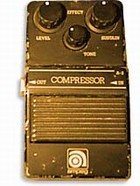
    The A-2 measures approximately 2.5″ X 4.5″, roughly the size of an Ibanez or Boss pedal of the same era. Its enclosure is metal, painted black with hot pink lettering for the controls and logo (hey, it was the ’80s!). Other features include silent FET switching, three control knobs (level, sustain, and tone) and an led on/off status indicator. It operates on a single nine-volt battery. Upon close inspection, the pedal shares some of the manufacturing characteristics of the aforementioned Ibanez units.

    Maxon, a Japanese company, manufactured pedals for Ibanez in the ’70s and ’80s that toted a reputation for being some of the finer-sounding stompboxes ever produced. Since the knobs on the Ampeg are almost identical to Ibanez’s fabled TS-808 Tubescreamer, and the circuitboard, internal on/off switch, and potentiometers all closely resemble those made for the TS-9 series, it’d be a safe bet the Ampeg series was produced at the same plant as the Ibanez pedals, if not manufactured by Maxon.

    But enough manufacturing mumbo jumbo. Let’s get to the really important matter – the sound!

    When you switch the Ampeg on, you immediately hear the thickness of the note you’re playing, especially at higher sustain settings. One of the A-2’s best qualities is its ability to drive an amp while still sounding natural, especially a small tube amp (Fender Princeton, Champ, or newer Fender Pro Jr.).

    While testing the pedal, I used a Telecaster, Stratocaster, and these three amps. You have to love the natural-sounding sustain this pedal offers – like the amplifier is cranked. But it delivers this sound at lower volumes. Another winning feature is a low noise factor.

    And still another nice element is the volume dynamics. With full volume settings on the guitar and pedal, it’s easy to adjust the sound of the effect by simply rolling back the guitar’s volume. It’s much simpler to do than turning the effect off; however, battery life won’t be as long. A guitar with humbuck-ers, such as a Les Paul, won’t react quite as strongly with the volume trick, but it will work in the same manner, just not as easily as single-coil guitars. The A-2 can be powered with a nine-volt adapter.

    With the A-2, you don’t have to drive your tube amp hard if you don’t want to. At lower level/higher sustain settings, the A-2 produces a thick, creamy tone with a slight overdrive. Your picking attack also affects the way the pedal reacts. With harder picking, each note makes a slight popping at higher settings. A softer picking attack produces little if any pop on the notes.

    Overall, this compressor is a winner. But, as with many good pedals, there is usually something that’ll bother someone. With the A-2, it seems when you switch the effect on, there is a slight -but-noticeable signal loss. This is another reason for keeping the effect on and manipulating the guitar volume. But if you must turn it on and off, there is only a slight signal loss.

    Although the A-2 is such an offbeat and rare pedal, if you do find one, it’s usually at a reasonable price. And in spite of the slight signal loss, all in all it offers a lot of bang for the buck.


    This article originally appeared in VG‘s Dec. ’99 issue. All copyrights are by the author and Vintage Guitar magazine. Unauthorized replication or use is strictly prohibited.
  • National Westwood and Glenwood

    Westwood 75
    While the mantra for 21st century “alternative material” guitars focuses on carbon fiber (i.e. Rainsong acoustics) and wood/glass/carbon fiber/epoxy composites (i.e. Ken Parker’s Fly line), electric guitars made of things other than wood go way back. And one of the first companies to venture away from wood construction was Valco, which in 1962 introduced the National and Supro lines (as well as contract brand names like Airline) of fiberglass-bodied electrics.

    Valco, who could hype with the best of its peers, certainly wouldn’t settle for saying it was using “fiberglass.” No, it could do better. And arguably it did when it dubbed the material used in its early-’60s line of single-cutaway map-shaped electric guitars “Res-O-Glas.” Uh huh.

    Ultimately, there were nine map-shaped Res-O-Glas guitars in the Valco line, all carrying the National name and ranging from the basic Newport to the overly sophisticated Glenwood 99. And for the record, these were not planned as “map guitars,” rather their shape and design merely grew out of the aesthetics of early-’60s solidbody guitar gestalt.

    The 1964 Westwood 75 shown here was technically part of the line, but different for a couple reasons; 1.) it was made of wood, and 2.) it was the only model offered in a sunburst finish (its Res-O kin were available in Duco Seafoam Green, red, white, or black).

    The Westwood’s treble horn is neatly curved down while the upper horn is flattened and stretched to accommodate a selector switch. Voila! – the continental United States (sort of) in an electric guitar, 15 years before the limited edition Gibson/Epiphone “map” guitar! The rest of the body is generically rounded, but an interesting feature is the relief (a.k.a. “German carve”) of the top, which adds an element of surface tension to the design and helps avoid the “slab” look.

    This Westwood appears to be a single-pickup model with a neck-position humbucker. But hidden in the bridge is a contact pickup – more than 10 years before tranducers entered the mainstream on acoustic guitars, and 30 years before the emergence of electric/acoustic hybrids like the Parker!

    Other National electrics had more pickups, and some had fancier trim, but they all have a similar playability that takes a little adjustment. Though today considered one of the must-haves amongst cheap/cool collectible guitars (expect to pay $800 to $900 for a Westwood in all-original, excellent condition), in its time, high production costs and retail prices (the Glenwood retailed for $25 to $30 more than a Fender Stratocaster at the time) combined to knock the Westwood and its Reso-O brethren out of existence by 1965. But the concept was cool enough that all-wood copies emerged in the mid ’90s. Retro lives! – ECS

    Fifteen Reasons to Own a National Glenwood 99
    1 Something old. Instruments began appearing with the National moniker in the mid 1920s, several years before the company had even been officially chartered. By 1930, the John and Rudy Dopyera’s operation was offering a full catalog range that included some of guitar history’s most timeless designs.

    Every introduction from the Los Angeles-based concern rivaled the previous, and each incorporated some unorthodox (and patentable) material or construction. The National name was soon synonymous with innovation and first-rate quality.

    2 Something new. By the middle of the ’30s, however, creative vision was as confusing as the corporate waters were muddy. Half of the partners had marched off in a huff to Chicago to compete with National.

    They formed Dobro, but they merged back with the originals (as the National-Dobro company) to survive the throes of the Depression. In ’42, they reorganized once more (with a sampling of additional players) as Valco. It was Valco, a huge Chicago manufacturer (and a far cry from the Dopyera’s shop) that subcontracted gajillions of electric and acoustic guitars, amps, and related stuff right up through the late ’60s under a wide variety of names. But they saved their best for the name they retained – National.

    3 Something borrowed. In 1963, the Studebaker automobile company introduced the smartly styled Avanti, and then promptly went belly-up. After decades of contorting vehicle metal into the ever-more-ridiculous demands of outlandish fins, dashboards, and fenders, producing a sleek Raymond Loewy design should have been a cakewalk. It wasn’t.

    The tantalizing and seemingly profitable technology that enticed Studebaker off the beaten path was a brand new class of plastics called “resins.” Only just making the manufacturing scene, the story sounded too good to be true. You mixed gooey liquid A with gooey liquid B and poured the result into a mold with some shredded glass threads and it came out looking bee-ootiful. With limited finishing (shoot, you could add the final color right in the resin) and a little assembly, Bunky, you were on your way to the bank. It wasn’t half as easy as it looked, and the various bugs weren’t worked out until a few years later.

    Valco fell for the same pitch when they unveiled their “Res-O-Glas” lines for both National and Supro at just about the same time as Studebaker presented the Avanti.

    4 Something Seafoam Green. Valco’s guitars consisted of two thin halves of hollow fiberglass shell enveloping a narrow solid wooden core. A more traditional painted wooden neck, as well as pickups, controls, and tailpiece were all anchored to the sturdy center block. Finally, a continuous bead of flexible vinyl neatly connected the rough glass-fiber edges of front and rear sections.

    The most endearing, and enduring, quality resulting from the Res-O-Glas construction was the color. They almost glowed. The depth of the pigmented resin produced an almost iridescent quality unattainable by painting mere wood. Valco’s limited palette clearly derived from Leo Fender’s custom Duco colors, yet the plastic saved them from the rigors of age that dull and yellow most paint finishes.

    5 Brush up on your geography. Turn the page sideways (with the neck to your right) and you’ll glimpse the source for Glenwood’s characteristic shape. That’s right, it’s the good old U.S. of A., with a bass cutaway horn that resembles Maine, a treble cutaway horn that is Florida, and extra lower bout cutout like the Mexican border. The tuners, however, are in Portugal.

    6 Win bets. Say, buddy, how many pickups are on this guitar? Care to wager? Another patented feature common to some Valco-made instruments was a contact pickup inside the guitar’s otherwise normal rosewood bridge. Dubbed “Silver Sound” in company literature, it complements the more ordinary “Vista-Power” units, is almost invisible to the naked eye, and could spell big bucks for you.

    7 A swanky floating pickguard. Cross the best elements of floating side-mounted scratch plates (à la Gibson and Gretsch archtops) with screwed-down top covering ‘guard technology from Fender and Rickenbacker solidbodies. Add multicolor rear-side applied and engraved decoration of an old-style National shield, and leave clear areas in between silkscreened vertical stripes to let the stunning resin color shine through, and you’ve got yourself a Glenwood pickguard.

    8 Creative lutherie. An inexplicable, yet not entirely unattractive, feature of virtually all bound-fingerboard Valco instruments is fret-slotted binding. Normally, manufactured fingerboards are slotted, then fretted unbound, with plastic added lastly to cover and obscure the fret slots. Valco saw it (and sawed it) differently, with fret slots cut right through the pretty white celluloid.

    9 Magnesium reinforced neck. Absolutely guaranteed by National not to warp for five full years. Unfortunately, those years were up during the Lyndon Johnson administration. This leaves you pretty much out of luck if you have a Glenwood with a curvy neck, since the bolt-on affair includes no easy method of adjustment. Happily, most have stayed pretty straight.

    10 Knobs-a-poppin! National’s three Glenwood choices all came equipped with a full complement of controls, including a pickup selector, three individual tone, three individual volume, and an oversized master volume adjustment (right there in southwestern Nevada).

    11 Flashy fingerboards. Whereas the majority of Valco instruments include fairly lackluster necks, the Glenwoods alone feature a full complement of dazzling ornamental designs, in a plastic and pearl combination, topped off with an intonation-improving zero fret.

    12 Nothing but the best. With its genuine Bigsby tailpiece, Grover Rotomatic tuners, three pickups, seven knobs, Seafoam Green Res-O-Glas body, and gleaming gold-plated metal parts, the 99 is clearly the leader of the Glenwood pack. The plainer red Glenwood 95, and the midline white Glenwood 98, both offer considerable appeal, but neither can match the panache of the 99.

    13 Avoid the rush. With prices for Valco-made guitars – and particularly the Glenwoods, which are now going for $1,500 to $2,000 – beginning to overtake those of more traditionally desirable makes, if you’ve ever wanted one you may want to act now, or be sorry later. Since the troublesome resin technology insured a relatively brief production run, the number of extant pieces is less than one might think.

    Recent trends show players and collectors manifesting considerable interest in a variety of instruments that just a few years ago were the subject of scorn and laughter. Foremost among these are the more flamboyant models – particularly in cool colors like this one.

    14 Lose friends; make new ones. Few guitars have such a polarizing effect on guitar collectors; people either love them or they hate them. No middle ground. But if you count yourself among the believers, you won’t walk alone.

    15 They float. – RJK


    The Westwood 75 and the Glenwood 99.

    This article originally appeared in VG‘s June ’01 issue. All copyrights are by the author and Vintage Guitar magazine. Unauthorized replication or use is strictly prohibited.
  • Ampeg A-2

    Compressor Pedal

    When it comes to effects pedals, compressors and sustain ped-als usually fall into the “love it or hate it” category. Aside from a graphic equalizer, it is probably the least pronounced effect there is. Most purist guitarists, who prefer to plug straight into the amp, would never dream of using a compressor. But there are some who wouldn’t play without one.

    If you prefer to use a compressor pedal, there is one you may want to watch for – the Ampeg A-2. Though production of the A-2 was short-lived and few survived the ’80s, this is one unit you won’t want to pass up.

    Produced in Japan and marketed under the Ampeg name in the mid/late ’80s, it is one of the smoothest compressors made in the days of big hair. At the time, just about every manufacturer in the music industry took a dip into the pedal marketing sea. Ampeg was no exception.

    The A-2 measures approximately 2.5″ X 4.5″, roughly the size of an Ibanez or Boss pedal of the same era. Its enclosure is metal, painted black with hot pink lettering for the controls and logo (hey, it was the ’80s!). Other features include silent FET switching, three control knobs (level, sustain, and tone) and an led on/off status indicator. It operates on a single nine-volt battery. Upon close inspection, the pedal shares some of the manufacturing characteristics of the aforementioned Ibanez units.

    Maxon, a Japanese company, manufactured pedals for Ibanez in the ’70s and ’80s that toted a reputation for being some of the finer-sounding stompboxes ever produced. Since the knobs on the Ampeg are almost identical to Ibanez’s fabled TS-808 Tubescreamer, and the circuitboard, internal on/off switch, and potentiometers all closely resemble those made for the TS-9 series, it’d be a safe bet the Ampeg series was produced at the same plant as the Ibanez pedals, if not manufactured by Maxon.

    But enough manufacturing mumbo jumbo. Let’s get to the really important matter – the sound!

    When you switch the Ampeg on, you immediately hear the thickness of the note you’re playing, especially at higher sustain settings. One of the A-2’s best qualities is its ability to drive an amp while still sounding natural, especially a small tube amp (Fender Princeton, Champ, or newer Fender Pro Jr.).

    While testing the pedal, I used a Telecaster, Stratocaster, and these three amps. You have to love the natural-sounding sustain this pedal offers – like the amplifier is cranked. But it delivers this sound at lower volumes. Another winning feature is a low noise factor.

    And still another nice element is the volume dynamics. With full volume settings on the guitar and pedal, it’s easy to adjust the sound of the effect by simply rolling back the guitar’s volume. It’s much simpler to do than turning the effect off; however, battery life won’t be as long. A guitar with humbuck-ers, such as a Les Paul, won’t react quite as strongly with the volume trick, but it will work in the same manner, just not as easily as single-coil guitars. The A-2 can be powered with a nine-volt adapter.

    With the A-2, you don’t have to drive your tube amp hard if you don’t want to. At lower level/higher sustain settings, the A-2 produces a thick, creamy tone with a slight overdrive. Your picking attack also affects the way the pedal reacts. With harder picking, each note makes a slight popping at higher settings. A softer picking attack produces little if any pop on the notes.

    Overall, this compressor is a winner. But, as with many good pedals, there is usually something that’ll bother someone. With the A-2, it seems when you switch the effect on, there is a slight -but-noticeable signal loss. This is another reason for keeping the effect on and manipulating the guitar volume. But if you must turn it on and off, there is only a slight signal loss.

    Although the A-2 is such an offbeat and rare pedal, if you do find one, it’s usually at a reasonable price. And in spite of the slight signal loss, all in all it offers a lot of bang for the buck.


    This article originally appeared in VG‘s Dec. ’99 issue. All copyrights are by the author and Vintage Guitar magazine. Unauthorized replication or use is strictly prohibited.
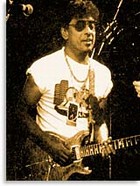
  • Javier Batiz

    The Mexican Mentor

    The profile subject’s ingles was definitely better than the writer’s espa

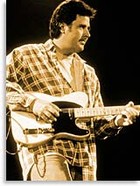
  • Vince Gill

    Picker's Pinnacle

    These days, it’s pretty much the best of all worlds for singer/songwriter/multi-instrumentalist Vince Gill. The Norman, Oklahoma, native has seen his career develop to the point where he can taper back just a bit and go at his own pace. That’s particularly important for the award-winning artist as of late, as he and his wife, singer Amy Grant, welcomed a baby daughter in March.

    However, Gill’s list of accomplishments – awards, honors, charitable efforts, etc. – is so extensive it would take another article just to cite them. For example, when he met with VG at a Nashville musicians’ storage/rehearsal facility, he was preparing to host the Country Music Association awards show for the 10th time.

    We were able to examine and photograph some of Gill’s important instruments (including his primary stage guitar, a ’53 Telecaster), and at one point during our conversation, the superstar pulled a ’25 Gibson F-5 mandolin out of a case sitting next to him and flashed through a dazzling riff. Gill’s first recordings were in the Bluegrass genre, and we started our one-on-one with an inquiry about his early (and minimal) formal musical training (he is self-taught on most stringed instruments).

    Vintage Guitar: It might surprise some folks to learn you started out with violin lessons.
    Vince Gill: I took violin and piano lessons when I was a kid. But at the same time, I was playing guitar – I always had one strapped around my neck. But I didn’t take any formal guitar lessons until I was 12 or 13, and I only took lessons for a short time.

    Starting out self-taught on guitar, did you gravitate toward fingerpicking or flatpicking, and/or oddball tunings?
    I never knew anything about oddball tunings; I learned songs, and obviously, you try to emulate the solos in the songs, long before you ever even think about developing your own style. I was just listening to records.

    So did you ever try to pick along with records played at a different speed on the turntable.
    I never knew it would do that! My math was so bad, I didn’t know that if you slowed the turntable down, it would play in basically the same key, only twice as slow (chuckles). I never figured it out… and I kind of wish I had.

    But as I got older, I’d go out and see people play. When I went to Australia for the first time to do some bluegrass dates with Byron Berline, as well as some workshops, some of the local guys would tell me, “You don’t know how important it is to see how you play. It’s different from just hearing you; once we can look at you and see how you do things, it makes a huge difference.” That had been the case for me earlier on – going to concerts and watching television.

    Your parents gave you your first electric guitar, a Gibson ES-335, and a Fender Super Reverb amplifier. Why that particular guitar and amp?
    I still have both… and I can assure you my dad didn’t know that 10″ speakers might sound better than 12″ speakers, or that a blackface Super Reverb would be a great amplifier to have (chuckles)! Gibson has always had a great tradition in its name; they build great instruments. It also probably had something to do with Chet (Atkins) and my love for the way he played. He played a Gretsch then, of course, but it was a big-bodied guitar. You’d rarely see Telecasters in the hands of country musicians; at least, that was the case for me. You saw Buck Owens and Don Rich playing Telecasters, and Roy Nichols with (Merle) Haggard.

    But that 335 was real versatile. And when I was 10, I had no idea what I wanted to play. But what’s so interesting is that a long time afterward, when I was in California, I went to hear Larry Carlton play, and he was playing a 335. I said, “Wow! One of those guitars can sound like that?” I first saw him play around ’77, when I was about 19 or 20. I was mesmerized, and I went straight home and took the trapeze tailpiece off of my 335 and put a stoptail on to get more sustain.

    But I don’t think there’s a real reason why I picked a 335. My folks went to the music store. And it was a great, versatile guitar.

    In all the years of trying to find good guitars, I’ve only lost two; both were traded in, and I wish I had them back. I don’t remember the model number, but I had a Gibson four-string tenor guitar with one pickup. I bought an old Martin D-28 herringbone in 1975, when I was 18; I traded in a newer D-41 and some cash, and I wish I had that D-41, as well.
    Your earliest recordings were with a Bluegrass band called Mountain Smoke. What appealed to you about that genre?
    I just stumbled into it. We listened to all kinds of music growing up, and I knew of Flatt and Scruggs on “The Beverly Hillbillies” – that was really my only knowledge of bluegrass music. A family of musicians lived a couple of blocks away; Charlie Clark was the father, and he had two sons, Bobby and Mike, and they both played bluegrass. I knew Charlie could fix banjos, and one day when I was messing around with my dad’s banjo, I broke a string. I was afraid I’d get in trouble, so I took it over to Charlie and asked him to fix it. He told me about his son, Bobby, who was a year younger than me. Bobby was – and is – a brilliant musician. He now plays with Mike Snyder out at the Opry.

    They had a group that was a lot like New Grass Revival; they’d do Beatle tunes, but they were great students of bluegrass and acoustic music. Charlie said, “You play and sing, don’t you?” And I said I’d played in a rock and roll band a bit in high school, but he invited me to come pick with Bobby. And I did – I put an acoustic guitar in my hands for the first time, as well as mandolins and banjos, and was immediately immersed and in love with acoustic and bluegrass music; it pointed me in a direction that spoke to me.

    The cover of the Mountain Smoke album shows you holding a resonator guitar.
    I’ve had an interesting career of basically playing what was left over (laughs)! A lot of that is in part because I sang. It was like, “Well, we can get him in the band; he sings great; what instrument’s left over? We’ll let him play that!”
    That band wasn’t really serious – it was a bunch of guys who had day jobs and liked goofing off, having a lot of fun, and partying. We traveled around some; played some festivals. It was fun for me because I was the young, “real serious” musician. I was still in high school.

    Did you try to learn traditional bluegrass instruments all at once, or did you take them in any particular sequence?
    I have no idea what sequence they came in, but I loved the sound of the dobro and the mandolin. I dabbled with fiddle, but was awful. There’s nothing worse than a bad fiddle player – no frets can be pretty mean! A lot of bluegrass musicians can play all of those different instruments. My mother’s favorite sound is me playing the dobro, but I don’t play it much anymore. I play kind of like Jerry Douglas did in his early days – not now, though. He has taken that instrument to an amazing place.

    At one point during Mountain Smoke’s history, the band opened for Kiss, of all people.
    Well, it was basically a freak of nature. We were a popular local band in Oklahoma City, and we were called at five one afternoon and were asked, “Can you come down to the Civic Center and play tonight? We’ll pay you 1,000 bucks; we don’t have an opening act.” It might have been 500 bucks, but we said we’d play… but they didn’t tell us who we were opening for.

    We got down there, and I saw the big Kiss moniker on the marquee, and I said, “We must be playing underneath, at a Shriner’s convention.” But we opened for Kiss, and it was like a scene from Spinal Tap. My most vivid memory is that I played fiddle that night – of all things. Maybe that’s why the audience booed. There were these huge risers, and we came out with our little banjos and mandolins. We lasted for about four songs; they were throwing beer bottles and anything else they could to get us off.

    When you finished high school, had you decided that being a full-time musician was going to be your livelihood?
    I think so. I don’t think I every really knew what I wanted to do; I just did what unfolded. The last two years of high school, I was totally immersed in music, and I played anyplace that would have me. I’d play clubs; my folks were cool about letting me stay up late if I kept up my grades. I wasn’t a party boy and didn’t get into any trouble.

    So I didn’t really plan for college; I was lucky enough to get a call to move to Kentucky and play in a bluegrass band.

    You ultimately played with Ricky Skaggs and Byron Berline’s aggregations before hooking up with Pure Prairie League, which was more in the pop/rock/top 40 musical field.
    Another freak of nature! I was living in Hermosa Beach in southern California, playing with Byron, and we played a lot, toured a lot, and made good money. I was enjoying playing with the other musicians in the band; to me, bluegrass didn’t get much better than that; I was comfortable and confident. But then, a friend of mine told me he was going to audition for Pure Prairie League, and asked if I wanted to go. I’d opened a concert for them when I was in high school, and wondered if they’d remember me.

    So I went to his audition, introduced myself, and they said, “You’re the kid from Oklahoma who plays all the instruments! We’re lookin’ for a lead singer and guitar player. Interested?”

    I said “No,” but they told me to bring my stuff and just jam, to see if I’d even like it. I hadn’t played in a rock band since high school.

    So I took my stuff to their rehearsal, turned way up, and had a ball! Then I told them I’d go on the road for a while, and we made some records. I wrote songs with them, too. Mostly, I played a 335 and a Les Paul, and there were a couple of songs where I got to play banjo, mandolin, and dobro. But the majority of the time, I was trying to play like Larry Carlton or Robben Ford; a “sweet” 335 sound.

    I did three albums with those guys (note: Gill sang lead on “Let Me Love You Tonight” and “I’m Almost Ready“). But they were much older than me, and had been doing that for a long time. I was young and enthusiastic about doing a bunch of different things. Plus, my daughter was about to be born, and they toured nonstop – 200 to 250 days a year. I said, “I’ve got a new baby comin’; the last thing I want to do is to be livin’ out of a suitcase, and not get to know this kid.”

    So I quit, and I started playing with Rodney Crowell. The band he assembled was the best I’ve ever played in.

    I’m hesitant to ask if you “replaced” Albert Lee (VG, March/April ’99) in that band, considering Lee’s talent.
    You don’t “replace” someone as gifted as Albert. I started playing and singing in that band, and I was a “plus” because I could sing all of the high parts with Rodney – the same with Roseanne (Cash, Crowell’s wife at the time); she often used the same band. I loved Albert’s playing, so it was a joy for me to play a lot of his solos. He was probably the most influential guitar player who pointed me to a style; it’s very much borrowed from Albert and James Burton; all those guys.

    Before you began your solo career, you returned to bluegrass in a combo with David Grisman (VG, April ’97) called Here Today, which seems to have been an appropriate name, since it didn’t last too long.
    (laughs) I already knew Emory Gordy Jr. really well – he’d played bass with Rodney and Roseanne. It seemed like it would be fun to play bluegrass with some guys who were as good as it gets, and it happened during a period when I wasn’t doing much. We did a couple of weeks’ worth of shows, but it was never intended to be a band.

    To what extent did your instrumental abilities figure into you getting signed as a solo act?
    I don’t know if they did at all. I think most people pay attention to my voice first, then they’re surprised that I can play. When I get done with a concert, some people will tell me, “I had no idea you could play!” And that’s okay; I was not signed as an instrumentalist; I was signed as a songwriter and singer and guitar player, and I try not to let any one of those things overtake another.

    I’m not a great promoter of myself; it’s uncomfortable for me to be real showy or talk about what I can and can’t do. I just let my songs and playing speak for themselves. And instrumental music certainly doesn’t get played on country radio; the majority of listeners would rather hear the song and the singer – which is not to say anything disparaging, but they don’t care who’s playing on it; they’re not drawn to musicianship, but there’s a small percentage of listeners who are. And I’ve always felt that if I could give that type of audience some decent playing, I could satisfy both groups. Maybe someday I’ll make an instrumental record, though.

    And I think what’s more interesting is that I wanted to be much more of a “traditional” artist when I was signed than I wound up becoming for quite a while, because of the status of the record company. I was signed to RCA, which was very pro-contemporary; they didn’t want steel guitars or twin fiddles, so I felt a little misguided for a while.

    Your solo career came along around the time videos began to figure into the mix for musicians. How do you feel about having had to address that aspect – visual vs. aural?
    It’s fun to see music performed live, but it’s never been a real turn-on for me to see videos. Pure Prairie League did one of the very first videos, back in ’80 or ’81, and I played on it.

    Was it a performance-type or conceptual?
    It was conceptual, but it was very primitive, too (chuckles). Ours has become a very visual culture, in all ways, not just musically, but I’d still rather listen to a record than “see” the record. And aside from “looking at it” rather than “listening to it,” what’s unfortunate, to me, for the purity of music, is that it becomes about image. And country music never really had as much emphasis on image as it does today. Pop music always has, in some way.

    And there isn’t much debate that a lot of what’s heard on country radio stations these days could easily have been heard on top 40 AM radio stations 20-something years ago.
    I’ve done a little of both, and I don’t look at it and say, “Here’s what’s wrong with it.” I’m just saying “Here’s what it is.” I mean, look at rock and roll – it doesn’t all sound like Chuck Berry anymore; look at pop music, and it doesn’t sound like the Doobie Brothers or Dionne Warwick anymore. All of it has evolved; all of it has changed. And the thing I find to be the most humorous is when they say, “‘Country’ is really ‘pop’.” It’s not pop! Madonna is pop. Our records may transcend over to somewhere else because people like them, but it’s not because they’re real “pop” records.

    Mark Knopfler once asked you (VG, May 2001) to join Dire Straits…
    Yeah, about 12 years ago. I’m not sure how he came to know about my playing… I think it was through a mutual friend – Paul Franklin, a steel guitar player.

    Mark came to see me play in New York City around ’89 or ’90; I’d just recorded a new record for MCA. I’d been on RCA for seven years, and had made a bunch of records, but not much noise. He said (imitates Knopfler’s accent), “‘Ow would you like to be in the Dire Straits and go on tour for a year and a half?” I said “Golly, if you’d asked me a year ago, I’d have been gone. But I’ve invested so much into country music, and I don’t want to bail. I need to try to make this work.”

    As it turned out, it was a wise decision because “When I Call Your Name” came out, and was the big hit that I had to have. But I am honored to know Mark.

    Another one-off project was the New Nashville Cats, under the auspices of (fiddle player) Mark O’Connor. “Restless” was a single.
    It made perfect sense for a single, because Mark was doing a mostly instrumental record with a couple of guest vocals, and they figured that if he had one with Steve [Wariner], Ricky [Skaggs], and me on there, that one would be [released as a single]. “Restless” is a great old tune, and everybody got to play everything they know (laughs)!

    There was also a video for “Restless” that was basically an informal performance; if it hadn’t been for the camera panning around the players, the feeling could have been like you were picking on somebody’s front porch.
    Yeah, there’s not an actor amongst us in that foursome! We definitely had to play!

    You’ve participated in a lot of collaborations, both singing and playing. Any favorite performances, including these that were the most satisfying or the most fun?
    Well, I think the ones that are the biggest “stretch” are the ones that kind of stand out. Just the fact that you get the opportunity to do it – did I ever think I’d get the opportunity to do a duet with Gladys Knight or Barbra Streisand? No! All of those things just kind of happen.

    I recently did a tribute to Brian Wilson where I had to learn two of the hardest things I’ve ever had to learn in my life. I was scared to death, but it means the most when you go into a situation and you exceed everybody else’s expectations. Like stepping into the realm of a brilliant vocalist like Gladys Knight; “What’s the white country guy doin’ in there? This is dumb!” But he sings, and Gladys goes “Wow! He’s a soulful guy!”

    Everybody in this genre already knows what you do – they know you write, sing, crack jokes, host awards shows. It’s those things you get to do that are “outside the lines” that are always a lot of fun.

    But have any of those outside-the-lines efforts been attempts to “cross over?”
    I make decisions based on whether or not I want to do it, and they’ve been musical choices. I love singing with people, and I love playing with people, but I’ve turned down a lot of things too.

    From an instrumental point of view, guitar players would have been impressed by your work with Steve Wariner (VG, May ’96) on his No More Mr. Nice Guy album.
    I used my ’53 Telecaster. The first session I did here was on one of his records, “Midnight Fire,” which was a hit for Steve in the early ’80s. I sang harmony on it, and made a friend for life. He’s a great guy; he loves music and loves the instrument, and in your heart, you believe he does it for the right reasons.

    Another intriguing project was your participation on Bad Company’s mid-’90s album, Stories Told and Untold. You played on “Oh, Atlanta,” and the band recorded a cover of “I Still Believe in You.”
    Once again, a learning experience. But that one’s a little left-of-center. Allison Krauss and I played on that track, and I loved doing it because I’ve always gotten 80 percent singing calls, 20 percent guitar calls. The guitarist in me says, “Great! I get to play!”

    I think my favorite weekend in the last 10 years was the one when Patty Loveless’ guitar player had to rush home for the birth of his child. It was two hours before the show, and Patty said, “I don’t know what I’m going to do,” and I said (raises hand), “I’ll play!” (chuckles). It was so much fun, because I just played; I didn’t have to talk in between songs. I got to be a musician.

    But even when I’m touring, I feel like a sideman. I’m up there with those guys, and everybody’s working together. We get to play longer solos; it’s not just “Here’s the record! Thank you for coming. Goodnight.” It has always had a “band” feel instead of being a singer and his backup band.

    One side man role of yours was with an all-star band at the 40th annual Country Music Association awards show. The group was under the direction of Randy Scruggs, and included Chet Atkins, Duane Eddy, and Wariner. How was that organized?
    I don’t know, but I just feel flattered when I get those calls – I feel like I’m included not because I’m popular as an artist, but because I’m a player and I’m among peers. That’s the highest form of flattery.

    Chet Atkins recently passed away, and a few years ago he gave you a guitar on Ralph Emery’s TV show. There’s only one Chet Atkins…
    Amen!

    … so for all of the honors you’ve received, to receive something that personal from someone who was such an icon had to be one of the most memorable. What was going through your mind at the time?
    I’d met Chet on several occasions, but had never gotten to play music with him. When I was a little boy, the sound he made with his guitar was really the first musical thing I remember; I asked myself “How does that happen?” (chuckles). Now that he’s gone, I can’t even begin to tell you the pride I felt. It was humbling and frightening – both ends of the spectrum.

    It was fun to get to know him; I kind of got to know him in a “friendship” way more than our having gotten together to play music. I believe that show might have been the first time I ever played with him, and my hands would not go on the instrument; it was really eery. I was afraid to put my hands on the guitar.

    Did getting to know Atkins as a friend first ultimately make playing with him easier, though?
    I think so, because we got to play on a few occasions, just sitting around at somebody’s house, at a party. Then it wasn’t about being on television; it was just fun. One night I played mostly mandolin, and one of his best friends was Jethro Burns, so he said, “Man, I like the way you play mandolin – you play it kind of jazzy, like Jethro did.” Any time you got any compliment from Chet, it was like gold.

    Do you primarily compose your songs on acoustic guitar?
    Pretty much; I still think it’s fun to use capos or drop-tunings; all kinds of weird things with an acoustic just to find a little “out there” place. But I’ve written a lot of songs on electric guitar, too, just because you play the instrument in a different way. I used to love to go onstage at soundcheck and play some “feel.”

    What about specific licks or riffs that are written for certain songs? An example might be the introduction of “Feels Like Love” on your latest album, Let’s Make Sure We Kiss Goodbye. It starts on piano, then doubled with a nylon-string guitar.
    Michael Omartian came up with that theme, and that’s the beauty of making records – letting guys like that be creative with your songs.

    But when you compose songs on your own, do you necessarily think about signature guitar lines?
    Yeah. I think that’s part of what makes good records; on one of those you wouldn’t just start playing it. There’s a song from a few records back called “You and You Alone,” and I wrote it from the signature thing at the top. That song was written around that riff; others are not. Another thing about making a record is that when you write a song, you don’t always come up with all of the little lines and hooks, but those musicians can put in some invaluable parts.

    Presumably an instrumental break in the middle of a song is more “fair game” concerning improvising what’s heard.
    I think so, and as the years go by, I think that as a veteran musician, sometimes I might be able to say more with less. You can always tell a young player, because he plays everything he knows, but the guys who’ve been around for awhile try to say as much as they can with as little as they can.

    A lot of solos on things like ballads are centered around the melody, and believe it or not, now and then a melody can be very pretty. Chet always found different ways to play the melody, with different inversions and different positions. I was playing at a jam session one time and we were playing a song that was a standard, and for my solo, I played the melody. Everybody else said, “Wow, what a concept!” (laughs).

    “Look What Love’s Revealed” (from Let’s Make Sure We Kiss Goodbye) has some intriguing jazz-like octave notes on the intro. Why’d you go for that type of sound?
    I don’t know, but I thought it was pretty neat. The feel of that song was probably different from anything I’ve ever done. I try to think of what will work on a song in “honest” terms – I wouldn’t put a mandolin on that song, for example; it’d sound awkward.

    Have you ever done a live album or concert video?
    The only thing that was ever shown as a live show was an episode of “The Road,” a TV show that used to be in production. We did a thing at the Ryman called “Souvenirs,” which was a concert video that was a pared-down acoustic presentation. I just think that once you get tuned in to how good studio sounds can get, it’s hard to come up with the something that’ll sound that good live.

    Do you want to cite some of the instruments in your collection?
    I have several old Martins – two herringbones; a ’49 D-28 and a mid-’50s D-28. I have a little 000-21 that I love. There’s a 1925 (Gibson) F-5 mandolin; it’s probably a Loar, and they say they’re just not signed by him. It’s got all of his specs. I own a 1928 spruce-top Dobro square-neck, which is very rare.

    Is there anything you’re still seeking?
    I still may stumble into things, but the prices have gotten pretty ridiculous. A while back I bought two ’52 Telecasters and paid a lot of money for them. But all in all, I think the prices of vintage instruments are insane. I can understand a guy wanting a guitar as a piece of history, but I’ve always felt like instruments were made to be played. People ask me if I still take my old instruments on the road, and I say, “Yeah! Why not?”

    But at the same time, a true lover of instruments may be like a lover of art. Some guitars are beautiful, but I’d still rather hear them being played than look at them (chuckles).

    In the booklet of the latest CD, you’re seen playing a modern Danelectro Convertible.
    It was the engineer’s guitar. If there’s a guitar laying around, I’m gonna grab it and plunk on it (chuckles).

    You recently became a father again. How has that changed any plans for your career?
    I’m not going to work as much, but I think that’s natural. I’ve got most of my work behind me, and it’s a luxury that I can not work a lot of days out of the year. I’m doing 15 to 20 shows this year, and Amy and I are going to do a Christmas tour for two or three weeks. On the dates I’ve already done, Amy and the baby have gone with me.

    Next year, I don’t know… I don’t want to miss much of my child’s life. Family has always had a priority, but what’s interesting is that for anyone who wants to get into the workplace and achieve something in a career or a job – your first 20 years, the “apprenticeship” of whatever you do, is when you’re going to have to work the hardest. That’s the way it evolves, and even if we hadn’t had a baby, this feels natural. The decisions aren’t made just because of family; it’s the way a career works. It’s time to settle in a bit.

    Only in his mid 40s, Vince Gill has racked up enough success where he can indeed take things a bit easier if he so desires. He’s earned the right, and the inclinations toward his family can be respected by musicians and fans alike, just as his music is.


    Photo: Ken Settle.

    This article originally appeared in VG‘s April. ’02 issue. All copyrights are by the author and Vintage Guitar magazine. Unauthorized replication or use is strictly prohibited.

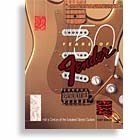
  • Tony Bacon – 50 Years of Fender – Half a Century of the Greatest Electric Guitars

    Half a Century of the Greatest Electric Guitars

    In 1950, Leo Fender began production of the first solidbody electric guitar, and music hasn’t been the same since. Celebrating the anniversary of the event, this book provides a year-by-year chronicle of the evolution of Fender and its world famous guitar models. The book highlights the process of reevaluation and reinvention, noting Fender’s focus throughout each decade: visionary design work in the ’50s, technical flexibility in the ’60s, core models of the ’70s, diversification of the ’80s, and the retro craze of the ’90s. Filled with photos of album covers, ads, catalogs, memorabilia, and famous musicians using Fenders, the book shows how the company’s products reshaped popular music and culture over the past 50 years. Great photos, nice price, excellent guitars!


    San Francisco: Miller Freeman 2000, Softbound 128 pages, ISBN 0-87930-621-1, $19.95.

    This article originally appeared in VG‘s Jan. ’01 issue. All copyrights are by the author and Vintage Guitar magazine. Unauthorized replication or use is strictly prohibited.

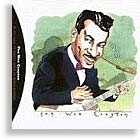
  • Pee Wee Crayton – Pee Wee’s Blues: The Complete Aladdin and Imperial

    Pee Wee's Blues: The Complete Aladdin and Imperial

    Pee Wee Crayton learned his lessons well. Moving from Texas to California during the Depression, he slaved away in Navy shipyards until some buddies dragged him along to a T-Bone Walker show. Pee Wee was floored by T-Bone. He bought a guitar and literally made T-Bone teach him the tricks of the trade.

    In the late 1940s, Pee Wee began recording for Modern and had an instant hit with his theme song, “Blues After Hours.” Throughout the ’40s, T-Bone and Pee Wee were the hottest names on the West Coast blues scene.

    This reissue compiles Pee Wee’s Aladdin and Imperial sides of 1954-1955. His style is a bit more pop oriented than the Modern blues cuts, but these cuts ooze with suave sophistication and Pee Wee’s hot guitar lines. I can’t listen to these cuts enough.


    This article originally appeared in VG‘s June ’96 issue. All copyrights are by the author and Vintage Guitar magazine. Unauthorized replication or use is strictly prohibited.