Month: March 2003

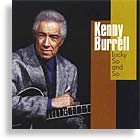
  • Kenny Burrell – Lucky So and So

    Lucky So and So

    Here’s the latest from a true legend. Kenny’s been doing it for so long, and doing it as well as or better than everyone else, that it’s foolish to even think there’d be something bad to say about this release. And there really isn’t. there is something a little different about it, though. Kenny sings on four cuts. Yes, one of the world’s greatest jazz guitarists sings. And to no one’s surprise, he sings wonderfully.

    First, let’s hit his playing. Like many of his albums, this one has somewhat of a thematic feel. It’s a quiet album, bluesy in many respects. As always, Kenny’s playing is…well, pick a word; brilliant…fabulous…magnificent. It’s almost a definition of jazz playing. It’s bluesy, it swings soft, it swings hard. His chordal work will leave you smiling. It’s, in a word, perfect.

    What’s really nice is that although you’ve heard some of these songs before, they all sound new. He never has a problem infusing a recognizable song with something new. And his chordal/single-line 1:20 intro to “Tenderly” is worth the price of admission by itself.

    Now for the singing. He’s done a little before, but not like this. “My Ship” gives him a shot at ballad singing, and he does it well. He has lots of fun with the title cut, singing it great and playing a wonderful bluesy solo. And his fun scat in “Squeeze Me” might bring to mind the late, great Joe Williams, but the vocal style is all his own.

    I feel kind of silly even recommending this one. If you’re a fan, you’ll pick it up. And, if you’re not, start here and continue to some of the greatest jazz guitar albums in history. It’s a journey you won’t regret.


    This article originally appeared in VG‘s Sept. ’01 issue. All copyrights are by the author and Vintage Guitar magazine. Unauthorized replication or use is strictly prohibited.

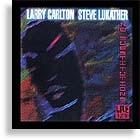
  • Larry Carlton/Steve Lukather – No Substitutions

    No Substitutions

    I don’t really know what to say about this one. It’s just a good, old-fashioned jam by a couple of great guitarists. To no one’s surprise, they’re both up to the task. The five songs here cover almost an hour that’s never boring and showcases the different talents of Carlton, who definitely is concentrating on his jazz roots on this and other projects lately, and Lukather, who’s a rocker, almost sometimes to the point of being a little too bombastic. These two guys combined have so many chops, it’s just a joy to listen to this live album, recorded in Japan.

    Things get under way with the Tony Hymas/Simon Phillips tune “The Pump.” The rocky feel of this one lets “Luke” shine. The former Toto axeman shows an agility and sense of chops that few ever reach. From there, it’s three Carlton tunes (“Don’t Give It Up,” “It Was Only Yesterday,” and “Room 335,” and Miles Davis’ classic “All Blues.” Throughout the proceedings, the old ace Carlton proves he’s still imaginative and smart a player as ever. Back to using his 335, he starts the ballad “It Was Only Yesterday” with trademark volume swells and some killer hammer-ons and dazzling runs. After a fine Lukather solo, Larry comes back with a single-line and chordal solo that is simply a tour de force. In fact, several times on the album, he calls to mind Wes Montgomery with some chord solos that are simply beautiful. It’s something he’s done in the past, but never this much on an album, and he proves he’s a master at it.

    In a spoken intro, Lukather introduces Carlton as his teacher, and it’s fitting. There’s a whole generation of players who have taken his sense of melody and mixed it with his rock and roll sensibilities and blues leanings and forged a style of guitar that is forceful, physical, and muscular, but at the same time melodic and beautiful. It’s easy to spot his mark on Lukather here. Put these two great players with these great songs, and a band that includes Gregg Bissonette on drums, Chris Kent on bass and Rick Jackson on keyboards and you’ve got the perfect live record. Highly recommended.


    This article originally appeared in VG‘s July ’01 issue. All copyrights are by the author and Vintage Guitar magazine. Unauthorized replication or use is strictly prohibited.

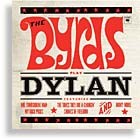
  • The Byrds – The Byrds Play Bob Dylan

    The Byrds Play Bob Dylan

    If it wasn’t for the Byrds, Bob Dylan might never have become the musical icon he is. They were the earliest to re-cast his material into raucous rock and roll. From the opening electric 12-string lick on “All I want to Do” it’s abundantly clear why these Byrd’s versions were so popular.

    Covering material from as early as 1965 through ’71 (with one bonus reunion cut from 1990) all the various personnel configurations of the Byrds are well represented on this compilation CD. From the original Byrds line-up of McGuinn, Clark, Crosby, and Hillman, through the super-guitar-slinger period with Clarence White, Dylan’s material is well-served by the Byrd’s renditions. The only clinker – a singles version of “Lay, Lady, Lay” from ’69, complete with an out-of-tune gospel choir backup – is mercifully brief.

    Producer Bob Irwin, engineer Vic Anesini, and A&R supervisor Steve Berkowitz should be commended for the immaculate sound throughout the disk. Even the oldest material is clear while still preserving the essence its particular sonic character. Here you’ll find the sound of the original releases sans ticks, pops, and LP groove noise.

    Even if you have all the Byrd’s previously released material, this should be a welcome addition to your collection. Getting the complete Dylan songbook, Byrds-style and on one disc, is a very good thing.


    This article originally appeared in VG‘s Aug. ’01 issue. All copyrights are by the author and Vintage Guitar magazine. Unauthorized replication or use is strictly prohibited.

  • The Acoustic

    Black Widow

    In the late ’60s, when Domino guitars were fading away, tube amplifiers were out of vogue. Old technology, man! Cool bands played through solidstate amps that delivered lots of clean power with none of that awful tube distortion. Cool bands played through Standels and tuck-and-rolled Kustoms. Entire bands were run through a single 350-watt Mosrite monster.

    Coming out of the late-’60s affection for transistors was the Acoustic Control Corporation, which specialized in what were, for the times, pretty advanced solidstate amps. However, in ’72, Acoustic introduced its one and only guitar and bass design, the Acoustic Black Widow, which represented a fascinating foray into the world of guitar manufacturing.

    The Acoustic Black Widows were particularly interesting because they really went in the face of trends of the times. Black Widows were likely designed in the U.S., but the majority were built in Japan (though Semie Moseley said he built the final 200). The Black Widow shown here is Japanese, and I have personally held a Black Widow guitar with slightly different features and a feel that is unmistakably Mosrite. What made these so curious was that, while most American importers and manufacturers were rushing headlong toward the copy syndrome, the Acoustic Black Widows were unique, designed with certain technological objectives in mind.

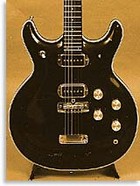
    Guitars and basses were equal double-cutaway solidbodies looking like an enlarged Les Paul Junior. Cutaway horns were flared, the wide lower bout was oval-shaped. Bodies were black-lacquered maple, with a German carve around the edges. The black-finished maple neck was bolted on, with a wide, triple-bound center-peaked headstock that was kind of a cross between a Kay and a Gibson. The logo was all lower case. The neck had a zero fret followed by two octaves of frets in a rosewood fingerboard on the guitar, 20 frets on the bass. Position markers were mini-dots. Strings passed over a fine-tune bridge to a large tailblock placed further back, designed to increase sustain. These were not instruments for the timid. The guitar had a whopping 27″ scale, while the bass logged in at 31.” The guitar had two humbuckers with chrome sides and a black plastic insert, with 12 poles, a three-way select, and two volume and two tone controls. The bass had one humbucker with eight poles in the center position, with volume and tone. Jack was front-mounted, and they came with a plush-lined hardshell case. The guitar was equipped with Grover Rotomatic tuners, while the bass came with Grover bass tuners. By ’74, the bass tuners had been changed to Schallers. Knobs were brushed aluminum. The most striking feature of the Black Widows was a red leather pad on the back of the guitar, attached with snap-on fasteners, stitched with a “black widow” pattern.

    Toward the end of the run, the Black Widow guitar got an endorsement from jazz fusion great Larry Coryell, the only big name player to align himself with these guitars.

    The Black Widows exhibit a surprising quality for their time, far in advance of comparable Japanese guitars. The pickups were fairly high-output for the time, hovering around seven ohms resistance. While they look unprepossessing, when you pick one up you feel in the presence of a solid guitar worthy of respect. The guitar and bass were still offered in the ’74 Acoustic catalog, but disappeared by ’75 as the copy era finally triumphed. Acoustic would continue to make amplifiers, but would never return to the guitar business. Acoustic Black Widows were not produced in enormous quantities, so they are relatively rare, but they turn up with some regularity if you keep your eyes open, mostly because few people pay attention to them. Expect to pay much more for a Moseley version, if the seller knows what he’s got. Most folks don’t know what they are, and they shouldn’t cost you a fortune, even though they represent an interesting punctuation point in American guitar history.


    Front of a Ca. 1973 Japanese Acoustic Black Widow Guitar.

    This article originally appeared in VG‘s Jul ’98 issue. All copyrights are by the author and Vintage Guitar magazine. Unauthorized replication or use is strictly prohibited.

  • The Acoustic

    Black Widow

    In the late ’60s, when Domino guitars were fading away, tube amplifiers were out of vogue. Old technology, man! Cool bands played through solidstate amps that delivered lots of clean power with none of that awful tube distortion. Cool bands played through Standels and tuck-and-rolled Kustoms. Entire bands were run through a single 350-watt Mosrite monster.

    Coming out of the late-’60s affection for transistors was the Acoustic Control Corporation, which specialized in what were, for the times, pretty advanced solidstate amps. However, in ’72, Acoustic introduced its one and only guitar and bass design, the Acoustic Black Widow, which represented a fascinating foray into the world of guitar manufacturing.

    The Acoustic Black Widows were particularly interesting because they really went in the face of trends of the times. Black Widows were likely designed in the U.S., but the majority were built in Japan (though Semie Moseley said he built the final 200). The Black Widow shown here is Japanese, and I have personally held a Black Widow guitar with slightly different features and a feel that is unmistakably Mosrite. What made these so curious was that, while most American importers and manufacturers were rushing headlong toward the copy syndrome, the Acoustic Black Widows were unique, designed with certain technological objectives in mind.

    Guitars and basses were equal double-cutaway solidbodies looking like an enlarged Les Paul Junior. Cutaway horns were flared, the wide lower bout was oval-shaped. Bodies were black-lacquered maple, with a German carve around the edges. The black-finished maple neck was bolted on, with a wide, triple-bound center-peaked headstock that was kind of a cross between a Kay and a Gibson. The logo was all lower case. The neck had a zero fret followed by two octaves of frets in a rosewood fingerboard on the guitar, 20 frets on the bass. Position markers were mini-dots. Strings passed over a fine-tune bridge to a large tailblock placed further back, designed to increase sustain. These were not instruments for the timid. The guitar had a whopping 27″ scale, while the bass logged in at 31.” The guitar had two humbuckers with chrome sides and a black plastic insert, with 12 poles, a three-way select, and two volume and two tone controls. The bass had one humbucker with eight poles in the center position, with volume and tone. Jack was front-mounted, and they came with a plush-lined hardshell case. The guitar was equipped with Grover Rotomatic tuners, while the bass came with Grover bass tuners. By ’74, the bass tuners had been changed to Schallers. Knobs were brushed aluminum. The most striking feature of the Black Widows was a red leather pad on the back of the guitar, attached with snap-on fasteners, stitched with a “black widow” pattern.

    Toward the end of the run, the Black Widow guitar got an endorsement from jazz fusion great Larry Coryell, the only big name player to align himself with these guitars.

    The Black Widows exhibit a surprising quality for their time, far in advance of comparable Japanese guitars. The pickups were fairly high-output for the time, hovering around seven ohms resistance. While they look unprepossessing, when you pick one up you feel in the presence of a solid guitar worthy of respect. The guitar and bass were still offered in the ’74 Acoustic catalog, but disappeared by ’75 as the copy era finally triumphed. Acoustic would continue to make amplifiers, but would never return to the guitar business. Acoustic Black Widows were not produced in enormous quantities, so they are relatively rare, but they turn up with some regularity if you keep your eyes open, mostly because few people pay attention to them. Expect to pay much more for a Moseley version, if the seller knows what he’s got. Most folks don’t know what they are, and they shouldn’t cost you a fortune, even though they represent an interesting punctuation point in American guitar history.


    Front of a Ca. 1973 Japanese Acoustic Black Widow Guitar.

    This article originally appeared in VG‘s Jul ’98 issue. All copyrights are by the author and Vintage Guitar magazine. Unauthorized replication or use is strictly prohibited.

  • Bad Cat Hot Cat

    New Roar in Ampland

    With a name like Bad Cat and a product pedigree that includes Matchless, our expectations for this new amp line were quite high. So it was with some anxiety that we awaited arrival of Bad Cat’s Hot Cat amp.

    Bad Cat, which is run by founder and president James Heidrich, entered the game in 2001, after hiring renowned amp designer Mark Sampson, with three amps designed to appeal to players of most any taste.

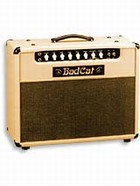
    From top to bottom, the Bad Cat is 100 percent high-quality, including all-tube class A circuitry, point-to-point Teflon-coated wiring, resin-soaked transformers, welded steel chassis, 13-ply birch plywood cabinet, Celestion speaker, and… well you get the point; no shortcuts were taken here!

    The Hot Cat is powered by two EL34s that produce 30 watts, four 12AX7s in the preamp and a 5AR4 rectifier. The rectifier tube circuit accepts three different types of tubes, and can also be switched to solidstate.

    The amp’s controls include clean volume, gain, edge, level (for the dirty input), active treble and bass, brilliance, and master volume.

    One of the more compelling functions of the single-channel Hot Cat is that it can replicate two-channel performance. Using an A/B switch, the amp’s 12AX7-based preamp affords overdrive loading via the “Clean” input, and sweep control of the overdrive using the alternate “Hi-gain” input.

    Sound can be shaped via the switchable tube rectifier design, or the solidstate rectifier circuit, which favors a harder edge, less compression, and more sustain. The degree of overdrive content, overdrive edge, compression, and attack/decay are easy to tailor.

    And the cool stuff isn’t just on the inside, because the Bad Cat looks good, too, with its ’50s “diner chair” red sparkle vinyl, silver piping, black hardware, and backlit logo (reminiscent of something…), it’s one of the coolest-looking amps you’ll feast your eyes upon.

    We tested the Hot Cat with a ’59 Fender Esquire, a Hamer Newport Pro Custom with Seymour Duncan Seth Lover pickups, and a Peavey Wolfgang with its stock humbuckers.

    With the Peavey plugged into the dirty input, the gain and level at about 3 o’clock, and the master at 10 o’clock, the Hot Cat produced over-the-top, outstandingly smooth, crunchy overdrive. The low-end was huge and tight for a 1×12″ combo, with no farting out or mushy overtones. The voicing of the active bass and treble was excellent. When we tried the Hamer, the edge control added just enough bite to its Duncans. Note definition and sustain was great with both humbucker-loaded guitars.

    Pushed… Hard!
    But when we cranked up the master volume, the amp got amazingly loud for a 30 -watter, but retained its great tone. With the gain and level turn down, we got a good round blues tone with the Esquire and the Newport, the amp reacted well to volume changes on the guitars, keeping its natural clarity and warmth. The clean input is limited by the lack of any real tone controls except for the brilliance control, but it is still very usable, we just used the tone controls on the guitars and were happy with the sound.

    Nit
    The only way we could draw an even semi-questionable tone from the Hot Cat was when we inched the controls toward the ridiculous side. With all of them all the way up, tones begin to overlap, creating an out-of-phase tone that just didn’t sound natural.

    Recap
    Overall, the Bad Cat Hot Cat is fantastically designed and constructed with top-quality components, it looks very cool, and its overdrive tone could give any 4×12 stack a run for its money.


    Bad Cat Hot Cat
    Type of Amplifier: 30-watt all-tube combo or head.
    Features: Made in the U.S. all-tube class A circuitry, Celestion speaker, high-quality components and cabinet, high gain, external speaker-out, five-year warranty.
    Price: $2,599 to $3,199.
    Contact: Bad Cat Amplifier Company, Corona, CA, ph. (909) 808-8651, www.badcat amps.com


    This article originally appeared in VG‘s Aug. ’02 issue. All copyrights are by the author and Vintage Guitar magazine. Unauthorized replication or use is strictly prohibited.

  • Aerosmith

    A Retrospective

    Aerosmith was formed in the summer of 1970 in Sunapee, New Hampshire, when Jam Band bassist Tom Hamilton and guitarist Joe Perry got together with vocalist Steven Tyler. Shortly after, Joey Kramer was recruited as their drummer and guitarist Brad Whitford was brought in to round out the lineup. In an effort to launch their careers, the band felt it would be best to relocate to a major city. Later that year, they moved to Boston, where they shared a small apartment with all of their equipment and, like many other struggling young musicians, found themselves starving and looking for work. Each member took on odd jobs to help pay the bills.

    By 1972, Aerosmith had gained a strong local following, and a manager. At mid year, they signed a new management contract and landed a recording deal with Columbia Records. Their first album, Aerosmith, was released in January of ’73, and even with the hit single “Dream On,” it did little outside the Boston area. Still, the band continued to tour and build up a following around the college and club circuits. Then, in the fall of ’73, they recorded Get Your Wings, with top producer Jack Douglas. Despite critics’ comparisons to the Rolling Stones, Aerosmith refused to be discouraged, and continued doing what they did best, hitting the road opening for major headlining acts and gaining fans nationally. Finally, they caught the attention of critics.

    The band did not achieve mammoth success until the release of their third album, Toys In The Attic, in April of 1975. It went platinum that summer. Toys was succeeded the following year by another platinum LP, Rocks, which many consider the band’s finest effort.

    “Dream On” was re-released as a single and went gold in ’76, three years after its original release. “Walk This Way” was also released that year, and became the band’s second top 10 hit. In ’78, they released Draw The Line, which immediately went platinum. The following year, Live! Bootleg was released, and like their previous recordings, it earned platinum status.

    1979 through 1984 were shaky years for Aerosmith. In ’79, Perry left to embark on a solo career. He was replaced by Jimmy Crespo, and that year, the band recorded Night In The Ruts, which was followed by Greatest Hits in ’80. In ’81, Brad Whitford left the band and was replaced by Rick Dufay, with whom they recorded the appropriately-titled Rock In A Hard Place, in ’82.

    On Valentine’s Day, 1984, the original bandmembers reunited after an Aerosmith show at the Orpheum Theater in Boston, and in April that year they officially announced that the original lineup was back together and here to stay.

    In 1985, a regrouped Aerosmith recorded Done With Mirrors and spent the following year touring in support of its resurrection. The followup, Permanent Vacation, released in ’87, gained extensive radio play and sent the band back out on tour. The tour was followed by a return to the studio, which resulted in the release of Pump in ’89 and a long world tour.

    1991 allowed the band a break from the road and gave them the opportunity to write for a new album. In the interim, they released a three-disc boxed set, Pandora’s Box, which contained rare, previously-unavailable cuts. The next studio album, Get A Grip, was released in ’93, followed in ’94 by Big Ones and a complete 12-CD compilation of the band’s original Columbia recordings called Box Of Fire, as well as another world tour.

    This brings us up to the current chapter and their newest album, Nine Lives. The recording sessions began in ’96 and the record was completed and will be released in March.

    In retrospect, Aerosmith has worked hard to achieve the level of success they hold today, and they take nothing about it for granted. They’ve had a difficult climb to the top and know what it’s like to fall down the ladder of success and have to regain their footing.

    But against all odds, the band has stayed together and has grown to be stronger now than ever. Today, Aerosmith has been together for more than a quarter of a century and show no signs of slowing down. The band plans to hit the road in May, kicking off their tour in Europe, and returning to tour the U.S. this summer.

    Vintage Guitar: Who were some of your earliest musical influences?
    Brad Whitford: I’d say the Beatles were the initial firestarters for me, along with a lot of the English stuff, like the Dave Clarke 5 and the Stones. As I started to play the guitar, the influences became Clapton, Hendrix, Page, Jeff Beck.
    Joe Perry: I do remember the girls in school when I was around six, seven or eight, and I remember everybody making this fuss about a song called “Hound Dog” and all the older girls were flipping out about it. It was the first time I ever saw girls react like that to music. I don’t know if I remember that it was a good thing or a bad thing, but I remember it. Later on, I remember, some of the first songs on the radio that really blew me away were by Ike and Tina Turner, and Roy Orbison. That’s when I started to get that fascination and feeling about music. Then, the next big thing was the Beatles, and that really did it for me. But all those early English bands were a big influence, too.
    Tom Hamilton: The Beatles were the biggest for me, then the Stones and the Yardbirds came along.

    VG: Was there any specific song, album or band that changed everything for each of you?
    BW: In between ’67 and ’69, I saw Zeppelin and Hendrix play live, and those definitely made major changes in the way I felt about music – major, life-changing experiences.
    JP: When I actually started getting into the music and started to see bands like the Jeff Beck Group play live, I think those were the bands that really started making an impression on me. When I saw The Who play at the Boston Tea Party doing “Tommy” in front of 500 people, that’s when I really heard loud guitar and it wasn’t just some distant thing coming in on the radio. These guys were doing it live and doing stuff that was incredible. Also Peter Green. I must have seen Fleetwood Mac about seven or eight times because they used to play in Boston all the time.
    TH: There was one song on Fresh Cream called “Sweet Wine.” It was a great song and I thought it was incredible and just so overwhelming. I saw Cream live at a club in Boston. The whole experience was mindbending and so was the first time I saw Led Zeppelin live. For so long, people had been trying to do their versions of that style, and when that band came out there had never been anything like it. There had never been any bands recorded like or that sounded like them. There had never been any albums that had drums like that or vocals like that. It was so much stronger, juicier and more powerful than anything that anybody had ever done, and it had a lot of feel in it. On the records, you could really hear the drums and hear each sound separately, instead of just “drums” in general.

    VG: Which players influenced your choice of instruments when you started playing?
    BW: For me, it was the same players, really. I bought a new Les Paul the day after I saw Led Zeppelin. It was before their second album was out and they were so on and so good that night. Nothing against Jimmy, because I love the man, but I don’t think that I ever heard him play that well ever again. It was one of those nights that he was in tune with the cosmos and it was absolutely mindblowing. He was playing all those great solos note-for-note, like “Communication Breakdown,” and it was just devastating. I swear, I bought a Les Paul the next day. I didn’t have one at that point, I had a Jaguar. The next thing was to get the amplifiers. He had two stacks of Marshalls and it was like no sound I had ever heard before.
    JP: The first time I saw Jeff Beck, I think that’s when I turned around and said “…I have to have a Les Paul.” I saw them when they were touring on their first record. I actually sat in front of his amps when they were doing “Plynth” and “Shapes Of Things” and I had to have a Les Paul after that. It sure didn’t sound like the Yardbirds. But it was really those same guys who influenced me to play – Beck, Hendrix, Clapton, Page and Peter Green – that influenced the gear.
    TH: As far as my basses go, what I used was whatever the guys I listened to were using, but I was always a Jazz Bass freak.

    VG: In what ways has your own style evolved over the last 25 years?
    BW: I think it’s becoming a little less complicated and very straightforward. I feel like I never stop learning how to approach it. From the time I first started playing, I’ve always thought that you could learn from anybody, whether he was a good or a bad player. There’s always something they did or some aspect of their playing you could look at and pick up, and I still find that true. I still watch people play and there are little things that you can pick up.

    The way it’s evolved for me is, I think I’m just trying to be more straightforward by trying to think more in terms of melody and looking for those special notes. What still works for me is not how many notes, it’s that single-note thing and the space between the notes, and finding just that right note, that seems to be more important than how many are in there. The air and spaces around it are really important because that’s the dynamic of it. I’ve always loved the shredding, it’s very impressive, but there’s never a breath in it. That’s cool for certain things and I still like it, but the things that really get me off are the soulful approaches of players like Stevie Ray Vaughan or Jeff Beck. You can’t beat that, it always puts you back in your seat, at least for me.

    I’m trying to fine-tune by bringing more of that soulful approach into my own playing. That’s where I want to focus, and not be concerned with trying to play like someone like Edward Van Halen, because I can’t, and I never will. Part of it is getting in touch with what your style really is and then being true to it, because that’s the thing you’ve got to sharpen and hone. If you’re trying to do something that’s not really you, it doesn’t work. For me, what’s real is a very bluesy R & B kind of approach and that’s what lights my fire. Also, fine tuning that whole approach to rhythm guitar, which is a lot more of what the younger players are recognizing, and I think that’s great.
    JP: We’re still playing rock and roll, but I think sonically, we’ve moved into some new spaces, and some new places, melodically. As far as my own style, I just kind of like playing what the song calls for.
    TH: It’s kind of a continuum. One thing that really has contributed to my just being able to adapt as a bass player is that a lot of songs get presented to us as a demo where generally either Joe or one of the co-writers will have done a bass part, and a lot of times it’s a damn great bass part. So my challenge is to capture the spirit of the song and if there’s a certain direction the bass needs to go, I respect that, while at the same time have it be me, playing it with my ideas and my feel. That’s very challenging and sometimes very scary, but I think that it’s good for the way I approach things and how to come up with the best possible bass part for a song.

    There’s an old expression, “What doesn’t kill me makes me stronger,” and I think it’s just made me have to reach further into myself in terms of coming up with interesting parts. I can’t really hear the evolution of my playing because it’s such a gradual thing and it’s not something that stands out to me as being really obvious. I do notice that I seem to be more willing to shoot from the hip when we’re doing takes and throw stuff in, whereas before I felt so pressured by the studio environment that I would go in and have everything completely organized and just play everything that I had planned in advance. This time I felt a lot more comfortable and better prepared so I was more able to make up a fill on the spot.

    VG: What are the main guitars and amps within your own collections?
    BW: I’ve got a pretty nice ’59 sunburst Les Paul. Actually, the first time I used it to record in the studio was on “Fallen Angels” on our new album, Nine Lives, and I couldn’t believe how good it sounded. I also have a pretty unique piece that you never see; it’s a white ’65 Stratocaster with a bound fingerboard, and there were very few of them made. As far as I know, there are less than 50 of them in existence. I’ve only seen mine, but I know that Ry Cooder and Jeff Beck both have the same ones, but I’ve never seen any others. Twenty years ago, I had some really nice vintage pieces, but I sold most of them over the years. I think the very first really nice vintage piece I ever bought, which I hate to even think about because I don’t have it anymore, was a ’57 goldtop Les Paul with a Bigsby, that I bought from Robb Lawrence. I paid him $1,000 for it, which was the going price at the time. I had that one and quite a few others, and I think it’s a terrible thing that I don’t have them anymore, but that’s just the way it is.

    But for now I’ve got a couple of very nice guitars and I figure that’s all I really need. I especially like my ’59 Sunburst and black ’59 triple-pickup Les Paul Custom. I’m not really so concerned about how they look, either. It was nice to have some of the premier cherry tops, but when it comes down to buying one for tone, you’ve got to be like Ray Charles when you buy these things – put your darkest sunglasses on and put on your best set of ears, because in the end you don’t see the guitar when it’s coming out of the speakers of someone’s stereo and some of those guitars just sound amazing, but they don’t necessarily look that pretty. The other side of that is that there are some really beautiful ones out there that really sound incredible too, but you’ve got to listen with your ears. That ’59 triple-pickup Custom is one of the most amazing sounding Les Pauls that I’ve ever owned and it’s not in great shape, but boy does it sound unbelievable. It still has the original fret wire on it, and I love it.

    For amps, I’ve primarily been using setups of the 50-watt Wizard Metal head and Bogner Ecstacy 100 head, which is what I used on the new record through a 4 X 12 cabinet. The Wizard amp came directly from Rick St. Pierre and it’s really one of the nicest amps I’ve heard. I also have an old Fender Super 6 and a Vibroverb, which I used on the record, too, but I’m not sure if those tracks ended up on the final mix. I still use the Fender Tone Master and Peavey 5150s, too.
    JP: I think my Vox AC-30 was a real find and I like my ’60 Les Paul a lot, although I also play the new ones. I think the new ones have more bite. The old ones have a mellow, rich sound and that’s sometimes not what a song calls for. I think I’m getting less and less hung up on finding the ultimate amp and guitar. My collection is always kind of shifting around, but what I’m playing today is really a lot different from what I was playing three years ago. I always try to boil it down to a situation where if I was going to do a gig and all I can carry is a guitar in one hand and an amp in the other, what would I take?

    Of all the amps I have, I think the Fender Tone Master would be the one, although I couldn’t carry a Tone Master and a 4 X 12 in one hand. I would probably have to choose the Tone Master and a Les Paul, whichever guitar it would happen to be that week. Every amp colors your sound to some degree, but some more than others, and I like an amp that’s what I like to call “transparent” because you can tell what kind of guitar you’re playing. The Tone Master is probably the most transparent amp, with the best qualities of the Marshalls, the Wizards and those types of amps, meaning that when you plug into it, you can still tell that it’s a Strat, a Les Paul, a Silvertone, or you can tell it’s the Hofner 6-string that you’re playing.
    TH: I have a lot of stuff and I’m always wanting more. I have an early-’60s stacked-pot Fender Jazz Bass, which I used a lot on the earlier recordings. I also have a couple of Music Man Sting Rays from the late ’70s, and they’re pretty awesome. Additionally, I have a Hofner Beatle bass, a Sadowsky 5-string and a Sadowsky 4-string that I recently got while we were recording the new record, a fretless Fender P-Bass, a newer Fender Jazz Bass with active electronics, a couple of Gibson basses, a Yamaha TRB-5, some Tobias basses, a custom 8-string, and some others. For amps, I just started using an Aguilar preamp, which I used in the studio on the new record with a MESA/Boogie Bass 400 power amplifier through a Hartke 1 X 15 cabinet. I usually use Hartke cabinets live, too. For combos, I have a Hartke RS1200 wedge combo, a Gallien-Krueger 200MB and a few other ones.

    VG: What do you feel are the major differences between new and vintage instruments in regard to the tone, the feel and the reliability? What do you see as the advantages and disadvantages of using each?
    BW: Well, with some of the vintage stuff, you don’t have to look for the tone, it’s just there. For vintage amps, I have a pile of old 50 and 100-watt Marshall heads, which I didn’t even use on the new record, but all you have to do is plug them in and they have amazing tone and they’re unique. They may have a little more buzz than the new amplifiers, but who cares? Some of the newer ones I’ve heard are going about getting the sound differently and I don’t really know much about what goes on inside them, but I guess it’s just in the way they put them together and in the parts they use; but those [original] Marshalls were made in a different era. I don’t know if the old parts were low-grade or high-grade or what they were.

    The beauty of that was that no two were ever alike and I don’t think that situation really exists anymore to the degree it did back then. Out of all the Marshalls that I have, there aren’t two of them that sound exactly the same and I think that’s really cool. All the older stuff was like that, like the HiWatts I have. You pick up two of them and they’re just two completely different animals. I think [with modern technology] they’ve unlocked some of the secrets of that old stuff, as far as the sound, but because they’ve studied it and turned it into a science, magical amps don’t “just happen.” Those old amps “just happened,” now it’s like a science of how to make a new amp sound like those old 100-watt heads. That’s how we’ve got the Bogners and the Wizards and some of the other high-end hand-built amplifiers. They were a study of a particular amplifier, like some guy’s killer plexi or some guy’s killer 50-watt, and someone had to figure out how to get that sound every time.
    JP: I think that you’re always courting danger when you rely on an old Marshalls to sustain you through a gig. The newer ones are better for that. That’s the thing about vintage gear; do you really want to beat the

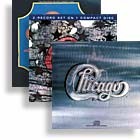
  • Chicago – Chicago I, Chicago II, Chicago III

    Chicago I, Chicago II, Chicago III

    I hear all you naysayers. You’re going, “Wait. This is a guitar mag, and you’re reviewing three albums by a lame pop band?” Well, that may be partially true. But these are the first three efforts by an excellent pop/rock band that featured one of the best and most underrated rock guitarists of his generation – Terry Kath.

    But don’t take my word for it. Jimi Hendrix once told other members of Chicago after catching the band in 1968, “Your guitar player is better than me!” While it may not be true Kath was actually better than Hendrix, he managed to mix some of Hendrix trademark sounds with a little bit of jazz and his own personality to develop a style that still sounds fresh.

    A lot of the songs on these three reissues from Rhino are familiar to most of us. They’re played nonstop on classic rock stations. Don’t let that wear you down, though. The guitar solo from Chicago II‘s “25 or 6 to 4” is still one of the gems from that era. It actually starts with the fills after the vocal lines. Then goes through some killer licks into a wah solo. The jabbing solo on “Make Me Smile” is truly a unique effort, especially for the times. Not a lot of other guitarists were throwing jazz-influenced lightening-fast runs into their solos.

    On Chicago I, Kath’s bluesy lines set the table for the horns on cuts like “Introduction,” and the wonderful “South California Purples.” The latter actually was one of the first riffs I ever learned. Both songs have solos to die for. And killer tone, as usual for Kath… thick and tubeish when called for, otherwise clean and bright for runs that’ll make your jaw drop. That first album also has the odd “Free Form Guitar,” which is basically seven minutes of Kath, alone in the studio, wreaking havoc on his guitar. Divebombs, screeches, things running across strings, massive amounts of feedback… it’s all there.

    Yes, Hendrix and Jeff Beck had done this already. But to hear a guy do it in the midst of songs like “Beginnings,” and “Does Anybody Really Know What Time It Is?” causes one to pause and reflect.

    Chicago II has plenty of great Kath moments, too. The aforementioned “25 or 6 to 4” and “Make Me Smile” stand out, but so do cuts like “It Better End Soon: 1st Movement” which is funk heaven. And the fills on “The Road” are awesome.

    Chicago III also has its share of guitar moments. The opener, “Sing a Mean Tune Kid,” lets Kath show off his funk/wah chops. The big, bluesy bends of “I Don’t Want Your Money” let him show off a rootsy side. And the breezy “Happy ‘Cause I’m Going Home” lets Kath shine on acoustic.

    I’ve always thought he was the best singer in the band, too. His Ray Charles-influenced vocals were a highlight. That’s him on “Make Me Smile.”

    The other musicians here were all more than capable. And listening to Peter Cetera’s wonderful bass playing throughout these records, it’s hard to imagine the same guy having hits with god-awful songs like “The Glory of Love.” And hats off to drummer Danny Seraphine. He was the perfect player for this kind of band.

    I don’t think there’s any doubt that Kath was the heart and soul of this band. After his death in a firearms accident in the ’70s, the band was never the same. They did manage another album or two of decent stuff, but that was followed by some of the worst “adult contemporary” music you’d find. Yes, in the old days they could come off as pretentious and boring when the “artsy” bug bit them, and even time can’t justify some of the lame “us against them” late ’60s lyrics they came up with.

    In the past decade or so they’ve become almost a parody of themselves. Filling in spots occupied by Kath and Cetera and others with young guys only serves to amplify the original band. Members of the band did say Kath’s death finalized a pull for the identity of the band. Needless to say, the soulless part won.

    Okay, I’ve said my piece. Kath was one of the major guitarists of this era. The fact that the band was universally hated by critics probably didn’t help. Tough to grab someone’s ear when they’re being told by the so-called “hip” that this band is no good. Check out these nice reissues from Rhino. Kath’s playing won’t disappoint you.


    This article originally appeared in VG‘s Nov. ’01 issue. All copyrights are by the author and Vintage Guitar magazine. Unauthorized replication or use is strictly prohibited.

  • Fender Clapton and Beck Strats

    Slowhand meets El Becko

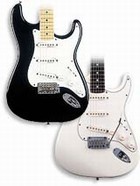
    Fender’s Signature line of Strats and Teles have always been of great interest to guitar players, and are now even more so since they’ve updated the Eric Clapton and Jeff Beck signature Stratocasters.

    What’s different, you ask? The Clapton Strat is fitted a trio of Fender’s new Vintage Noiseless pickups, which complement its powerful active-tone controls. The Beck axe also sports new pickups, but also a new neck shape and a contoured heel. Let’s dive into greater detail and see what each guitar has to offer.

    The basic materials on the Eric Clapton include an alder body, a maple neck with a soft “V” shape, and a 22-fret maple fingerboard with a 9.5″ (241mm) radius. Its chrome hardware includes Fender/Gotoh locking tuners and a “blocked” American Vintage tremolo. (It’s blocked because Clapton doesn’t actually use the tremolo, but simply prefers this style of bridge. Hey, he’s Eric Clapton – he can do whatever the heck he wants.)

    For electronics, this Strat has three Vintage Noiseless pickups with a 5-way selector and active electronics. The top tone knob is a Master TBX Tone Control. The TBX stands for T (treble) B (bass) X (Cut) and it is a 500K-1M ohm control with a center-notched knob. When the control is in the center, the circuit is not on. If you turn the control one way, the bass is increased (treble cut) and the other way boosts the treble (bass cut). In plain English, the TBX invokes a dramatic tone shift: super-muted and bassy like a jazz guitar when turned one way, and bright and crystal-clear the other. It’s very impressive.

    The bottom tone control is the Master Active Mid Boost (0-25 dB), which is simply a midrange booster. This can be useful for solos when you want a little extra oomph to get you over the top. More on this later. Finally, in the groovy color department, Slowhand has chosen Olympic White, Black, Pewter, Torino Red, and Candy Green.

    Over to El Becko. The guitar of this fabled Stratmeister is also laden with new features. One of the biggest is its new neck shape. The original Beck guitar had a big ol’ “C” shape neck that was intimidating to some, feeling more like a Louisville Slugger bat than a guitar neck. Available in Olympic White or sexy Surf Green, the new Beck Signature has a smaller “C” profile that is more user-friendly. It’s not tiny by any means, but considerably more diminutive than its predecessor. Other neck features are 22-fret rosewood fingerboard (also 9.5″ in radius) and a contoured heel for easier access to the upper frets.

    For pickups, the Beck has dual-coil Ceramic Noiseless models and passive electronics with a master volume and two tones. It also features an American 2-point synchronized tremolo with an LSR Roller Nut on the other end of the neck. The result is one of the most flexible whammies around – indeed, you can safely say the tremolo plays like buttah.

    So enough gabbing about specs – how do these Strats sound and play? I always think of Eric Clapton as a more traditional rock player than Jeff Beck, but ironically, the Clapton Strat is clearly the more hi-tech instrument of the two. Tonally, you can get a fine array of Strat tones, from bell-like to the down and dirty. The TBX and Mid Boost controls can really beef up the tone to the point where the Vintage Noiseless pickups sound more like humbuckers. I ladled on the distortion and, coupled with the Mid Boost, evoked some ‘bucker tones not too from those of Carlos Santana, a player who tone is synonymous with humbuckers. Essentially, you can think of the new Clapton Strat as two guitars in one – dial in a Stratocaster tone for some parts and then use the active tone controls to bring in some fat humbucker colors.

    As for playability, the Clapton’s “V” neck is also very comfortable, as the V profile really sits snugly in the palm of your fretting hand. The excellent fretwork also allows for super-low action, if that’s your cup of tea.

    The Jeff Beck guitar is more of a straight-ahead Strat, with passive tone controls on its dual-coil pickups. You can get a bevy of classic Stratocaster sounds, and really crank it up with distortion. The alder-bodied guitar sounds very bright and should be able to cut through just about any playing situation. And again, I was really impressed by the premium hardware: a great tremolo system, roller nut, and locking tuners.

    While the neck is slimmer than the original Beck Strat, it’s still substantial, particularly around the lower frets – in short, this neck is a handful. But I got used to it after a while and it’s hard to deny the tone that a fat, resonant neck can help produce. If you put a skinnier neck on this guitar, it likely wouldn’t sound as full and meaty. Such is the reality of guitar physics.

    Wrapping up, Fender has done a great job in updating these two Stratocasters. If I was in the position to choose one versus the other, I’d opt for the Beck, due to its chunky Strat tones and truly wicked whammy. But I could see another player going for the Clapton due to its wide range of sounds and that very comfortable “V” neck. Either way, you can’t lose. These are both excellent Stratocasters and definitely worth a test drive at your local guitar shop.


    Fender Jeff Beck Artist Signature Series Stratocaster
    Type of Guitar: Electric solidbody.
    Features: Alder body, maple C-shaped neck, rosewood finger-board, medium jumbo frets, 25.5″ scale length, chrome Fender/Schaller Deluxe locking mach-ine heads, 2-point synchronized tremolo with stainless steel saddles, three dual-coil ceramic Vintage Noise-less pickups, 5-position switch, mast-er- volume, TBX tone circuit, aged knobs and pickup covers.
    Price: $1,849.
    Contact: Fender Musical Instruments Corporation, (480) 596-9690, www.fender.com.

    Fender Eric Clapton Artist Signature Series Stratocaster
    Type of Guitar: Electric solidbody.
    Features: Alder body, maple “soft V”-shaped neck, maple fingerboard, Vintage Style frets, 25.5″ scale length, chrome Fender/Gotoh Vintage Style tuning machines, “Blocked” American Vintage Syn-chronized Tremolo, three Vintage Noiseless pickups, 5-position switch, master vol-ume, TBX tone circuit with active midrange boost.
    Price: $1,849.
    Contact: Fender Musical Instru-ments Corporation, (480) 596-9690, www. fender.com.


    CS1 electric 6-string courtesy of Citron.

    This article originally appeared in VG‘s Sept. ’01 issue. All copyrights are by the author and Vintage Guitar magazine. Unauthorized replication or use is strictly prohibited.

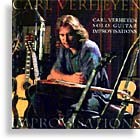
  • Carl Verheyen – Solo Guitar Improvisations

    Solo Guitar Improvisations

    I guess Carl is mostly known for his soaring electric work that shows off terrific chops and great compositional skills. Here, things are a bit different. It’s mostly just him and an acoustic performing songs by other folks with a few originals thrown in. Carl explains on the liner notes what many of us end up doing; he says when he was a kid he learned all the licks – “Satisfaction,” “Day Tripper,” etc. When his father heard, he asked Carl if he knew any whole songs. That was the inspiration for this, and indeed, he has learned some songs!

    His opener is the classic “I Loves You Porgy” from Porgy and Bess, and he mixes chordal work and single-line stuff so beautifully that he actually makes one guitar swing. Really nice. Oh yeah… did I mention the song choice here is somewhat eclectic? I never really pictured (or heard in my head) the Kinks’ “Sunny Afternoon” as a solo acoustic pieice. But man does it work!

    Joni Mitchell’s “Cactus Tree” lets Carl show his stuff, but still captures the essence of Joni’s sound. An amazingly hard thing to do, but he pulls it off. There are other nice covers, too. “God Bless the Child” lets Carl be nice and nasty at the same time. And his version of Jerry Reed’s “Mr. Lucky” is wonderful. Toward the end, there are a few originals that almost act as a suite, allowing him to show his very nice compositional skills and treat us to lessons in fingerstyle picking, and some fine dobro.

    This is definitely one of those records guitarists will love. Visit chase music.com.


    This article originally appeared in VG‘s Feb. ’02 issue. All copyrights are by the author and Vintage Guitar magazine. Unauthorized replication or use is strictly prohibited.