When Arhoolie Records’ Chris Strachwitz stumbled onto Mance Lipscomb, the amazing 65-year-old Texas bluesman and songster who had never recorded, in 1960, it was a bit like an anthropologist coming across a saber-toothed tiger or a woolly mammoth. We knew they existed once, but no one had seen one in a while.
But when the steel guitarists who play at the Keith and Jewel Dominion Holiness Pentecostal churches came to Strachwitz’s attention in the late ’90s, it was akin to discovering an entire new species. And there were literally dozens of these musicians, each amazing, each different from the next. In American folk music, those kinds of finds just don’t happen anymore.
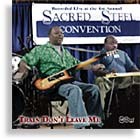
In a short time, Arhoolie has released several CDs and a video spotlighting the music, and this, the label’s sixth such release, was recorded live at the first-ever Sacred Steel Convention, held last spring.
“Praise Him with stringed instruments,” sayeth Psalm 150:4 – like a Melobar Power Slide, in the case of Calvin Cooke. Aided by his wife, Grace, Cooke gives a better treatise on the development of sacred steel than any musicologist ever could, on “Have You Tried Jesus.” The track begins with just a bass drum, because, as Calvin explains, that’s all they had in the old days. Then Mrs. Cooke’s booming voice enters. Pretty soon, Mr. Cooke continues, they add a rhythm guitar and a whole drum kit, and things were really rocking. After the addition of an electric bass and a tambourine, Calvin points out that “normally they had an organ, had a piano…but in our church we had a steel guitar” – at which point his Melobar slices into the proceedings, ratcheting the already-rising energy level up several notches.
The spirited set features 11 steel players (including two in tandem), some utilizing pedals, some preferring lapsteels. Elder statesman Aubrey Ghent, who has already released a solo Arhoolie CD, cooks on the title tune, and 21-year-old Bryan “Josh” Taylor backs his father’s vocal on the hand-clapping “God Is a Good One,” with a distorted, glassy tone reminiscent of David Lindley or Sonny Landreth.
The program ranges from the primitive stomp-and-holler of “What’s His Name? – Jesus!” (highlighting some high-speed right-hand picking courtesy Chuck Campbell) to a funky reworking of the “Come Together” bass line on “See What the End Gonna Be” (with Lonnie “Big Ben” Bennett’s pedal steel, which also shines on an instrumental “Will the Circle Be Unbroken”).
Normally providing background to sermons, the concert setting gives the players a chance to put their slide work center stage, and each rises to the occasion, and then some. Gospel music is always best enjoyed live, but sadly most attempts at capturing that fervor on record fall a bit short. All the more kudos to Strachwitz (as executive producer) and producer Robert L. Stone for succeeding in capturing this lively music and putting the listener right in the front pew.
This article originally appeared in VG‘s July ’01 issue. All copyrights are by the author and Vintage Guitar magazine. Unauthorized replication or use is strictly prohibited.
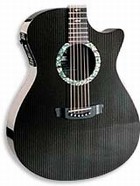
RainSong is a Hawaii-based company (in the process of moving to the mainland) that has been building its unique graphite/epoxy instruments since 1995, and earning a huge reputation for its instruments’ tone, appearance, durability, and quality.
The company’s WS 1000, one of its best-selling models, is a single-cutaway dreadnought/jumbo body made of woven graphite using what the company calls “projection tuned layering” construction to eliminate the need for braces in the body or on the soundboard. The neck is made of a graphite/epoxy mix with 21 nickel silver frets and a 13/4″ tusq nut.
The whole thing is topped with an abalone rosette, mother of pearl shark fretboard inlays, and a high-gloss UV protective urethane finish that gives the woven graphite a cool, three-dimensional look.
Playability
The WS 1000 has a warm, natural feel that hardcore fans of wooden instruments might not expect. It’s very light and comfortable to play, with a complex radius round-over on the back that rests quite comfortably your chest. Our test guitar earned bonus points for being set up very well, with good, strong action and a straight, level neck.
Sound
Because the RainSong has no internal bracing, it is loud, with outstanding projection. It throws clear, deep, bass and shimmering treble with a slight metallic quality. The mids were scooped, giving it a plugged-in sound.
The WS 1000 is equipped with the Fishman Blender, which had both a saddle pickup and internal mic. We got the best results using only the pickup, which reinforced the great acoustic quality of the guitar’s deep, tight, lows and glossy highs. The mic, on the other hand, seemed to detract from the guitar’s deep, rounded sound.
If there’s a nit to pick, it popped up in loud, live gig settings, where drastic EQ maneuvers (to the point of sucking out all tone) were required to control feedback from the instrument through the monitors. We tried to use a feedback buster (rubber plug for the soundhole), but the soundhole was too large.
Overall, the WS1000 offers a pleasing, deep, natural tone, quality feel, and excellent craftsmanship. It’s a great “alternative” in the high-end acoustic guitar market. –
RainSong WS 1000 Type Of Guitar: Single-cutaway jumbo dreadnought. Features: Lightweight, durable woven graphite using “projection tuned layering” construction. Neck is made of a graphite/epoxy mix with nickel silver frets and tusq nut. Price: $2,245 Contact: Rainsong, 1-800-788-5828, www.rainsong.com.
This article originally appeared in VG‘s July ’01 issue. All copyrights are by the author and Vintage Guitar magazine. Unauthorized replication or use is strictly prohibited.
It’s almost ridiculous how many great jazz guitar albums this label puts out. And here is more.
The Burrell CD features the legend in a live setting with the likes of Sir Roland Hanna on piano, Jerome Richardson on sax, and many others too numerous to mention. It’s a fine album from start to finish. It covers lots of ground with songs by composers from Scott Joplin to the Gershwins to Miles Davis to Chick Corea. Burrell shines, whether it’s imaginative single-line work as on “Tones for Joan’s Bones,” or a beautiful two-minute chord solo intro on a medley of “Embraceable You/Quasi Modo.” He even sings on one cut! It’s a tribute he wrote to Ella Fitzgerald. A real fine album from a group of masters.
This article originally appeared in VG‘s Feb. ’97 issue. All copyrights are by the author and Vintage Guitar magazine. Unauthorized replication or use is strictly prohibited.
The double-bender guitar and Jimmy Olander go hand-in-hand. The innovative guitarist of Diamond Rio fame is a converted banjo player who is now mastering a whole new double-bending style that is as much a part of Diamond Rio’s sound as its award-winning vocals. He has performed on other projects; he exchanges licks with Steve Wariner and Lee Roy Parnel on “Working Man Blues” from the Merle Haggard tribute LP, Mama’s Hungry Eyes, and Diamond Rio contributed “Lyin’ Eyes” to Common Thread, the Eagles tribute album.
A fan of Ella Fitzgerald, Olander has a 150-pound dog named Elvis, a ProTools studio in his home, countless guitars (four Jerry Jones models, a Rickenbacker, Bajo Tele, Dobro, tons of acoustics, Taxicaster, and many more), enjoys skydiving, and is a creative guitarist who has found his own voice with the instrument.
Vintage Guitar: Did you come up with the concept of the double-bender guitar? Jimmy Olander: It’s (Nashville luthier/repairman to the stars) Joe Glaser’s baby. He came up with the concept before I met him. He had just moved to Nashville, and I was still in college, playing banjo. A mutual friend hooked us up, and I ordered one of the first three guitars he made. I had nothing to do with the invention.
How did your technique with it develop?
I went straight from banjo to the double-bender guitar. Since I wasn’t a traditional guitar player – I didn’t play licks and bend strings with my fingers, then try to use the stringbenders. I just got a double-bender and started to learn how to play it.
The Nashville Guitars album was the idea of famed session guitarist Louie Shelton (VG, Oct. ’00). How were you approached to contribute to the CD?
Louie called Joe, who has been very instrumental in my career, then Louie called me, told me the concept, and it sounded really cool! I got the ProTools ready at home and wanted to cut it, but at the time I was sick with the flu – and I seldom get sick. So basically, I didn’t think it was going to happen. I wanted to do it, and I told Louie that. About three weeks transpired and it turned out things took a lot longer to develop, so I had time to learn to use the hard disk recorder. I wrote “Less Taste/More Filling” for it; Louie wanted that Nashville guitar sound – Tele, Strat – guitar, guitar, guitar, like we were getting paid by the note (laughs).
I wrote the song on the computer by throwing up a little drum groove, writing a few bars, working on it, and changing things. It kind of just developed. I actually learned how to use my home studio by working on this record – it was the first thing I cut on ProTools. I was writing the song with the manual open, trying to do this record (laughs)!
What does your home studio consist of?
It’s a ProTools Mix Plus system and a MacIntosh 9600. I plugged into an Avalon mic preamp (V7-734) and went direct into the computer. Also, a Digidesign digital converter takes the analog signal, converts it, and sends it into the computer. Everything else was in the program. Amp Farm is installed and the preset I used was the ’63 Vox AC 30 Top Boost with 2×12, mic’d “near-on” access.
And the playback speakers?
Mackies given to me by Mike Clute (co-producer for Diamond Rio). He mixed this project.
Where did the drums and bass come from?
It was just can drums. I got some loops off Acid (a PC-based program) and programmed a quick little part, but then had a drummer (David Lawbaugh) overdub some D-Drums on it. Then the bass player, Stephen Mackey, came in. I originally played the part, but it’s nice to have a real bass player. It all worked out pretty good.
Could you explain the working function of your dual-stringbender guitar?
The G string lever works off my shoulder strap. You push the guitar down for it to operate. The B string works off a keychain on my belt loop. I push the guitar away from me to engage it.
What about your strings?
10-46. I like to play with relatively high tension and high action. Tougher to play, but sounds better.
What are your favorite guitars?
The nicest acoustic I have is custom-made by John Grevin. It’s a fantastic guitar. I’ve done all the Diamond Rio records with it. The electric is the Mother Maybelle Tele copy made by Joe. “Wildwood Flower” is the first song I learned to play.
What kind of pickups do you use in that guitar?
One pickup is all I seem to play with. This is a prototype Seymour Duncan is developing. It’s a split combination of Alnico 5 and 2. It makes the high strings sound a little compressed and the low strings a little spankier. All my guitars are set up with a direct-out switch – pickup direct to the amp. I have to engage the knobs to use them. I usually play at full volume.
What about live?
On my live gig with Diamond Rio, I play with two Matchless 30-watt amps with two 12″ speakers run in stereo. They’re offstage. We use in-ear monitors, so I have my own stereo mix. And as far as volume pedals and that type of stuff, I let the soundman handle that. I don’t bleed into the vocal mics, and I also get to play as loud as I want…it’s a nice healthy volume. The amps start to distort just a little bit.
Apparently, Clarence White was an influence on your career. What other players have you admired while learning your craft?
When I think modern string-bender guitars, he was the guy! He and Gene Parsons, when they were with The Byrds, they had the B bender. The classic thing. My guitar here is kind of the disciple of that, in its own way. The same concept – off the shoulder strap.
I wasn’t that familiar with Clarence as an electric player, but I had listened to him in the Kentucky Colonels. As far as stealing licks from Clarence, I did that mostly while he was in bluegrass. His phrasing was just amazing. It’s everything you’d want to hear. I’m also a big fan of Tony Rice, and you can hear Clarence’s playing in his in a major way.
When I moved to Nashville, my first guitar hero was Leon Rhodes. Leon was a longtime Texas Troubadour and an amazing swing guitarist and Grand Ole Opry staff guitarist. Joe Glaser let me go through his album collection, and I tape recorded and learned alot of stuff Leon played. He’s amazing still! I also listened to a bunch of Albert Lee, Ray Flacke, and Vince Gill. Another guy, Brent Mason, was playing a gig at The Stagecoach (in Nashville, now closed). I’d bring in a tape recorder and set it right in front of his amp. He was very inspiring. You could hear him six nights a week and every song was great! I would come home and woodshed the tapes. He was very nice to let me do that.
This isn’t your first instrumental. “Poultry Promenade” was on Diamond Rio’s self-titled debut album, “Big” was on IV, and “Appalachian Dream,” was on Love a Little Stronger. So you’ve had a taste of this.
I’ve been the only one writing the instrumentals. And I must admit, when I started skydiving I went crazy for it for a while, so I wasn’t writing that much. You can tell the albums without the instrumentals – I was skydiving a lot then (laughs).
What should we expect in the future?
Right now I am working on a complete instrumental record. I’m about a third of the way into it.
Photos courtesy of Jimmy Olander.
This article originally appeared in VG‘s June ’01 issue. All copyrights are by the author and Vintage Guitar magazine. Unauthorized replication or use is strictly prohibited.
The late Keith Whitley, who died at age 33 of acute alcohol poi-soning, was an example of why it isn’t always a good idea to try to live your lyrics if you’re country music singer. He started as a child, singing on the radio by age nine, and at 15 he was touring with Ralph Stanley’s Clinch Mountain Boys.
Whitley met Ricky Skaggs while he was with Stanley and went on to cut a bluegrass duo album with him. Next, he joined J.D. Crowe’s New South as their lead singer. Their album, Somewhere Between, features his spine-tingling, bent-note lead singing. His own solo career began like a rocket, with three number one singles in one year and a promising future virtually assured. Then came tragic death and the possibility of obscurity.
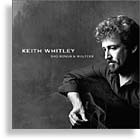
Sad Songs and Waltzes is a breathtakingly beautiful CD with a pervasive air of tragedy that settles like a mist when you put it on your stereo. From the first Lefty Frizzell cut, “I Never Go Around Mirrors,” to the final chords of Dycus and Barnes’ “Family Tree,” this album oozes essence of traditional country music like the smell of spilled whisky wafting from a sawdust floor. For anyone who is tired of the shallow gloss of hot country, these songs, delivered with heartfelt purity, are as welcome as rain after a midsummer drought. Even if you play it continuously, as I have, this disc never gets tiresome; there’s just too much great music.
If you’re already a Keith Whitley fan, you won’t find any new material here. The songs were culled from two sessions; a spring ’83 solo venture and songs done for Somewhere Between. Top-flight musicians including Randy Howard, Weldon Myrick, Ricky Rector, Kenny Malone, Pete Wade, J.D. Crowe, Jeff White, Wes Hightower, Alison Krauss, Dale Ann Bradley, and the Jordanaires can be heard throughout the album.
Mastering Engineer Denny Purcell at Georgetown Masters turns in his usual superlative job freshening up the older material and adding HDCD encoding.
If you like traditional country music and don’t already have all of Keith Whitley’s recordings, you need this CD. It is as perfect as a CD gets. See www.rounder.com
This article originally appeared in VG‘s March ’01 issue. All copyrights are by the author and Vintage Guitar magazine. Unauthorized replication or use is strictly prohibited.
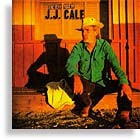
Most folks probably know J.J. Cale best by the covers recorded of his songs, from Eric Clapton’s versions of Cale’s “Cocaine” and “After Midnight” to Lynyrd Skynyrd’s “Call Me the Breeze.” That’s a shame, because Cale is one of hell of a guitarist and songwriter and musician in his own right. I’d even hazard to say I like his versions of his own songs better than Clapton’s.
This greatest hits collection is a worthy chronicle of Cale’s 10 years’ worth of records for Polygram. Spanning the decade from ’72 to ’82, this single CD includes Cale’s originals of the songs above as well as his smoking originals “Midnight in Memphis,” “Lies,” and more – a total of 20 cuts.
This article originally appeared in VG‘s Sep. ’98 issue. All copyrights are by the author and Vintage Guitar magazine. Unauthorized replication or use is strictly prohibited.
A Regal-made Model 19, with poinsettia coverplate and a Gumby-shaped headstock with drum veneer and stenciled “Gretsch.” Photo courtesy of Tom Gray.
When John Dopyera stormed out of the National shop in January 1929, his resignation stemmed from more than a spur-of-the-moment tantrum. For months, the inventor of the resonator guitar spent his evenings and weekends working with his brother, Rudy, on a secret project – a single-cone guitar they believed superior to the National Triolian. They called their new instrument the Dobro.
The Triolian’s bridge sat in a round wooden “biscuit” mounted in the center of a metal amplifying cone. John Dopyera developed the biscuit-bridge system for use in a ukulele, but felt the design did not sustain well enough when enlarged for a guitar. National’s president, George Beauchamp, overruled Dopyera and rushed the Triolian into production in late 1928. Beauchamp and Dopyera had been rubbing each other the wrong way for some time, and this came as the last straw. John and his brothers decided to split from National.
The Dopyeras turned the resonator upside-down and modified its V shape into a W, connected to the bridge by a long screw through the center. A radiating spider carried the sound from the bridge to the edges of the cone. Without a block of wood choking it, the inverted resonator vibrated freely and sustained notes longer than the biscuit-bridge cone.
Rudy and Emil (later called Ed) Dopyera left National soon after John.
The brothers named their new company Dobro (a shortened version of Dopyera Brothers). The word also meant “good” in their native Slovak language. Emil, the salesman, showed the prototype guitar to dealers in southern California and took the first orders. Two other brothers, Louis and Bob, helped finance the venture. In the spring of ’29 Dobro started production in the back room of Russell Plating Company. Within a few months the company moved to a new brick factory at 727 East 62nd Street in Los Angeles.
Dobro’s model numbers corresponded to list prices in a system that has long confused collectors. Because prices changed from year to year, guitars changed model numbers, and the same model number may have applied to several different guitars. For instance, 1929’s Model 45 was a dark, unbound student guitar, 1932’s Model 45 was a bound single-screenhole “Cyclops,” and by late ’33 the Model 45 was a spruce-top with two screenholes. This was not a progression of the same basic guitar. These were Dobro guitars that in those particular years carried a list price of $45. It was not a good system, and the company stuck it with until production ceased at the dawn of World War II.
Dobro’s original 1929 line included the unbound student Model 45, the Standard Model 55 with a bound fretboard, the two-tone French scroll carved (actually sandblasted) Model 65 with a bound ebony fretboard, the Professional Model 85 with a triple-bound mahogany body, and the Model 125 “De Luxe” with a walnut body and four-way matched back.
Custom Dobro guitars with gold-plated, engraved hardware and fancy inlay cost from $175 to $250. Round or square necks were available on all models.
Dobro also made mandolins, ukuleles, and “Tenortrope” banjo-guitars with round wooden bodies. By ’31 Dobro introduced the Model 50 tenor guitar, with a bound fretboard and a mandolin-size resonator in a guitar-size body.
Dobro started its serial numbers around 800. Later in the ’30s Regal in Chicago confused things by numbering a run of Dobros across the same range.
An early California instrument can be identified by square slot-ends in the headstock, coverplate screws in the points of numbers on a clock, and the lack of a dot at the 17th fret. The dot at the 17th fret was added in late 1930. By 1933 Dobro moved the screws to the half-hour points so a repairman could open a guitar without removing the tailpiece.
In ’32 Dobro modified its guitar line, with new model numbers ending in six instead of five. The unbound student guitar, its hardware painted silver instead of plated, dropped in price to become the Model 36. The Model 55 became the Model 56 (some ads specified hardware plated with nickel instead of chrome). The scrollwork Model 60 evolved into two styles: the Model 66, with a fretboard of red bean wood, and the Model 66-B, with a bound body.
Dobro introduced the Model 76, with a bound birch body and inlaid celluloid trademark, but made few of them. The Model 85 became the Model 86, with engraving added on the coverplate. Dobro’s Model 106 was a walnut guitar with a two-way matched back. The Model 156 was walnut with an inlaid fretboard and gold plating. Dobro’s tenor guitar came in three models, the 50, 75, and 100, with details corresponding to the Models 56, 76, and 106.
On the extreme high end was Dobro’s Model 206, with a spruce top, walnut back and sides, gold-plated and engraved hardware, and five-ply binding with a layer of gold sparkle in the center. Dobro made few Model 206 guitars – John Dopyera said no more than 12 or 15 – as showpieces for trade shows or by special order. Only three are known to exist today.
By this time the Great Depression had kicked into high gear.
Gold-plated guitars were hard to sell to people having trouble putting food on the table. Most of Dobro’s sales were in the lower end of the scale. To increase sales, Dobro had to make some even cheaper by simplifying the design and omitting some features.
In 1932, Dobro introduced a line of single-screenhole guitars, today known as the Cyclops instruments, which required less hardware and labor.
The least expensive was the Model 27, with an unbound body stained, painted silver, or brushed with a faux wood grain. Some ’33 square-necks had their frets painted on. The Model 45 Cyclops had a bound body with a rosewood finish. The Model 60 Cyclops had the same “carved” scrollwork and binding as the 66-B.
In mid ’33 Dobro replaced the Cyclops guitar’s full-sized screenhole with two smaller ones joined in a single frame. No model numbers for the double-Cyclops guitars have come to light, but there are two distinct styles. Some have no binding on the body, and others have ivoroid binding around the top and fretboard. Some double-Cyclops guitars, especially those sold through Montgomery Ward under the brand name Magno-Tone, have coverplates with radiating slots in a design called the poinsettia. Most of the double-Cyclops guitars date to ’33 and ’34, but Dobro apparently made a few as late as ’36.
California Dobro-made guitars appeared under a variety of brand names in the early 1930s, sold either through catalogs or by private music studios (guitar schools). Dobro often economized on guitars carrying other brands by installing no soundwells under the resonators or by cutting f-holes instead of installing screens. According to Emil Dopyera, part of the thinking was that if a guitar did not have the Dobro emblem it should not have the full Dobro sound. Budget Dobro guitars were sold under such brands as Hawaiian Radio-Tone, Michigan Music, Rex, and others. Emil later said, “If we got an order for 100 guitars with a special coverplate for a little less money, we did it.”
In Dobro’s 5,000-square-foot factory, the production of guitar bodies was limited by space. According to John Dopyera, in about 1931 Dobro bought a shipment of guitar bodies from Regal, in Chicago. Dobro assembled between 60 and 100 guitars with Regal-made bodies in its Los Angeles factory before deciding that shipping the bodies from Illinois was too expensive, especially if Dobro had to send the finished guitars back to Chicago for distribution. So the Dopyeras decided to ship the metal parts east and let a Midwestern company assemble some guitars, as National already did with Harmony.
Gibson expressed interest in the deal, but their representative made no effort to hide his opinion that the Dobro was not a real guitar, but a gimmick. The brothers took offense at what they called Gibson’s “holier-than-thou” attitude. They decided to go with Regal, which at that time was producing its own line of guitars as well as Lyon and Healy and Washburn instruments. Dobro and Regal divided the U.S. into two territories, with the Mississippi River as the center line; Dobro would sell to jobbers in the West, Regal in the East.
The first Regal-made Dobros reached the market by the summer or fall of ’32. In January ’33, Regal announced in Musical Merchandise its own line of ampliphonic instruments built with Dobro parts. Regal made identical guitars under both the Dobro and Regal brands. Dobro in Los Angeles skipped over most of the 4000s in their serial numbering, reserving those numbers for Regal-made Dobros. Regal Dobros of the mid ’30s are most easily recognizable by their round slot ends extending straight through the headstock.
In 1933, Dobro introduced one of the first electric guitars. George Beauchamp’s and Adolph Ricken-bacher’s Electro frypan appeared in late 1932, but in Seattle a musician named Paul Tutmarc had been selling electric guitars under the name Audiovox since 1931. Dobro employee Victor Smith claimed he had been working on an electric guitar as early as 1929. Art Stimson, who had worked with Tutmarc, came to Los Angeles and told the Dopyeras the Audiovox pickup was his own invention. He sold them all rights for $600.
1933’s Dobro All-Electric looked something like a standard Dobro with a bound mahogany body. But its coverplate had no holes and was engraved with lightning bolts. Two pickup blades rose through a slot in the coverplate, one under the three bass strings and one under the treble.
Underneath the coverplate the blades connected to a large horseshoe magnet and a heavy transformer.
In 1934 Dobro combined the pickup with a resonator in a bound mahogany guitar. A horseshoe magnet was mounted inside the back, and the pickup blades rose on stems through holes in the resonator. According to John Dopyera, all but one of these guitars were returned to the factory for refunds because their owners didn’t understand how to use them. Only one, serial number 6845, is known today.
At the 1934 NAMM show Dobro presented a revamped line of guitars, mandolins, and ukuleles. The shift from the old line was gradual, with some of the new models produced as early as 1933. By mid ’34 all previous models were discontinued. Because the mid ’30s were Dobro’s peak production years, the new line contained what are today the best known prewar Dobro models. All these guitars had bodies roughly 31/2″ deep at the butt, where earlier Dobros had measured closer to 31/4″.
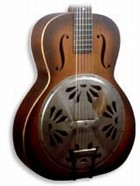
The Model 19 was Dobro’s cheapest resonator guitar – so cheap that it didn’t carry the Dobro emblem. Its decal said, “The Angelus, a Dobro Product.” It had no soundwell and smooth-sided f-holes instead of screenholes. The Angelus coverplate had a simple design of 12 round holes at the clock points.
The birch Model 27 proved Dobro’s biggest seller and remained popular through the decades. This was the model played on the Grand Ole’ Opry in the post-war years by both Bashful Brother Oswald and Josh Graves. In the ’70s, Jerry Douglas made his mark playing a Regal-built Model 27. Modern dealers and collectors usually identify a Model 27 as having binding on the top only, but rare early examples had no binding at all and most Regal-made Model 27s were bound top and back. The true identifying mark of a Model 27 is its lack of the three holes under the strings between the screenholes, an economy suggested by Regal and adopted by Dobro (Regal apparently never liked bothering with the three holes and even on high-end models never beveled the edges, as Dobro did). Many players hold that omitting the three holes improved the sound of the Model 27.
Dobro’s 1934 line included the Model 37, with a mahogany body bound top and back and along the fretboard, the Model 45, with a spruce top and mahogany back and sides, the Model 60, its scrollwork “carved” in a new pattern with a more prominent letter “D” on the back, and the walnut Model 100. Dobro in California marketed some budget flat-tops with trapeze tailpieces and 14-fret Spanish necks, using the name Dobro Jr. Regal produced only the Models 19, 27, 37, and 45, by far the more common models.
Both Dobro and Regal built tenor guitars with full-size resonators, shortened bodies and 14-fret necks. Dobro called theirs the 37T and 45T, with details corresponding to the Model 37 and Model 45 guitars (a Model 37 guitar was a 37G, and a mandolin a 37M). Regal offered more tenor guitar models but used a different numbering system, calling their tenors the 191/2, 271/2, 371/2, and 451/2.
In September ’34 Dobro introduced a line of metal-body guitars.
Rudy Dopyera wanted Dobro to build metal instruments from the beginning, but John was not satisfied with the soldering method used by National. The solder of the era was weak, and heliarc welding was not yet invented. When John Dopyera found a local shop making metal boxes by crimping the edges together, he learned the technique from the foreman and applied it to metal guitars. The crimped rims of Dobro’s metal guitars gave them the name “fiddle-edge.”
The first metal Dobros had solid headstocks and individual gear machines, at that time an expensive feature. Dobro’s metal guitars had “crossed window” soundholes; Regal’s had five-sectioned f-holes. The Dobro M14 (Regal 14M) “Leader” had a body of nickel-plated brass, the M15 Professional was of German silver, and the M16 “Artist” was of German silver, “…elaborately engraved.” Regal and Dobro used different engraving patterns. Serial numbers on the metal guitars ran in a new sequence with the prefix “M.” These instruments were the quality single-cone guitars John Dopyera wanted to build at National in 1929. But times had changed. Few of the M guitars sold in the Depression market.
In 1935 a less-expensive line of Dobro metal guitars replaced the M series. The Model 32 had a painted steel body. The Model 46 was made of “Dobro-Lite” aluminum, finished in translucent silver-gold or, later, painted.
The Model 62 had a body of nickel-plated brass with stencil-sandblasted designs on the front and back.
In January ’35, following a bitter lawsuit and a lot of wheeling and dealing, National and Dobro merged into one company under the control of Louis Dopyera. Two months later National-Dobro moved into a new factory at 6920 McKinley Avenue in Los Angeles, where the two lines came to share much equipment. The characteristic square slot ends of the earlier Dobros gave way to rounded slot ends passing through the headstocks at a slant, cut by the same router used on National guitars of that period. McKinley Avenue Dobros typically have spun cones instead of stamped ones and serial numbers in the 8000s. They include the Model 27 square-necks prized by collectors today.
At the ’35 NAMM show, Dobro introduced the prototypes of its new electric line: the No. 1 Hawaiian Guitar, with a one-piece body of cast aluminum, the No. 2 Standard Guitar, with a Regal archtop body and a pickup mounted in an oval metal housing, and the No. 3 Mandolin. The earliest aluminum lap steels had no knobs. Later Dobro added first a volume and then a tone control. The aluminum guitar was discontinued by 1937.
In early ’36 National-Dobro opened a branch office in Chicago, the center of the nation’s musical instrument business. National and Dobro instruments shipped from Los Angeles to Chicago were numbered in the same series with the prefix “A.” By ’37 the Chicago office grew from a warehouse to a full-fledged factory, building National and Supro instruments and handling so much of the company’s business that the Los Angeles plant finally closed.
In August ’37, National-Dobro contracted all Dobro assembly to Regal, agreeing to sell Regal hardware by the unit. By that time National-Dobro’s attention was focused on production and profitability.
Louis Dopyera had bought out all his brothers and, except for a few odd shares, was sole owner of the company. All five brothers continued to collect royalties for use of the Dobro brand name.
The introduction of a cheap, efficient gear machine in ’36 allowed solid headstocks on lower-priced guitars. Regal began using solid headstocks on all models of Dobros in a new serial number sequence beginning apparently at one and continuing into four digits. Mike Auldridge played a Model 37 from this series with the Seldom Scene in the ’70s and ’80s, and kept another only a few serial numbers different as a backup.
Once Regal took over all Dobro production, it ceased numbering any guitars except for a occasional enigmatic marks like “J” or “HH25.”
National-Dobro, however, continued the Dobro number series, which had reached the 9000s, usually with an “L” prefix, on National guitars. Regal never numbered resonator guitars carrying its own trademark, except by accident.
Regal mixed and matched hardware freely on all its Dobro guitars, apparently using whatever tailpieces or coverplates were handy at the time.
After ’37 Regal used the f-hole and crossed-window dies on metal guitars and sold them with or without pickguards. Distributors, studios, and mail-order houses sold Regal-built resonator instruments under brand names that included Alhambra, Broman, Bruno, Gretsch, Magno-tone, More Harmony, NIOMA, Norwood Chimes, Old Kraftsman, and Orpheum.
In ’37 the Dobro Model 75, with a walnut body and engraved coverplate, made a brief appearance in Regal’s catalog. That year Regal replaced the budget Model 19 with the Model 25, which had top and back binding and pointed f-holes, and introduced the Model 6, a small, two-tone guitar with f-holes and a mandolin-size resonator not specified as genuine Dobro, although many of them were. The Model 6 had a moon-and-stars or 12-diamond coverplate.
In 1937 Regal introduced the Dobro Hawaiian Electric Guitar, with a solid, square-ended wooden body. The Dobro Spanish Electric Guitar had an archtop body with a two-blade pickup mounted in a square metal housing.
In 1939 Regal revised its prices and changed the Dobro line once again. The blond Model 5, with a mandolin resonator, joined the Model 6 in the bargain basement. The former Model 25 got a $2 raise to become the new Model 27, and the former Model 27 went up $5 to become the Model 32. The steel-bodied former Model 32 became the Model 35. The mahogany Model 37 disappeared from the line. The aluminum Model 47 dropped $1 to become the Model 46, and the plated-brass Model 62 rose $3 to become the Model 65. A measure of the Great Depression was that the most expensive wood-body Dobro of ’39, the spruce-top Model 45, had the same price and model number as the cheapest student Dobro of ’29.
Regal made a few Dobro guitars for which no model number is known. Some spruce-tops had f-holes instead of screenholes. In ’38 Regal made Super Auditorium Size Dobros using archtop bodies bought from Harmony or Kay. These required 13-fret necks to get the scale right. In ’41 Regal made an f-hole resonator guitar with maple top, back, and sides in a natural finish.
The U.S.’ entry into WWII was a death blow to resonator guitars. President Roosevelt issued a limitation order restricting the use of critical materials. Louis Dopyera saw the handwriting on the wall. Within weeks of the bombing of Pearl Harbor, he sold all the assets of National-Dobro to himself and with his former employees Vic Smith and Al Frost started the Valco Corporation to go into war work. According to Smith, Valco sold the Dobro hardware it had on hand to Gibson.
Gibson experimented with a few resonator guitar prototypes in the 1940s, but never put any into production. After the war Valco returned to the instrument business, building electric guitars. Regal struggled along and declared bankruptcy in 1954.
Not until the folk music revival of the ’60s would anyone make another Dobro.
This article originally appeared in VG‘s June ’99 issue. All copyrights are by the author and Vintage Guitar magazine. Unauthorized replication or use is strictly prohibited.
When John Dopyera stormed out of the National shop in January 1929, his resignation stemmed from more than a spur-of-the-moment tantrum. For months, the inventor of the resonator guitar spent his evenings and weekends working with his brother, Rudy, on a secret project – a single-cone guitar they believed superior to the National Triolian. They called their new instrument the Dobro.
The Triolian’s bridge sat in a round wooden “biscuit” mounted in the center of a metal amplifying cone. John Dopyera developed the biscuit-bridge system for use in a ukulele, but felt the design did not sustain well enough when enlarged for a guitar. National’s president, George Beauchamp, overruled Dopyera and rushed the Triolian into production in late 1928. Beauchamp and Dopyera had been rubbing each other the wrong way for some time, and this came as the last straw. John and his brothers decided to split from National.
The Dopyeras turned the resonator upside-down and modified its V shape into a W, connected to the bridge by a long screw through the center. A radiating spider carried the sound from the bridge to the edges of the cone. Without a block of wood choking it, the inverted resonator vibrated freely and sustained notes longer than the biscuit-bridge cone.
Rudy and Emil (later called Ed) Dopyera left National soon after John.
The brothers named their new company Dobro (a shortened version of Dopyera Brothers). The word also meant “good” in their native Slovak language. Emil, the salesman, showed the prototype guitar to dealers in southern California and took the first orders. Two other brothers, Louis and Bob, helped finance the venture. In the spring of ’29 Dobro started production in the back room of Russell Plating Company. Within a few months the company moved to a new brick factory at 727 East 62nd Street in Los Angeles.
Dobro’s model numbers corresponded to list prices in a system that has long confused collectors. Because prices changed from year to year, guitars changed model numbers, and the same model number may have applied to several different guitars. For instance, 1929’s Model 45 was a dark, unbound student guitar, 1932’s Model 45 was a bound single-screenhole “Cyclops,” and by late ’33 the Model 45 was a spruce-top with two screenholes. This was not a progression of the same basic guitar. These were Dobro guitars that in those particular years carried a list price of $45. It was not a good system, and the company stuck it with until production ceased at the dawn of World War II.
Dobro’s original 1929 line included the unbound student Model 45, the Standard Model 55 with a bound fretboard, the two-tone French scroll carved (actually sandblasted) Model 65 with a bound ebony fretboard, the Professional Model 85 with a triple-bound mahogany body, and the Model 125 “De Luxe” with a walnut body and four-way matched back.
Custom Dobro guitars with gold-plated, engraved hardware and fancy inlay cost from $175 to $250. Round or square necks were available on all models.
Dobro also made mandolins, ukuleles, and “Tenortrope” banjo-guitars with round wooden bodies. By ’31 Dobro introduced the Model 50 tenor guitar, with a bound fretboard and a mandolin-size resonator in a guitar-size body.
Dobro started its serial numbers around 800. Later in the ’30s Regal in Chicago confused things by numbering a run of Dobros across the same range.
An early California instrument can be identified by square slot-ends in the headstock, coverplate screws in the points of numbers on a clock, and the lack of a dot at the 17th fret. The dot at the 17th fret was added in late 1930. By 1933 Dobro moved the screws to the half-hour points so a repairman could open a guitar without removing the tailpiece.
In ’32 Dobro modified its guitar line, with new model numbers ending in six instead of five. The unbound student guitar, its hardware painted silver instead of plated, dropped in price to become the Model 36. The Model 55 became the Model 56 (some ads specified hardware plated with nickel instead of chrome). The scrollwork Model 60 evolved into two styles: the Model 66, with a fretboard of red bean wood, and the Model 66-B, with a bound body.
Dobro introduced the Model 76, with a bound birch body and inlaid celluloid trademark, but made few of them. The Model 85 became the Model 86, with engraving added on the coverplate. Dobro’s Model 106 was a walnut guitar with a two-way matched back. The Model 156 was walnut with an inlaid fretboard and gold plating. Dobro’s tenor guitar came in three models, the 50, 75, and 100, with details corresponding to the Models 56, 76, and 106.
On the extreme high end was Dobro’s Model 206, with a spruce top, walnut back and sides, gold-plated and engraved hardware, and five-ply binding with a layer of gold sparkle in the center. Dobro made few Model 206 guitars – John Dopyera said no more than 12 or 15 – as showpieces for trade shows or by special order. Only three are known to exist today.
By this time the Great Depression had kicked into high gear.
Gold-plated guitars were hard to sell to people having trouble putting food on the table. Most of Dobro’s sales were in the lower end of the scale. To increase sales, Dobro had to make some even cheaper by simplifying the design and omitting some features.
In 1932, Dobro introduced a line of single-screenhole guitars, today known as the Cyclops instruments, which required less hardware and labor.
The least expensive was the Model 27, with an unbound body stained, painted silver, or brushed with a faux wood grain. Some ’33 square-necks had their frets painted on. The Model 45 Cyclops had a bound body with a rosewood finish. The Model 60 Cyclops had the same “carved” scrollwork and binding as the 66-B.
In mid ’33 Dobro replaced the Cyclops guitar’s full-sized screenhole with two smaller ones joined in a single frame. No model numbers for the double-Cyclops guitars have come to light, but there are two distinct styles. Some have no binding on the body, and others have ivoroid binding around the top and fretboard. Some double-Cyclops guitars, especially those sold through Montgomery Ward under the brand name Magno-Tone, have coverplates with radiating slots in a design called the poinsettia. Most of the double-Cyclops guitars date to ’33 and ’34, but Dobro apparently made a few as late as ’36.
California Dobro-made guitars appeared under a variety of brand names in the early 1930s, sold either through catalogs or by private music studios (guitar schools). Dobro often economized on guitars carrying other brands by installing no soundwells under the resonators or by cutting f-holes instead of installing screens. According to Emil Dopyera, part of the thinking was that if a guitar did not have the Dobro emblem it should not have the full Dobro sound. Budget Dobro guitars were sold under such brands as Hawaiian Radio-Tone, Michigan Music, Rex, and others. Emil later said, “If we got an order for 100 guitars with a special coverplate for a little less money, we did it.”
In Dobro’s 5,000-square-foot factory the production of guitar bodies was limited by space. According to John Dopyera, in about 1931 Dobro bought a shipment of guitar bodies from Regal, in Chicago. Dobro assembled between 60 and 100 guitars with Regal-made bodies in its Los Angeles factory before deciding that shipping the bodies from Illinois was too expensive, especially if Dobro had to send the finished guitars back to Chicago for distribution. So the Dopyeras decided to ship the metal parts east and let a Midwestern company assemble some guitars, as National already did with Harmony.
Gibson expressed interest in the deal, but their representative made no effort to hide his opinion that the Dobro was not a real guitar, but a gimmick. The brothers took offense at what they called Gibson’s “holier-than-thou” attitude. They decided to go with Regal, which at that time was producing its own line of guitars as well as Lyon and Healy and Washburn instruments. Dobro and Regal divided the U.S. into two territories, with the Mississippi River as the center line; Dobro would sell to jobbers in the West, Regal in the East.
The first Regal-made Dobros reached the market by the summer or fall of ’32. In January ’33, Regal announced in Musical Merchandise its own line of ampliphonic instruments built with Dobro parts. Regal made identical guitars under both the Dobro and Regal brands. Dobro in Los Angeles skipped over most of the 4000s in their serial numbering, reserving those numbers for Regal-made Dobros. Regal Dobros of the mid ’30s are most easily recognizable by their round slot ends extending straight through the headstock.
In 1933, Dobro introduced one of the first electric guitars. George Beauchamp’s and Adolph Ricken-bacher’s Electro frypan appeared in late 1932, but in Seattle a musician named Paul Tutmarc had been selling electric guitars under the name Audiovox since 1931. Dobro employee Victor Smith claimed he had been working on an electric guitar as early as 1929. Art Stimson, who had worked with Tutmarc, came to Los Angeles and told the Dopyeras the Audiovox pickup was his own invention. He sold them all rights for $600.
1933’s Dobro All-Electric looked something like a standard Dobro with a bound mahogany body. But its coverplate had no holes and was engraved with lightning bolts. Two pickup blades rose through a slot in the coverplate, one under the three bass strings and one under the treble.
Underneath the coverplate the blades connected to a large horseshoe magnet and a heavy transformer.
In 1934 Dobro combined the pickup with a resonator in a bound mahogany guitar. A horseshoe magnet was mounted inside the back, and the pickup blades rose on stems through holes in the resonator. According to John Dopyera, all but one of these guitars were returned to the factory for refunds because their owners didn’t understand how to use them. Only one, serial number 6845, is known today.
At the 1934 NAMM show Dobro presented a revamped line of guitars, mandolins, and ukuleles. The shift from the old line was gradual, with some of the new models produced as early as 1933. By mid ’34 all previous models were discontinued. Because the mid ’30s were Dobro’s peak production years, the new line contained what are today the best known prewar Dobro models. All these guitars had bodies roughly 31/2″ deep at the butt, where earlier Dobros had measured closer to 31/4″.
The Model 19 was Dobro’s cheapest resonator guitar – so cheap that it didn’t carry the Dobro emblem. Its decal said, “The Angelus, a Dobro Product.” It had no soundwell and smooth-sided f-holes instead of screenholes. The Angelus coverplate had a simple design of 12 round holes at the clock points.
The birch Model 27 proved Dobro’s biggest seller and remained popular through the decades. This was the model played on the Grand Ole’ Opry in the post-war years by both Bashful Brother Oswald and Josh Graves. In the ’70s, Jerry Douglas made his mark playing a Regal-built Model 27. Modern dealers and collectors usually identify a Model 27 as having binding on the top only, but rare early examples had no binding at all and most Regal-made Model 27s were bound top and back. The true identifying mark of a Model 27 is its lack of the three holes under the strings between the screenholes, an economy suggested by Regal and adopted by Dobro (Regal apparently never liked bothering with the three holes and even on high-end models never beveled the edges, as Dobro did). Many players hold that omitting the three holes improved the sound of the Model 27.
Dobro’s 1934 line included the Model 37, with a mahogany body bound top and back and along the fretboard, the Model 45, with a spruce top and mahogany back and sides, the Model 60, its scrollwork “carved” in a new pattern with a more prominent letter “D” on the back, and the walnut Model 100. Dobro in California marketed some budget flat-tops with trapeze tailpieces and 14-fret Spanish necks, using the name Dobro Jr. Regal produced only the Models 19, 27, 37, and 45, by far the more common models.
Both Dobro and Regal built tenor guitars with full-size resonators, shortened bodies and 14-fret necks. Dobro called theirs the 37T and 45T, with details corresponding to the Model 37 and Model 45 guitars (a Model 37 guitar was a 37G, and a mandolin a 37M). Regal offered more tenor guitar models but used a different numbering system, calling their tenors the 191/2, 271/2, 371/2, and 451/2.
In September ’34 Dobro introduced a line of metal-body guitars.
Rudy Dopyera wanted Dobro to build metal instruments from the beginning, but John was not satisfied with the soldering method used by National. The solder of the era was weak, and heliarc welding was not yet invented. When John Dopyera found a local shop making metal boxes by crimping the edges together, he learned the technique from the foreman and applied it to metal guitars. The crimped rims of Dobro’s metal guitars gave them the name “fiddle-edge.”
The first metal Dobros had solid headstocks and individual gear machines, at that time an expensive feature. Dobro’s metal guitars had “crossed window” soundholes; Regal’s had five-sectioned f-holes. The Dobro M14 (Regal 14M) “Leader” had a body of nickel-plated brass, the M15 Professional was of German silver, and the M16 “Artist” was of German silver, “…elaborately engraved.” Regal and Dobro used different engraving patterns. Serial numbers on the metal guitars ran in a new sequence with the prefix “M.” These instruments were the quality single-cone guitars John Dopyera wanted to build at National in 1929. But times had changed. Few of the M guitars sold in the Depression market.
In 1935 a less-expensive line of Dobro metal guitars replaced the M series. The Model 32 had a painted steel body. The Model 46 was made of “Dobro-Lite” aluminum, finished in translucent silver-gold or, later, painted.
The Model 62 had a body of nickel-plated brass with stencil-sandblasted designs on the front and back.
In January ’35, following a bitter lawsuit and a lot of wheeling and dealing, National and Dobro merged into one company under the control of Louis Dopyera. Two months later National-Dobro moved into a new factory at 6920 McKinley Avenue in Los Angeles, where the two lines came to share much equipment. The characteristic square slot ends of the earlier Dobros gave way to rounded slot ends passing through the headstocks at a slant, cut by the same router used on National guitars of that period. McKinley Avenue Dobros typically have spun cones instead of stamped ones and serial numbers in the 8000s. They include the Model 27 square-necks prized by collectors today.
At the ’35 NAMM show, Dobro introduced the prototypes of its new electric line: the No. 1 Hawaiian Guitar, with a one-piece body of cast aluminum, the No. 2 Standard Guitar, with a Regal archtop body and a pickup mounted in an oval metal housing, and the No. 3 Mandolin. The earliest aluminum lap steels had no knobs. Later Dobro added first a volume and then a tone control. The aluminum guitar was discontinued by 1937.
In early ’36 National-Dobro opened a branch office in Chicago, the center of the nation’s musical instrument business. National and Dobro instruments shipped from Los Angeles to Chicago were numbered in the same series with the prefix “A.” By ’37 the Chicago office grew from a warehouse to a full-fledged factory, building National and Supro instruments and handling so much of the company’s business that the Los Angeles plant finally closed.
In August ’37, National-Dobro contracted all Dobro assembly to Regal, agreeing to sell Regal hardware by the unit. By that time National-Dobro’s attention was focused on production and profitability.
Louis Dopyera had bought out all his brothers and, except for a few odd shares, was sole owner of the company. All five brothers continued to collect royalties for use of the Dobro brand name.
The introduction of a cheap, efficient gear machine in ’36 allowed solid headstocks on lower-priced guitars. Regal began using solid headstocks on all models of Dobros in a new serial number sequence beginning apparently at one and continuing into four digits. Mike Auldridge played a Model 37 from this series with the Seldom Scene in the ’70s and ’80s, and kept another only a few serial numbers different as a backup.
Once Regal took over all Dobro production, it ceased numbering any guitars except for a occasional enigmatic marks like “J” or “HH25.”
National-Dobro, however, continued the Dobro number series, which had reached the 9000s, usually with an “L” prefix, on National guitars. Regal never numbered resonator guitars carrying its own trademark, except by accident.
Regal mixed and matched hardware freely on all its Dobro guitars, apparently using whatever tailpieces or coverplates were handy at the time.
After ’37 Regal used the f-hole and crossed-window dies on metal guitars and sold them with or without pickguards. Distributors, studios, and mail-order houses sold Regal-built resonator instruments under brand names that included Alhambra, Broman, Bruno, Gretsch, Magno-tone, More Harmony, NIOMA, Norwood Chimes, Old Kraftsman, and Orpheum.
In ’37 the Dobro Model 75, with a walnut body and engraved coverplate, made a brief appearance in Regal’s catalog. That year Regal replaced the budget Model 19 with the Model 25, which had top and back binding and pointed f-holes, and introduced the Model 6, a small, two-tone guitar with f-holes and a mandolin-size resonator not specified as genuine Dobro, although many of them were. The Model 6 had a moon-and-stars or 12-diamond coverplate.
In 1937 Regal introduced the Dobro Hawaiian Electric Guitar, with a solid, square-ended wooden body. The Dobro Spanish Electric Guitar had an archtop body with a two-blade pickup mounted in a square metal housing.
In 1939 Regal revised its prices and changed the Dobro line once again. The blond Model 5, with a mandolin resonator, joined the Model 6 in the bargain basement. The former Model 25 got a $2 raise to become the new Model 27, and the former Model 27 went up $5 to become the Model 32. The steel-bodied former Model 32 became the Model 35. The mahogany Model 37 disappeared from the line. The aluminum Model 47 dropped $1 to become the Model 46, and the plated-brass Model 62 rose $3 to become the Model 65. A measure of the Great Depression was that the most expensive wood-body Dobro of ’39, the spruce-top Model 45, had the same price and model number as the cheapest student Dobro of ’29.
Regal made a few Dobro guitars for which no model number is known. Some spruce-tops had f-holes instead of screenholes. In ’38 Regal made Super Auditorium Size Dobros using archtop bodies bought from Harmony or Kay. These required 13-fret necks to get the scale right. In ’41 Regal made an f-hole resonator guitar with maple top, back, and sides in a natural finish.
The U.S.’ entry into WWII was a death blow to resonator guitars. President Roosevelt issued a limitation order restricting the use of critical materials. Louis Dopyera saw the handwriting on the wall. Within weeks of the bombing of Pearl Harbor, he sold all the assets of National-Dobro to himself and with his former employees Vic Smith and Al Frost started the Valco Corporation to go into war work. According to Smith, Valco sold the Dobro hardware it had on hand to Gibson.
Gibson experimented with a few resonator guitar prototypes in the 1940s, but never put any into production. After the war Valco returned to the instrument business, building electric guitars. Regal struggled along and declared bankruptcy in 1954.
Not until the folk music revival of the ’60s would anyone make another Dobro.
A Regal-made Model 19, with poinsettia coverplate and a Gumby-shaped headstock with drum veneer and stenciled “Gretsch”. Photo courtesy of Tom Gray.
This article originally appeared in VG‘s June ’99 issue. All copyrights are by the author and Vintage Guitar magazine. Unauthorized replication or use is strictly prohibited.
Jerry Miller onstage with his blues band and an aged-but-proud Gibson L-5.
Jerry Miller was part of one of the most unique rock groups of the 1960s, the West Coast’s own Moby Grape. The band’s first album delivered a staggering array of brilliantly crafted songs driven by harmonies from heaven and a three-guitar lineup dangerous in its energy and innovation – Miller on first guitar, the melodious Peter Lewis on second, with the quirky Skip Spence on third.
The band never lived up to its potential, and drifted into rock obscurity, plagued by bad management, personality conflicts, and substances best left alone.
A recently issued retrospective on Columbia entitled The Very Best of Moby Grape-Vintage captures much of the excitement and promise the group generated, and even better, the summer of 1997 brought a new wind in the West, with solo albums by Miller and Lewis, and a newly reformed Moby Grape looking for a new start with some lucky record company.
Now in firm possession of their name, Miller and company are back in the saddle and having fun again, doing the thing they all love best – making music together. The members of the Grape agreed to be interviewed for the pages of VG, and Miller was the first to speak up.
Vintage Guitar: What are you up to these days? Jerry Miller: I’m playing right now in the Northwest, enjoying it as always, and I’m back on the road with the Grape, as well. My solo stuff never stopped. We need to mix some recordings we’ve been working on, and I’m looking for a brand new label – too many problems with the last one. But I’ve got a terrific lineup this time around, and it’s so good to be playing.
How long has the Jerry Miller Band been playing?
Oh, there’s been so many different Jerry Miller bands over the years. I had one a while back in California with (former Doobie Brother) Tiran Porter, and we were together for quite a few years. Then I relocated up here in the Northwest, but we still like to play together as much as we can. Then, of course, Moby Grape is doing little things here and there, too. But my own band is cooking along, doing some original stuff, plus the good ol’ blues. That’s been my thing for all these years. “Something Funky” kinda goes on a little trip, and my tune, “Gotta Be a Change,” which is minor-y…we like that. Some of ’em take a while before they’re done, which is all right by me. In the spirit of the Dead, you might say.
Let’s talk about the latest incarnation of the Grape and how that came about.
We’ve been waiting a long, long time to do this. Peter and I have worked long and hard to get the rights back to our name. Herbie Herbert helped us with that, so we now actually have the right to do it – to play and record again as Moby Grape.
Before, when we’d try to perform, we’d get stopped. It was very frustrating, and not at all fair. It also would make it miserable for anyone who would try to book us! We feel really good about how it’s worked out, and have been rehearsing down in Santa Cruz. We were doing the rehearsals intensively at first, just to get everything back in order. Now the members are sending tapes back and forth with new material, which is pretty exciting. The group is mostly me, Bob Mosley, and Peter Lewis. Now, Don Stevenson (original drummer for the Grape) is healthy and doing well, and he can join us at any time. I think he’s waiting to see how it goes. I wouldn’t be one bit surprised if he joined us in New York.
How do things stand with you and Skip Spence (former Jefferson Airplane member and creator of such Moby Grape masterpieces as “Omaha”)?
Well, Skip’s wonderful. He came and did a gig with us in Santa Cruz, and he was real good. He’s kind of a big boy now. Skip is nice to be with, and he’s healthy, which is really great to see. There was some apprehension among all of us at getting together again, and we’d like to rehearse more than we can – just a logistics thing, really. But we’re all seasoned veterans, so I don’t see where we’ll be making the same mistakes we made in the past. Different ones, maybe (laughs)! We’ll play together and rehearse as much as we can, and the more time we spend together, the better it’ll sound. It’s already started to click.
Let me ask a touchy question; the Moby Grape had such incredible talent and potential, but there have been so many false starts and blind alleys. Is there some worry about doing it one more time, and how it’ll turn out?
Hmmm…I don’t think so. We’ve all talked about it, and this time we just really want to do it right. All the way down the line. If a member is shaky, then we’ll need someone standing by to help out. For instance, Bob Mosley is one of the finest bass players and singers I’ve ever played with, but sometimes he can’t give everything he has onstage, so we have Tiran, who’s a good friend. Bob did sit in with my group on bass, and it went just wonderfully. I think the pressure may have something to do with it. He hasn’t done it in a long time, so we’ll go slowly, which is probably the best way to go, anyway. He still has an incredible voice, and it’s very special for us to have him as part of the group again. It still amazes me to play those records from 30 years ago, and hear the voice he had when he was 21.
Has it been difficult supporting yourself as a solo musician for the past 30 years?
Yeah, it’s been by the skin of the teeth sometimes, but I wouldn’t trade it for anything. Somehow, by the grace of God, it works out. I slide by every day, with a lot of blessings from the powers that be, and that’s why I’m here today. I am devoted to what I do. A little publishing rolls in now and then, which helps.
Is there a new Moby Grape album in the works?
Yes, there is. We’ve all got material waiting for it, and mine kinda relates back to the ’60s. There’s evolution at work, and some history, as well. I think people will like it. And I wouldn’t be a bit surprised if we didn’t go back to some of the old material and rework it…some of it just never came out quite right. I could see “805” being redone (a polished gem off the first album, with intricate interlocking guitars and harmonies) that’s my favorite, even if I did write it (laughs)! Me and Don worked on that, and I’d like to see it revived.
Who would you like to see in today’s record industry releasing a new Moby Grape album?
A major label is probably what we’re all thinking, although I wouldn’t mind a smaller independent who could pay more attention to us. We’re all concerned about that. Warner Brothers has always been good to us. We did 20 Granite Creek with them, and that was a solid album.
Where did you grow up?
Tacoma, right where I am now! My grandfather was a violinist, and I lived with him. He played all over the world, and then my Dad is a piano player. We played together recently. [We cut a] live album at Cole’s, in Tacoma. Really cool. He’s a great boogie-woogie stride piano player, and a lot of fun to play with. Les Hutchinson played drums, and Ed Vance was on B-3. Great players, all of ’em.
When did guitar enter your life?
Mom got me my first guitar for Christmas when I was eight years old. It came with all the lessons prepaid, so I learned from this guy, Barney Stallone, who was a good teacher and a philosopher, as well. I took lessons for a couple years, but that was before rock and roll. But that all changed in 1957, when I saw Chuck Berry for the first time. I said, “Aha! Now I know what to do with this thing!” My whole life changed. Then I started getting in bands in the Northwest.
My first guitar was real bad, a Westbrook with a picture of a bucking bronco on the front. Then my Grandma took me down to Sears, and she signed for credit on a $57 guitar, and I got a Silvertone amp, as well. Of course, I got a gig right away, since there weren’t any electric guitar players around. So I whisked myself into a band right away, and I figured I had everything – a microphone, a cord, and an amplifier for my guitar. But when I showed up to play, I realized I didn’t have a strap! This was above a grocery store, so I went and got a bunch of kite string, and I tied the guitar to myself (laughs hysterically). To get on stage for the first time in my life, you have to imagine, I was shaking pretty good. I stood up to play, and I shook so hard the kite string broke, the guitar fell on the ground, and burst into pieces! I got a bunch of duct tape and glue and sat in a chair for the rest of the gig, barely holding it together. It was a lot of fun.
My next guitar was a Gibson 125. Now right about that time, people were thinking Fender. I wanted one, and of course they didn’t cost anything. You could get them from the American Conservatory for free (as part of a lesson package offered in the 1950s)! But I liked the Gibsons. I had about three 125s by then, and when I heard Wes Montgomery I said, “What the heck is he playing?” It was a Gibson L-5, and I had to have it. I sold my ’55 Chevy, and I got enough for a down payment on Buelah, my L-5. That was in 1962, and I was still in my teens. I talked to Gibson about every day while the guitar was being built, mostly with Clarence Havenga. I drove him crazy on the phone. I wanted the front pickup to be just like Wes Montgomery’s, and they did that for me. The back pickup was to be for loud rock and roll, “…without it feeding back on me,” my words exactly. They said that they could do it. I’d ask Clarence, “How’s it coming?” And he’d reassure me, “Fine, Jerry, just fine!”
When that guitar came, it was just ridiculous. I had ordered it through Takoma Music, and I went down the day it arrived, and opened the case…it had that smell, you know? I’ll never forget it. There was a little layer of fine tissue over the top, and oh, man! Was it pretty! There was a gig that night, so I took Buelah along. The first thing I did was take off the flatwound strings and put on some round-wounds. That back pickup was a screamer, just like Clarence promised, and it didn’t feed back uncontrollably. I use my ’59 Fender Bassman just like I did then, and the combination is perfect.
It’s pretty unusual for a guitar player to stick with one instrument, like you have. Has there been any major work on Buelah?
No modifications to speak of, but I have had it refinished about five times. I treat it pretty cruel, and the finish has just worn right off. I try not to put any scratches on it, but I do play the thing a lot. It looks like a bear got a hold of it sometimes. At one time, I had the whole upper part with the f-hole torn off. I was wearing a blousey shirts, and at the end of a tune I was doing one of these big poses, you know? And I caught the dang f-hole on my shirt, and just ripped it right out! But it’s been mended beautifully.
Another time, I was playing a bar gig, and somebody with too much liquor in him stumbled up and asked, “Hey man, can I play your guitar?” I told him, “No, you can’t. Don’t touch my guitar.”
I turned my back for a minute, and when I picked up Buelah, it was all busted out down where the output jack is. I figure what happened was this bozo had gotten up on stage and decided he was going to play it anyway. They didn’t have strap locks back then, and the strap had come loose on me plenty of times. So he picked it up, and it dropped on him. He ran out of the building before I could catch him, which was good for him! But the repair job is just terrific, with a diamond-shaped patch of curly maple, and it really looks nice.
How did you connect with the people who would help you form the Moby Grape?
Well, I was playing up here, with the Frantics. We decided to go to California, and we happened to go to a club where Bob Mosley was playing. At the time, Don Stevenson was playing with me, and when we heard Bob perform, that was the end of it. We said, “Okay, everything’s got to change now. We have to have Bob Mosley, and we have to put something else together.” You see, the Frantics was a pretty straight-ahead club band. But this had to be a different thing. We did get the chance to get Bob, and actually got him in the Frantics. At that point, the Frantics disbanded, but me, Bob, and Don didn’t. Then Bob took off for L.A., where he bumped into Peter. He also bumped into another person, who we’re not going to mention.
Now, management was hanging out with Skipper [Spence], so we all got together in San Francisco and said, “Aha, let’s haul out these instruments and see what happens.” Right there, at that time, was the most spark I’ve had with any band I’ve ever played with. You could absolutely feel it click. That combination, at that time, had something special. It was jubilant. Everybody in the room knew that this was something different. It wasn’t your normal five guys getting together to make music; there was a certain balance, a magic that flowed between us. It put goose bumps on all of us.
What do you think when you look back on recording the first album?
I’m fine with the way it went. It could have gone differently in the long run (referring to the series of disasters that crippled Moby Grape soon after the first album was released, including the simultaneous release of five singles by Columbia), and that would have been lucky. But to do what we did, I think, was phenomenal. It didn’t take more than two weeks to record the basics.
I was present during the mixing sessions, but so was everyone else, and we had to thin it down, cause we were going nowhere. Too many opinions. David Rubinson worked on the mix for awhile with the engineers, and it was at the point where we liked it. He would send us demos of his treatments, and we’d ask him to take the songs a little further, to enhance them. And at the very end, we said, “Yes, that will do.” It was finished. The record company was happy, and so were we.
We could have initially gone with a different record company. We had a nice offer from Elektra, and Paul Rothchild was going to completely let us have our head. It would’ve come out more like a jam album – a lot more guitar – and the songs would have stretched more. So, with Columbia we did a pretty straight-ahead album, but we still have time to open up the songs and do the stretched out versions.
What do you think of the recent Best of release on Columbia?
I like it a lot. Bob Irwin did a good job. We’ve had quite a history together. Monterey was sure a kick, a wonderful experience for all of us. And some of the tours were just fine, you know? When the band broke up, I really missed that. You get used to meeting with your friends on the road, like Ritchie Havens and Taj Mahal. We’d bump into them in the oddest places, like Connecticut or Stonybrook. We’d hang out, and we’d play together. But when you’re not at that level any more, you really miss it.
We had some gigs with Muddy Waters, now that was a real good experience. He was opening for us. We all loved the blues, and if you can’t play after Muddy Waters has warmed up the crowd, well then you just can’t play (big laugh)! And the Grape was a good live band. There was one gig with the Byrds, at Winterland. We rehearsed for four days straight right before the gig. We got onstage, and there wasn’t a pair of jeans in sight – we were all dressed in fringe and all kinds of good stuff – when we came out, it was magic. The amplifiers sounded just right. The mix was perfect, and the vocals were bell-tone. I remember that night as being really styling. People come up to me who were at that show, and they all recall it as being something really special.
I was at one of your dates with B.B. King at the Fillmore East. Bob seemed to have a little trouble…
Yeah! He was stubborn. He would get ornery sometimes, and if the song was in E, he’d play it in F! It was hard to deal with (laughs)! Was that the time when some of us sat down? Ooohhh…I do remember that night. Boy, did we hear about that from Bill (Graham). He said, “All you needed was caskets!” He jumped all over our asses. And rightfully so. Bill straightened us out on that one. We were trying something, and somehow that idea got out of hand. We never tried that again.
Any thoughts on closing?
We’ve hit about every bump in the road, so I hope things go smoothly this time. We are more careful about what we sign and commit to, so hopefully we’ve all learned something along the way. Had we know that years ago, we would have saved ourselves a lot of trouble. And there are a lot of good people helping us this time, which makes it easier. I look forward to playing every time as if it was the first time, and I treasure the music we make.
Stephen Patt is ex-Chambers Brother, currently living in Los Angeles where he practices medicine and plays a few notes in his spare time. Any excerpts of this article in whole or part may not be used without express written permission of the author.
This article originally appeared in VG‘s June ’98 issue. All copyrights are by the author and Vintage Guitar magazine. Unauthorized replication or use is strictly prohibited.
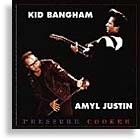
Here’s a very cool guitar-based blues record that gets ya jumpin’ from the first cut, the straight-ahead blues/rock of “Close to the Danger Zone.” Bangham is a versatile and interesting guitarist who has spent time with the likes of the Fabulous Thunderbirds.
For sheer in-your-face shuffle playing, there’s “Face Down In the Blues.” Justin’s vocals are forceful and on the money, and Bangham can definitely do the job with the axe. If I’ve said it once, I’ve said it a million times; it’s so nice to hear a guy play this kind of music in this day and age and not sound like Stevie Ray Vaughan.
And these guys aren’t a one-trick pony. Check out the James Brown-esque funk of “Big Man Around Town.” Or the nice soul ballad, “Lonely One.” There are some nice instrumentals, too, that show off Bangham’s chops. This one’s a keeper if you like blues-based bands that grab you by the gut right away and don’t let go.
This article originally appeared in VG‘s Jan. ’98 issue. All copyrights are by the author and Vintage Guitar magazine. Unauthorized replication or use is strictly prohibited.