Month: January 2002

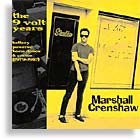
  • Marshall Crenshaw – The 9-Volt Years

    The 9-Volt Years

    I’ve always thought of Marshall Crenshaw as one of the true pop-rock geniuses. His music follows a direct line from Lennon and McCartney to Brian Wilson to everyone who ever has jangled a guitar.

    This CD might be for fanatics only, but I love it. So what if it’s just home demos. You’ll know some of them (“Someday, Someway,” “You’re My Favorite Waste of Time”), and some you may not be as familiar with. There are nice instrumentals, like “Bruce Is King” (featuring Mosrites, according to Marshall’s liners notes), and lots of rockin’.

    Like I said, I love it but it might not be for everybody. The sound is demo-quality, but the spirit and feel are great.


    This review originally appeared in VG‘s Nov. ’98 issue.

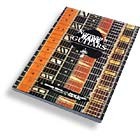
  • Norm Harris with David Swartz – Norman’s Rare Guitars

    Norm Harris with David Swartz

    What is it about a “coffee table” book? Is it that they are wonderful objects as well as colorful books? They cover virtually all subjects from cars to architecture, furniture to boats. There’s something engaging about looking at wonderful photos; freed from the constraints of narrative, the reader can gaze at photos without distraction and ferret out minute details.

    The acoustic and electric guitars gathered here from the collection of Norm Harris will require quite a bit of gazing and ferreting. Over 700 instruments are pictured and each is a fine an example of its type. We’re talking mint condition, collector-grade. And boy do they look good!

    Harris started collecting in the mid-’60s, according to the sparse-but-revealing narrative. He was fortunate to start early while prices were low, but he was also blessed with an orientation toward acquiring only the finest-condition instruments. Hanging out his shingle as a guitar dealer provided an outlet and created a flow of instruments. As a result, Harris has become a nationally known vintage dealer.

    Several things are striking about the presentation of instruments in the book, besides their obvious beauty and condition. The photography is uniformly excellent and truly shows the importance of proper lighting in capturing the complex curves and angles of a guitar.

    There are no shadows hiding details here, no flashy reflections from nickel or chrome, no fuzzy woodgrain or bleeding colors. This is almost like having the guitars right in front of you! In many of the Gibson acoustic photos, one can clearly see the label inside the soundhole.

    Sunbursts are vibrant and custom colors striking. Details are clear enough to make out small differences in control knobs, bridges, and inlay, which makes this a fine reference volume to compare instruments you might be thinking of purchasing.

    Sections are divided by make with Fender leading off, and within each section the guitars are shown chronologically by model. For example, early Broadcasters begin the Fender section which moves through black-guard Teles, white-guard Teles, and through to ’60s models. Strats then begin with early ’54s and so on. It’s an excellent system that allows for comparison of individual instruments and also shows how the models evolved. In the Gibson section, for instance, the evolution of the classic sunburst finish is evident. Another feature that makes this browser-friendly is that backgrounds are rotated so each new guitar model receives a lighter or darker shading. It’s a subtle signal that there is a shift in make or model.

    For the instruments, all that can be said is there is a clean example of nearly all collectible guitars. Not every one, of course, but the authors make it clear this isn’t meant to be a complete catalog. There’s an emphasis on electric guitars, which make up roughly two-thirds of the book.

    Major manufacturers are well-represented, but there are also numerous instruments from lesser-known makers as well as custom guitars. Basses are also pictured. The guitars are photographed only from the front, although many have smaller detail shots. The lack of back photos is not an oversight, according to the editor. Rather than cut the total number of guitars in the book to show backs, they decided to show fronts only. Think of it as getting more for your money.

    If you enjoy looking at photos of fine guitars, this is for you. There’s simply no other place you can view over 700 high-quality collectible instruments. It’s like walking around with a guitar show tucked under your arm! Two thumbs up. Now in softcover and a limited hardbound. To order direct call 800-962-1058. Or you can get a preview on the Internet at www.normsbook.com.


    Norman’s Rare Guitars
    By Norm Harris with David Swartz; foreword by Tom Petty
    Swartz Inc. 1999, Softbound 279 pages, ISBN 0-9669219-1-7, $60.


    This review originally appeared in VG‘s June ’99 issue.

  • Rick Gram Tone Zone Pedals

    Lots of the promised tone, no noise

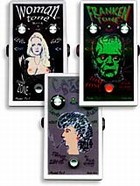
    Rick Gram’s Woman Tone Overdrive, Franken Tone, and Catch-A-Buzz overdrive and distortion effects are designed and hand-built. And despite limited production, they carry a much lower pricetag than many other boutique pedals.

    All three are enclosed in the same lightweight, rugged plastic casing and each is ornamented with specially-designed artwork. Each is also equipped with a soft-touch footswitch that engages easily and quietly, with no audible “click.”

    The pedals use “virtual bypass” operation, so they’re essentially disconnected from the signal chain when not in use. A green LED at the top (labeled “Rock”) indicates the effect is on, and there are strategically-placed red LEDs that add fun visuals to the overall design.

    Input and output jacks are on the sides, with level and effect level controls on top. The “level” control adjusts overall output, while the effect level adjust the amount of fuzz, buzz or gain delivered. Each uses a single nine-volt battery in a separate compartment in front of the control knobs. The battery door slides off easily. AC power is optional. And all have four rubber feet.

    The pedals are voiced for use with humbucking pickups, but can be used with all types of pickups. Our experimentation used an early-’90s Les Paul Standard, a ’50s goldtop Les Paul with two P-90s, and a ’52 Telecaster reissue. We tested them all through an old 100-watt Marshall plexi stack with two 4 X 12 cabs loaded with Celestion greenbacks, and then through a Marshall Lead 12 solidstate combo with a single 10″ Celestion.

    The Woman Tone TZ-1 Overdrive is the most recognizable, probably because it’s pictured in the company’s ad. Some may find the artwork objectionable, but please don’t write letters to the editor if you’re offended. The effect does its job very well, and a few strips of black electrical tape will cover things. And you’ll still see the green LED on top when the effect is engaged.

    So, how does it sound? The Woman Tone generates a warm, fuzzy overdrive, but nothing that could be considered high-gain. It doesn’t add tons of sustain or harmonics, but does add more sizzle, a bit of fuzz, and a boost in volume, depending on the settings. It responds well to the nuances of your technique – the harder you hit the strings, the more dirt and sizzle you’ll hear. And you can clean up the sound by rolling off the guitar’s volume, so you can use it to get a volume boost without dramatically changing the guitar’s tone.

    The Woman Tone was designed to mimic Eric Clapton’s fat, sustaining Cream-era tone, and particularly to work in conjunction humbuckers. It works especially well when combined with the neck pickup of the Les Paul Standard for soloing, like Clapton’s own “woman tone” recipe, and I also like the way it sounded with P-90s. In shines in conjunction with the full Marshall tube stack, enhancing the tone but not overpowering it. It also added warmth to the solidstate Marshall combo.

    The Franken Tone TZ-2 Fuzz Box produces a very compressed and fuzzy-sounding distortion that generates overtones one octave higher than the notes or chords played. It also adds on a little bit of tremolo at the decay of each note, and the harder you attack the strings, the more you’ll hear the tremolo as the note decays. The notes decay with the same effect as when you turn off a tube amp while the volume is up. The Franken Tone produces a fuzzier tone with more sustain and more compression than the Woman Tone, regulated by adjusting the level of the Fuzz control.

    I liked the sound of this one best with the Tele and the bridge pickups of the Les Pauls.

    The pedal adds a nice effect in situations where you want a good amount of gain and compression, but you don’t want notes to sustain for a long time. I think it could be a choice for a heavy sound on a fusion solo.

    The Catch-A-Buzz TZ-3 Buzz Box produces the fuzziest and buzziest effect of the three. The circuit was designed to replicate the sound of a paper speaker cone breaking up, and recalling the buzzier distortion characteristics of a ’60s-style fuzzbox. The LEDs are positioned in the eye of the peace-loving dude on the front, and at the tip of the cigarette he’s smoking (don’t worry, I don’t think he ever inhales!). The LED on the cigarette stays on even when the effect is off. When the effect is engaged, it glows brighter when you hit the strings harder.

    The Catch-A-Buzz is great for getting that Yardbirds’ “Over Under Sideways Down” sound. You can fine-tune the garage band tone you’ve dreamed of (but you’ll have to add the visual ambience). You can set the Buzz level for a really dirty sound with heavy sustain, and the notes have a very even decay. This one works equally well with humbuckers, P-90s, and single-coils.

    Of course, the Franken Tone and Catch-A-Buzz both sound better through the full stack. Bigger speakers do a better job of handling the fuzz and the buzz. The extra dirt seems a bit much for the 10″ speaker in the combo, although it does add a cool effect.

    One thing that’s especially notable about all of the Tone Zone effects is how quiet they are. I didn’t hear any noise when the effect was on or if I took my hands off the strings. Further experimentation found they work really well with a bass. You can get some great Geezer Butler-type distortion sounds with the Franken Fuzz, and the Catch-A-Buzz does an excellent punk bass sound, while the Woman Tone works well for an extra volume boost with a bit of overdrive.

    If you need a bit more dirt in your life, a Tone Zone pedal may have just the blend you’re looking for. All carry a one-year warranty.

    Contact Rick Gram Studio, 11 Old Dodgingtown Road, Bethel, CT 06801, phone(203)744-8663,e-mail:pedalpusher @freewwweb.com.


    Woman Tone TZ-1 Overdrive
    Type Of Unit: Overdrive pedal
    Features: Level and Gain controls, in and out jacks, LED indicators, virtual bypass on/off stomp switch, operates with nine-volt battery or optional AC adapter.
    Price: $119.95 (AC Adapter $11.95)


    Franken Tone TZ-2 Fuzz Box
    Type Of Unit: Distortion pedal
    Features: Level and Fuzz controls, in and out jacks, LED indicators, virtual bypass on/off stomp switch, operates with 9-volt battery or optional AC adapter.
    Price: $119.95 (AC Adapter $11.95)


    Catch-A-Buzz TZ-3 Buzz Box
    Type Of Unit: Distortion pedal
    Features: Level and Buzz controls, in and out jacks, LED indicators, virtual bypass on/off stomp switch, operates with 9-volt battery or optional AC adapter.
    Price: $119.95 (AC Adapter $11.95)


    This review originally appeared in VG‘s Jan. ’00 issue.

  • Omar And The Howlers – Swingland

    Swingland

    I first ran across Omar Dykes in the mid ’80s when I heard a bluesy radio-ready rock album called Hard Times In The Land Of Plenty. I liked it, and some quick research dug up more rootsy stuff that showed him and the Howlers to be a fine blues-driven band that felt at home playing the real deal.

    First off, Omar has a great voice. It’s one part Howlin’ Wolf, one part swingtown hipster. Very distinct, and very cool. It cuts through on tracks like “Mr. Blues Is Coming To Town,” and the very funny (and very true) “Quite Whiskey.” And I didn’t think I’d ever hear a cover of “Hit The Road, Jack” that could sound good, simply because Ray Charles version is so definitive. But it’s featured here and it cooks.

    Omar doesn’t play as much guitar here as he has on past efforts, but when he does, it’s tasteful and to the point. And on other cuts, Derek O’ Brien is featured and plays some marvelous solos (“Ain’t That Just Like A Woman” and “One Room Country Shack”). The band cooks throughout. Effortless grooves on stuff like “Going Up The Country” and the instrumental “Don’t Lose Your Cool” show a very hot band that understands its music. Throw in some guest shots by the likes of David “Fathead” Newman and Gary Primich, and you’ve got a wonderful musical journey. Recommended.


    This review originally appeared in VG‘s May ’98 issue.

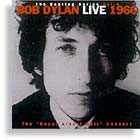
  • Bob Dylan – Live 1966: The “Royal Albert Hall” Concert

    Live 1966: The

    The history of rock and roll is marked by a handful of famous (or infamous) concerts that defined eras for better or worse. Among these landmark shows were the Beatles’ last U.S. tour, Jimi Hendrix’s American “debut” at the ’67 Monterey Pop Festival, the Rolling Stones’ “Gimme Shelter” show at Altamont Speedway, and Bob Dylan’s epochal electric tour of Great Britain in ’66.

    Bootlegs of Dylan’s shows have been passed between cognoscenti for generations, but this new two-CD set in Columbia’s Bootleg Series marks the first commercial release. It’s about time.

    Bootlegs of these shows have invariably been called the “Royal Albert Hall” concert, although a variety of shows were recorded and made their way through the pirate-LP underground. This set carries on the tradition, yet the name is printed conspicuously in quotations as the show presented here was actually recorded on May 17 at the Free Trade Hall in Manchester, England. But fear not: this is the famous show.

    The first CD features the first half of the concert and the “old” Dylan, playing solo acoustic guitar and harmonica with his nasal voice snarling out the lyrics to songs including “Desolation Row,” “Just Like A Woman,” and the gloriously beautiful “Visions of Johanna.”

    The second CD and the second half of the show is where the fireworks begin. Dylan walks onstage with his Telecaster backed by his proudly electric group, soon to be known as the Band and featuring Robbie Robertson on lead – make that loud – guitar. They rollick through “Leopard-Skin Pill-Box Hat,” “Ballad Of A Thin Man,” and a biting version of “Like A Rolling Stone.” Hoots, boos, catcalls, and cries of “Judas” greet the “new” Dylan, but the times certainly were a-changin’.

    The band here rocks with an energy and volume few pop acts were able to create, and even from the distance of three decades, this amazing collection sends chills down your spine. It’s little wonder the audience was floored by Dylan’s new vision.

    Columbia does this famous concert justice in its package here. The sound is clear and sharp, testament to the recording engineers of ’66 who captured Dylan’s overdriven sound. The 54-page booklet features a variety of classic photos and an evocative, personal liner essay penned by St. Paul bluesman Tony Glover that is itself deserving of a Grammy nomination.

    This is a landmark release of a landmark concert.


    This review originally appeared in VG‘s May ’98 issue.

  • Junior Wells – Keep On Steppin’: The Best of Junior Wells

    Keep On Steppin': The Best of Junior Wells

    The recent death of Junior Wells marked the end of an era, leaving behind his legacy and lots of great music. This “best of” CD draws from Wells’ four previous Telarc releases, all of which have been excellent recent outings, dating from 1993 to his live release recorded in 1996; it does not include any of his classic early Four Aces sides, Delmark LPs, or duets with Buddy Guy. But that’s not to put this collection down: these 12 cuts capture Wells playing the blues, belting out R&B, and getting down and soulful with the best.


    This review originally appeared in VG‘s May ’98 issue.

  • Cesar Rosas – Soul Disguise

    Soul Disguise

    I’ve been of the opinion for a couple of years now that Los Lobos is one of the finest rock bands around. Rosas is one of the singer/guitarists in that band. This is his first solo album, and it’s a doozy. If you’re a fan of the band, you’ll like this CD. Bluesy funk, rootsy rock, Latino polkas, soul ballads, and much more dominate this very electric collection. Rosas leads the proceeding with his soulful singing, workman-like guitar playing, and killer songwriting. Cuts like “Tough To Handle,” “Shack And Shambles,” and “Struck” sound like the tough R&B sound of Los Lobos filtered through a soulman’s eyes. And the Hendrixian-rock of the title cut brings immediate smiles to the face.

    Both Rosas and Los Lobos guitarmate David Hidalgo continue to dabble in other projects, but it doesn’t seem to hurt the band or make the solo projects less listenable. In fact, it probably keeps the band fresh. As with any project those two are part of, this one is highly recommended.


    This review originally appeared in VG‘s June ’99 issue.

  • Ampeg Horizontal Basses

    From Liden, NJ. to Linden Avenue, Burbank, CA.

    The Ampeg Horizontal Bass, perhaps because of its rarity and odd beauty, has become quite a collector’s item. And because production records for Ampeg products were lost or destroyed after various corporate buyouts, it is impossible to say exactly how many of these instruments were made.

    The Mid 1960s

    By the mid 1960s, the Ampeg Company, Linden, New Jersey, had displayed great musical equipment achievements and run into sticky economic difficulties. The upright acoustic bass pickup, invented in the late 1940s by company founder and President C. Everett Hull, was still useful. The classic B-15 flip-top Portaflex bass amp, invented at the end of the 1950s by Vice-President and Plant Manager Jess Oliver, was in much demand. The first generation of combo guitar amps with built-in reverb, like the Reverberocket and Gemini I from the 1960s, were popular. But Ampeg had not geared up early enough for the decade’s pop music explosion to fulfill orders effectively. The company was backordered six to nine months, and when orders were finally delivered, many customers had bought Kustom or Standel, Fender or Vox.

    The music world had leapt from the big band jazz Everett Hull loved – and which had inspired him to make the sound of his upright bass louder with the “amplified peg” – to the sounds of rhythm and blues and rock and roll. The Motown sound was being driven by James Jamerson’s snaky bass lines, powered by a Fender Precision Bass through an Ampeg B-15 pushed to the edge of overdrive, which Hull disliked. Elvis had revolutionized American pop music, the British had invaded, and it seemed everyone growing up in the ’60s wanted to get with it, buy a guitar and an amp, and wail. Ampeg had tried to sell imported “Burns by Ampeg” basses and guitars – but they were too expensive to catch on. Despite impressive growth in its product line and factory space, Ampeg was stuck in the past. An advocate of clean amp sounds, Hull was shocked when Gibson offered musicians an electronic distortion box!

    By 1966, Hull (at age 62) was worried about the company’s cash flow and the value of his stock shares, so he began wooing corporate suitors to buy and support Ampeg. He still wanted to produce his seasoned line of products and serve the needs of jazz musicians, although the future of the business lay in serving pop and rock groups. Studio musicians who had used upright basses and Ampeg’s Baby Bass – the portable plastic-bodied electronic upright, whose sales had stagnated since its introduction in 1962 – were being asked to use horizontal basses, like Fender’s Precision or Jazz. The opportunity for a new Ampeg product presented itself. According to upright bass virtuoso Gary Karr, an Ampeg endorser in the ’60s, Hull had said to him, “I want to put a dent into CBS’ Fender.”

    Design

    Jess Oliver, evidently with Hull’s blessing, looked to the future and asked Ampeg quality control specialist and Service Manager Dennis Kager to design a new Ampeg bass. Kager had joined Ampeg in 1964, at age 21, and then quickly rose through the ranks. Both Hull and Oliver admired him for his troubleshooting expertise and his inventive imagination. Kager got to work. By March 30, 1966, he had filed his patent for the “ornamental design,” Ampeg’s new instrument.

    The shape of the instrument was inspired by Kager’s own favorite axe at the time, the Fender Jazzmaster he played in The Driftwoods, one of north Jersey’s most popular bands. The Jazzmaster’s long bass bout and shorter treble bout were reflected in what Ampeg would advertise initially as the “new Ampeg Fretted Bass,” Model AEB-1, referred to nowadays as the Ampeg Horizontal Bass or F-Hole Bass or Scrollhead Bass. Kager’s original idea for the headstock shape was triangular, which would have permitted a catchy “A” logo, but someone – probably Hull- decided to use the scroll-style headstock of the Baby Bass, which linked the new product to the past, and allowed Ampeg to utilize known production methods in late 1966.

    The distinctive elements of the new bass included F-holes, cut through each bout of the instrument’s four-piece semisolid maple body with plywood back. Originally, the F-holes were to face in the same direction, but in production it was decided they should be opposed. The neck was maple with either a rosewood or ebony fingerboard, with a zero fret. Besides the rectangular muting bridge cover, which was adjustable, another unusual feature was the overall string length – 45″ with tuner windings, from the tuners to the extended block tailpiece with nifty dual strap buttons, helpful for stability when the bass was set down and leaned against an amp. The long, custom-made LaBella strings made the action somewhat stiff – despite the traditional 34″ scale length – putting strong pressure on the bridge/pickup assembly, necessary for the effective functioning of Ampeg’s “Mystery Pickup.”

    “Mystery Pickup”

    Ampeg tipped its hand about the mysterious transducer when it printed the patent number of its 1963 Baby Bass pickup on an early set of “operational instructions”: the pickup for the new Ampeg bass was a modified version of the older one. Now the aluminum bridge would sit on a Bakelite pedestal, which itself rested on a “silectron steel” diaphragm. Under the diaphragm, two magnets and two large coils – nested in a block of epoxy – would translate the acoustic vibrations of the strings, bridge, and diaphragm into electrical impulses for amplification. This arrangement would permit the use of non-magnetic gut strings, not just steel or tapewound, and would – it was advertised – simulate the sound of an upright acoustic bass.

    “I never liked the sound of it,” Dennis Kager revealed in an interview, speaking about the Baby Bass pickup and its application to the bass he designed. “That’s why on the original Horizontal Bass, I wanted a magnetic pickup on there.” But this was not to be, at least at first.

    The tone of an AEB-1 is an acquired taste, ranging from dark and boomy to abrasively nasal with odd overtones at the extremes of tone setting. Some owners turn down the treble nearly all the way, then tweak their amps to produce decent upright-bass-like depth and timbre. Others – like The Band’s Rick Danko – installed a P-bass pickup and did away with the mystery pickup. Good strategy for instantly-usable tones, but not so good for vintage value! Originally, these basses listed for $324.50 – while now they cost an average of about $1,000. A popular early endorser was Joe Long of the Four Seasons, who used an extremely rare lefty AEB-1.

    The Fretless Revolution

    Besides the oddly-gorgeous appearance of the first Horizontal Basses – available in “cherry red, white, blue, and burnished tones” – Ampeg could be proud of its revolutionary development of a fretless version, Model AUB-1, four years before Fender would offer this option on its P-bass in 1970. It seems the AUB-1 was more popular than the AEB-1, as upright bass players and others sought the model with the smooth fingerboard. The first AUB-1 may have been made for symphonic soloist and Baby Bass user Gary Karr, who was not comfortable with a fretted instrument. Introduced at the July, 1966, NAMM show in Chicago, and put into production late in the year and in 1967, both the AEB-1 and the AUB-1 caused a stir, but no great bounce in sales, probably because of the limited sound quality. The AEB-1 and the AUB-1 are, nevertheless, the more numerous of the Horizontal Basses.

    Metamorphosis

    Throughout 1966, Everett Hull stepped up his search for a corporate buyer. He must have sensed the economic hard times ahead for the music equipment business, due to increased competition and product glut. Certainly, he knew Ampeg’s precarious position, along with its potential. Ampeg’s sales had grown roughly tenfold in a handful of years, culminating in the nine month period ending in February, 1966, with net sales of over $2,290,000.

    But all this was in jeopardy. He needed to back up his life’s work with strong capital, and he wanted to cash in on his stocks while he could. He had a deal signed, sealed, and delivered – it seemed – with AVNET corporation, but Lester Avnet backed out at the last minute, in the early fall of 1966. Dynaco pursued Ampeg, as did Hammond and Pickwick, but those deals also went unconsummated.

    On the personnel front, amp designer Bill Hughes had signed on in Ampeg’s engineering department, and jack-of-all-trades Roger Cox had moved into sales, then product development – both in the mid ’60s. These men would later make their marks at Ampeg by creating huge, powerful amps for mass -audience, big-time rock and rollers.

    On the other hand, after over a dozen years of a productive but sometimes wrangling business relationship, Hull and right hand man Jess Oliver parted ways over stock options and job security – and maybe Ampeg’s introduction of solidstate amps – in late September of 1966. Oliver set up shop as Oliver Sound, and began producing his own line of musical products – including the Powerflex amp, a redesign of the B-15 with a motorized head, and the Orbital Sound Projector – a mini Leslie cabinet.

    Finally, in 1967, a group of investors and managers began planning the acquisition of a high-profile music manufacturing business. The goal? To form a major music equipment conglomerate and ride the boom in rock and roll. The name? Unimusic, as in “unified” or “universal” music company. The music business to buy? Ampeg! After lengthy negotiations, Unimusic – under the leadership of Al Dauray, Ray Mucci, and John Forbes – bought Hull’s company in September of 1967, making Everett Hull and his wife, Ger-trude, wealthy.

    Les Paul recalls Hull visiting him to discuss the sale. Dennis Kager left Ampeg at this time to start Dennis Electronics, which became one of the largest electronic equipment service centers in the U.S. He continued to consult with Ampeg, and eventually designed and marketed Sundown amplifiers. Hull – long used to being the captain of the ship at Ampeg, but scarcely consulted as Unimusic looked ahead – resigned in October of 1968.

    The Devil In New Jersey

    Ampeg made a last stab at a bass with the mystery pickup in 1967 and early 1968, the scarce and odd-looking Model ASB-1, nicknamed the “Devil Bass” because of its prominent, scary horns. Woodshop worker and former coffin maker Mike Roman had been impressed by Danelectro’s Longhorn Bass, so he urged Ampeg to make its own version. The dual-cutaway body allowed extraordinary access to the upper register, another Ampeg innovation – and of course, Ampeg offered a fretless companion, Model AUSB-1. Both models were available, like their cousins, for the list price of $324.50. But by 1968, under Unimusic, it was clear to the company’s new leadership that the mystery pickup models had to go.

    New Pickups

    In mid 1967 and 1968, Ampeg experimented with a small number of short-scale Horizontal Basses – the fretted Model SSB and the fretless SSUB – using a magnetic pickup with four visible polepieces. The tone of these instruments, despite their dinky 301/2″ scale, was surprisingly good. An intriguing feature of the fretless model was an F-hole pickguard mounted on a solidbody. Unlike the longer-scale basses, before and after the SSB, the short-scales lacked adjustable bridge saddles for intonation adjustments. The headstock on these small basses, favored by Television bassist Fred Smith, went back to Dennis Kager’s original A shape. Colors available on this limited production instrument were “apple red, black, or gold sunburst,” with an occasional blue. The list price? An economical $189.50.

    By the summer of ’68, Ampeg – now called “A Division of UNIMUSIC, Inc.” – was testing a new, larger magnetic pickup, its four polepieces concealed beneath a plastic cover, for the last vintage generation of full-scale Horizontal Basses. At the end of ’68 and into ’69, Ampeg produced a trickle of the new basses – Models AMB-1 and the fretless AMUB-1 – for $324.50 again and then, oddly, for $325, in the fall of 1969. Various-hued AEB-1s and AUB-1s were still in stock and advertised for sale. The magnetic-pickup Horizontal Basses – far fewer of these were made – are the ones to find and play, if tone is the name of the game. The four polepieces of the new pickup were wired alternately, creating a spectacular humbucker that has – if the epoxy sheath hasn’t cracked and fractured the coil wires – a wide range of rich tones, with a deep growl and piano-like singing overtones.

    The body construction of the new basses had grown more advanced. The earlier Horizontal Bass bodies had four parts, glued after shaping: the two F-hole bouts, the center block with routing to make space for the “mystery pickup,” and the plywood back. The magnetic-pickup bass bodies and their F-holes were carved smoothly from two or three pre-glued pieces of maple with more sophisticated routing machines. The earlier bass bodies had balanced red and black burst paint around the F-holes – or the custom colors – while the new bass bodies barely showed the standard cherry red under the black overcoat. The tailpiece was incorporated on the end of a bridge plate, shortening total string length to about 43″, with windings on the tuners. The large, rounded bridge cover sported the new Ampeg logo – a stylized “a” or “helmet head.” The earlier “Mystery Pickup” had been concealed beneath the bridge, but now, the adjustable magnetic pickup was plain to see, mounted through the pickguard between the bridge and the neck.

    Ebony was now the wood of choice for the fingerboard. The volume pot had a “pull to kill” function, so gigging musicians could turn off the axe without turning it or the amp down. But the bass was not a money maker, so its production was terminated before 1970, ending for a quarter of a century the illustrious career of a weird and wonderful instrument.

    Oddities

    Besides the main Horizontal Basses, it is worth noting a few intriguing oddities. Chief among them are the two scrollhead 6-string guitars shown at the July, 1966, NAMM show in Chicago, when the first AEB-1s and AUB-1s were introduced.

    One of these prototypes – like the one pictured in George Gruhn and Walter Carter’s Electric Guitars and Basses, A Photographic History – is the spitting image of an early Horizontal Bass, including prominent F-holes and a large black pickguard, along with two pickups and a whammy bar. The other, pictured here probably for the first time, is an elaborated version of the first, with subtle F-holes, along with three pickups, a whammy bar, and checkered binding. Where are these unique instruments now? Also, after Mike Roman left Ampeg, he seems to have continued building basses and guitars of his own, but hard information is sketchy on this point for now. Lastly, there are some Japanese-made Horizontal Bass clones. These can generally be distinguished by the anachronistic extended block tailpiece (AEB-1-style) together with an original magnetic pickup (AMB-1-style) and sometimes by the lack of a zero fret.

    The Late 1960s

    By the late ’60s, Unimusic, with Al Dauray, Roger Cox, Bill Hughes, and others, was in hot pursuit of the rock and roll market, facing the future, but unaware of the impending pitfalls of music business competition, a dipping economy, fickle investors, and personal tragedy.

    Everett Hull was retired, travelling and spending time with his family, dreaming of making the Baby Bass popular again. Jess Oliver and Dennis Kager had new businesses. Ampeg – having invented the SVT bass rig and the V-4 guitar stack, among scads of other music products – seemed ready to compete against Acoustic and Marshall in the wattage wars of the 1970s. Suddenly, the Rolling Stones were using Ampegs on the 1969 and 1972 tours. So would The Faces and, later, Black Oak Arkansas. There were cool new Ampeg basses made from clear plexiglass by Dan Armstrong. There would be cheesy Stud basses made for Ampeg offshore in the mid ’70s. But there would be nothing like the adventurous and weirdly wonderful Horizontal Basses from Linden, New Jersey – until a contemporary California inventor would set up his design shop, Extremely Strange Musical Instrument Co., in 1994.

    Linden Again

    Twenty-five years after Ampeg stopped production of the Horizontal Basses, Bruce Johnson decided he would devote his skills as a mechanical engineer to updating the classic Ampegs.

    His first bass – an Ampeg “Devil Bass” – was an inspiration. In the machine shop where he lives, on Linden Avenue in Burbank, Johnson began collecting and analyzing data on the old Ampegs, planning how to create a cutting-edge version of the AEB-1 and AEB-2. He wanted to make an instrument that would have the odd attractions of the original but that could function at the top level of the modern-day music profession. Today’s Ampeg company, under current owner St. Louis Music, introduced Johnson’s AEB-2 and AUB-2, at the winter NAMM show in Anaheim. The new bass is no reissue: it is a redesigned, high-tech instrument that combines tradition with innovation, an Ampeg hallmark.

    The AEB-2’s look, along with that of its fretless brother, is well-rooted in Ampeg’s past, but its construction and electronics are spaceage. The scroll headstock is now carved from the solid maple of the neck, instead of having the plastic scrolled end-caps of the original. A brass nut block above the zero fret adds sustain, replacing the aluminum string spacer on the original. The stiff neck is slender throughout its length, supported by “…a proprietary truss rod and neck reinforcement technique,” unlike the sometimes-clubby neck of the old bass. The scale length is a modern 35″, while the body is now ash with a durable polyurethane paint finish in classic black/red sunburst, solid black, or natural. The active electronics combine piezo crystals in the two-part aluminum bridge saddles with a magnetic pickup and custom preamp designed by bass pickup expert Rick Turner. The extended tailpiece is now a 1″ thick block of brass anchored by brass bars deep in the body, enhancing sustain and counterbalancing the long neck.

    Reports from NAMM indicate that interest in the AEB-2 and the AUB-2 was high among players, dealers, and the press. Evidently, another chapter of Horizontal Bass history is about to be written. It must have something to do with the classic Ampeg vibe and the range of modern sounds the new basses produce – from the old jazzy upright timbre to the new punch of rock and roll.

    “These basses have growl and snarl in the bottom end together with clear highs,” explains Bruce Johnson.


    Serial Numbers
    Serial numbers can be found in two places on the Horizontal Basses. For the AEB, AUB, ASB, and AUSB models (all with the “mystery pickup”), look under the block tailpiece. For the SSB, SSUB, AMB, and AMUB basses (all with a magnetic pickup), look on the bridge/tailpiece plate. The serial number prefix M, perhaps for “Master,” seems to indicate a prototype bass. The serial number suffix C may indicate a “Custom .” Serial numbers run chronologically, but mixed among the various models of basses, as if the relevant parts for the different models were kept in one bin. Serial numbers seem to run from 1 to nearly 1,200, then start over, with a triple zero prefix, from 0001 to nearly 000600.


    Horizontal Bass Users
    Joe Long the Four Seasons – lefty Model AEB-1
    Rick Danko The Band – Model AUB-1
    Boz Burrell Bad Company- Model AUB-1
    George Biondo Steppenwolf- Model AMB-1
    Fred Smith Television – Model SSB
    Billy Rath Johnny Thunders’ band – Model AEB-1
    Michael Been The Call- Model AMB-1
    Christ Novoselic Nirvana Model AMB-1


    Chronology
    Early 1966 – Dennis Kager designs Horizontal Bass with F-holes.
    July, 1966 – Horizontal Basses introduced at Chicago NAMM.
    Late 1966 to 1967 – Production of AEB-1 and AUB-1 basses (most numerous, perhaps 1,200 made).
    1967 and early 1968 – Production of ASB-1 and AUSB-1 “Devil Basses” (rare, perhaps 100 made).
    September, 1967 – UNIMUSIC buys Ampeg.
    Mid 1967 to 1968 – Production of SSB and SSUB basses (very rare, perhaps 50 made).
    Late 1968 to 1969 – Production of AMB-1 and AMUB-1 basses (hard to find, perhaps 600 made).
    Late 1969 – End of vintage Horizontal Bass production.
    Late 1996 – Start of contemporary AEB-2 and AUB-2 basses (available!).
    Note: Production figures are estimates based on incomplete information, since no relevant records have survived.


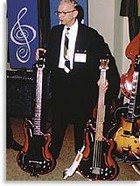
    Everett Hull presents the fretted and fretless Horizontal Basses to his salesmen, NAMM, July ’66. Courtesy E.A. Hull.

    This article originally appeared in VG‘s March ’97 issue.

  • Tuck Andress

    Fretboard wizard of Tuck and Patti

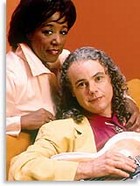
    Since 1978, guitar virtuoso Tuck Andress, recognized as a premier player of jazz and contemporary standard music, has enjoyed one of the most enduring and creative musical partnerships accompanying wife and collaborator Patti Cathcart. Together, the duo (known as Tuck and Patti), have released six albums since 1988, culminating with the current release of their latest album, Taking The Long Way Home – their first comprised entirely of original music.

    Andress has been acclaimed as an interpretive stylist with an articulate phrasing and talent for detail. His technique translates to seamless textures and tones of understated improvisational fluidity and subtlety.

    They are the consummate musical collaborators; Andress wraps his guitar wizardry around Cathcart’s vocals much like a string section, elevating their interplay. Cathcart wrote, produced, and arranged Taking The Long Way Home.

    We met with Andress to discuss his technique and his illuminations as a guitarist.

    Vintage Guitar: The sole instrumental piece on Taking The Long Way Home, “Early Morning Music Box” began as a problem-solving exercise for technical challenges. Can you elaborate on the song’s inception?

    Tuck Andress: I was doing little finger exercises in my right hand, and I put a chord progression to it, for no particular reason. Patti heard the progression I happened to be playing, and said, “Let’s try that as a song.” So I did, then she said, “Try playing the whole song in harmonics.”

    We ended up with the bass line in harmonics because you can’t play the whole song in harmonics. So I played the bass line in harmonics – a technique inspired by Lenny Breau, and we called that harmonic bass line the melody.

    It usually doesn’t occur to me, but Patti hears that stuff in her head. There’s very little writing down because we find it’s a really inefficient way, between the two of us, to do it. But there’s a lot of playing, singing, and talking back and forth. She has an unlimited talent in her ear, and of course she’s played with me for 22 years. So she’s really tapped into the kinds of sounds I can make out of the guitar – violin sounds or some way to open up the high-end.

    The extensive use of harmonics in our music really has come from her gift at arranging, one of the ways that she has used to open up my range. It’s really pretty.

    Wasn’t “Early Morning Music Box” influenced by several musical styles, including Dizzy Gillespie’s “Salt Peanuts”?

    Well, there’s a musical quote in from “Salt Peanuts.” It was the perfect place to put that little phrase.

    Do you compose on the guitar?

    I’ve never been a composer. The degree to which I participated in the composition of “Early Morning Music Box” is pretty minimal. That’s why I want to emphasize that Patti is the writer. To me, it’s more important to be a guitar player whose very much a specialist in that. The most interesting thing is that it’s not a guitar player writing the guitar part.

    In some ways, it really is more challenging to try to render somebody else’s ideas. I think it’s one of our secret weapons in our style. I was never a writer. My focus was on playing the guitar and coming up with possibilities and options. I became really strong at that. I was always a good generator of ideas. So I could easily, systematically come up with billions of options at any point, work on them, and get more flexible in that real-time improvisation, which is a lot of what we do.

    Your playing on this album is particularly melodic, gentle, and understated, yet you implement many complex techniques.

    I think the reason is that I’ve gotten better and better at blending with Patti and going with the feeling of the song – regardless of the parts. There’s a way to express it, and we’ve gotten like two dancers who’ve danced together a lot. It’s a two-way creative thing, all the time.

    Your interpretation and phrasing is in perfect sync with one another, but you have your own very distinct musical voice. How did you develop that?

    A lot of searching. It’s a combination of three different things. In chronological order, I was always a guitar player. And part of the beauty of not being a singer or a songwriter, is that you get really good at the guitar. I’ve spent a lot of time exploring possibilities on the guitar. It already had dawned on me to try to figure out every chord voicing, rather than just the ones I already knew. I worked on systematic ways of doing that. I listened to a lot of music, different instruments, orchestras, big bands; all different kinds of music trying to figure out, “How can I get some of these textures, sounds, and effects on the guitar?”

    Even when I played guitar in top 40 bands I was listening and looking for ways to combine two or three parts I heard on records, so I could create some of those textures myself. Then, when Patti and I got together, there was this whole other thing that happened because we didn’t really get into detailed arranging very much at first. We actually just got together and started performing all the time. We rehearsed some, but so much was just worked out in performance. There is tremendous give-and-take, improvisation, going back to the drawing board.

    We’d go out and play a song, and Patti would do something and I’d attempt to respond, or maybe discover something new. We decided that even as a small group, we’re going to make improvisation a big component of what we do. Even when we have a structure, we’re going to have a rule. It’s both of our responsibilities to go with the spirit, wherever it leads us. Even if it means abandoning the structure, we’re always going to go for it and not play it safe.

    The third component is an arranging technique that has developed over time. Patti hears like an orchestrator, and I hear like a guitar player. That has really stretched me the most and developed my guitar style since we’ve been together, learning how to execute these things that she’s hearing. That’s much more challenging to me.

    When you’re playing live, particularly because you’re a jazz-influenced artist, how enjoyable is that spontaneous climate for you, as opposed to playing and recording in the studio?

    It’s not that different, because in our case we made the agreement that even in the studio, we wouldn’t just play the parts. So even though Patti’s the arranger, there’s still a whole lot of room for variation and improvisation.

    In that way, being in the studio for us is much more like performing live than for a lot of people who “construct” music in the studio. Patti and I don’t construct music, as is very common with multitrack recording. What we do is live, “documentary” recording.

    You utilize many picking techniques, including standard, thumb, and those of Wes Montgomery and George Benson. How and why do these techniques work for you?

    Actually, it was more the music that ended up affecting what I do now. They play a style of guitar that I used to try to play, which is either single-line soloing or playing chords. That’s what I believed all my life, until I met Patti. That was going to be my focus in life. I worked hard on learning Wes Montgomery’s octave technique and how he played both downstrokes and upstrokes with his thumb. I worked really hard on learning to pick like George Benson, finger like he did, and play the incredible be bop phrases he played.

    But when Patti and I got together, this whole other direction opened up to me, which was a more fingerstyle approach, in which case, all the right-hand techniques of all the guitar players I’d ever listened to went out the window because I played with a pick my entire life, until I met Patti.

    So that was like starting over again. Now the left-handed general concept of music… well, I had a whole opportunity to work on that.

    I learned especially from George Benson – about playing very staccato with the left hand, which a lot of players don’t use – as opposed to playing legato. I learned all about fingering and chord voicings from listening to guitar players and bands. I was lucky enough to catch on to the fact of that very staccato left- hand that’s part of the characteristic phrasing that you hear when he plays uptempo stuff.

    Who are your main jazz influences?

    Originally it was Wes and George. It was equally Herbie Hancock and Erroll Garner, who were tremendous influences on me. Thelonious Monk. Also, a lot of keyboard players, and Miles Davis, Cannonball Adderly, Charlie Parker.

    I’m playing a very specialized style of music, using the guitar in a very specialized way. Their music turned me into a musician. I’ve learned how to hear music, how to listen to a Miles Davis album and hear the voicings Herbie Hancock played behind him.

    I’ve also learned how to hear the solos and details of phrasing, just the fabric of music and how to use it in a completely different way, with the fingerstyle approach that I love now.

    Do you play in standard tuning or open tuning?

    Standard tuning, most of the time, and occasionally I’ll drop to the low E to a D, otherwise I don’t mess around with open tuning.

    What guitars did you use on this album?

    I just use one – I’ve recorded every album with exactly the same guitar on every song, and it’s a ’53 Gibson L-5.

    How has that held up?

    Great, because I only use it in the studio or just to practice around the house. I don’t travel with it. I have another L-5 – a ’49 – that I’ve traveled with for the last 12 years. They’re similar, and I was just lucky enough to come across a couple of great ones.

    Why the preference for vintage guitars?

    The sound. But there’s also a big randomness in life where it happened that I went in the store at the right time and I got a great guitar. At that point, I liked that guitar, and as I played new guitars, others didn’t sound the same to me. My ear grew to love the sound of these instruments.

    How are they wired?

    They’re wired identically; each has a Bartolini neck pickup that feeds a built-in preamp. All the knobs and switches are bypassed, except for the gain. Actually, there’s a gain knob for the preamp and a passive volume control. It’s very clean… a minimalistic approach.

    You stuff the ’49 with foam rubber and socks?

    That’s common for playing archtops live. It’s simply a way to cut down feedback. It makes the tone a little bit worse, but we put up with it.

    You play through a volume pedal. How does that affect your signal path?

    I’ve used a variety of volume pedals over the years. Currently, I’m using a Boss. The purpose is to eliminate scratchy pots, and allow me to create my own taper. The goal is to give me the kind of control an organ player has, such as the swells in volume.

    The same as a steel guitar…

    Definitely – every pedal steel player uses a volume pedal. I tend to use it a lot like a steel player or organist in that my foot is on the pedal all the time, and I’m doing little things that I don’t even know about (laughing).

    It’s like driving down a familiar road. You don’t watch the sings because you’re used to the path.

    Exactly. But a lot of it is intentional. It makes the guitar a little more vocal because you can change the volume after you’ve hit the note. A lot of players just use it to do a violin-sounding swell occasionally, as an effect or for contrast. I’m using it all the time.

    What’s in you recording rig?

    After the volume pedal, the guitar goes into an Aphex 124A interface, which converts the -10db signal to +4db. That goes into a GML 20-bit A/D converter, then the signal is recorded. We record with a Sonic Solutions hard disk editor. I don’t use any guitar amps. We just try to accurately record what comes off the guitar and what comes off Patti’s mic, then in mixdown work with reverb and EQ.

    In mixdown, we use Avalon EQs for the guitar. That’s a big part of the sound of the recorded guitar – Avalon can do extreme EQing and sound great. Sonic Solutions is a comparable hard disk editor. It’s used more in mastering and I’ve never heard a digital editor sound better.

    Which other players have influenced you through the years?

    The Rolling Stones, Chuck Berry, Eddie Van Halen. Amos Garrett had a dramatic influence on me. He played with Maria Muldaur for a number of years and is a combination of blues, country, and rock. Listening to him taught me all about double and triple-bends. He’s a guitar player’s guitar player.

    What inspired you to play the guitar? And what, in particular, inspired you to become a jazz player?

    I was originally inspired to play the guitar because I was playing piano in a neighborhood rock band. At that time, the Beatles and Rolling Stones were the big thing. Then I realized that I loved the guitar. My first guitar was a Harmony electric… or it may have been a Danelectro. I was 14 when I started playing, and I listened to a lot of jazz. It was some of my favorite music.

    Most of the time I spent playing in rock bands, and more soul bands than anything else. I played very little jazz, but I listened to it and it became part of the musical fabric I draw on now. Now when I play, I’m not sure that I think of myself as any particular style of player. I just try to do the appropriate thing for the song, because we play some songs that you wouldn’t think of as jazz songs at all, but they lend themselves to whatever interpretation you want to do.

    Is there a particular technique you use for harmonics?

    There is a technique worth pointing out. The one on “Early Morning Music Box” is interesting. On the introduction, at the very beginning, and then on the whole out section of the song, it’s characterized by me playing double stops or two notes at once. However, they’re both in harmonics. Actually, both notes are in artificial harmonics and the way to play that is to create the node on the lower string with the index finger and to pluck the lower string with the thumb. Simultaneously create a node on the upper string with the middle finger and pluck the note on the upper string with the little finger. I’m giving it to you in detail because it’s an unusual technique I don’t think I’ve even heard of. I’m sure other people do it, but I’ve never heard it.

    Did you develop that?

    Yes, through trial and error. I assumed lots of other people have, but since I haven’t heard it recorded anywhere, maybe other players will find it useful.

    You’ve released two solo albums. Are there plans for more?

    I’ll probably do more solo albums along the way. It’s never been as important to me as the collaboration with Patti, but it’s something I do well and might be helpful for guitar players like me who could never find enough albums to learn from.

    How do you think you and Patti inspire each other?

    Mostly, it happens in the context of real time and our agreement not to get too comfortable in what we do. So it gets into the question of, “What is an accompanist?”

    It’s my job not just to re-create the same thing she heard last night. My job is to keep surprising her, keep throwing things at her, reinterpret, take some detail that she sings, turn it around, shed some different light on it, and throw it back at her again.

    In some ways, it’s the challenge of my lifetime, because it’s pretty hard to play this style of guitar – to play these arrangements, and to execute it. But you still want to have the flexibility also to do it differently every moment, every night, while still making reference to the arrangement. That’s a jazz concept. Likewise, Patti becomes more and more gifted at arranging, taking a whole world of music and putting it in the context for the guitar.

    An she has become more gifted at throwing things at me that are going to stretch me – the harmonic techniques, the staccato, the legato, and some of the interesting chord work; these things come as a result of Patti branching the music out and arranging it.

    She has been my biggest influence as a guitar player in the last several years, because she’s always throwing things at me that cause me to stretch in ways I wouldn’t have planned to stretch.


    This article is a Vintage Guitar Online exclusive.

  • Tim O’Brien – Two Journeys

    Two Journeys

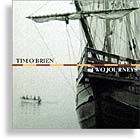
    In his recent VG interview, Tim O’Brien mentioned that his next release would be more of a “songwriter” CD. Instead, his latest, Two Journeys, is an extension of his album, The Crossing, which drank deep from his Irish background for its musical inspiration. Two Journeys also shows the strong influence of Mother Ireland not only in its songs, but personnel as well.

    Maura O’Connell, Laoise Kelly, Karan Casey, Paddy Keenan, Kevin Burke, and John Williams are all Irish roots musicians, or musicians with Irish roots who participate on Two Journeys.

    To discover what constitutes an Irish musical influence, you have merely to listen to Tim’s rendition of Paul McCartney’s “Norwegian Wood.” Beginning with the Paddy Keenen’s pipes introduction, followed by Tim’s loping mandolin work, the tune is infused with a rich Celtic aroma that settles on you like the glow of a good single-malt whisky. Six of the 14 cuts on Two Journeys are O’Brien originals, while five are his arrangements of traditional material. His treatment of “Demon Lover” and “What Does the Deep Sea Say” are especially successful. Both possess a paradoxical combination of the diametrically opposed influences of tradition and innovation. They are familiar, yet alien, encased in O’Brien’s Celtic arrangements, like vintage wine in brand new “olde style” bottles.

    Although it was principally recorded at Nashville’ Groundstar studios, some tracks were done at The Mill in Naas, County Kildare. The overall sonic effect is intimate and warm, like an old wool blanket. No matter how dense the mix, all the instruments can be heard, and they retain their original natural harmonic timbre.

    O’Brien has made a science of creating concept albums where the music is still superior to the unifying principle. His Dylan tribute, Red on Blonde, is among the best recordings of Dylan material not done by ol’ Bob himself. Two Journeys is similar in that it is a superlative album of Celtic music produced by a guy who is still principally a bluegrass musician. Perhaps Tim O’Brien really is Irish… Check out howdyskies.com.


    This review originally appeared in VG‘s Nov. ’01 issue.